On Wednesday, December 3, students in Upper School English Teacher Celeste Prince’s Literature of the Black Diaspora class enjoyed a special visit from members of Washington University’s student-run Black Anthology theatre production. Black Anthology (BA) is a show that is written, choreographed, directed, and produced solely by WashU undergraduates. Annually, their executive board, cast, and crew create a show that explores the nuanced Black experience in America, from the past to the present. Their upcoming show is at the end of January 2026.
Ms. Prince was thrilled to partner again with alumna parent and Black Anthology advisor Dr. Wilmetta Toliver-Diallo P’22 to bring Black Anthology members into her class for the fourth year in a row. Dr. Toliver-Diallo is Senior Assistant Dean of Advising in the College of Arts & Sciences, Senior Lecturer in African and African-American Studies, Director of the Senegal Summer Program, and Coordinator of the Washington University African Film Festival.
On Wednesday, the WashU undergraduates shared their creative process and shed light on what it’s really like to write, direct, and produce a play—a fitting discussion since the final project for our students is to write an original scene that responds to or draws inspiration from the work in one of the class’ mentor texts. “The conversation with BA is meant to have students hear about the creative process from people engaged in it while also balancing their own classes and schedules,” said Prince. “At a glance, some people may assume that creativity is easy because watching or looking at something creative is easy. Anyone engaged with art, though, knows that this is a myth.”
This semester’s mentor texts were as follows:
- Sections from The Colored Museum by George C. Wolfe
- A student-selected reading from the following plays: The Mountaintop by Katori Hall; Ruined by Lynn Nottage; Choir Boy by Tarell Alvin McCraney; Trouble in Mind by Alice Childress; and Fences by August Wilson
The final Plays and Performances Unit in Prince’s class challenges students to explore what it means to make and critique Black performance. First, the students wrote their original scenes. Then, they had to produce an artist’s statement. In the artist’s statement, they explained the connections they made between their own scene’s form and its content, as well as between the original scene and the play they responded to.
Besides an 800-word scene, students were required to include a detailed description of the characters, costumes, props, and set. They had to include speaking—dialogue, monologue, or soliloquy—either between their characters onstage or to the audience. Lastly, they were required to include stage directions, such as how characters move within the scene. Prince guided students to make sure their scenes connected to some element of the Black Diaspora as discussed in class. They were also encouraged to revisit their source texts throughout the writing process to better notice the playwright’s techniques so that they could adapt their scenes accordingly.
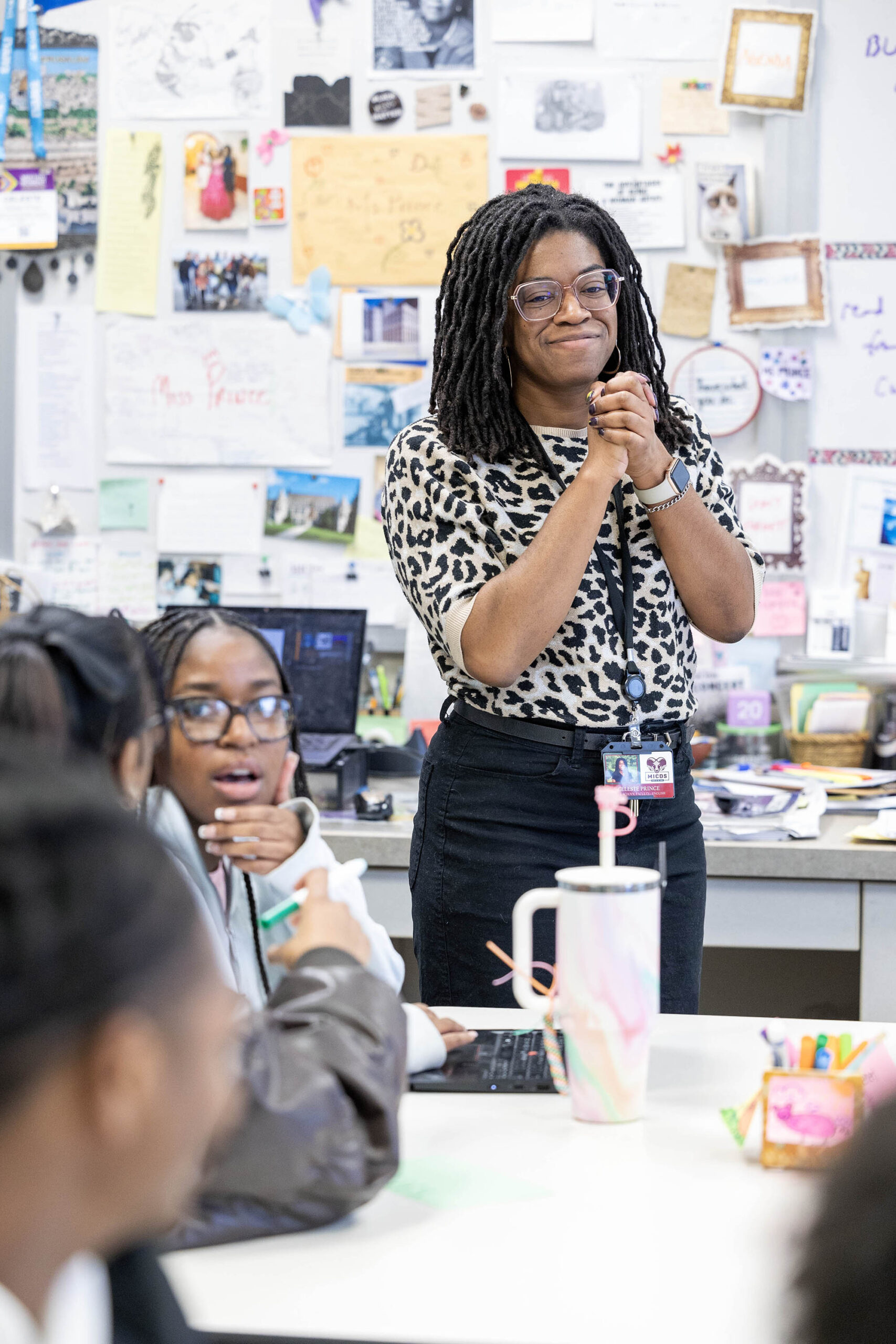
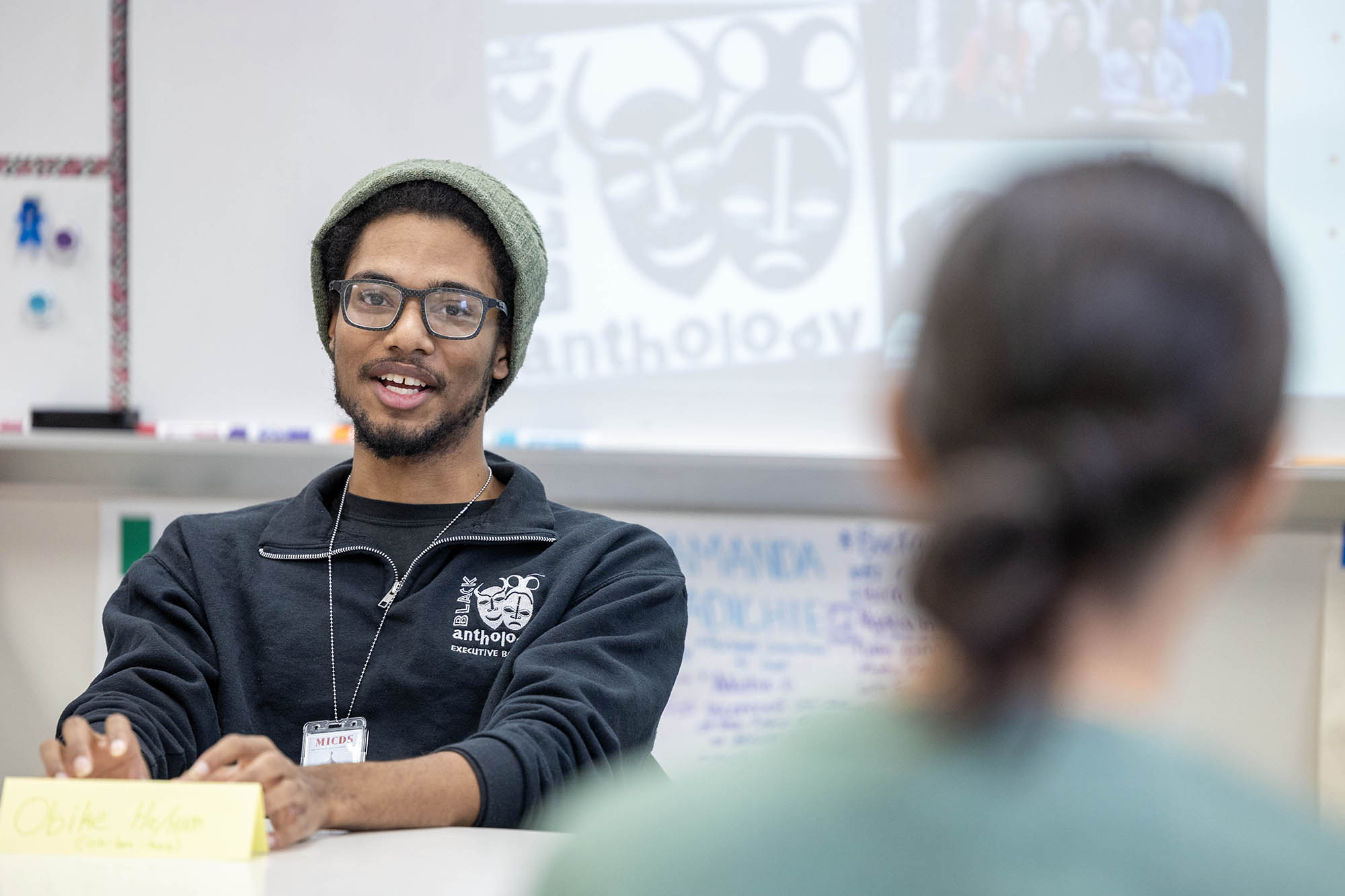
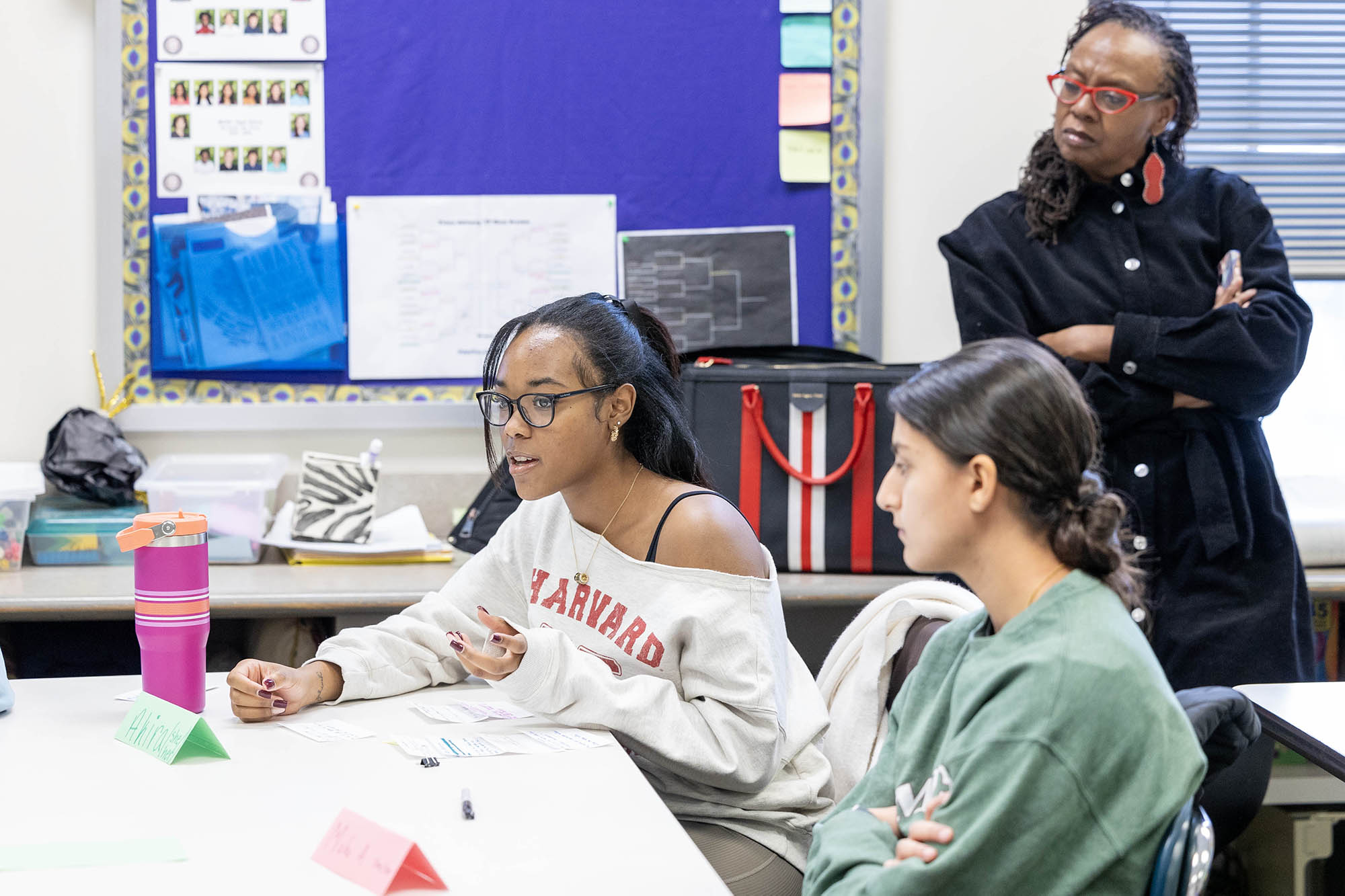
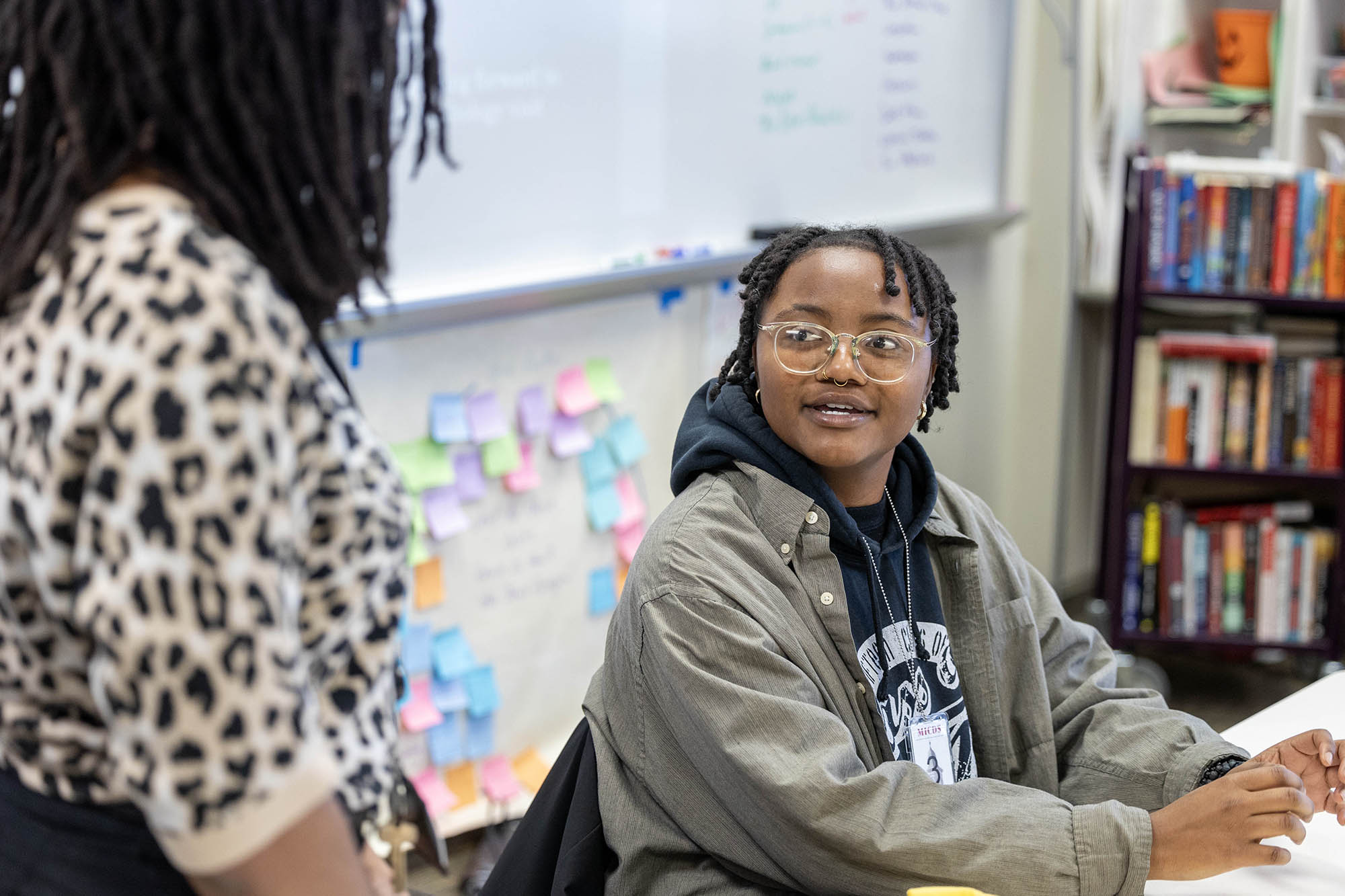
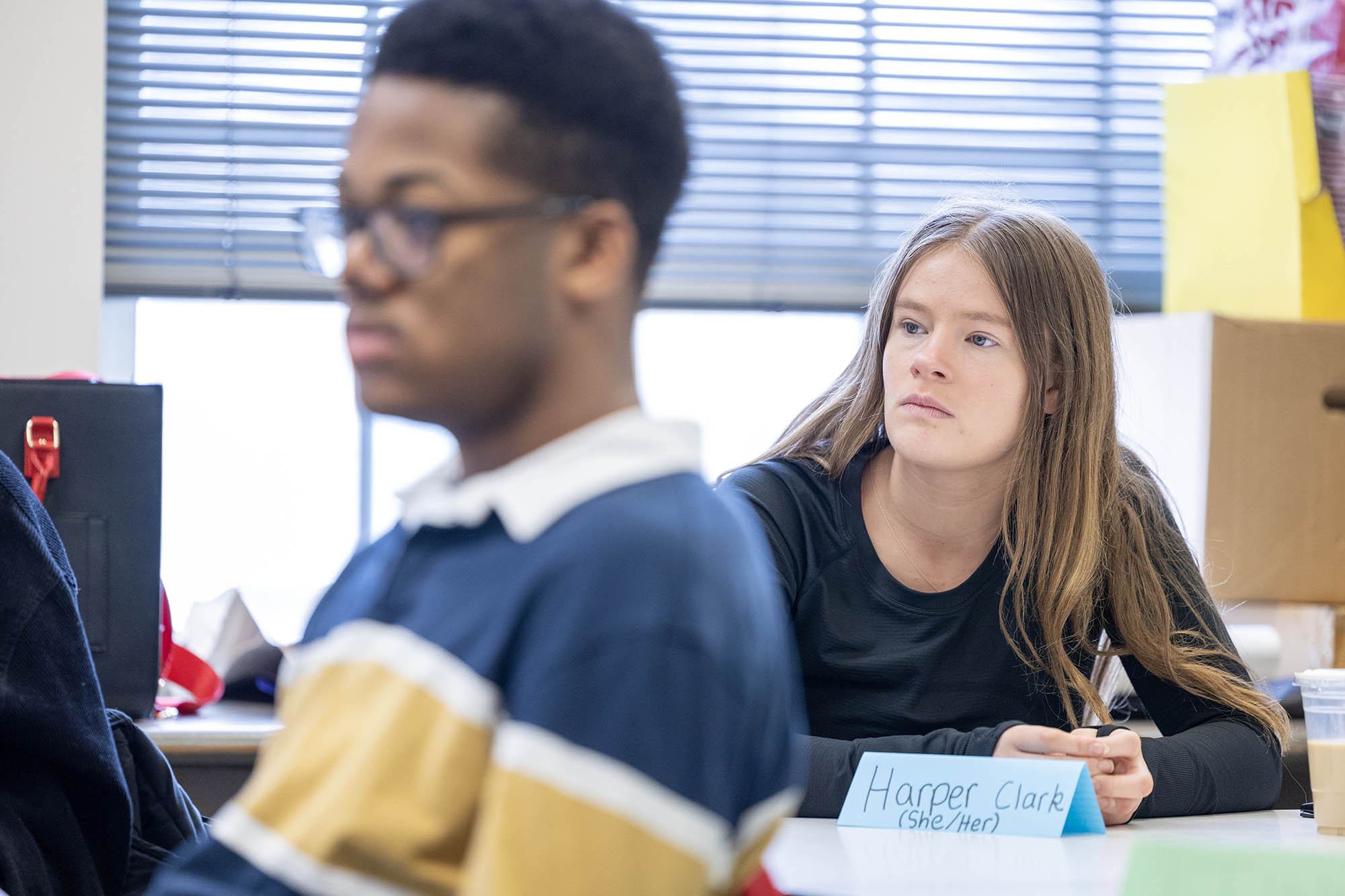
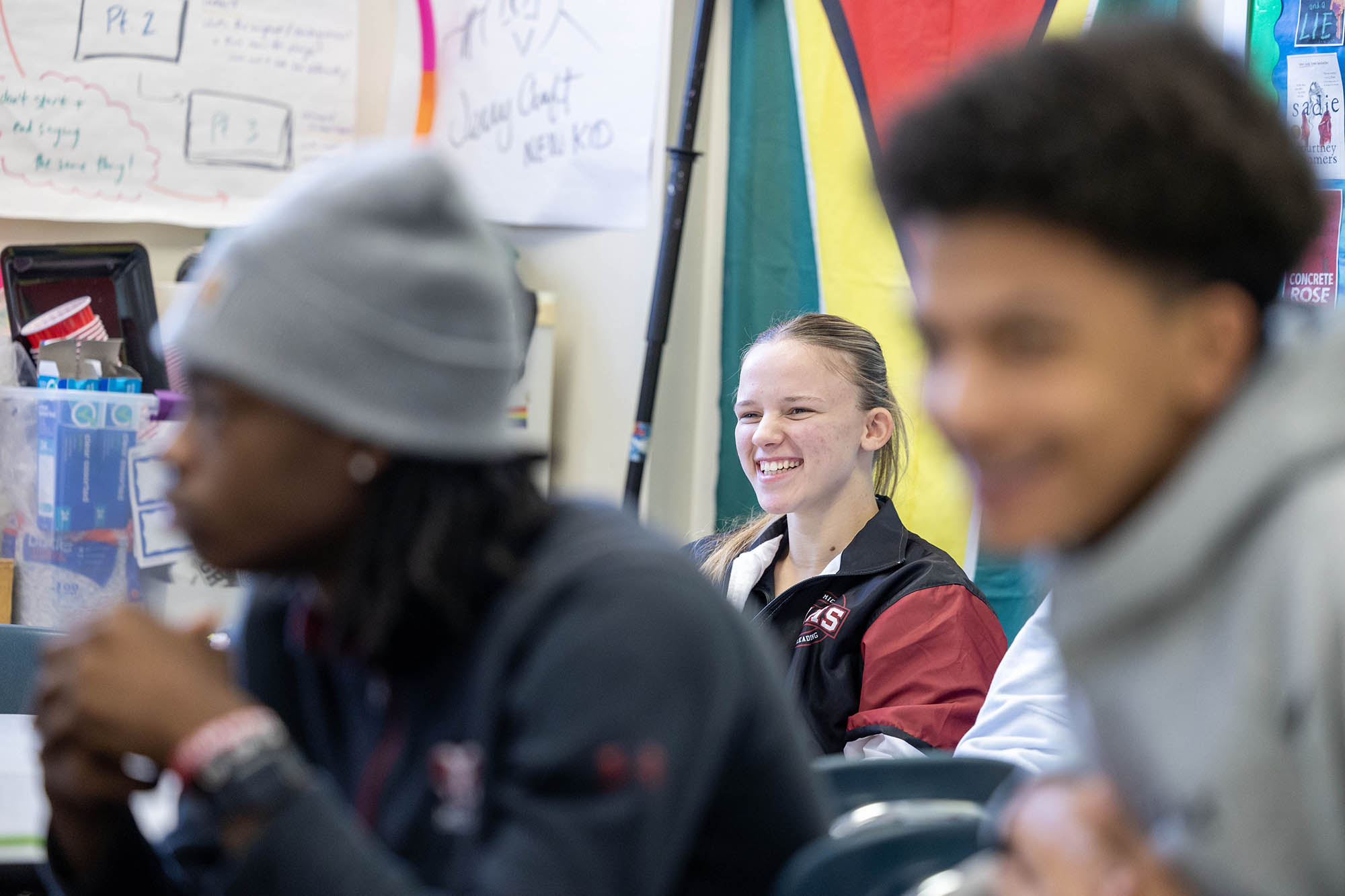
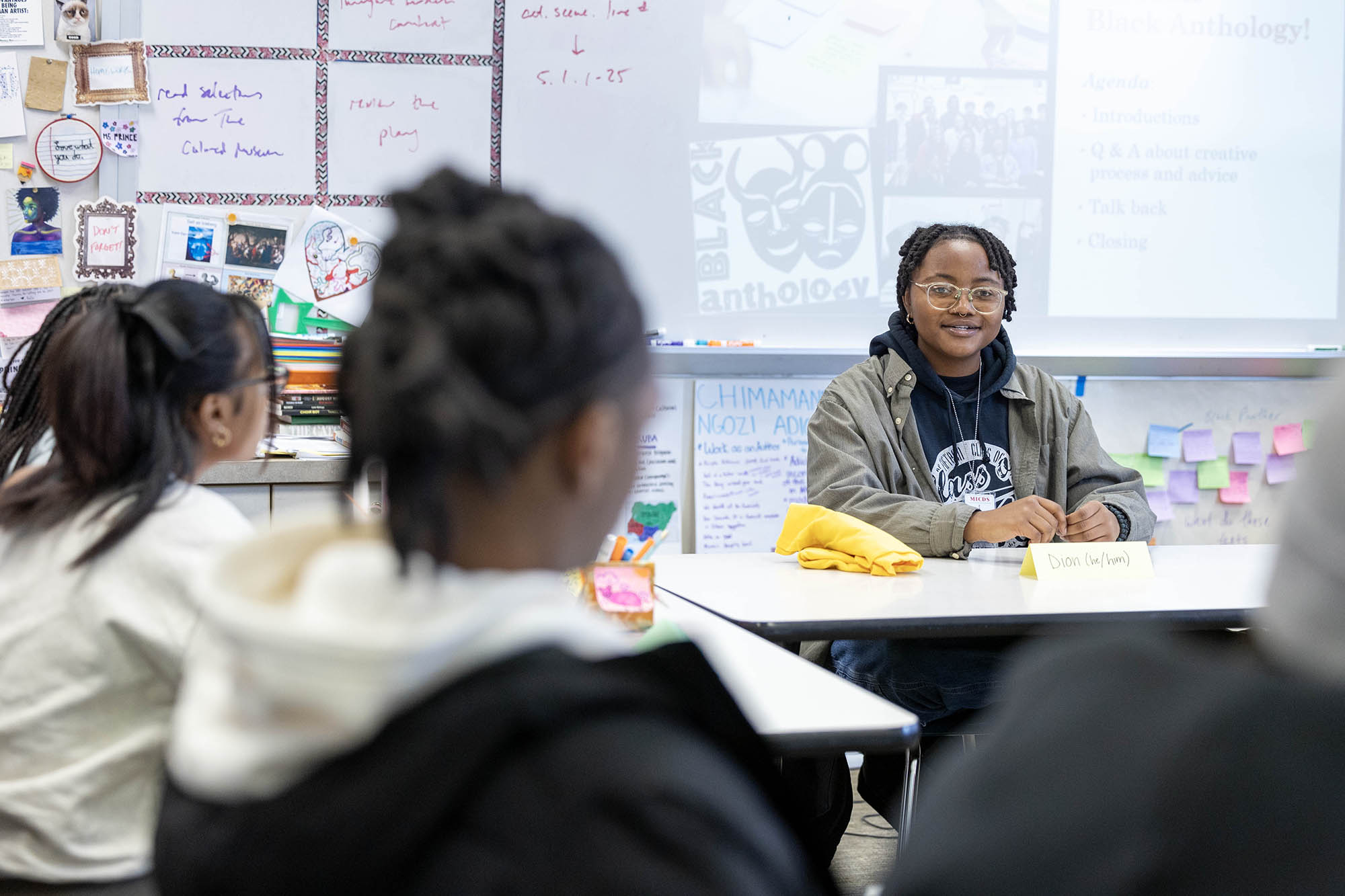
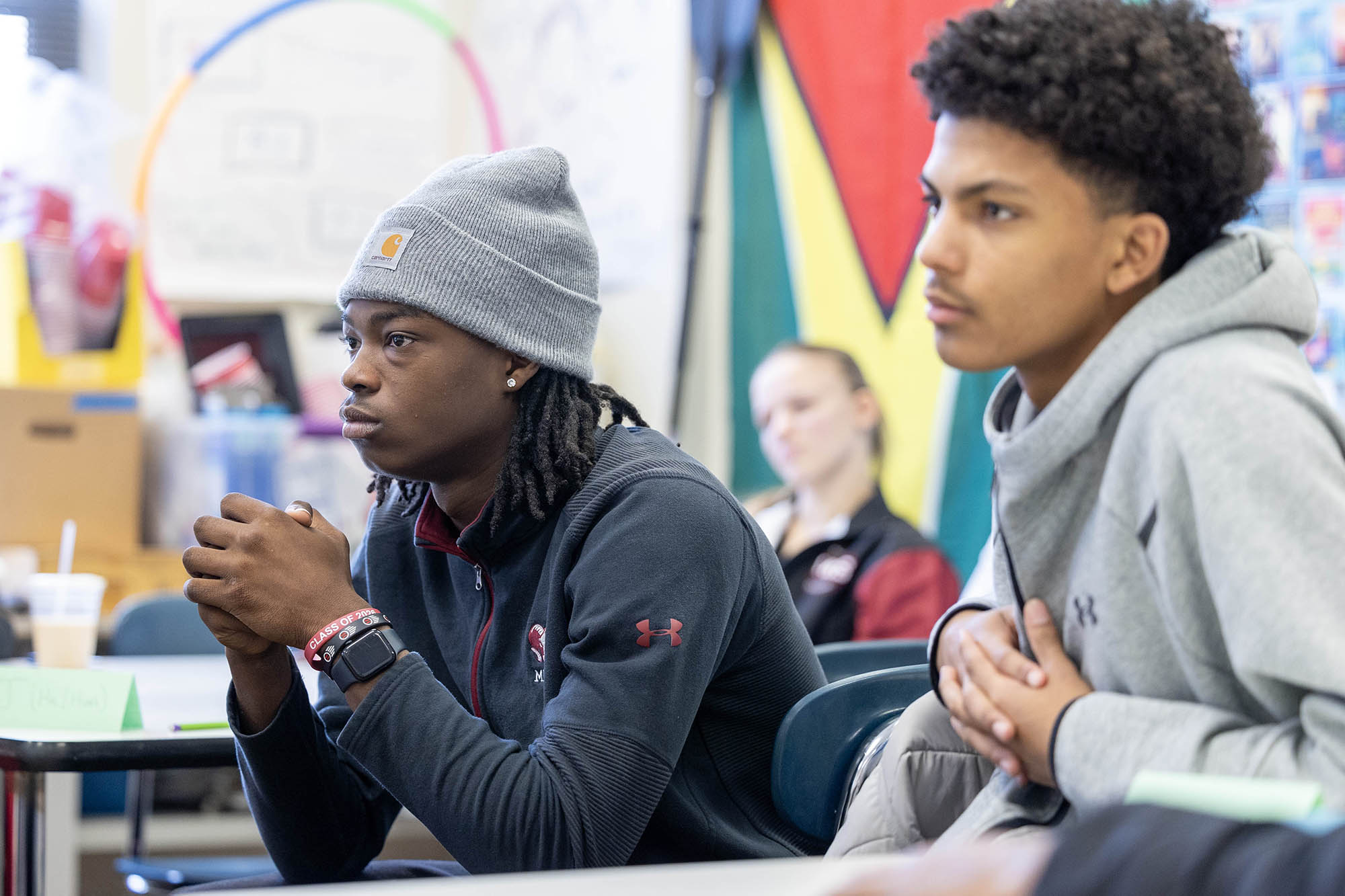
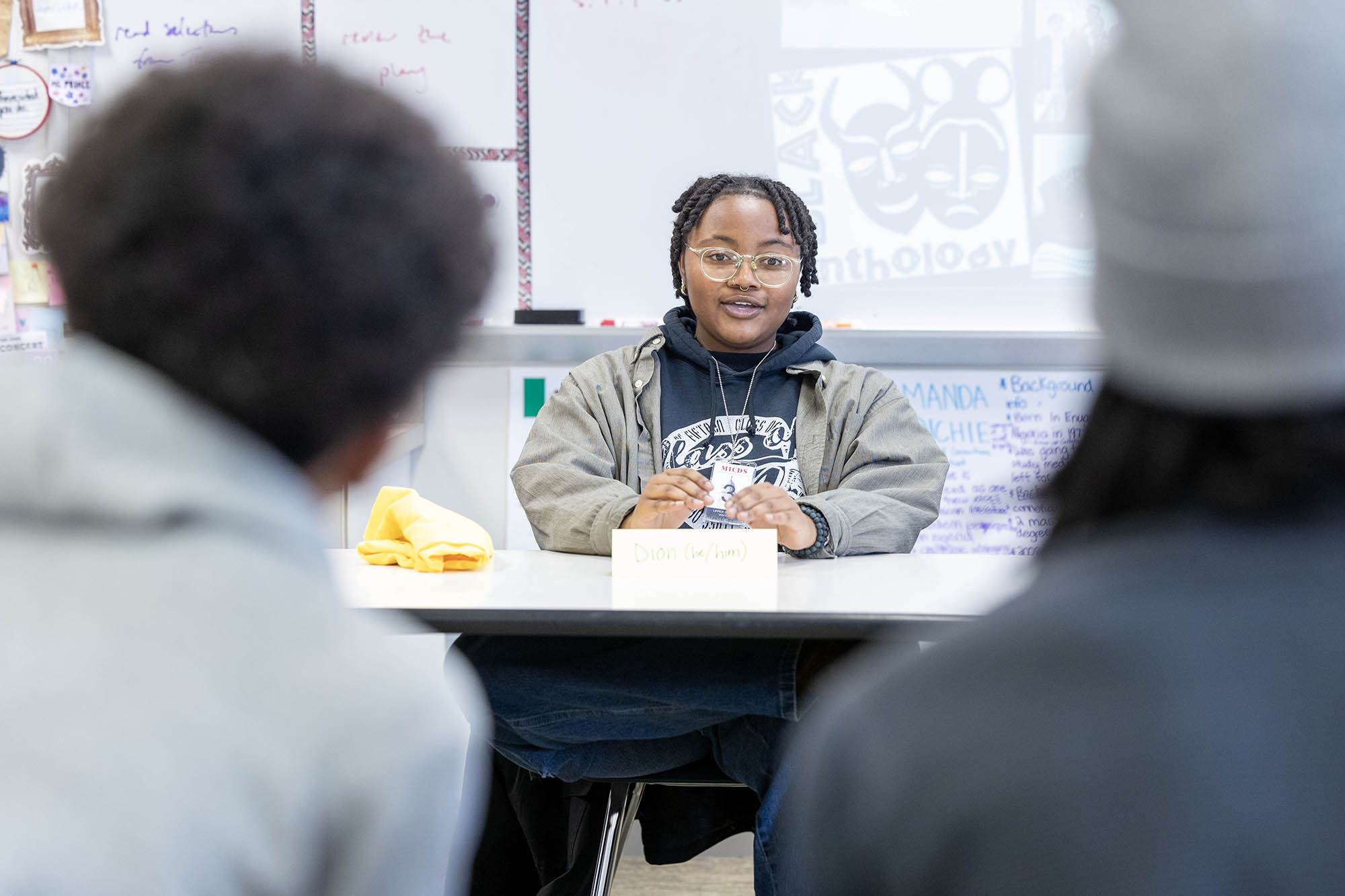
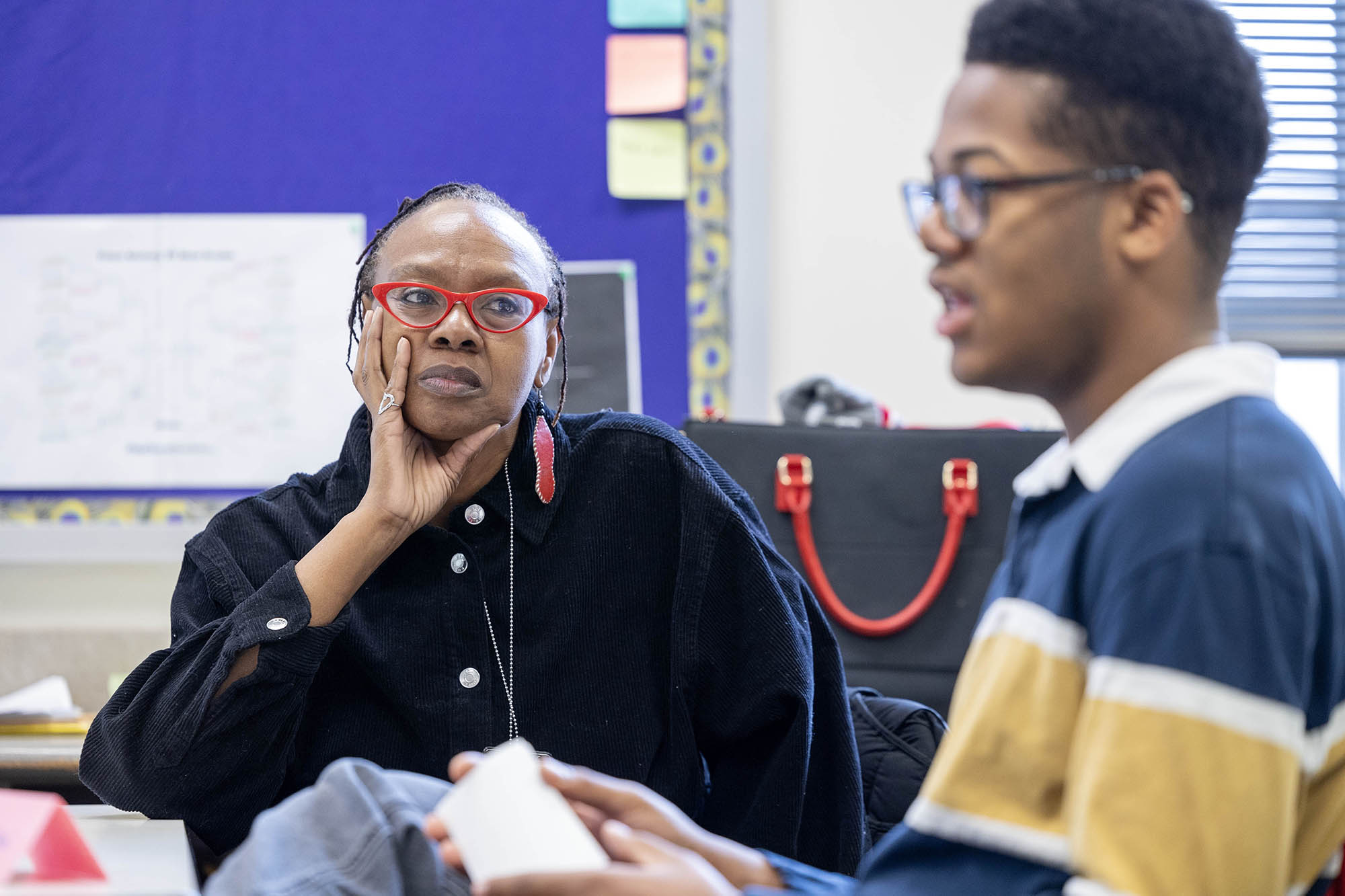
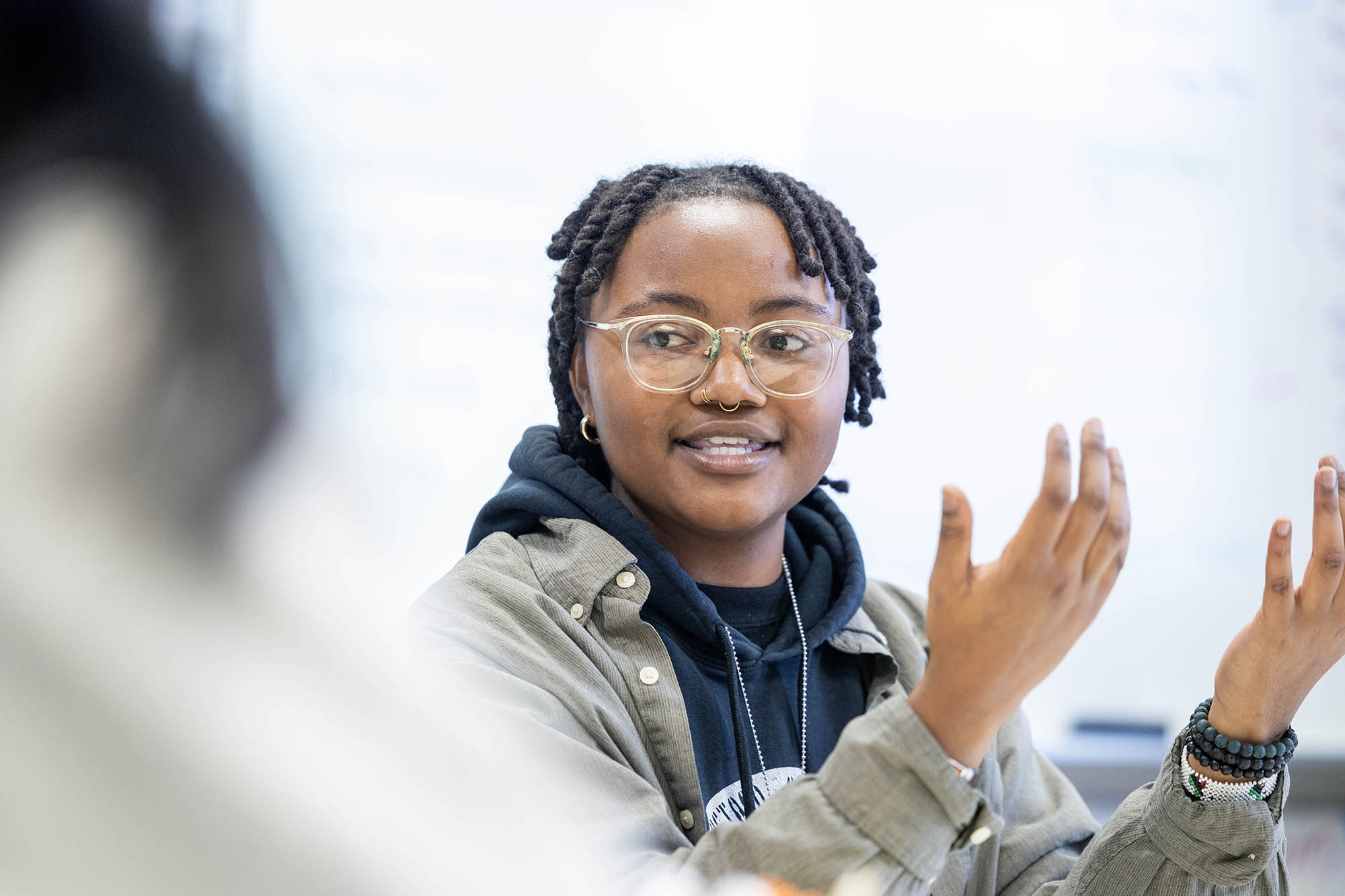
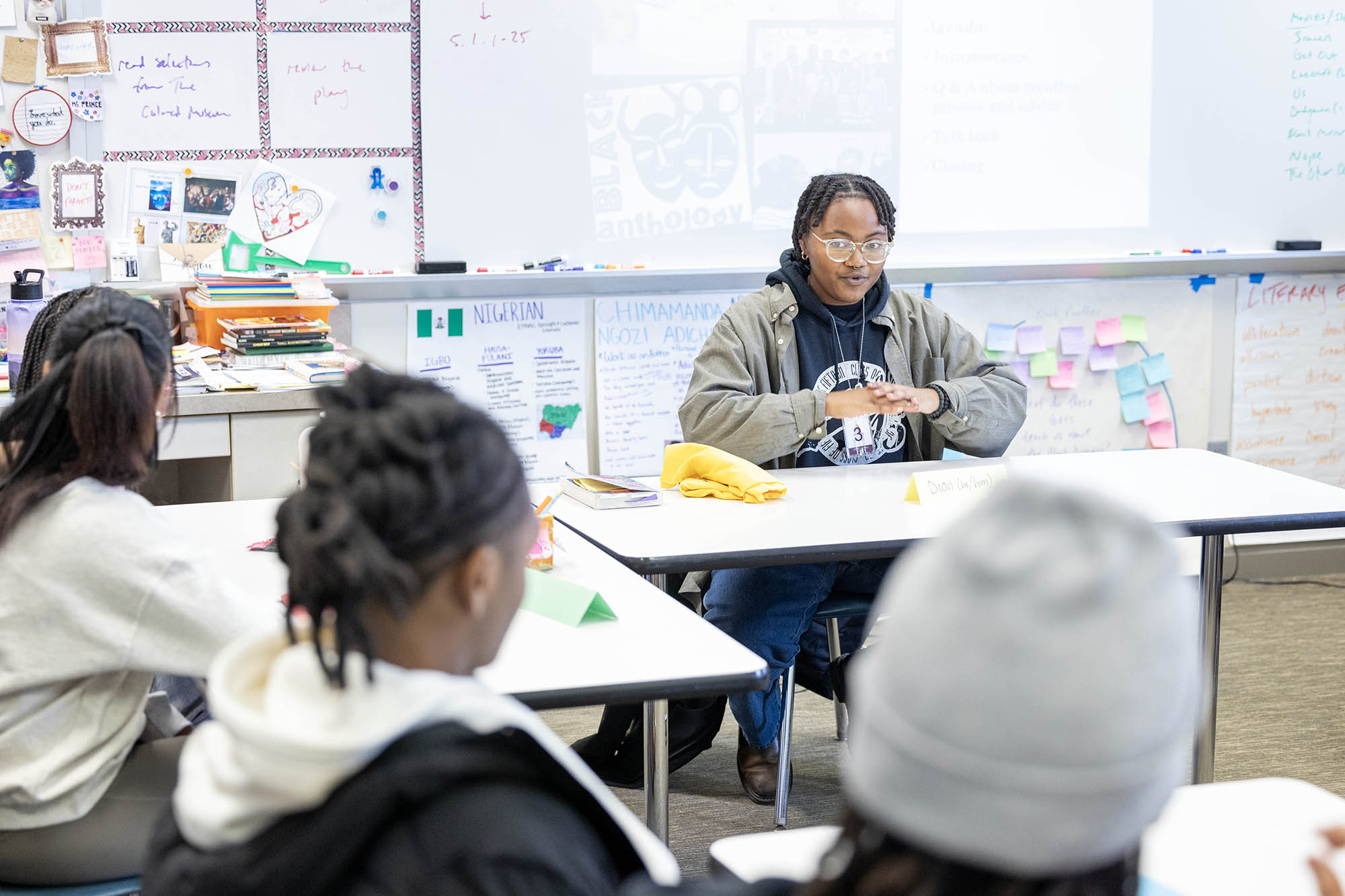
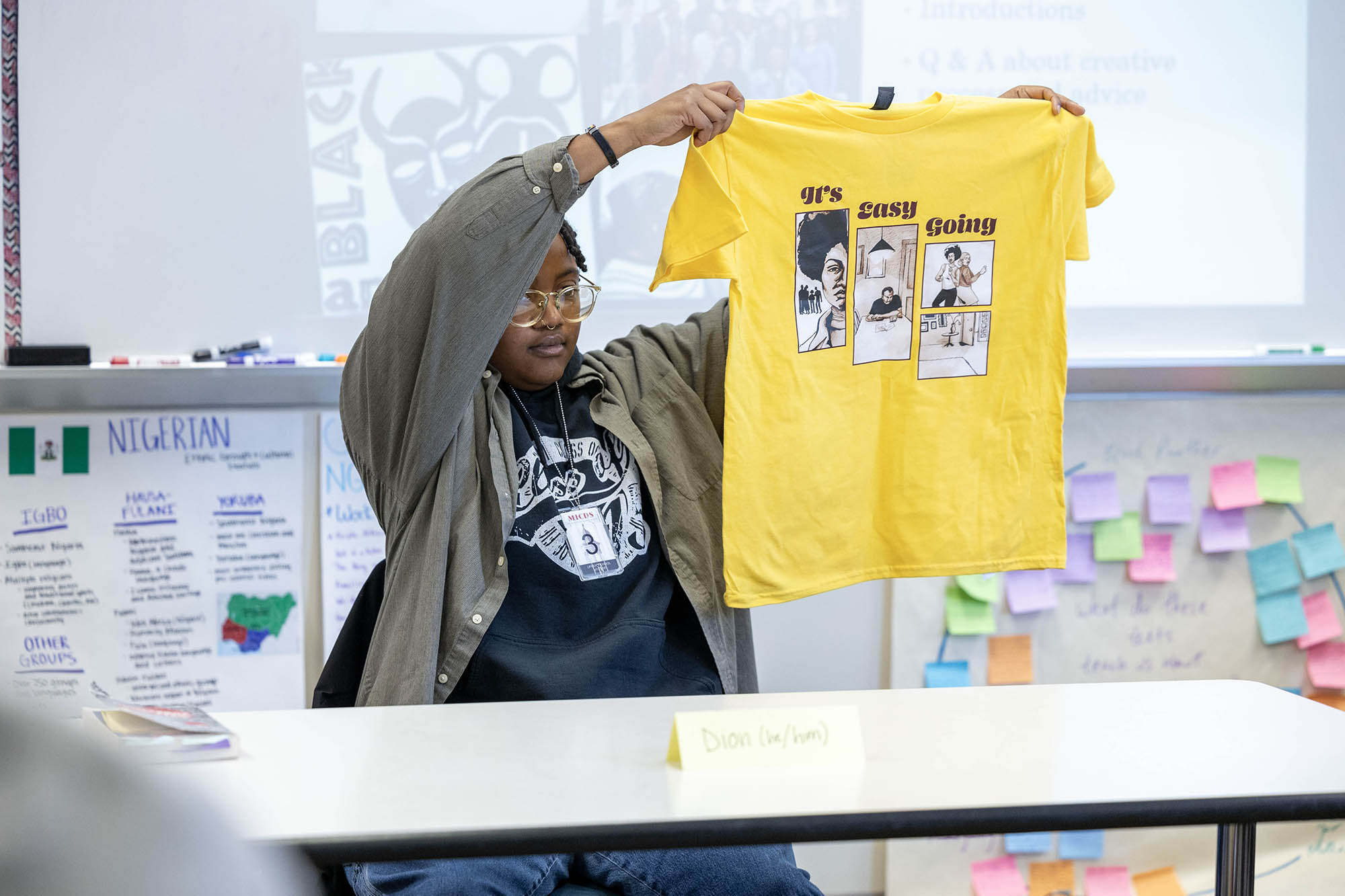
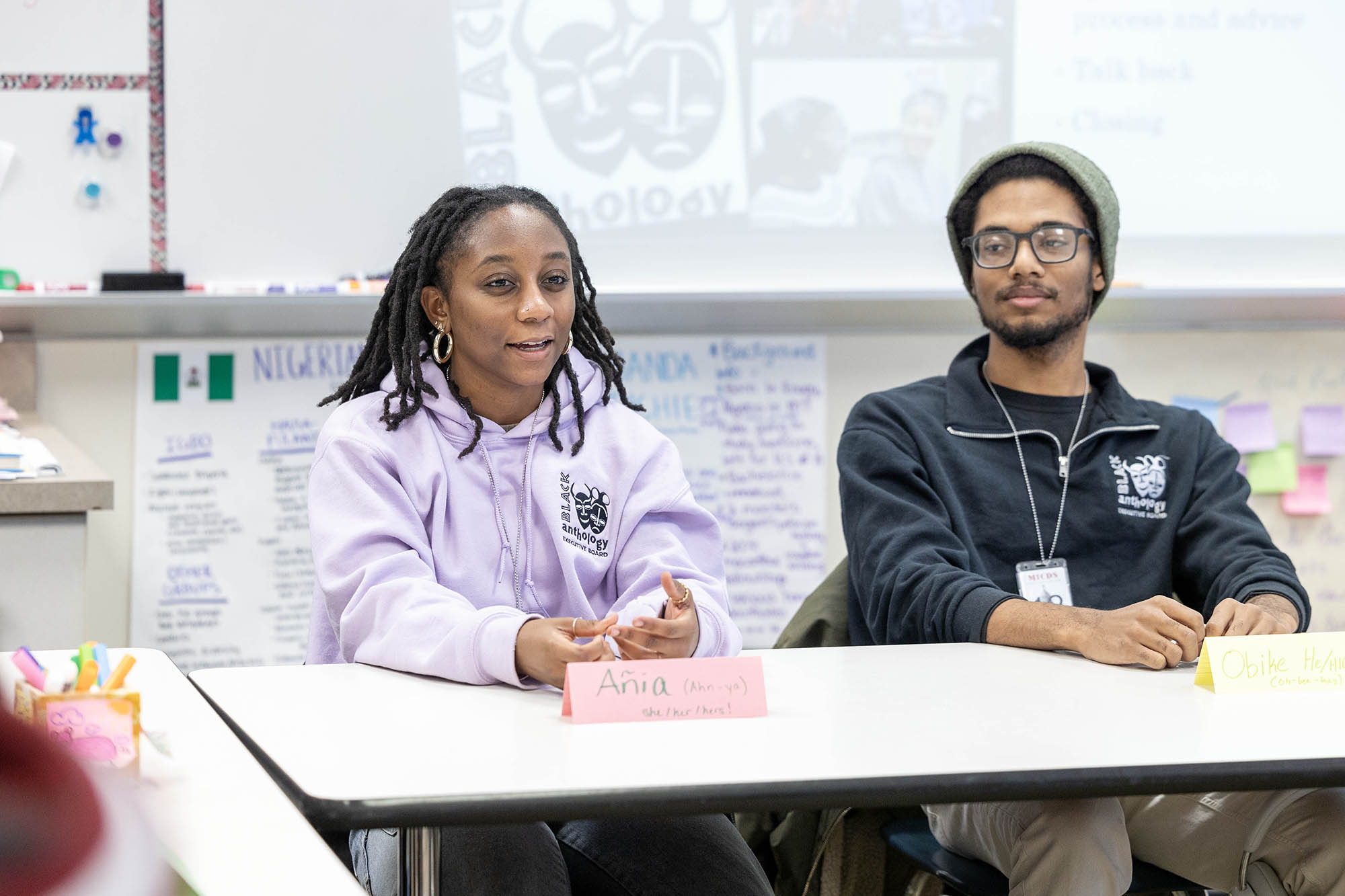
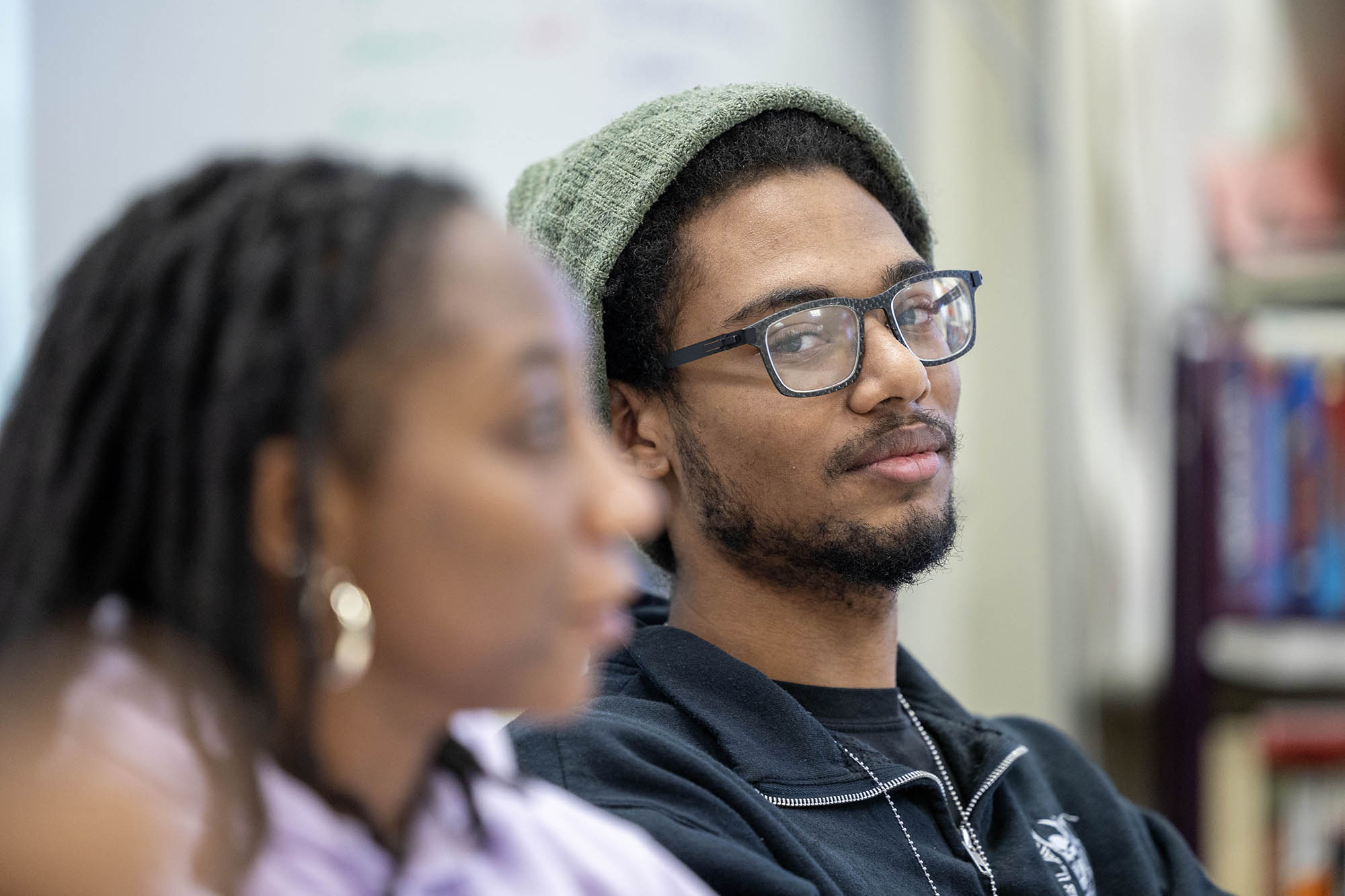
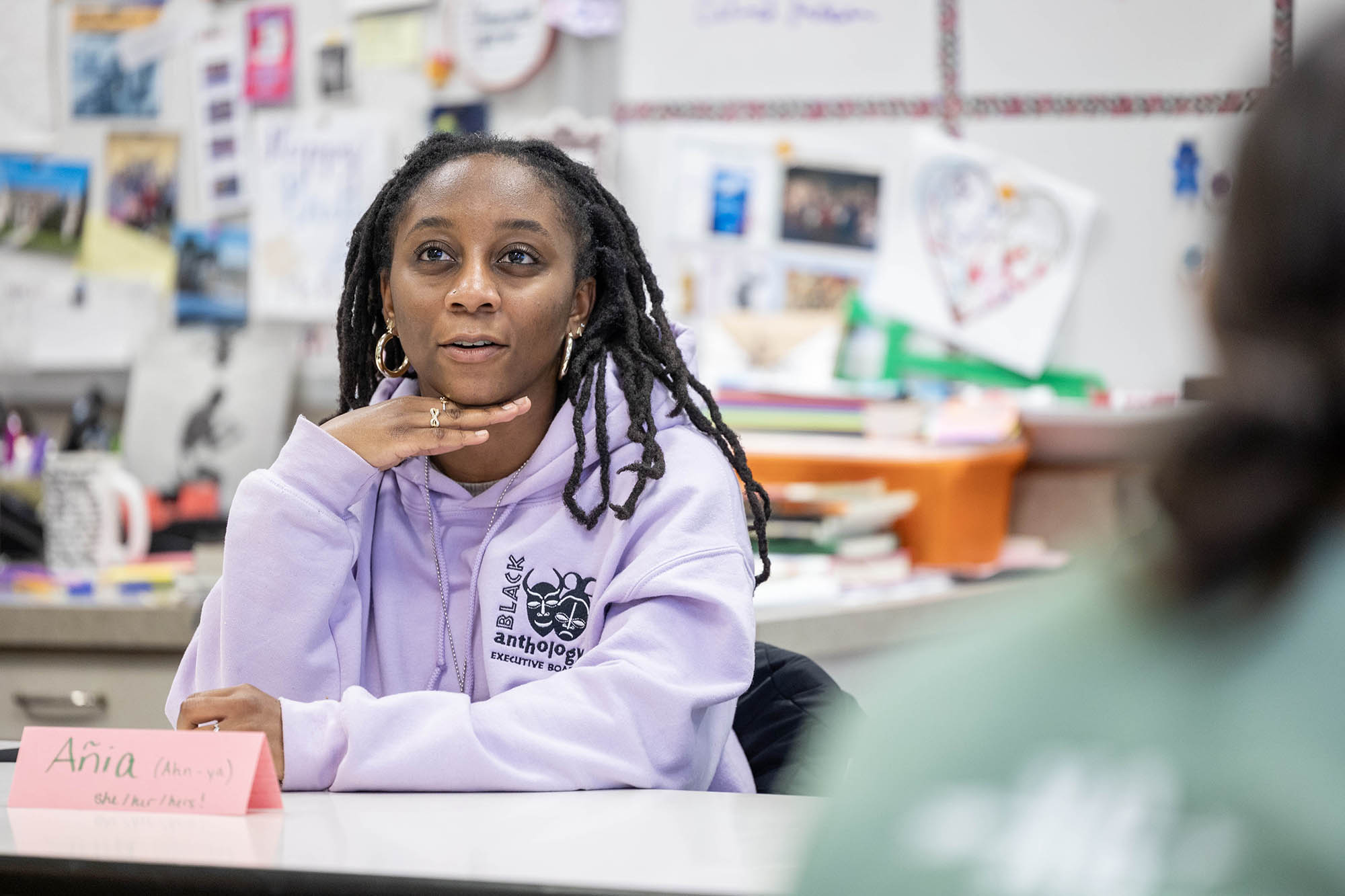
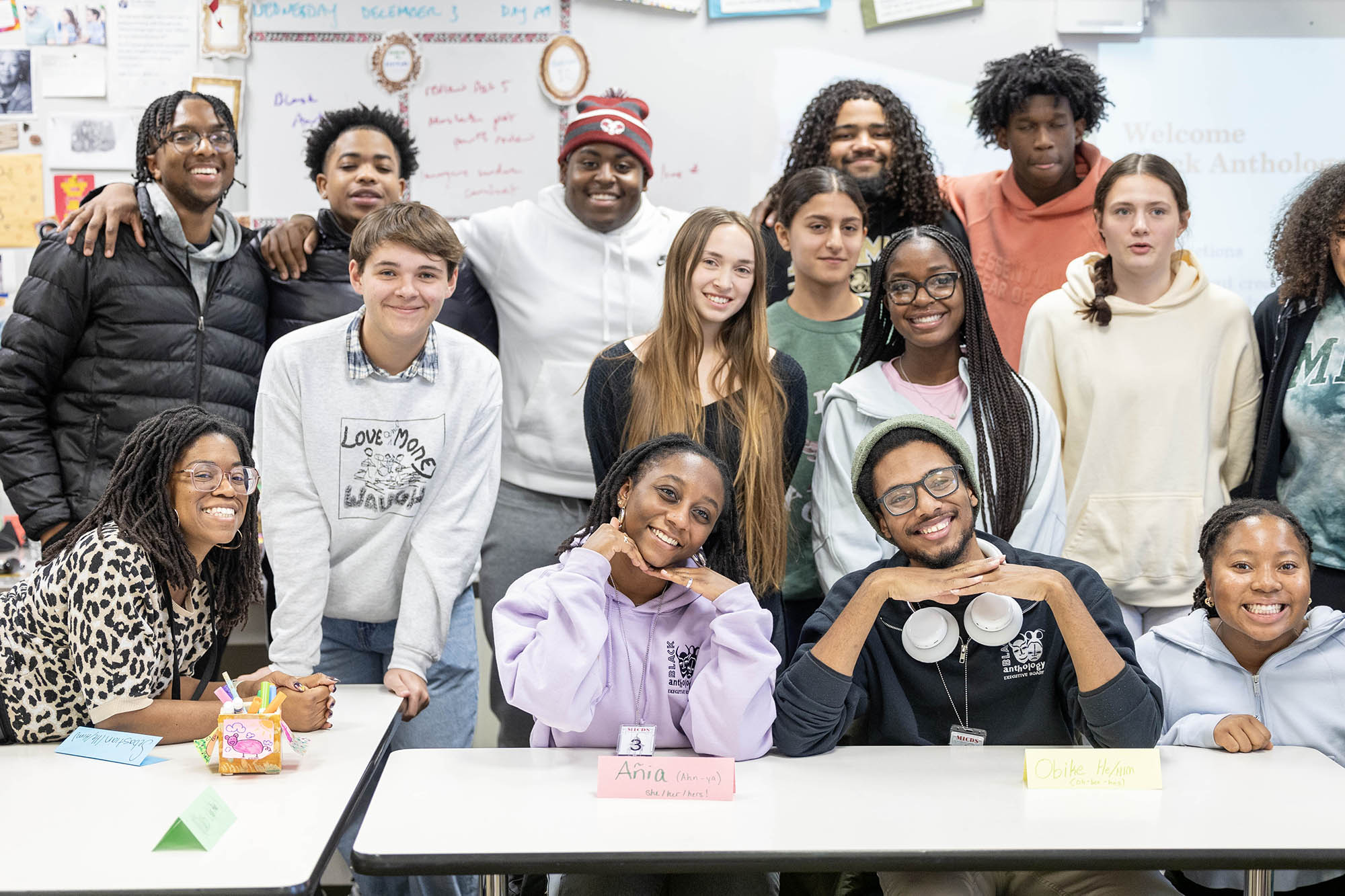
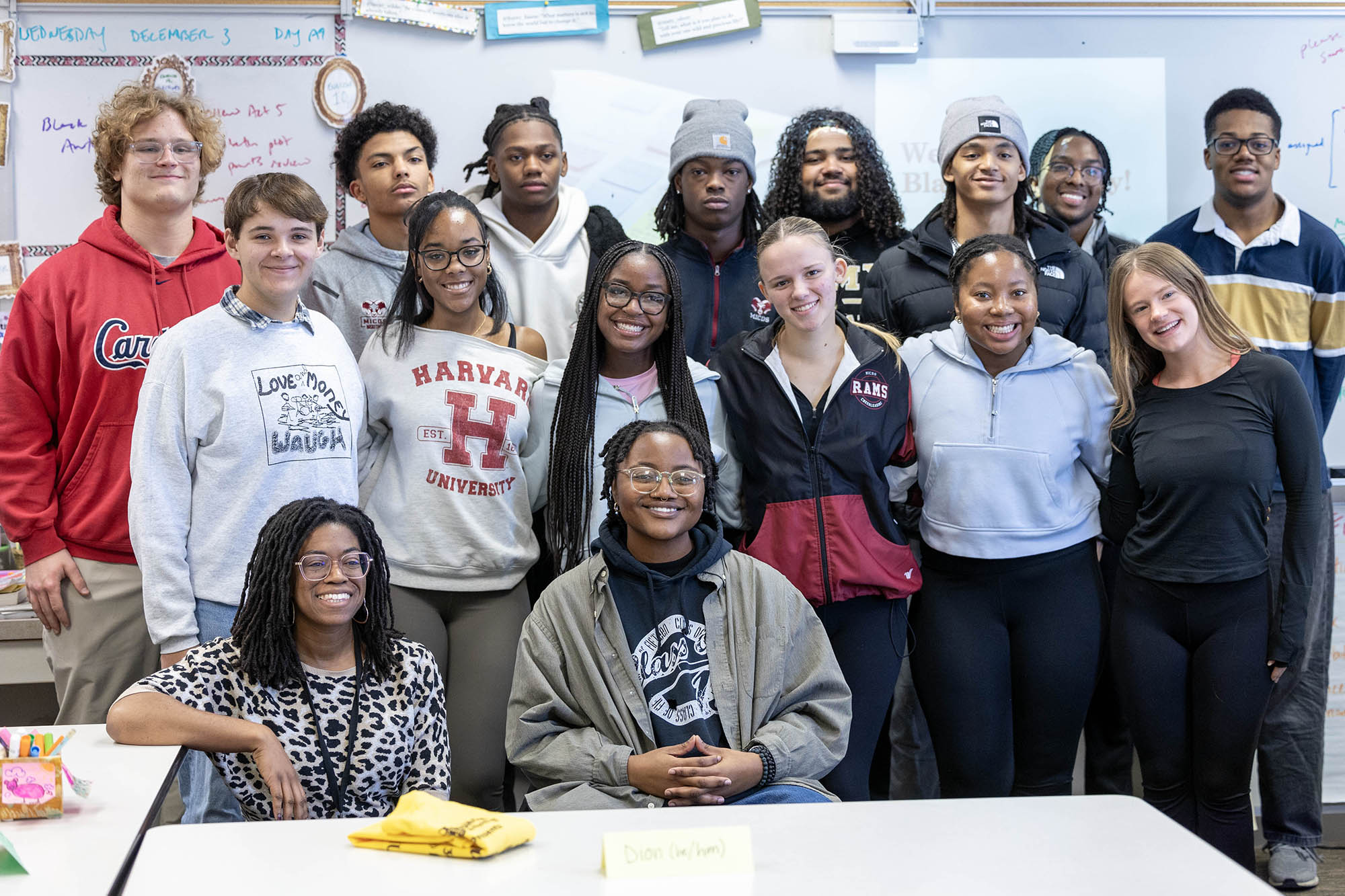
Halfway through this project, several Black Anthology members visited:
- Dion Hines, Sam Fox School of Arts & Visual Design, 2027
- Ania Jacob, Arts & Sciences, 2027
- Obike Anwisye, McKelvey School of Engineering, 2026
After the visit, several MICDS seniors shared their newfound appreciation for playwriting and the many decisions it requires along the way to become show-ready. Miles Coleman ’26 marvelled at the many components that work together to produce a play. “I learned that there was a lot more that goes into writing and performing than I had previously thought,” he said. “I was surprised how many pieces went into a play’s production; there are not just writers and actors, but also set designers and decorators. They had meetings about how to focus the play on certain aspects, and how many writing points they wanted to fit into a certain production. Time management was also a big aspect of their process because they had to cut down on the amount of content that they could fit within a certain timeframe of the play.” Coleman chose Fences as the inspiration for his final project. “My scene will uphold the serious message of Fences, while also trying to include comedy and satire into the scene.” He also found that the BA members had varying reasons for deciding to take this course, but all shared a desire to put thoughts into physical form, such as in poems or, in this case, plays.
“It was a unique experience to get a behind-the-scenes view of what goes into all of the plays that Black Anthology produces!” said Dalton Costick ’26. “I was surprised by how they can have such a short window (less than a year) to create and stage the play.” Like Coleman, Costick’s scene also responds to Fences. “[My scene explores how Fences] depicts in depth the relationships between a father and the rest of his family.”
“One of the best parts of teaching this class is giving students opportunities to connect the themes of our course to elements outside of our classroom,” Prince said. “Bringing the WashU BA students to campus for the last three years has afforded them the chance to see and meet other scholars engaging in similar work. My hope is that one day, one of my students from MICDS will be one of the BA members speaking to seniors in the near future!”
Once the project concludes, Prince and her students will enjoy a celebratory read-aloud on the last day of class. “My end-of-semester assignment is certainly fast-paced, and students don’t have nearly as much time as the BA students do to create their scenes. Still, I am always amazed at what the Diaspora students produce, especially when they collaborate and encourage each other.”
Thank you to Dion, Ania, Obike, and Dr. Toliver-Diallo for inspiring our students, many of whom plan to attend the 2026 Black Anthology production in January! When they watch the 2026 production, they will have a greater appreciation for all the work and effort that was put into writing, directing, and producing the show. Break a leg, Diaspora students and BA members!