Story by Lucas Sindler ’26
Photos by Paul Colletti, Multimedia Specialist
Guitar building is one of those projects that feels familiar at first, since most people have seen or held a guitar before. But the class quickly shows that a guitar is not just a simple instrument. It is a carefully built object where small choices in shape, fit, and setup can change how it sounds and how it plays. At MICDS, this Winter Term guitar building class, taught by Upper School Sculpture Teacher Brad Heinemann, gives students a chance to learn the basics of how a guitar is made and why each step matters. The course is hands-on, detail-oriented, and focused on doing careful work rather than trying to rush through the build.
A guitar is built from a few main parts that all need to work together. The body and neck give the guitar its structure, the fretboard and frets control notes, and the hardware holds everything in place. Even small details, like a slightly uneven surface or a measurement that is off by a little, can create problems later. In class, students learn that getting things right early makes the entire build smoother. A guitar that looks good but is not put together correctly will not feel right to play, and it will not stay in tune as well.
One of the first lessons is planning and organization. Guitar building involves a lot of steps that depend on each other, so it helps to work in order and keep track of what has already been done. Students learn to measure carefully, mark lines clearly, and check their work before moving on. They also learn to keep tools and parts organized, since the build includes many small pieces that can be mixed up or misplaced. This structure makes the project feel less overwhelming and helps students stay confident during the process.’
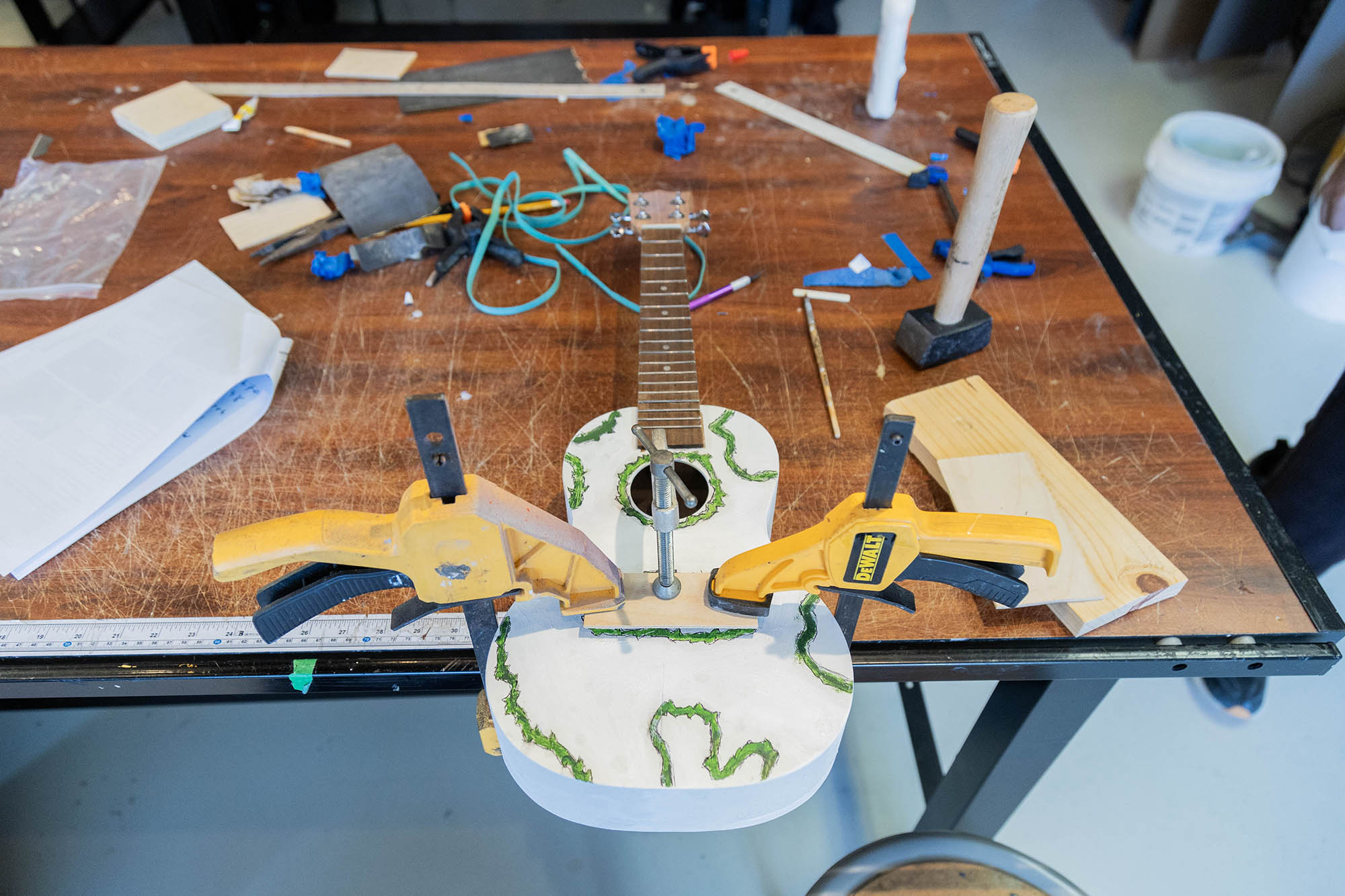
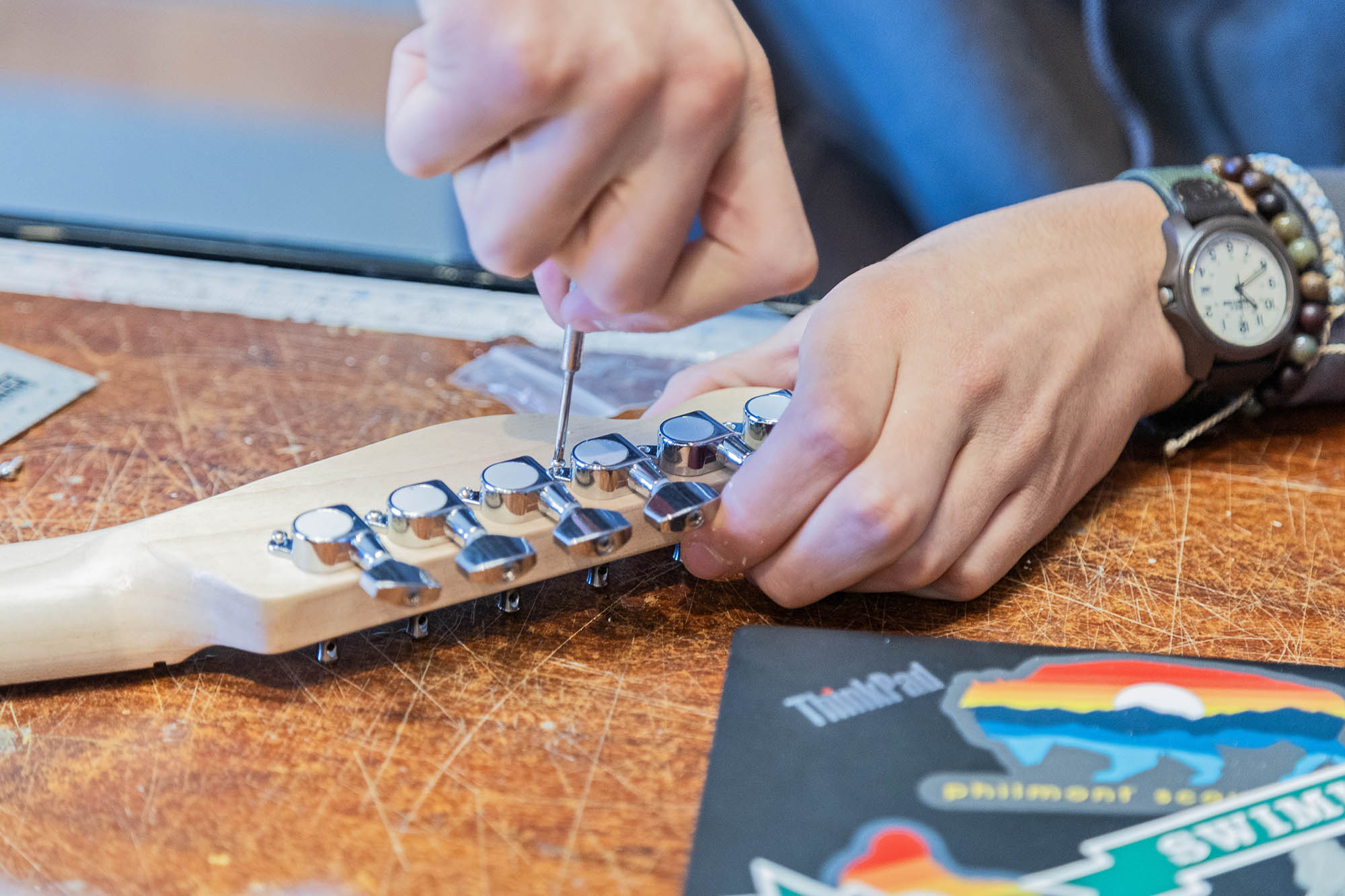
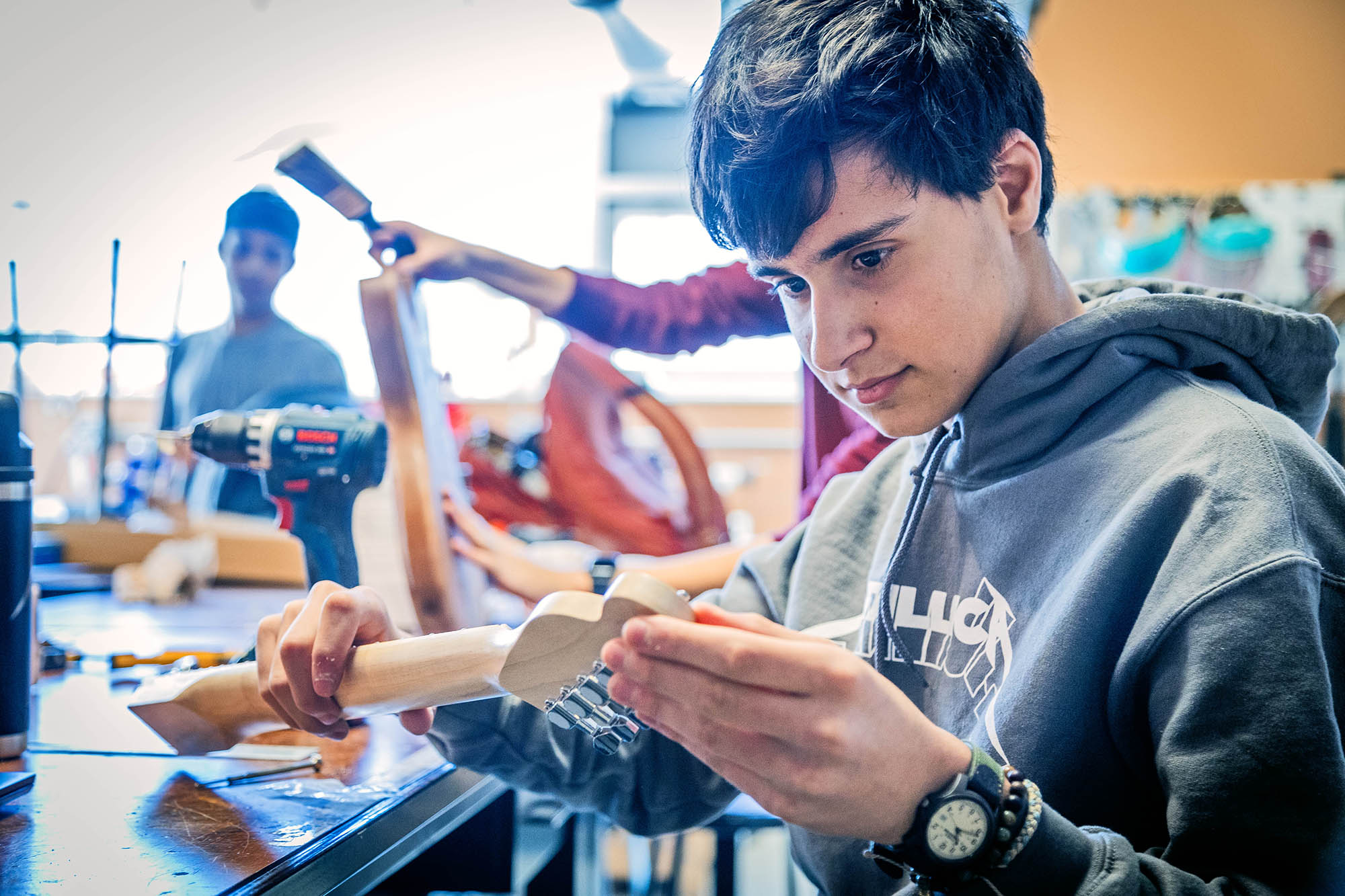
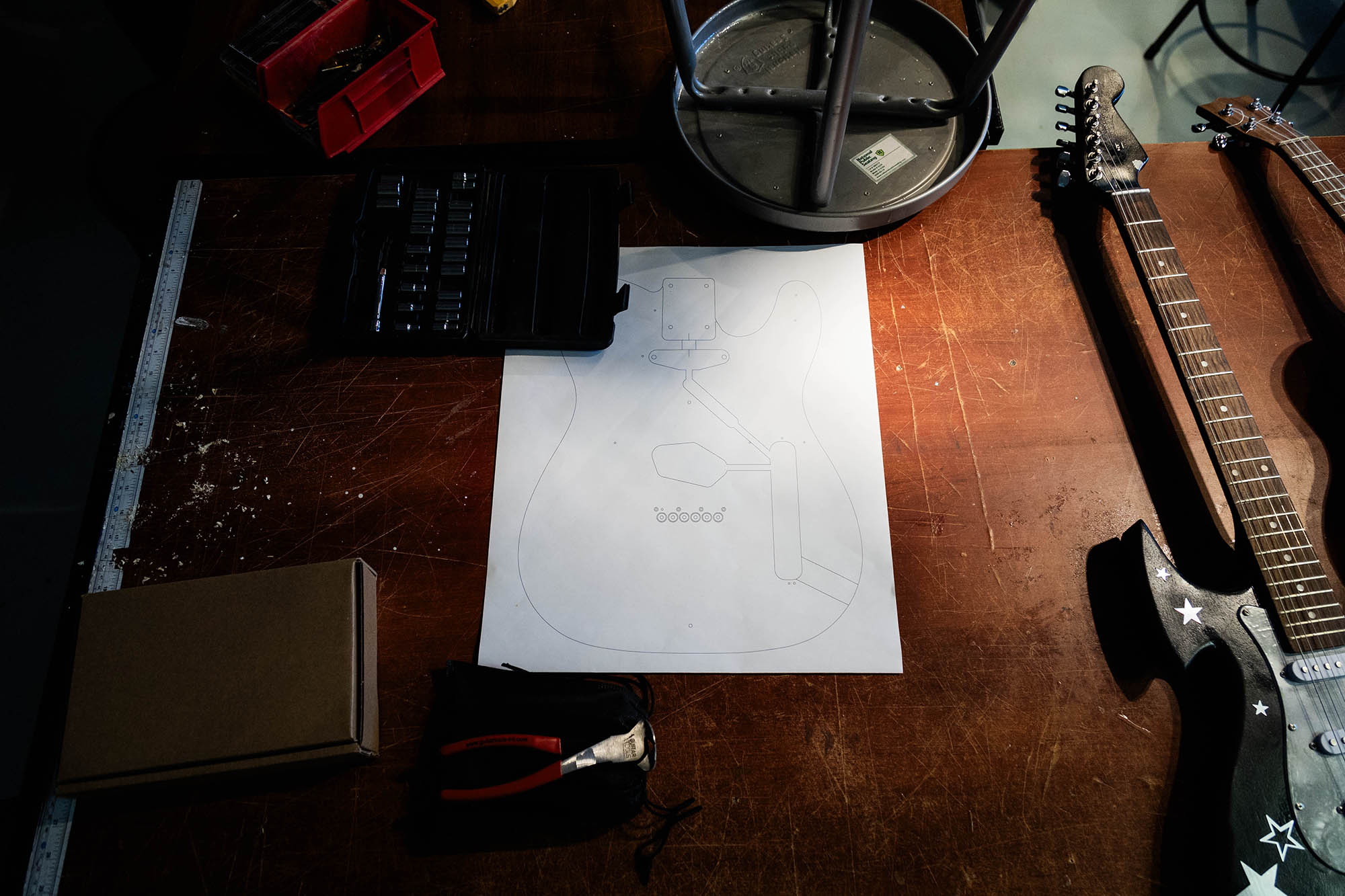
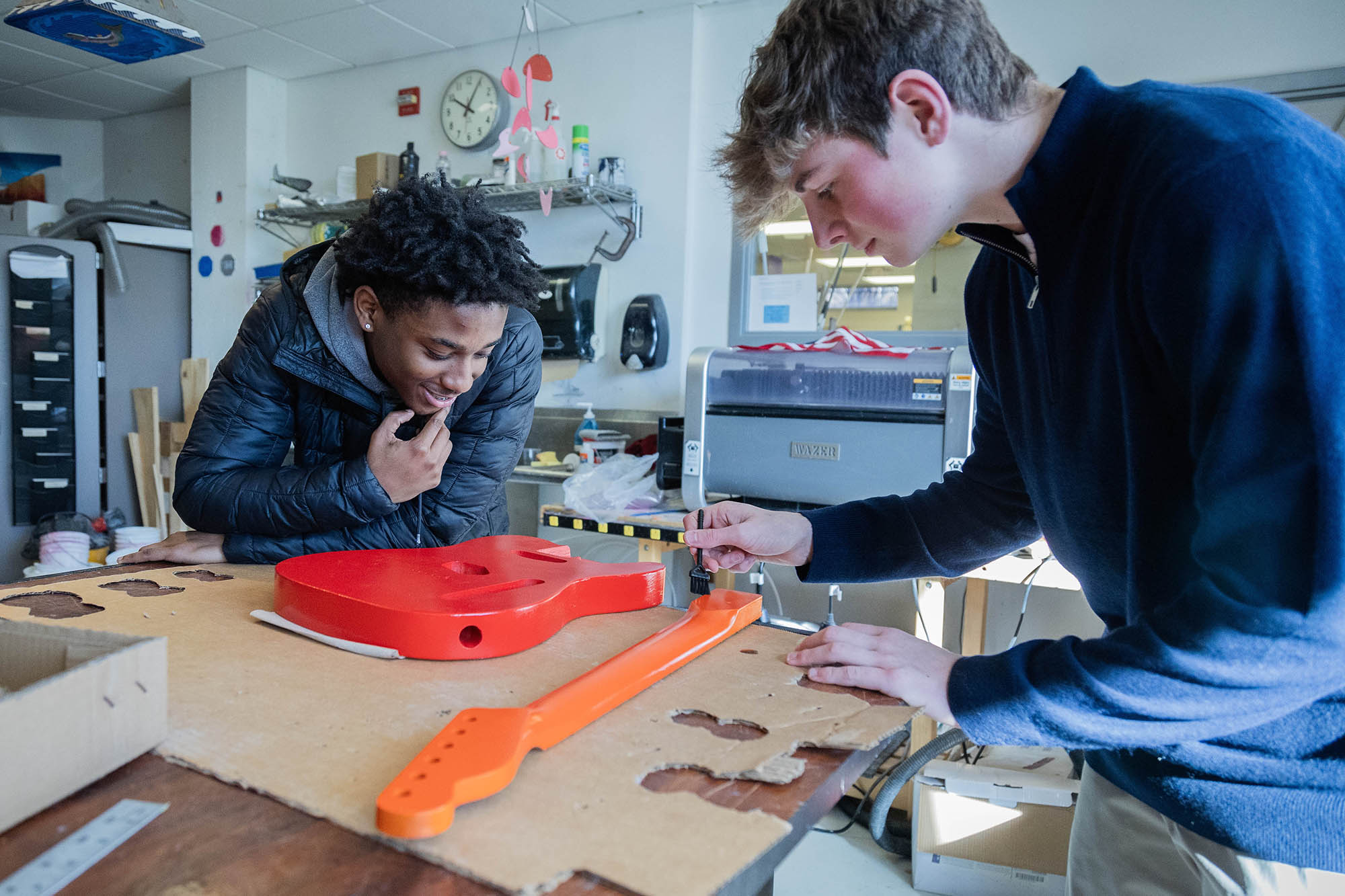
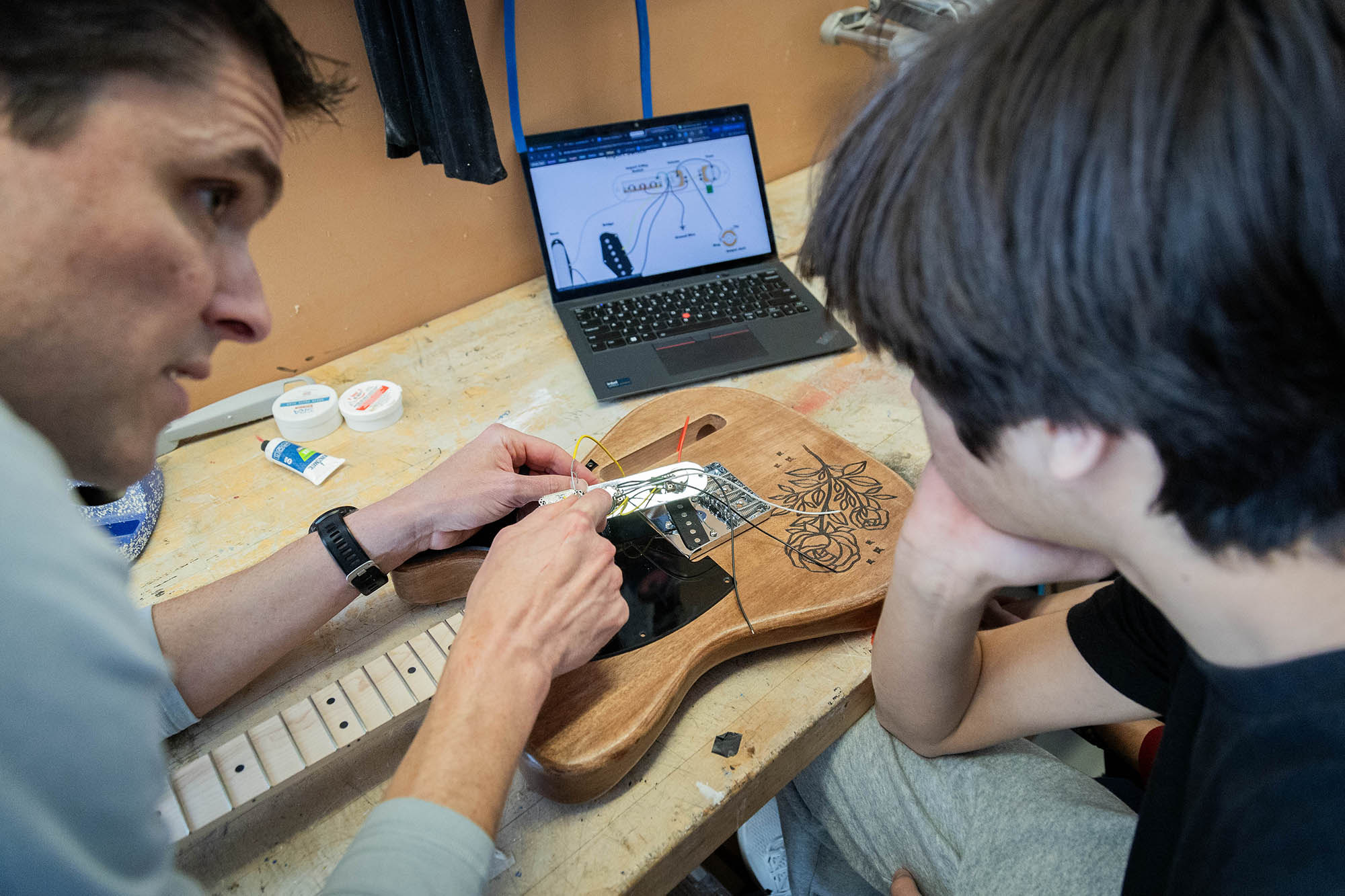
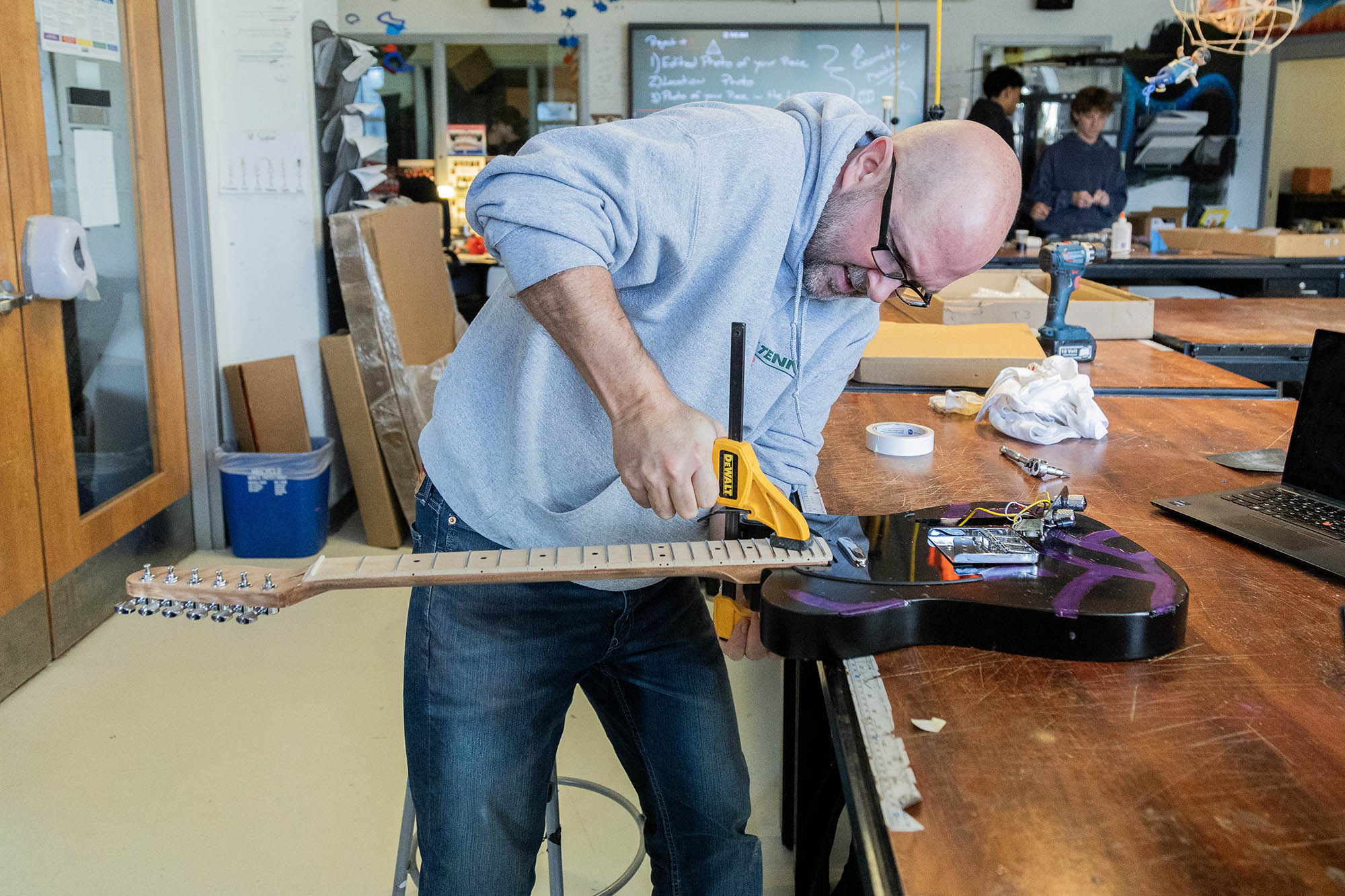
The class also focuses on tool use and technique. Tools like sanders, clamps, files, and measuring devices are important, and using them correctly can make the difference between a clean build and a frustrating one. Sanding too fast can create uneven spots. Cutting or drilling without checking alignment can throw off the whole setup. Students learn that careful, controlled work leads to better results, even if it takes more time.
Another important topic is setup and playability. A guitar is not finished just because it is assembled. The instrument has to be adjusted so it plays comfortably and sounds clean. This includes checking string height, making sure the neck sits correctly, and ensuring the frets and hardware work the way they should. These steps can be challenging, but they show students that guitar building is both construction and problem-solving.
Students also take away something that goes beyond the instrument itself. In an interview, Parker Cabbabe ’29 mentions that he “love[s] bands like Metallica, and I cannot wait to use this guitar to try and play some music.” The class teaches patience and attention to detail, since progress often comes from small improvements each day. Guitar Building rewards students who take their time, accept mistakes, and fix issues the right way instead of covering them up. By the end of the course, success is not only having a guitar that feels good to play, it’s having an instrument that stays reliable and reflects careful work from start to finish.