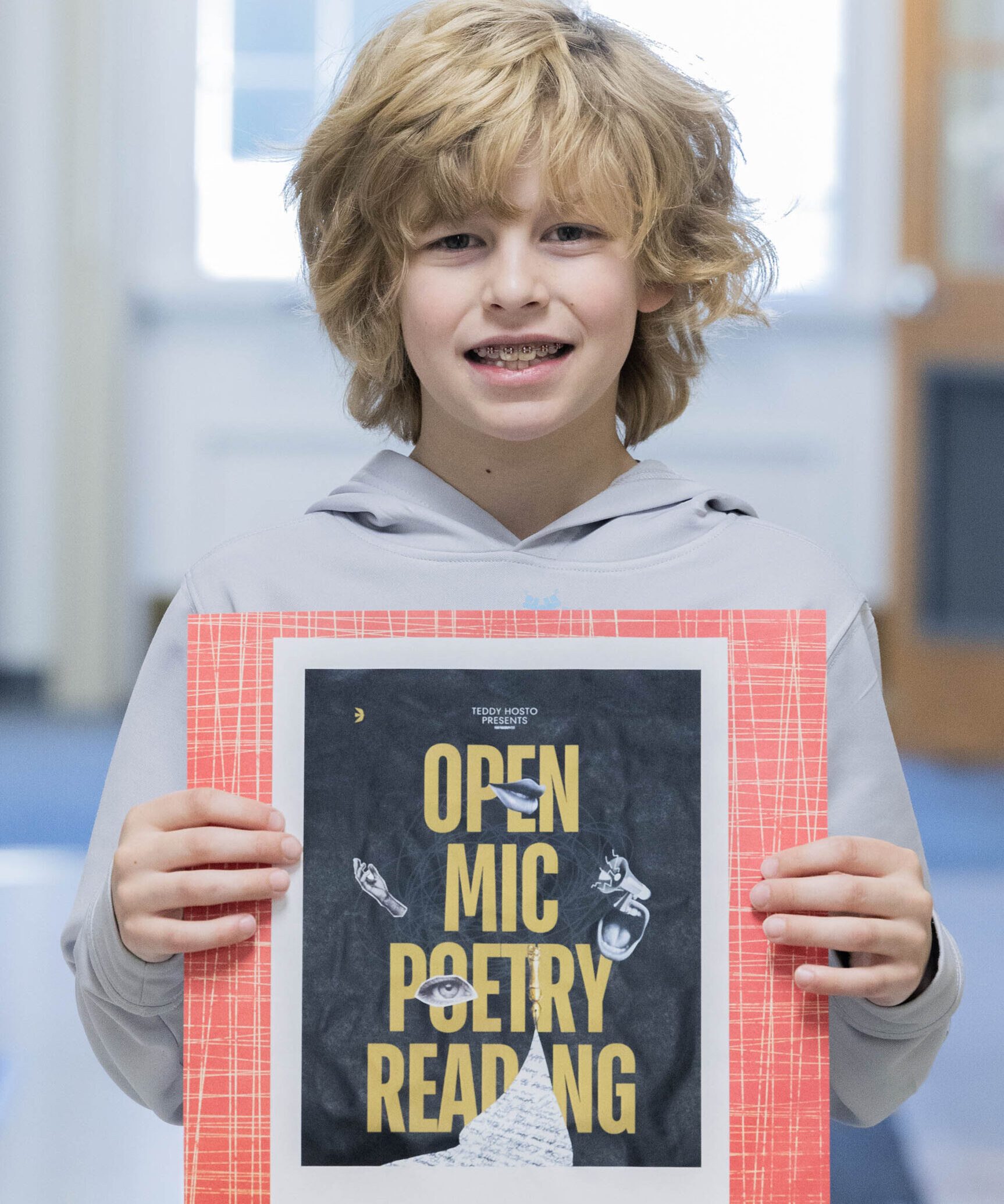
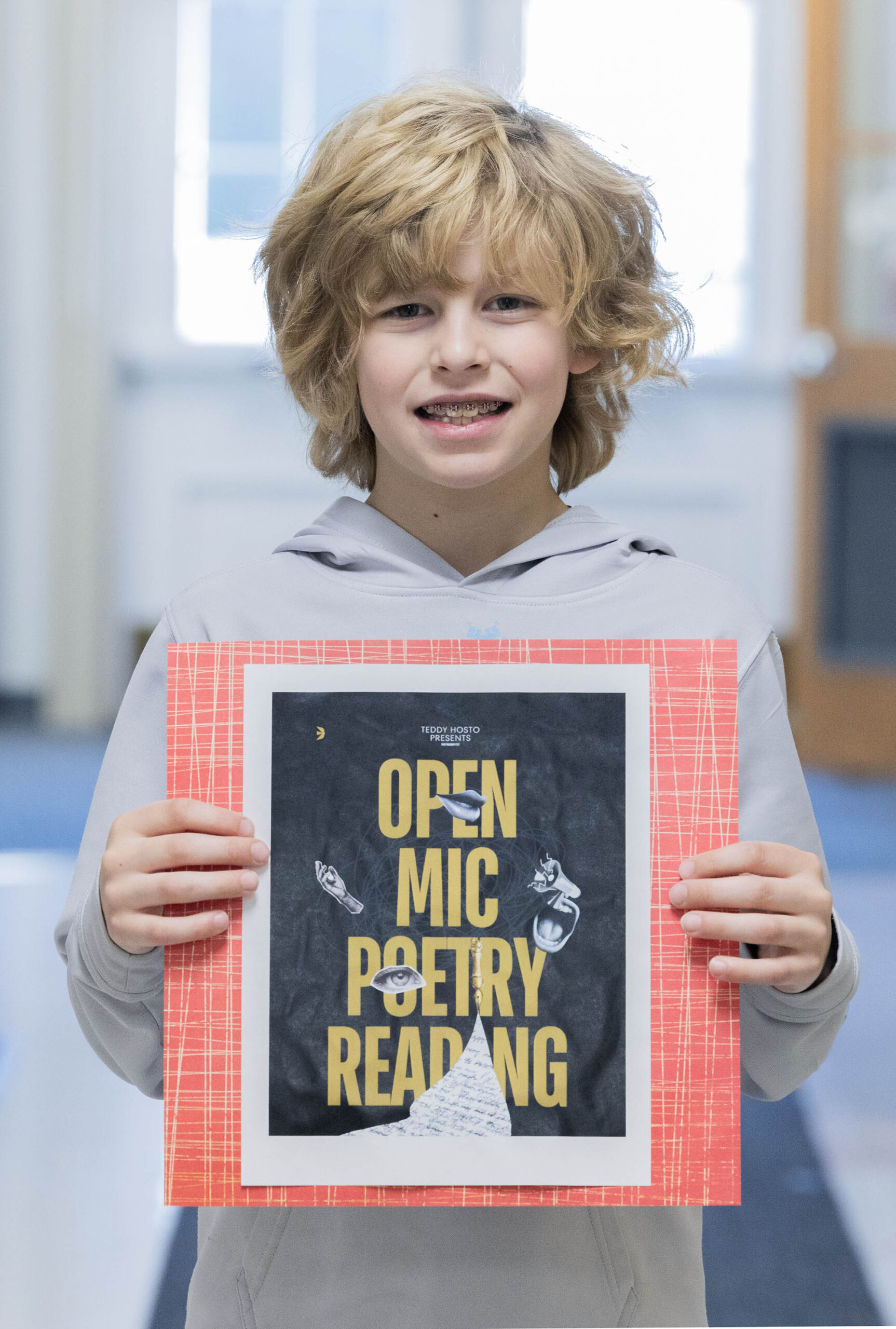
In a Lower School classroom this winter, a spark became a flame and, eventually, a warm campfire for young readers and writers.
The Spark
In his independent reading adventures, Teddy H. ’34 read the book Finding Perfect by Elly Swartz. Finding Perfect follows twelve-year-old Molly Nathans, a girl who finds comfort in order and perfection as she struggles with anxiety and growing obsessive thoughts. When her mom moves away for work, Molly becomes convinced that winning her middle school poetry slam will bring her back, and she pours everything into writing the “perfect” poem. Along the way, Molly begins to understand her obsessive-compulsive disorder (OCD) and learns that asking for help and letting go of perfection are part of finding her way forward.
The Flame
What came next was an unexpected but aligned adventure in the MICDS fourth-grade classroom of Allison Antolik. In the midst of the poetry unit in the Core Knowledge Language Arts (CKLA) curriculum, Teddy proposed hosting a bracketed, tournament-style poetry slam in their classroom, inspired by the one in Finding Perfect. Ten students expressed their interest and put pencil to paper for their poems. Teddy was so excited by his classmates’ enthusiastic participation that he emailed the author of Finding Perfect, Elly Swartz, to let her know how the book inspired him.
Dear Elly Swartz,
I read your book Finding Perfect and got the idea to make my own poetry slam for my class. So thank you for the inspiration and your books are great.
From,
Teddy H.
4th Grade
Mary Institute and Country Day School
The CKLA poetry unit focuses on everything from haikus to free verse, but Teddy wanted to take it a step further. Inspired by the performance-based nature of slam poetry, he invited his peers to step into the “tall poetry chair.” Ten students began crafting their poems, and the competition was born.
Teddy said, “I read a lot of poetry and only write poems every now and then. I really like Shel Silverstein. He’s probably my favorite poet. His poems are funny and rhyme a lot. When we got to our poetry unit in class, I remembered that part of the Finding Perfect book. So I decided to create my own [poetry slam], and it turned out pretty well. The first bracket went well. I asked who wanted to do it, and 10 out of 16 said they did. I picked three people to be judges, including myself. They all write poems, and we compete until one person wins. The winner received a Barnes and Noble gift card.”
The three judges, Teddy, Addie Z. ’34, and Lucy K. ’34, set their own judging rubric, including parameters such as repetition, rhyme, rhythm, tone, and more. As the young poets advanced through the bracket over two weeks, the two finalists were ready for the challenge. After some non-judged warm-up poetry from two other classmates, Ani V. ’34 and Sam D. ’34 took to the tall poetry chair.
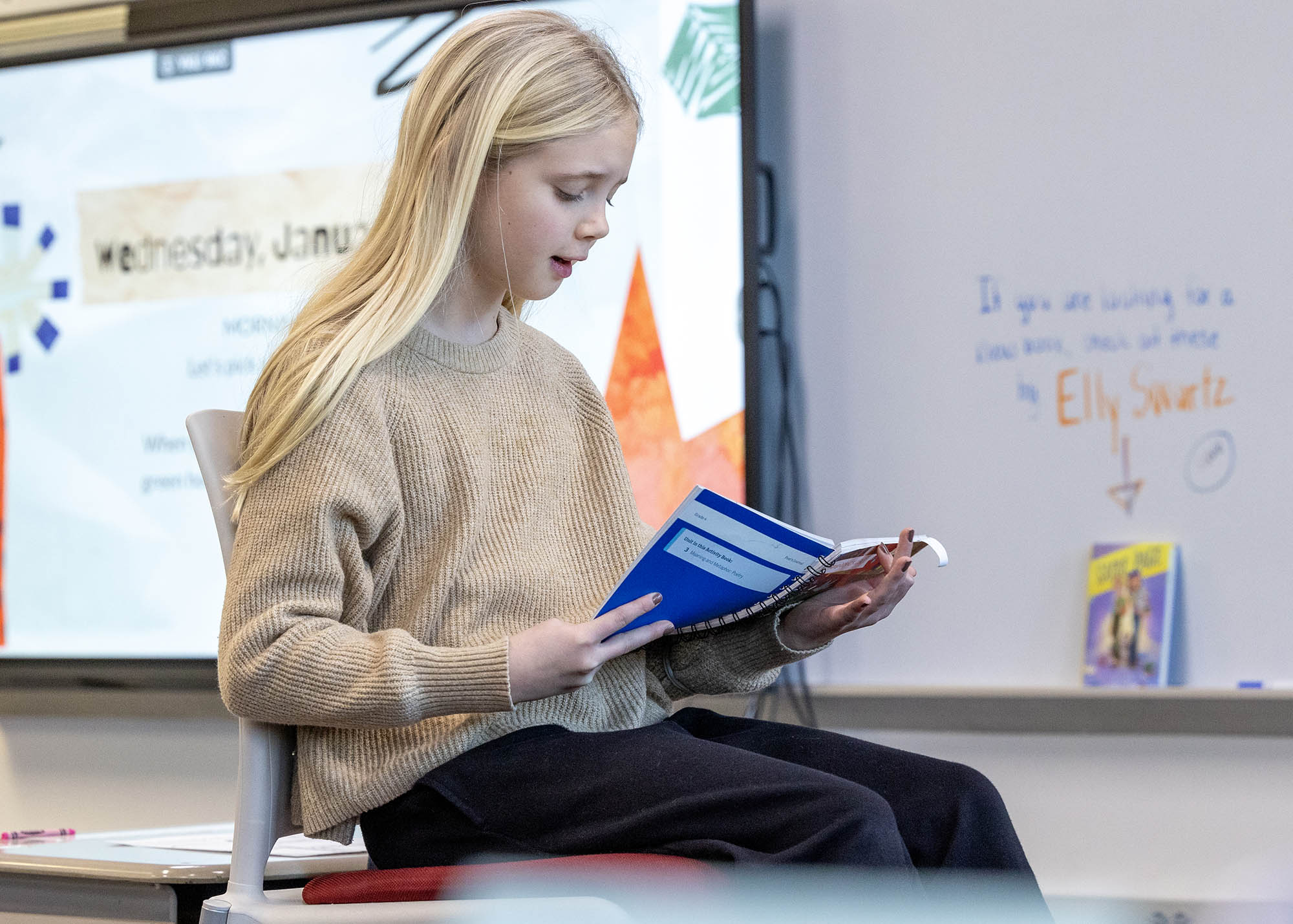
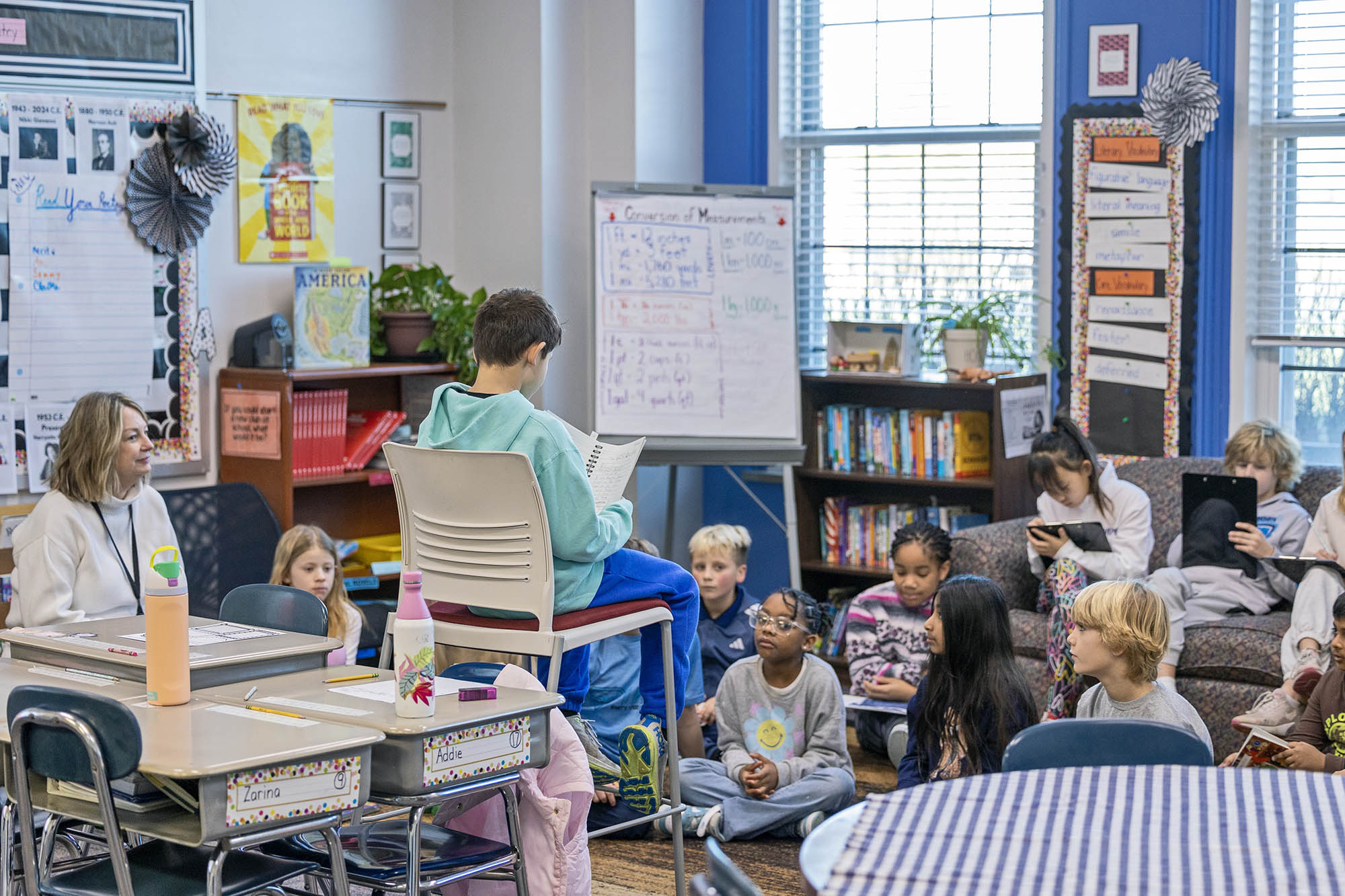
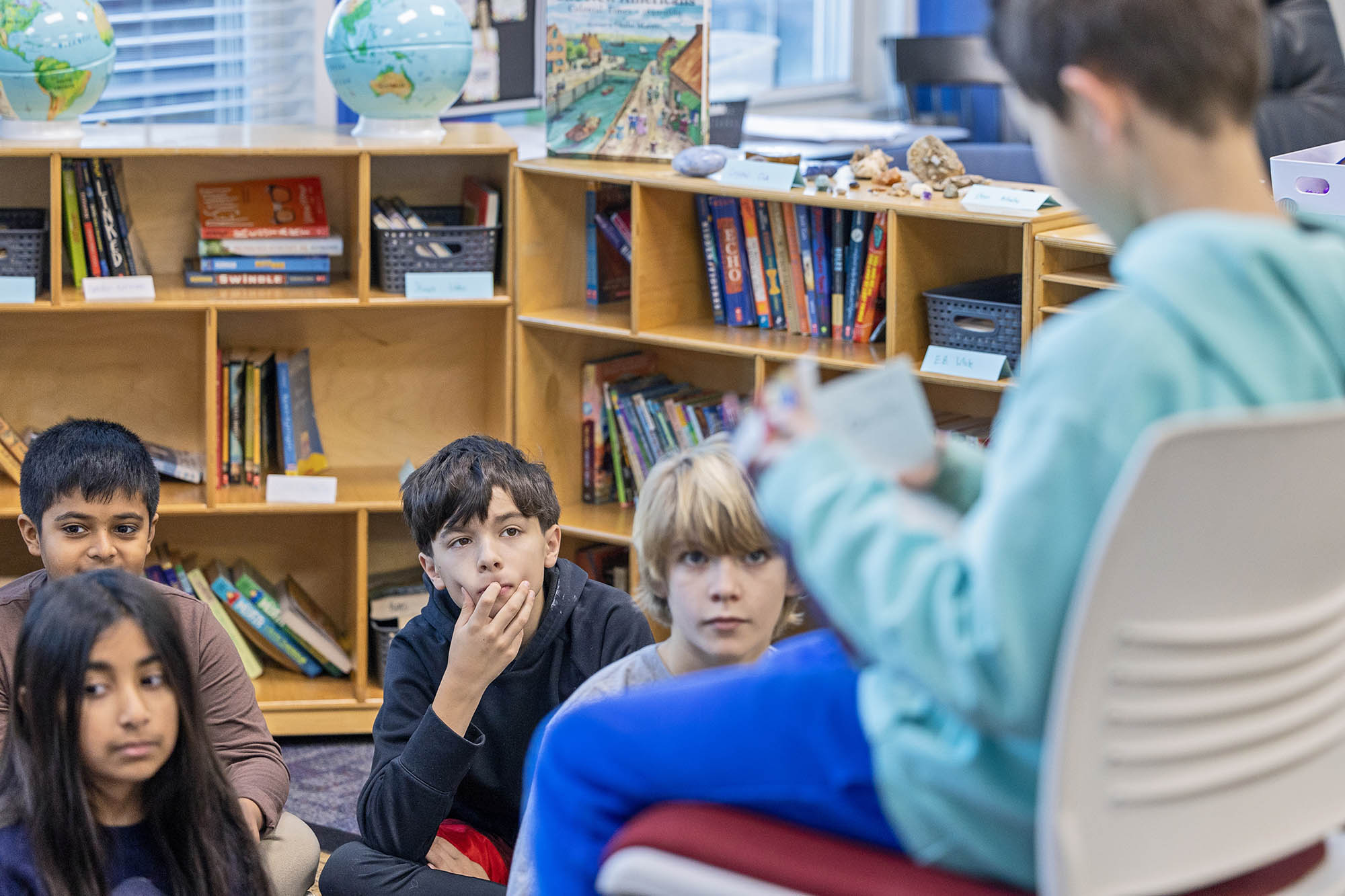

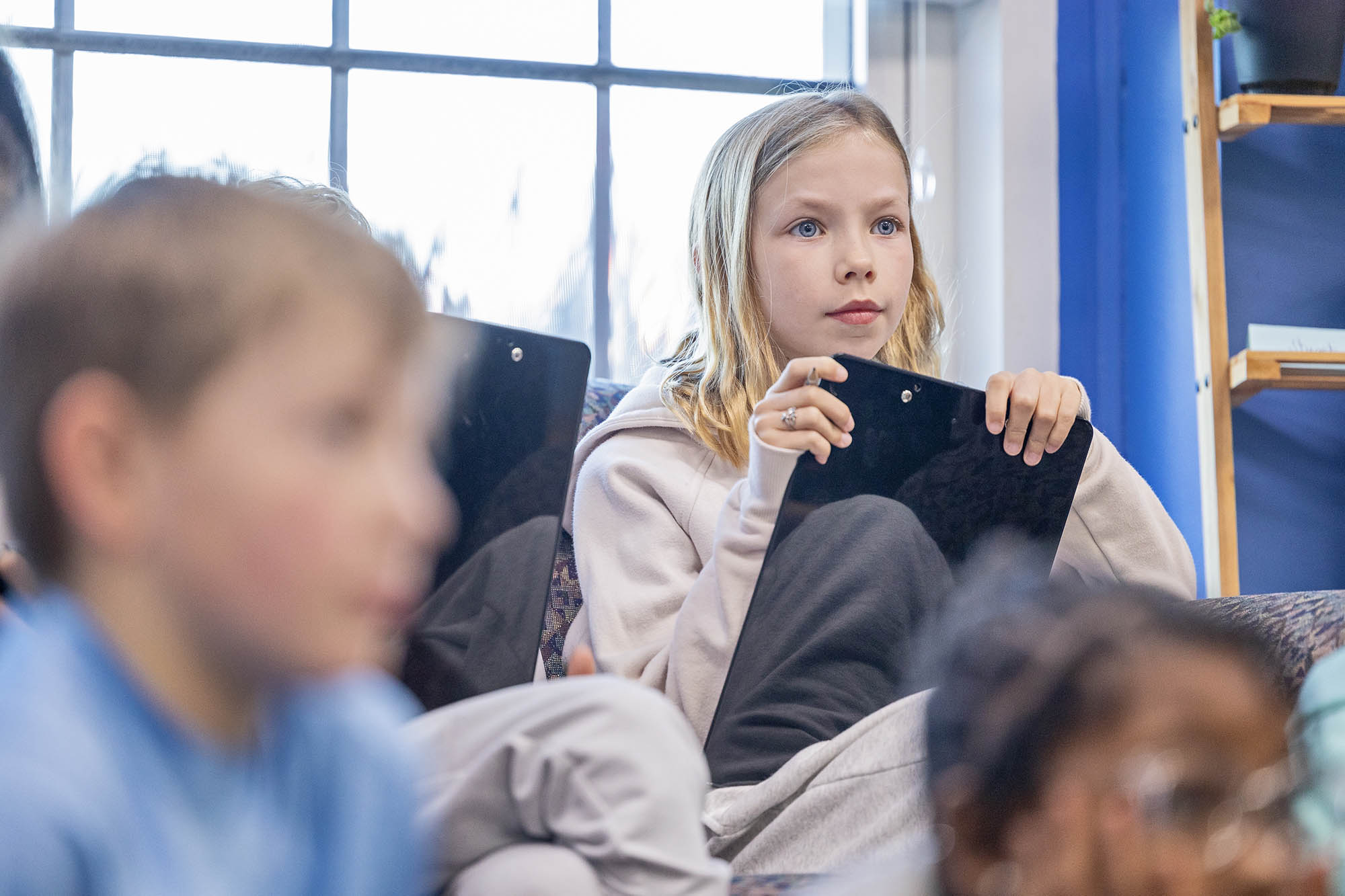
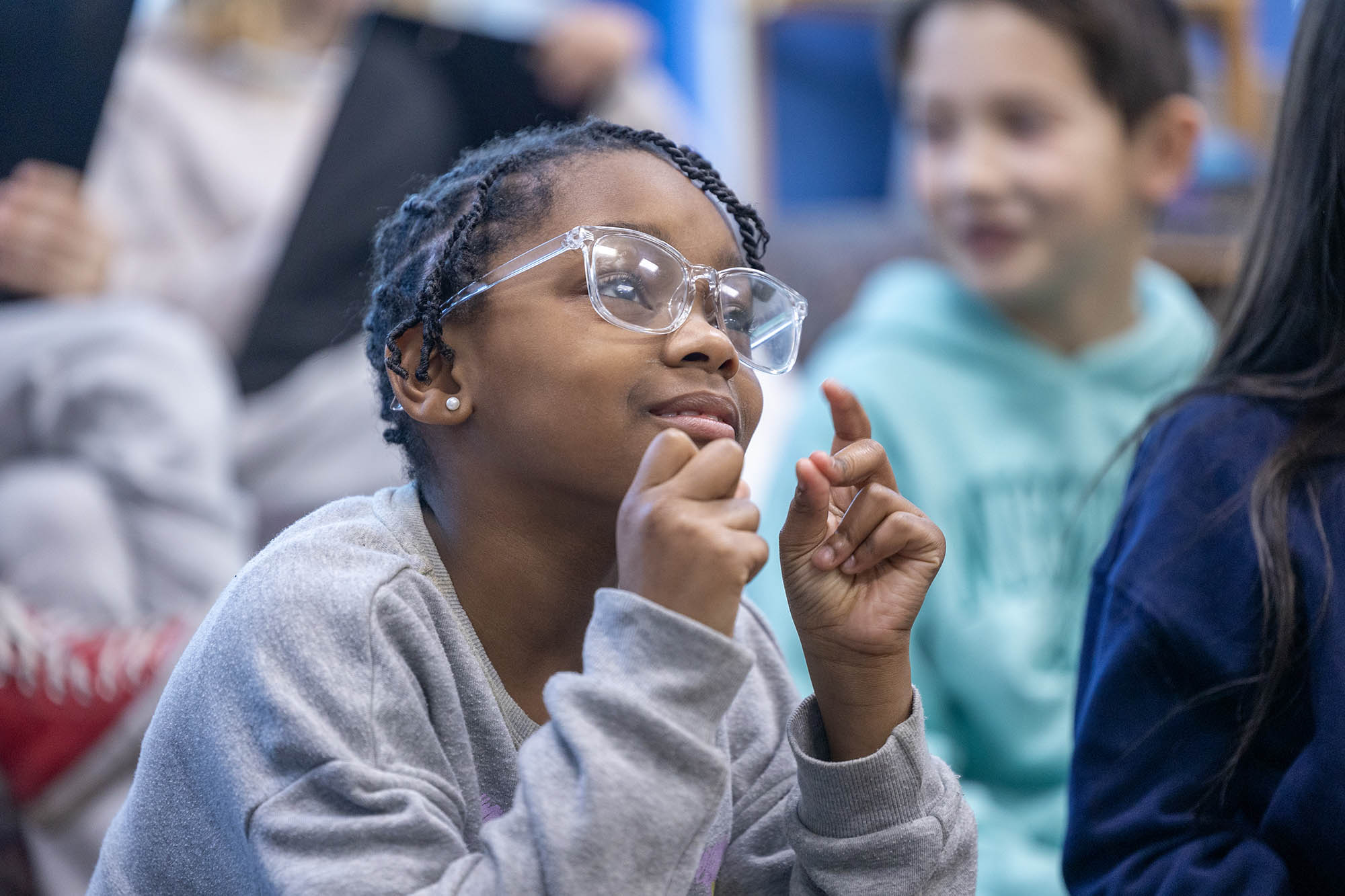
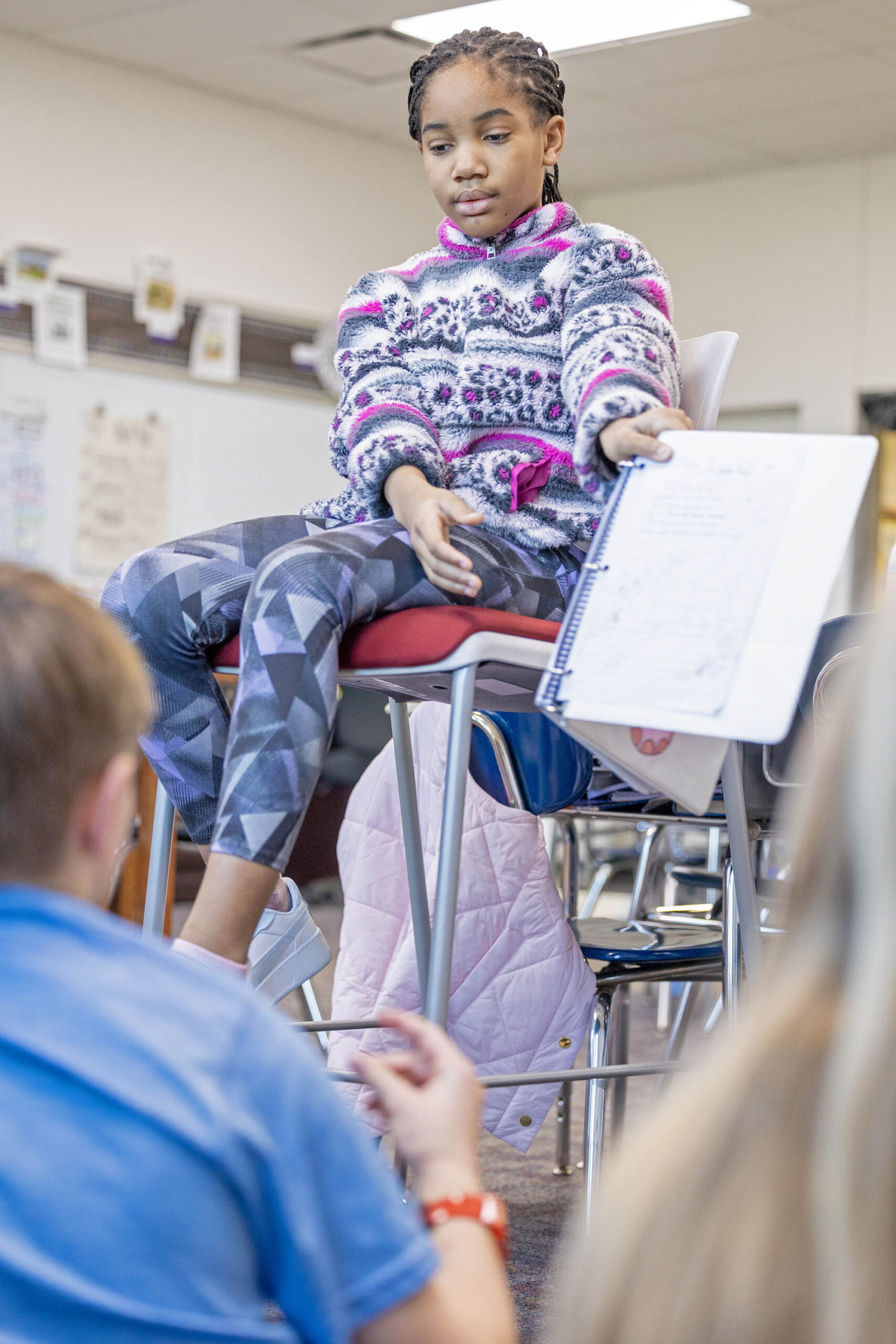

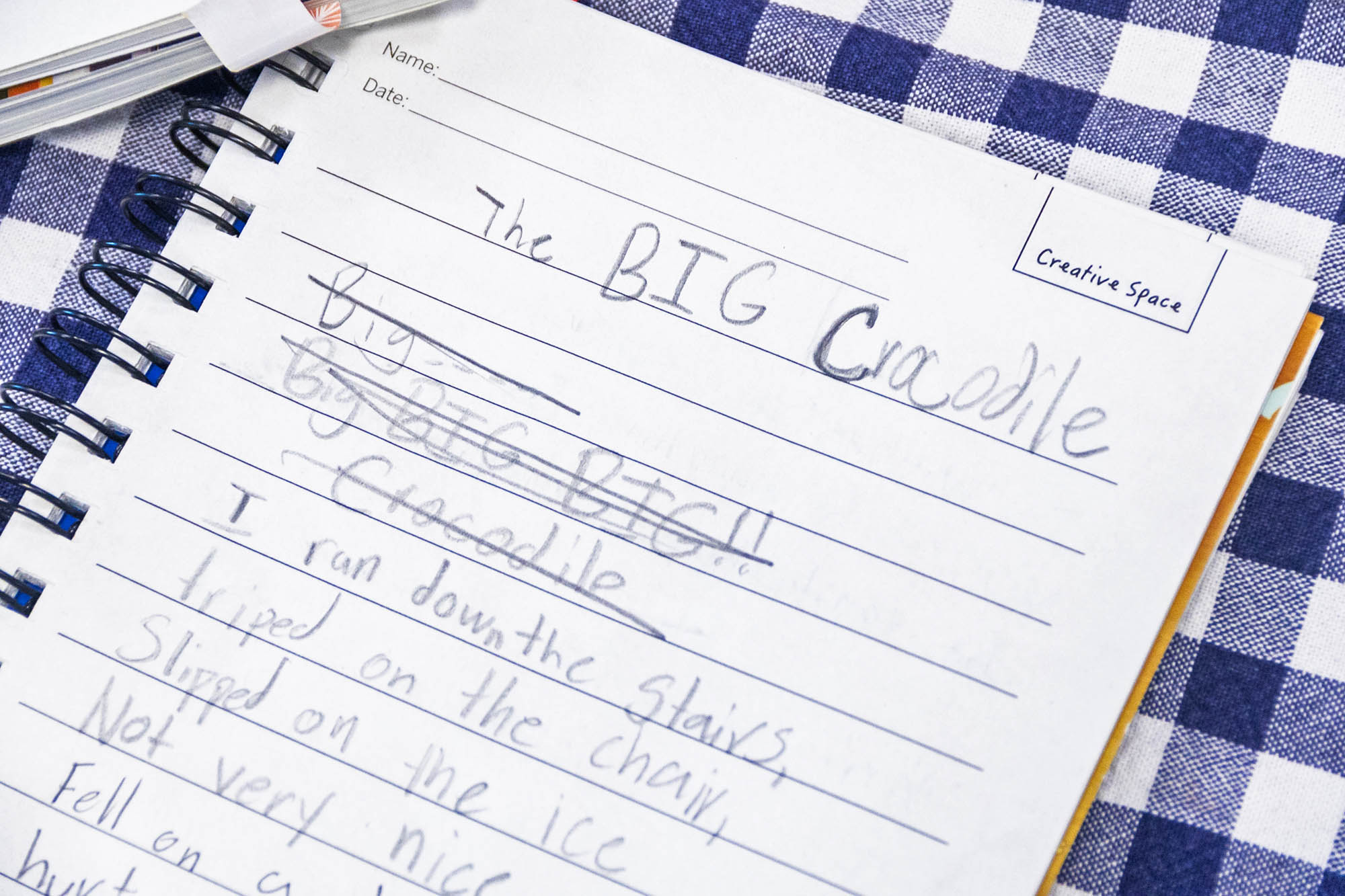
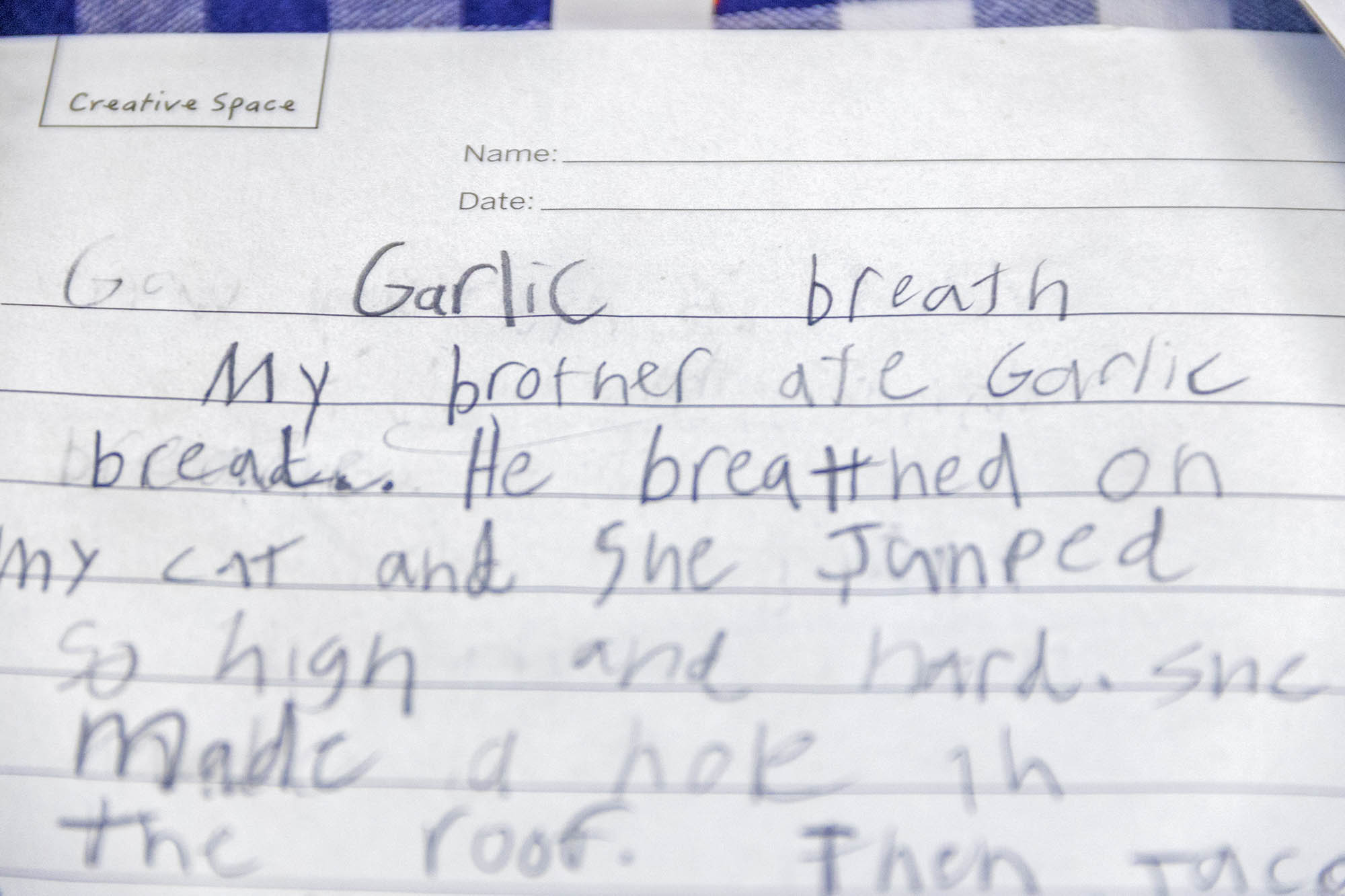
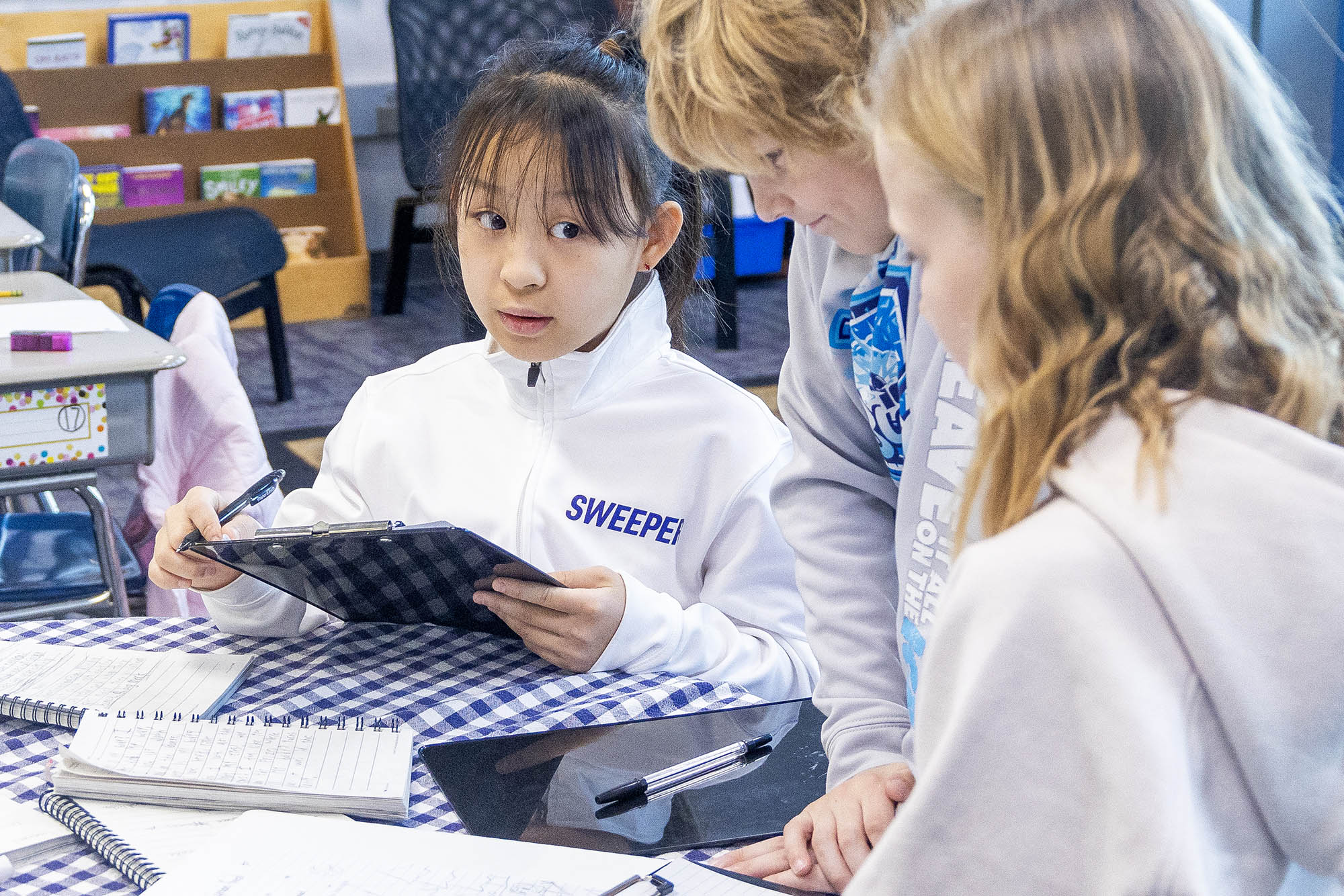
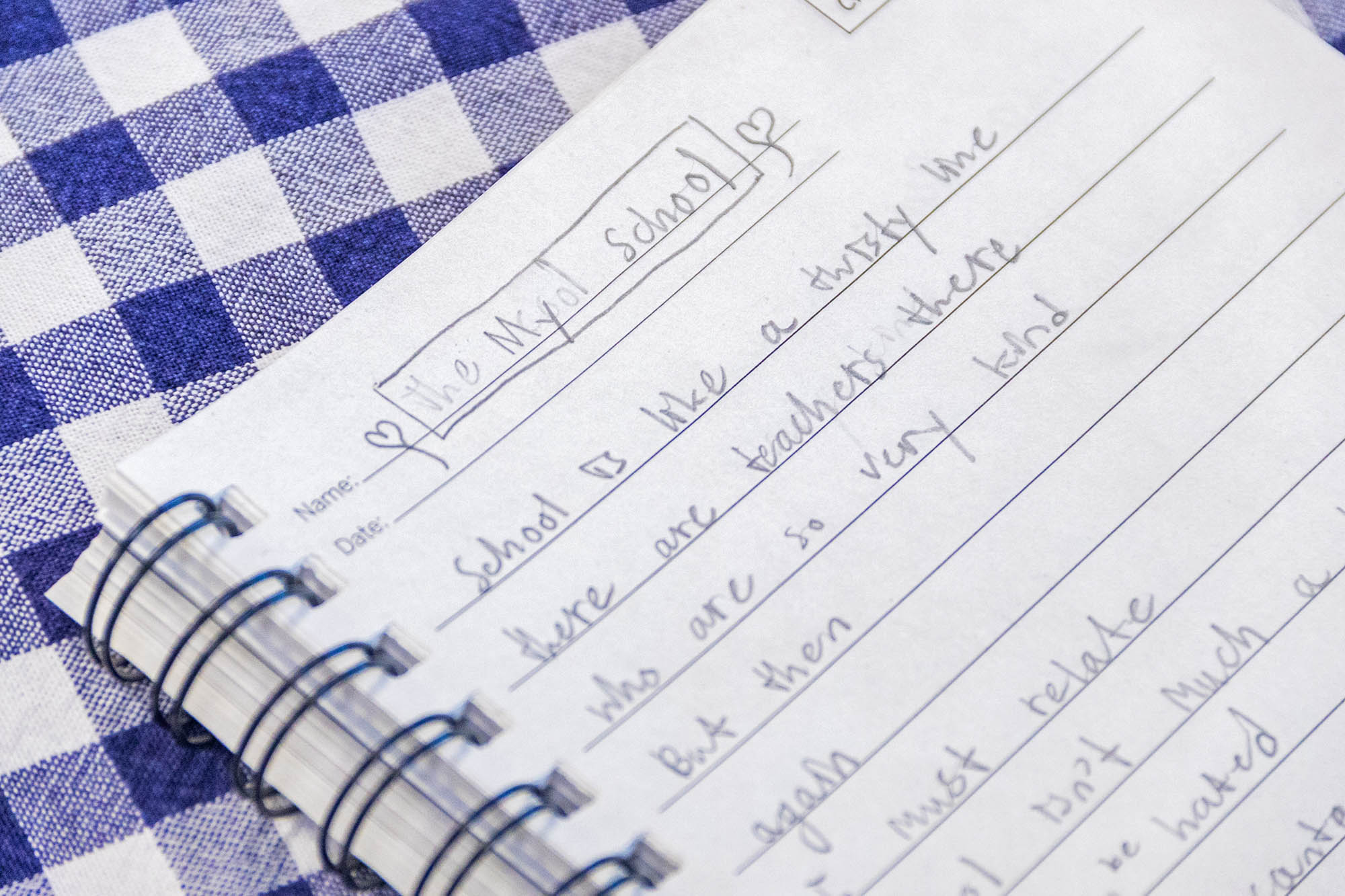
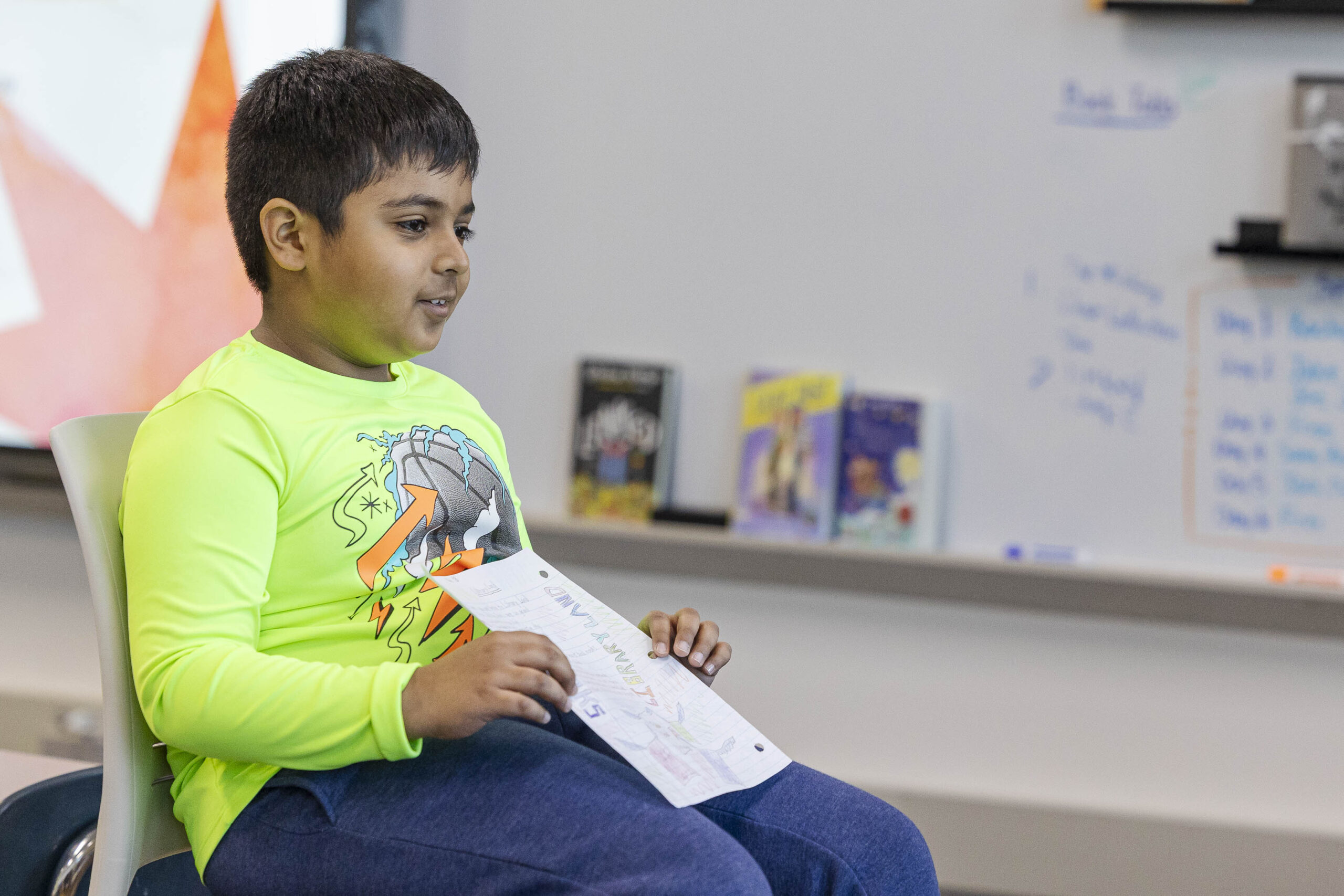
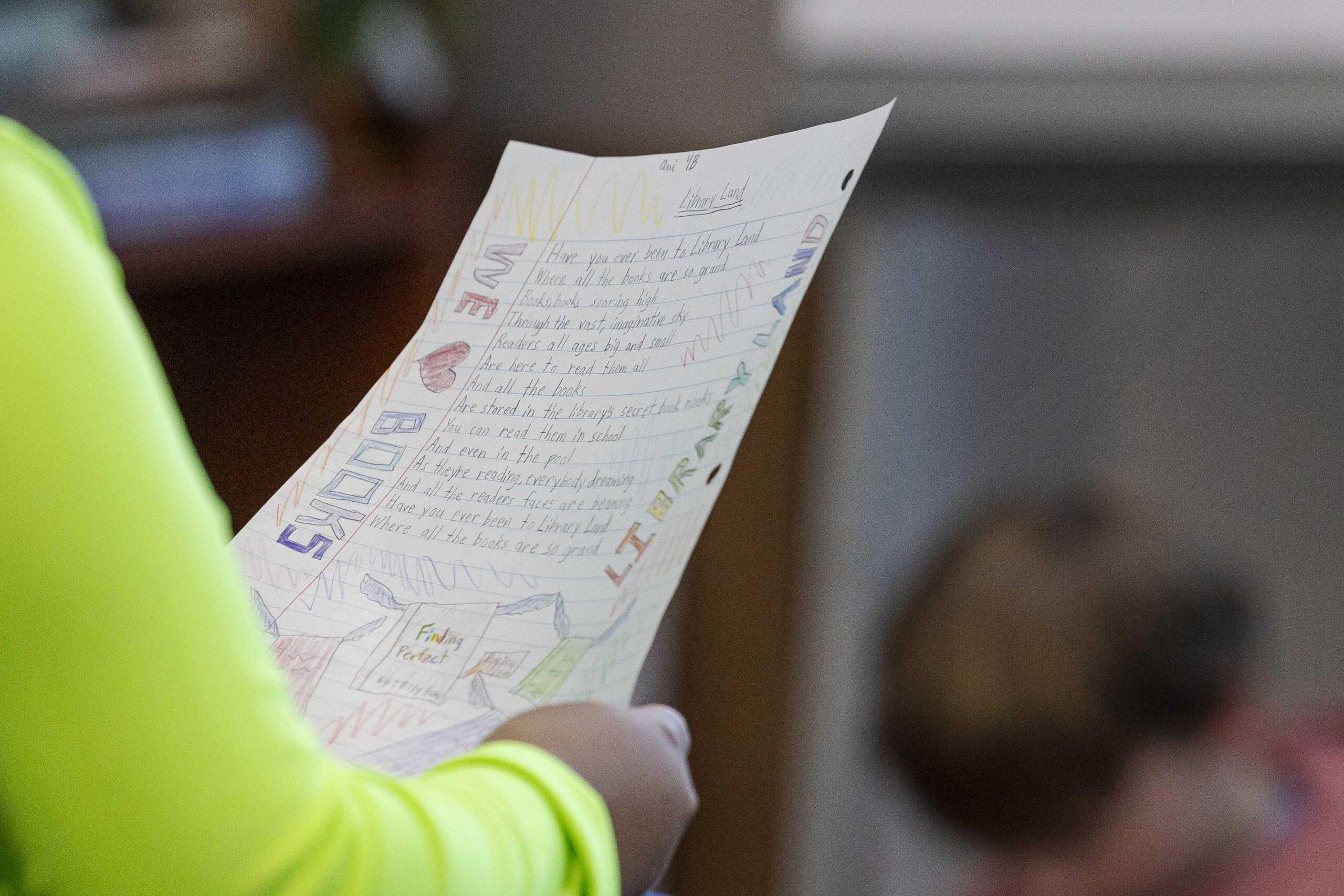
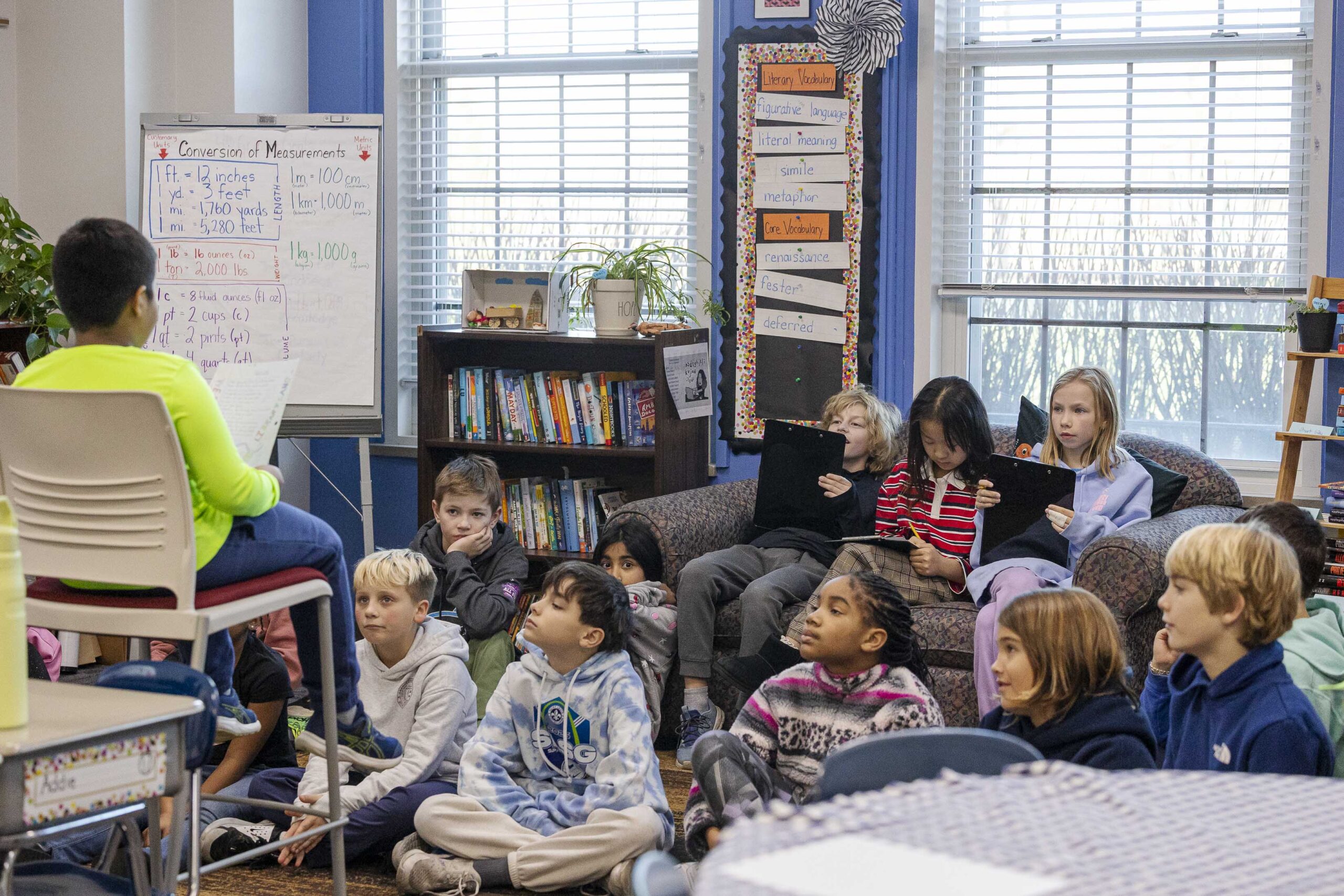
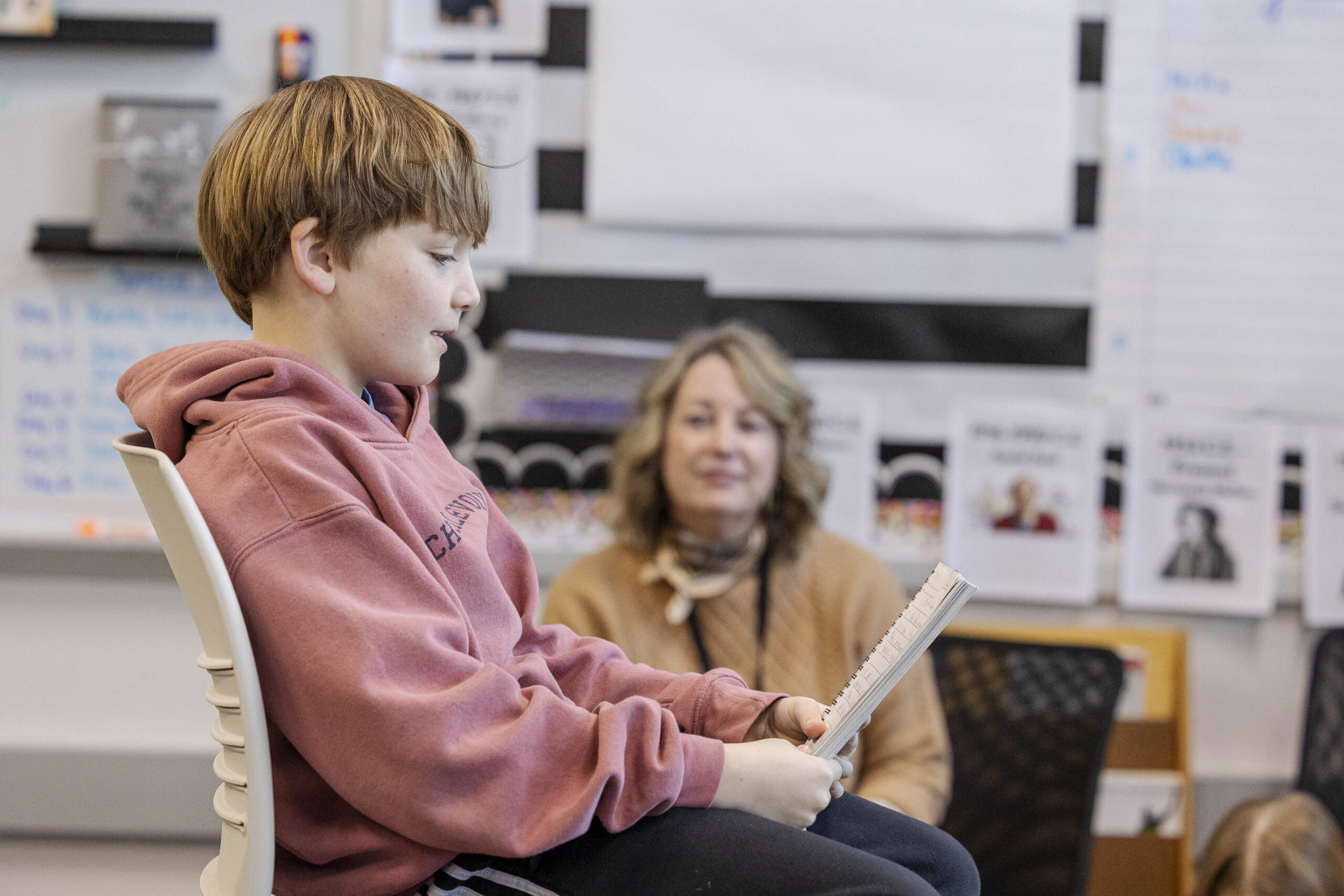
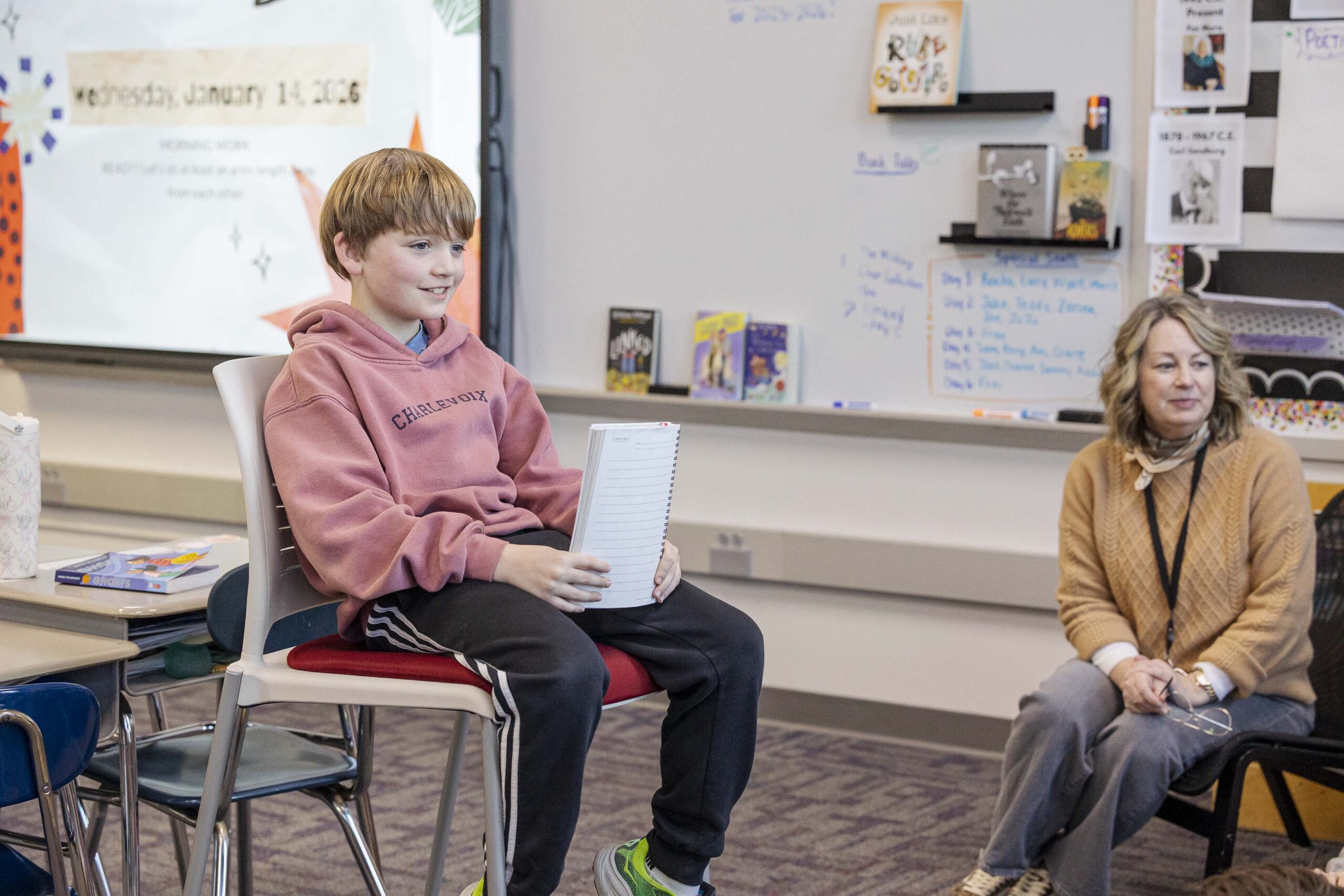

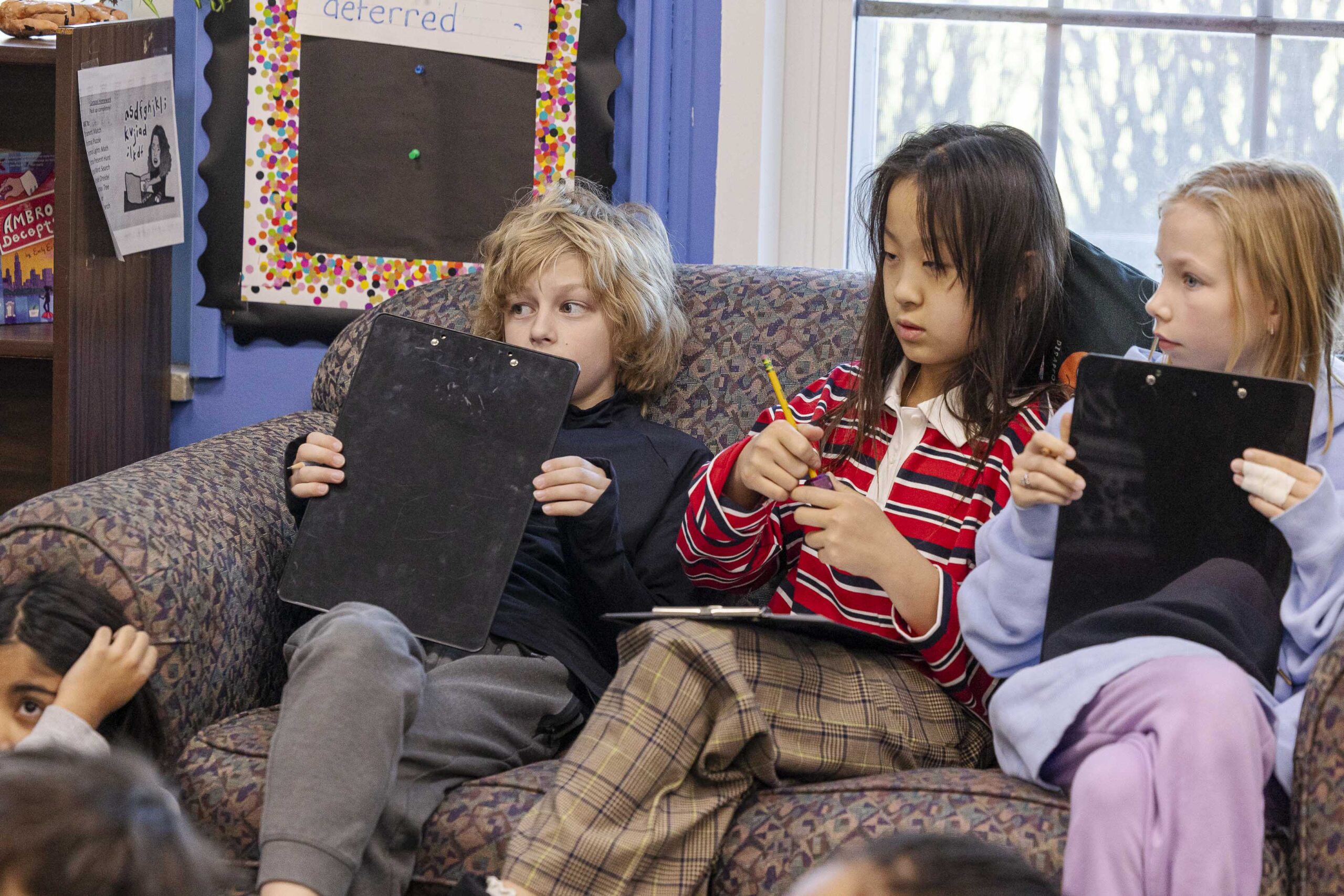
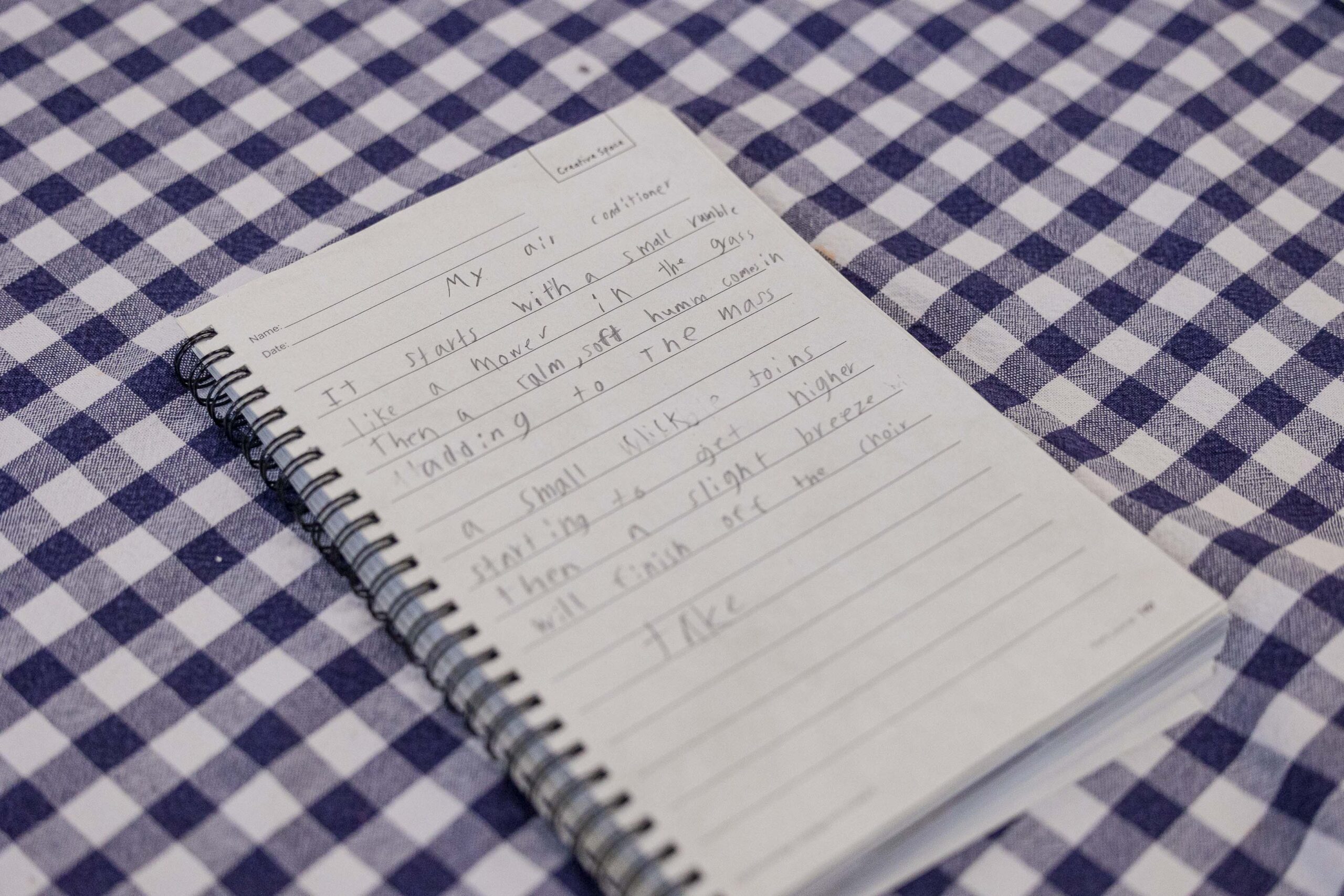
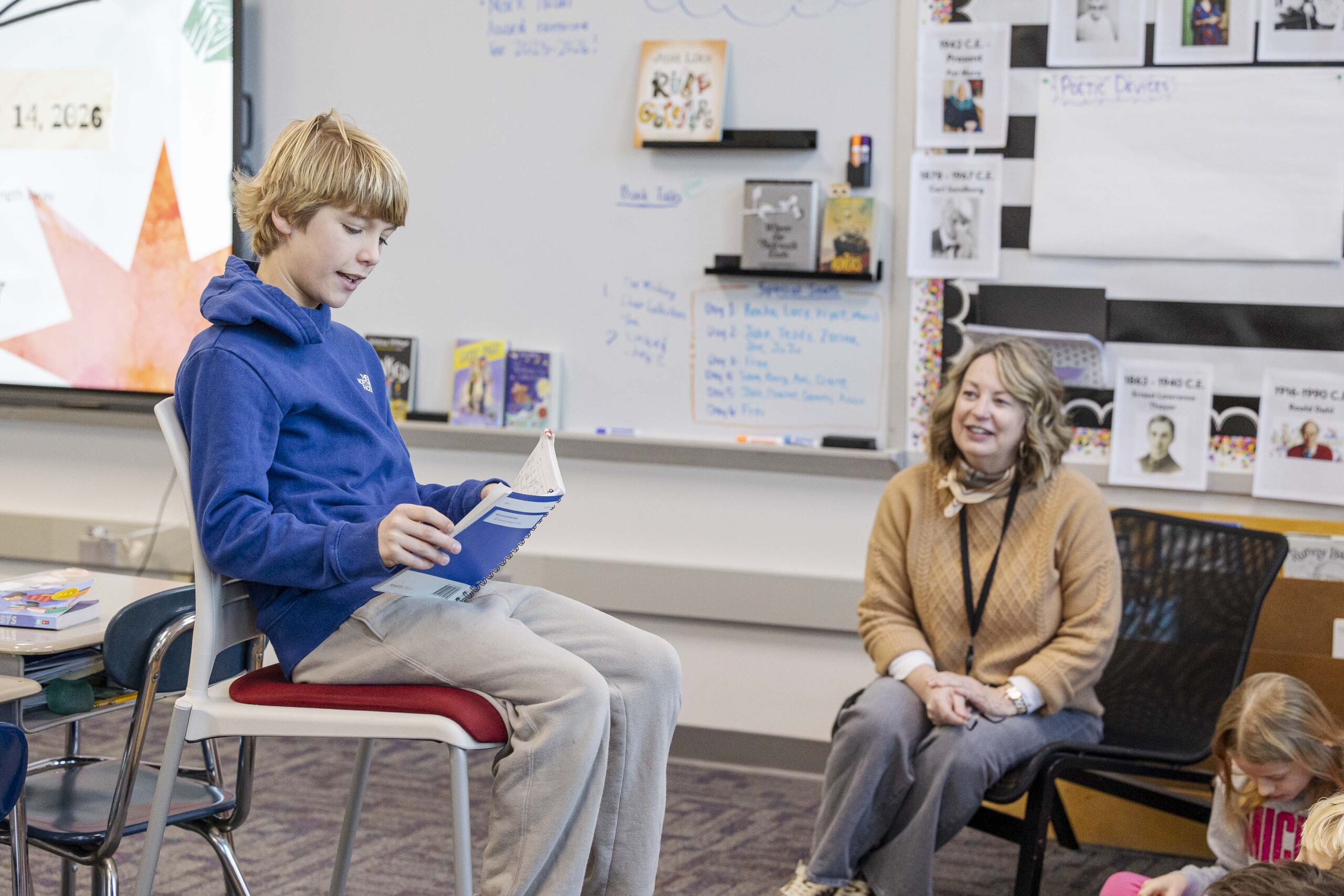
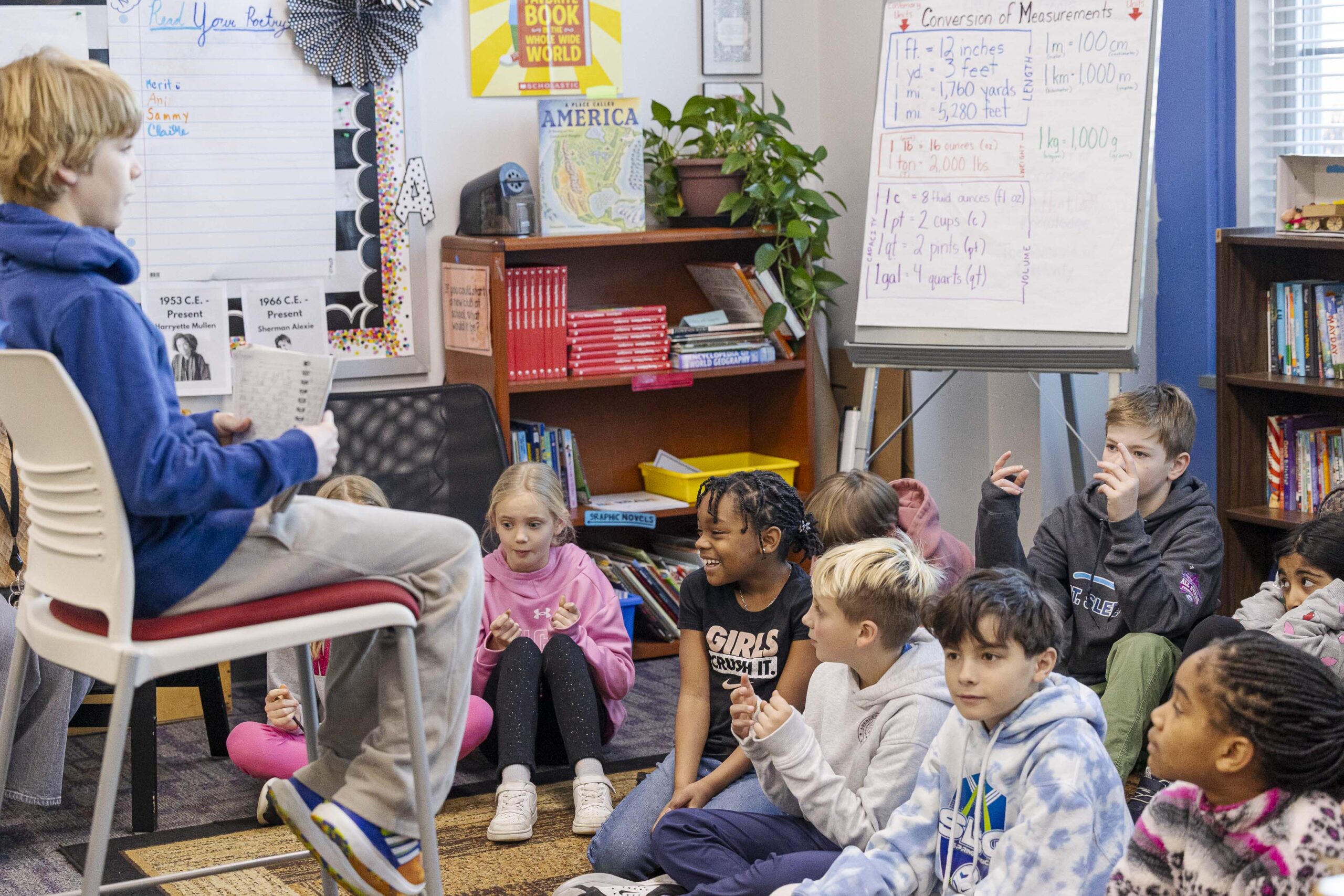

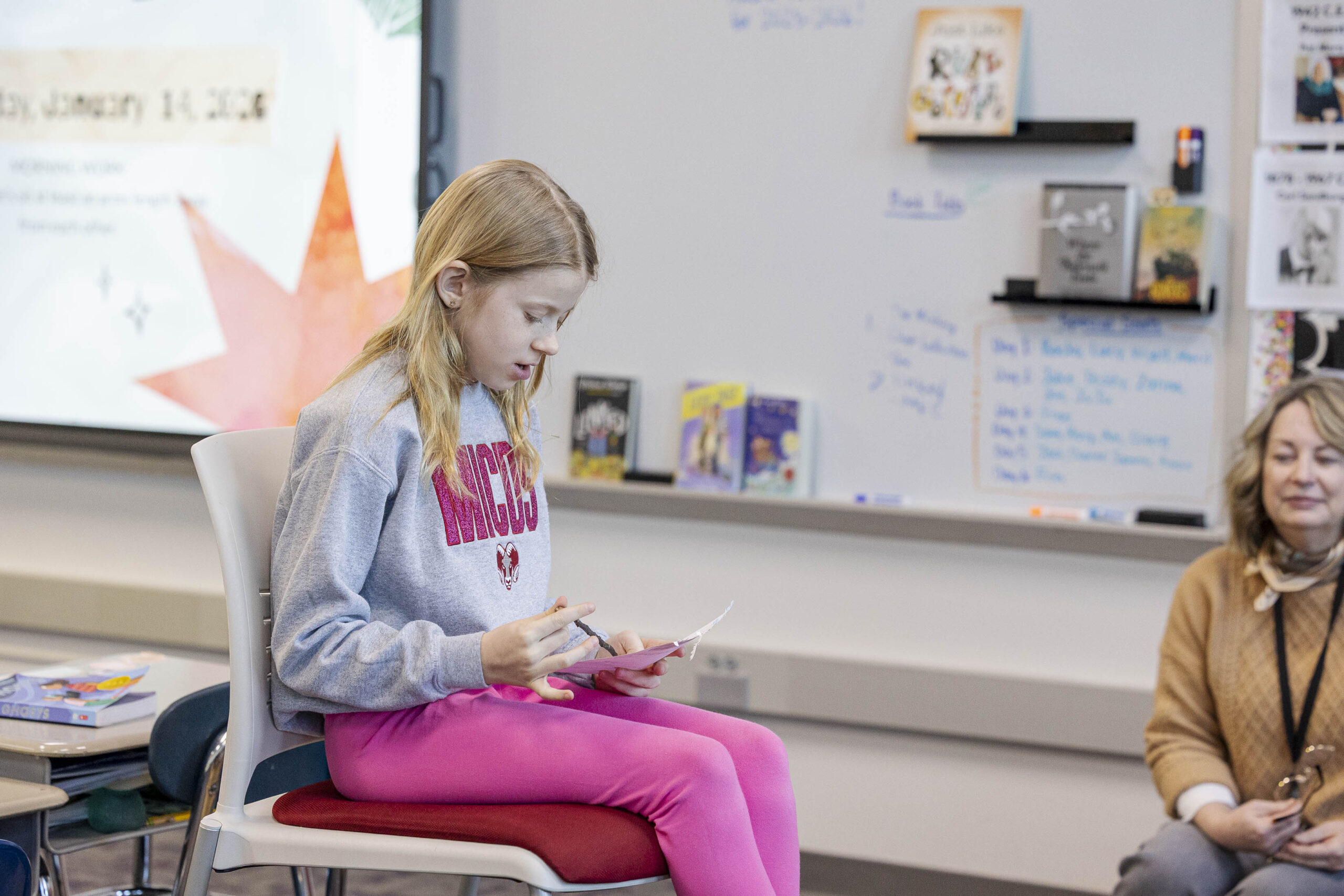

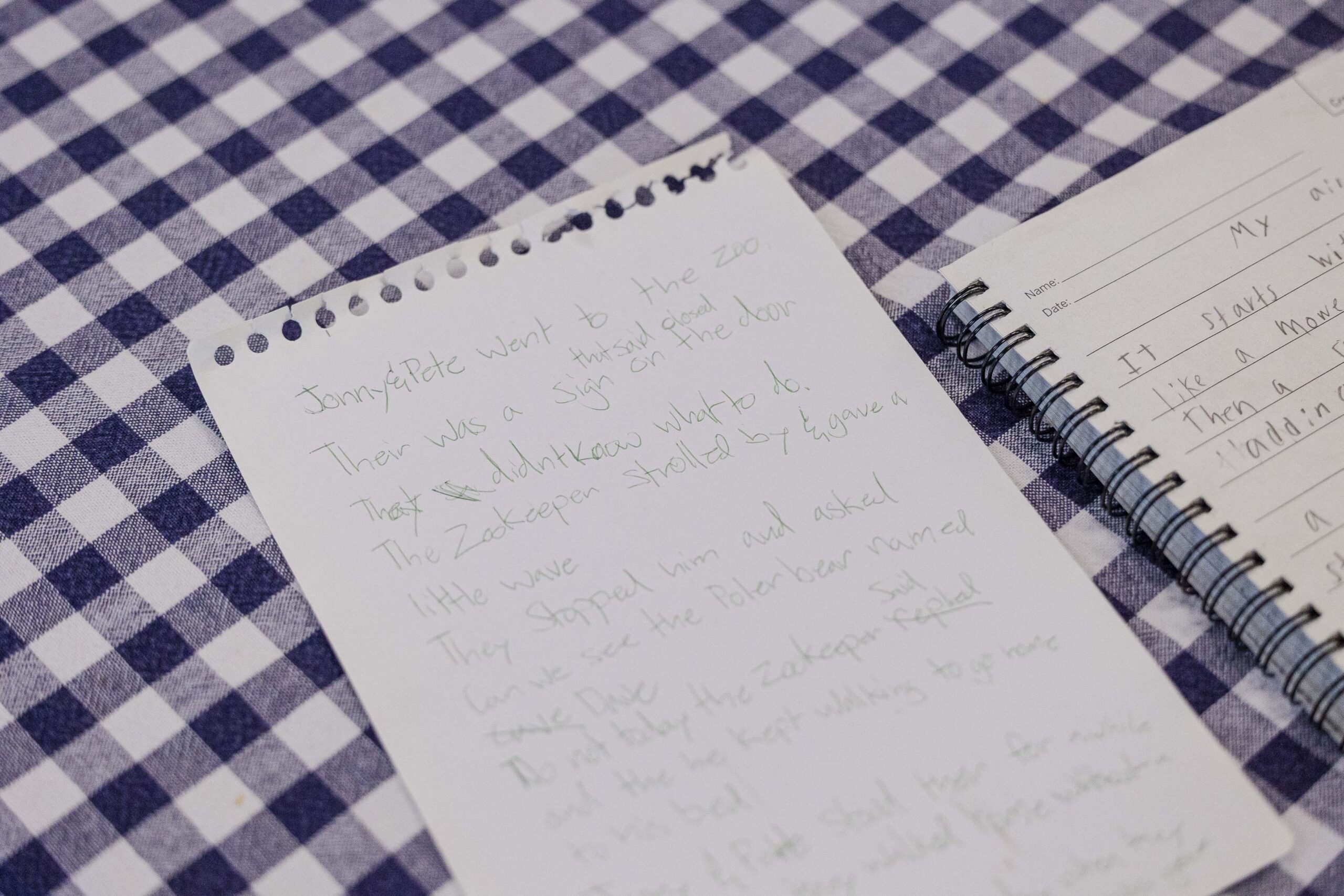
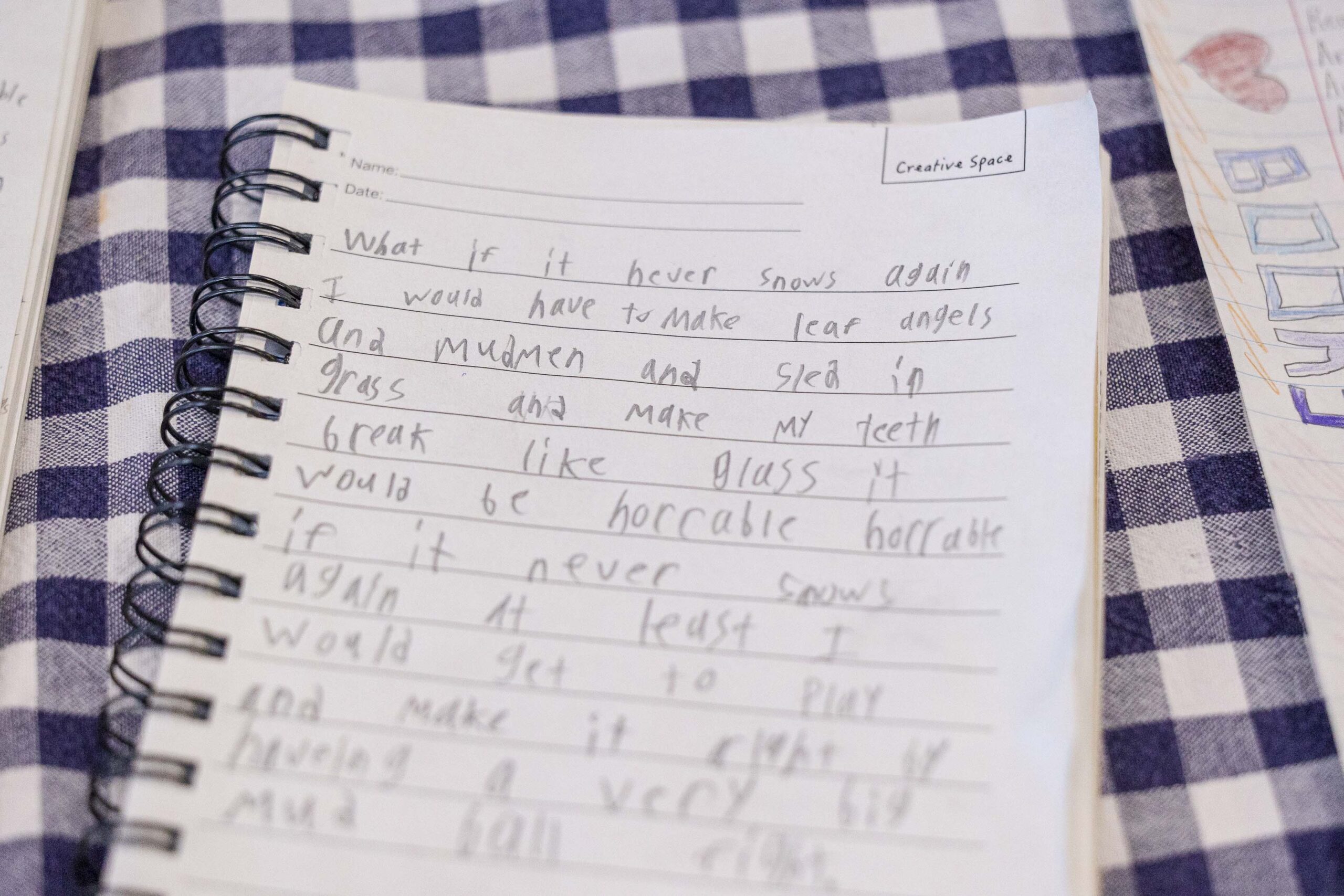
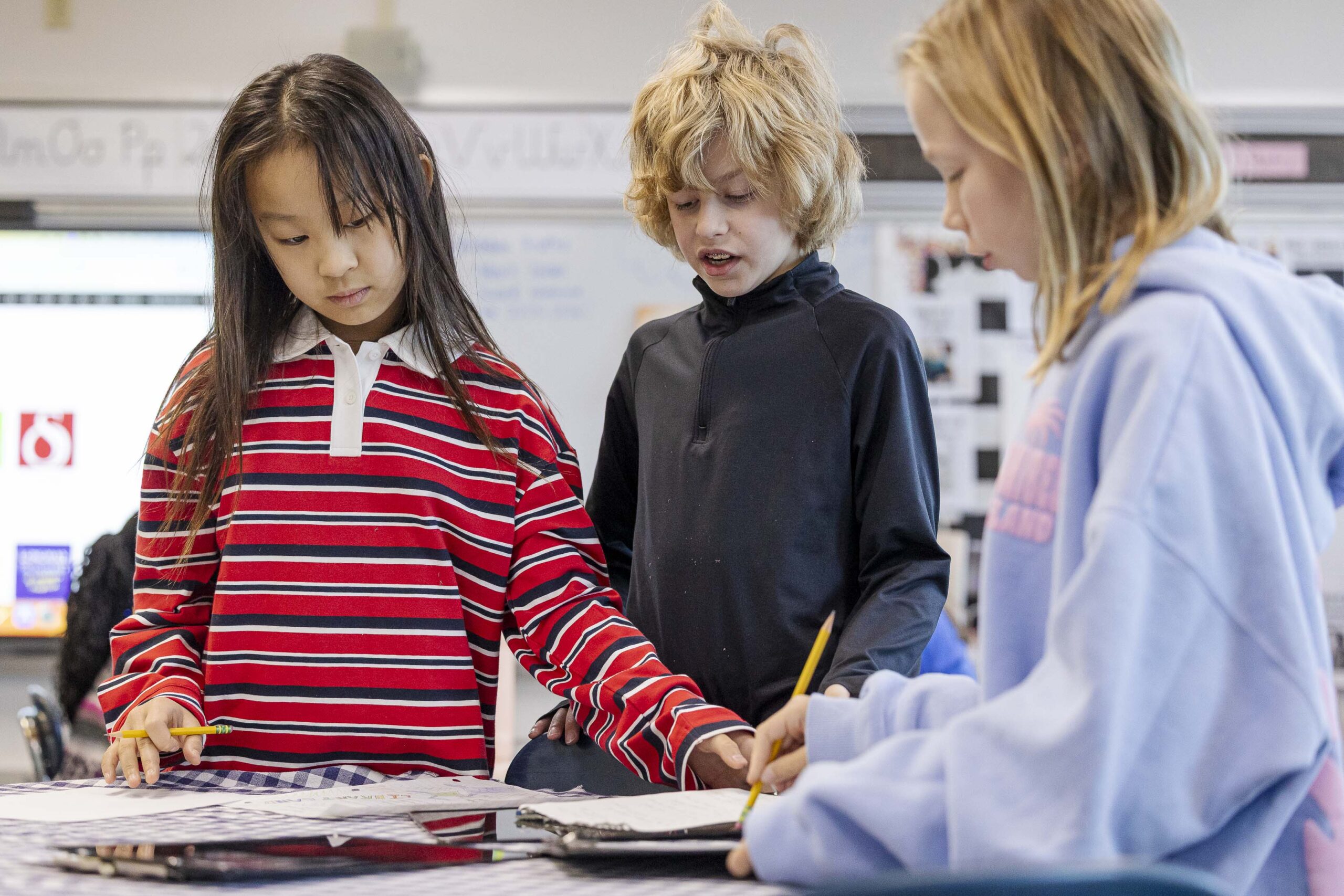
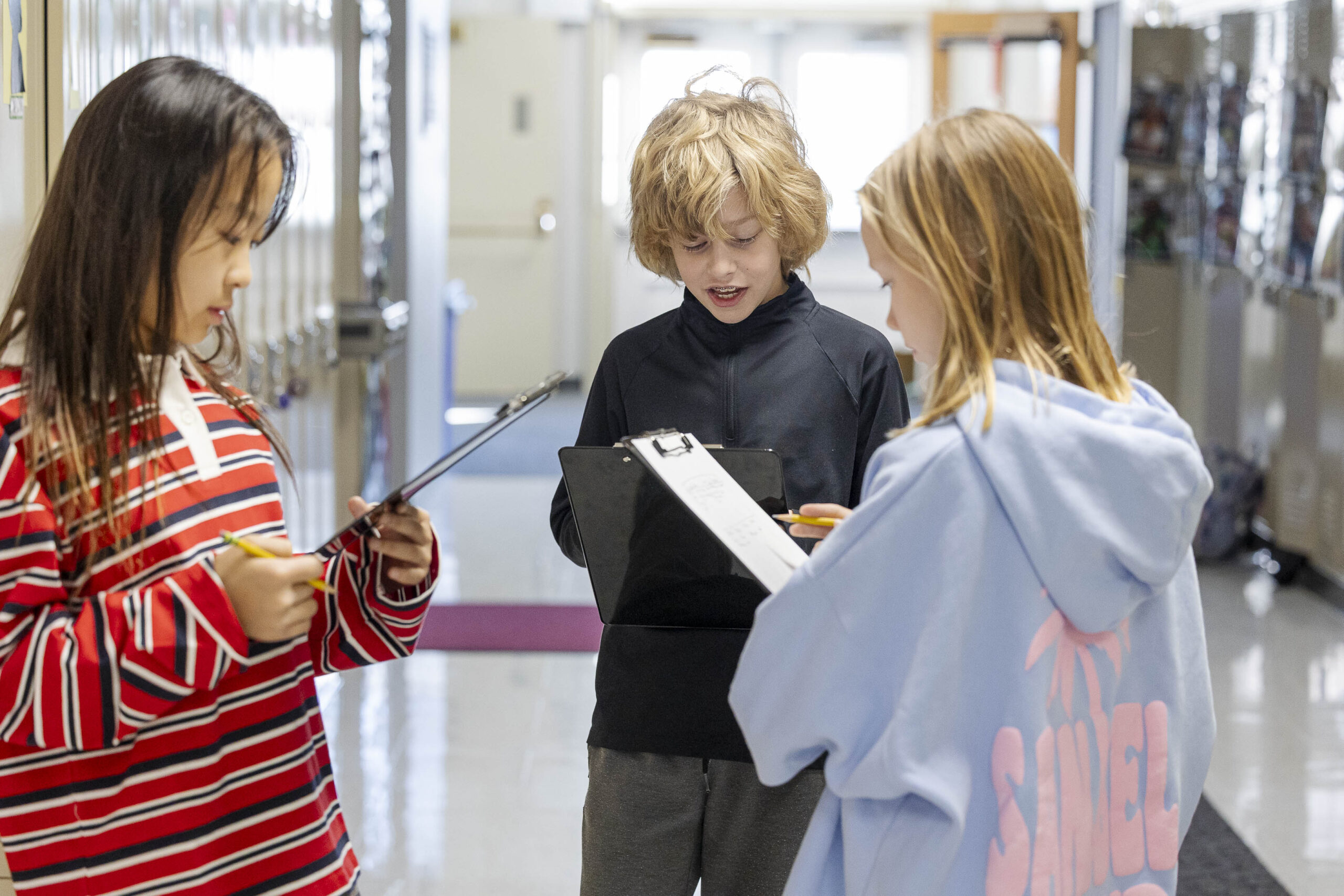

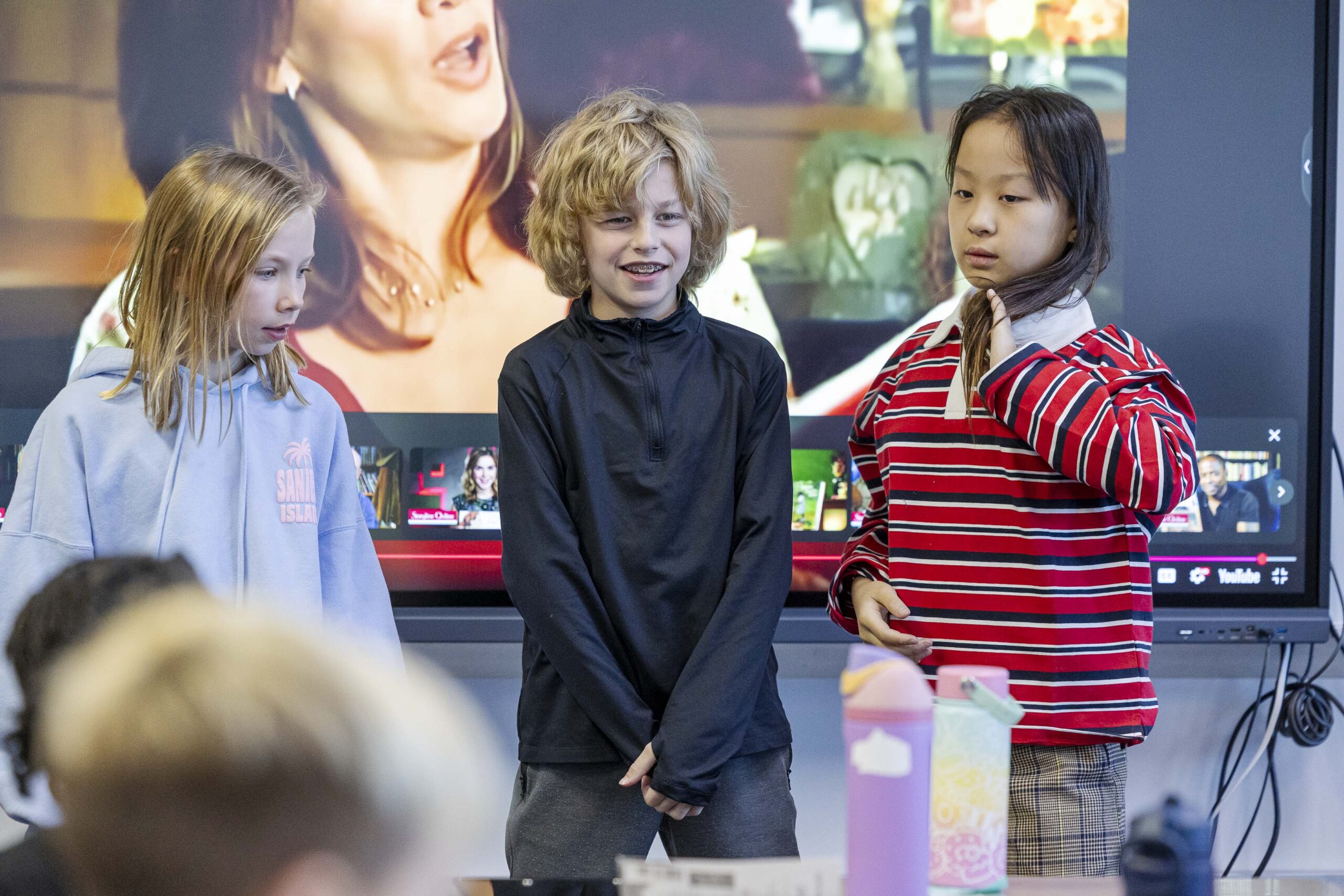
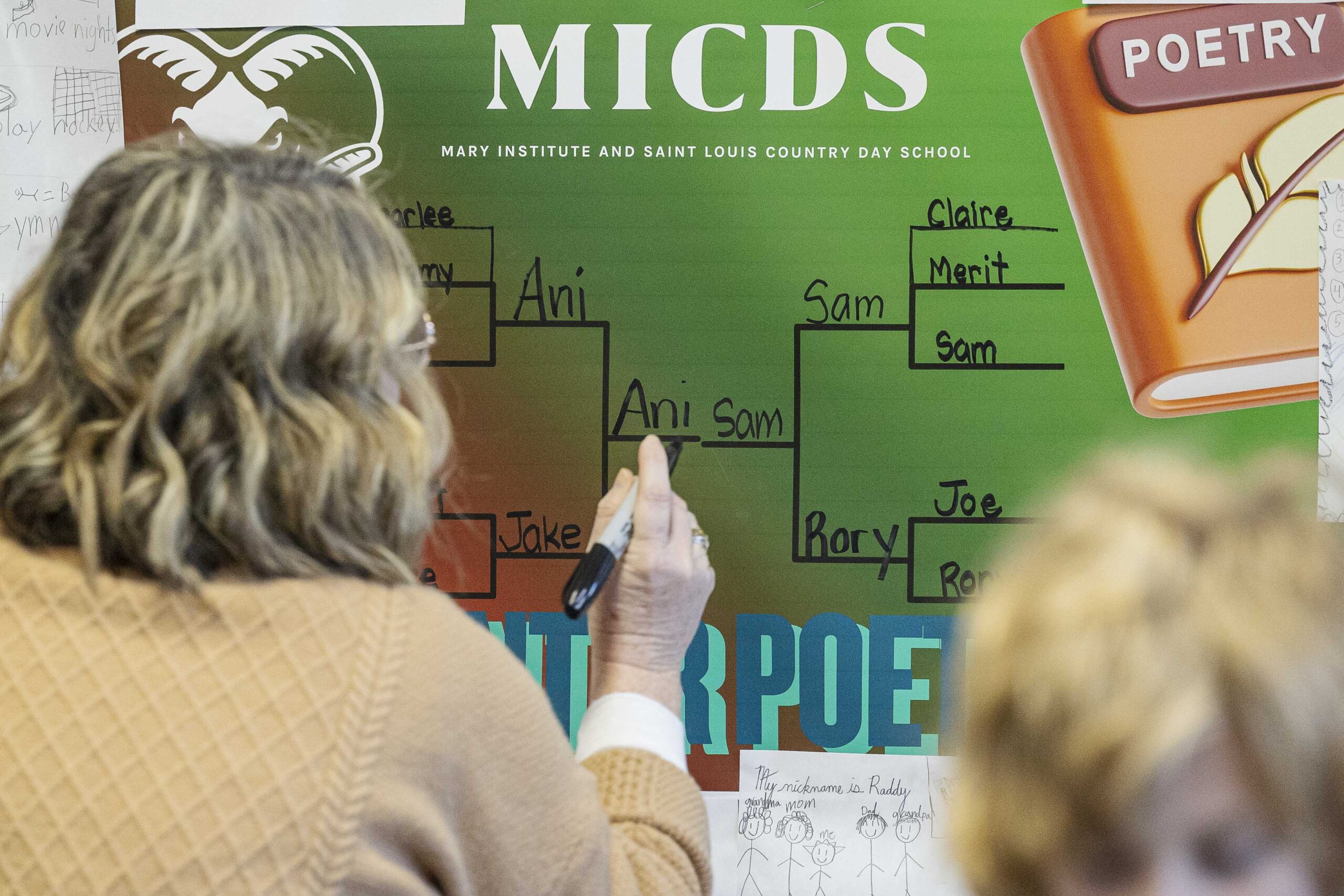
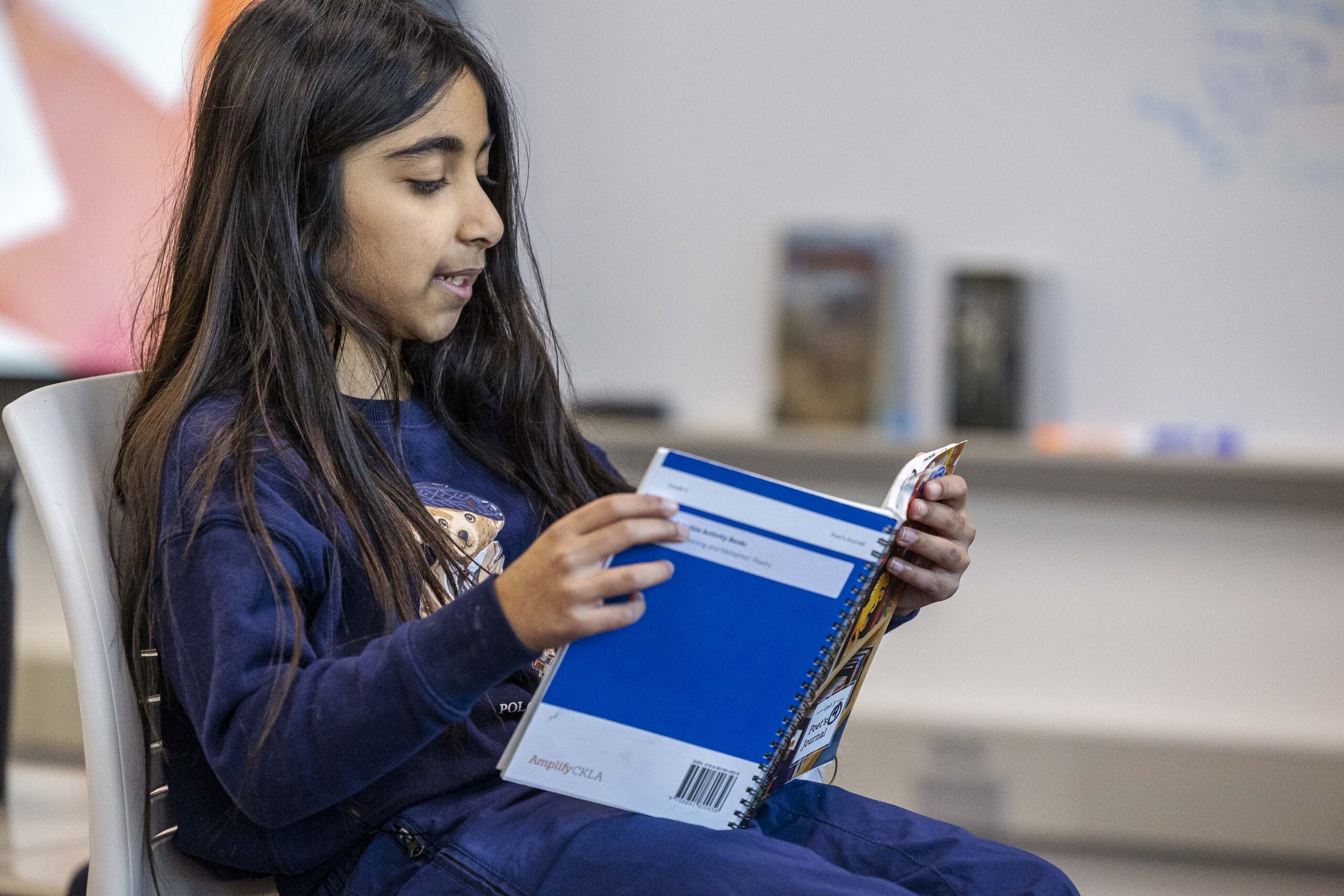
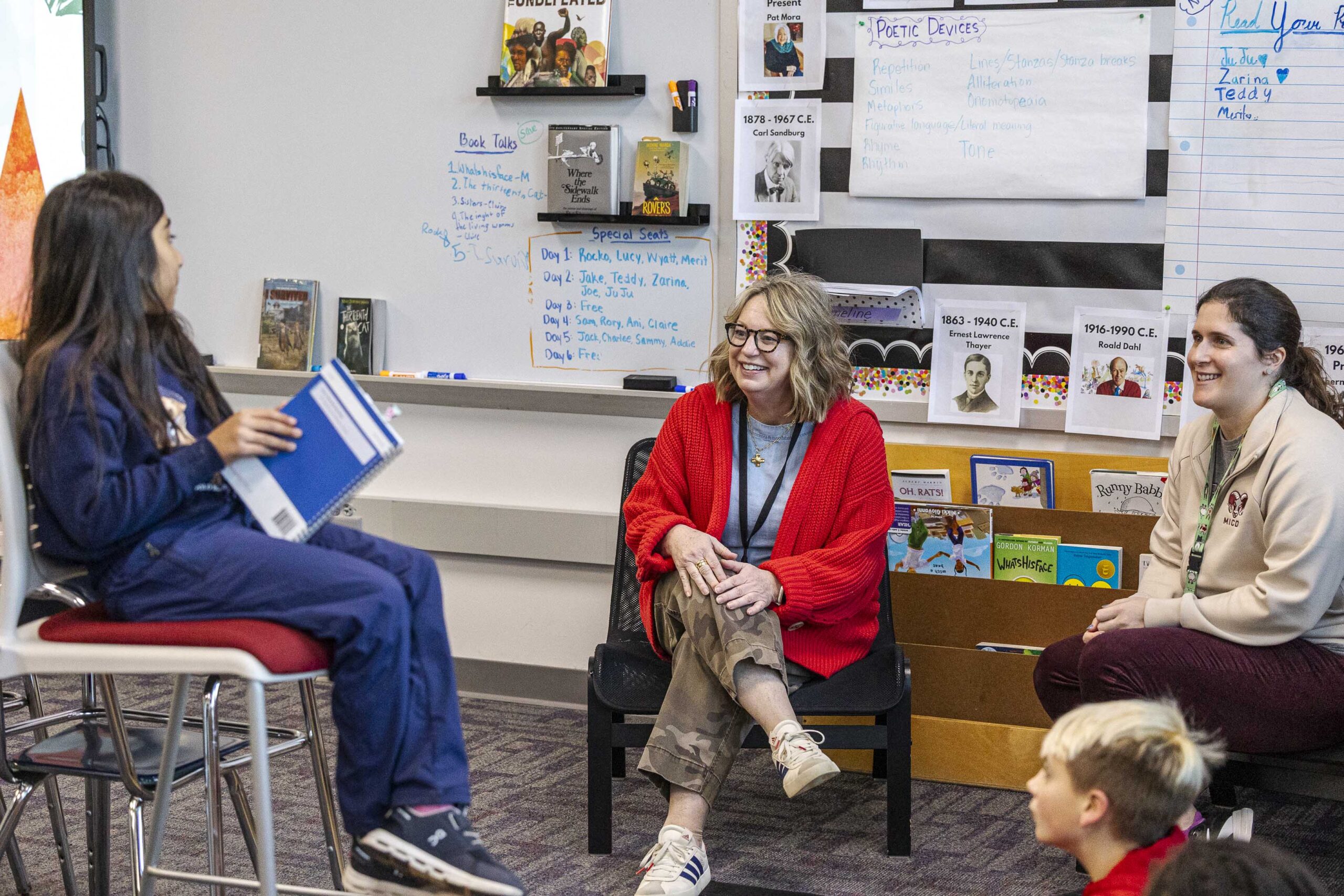
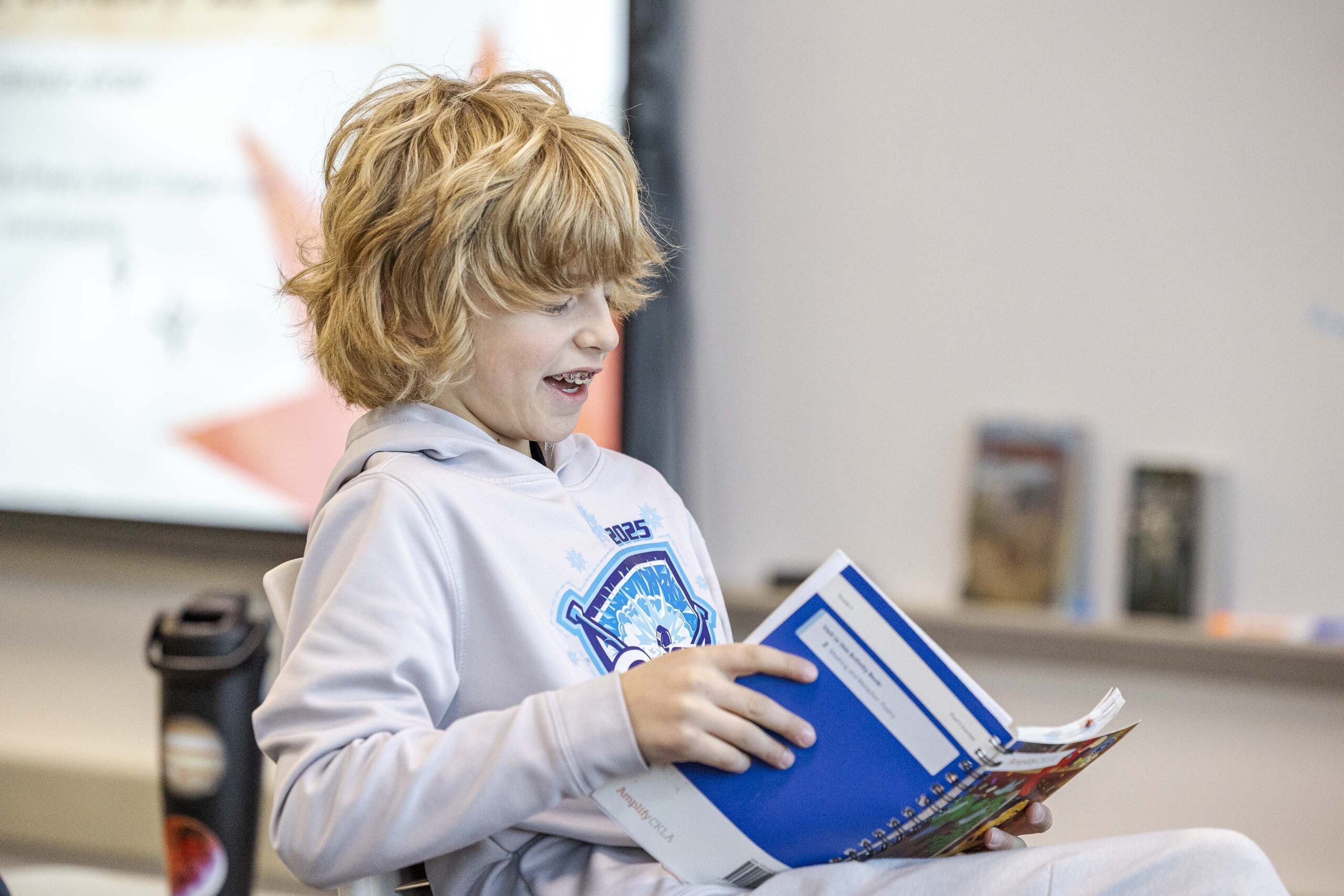
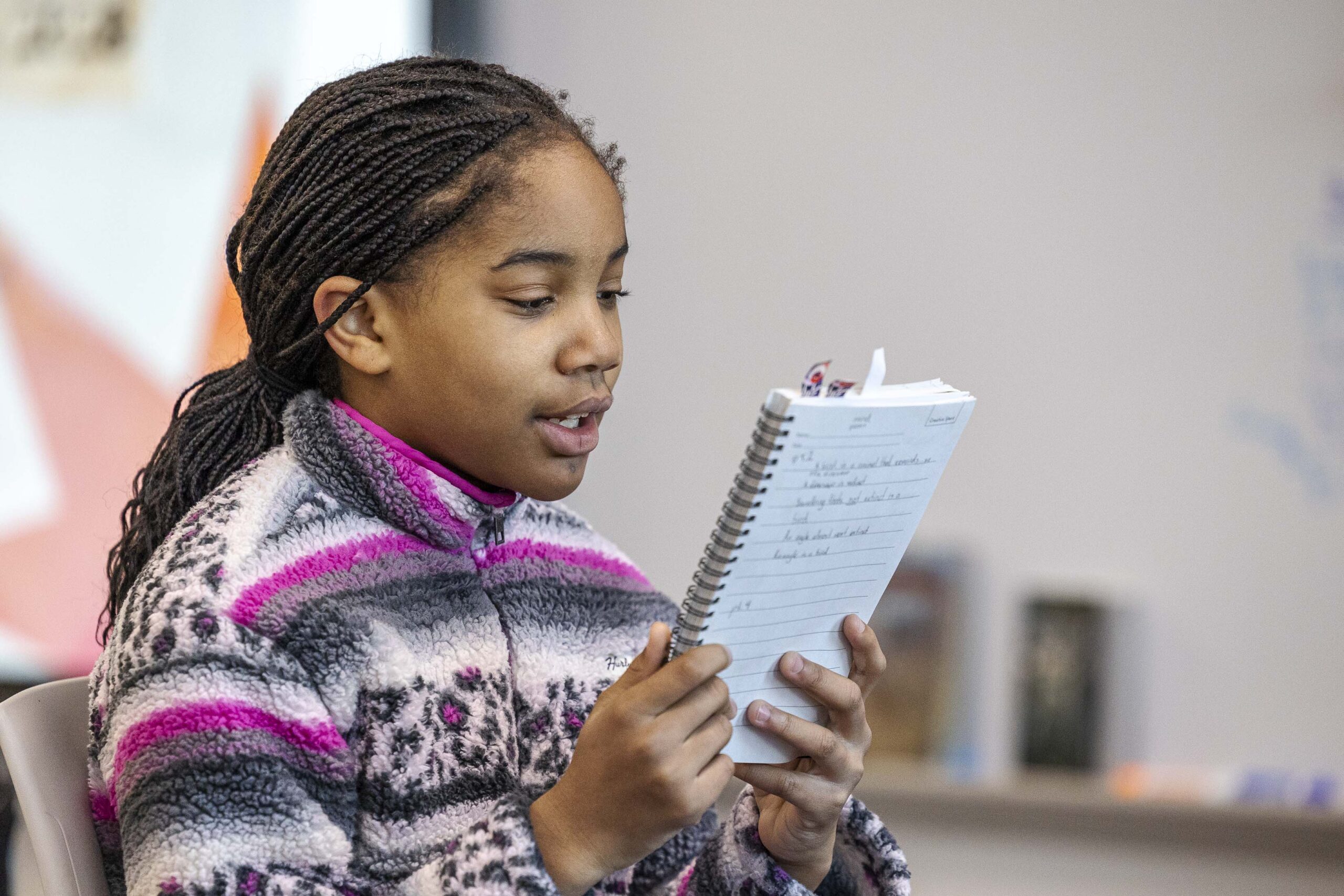
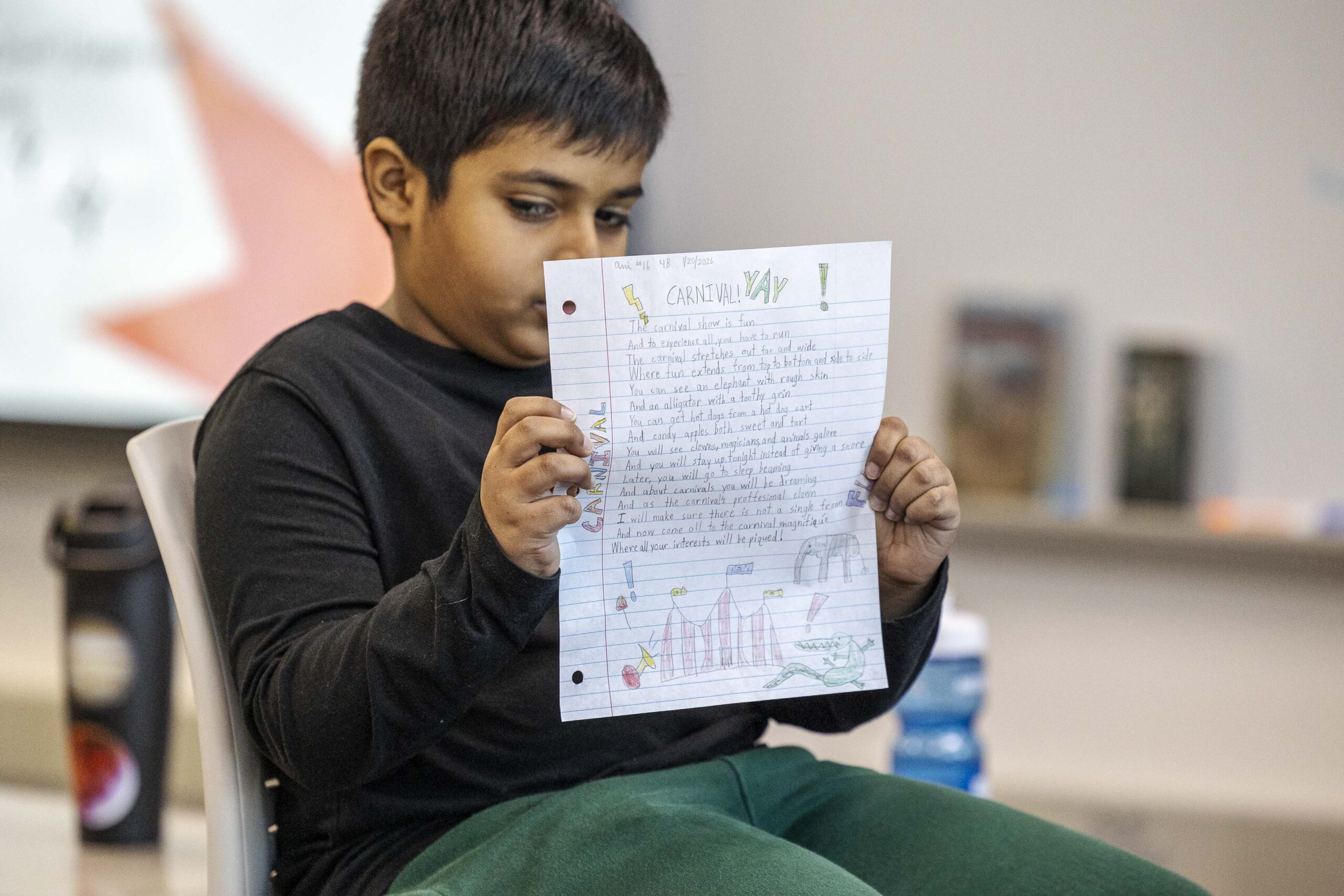
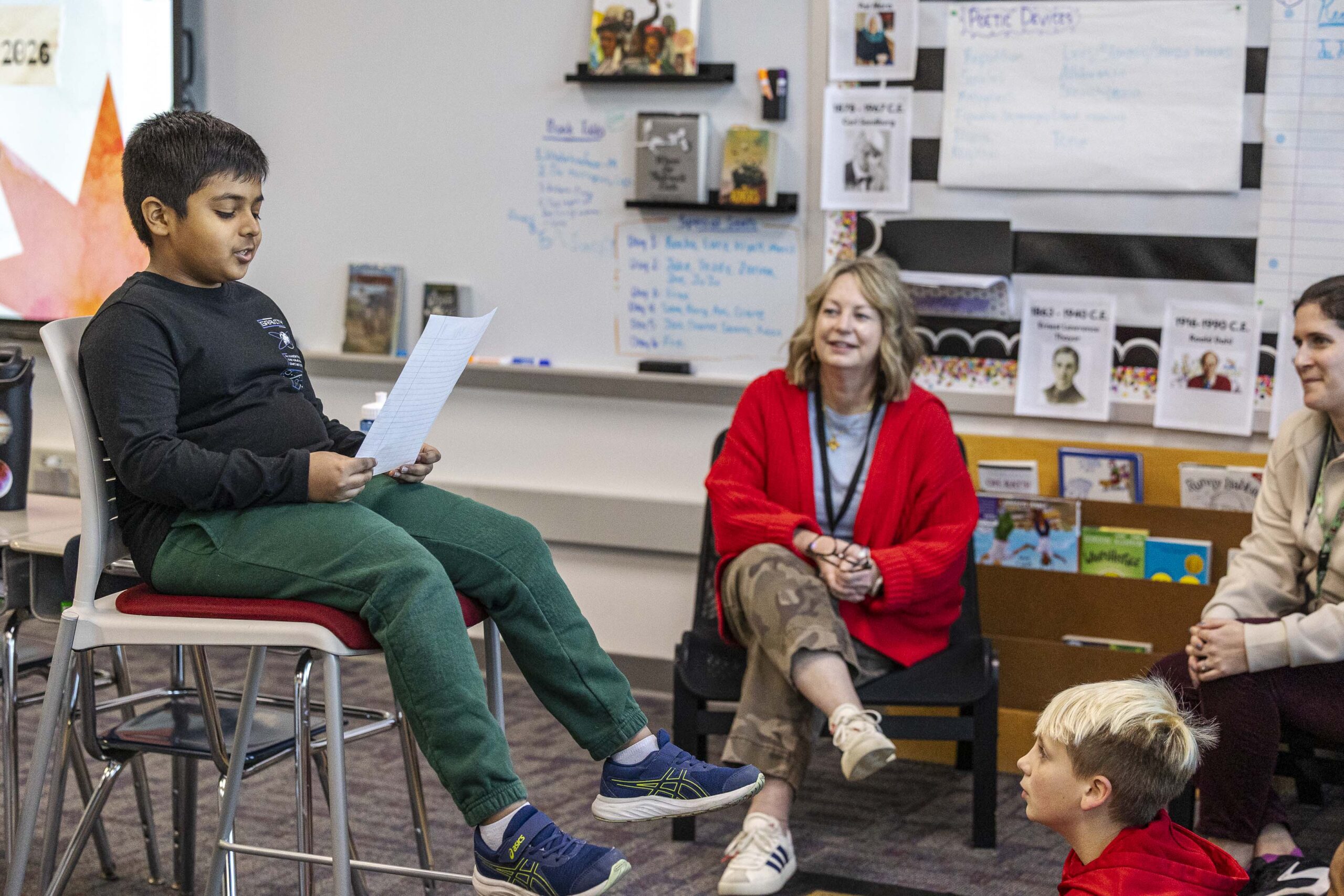
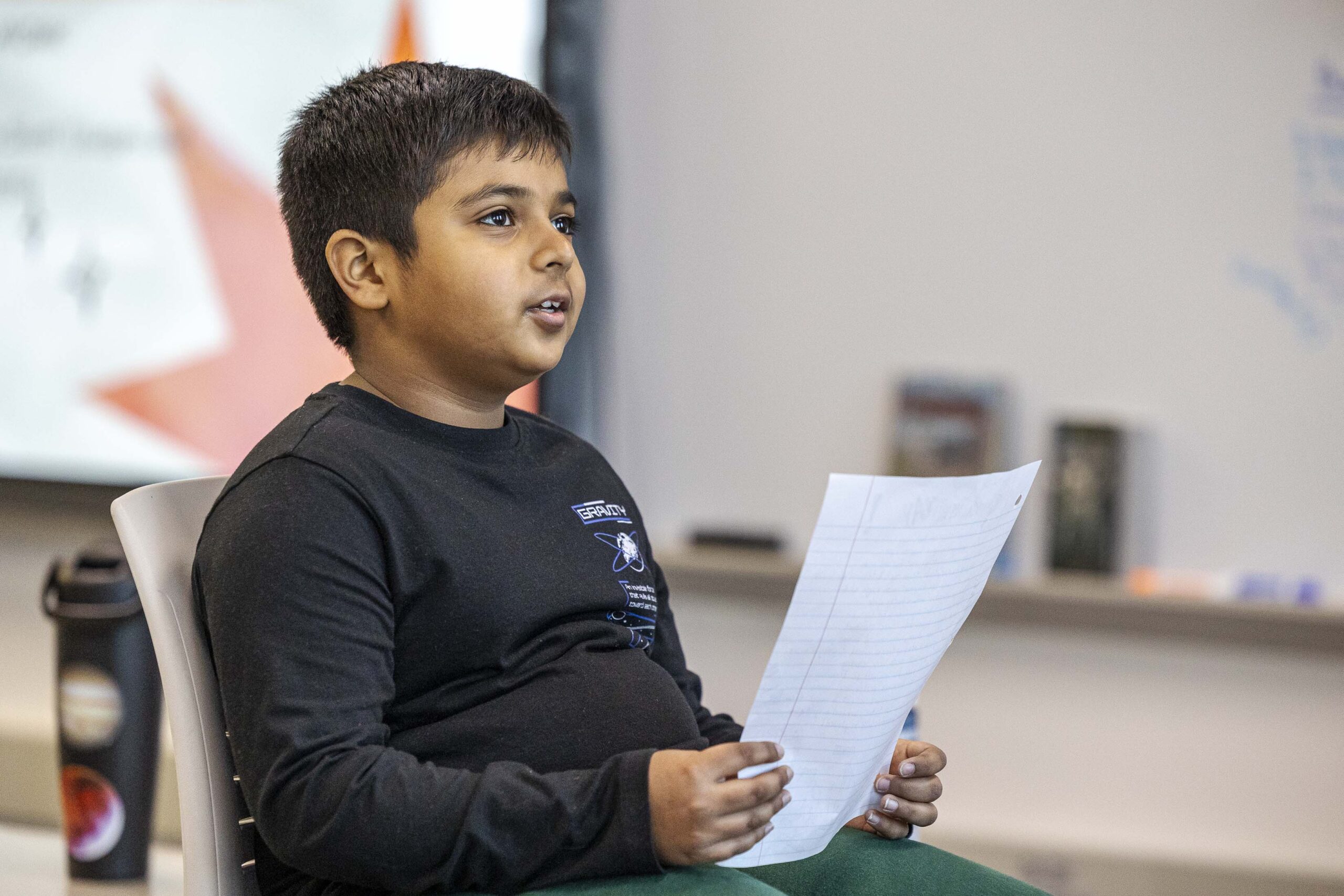
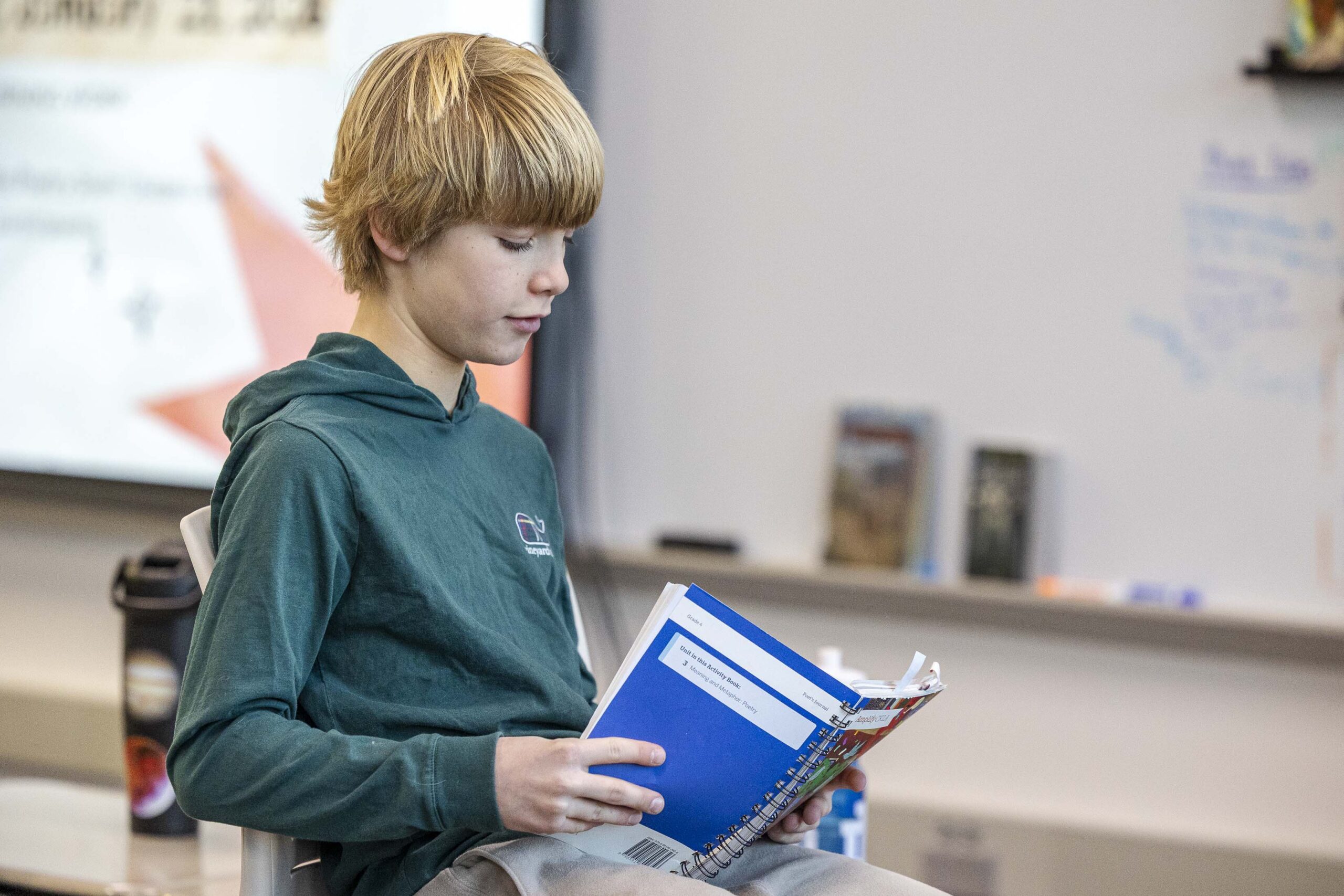
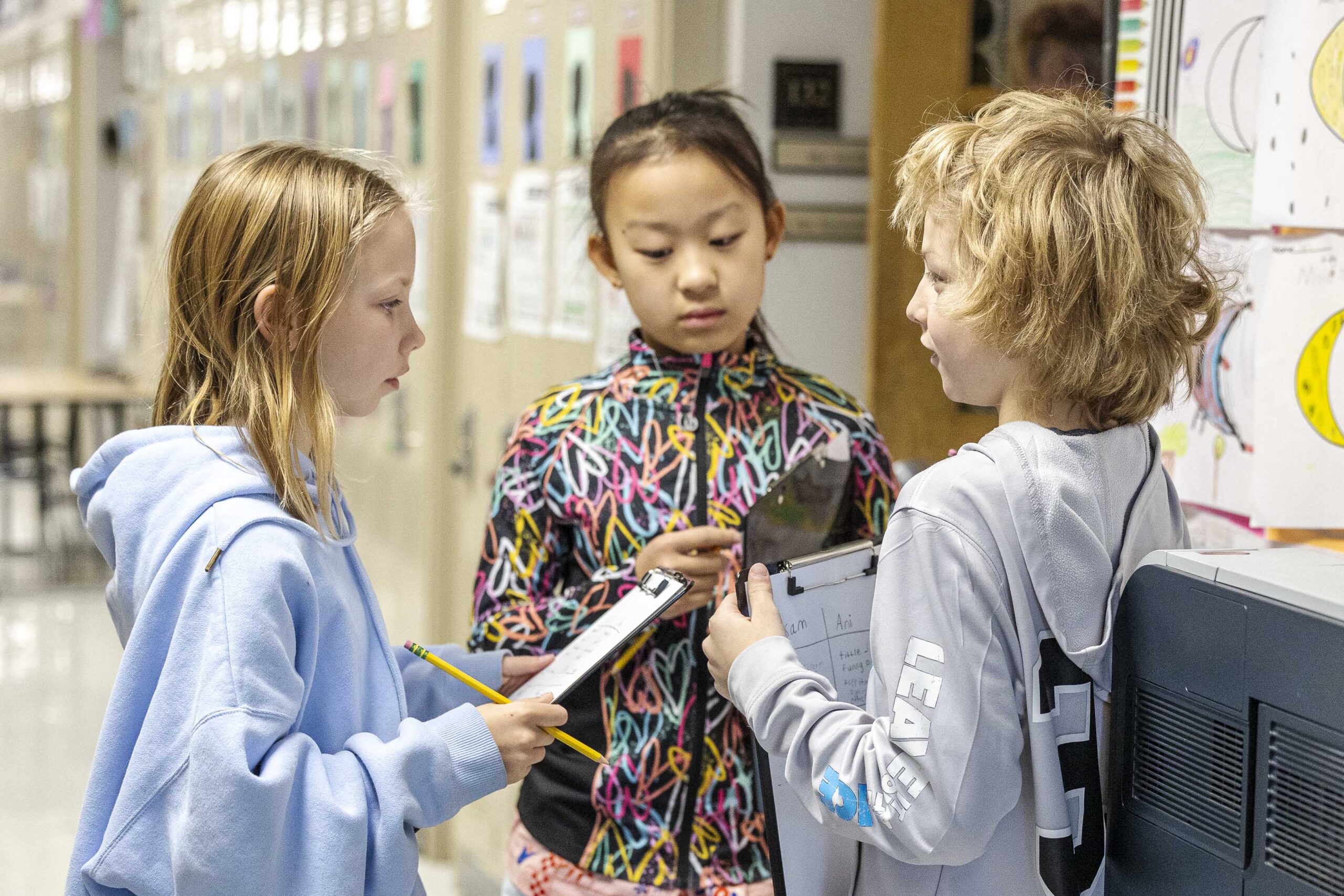
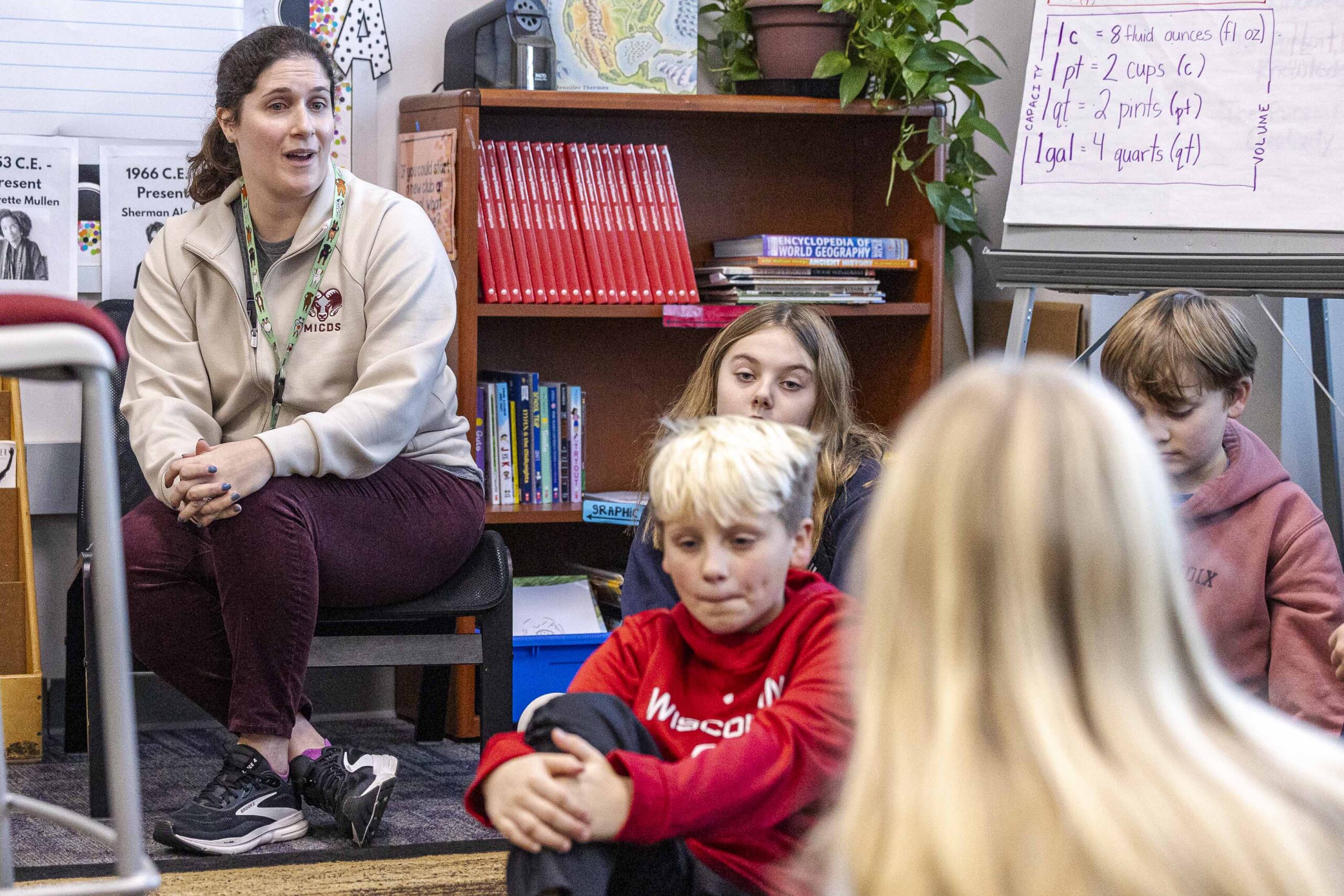
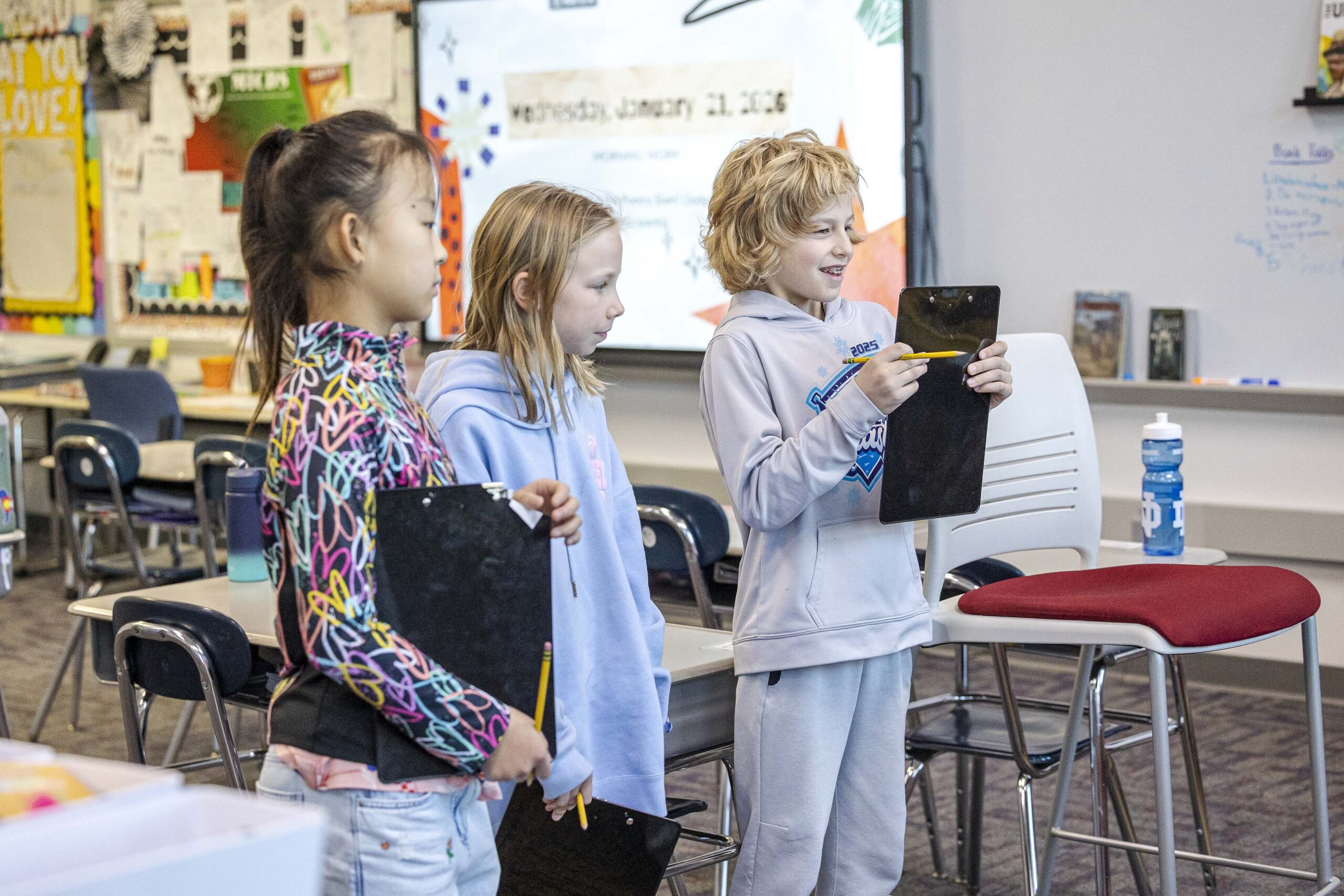
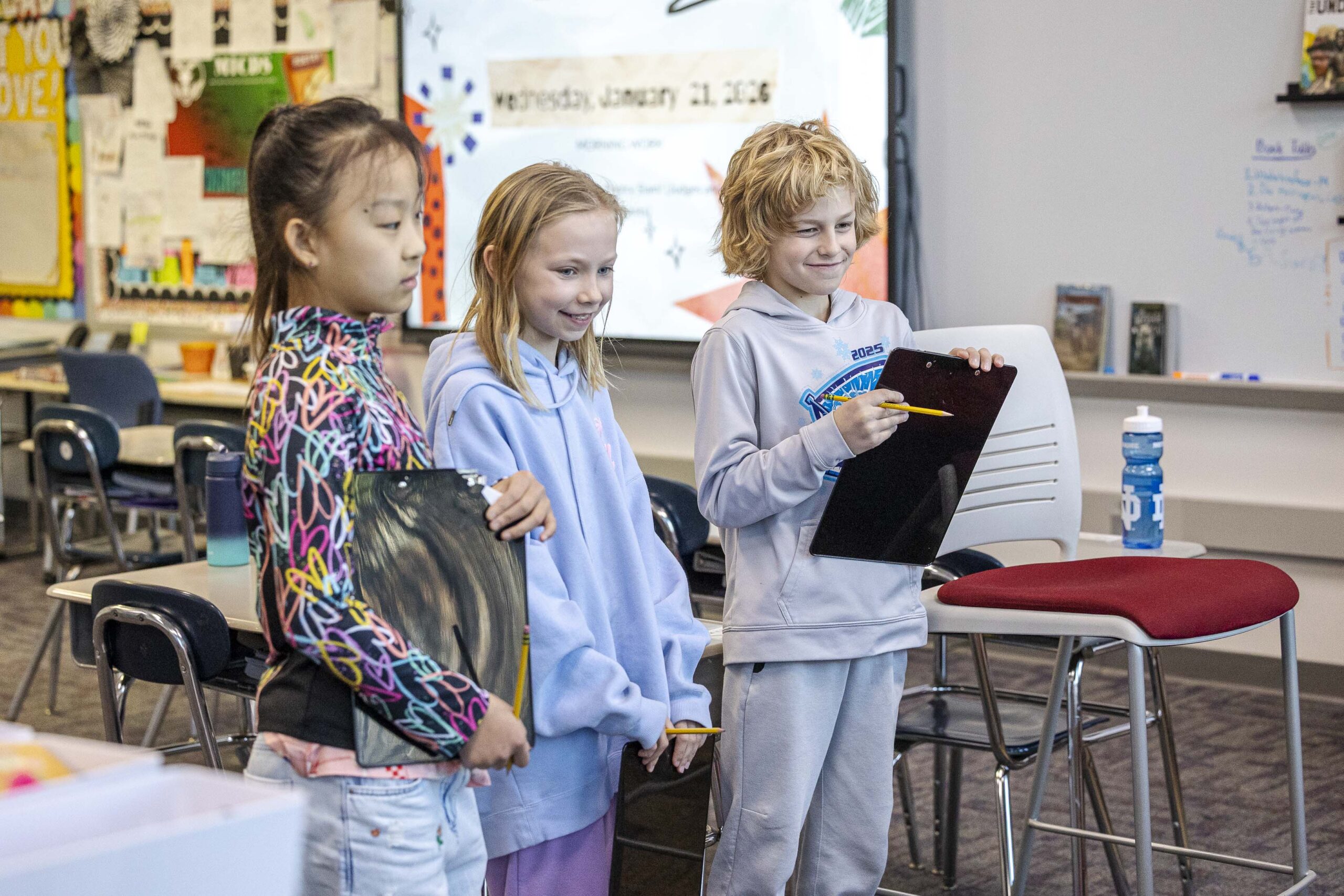
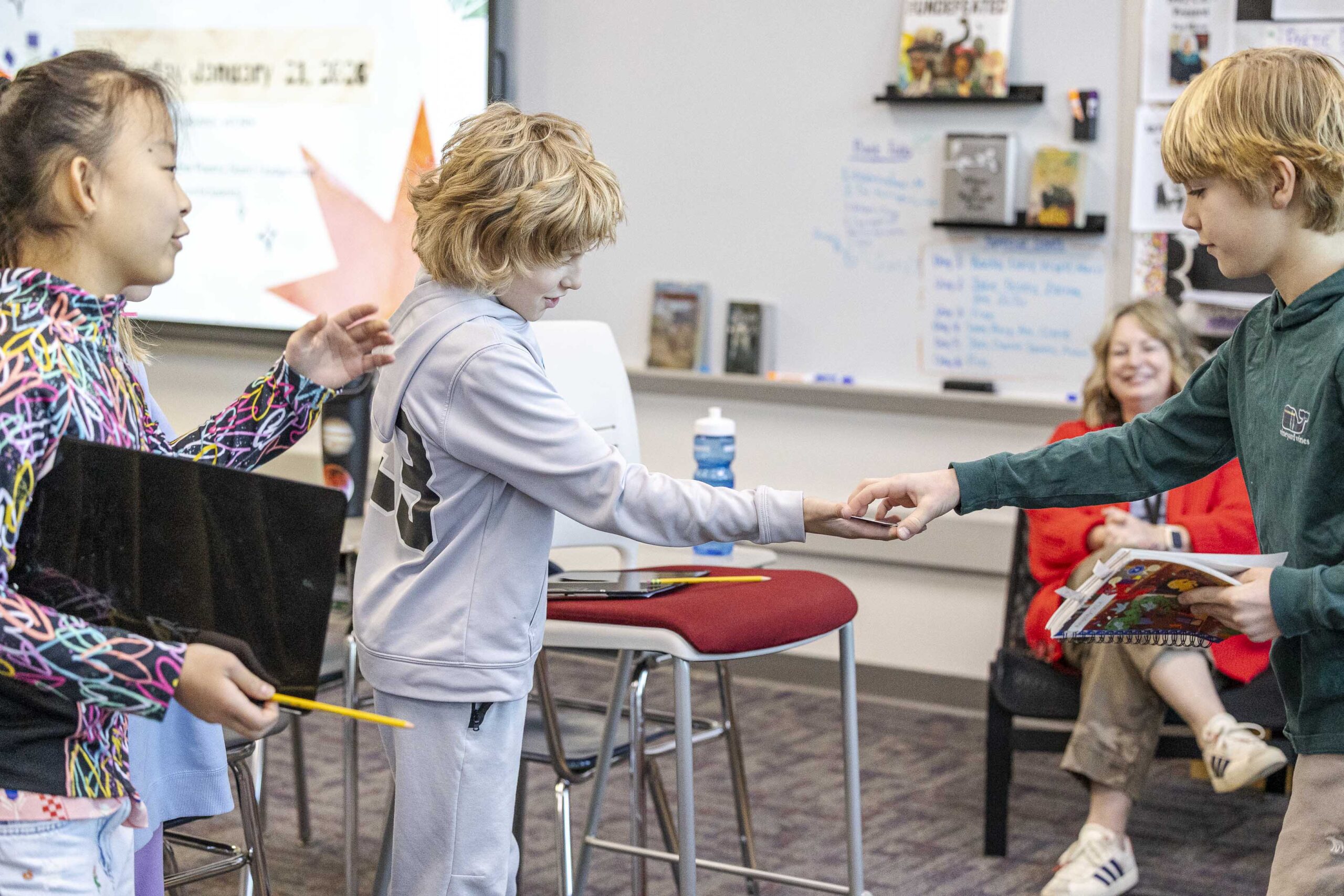
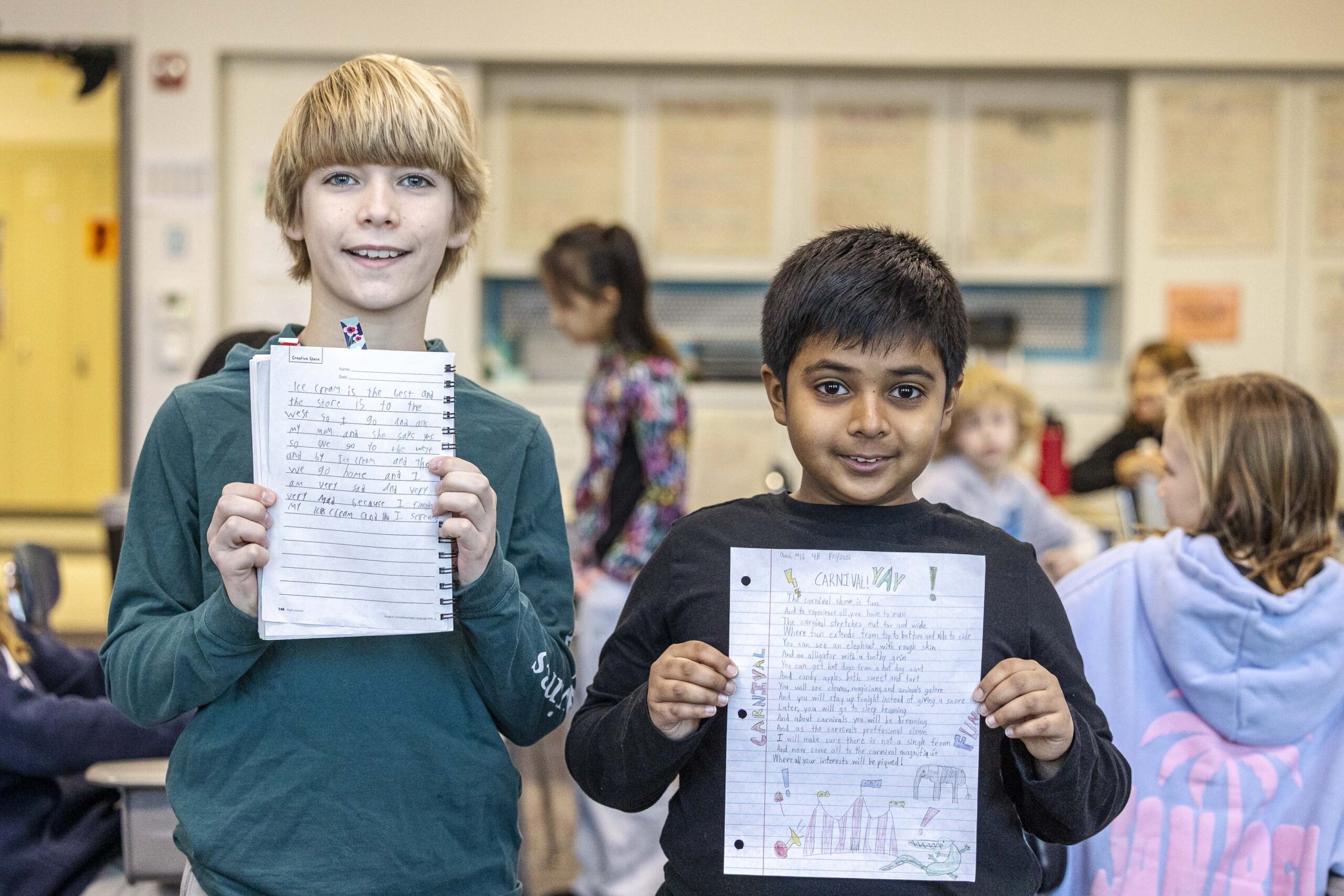
Snaps signaling applause filled the room, and the judges stepped into the hall to deliberate. After thoughtful dialogue, the judges announced the slam’s winner. Sam took home the bragging rights for his expressive poem about ice cream. Ani took second place with his sensory-filled piece about carnivals. Fifth Grade English Teacher Beth Garcia popped in for the finals and was wowed by their creativity and their use of a few fifth-grade vocabulary words!
Sam enjoyed the project’s genesis. He said, “I’ve written poetry before, and I like Langston Hughes.” Antolik noted that Sam is good at turning a not-serious topic into a poem, allowing everyone to connect with it in some way. “I was very surprised to win,” he said, and he enjoyed listening to his classmates’ poems, “…especially Ani’s; the carnival one at the end.”
Ani said, “I love poetry. It makes me feel like I’m writing my thoughts down and expressing them. Also, my great-great-grandfather was a famous poet in India. I think he published books. I love all types of poems. I like Shel Silverstein because he’s kind of funny. I read my poems to my parents, and I also illustrate them. I drew books with wings for my poem in week two, and in week three, I drew scenes from a carnival.”
Rory N. ’34, another Silverstein fan, made it to the final four. “I like writing things, and I thought it would be fun to write a poem, so I decided to volunteer. Not all of the poems have to rhyme, but I like to make mine rhyme.”
Antolik shared, “I love how they took this unit and did a great job with its curriculum, and they went beyond the curriculum. They were inspired, made their own connections, and everyone participated in some way. In learning about poetry, they became poets.”
The Classroom Campfire
The excitement reached a fever pitch while the tournament was in full swing. Remember that email Teddy wrote to Ms. Swartz? It turned out the author was just as inspired by Teddy as he was by her. The flame of their project grew into a full campfire when Elly Swartz joined a Zoom call to celebrate the students’ work and share her own writing journey.
During the Zoom visit, students dug deep into the life of an author. Here are the highlights from their conversation:
- On Inspiration: Swartz collects “beautiful things” like words, names, and ideas on her phone, letting them “cross-pollinate” like a garden until a story grows.
- On Authenticity: Her books are mirrors of her life; settings are based on places she has lived, and some characters often carry the names of her family members as a “nod” to them.
- On Emotions: While she isn’t any one specific character, she has felt every emotion her characters experience. She spoke openly about her own anxiety, telling students that sharing those feelings is what makes us human, not “broken.”
- On Bravery: She reminded the fourth graders that bravery isn’t always loud. “You can be anxious, quiet, and like to eat in the library, and you can still be brave.”
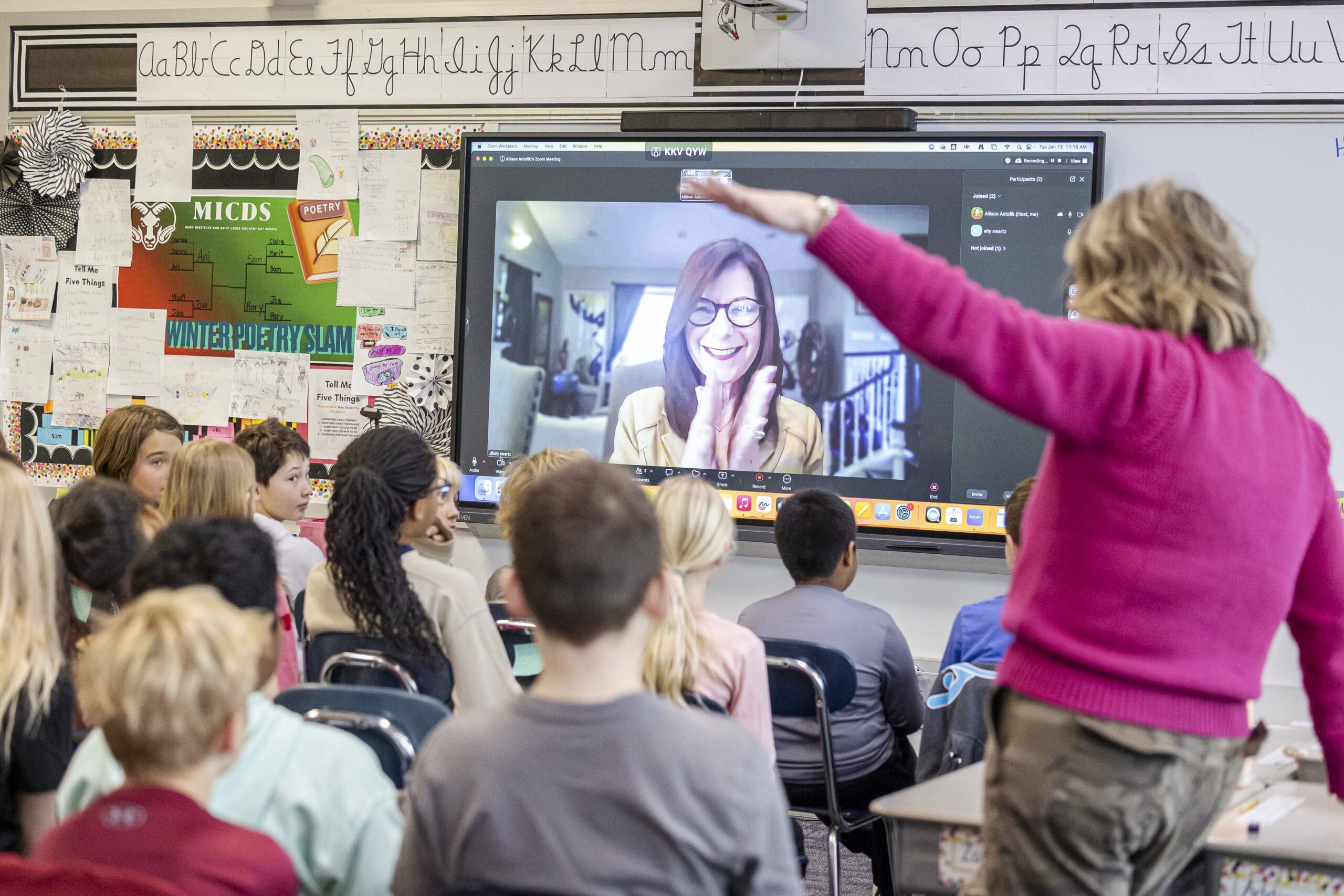
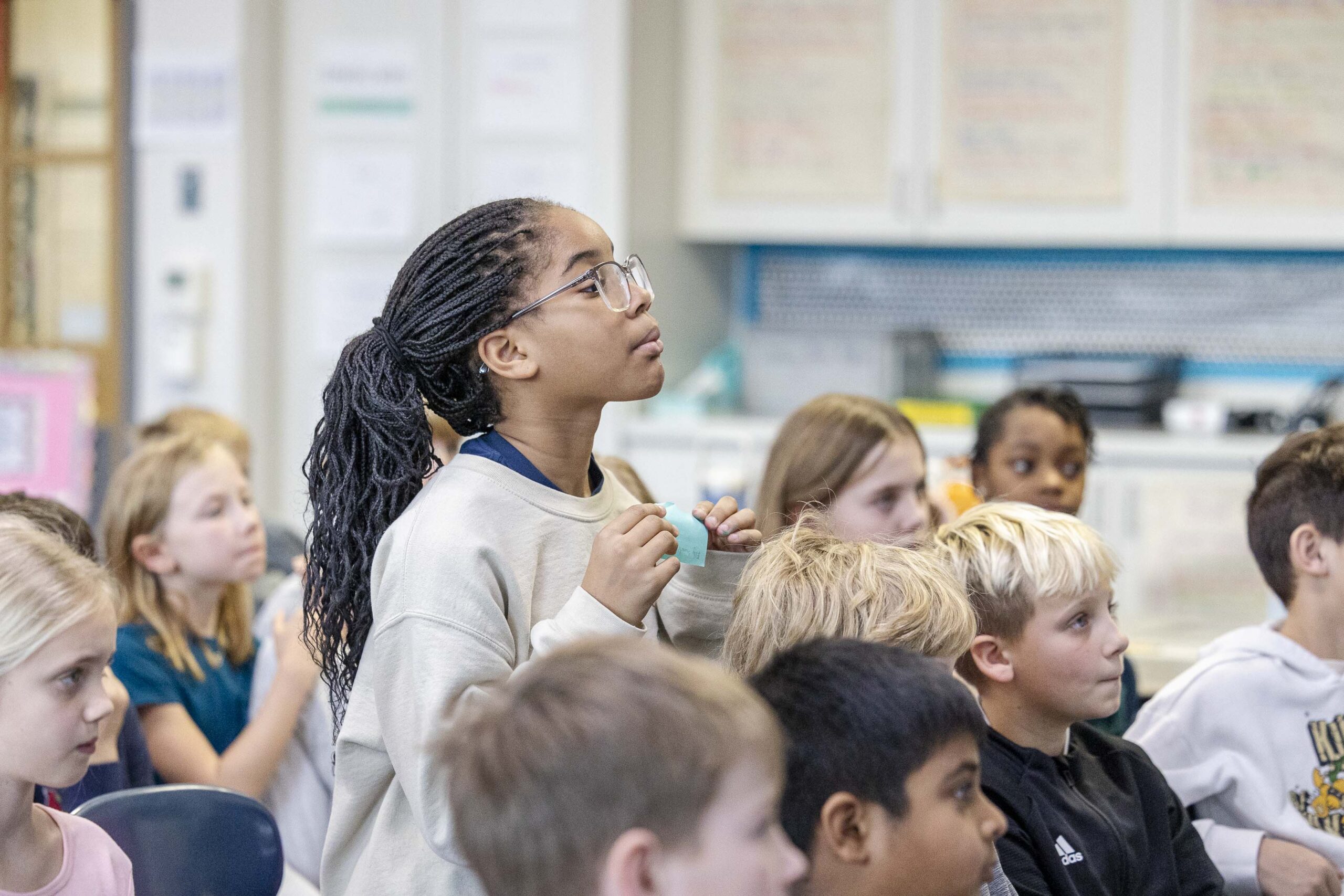
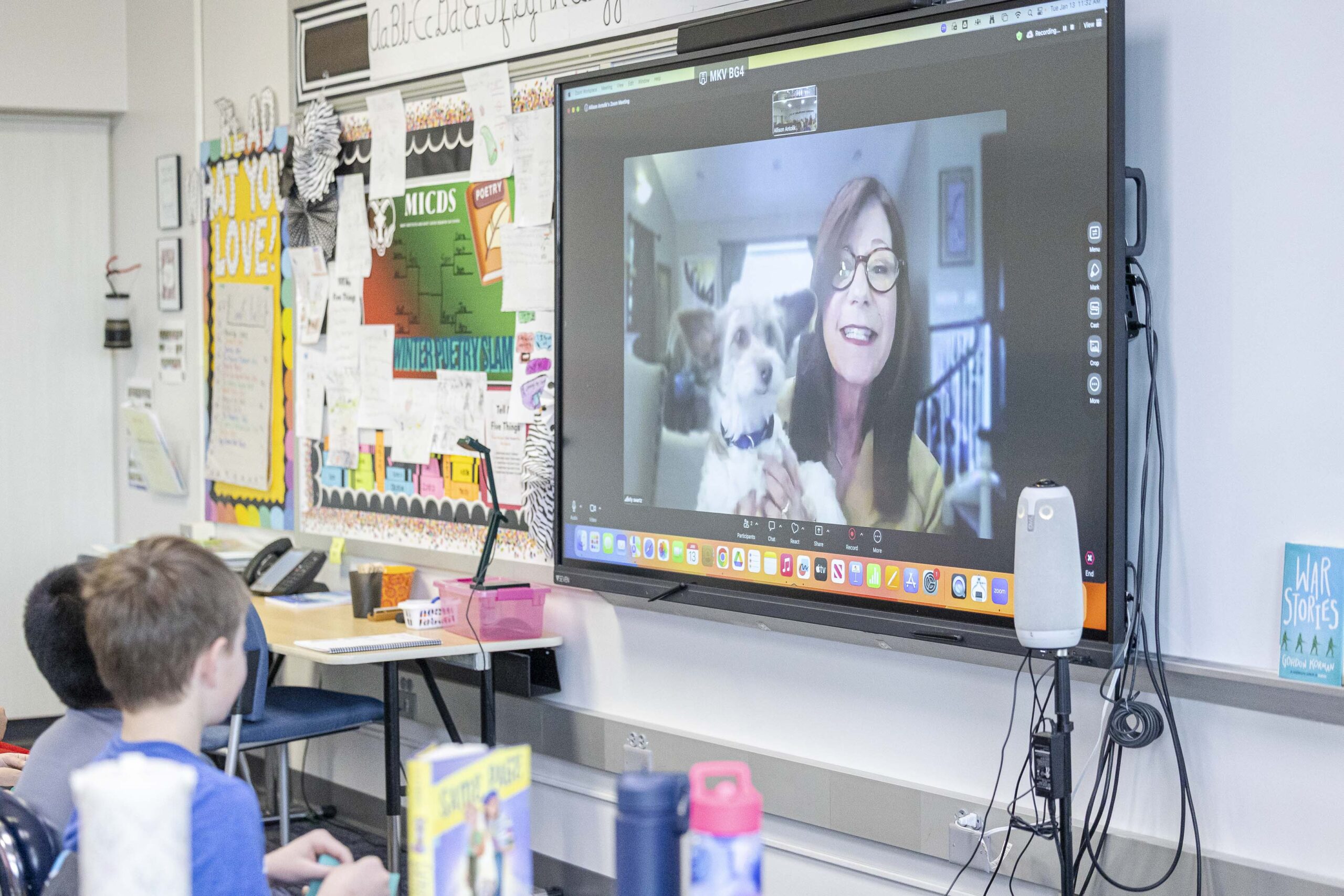
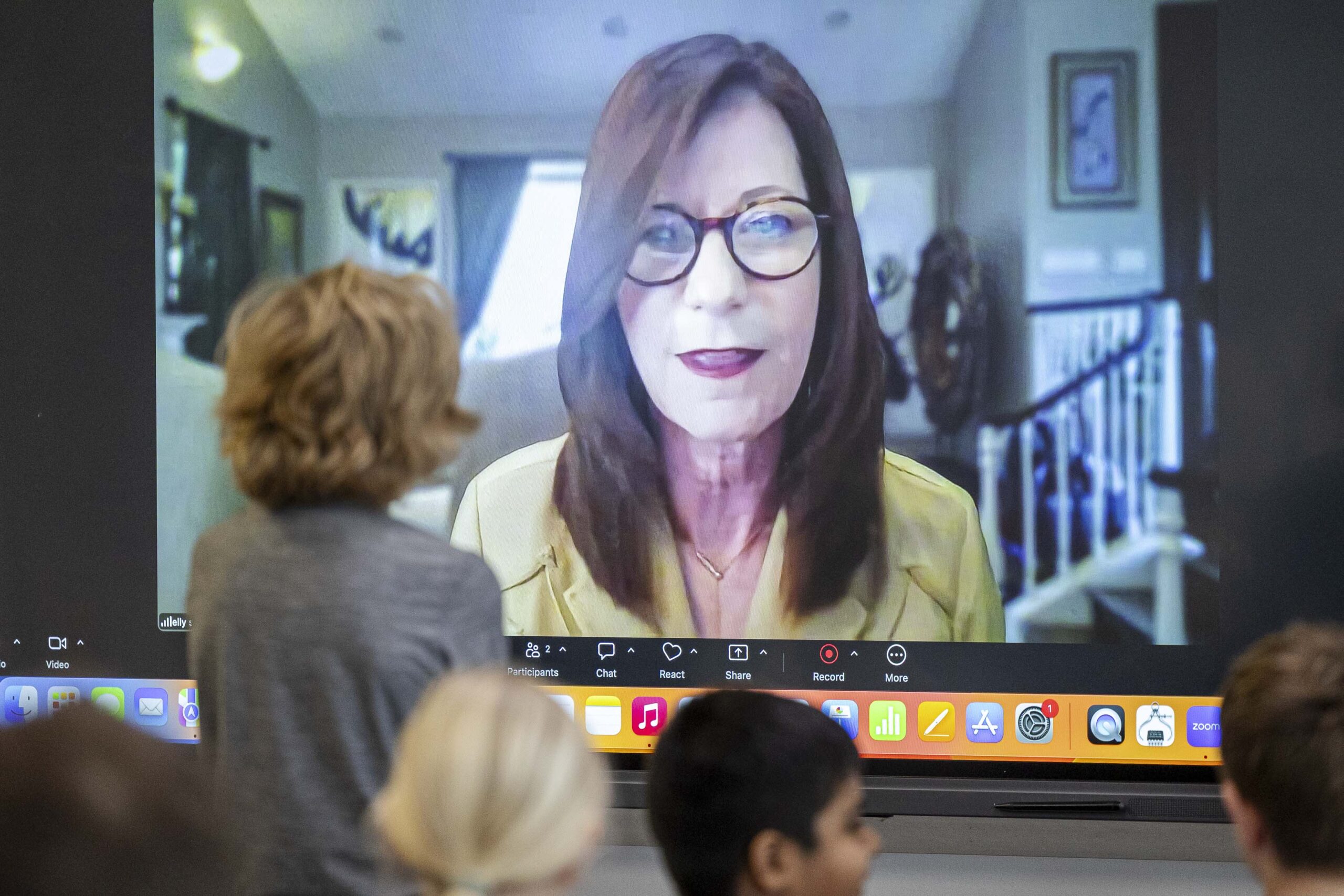
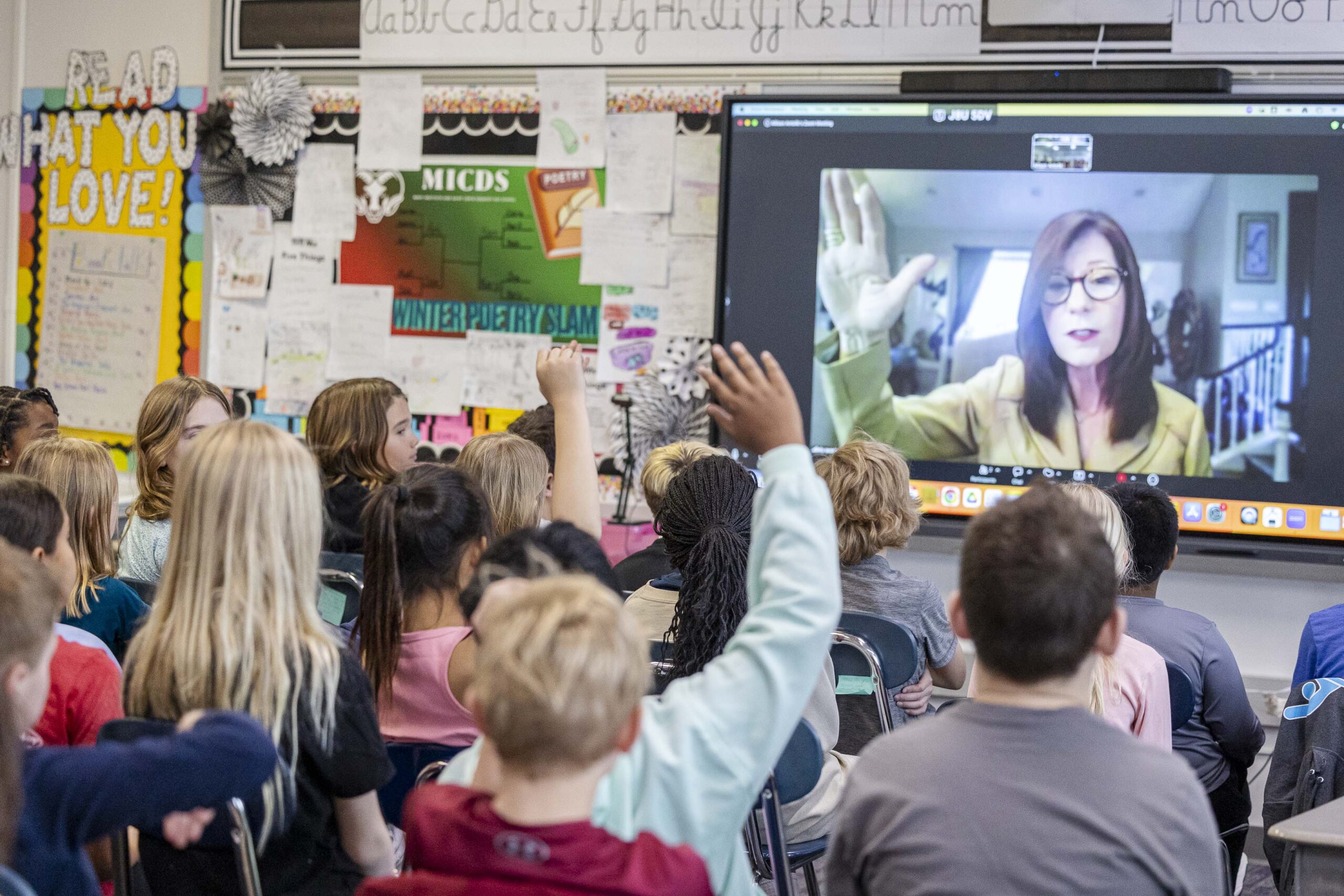
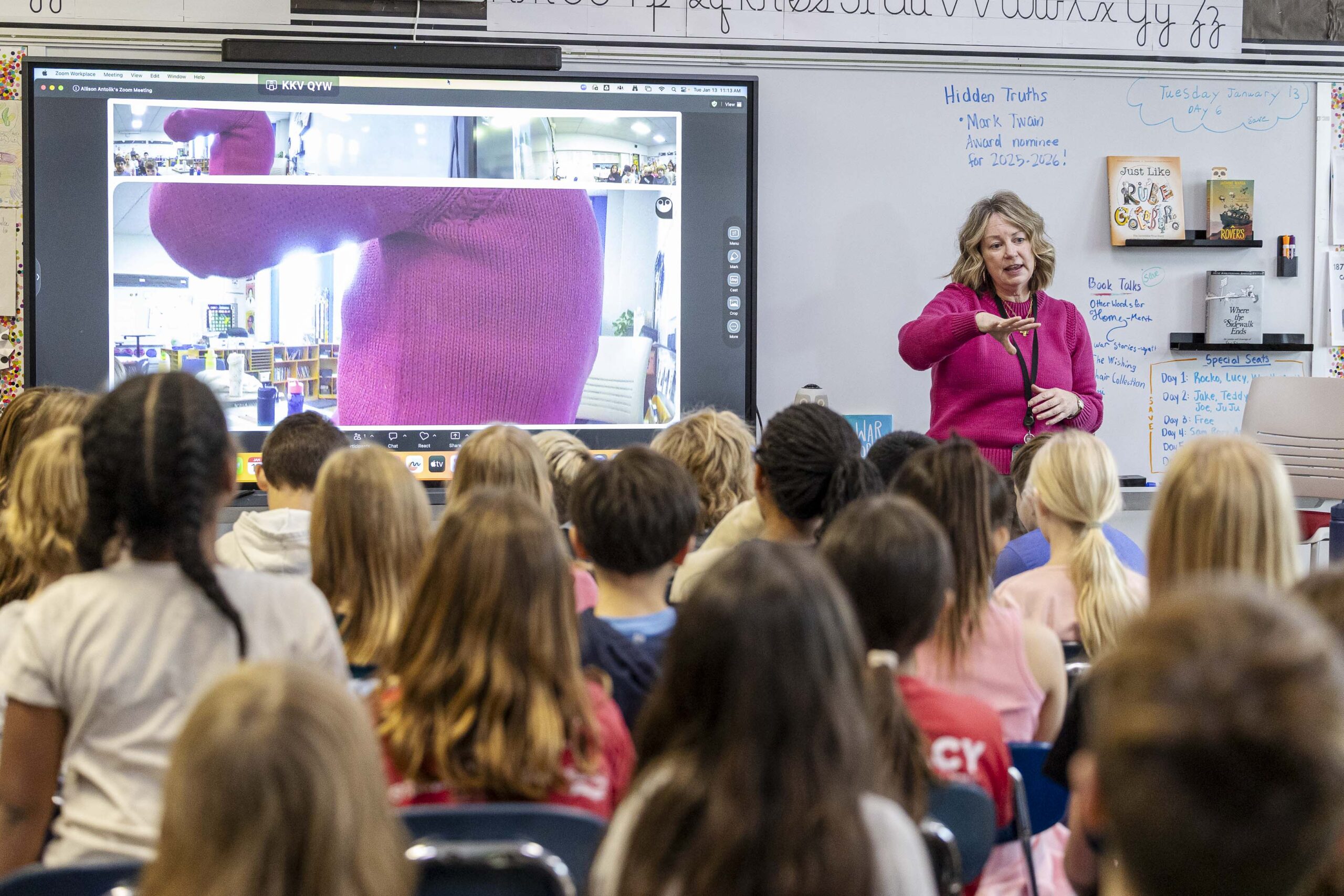
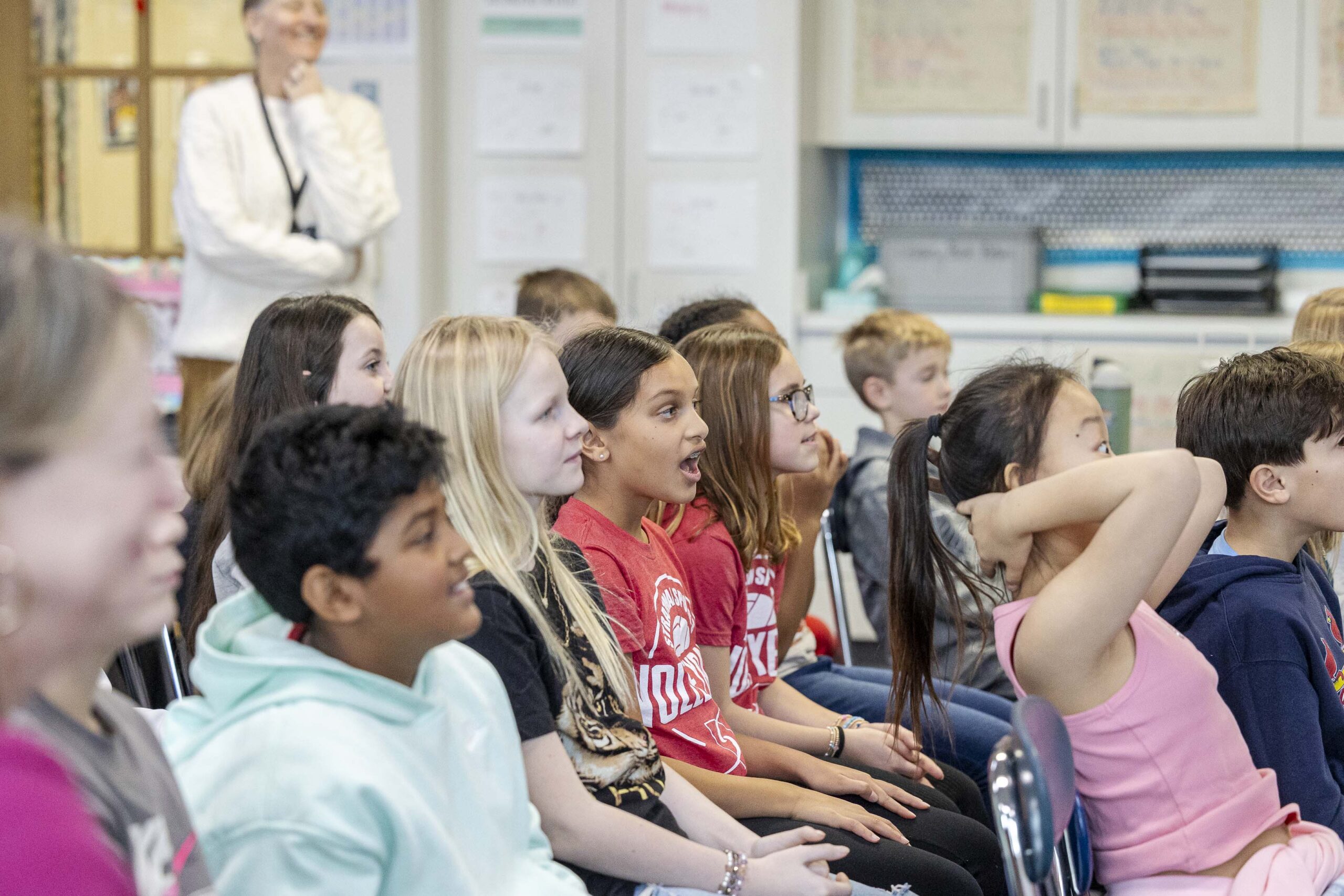
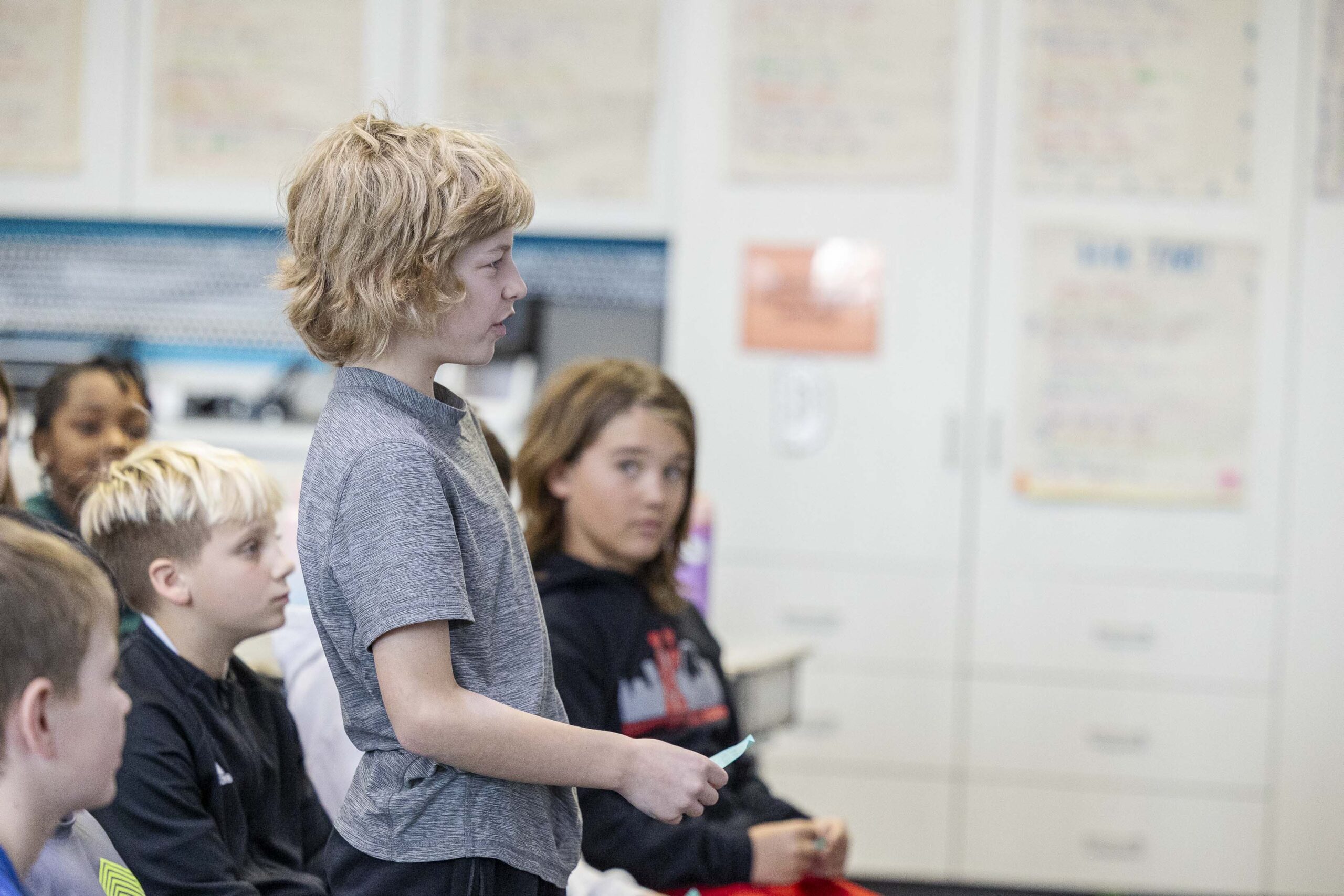
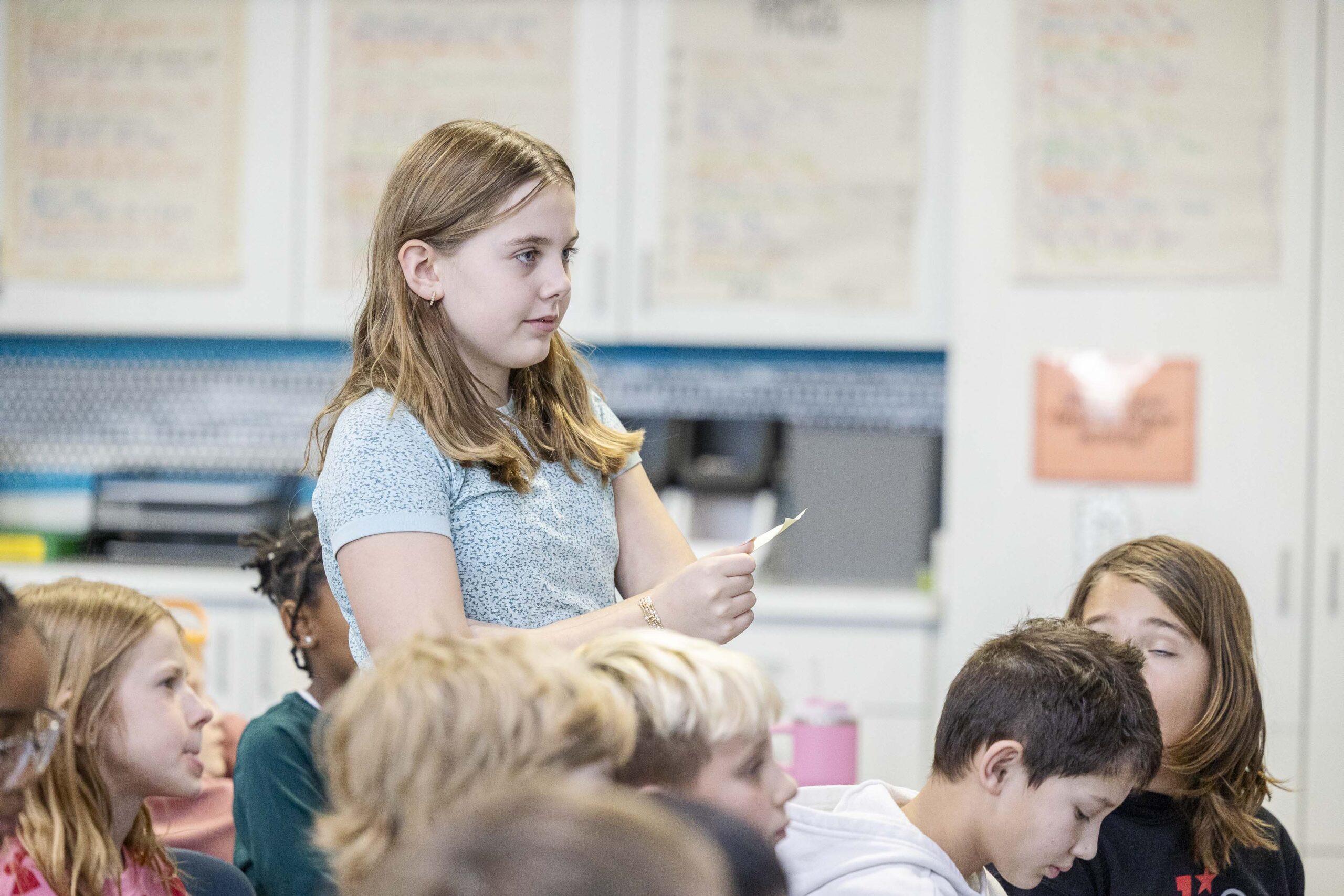
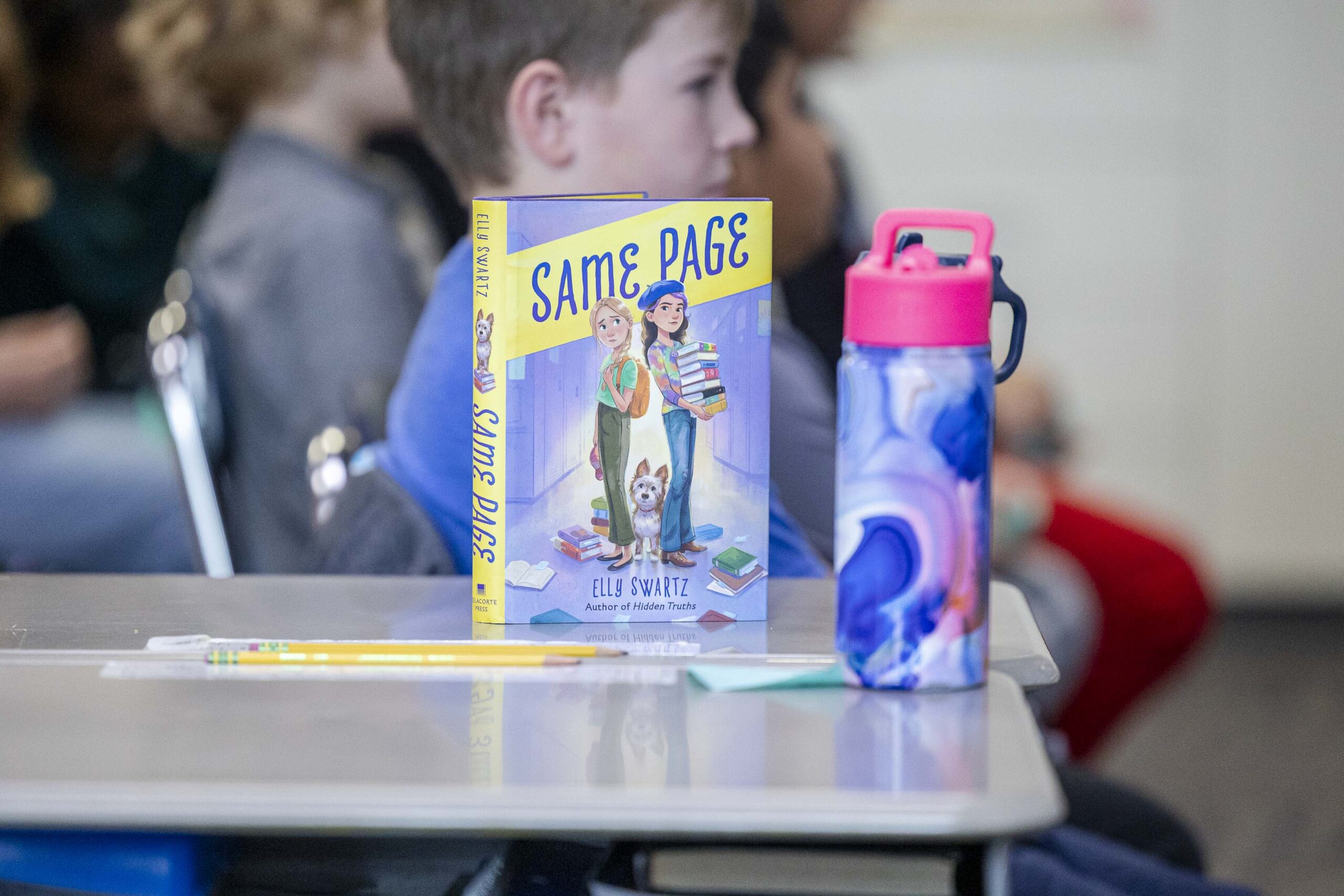
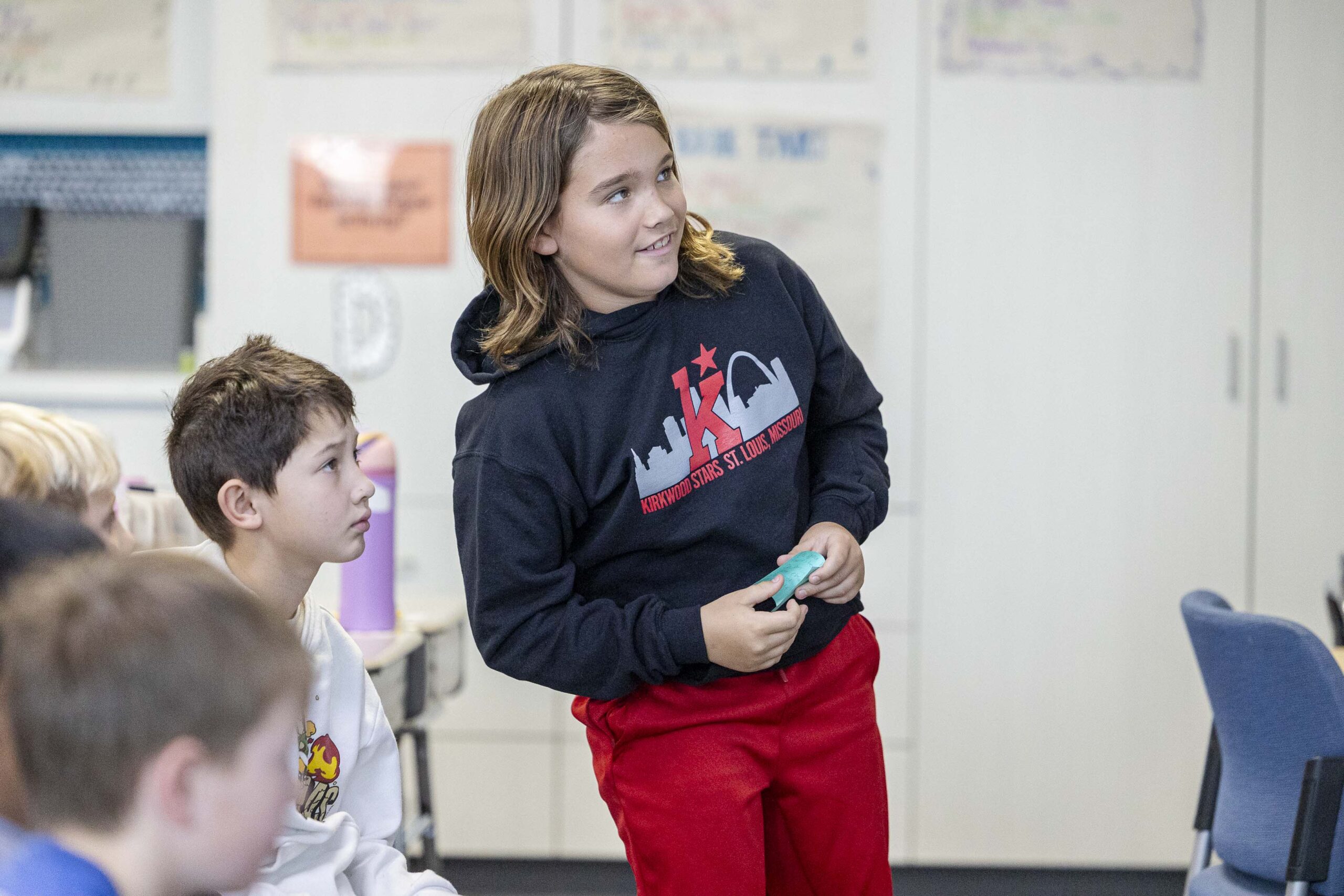
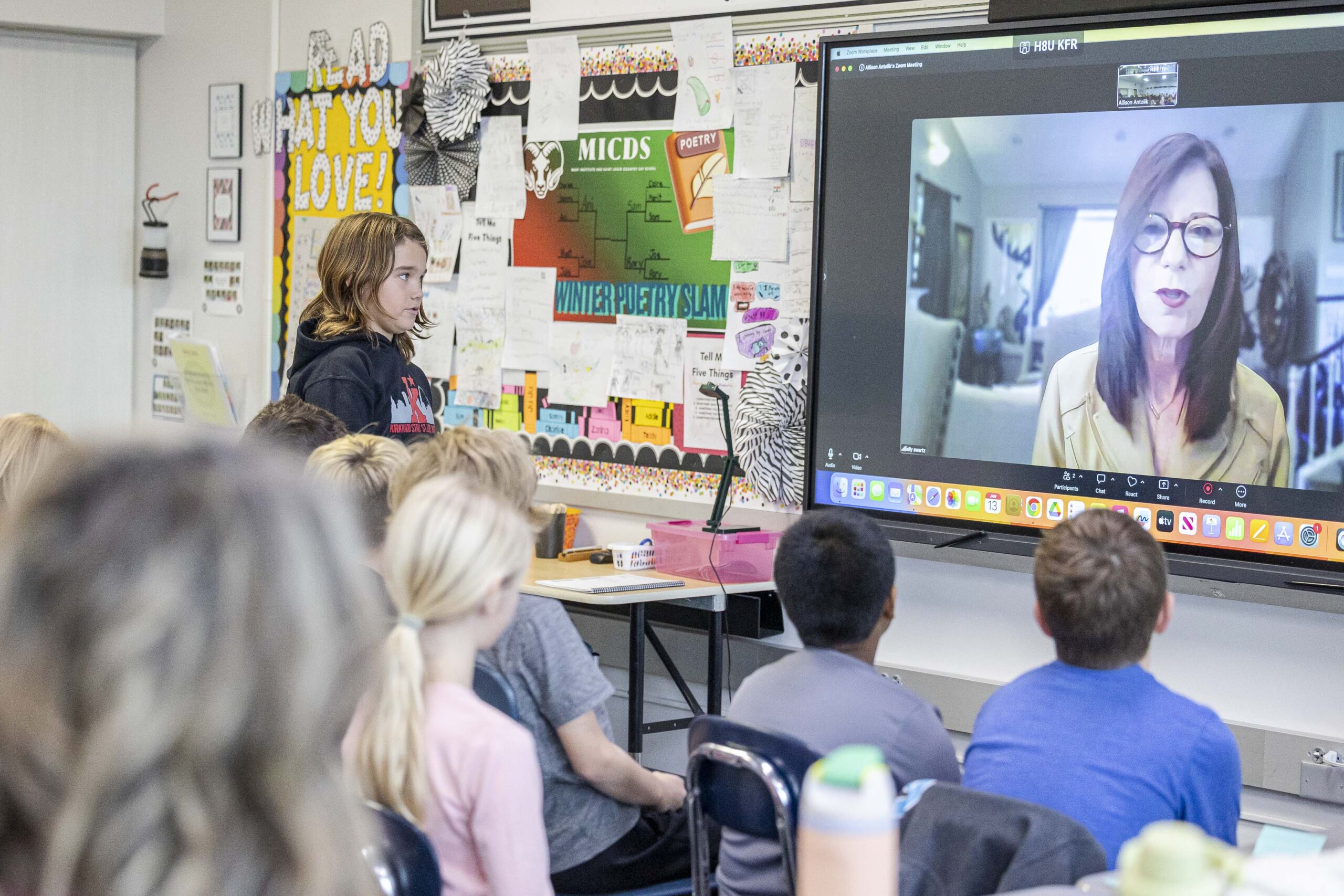
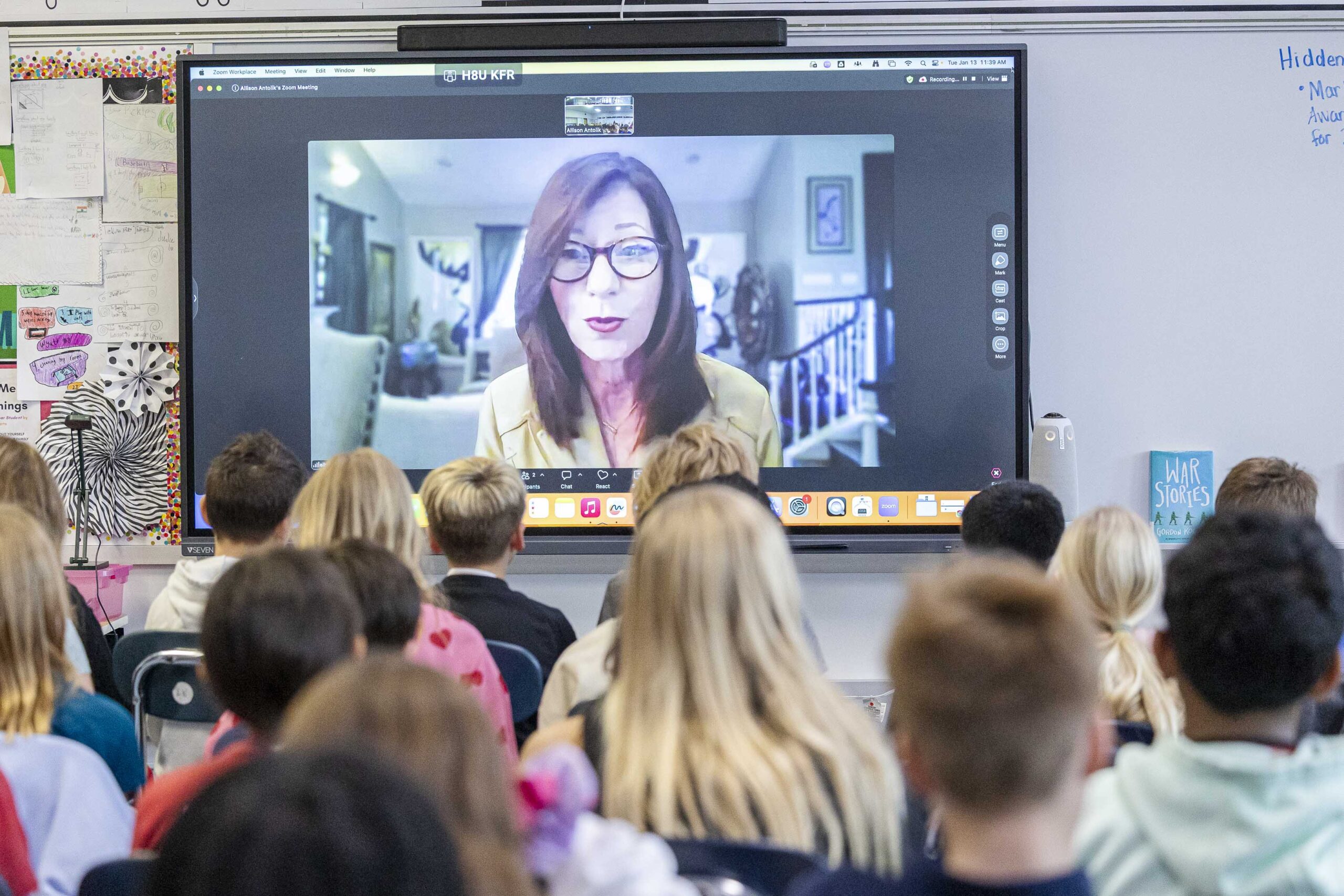
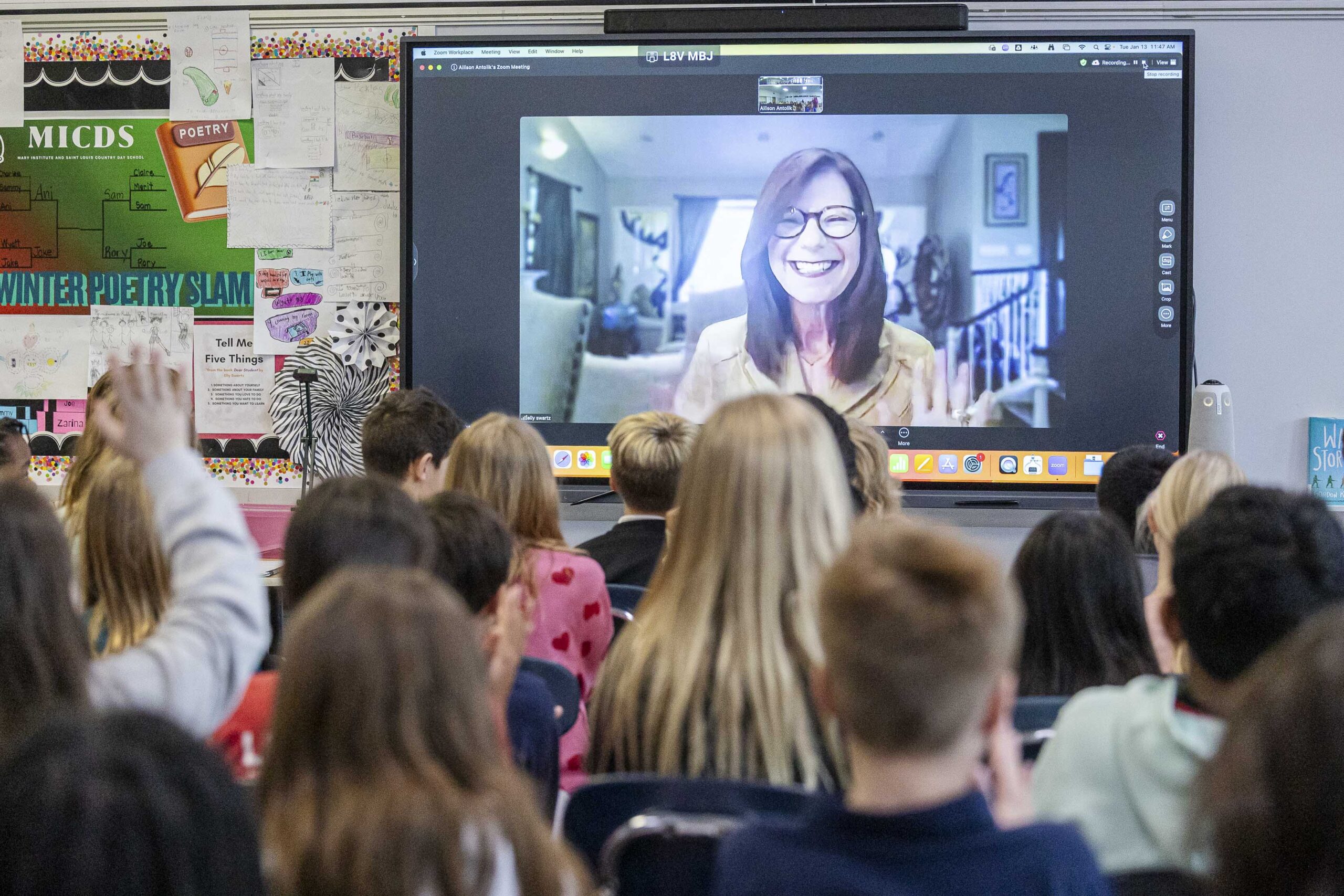
“It was really fun to learn about Ms. Swartz,” said Teddy. “We got to ask questions. We learned a lot about all her books and what it really takes to become an author.” When asked if he wants to become a writer, Teddy said, “Maybe, someday.”
Rory is reading Finding Perfect and said, “It’s my new favorite book. It’s entertaining. Last night, the character was struggling, and it’s very descriptive and makes you feel what she’s feeling in the moment.”
Ani said, “I learned how [Ms. Swartz] writes her books, how she gets her titles, and how long it actually takes to publish them. We learned a lot about how she sets up her books and how she works.”
“I am so honored to hear about Teddy’s poetry slam and how Finding Perfect resonated,” said Swartz in a later interview. “It’s a privilege to know that the book impacted him in that way. It makes me so happy that the students benefit from Ms. Antolik’s enthusiasm and excitement, and that she is able to meet them where they are.”
“Kids have taken my stories and turned them into a play, they’ve written fan fiction with different endings to my stories, they’ve organized slam poetry, and they do book challenges or allyship challenges to help change the world. When I set out to write a book, I didn’t know all these wonderful gifts would come from it. When I write a story that is meaningful to me, it’s scary to put it out into the world. When the reader meets the story, resonates with it, and brings their own perspective to the page, that’s when the magic happens,” she said.
Understanding emotions can be difficult at any age. Yet, Swartz manages to distill many emotions for younger readers. She said, “As adults, tough topics and difficult subjects are open for discussion. When kids are living [those emotions], they don’t have the vocabulary to talk about them or an entry point to understand them. To create a story, I work with experts like pediatric specialists, anxiety and OCD specialists, and many doctors, talk to a lot of kids, adults, and parents, and draw on my own personal experiences. Then I’m able to create a story that has an access point for kids to have the conversations, gives them the language to understand what’s happening with them, that gives them the space to say ‘oh, it’s not about me, it’s about this or that character’ before it becomes personal for them.”
“[Readers] teach me to be present and the importance of being in the moment. They teach me what bravery looks like. You don’t have to be the loudest, most confident person in the room to be brave. Bravery is for everybody. I’ve also learned forgiveness. It’s not excusing someone’s behavior, but forgiving in your own way and moving forward.”
Swartz said, “There are a lot of people who read books and feel inspired to do something. Very few people act on it. I feel so proud that he [Teddy] took the initiative and grateful to Ms. Antolik for helping to make it happen.”
About the visit, Antolik shared, “I felt a real connection with her. She shared personal things, like showing us her dog and telling us how her mother died young. She mentioned how she secretly embeds names and qualities from her family into her book characters. She shared a big part of herself with us, and I loved that. It felt like a conversation just for us. I love the idea of using literature to inspire students to go deeper.”
Congratulations to everyone who helped build this poetic fire through your love of reading and writing!
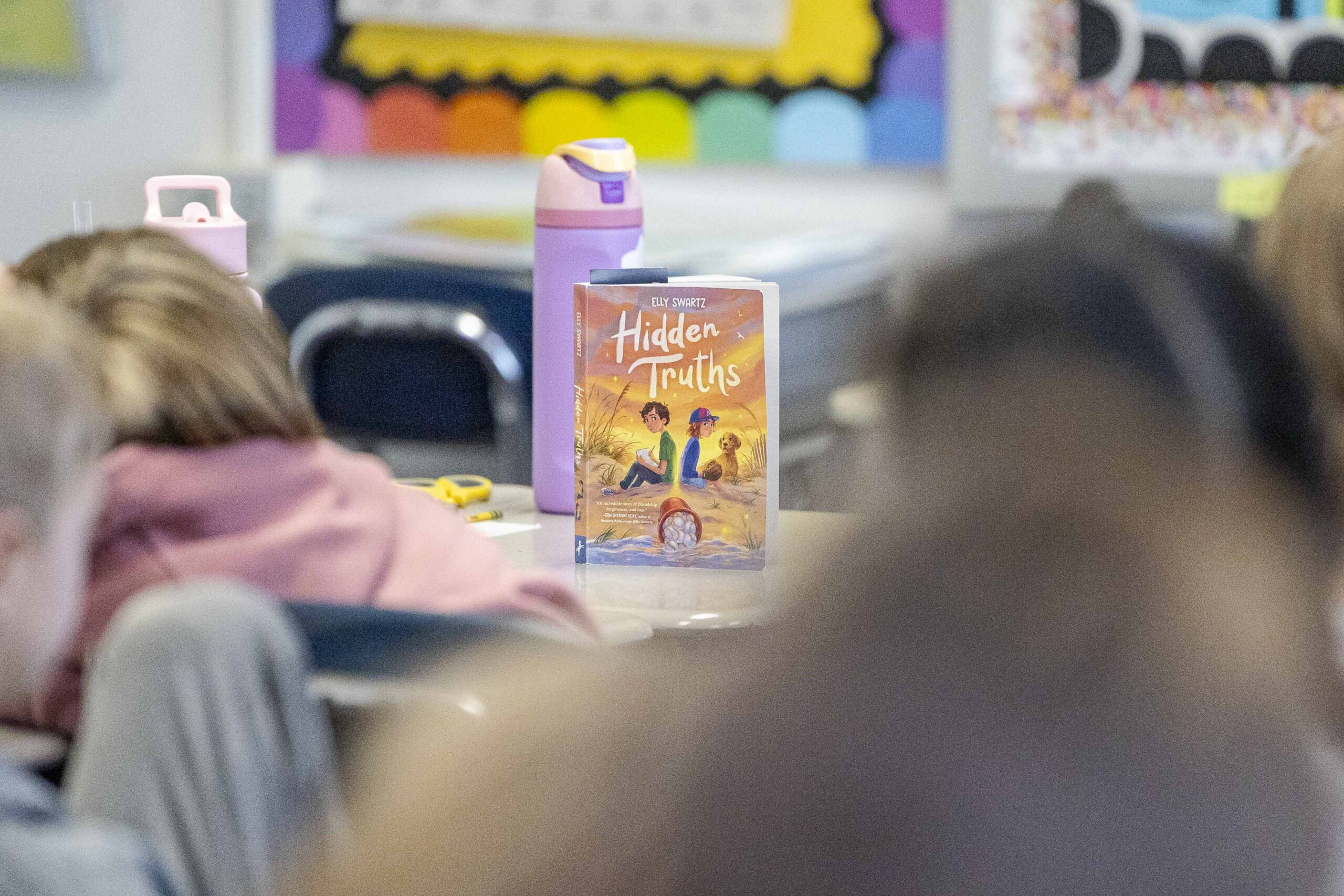
Swartz is the author of Finding Perfect, one of six books she has written for middle-grade readers. Hidden Truths was recently nominated for a Mark Twain award in the state of Missouri, and Almost True is set to be released in 2027.