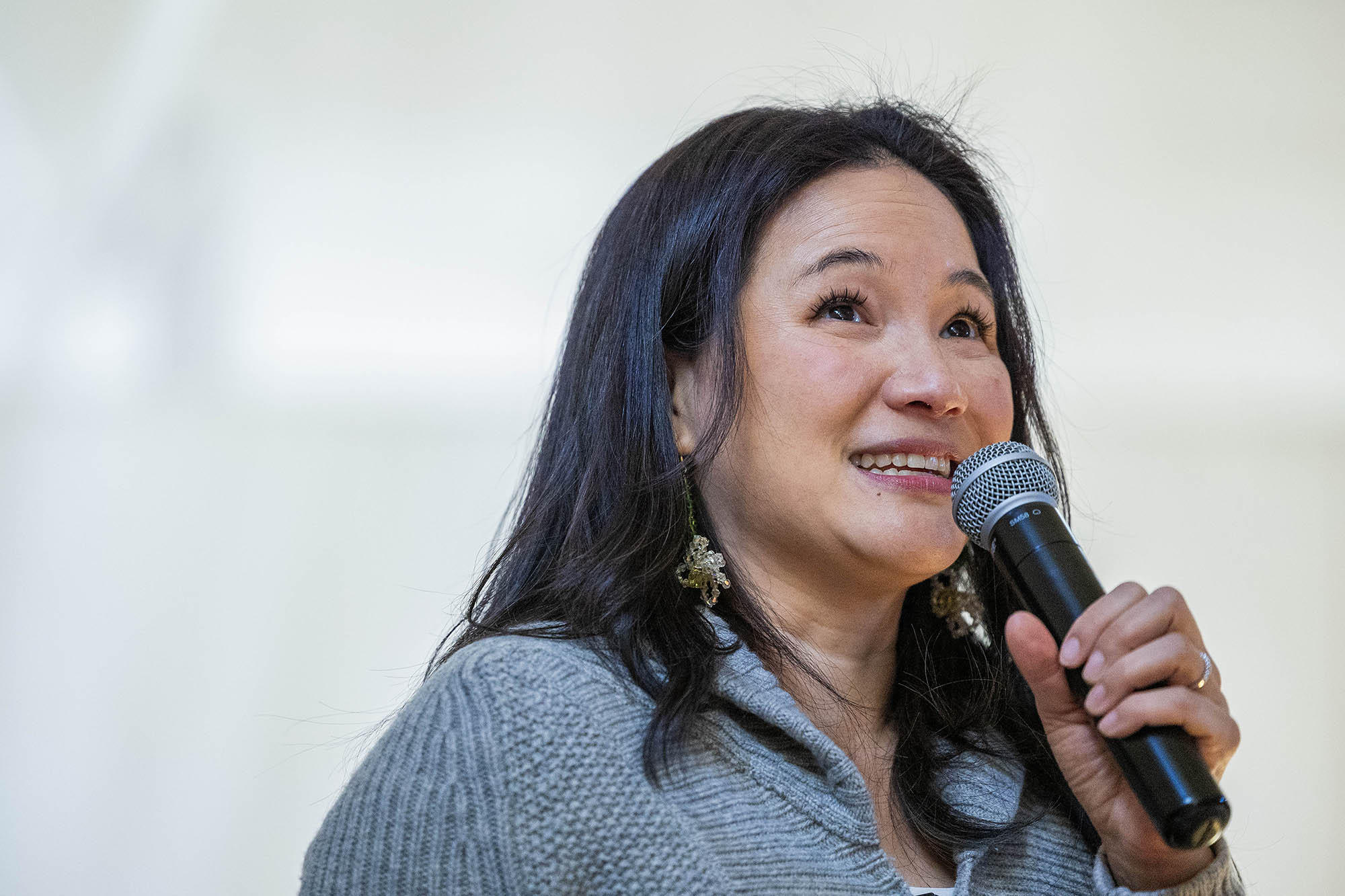
MICDS was pleased to welcome award-winning author Joanna Ho to campus on Wednesday, February 11, to speak with students in our Lower and Middle Schools. Ho is the New York Times bestselling author of many books for kids. She has received the Asian/Pacific American Award for Children’s Literature Honor, a Golden Kite Award, an Ezra Jack Keats Honor, and been a finalist for the Kirkus Prize. A former English teacher, dean, and high school vice principal, she is a writer and educator with a passion for anti-bias, anti-racism, and equity work. She holds a BA in psychology from the University of Pennsylvania and a master’s from the Principal Leadership Institute at Berkeley. She has designed an alternative-to-prison program and created educator professional development.
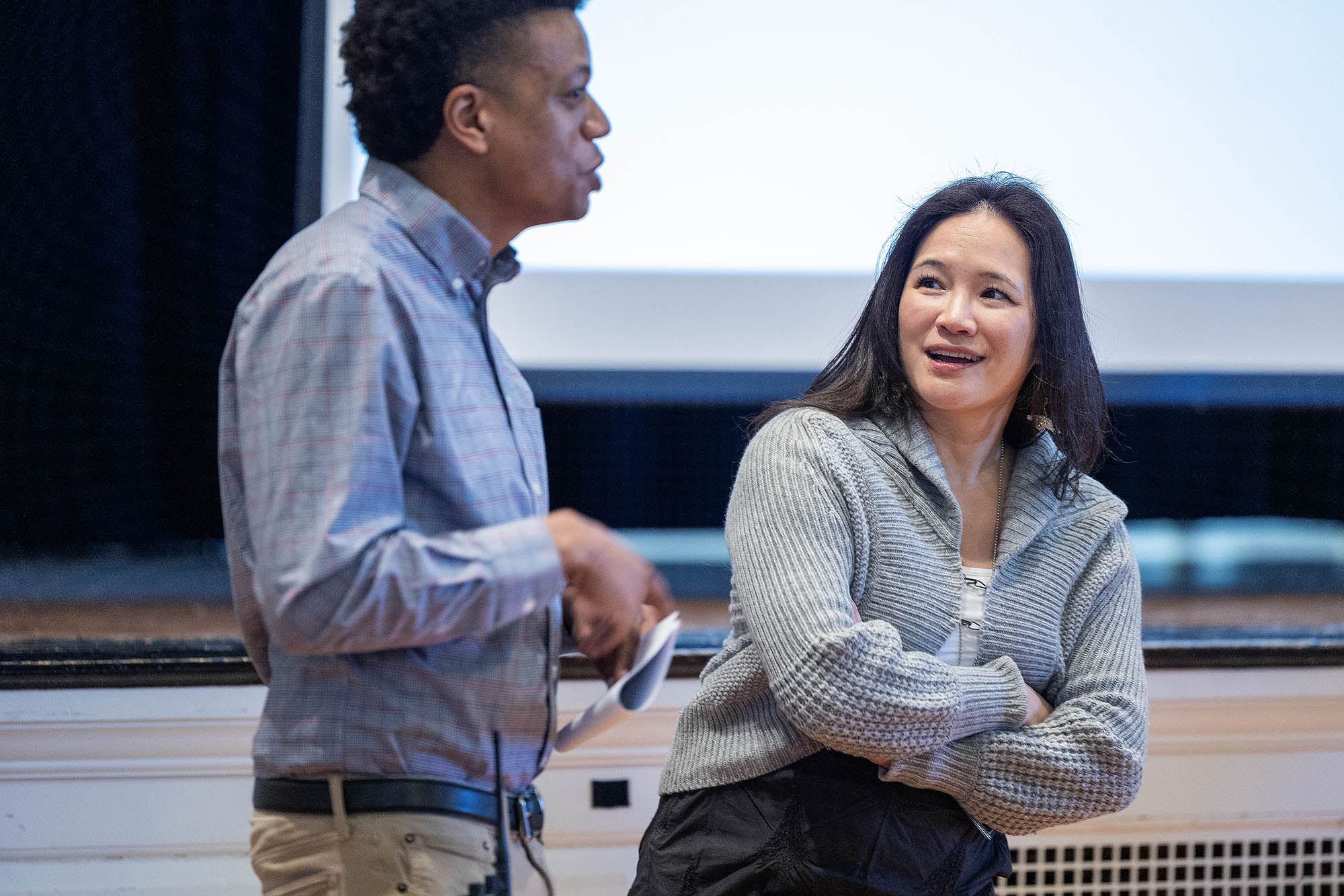
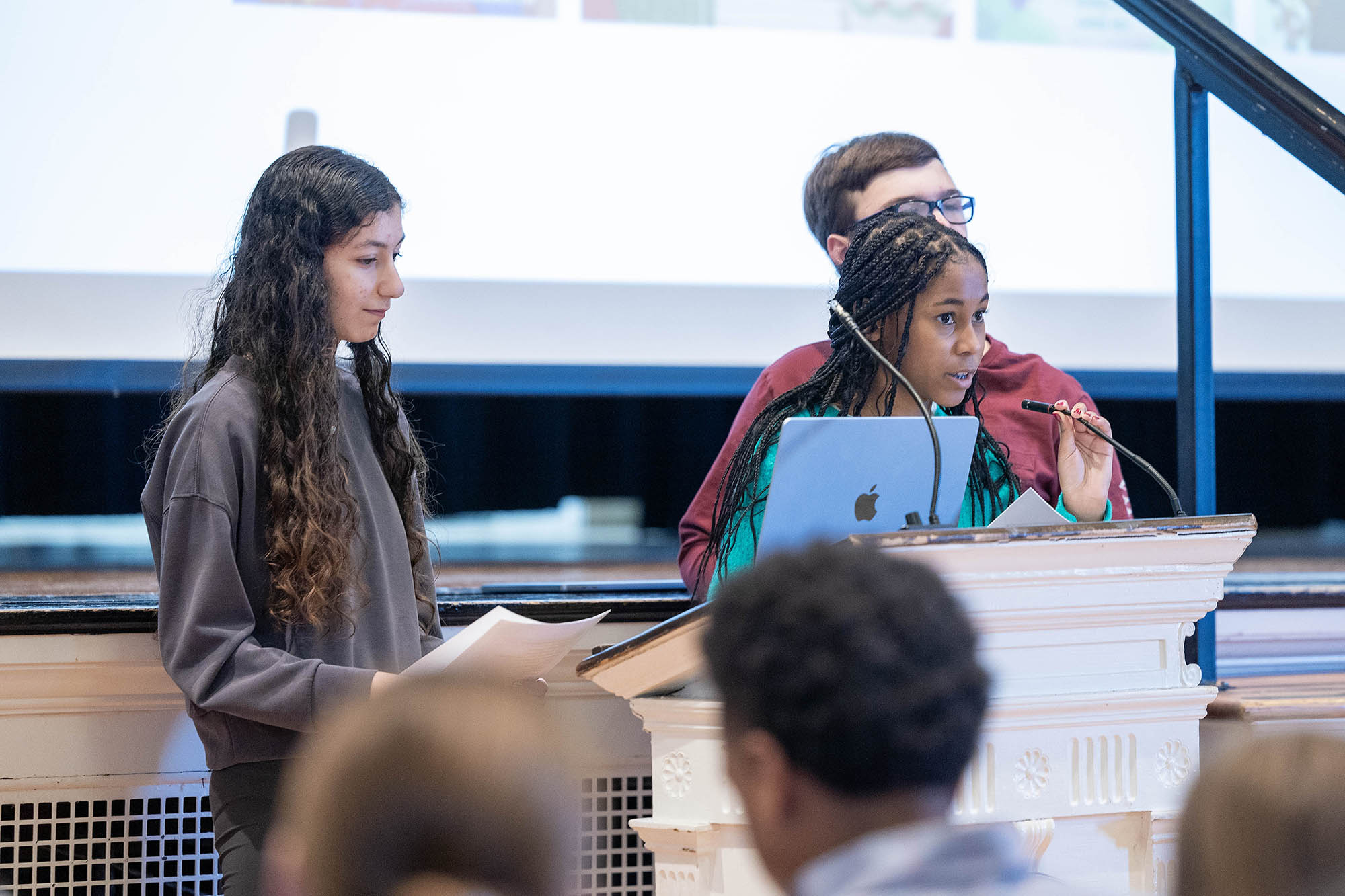
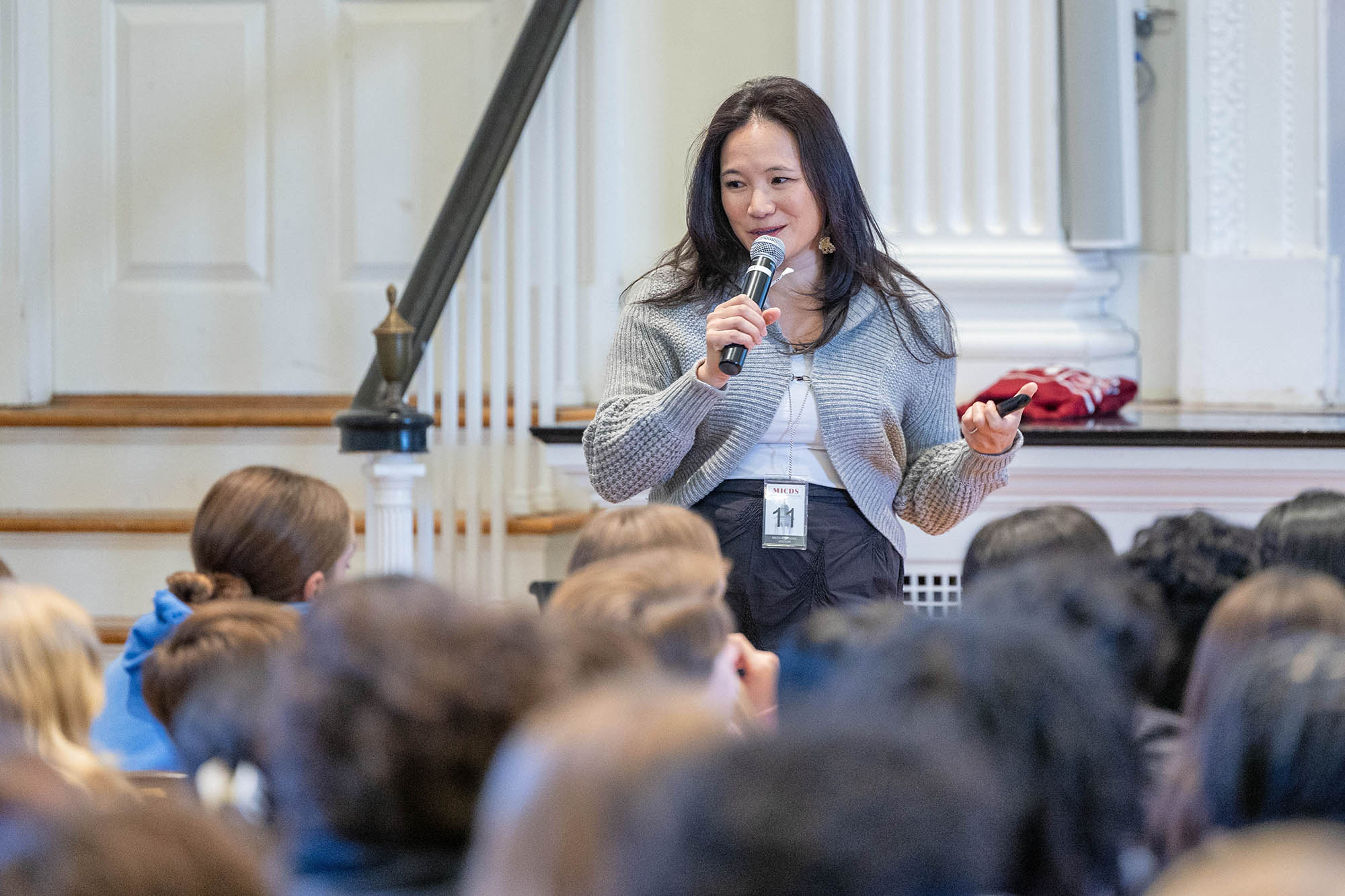
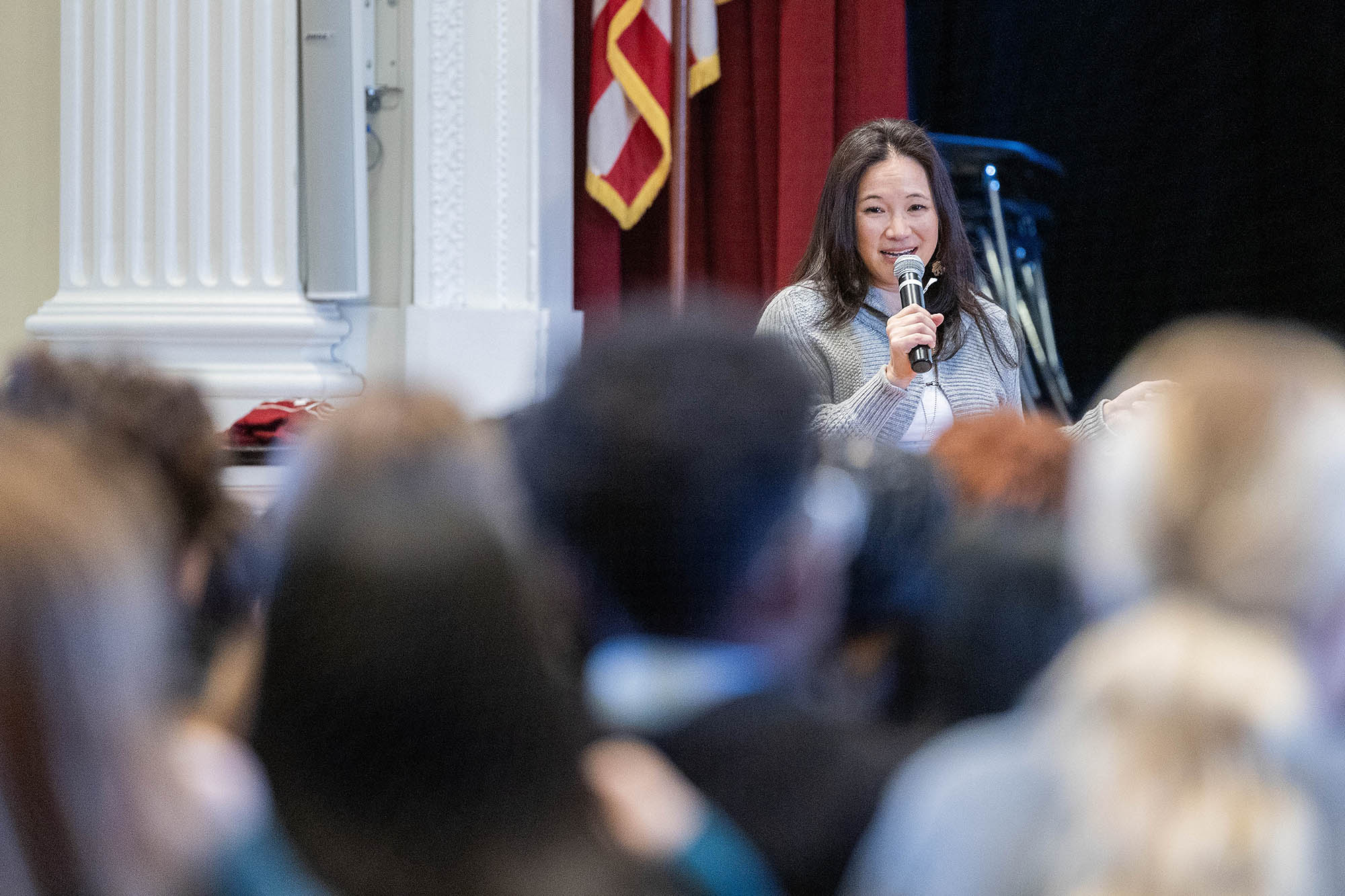
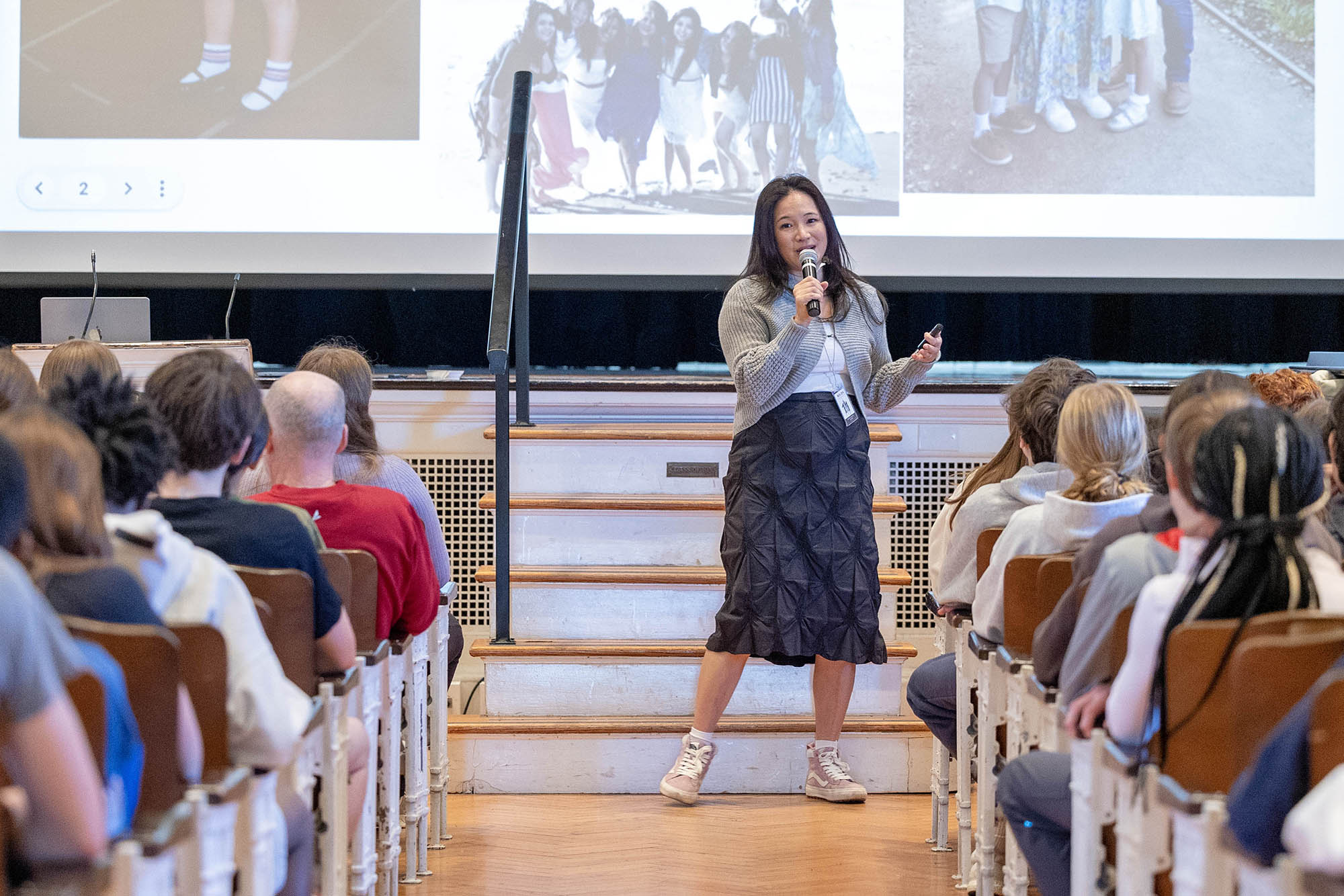
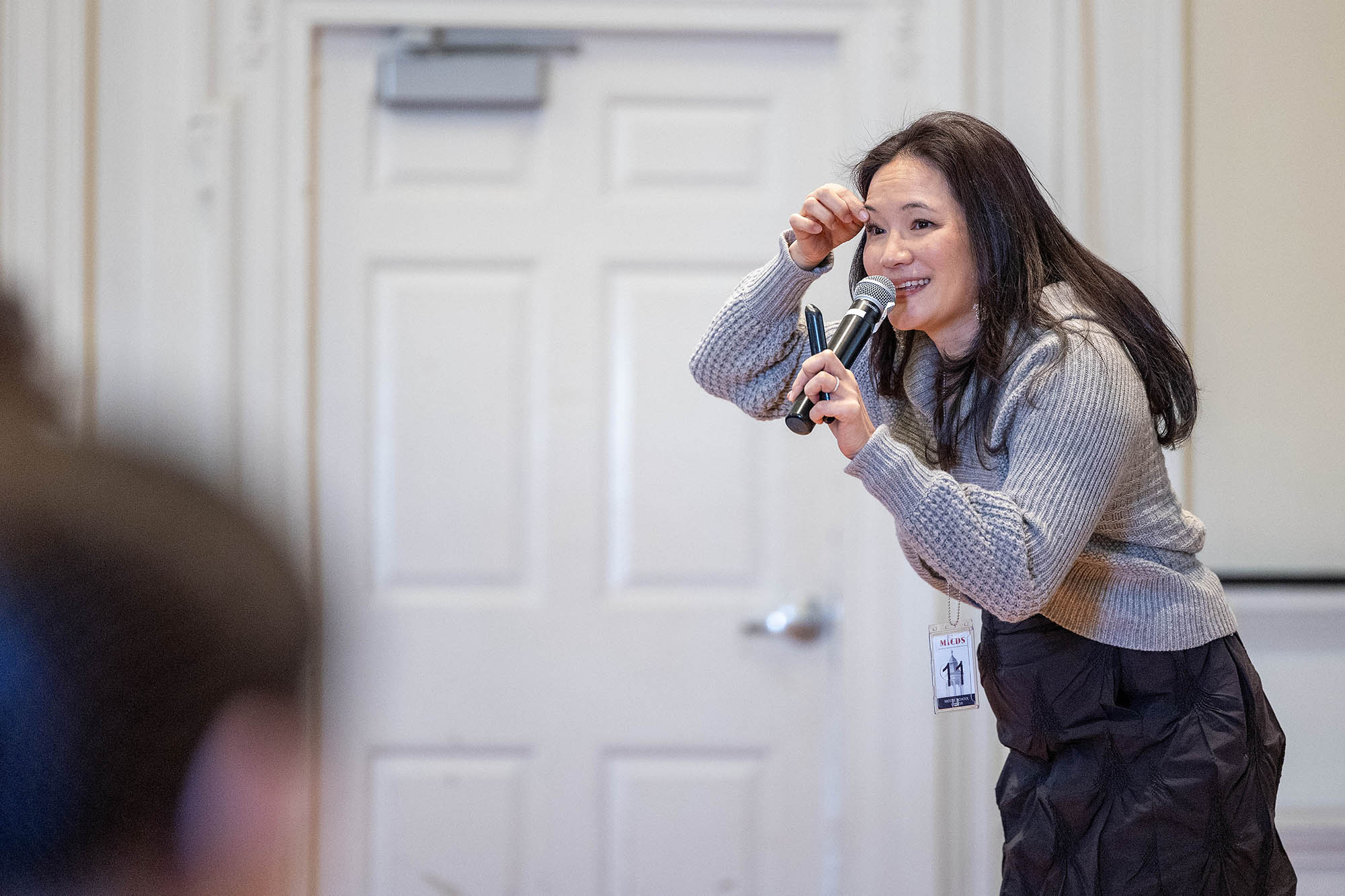
Ho’s first stop at MICDS was as the keynote speaker for our seventh and eighth-grade students as they embarked on their annual LEAD Summit. This year’s theme is Celebrate our Identities in Community, and students explained to their peers that this means “learning about ourselves and each other, and building a stronger community together.” They were challenged to think more deeply about identity and leadership. Ho shared that she wanted to talk about the importance of stories and why they matter.
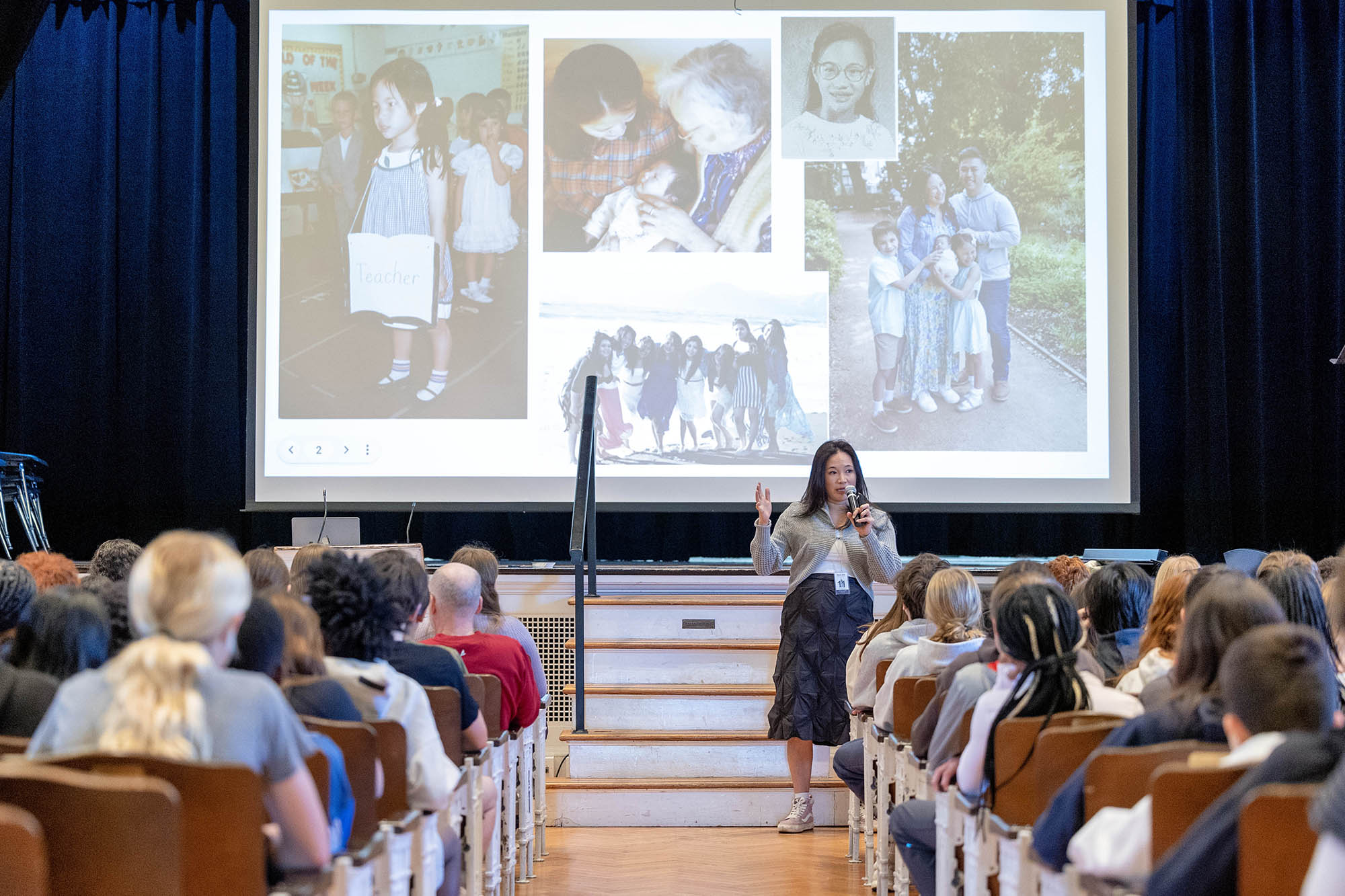
She provided a brief background before discussing her work. Ho was born in Minnesota and lived there with her mother, father, younger brother, and grandmother until she finished fourth grade. Her mom and grandma are from Taiwan. She moved to Baltimore for fifth grade after her parents divorced, then moved again to California in sixth grade. She shared photos from her childhood, including one of a first-grade Joanna wearing a sign that read “Teacher.” She explained that she first decided to become a teacher when she saw presents piled on her first-grade teacher’s desk the day before winter break.
“Education is the intersection of so many systems in our country,” Ho said. “I taught high school English, I was a dean of students, and vice principal of a high school in the Bay Area. Then I had my own kids.” Ho has a son in fifth grade, a daughter in third grade, and an 11-month-old baby.
“I had always been a reader,” she said. ” But I didn’t think of myself as a writer.” She shared that she once spent hours writing an essay and ended up with only one sentence. “I could not think of how to frame the ideas in my head. I wrote and rewrote for eight hours. It did not come easily, and it still does not come easily.” She has good motivation, though: when her oldest son was born, she wanted to find books that reflected him. She wanted him to grow up understanding the diversity of people in the world and around us.
Ho then shared a graphic from the University of Wisconsin-Madison that demonstrated diversity in children’s books in 2018. “Fifty percent of children’s books were about white kids. Twenty-seven percent were about animals. If you add up all the books about kids of color, it’s less than the percentage of books about animals, everywhere in publishing. Many of the books about kids of color are written by white authors. It was really hard to find books for my son. I knew I wanted him to read books that reflected him.”
Her own childhood informed this drive. Ho grew up when Disney princesses were rather homogenous. “They all had long, blonde hair and big, blue eyes. They didn’t look like me.” She often wished she looked different from the way she did. Books were no better. The one book with Asian characters she read was called Tikki Tikki Tembo, about a Chinese child who fell into a well. “His name was so long that nobody could rescue him, because they couldn’t say his name,” she said. She also showed how diversity in broader media. “It’s limited representation,” she explained. “I was internalizing all these messages, and I didn’t know it. I thought, ‘I’m not going to be beautiful unless my face looks different.’ We come out with a really distorted understanding of who we are and our possibilities in the world, or we are invisible. I didn’t learn anything about Chinese culture when I was in school. It was a blank.”
A quote by Dr. Rudin Sims Bishop, Professor Emerita of Education ad Ohio State University, encapsulates Ho’s feelings about how important it is to have media that represents a diverse audience. Bishop writes, “Books are sometimes windows, offering views of worlds that may be real or imagined, familiar or strange. These windows are also sliding glass doors, and readers have only to walk through in imagination to become part of whatever world has been created or recreated by the author. When lighting conditions are just right, however, a window can also be a mirror. Literature transforms human experience and reflects it back to us, and in that reflection we can see our own lives and experiences as part of a larger human experience. Reading, then, becomes a means of self-affirmation, and readers often seek their mirrors in books.”
Ho continued, “There is no one experience for everyone. We all have our own experiences. These books aren’t only important for ourselves, they are important for everyone, so we can understand who our classmates, neighbors, and community members are. I wanted kids who are not like my son to be able to read books about kids like him.”
Thankfully, there has been a rise in books by people of color, which Ho notes corresponds with a rise in book banning. She showed a slide featuring covers of banned books, including The Diary of Anne Frank and Everywhere Babies. “When we talk about book banning, that’s just the tip of the iceberg,” Ho explained. “Publishers are now afraid to publish books that tell an inclusive story. It’s harder for authors of color to get their books published. Librarians and teachers around the country are being attacked and might be afraid to bring in these kinds of books.
“When we don’t have access to these books, kids have a distorted sense of self, or they don’t see themselves at all and don’t see their worth. Learning the importance of each other’s stories is why you’re here today. Protect our right to read these stories. Understand the importance of reading and our ability to fight book banning.”
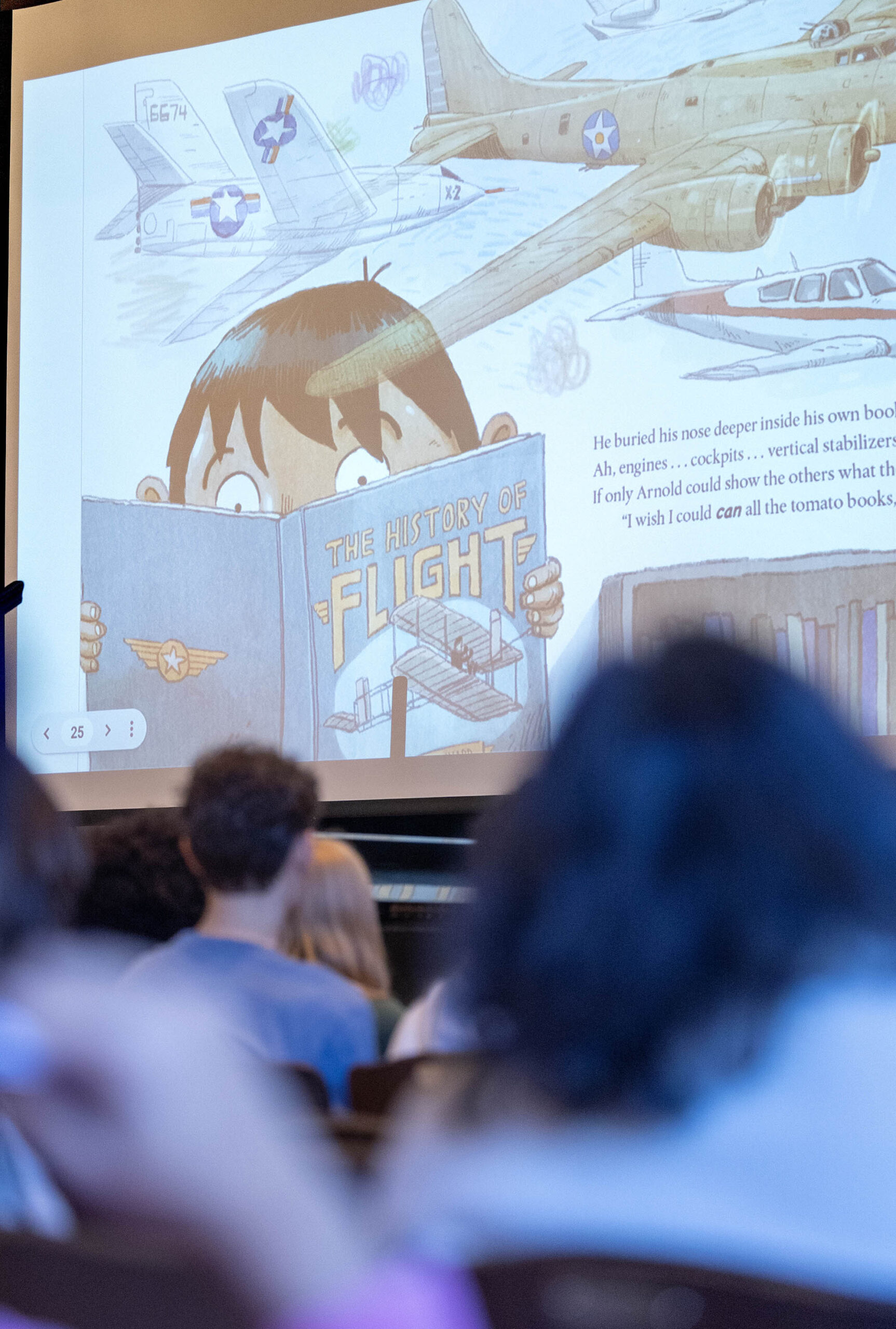
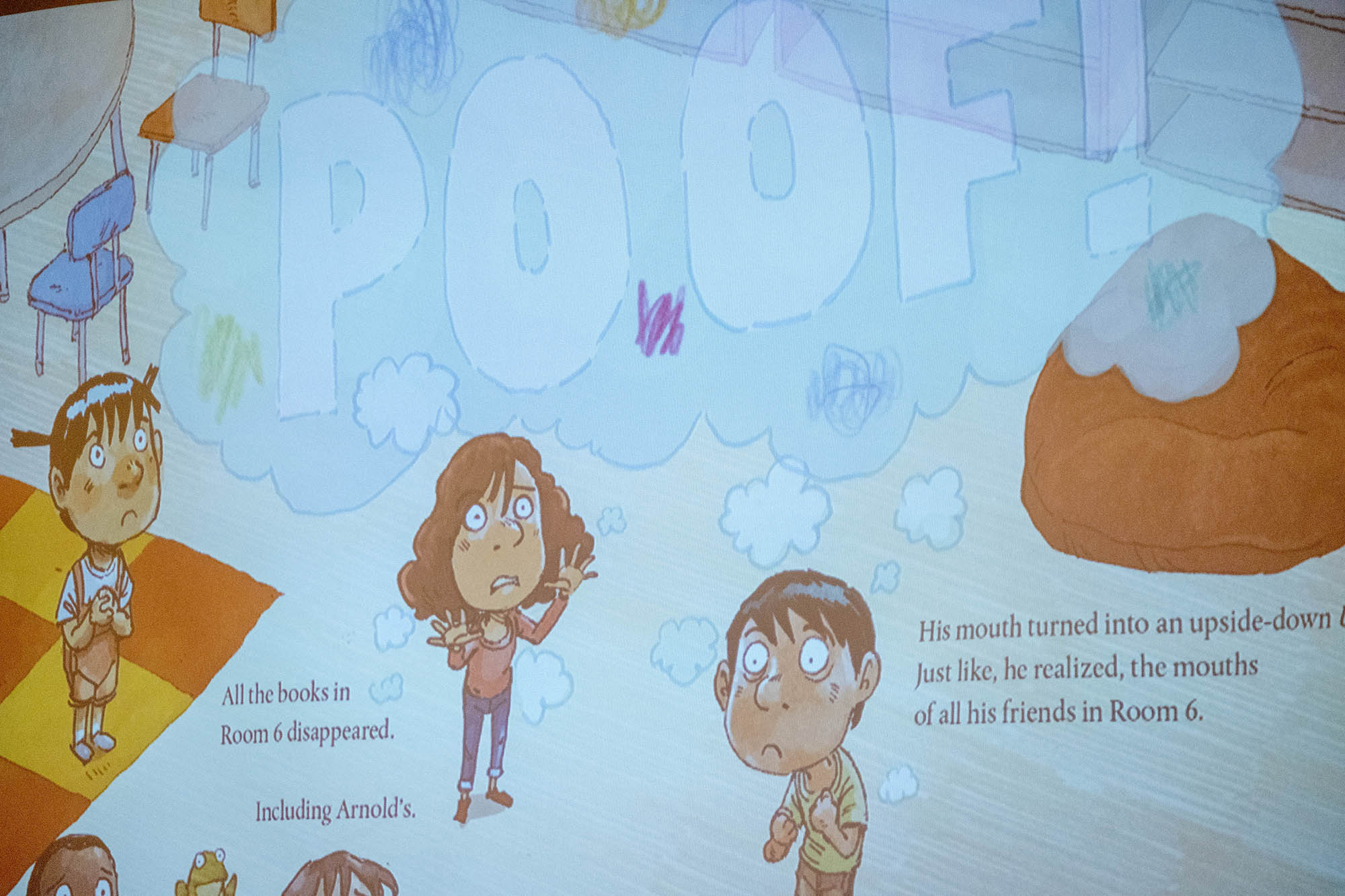
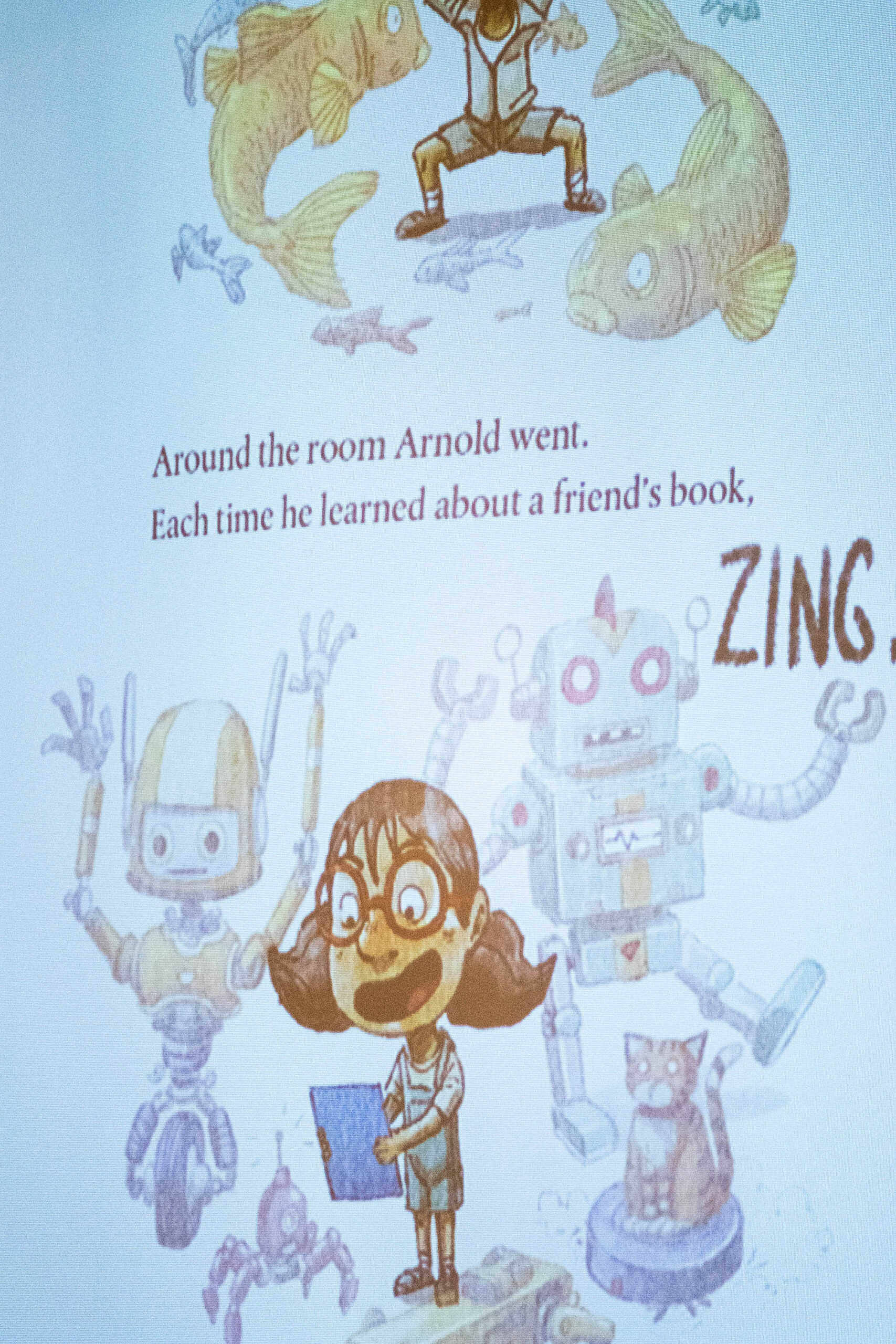
Ho then read aloud her book The Day the Books Disappeared, which alludes to book banning in a way that centers children. “All of us stand on the shoulders of people who have risen up, spoken out, and shaped our space. You all can do that, too, by helping each of us understand each other better. That is a great power; you can protect and fight for each other and your community. Know that you have tremendous power. I find a voice in writing stories. For you, it could be in so many other things in the gifts you bring into your family, your community, and your school. The stories you live and experience and tell can make a difference in your life and your world.”
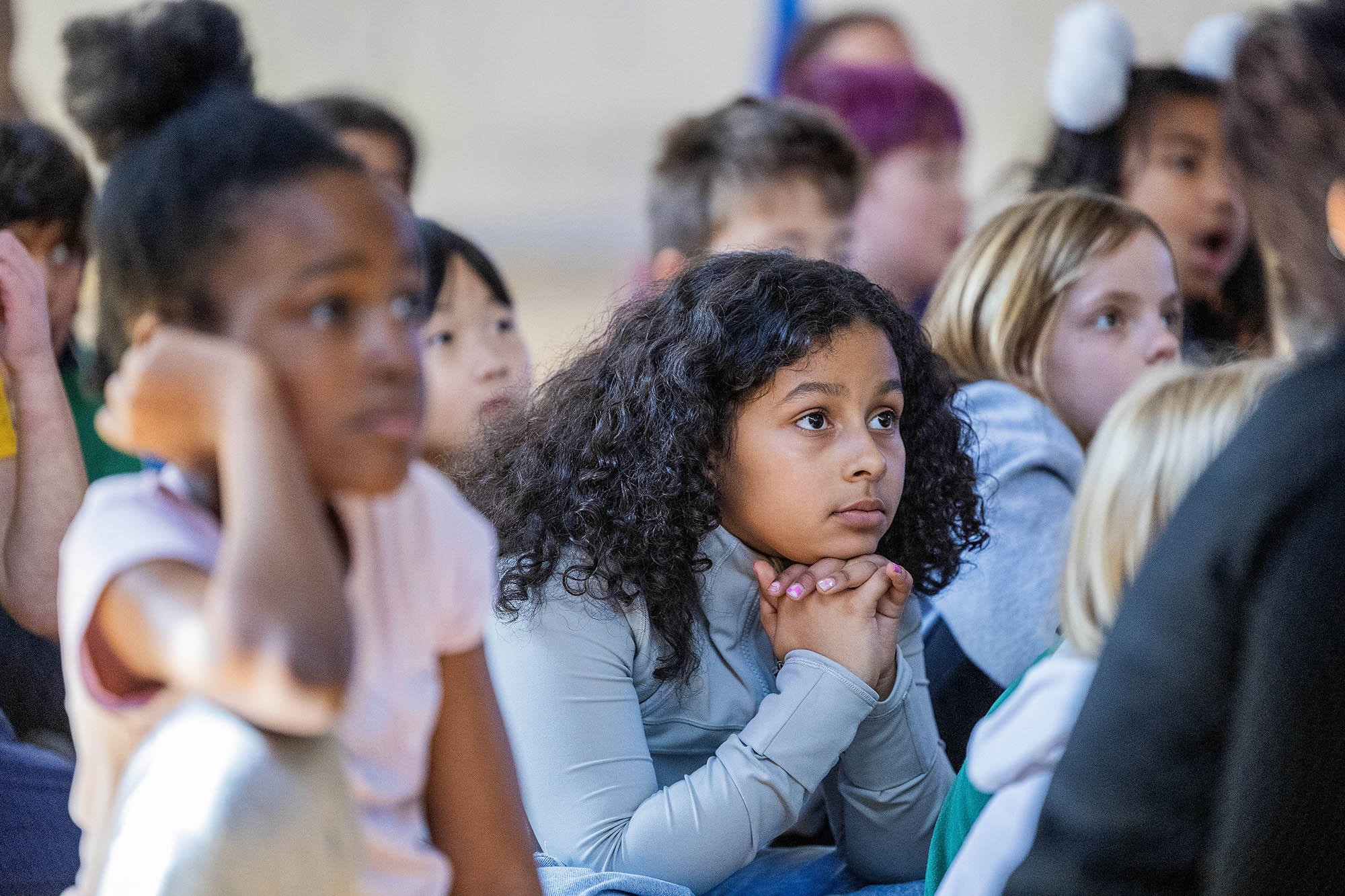
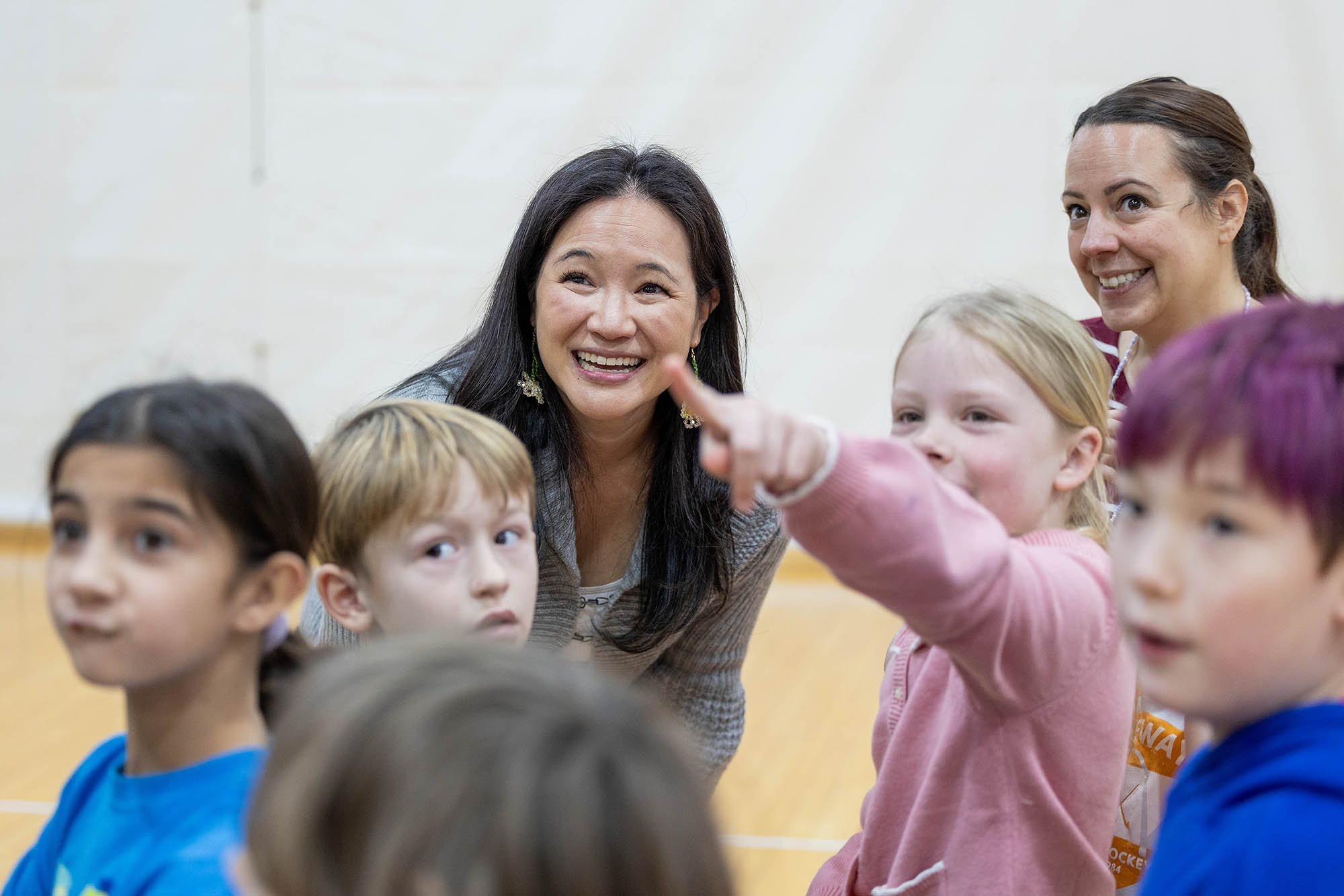
From there, Ho joined our first and second-grade students in the South Gym. Those students recently read Ho’s book One Day in preparation for her visit. In this session, Ho once again shared her background and then focused on the process of becoming a published author. She was inspired to write her first book after her first son was born prematurely. “He was tiny, only four pounds!” she said. “I knew that one day he was going to have hair on his head, and he would laugh and sing and play, and run around at school just like you.”
This was in early 2015, and since Ho had never written a book before, she didn’t know where to start. She created a table and outlined her ideas, showing how she viewed her infant son that day and what she hoped and dreamed for him. She showed that not all of her ideas made it into the final book, after relying on friends to provide extensive feedback and then on editors to provide even more. “I rewrote and rewrote and rewrote over and over and over again, until the book was finished,” she shared. “Every time I write a book, that’s what it looks like. There are lots and lots of versions.”
After reading her book to the students, Ho challenged them to share their wishes for their own one day. “I hope one day, I…” The children enthusiastically took the microphone:
- “I hope one day I will work for NASA!” What do you want to do? “Build rockets!”
- “I dream one day I will have a sleepover.”
- “I hope one day I will go to college and have parties.”
- “I dream one day I will be a basketball star.”
- “I hope one day I will have a job at a restaurant.”
- “I dream that one day I will own a Mustang.”
- “I hope one day I will make a machine that will fly.”
- “I hope one day I will be a baseball player.”
Ho continued: “I didn’t know I wanted to be an author. As those dreams came to me, I pursued them. I can tell you that dreams come true. You really do have the power with the support of your community, friends, and teachers. Those dreams are real.
“Always stay open to new dreams. As you learn more about yourself, your dreams can shift and change.”
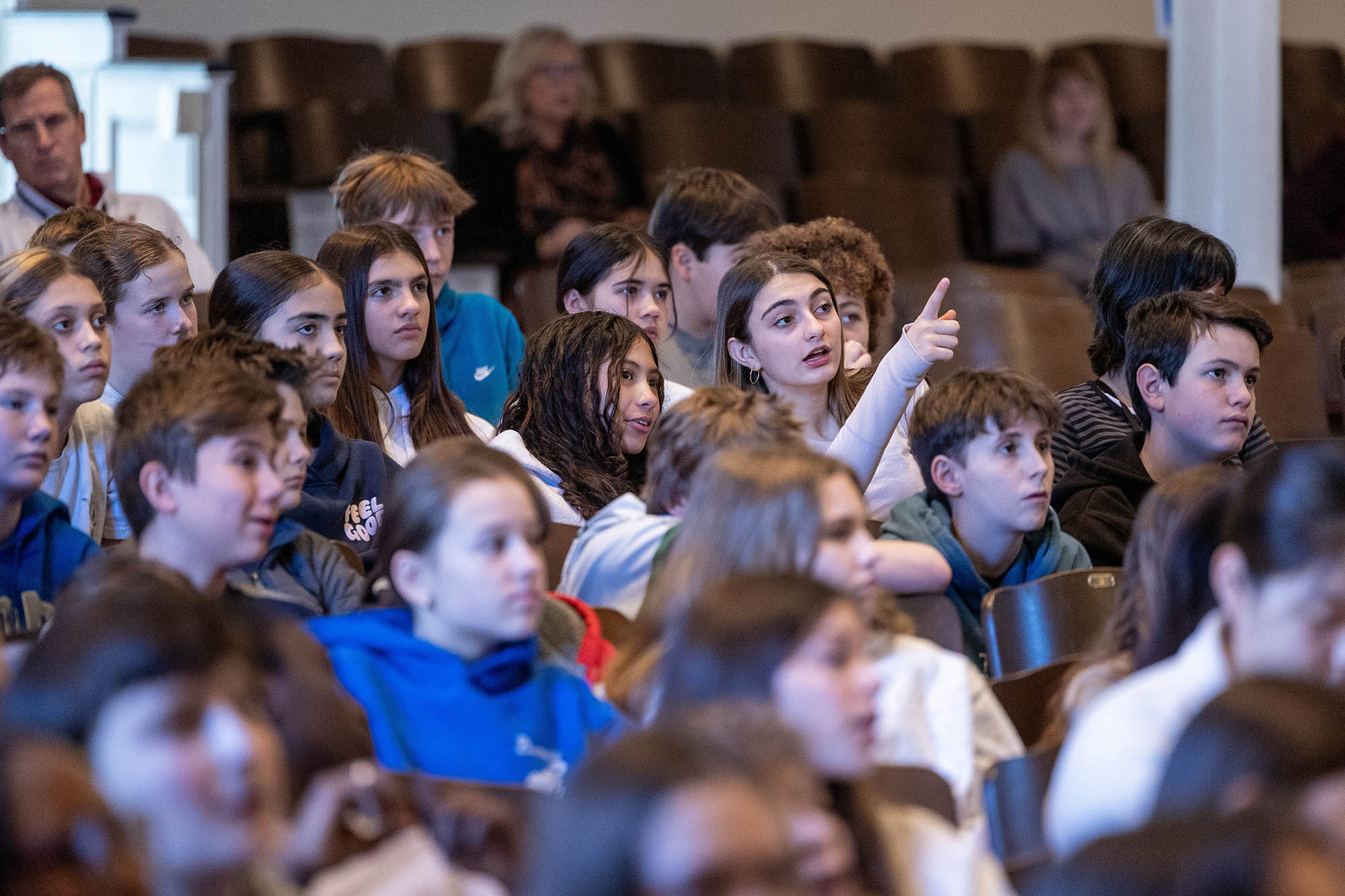
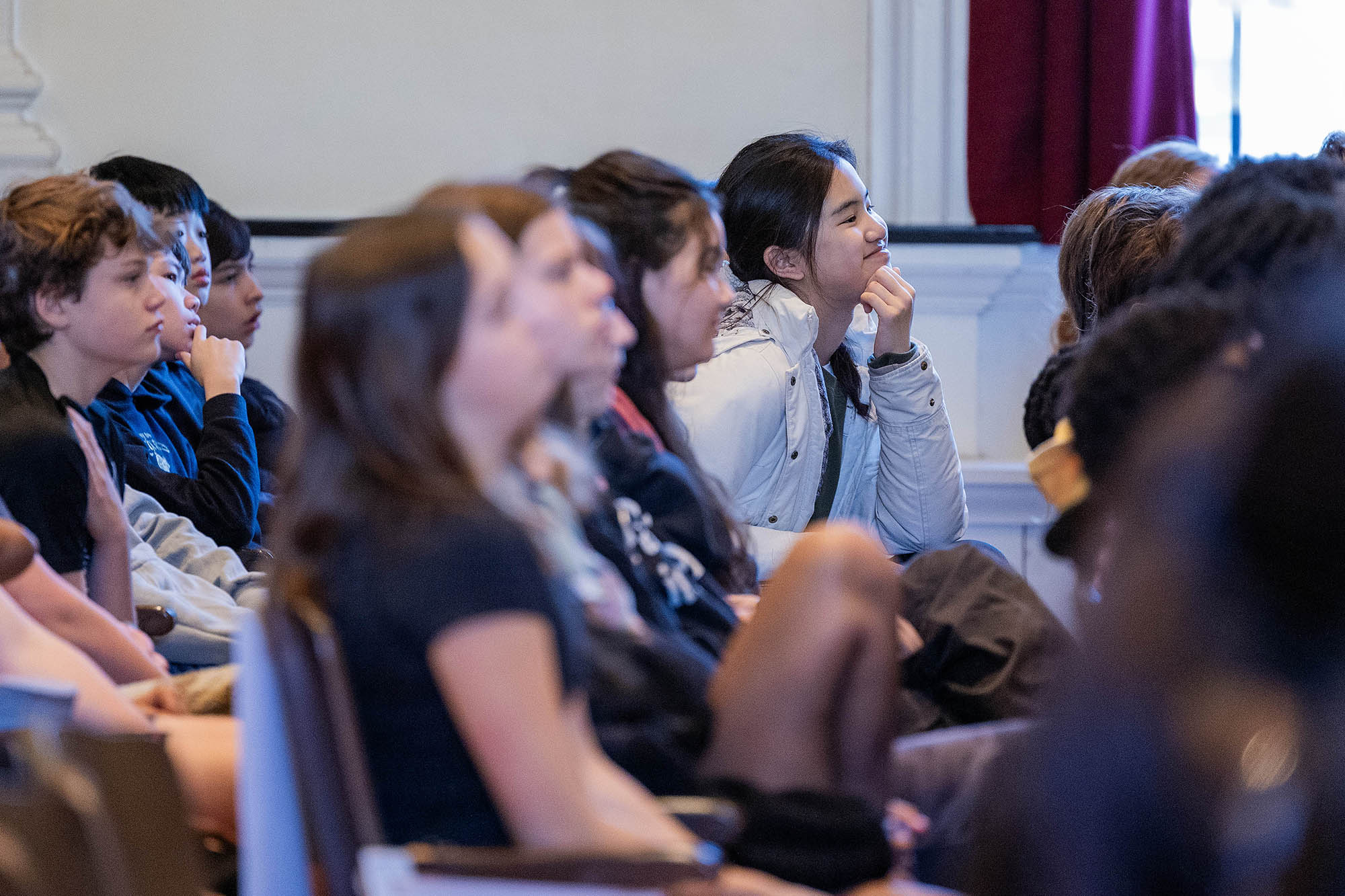
Ho finished the session by answering questions from our curious students. It was clear they were engaged and entertained, and eager to learn more about both Ms. Ho and the book-writing process.
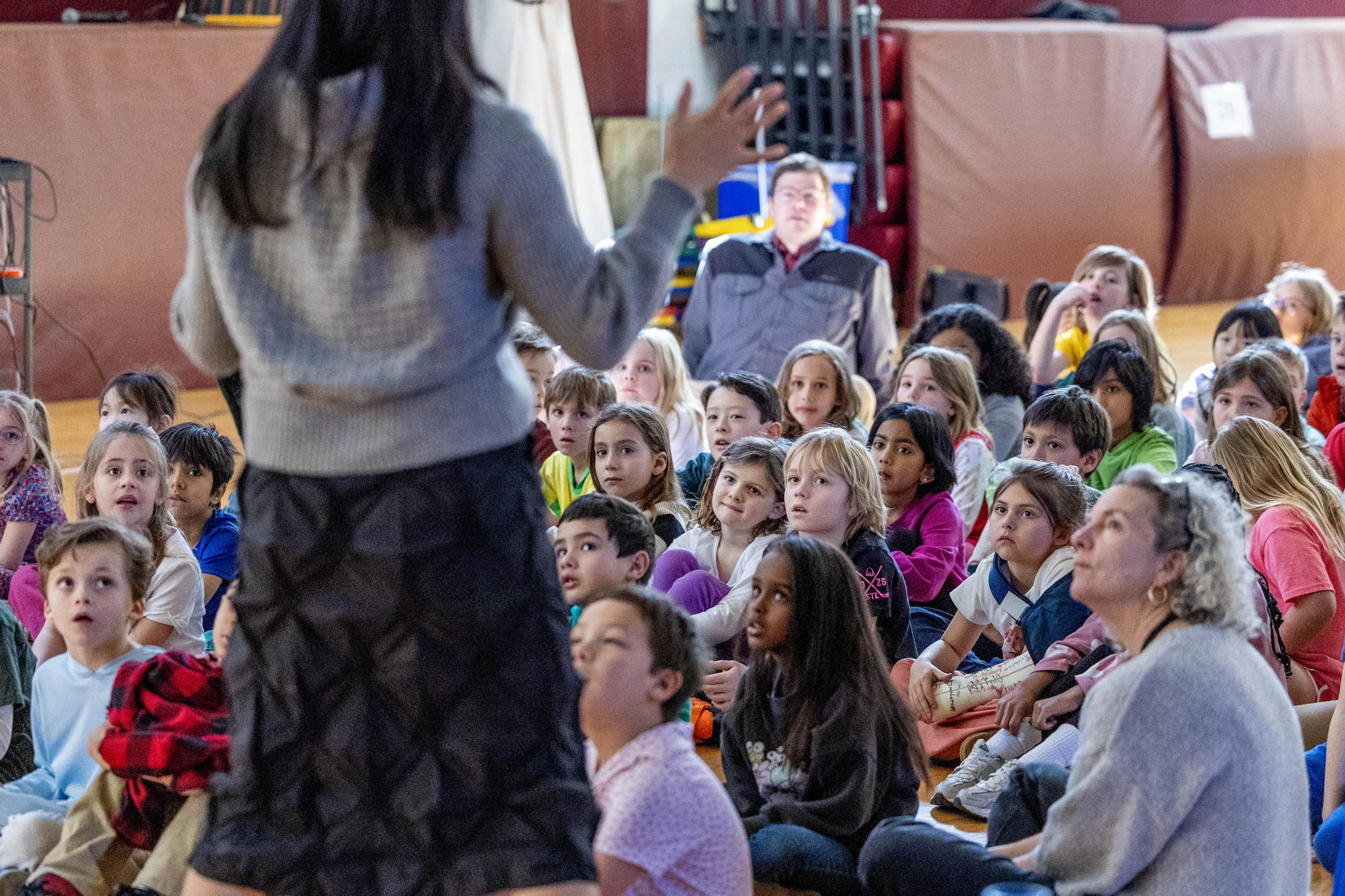
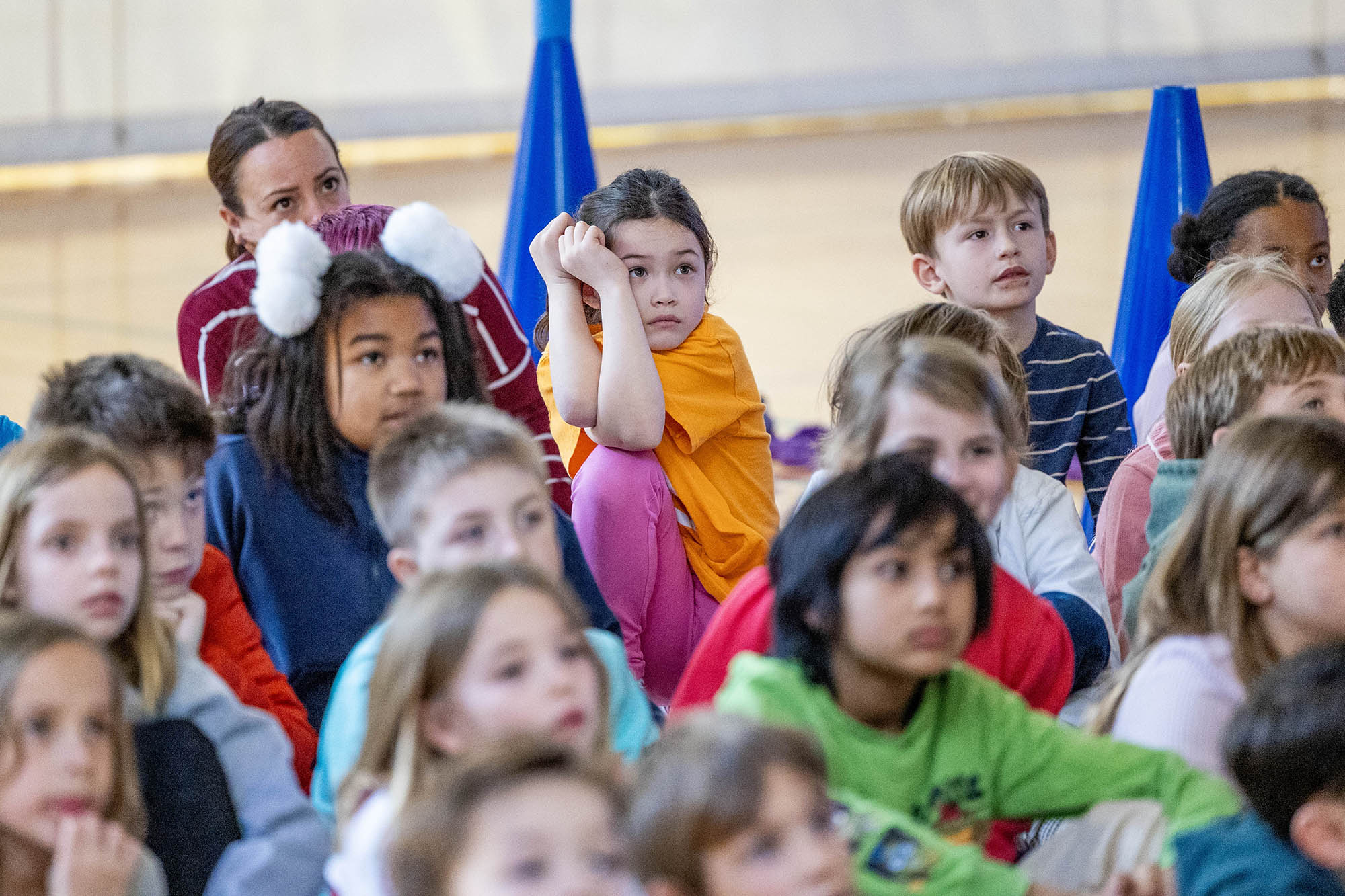
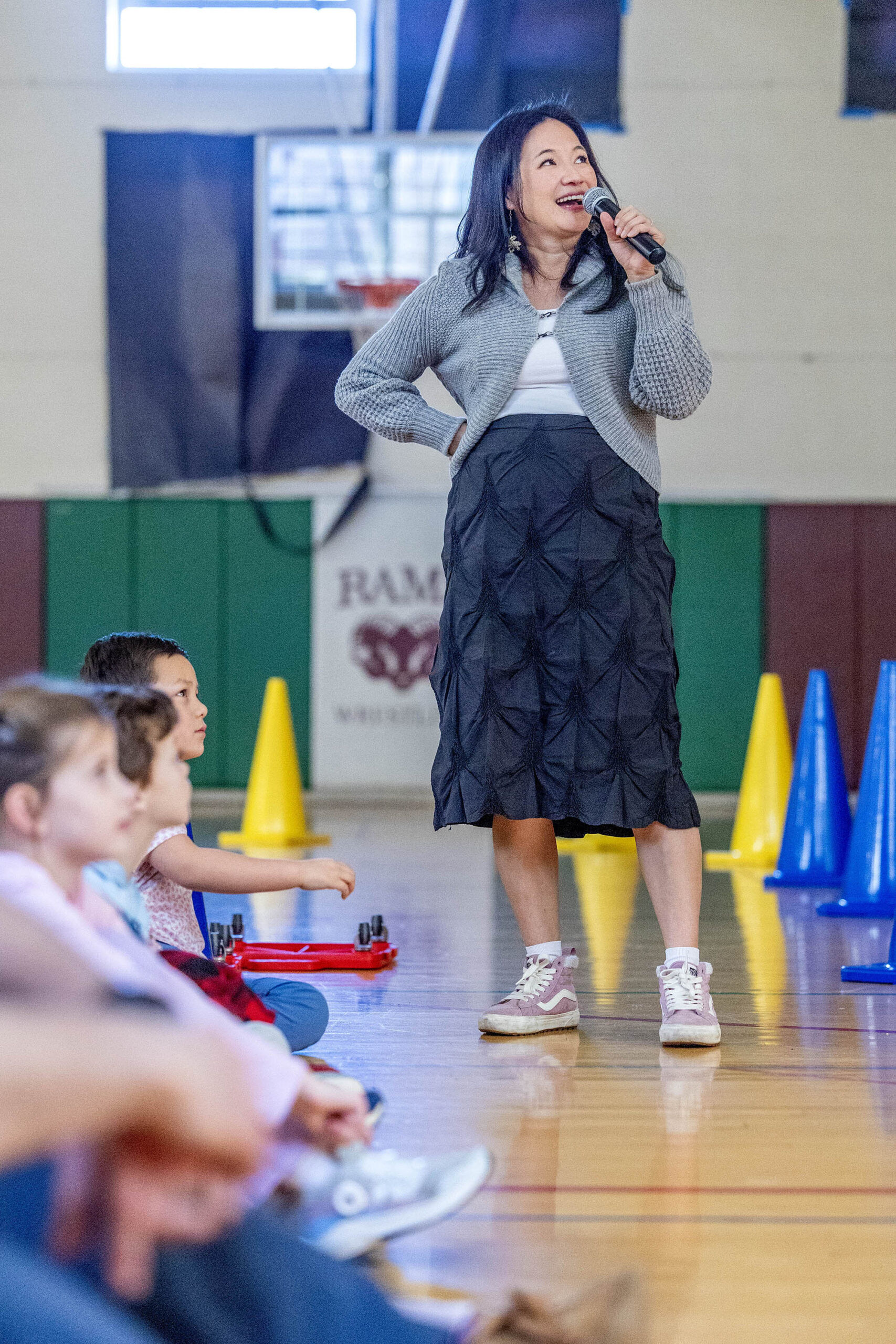
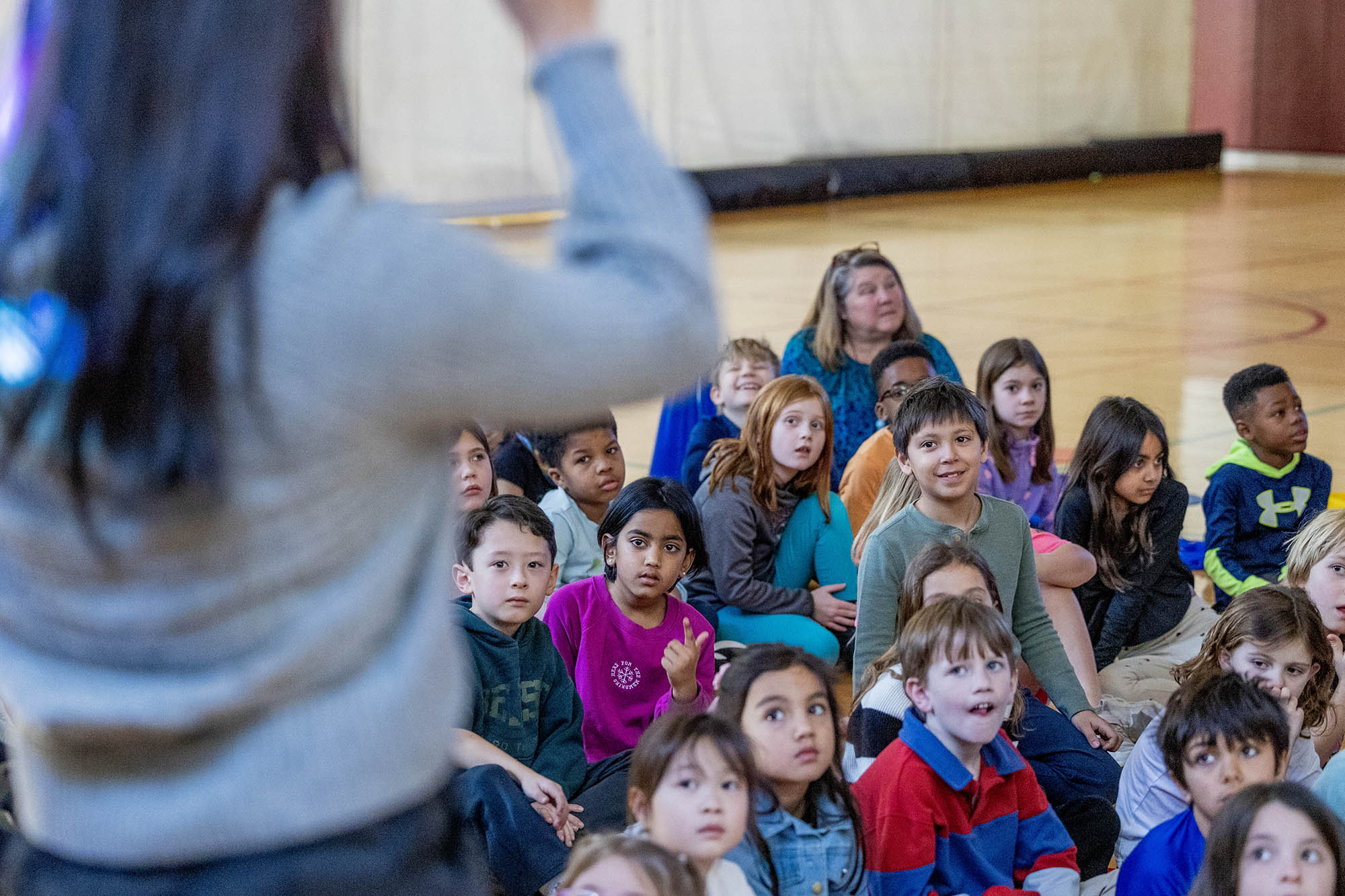
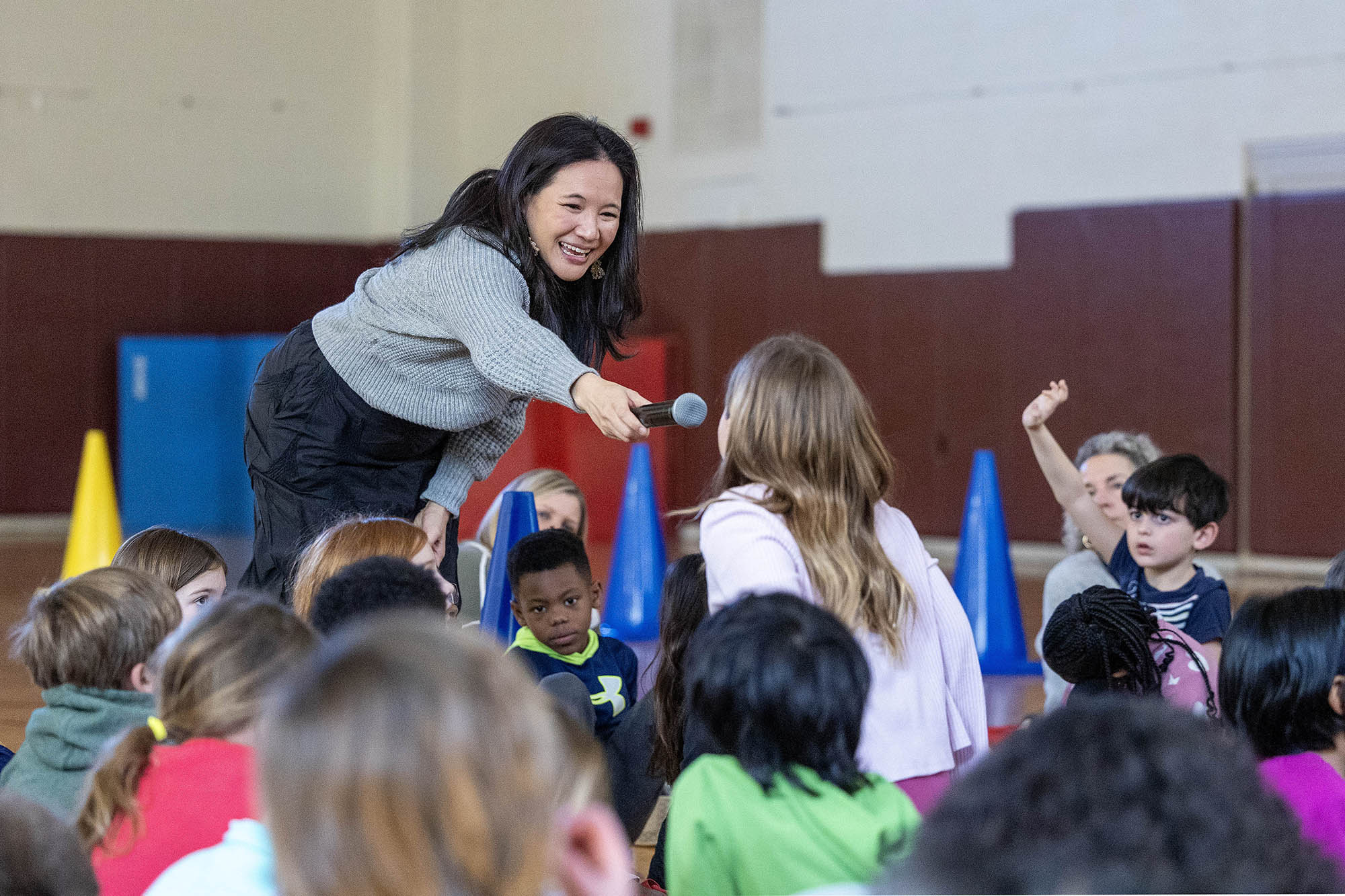
“It was so great to hear from author Joanna Ho this week!” enthused Thomas Buffington, Lower School Librarian. “Our first and second graders enjoyed an engaging, interactive visit as Joanna shared about her life as an author, and together we explored Joanna’s book One Day. It was so fun to hear the kids’ aspirations as Joanna passed around the microphone. As a memento of the event, we are grateful to provide each student with a copy of the book to take home, and Joanna kindly mentioned each student by name when she signed the copies. A big thanks to our teachers as well for making this event happen!”
Thank you, Joanna Ho, for your wonderful books and for spending so much time with our students this week!