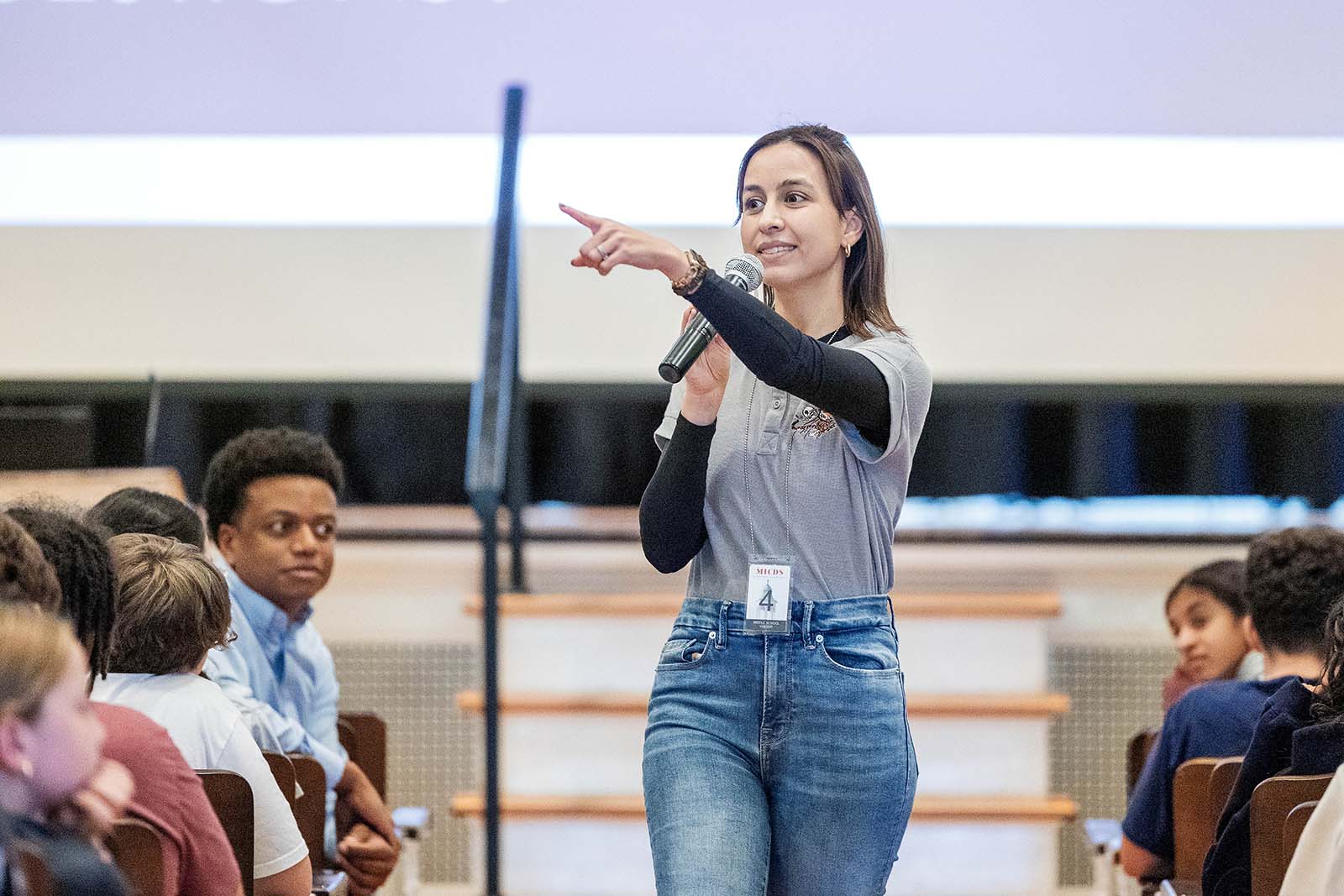
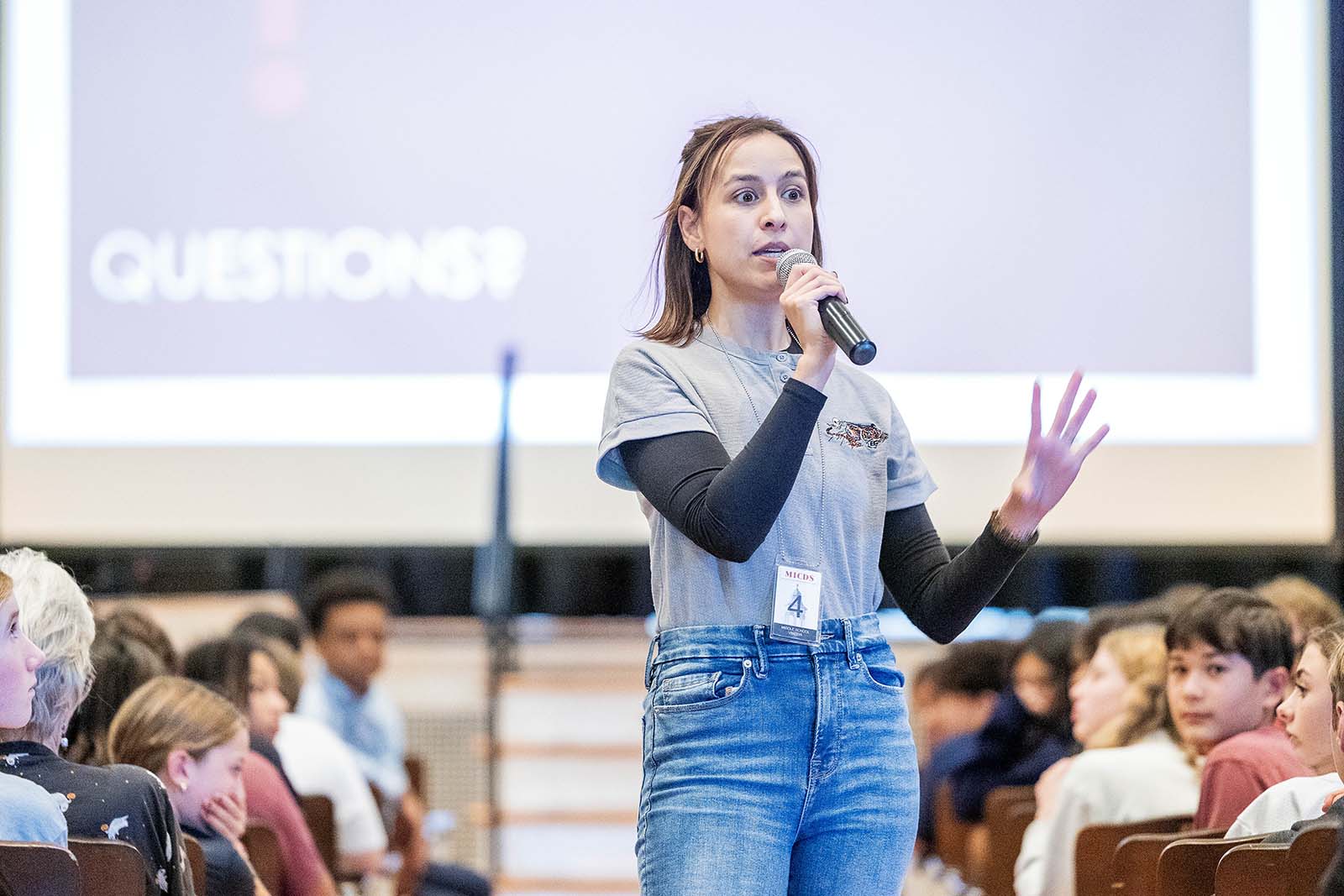
On Monday, October 26, fourth- through eighth-grade students gathered in Mary Eliot Chapel to learn about writing, storytelling, and a variety of fictional characters. Author Jasmine Warga stopped by to share her work and writing process, inspiring kids to read, write, and explore their imaginations.
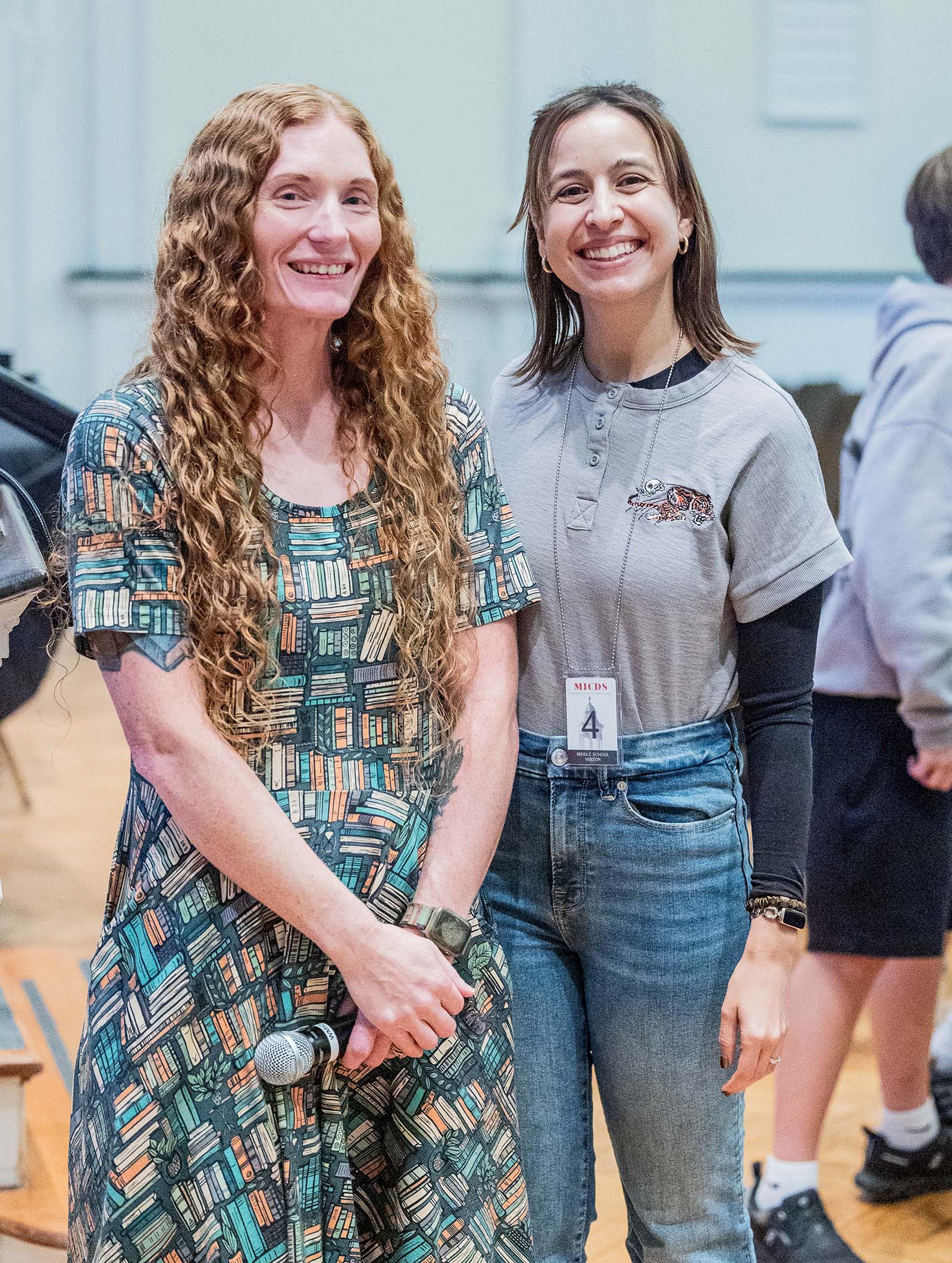
Bethany Kavanaugh, Middle School Librarian, introduced Ms. Warga:
“Today, we have a special guest joining us! She’s an award-winning author, an incredible storyteller, and someone who has made a career out of doing something your teachers are always asking you to do: USE YOUR IMAGINATION!
She’s the author of some amazing books, including Other Words for Home, The Shape of Thunder, and A Rover’s Story. Her stories have taken readers across the world, through big emotions, and even into outer space! Whether she’s writing about friendship, family, finding where you belong, or a robot exploring Mars, she has a pretty incredible talent for making us fall in love with her characters.
Her books have won some impressive awards, including Newbery Honors, which, in the book world, is kind of like winning an Oscar. Except instead of a gold statue, you get a shiny sticker on your book. And trust me, us librarians get very excited about those stickers!
And speaking of exciting news, her newest book, The Unlikely Tale of Chase and Finnegan, was just announced as a finalist for Barnes & Noble’s Book of the Year! That’s an honor, and we’re excited to celebrate that accomplishment with her today! Seriously, how cool is it that we get to welcome an author who’s making headlines in the book world right now?!
But beyond the awards and recognition, what makes her stories so special is the way they remind us that every voice matters, every story deserves to be told, and sometimes the most unexpected characters can teach us the biggest lessons.
We’re so lucky to have her here at MICDS today to share her stories, her inspiration, and maybe even a few secrets about what it’s really like to be an author. And who knows? Maybe one of you will be the next award-winning author and get a Newbery Honor sticker on your future book!”
Ms. Warga began by sharing one of the questions she’s asked most frequently: where do ideas come from? She pitched that question to the audience, who responded with sources like TV shows, personal experience, and imagination.
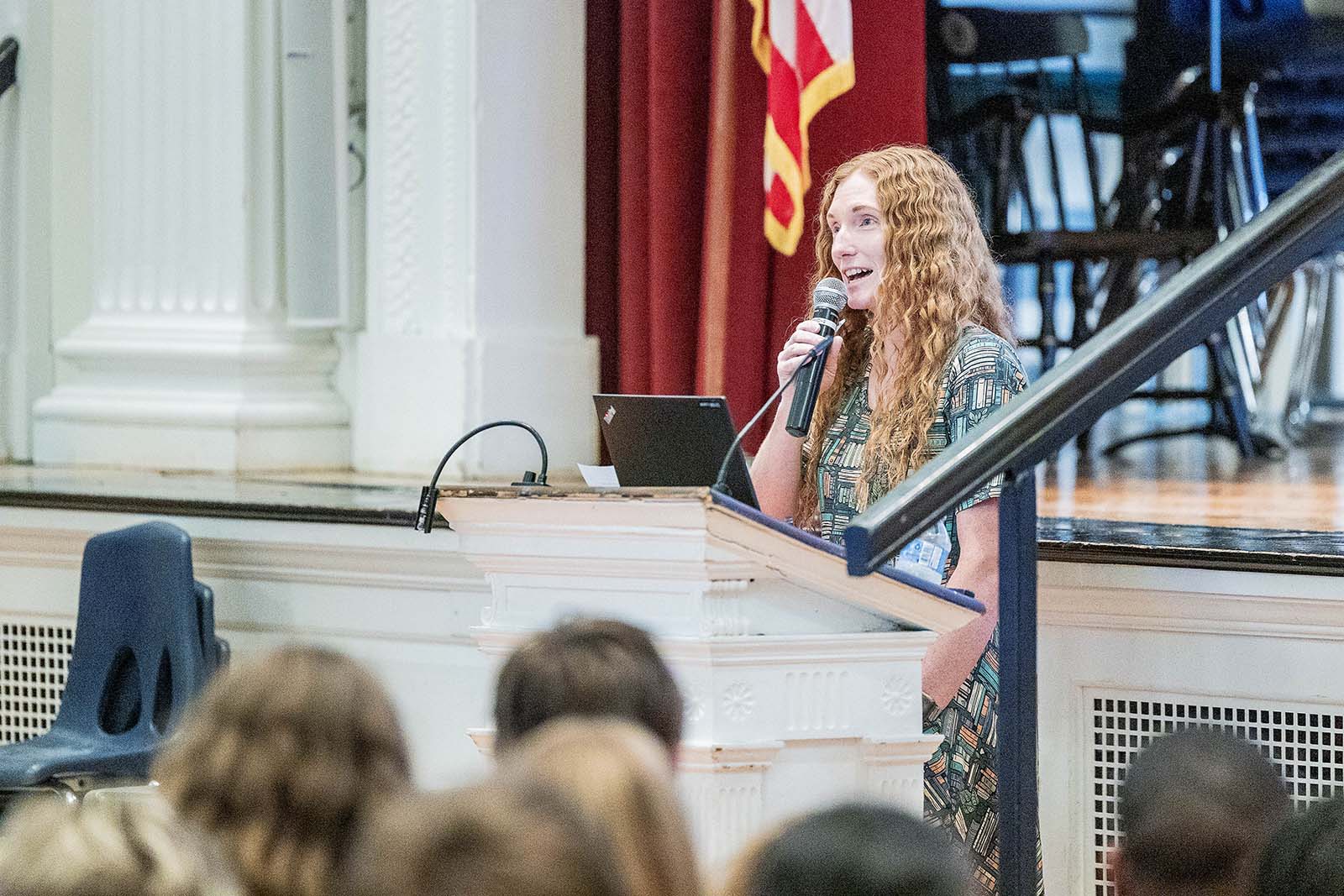
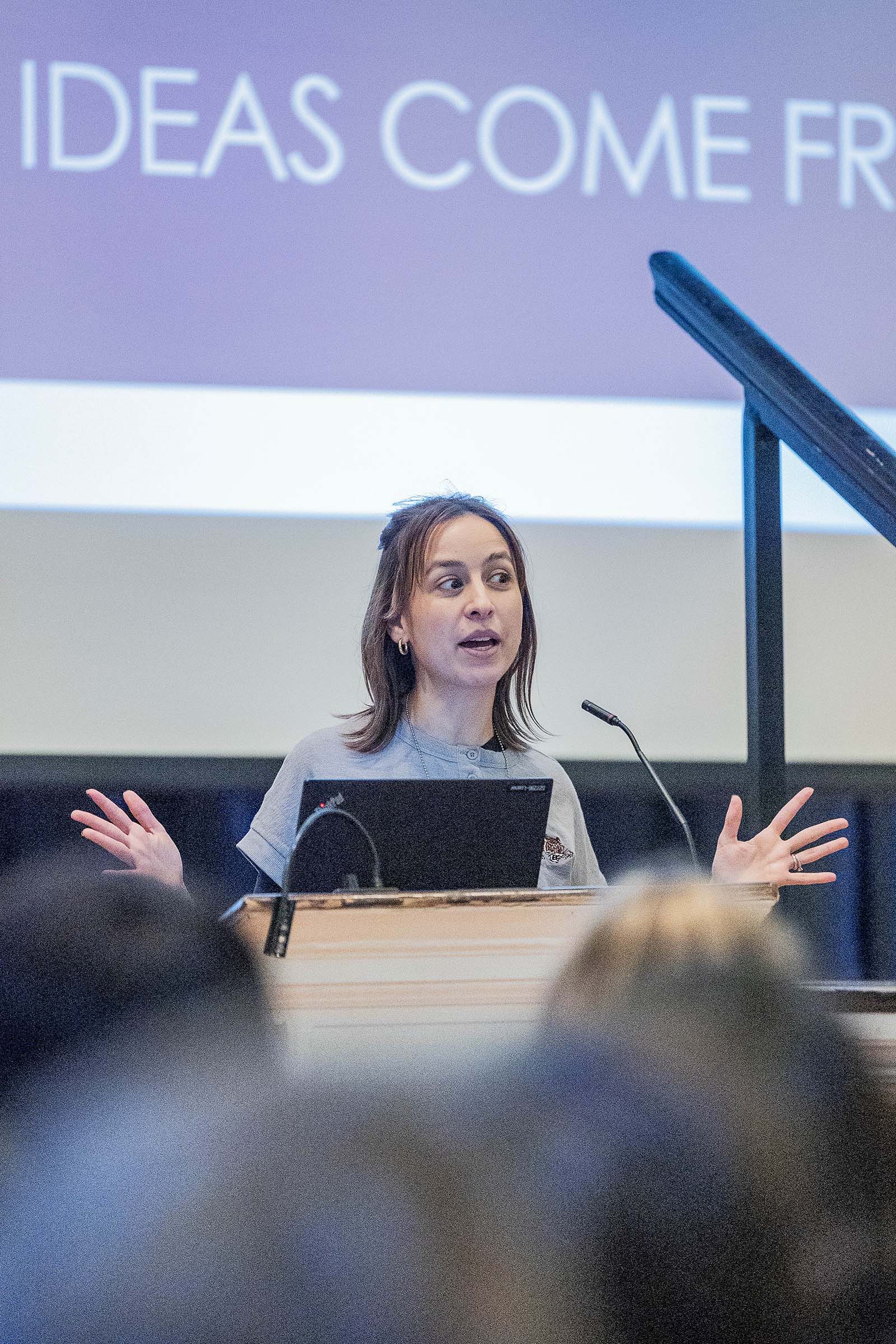
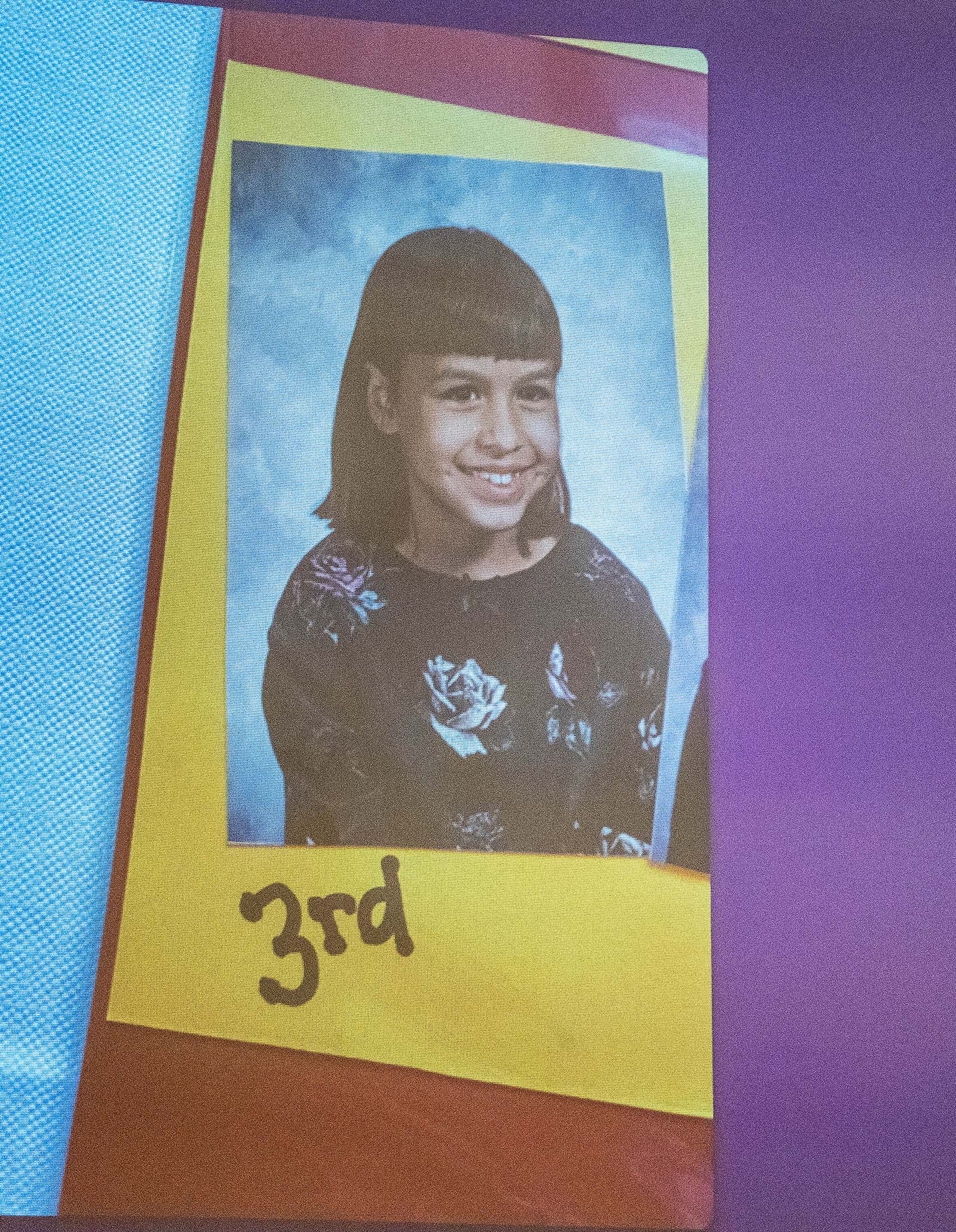
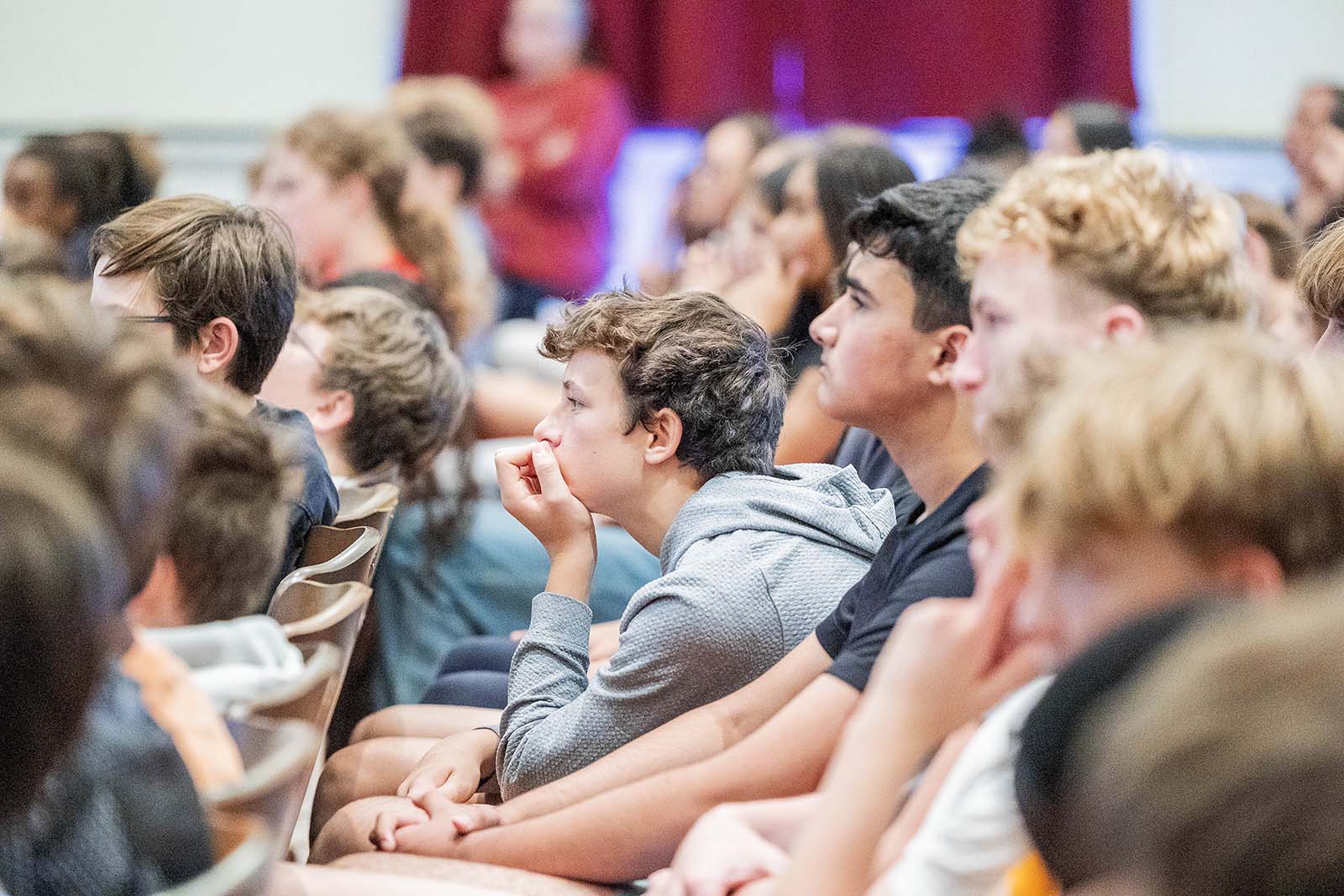
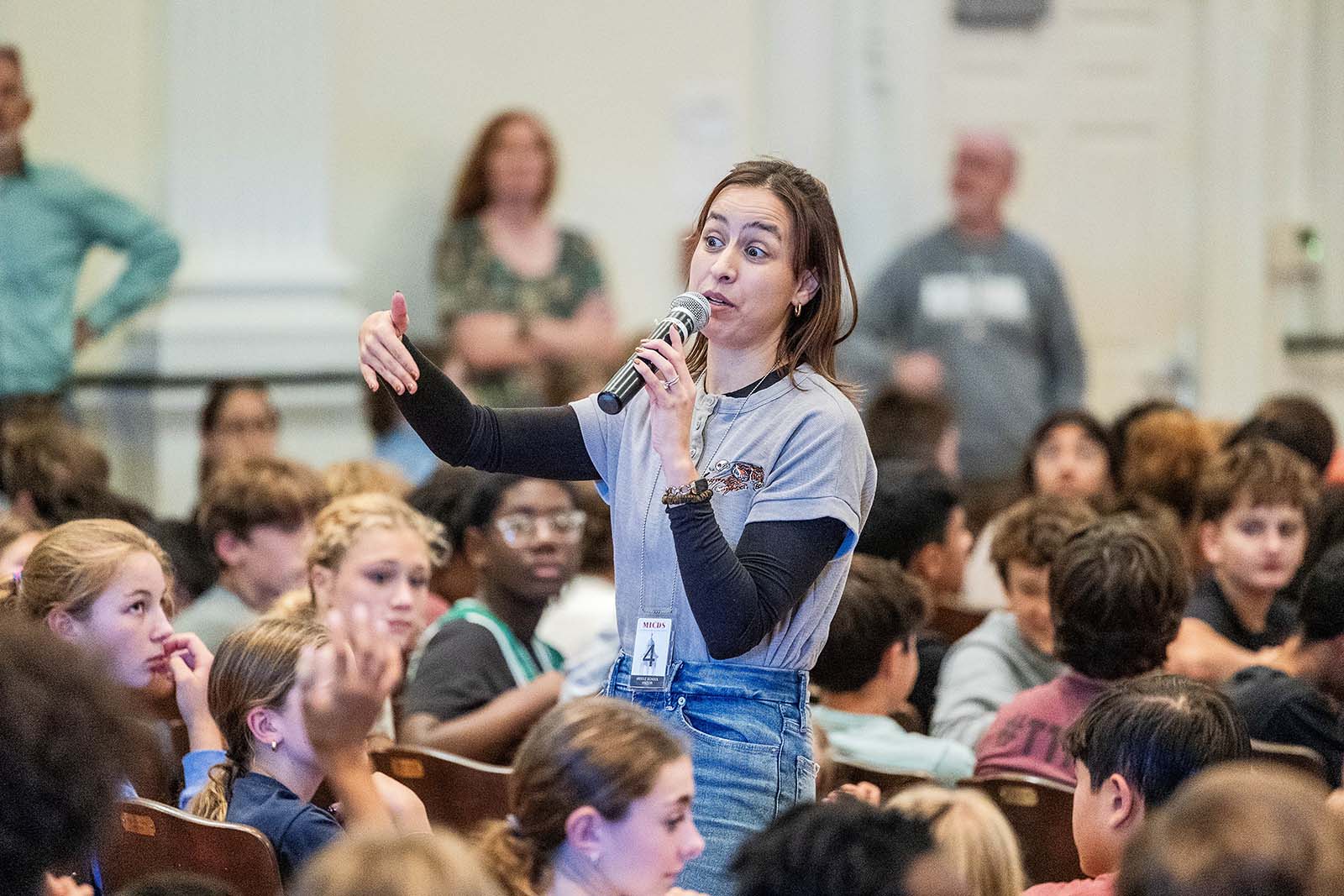
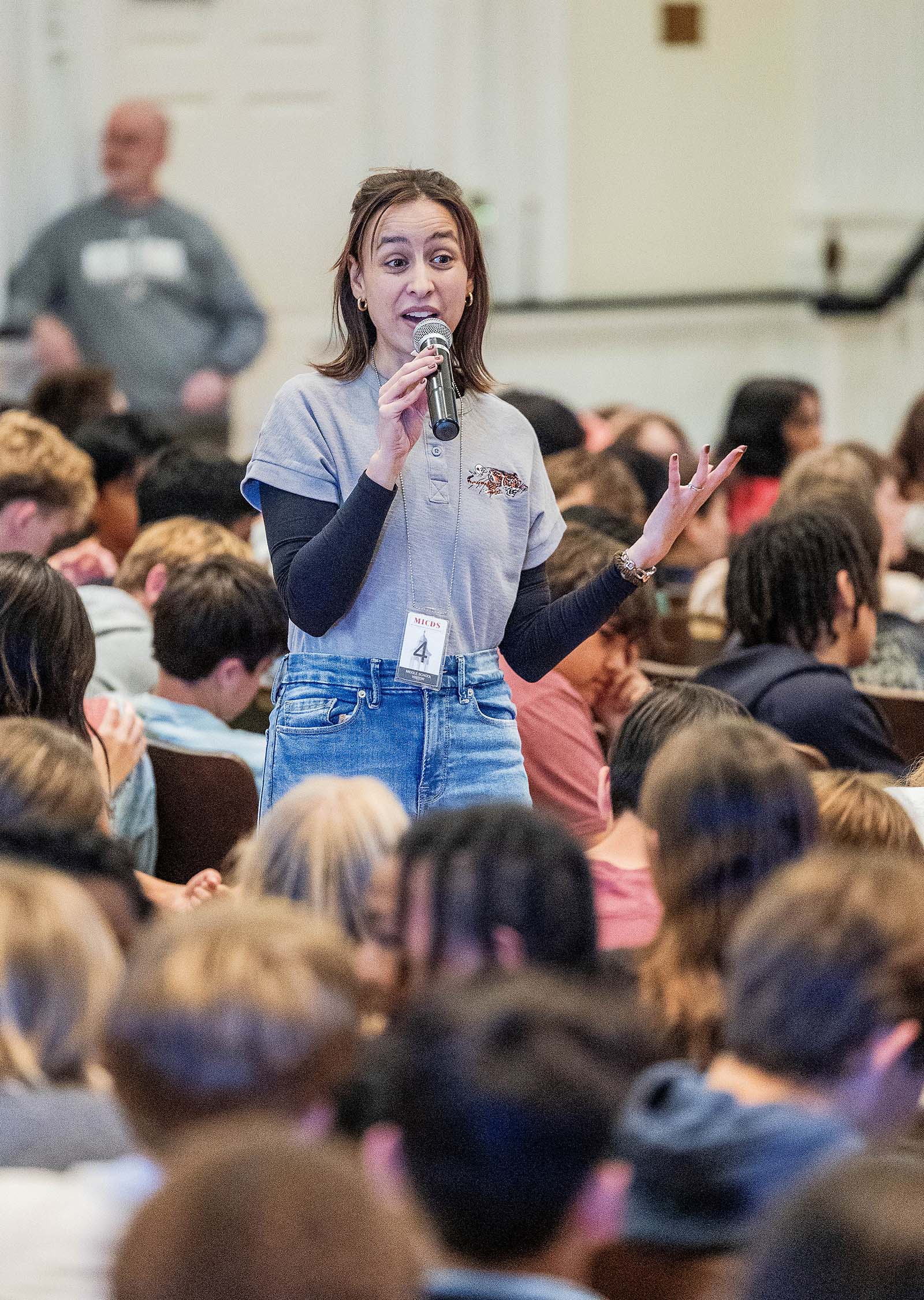
“Yes!” she exclaimed. “My ideas always come from my own curiosity and just being curious about the world. I encourage all of you to understand that you all have a bunch of ideas. It’s really easy to never be bored in the world today; there is too much stimulation. If you let yourself be bored for a few minutes each day, your brain is going to get naturally curious, and that will lead to a story idea.”
New writers are often told to “write what you know.” Ms. Warga somewhat disagrees. She says, “It’s valuable to write what you know, but it’s more important to write what you’d love to learn.”
“Writing is just an exercise in curiosity.”
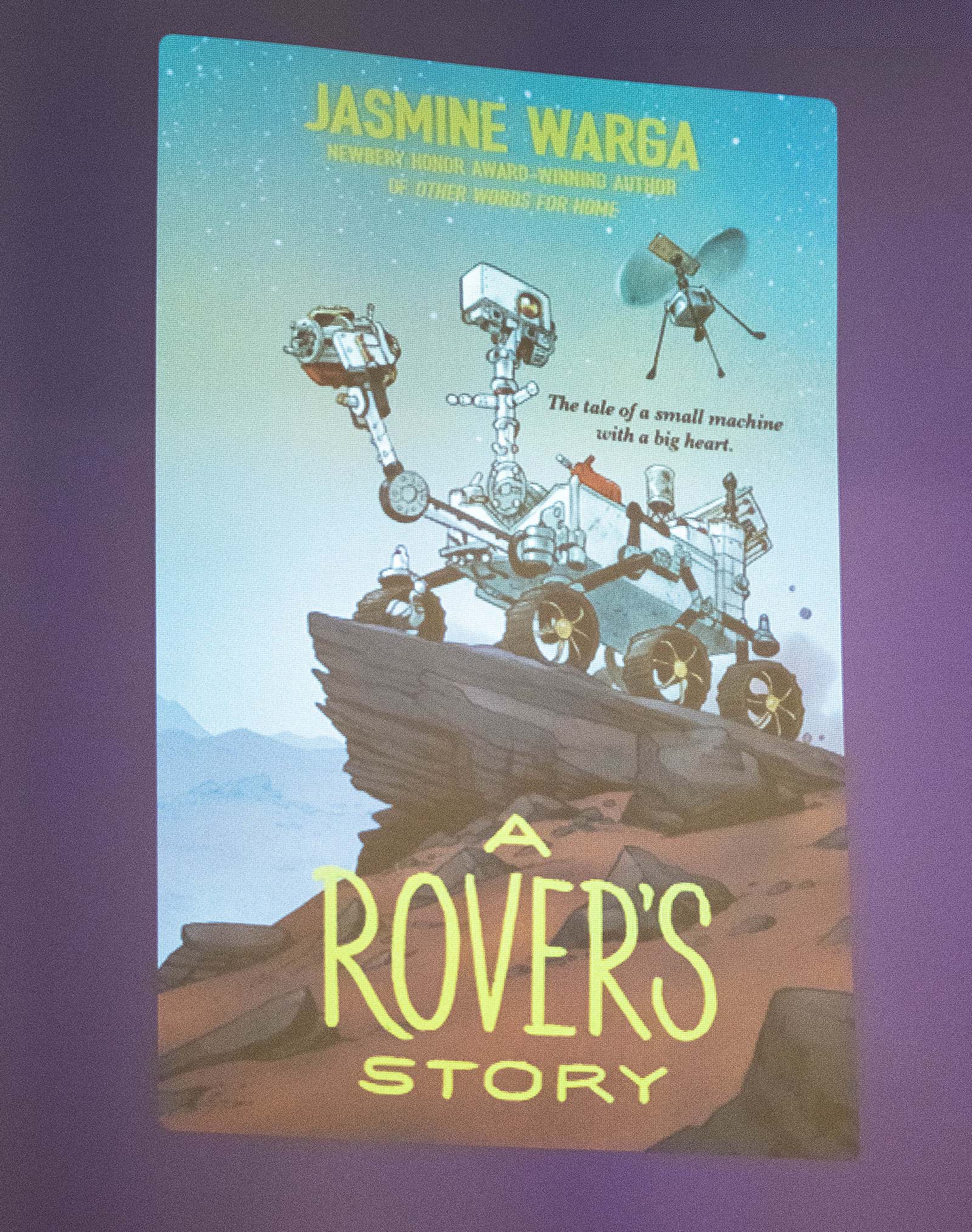
The idea for her book “A Rover’s Story” was hatched in July 2020, as she was stuck at home during the pandemic. She and her family watched the livestream of NASA and the Jet Propulsion Laboratory launching the Mars rover Perseverance, and it’s accompanying Mars helicopter, Ingenuity. “While watching it, I started to become obsessed with the rovers and curious about them. I wondered, if we can build a rover that is that smart, could that rover have an interior life, a personality?” Her fictional rover, Resilience, was born.
“I had to do a bunch of research,” she admitted. “I learned tons of cool facts about Mars and rovers, which heavily influenced the plot of the book. I had to visualize the place where the rover was built and the place it was going because I had never been, so I had to read a lot of books about and I spent a lot of time on the NASA website. It’s so cool; they have so much stuff. You can watch videos and photos they’ve taken on Mars, and listen to what it sounds like on Mars.
“The biggest piece was what I learned about Ingenuity, a helicopter. Perseverance brought Ingenuity because rovers are very slow. We don’t want them to tip over or get damaged. A helicopter could move a lot faster, take photos and videos, and bring them back to Perseverance, and the two of them decided where to go next.
“I fictionalized this relationship in the book. What was so fun about the story is that so much is based on real science, and then I used my imagination to bring it to life.”
Ms. Warga shared that it was fun but challenging to write the story from the point of view of a robot. She considered what robots were like in movies she has enjoyed, including R2-D2 from the Star Wars universe. “I loved it when I was a kid, interpreting his beeps to figure out what he was saying.” At the beginning of her story, Resilience speaks in short sentences, and as he learns more, his sentences get longer.
“Even though Resilience is a robot, he is perhaps the most autobiographical character I have ever written,” she shared. “I often get asked if my characters are autobiographical, and no one ever thinks that the Mars rover would be autobiographical. I gave him a lot of traits we share, one of which is that his central problem in the book is that he feels things very deeply, and he worries that robots shouldn’t feel things. When I was a kid, I got upset really easily. I cried easily, and I’m still super sensitive and cry easily. I used to be really embarrassed about this when I was a kid, but now I realize that I’m so sensitive in a lot of ways, which makes it possible to do what I do. I think about feelings a lot and give them to characters. I guess that a lot of you have things that maybe you’re sensitive about or feel a little different for.”
“That thing you feel right now that you’re insecure about is something you’ll eventually treasure.”
Ms. Warga then shared about her book, A Strange Thing Happened in Cherry Hall, a mystery novel set in an art museum. It’s about a not-so-famous painting of a small girl standing under a tree that is stolen. No one knows a lot about the artist who made it or why, and now suddenly everyone is interested, asking, why would someone want to steal this piece? My favorite character is Agatha the turtle; she lives in the garden. She knows who stole the painting. A couple of chapters are written from her perspective, and she gives clues to readers who are paying attention.”
She was inspired after learning about the Isabella Gardner Museum in Boston, which is in an historic mansion and has a pretty garden in the front (perhaps one with an astute turtle like Agatha). It’s the site of the biggest art theft in American history, which is still unsolved. The thieves, dressed as police officers, knew that taking the frames off the walls would trigger alarms, so they cut the paintings out of their frames. To this day, if you visit the museum you’ll see empty frames. “I got interested in why someone would steal art, what their motivation would be,” said Ms. Warga. “It made me wonder if I could write my own mystery.”
Other Words for Home is a novel in verse, which is a book that’s written in poems. Every chapter is a different free verse poem. The main character is from Syria. “Her life looks like your life at the beginning,” Ms. Warga said. “But then the war that had been in one part of her country moves closer to her seaside town. Her mother makes the decision to move across the ocean and resettle in Cincinnati, Ohio. She leaves behind her brother, father, and friends.” The book explores what it means to leave home, make a new home, and to be an American. She recalled watching her father, who was born in a Palestinian refugee camp, get sworn in as an American citizen when she was in first grade. “I was thinking a lot about my family’s history when I was writing it, but it’s not autobiographical,” she said.
“I think of myself as an Arab-American or Muslim-American. The book is another way of saying that a hyphen doesn’t have to be a divider, it can be a connector. Poetry can be an amazing place to play with language. There are no rules on the order to put the words in. It’s trans-languaging, flipping back and forth. Poetry lets you investigate language at that word level, which I thought made it suitable to tell this story.”
Her book The Shape of Thunder was written from a place of fear and frustration. “I believe in the power of books to help us talk about difficult things,” she shared. One of the main character’s sister is killed by the other main character’s brother in a school shooting. Ms. Warga was living in an apartment across the street from an elementary school before her children were old enough to attend, and the school was in lockdown one day. She realized that she would need the language to talk about school shootings with her own children one day. “What does it mean to live with the threat of gun violence,” she asked herself. “I believe in the power of books to help us have conversations about subjects that can be difficult.”
Her most recent book, The Unlikely Tale of Chase and Finnegan, came after visiting the Cincinnati Zoo with her family and seeing an exhibit called the Cheetah Chase. There, she learned that cheetah cubs are often paired with dogs, which provide comfort and companionship. “Cheetahs are different from lions and tigers; they are wired for flight and not fight, making them incredibly fast scaredy cats,” she said to giggles. The cheetah at the zoo, Willow, has a dog for a best friend, and the dog helps her with performance anxiety so she feels safe to run in front of big crowds of people. “Think about the people who support you when things are difficult,” she said.
Ms. Warga told the students that in order to get better at writing, they must read. A lot. She shared three of her favorite books from when she was in middle school, explaining how she went back to re-read them as an adult. “I was trying to read as a writer, taking them apart, and seeing why the authors made the choices they did. All the best writers I know are the best readers. Reading is the listening piece and writing is the talking piece.”
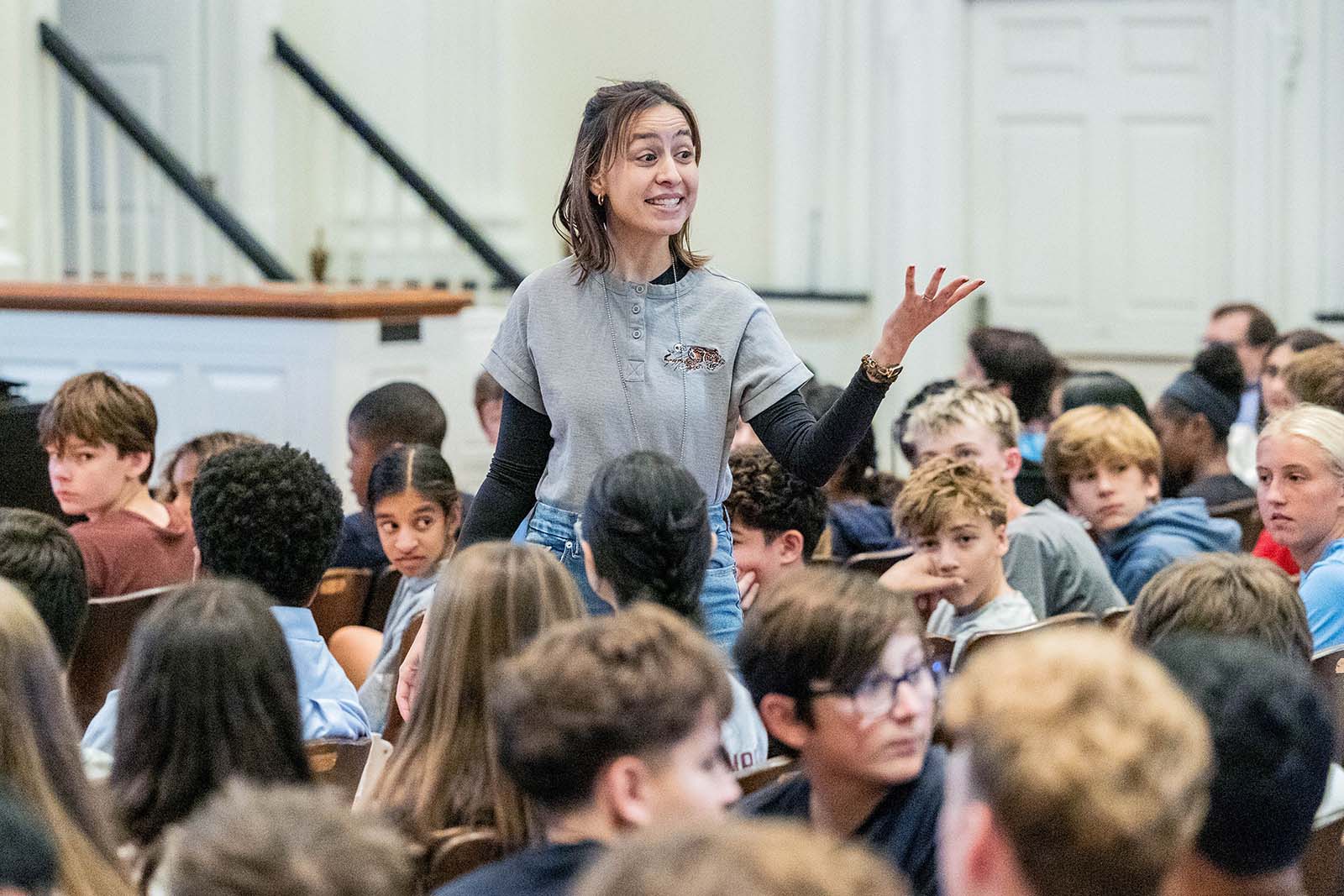
She then spent some time answering questions from the audience. Students learned that Ms. Warga’s favorite book is the one she’s currently working on, she writes six drafts of every book (“The first draft is super messy,” she confided.), and that she often has to make herself stop researching and start writing. “I have to remind myself that I don’t need to be an expert; I just need to know enough to start working on the story.” She wrote A Rover’s Story relatively quickly as it was based on real science and she was home because of the pandemic. The hardest part of writing a book for her is the middle, and she has to work to not get distracted by new book ideas while she’s writing. “You have to learn how to finish,” she instructed. “Commit to ideas and stick with them. I write down my ideas in a book to come back to later. Sometimes I do go back and work on one of the ideas, sometimes not so much.”
“Writing is really rewriting. That’s something I didn’t understand when I was your age. Writing, and how you get to the essence of the story, requires being a creative and brave reviser. Try out different angles to see what works.”
“I wanted to be an author because I love stories. I get to play make-believe as an adult!”
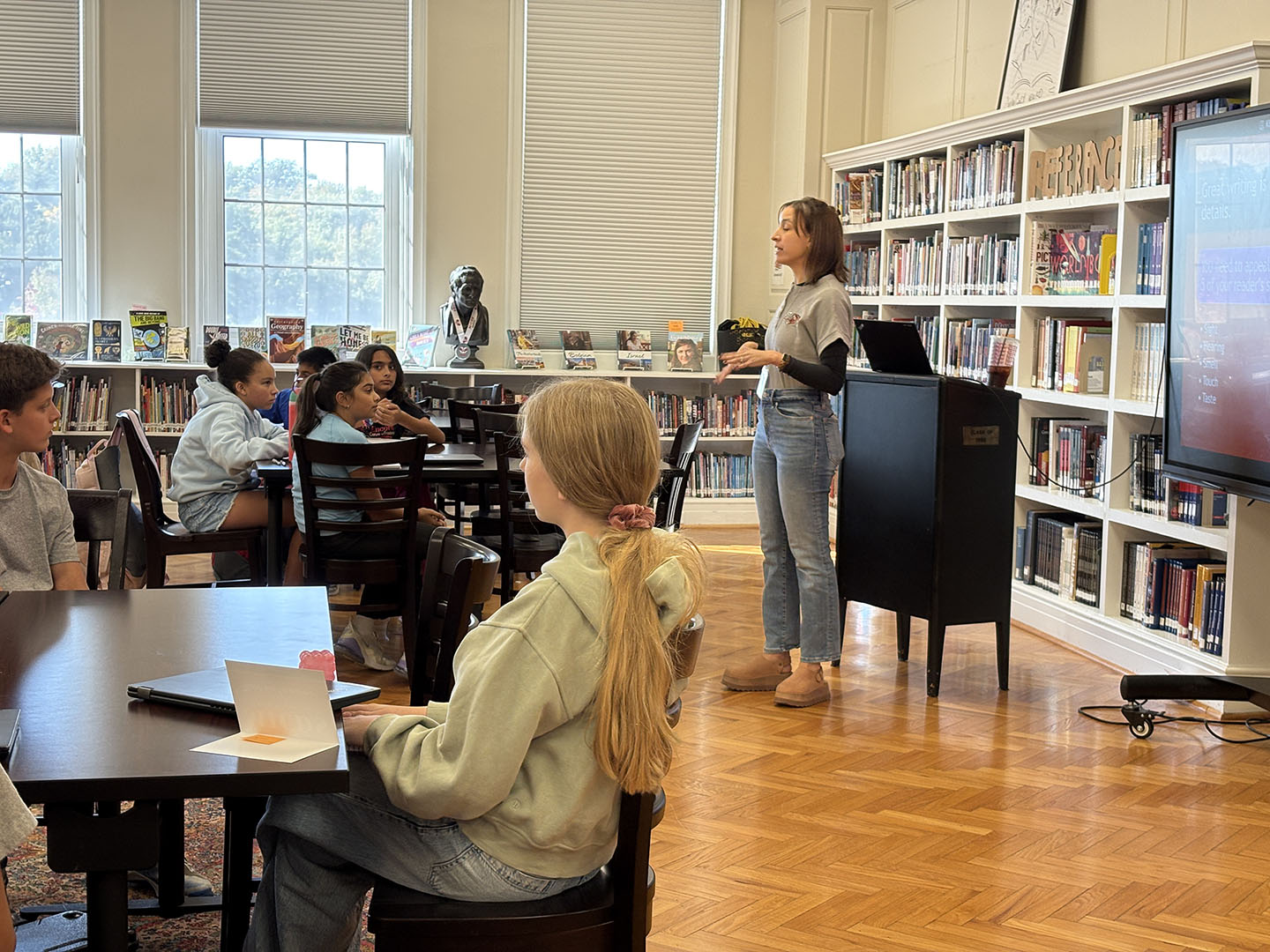
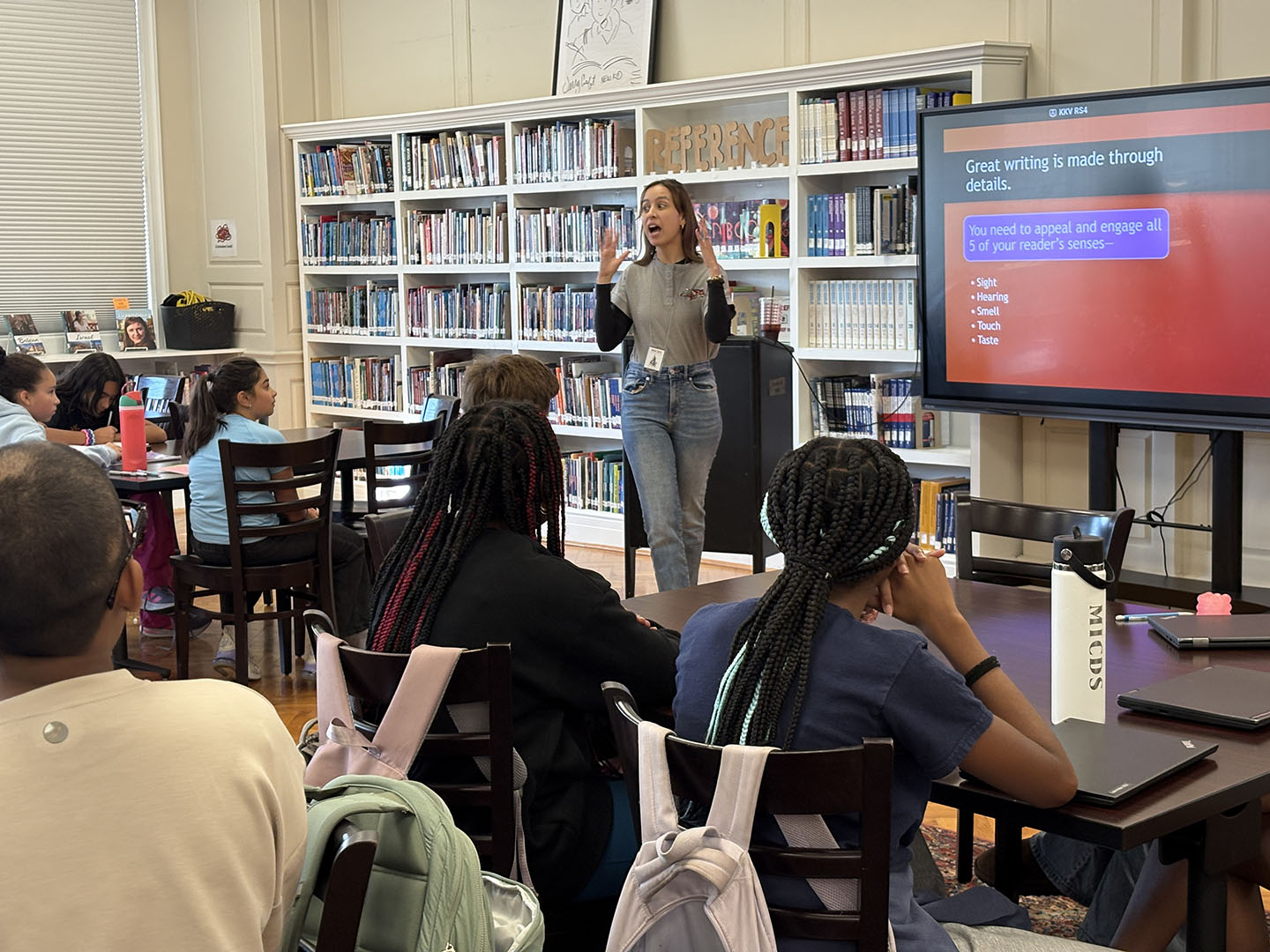
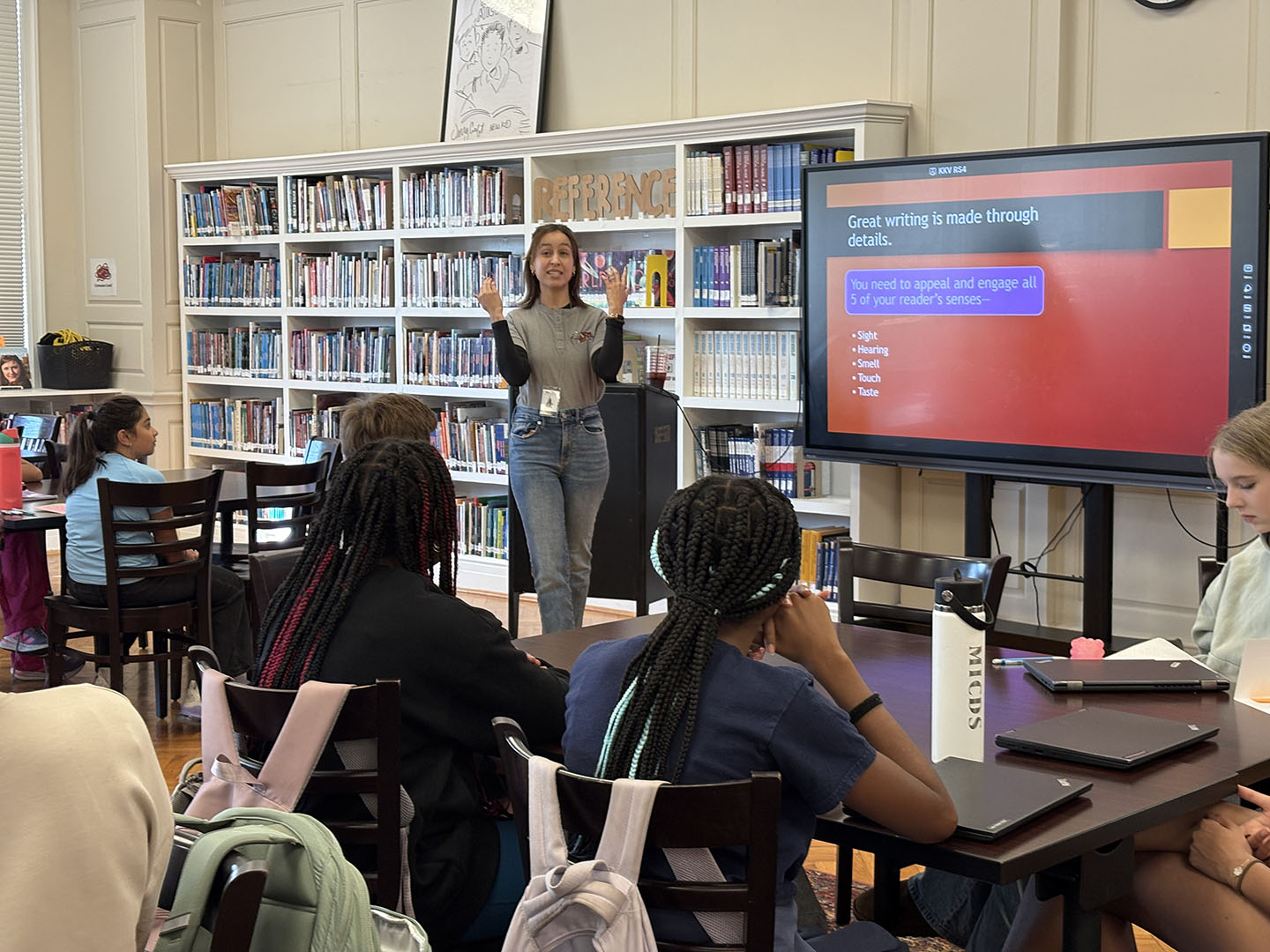
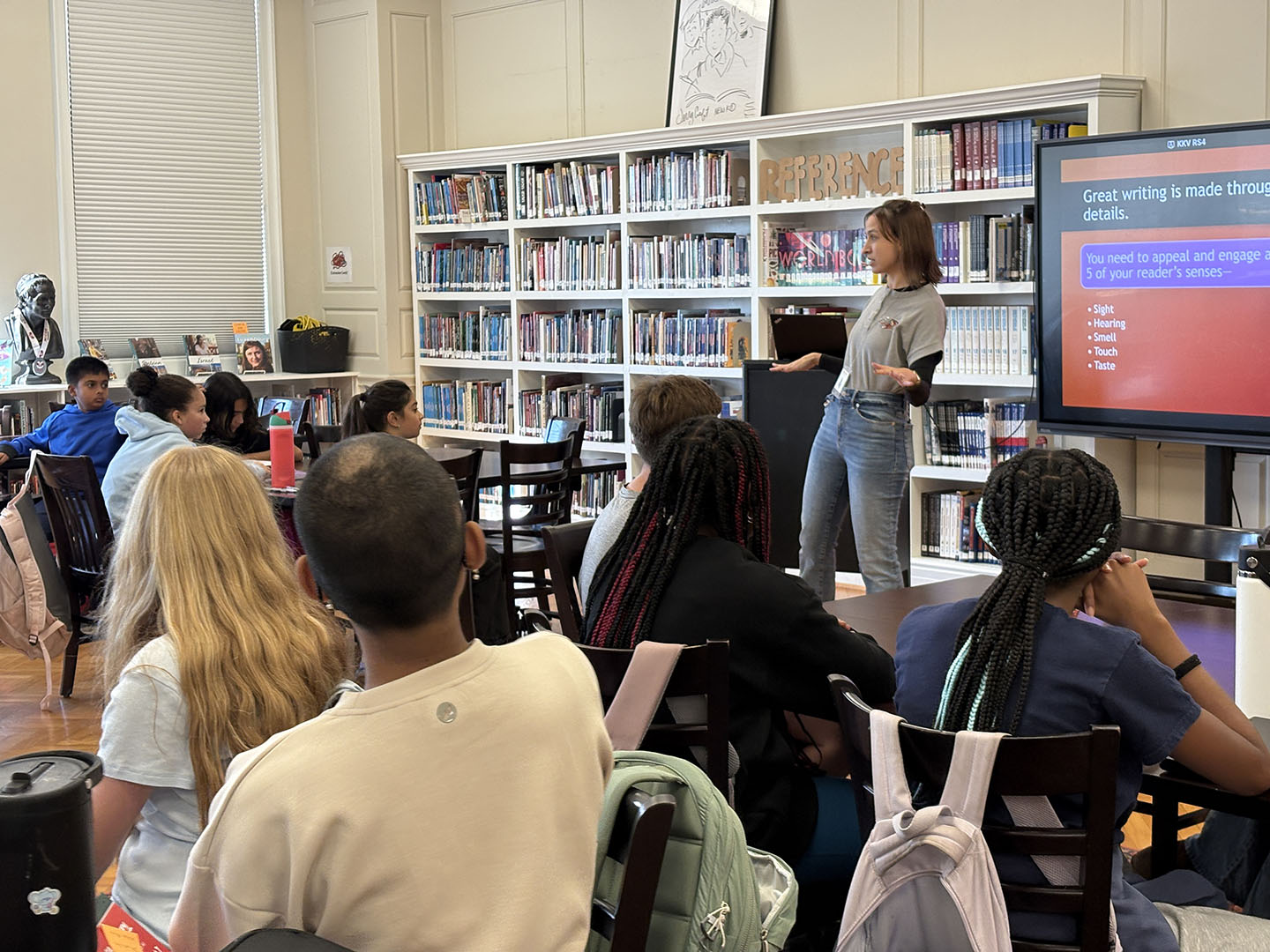
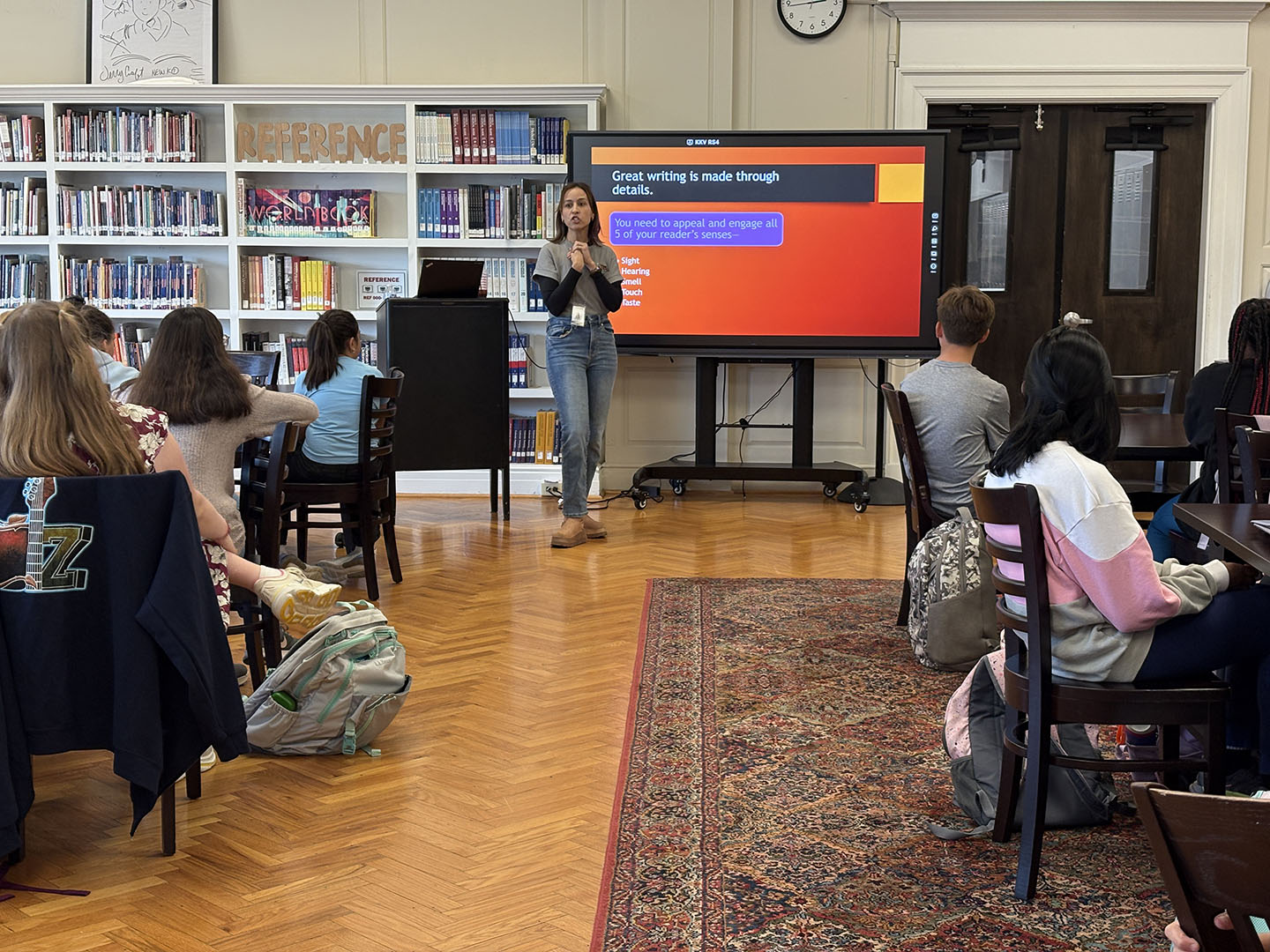
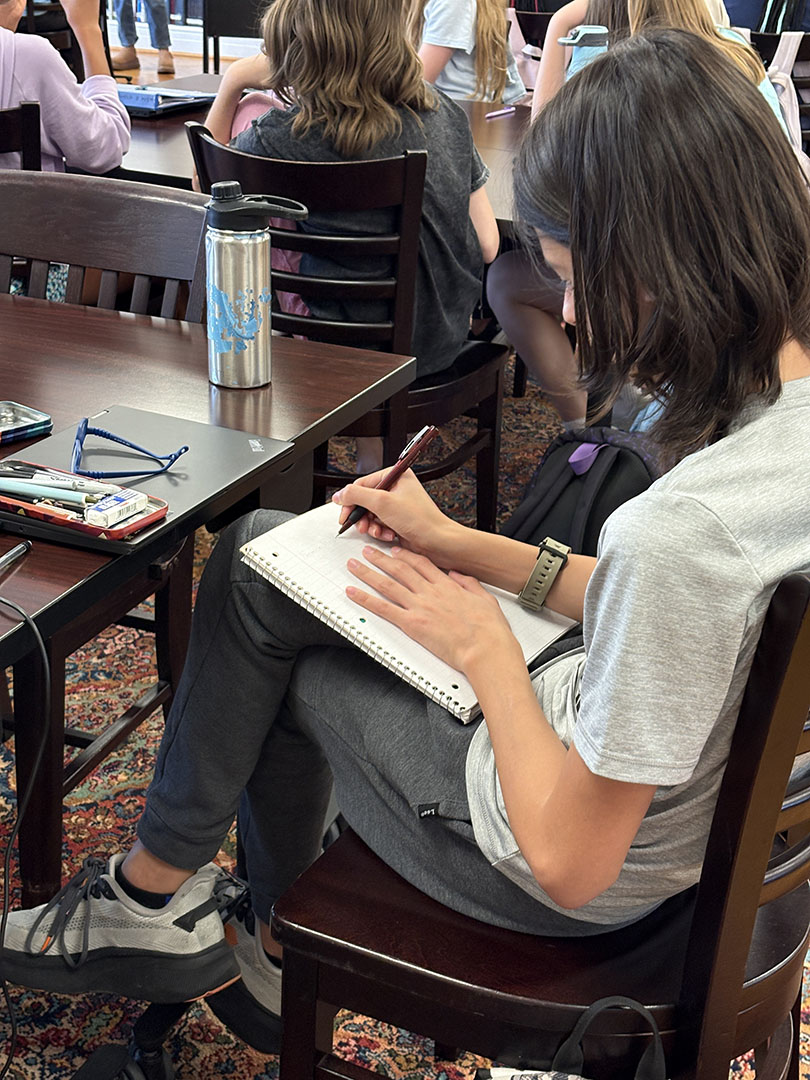
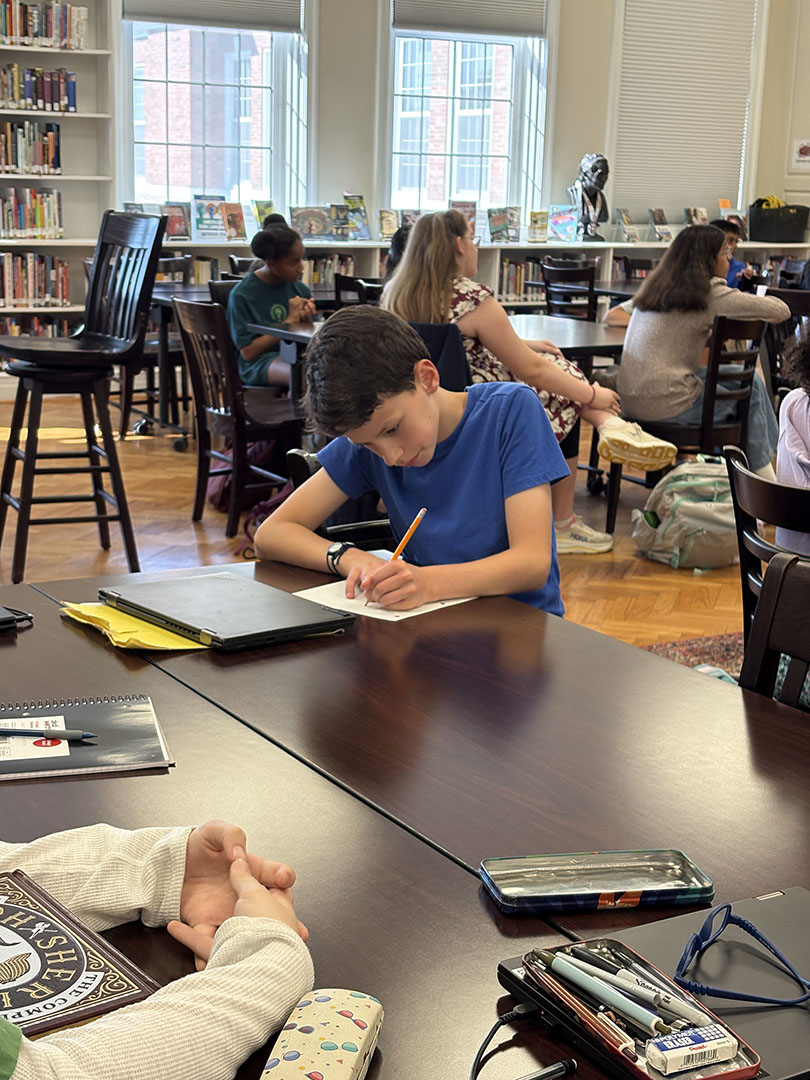
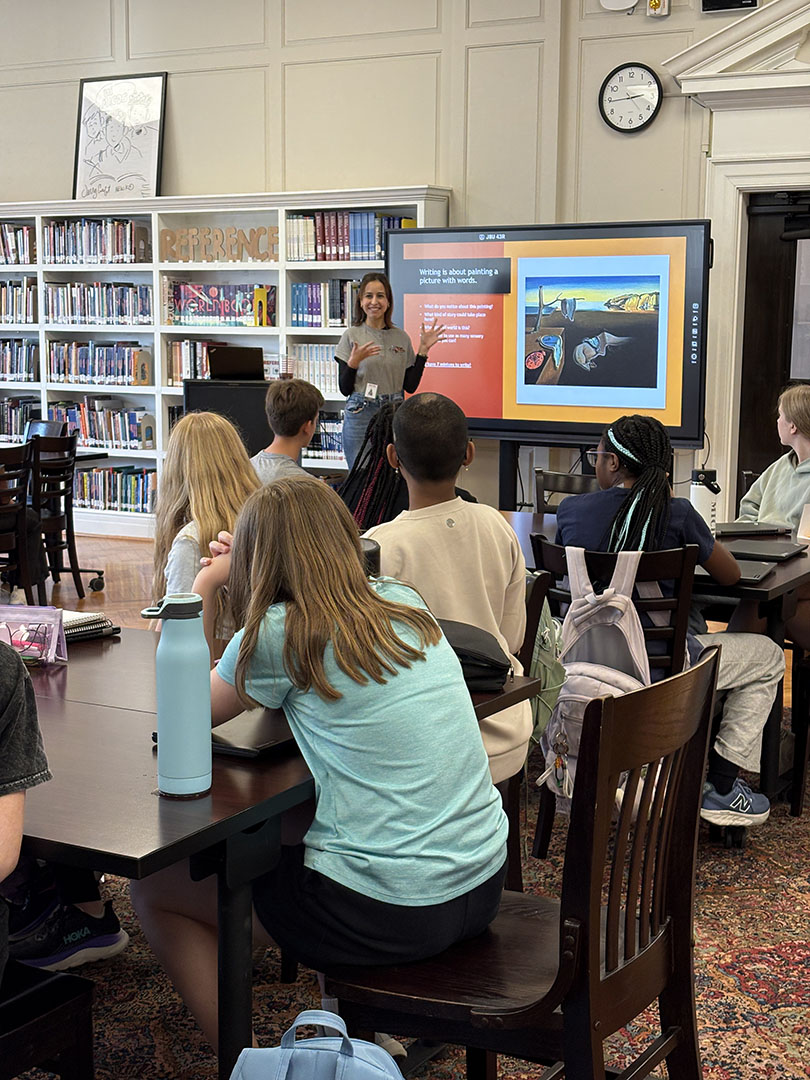
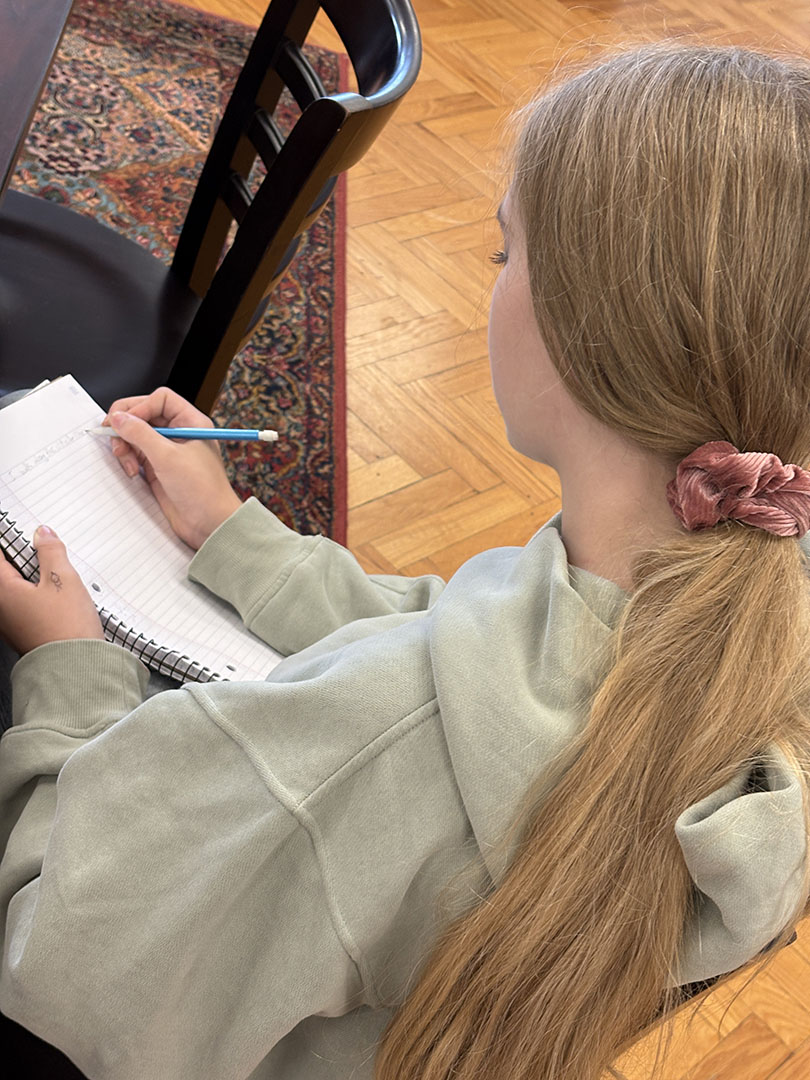
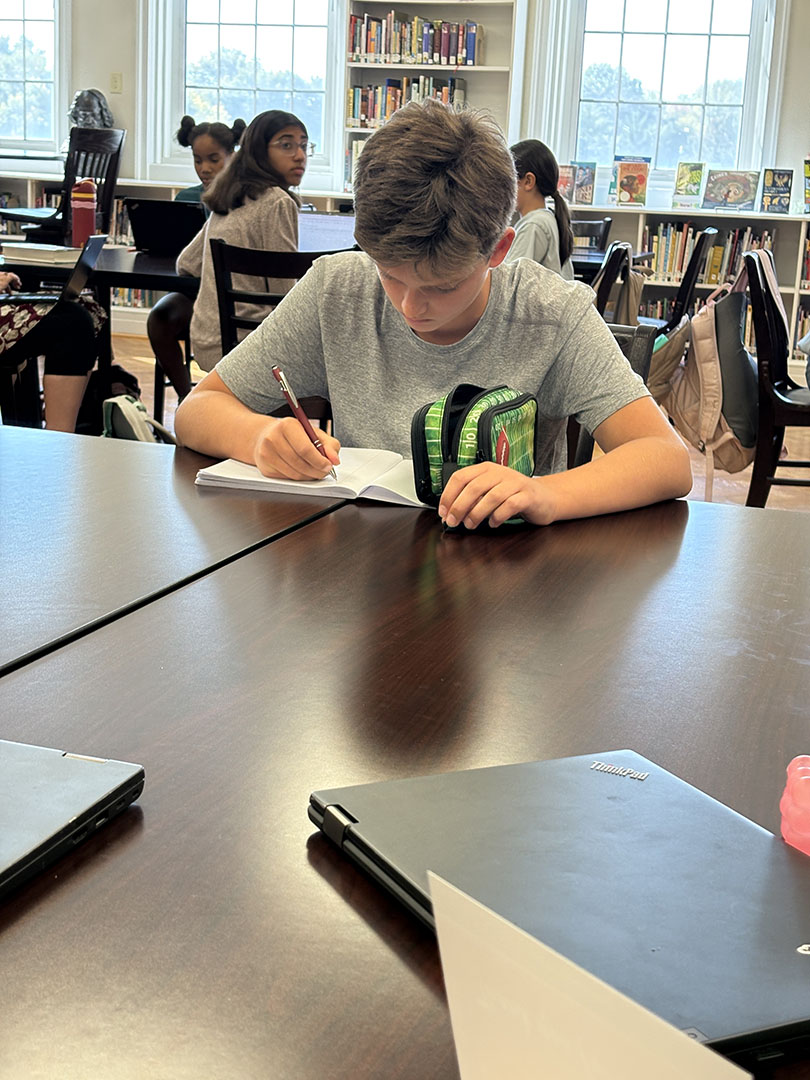
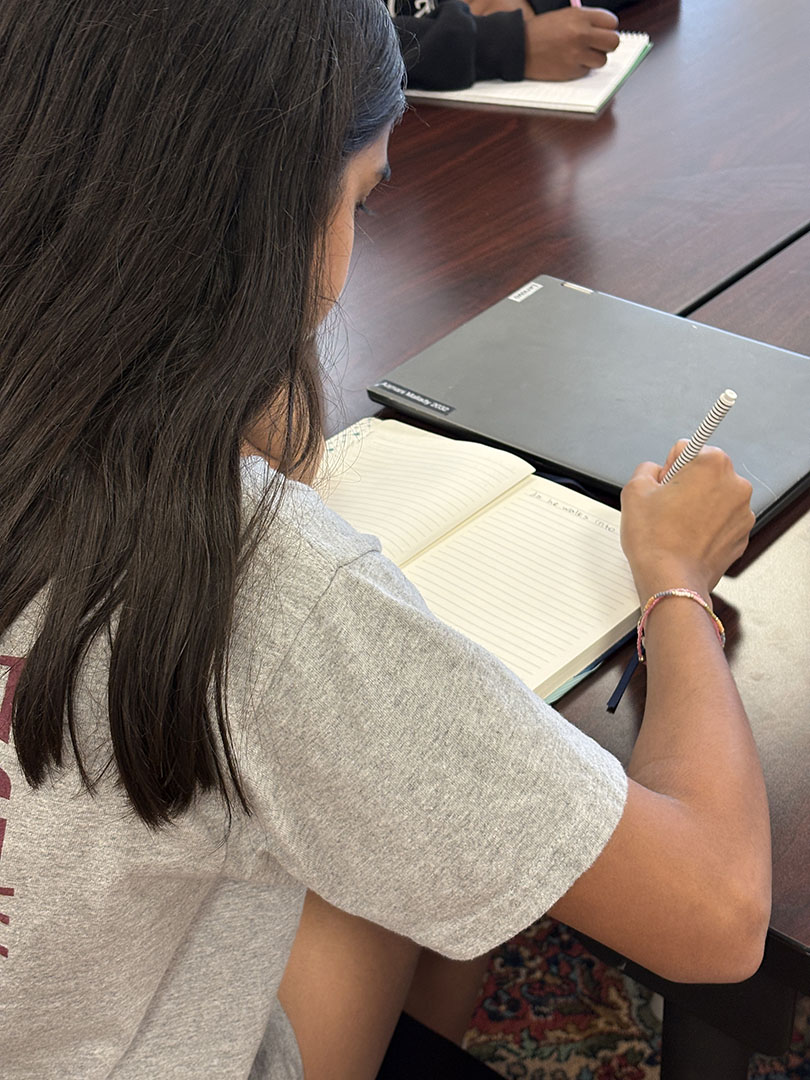
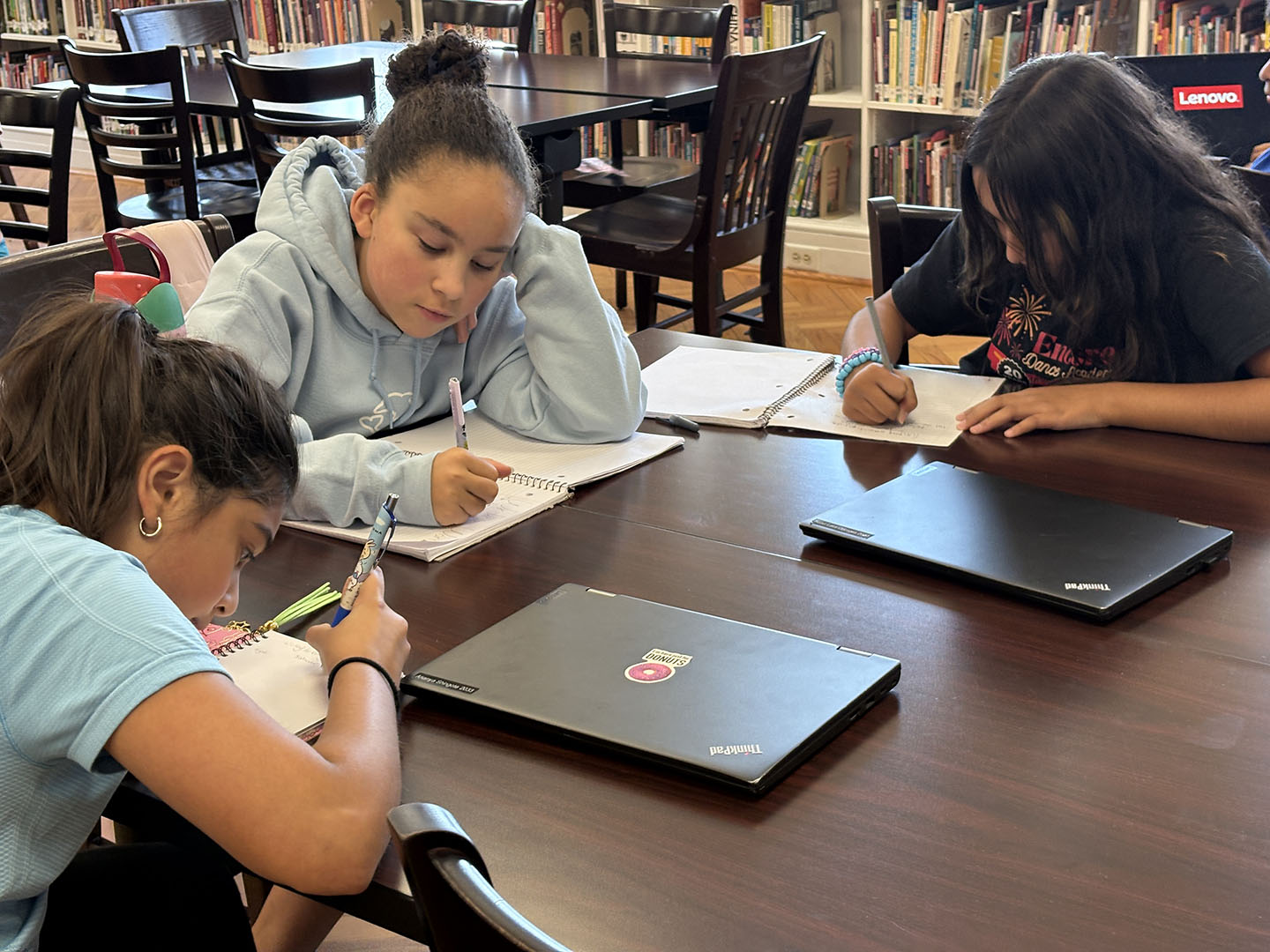
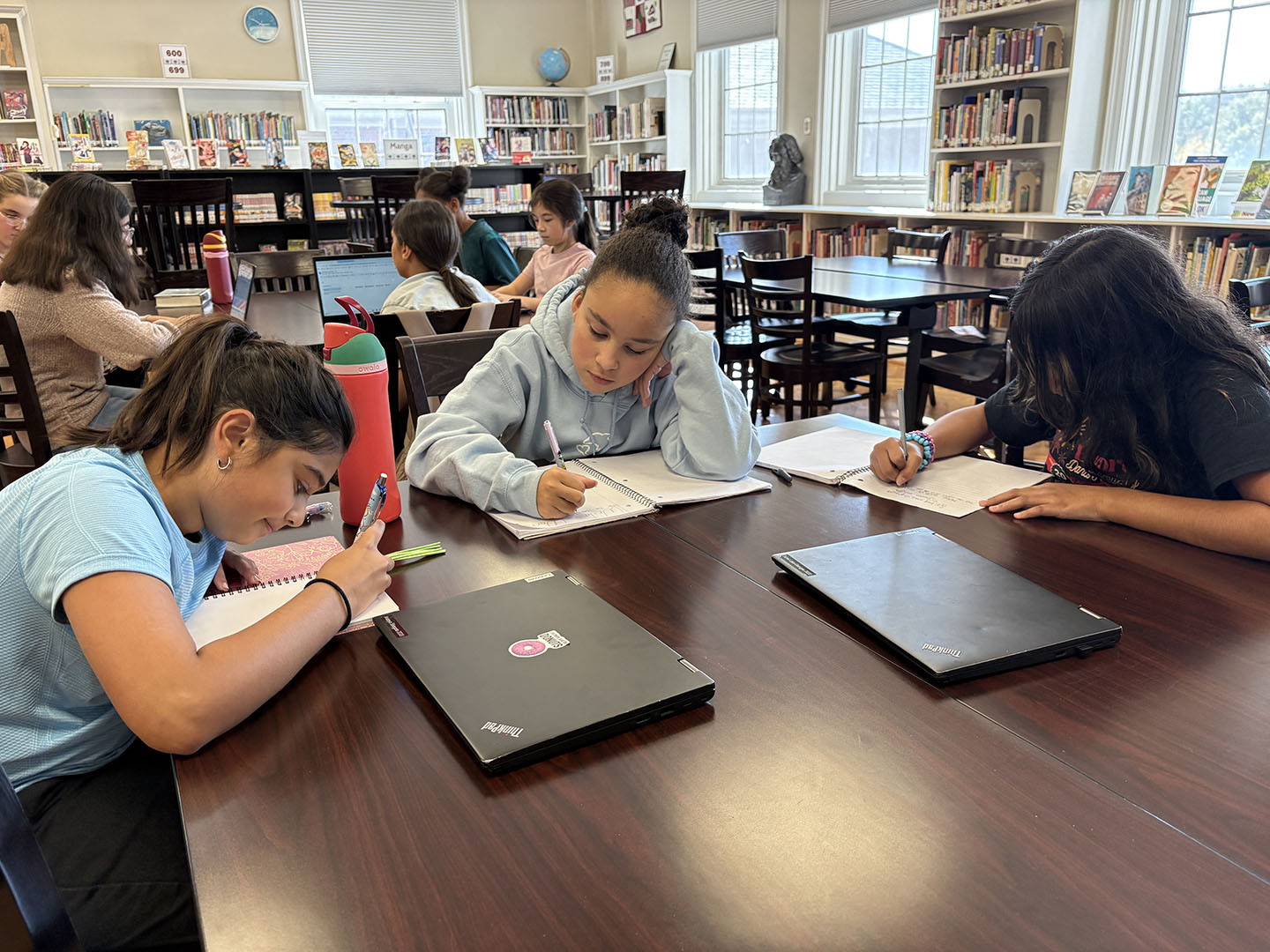
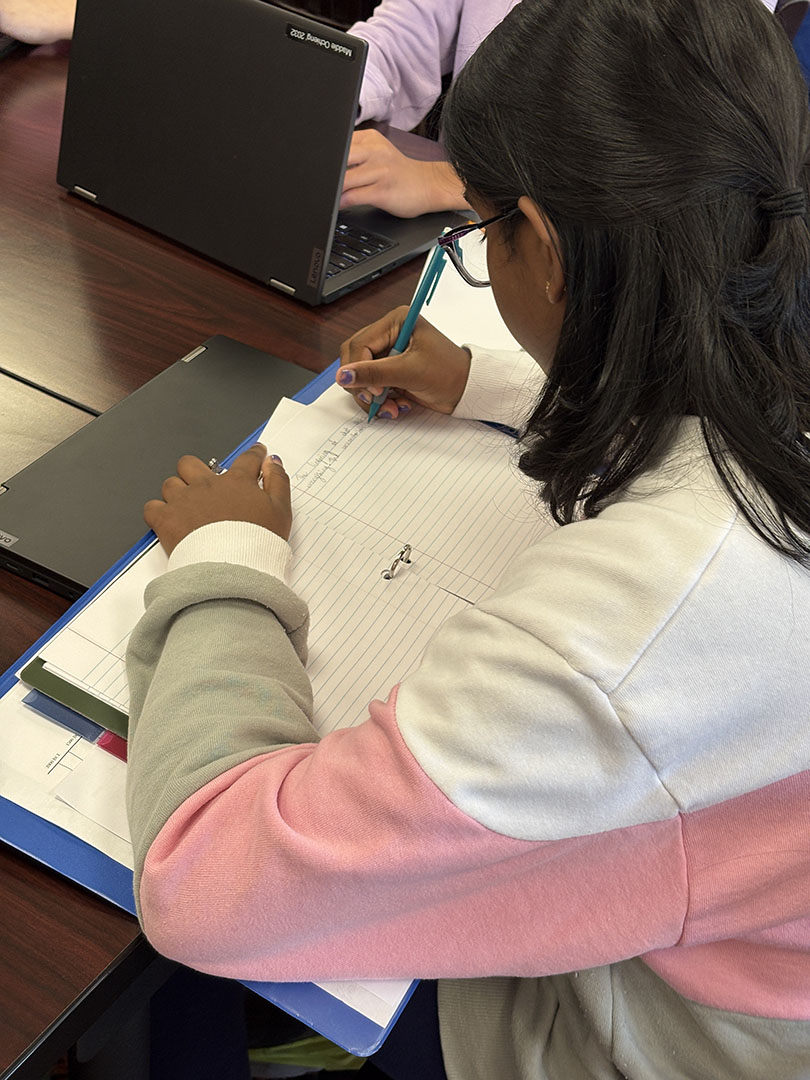
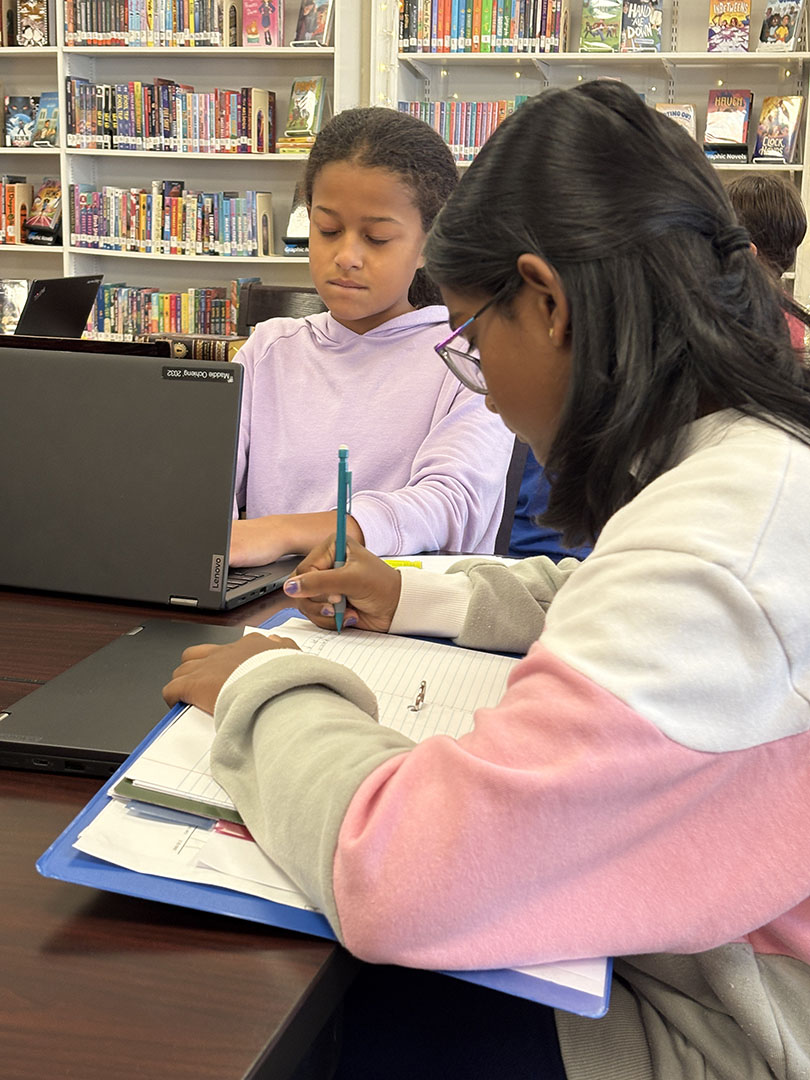
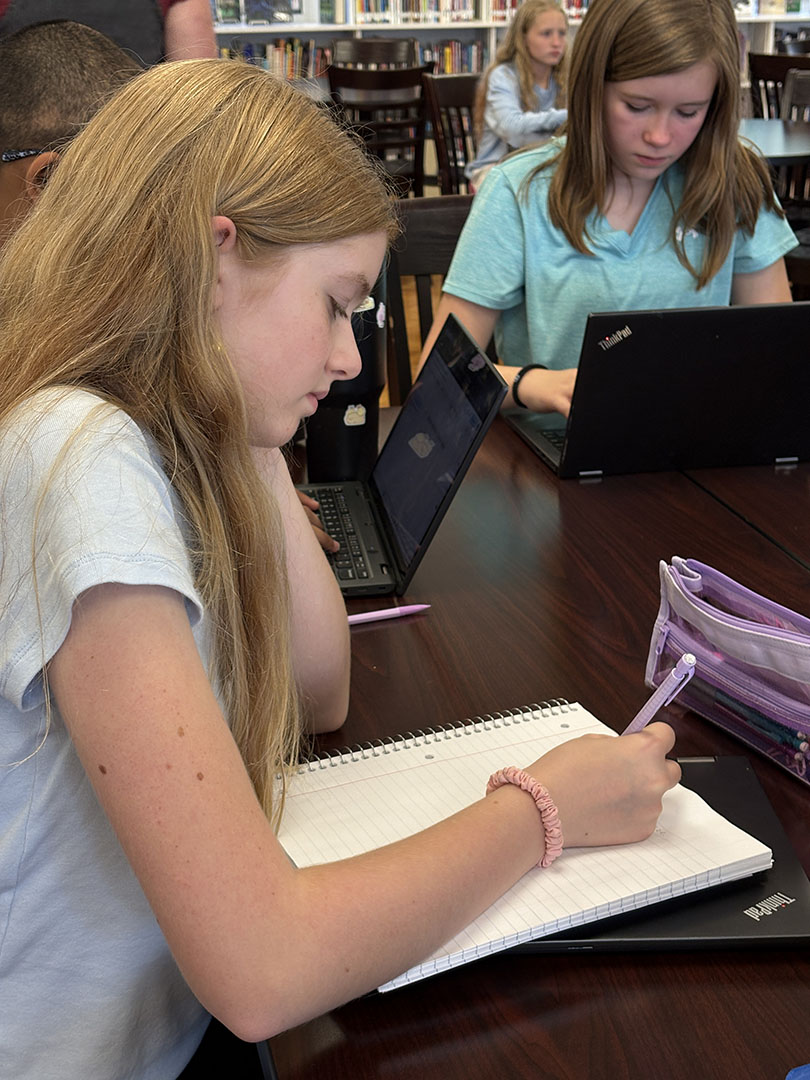
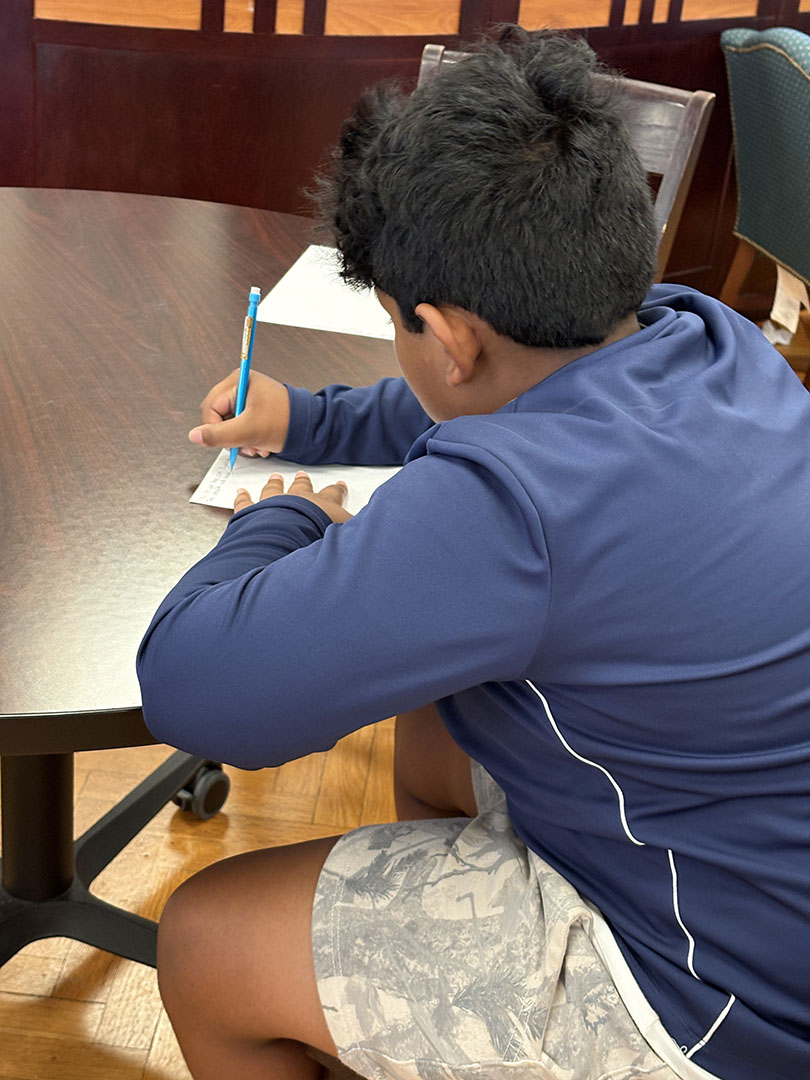
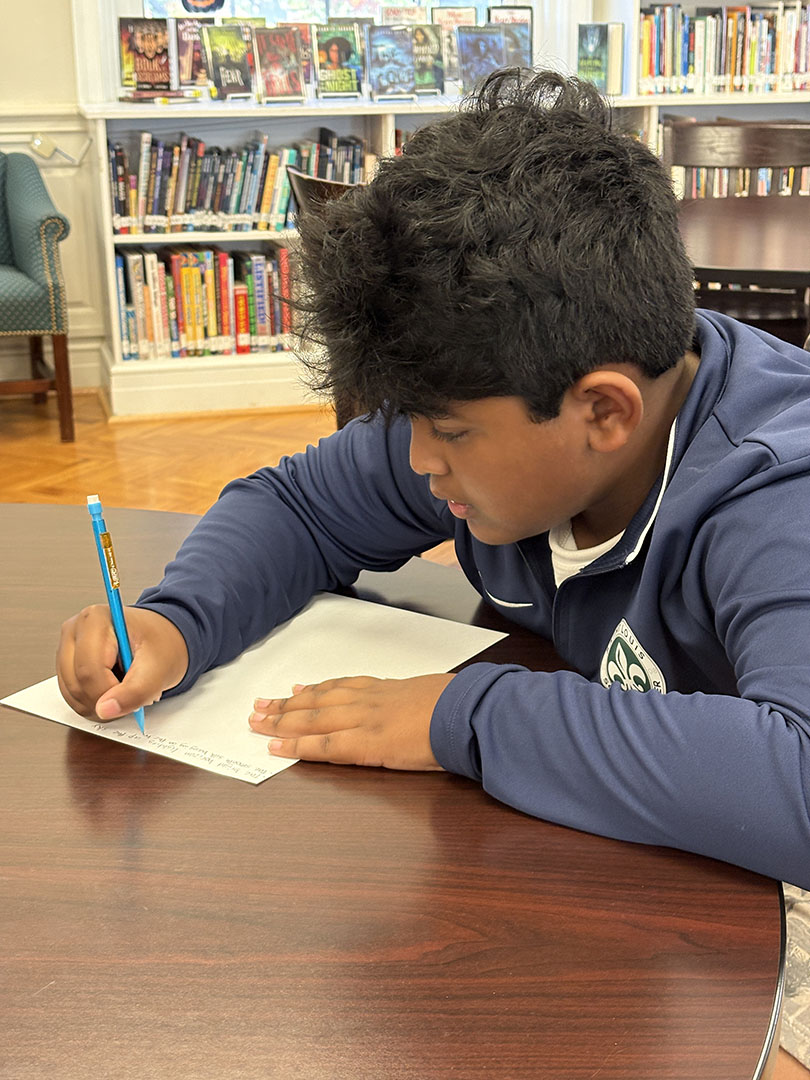
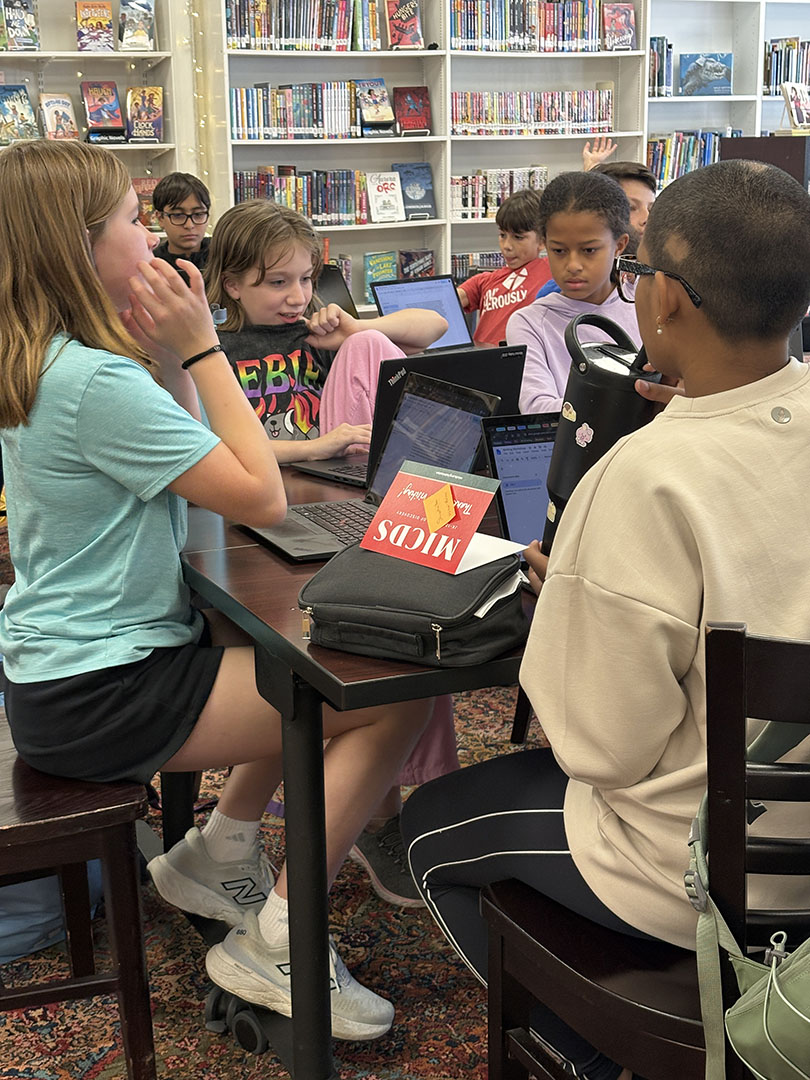
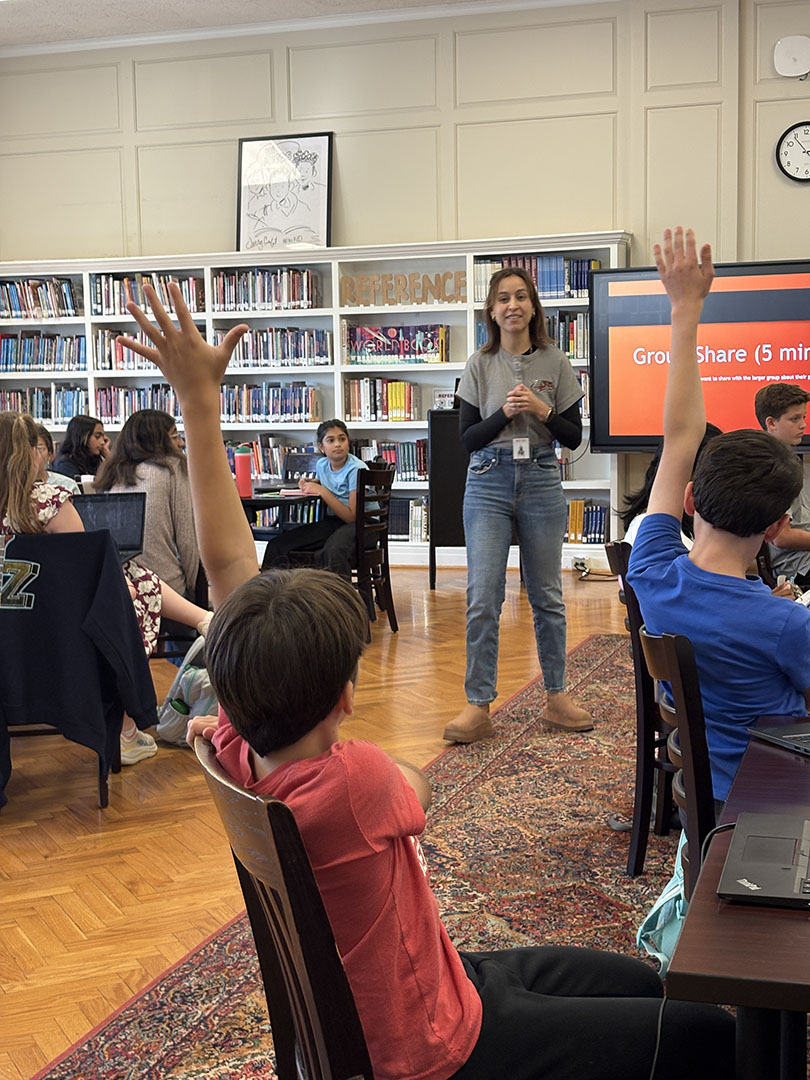
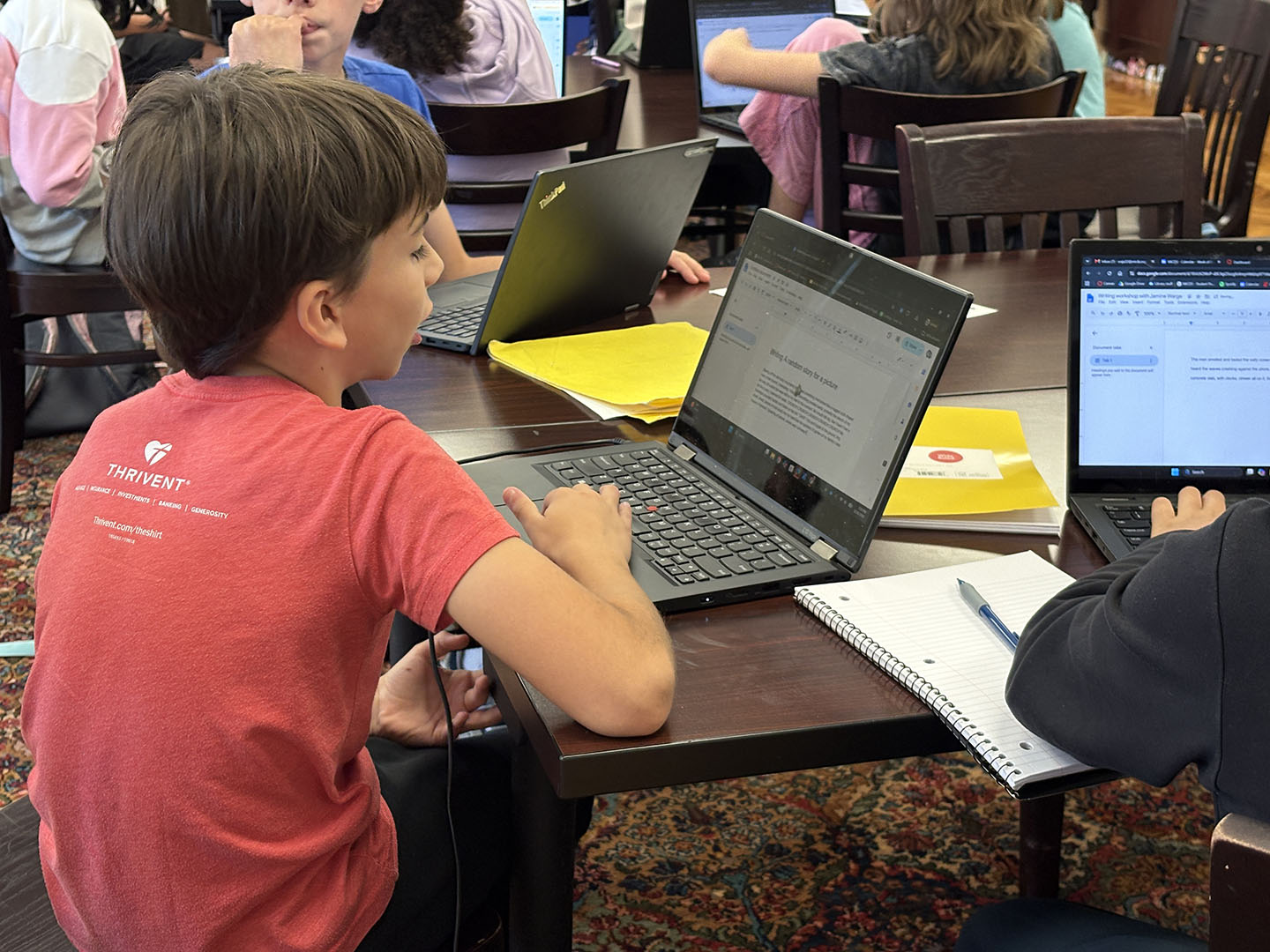
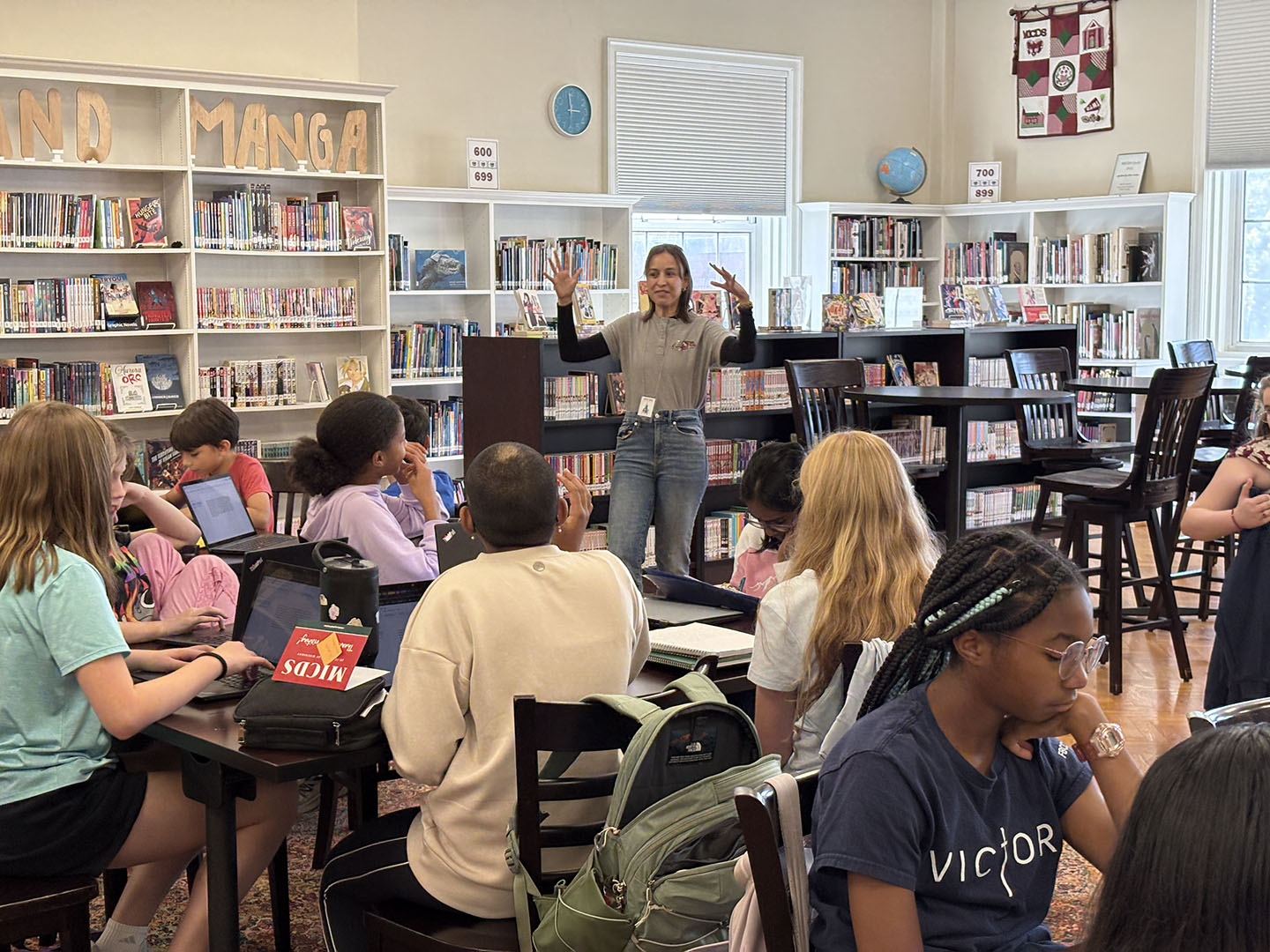
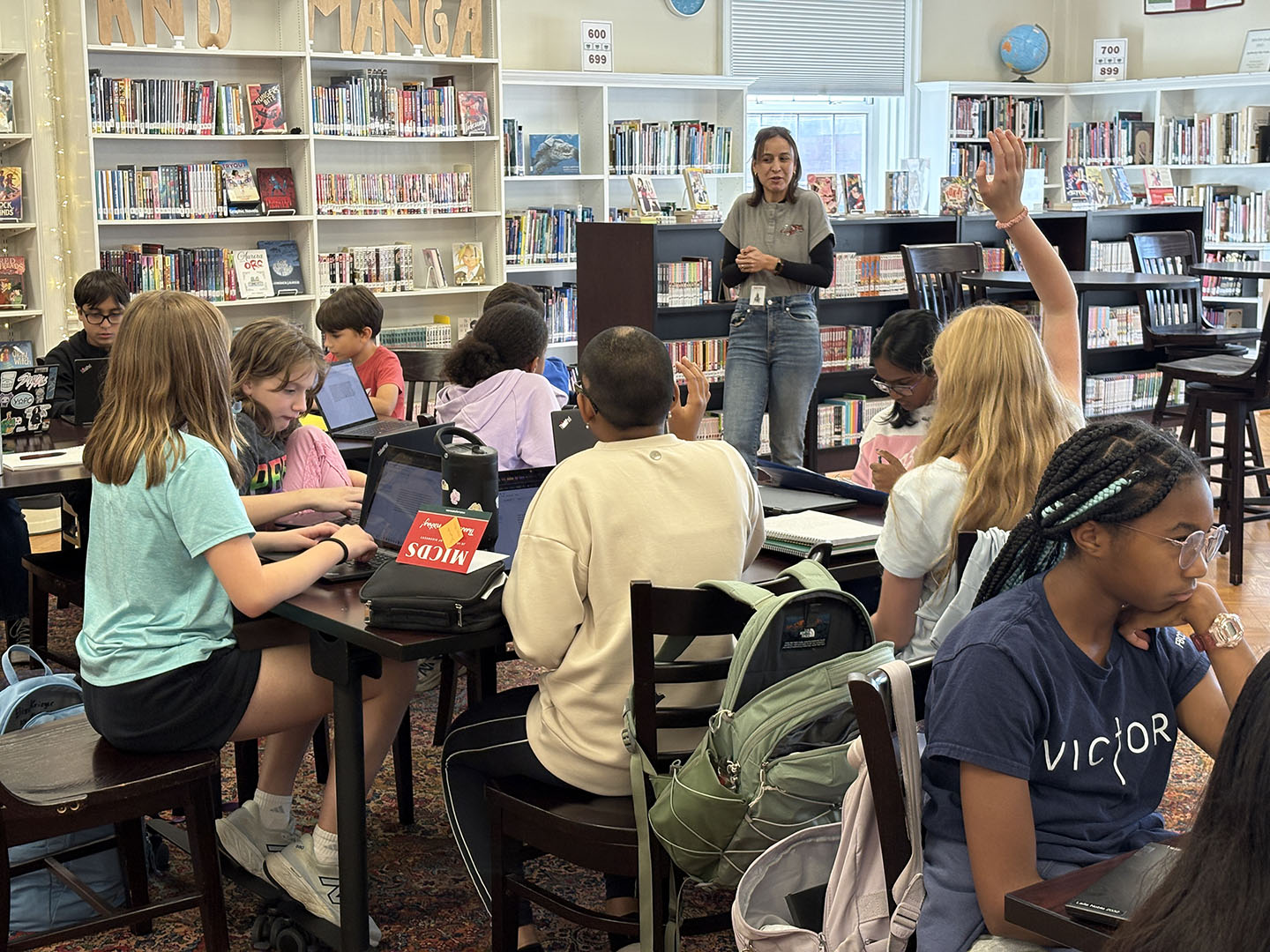
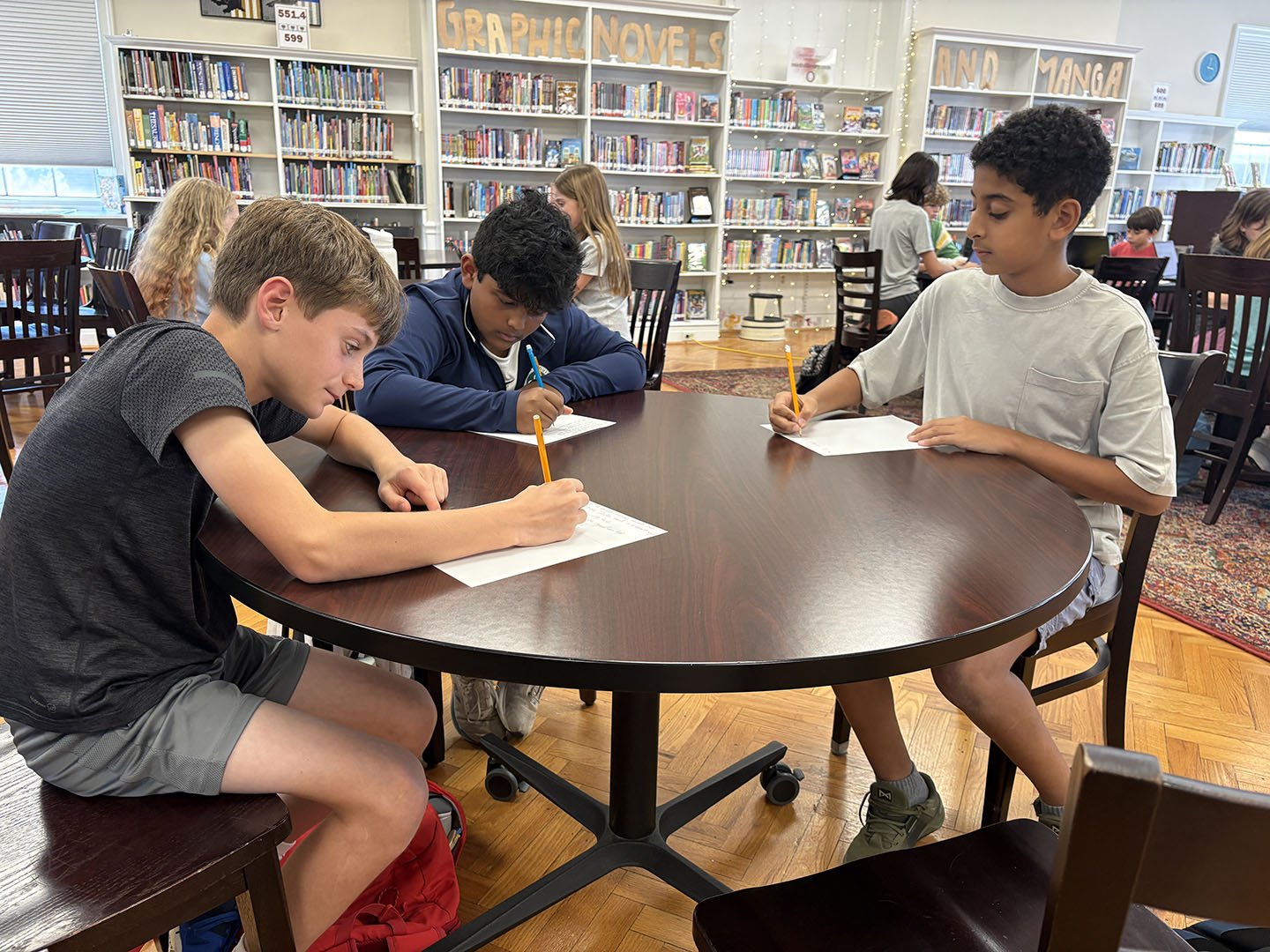
After the assembly, Ms. Warga spent time in the Messing Library with a group of students interested in writing. She led them through three writing prompts and gave several writers time to share their pieces, offering warm words of encouragement after each recitation.
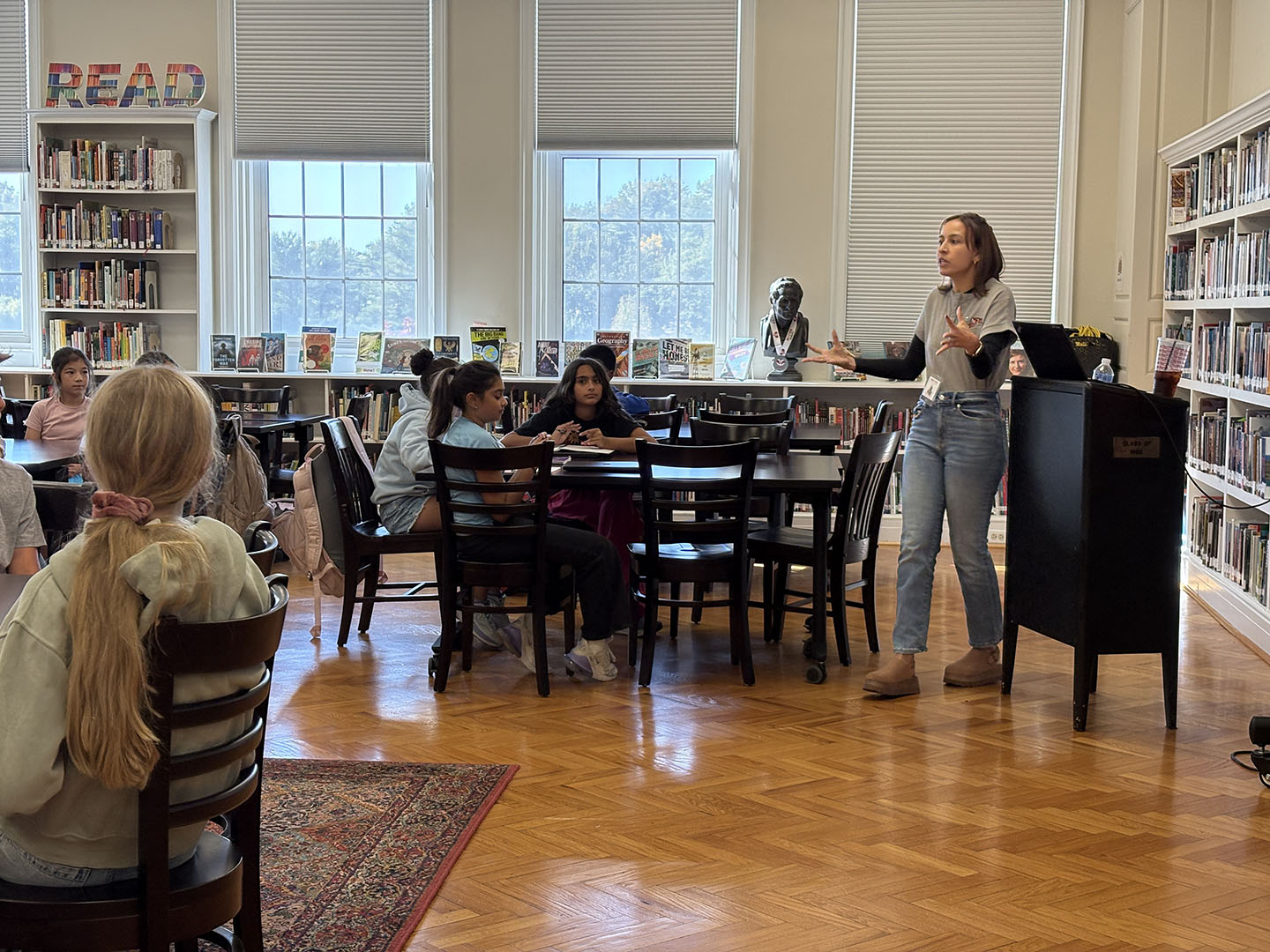
Eliza Krieger ’32 thought the day was fun. Her biggest takeaway was learning to “Write what you are curious about.”
Thank you to Jasmine Warga for spending so much time with our students this week! You’ve inspired so many young writers to explore their imaginations. Stay tuned for Ms. Warga’s next book, A Martian’s Story, due out in March 2027.