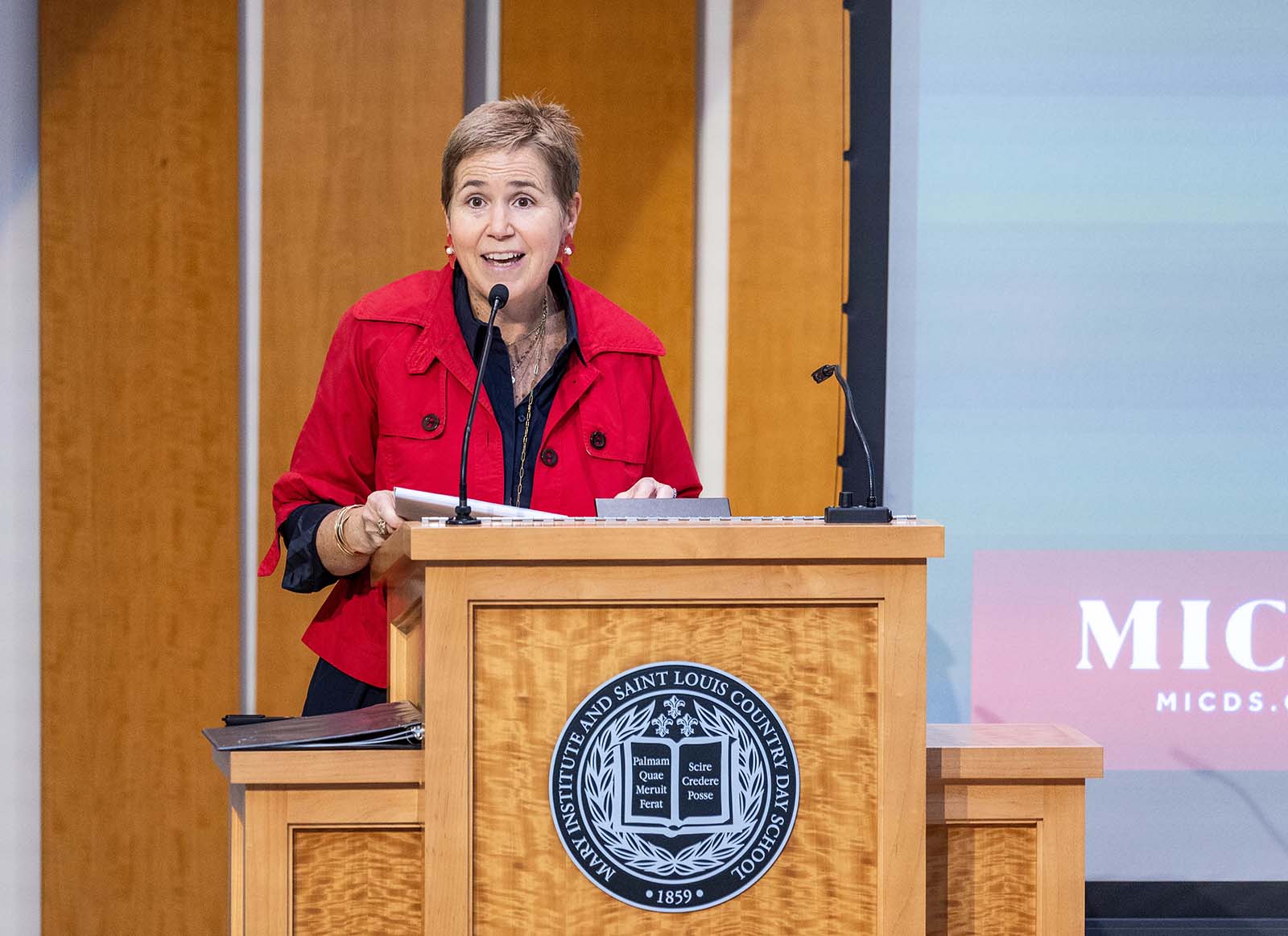
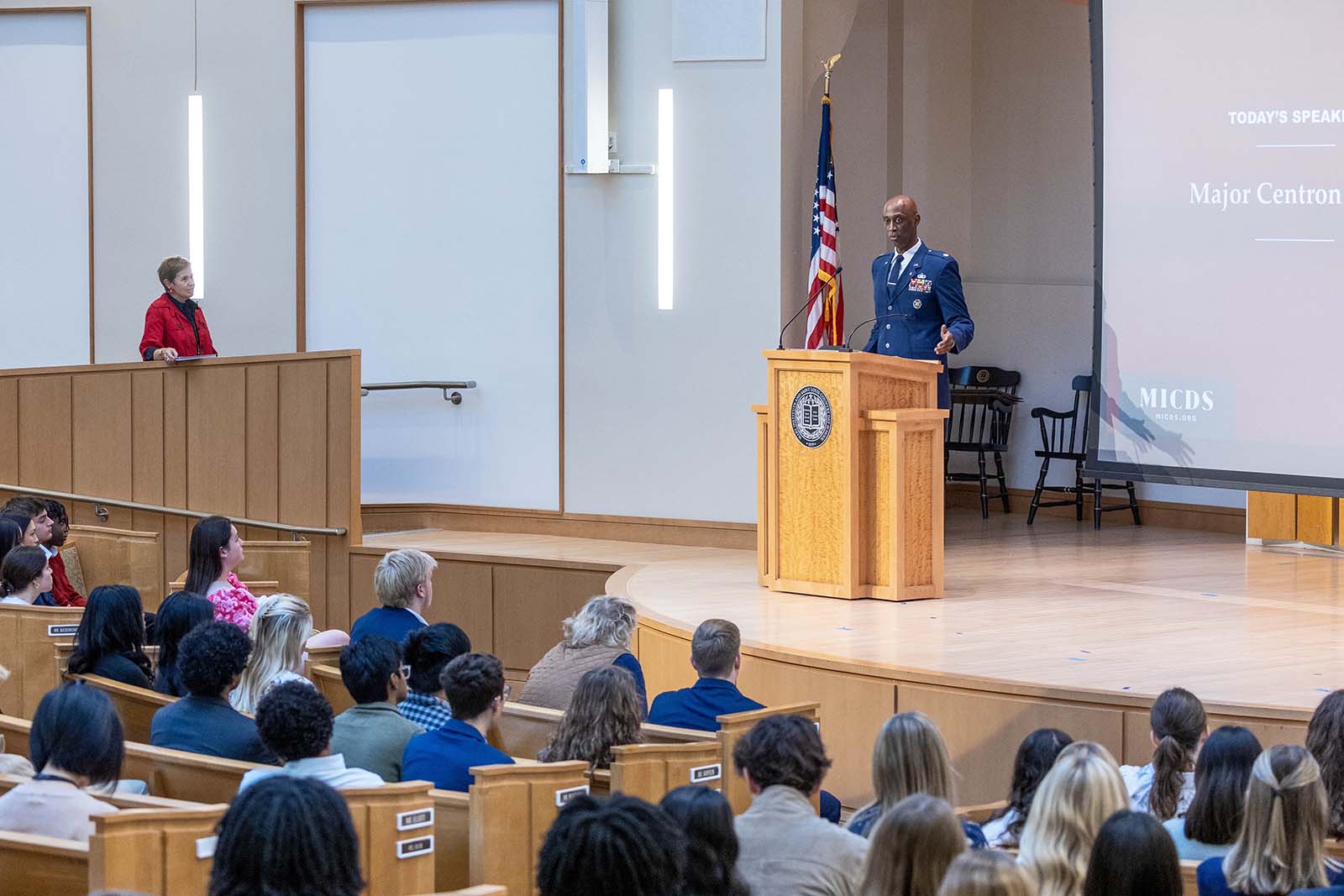
Upper School students, faculty, staff, and guests gathered in Brauer Auditorium to remember and reflect on those who have served our nation, in honor of Veterans Day. Head of School Chelle Wabrek welcomed all, and then shared why this day is so meaningful to her personally. “My dad served in the U.S. Army for 25 years, and his father served in WWII and then remained in the military for 10 years after. My maternal grandfather lied about his age at 14 to enlist in WWI, and then he enlisted again in WWII. My maternal grandmother served as a nurse in WWII,” she said. “This day matters.”
She also recognized three alumni veterans in the audience—Sandy Galt ’60, Ashley Gray ’61, and Cliff Saxton ’64—and asked everyone to rise for the National Anthem (arr. Patrick Dell), sung by our combined Upper School Choirs in the balcony.
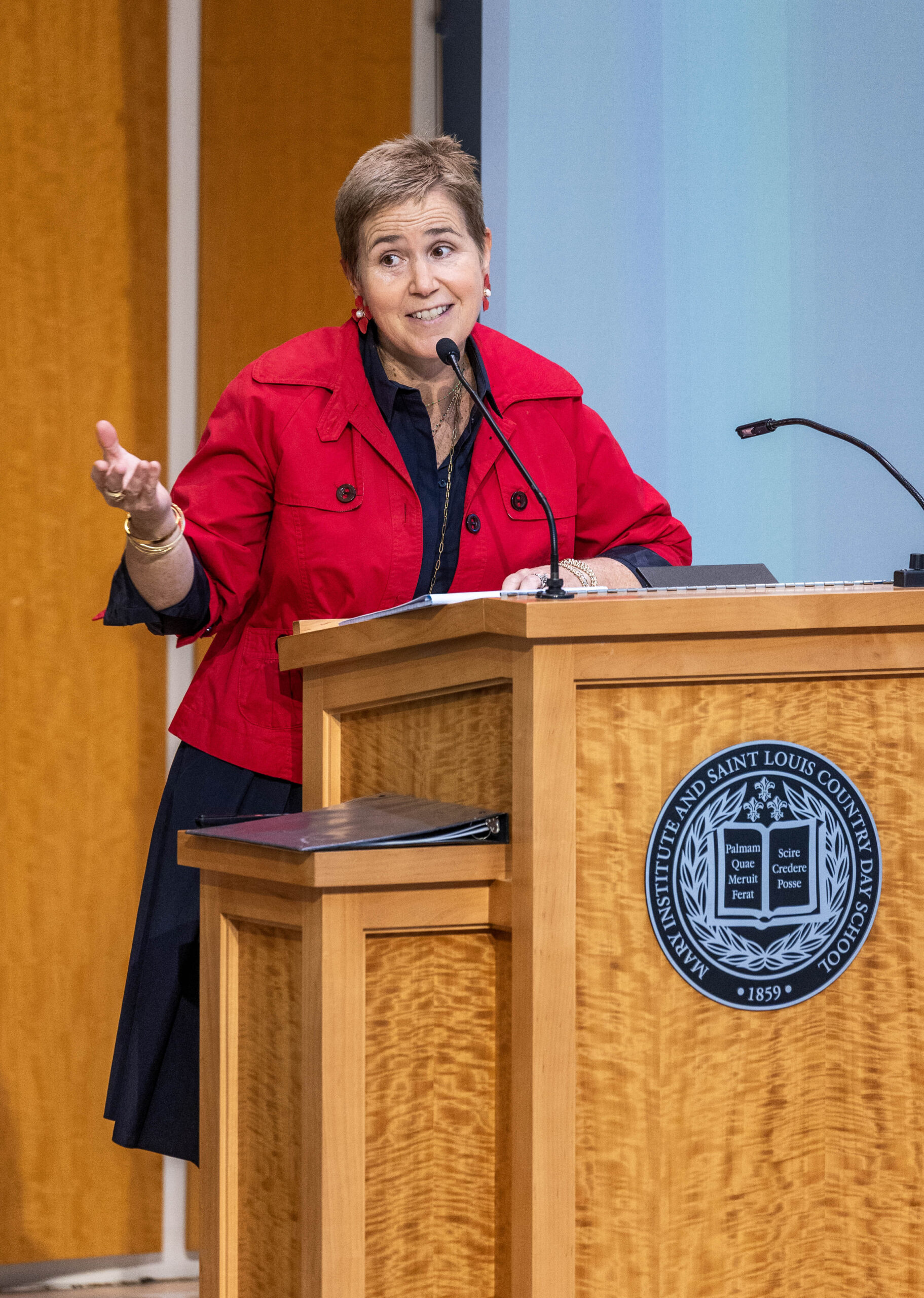 Mrs. Wabrek then asked everyone with a family member who has served or is serving to raise their hand. Nearly every hand went up, a symbol of how much this service impacts every person in our country. She gave a history of Veterans Day and asked those faculty and staff members who have served to please stand. Originally, Veterans Day was called Armistice Day. Its goal was to salute all honorably discharged military veterans of the United States Armed Forces. The first Armistice Day was established by President Woodrow Wilson in 1919 to commemorate the end of the major hostilities of World War I. Those ended the prior year (1918) at the 11th hour of the 11th day of the 11th month. In June of 1954, Armistice Day was renamed Veterans Day through a law enacted by President Dwight D. Eisenhower. This change was proposed by a World War II veteran who wanted to expand the scope of the holiday to honor all veterans, not only those who served in World War I.
The Upper School Choir, composed of the Chamber Choir, Treble Choir, and Tenor-Bass Choir, then sang My Country, ‘Tis of Thee/America the Beautiful.
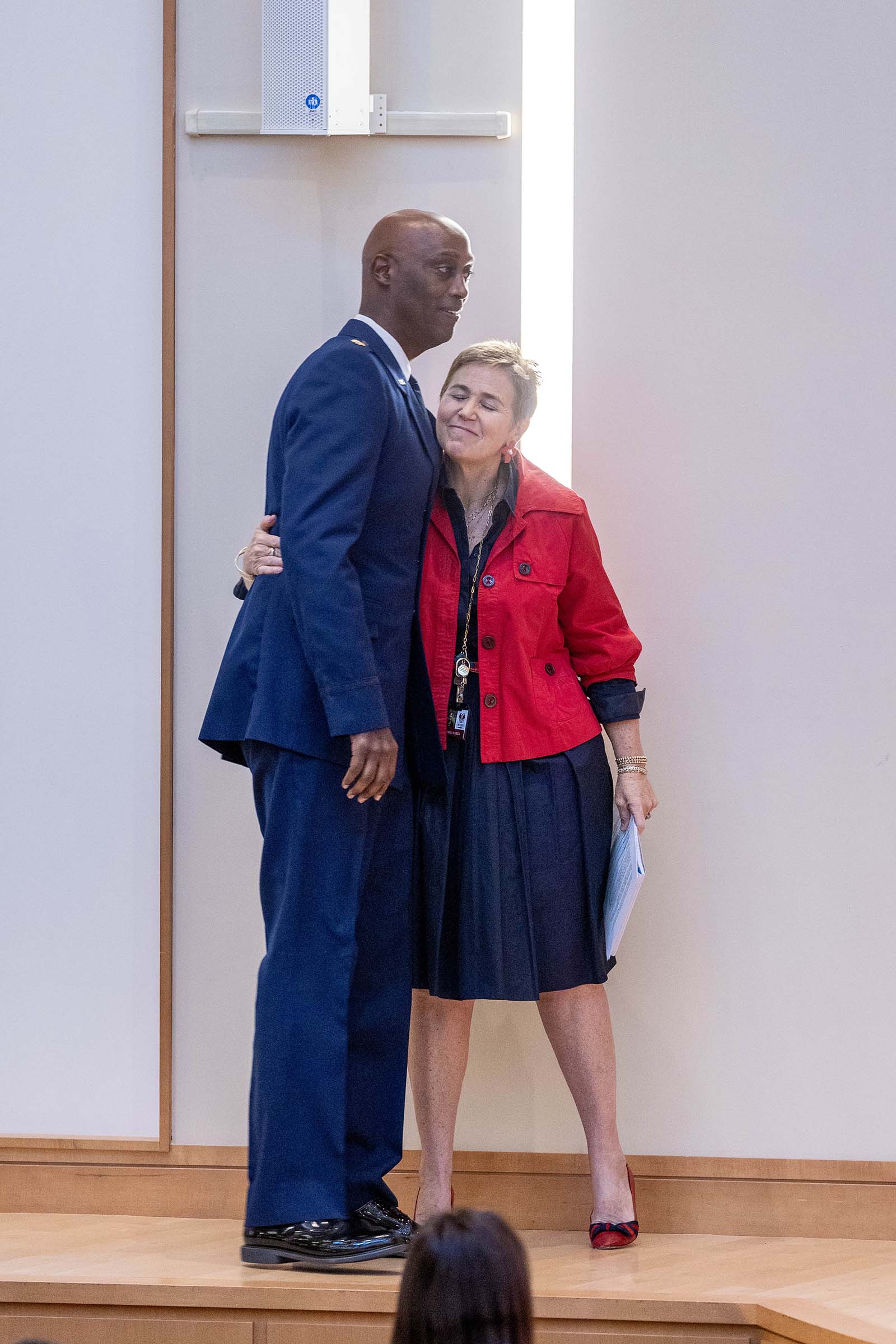
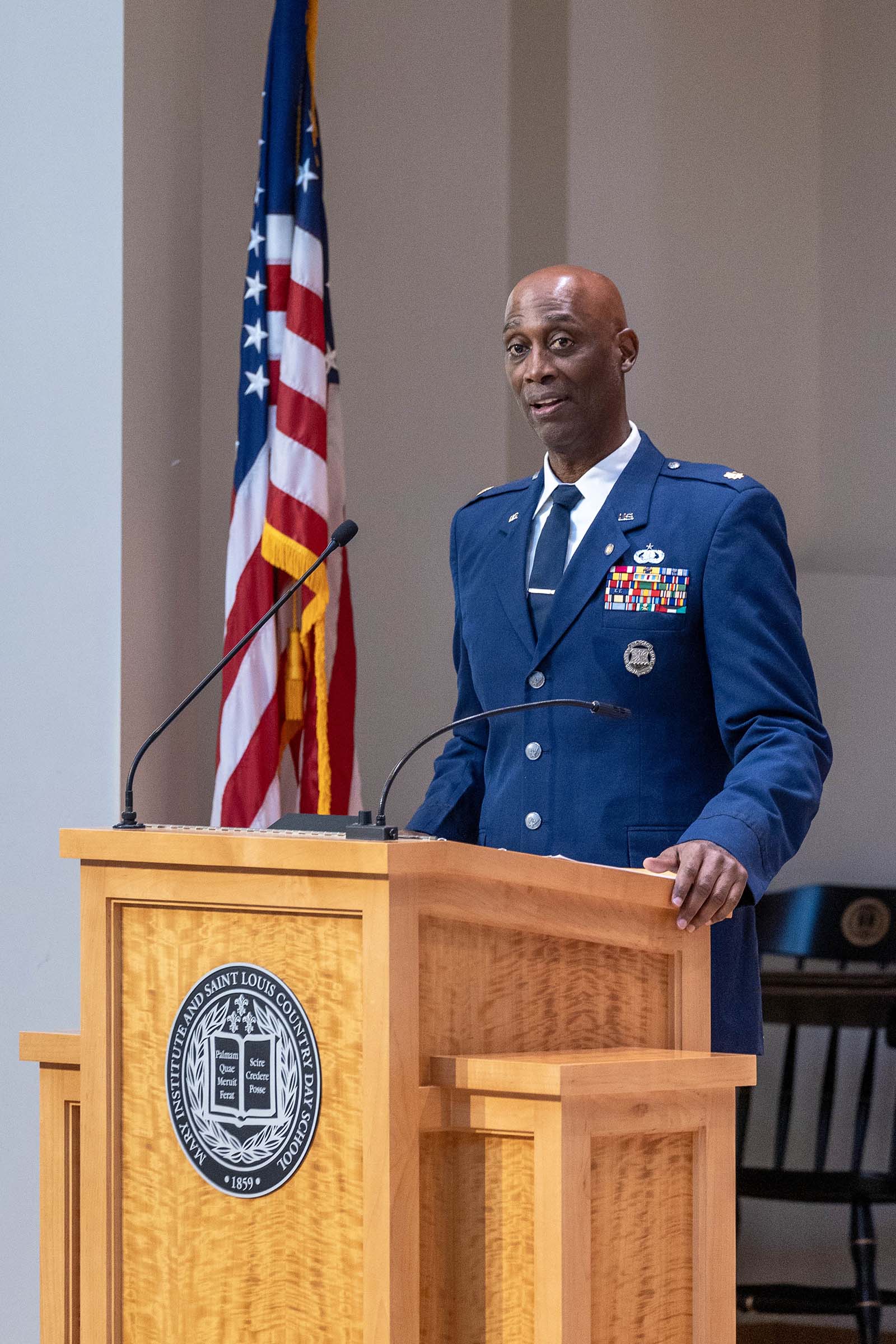
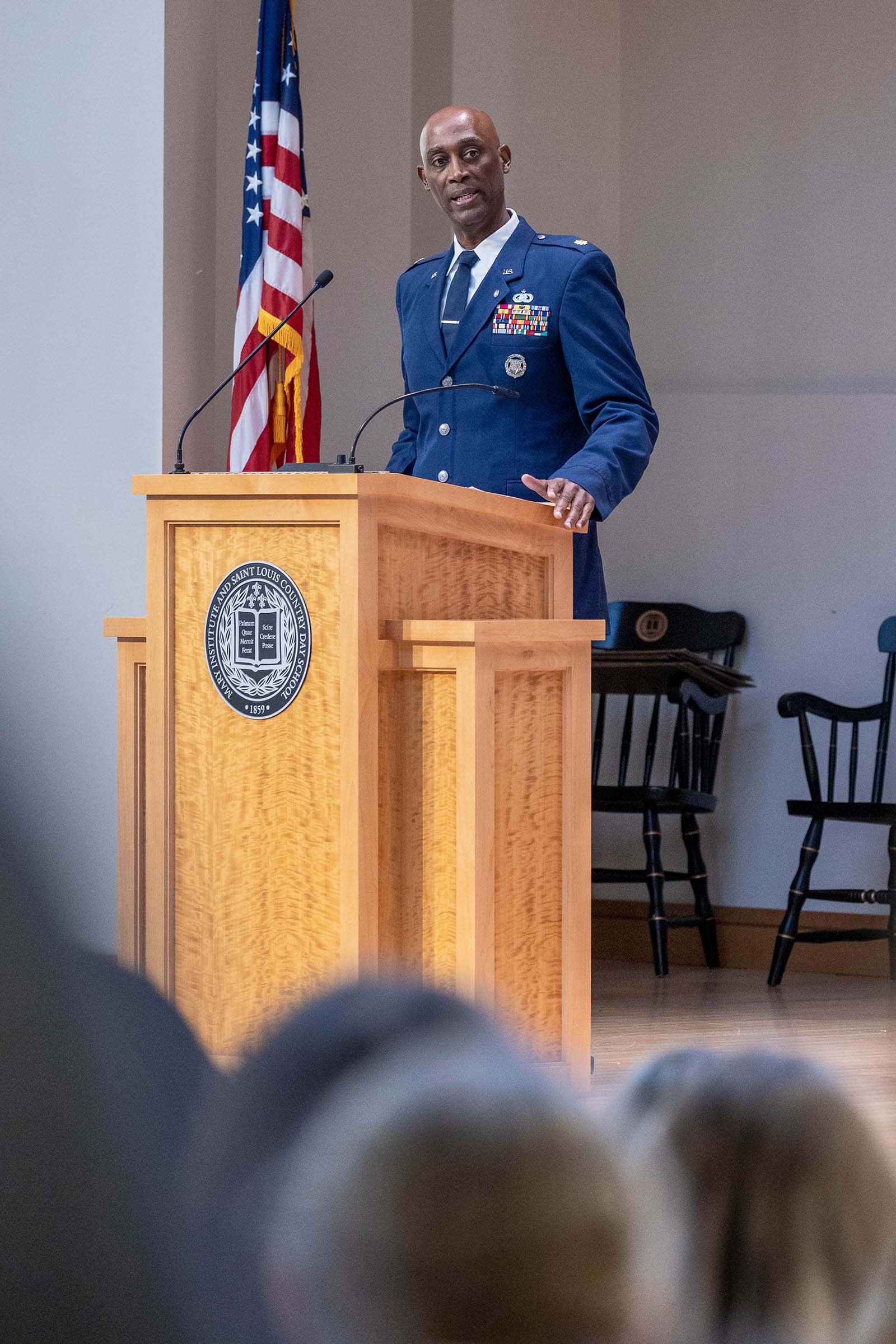
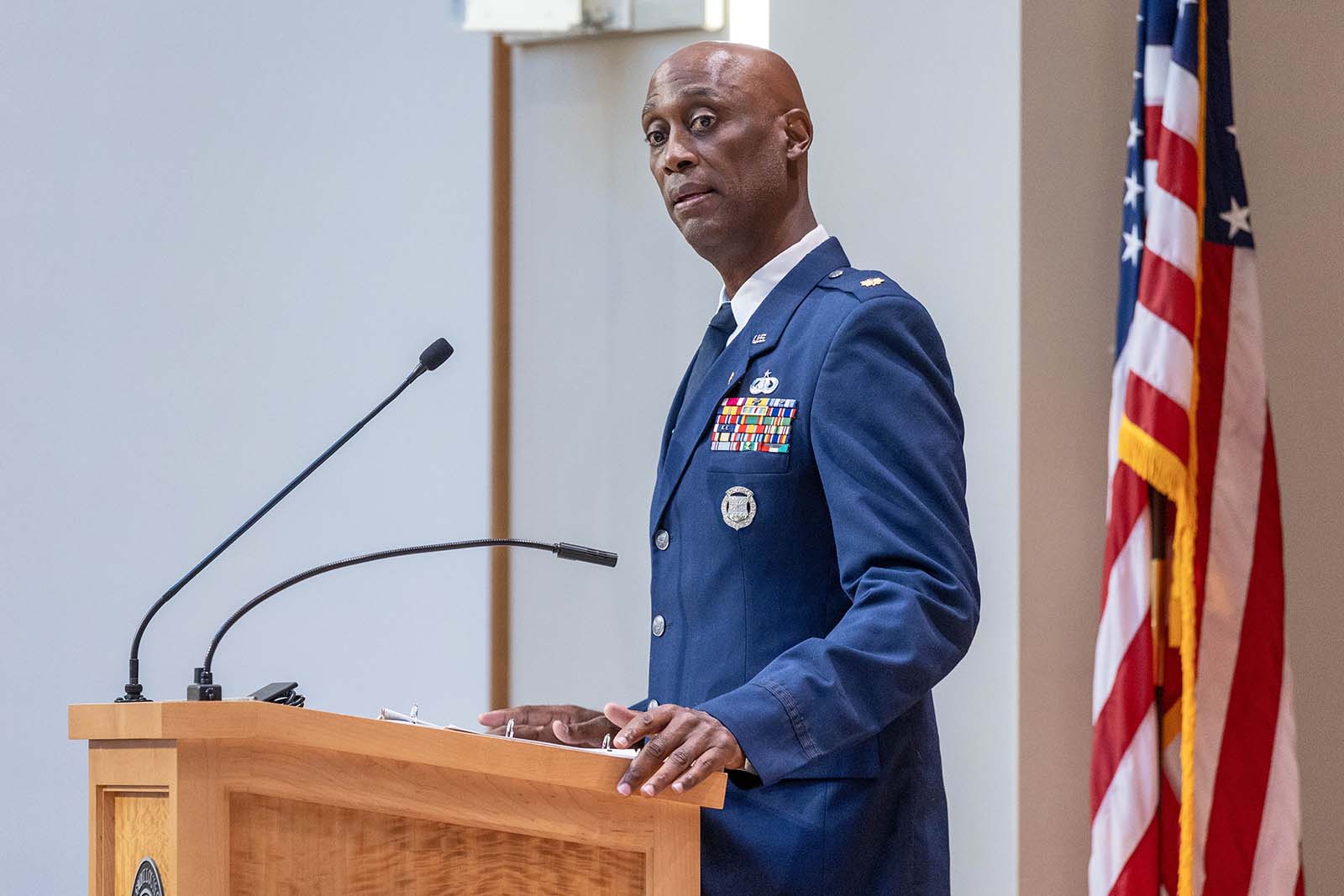
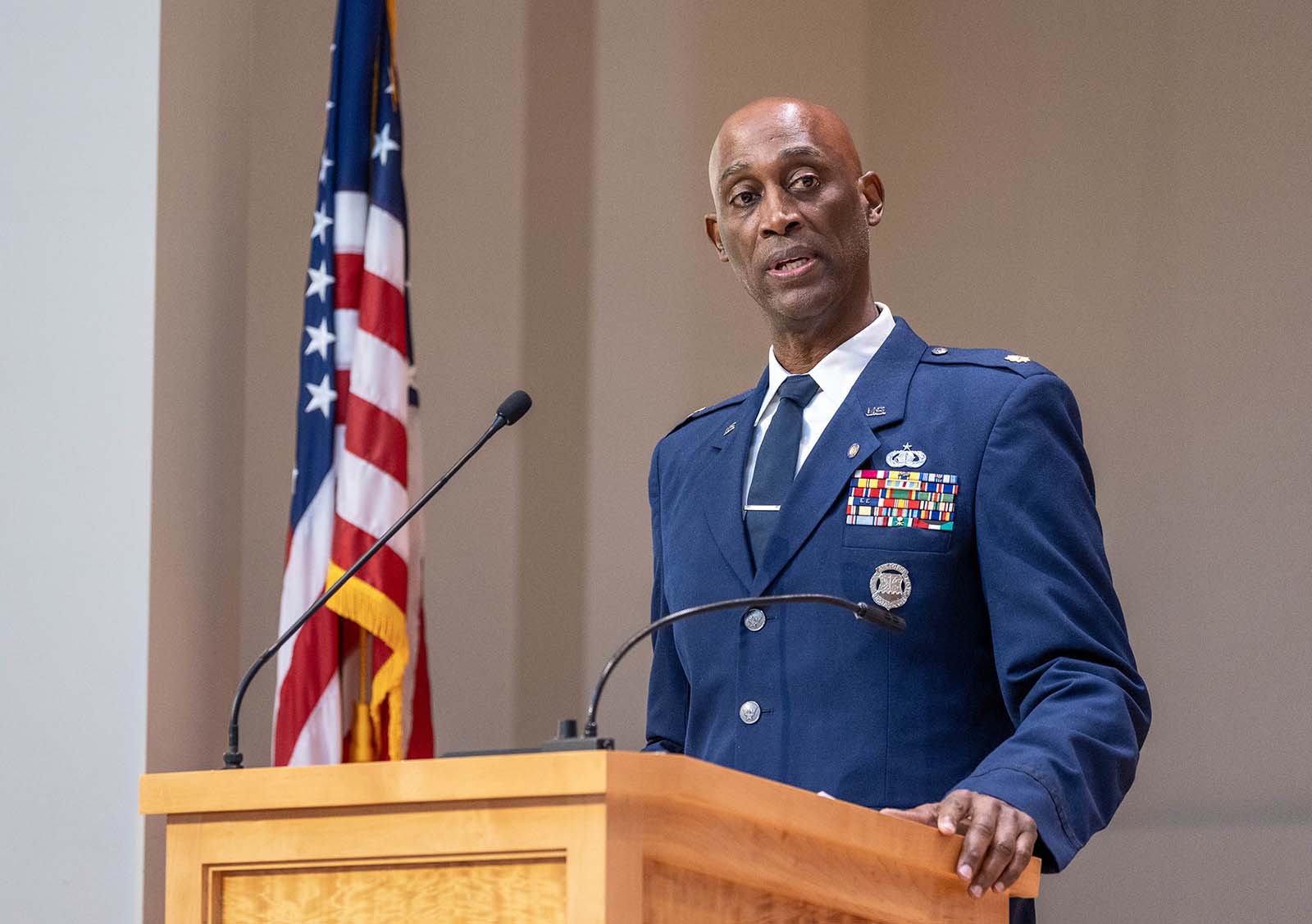
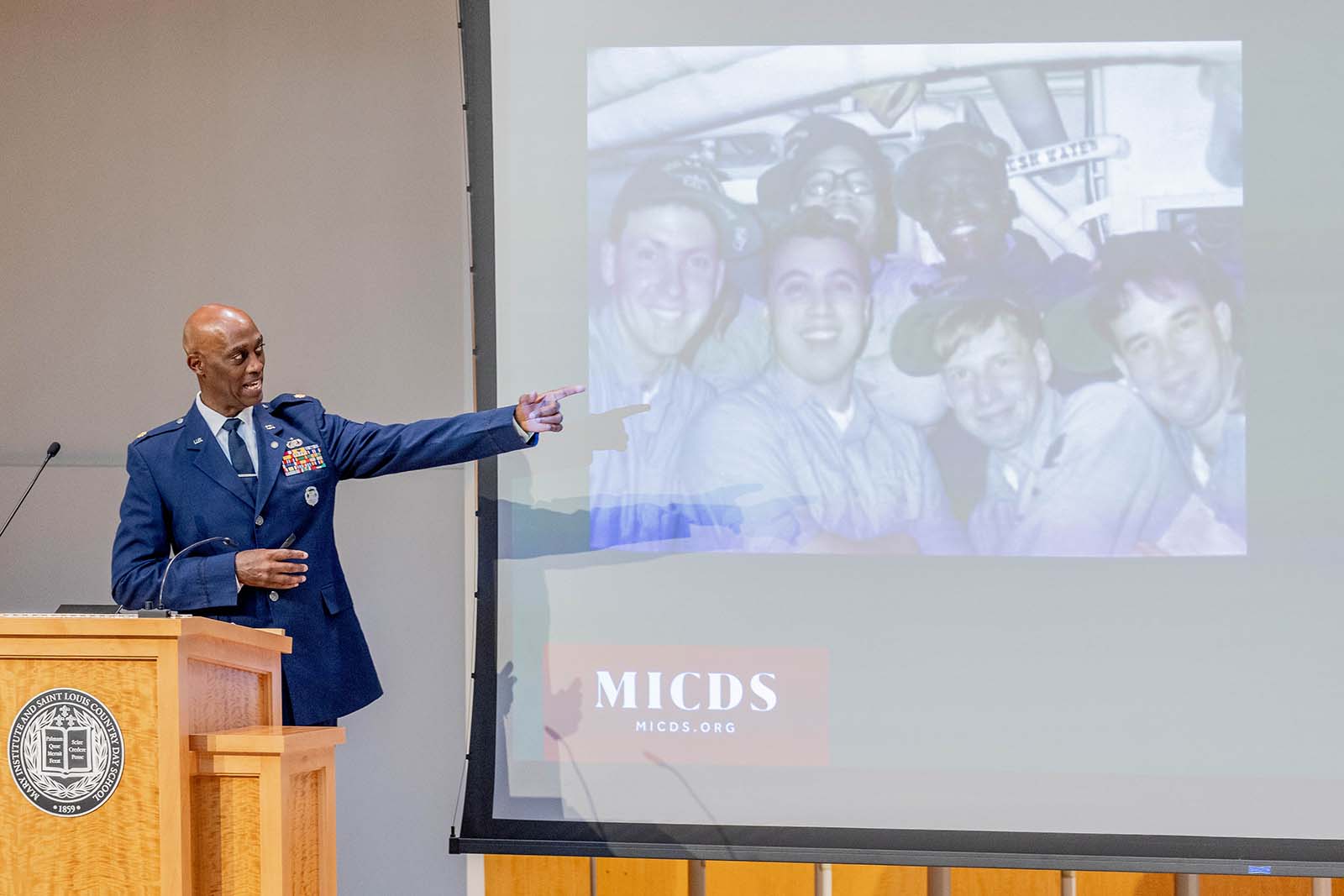
Mrs. Wabrek introduced retired Major Centron Felder, Lower School Learning Specialist. He partners with students, teachers, and families to support academic achievement, social-emotional growth, and student well-being. A certified School Psychologist, he previously served in the same role at the St. Louis Language Immersion School. Throughout his educational career, he has helped students develop confidence, resilience, and a lifelong love of learning.
A native of Hammond, Louisiana, Major Felder enlisted in the United States Navy in 1989 following his graduation from Independence High School. As an Operations Specialist aboard the USS Robert K. Turner, he supported Operations Desert Shield and Desert Storm, Operation Provide Comfort, and numerous counter-narcotics missions before serving as a Military Police Officer at Naval Air Station Pensacola.
After earning a Bachelor of Science in Exercise Science from the University of West Florida, where he was a member of the men’s basketball team, he received his commission through the Air Force ROTC program and entered active duty in the United States Air Force in 2000.
During his Air Force career, Major Felder served in a variety of leadership assignments, including Readiness Officer at Offutt Air Force Base, instructor and Protocol Officer at Air University, Support Flight Commander for the 332d Recruiting Squadron in Nashville, Operations Officer for the 9th Force Support Squadron at Beale Air Force Base, and Commander of the 9th Force Support Squadron. He also had multiple deployments in support of Operations Iraqi Freedom and Enduring Freedom before retiring from the Air Force with the rank of Major.
After retirement, Major Felder earned a Master of Education in Educational Psychology and an Educational Specialist degree in School Psychology from Webster University.
Throughout every stage of his career, from military service to education, Major Felder has been guided by the belief that leadership is ultimately about serving others. He continues to live the Air Force Core Values of Integrity First, Service Before Self, and Excellence in All We Do by investing in the growth and success of the next generation.
Here are Major Felder’s remarks:
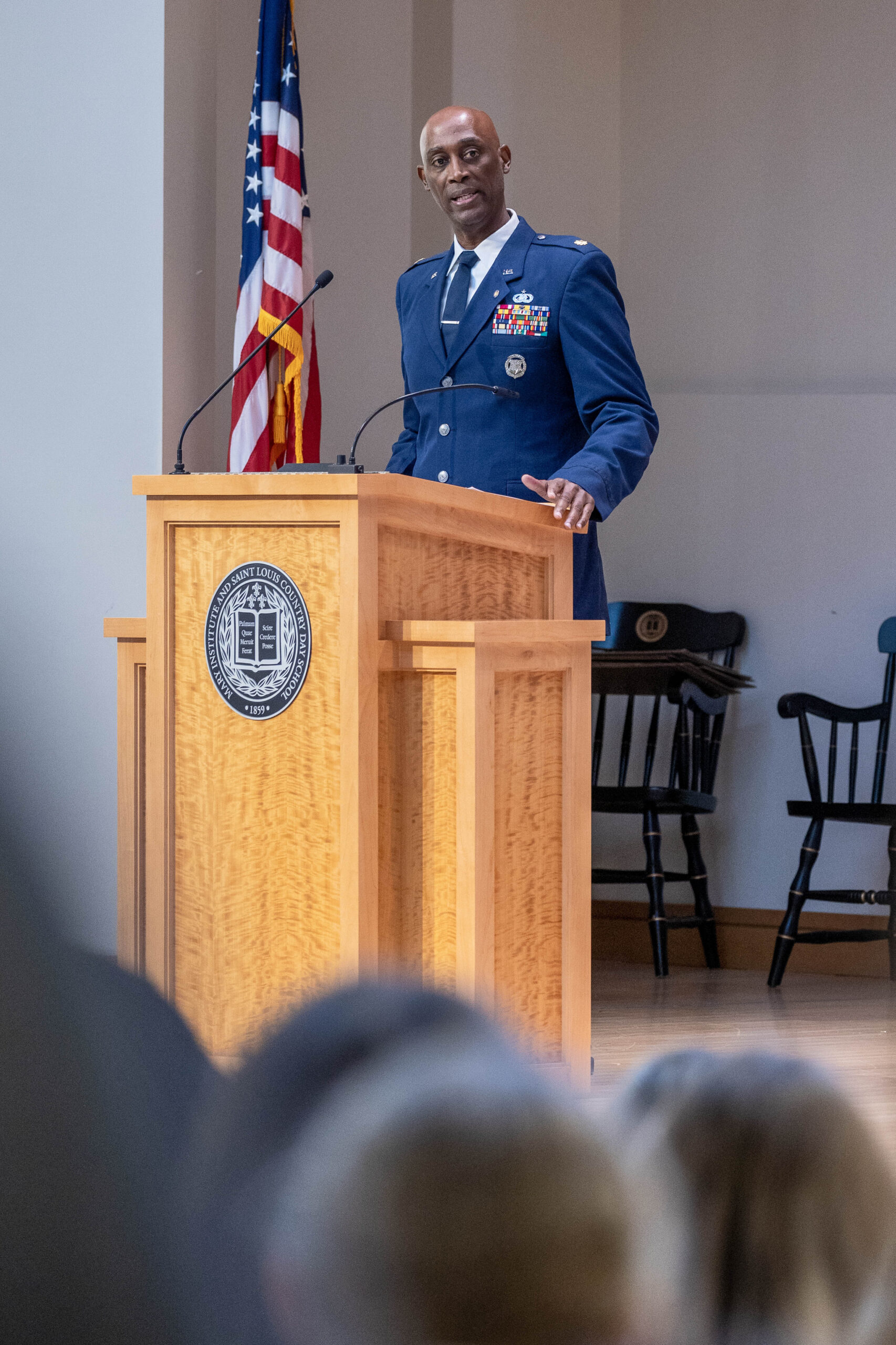 I am honored to stand before you as we recognize Veterans Day, a day to honor all who have served in the United States Armed Forces, living and deceased. It differs from Memorial Day, when we specifically honor those who died in military service. Both remind us of the commitment and sacrifice associated with serving our country. This year also marks 250 years of American independence. Two hundred and fifty years.
Our nation was shaped by generations of people, including Indigenous peoples, enslaved Africans, indentured servants, and immigrants. Through extraordinary achievements and profound struggles, America emerged as a world power, a leader in innovation, and a defender of democratic ideals around the world.
As you just heard, my military journey took me from the United States Navy to the United States Air Force, where I had the privilege of serving alongside extraordinary people. Throughout those years, three Air Force Core Values helped guide me: Integrity First. Service Before Self. Excellence in All We Do.
Today, I’d like to share what they’ve meant to me, in uniform and since.
Integrity First
Integrity is an interesting value. No matter how hard we try, we sometimes fall short of our own expectations or those of others. The question isn’t whether we’ll make mistakes. It’s how we respond when we do. During a deployment to Manas Air Base in Kyrgyzstan, I served as a protocol officer, coordinating visits from congressional delegations, senior military leaders, and other dignitaries.
One visit came with little notice, just as I was finishing an assignment that had required several consecutive days of nearly 21-hour shifts, including travel outside the installation. I was exhausted, but the mission continued. The visit included a Top Secret intelligence briefing for two members of Congress and several generals. I was responsible for ensuring the classified materials were properly secured. After the briefing, I collected the materials and returned them to our Sensitive Compartmented Information Facility, or SCIF, where they were to be secured in a safe. The following morning, rested and ready for another day, I entered my office. The safe was open.
I was stunned, shocked, and honestly scared. My immediate concern wasn’t my career. It was the classified material and the potential consequences for our mission if that information had been compromised. I checked the security log. My signature was there. I was the last person to access the safe, and I had signed that it was secured. But it wasn’t. Only three people on a base of more than 1,500 had access to that safe. However, third-country nationals, or TCNs, regularly entered our office area under escort to clean and empty receptacles. I immediately inventoried the contents. Nothing was missing.
And then I faced a different kind of challenge. I could simply lock the safe and walk away. No one would know. The materials were accounted for, and there was no indication that classified information had been compromised. Or I could report my mistake, knowing the consequences could be significant. I thought about the values my parents had instilled in me and the Air Force Core Value I had committed to uphold. Integrity First.
I left the safe as I found it and called my superior officer, Lieutenant Colonel Johnson, whom I respected tremendously. When he arrived, I explained everything. He reported the incident to our commander, and an investigation followed. The investigation determined that there had been no negligence, but there would be accountability. I could have lost my security clearance, potentially ending my deployment and even my military career. Fortunately, neither happened. But there were consequences…
Despite my otherwise outstanding deployment performance, I received no medal for that deployment. Military decorations influence promotions and future assignments, and as a captain with aspirations of advancing through the ranks, I understood what that could mean. I had been exhausted and working extraordinarily long hours. Those circumstances may explain my lapse in judgment, but they didn’t excuse my responsibility. I eventually earned promotion to Major and continued my career. Yet the lesson from that morning has stayed with me longer than any medal could have.
Integrity isn’t measured only by the decisions we make when others are watching. It’s also measured by the choices we make when no one would ever know the difference.
That morning, I could have protected my reputation by simply closing a safe. Instead, I chose to protect something far more important: my integrity.
Service Before Self
The second core value is Service Before Self. Service members know sacrifice: deployments, danger, and families separated by thousands of miles. I deployed many times and missed birthdays, anniversaries, holidays, and special occasions. I was already the proud father of two daughters. They had taught me the joy and responsibility of parenthood, and our family knew the challenges of separation. But one deployment was different. My son had just been born. I was fortunate to be there and hold him in my arms. Two months later, I was on a plane to Iraq. Two months. I had taken an oath to support and defend the Constitution. I believed in that oath, and it gave me purpose and comfort. But away is away. Believing in your mission doesn’t shorten the distance from those you love.
Although the war in Iraq was winding down, we still coordinated visits from dignitaries, congressional delegations, and senior military officials. At times, my duties took me “outside the wire,” beyond the relative safety of our installation. Focus was essential. A moment of distraction could have serious consequences for those depending on me. I learned to compartmentalize: when I worked, I focused on the mission. Despite the workload, the shellings, and explosions, in the quieter moments, my thoughts returned home. Would I miss my son’s first words, first steps? Would I be there when he fell, or would someone else pick him up and wipe away his tears? And beneath those questions was another: Would I be there when he needed me?
I began to understand that sometimes the greatest sacrifices of military service aren’t the things we do. They’re the moments we can never get back. And while I chose to serve, my family sacrificed too. My children hadn’t taken an oath. They hadn’t volunteered. Yet they shared the cost of my commitment. For some, service has cost them their lives. Others have returned with lost limbs, serious injuries, or emotional wounds that may never fully heal. I have friends in each of those categories, making those sacrifices deeply personal to me. I was fortunate. I made it.
I remember our plane landing to deafening cheers. We sang God Bless America. I can’t say everyone was in the right key, but it was certainly beautiful music to our ears. We were home. I could finally focus on the little boy I’d spent so many nights thinking about. I didn’t need a celebration or parade. I wanted to look into his eyes, hold his little hands, and be there. Not thousands of miles away. Not wondering what I was missing. Just there.
When I finally held him, we looked at each other. He wasn’t afraid. He didn’t cry. He just looked at me. And I looked at him. And in true Gen X fashion, I cried: but only on the inside.
Here’s what makes sharing this story today so special to me: that little boy is now a senior at MICDS. His name is Jace, and he’s somewhere in this audience. I couldn’t be prouder of the young man he’s become. Service Before Self doesn’t mean loving your family or friends any less, or that being there for them matters any less. It means accepting responsibilities that sometimes require you to sacrifice the very moments you would treasure most. And military families serve alongside us, often without uniforms, medals, or even a “thank you.” Their sacrifices matter, too.
Excellence in All We Do
The third Core Value is Excellence in All We Do. Excellence is not foreign to you. You see it in Mrs. Gallupi’s science class, Mr. Armstrong’s Latin class, and on our courts and fields. Need an example? Our varsity girls’ tennis team won state titles in singles, doubles, and as a team! That’s excellence! Championships, promotions, grades, and awards are often measures of success. But excellence is something different. It’s the commitment to preparation, practice, and perseverance, especially when no one is watching.
I’ve often heard people attribute success to luck. But I’ve always believed that preparation creates opportunities for success, and that preparation begins with a commitment to excellence. Or, as I like to say: Stay ready so you don’t have to get ready.
In the military, excellence mattered because others depended on our preparation and judgment. We weren’t perfect. We made mistakes, learned, and improved. The same is true here. My colleagues and I work with students discovering their strengths and overcoming challenges. Excellence doesn’t look the same for everyone. For one student, it might mean the highest grade on an assessment. For another, finally understanding a concept they’ve struggled with for weeks. All deserve recognition.
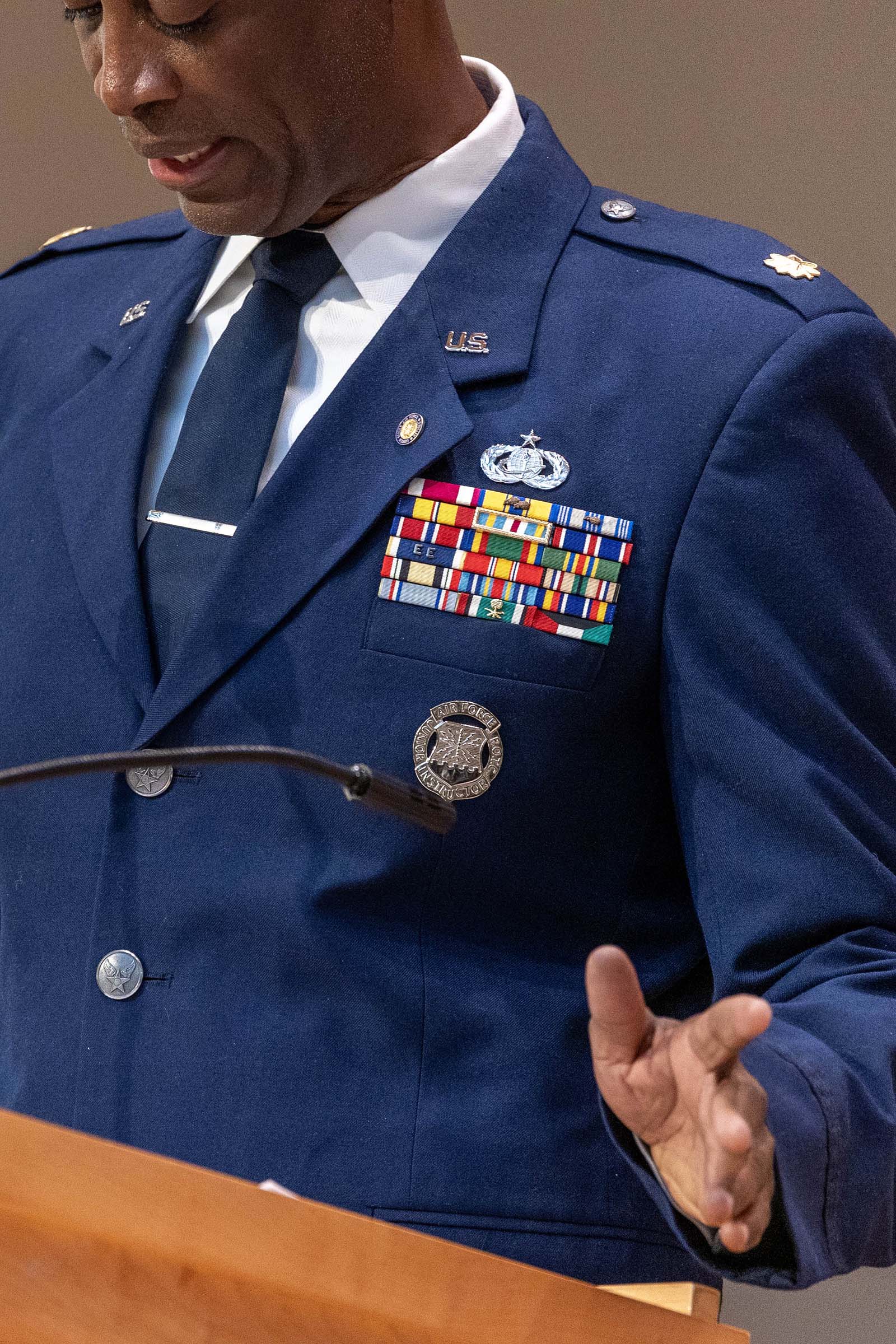
Excellence isn’t simply where you finish. It’s the journey you take to get there. When I reflect on my military years, I hope the marks I left were ones striving for excellence, not simply through, the missions I completed, the rank I achieved, or the medals you see on my chest today, but through the impact I had on others. I hope they’re found in the people I served beside, the Airmen I had the privilege of leading and following, and the difference we made in one another’s lives. As an educator, I carry that same hope. Long after uniforms are put away and awards placed on shelves, what remains is our impact on others. And that, to me, is Excellence in All We Do.
As we reflect on 250 years of American history, we must consider what we’ll contribute to the years ahead. Rams, you don’t have to wear a uniform to live these values. You can practice them in classrooms, boardrooms, operating rooms, businesses, and communities; wherever your path leads.
Integrity First: Do what’s right, even when it’s difficult. Take responsibility and treat others with dignity.
Service Before Self: Look beyond your interests. Notice when someone needs help. Small acts of kindness can make an extraordinary difference.
Excellence in All We Do: Prepare, learn from mistakes, and keep striving to become better.
Although I’m wearing my uniform today, I retired over a decade ago. But I didn’t leave those values behind. The uniform changed. The mission remains generally the same: service. Instead of leading Airmen, I support young people as they discover their strengths, face challenges, and prepare for their futures. I see in you the next generation of leaders, innovators, educators, service members, and citizens who will write our nation’s next chapter. You’ll face challenges my generation could hardly have imagined, like navigating artificial intelligence! You’ll make mistakes and face difficult decisions. I hope you’ll surround yourselves with people who understand grace: that none of us is perfect, and we all deserve opportunities to grow. You’ll also have extraordinary opportunities to make a difference. Remember that character matters, service matters, and excellence matters. Ultimately, the measure of our lives isn’t simply what we accomplish for ourselves.
It’s what we contribute to the lives of others.
To my fellow veterans, thank you for your service. To military families, thank you for sacrifices too often unseen. And to our students and my colleagues, thank you for allowing me to share part of my journey.
I’ll leave you with three questions.
-
- Who did you serve yesterday?
- Who will you serve today?
- And who will you serve in all your tomorrows?
Thank you and Happy Veterans Day
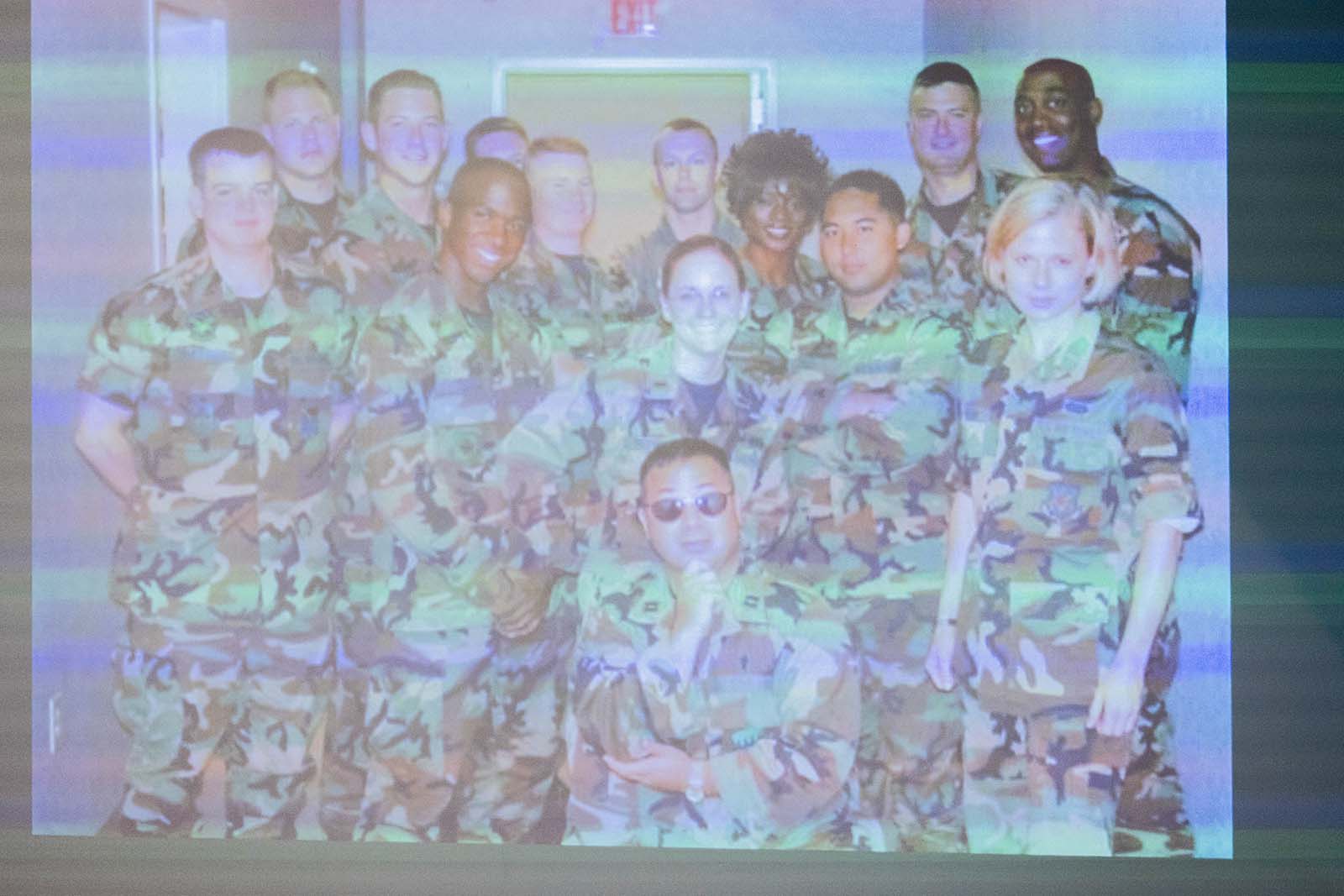
Major Felder also shared a series of photographs of his various deployments and honors, including images with his loved ones.
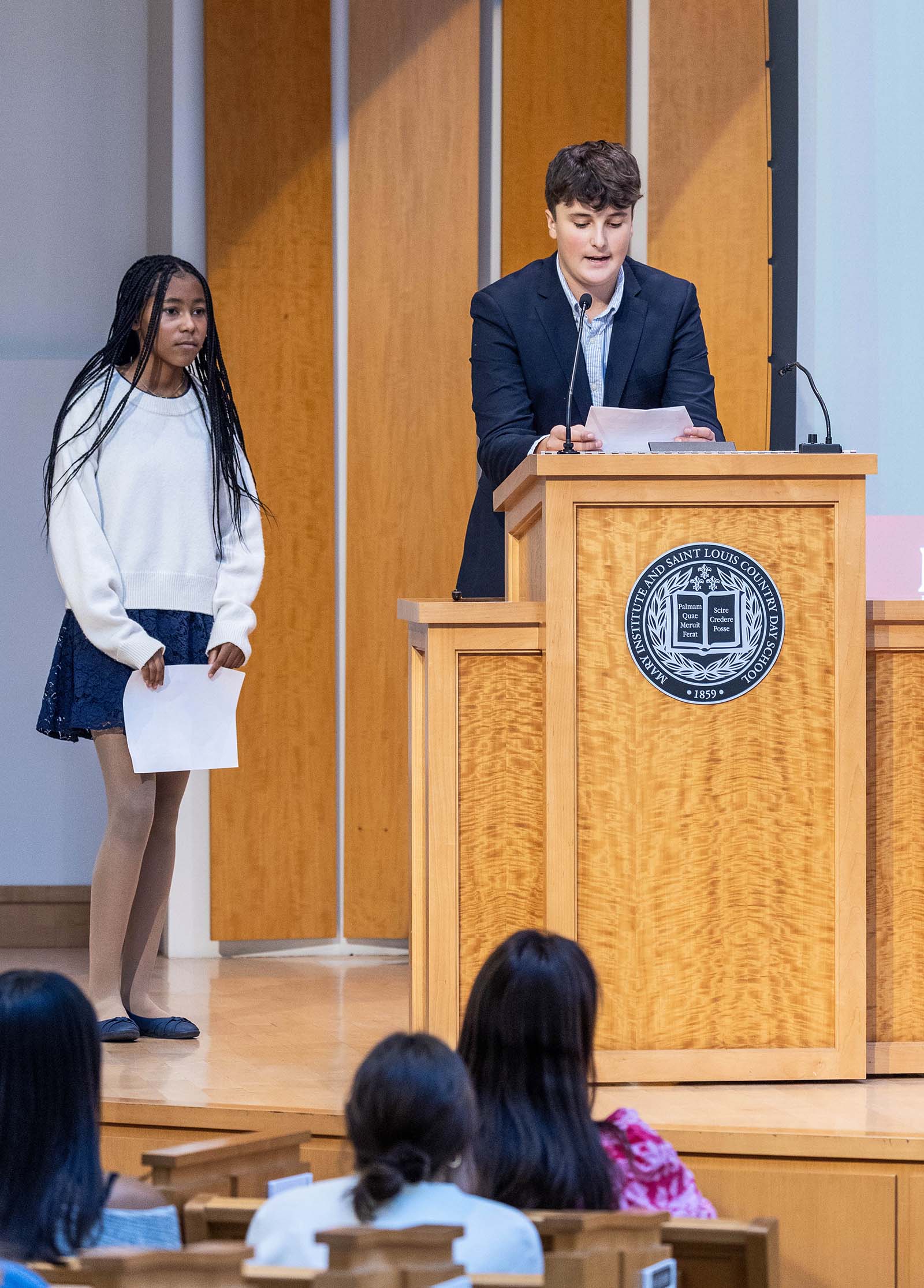
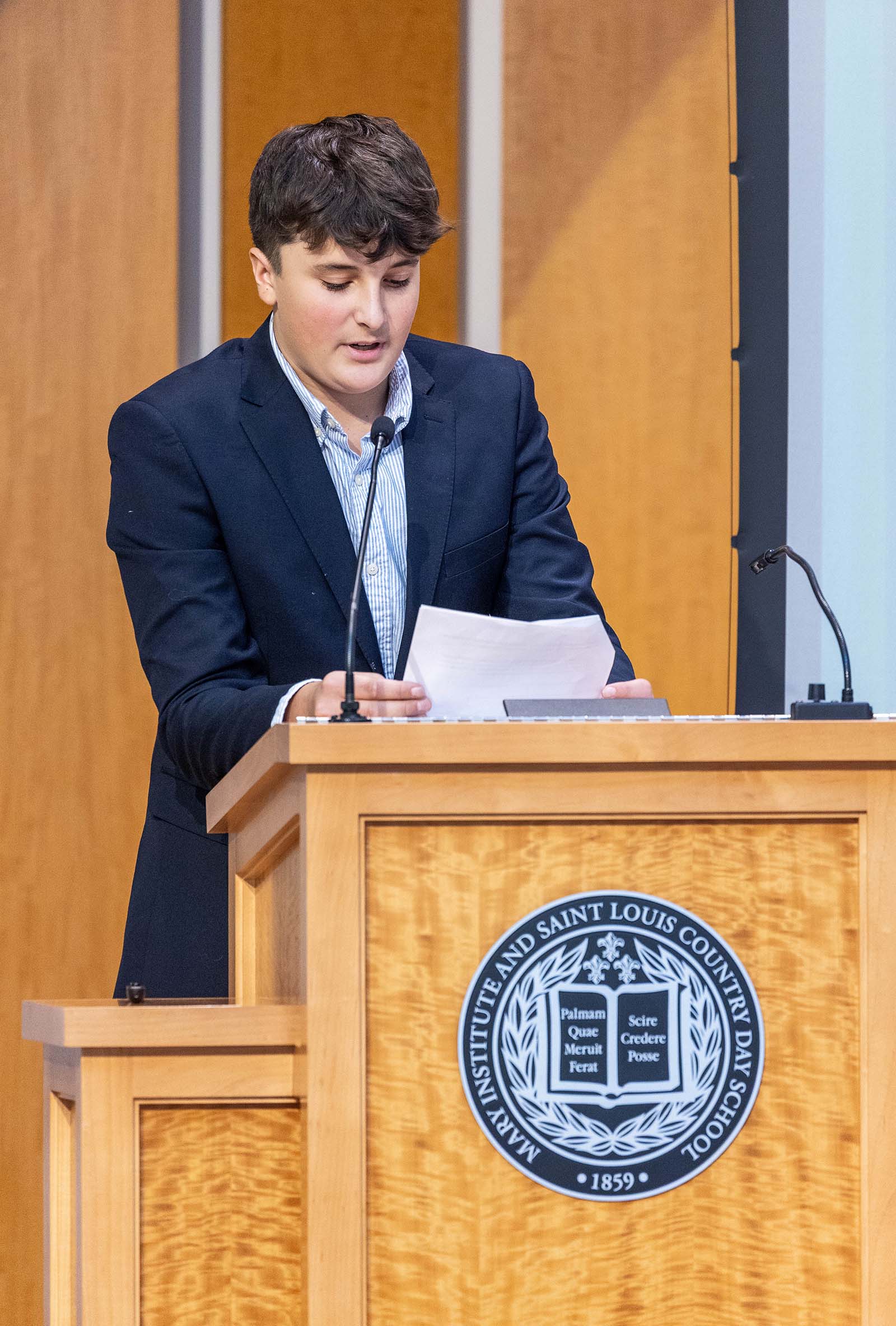
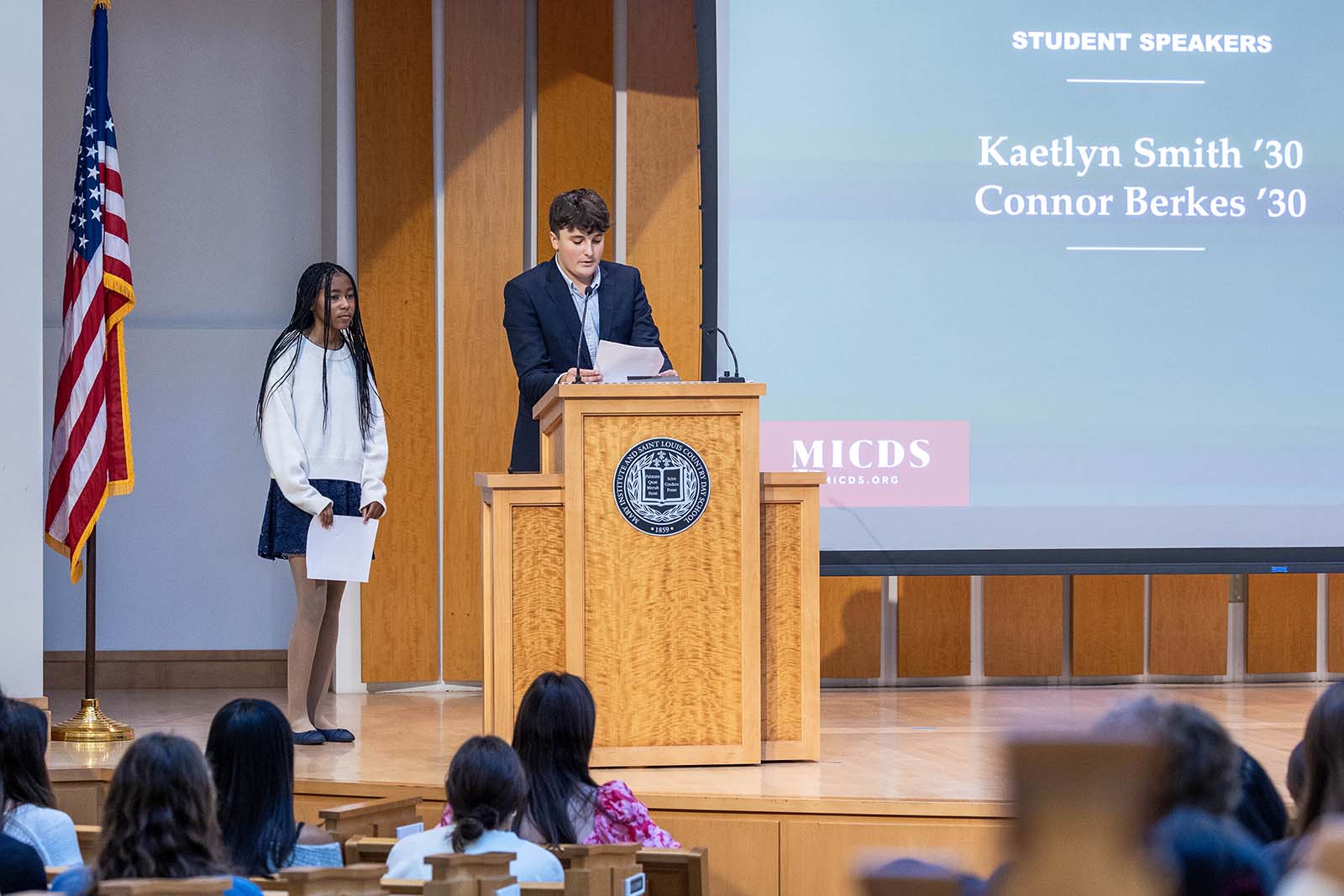
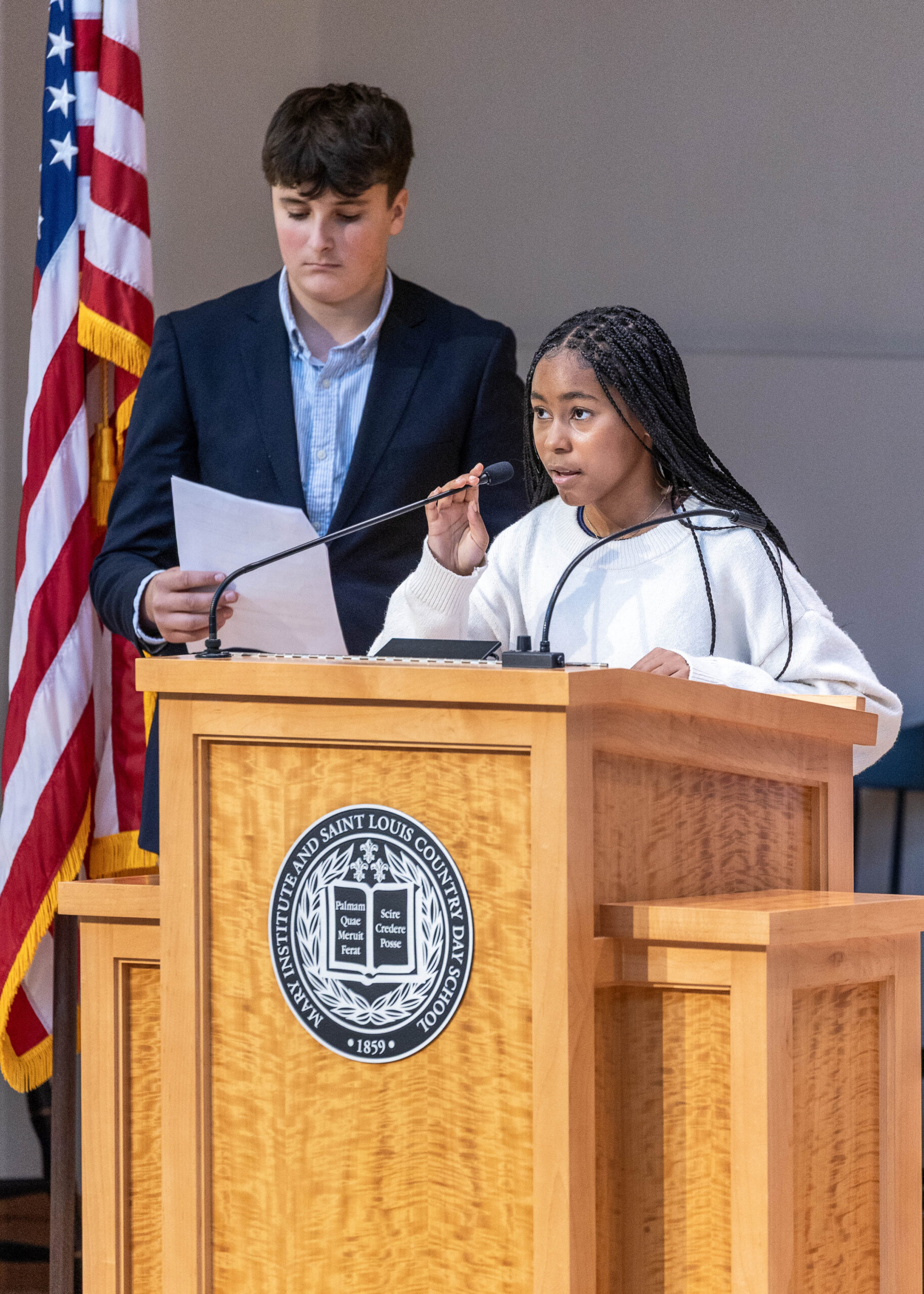 After Major Felder’s remarks, Kaetlyn S. ’30 and Connor B. ’30 came to the microphone to talk about their loved ones who have served.
Kaetlyn shared an extensive list of her relatives who served in various wars and missions, before talking about how much their service continues to impact and inspire her family. Although she did not personally meet several of her relatives who were veterans before they died, their legacy remains strong within her family and she remains grateful for their service and their sacrifice to ensure her world is safe and free today.
Connor said, “Hello, my name is Connor and my dad, Marschall, proudly served our country. He was active duty in the Air Force from 2013 to 2017, serving as an orthopedic surgeon as part of a special operations surgical team in support of the Green Berets, Navy SEALs, Marine Special Forces, and NATO forces. Furthermore, our family was stationed in Germany, and he was deployed multiple times serving in the global war on terror, in Afghanistan, Niger, and Turkey. During his service, my dad was able to take care of wounded soldiers and support the mission. We realized the difficulty of the sacrifice involved during this mission as our family was separated for nearly two years during this time. For instance, my dad was deployed to Turkey for six months with only 24 hours’ notice when I was four years old, and my sister was just five weeks old. Although I was young, those years have taught me to greatly appreciate the service of people and families who have served in the military past and present. I am very proud of my dad’s service.”
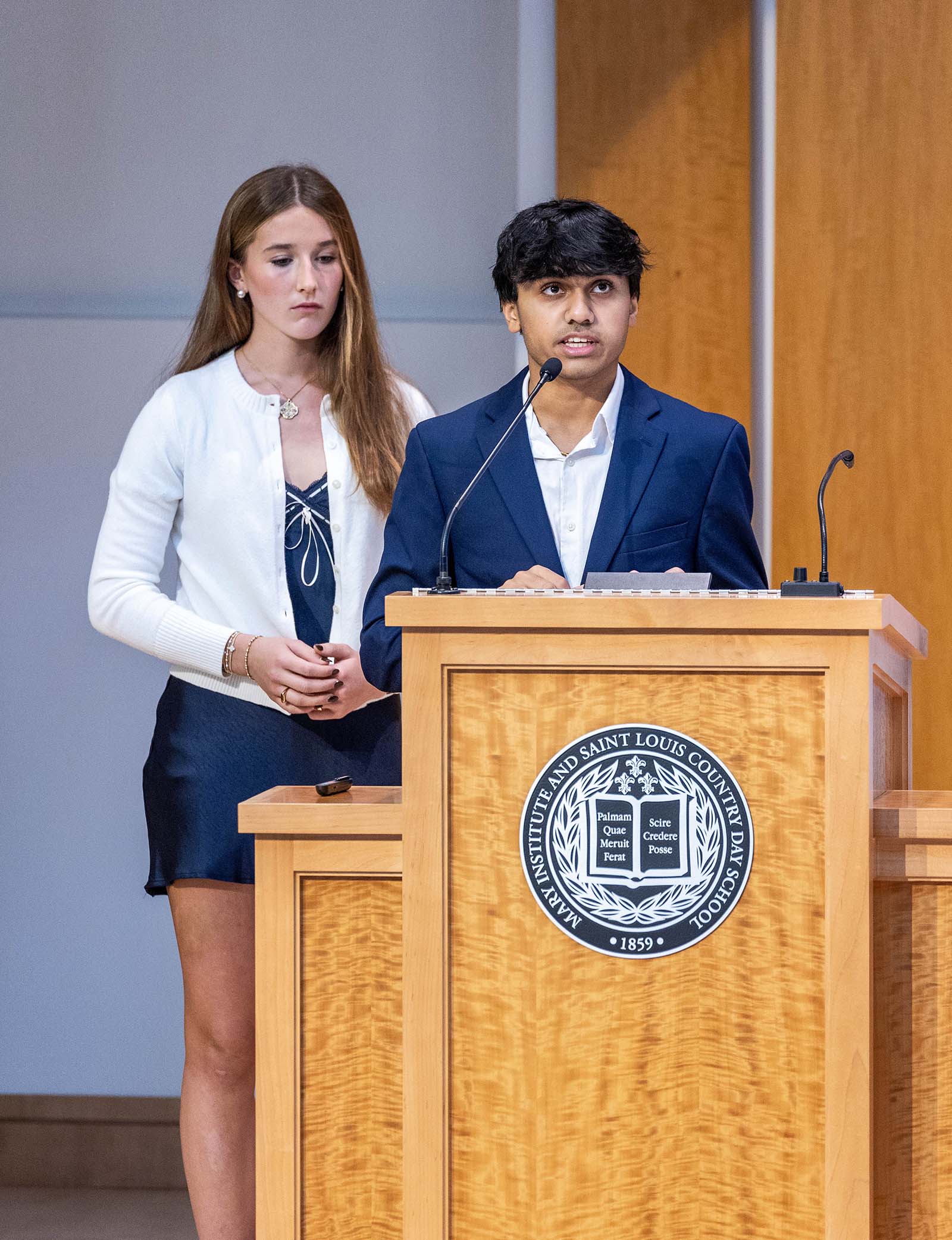
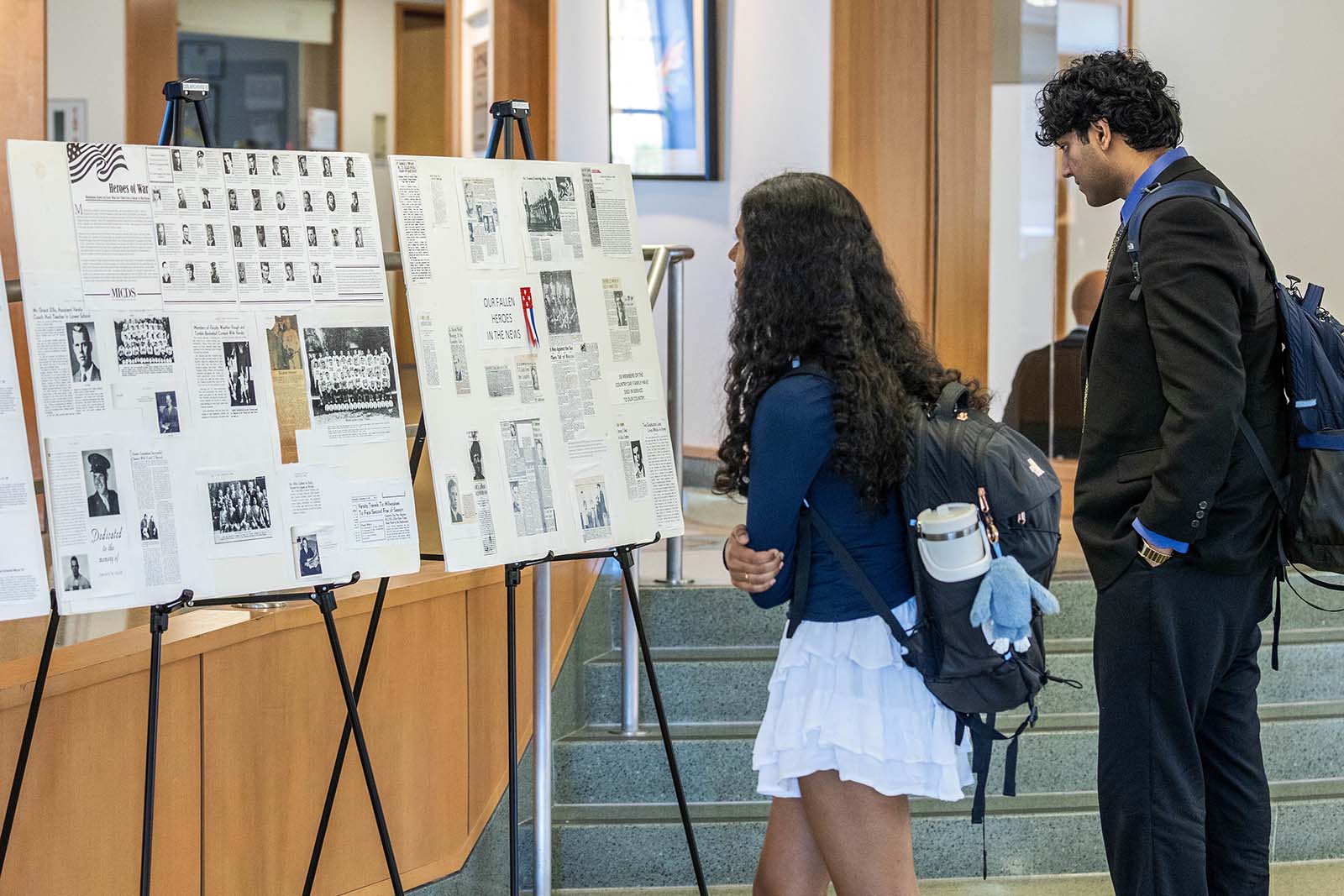
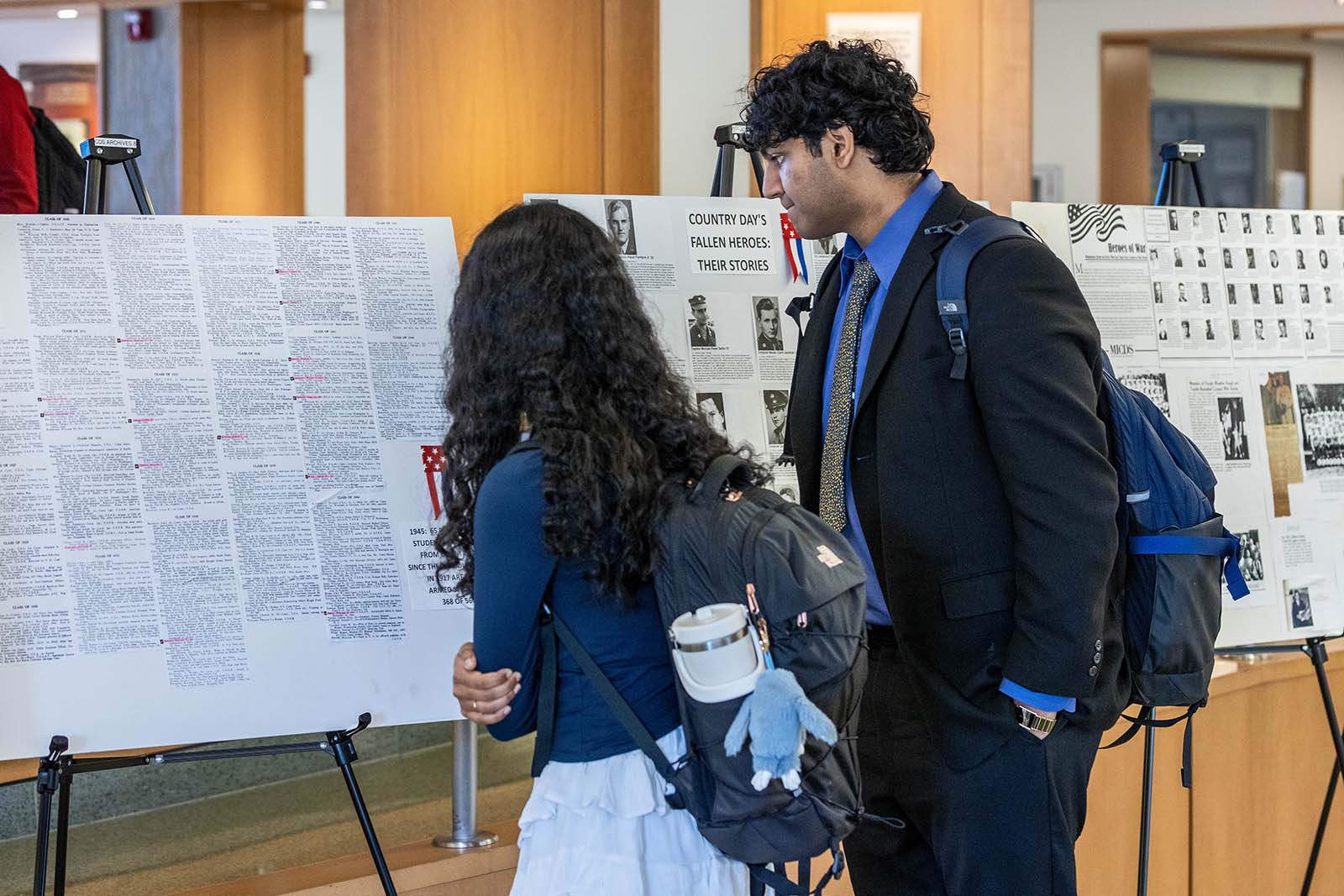
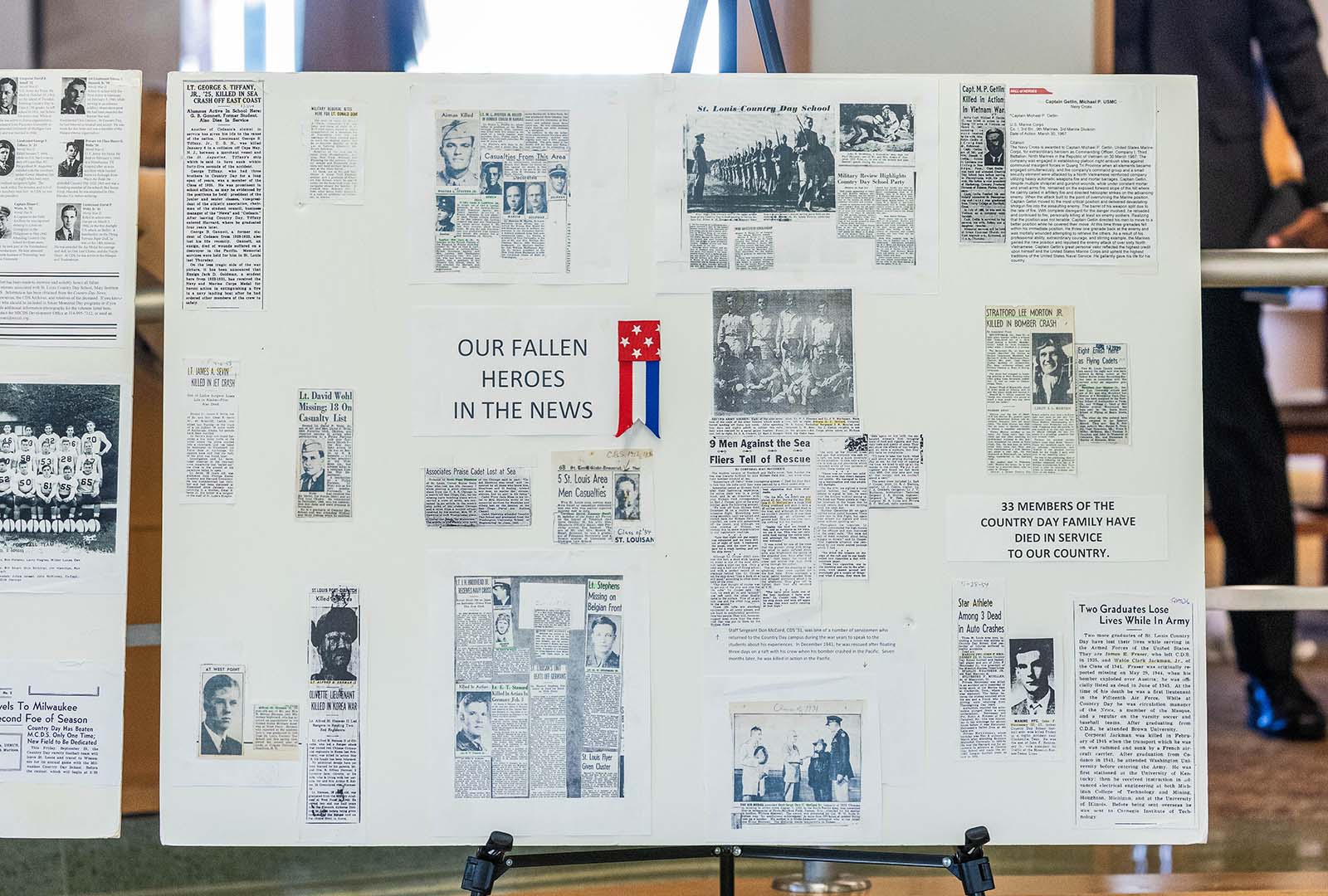
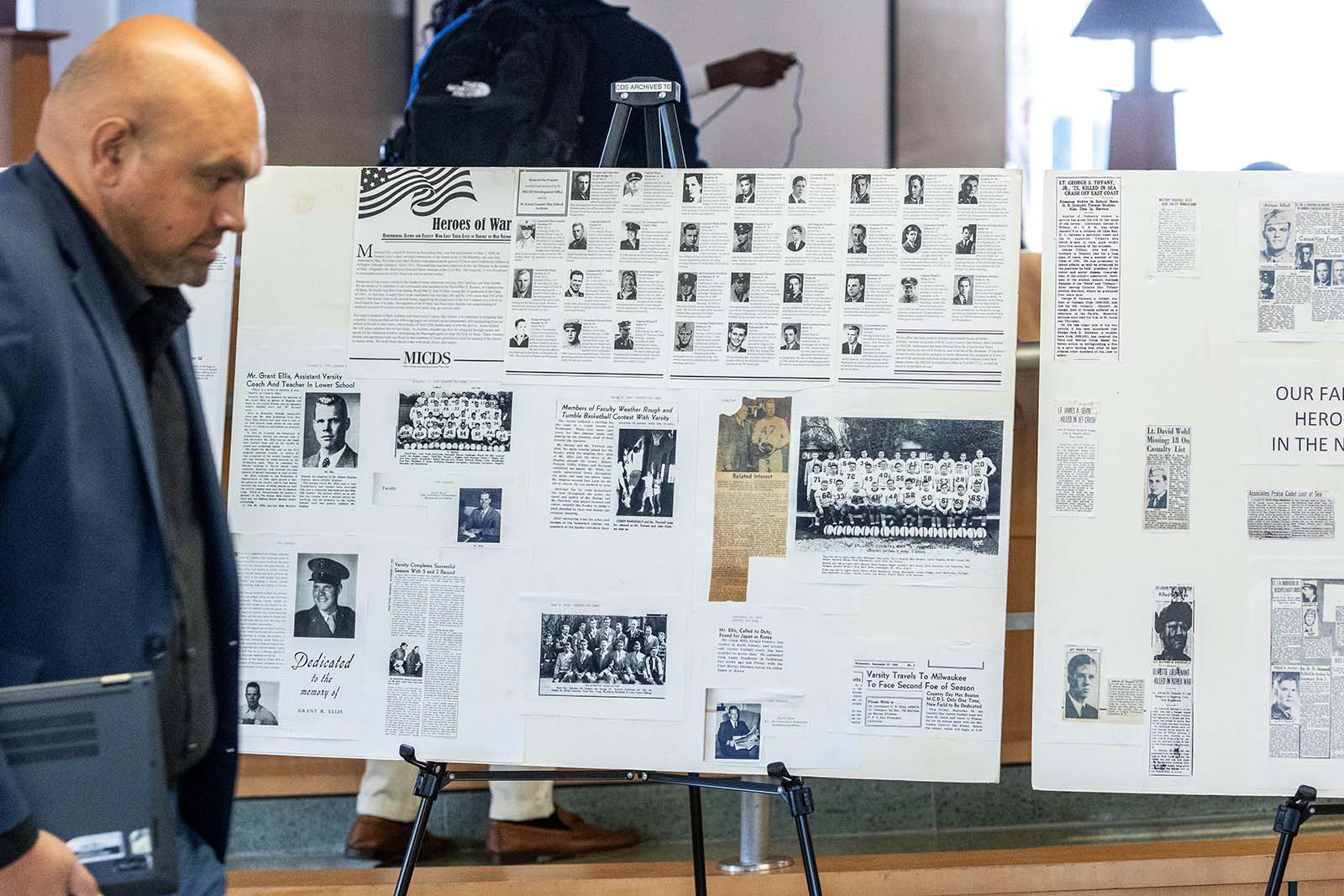
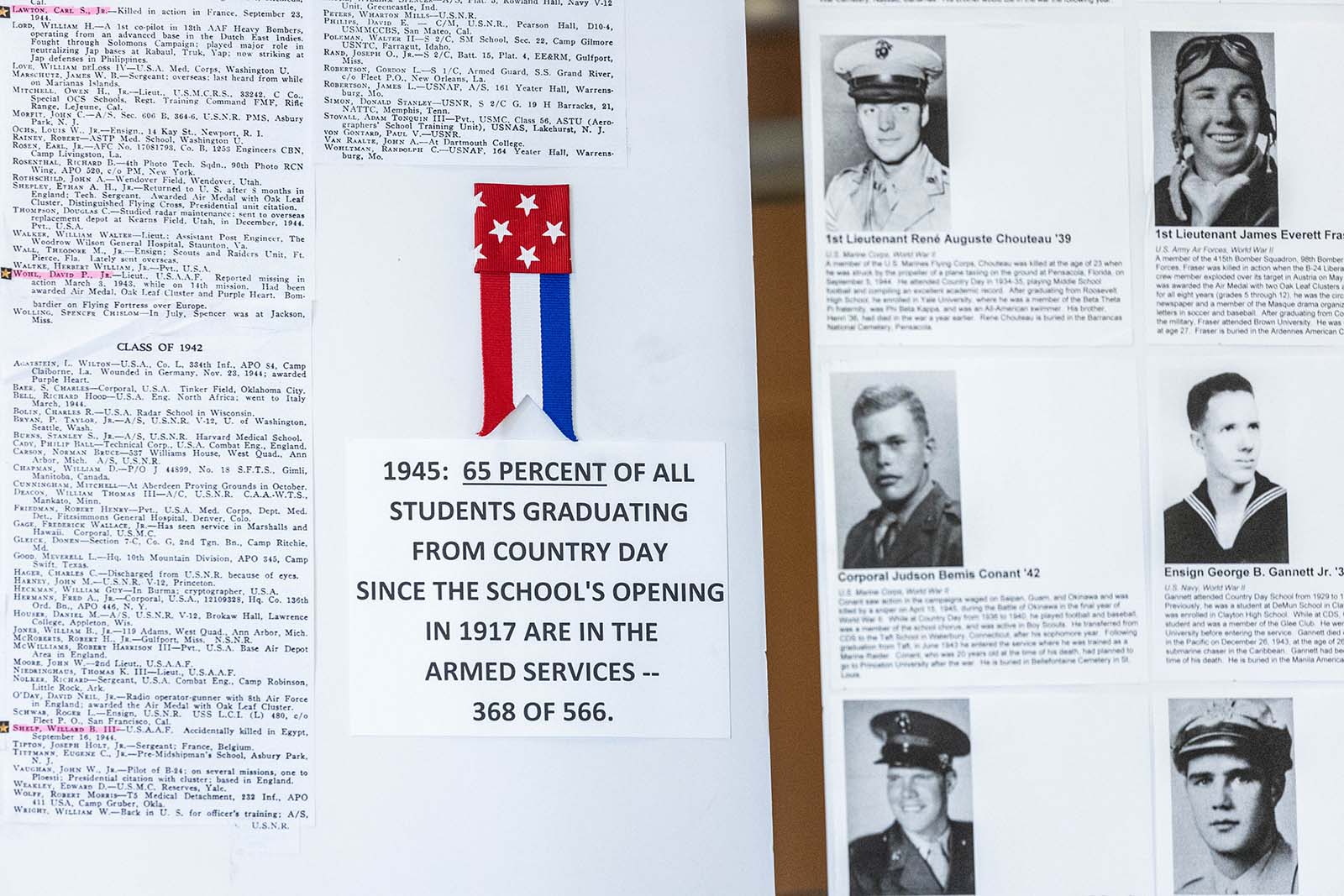
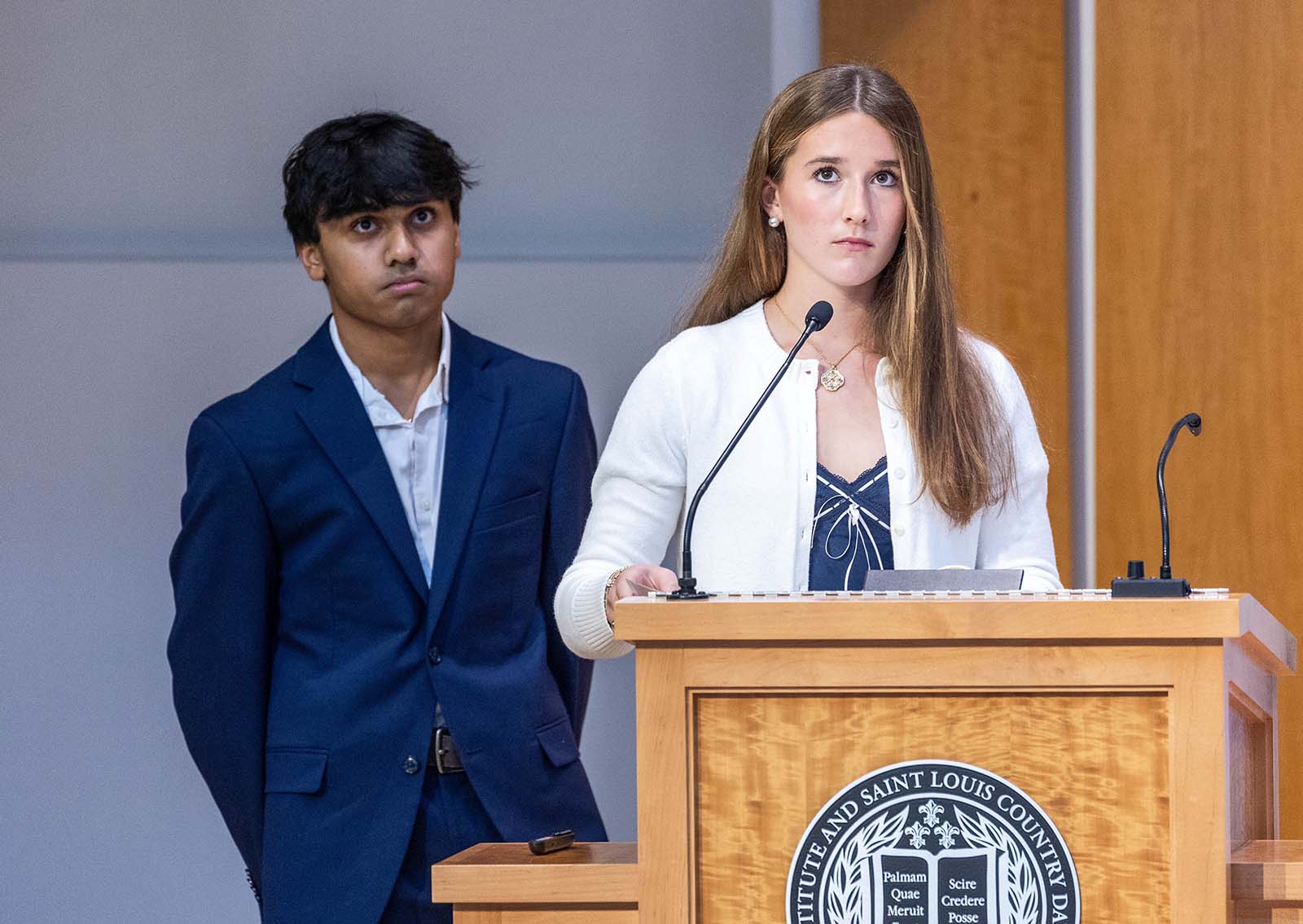 Student Council Co-Heads Elle F. ’27 and Amey P. ’27 came forward to read the names of those MICDS community members lost in battle. Amey said, “Today, we honor those whom we have lost—just as we honor all those who have served—with humility, gratitude, pride, and respect. Please join me in a moment of silence.” Thirty-three members of our community died in service to our country in World War II, the Korean War, and the Vietnam War, and some were just a few years older than the students gathered in assembly. Recognizing their sacrifice helps to personalize our understanding of military conflicts which might otherwise feel remote and long ago. They, like the students of today, made friends in school, thrived in some of their classes while struggled in others, stressed about assessments, and sometimes would gaze out the classroom window, thinking about an upcoming event in their lives or wondering what life after graduation had in store. They would ultimately sacrifice their dreams and aspirations so that members of future generations might realize theirs. The names and photographs of those we lost were projected for all to see and are also memorialized here.
To close the assembly, the choir sang For the Fallen by Laurence Binyon (arr. Mark Sammes).
It was a moving tribute to honor those who have so generously served our country. Thank you to Major Felder, our student presenters, and Mr. Saxton for helping us commemorate our veterans and those lost in service. And of course, we remain ever grateful for the service of all our veterans, those who returned home and those who gave their lives in service for our country, who unwaveringly offered, as President Abraham Lincoln said, the last full measure of devotion.