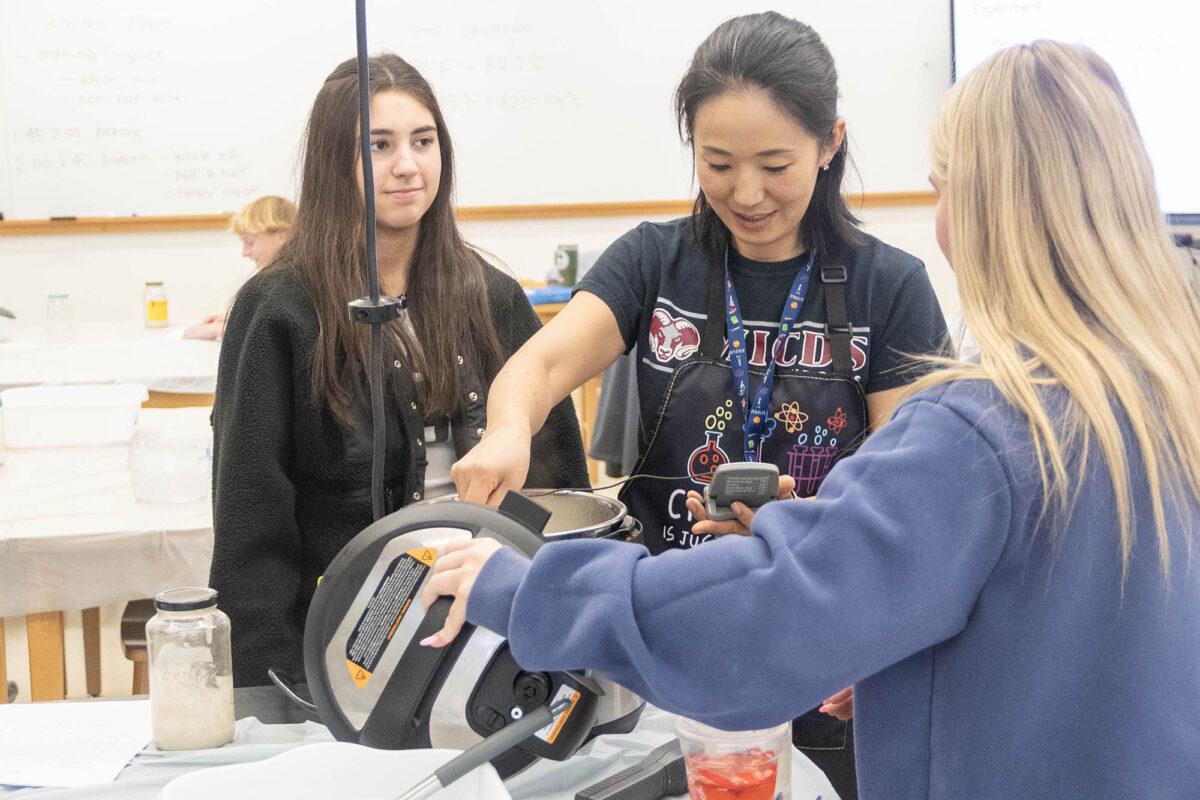
Story and photos by Gabriel Sedighi ’26
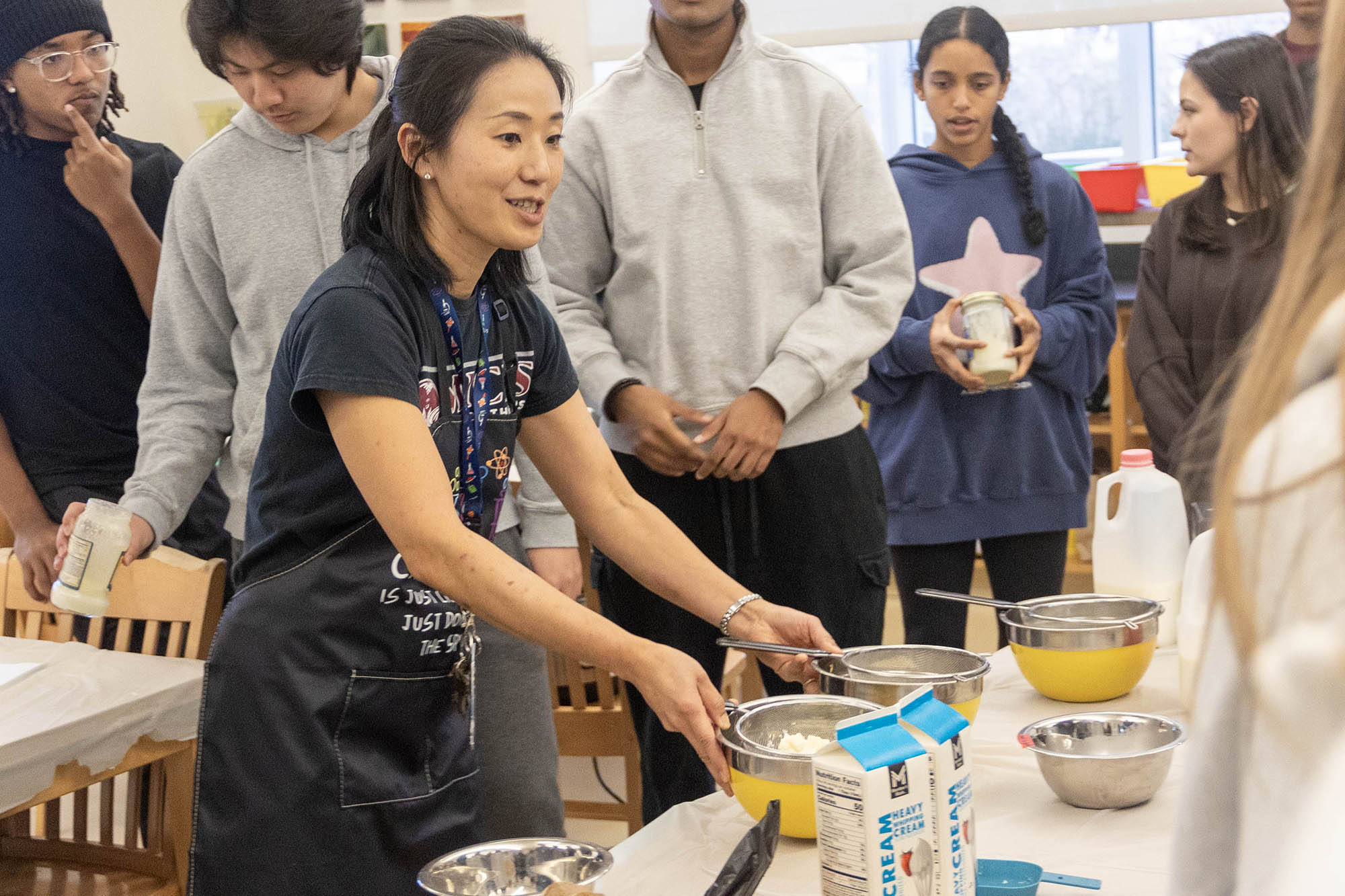
Have you ever stopped to wonder why yogurt thickens, why cookies brown in the oven, or why certain foods taste as good as they do? In Kitchen Chemistry, MICDS student do exactly that. Asking questions, designing experiments, and discovering that cooking is, at its core, applied chemistry. Taught by Upper School Science Teacher Dr. Megumi Yoshioka-Tarver and Upper School Math Teacher Dr. Kenya Gordon, this Winter Term course blends scientific inquiry with hands-on cooking, inviting students to explore the chemical processes behind the foods they eat every day.
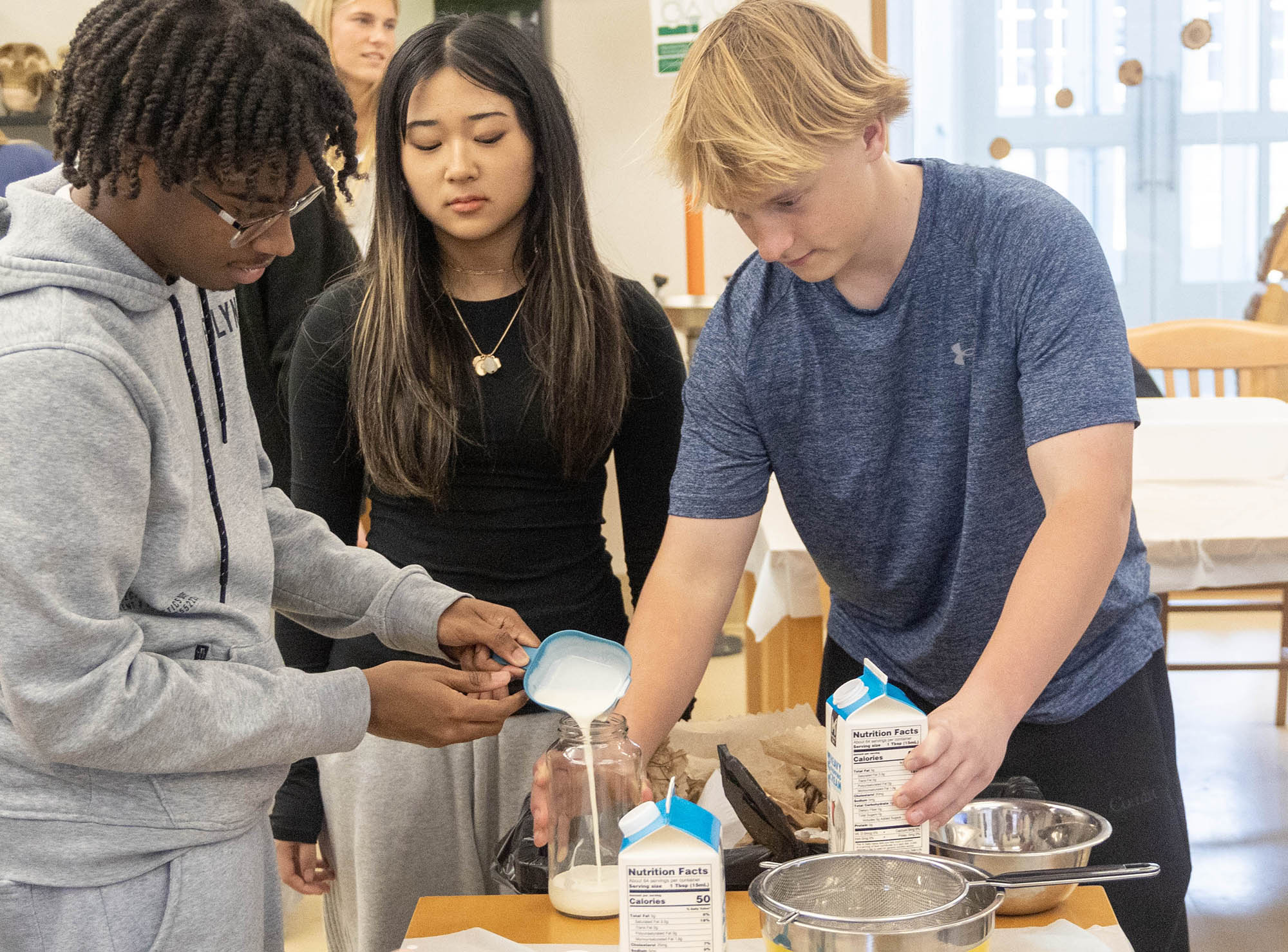
At the heart of Kitchen Chemistry is the idea that the kitchen can function much like a laboratory, only with tastier results. “Those are my two favorite subjects. I love cooking and I love chemistry,” shares Dr. Meg. “Cooking is like doing chemistry in the lab but something that is edible and tasty.” Through the course, students learn not just how to cook, but why certain techniques work, uncovering the scientific principles that drive baking and cooking.
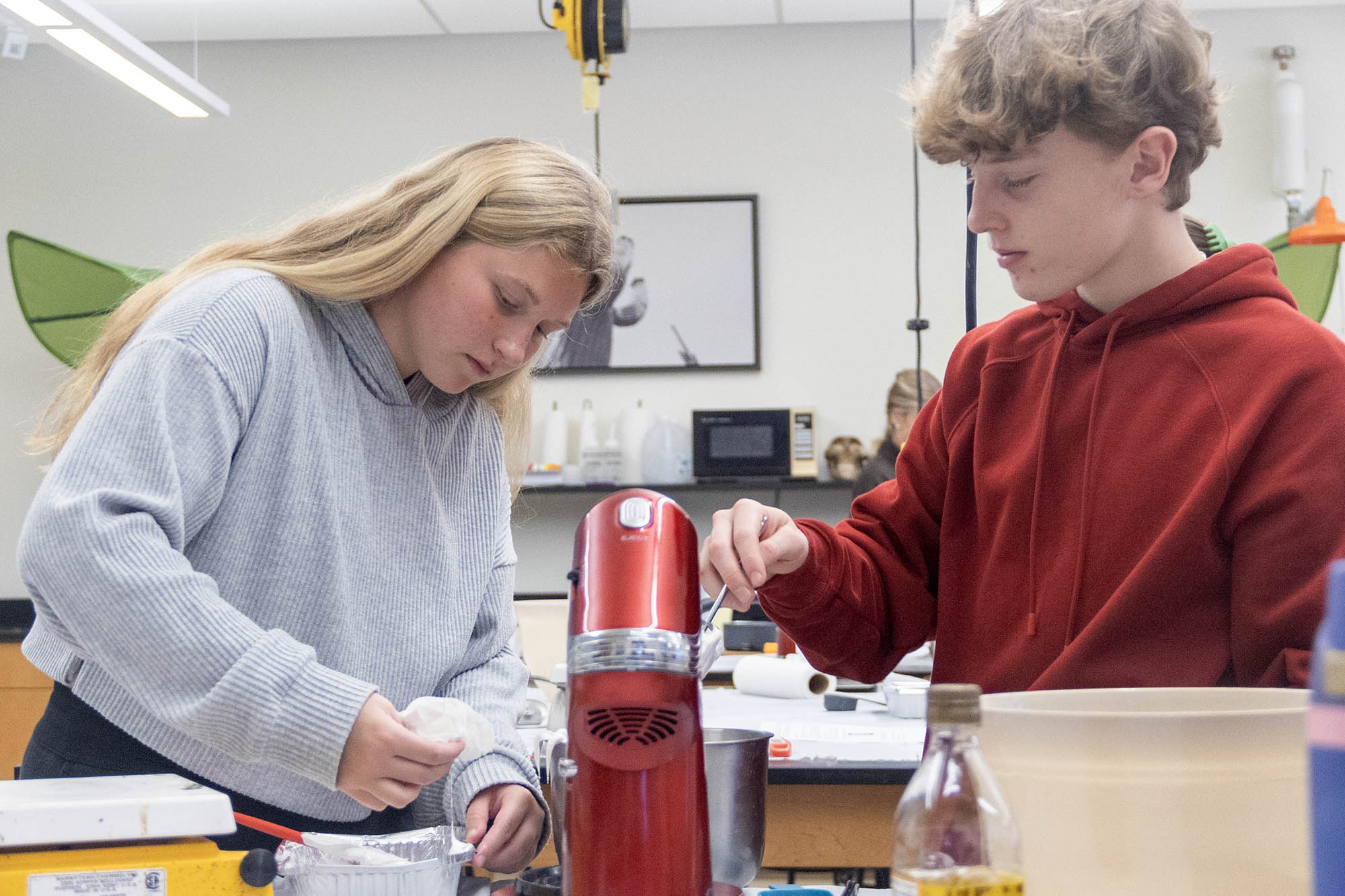

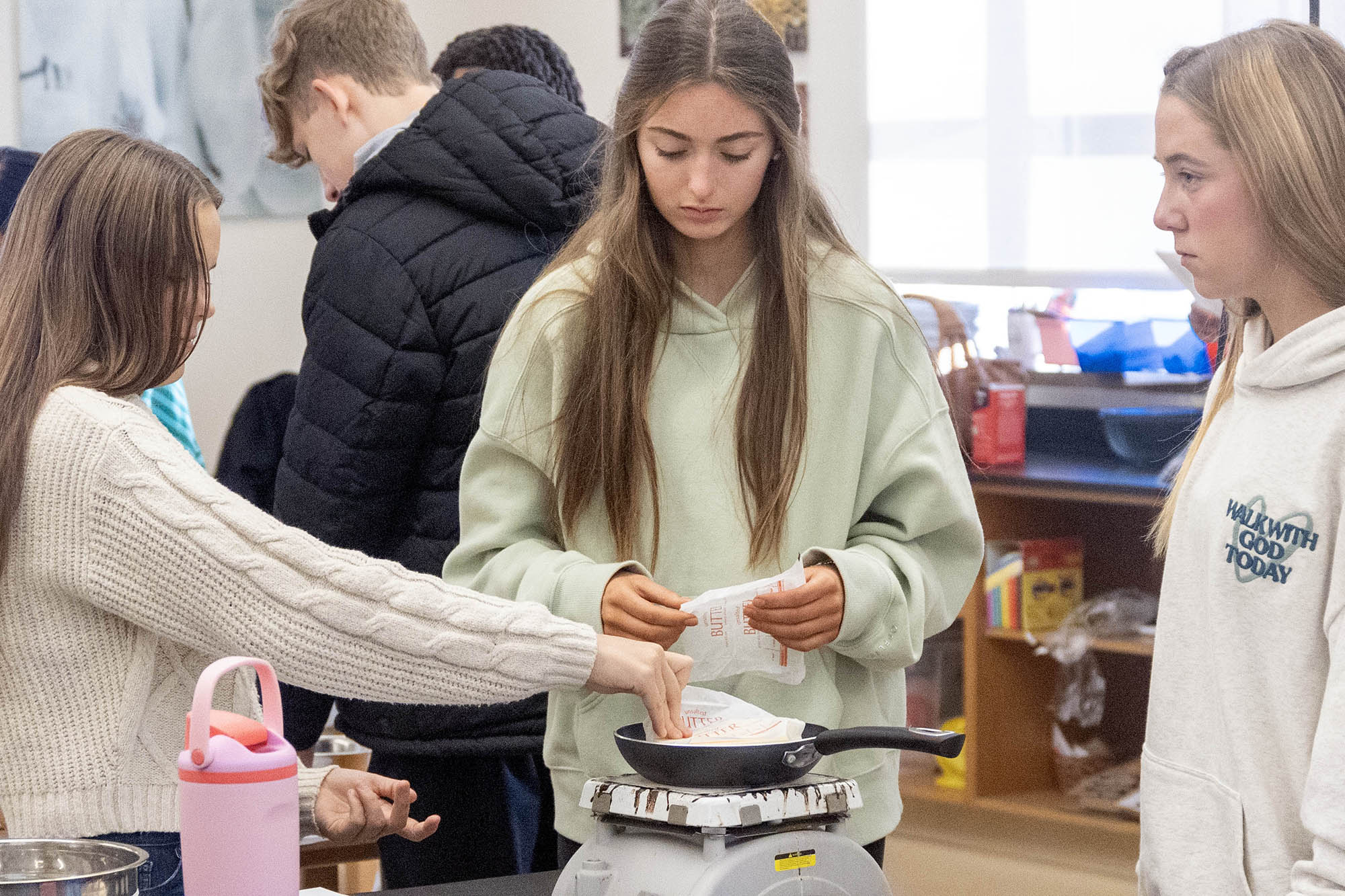
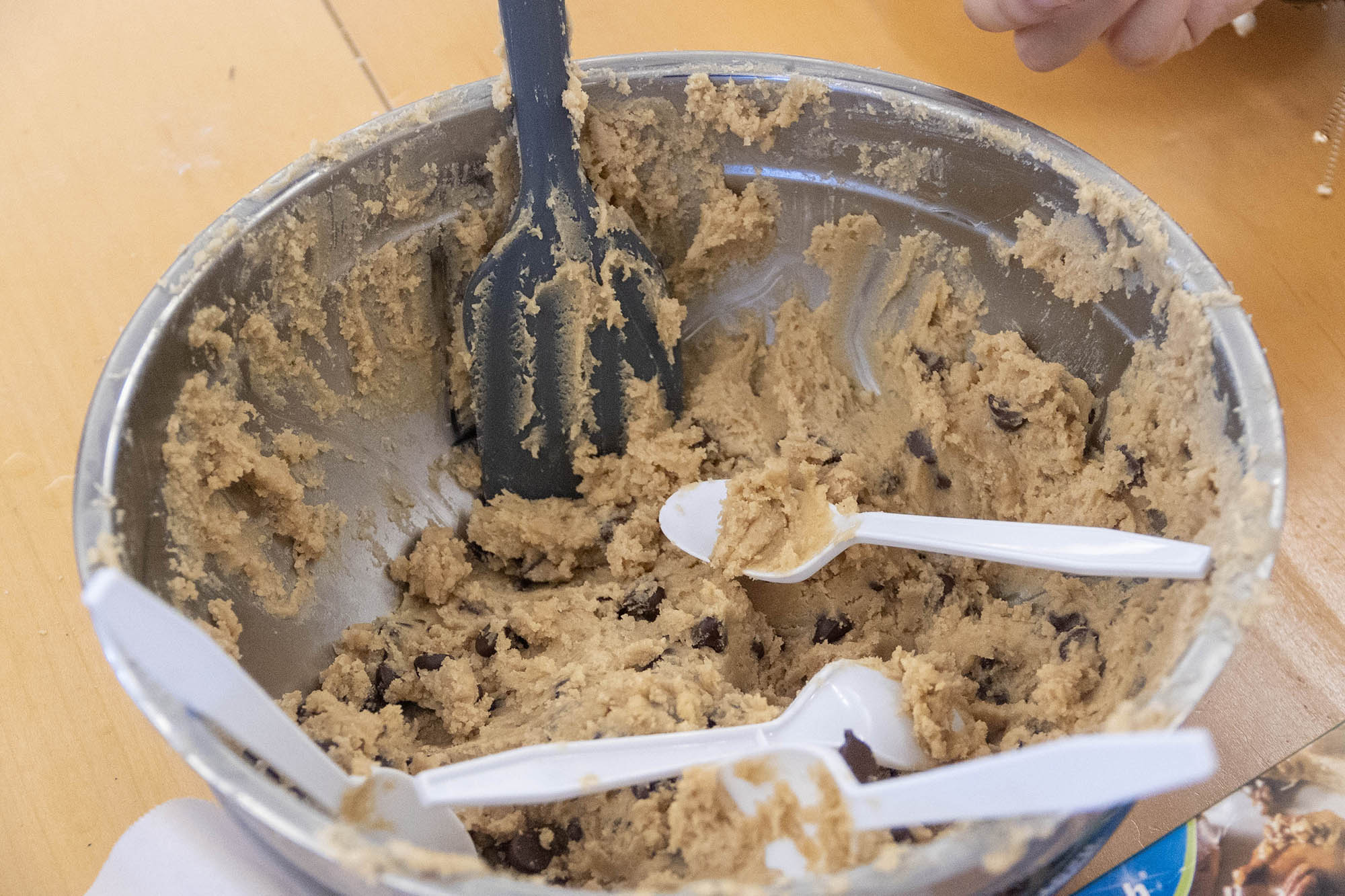
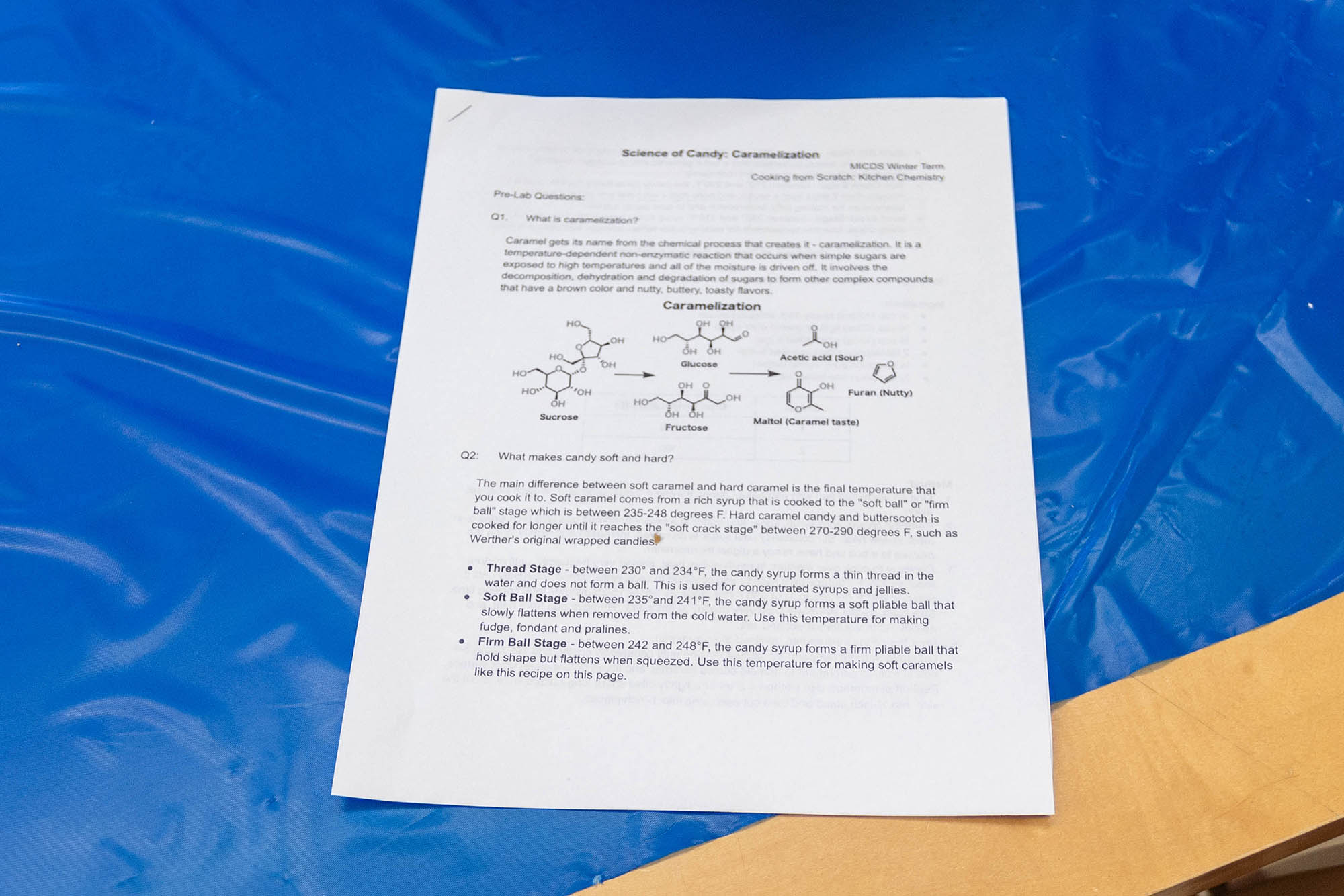
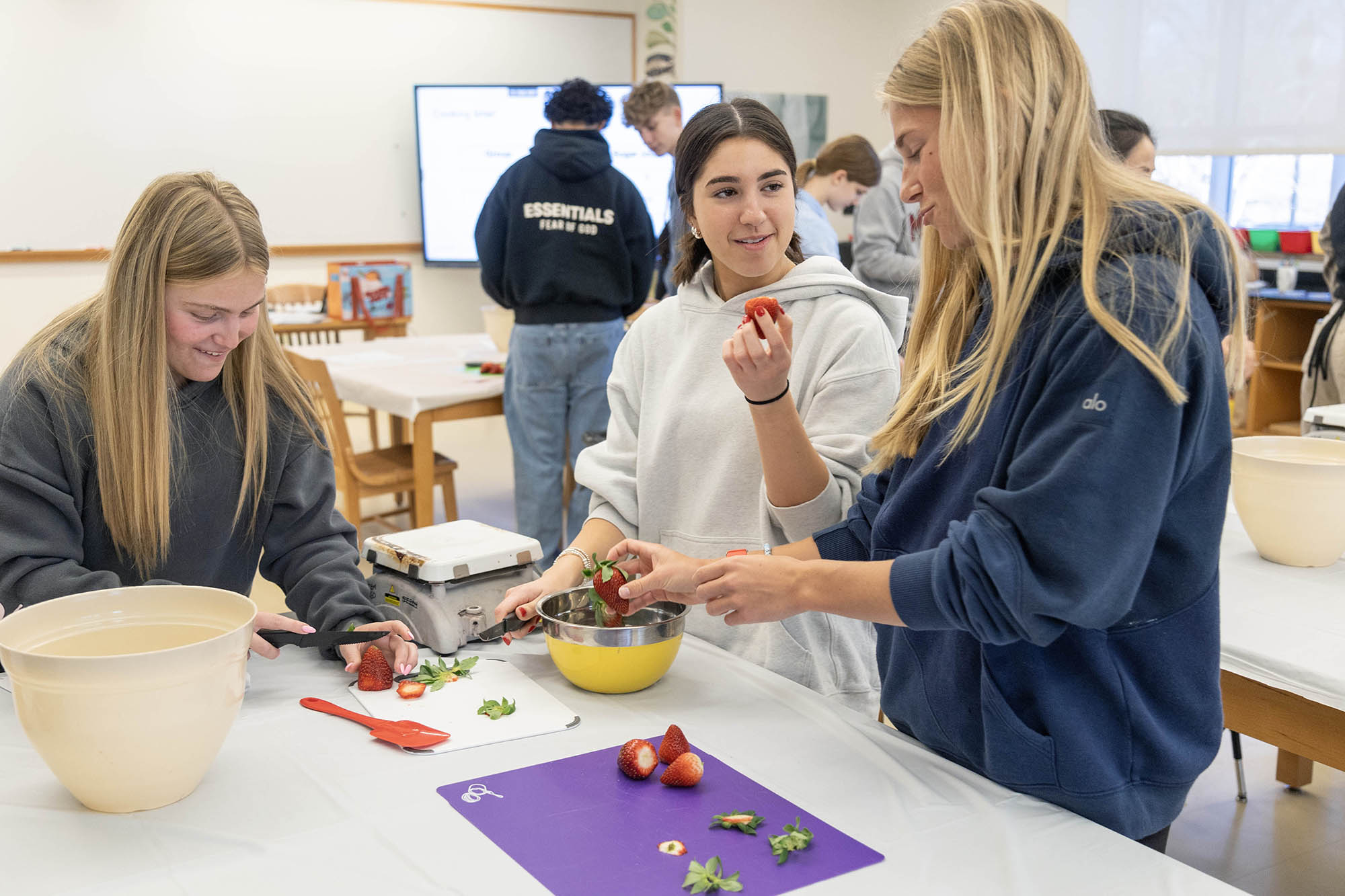

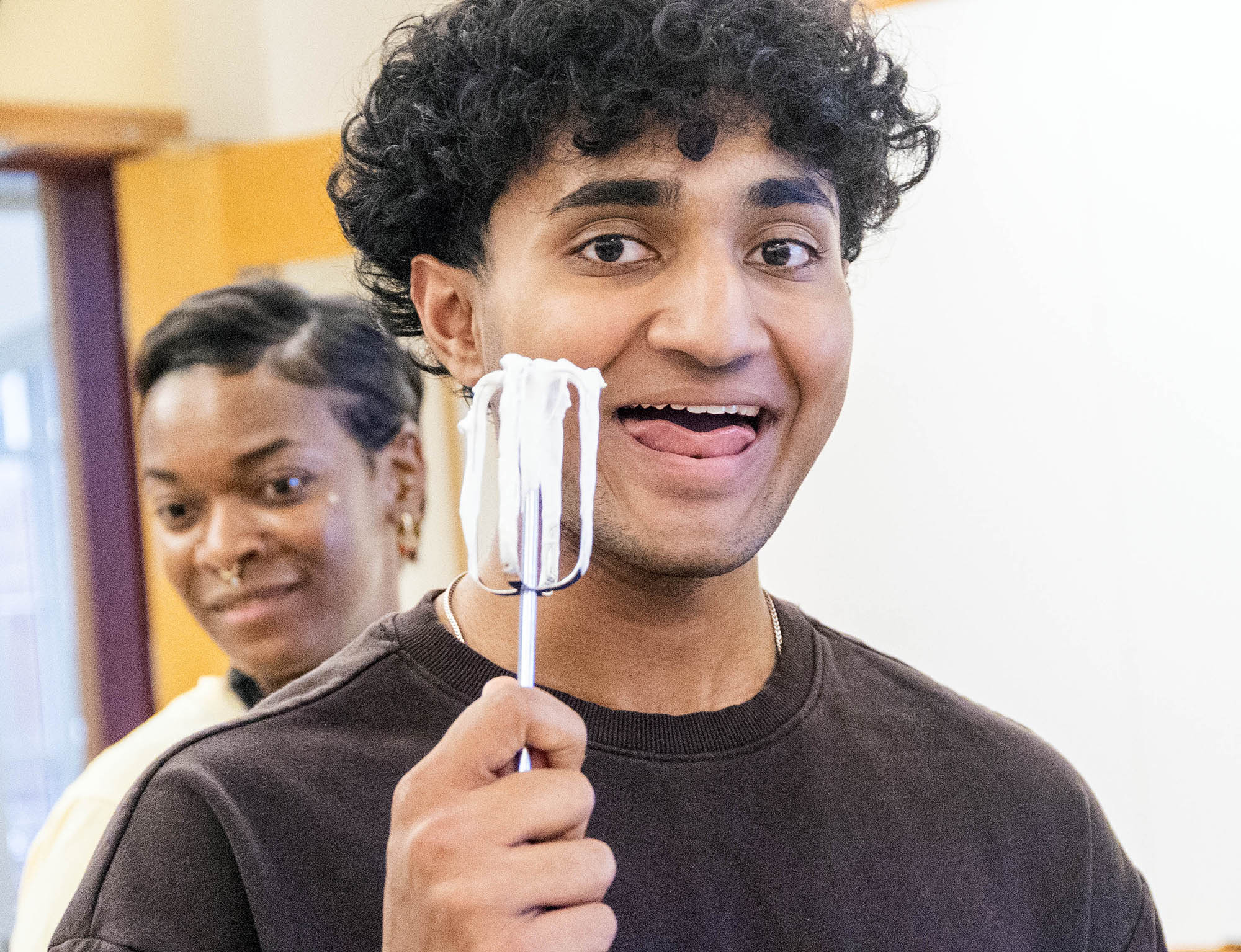
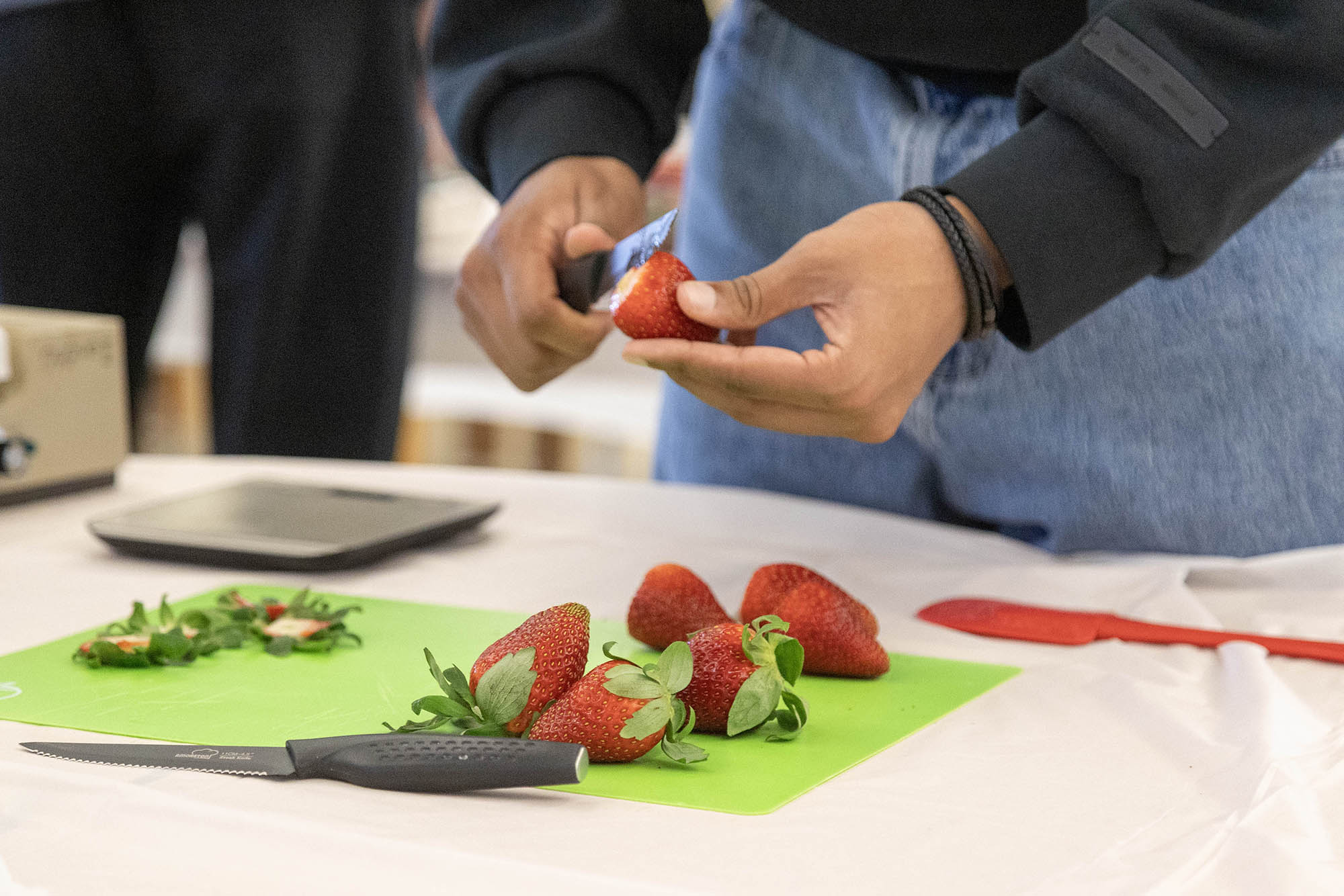
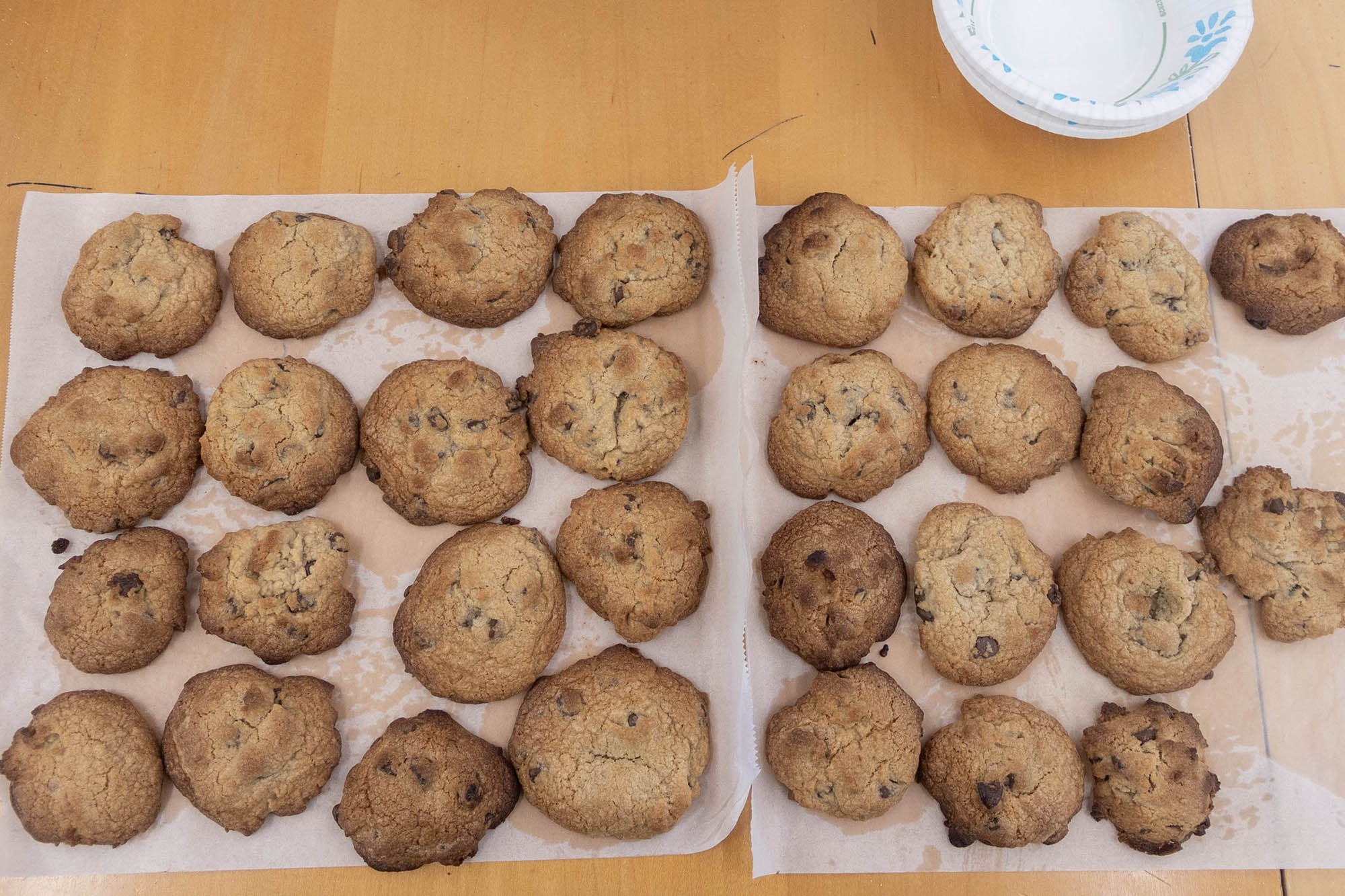
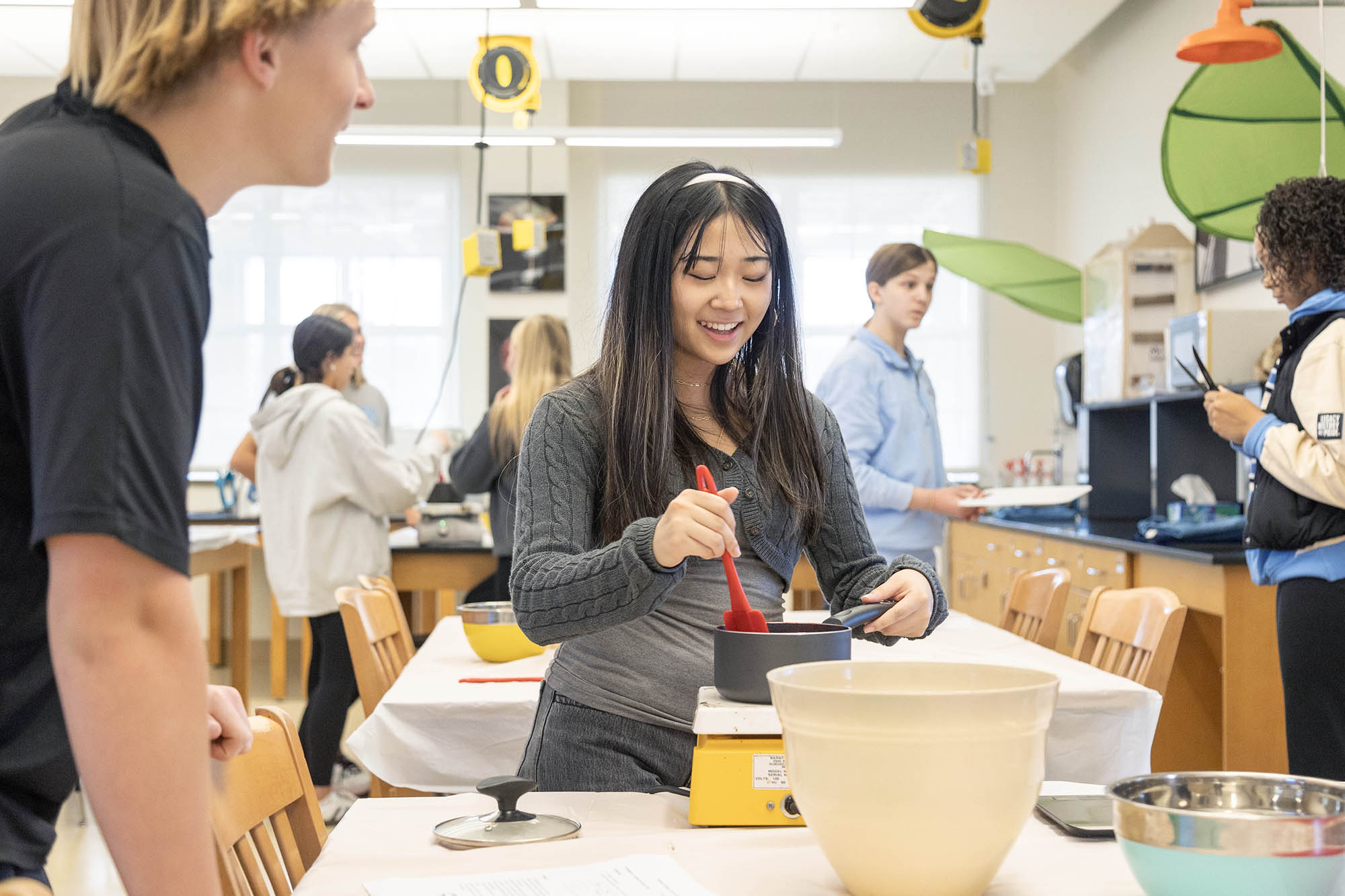
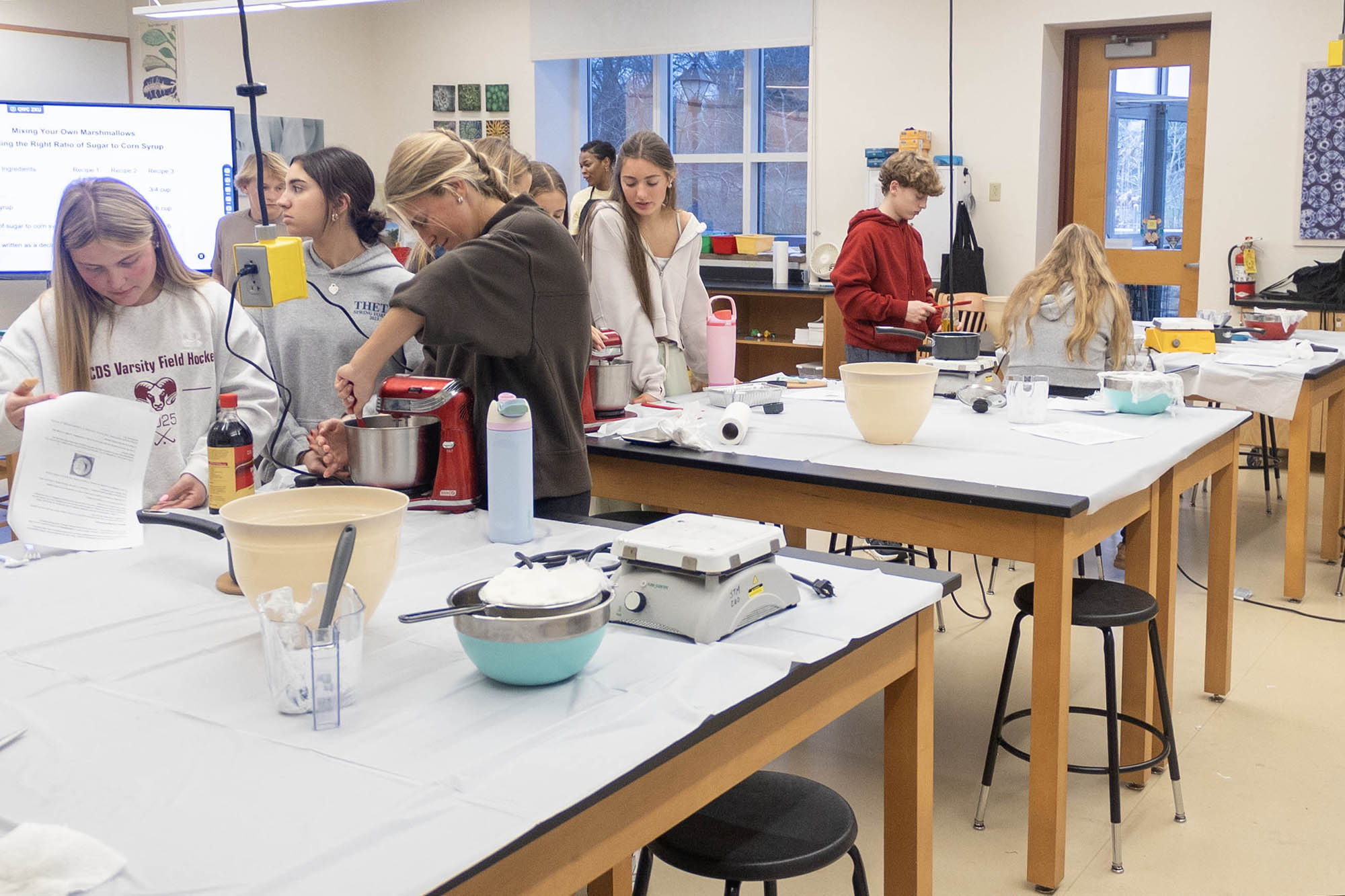
Each lesson pairs food preparation with chemical reasoning. Students investigate reactions such as caramelization and the Maillard reaction while actively making dishes themselves. “We learn about the chemistry of reactions in cooking… and then we make food and eat it,” says Dhruv Avirneni ’27. Cooking becomes an experiment: variables are changed, results are observed, and outcomes are analyzed. One example was when students were making marshmallows and each group had to use a different amount of corn syrup giving each batch a different flavor.
For Dr. Meg, one of the most rewarding aspects of the course is watching students make connections. “We buy food and we don’t really think about how it’s being made,” she explains. “But when we are making it, the students can see what’s really happening chemically. Seeing that ah-ha moment is something I love.” The course also exposes students to food science as a field, opening doors beyond traditional STEM pathways.
Students are quick to point out the appeal of the class. Daniel Haas ’27 says he enrolled after hearing positive reviews: “It sounded like a lot of fun.” His highlight has been “getting to make a whole bunch of things from scratch and seeing how simple they are and how simple the chemistry behind it can be.” For others, the joy is even more immediate. “Making cookies has been the most fun part,” shares Mason Chambers ’26.
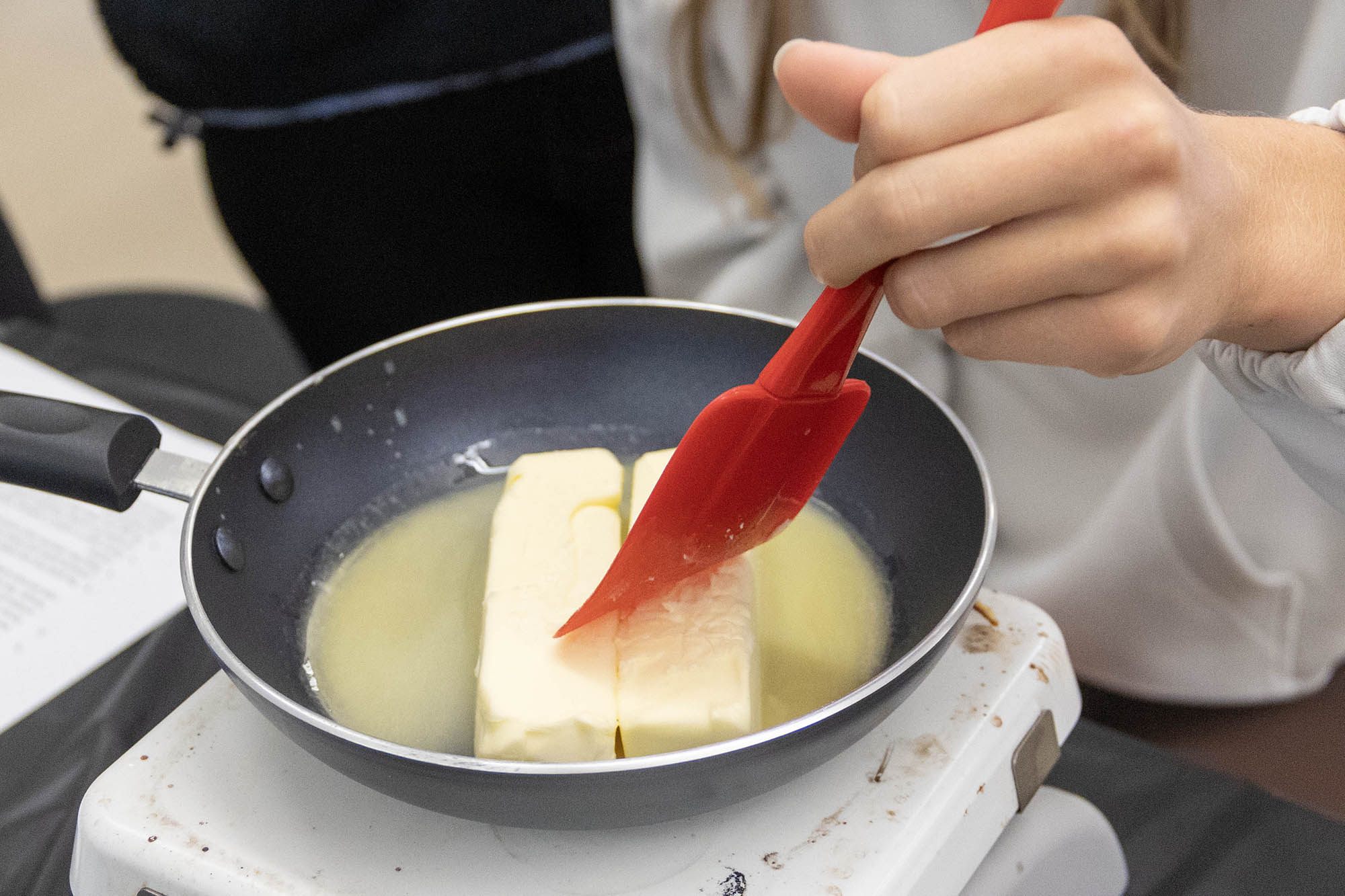
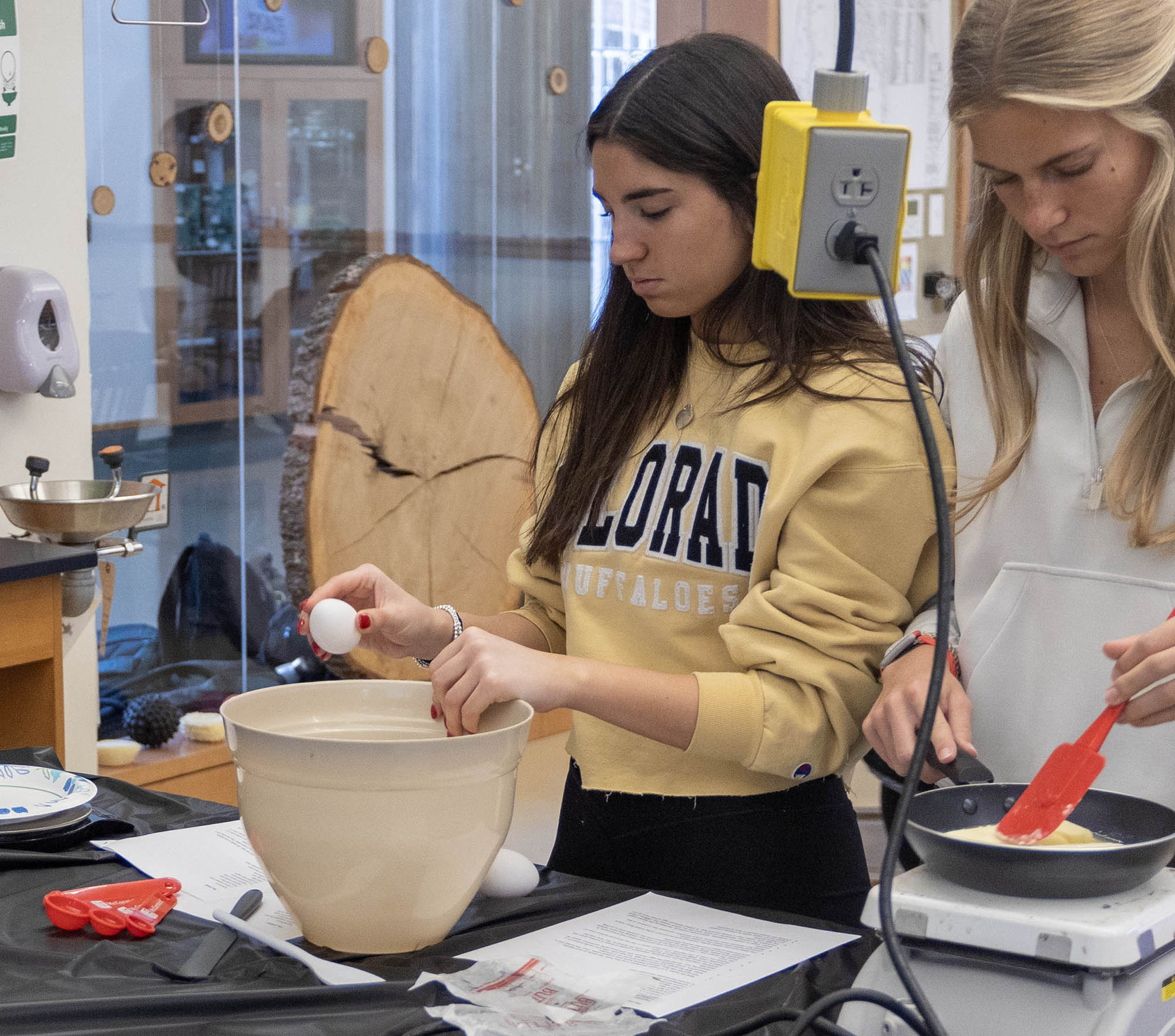
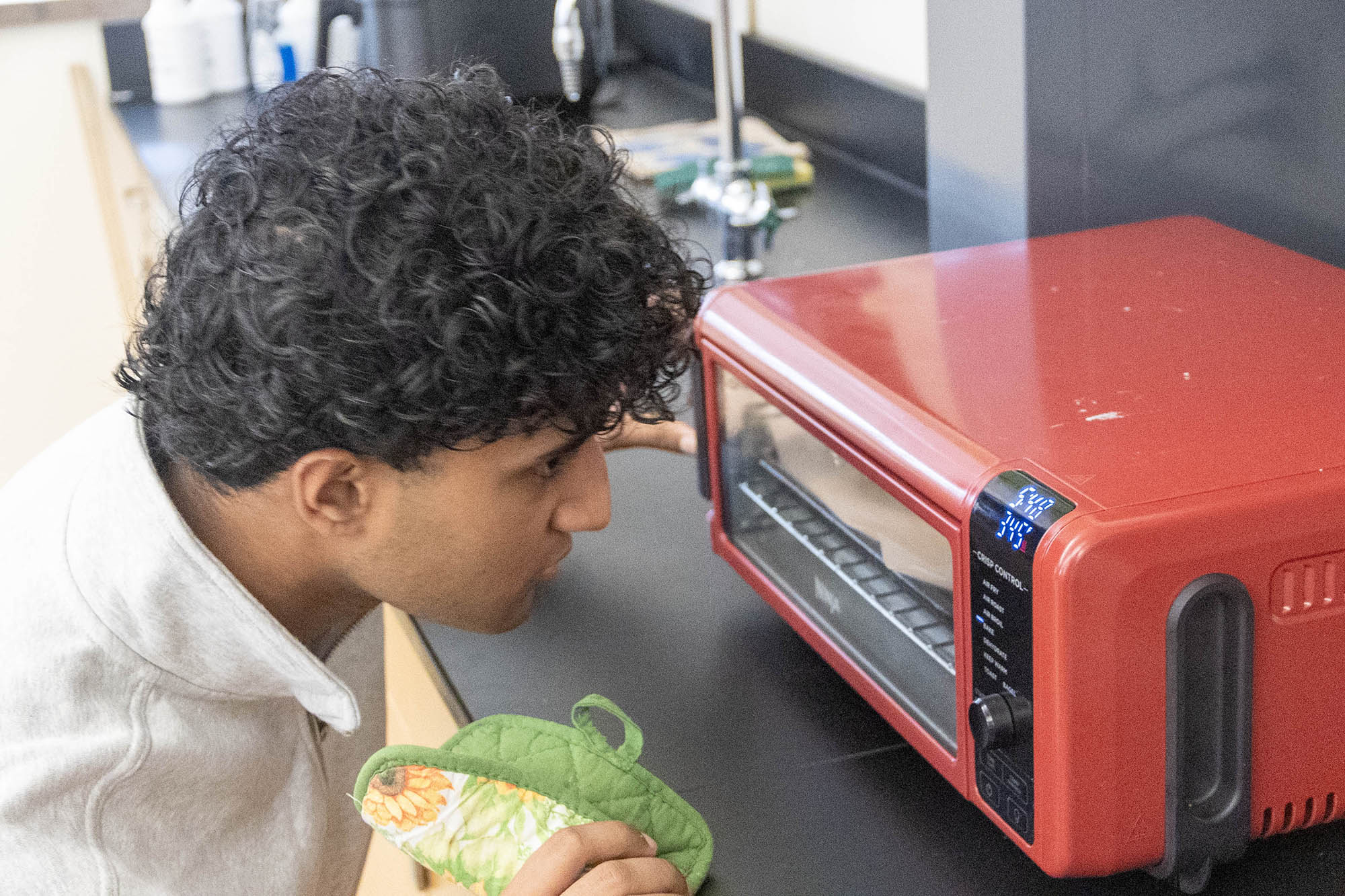


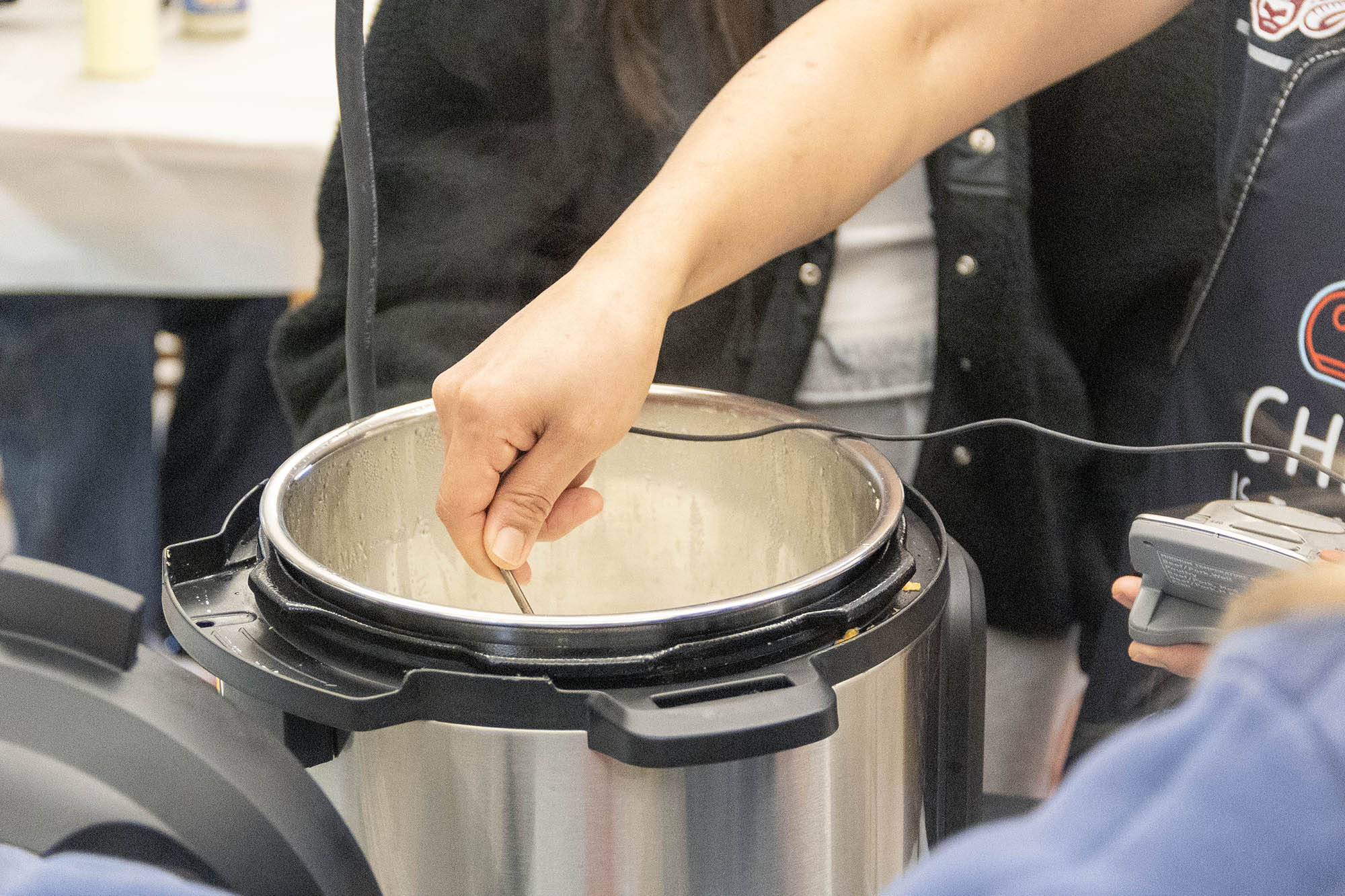
By the end of every class, students leave with more than full stomachs. They gain a deeper understanding of the science embedded in daily life, learning that chemistry isn’t confined to textbooks. It’s happening every time we step into the kitchen.