In 2022, Middle School Science Teacher Dr. Kris Sontheimer ’03 was serving as a long-term Upper School substitute, teaching biochemistry. “I found it easier to help students connect with elements, chemicals, and bonding by relating them to characters,” said Dr. Sontheimer. “We would discuss which ones were attracted to each other, what elements tend to be enemies or friends, and how obnoxiously they react to one another.” For Dr. Sontheimer, framing these concepts in real-life relational terms worked like a charm for students, making better connections when eventually facing more difficult scientific ideas.
When Dr. Sontheimer joined the Middle School team teaching eighth-grade accelerated physical science, she scoured the internet for additional creative projects involving the elements. “Everything I found was very low in depth of knowledge and kind of boring,” she said. “So, for the past three years, I have been refining the elemental social project I formed in the Upper School. Each year, I don’t allow students to see more than a few examples from prior years so they can create their own unique and independent project.”
For the project, students are tasked with creating a personality from an element, building an entire hypothetical social media website around their character, writing their own copy, and using the School’s approved AI platform, Flint, to generate images for their character’s visual personality. Once their social media landing page was complete, the students could explore other students’ work and comment on one another’s images and posts.
The criteria included documenting the element’s identity through atomic stats and isotopes, physical traits such as melting/boiling points and density, and its discovery details, as well as its history and etymology. The element’s “persona” highlights its real-world applications as hobbies, its chemical relationships via compounds, and its natural abundance.
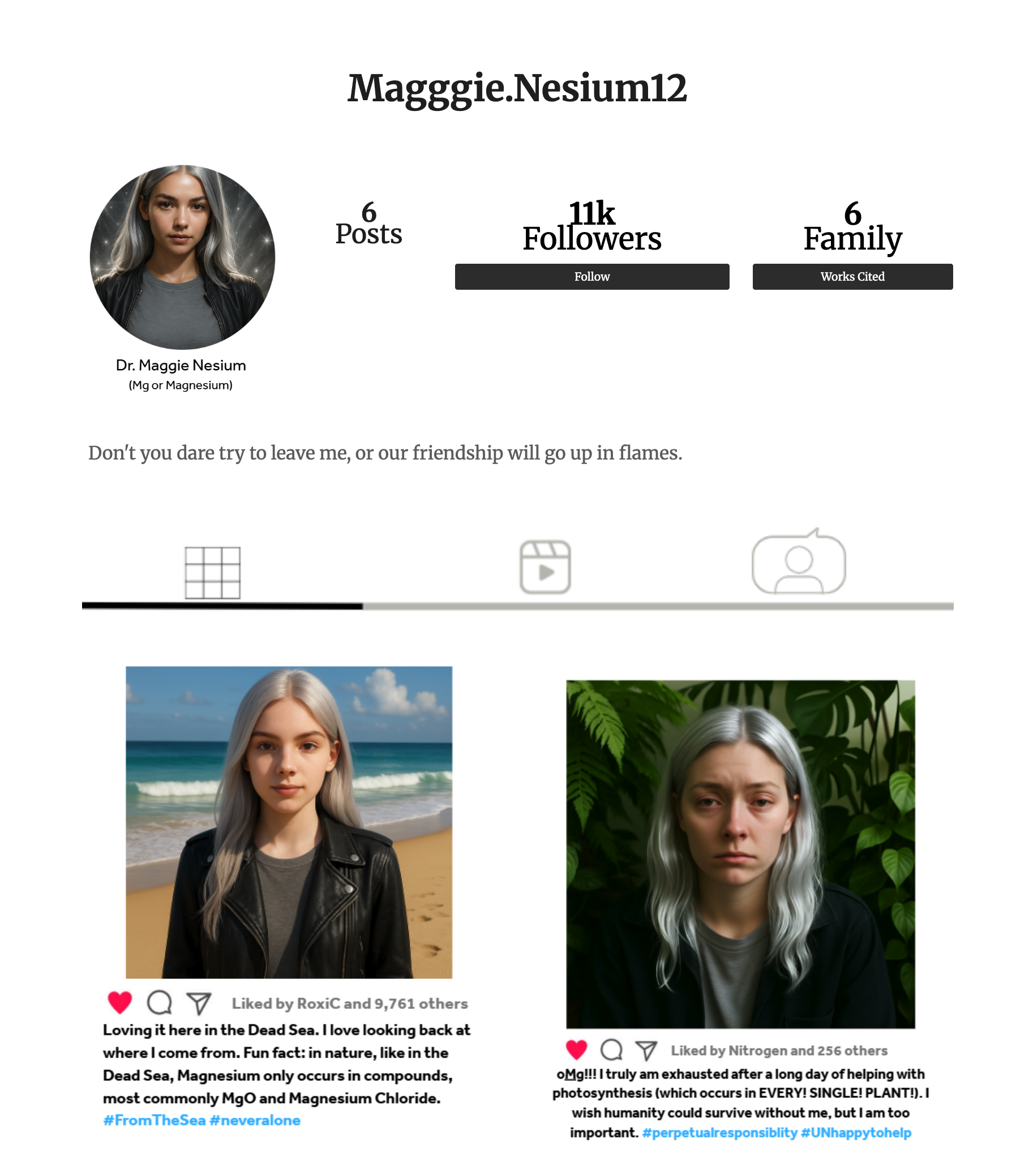
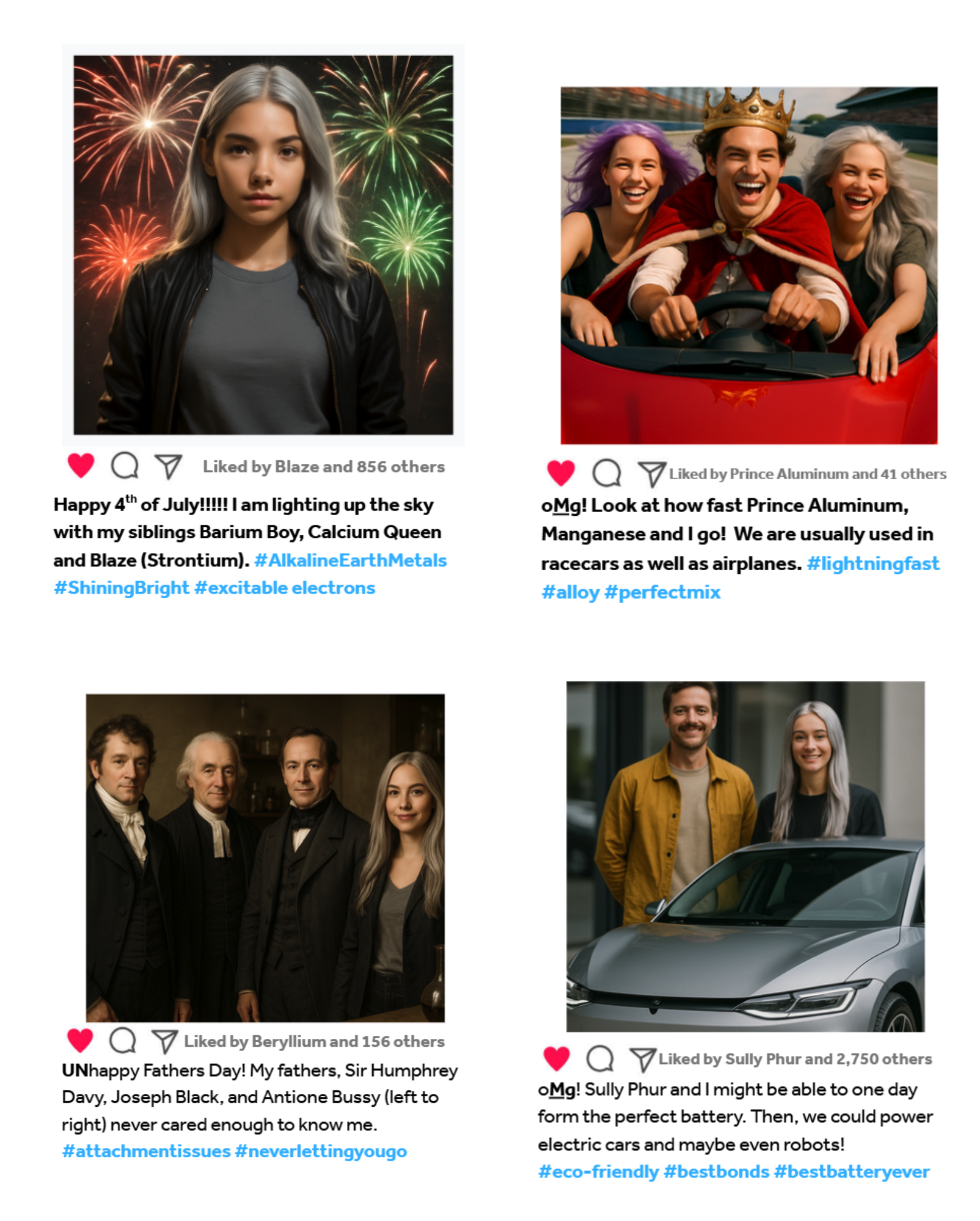
For Mary Molamphy ’30, magnesium was her top choice. “In an earlier class, we had experimented with magnesium’s high flammability by burning magnesium ribbons to produce a bright white light,” she said. “With this project, I needed to make connections between magnesium’s uses and a personality. One way I did that was by adding a quick temper to my character to express high flammability.” The result was a unique way to practice creativity and critical thinking skills.
She added, “I was surprised by how much I had learned about other people’s elements by the end of the project. Exploring the pages of other elements helped me come up with new ideas for my social media post and gave me a better understanding of the periodic table. It was challenging to learn how to effectively navigate Google Sites, but after a couple of days of playing around with it, I became very comfortable with the program and am now prepared to use it in the future.”
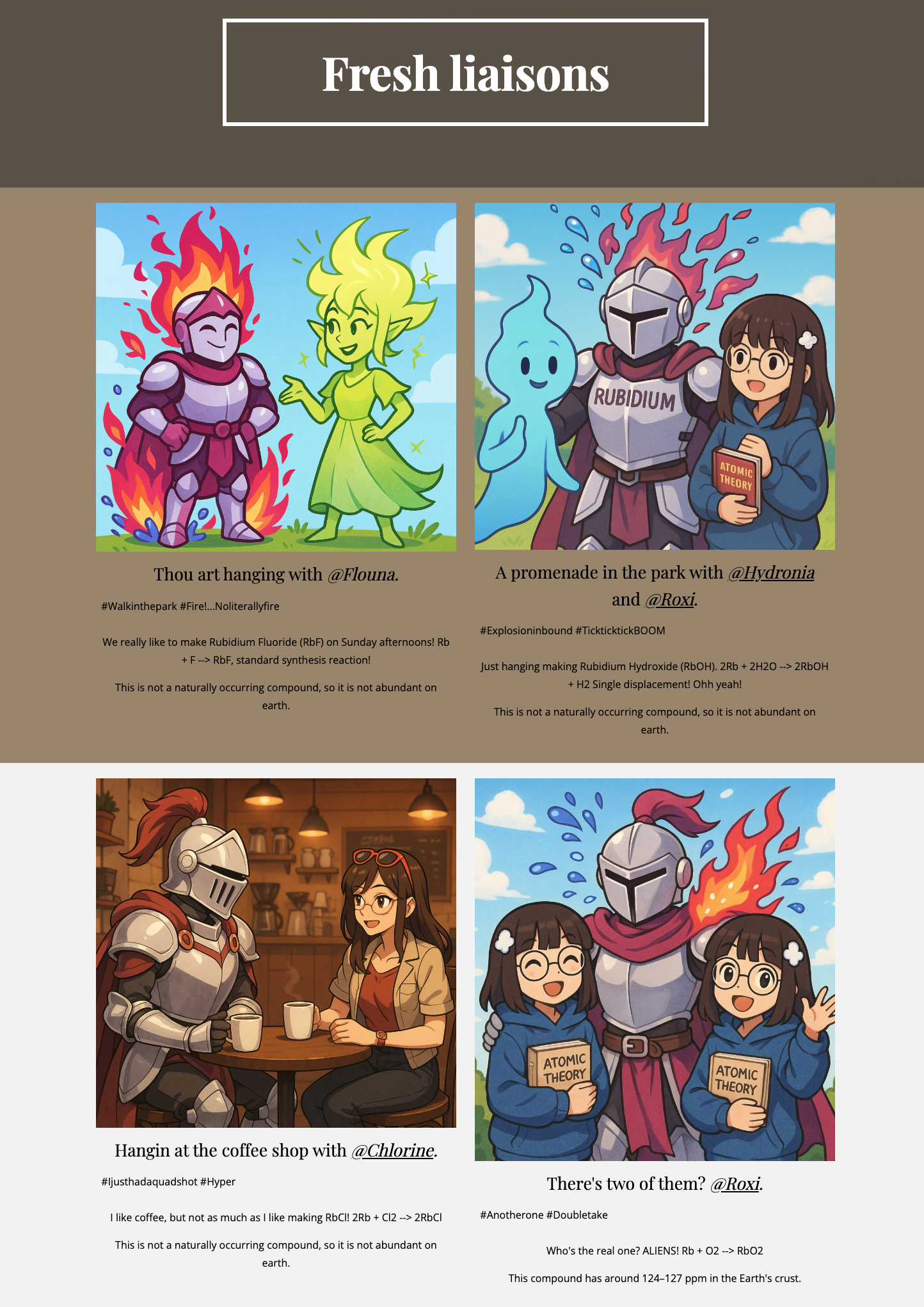
Fletcher Davis ’30 chose a similarly potent element: rubidium. He said, “What I really like about rubidium is the violent reaction that occurs when it touches water. To me, it was fascinating that such a small amount of rubidium could cause a big bang! The hardest part was designing the right personality for our element, researching which chemical compounds occur in nature and which are unnatural. While I was researching the project, something that really surprised me was that nearly all of the alkali metals were discovered in the early to mid-1800s. It was a shock to realize that even hundreds of years ago, people were making astounding discoveries. I enjoyed making a personality for our element, and then bringing it to life through the ‘websites’ we created.”
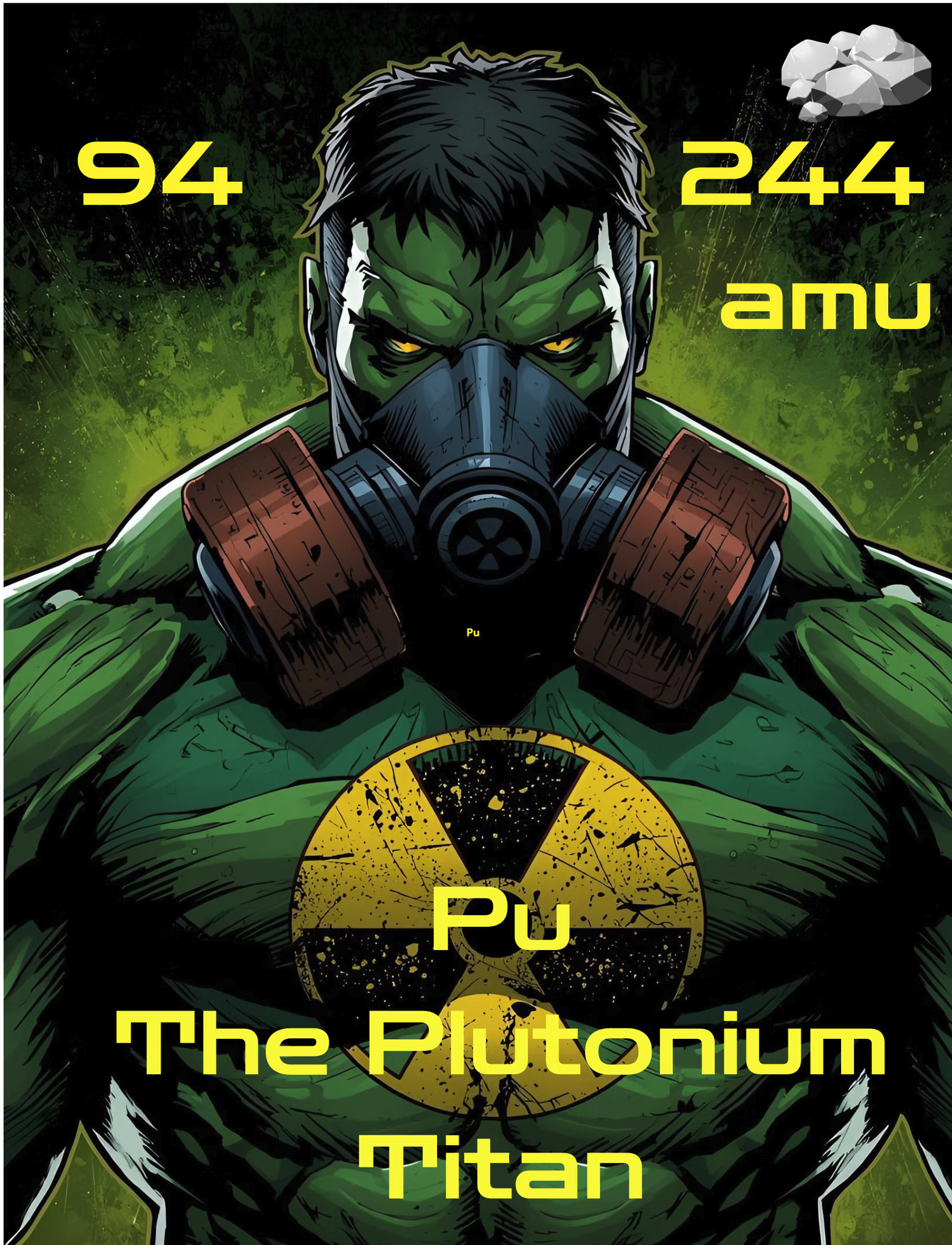
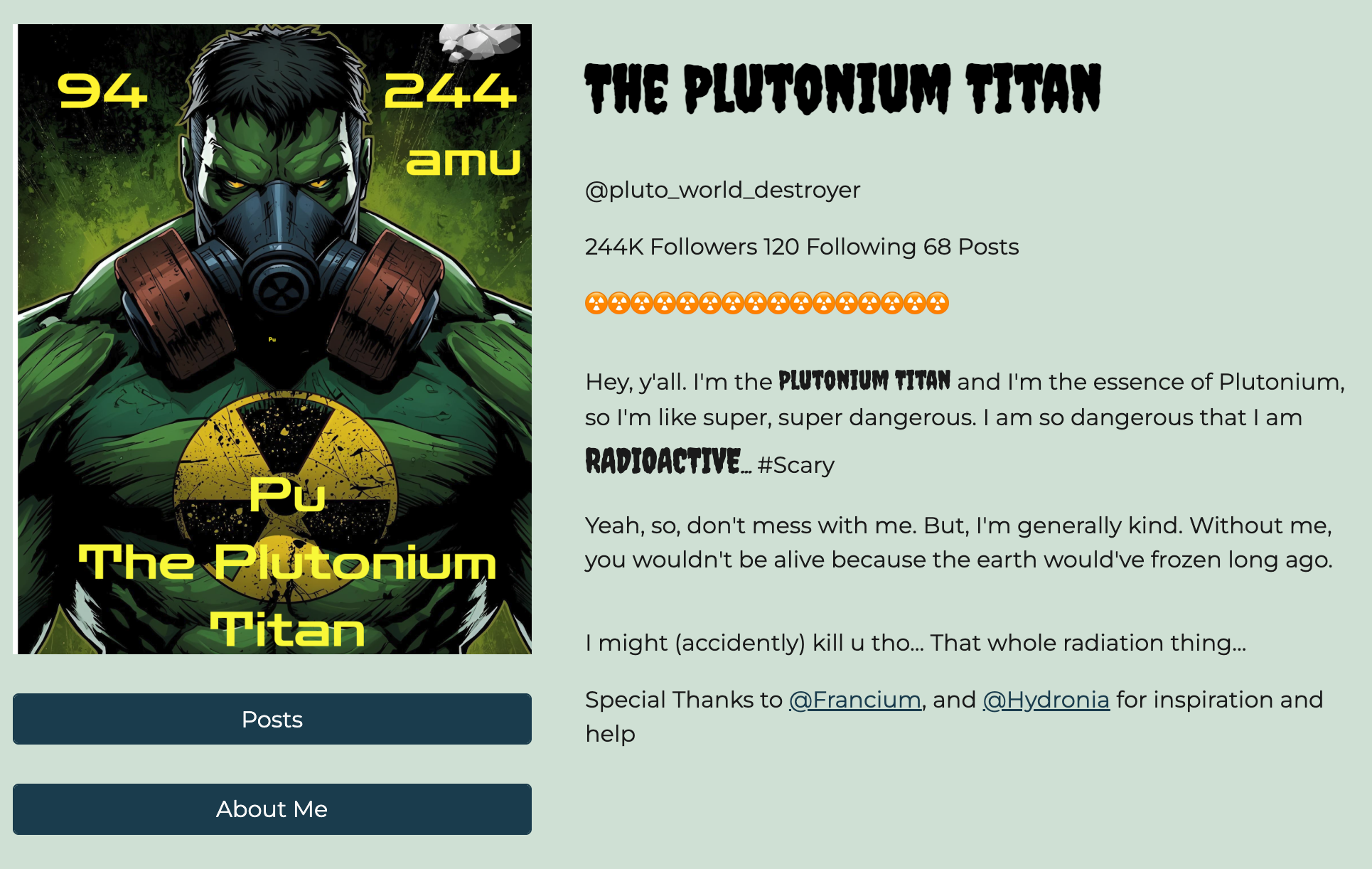
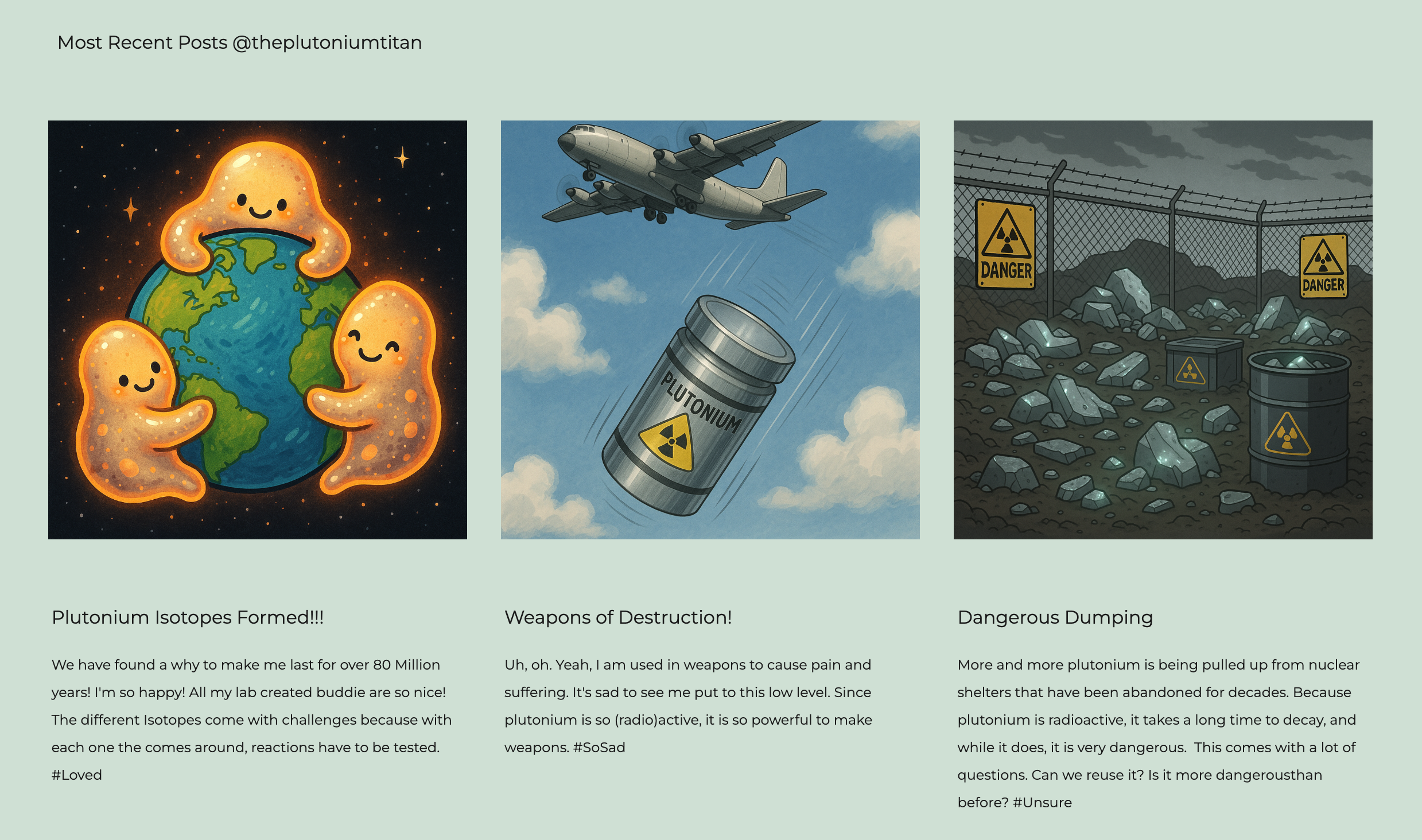
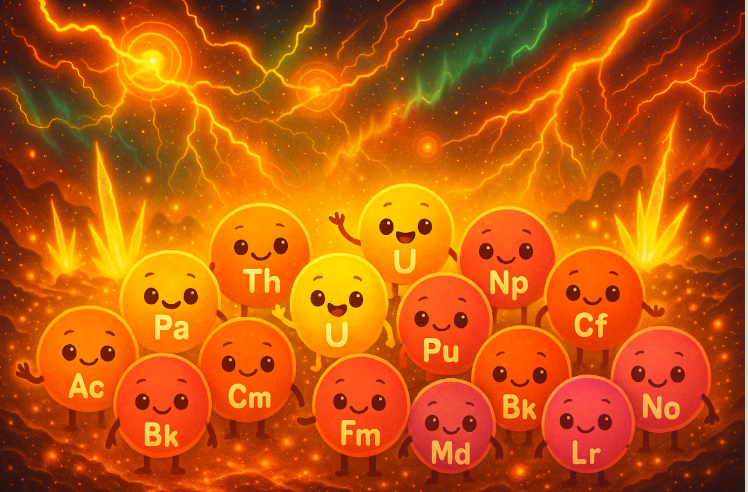
Another highly-reactive element “entered the chat” through Pete Martens ’30. “I chose plutonium as I didn’t know a lot about it,” he said. “It’s most commonly known for its nuclear power. We used Flint AI to generate the image of our character that looked like a square on the periodic table. It was challenging to integrate a personality into the element. I created the Plutonium Titan and used that as the basis for my social media account. Plutonium has a big personality. It’s very reactive with most elements. It gets along with a lot of them, but since it’s radioactive, a lot of the relationships are explosive. I loved starting from scratch with this project and letting our creative abilities flow in an unstructured way.”
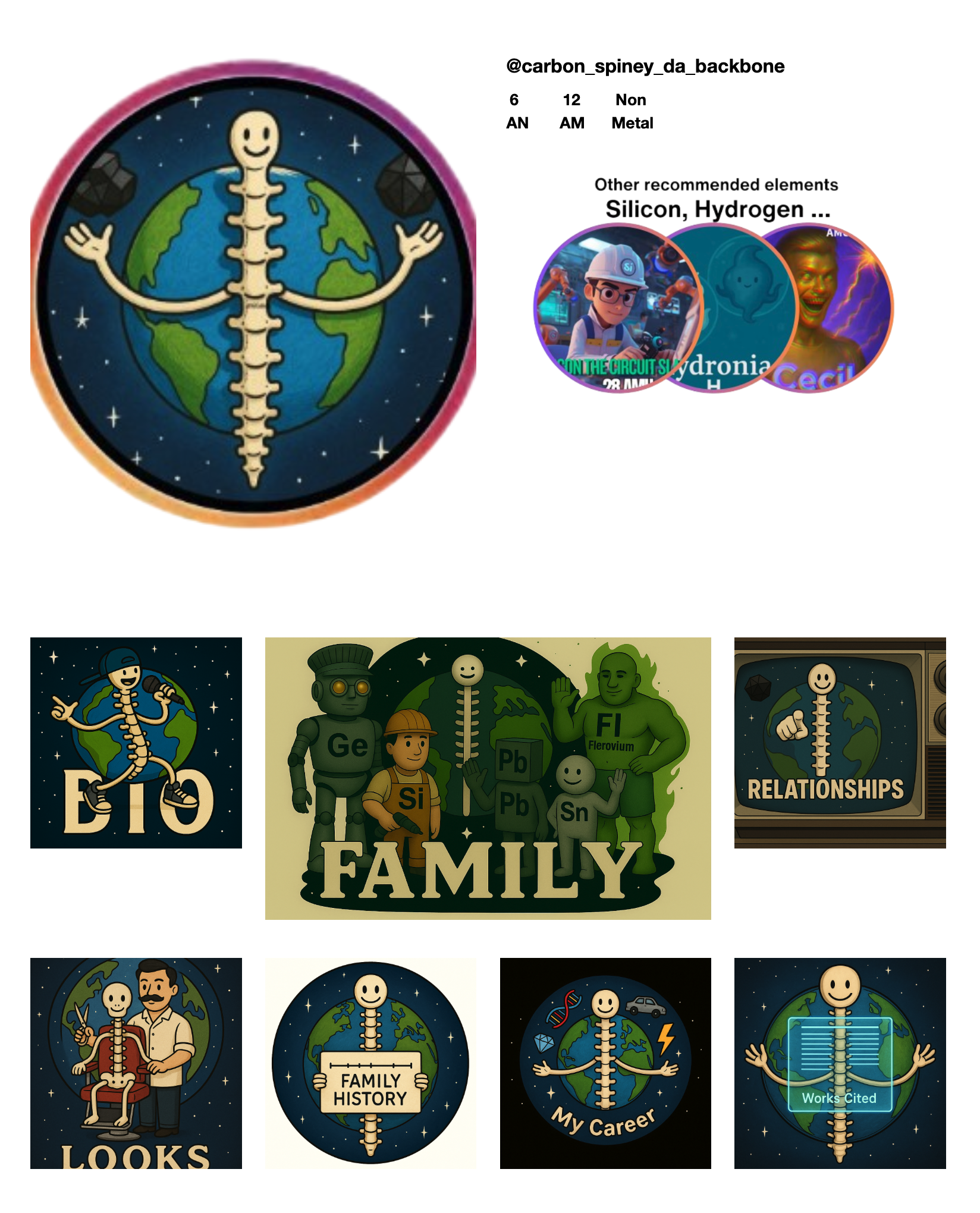
Like all social media worlds, there are reactive and explosive personalities, as well as plenty of neutral, easygoing personalities. Carbon, an essential element of life, was selected by Theo Cohan ’30 for this project. He said, “I researched carbon, and I thought it was super cool how it is involved in so many compounds. Ten million different compounds is a crazy number, and I was really surprised. I enjoyed making the Google Sites page because I realized how fun it is. It was also really hard because of all of the work I had to put in to get the good scores that I wanted. This included researching many websites to gather the right information and using Flint to generate pictures of my character. All in all, this was one of the most fun projects I’ve ever done in science class.”
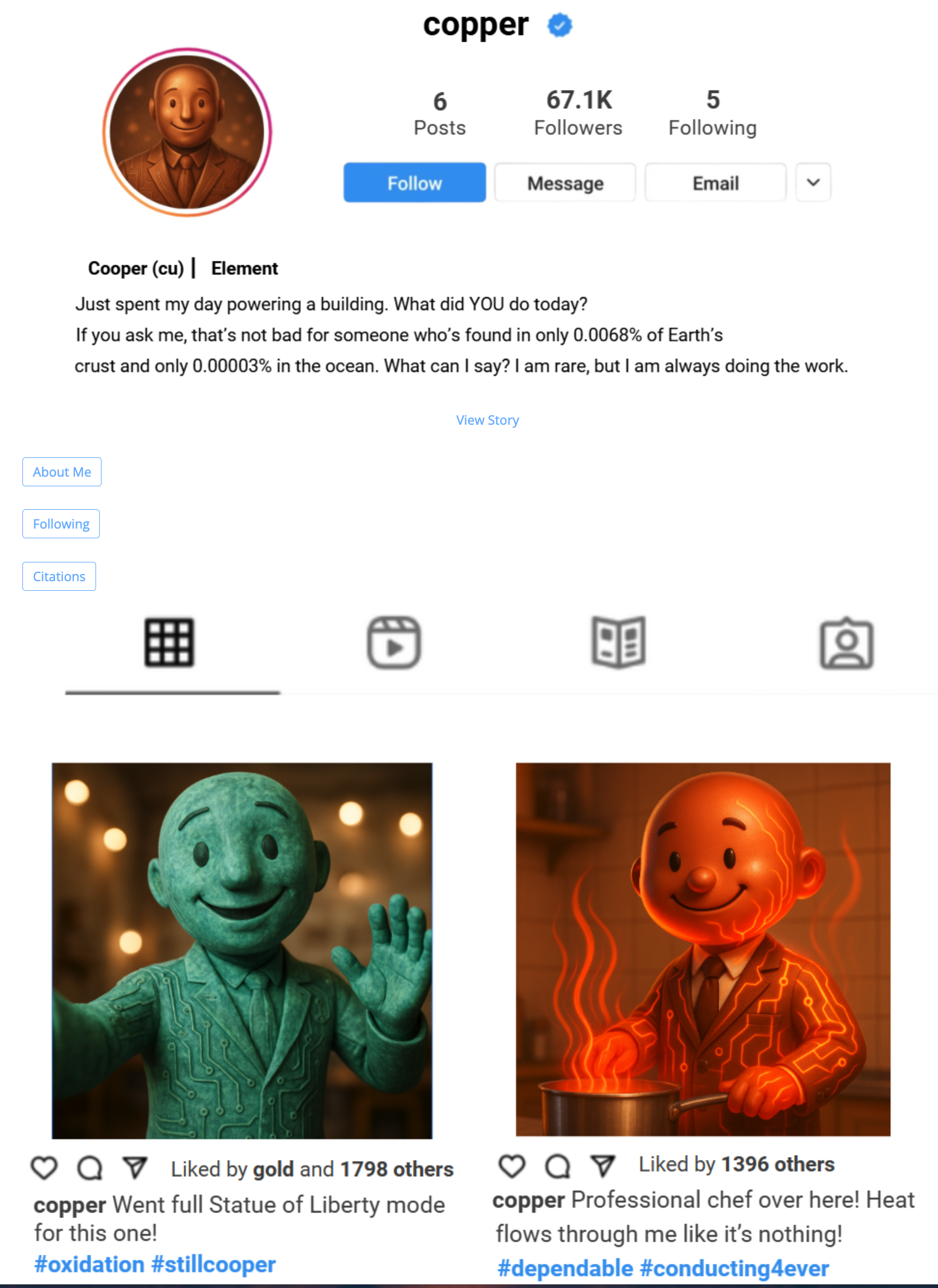
Copper is another element with a significant range in our daily lives. Anvi Pullakandam ’30 went for the challenge. She said, “Copper, being bonded with a wide range of elements and having a shiny reddish-bronze appearance, encouraged me to be more creative and think of copper as a creator online rather than an element. I enjoyed using the facts about copper to create its personality if it were a person, and using my own imagination when constructing the social media page. However, my original site, Google Sites, was not as adjustable as I would’ve liked. That’s when I involved Canva. I was able to copy and paste realistic social media details from the web and add them to my page. To get this on my site’s page, I had to take a screenshot of what I wanted and paste it into the page. If I were to do this project again, I would stick with Canva because it is more adjustable and much easier.”
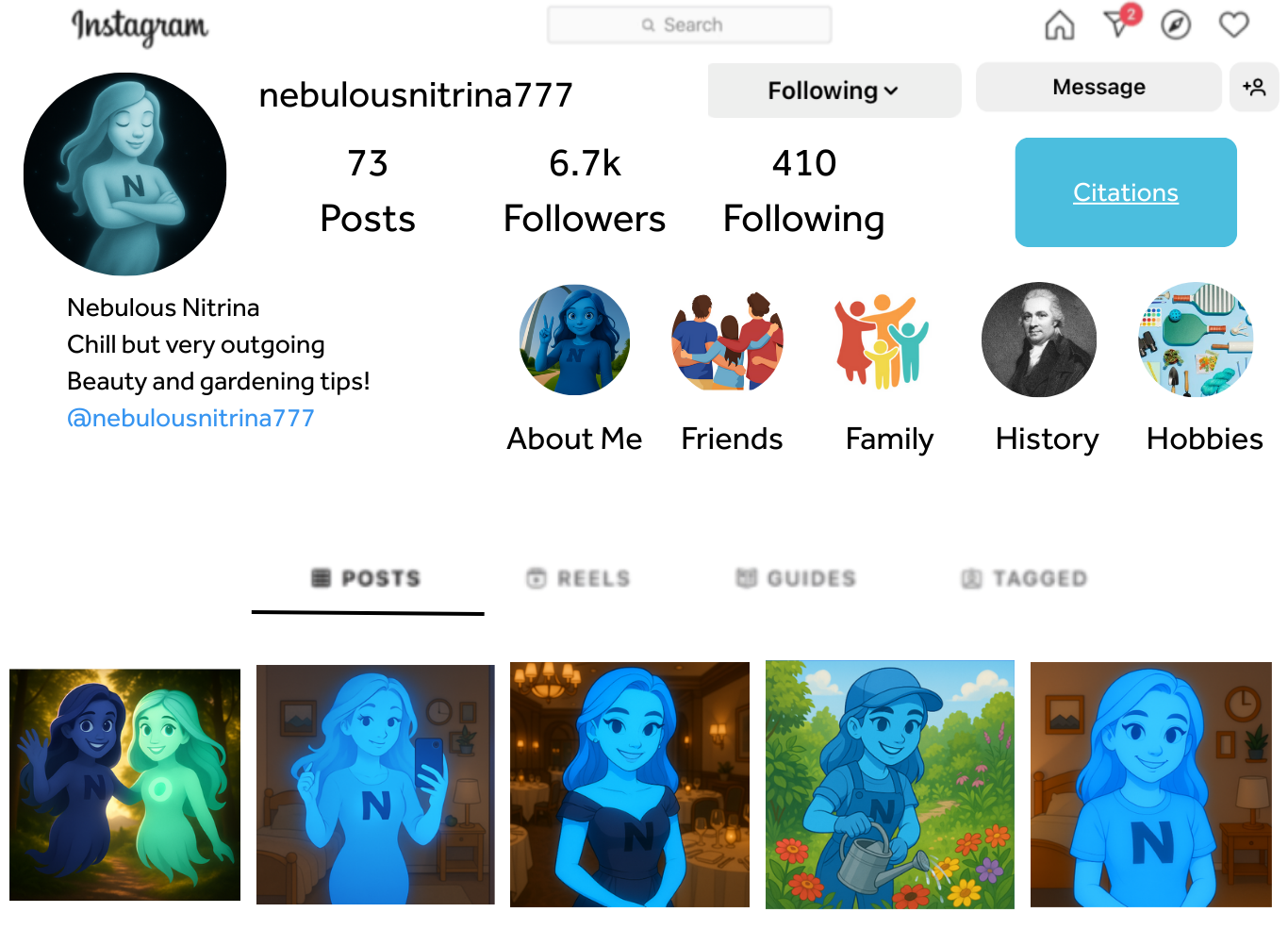
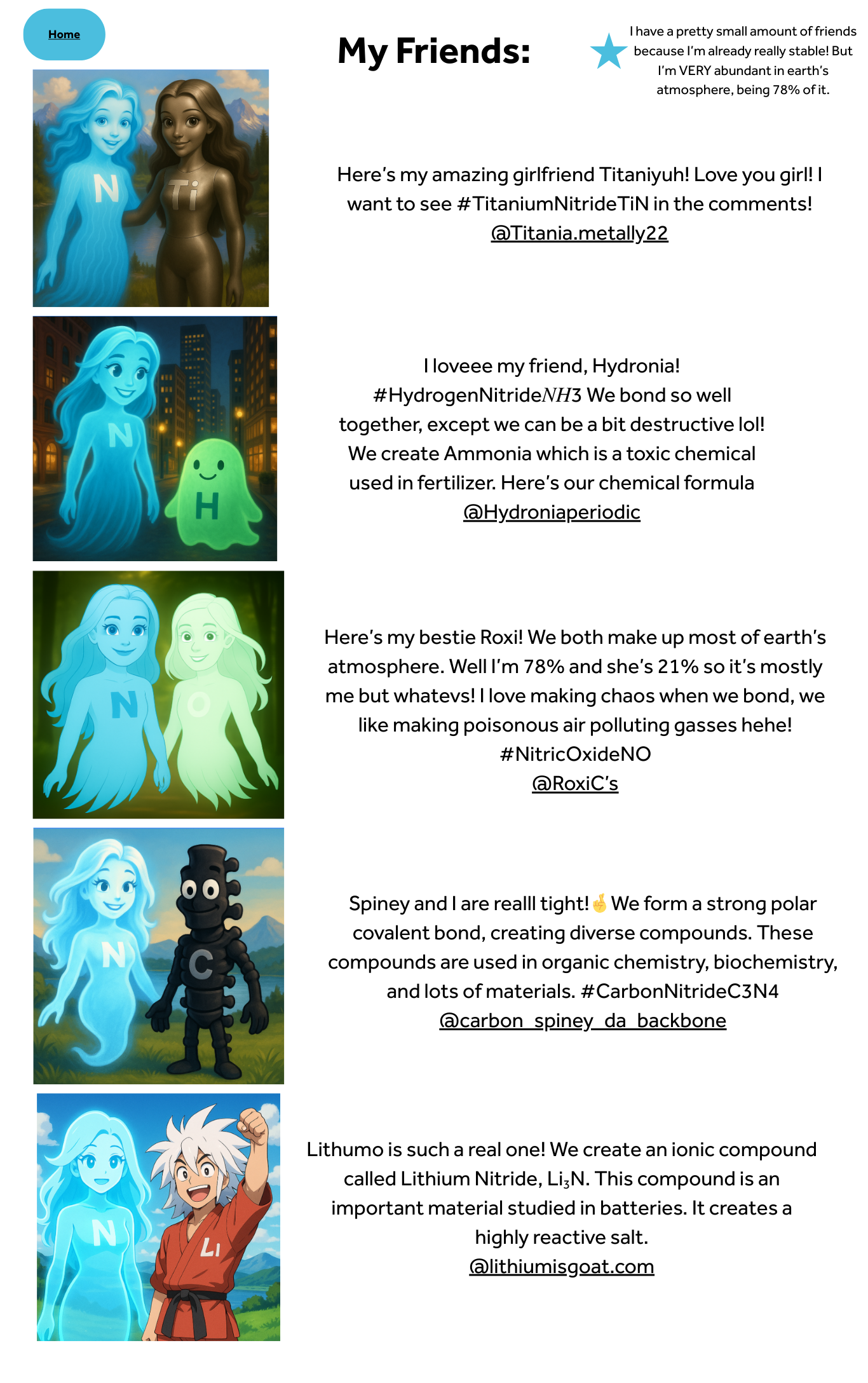
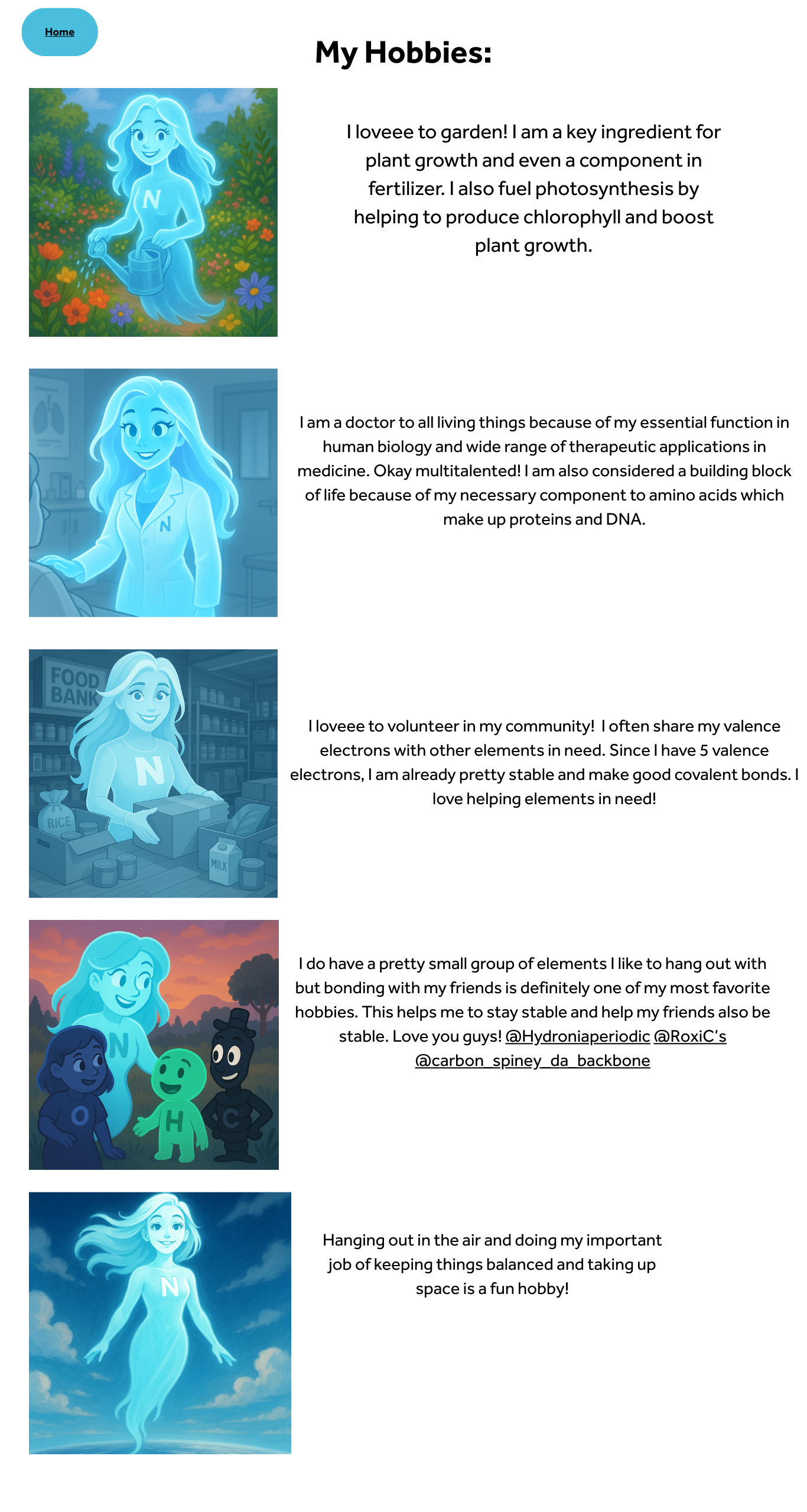
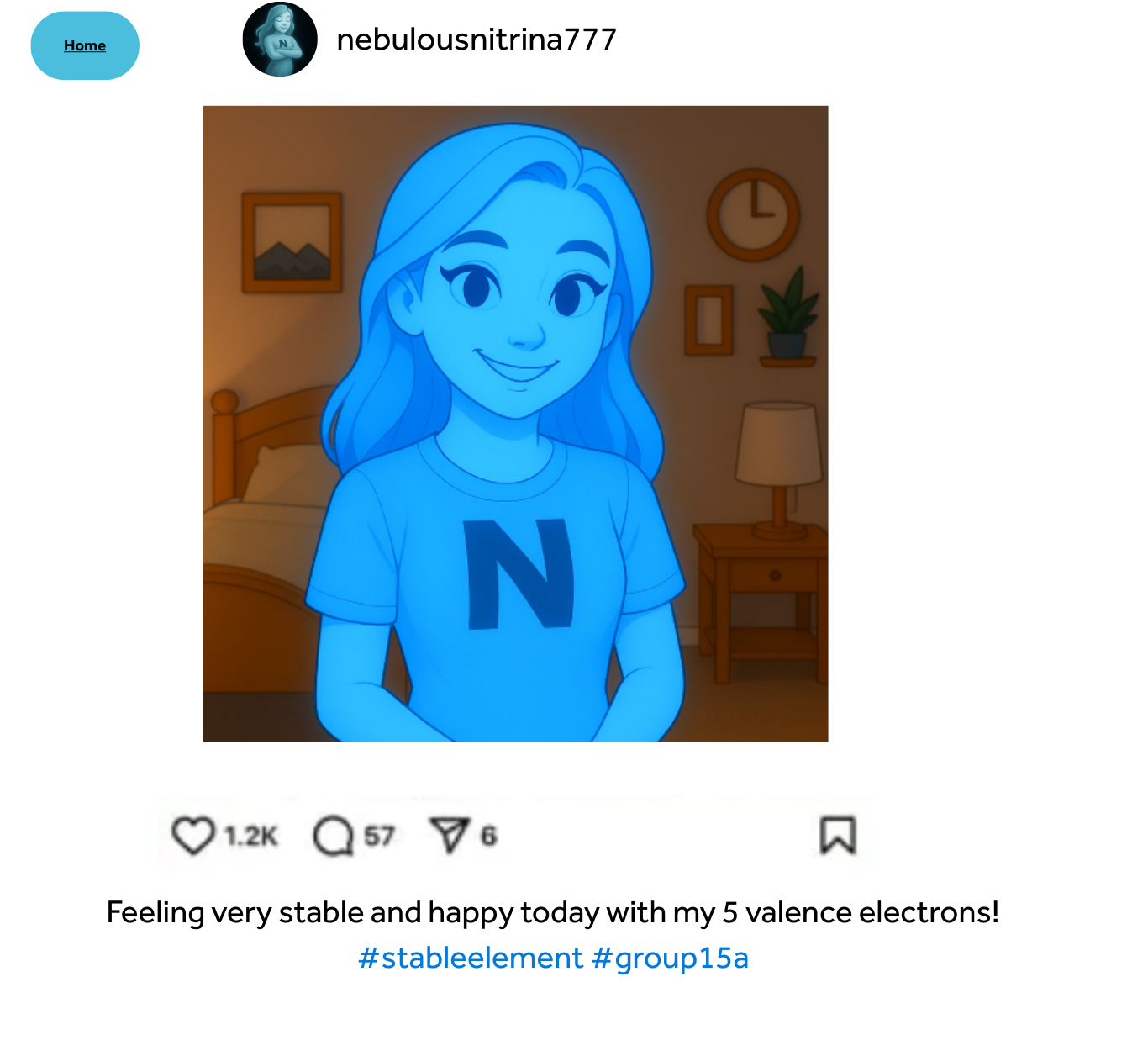
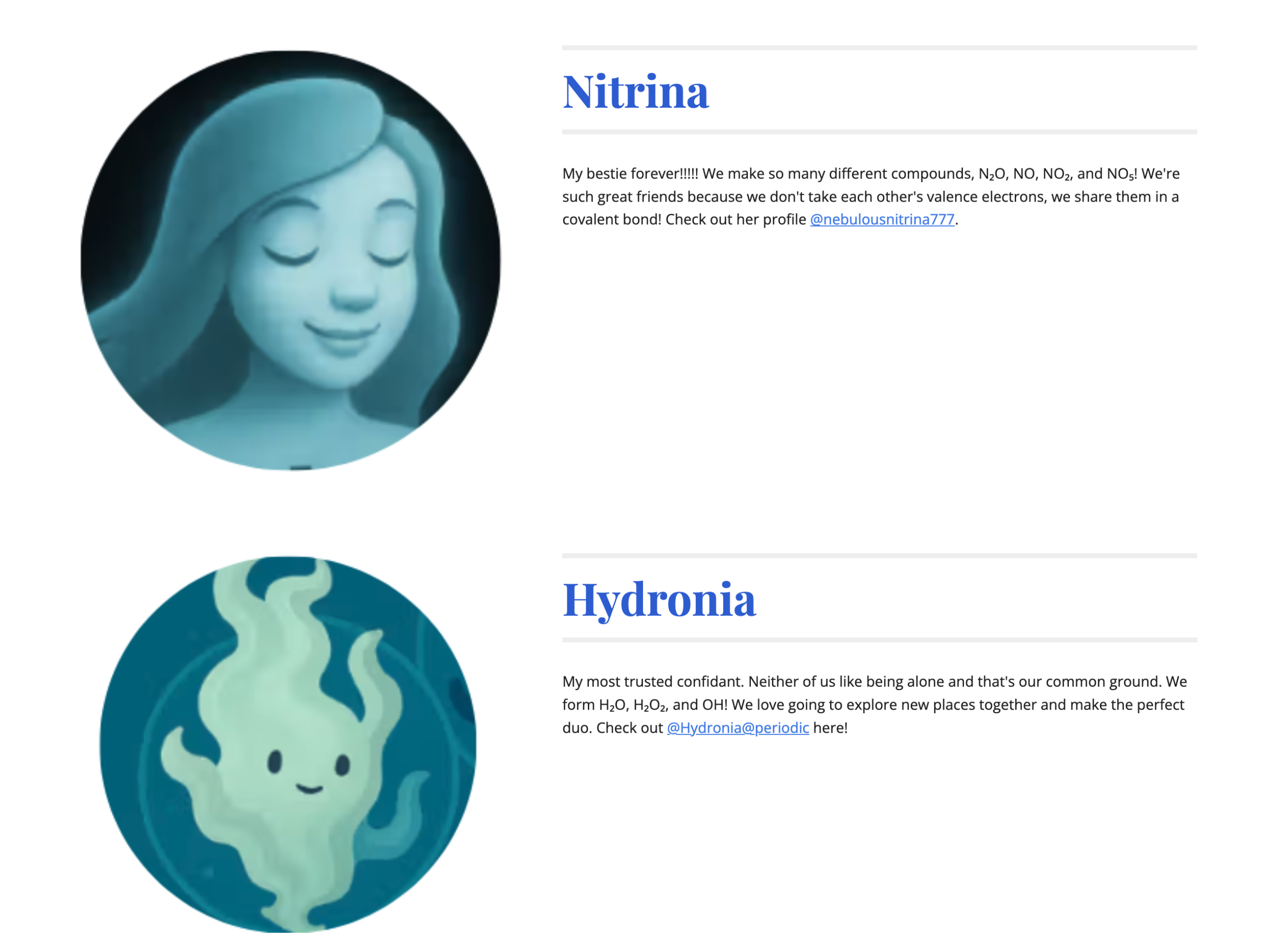
Nitrogen, a vital element that interacts with critical organic molecules such as DNA and proteins, won Julia Leonard ’30 over. She said, “My element for the project was Nitrogen, where I was supposed to give our element a personality that matched how they reacted with other elements and how they were in real life. I named my element ‘Nitrina’ and gave her all sorts of different personality traits based on how Nitrogen is in real life. Some of these traits do not react with a lot of elements, but Nitrogen can be very outgoing with others, since it is a large percentage of air. I loved this project because we were able to be as creative as we wanted, and I really enjoyed giving something that seemed boring some personality. The most challenging part for me was definitely making the website layout appealing and realistic. It took me a while to organize my website so it was easy to navigate and still looked interesting! I really enjoyed working on this project, and it helped me have a better understanding of many different elements, beyond the element I chose.”
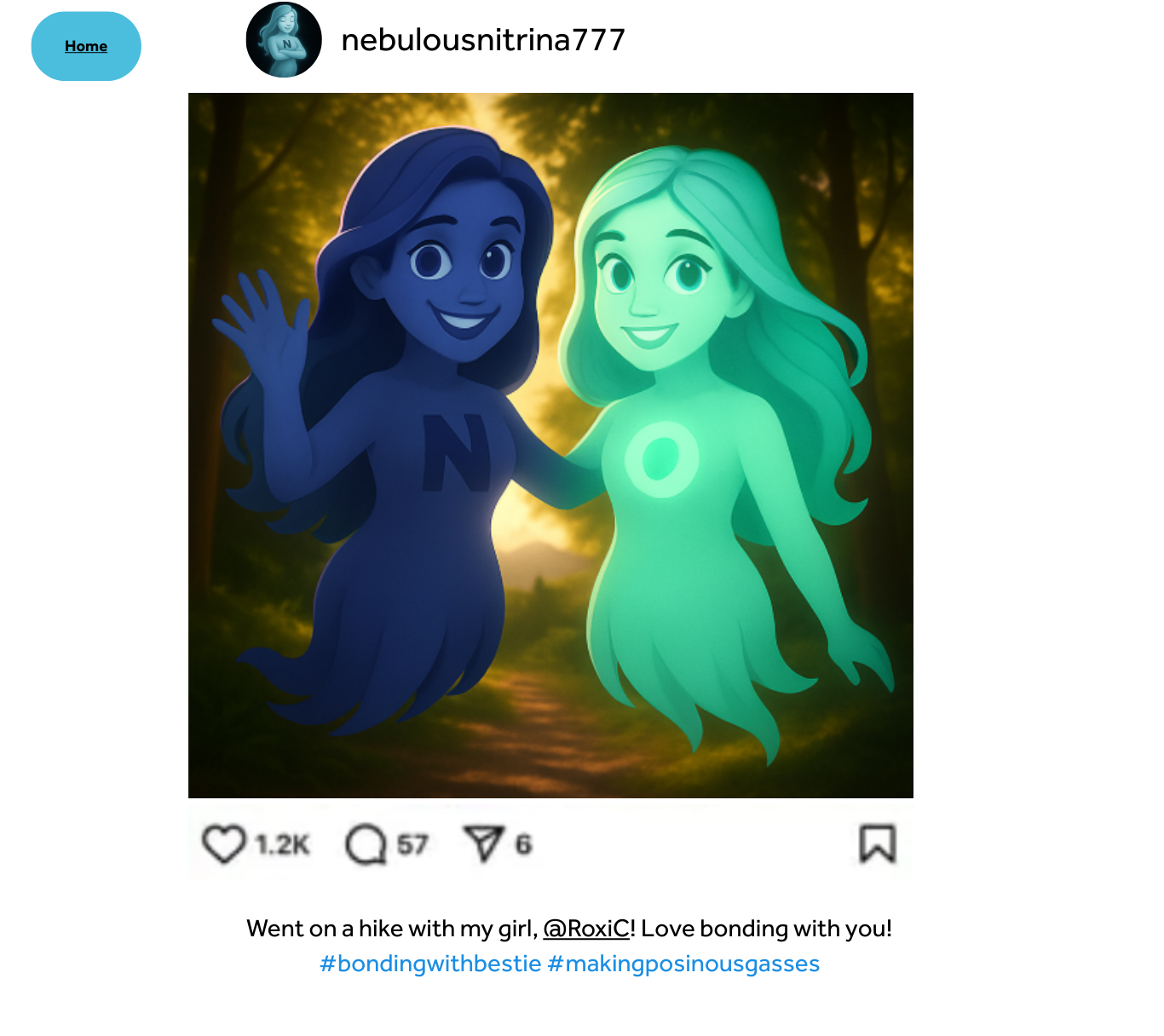
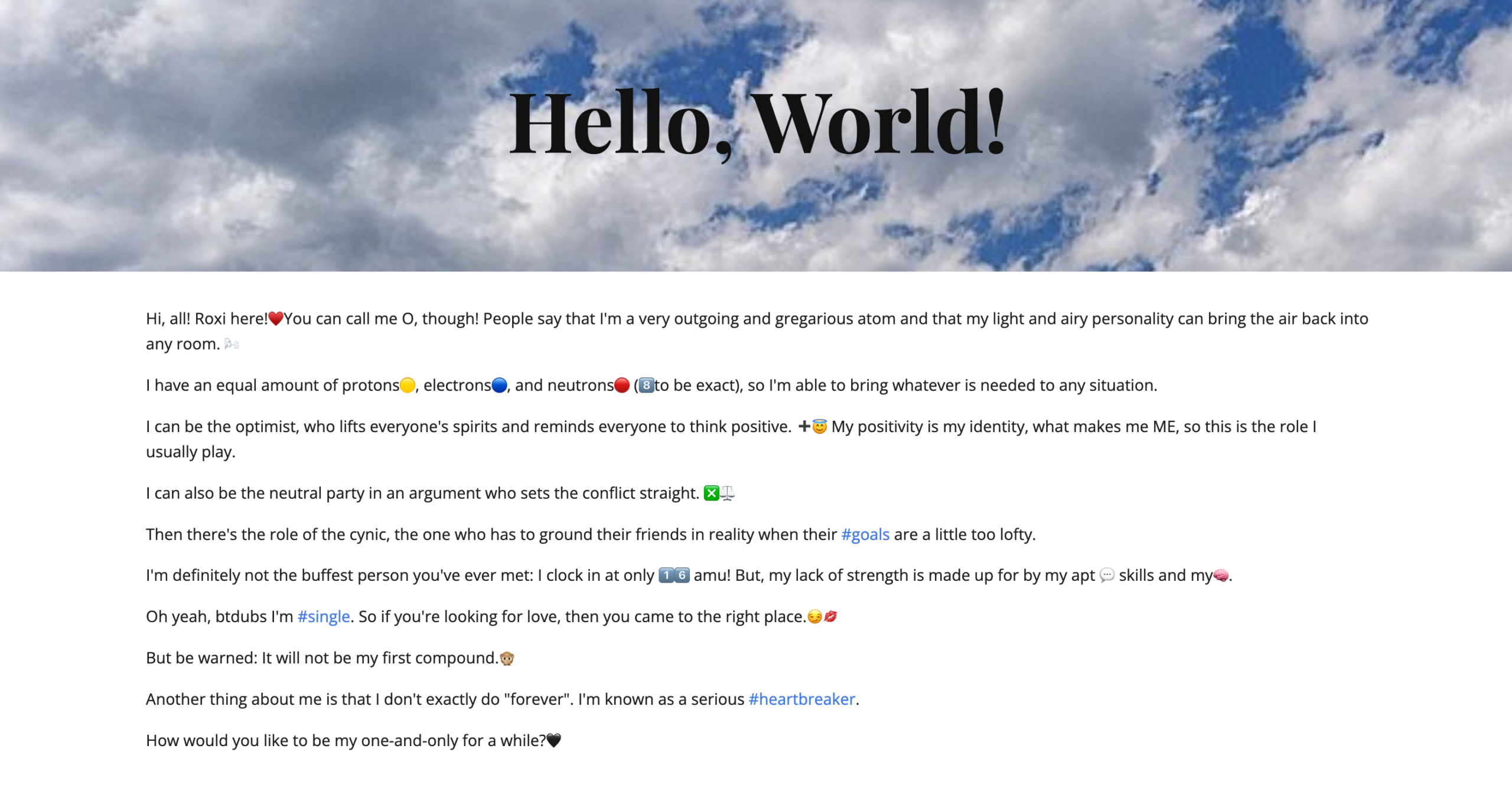
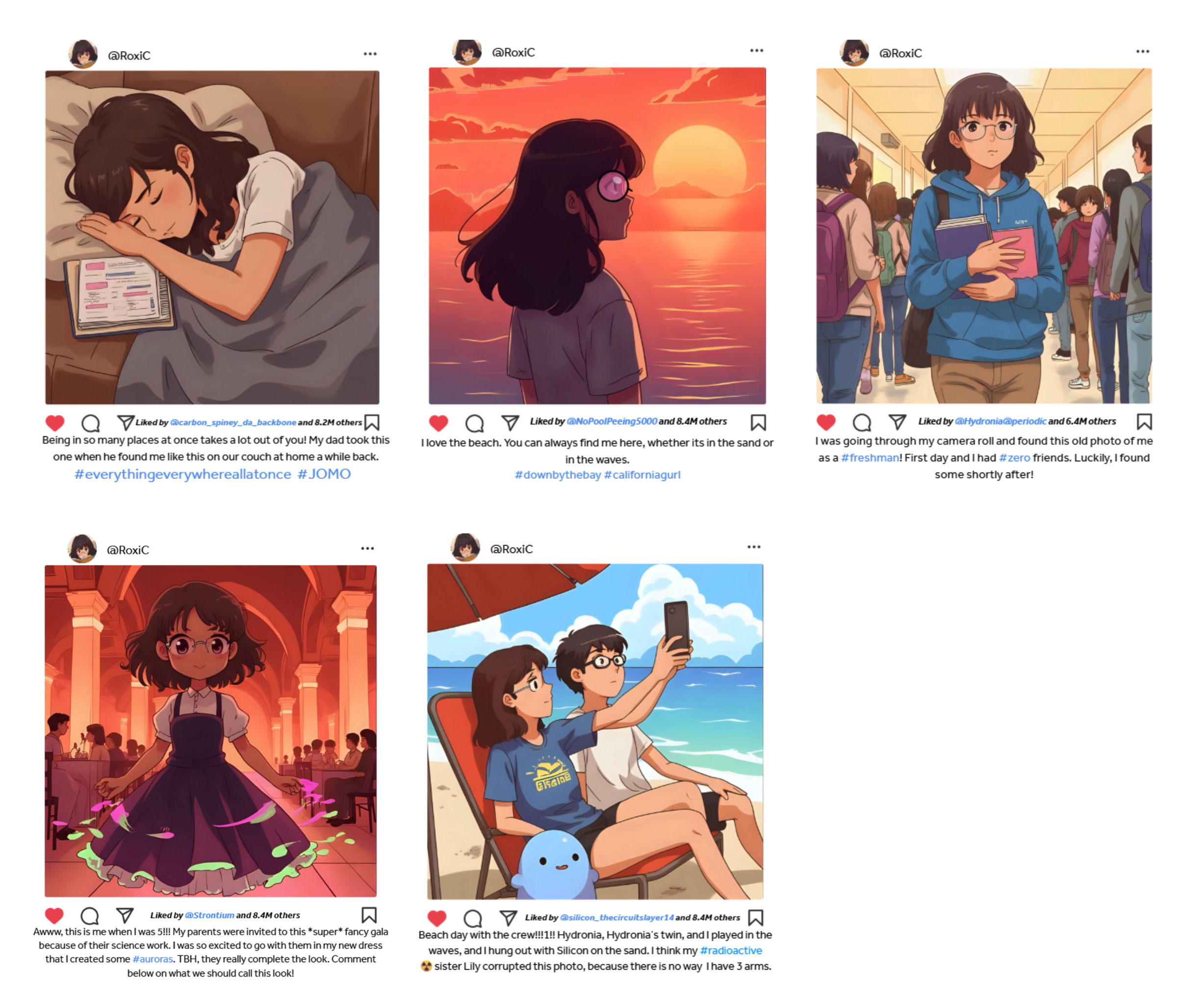
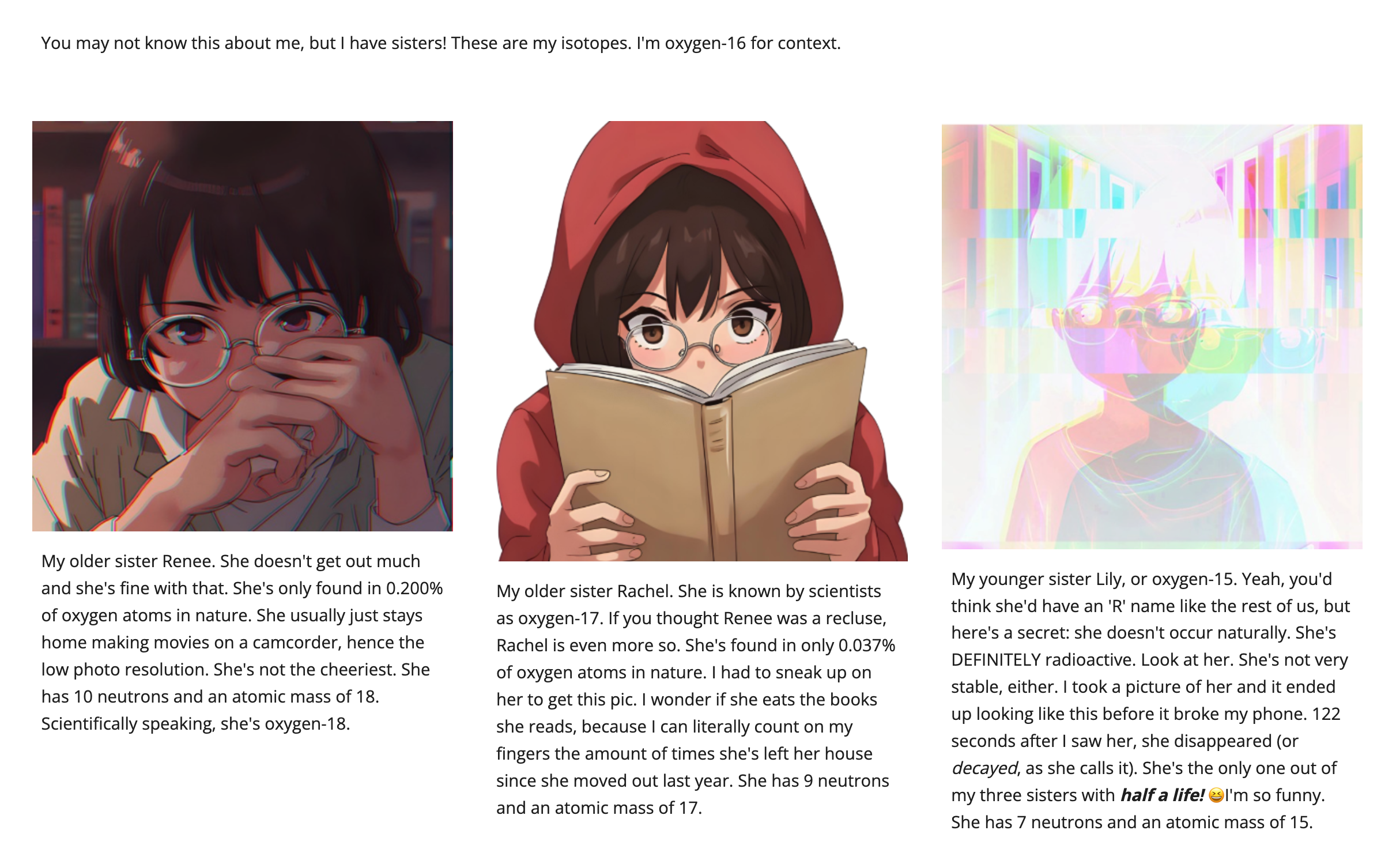
We can’t leave out the most gregarious and outgoing element: oxygen. Rosie Kelley ’30 breathed new life into this important element and said, “My character’s name was Roxi (short for Roxanne), and I liked how confident and fun I made her. I tried to structure her posts like an influencer. What surprised me was how much research and overall work were involved in the process. I really enjoyed making faux Instagram posts for Roxi’s page.”

Dr. Sontheimer added, “This project ends up being a cumulative effort covering most units from the first semester, but it is still a work in progress. I’m so very proud of my students’ social media projects. Every year, they do better and better, and every year I tweak and add more to the project.”
Click here to see the still-in-progress main project landing page.