Story and photos by Lucas Sindler ’26
Cyanotype printing is a type of photography that feels both creative and hands-on. Instead of using a modern printer or a regular photo lab, students make images using chemicals, paper, and sunlight. At MICDS, this Winter Term cyanotype photography class, taught by Upper School Photography Teacher Denise Douglas, introduces students to an older photo process that depends on careful steps and attention to detail. The class is practical, artistic, and focused on learning through trial and error.
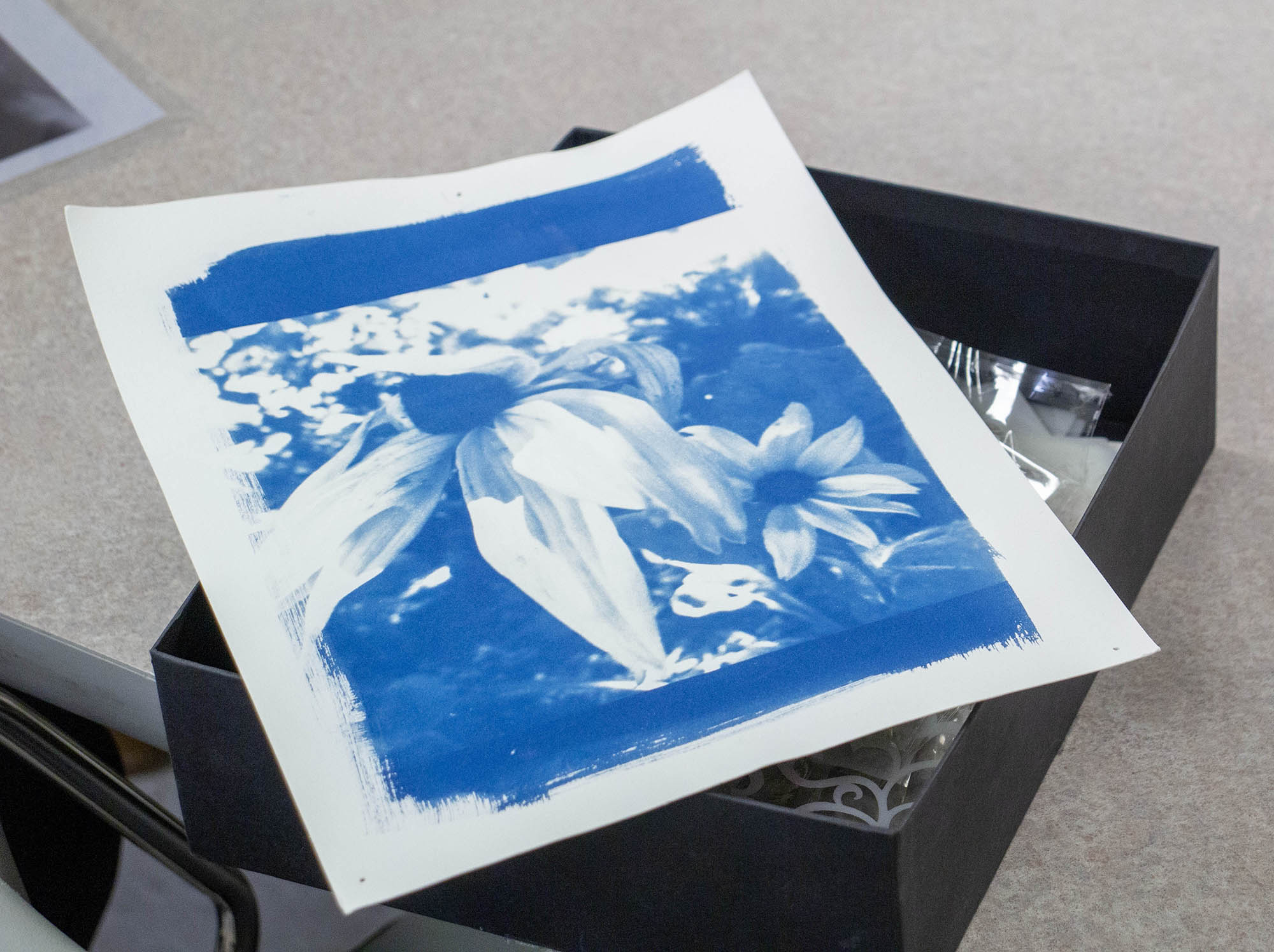
Cyanotypes work by coating paper with a light-sensitive solution and then placing objects or image negatives on top. When the paper is exposed to UV light, the uncovered areas change color, and the covered areas stay lighter. After exposure, the print is rinsed in water, and the image becomes clear. The final result is the deep blue color cyanotypes are known for. In class, students learn that the process is simple in theory but sensitive in practice. Small changes in exposure time, coating thickness, or rinsing can change how the image turns out.
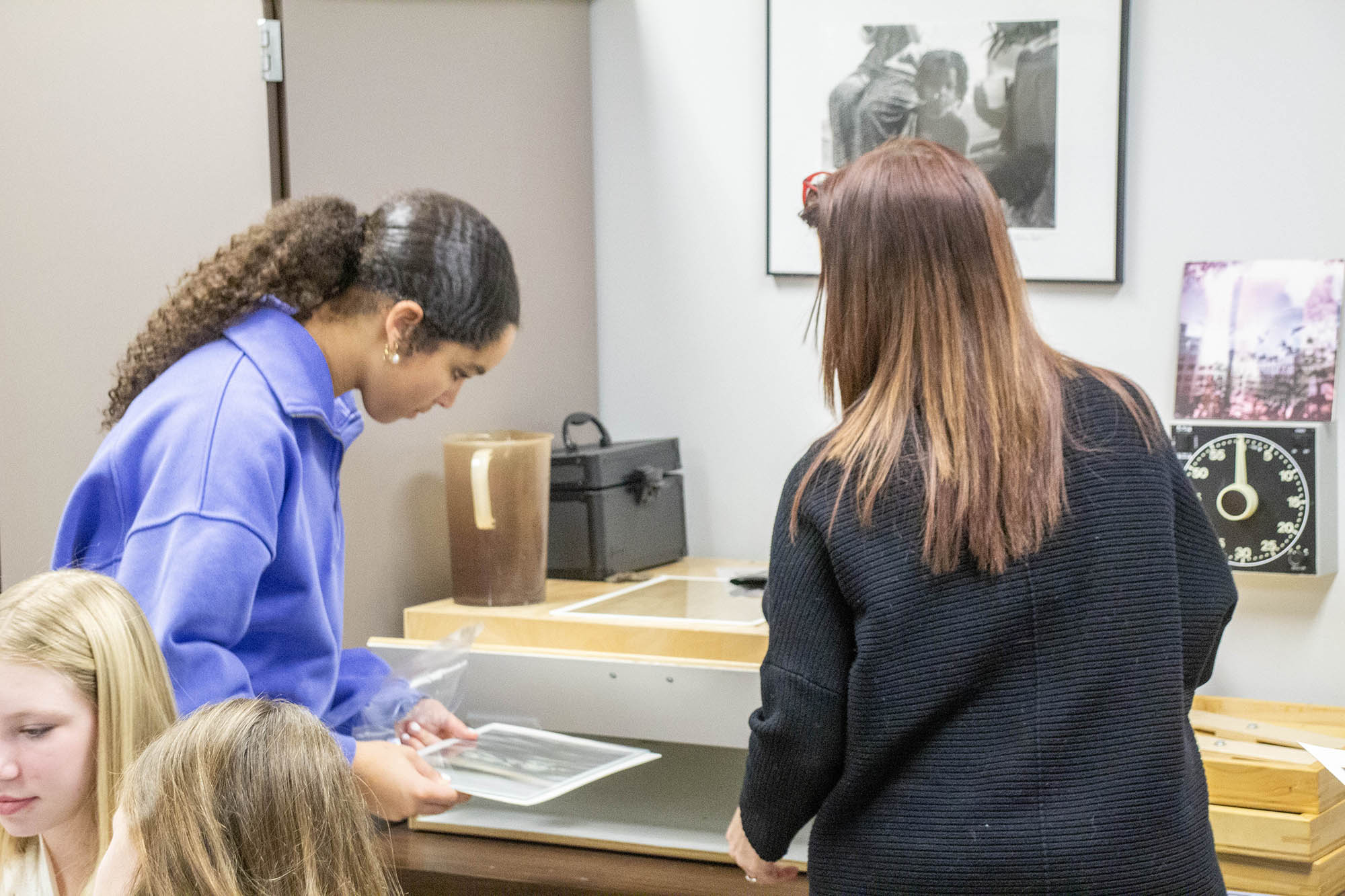
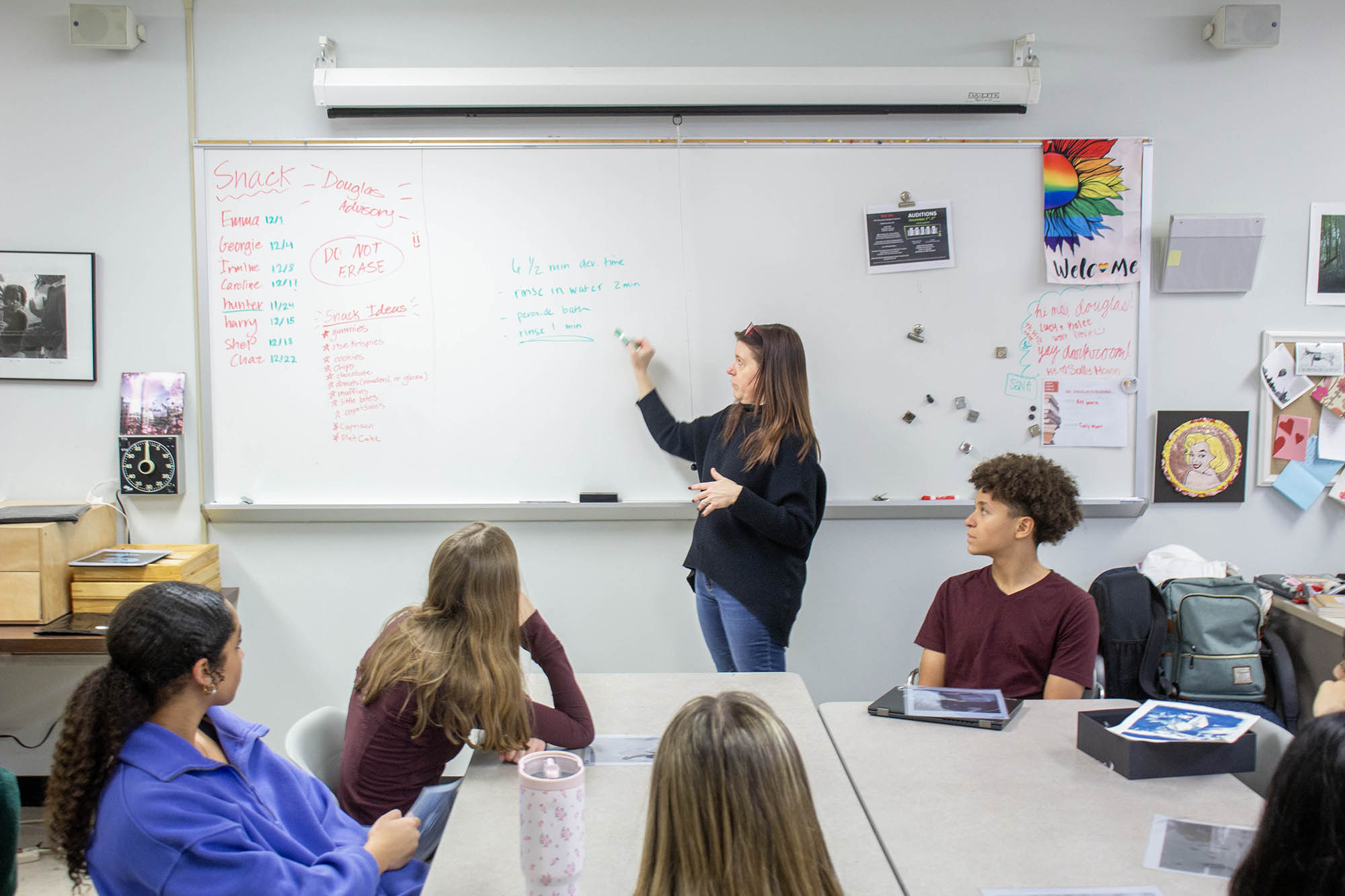
One of the first lessons is planning and consistency. If the coating is uneven, the print can look blotchy. If the paper dries too fast or gets handled too much, it can leave marks. Students learn to set up their workspace carefully, follow the steps in order, and keep track of what they changed from one print to the next. This helps them improve faster and understand why a print succeeded or failed.
The class also teaches students to think differently about photography. With cyanotypes, creators have to work with shadows, contrast, and shape more than color. Many prints are made with plants, small objects, or layered materials, so students start paying attention to texture and detail in a new way. Even when using a photo negative, the image will not always look exactly like a normal photo. That makes the process feel more experimental and personal.

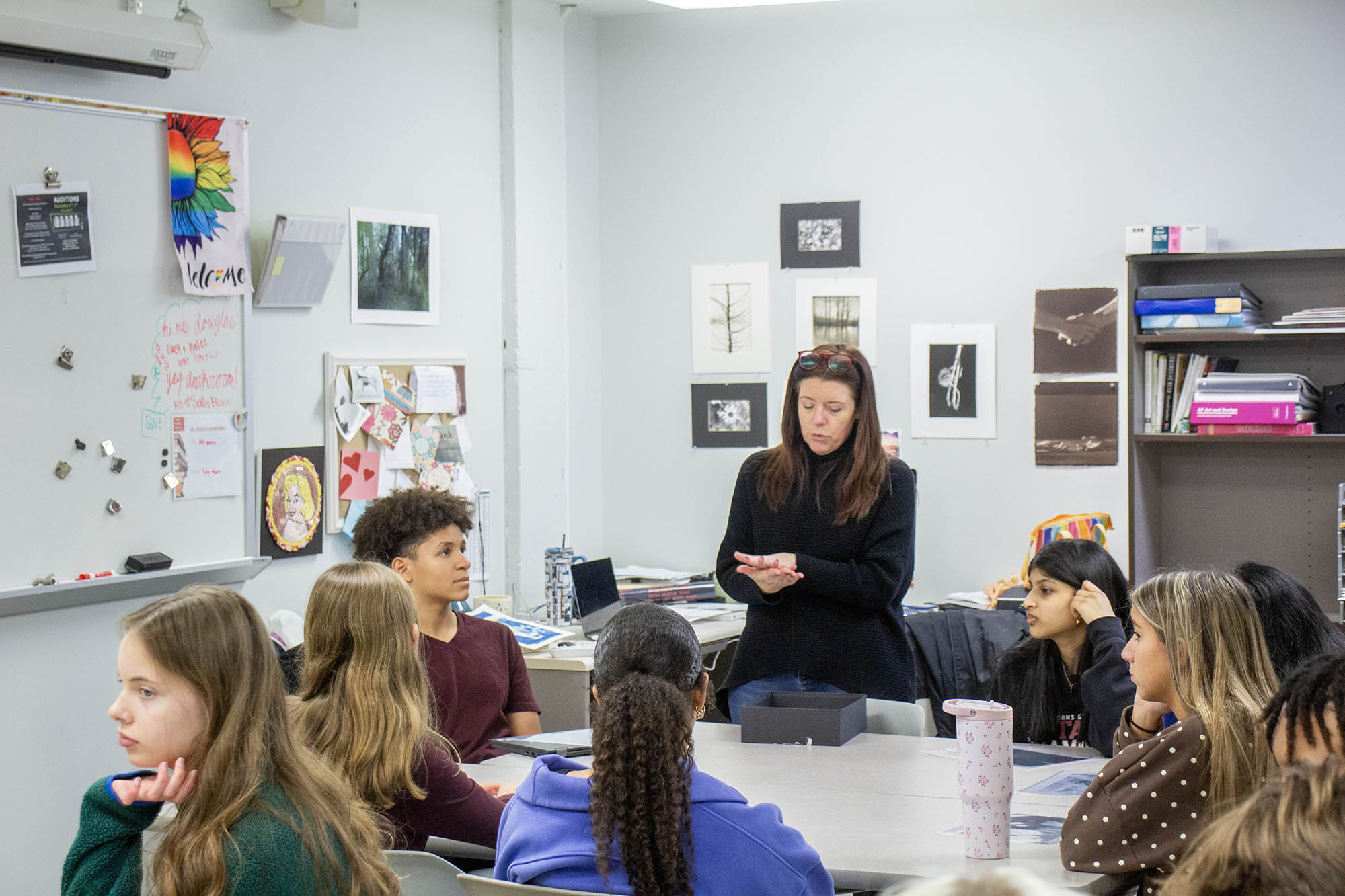
Ms. Douglas also encourages students to accept mistakes as part of learning. Prints can come out too light, too dark, or with unexpected streaks, but those results still teach something. Students learn to adjust exposure time, improve how they place objects on the paper, and refine their rinsing technique. Over time, the class becomes less about getting a perfect print on the first try and more about building skill through repetition. As Ms. Douglas always says, “Focusing on the end print isn’t ideal, it’s about making sure the process is correct as you go through the steps.”
Overall, the MICDS Winter Term cyanotype photography course with Ms. Douglas is a strong mix of art and process. It teaches patience, planning, and attention to small details, while still leaving room for creativity. By the end of the course, success is not only making a good-looking print; it is understanding how light, timing, and technique work together to create an image you can hold in your hands.