“We are the shadows who make the stars shine.” This common phrase in theatre highlights the vital, often invisible, behind-the-scenes work that supports performers and a production as a whole.
In keeping with the MICDS mission, the arts program offers multiple avenues for students to explore theatre arts across all JK-12 grades. The program takes a holistic approach: performers are coached to feel confident both solo and in an ensemble, and students also learn technical theatre skills, including lighting, set, and sound design.
This holistic focus on both performance and design is now expanding in the Middle School, where arts offerings, including musical, studio, and theatre arts, are available as year-long or semester-long course options.
This year, a new hands-on technical design class rolled out for seventh and eighth graders. The course explores the history of modern theatre and the practical application of stagecraft techniques. From makeup and props to costume and lighting design, it offers a deep dive into the art of theatrical ‘world-building.’
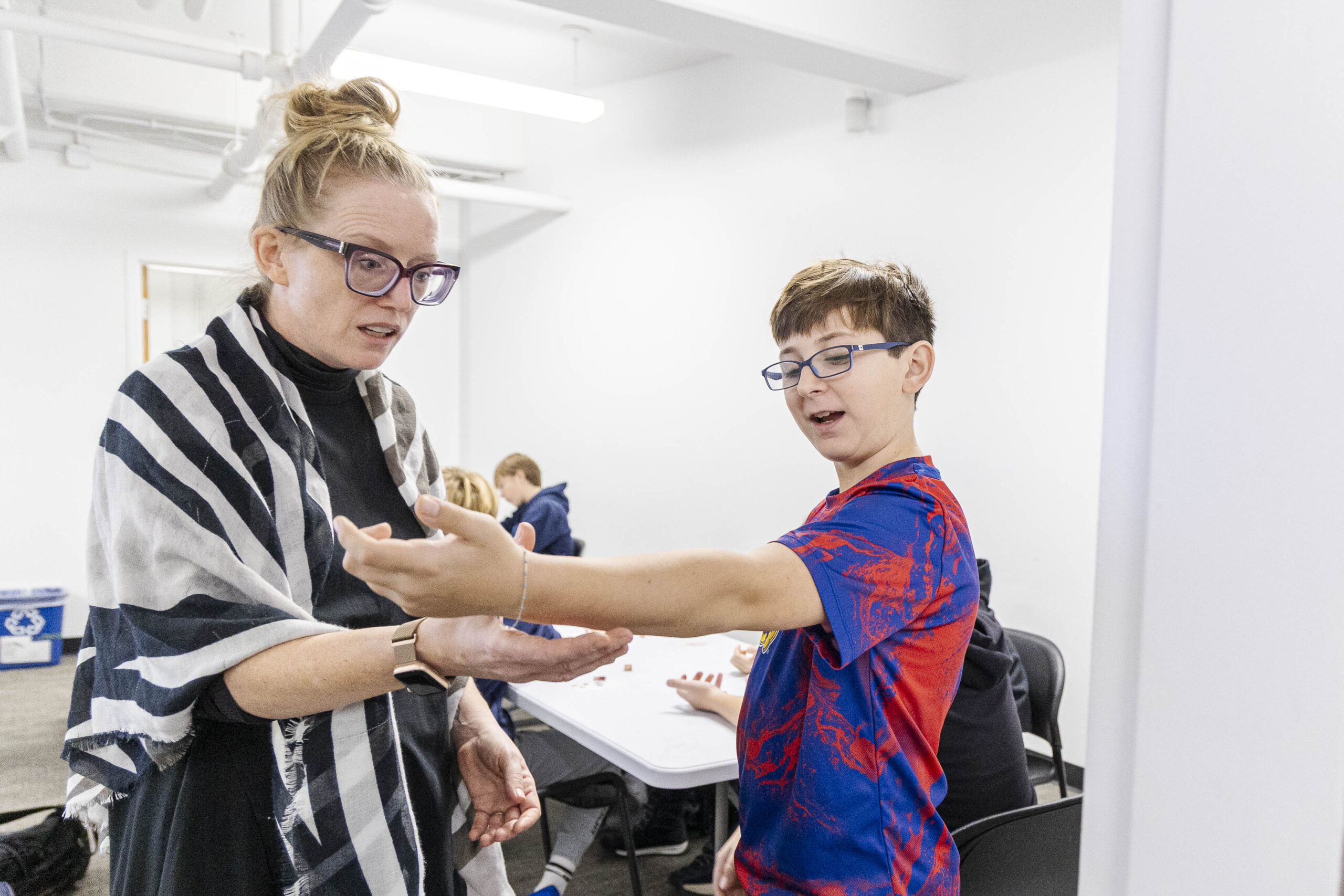
Middle School Theatre Teacher Deb Mein is enthusiastic about the class, noting it stems from the department’s reworking of some arts electives to offer a broader range. “Students want connection in the arts and otherwise; they want to feel essential. I think learning all the pieces of world-building and what goes into producing a show fills that need,” she said.
JK-12 Arts Department Chair Dr. Bonnie Carpenter shares this excitement, adding, “The technical theatre class in the Middle School is bringing to life the relationship between the arts and academic programming at MICDS.” To that end, Mein and Carpenter have taught students the purpose of a catwalk in a theatre and how to use it, lighting design and function, makeup and costume, and building props, with more to come in the second semester.
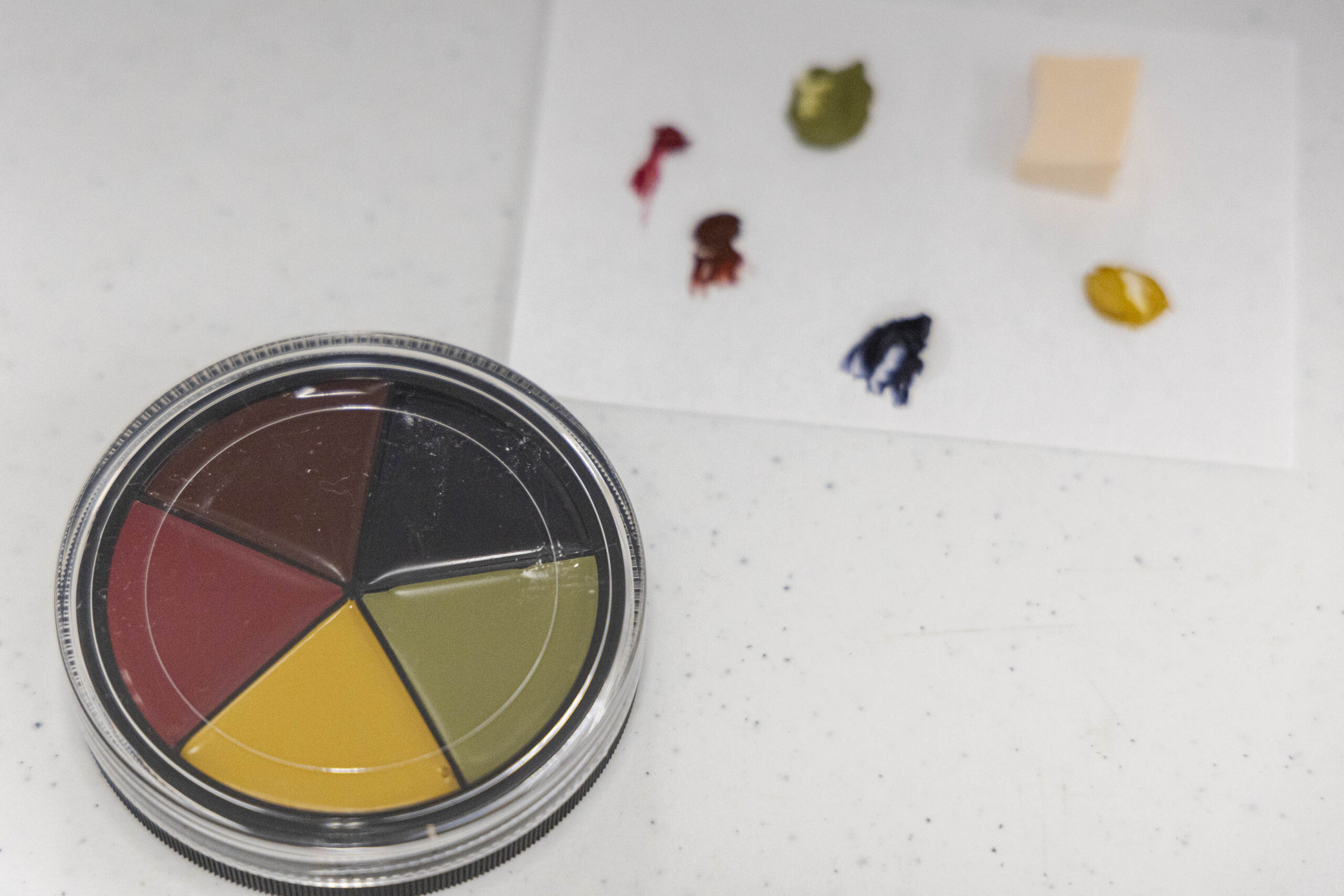
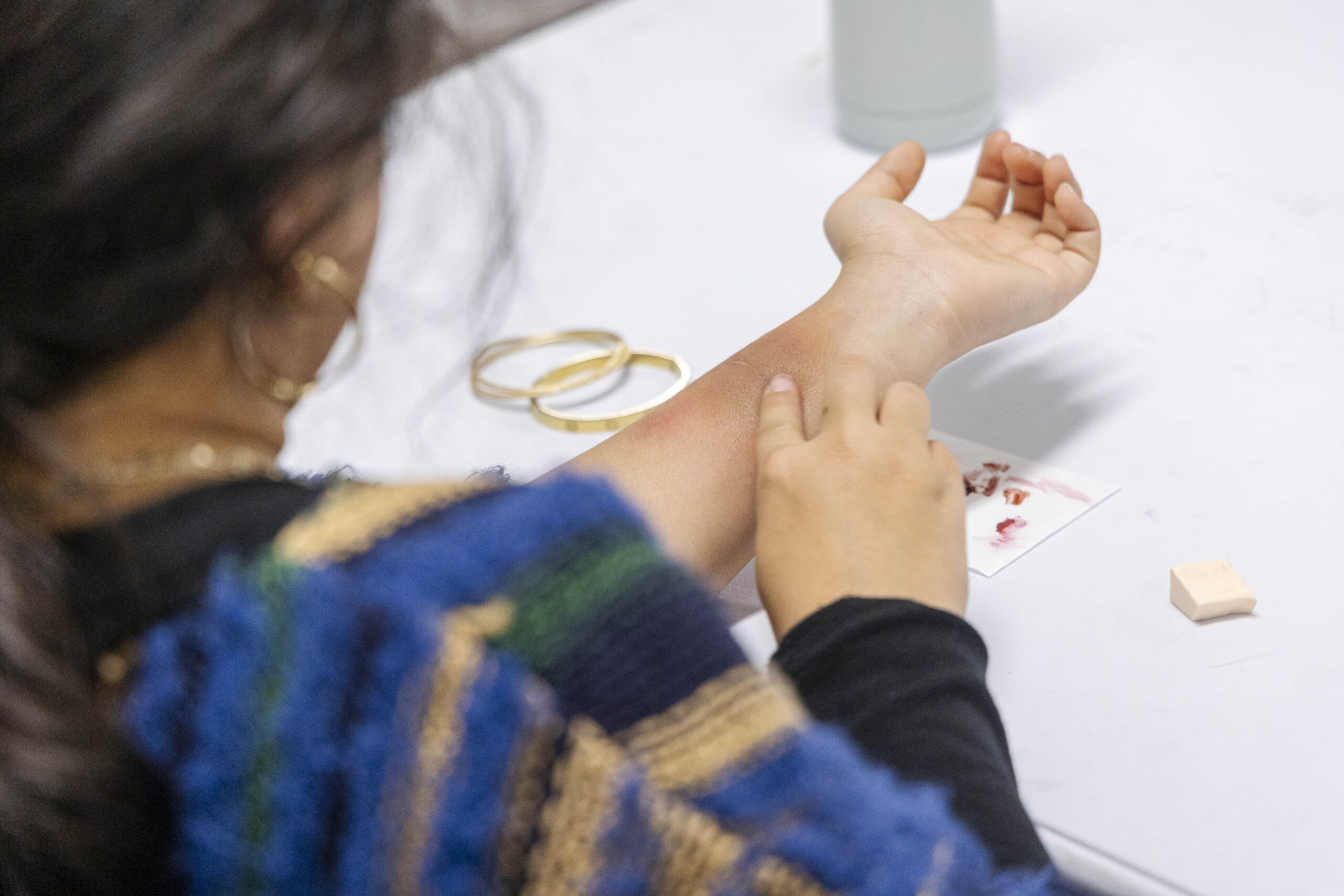
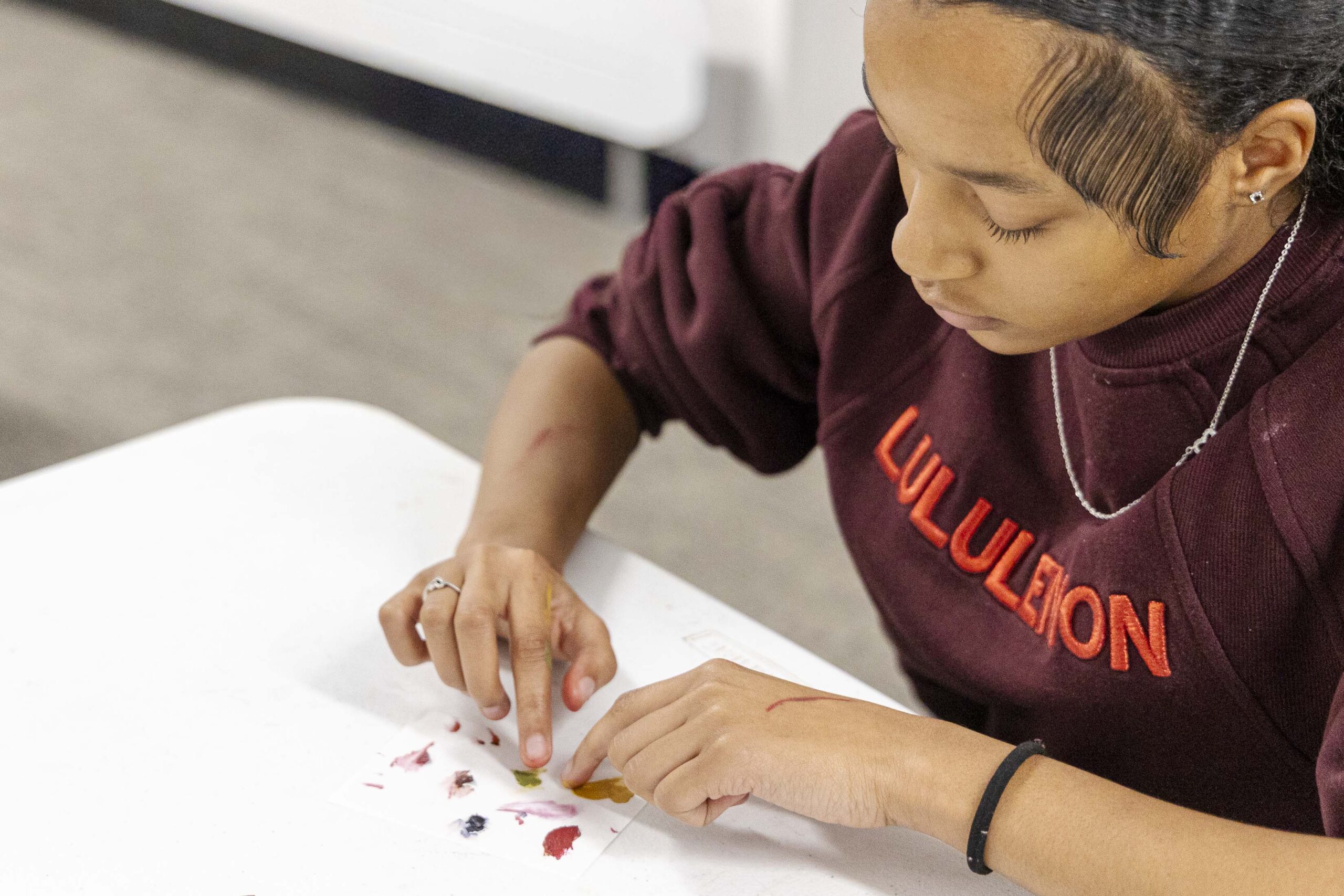
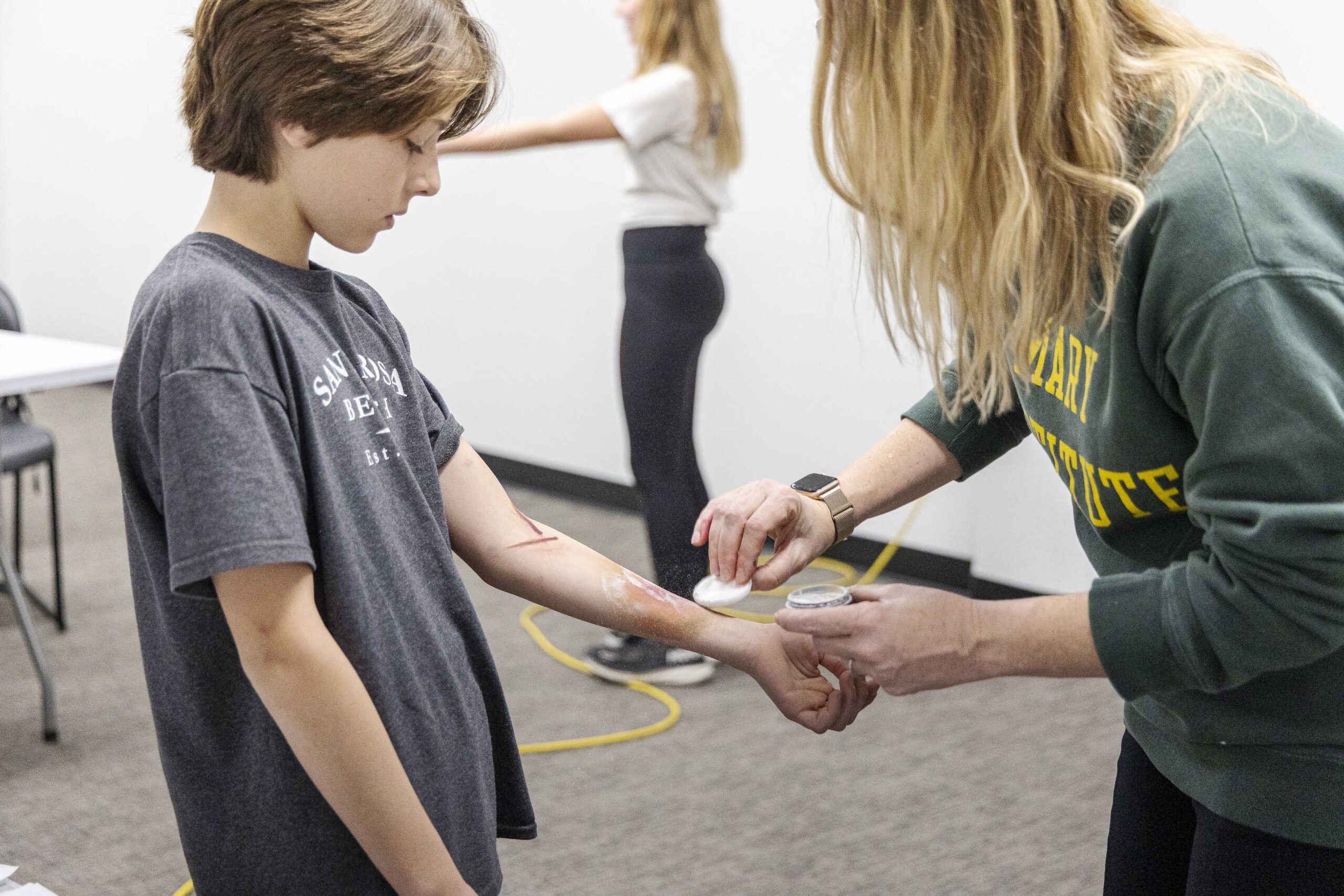
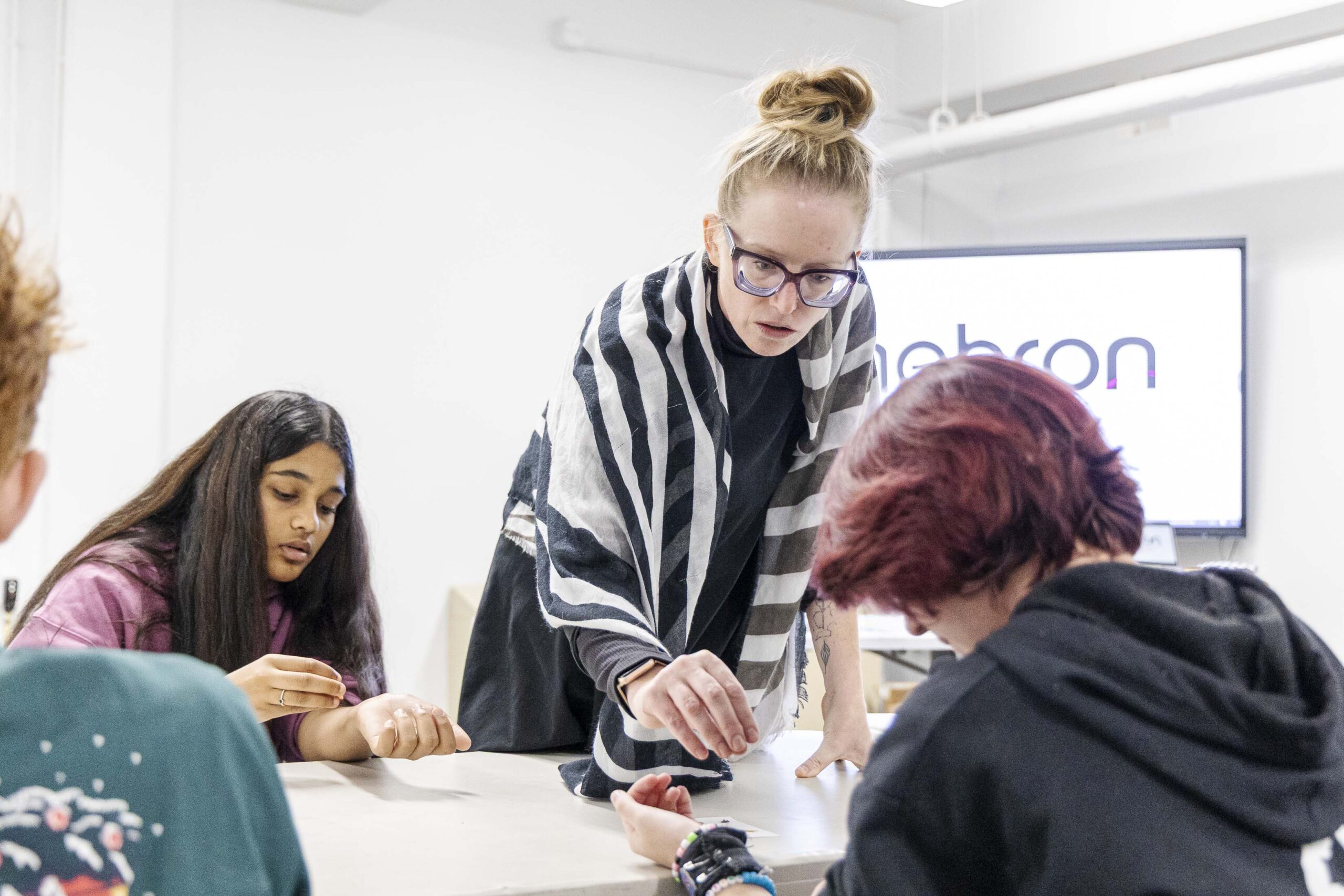
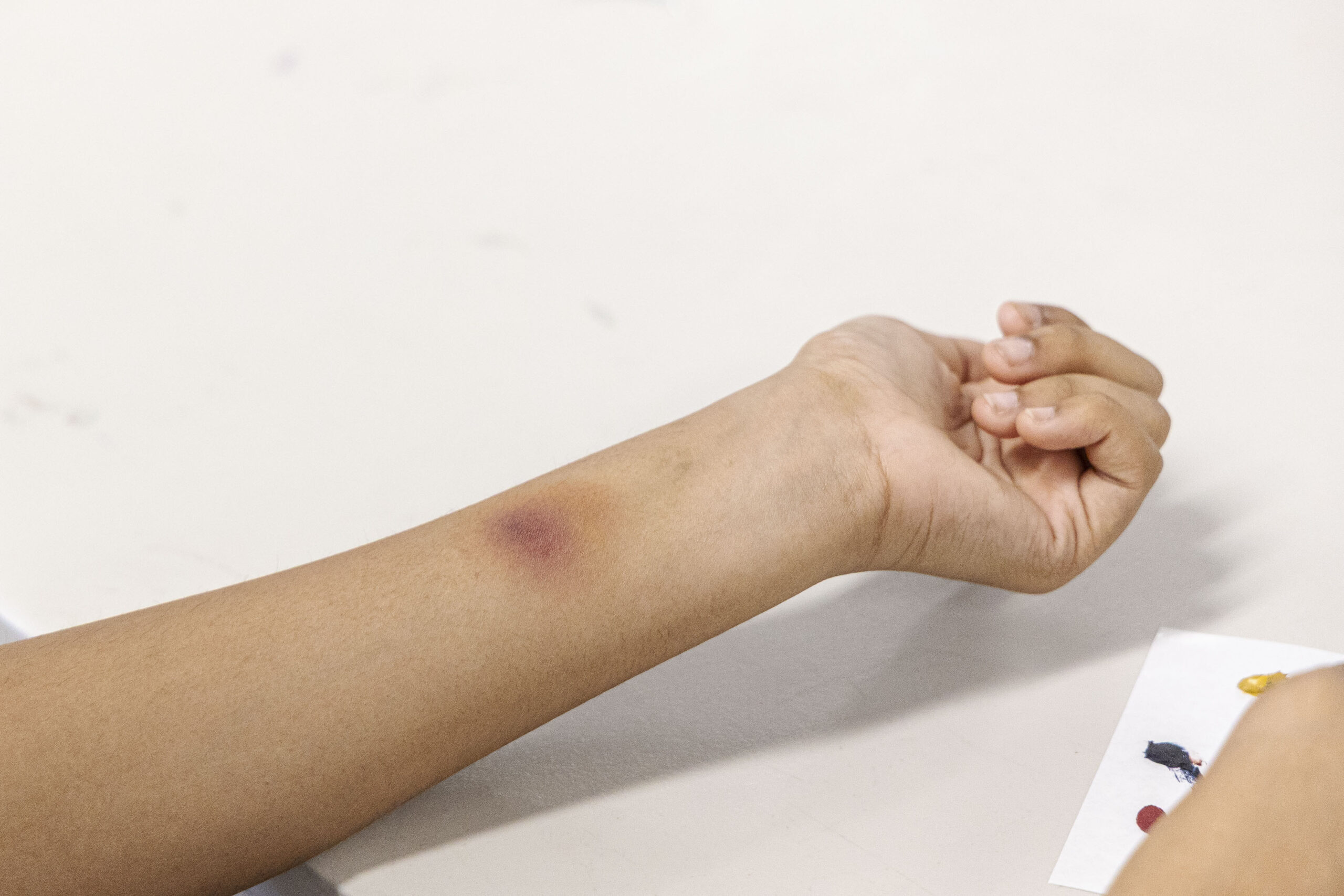
Mein’s recent focus was on makeup and the art of creating bruises and scratches. Students explored the use of a Bruise Wheel, a makeup tool that only offers colors specific to all stages of a bruise. With five colors—bright red for fresh bruise, darker red and blue for an older bruise, and green and yellow for a healing bruise—students sponged and patted colors down to see what they could create (and scare their parents with later!).
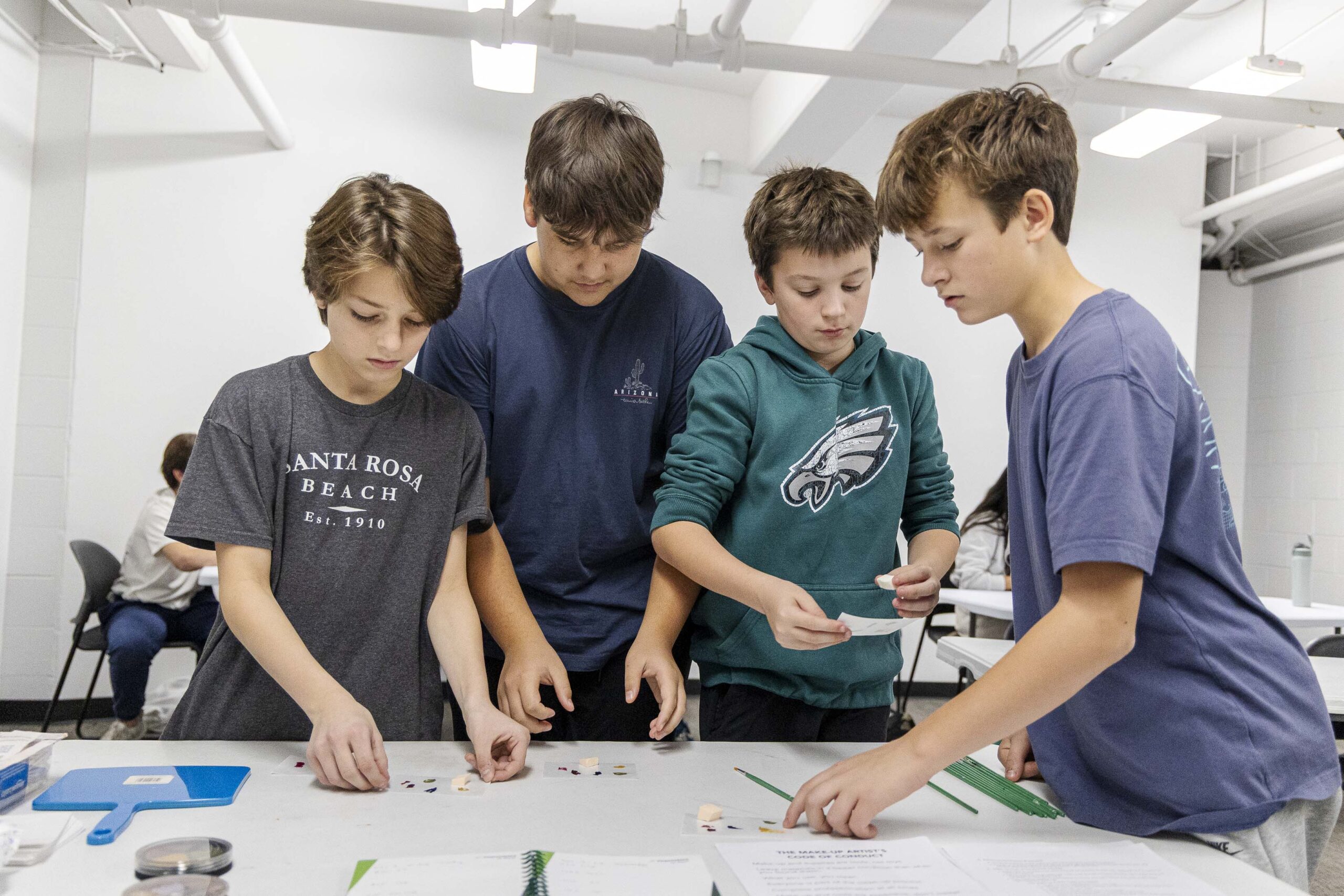
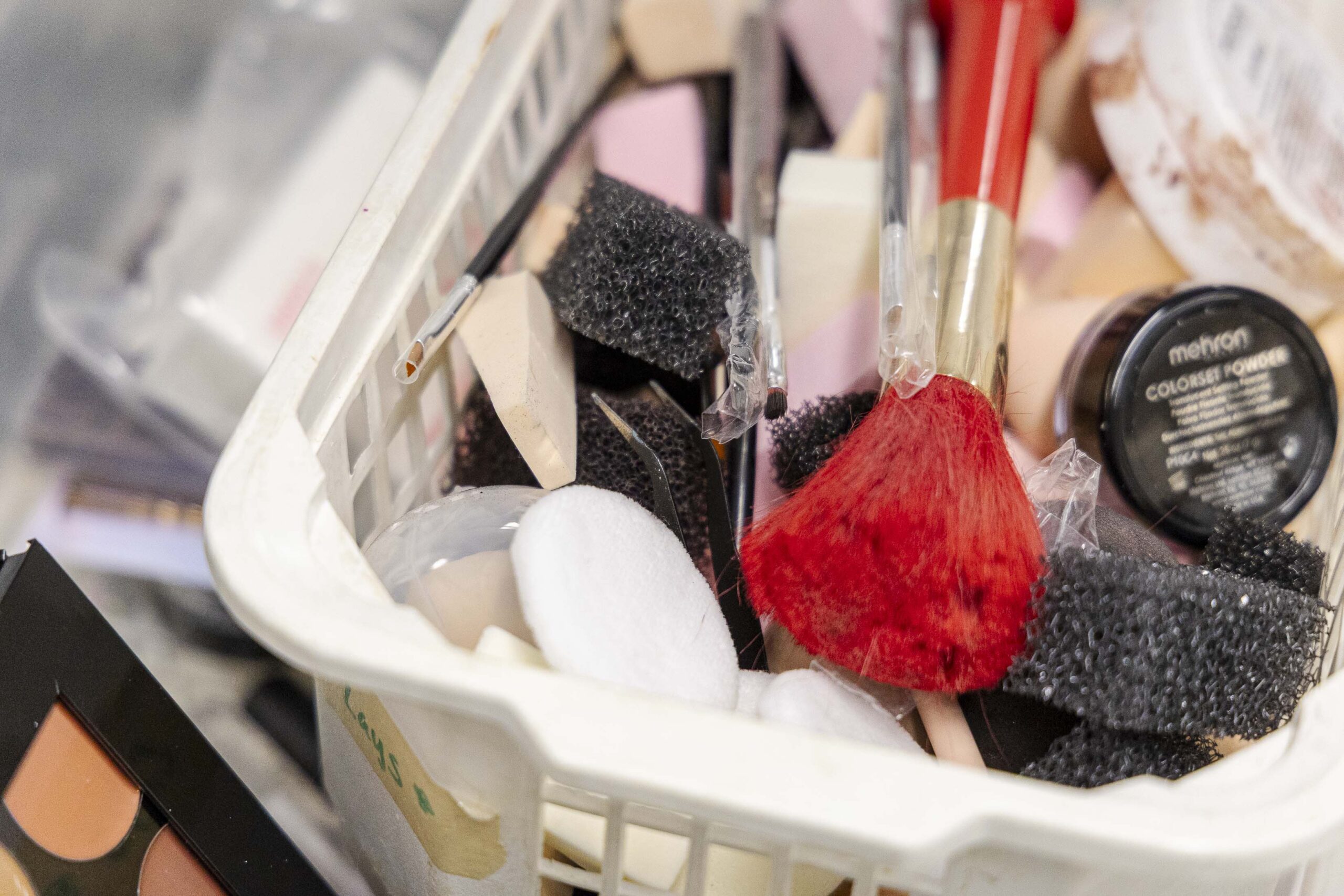
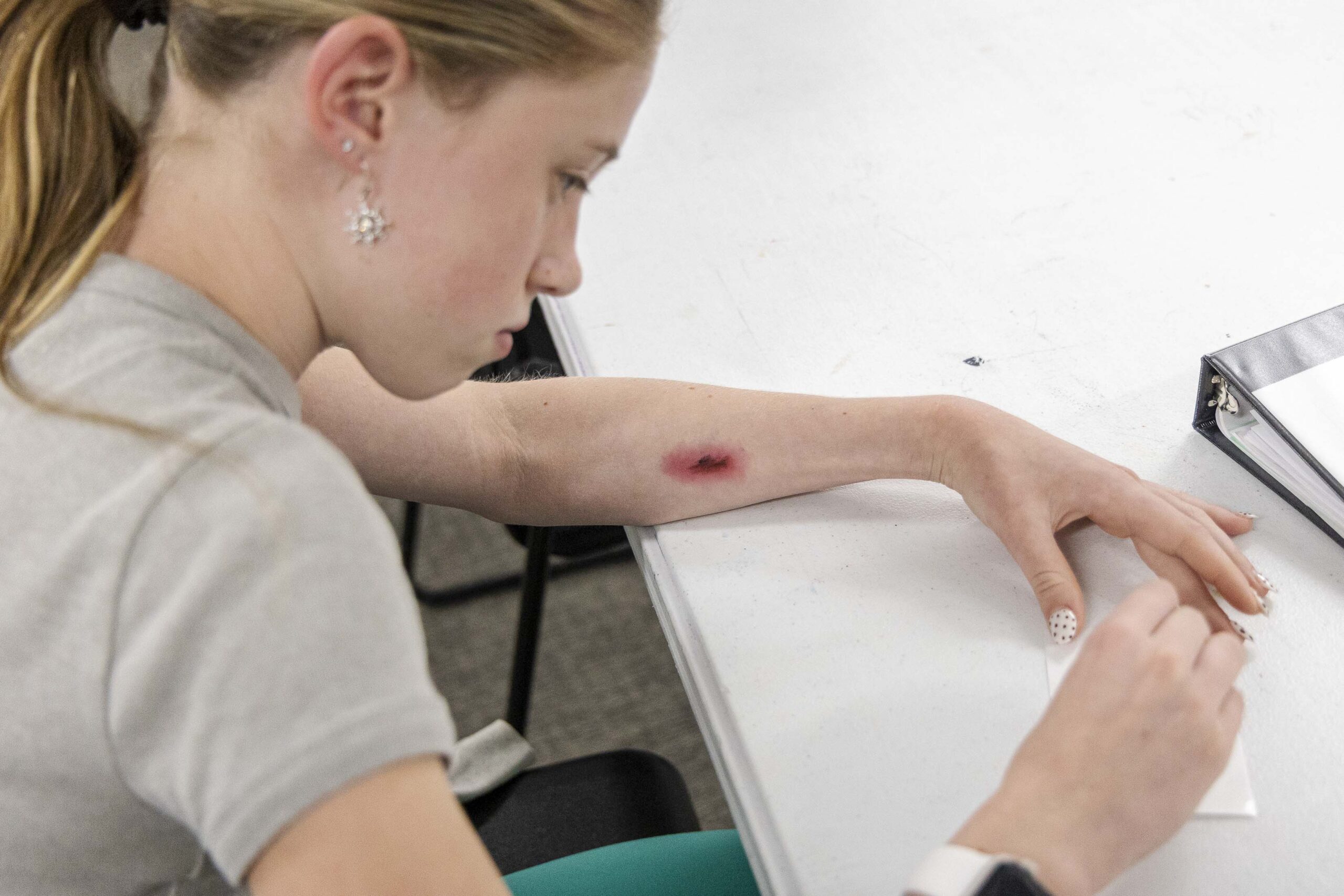
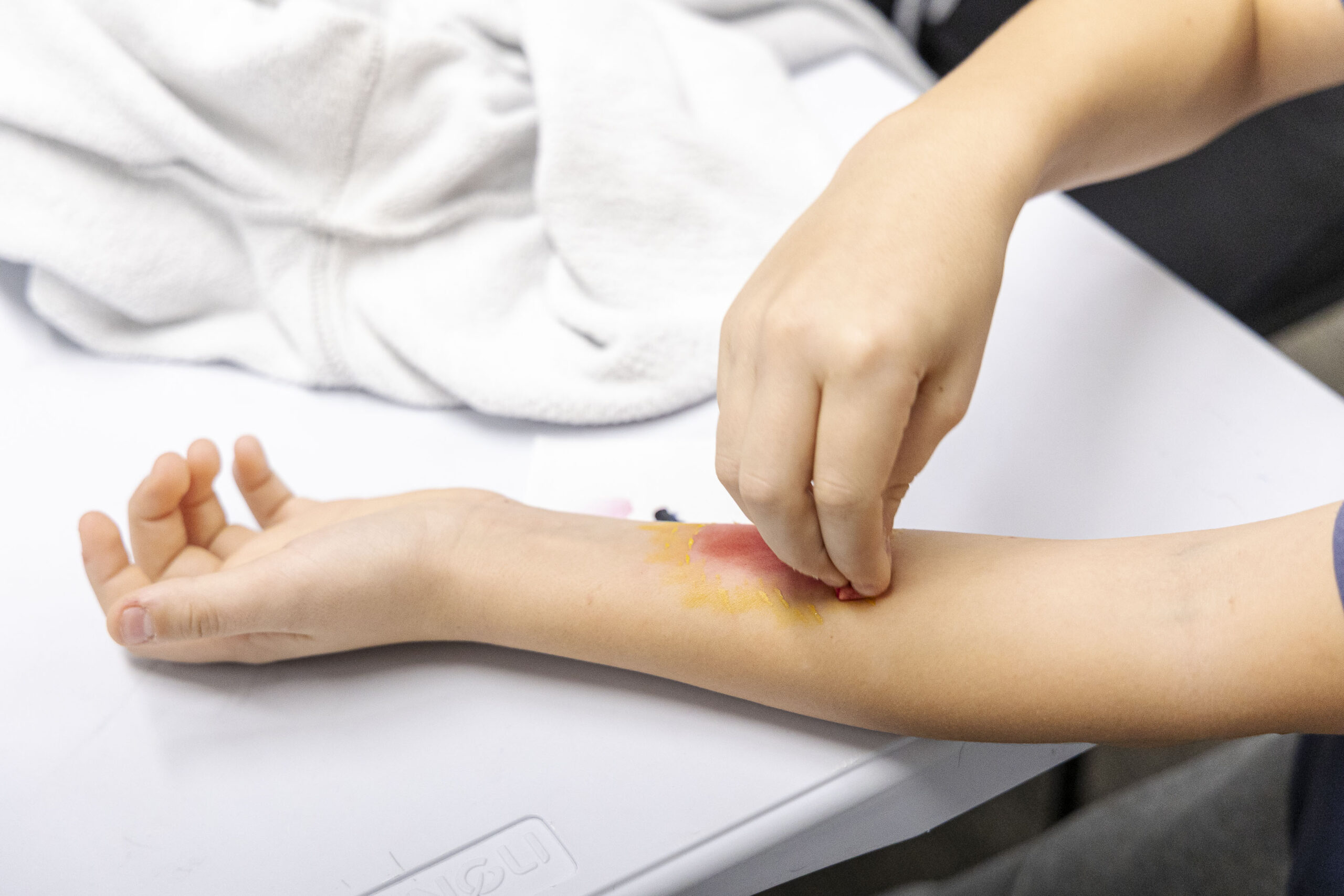
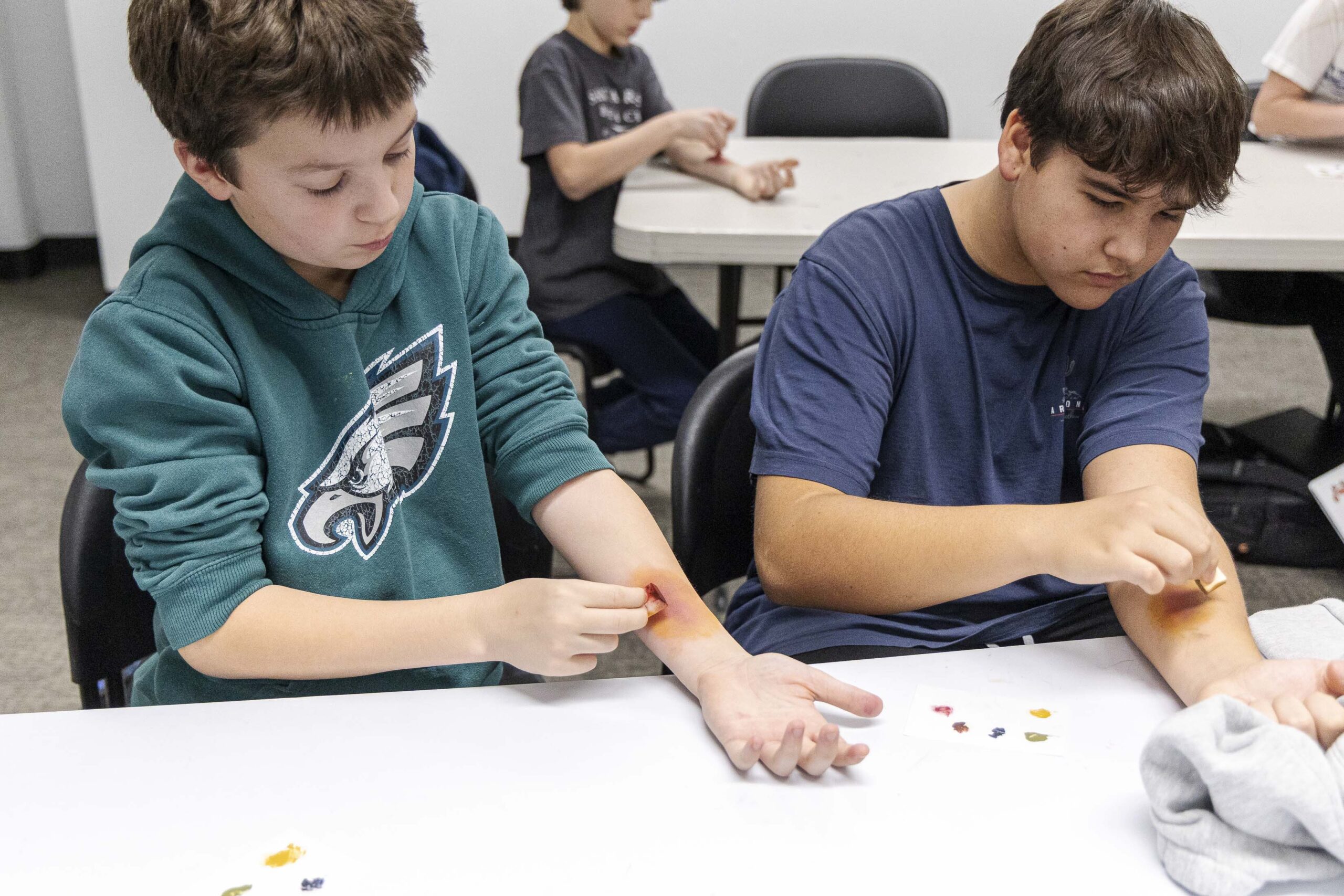
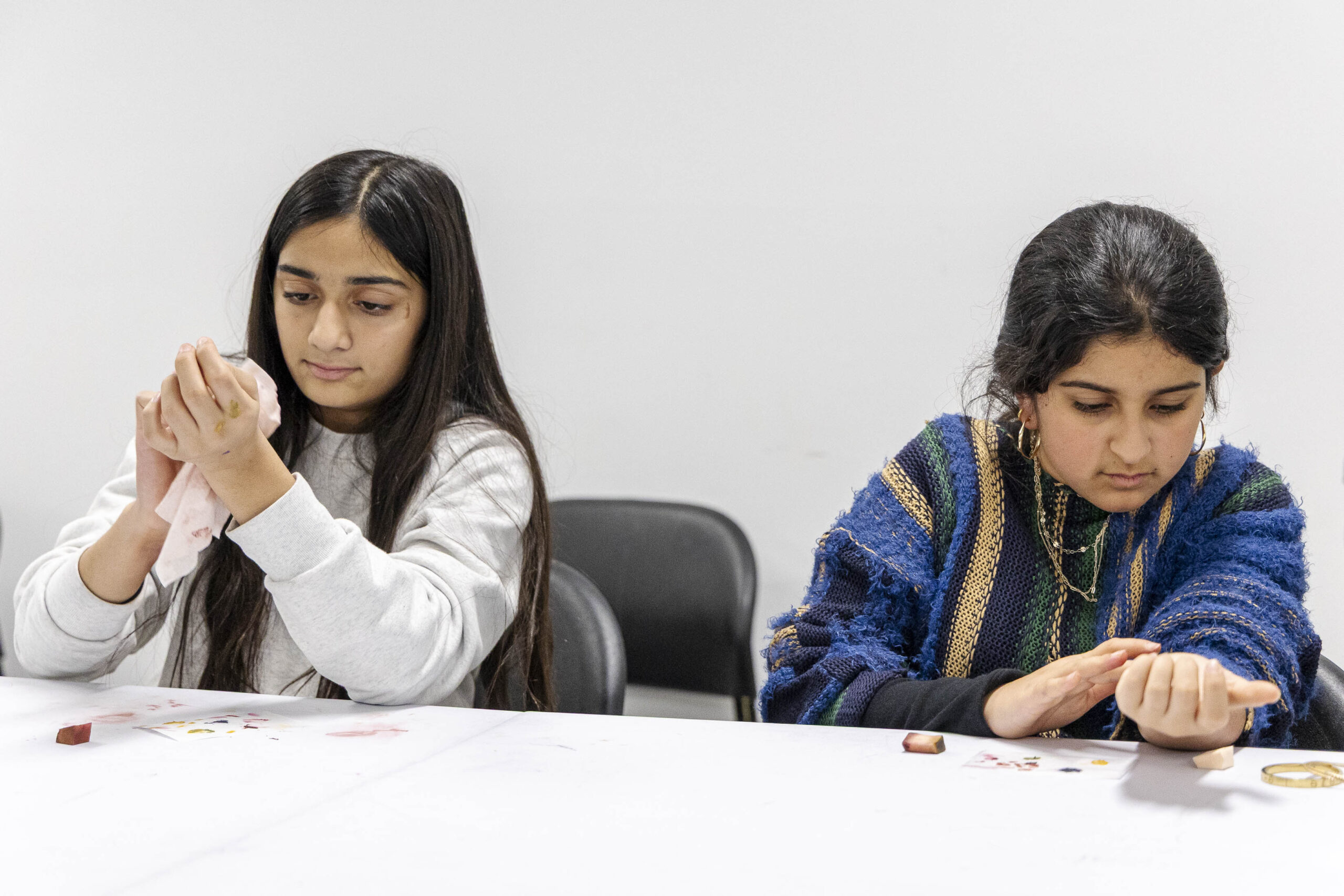
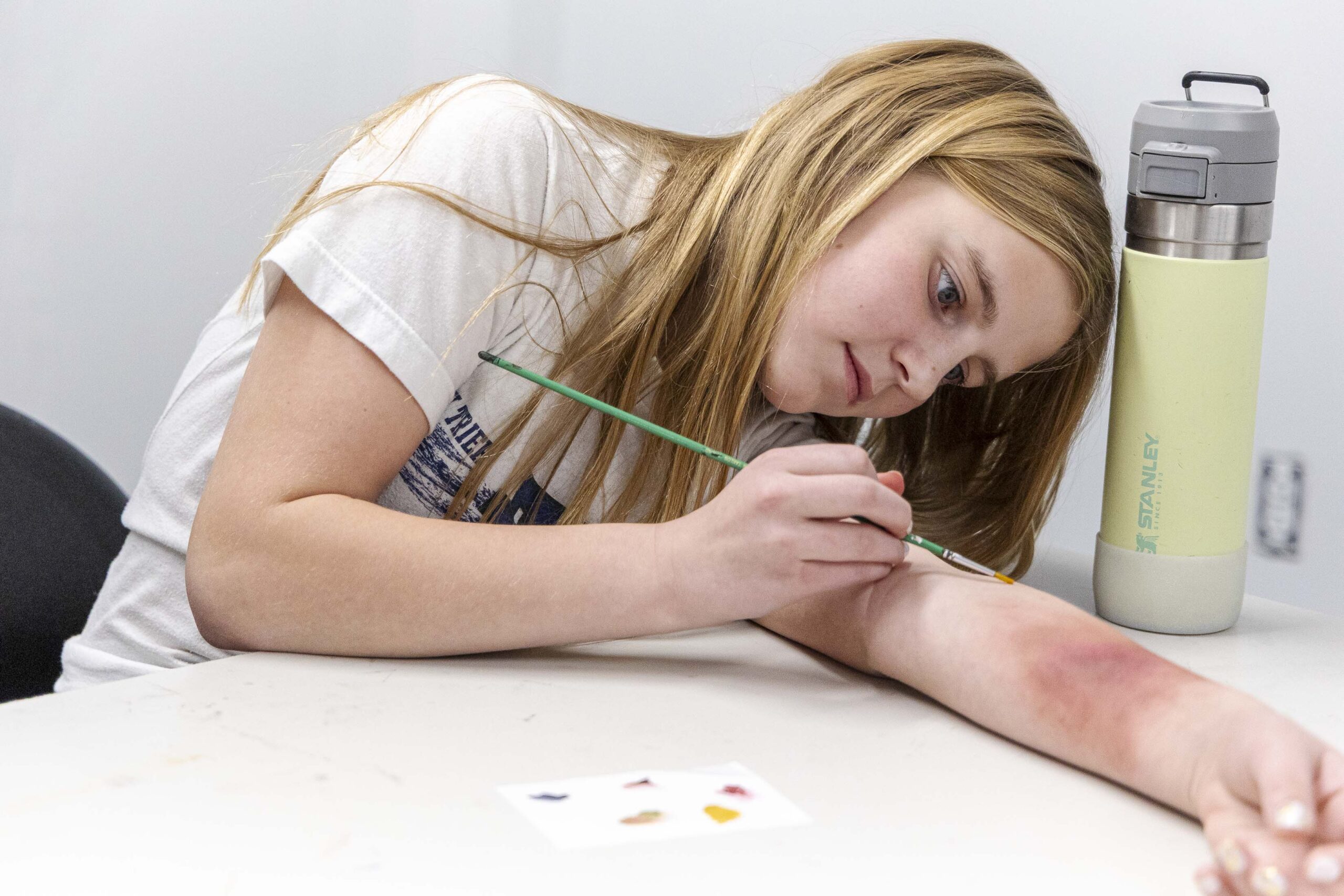
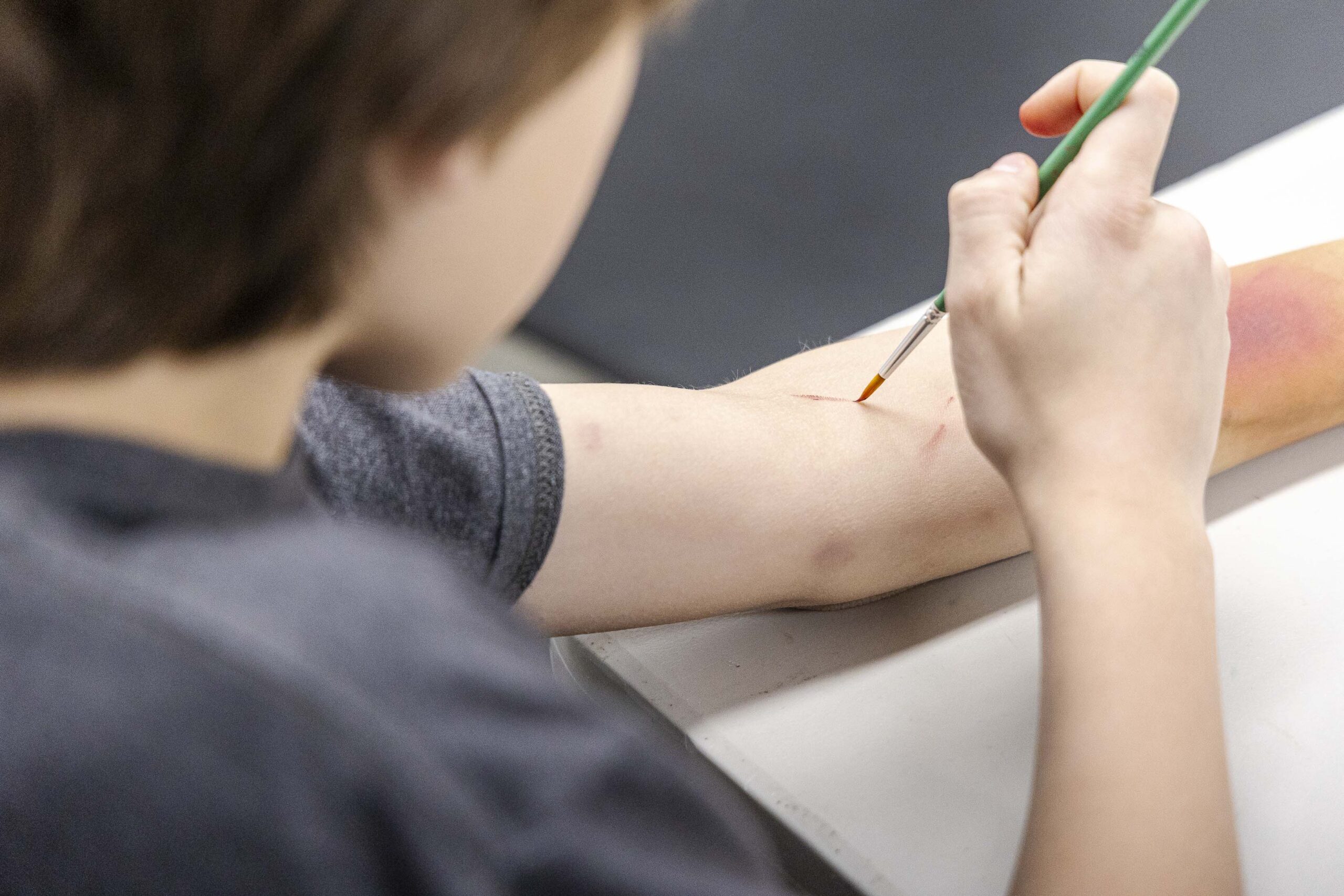
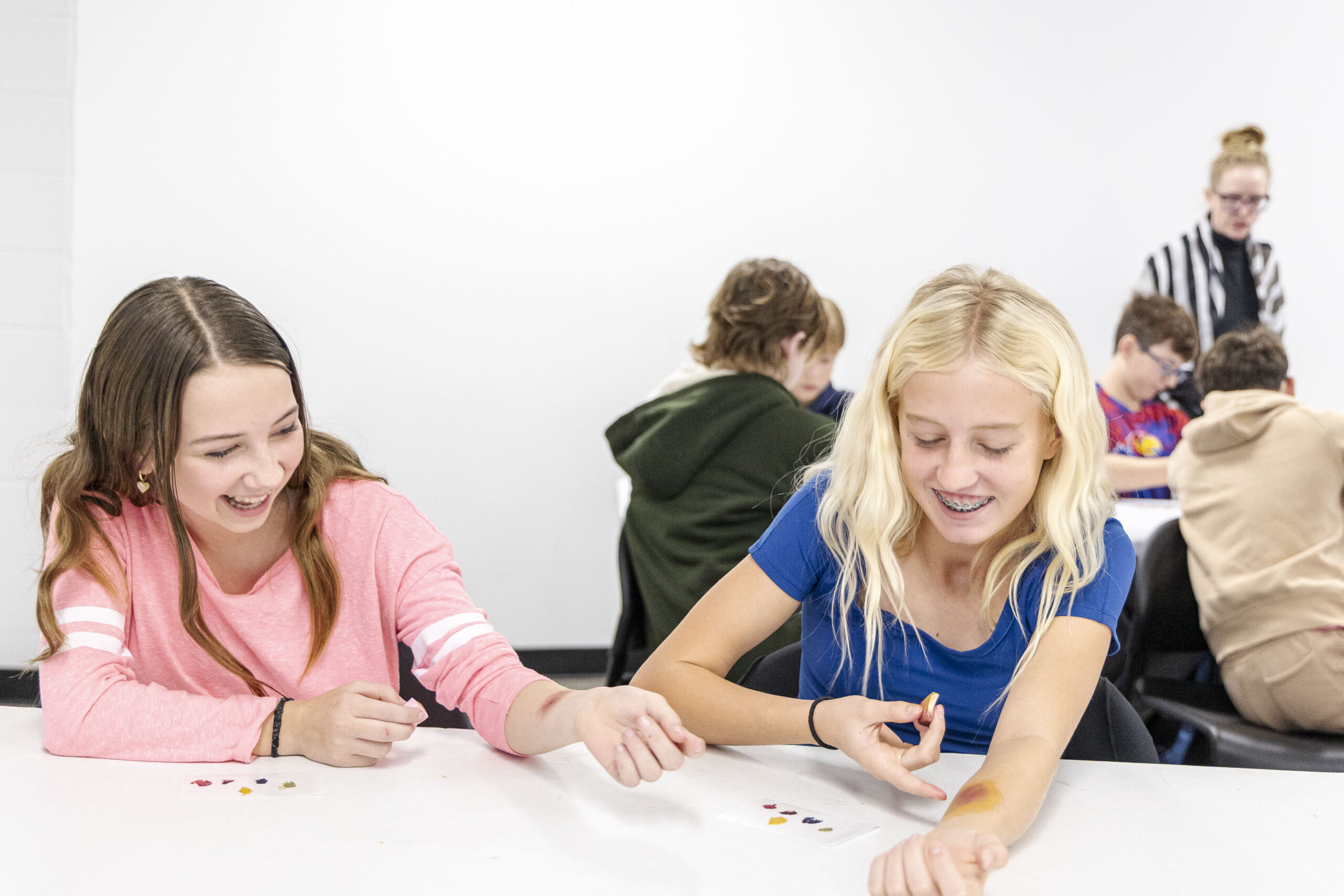
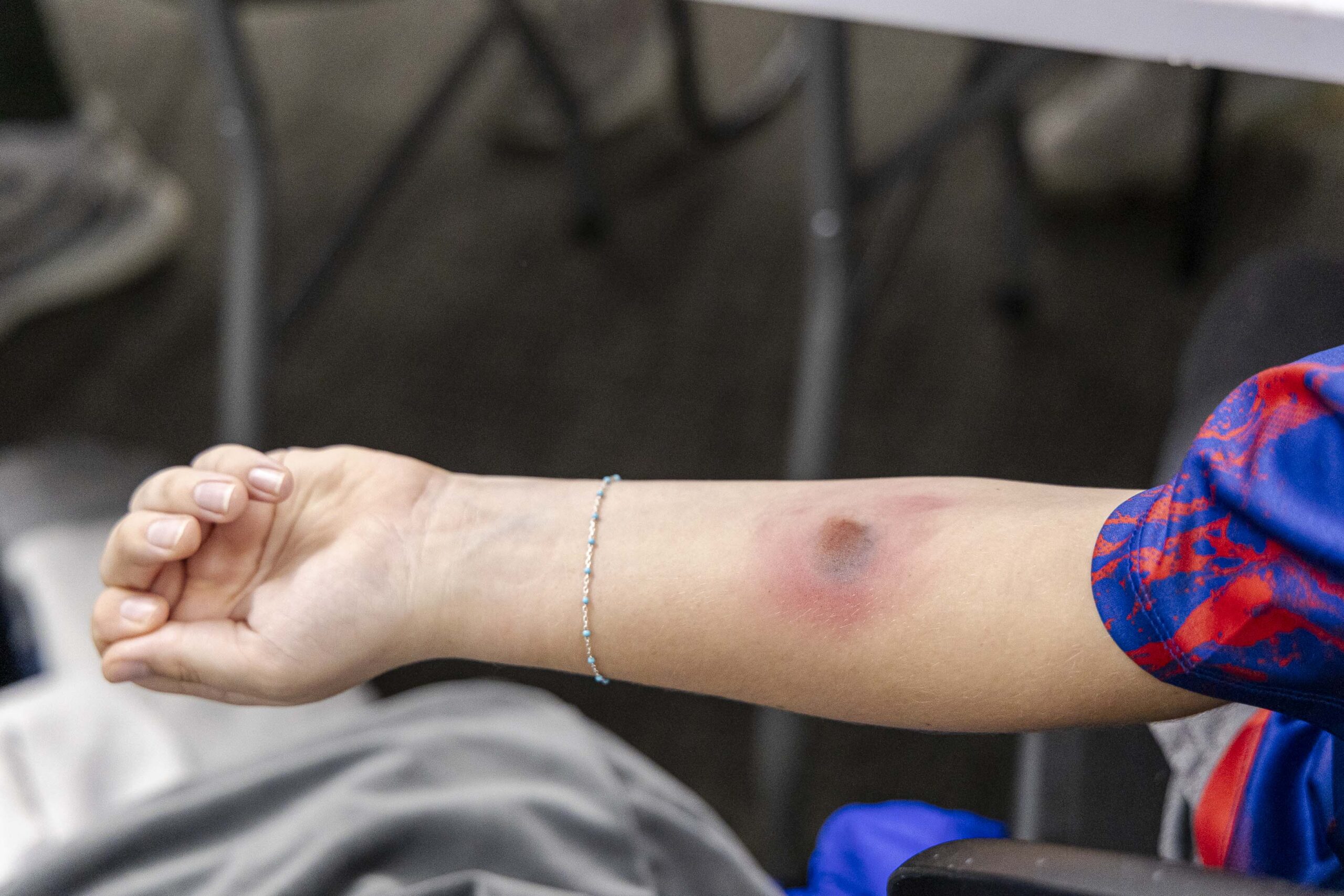
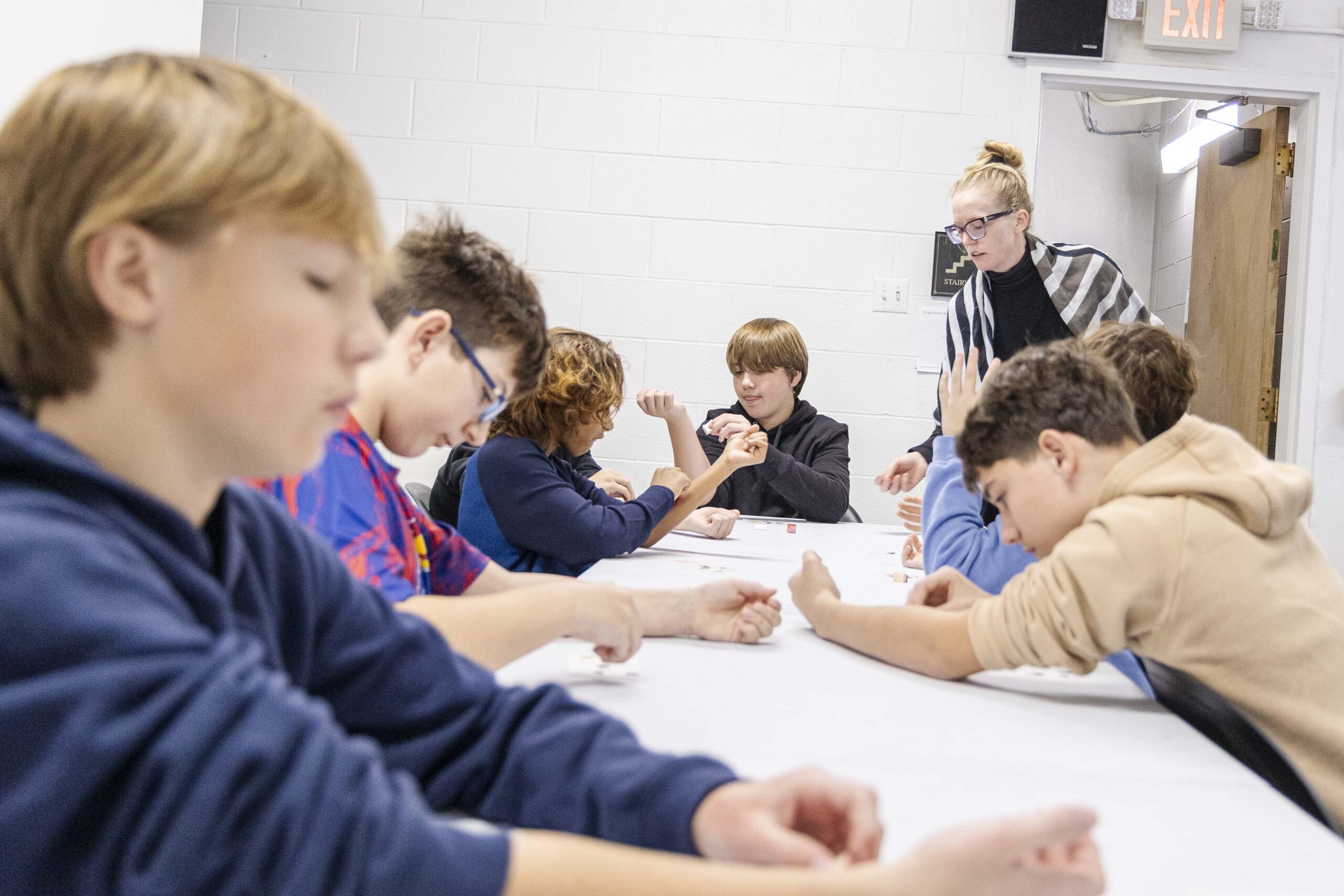
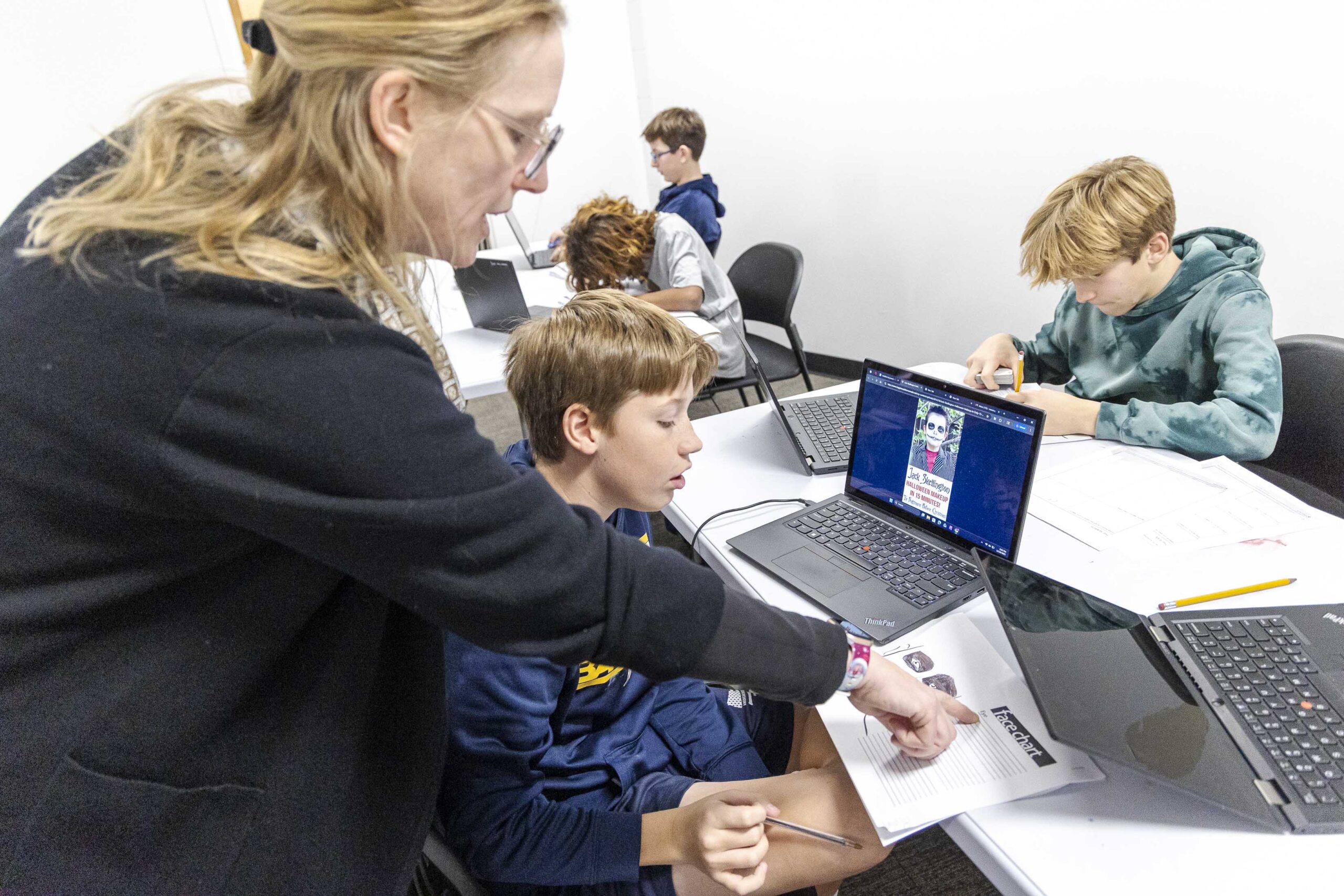
Another makeup exploration involved using a face plot, a technical document used in theatrical makeup design. It has an outlined face template that the makeup designer uses to sketch and plan a character’s specific makeup application. Students searched online for images they wanted to replicate and noted what colors, brushes, stencils, textures, and shading would be needed to bring their designs to life. Mein said, “A face plot is like a sports playbook. And it’s the most important thing because you can’t just wing it every night, and you might not be the one doing the makeup each night either.”
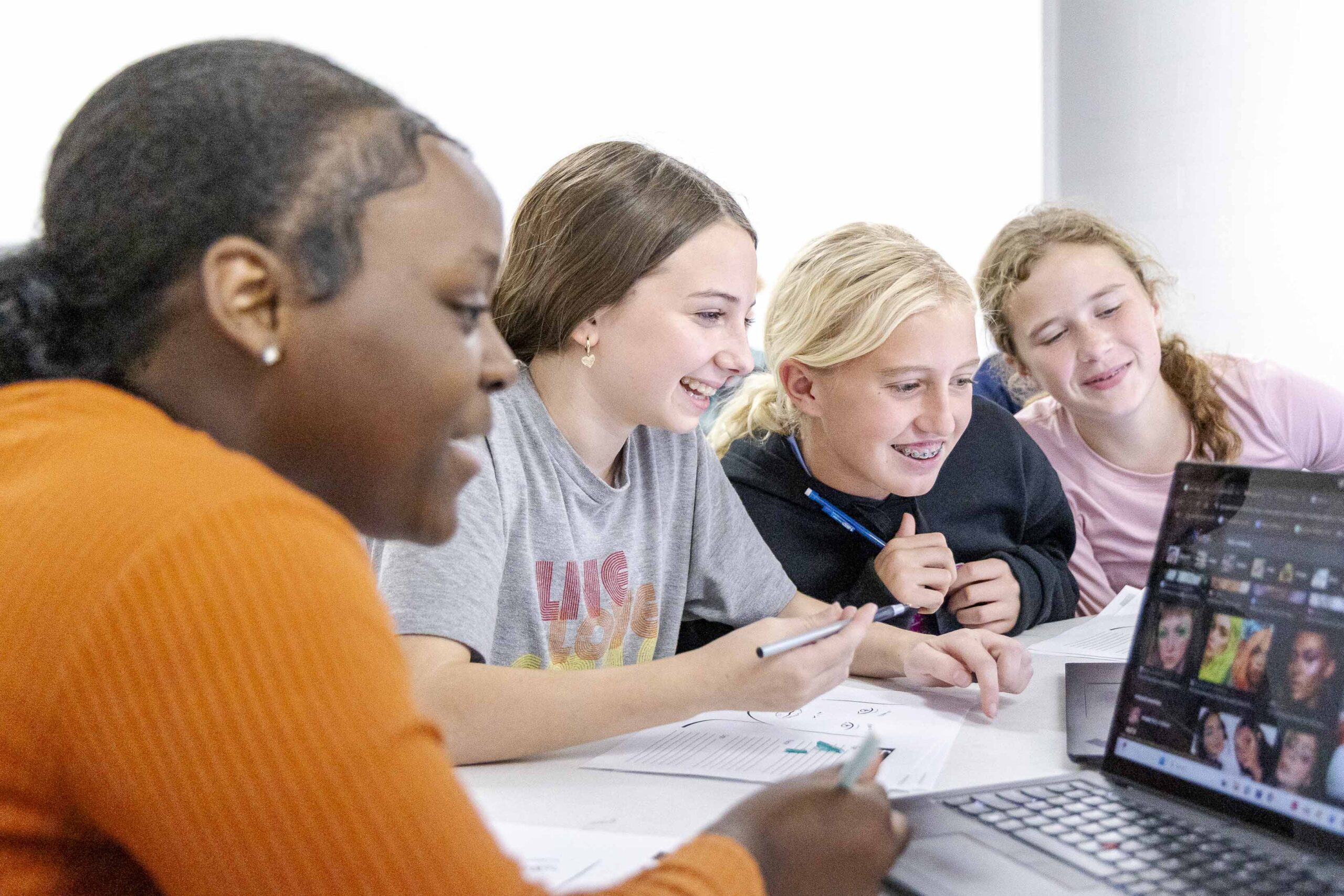
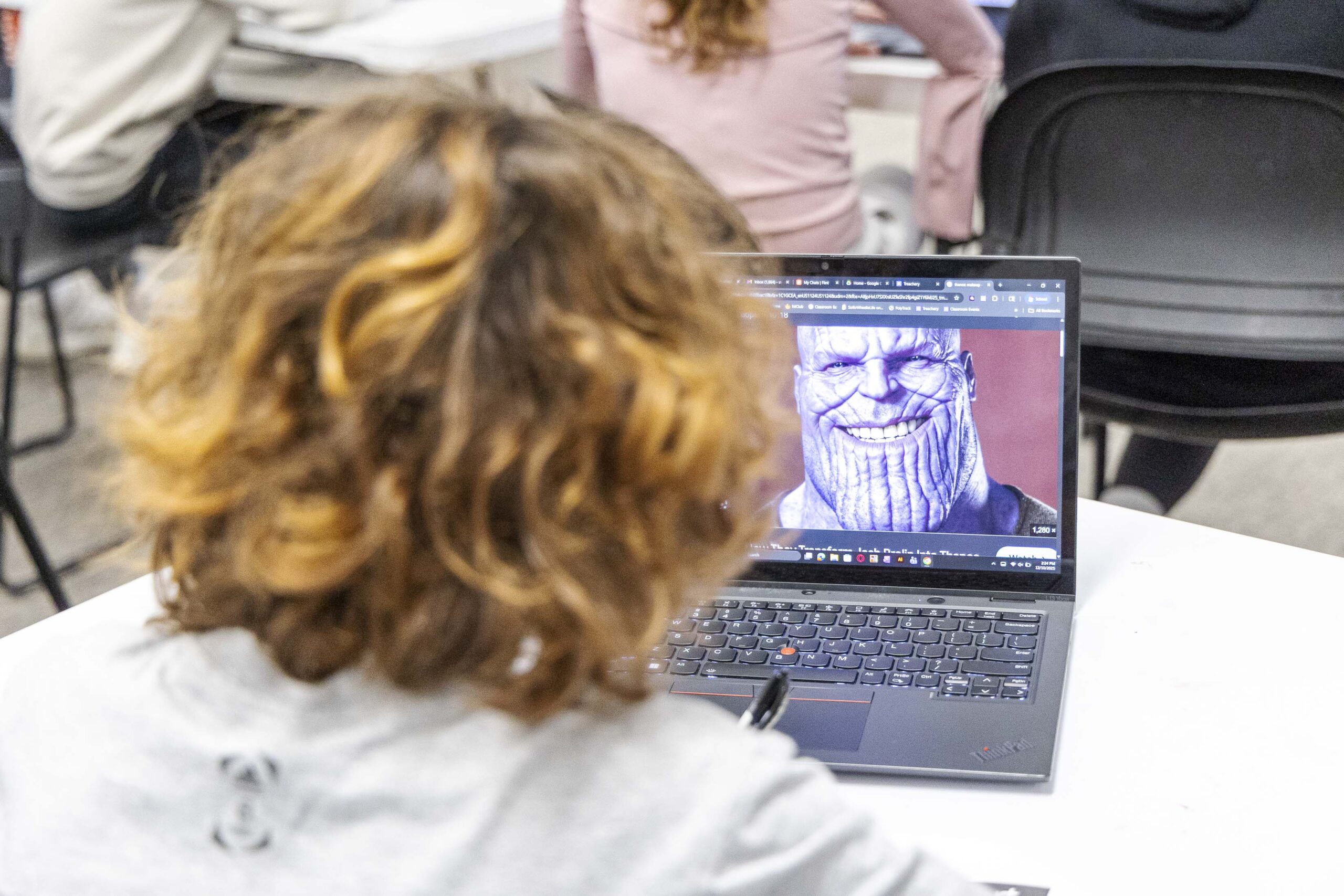
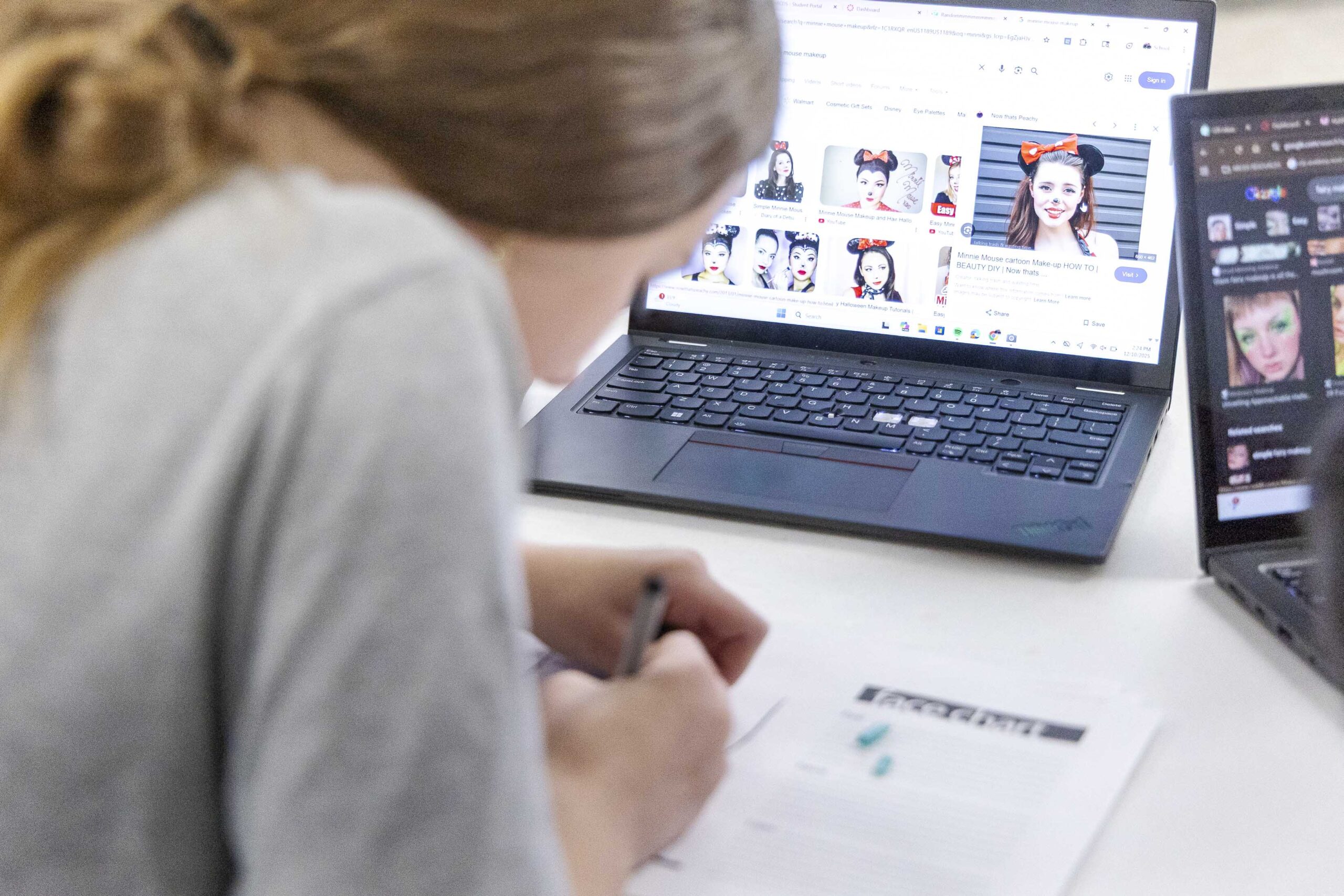
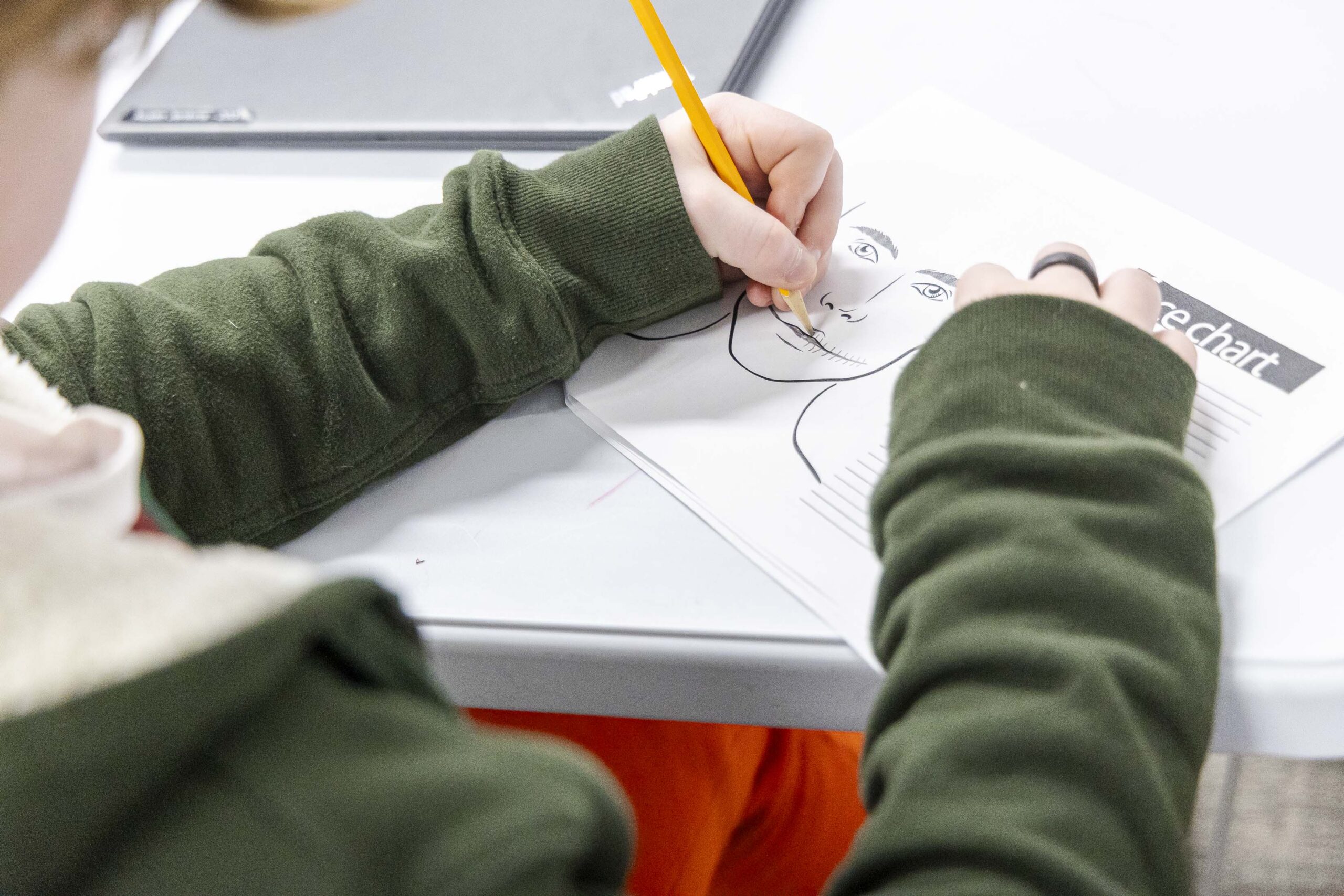
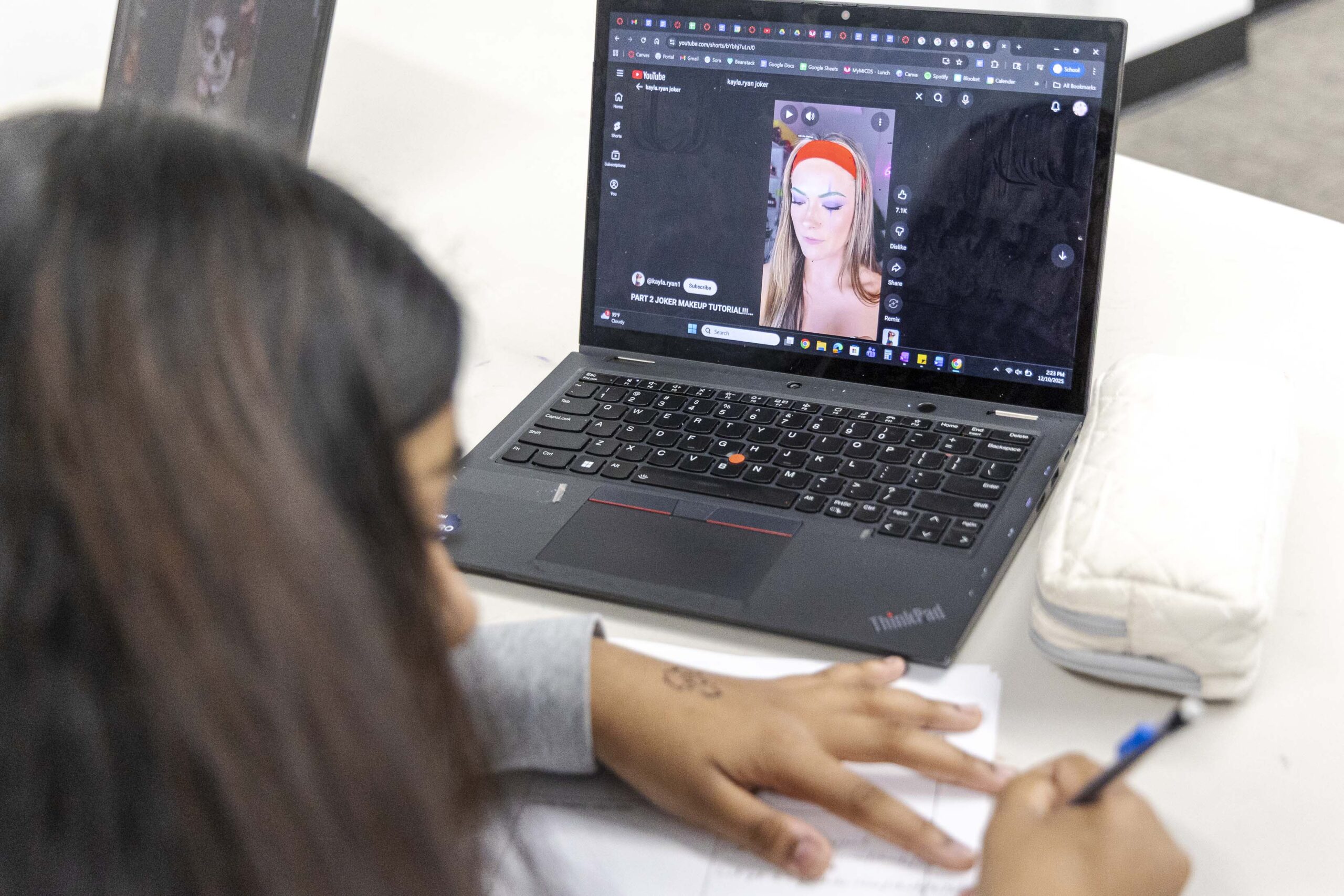
Students quickly embraced these technical skills:
- Austin Jenkins ’31 enjoys sculpture and 3D art and likes the unit on makeup, where you can make yourself look like someone else. “I really like Jack Skellington, and it would be cool to know how to do that again someday. I also like understanding different shapes and shades and how they work together. It’s really interesting. I loved learning how to use the bruise and scratch makeup,” he said.
- “I chose this class because it seemed interesting and I wanted to try it out,” said Peyton Williams ’31. “The makeup has been my favorite part, and I’m looking forward to understanding more about it and trying things out. Being with a class makes it fun and easier to learn different perspectives.”
- Frank Warmke ’31 is excited about technical design. “I already like technology, and as a class, this is really fun, and I like being creative. I’ve enjoyed the makeup unit the most so far. We learned about the catwalk, lights, and sound, and I’m looking forward to more fun activities and units,” he said.
- “I chose this class because backstage stuff looked fun,” said William Benoist ’31, who has no desire to be on stage. “I’ve enjoyed learning new things that happen backstage. I like doing the different units along the way with friends.”
- Betsy Branca ’31 loves theatre but doesn’t necessarily enjoy acting. “I chose this class because technical design is a great opportunity to be in the theatre productions behind the scenes, so you get to know the actors and the people behind the production,” she said. “I really like costumes and makeup so far. It’s been fun learning how to create a good costume or makeup look. I didn’t know that we had a costume vault or how many costumes we had! I also didn’t know we have a tech design crew of students for productions; I thought Ms. Mein did it all. Tech design is super fun, I love the people in our class, and Ms. Mein is an awesome teacher.”
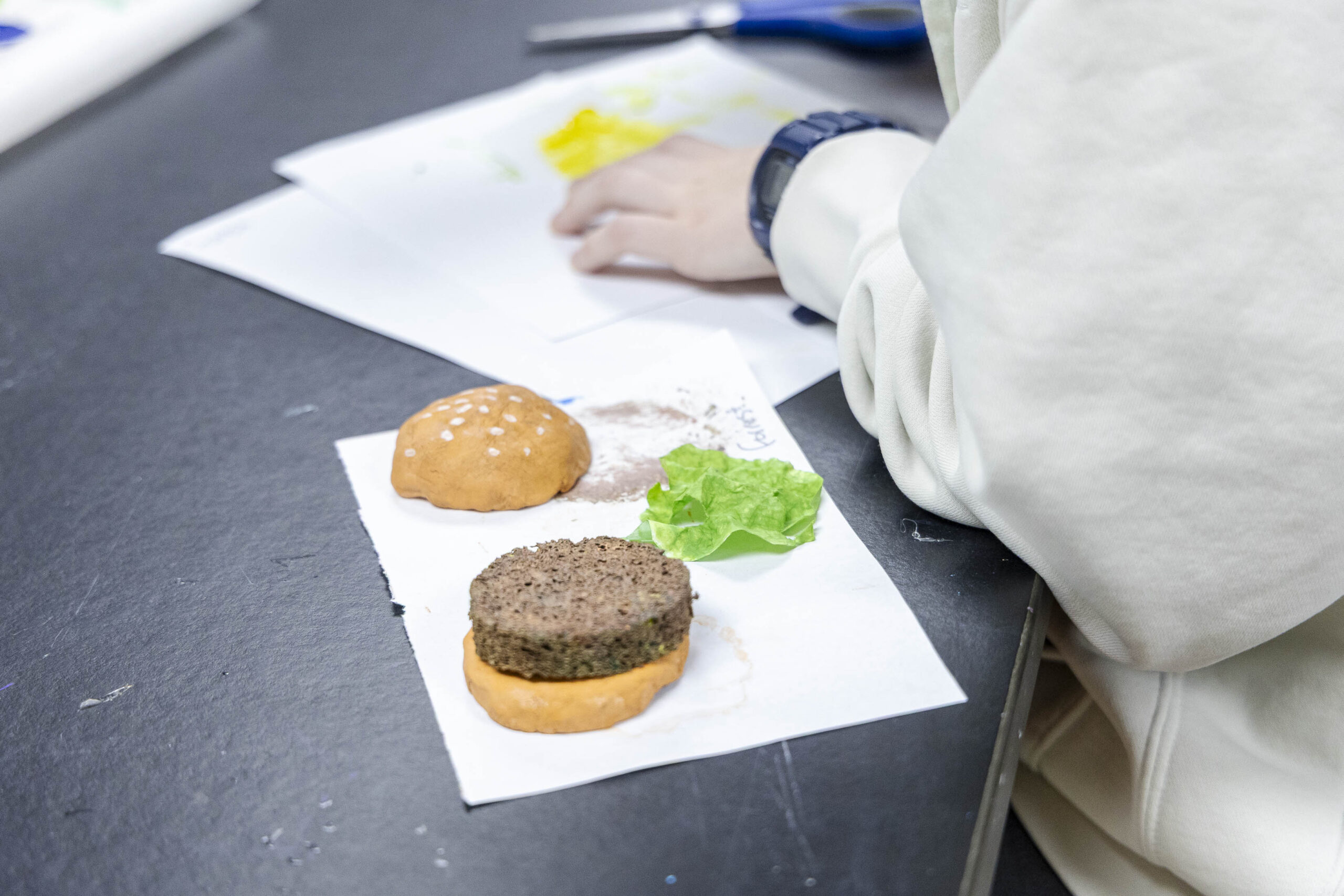
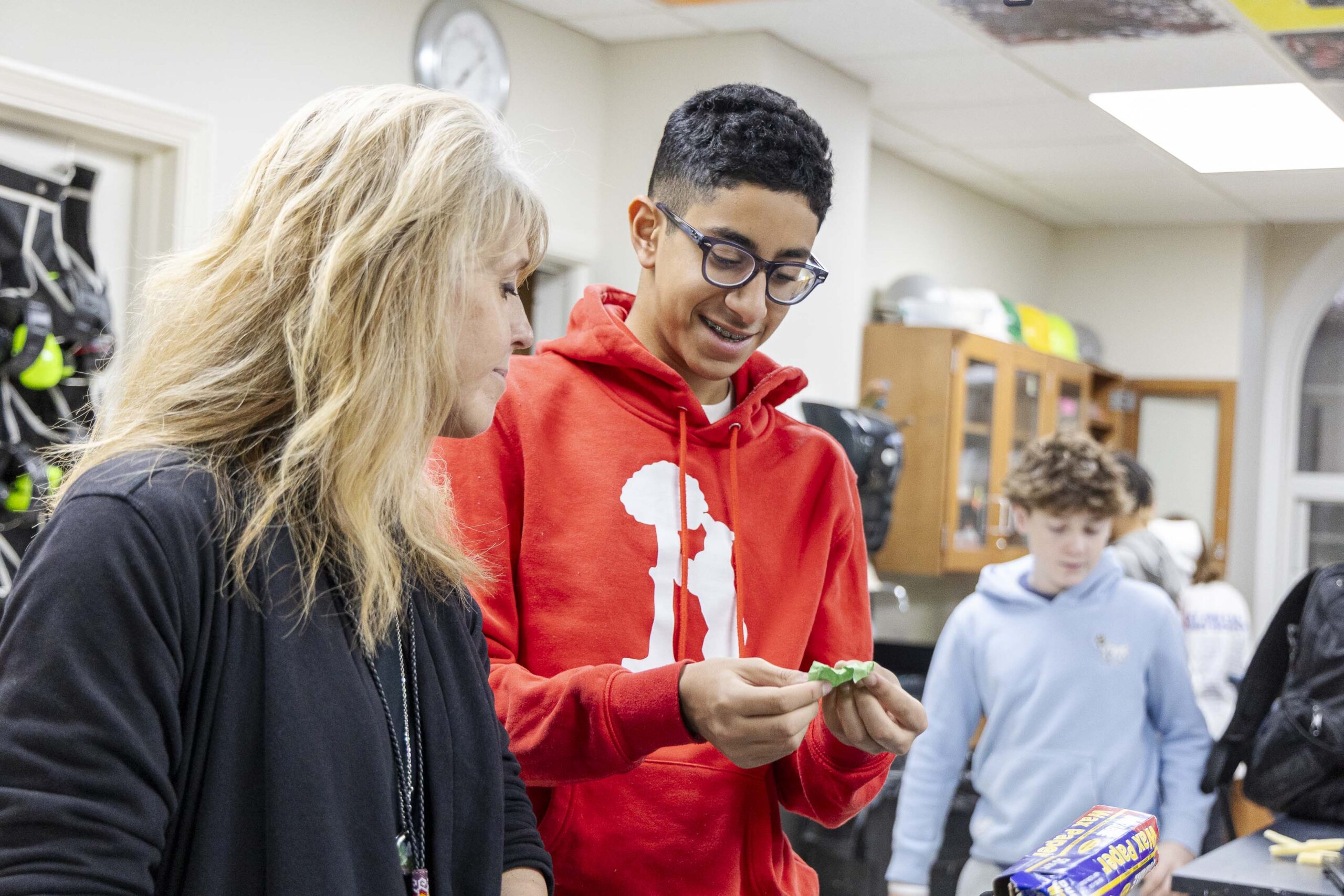
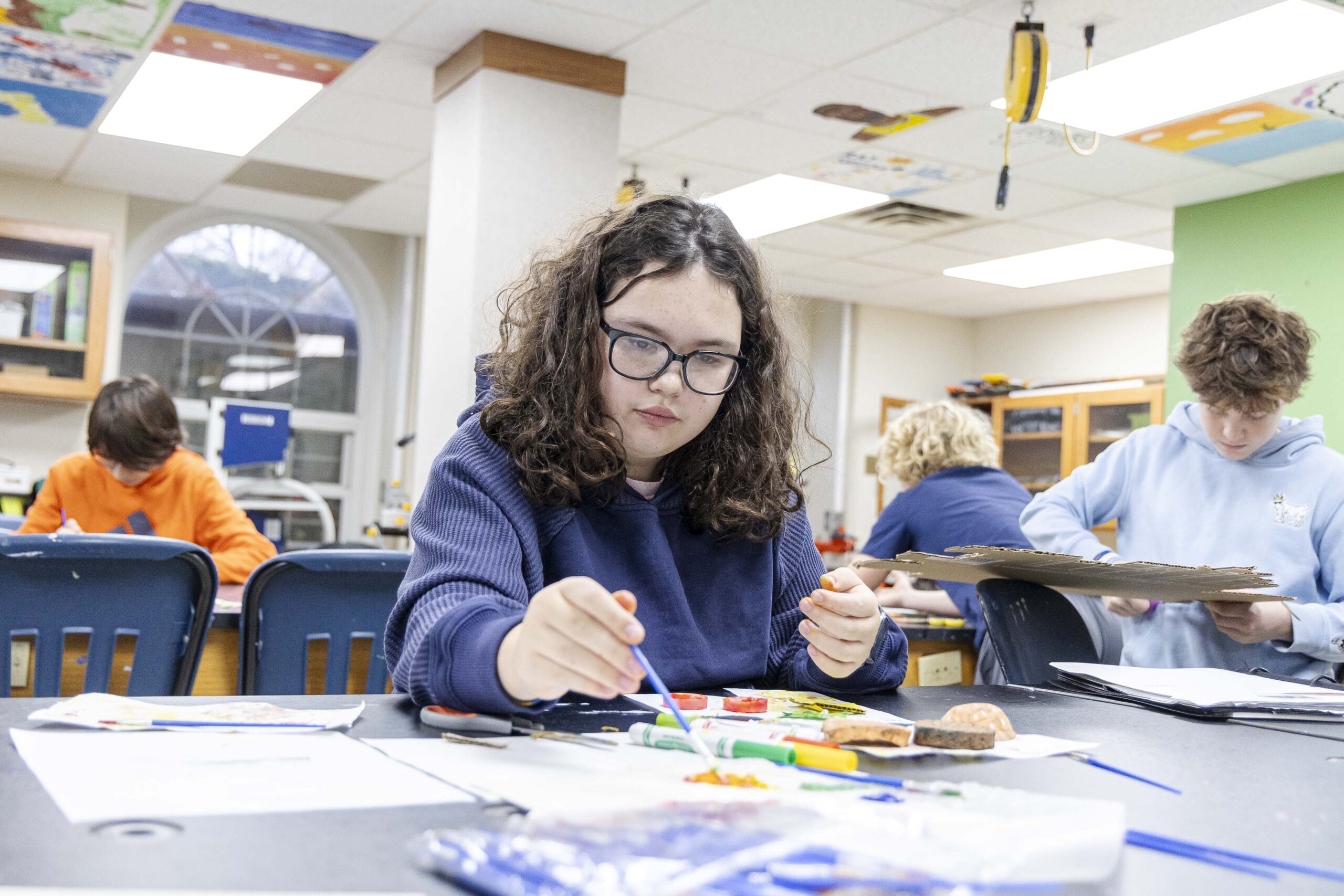
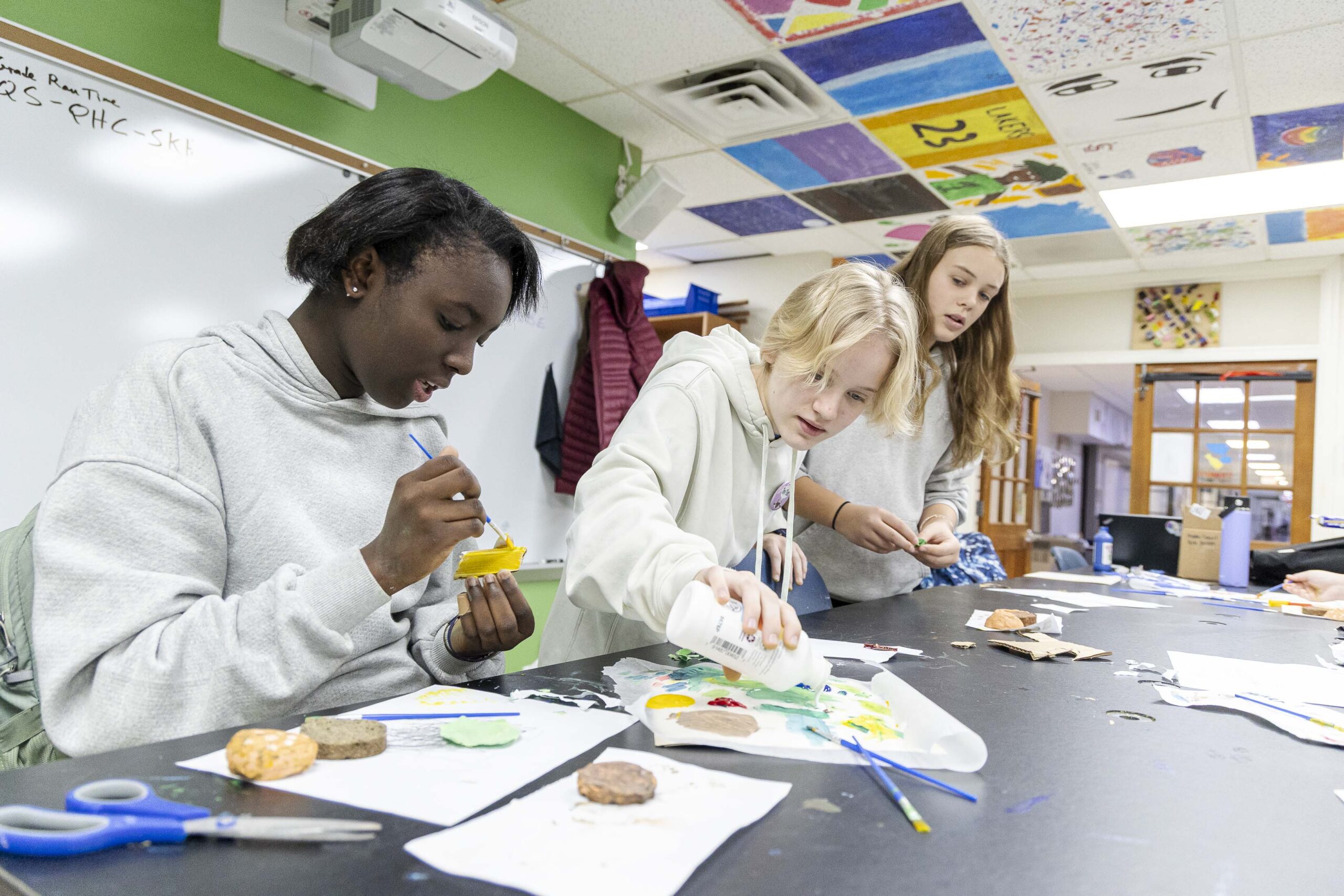
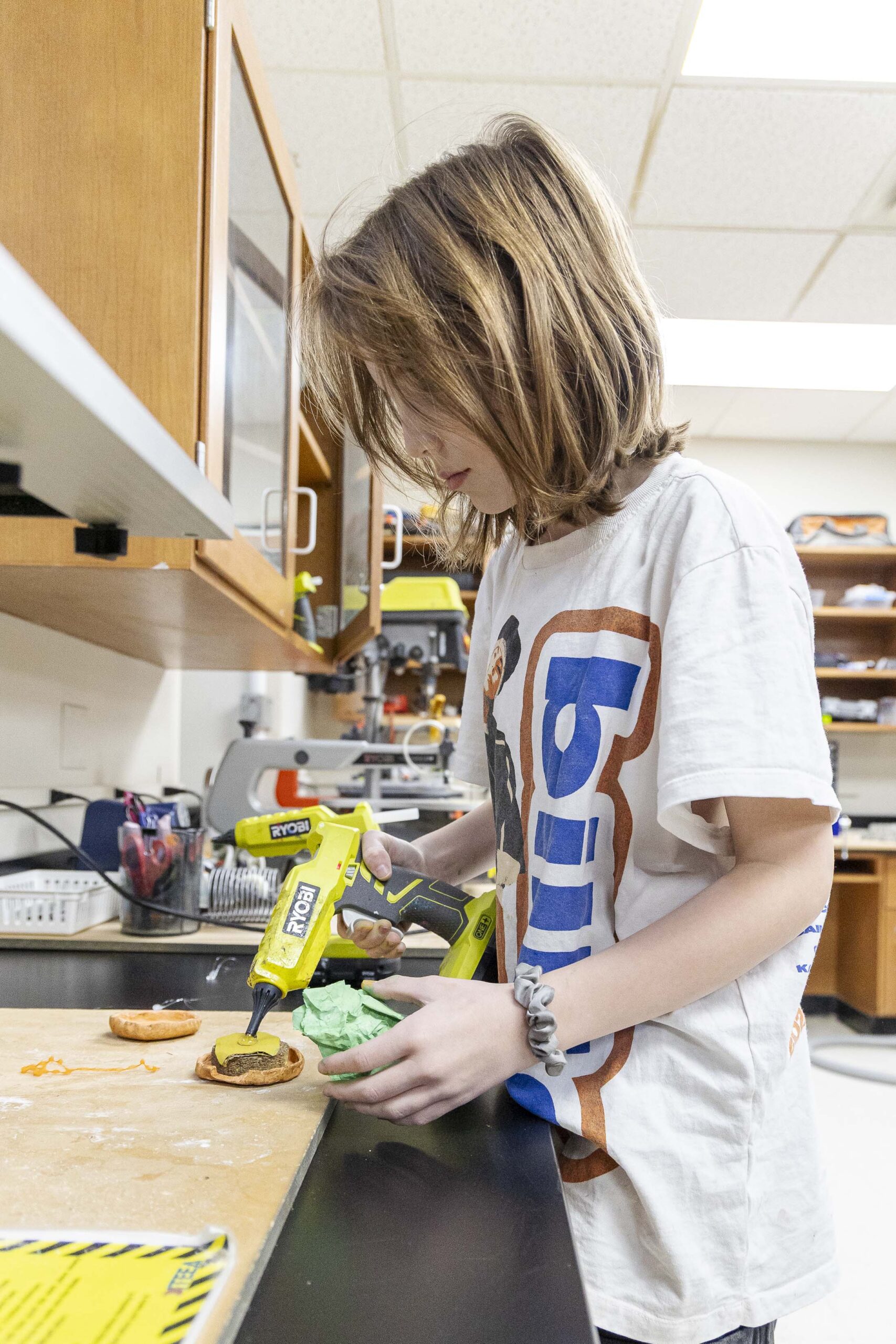
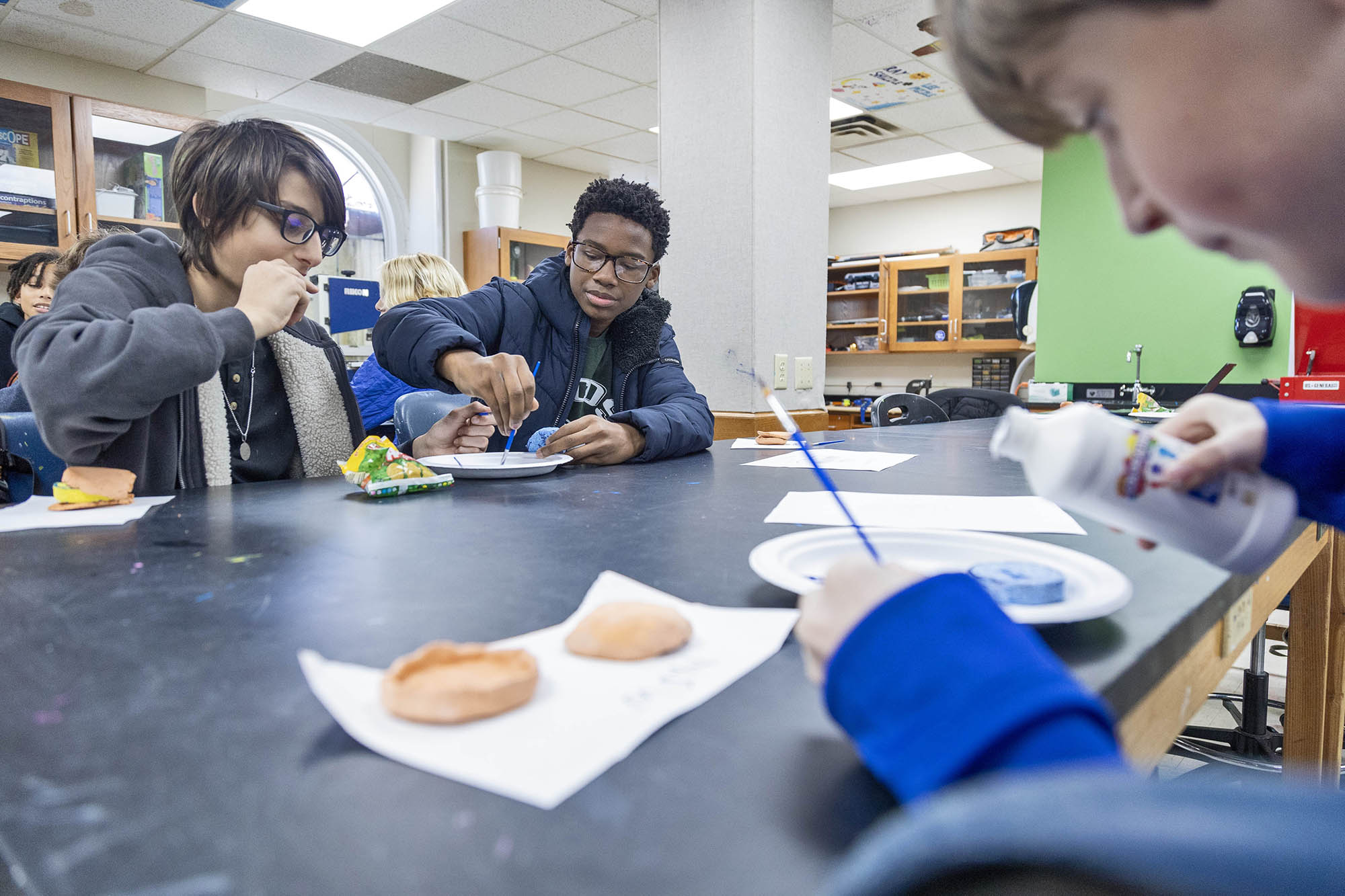
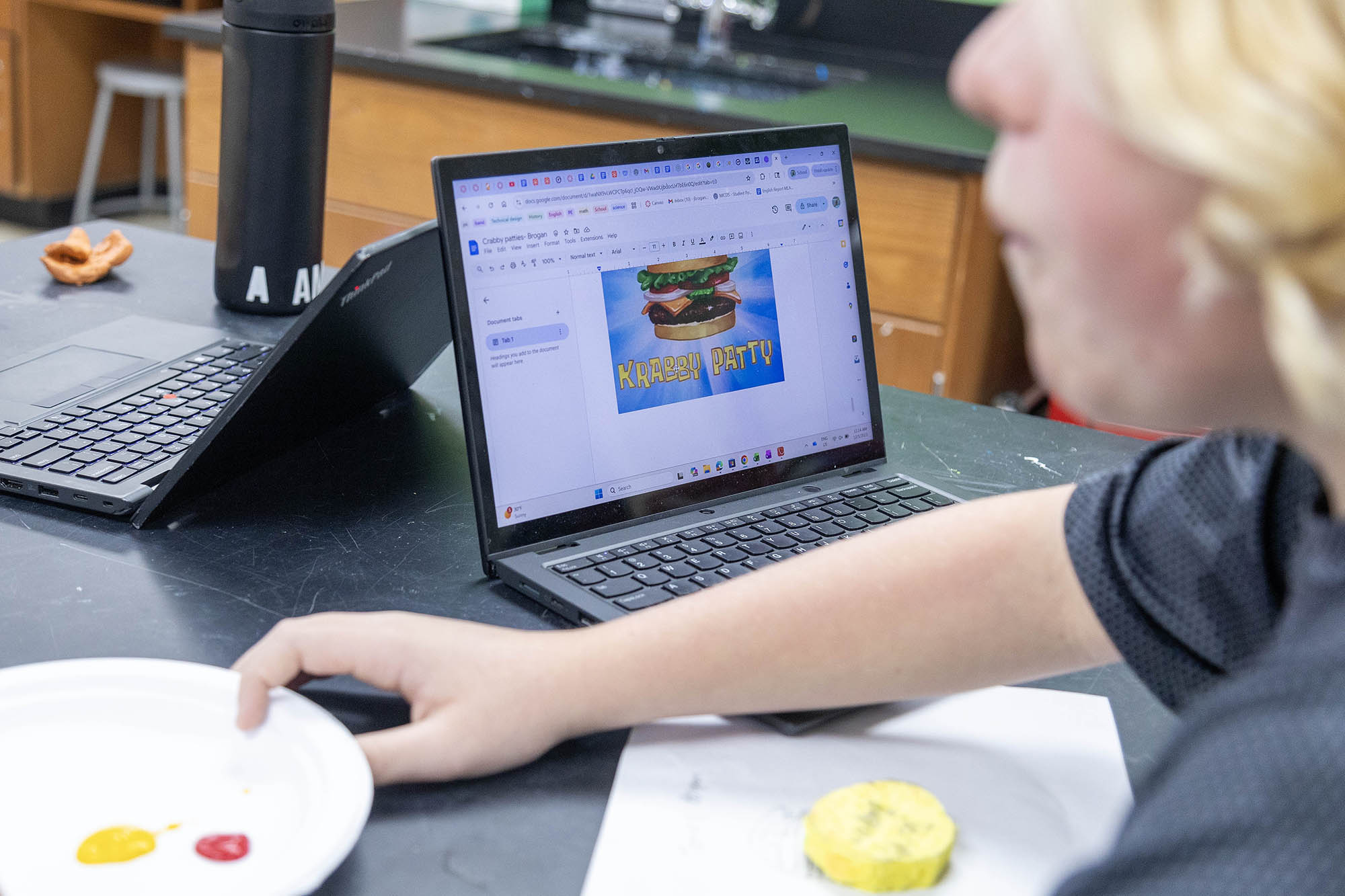
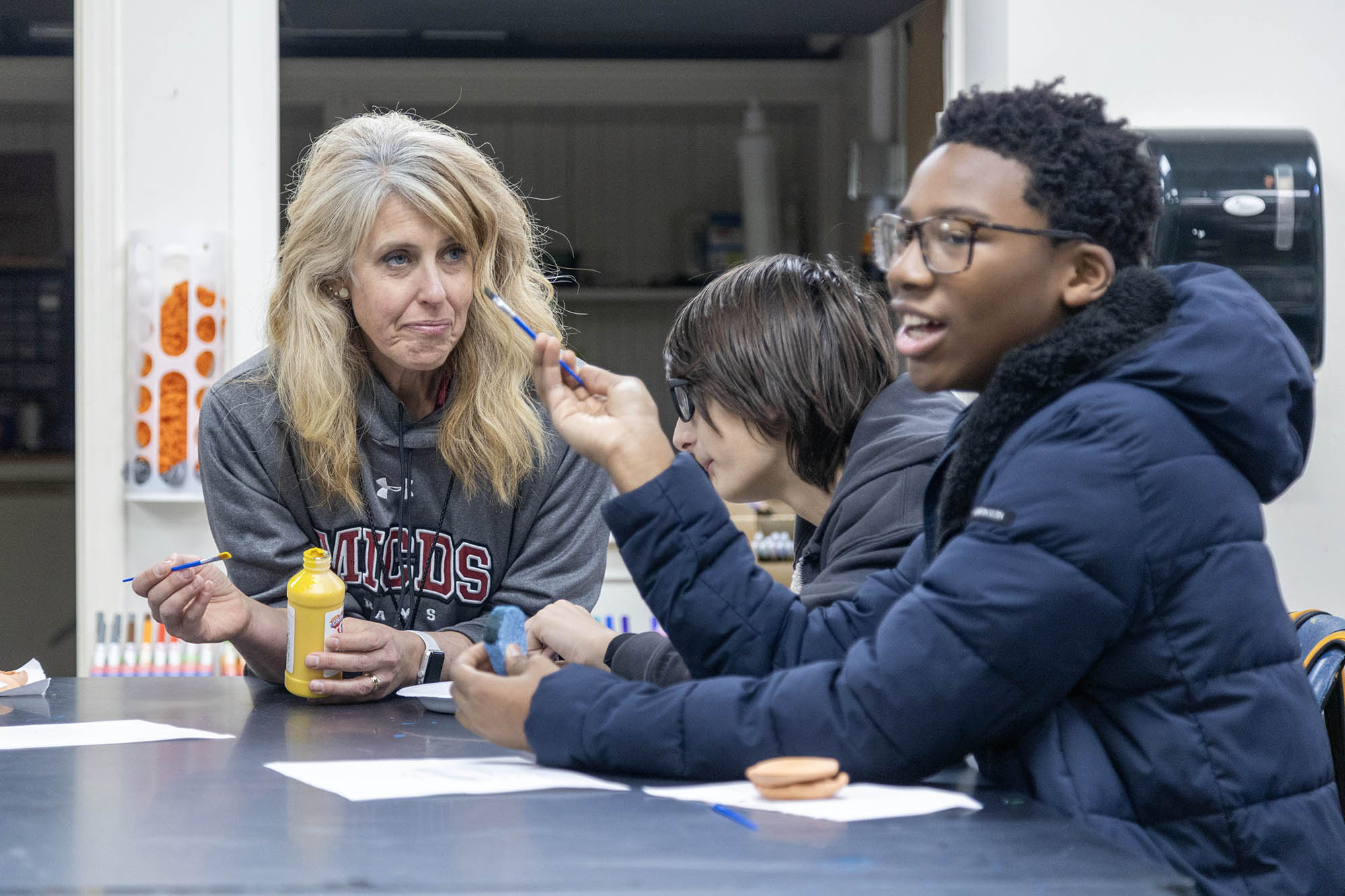
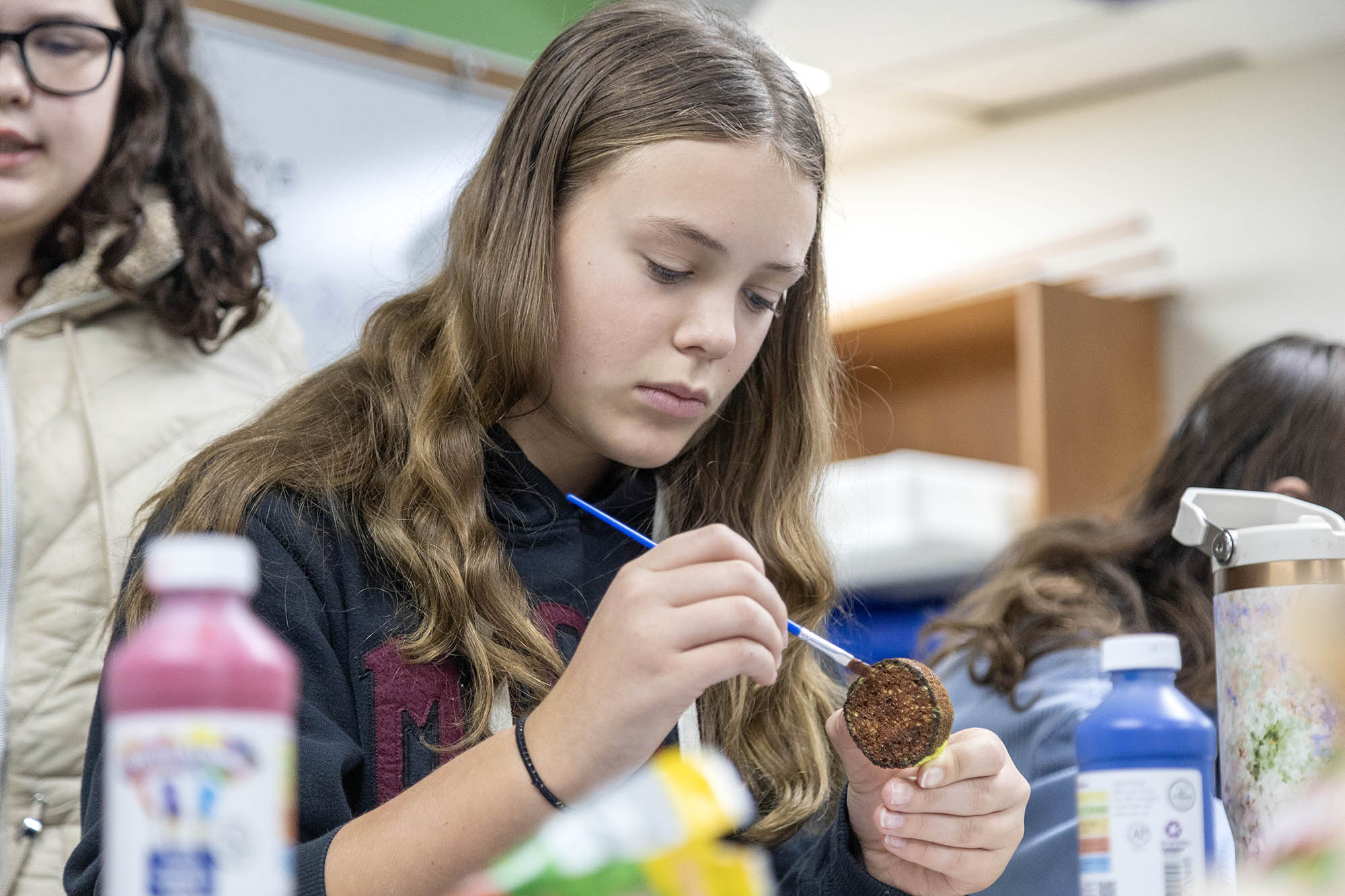
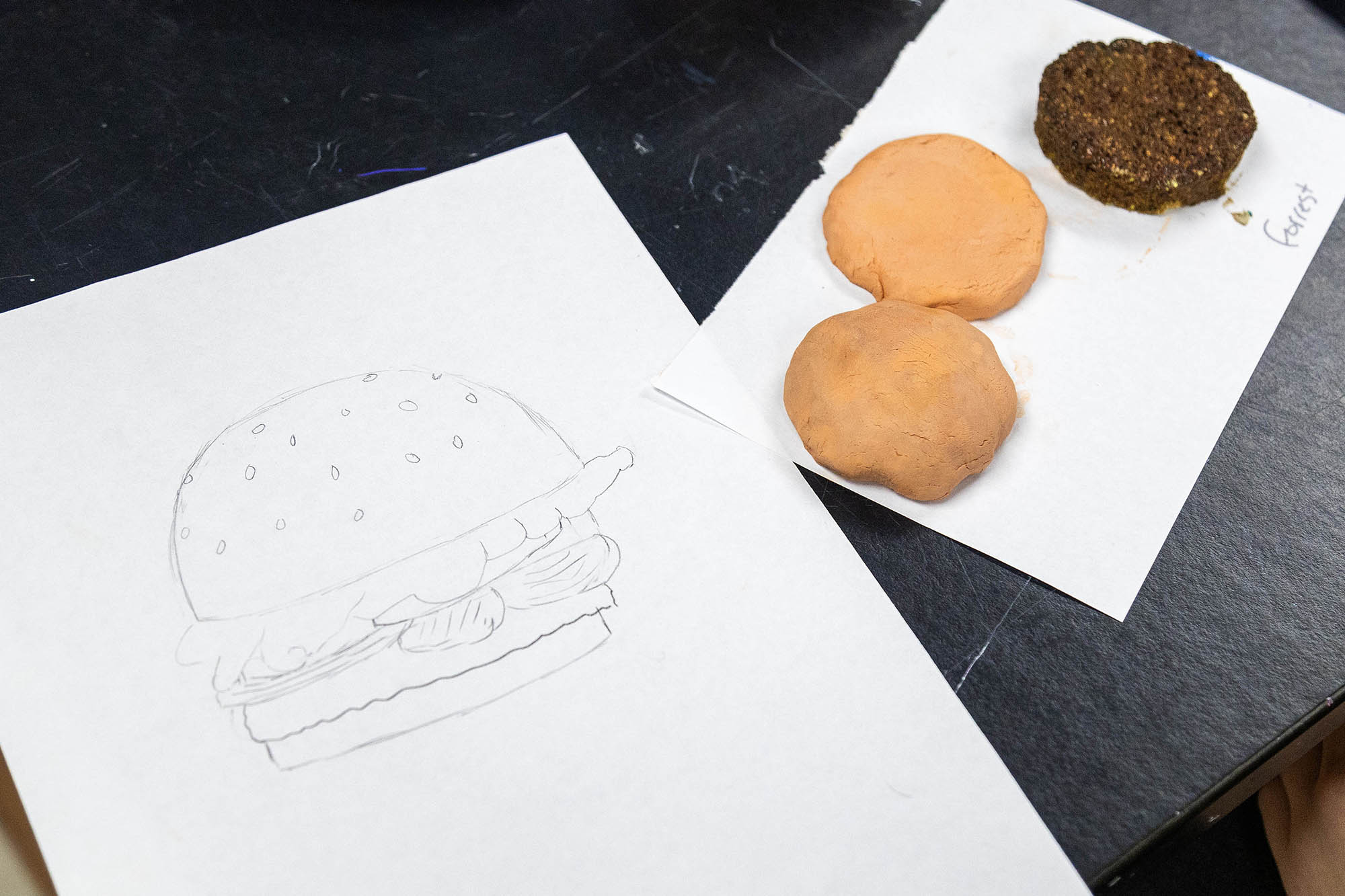
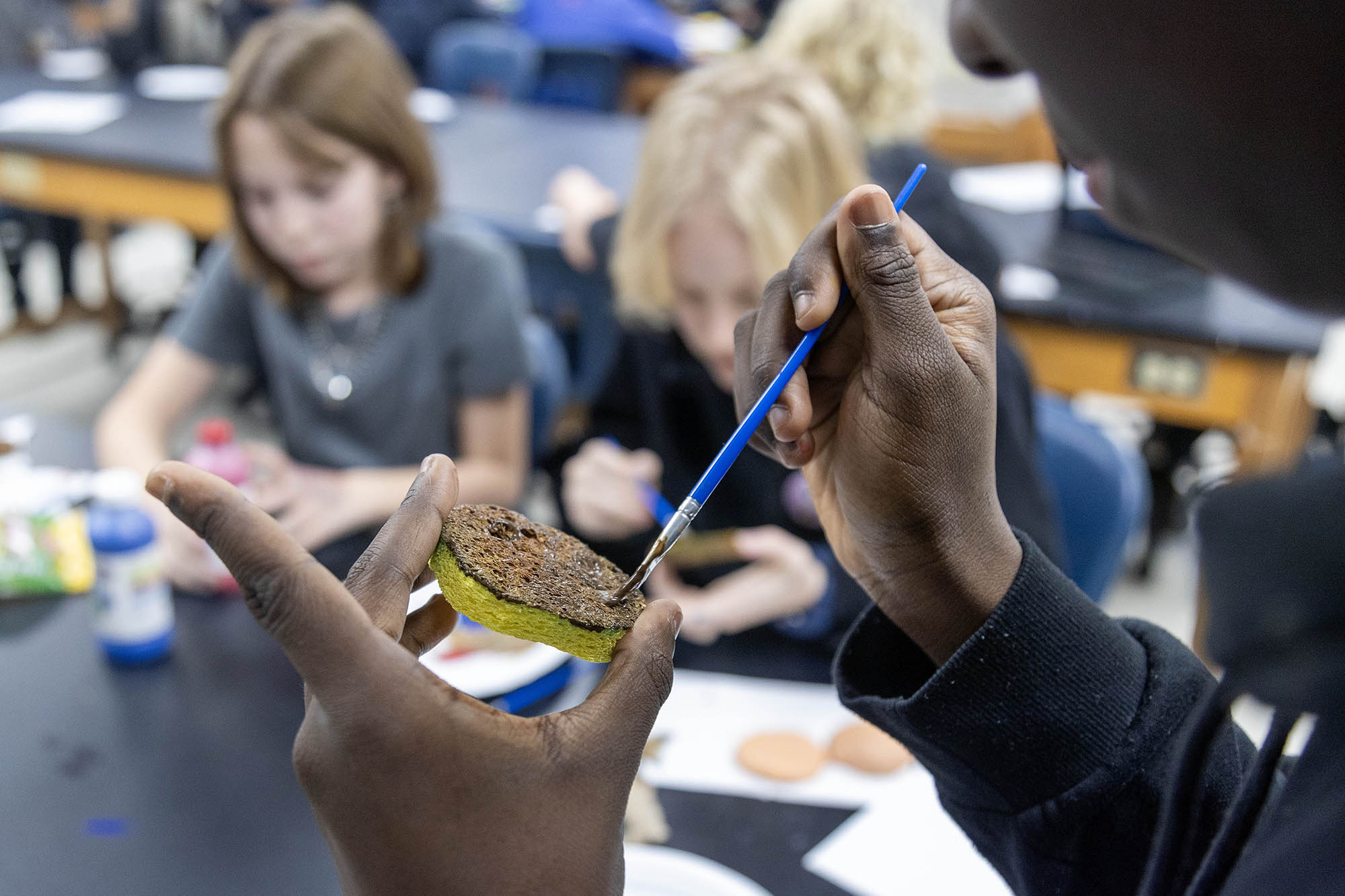
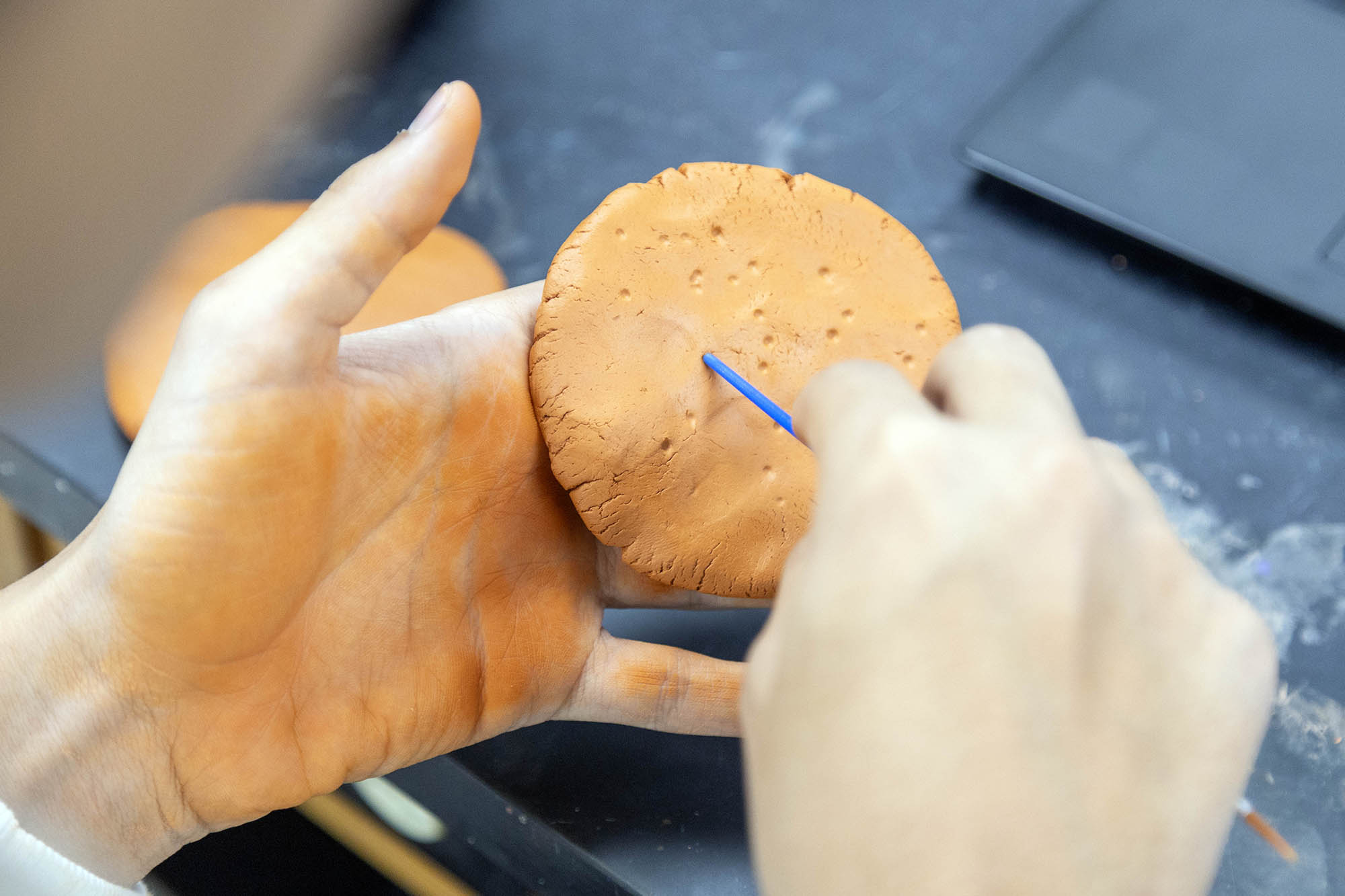
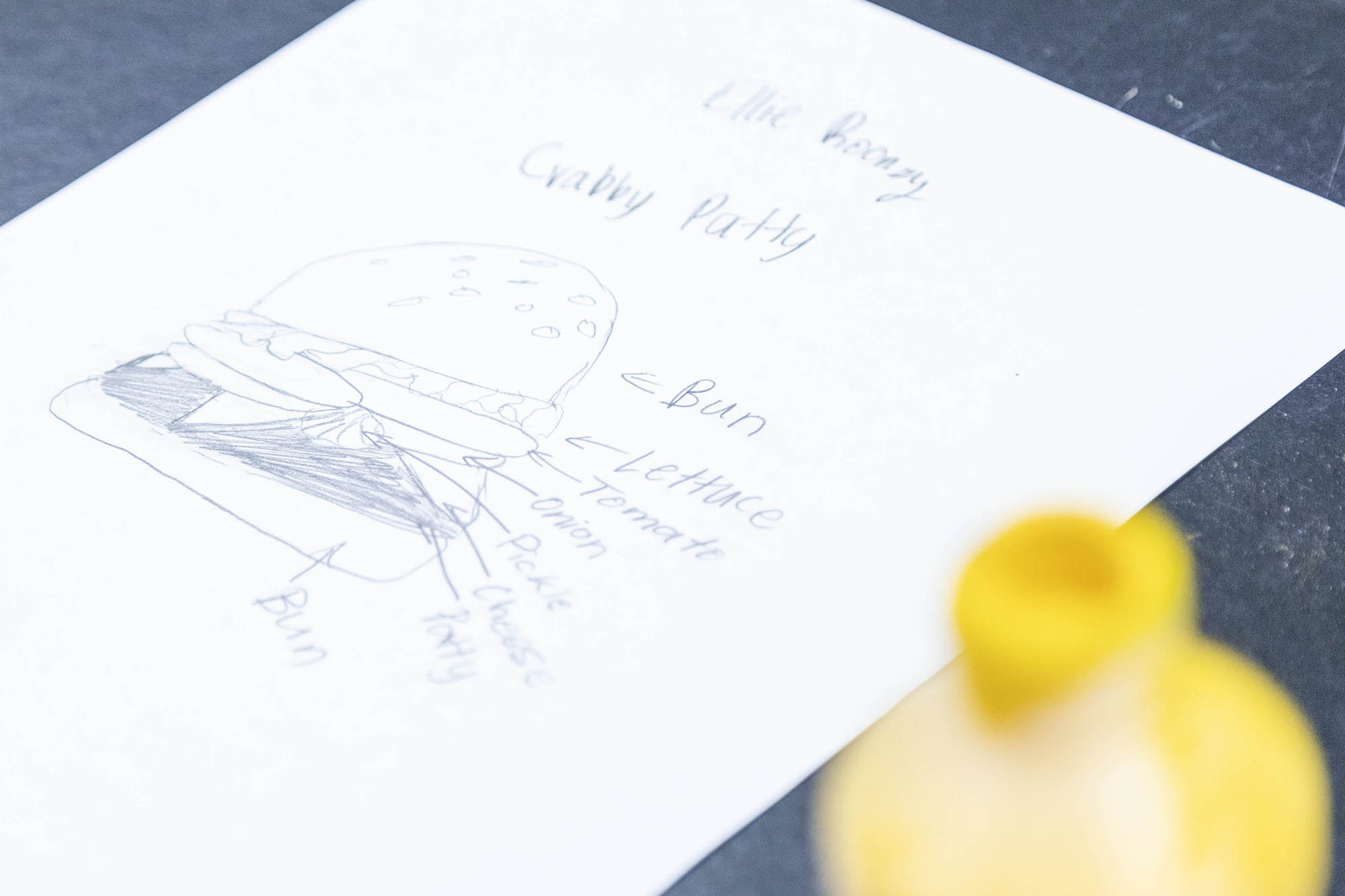
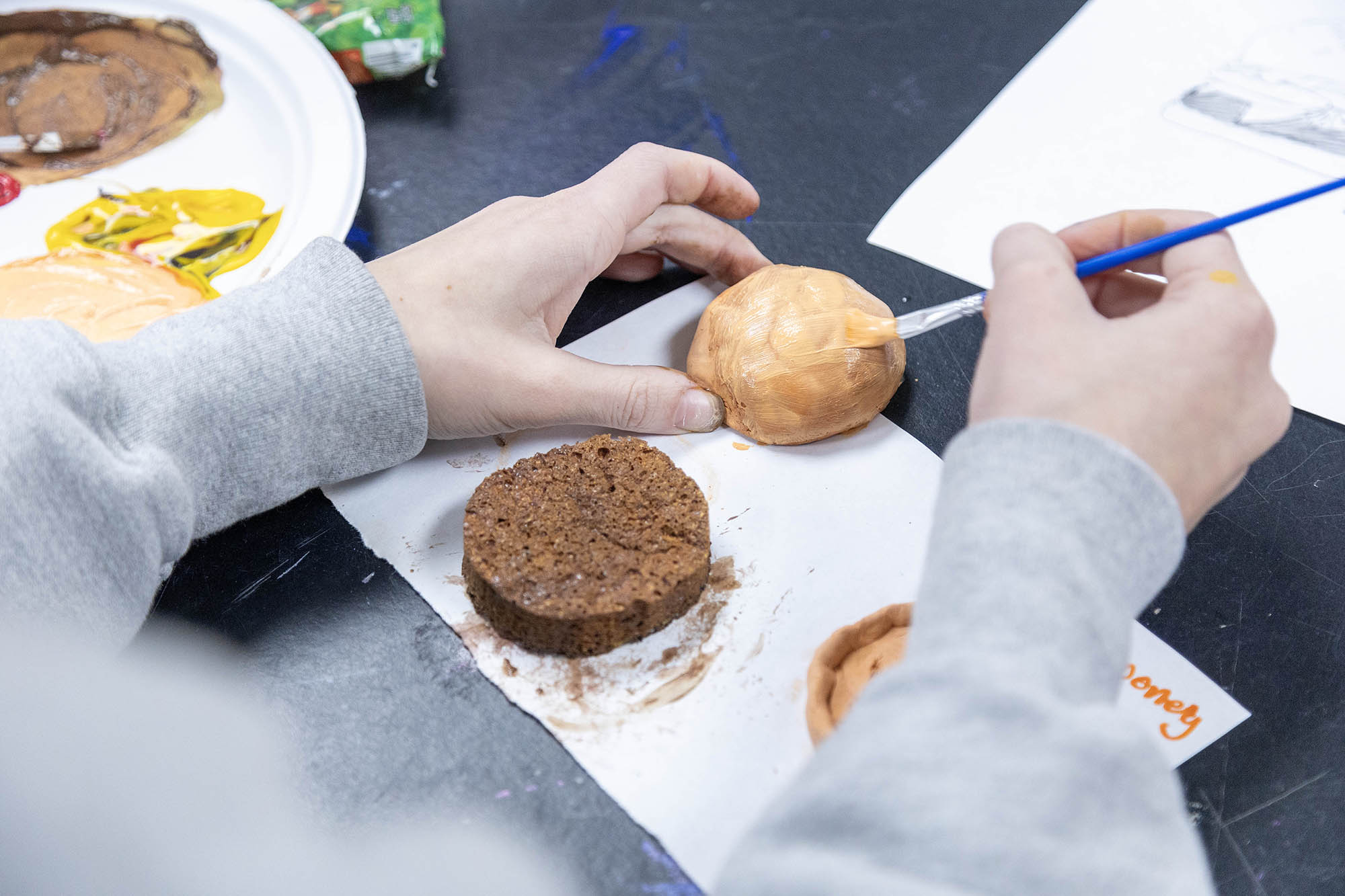
For the props unit, Dr. Carpenter, with support from Middle School History Teacher and Makerspace Coordinator Blake Whitney, led students in a makerspace project to create the infamous “Krabby Patties” from the SpongeBob SquarePants cartoon. The task was a theoretical scenario: As the props department for The SpongeBob Musical: Youth Edition (which requires several Krabby Patties), students had to follow a template of having a top and bottom bun, patty, cheese, lettuce, and tomato, to make them look as close to the cartoon’s actual patties as possible.
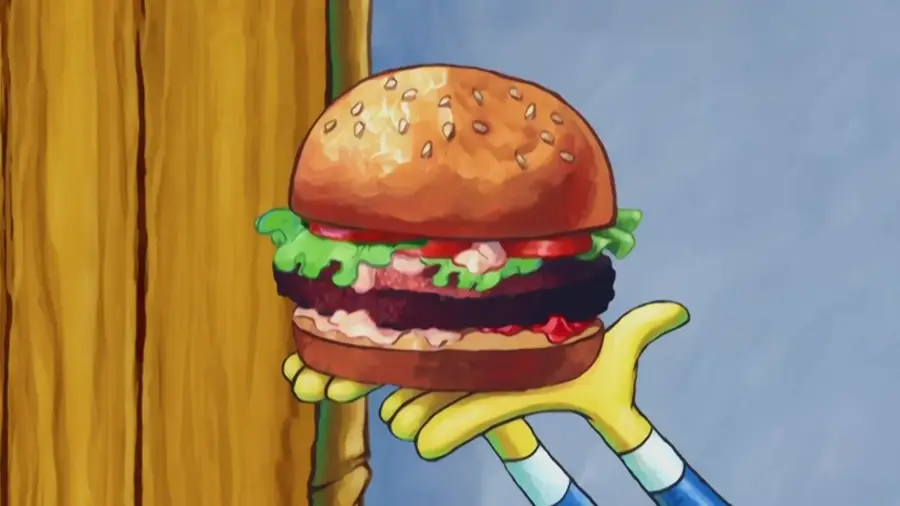
Dr. Carpenter enjoyed teaching this unit, especially in the Middle School Makerspace. “We often discuss the intersection between math and science and how that affects an artist’s conceptualization and realization of artistic ideas. I’ve enjoyed partnering with Blake Whitney on finding creative ways to use the space and provide students with hands-on opportunities to test their creative problem-solving in methods for creative expression.”
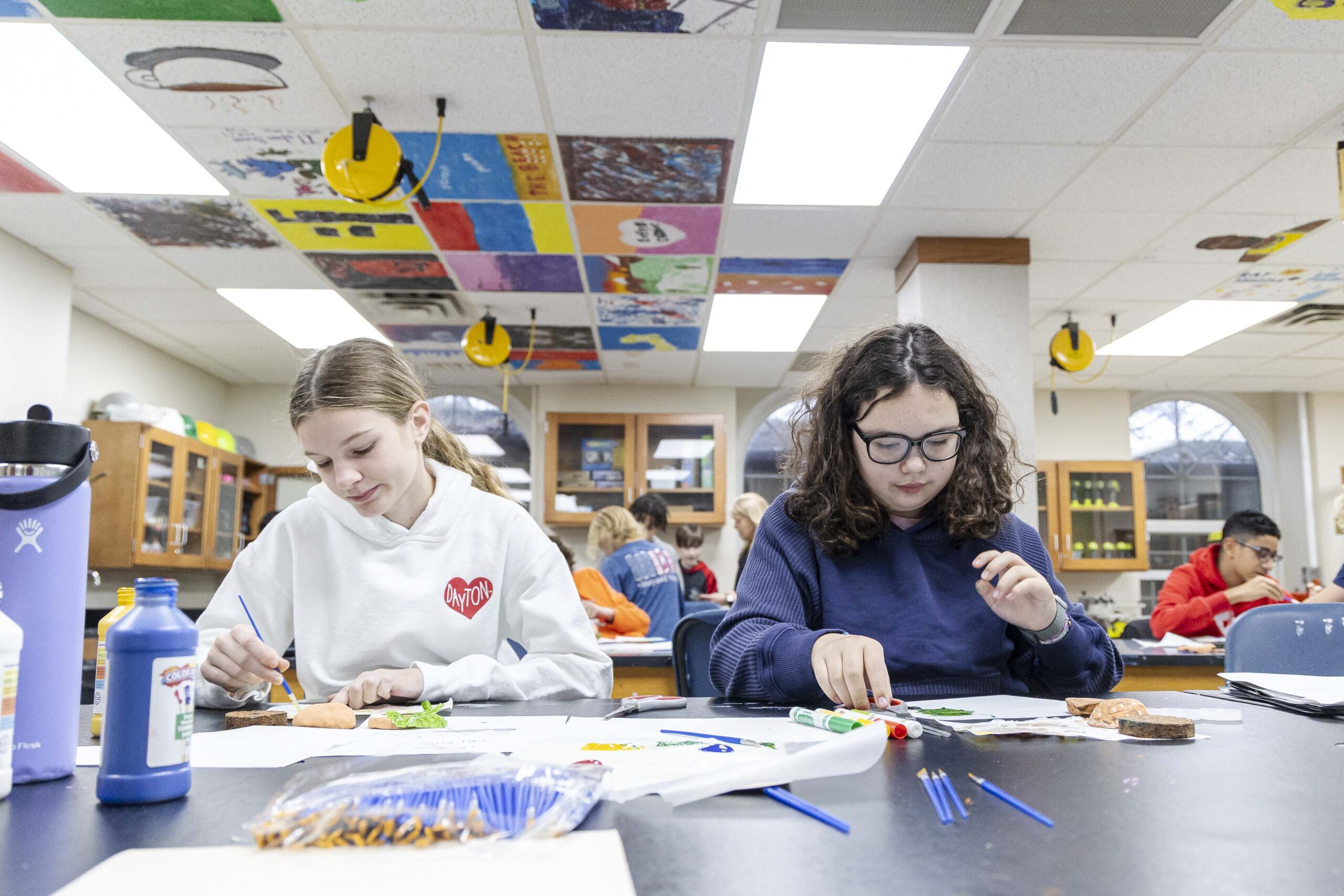
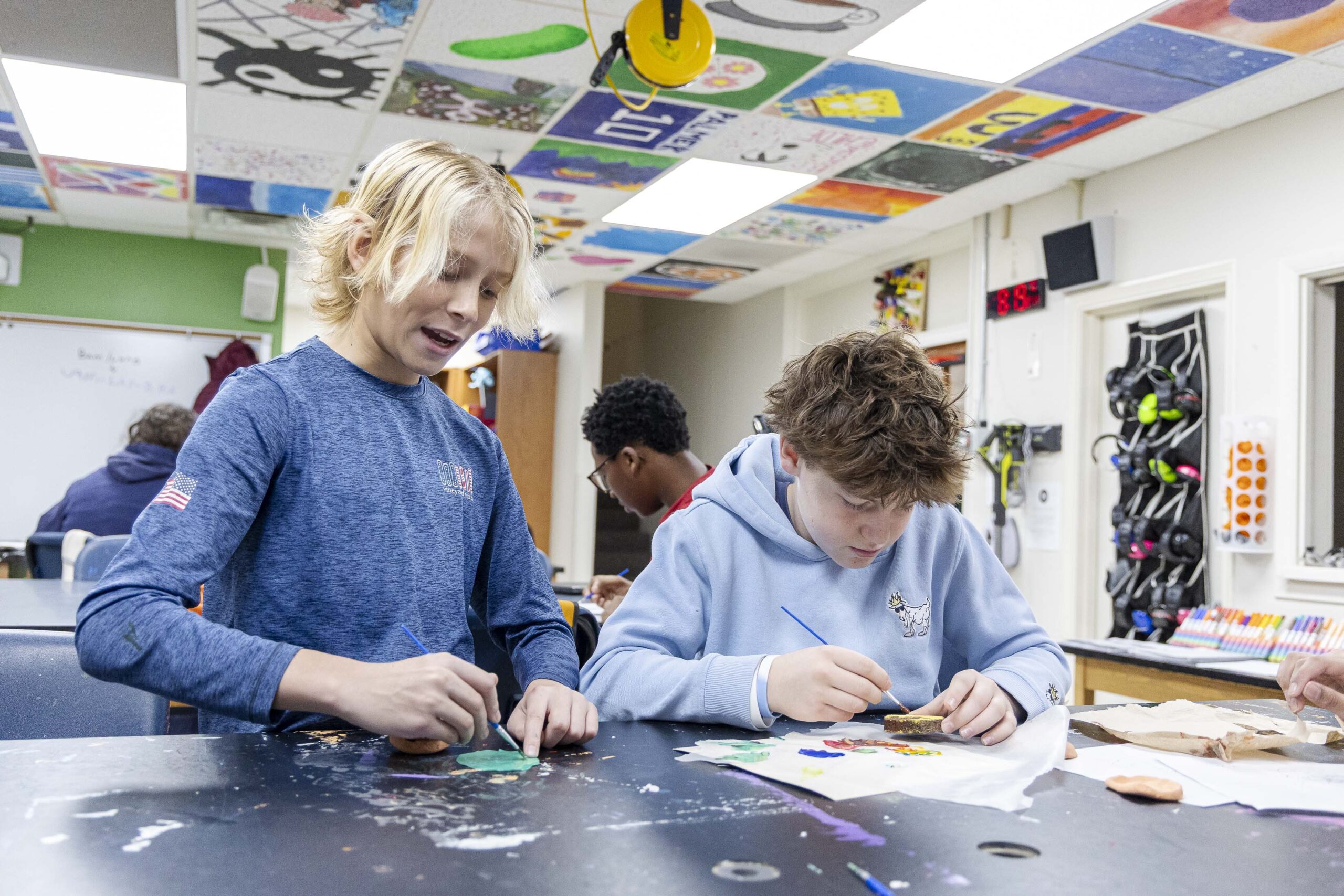
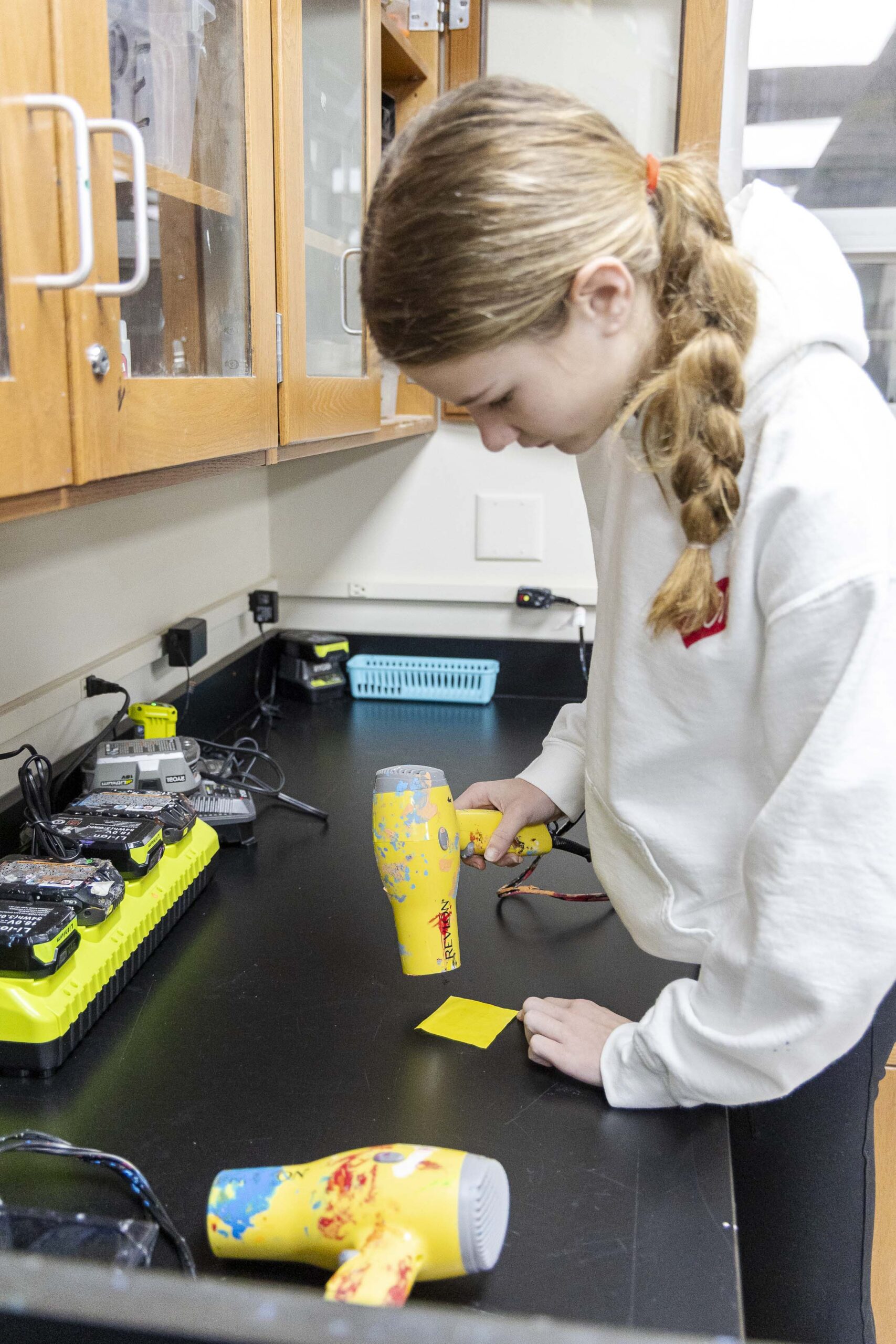
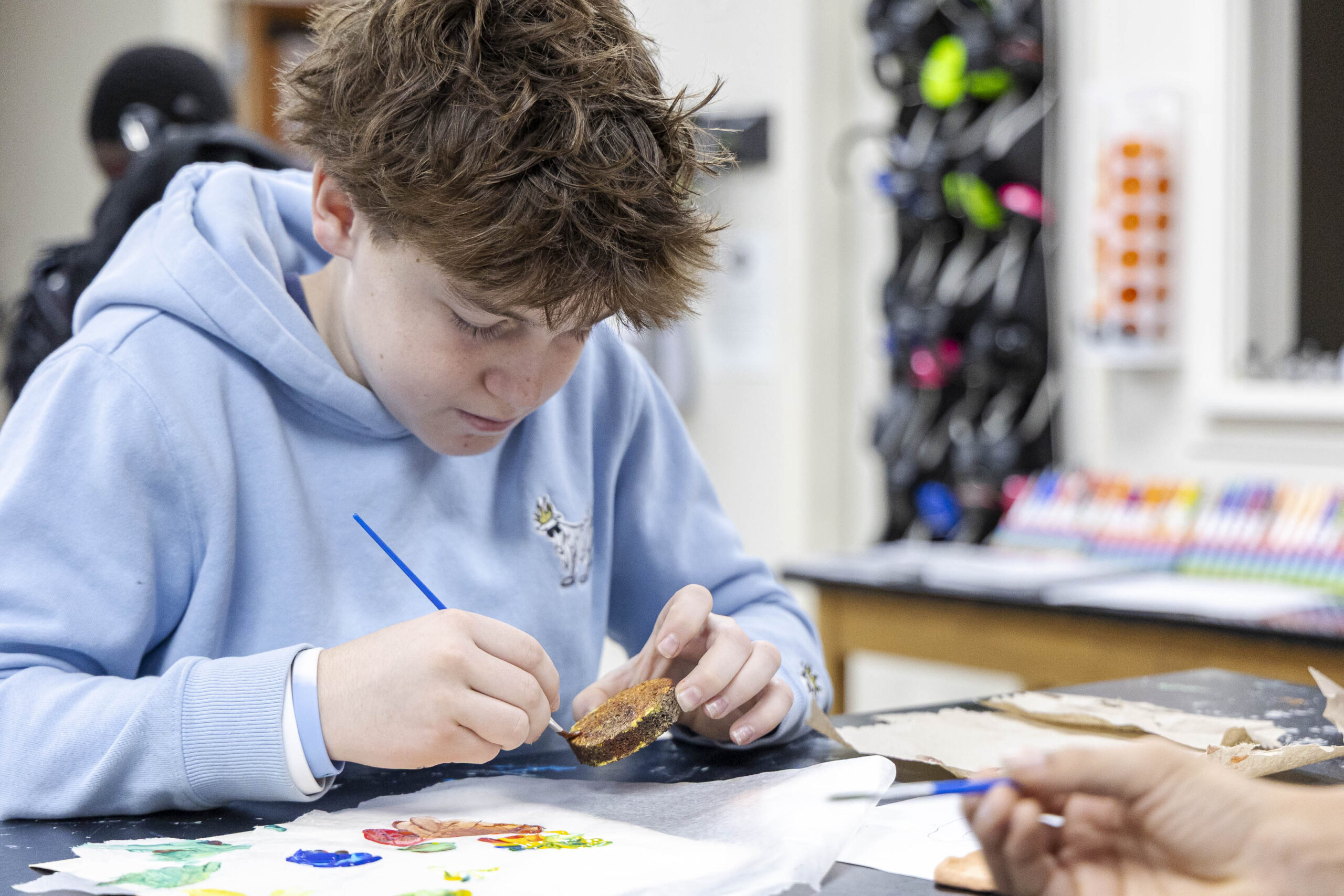
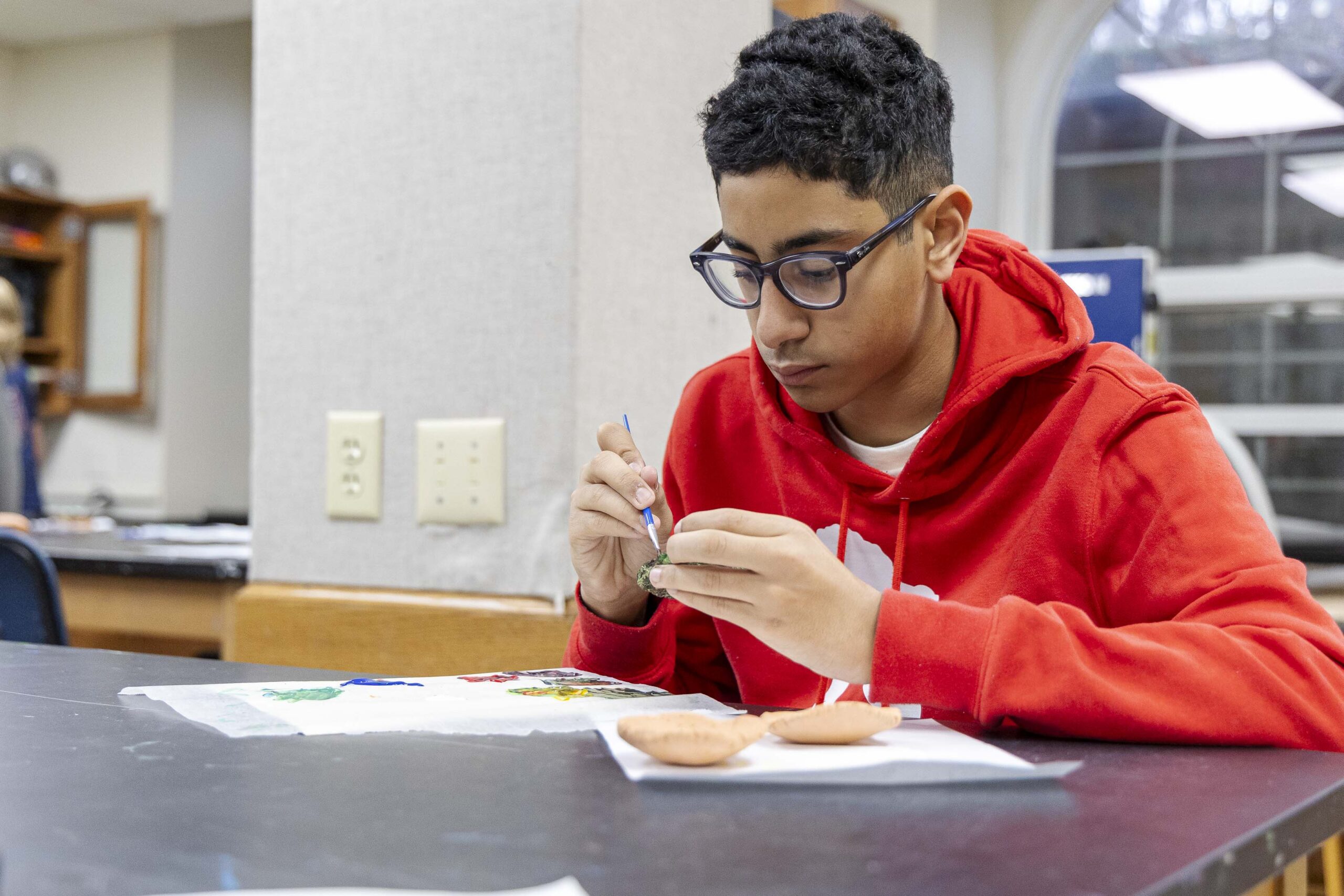
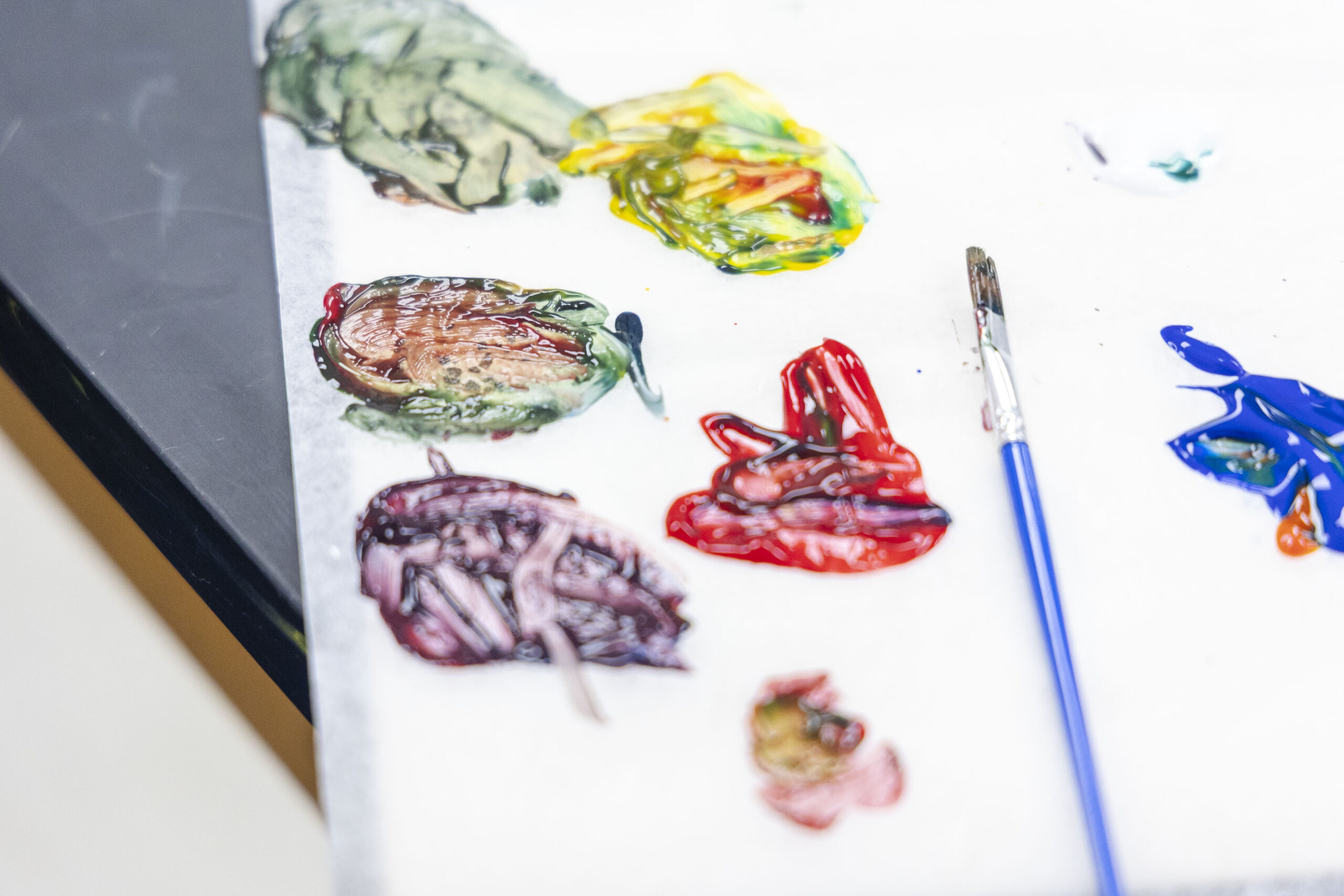
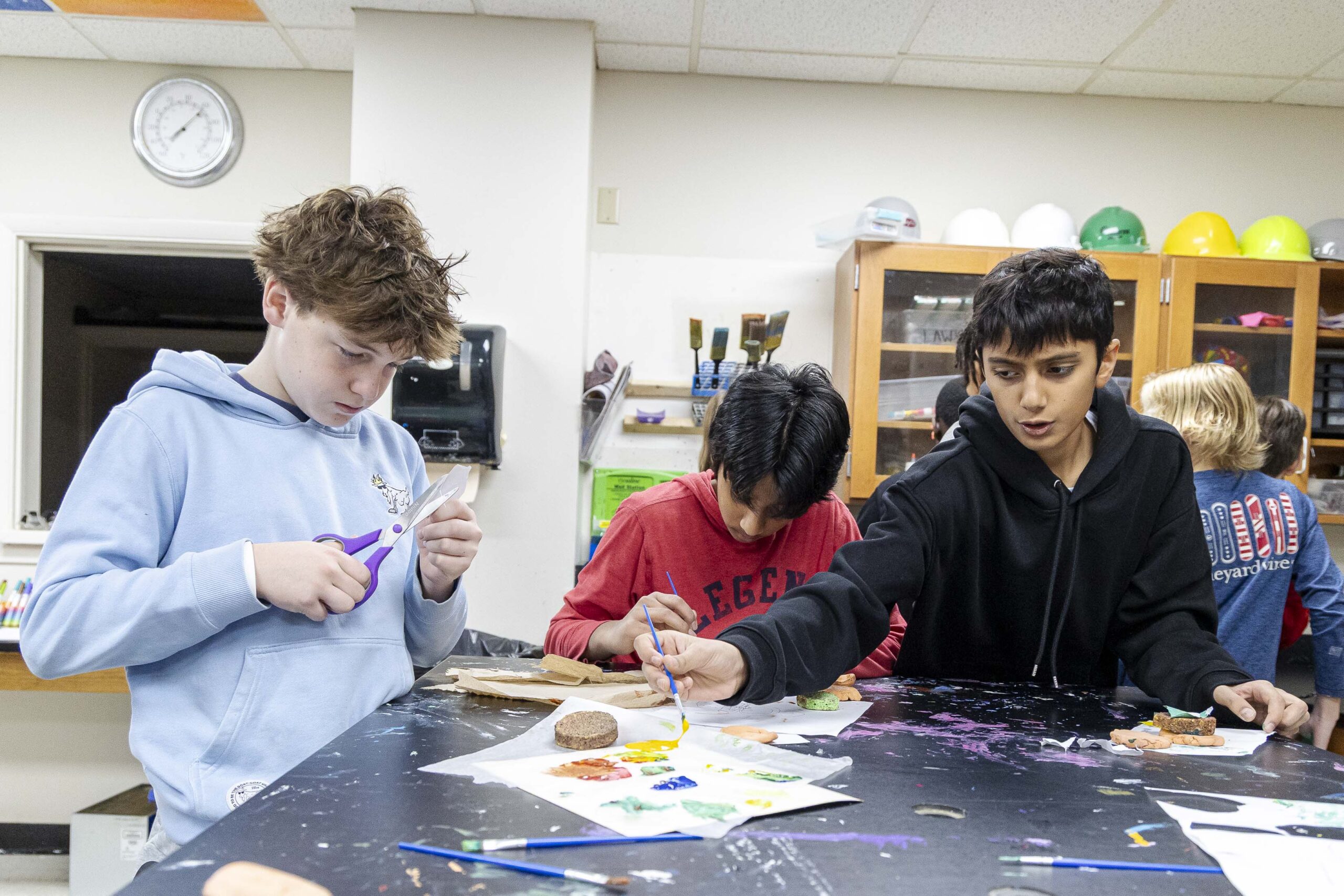
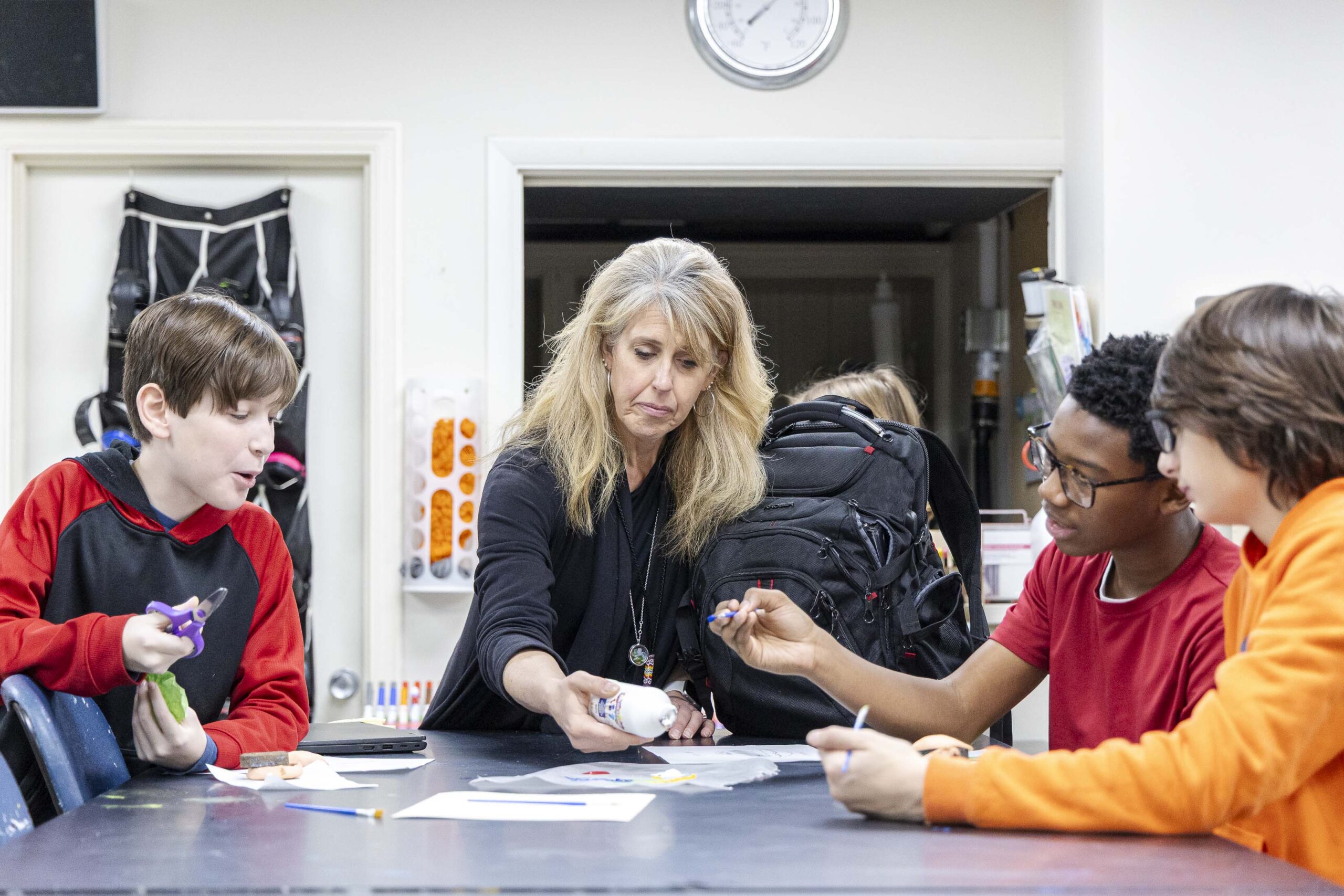
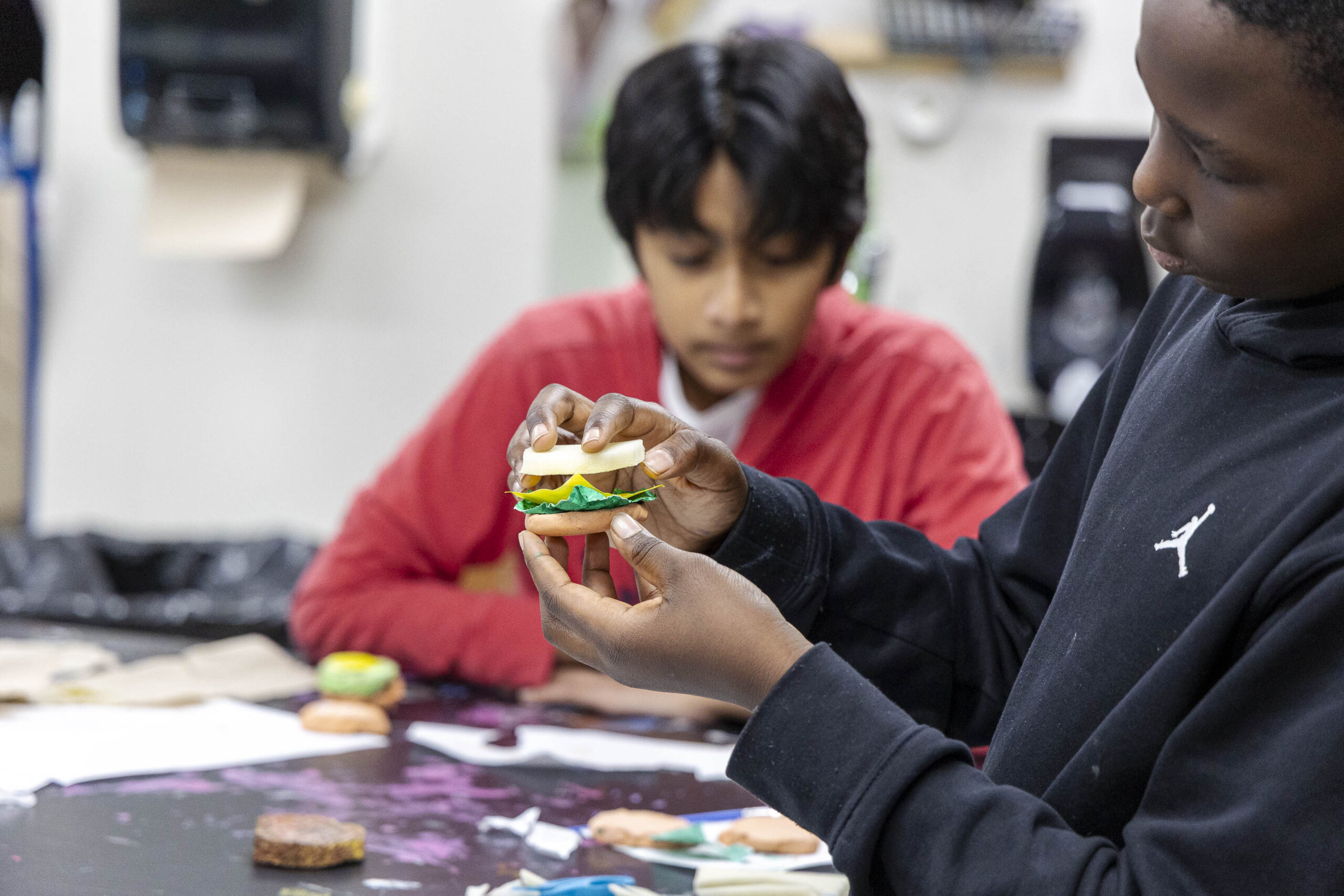
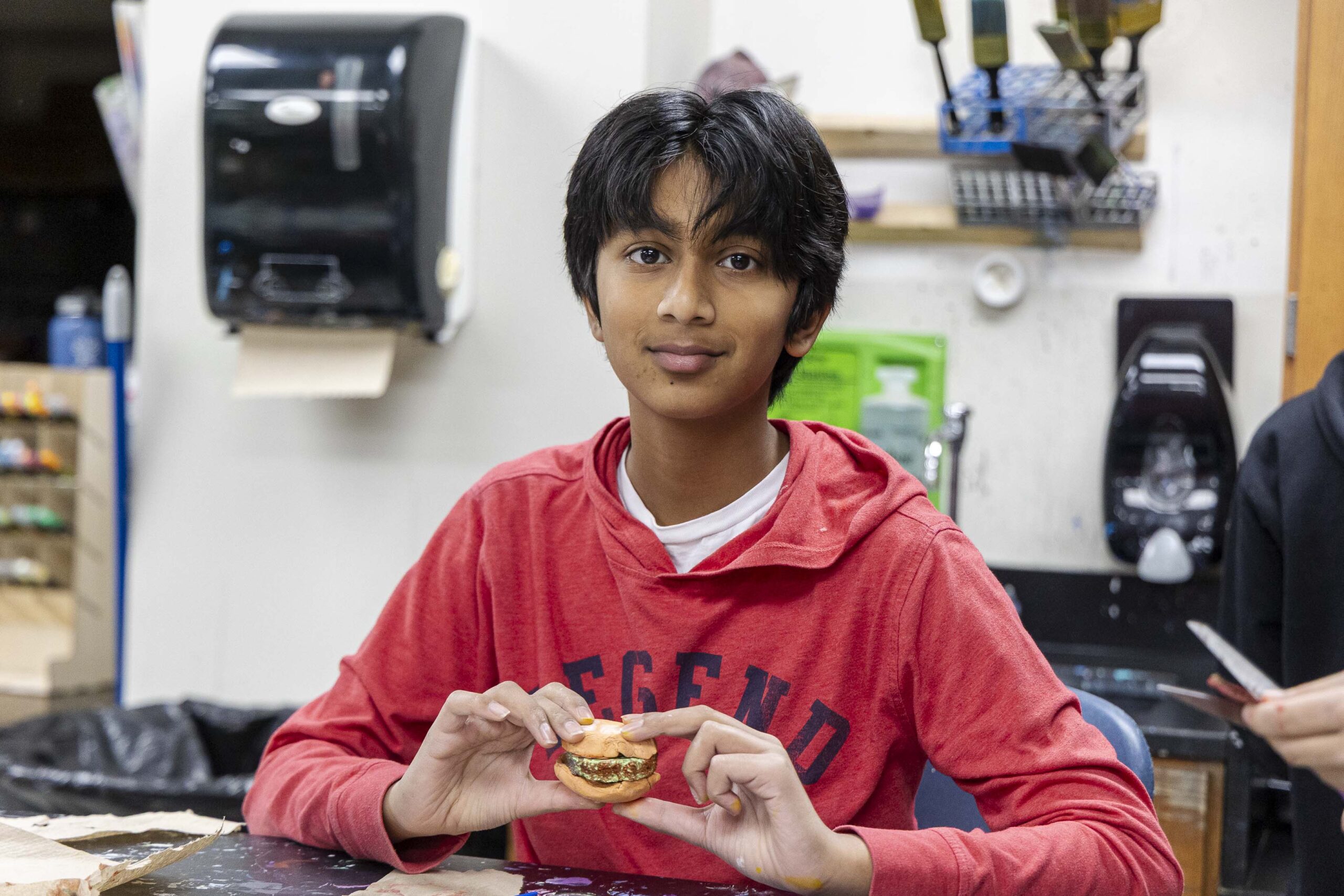
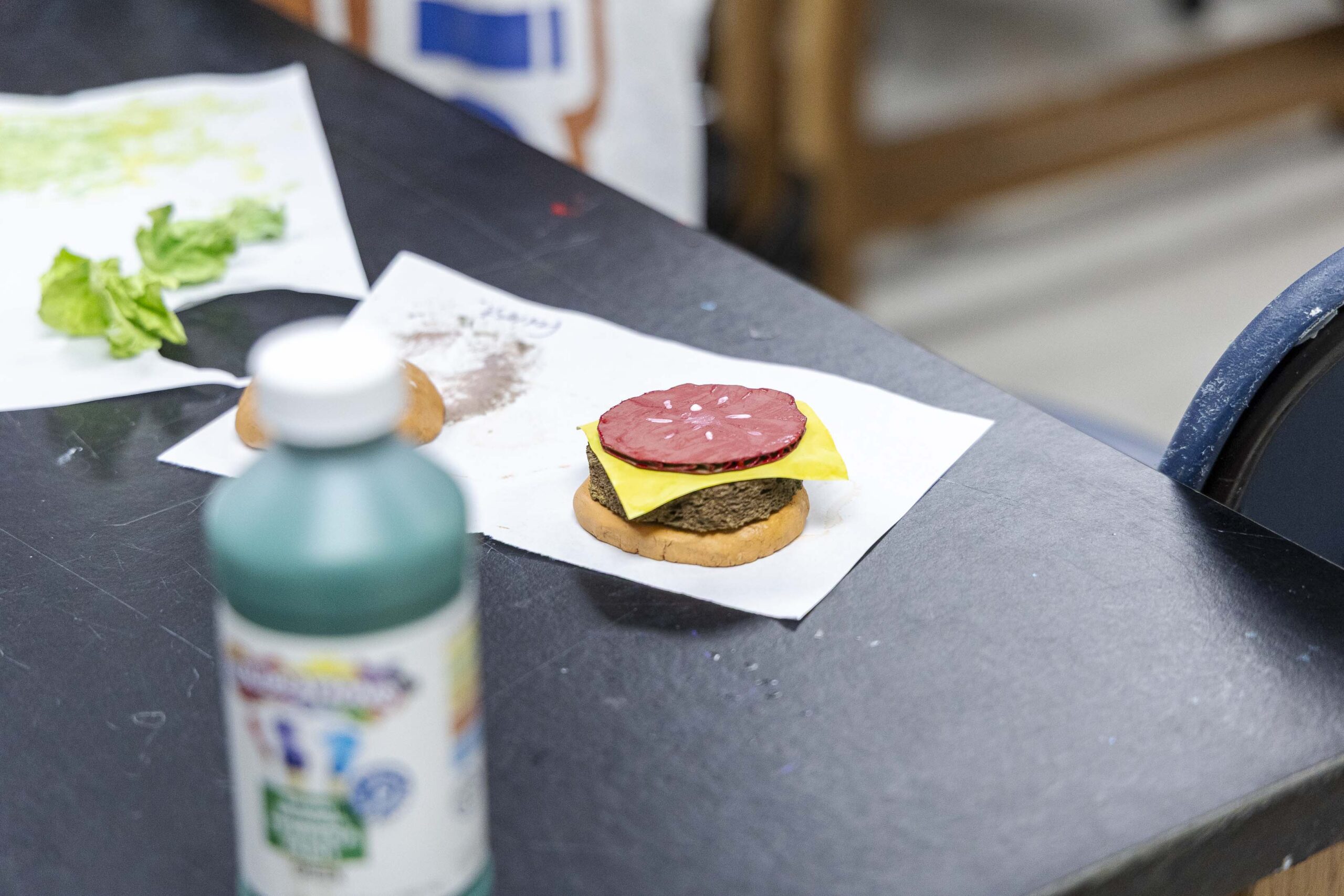
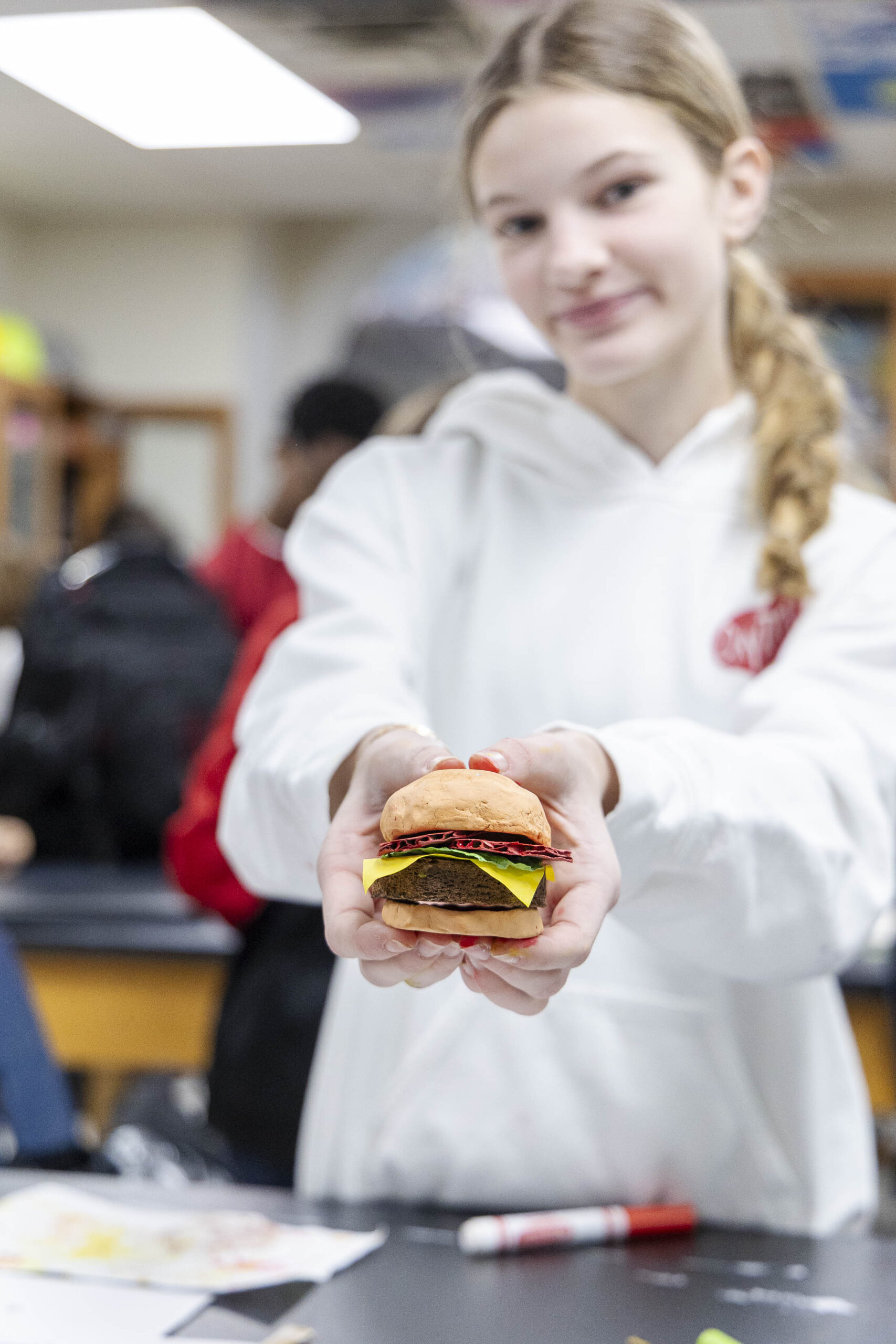
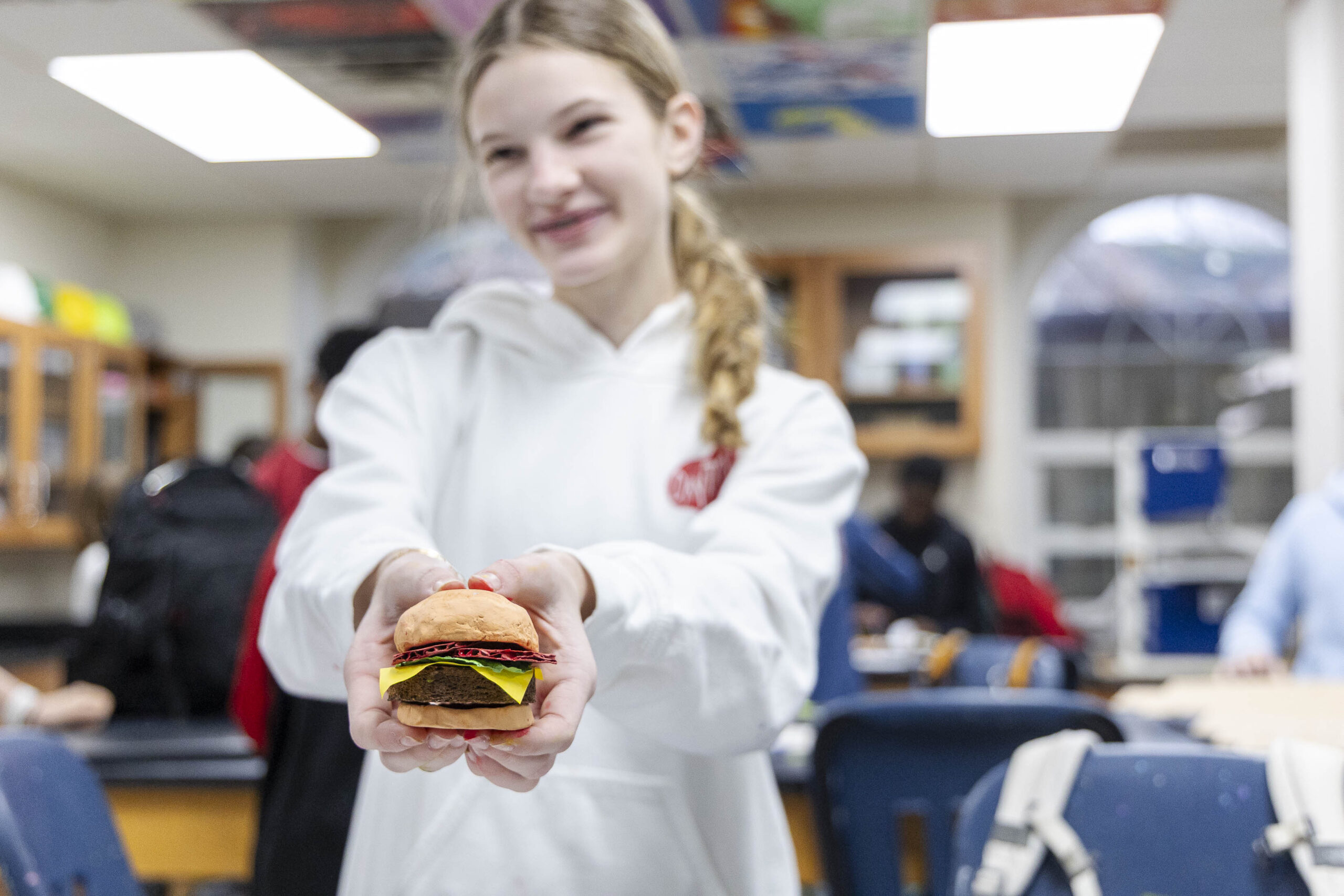
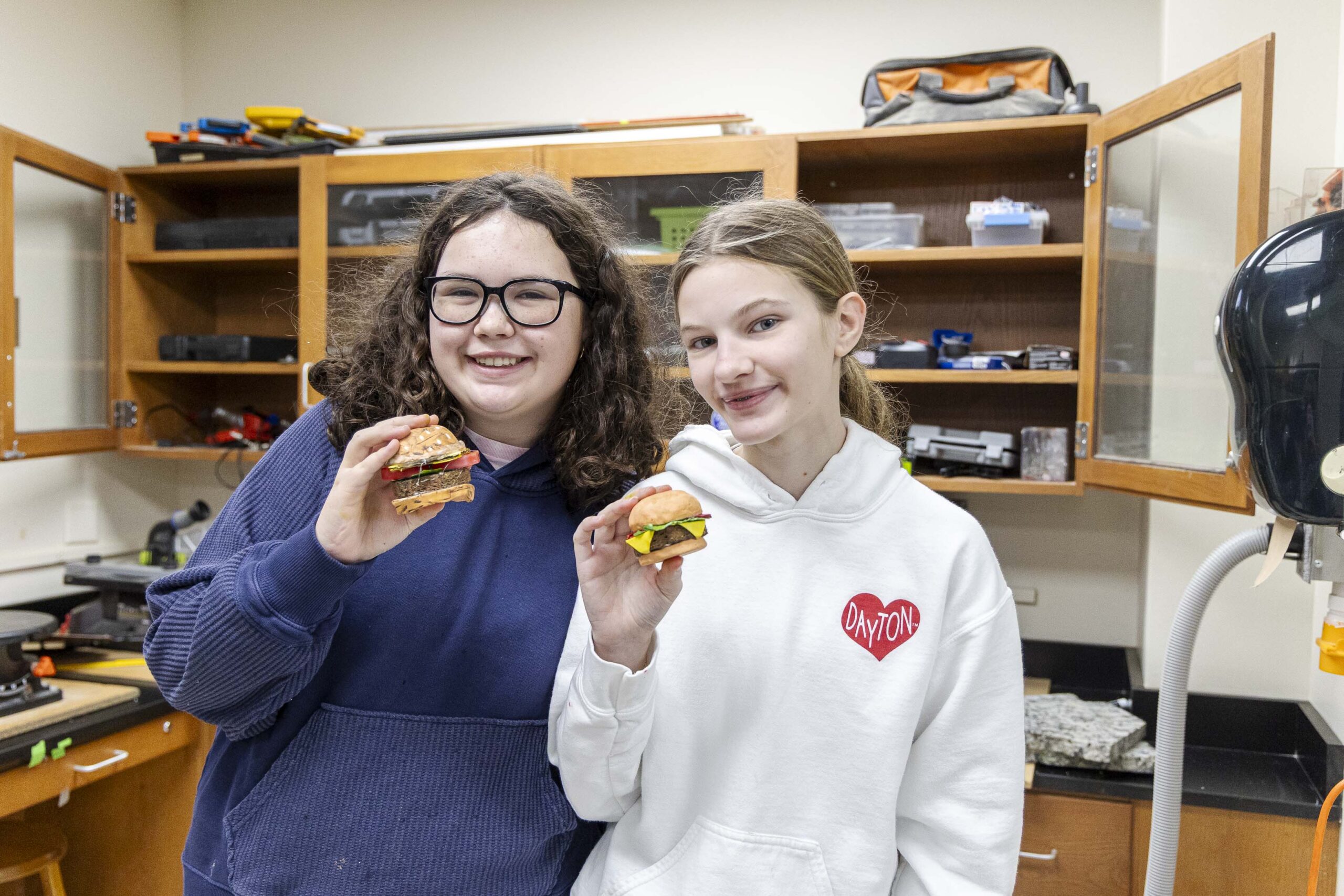
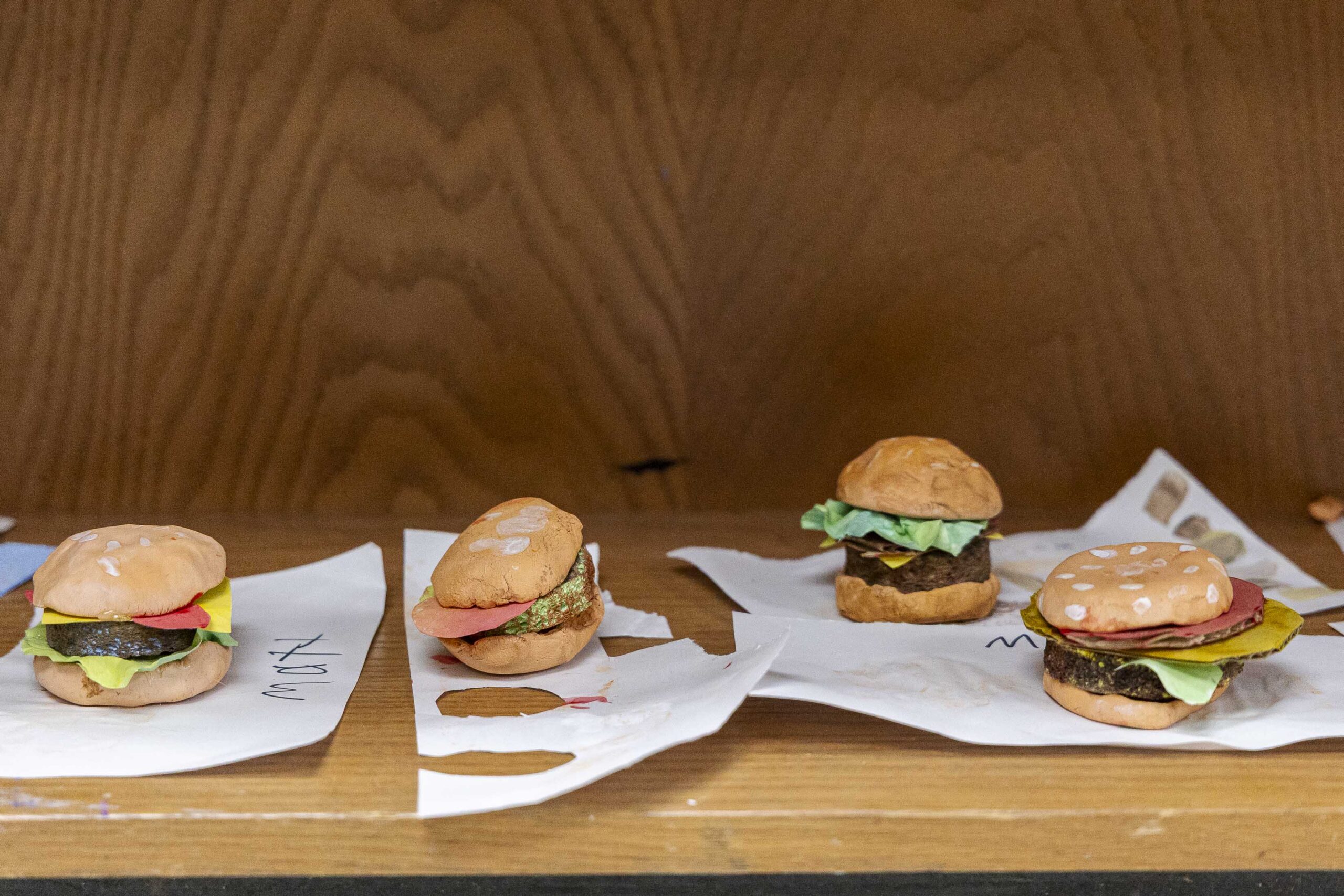
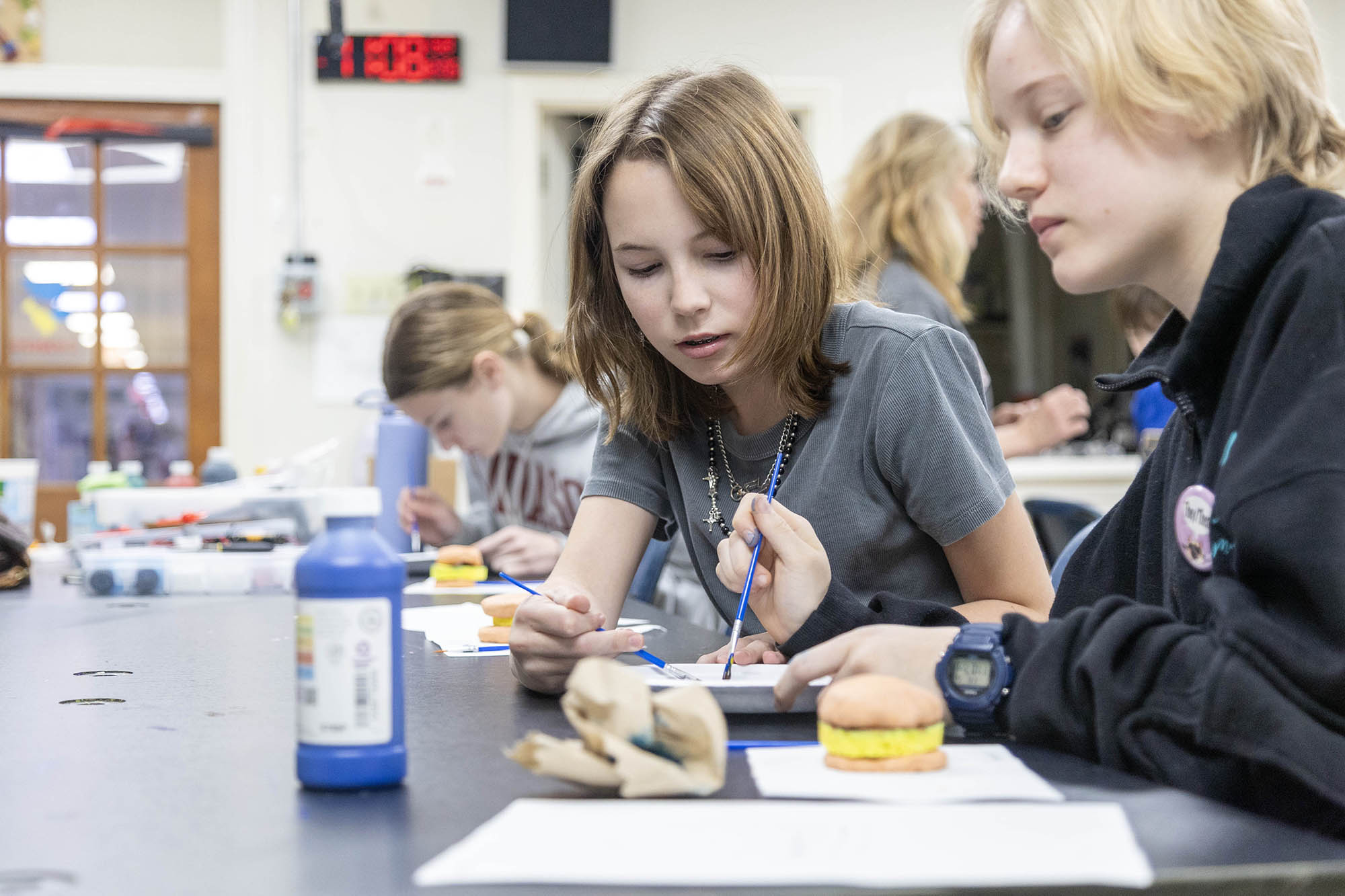
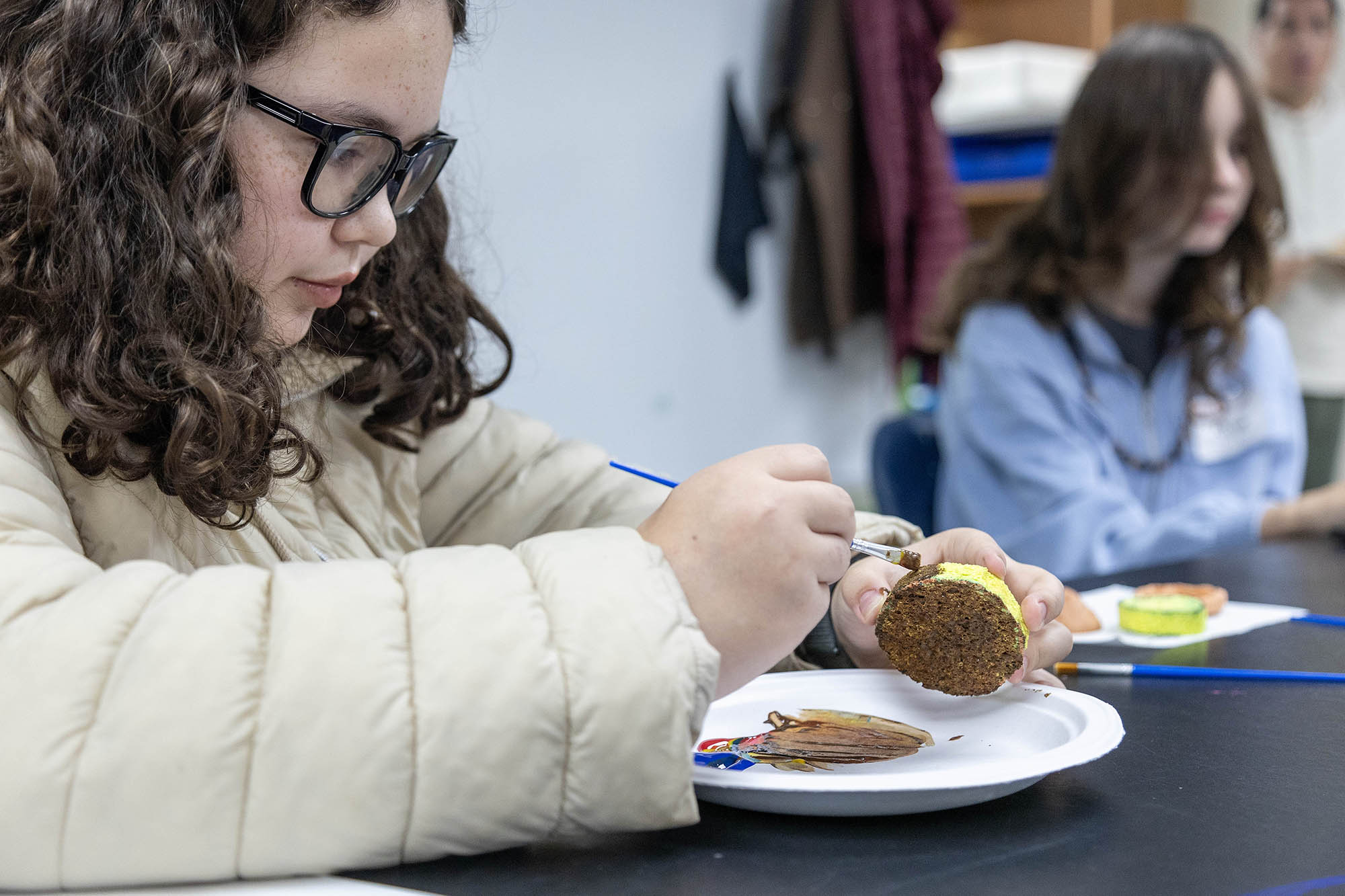
“I like acting, and I thought it would be fun to work behind the scenes and help make the sets and design props,” said Evan Smith ’31. “I like coming to the makerspace to make stuff. I didn’t know that the props had to be so specific and detailed, and they take a while to make. I liked working with my friends, making Krabby Patties, and having fun.”
Quinn Carpenter ’31 said, “I grew up in the theatre because of my parents, and it was always fun when I got to help out. I thought it would be fun to be part of this. The Krabby Patties were a lot of fun. I didn’t know how many different parts there are that make a play what it is! We also did another project in the makerspace, where we made models of a dream park using random items.”
“I’ve been in a couple of plays, and I’ve always really enjoyed it,” said Matthew Elliott ’31. “Plus, I enjoy making little models, so I thought it would be fun to make something. For the Krabby Patties, I enjoyed painting and sculpting the top of the patty. The patty is made out of a blue sponge. Even though I painted it, it still looks a little moldy. Painting a sponge surprised me because you wouldn’t think to make a patty out of a sponge, but it gives it texture and makes it look more real.”
Mein emphasized the beauty of theatre technical design and said, “We are centering the same soft-skills that an arts education has always provided: the value of collaboration, risk-taking, perspective-taking, and public speaking.”