On Tuesday, February 3, MICDS seventh graders, along with their teachers, went on their annual field trip to the St. Louis Kaplan Feldman Holocaust Museum. This trip fits into their Global Perspectives curriculum, where they specifically study a unit on Power & Equality. Through their seventh-grade year, they study historical events and examine primary and secondary sources to gain a deeper understanding of the past and present. “Visiting this museum is great because the focus is on St. Louis-area Holocaust survivors, which gives students a chance to see how the history we study intersects with our community,” said Berta Simic, Middle School History Teacher.
While at the museum, students toured all of the exhibits, engaging with primary sources, survivor artifacts, and historical exhibits that trace the rise of Nazism, the Holocaust, and its aftermath. Prior to the trip, they completed a case study on the Holocaust, examining how individuals and societies come to participate in, or comply with, systemic injustice. In the classroom, they analyzed Nazi propaganda posters and read about the Hitler Youth, which helped students understand how ideology, fear, and conformity can influence behavior.
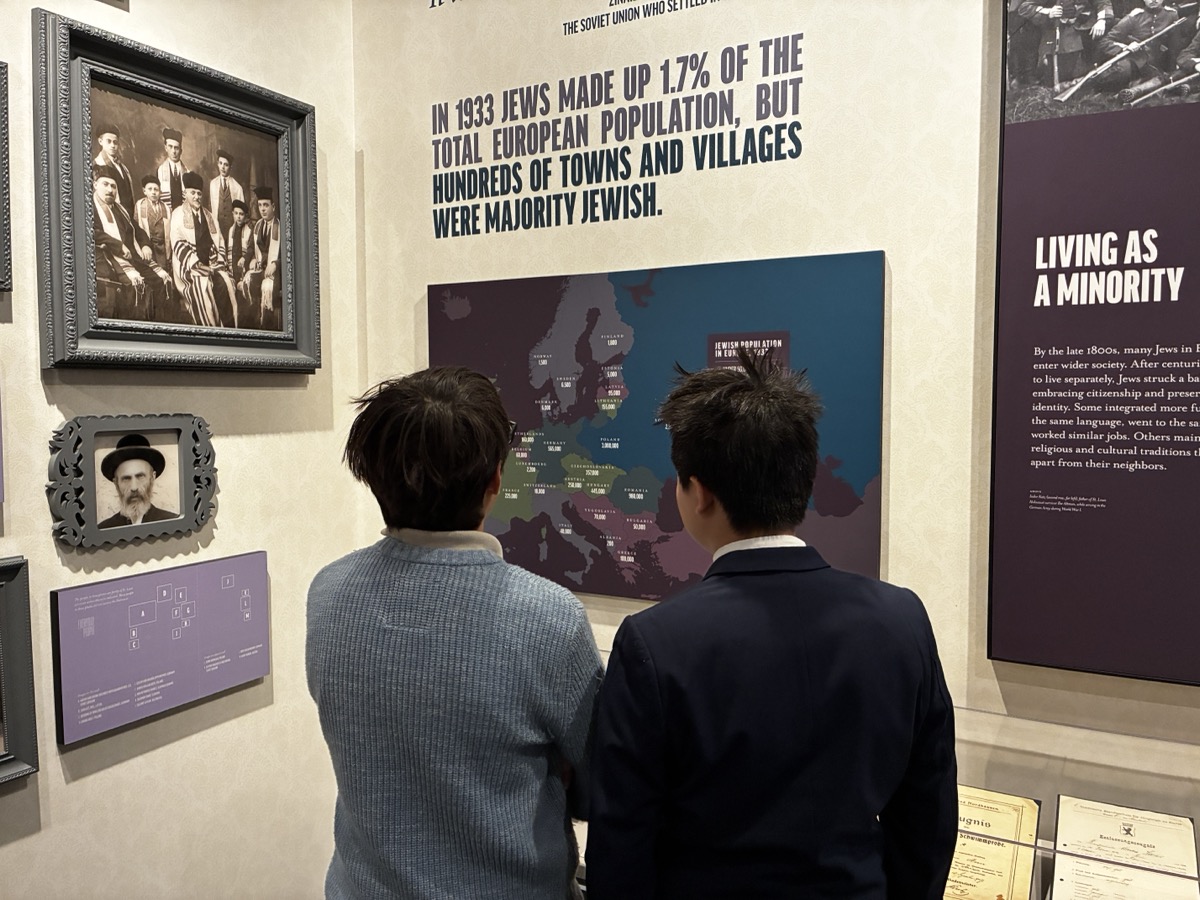
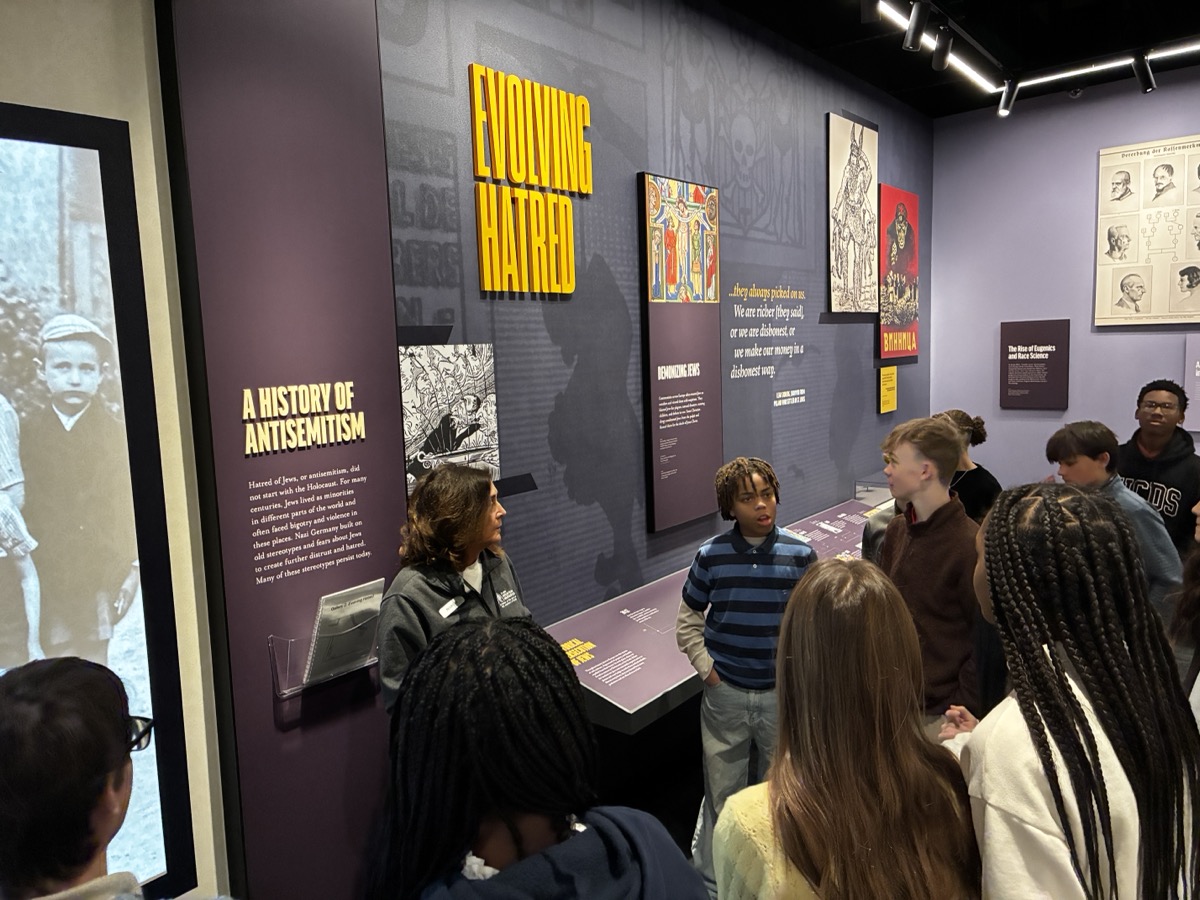
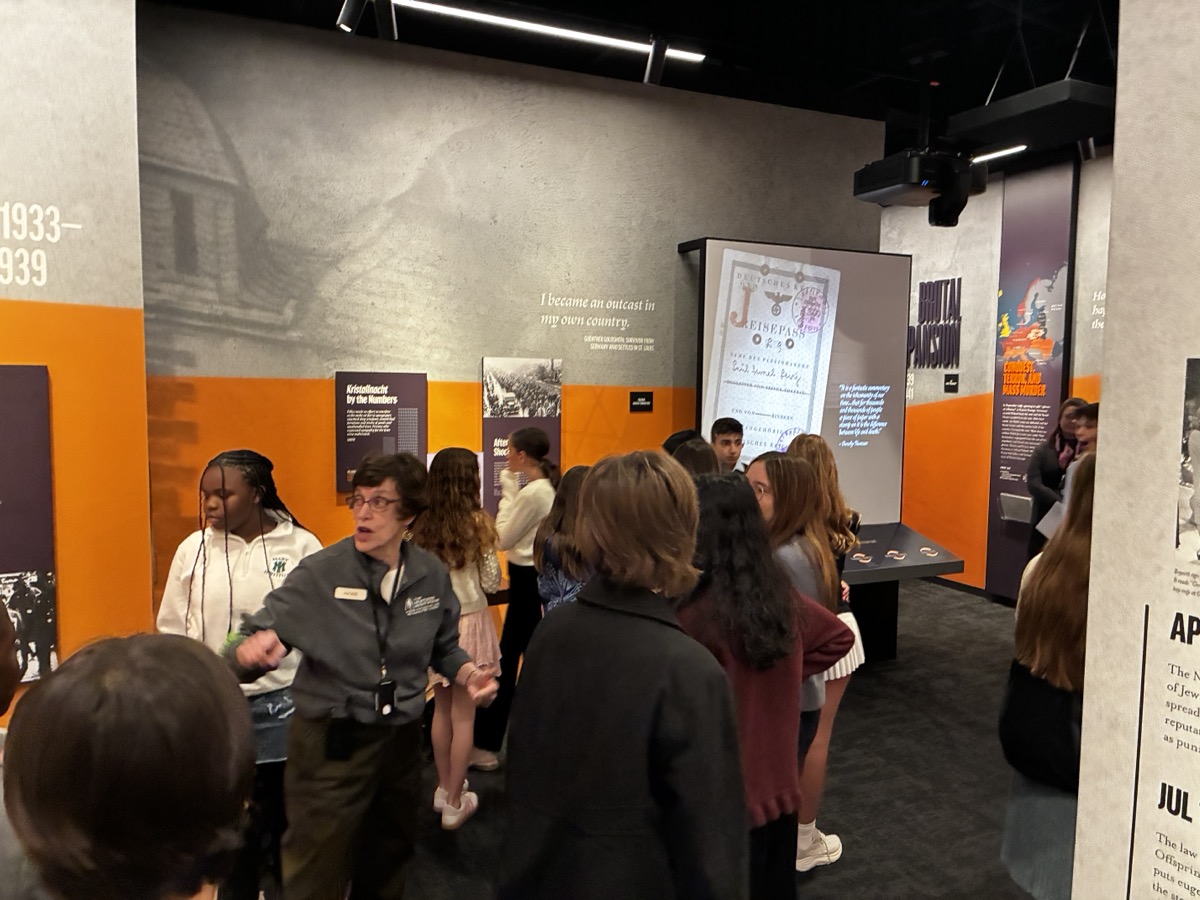
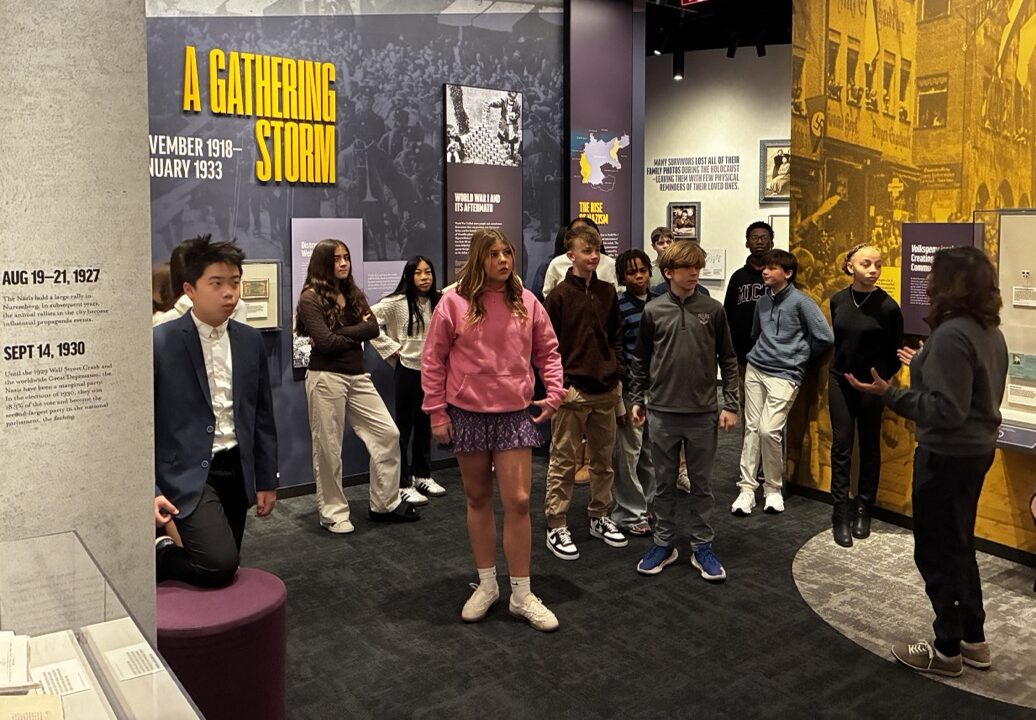
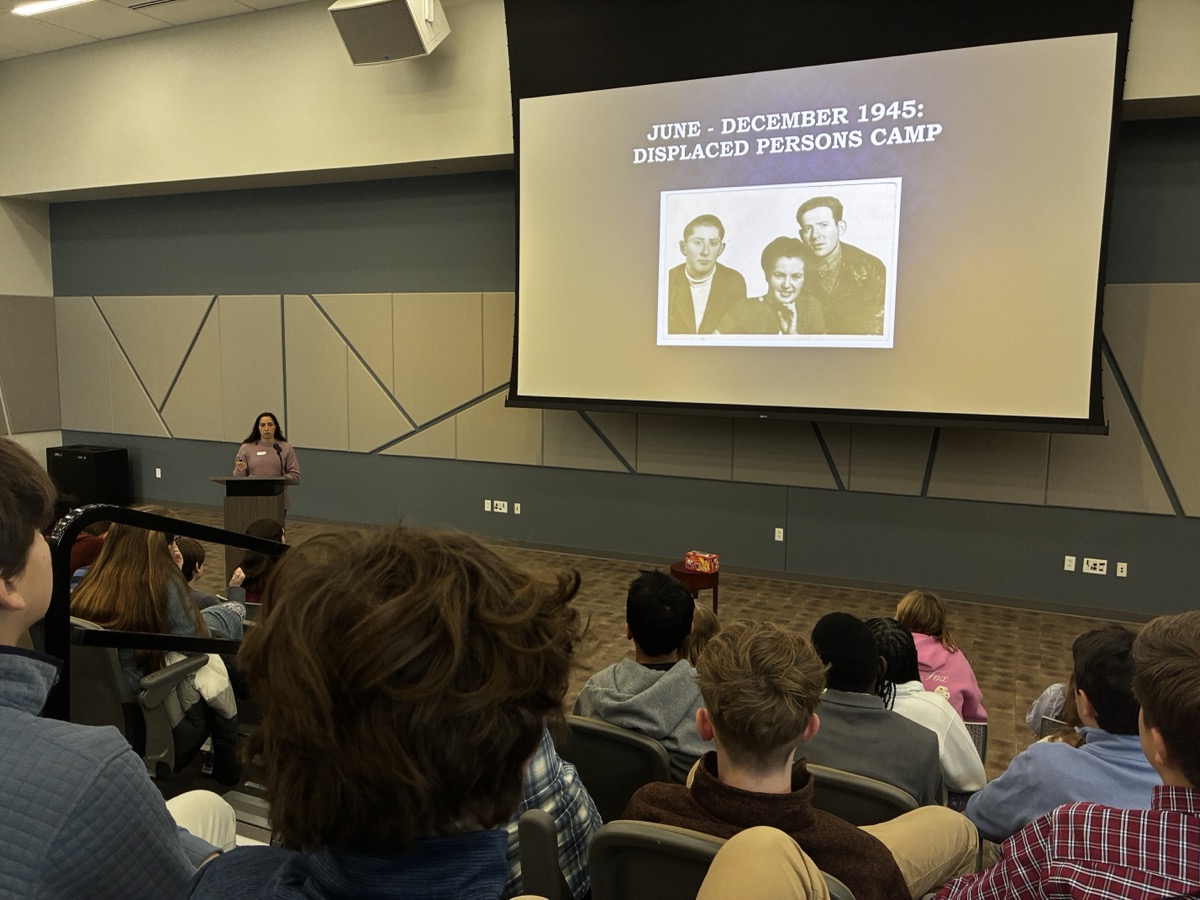
“A highlight of the visit was hearing personal stories of Holocaust survivors, shared by their grandchildren who spoke in person, helping students connect historical events to real lives,” Simic said. When they returned to campus, Carla Federman, JK-12 History & Social Sciences Department Chair & Upper School History Teacher, shared her grandparents’ survival story and how they settled in Kansas City. This brought stories of the Holocaust even closer to the MICDS community.
Students were deeply moved by the Holocaust Museum field trip. Aryana Kamat ’31 stated, “It impacted me in an emotional way because I realized my day-to-day life is someone’s dream. Everything that I have in my life, no matter big or small, has such value, no matter what, and I should be grateful for everything the world has given me. How it also impacted me in an emotional way was how you could treat people like this. We are ALL people, no matter what. We deserve respect and kindness, and when we lose that sense of compassion for other people, the actions that come out of it are sickening, and we need to be better as a society and learn from the past moving forward.”
There was a lot learned through this trip as well, both eye-opening and surprising to the students at times. “I learned that when the war had finally come to an end, the liberators discovered the horrors of what actually happened to Jews in these concentration camps,” Kamat said. “As sickening as it was, it was even more frustrating how you could even treat anyone like this. But what made the pure anger grow for the liberators was when photo and camera footage was released, no one could believe this had happened, and people thought that the Holocaust was made up or had not even happened at all.
“What surprised me was how malnourished many people were in the concentration camps, and the lack of cleanliness was unimaginable. Up to 2,000 people had to sleep on little bunk beds with no space whatsoever. It was so dirty that there were also mice, fleas, and ticks. They were fed so little food with very little nutritional value, like rotten fruits. However, what surprised me was that if they had even the simplest food, but if it had even the slightest higher nutritional value, their immune system couldn’t handle it and they would die.”
Some of our students had connections to the Holocaust in their family lineage. “I learned that a lot of Jews migrated or immigrated from Poland to Montreal, Canada. I have a god-grandparent who migrated and escaped the Holocaust from Poland to Montreal, Canada,” said Sebastian Torres ’31. “Some things I learned about the Holocaust are that not only did they keep Jewish people in concentration camps, but they killed them in many different ways, for example, gas chambers and sometimes sicknesses. Also, during the visit, what really surprised me was how many people had items to donate to the museum here in St. Louis.”
Jasiri Virgilio ’31 certainly learned a lot at the museum that impacted his perspective on the Holocaust. “During the field trip, I learned how hard it was to survive in Germany, even if you weren’t Jewish,” he said. “Another thing I learned was that Hitler made sure that children were involved in his plan so that when they were older, they would serve in his army. Lastly, I learned that after the Holocaust, the survivors went to other countries like Palestine, the U.S, and the United Kingdom. The Holocaust Museum field trip added to and changed my perspective of the Holocaust by making me think of what if I were in Germany at that time, and how I would survive. What surprised me during the visit was how much of an impact St Louis had on the survivors, and how many Holocaust artifacts the museum has.”
This important part of history is not easy to comprehend and learn. “This is difficult material, but it’s essential,” added Simic. “Our students need to hear and honor the stories of Holocaust survivors, not only to understand what happened but also to recognize the warning signs of injustice and dehumanization when they appear in the world today.”
Thank you to the seventh-grade class and teaching team for taking the time to explore the museum, gain a deeper perspective on the Holocaust, and learn such an important lesson from the past about human kindness and decency. Kamat said it well: “We are ALL people, no matter what. We deserve respect and kindness, and when we lose that sense of compassion for other people, the actions that come out of it are sickening, and we need to be better as a society and learn from the past moving forward.”