In their Middle School history classes led by Berta Simic and Blake Whitney, seventh-grade students engaged in a comprehensive study of human rights. As the culmination of this exploration, they were tasked with selecting specific human rights themes—women’s political power, equal resources, food intake, civil liberties, LGBTQ+ rights, and more—to investigate and analyze.
Empowered with the raw data from each country around the world, the students embarked on a mission to uncover trends. Their task was to identify the two countries excelling in protecting a specific human right, the two countries lagging behind, and two countries that have undergone a significant shift (either up or down) in their stance on human rights. This multi-step research process involved constructing a research document, a thematic poster, and a final presentation showcasing their learning journey.


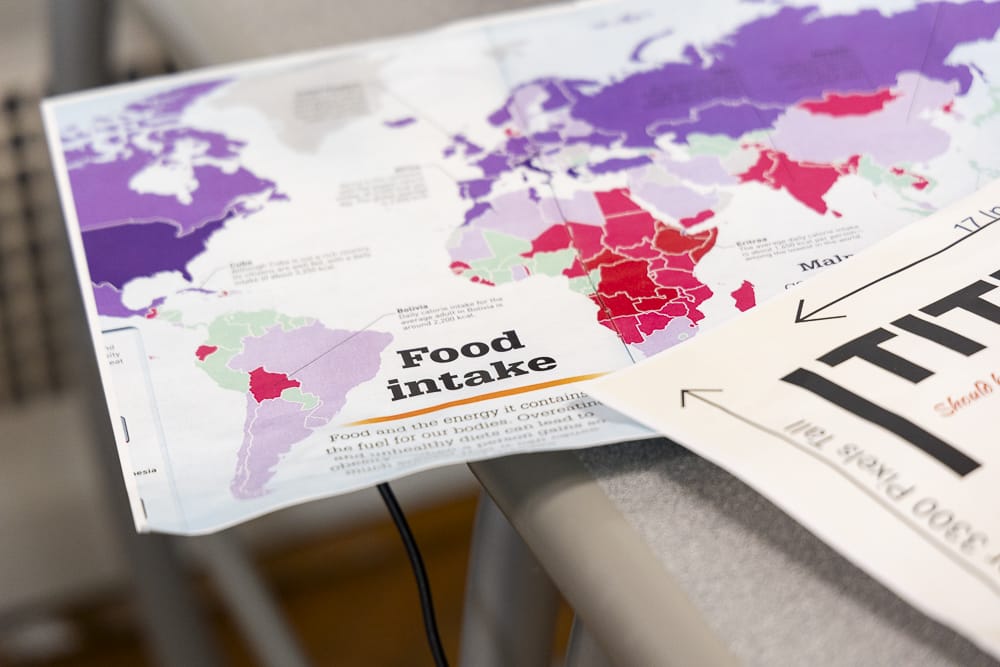
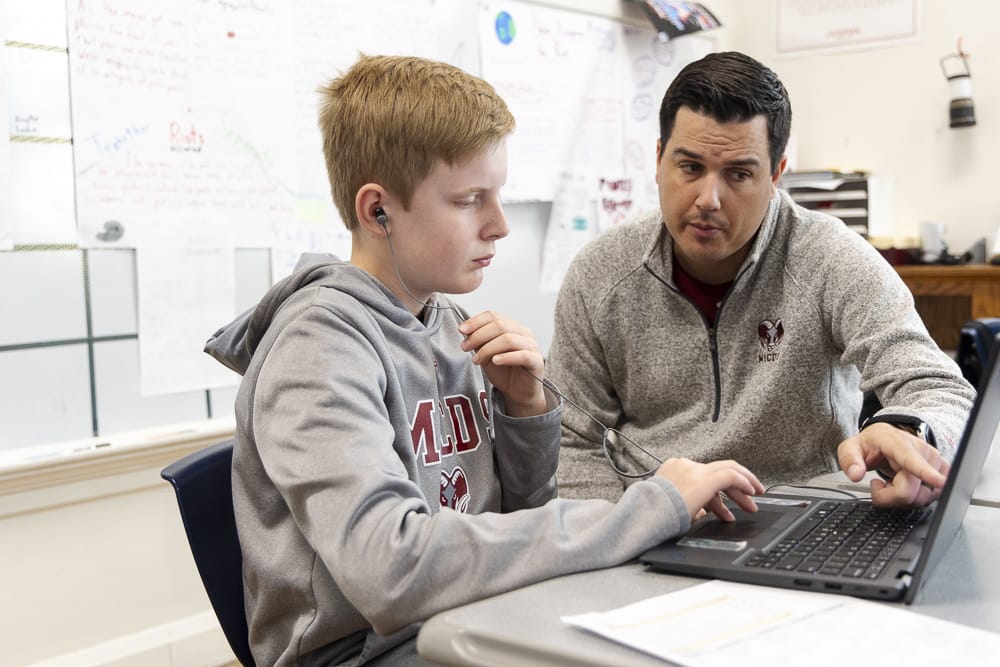
Our students didn’t just learn about human rights; they also learned how to harness the power of technology. Armed with 50 years of global data, they dove into the world of Google Sheets. They mastered the art of sorting and using functions and formulas with the imported data. For the research phase, they had to substantiate their findings with evidence, or their ‘whys,’ on a particular country’s human rights status. Once their data was organized and their research was logged, it was time for the exciting part: data visualization!


Using Adobe Express, students mapped their data onto a color-coded world stage with all the necessary ingredients, such as titles, a map key, and summary paragraphs about the country and the human rights topic. Once mapped, students presented their findings to a room of peers, making sure their main ideas and research data were clearly connected and understandable to their fellow students. Katherine Speckhals ’29 said, “I liked that we didn’t have a template to follow, and we were free to make our map how we liked it.”


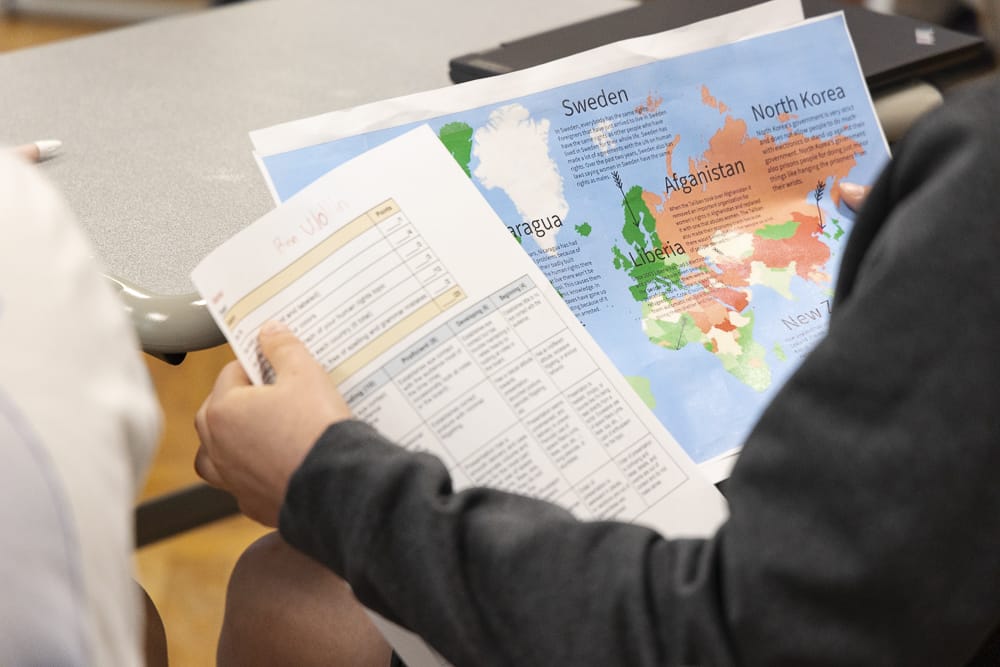


Soham Gadi ’29 also found the map a fun and interactive way of learning about human rights around the world. “I enjoyed using Adobe Express to make my map because I got to use my creative skills. I learned many surprising things through my research, like how Sweden has some of the best human rights in the world! I also learned a lot from others’ presentations, and overall, I enjoyed this project,” he said.
Sadie Moore ’29 said, “I thought this project was really cool because we did so much research, and I really liked to see it all come together into a finished product. When we were presenting our projects, it was interesting to see what information people got because even though many people did the same topics, they did different research so everyone’s projects were different.”
Through critical thinking and tech skills, our seventh graders explored human rights and set the stage for future positive action.