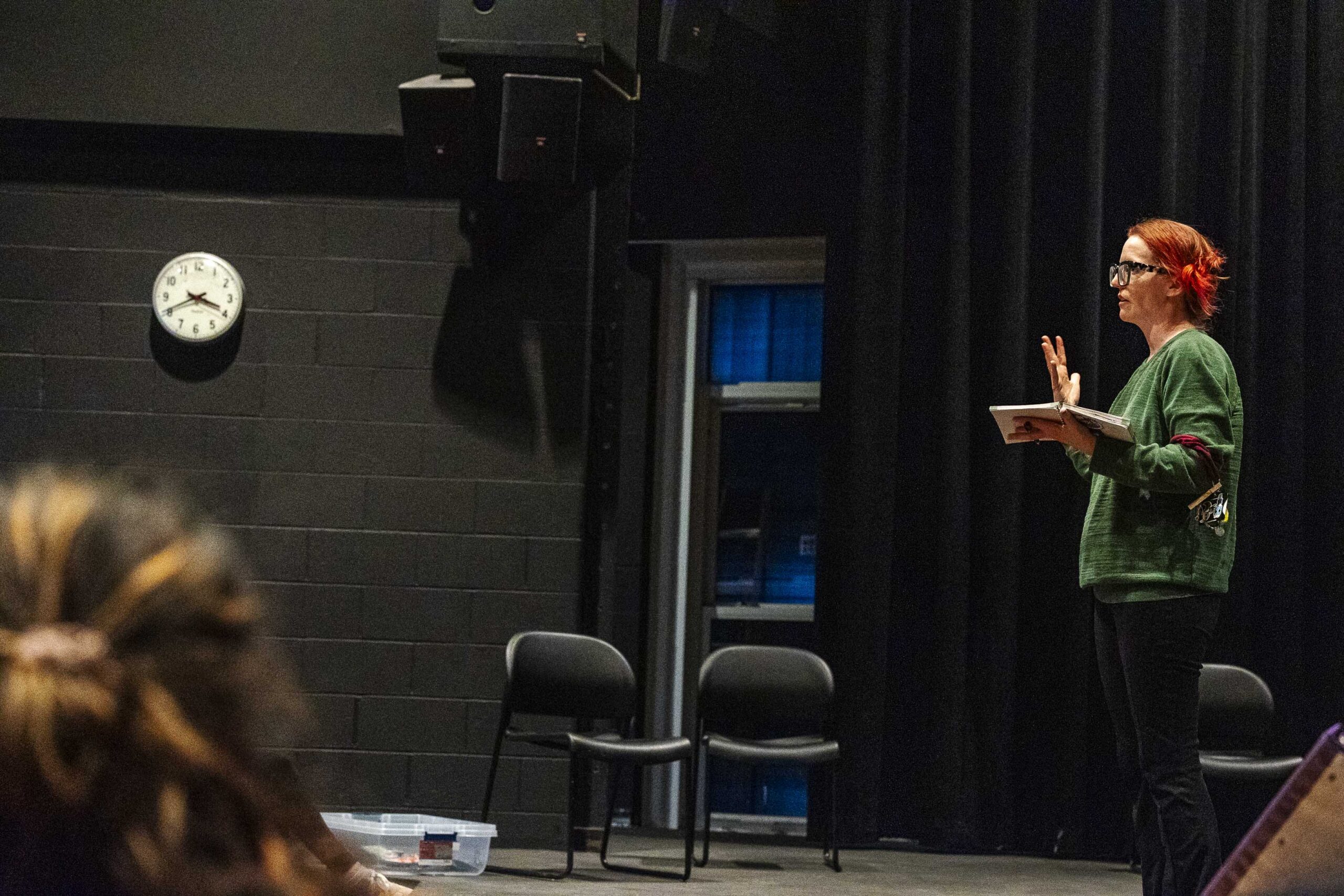
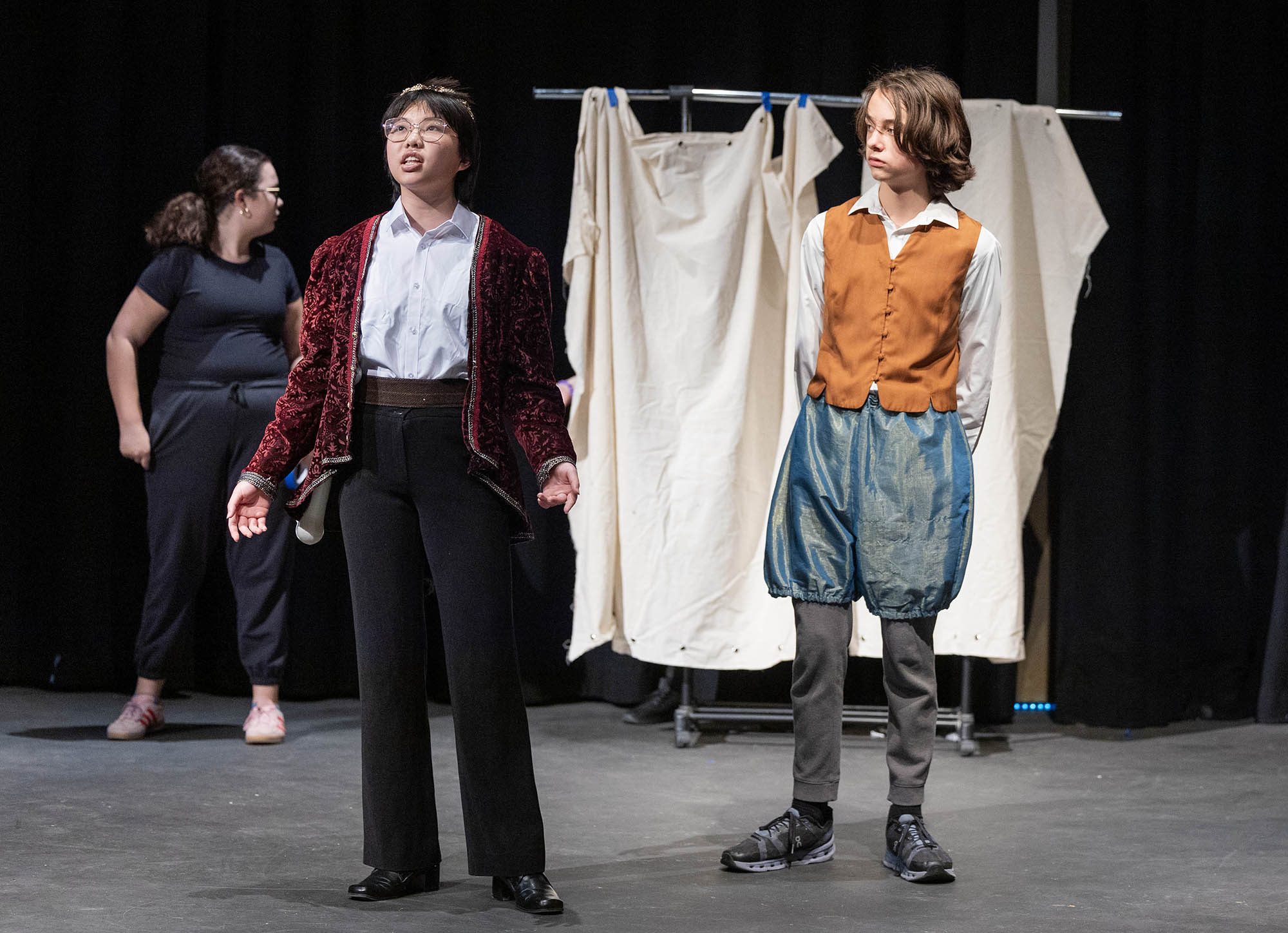
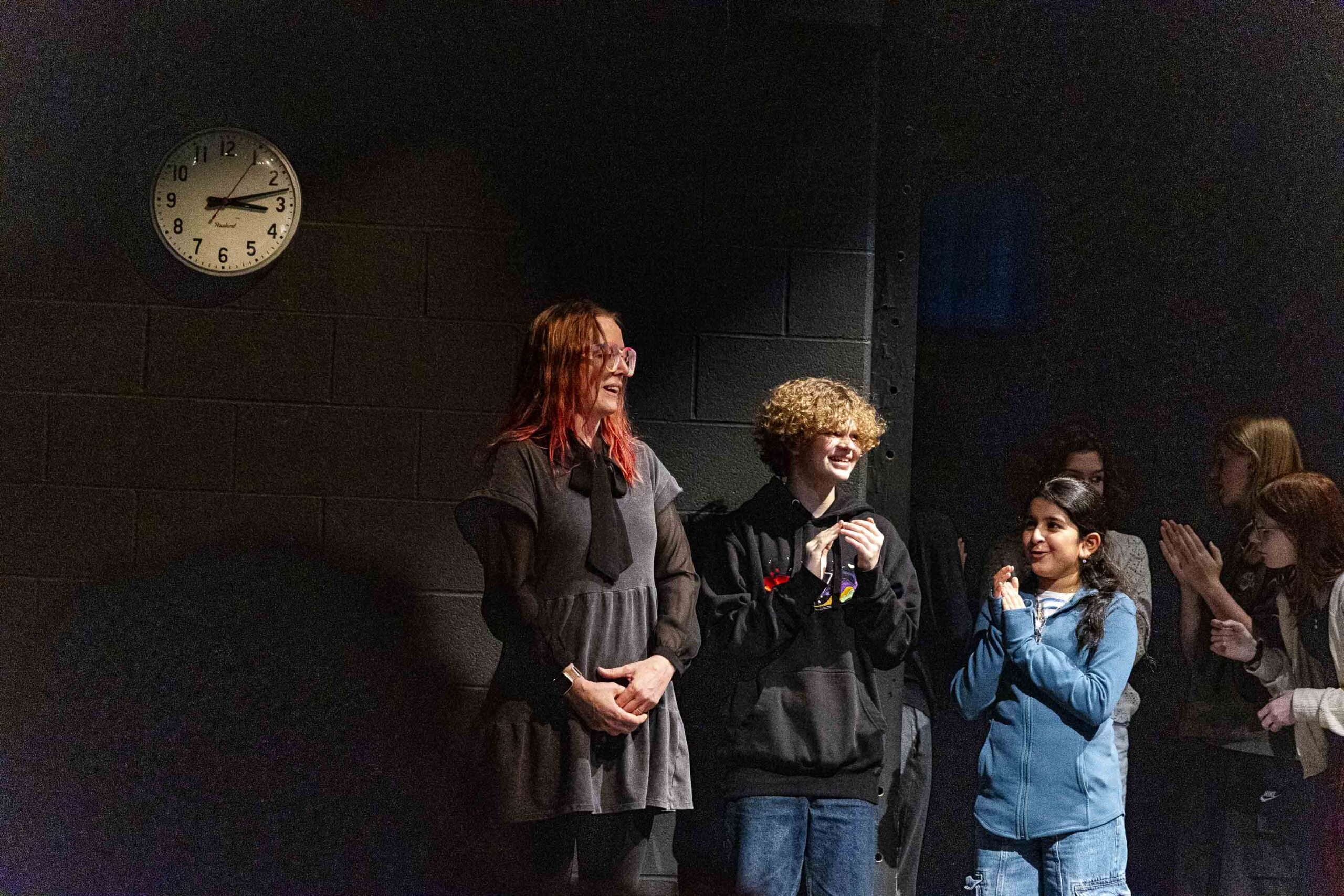
Deb Mein, Arts Department – Middle School Theatre Teacher, cackles with laughter from the back row of the black-walled 135-seat Freeman Theater as she watches the dress rehearsal for the seventh and eighth-grade play, Scenes from Romeo & Juliet (Sort of…Almost) by John Shanahan.
This isn’t your standard Romeo and Juliet story. It tells the tale of a drama class that is bringing a cutting of Romeo and Juliet, Shakespeare’s famous play about star-crossed lovers, to a competition. But the truck with their set pieces and props has broken down on the highway, Romeo’s throwing up backstage, and Juliet is adamantly not using a tall stepladder to replace the missing balcony. But the show must go on! This funny, fast-paced ensemble comedy mixes legitimate Shakespearean scenes with controlled chaos, theater inside jokes, and absolutely no respect for the fourth wall.
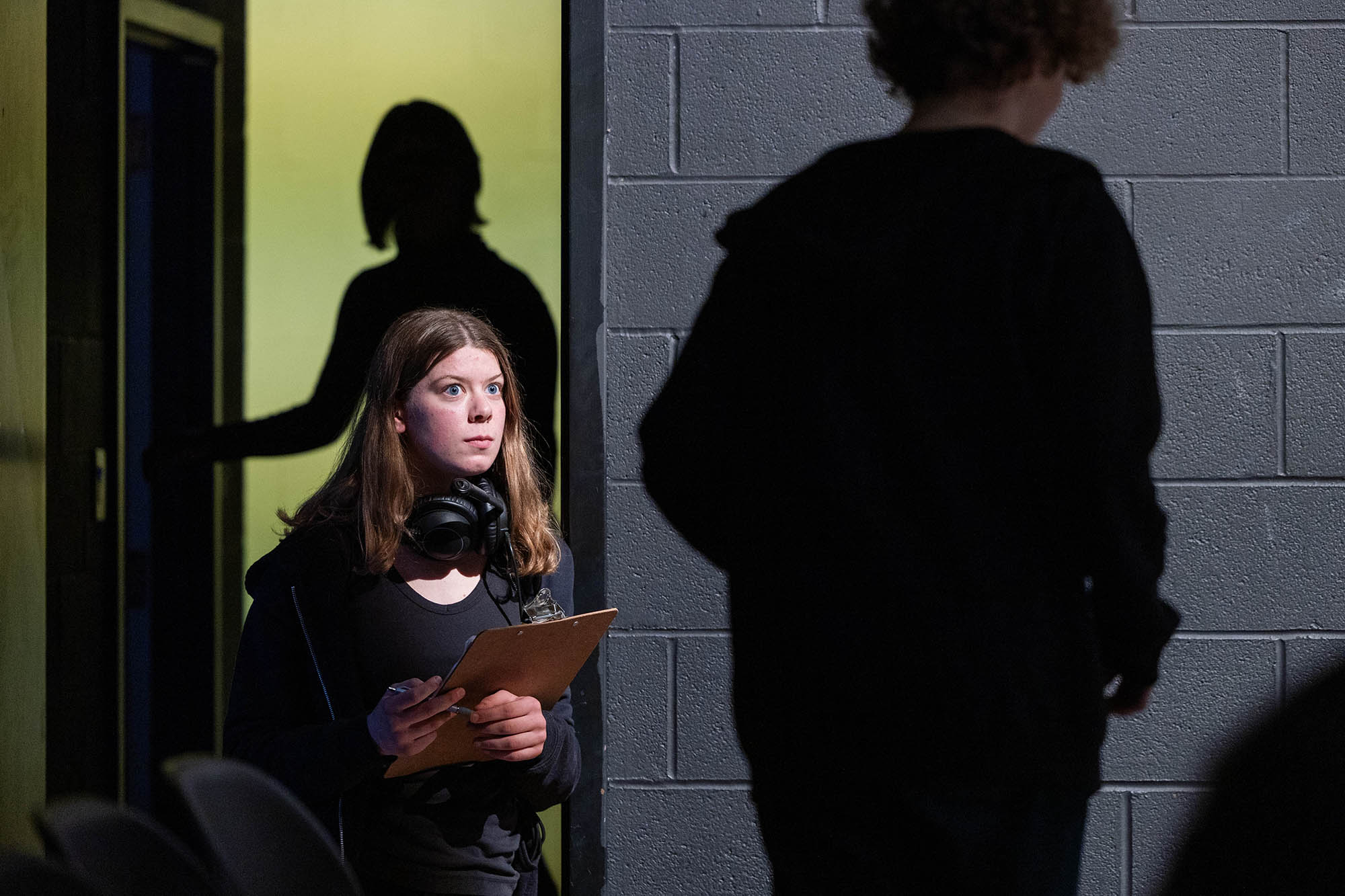
In between laughs, Mein is taking notes about all aspects of this final rehearsal before the three upcoming weekend performances. From lighting, sound, and props, to lines, timing, and blocking, she is all smiles as the students bring this stageplay, written specifically as a comedy for middle school actors, to life.
Behind the Scenes
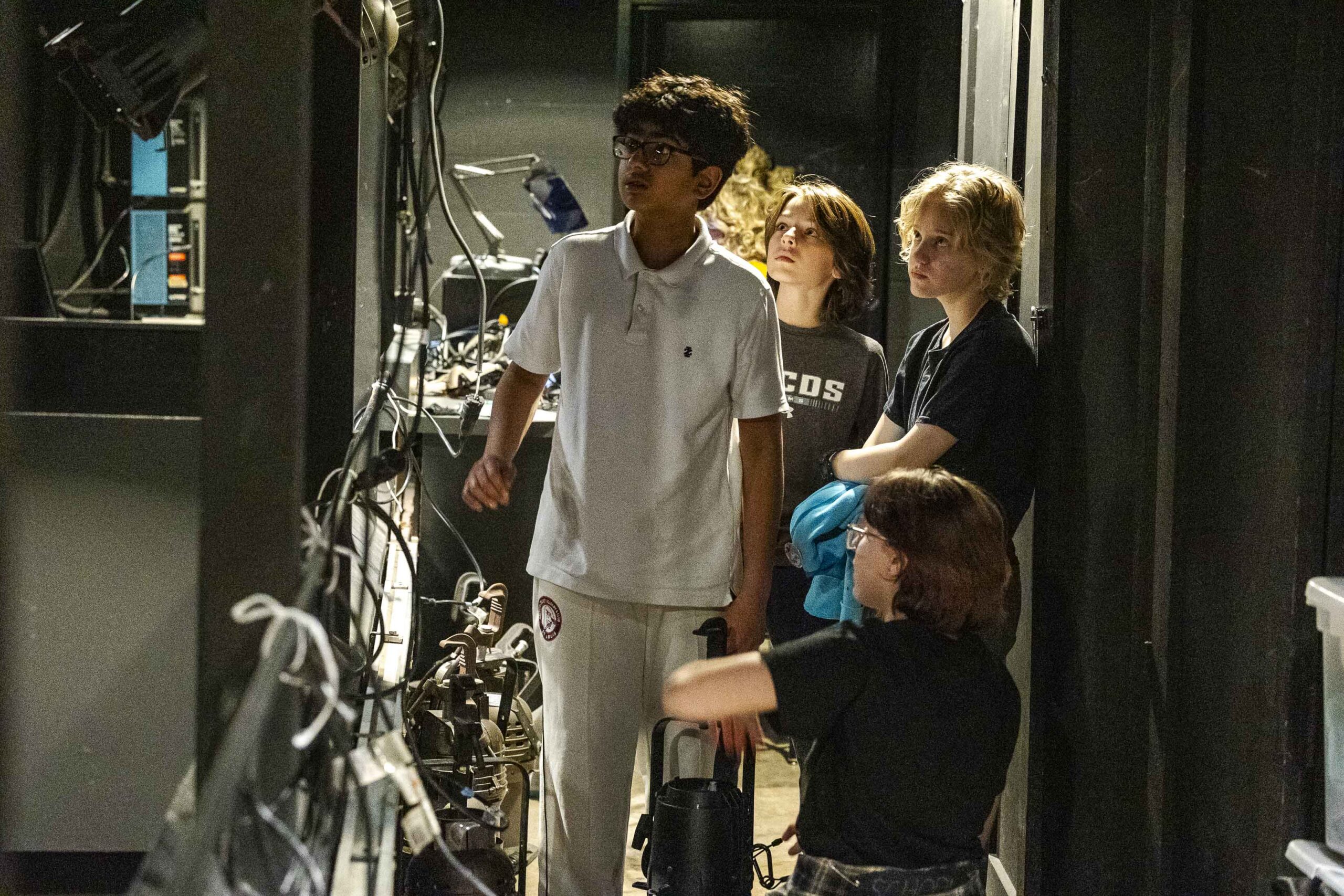
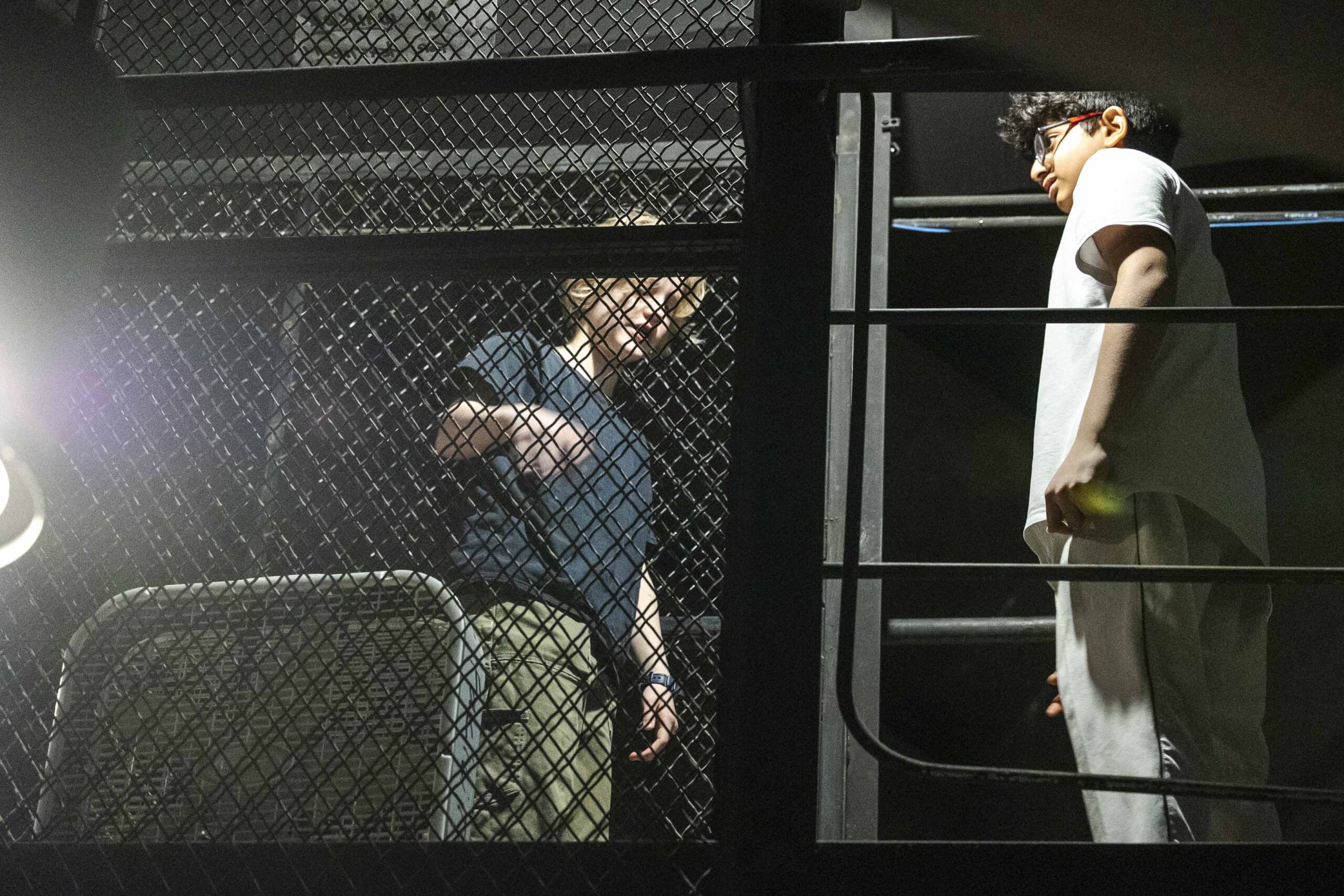
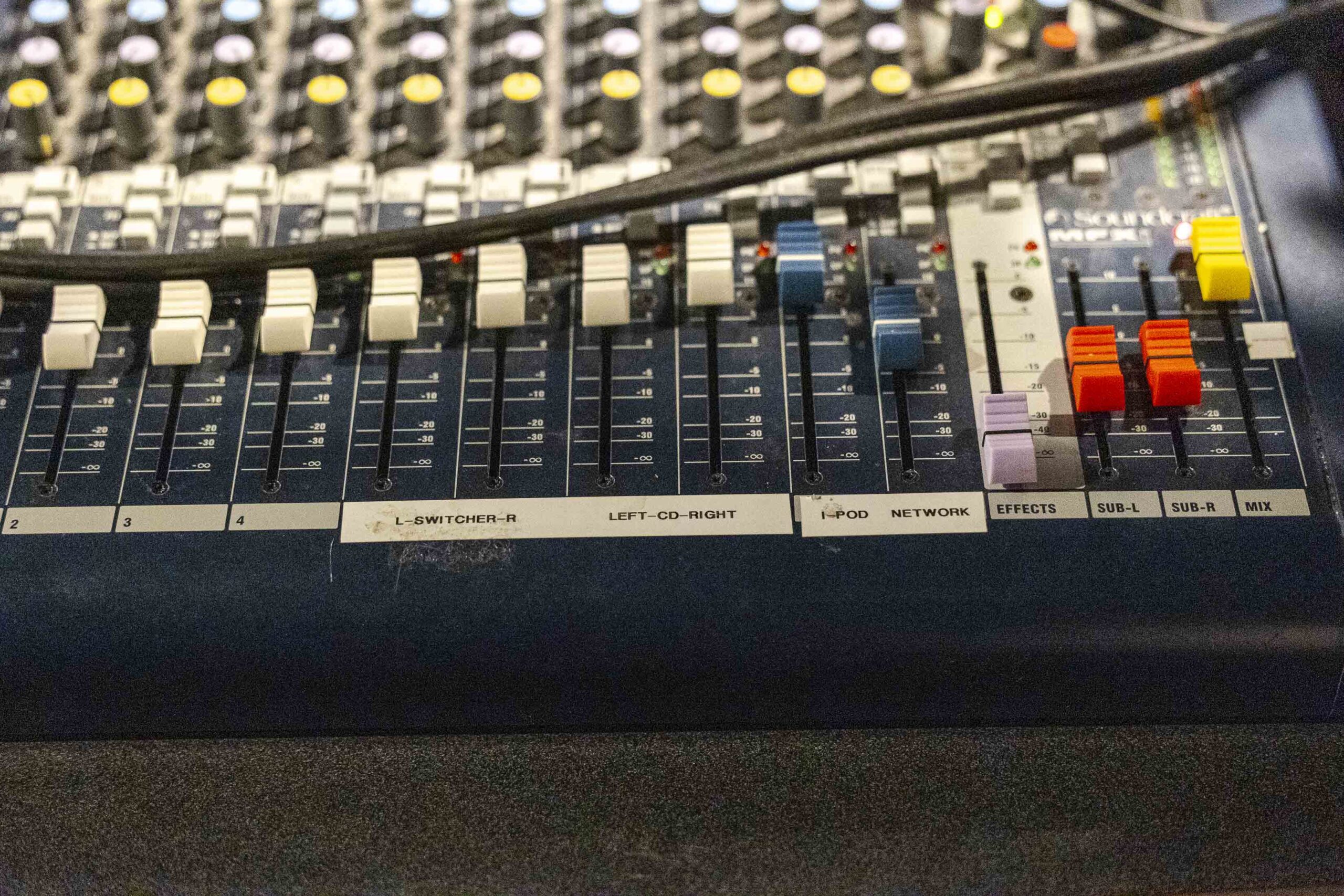
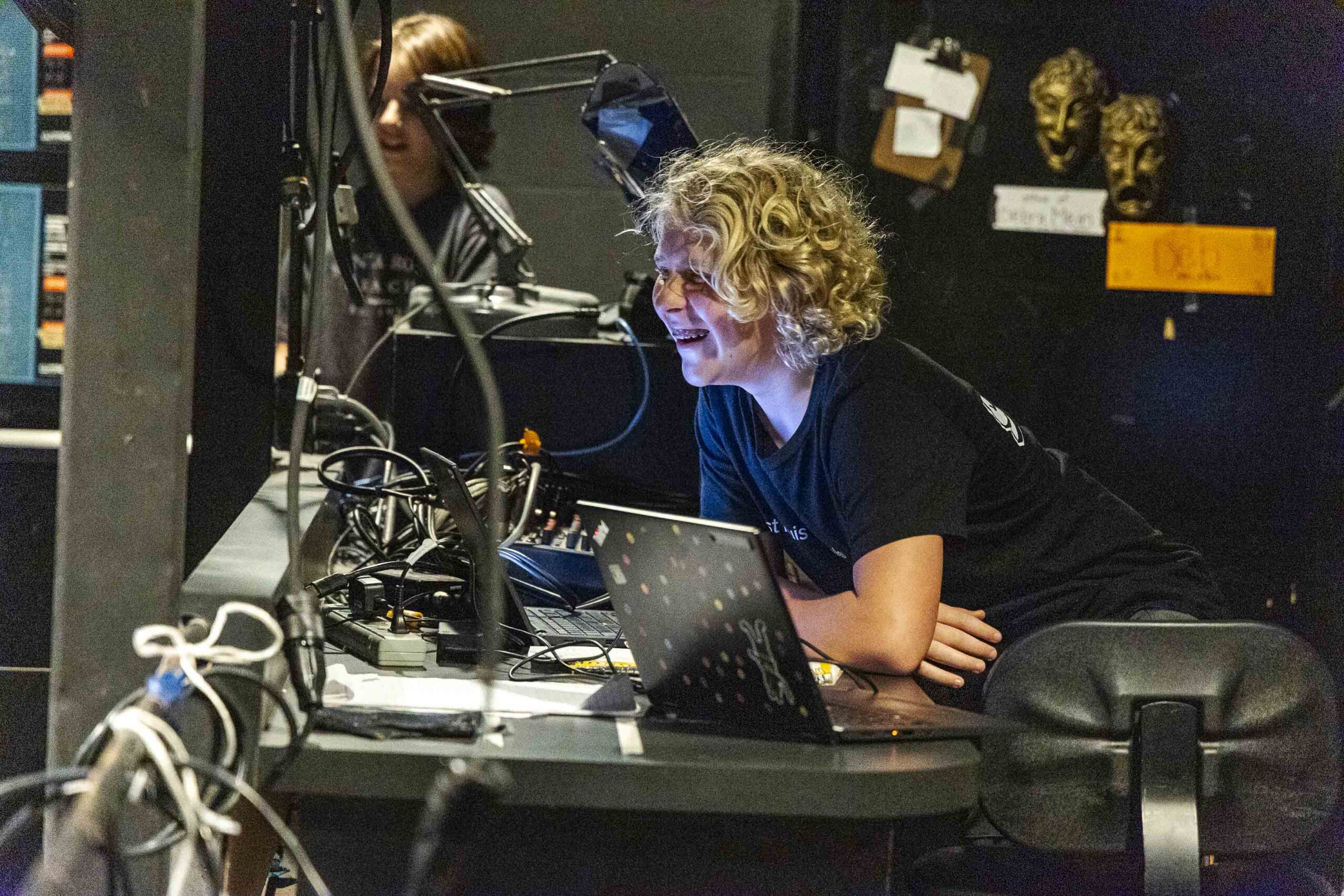
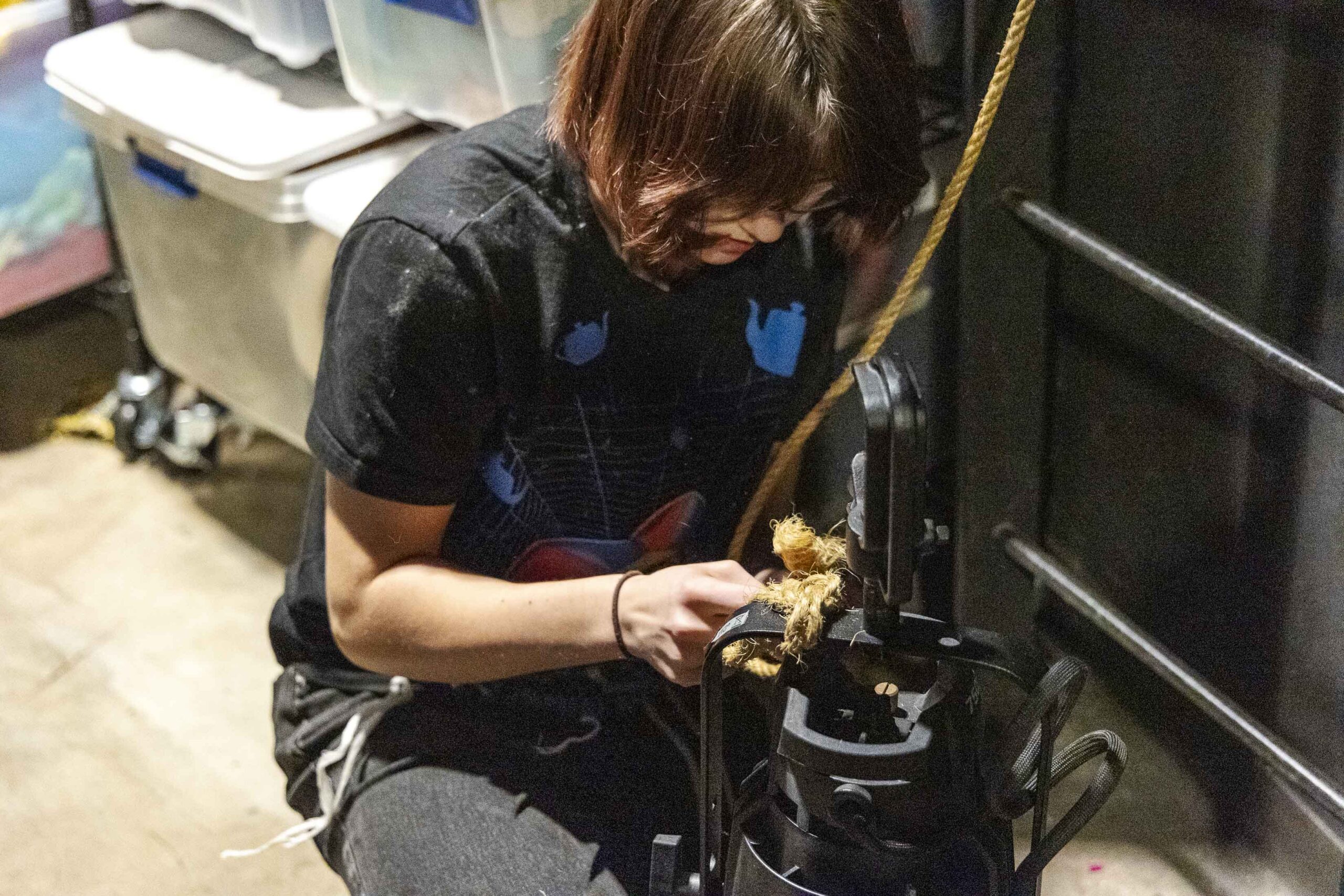
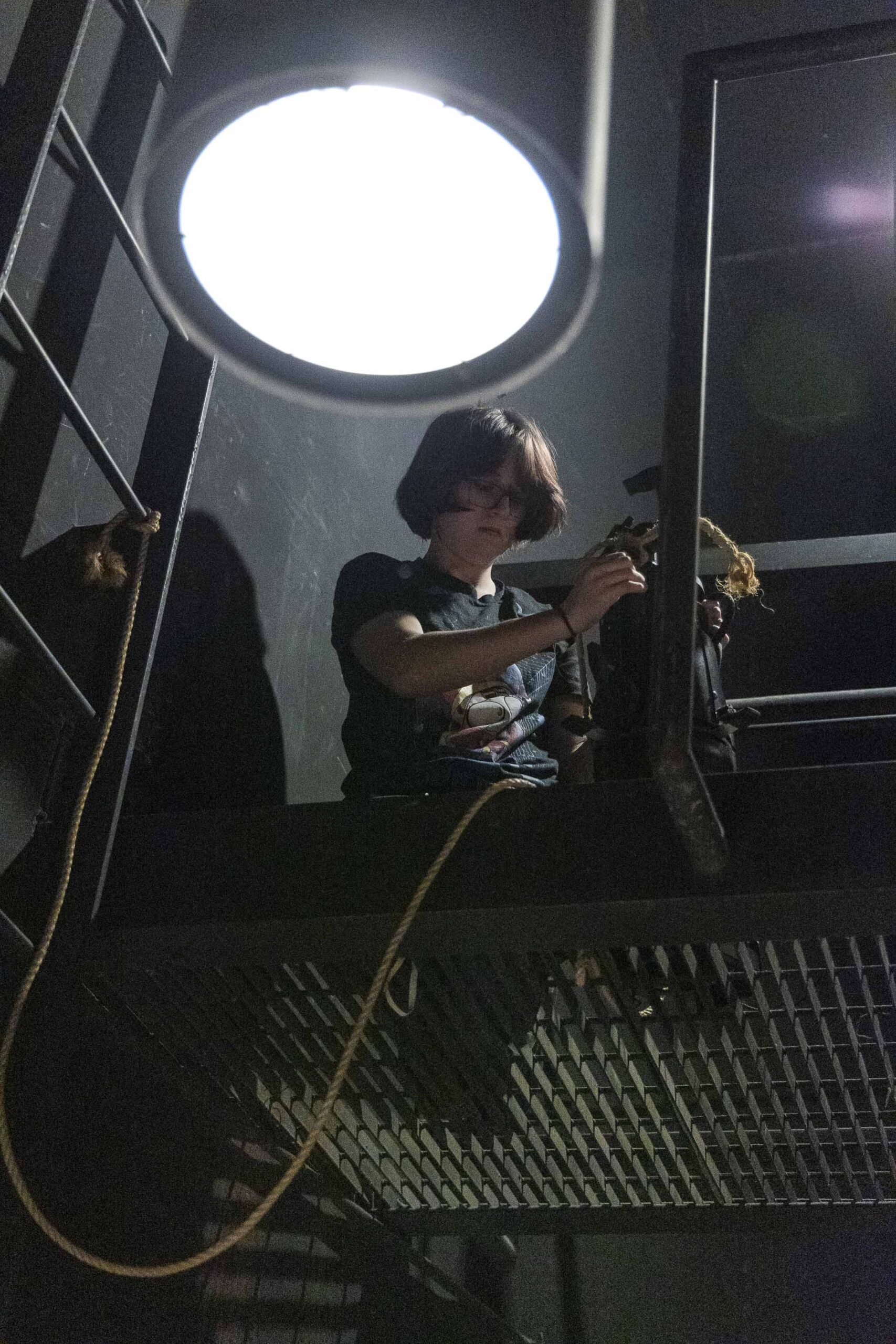
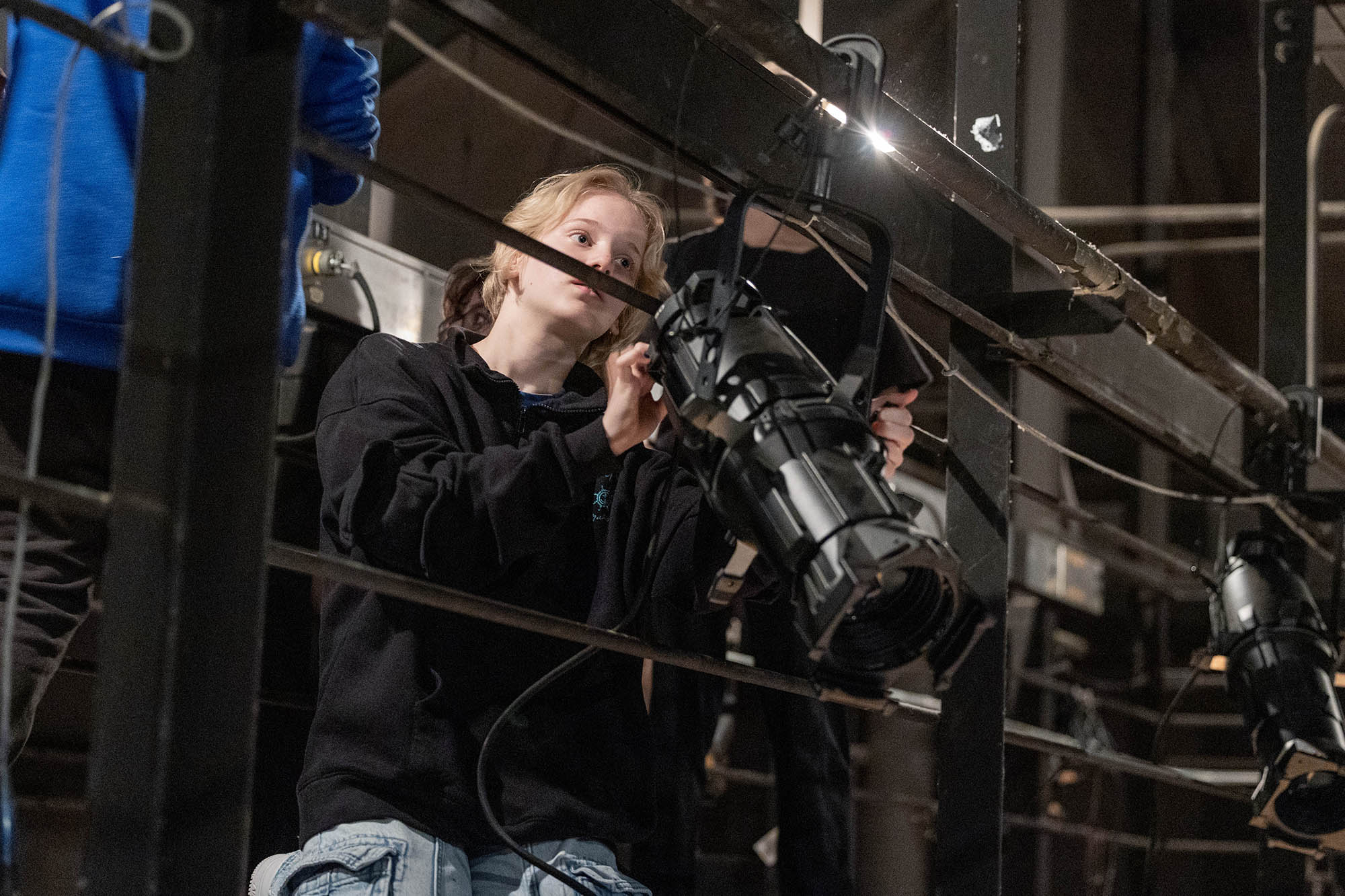
Over five weeks, 35 students completed roughly 25 hours of rehearsal and 10 hours of technical work to bring this play into its final form. Throughout the countdown week leading up to opening night, there was a balance of bustling energy and seriousness. The tech team, with both veterans and newbies, hung lights on the catwalk using a schematic made by Elika Coff ’30, and the soundboard team tested sound and sourced final music segments for key scenes.
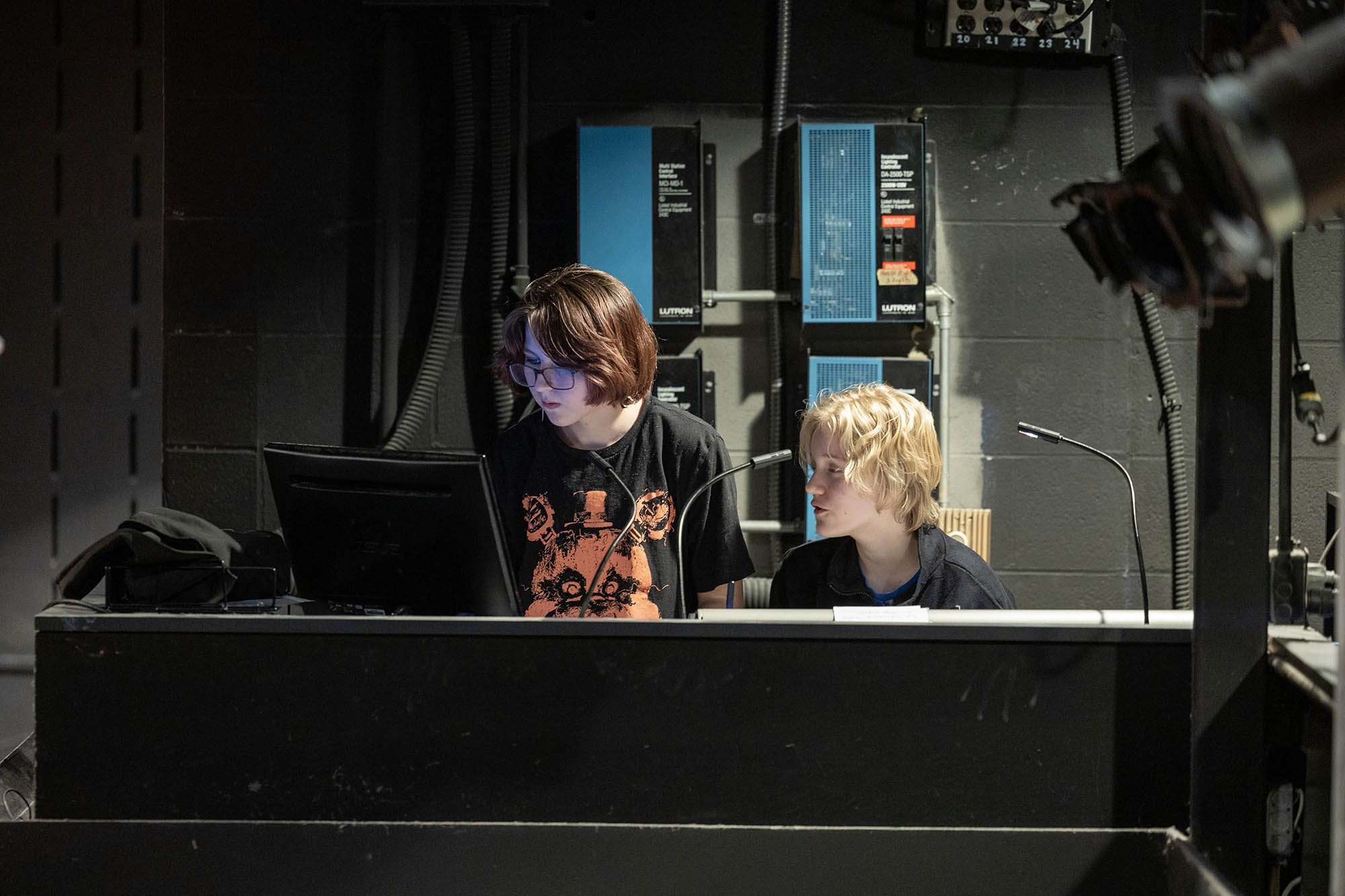
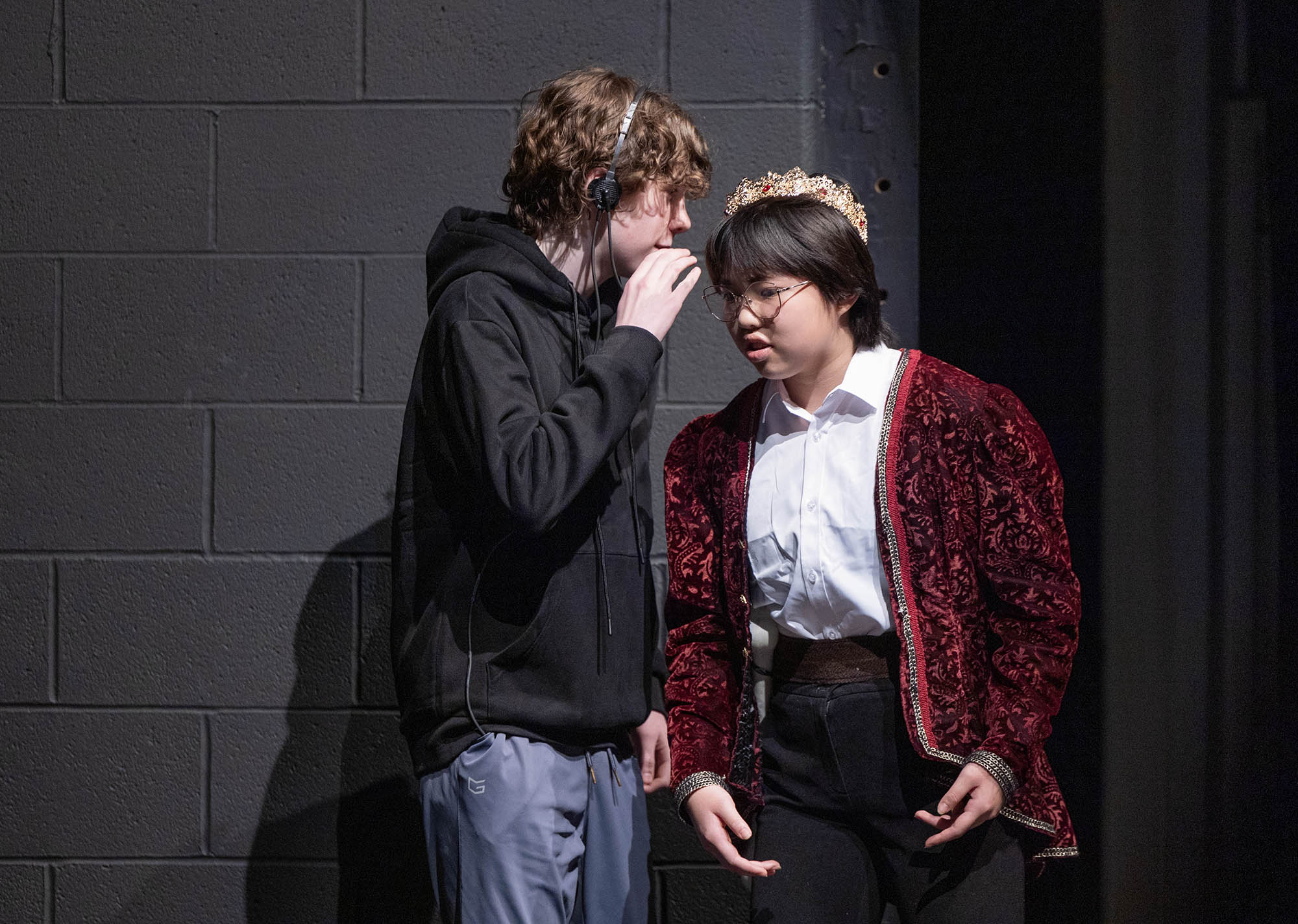
A new eighth grader this year, James Brogan ’30, is a member of the yearlong tech design arts elective and is part of this production’s sound team. “Outside of the class, this is the first time I’ve done anything related to theater other than watching performances,” he said. When asked about subtle details the audience might miss, he replied, “Music can create an atmosphere. I have a lot of classical music playing in the show, not full blast, but it’s still there in the scene.”
Sarvajith Ganapathi Subramanian ’30 is also on the sound and lighting tech team. He said, “I was originally an actor [with a small role] for this production, but there were a few rehearsals I couldn’t come to, and with only a few lines, Ms. Mein said I could be a techie. I’m James’s assistant, and I’m also part of the lighting team.”
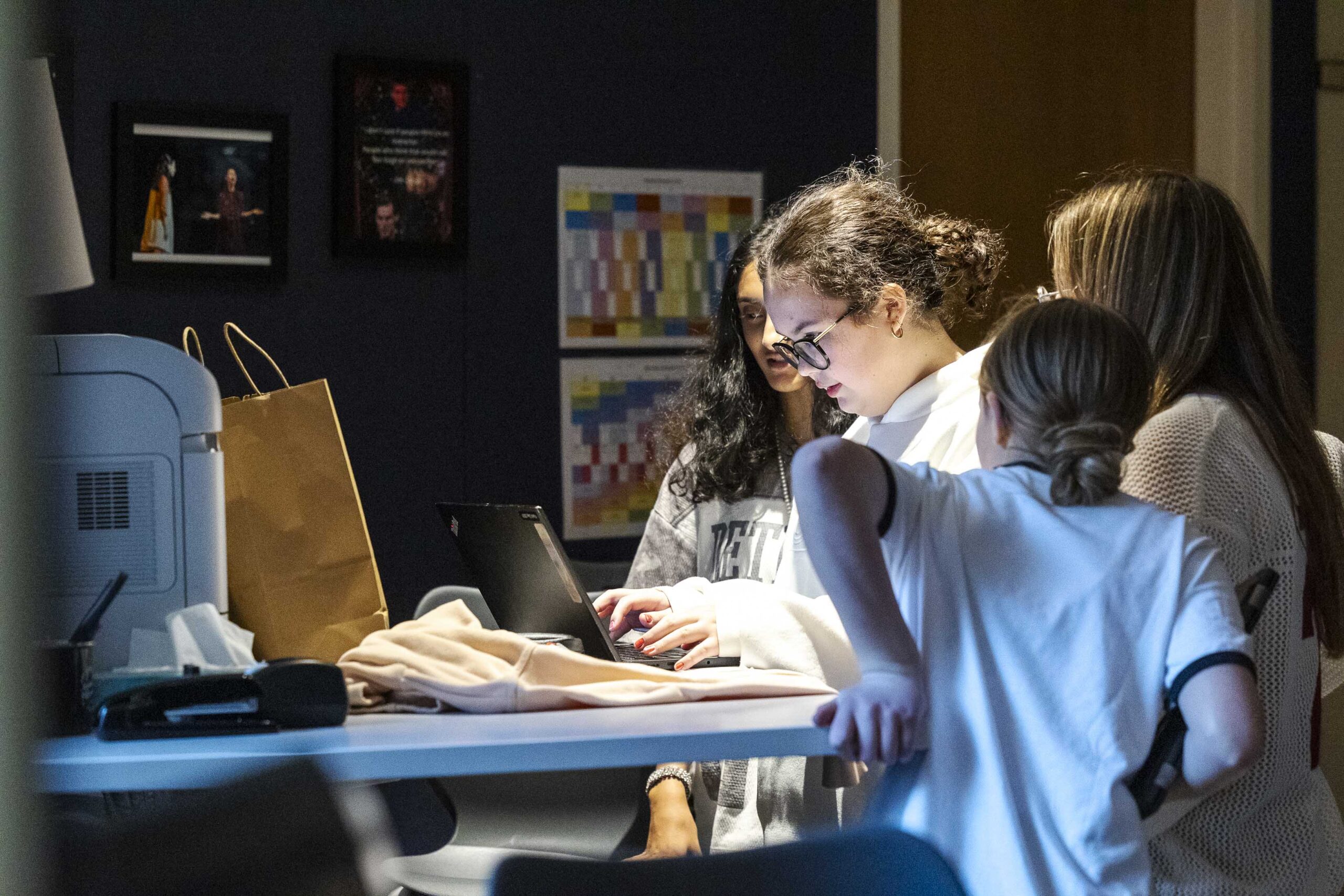
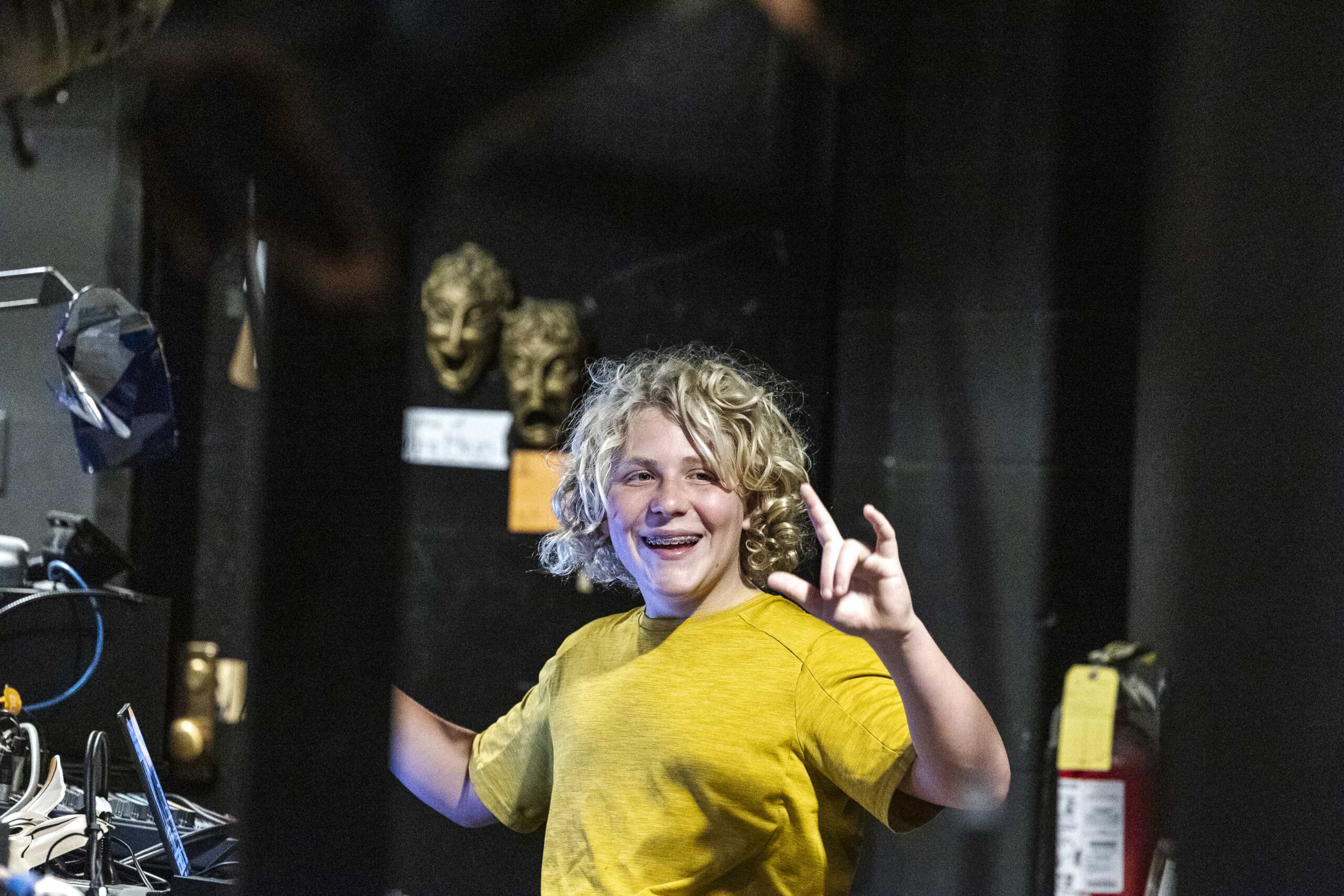
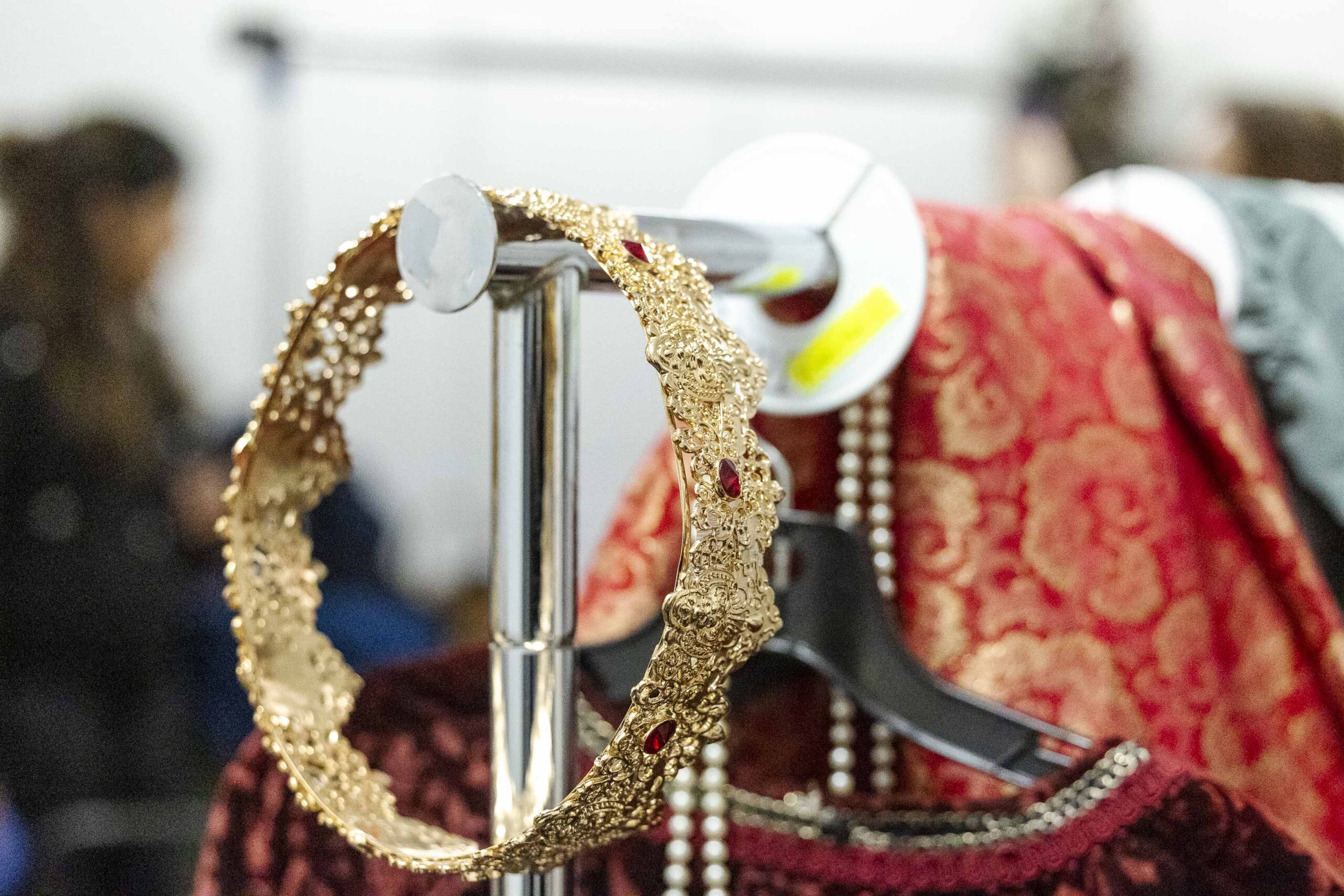
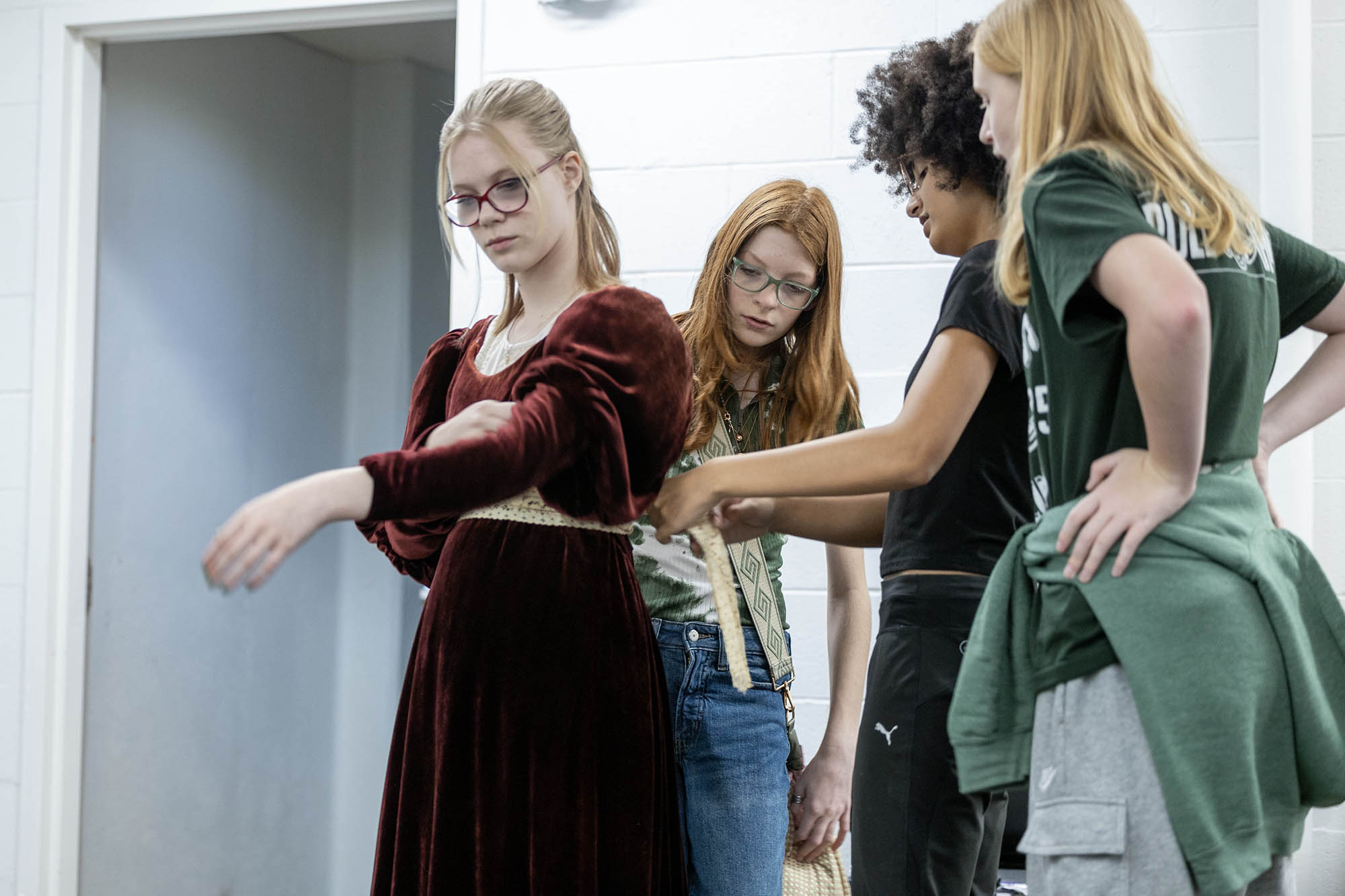
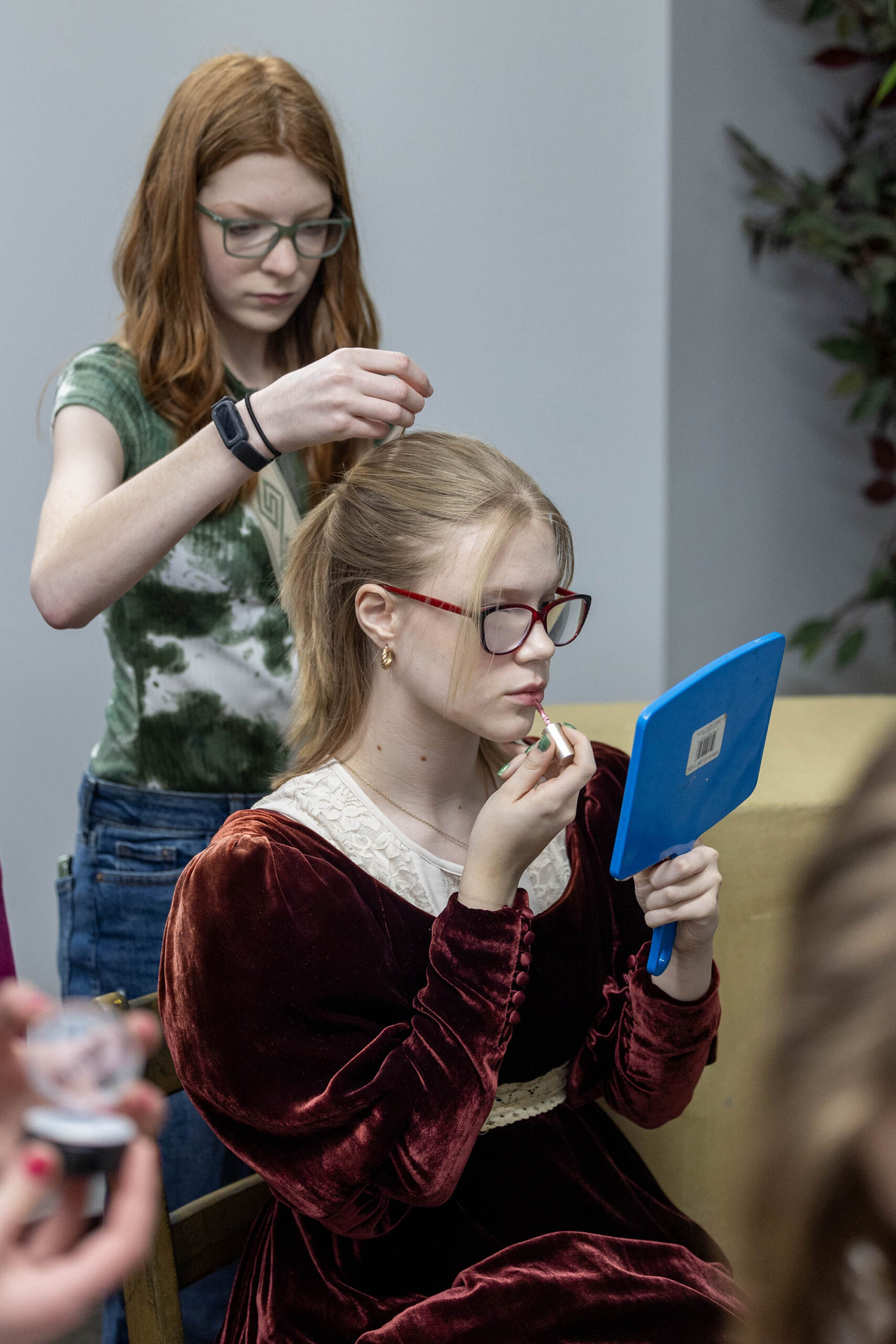
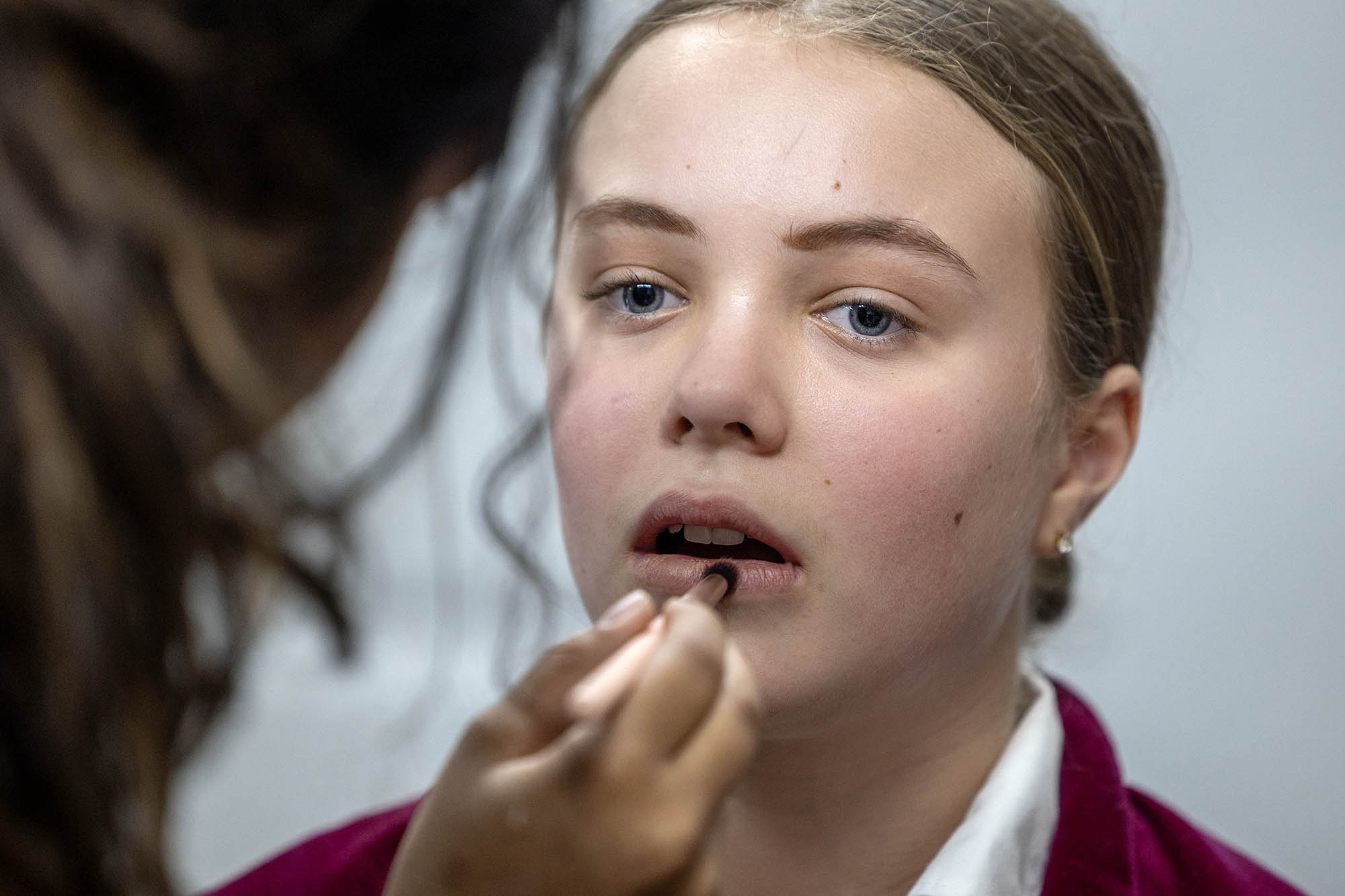
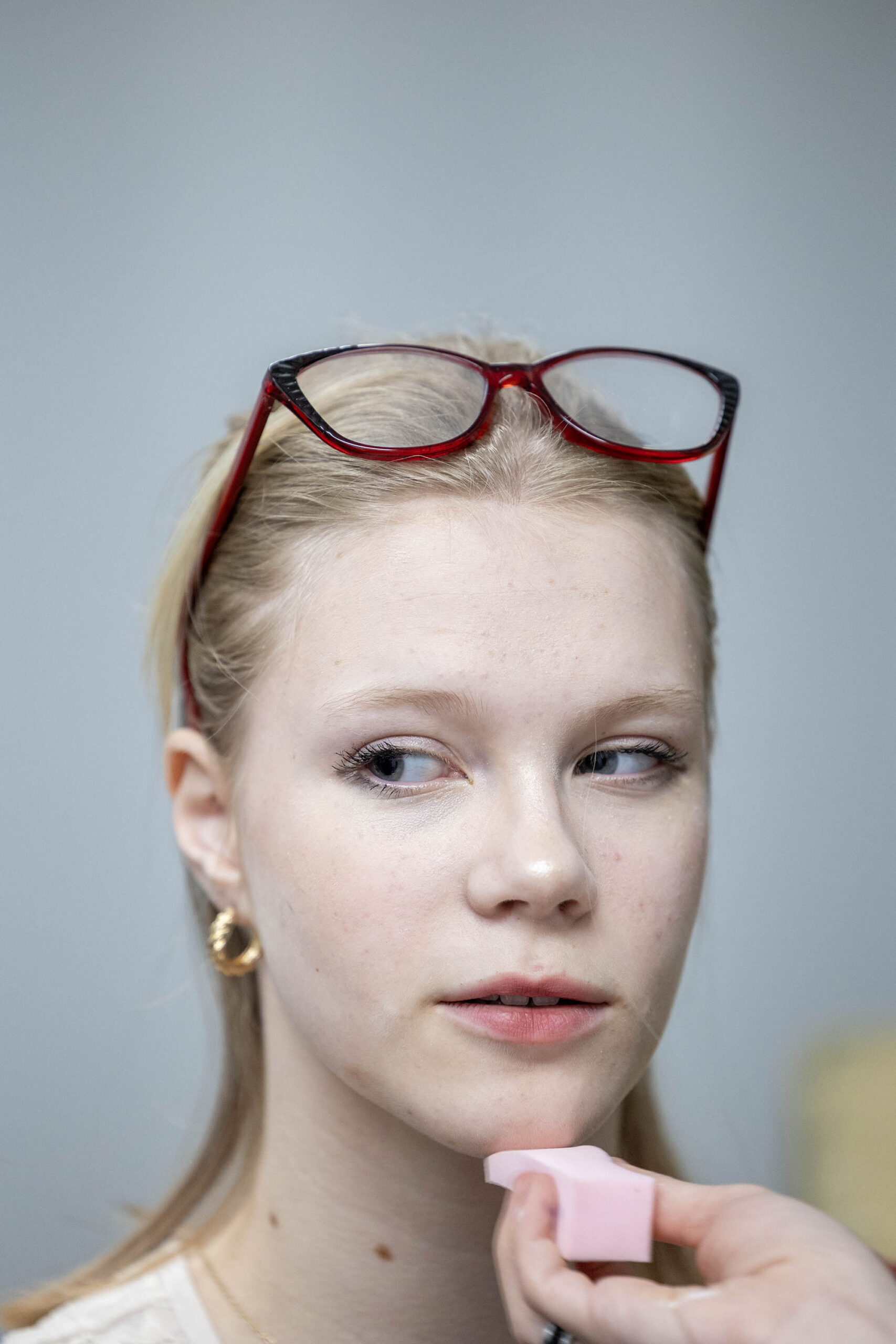
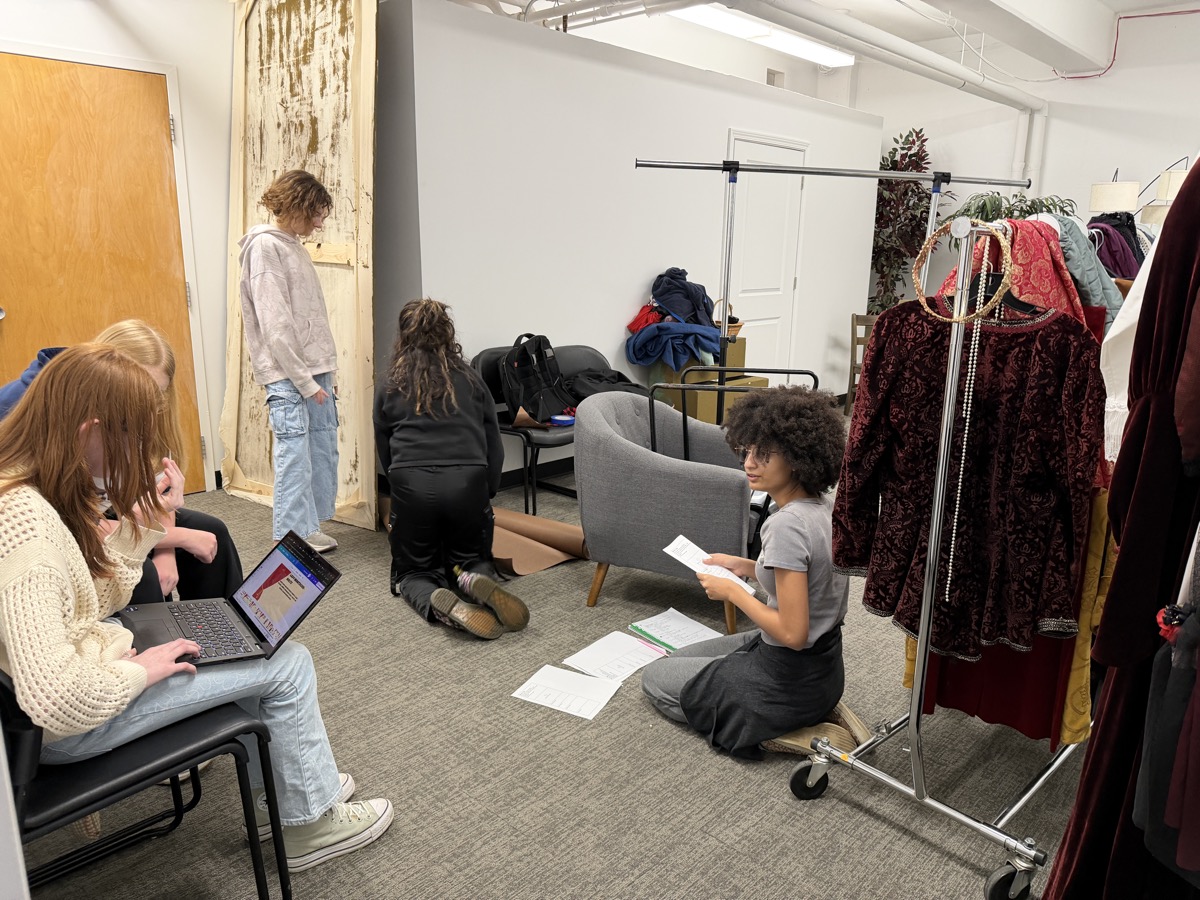
Downstairs, students conducted costume fittings and final adjustments for quick access and inventory, and practiced applying makeup. In the room next door, actors fired through off-book line readings to test memorization and interact as their characters.
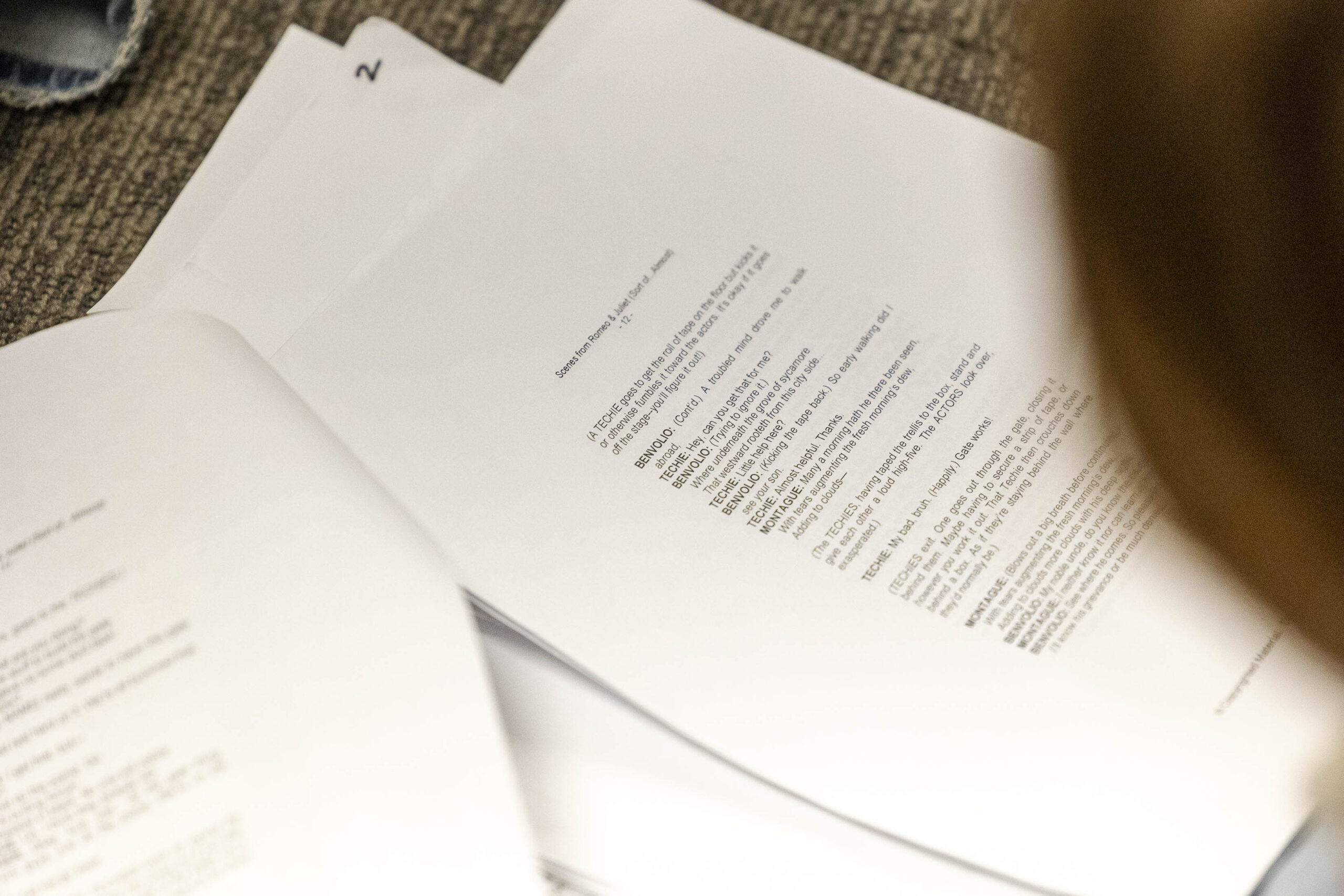
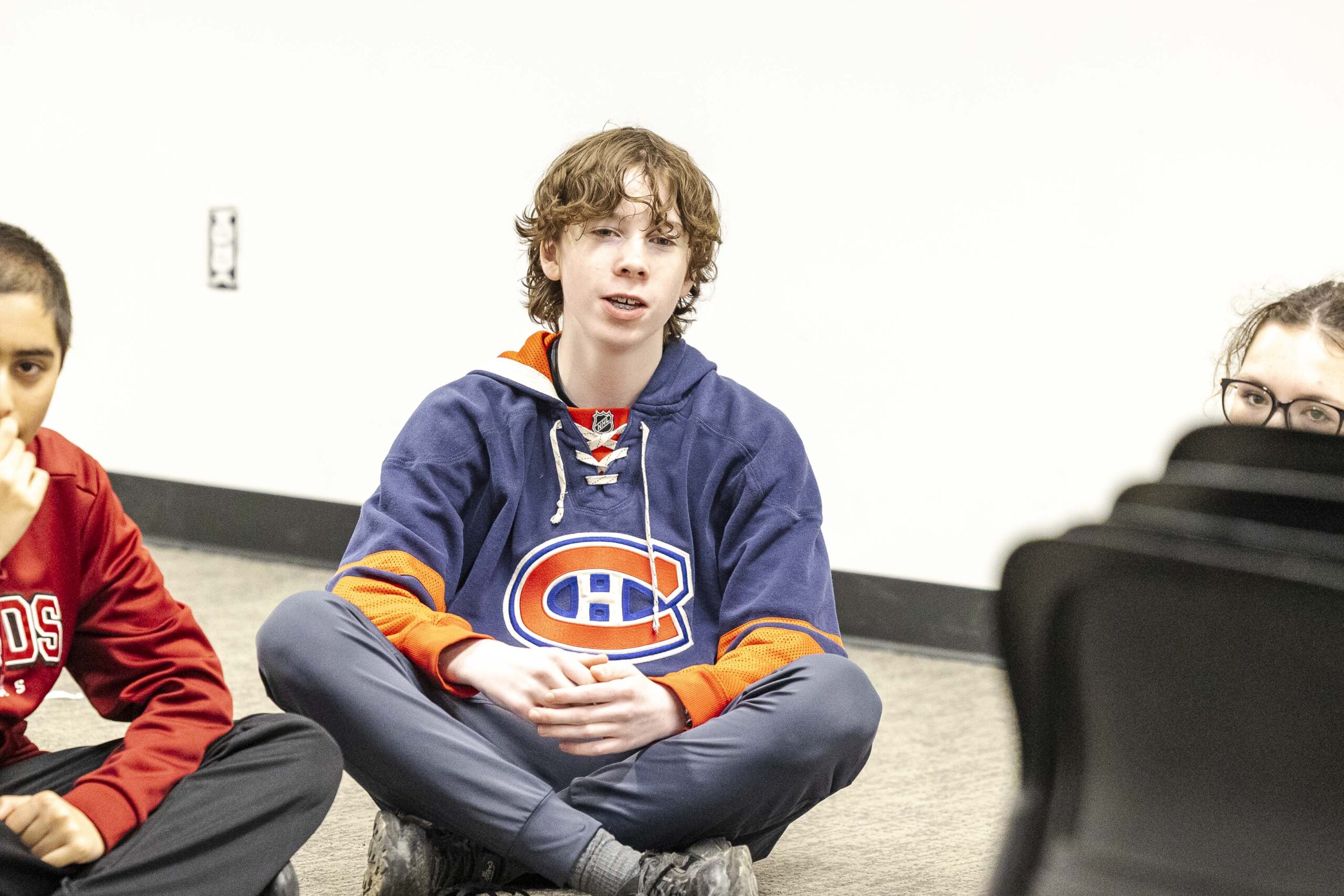
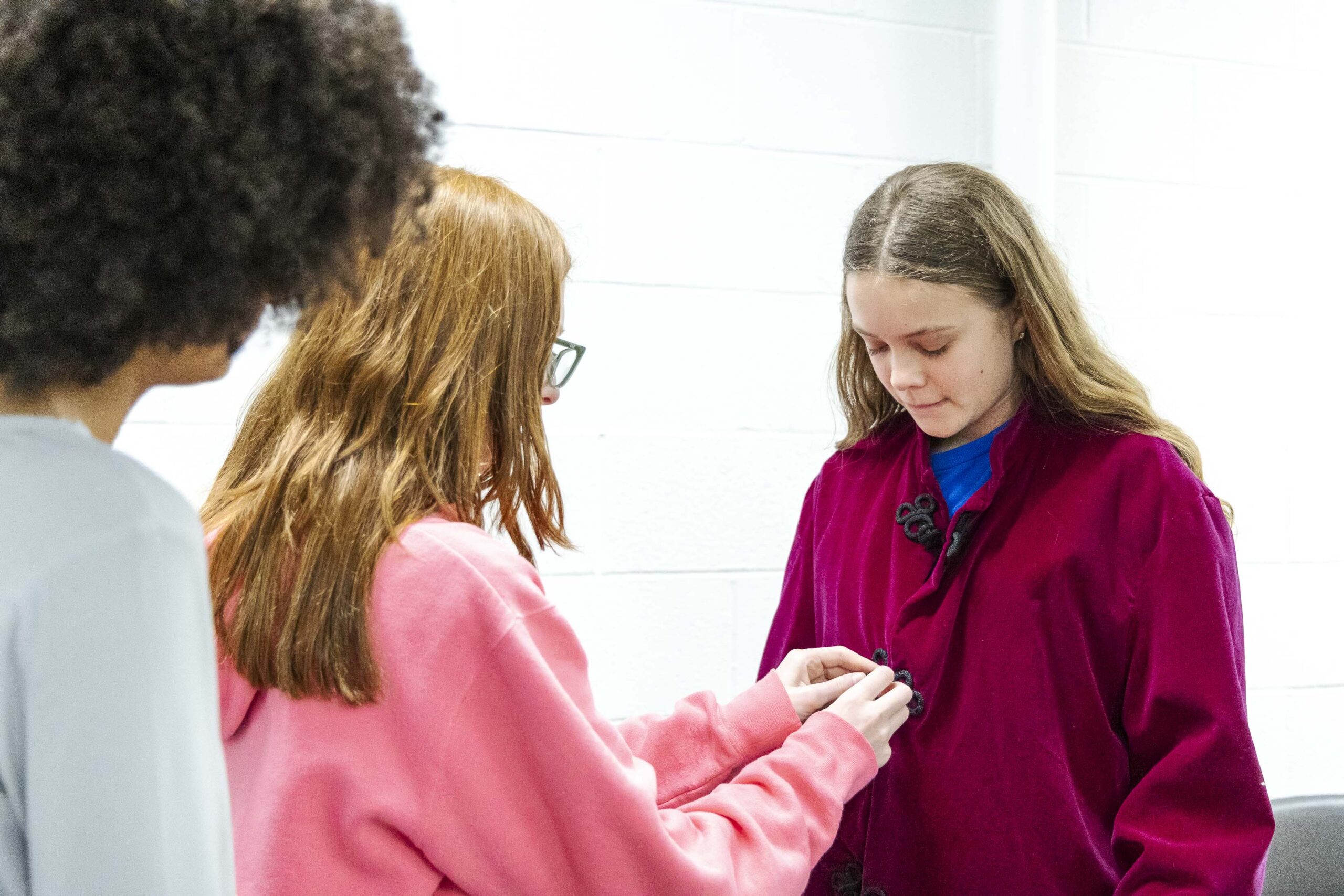
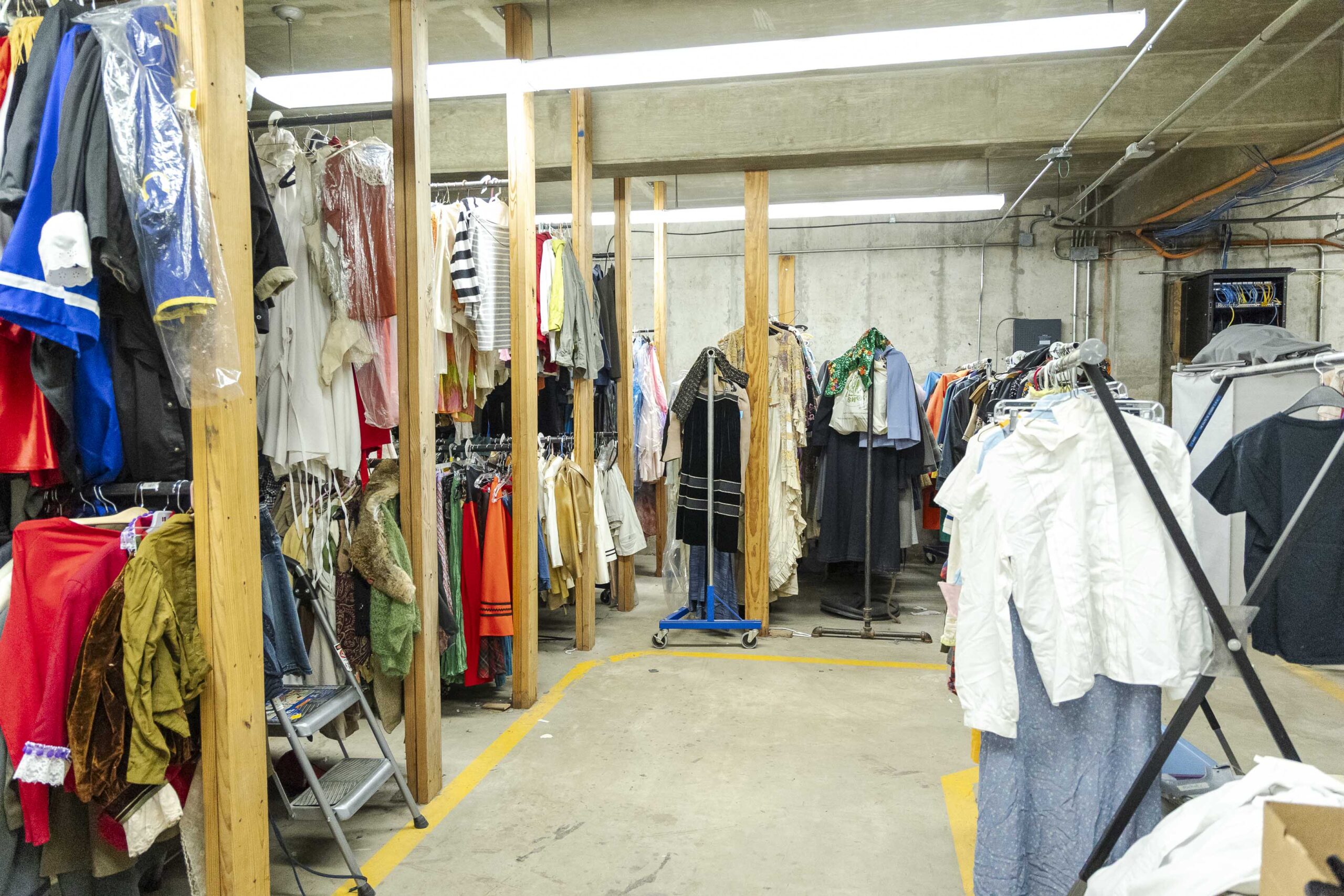

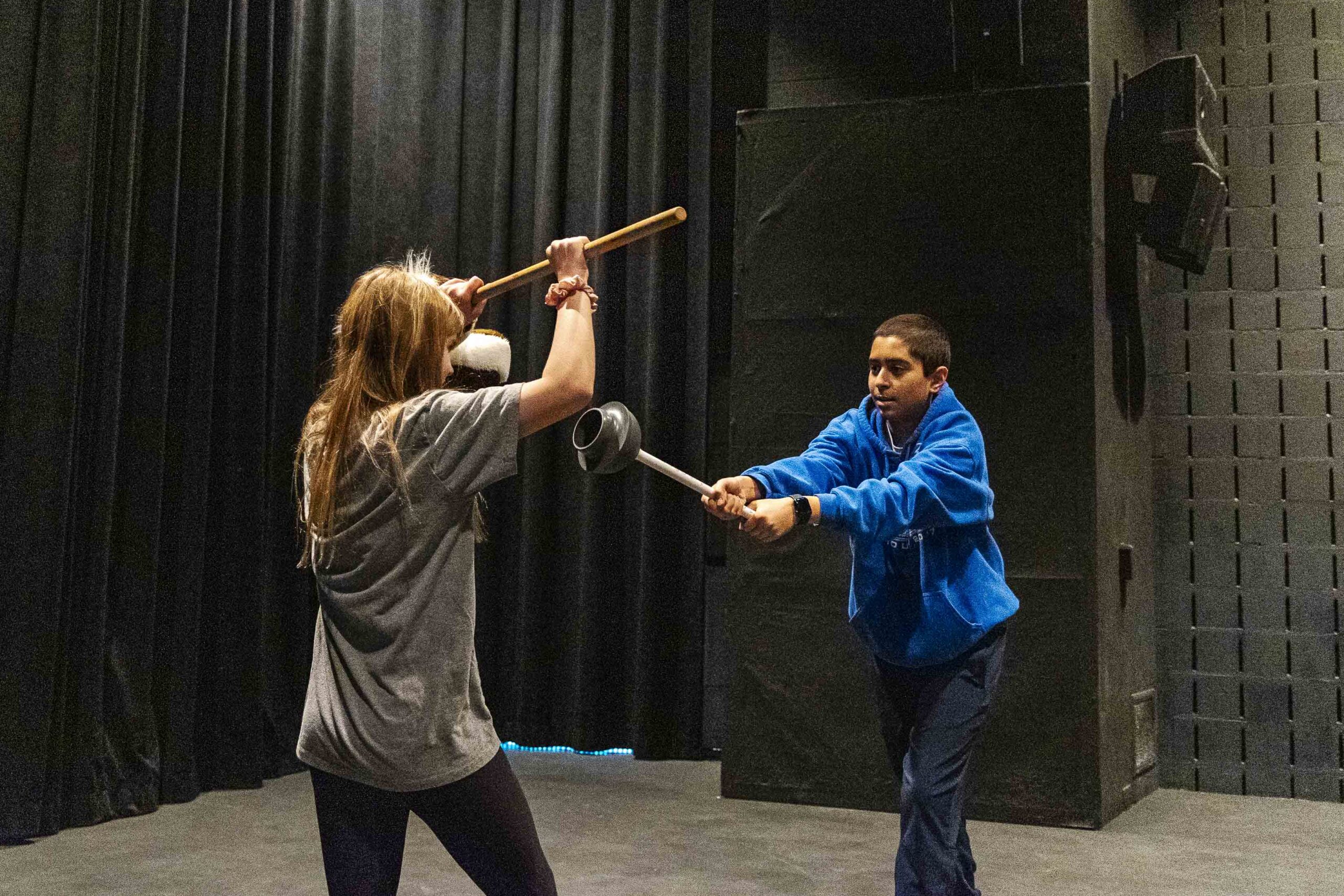
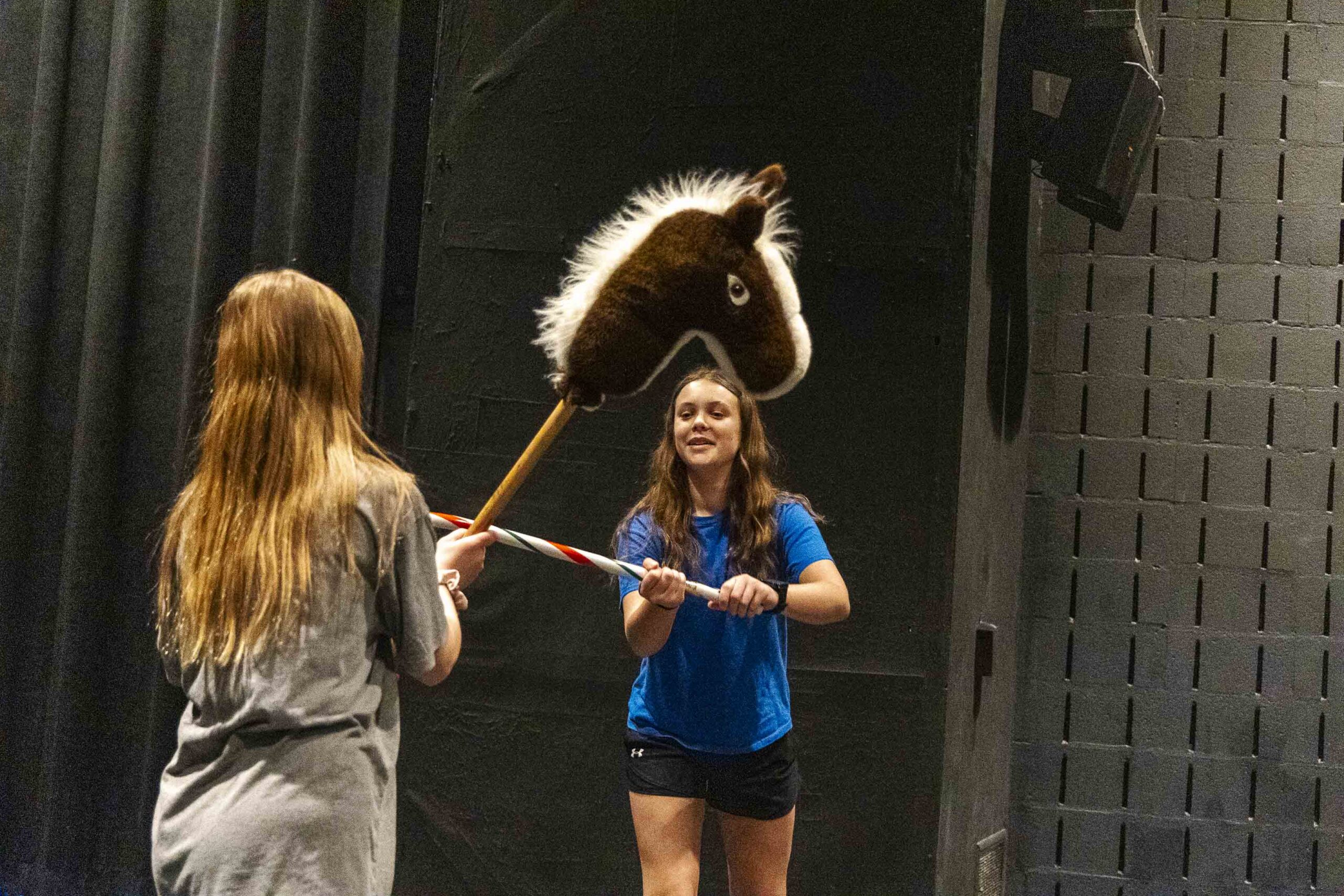
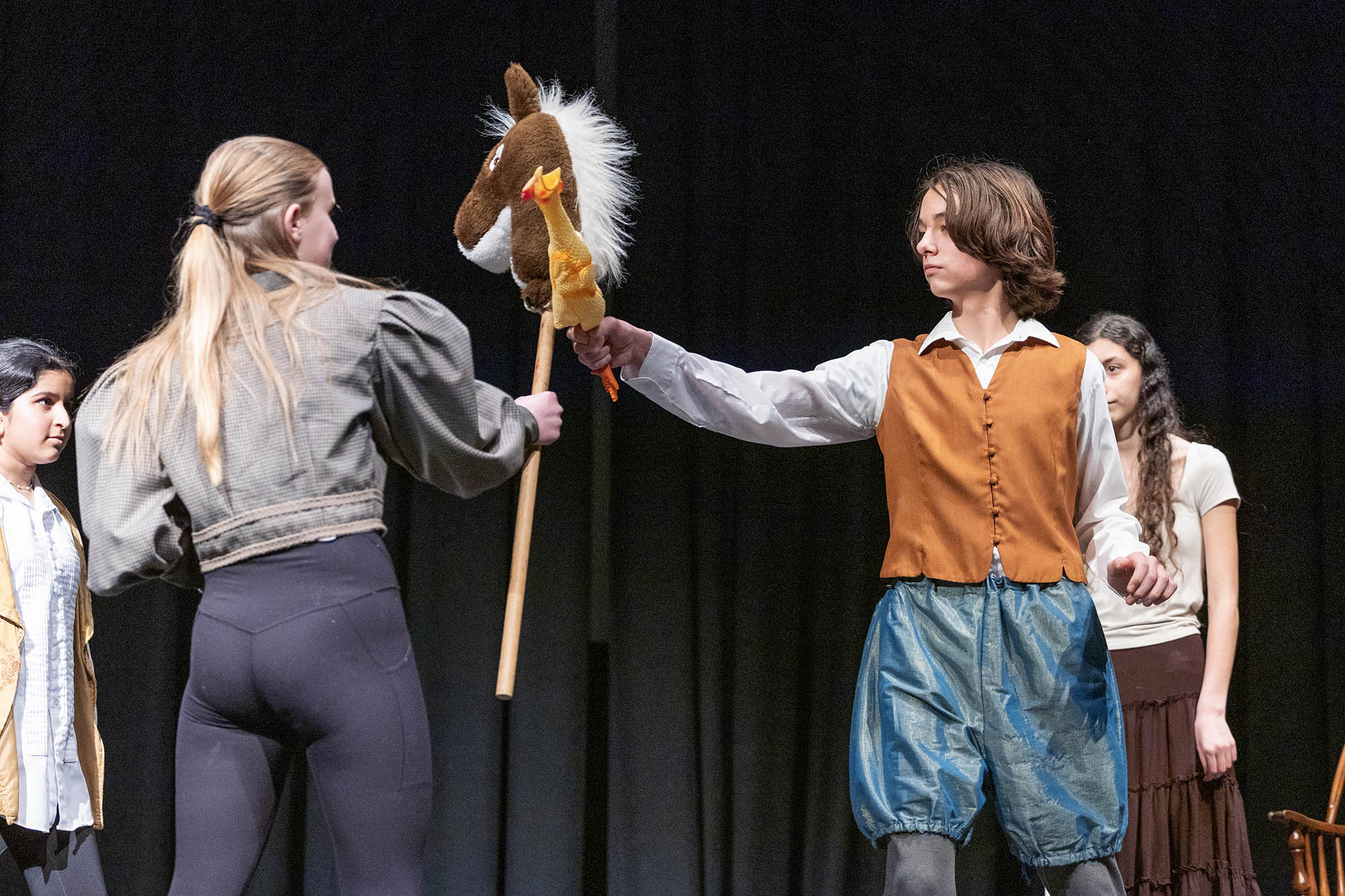
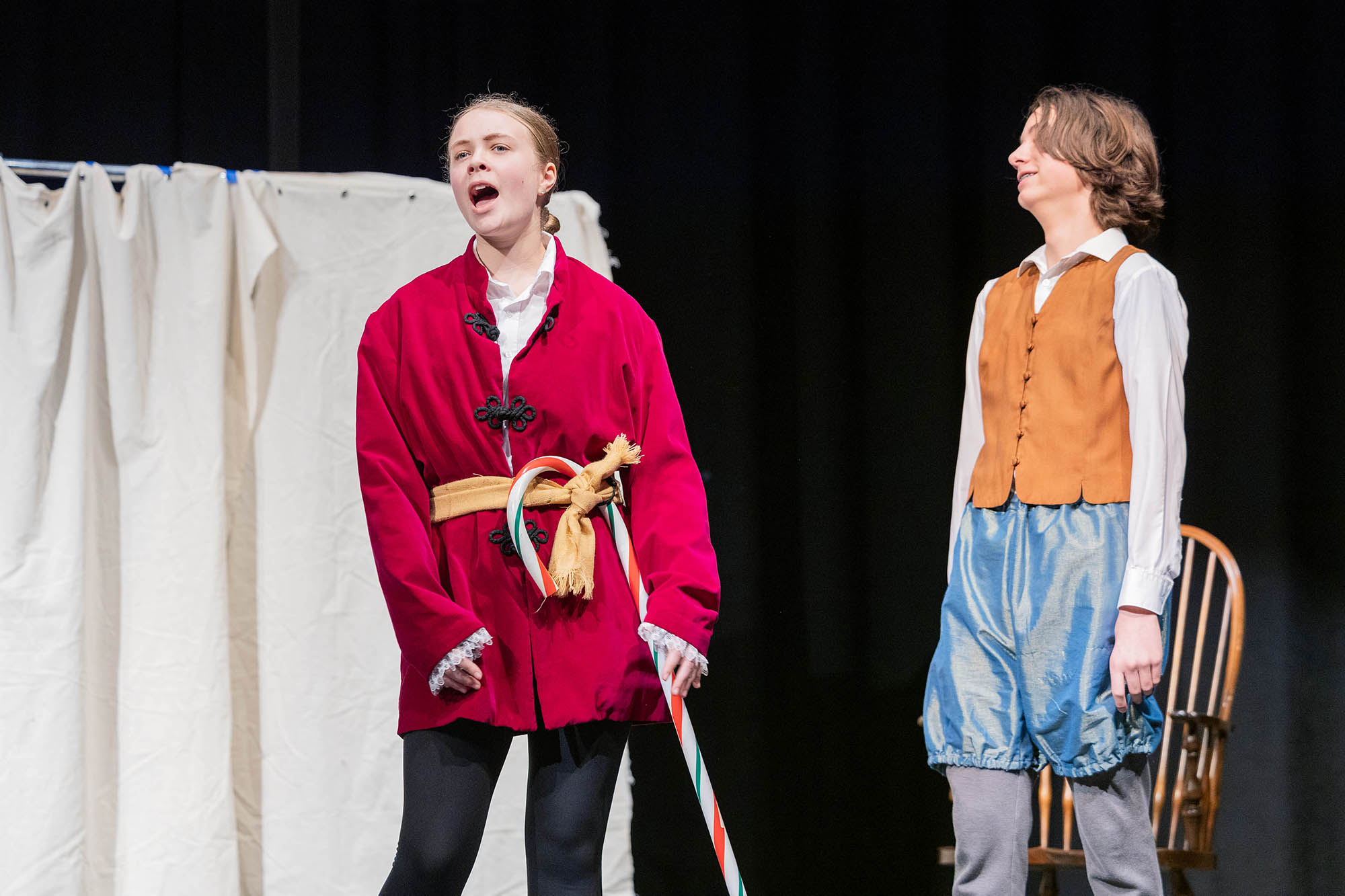
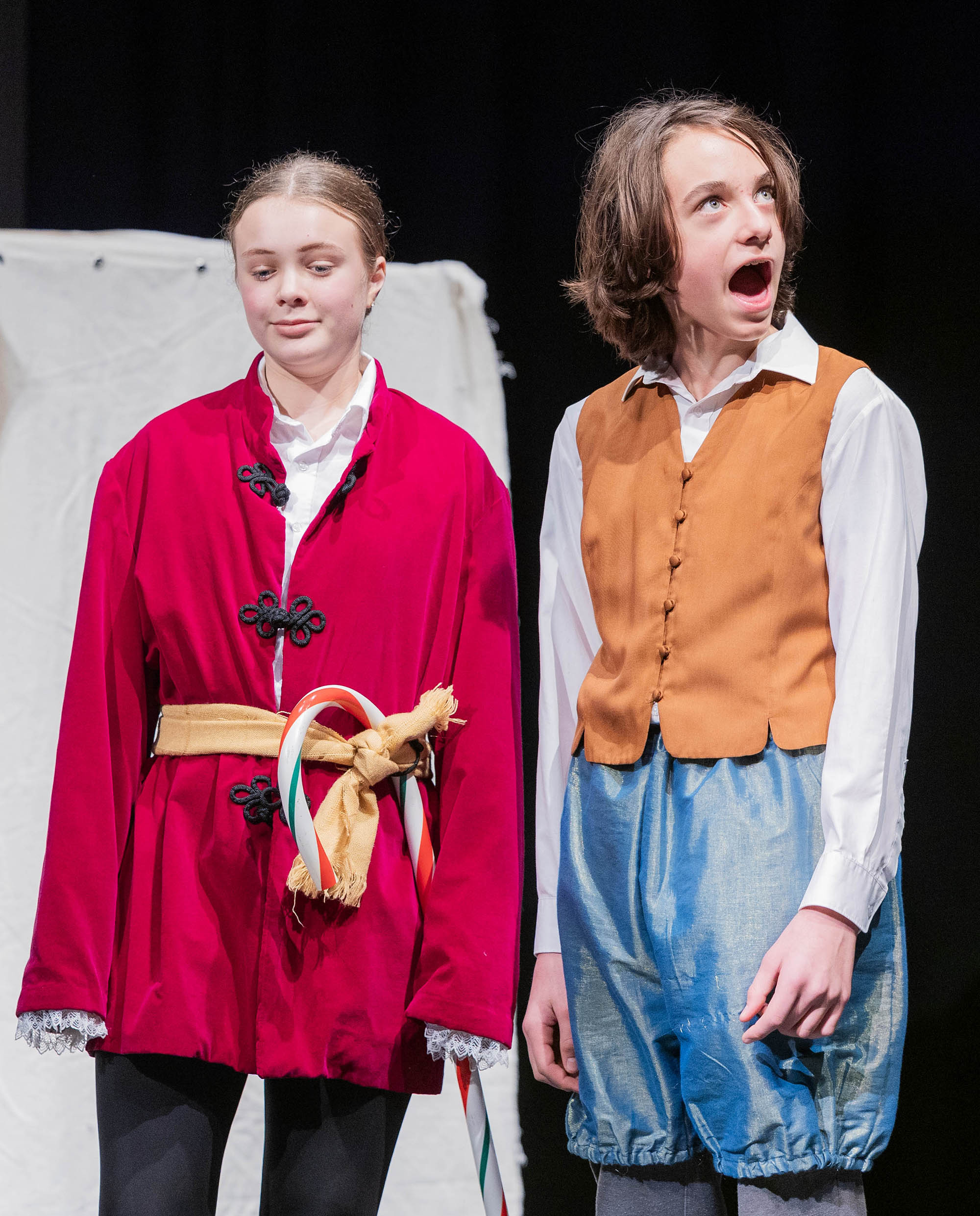
In the Freeman hallway, sword props are intentionally made from found objects, such as a rubber chicken, a small umbrella, a selfie stick, an oversized candy cane, and a hobby horse. On the stage, several actors are practicing stage combat scenes, most of which involve the hot-tempered Tybalt.
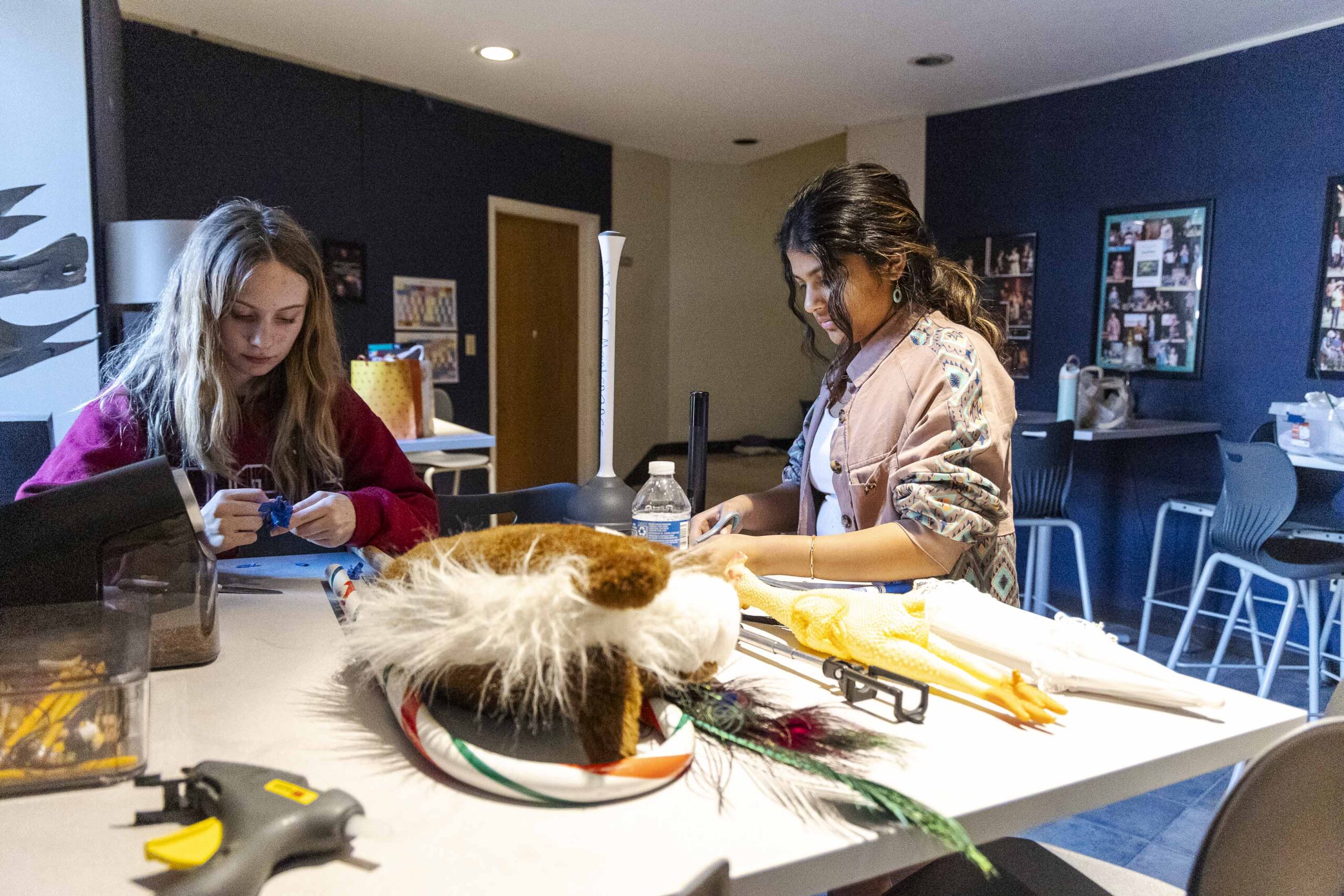
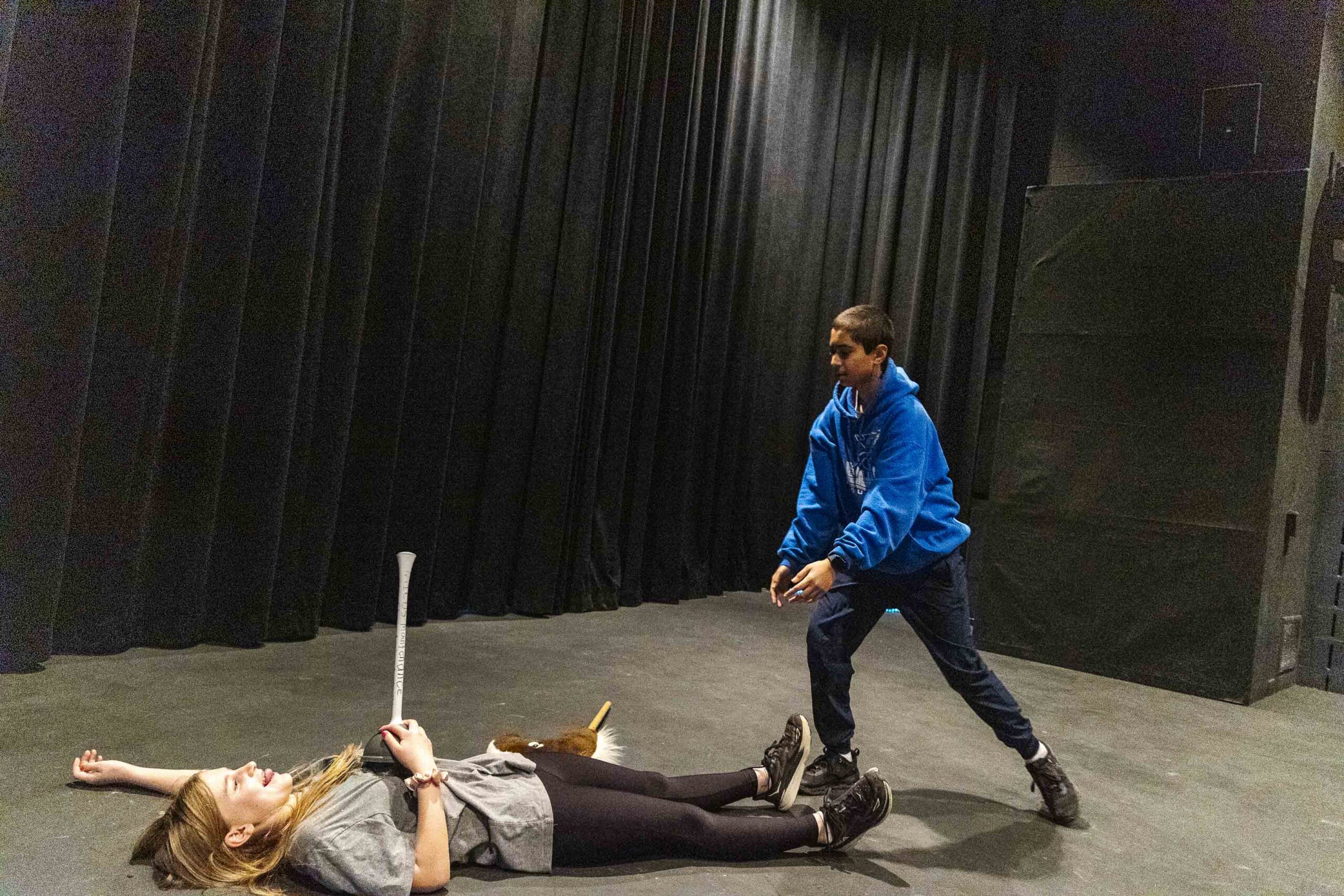
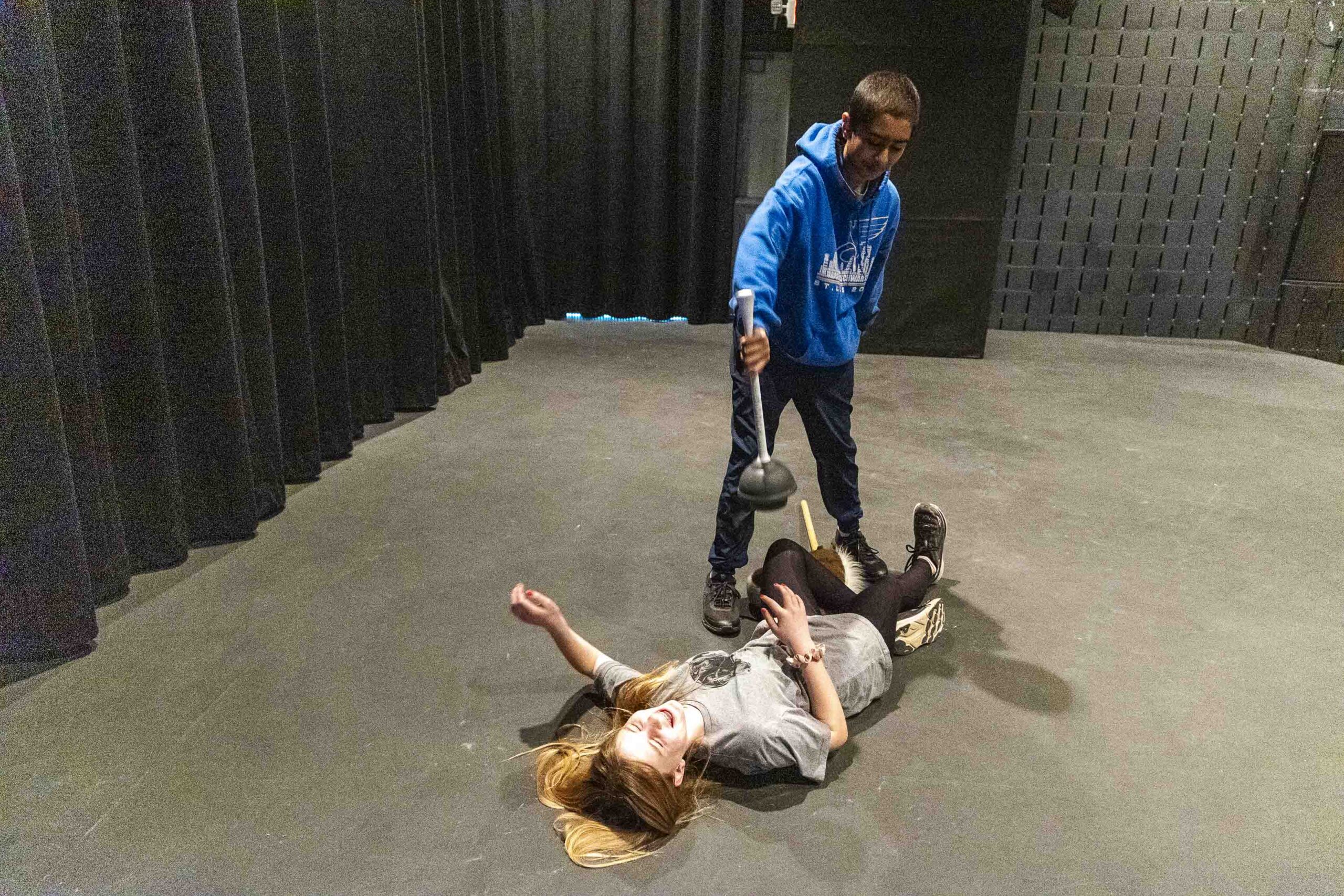
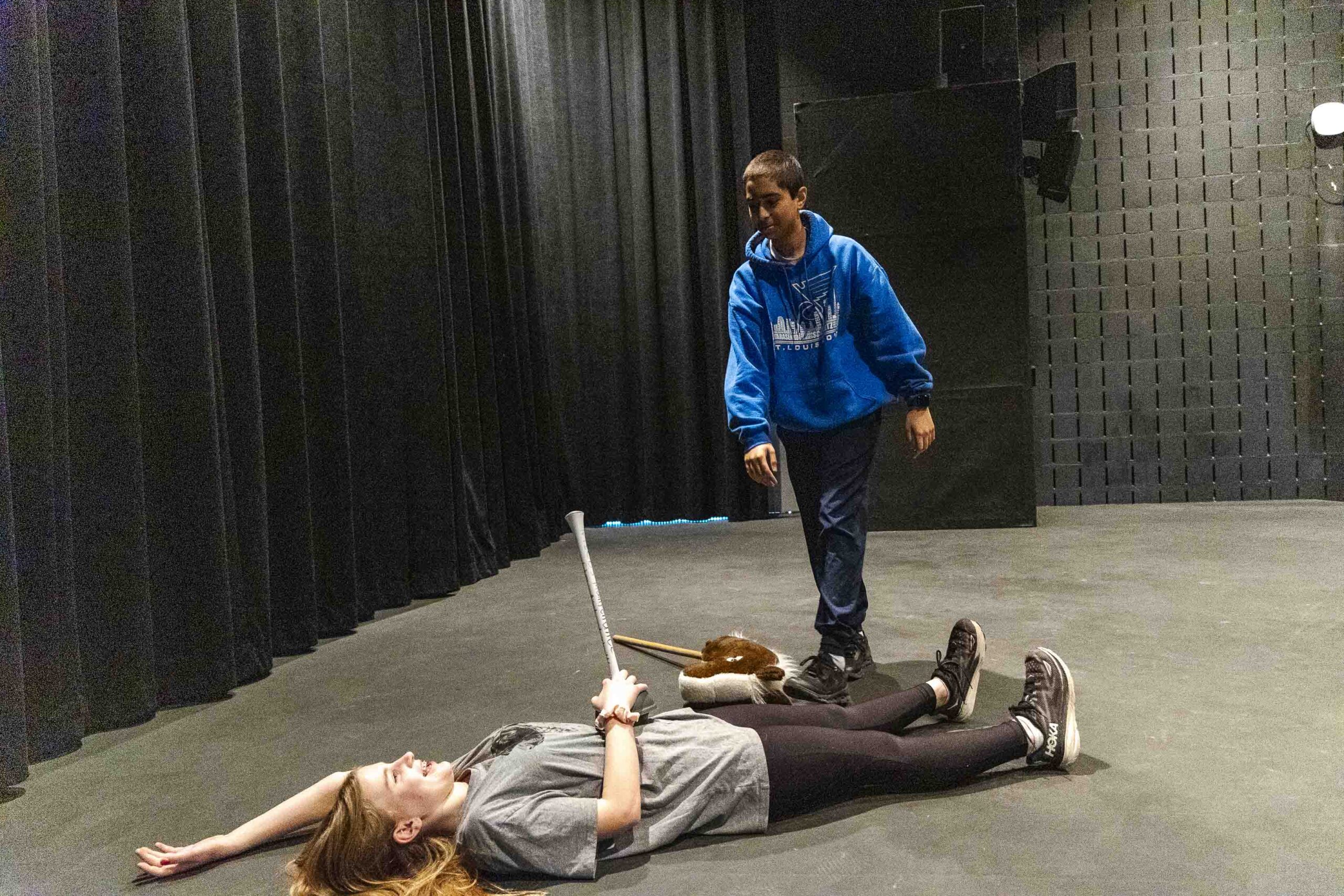
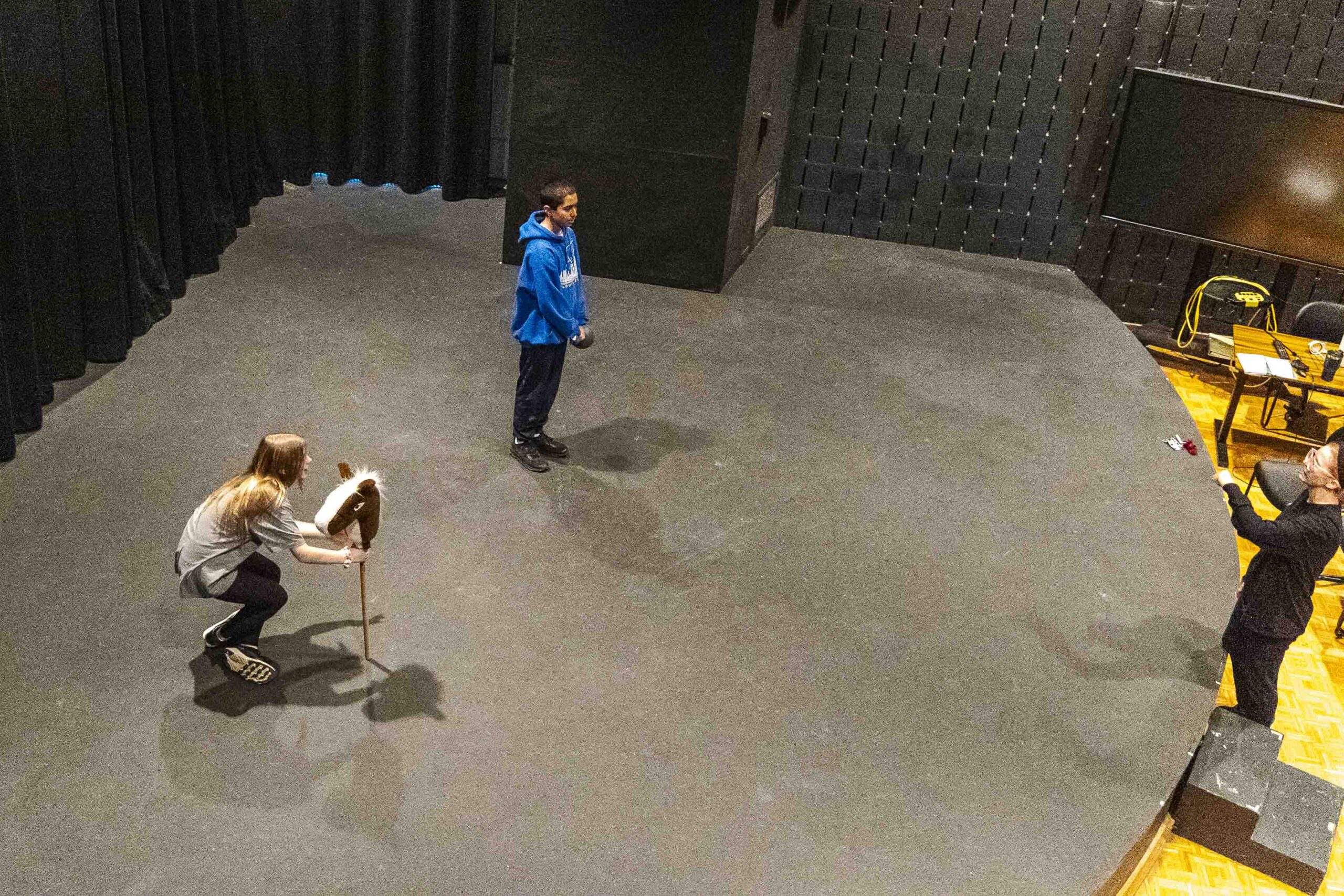
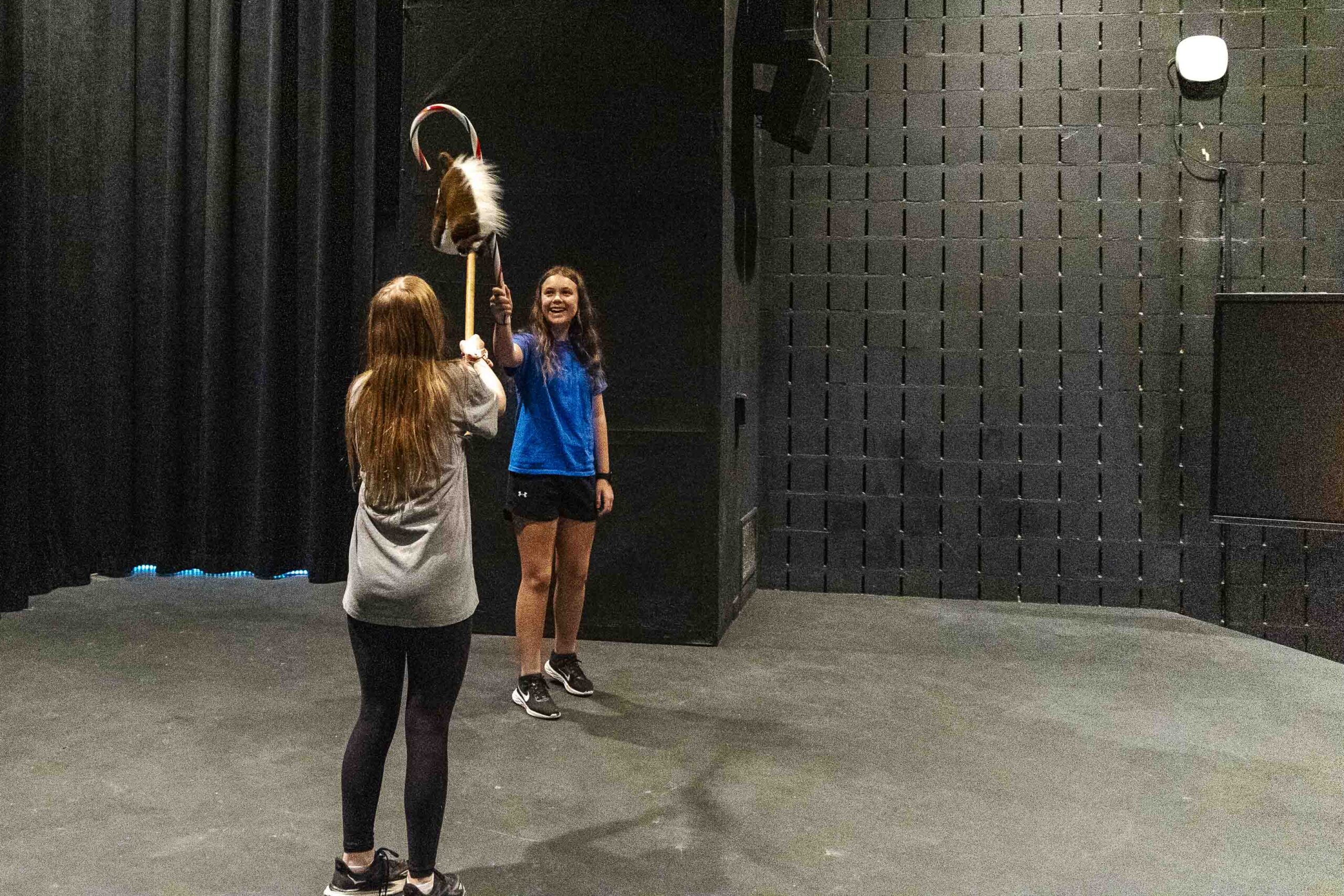
One of the sword-makers was Hermione Groves ’31. As a member of the set and props team, she notes that there are many moving parts, and staying focused has its rewards. “All of the props we’re really proud of,” she said. “We have a gate on set that is supposed to look bad, and we had to work hard to make it look intentionally bad. I think all the actors have been working very hard. Even though the play ‘looks bad’ right now, that’s the point. You’re supposed to forget your lines and have an attitude. We’ve done a good job of making it look bad on purpose.”
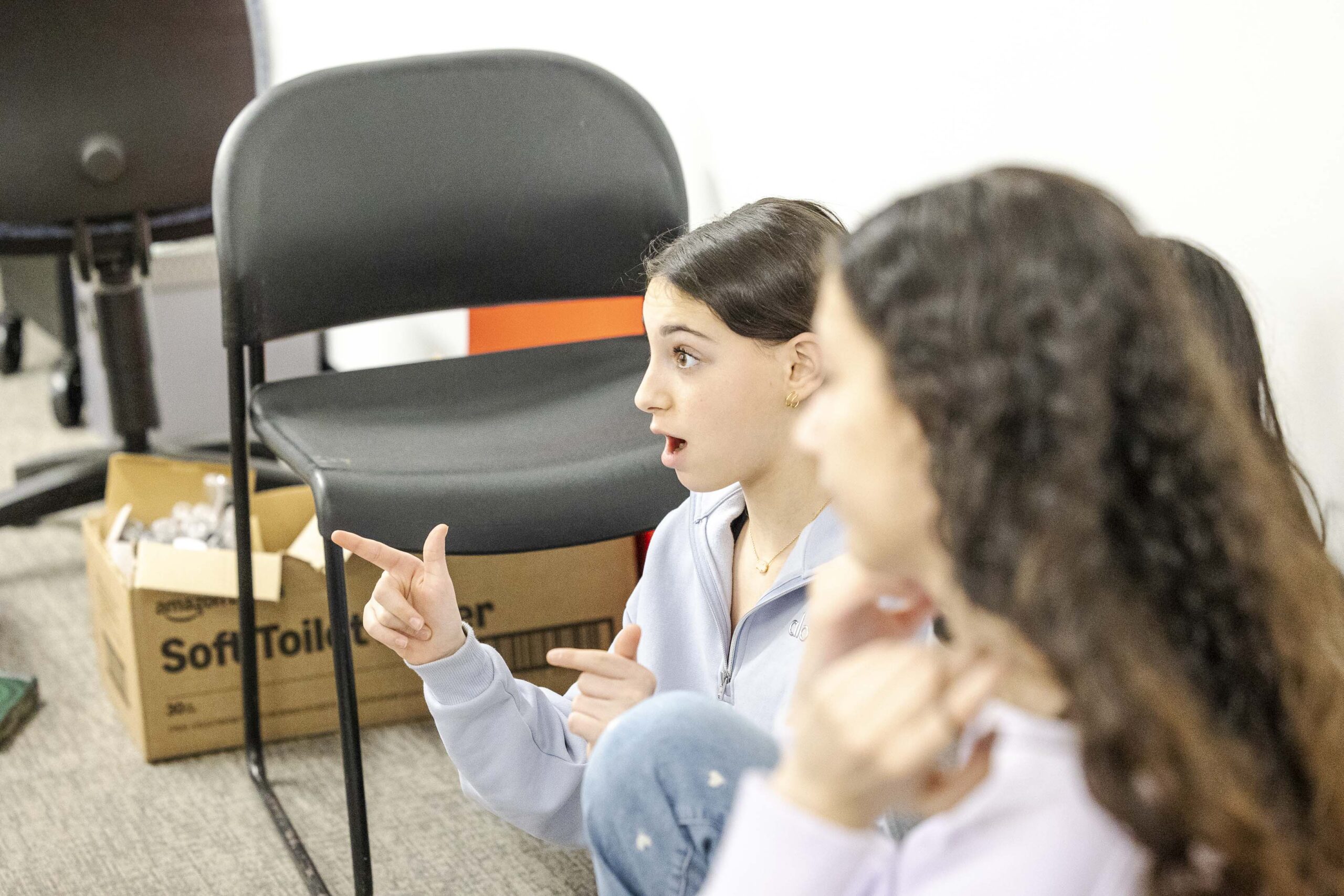
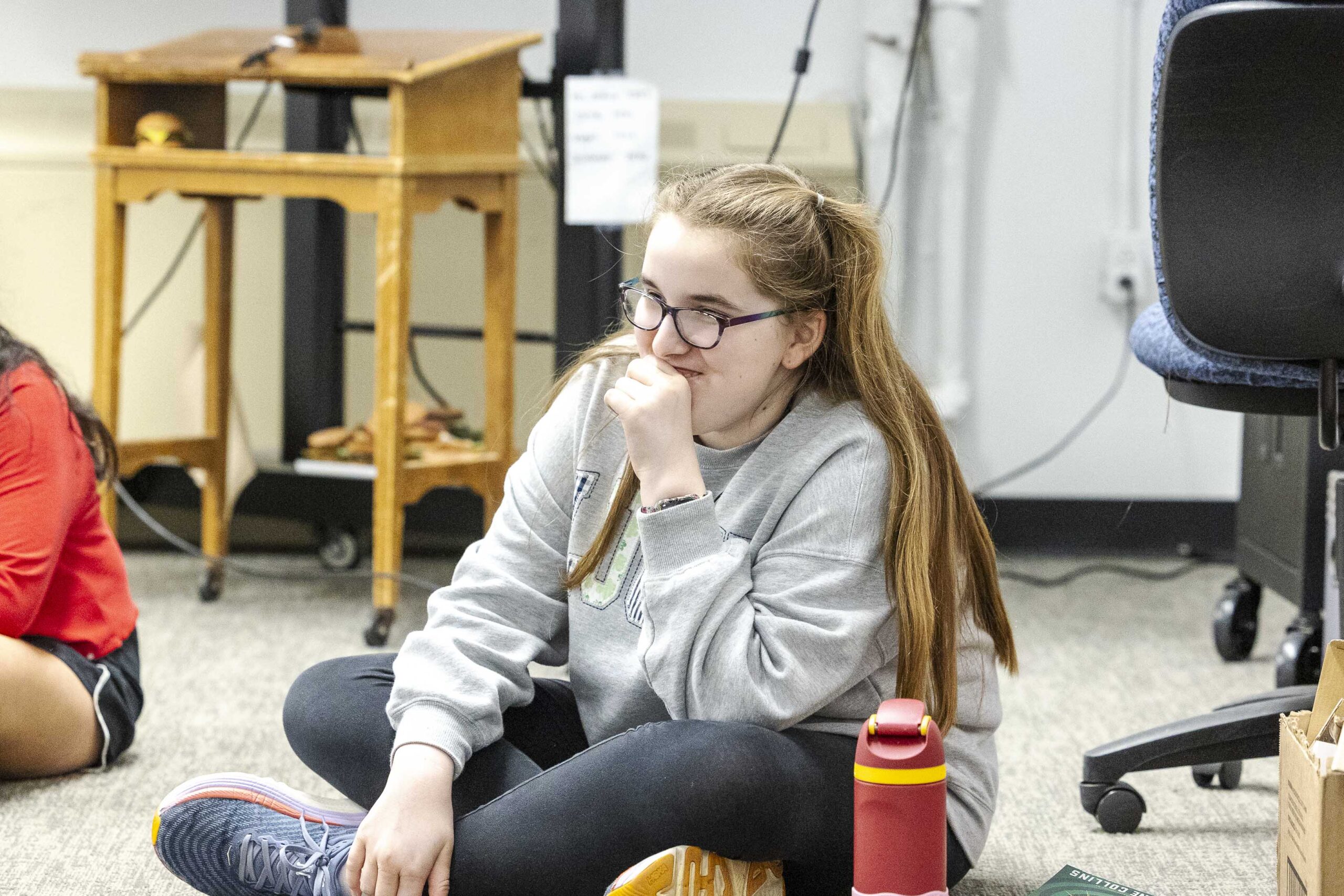
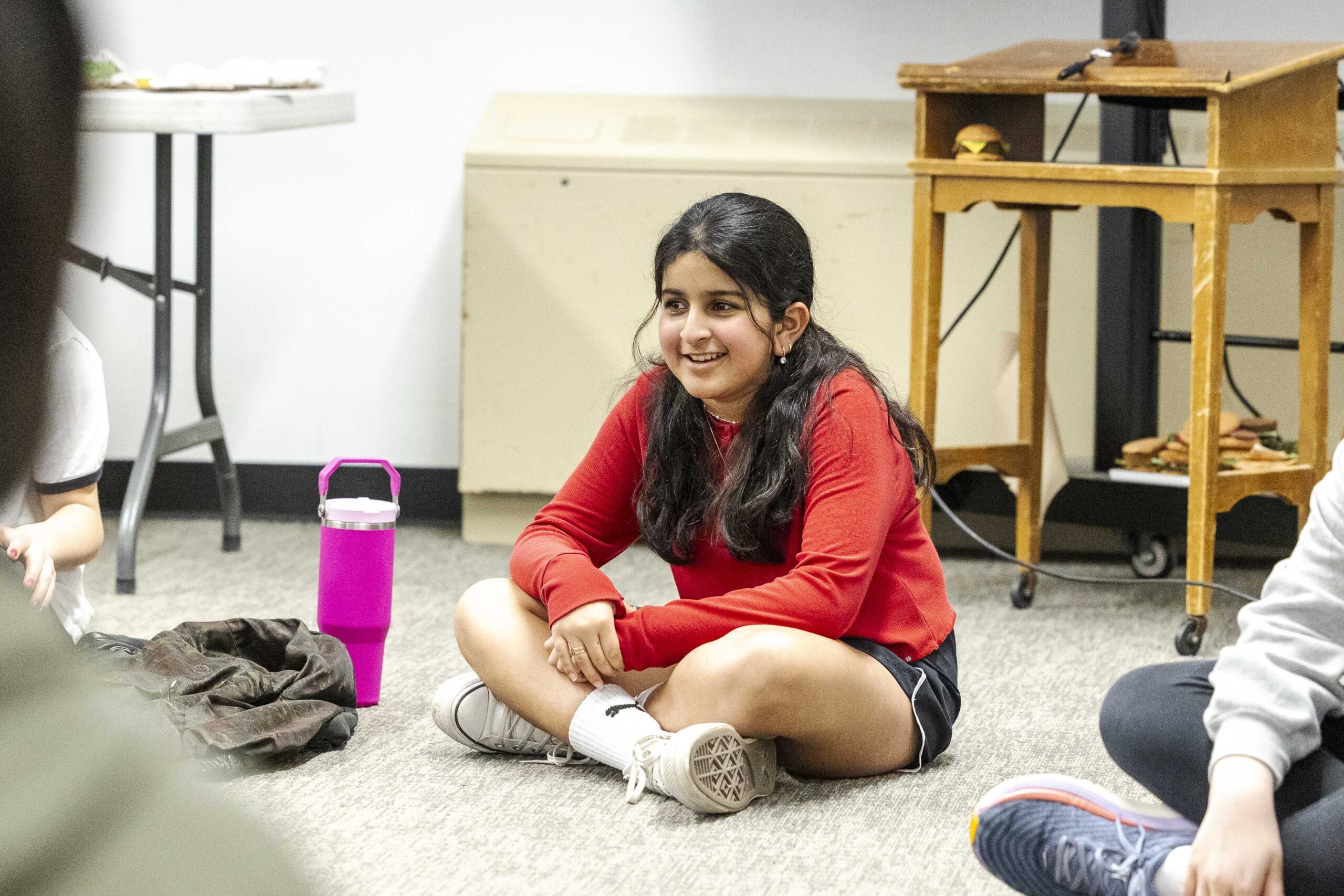
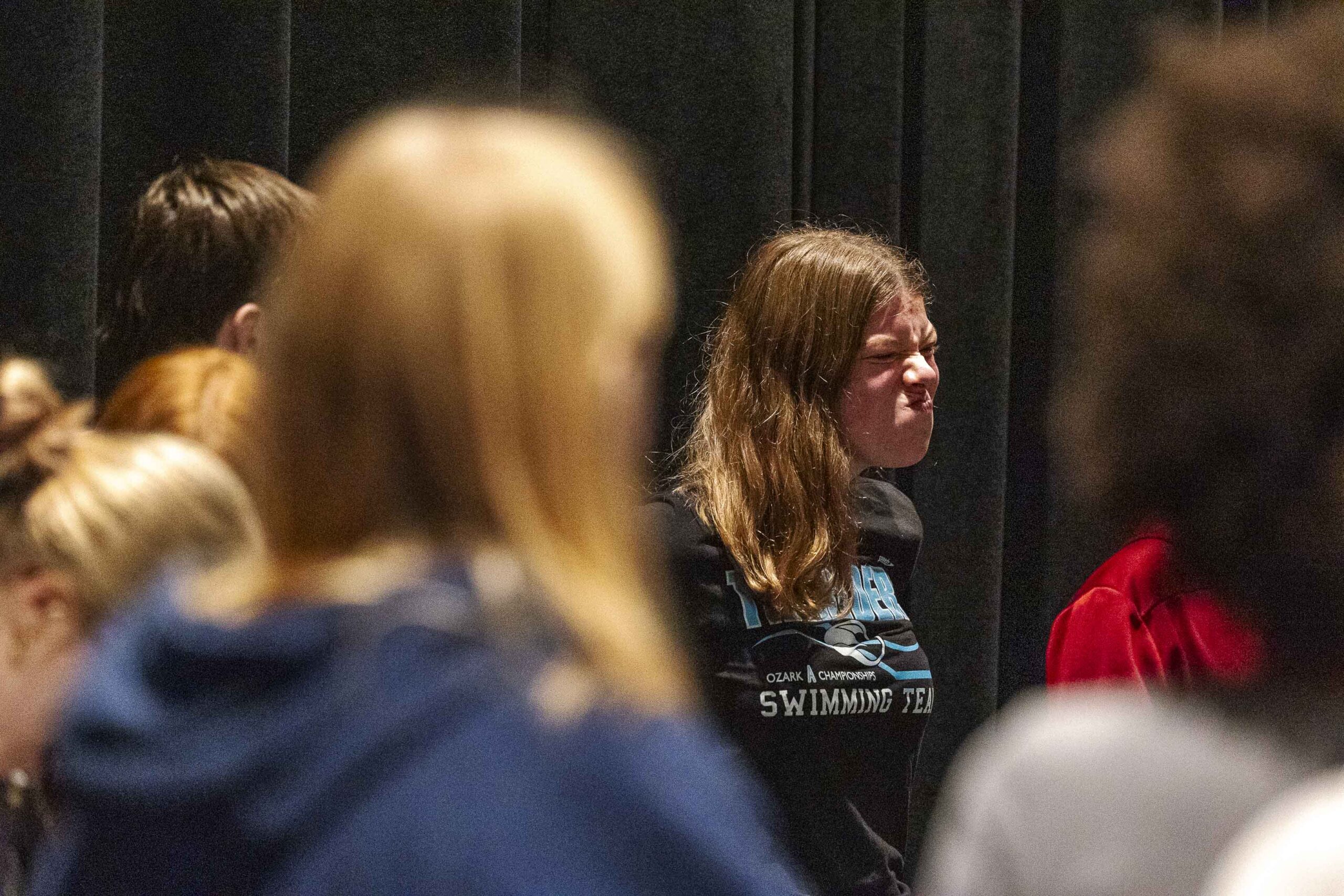
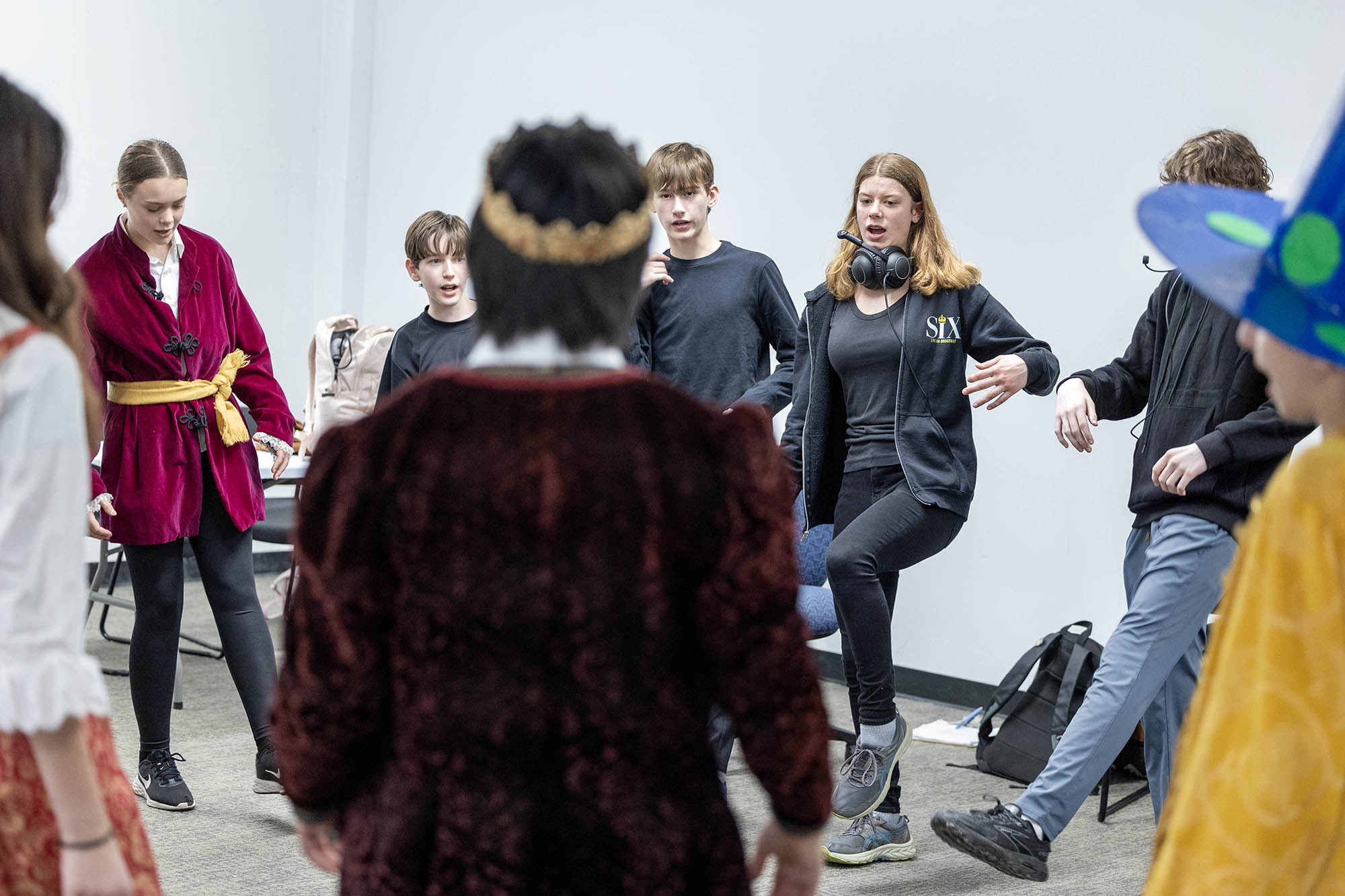
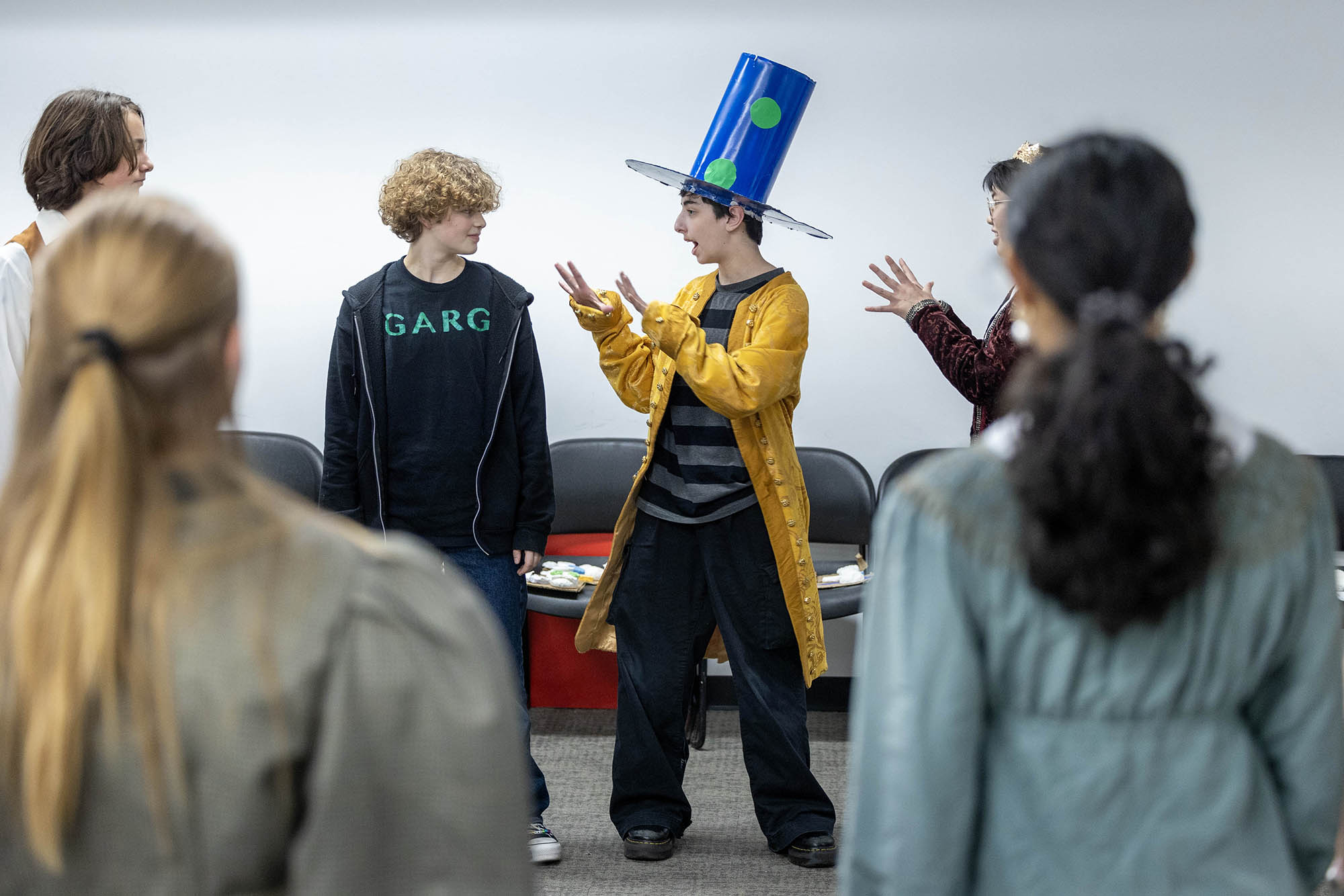
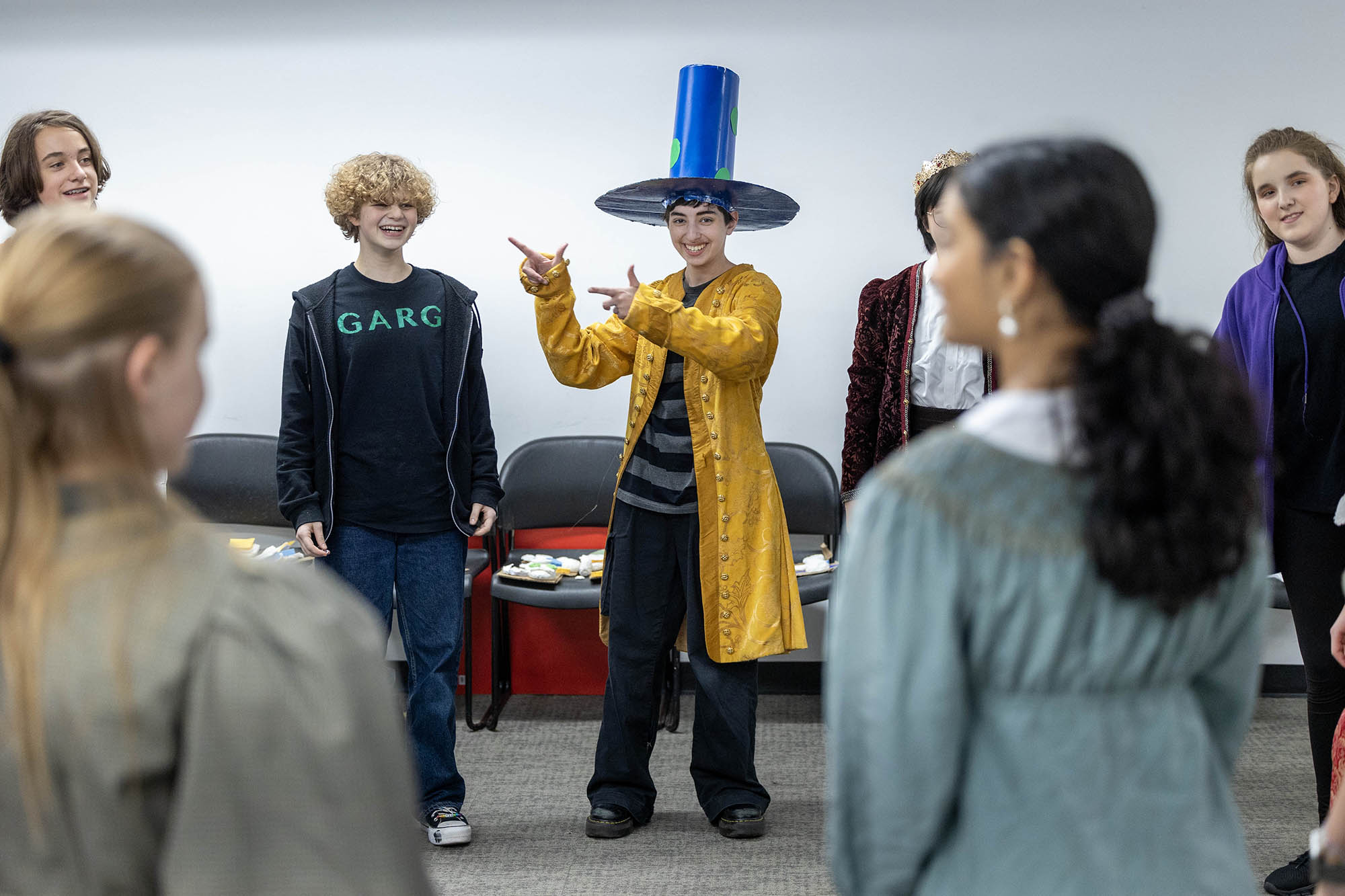
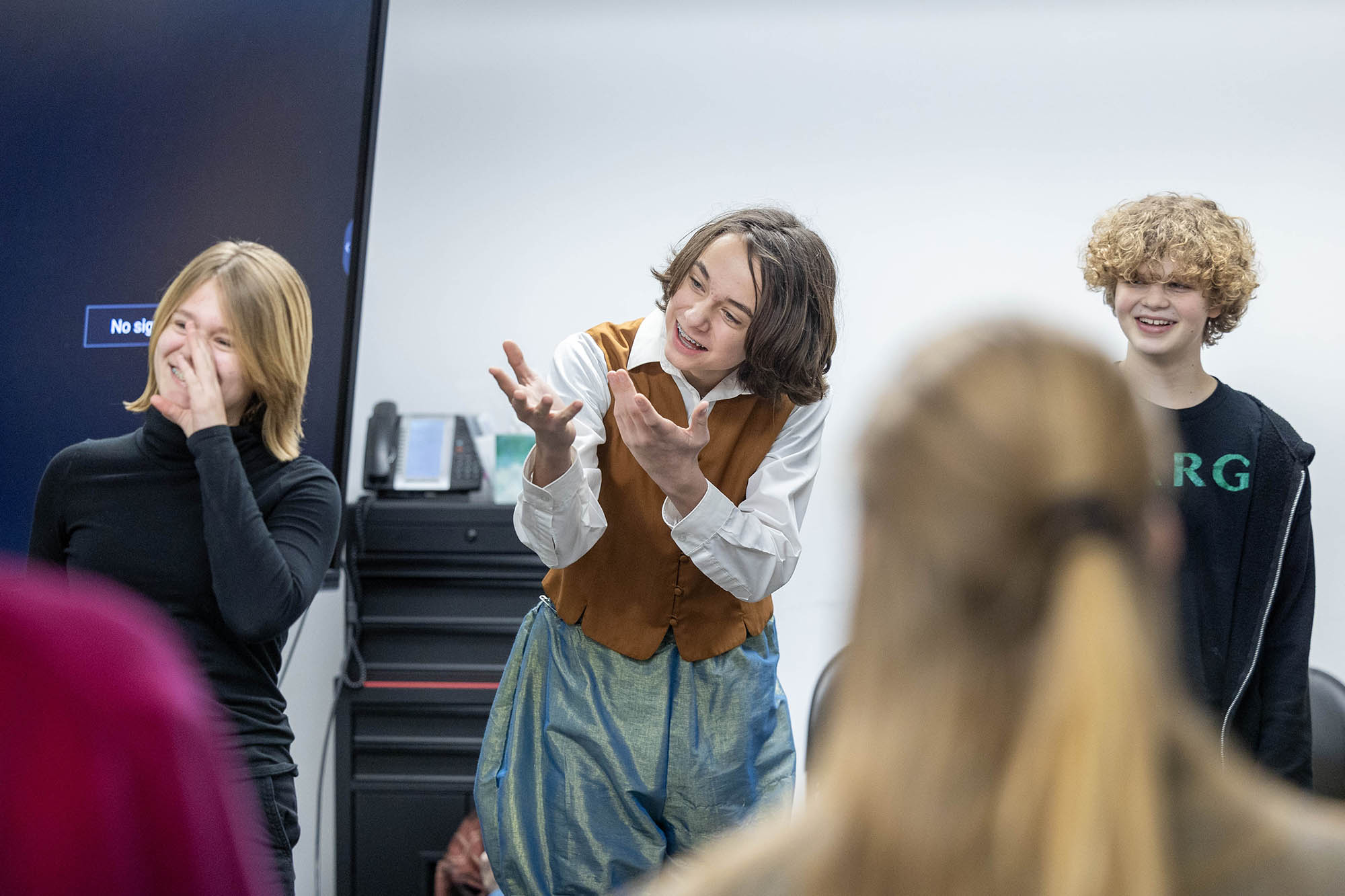
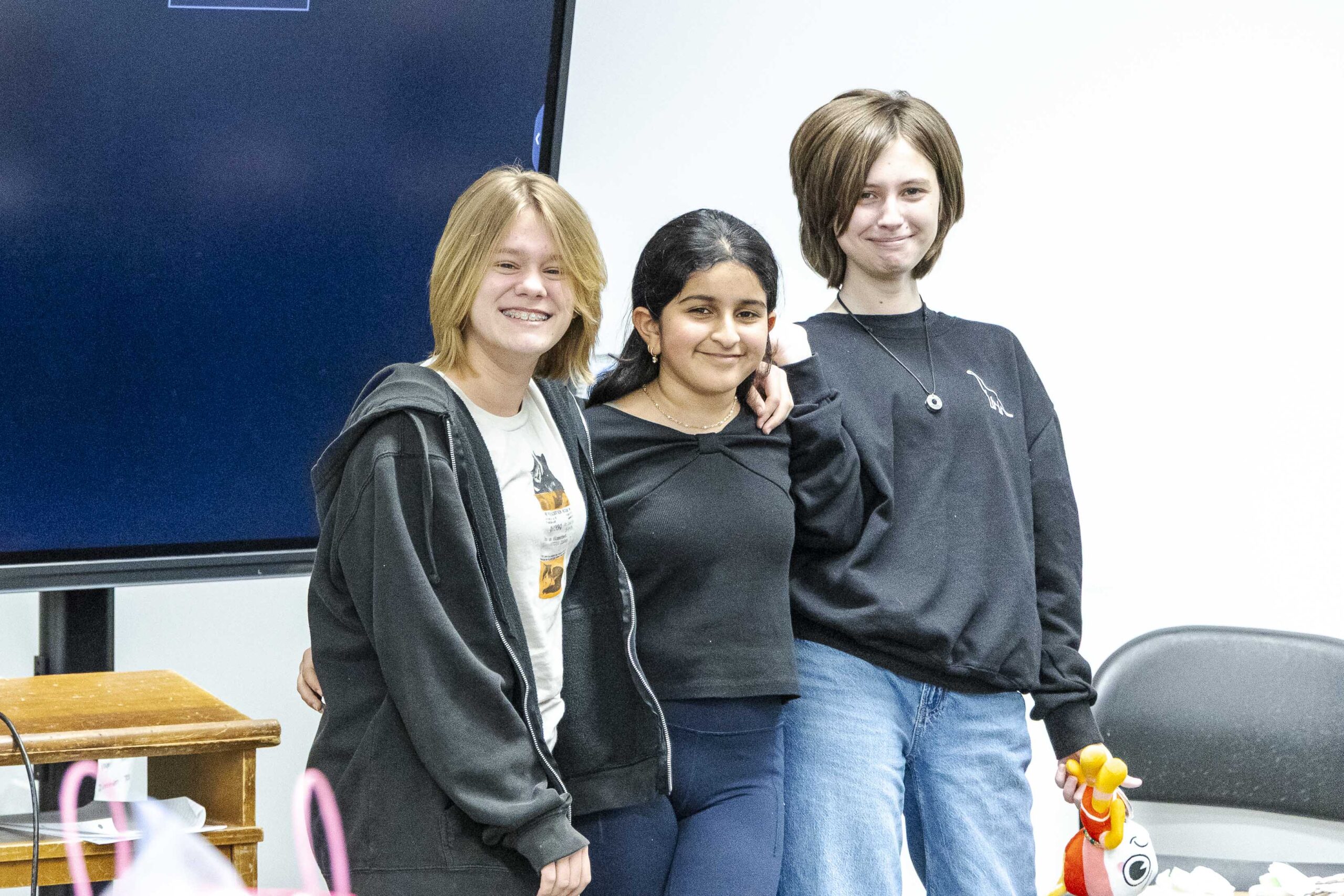
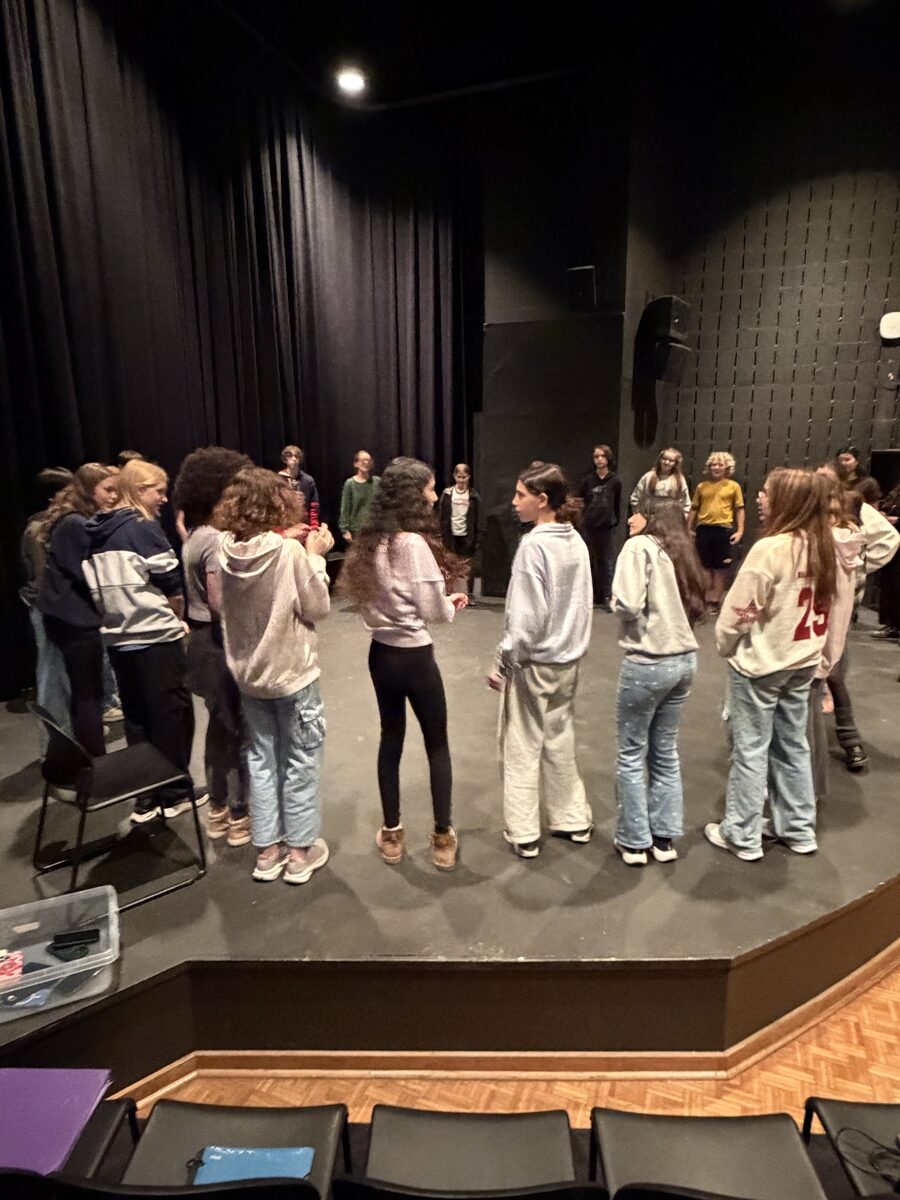
Students would soon gather in a circle for a few short improv exercises and vocal warmups. In the circle, Mein shares a heartfelt thank-you before the week’s rapid acceleration diminishes the time and opportunity to pause and reflect on how far they’ve come to get to this point.
The Actors’ Perspective
When asked about any real-life mishaps leading up to the production, Ada Song ’30, who plays Romeo’s father Lord Montague, shared, “We have a scene where techies come on stage with snacks, and we’re not supposed to eat them, but I did by accident.” How does she stay focused with so many lines to memorize? “I kind of section my mind based on where I am. If I’m in the theater, I’m all in. If I’m at home or school, I usually do schoolwork.”
Audrey Moore ’30 said, “This is my first big role for MICDS. Rushing to get everything together in five weeks, memorize the lines, and get all the blocking down has been challenging. To stay focused, I think to myself, ‘What would [my character] Stage Manager do?’ One of the biggest wins has been getting to know everybody; I’ve made a lot more friends these last couple of months, and it’s just great.”
Brody Hannah ’30 plays the character of Lead Techie. To stay focused in the controlled chaos environment, he says, “I just rehearse my lines daily and think about what I’m going to do if I don’t have my script in front of me. It’s a challenging show, and the constant logistics of people moving all around the stage are definitely hard to maneuver.” Brody seems to thrive on the friction and enjoys the reward of getting through a challenging scene.
Amaar Raja ’30, who plays Romeo, mentioned the mishaps that have already occurred, such as kids out sick, snow days, and a campus water main break, all of which have impacted their rehearsal and prep time. He said, “This is my first big role at MICDS, and it’s definitely a step up in the number of lines. I had roles last year with a couple of monologues. This year, I have about 20, along with learning the blocking, which has been very hard.” In the same breath, he mentions the highlights. He said, “The big win for me and the entire production is that it’s really hard not to laugh onstage. It just shows how everyone is doing with the comedy part.”
Izzie Martin ’30, who plays Juliet, appreciates the humor before opening night. “There is a funny scene where Romeo has to drink water [the potion] from a water bottle, but someone filled it too full, and while I, as Juliet, am dead and lying on the floor waiting for him to finish the bottle. It was really hard not to laugh.”
Just before students headed to the stage for the dress rehearsal, the MICDS social media manager popped in to share that the playwright, John Shanahan, saw one of the promotional posters on the School’s Instagram account and commented, “Thank you for picking my ridiculous show!” Break all the legs!” With wide eyes and smiles of disbelief and excitement, students felt a wave of fresh inspiration for the three live shows to come.
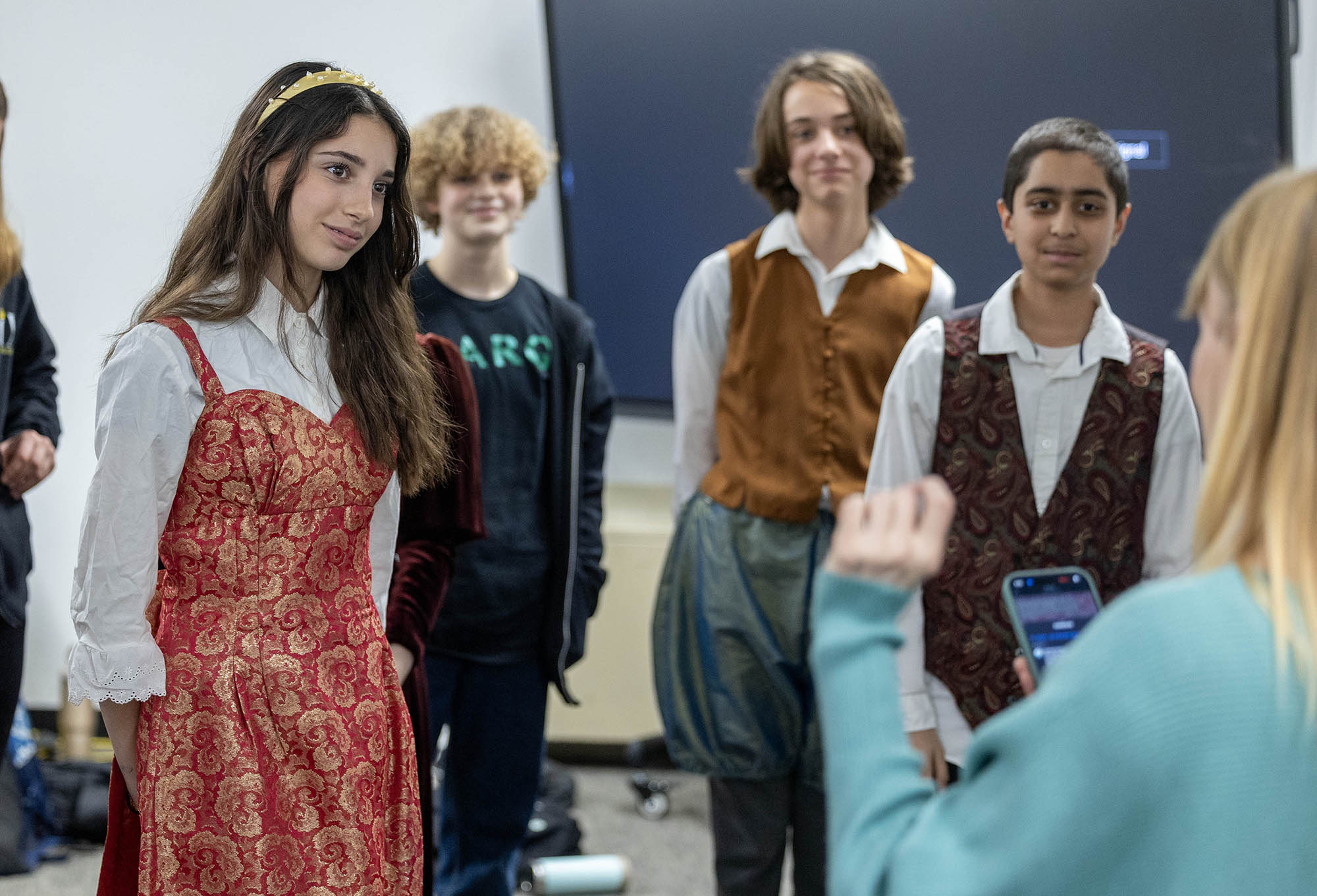
The Chaos Commences
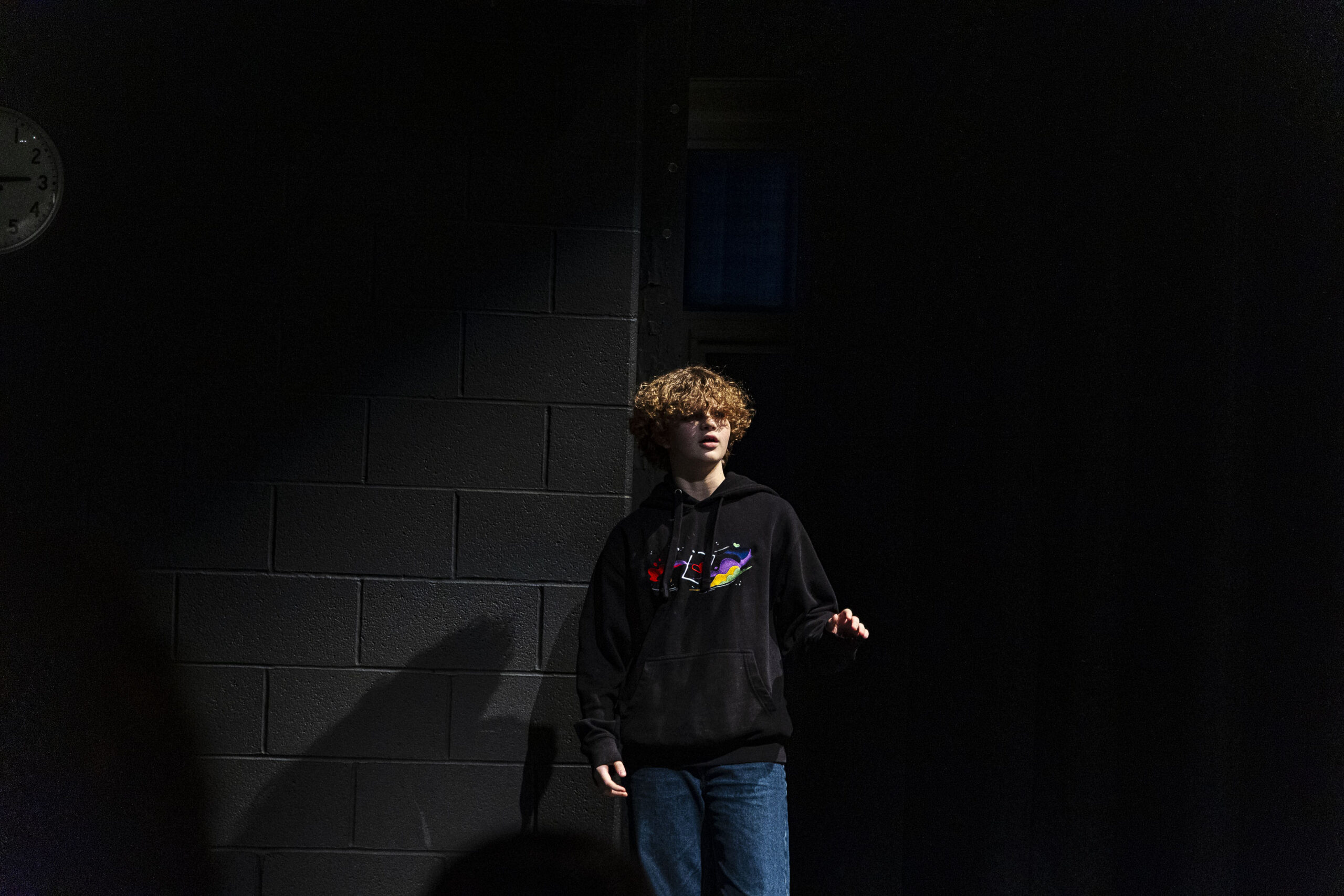
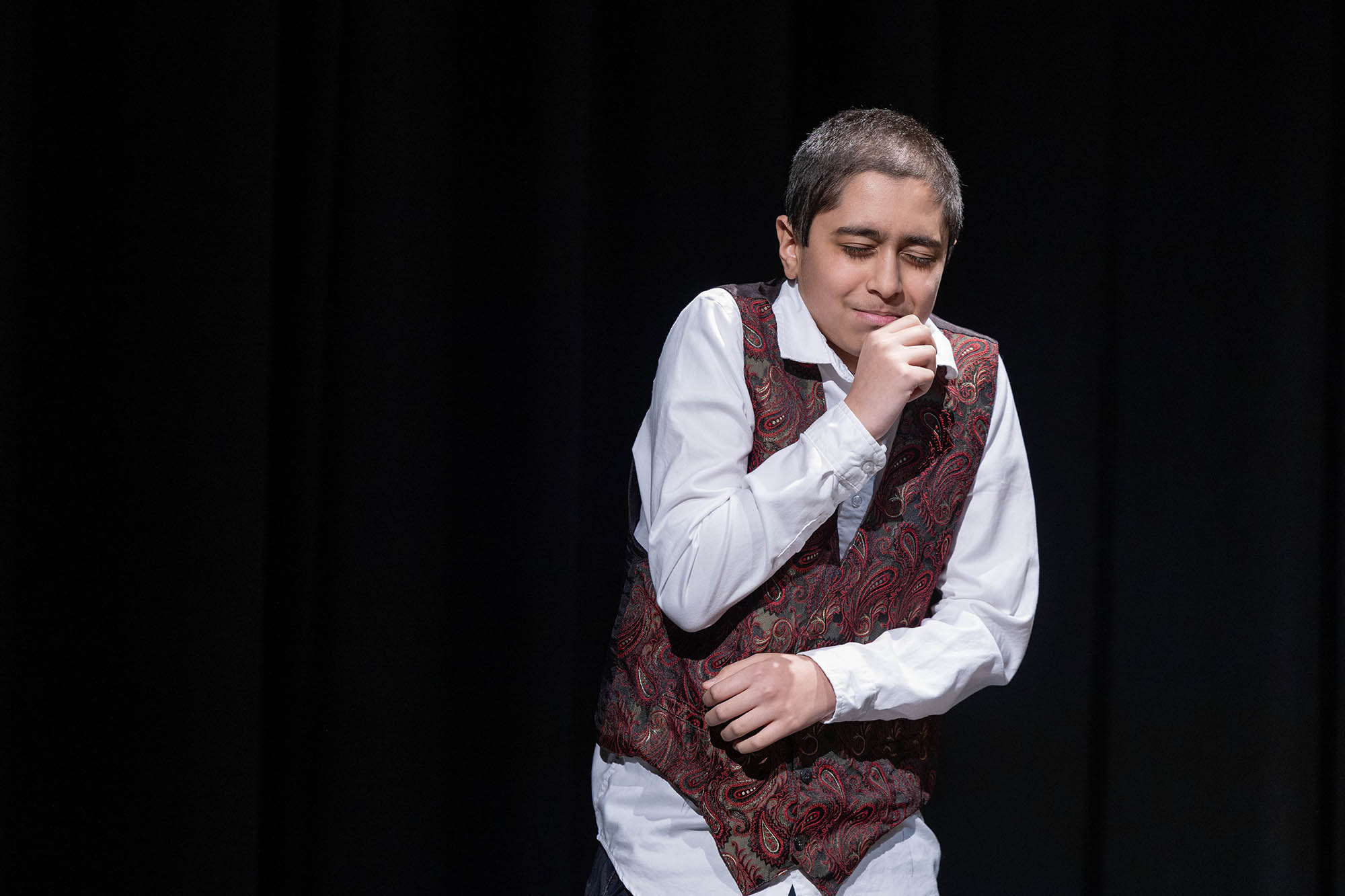
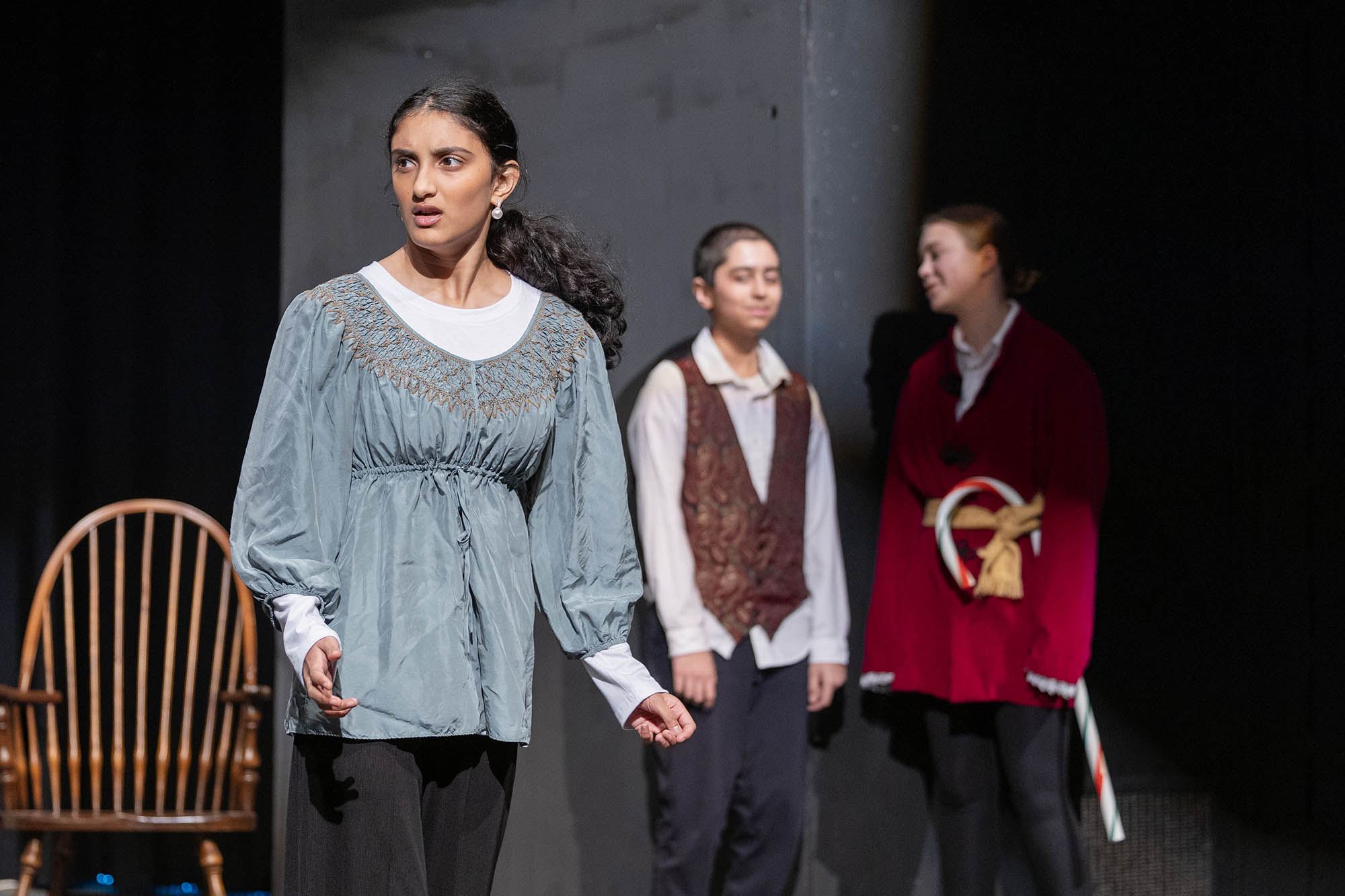
With the playwright’s blessing ringing in their ears, the house lights dimmed. What followed was a ‘SparkNotes’ blur of Shakespearean prose and meta-theatrical mishaps:
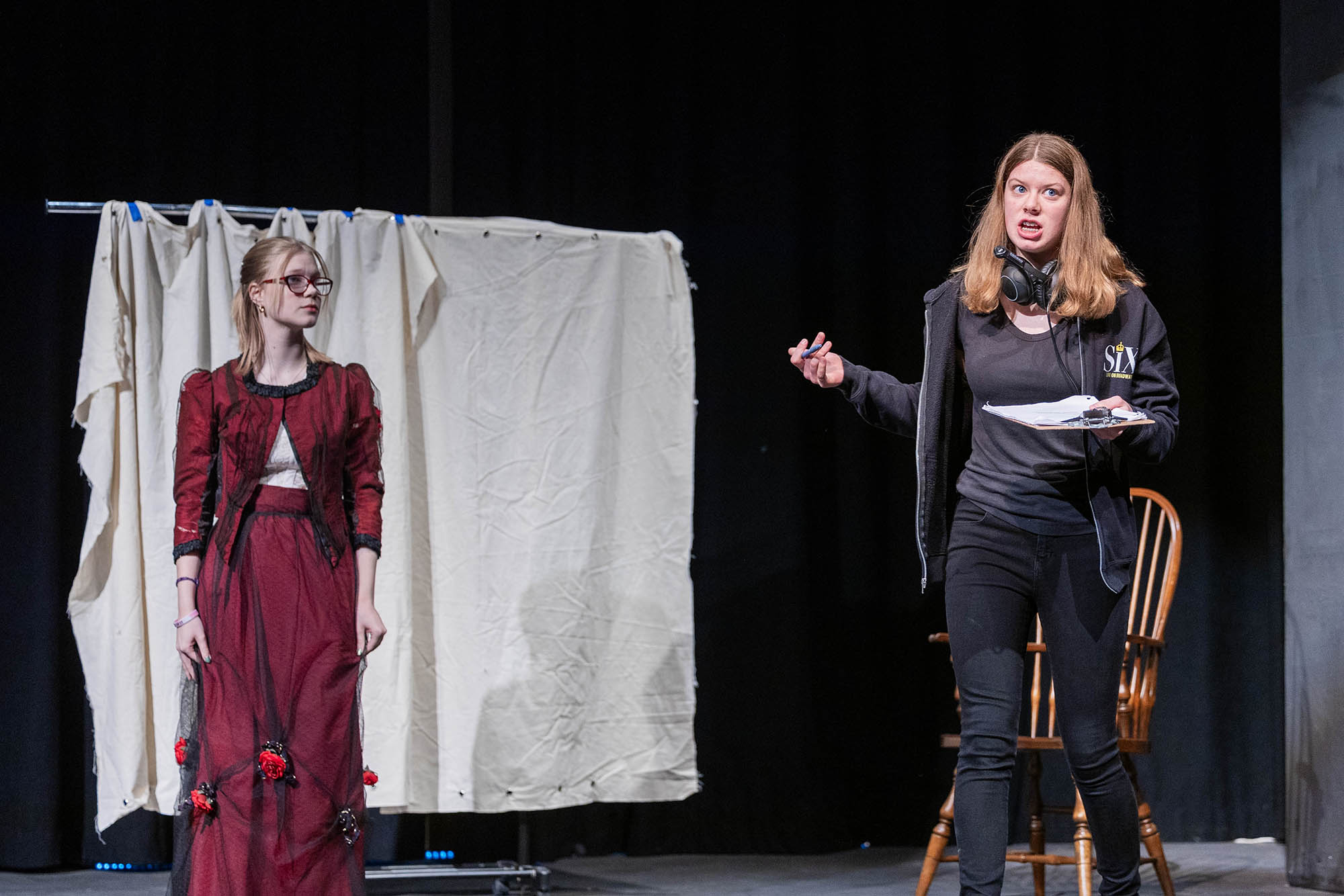
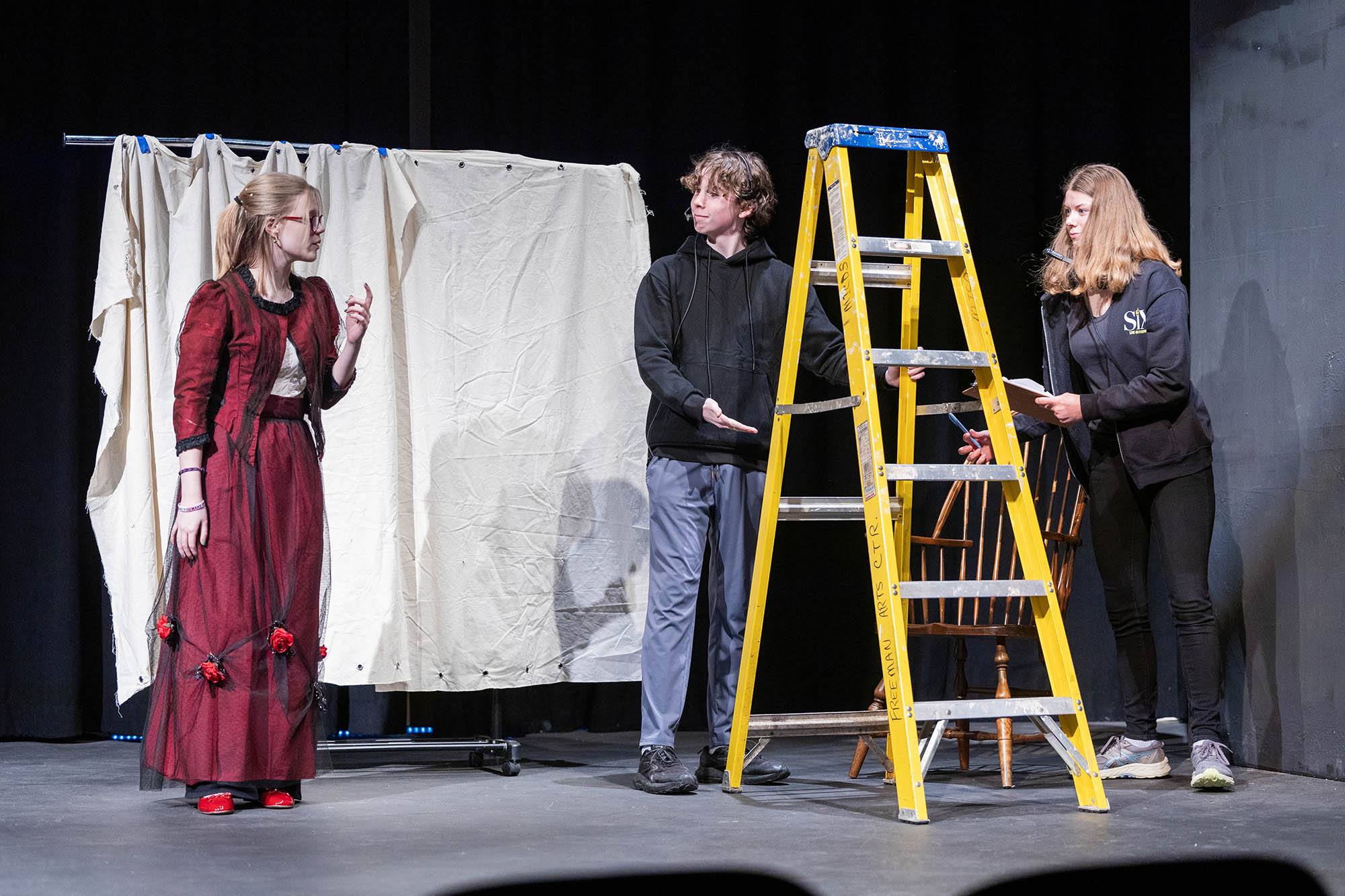
- “Two households, both alike in dignity,” but the dignity is short-lived. The Stage Manager scurries on with a mismatched wooden chair swiped from a nearby classroom because the real set furniture is supposedly stranded on a highway.
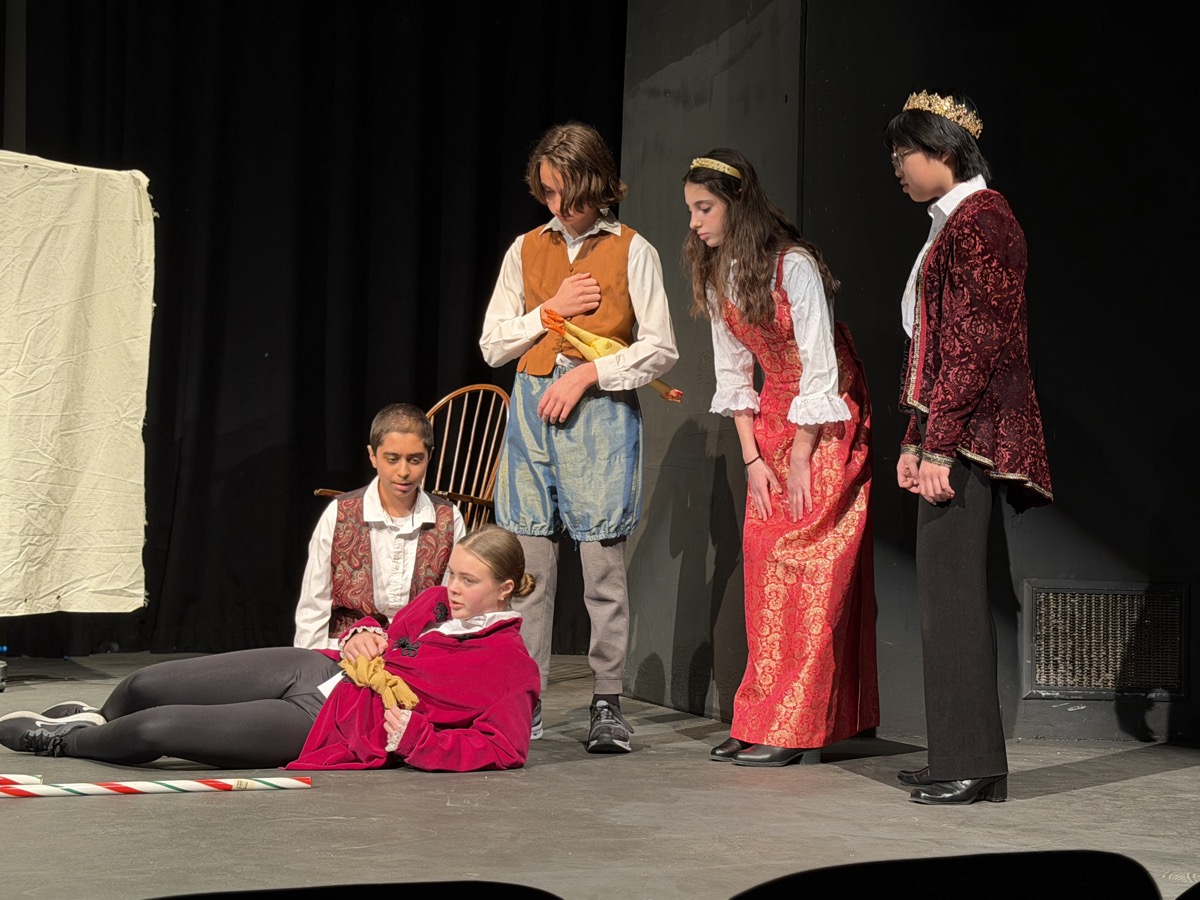
- When the call to “Draw thy tool!” rings out, there are no swords to be found. Instead, Benvolio defends his honor with the squeak of a rubber chicken.
- While Lord Montague curses in the background and the crew “live-builds” a missing gate, Romeo is afflicted by a bad sandwich from a bargain deli. A volunteer Romeo is plucked from the audience to fill the gap until the stage Romeo recovers.
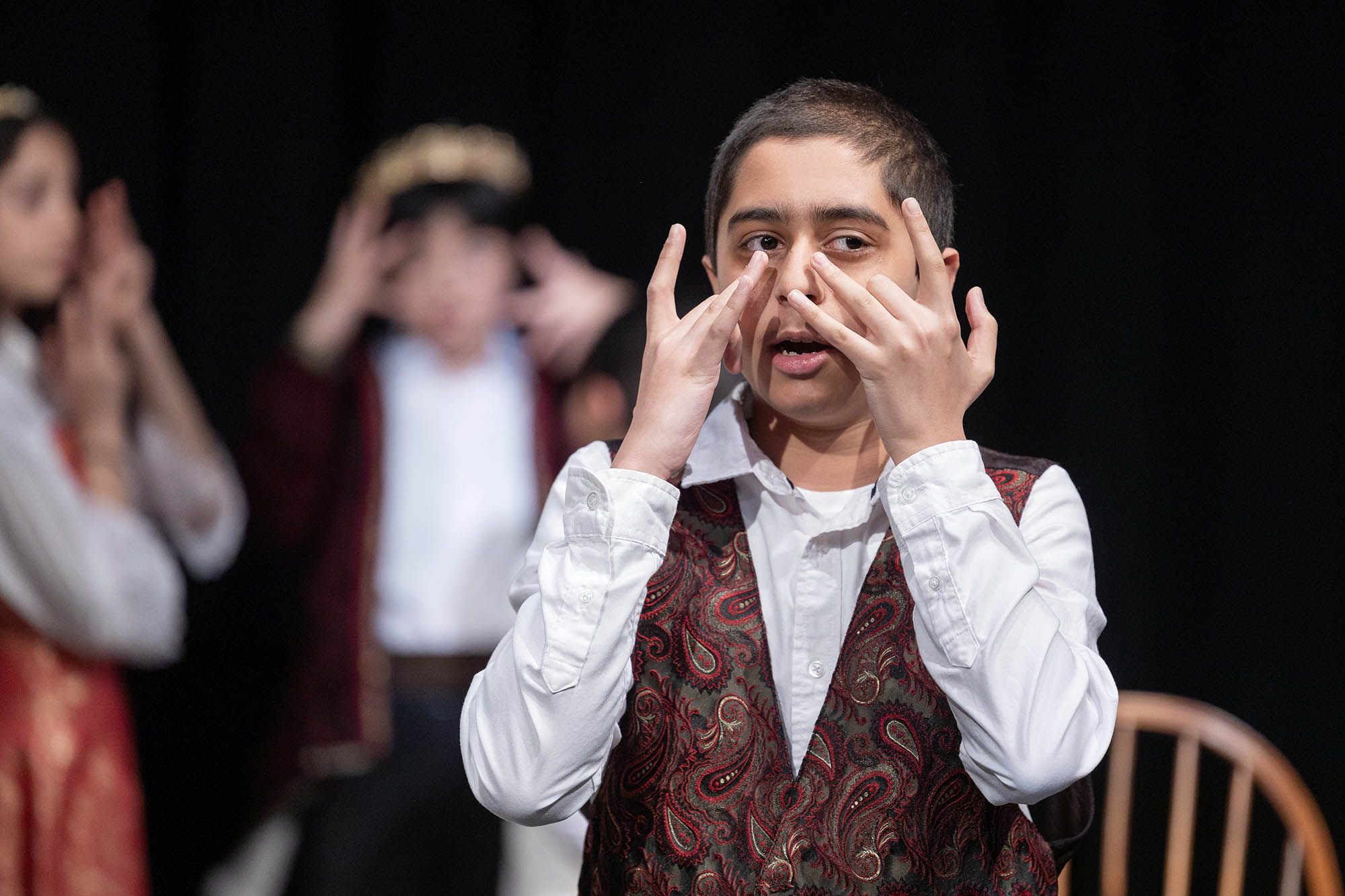
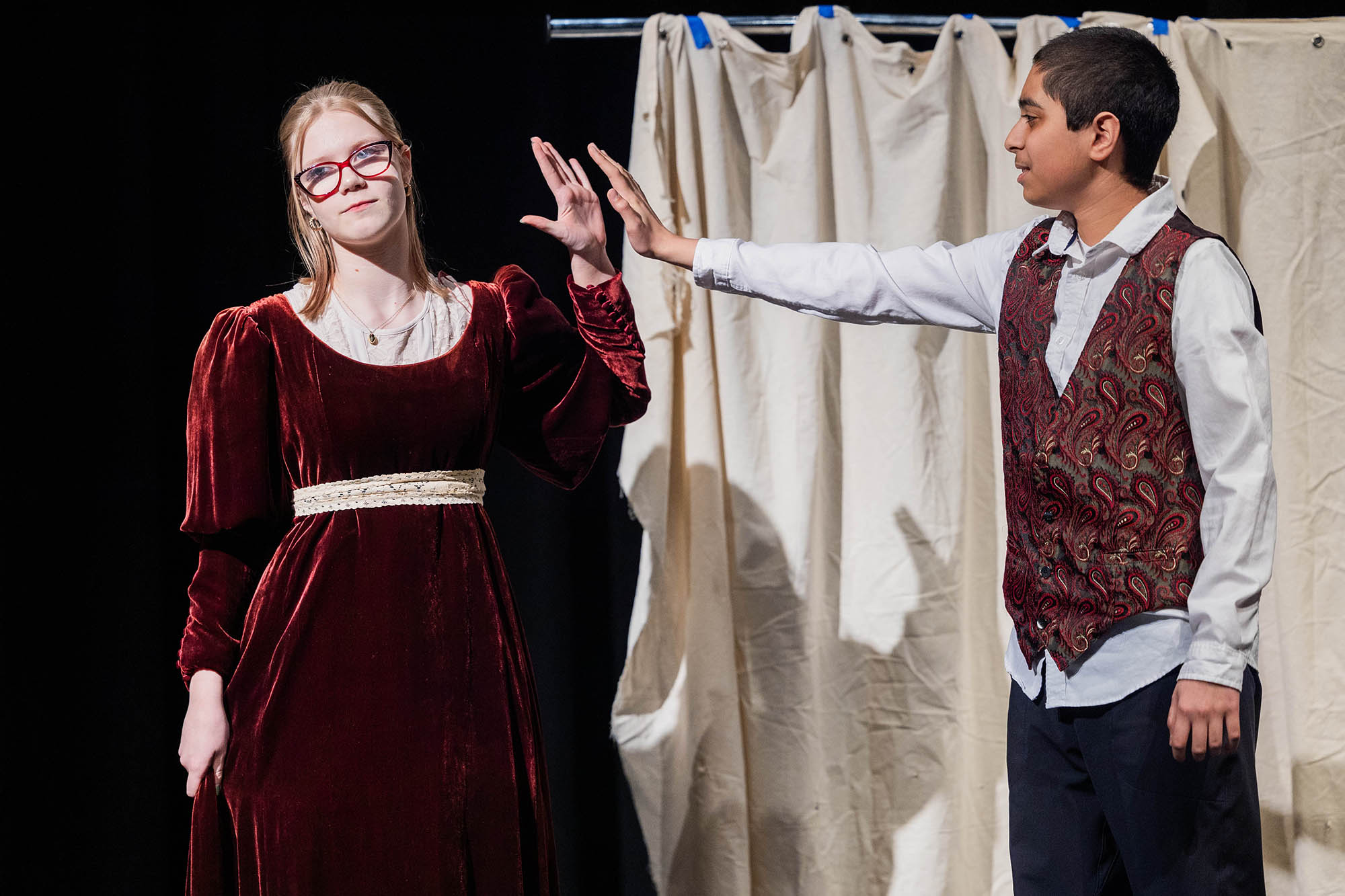
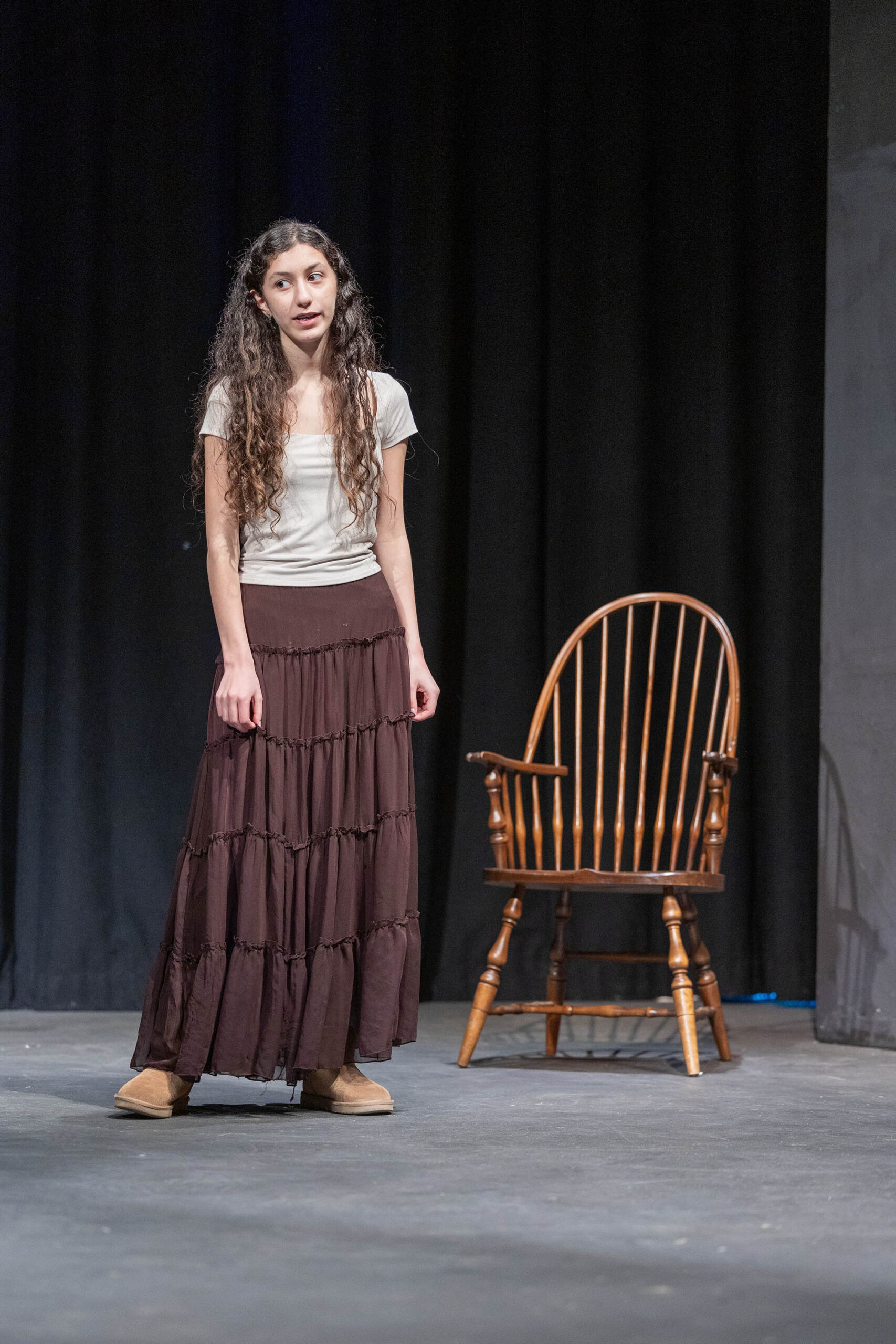
- The grand masquerade ball proceeds without masks, and the actors simply use their hands. Then the iconic balcony scene is reimagined when Juliet, terrified by a shaky stepladder, decides to stand on a chair instead.
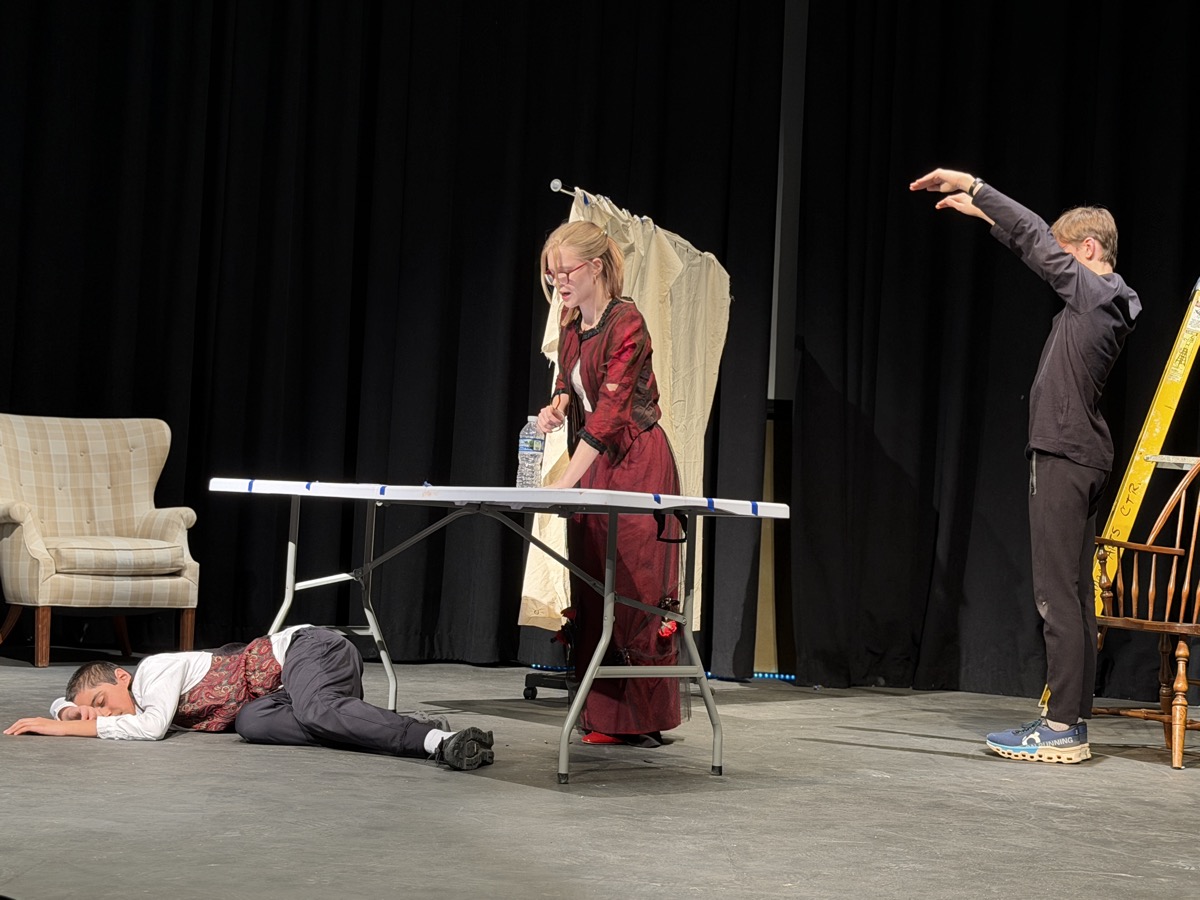
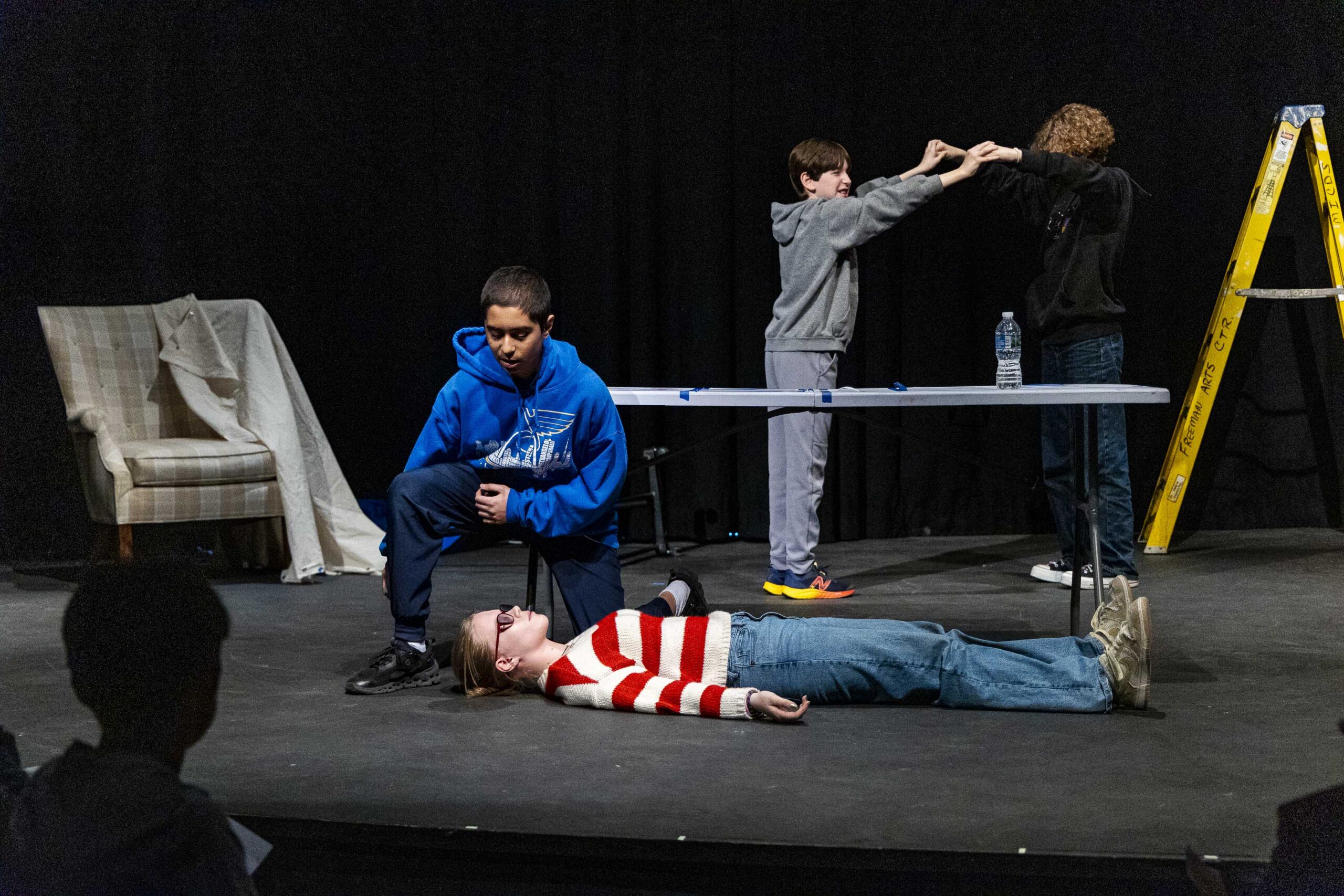
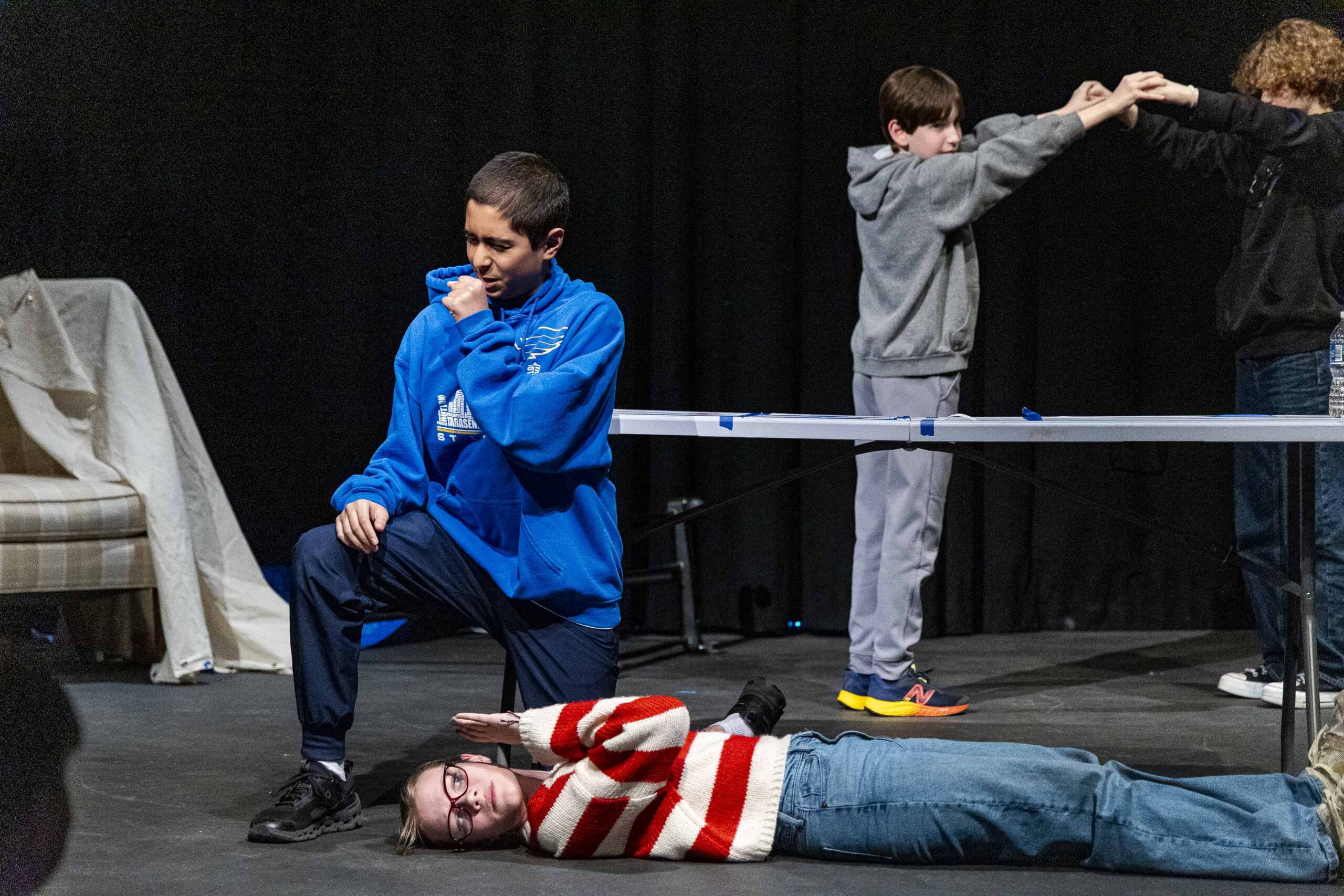
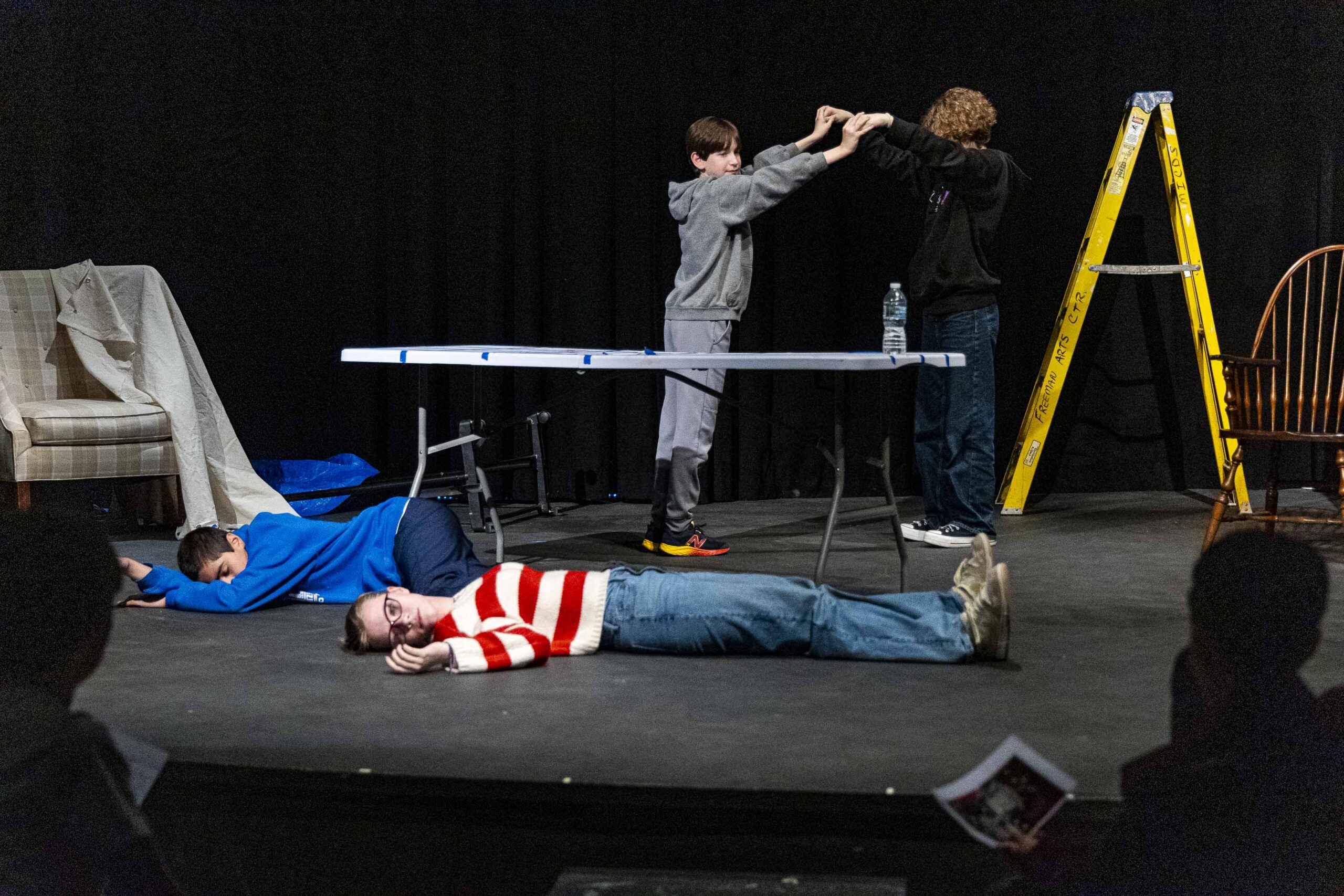
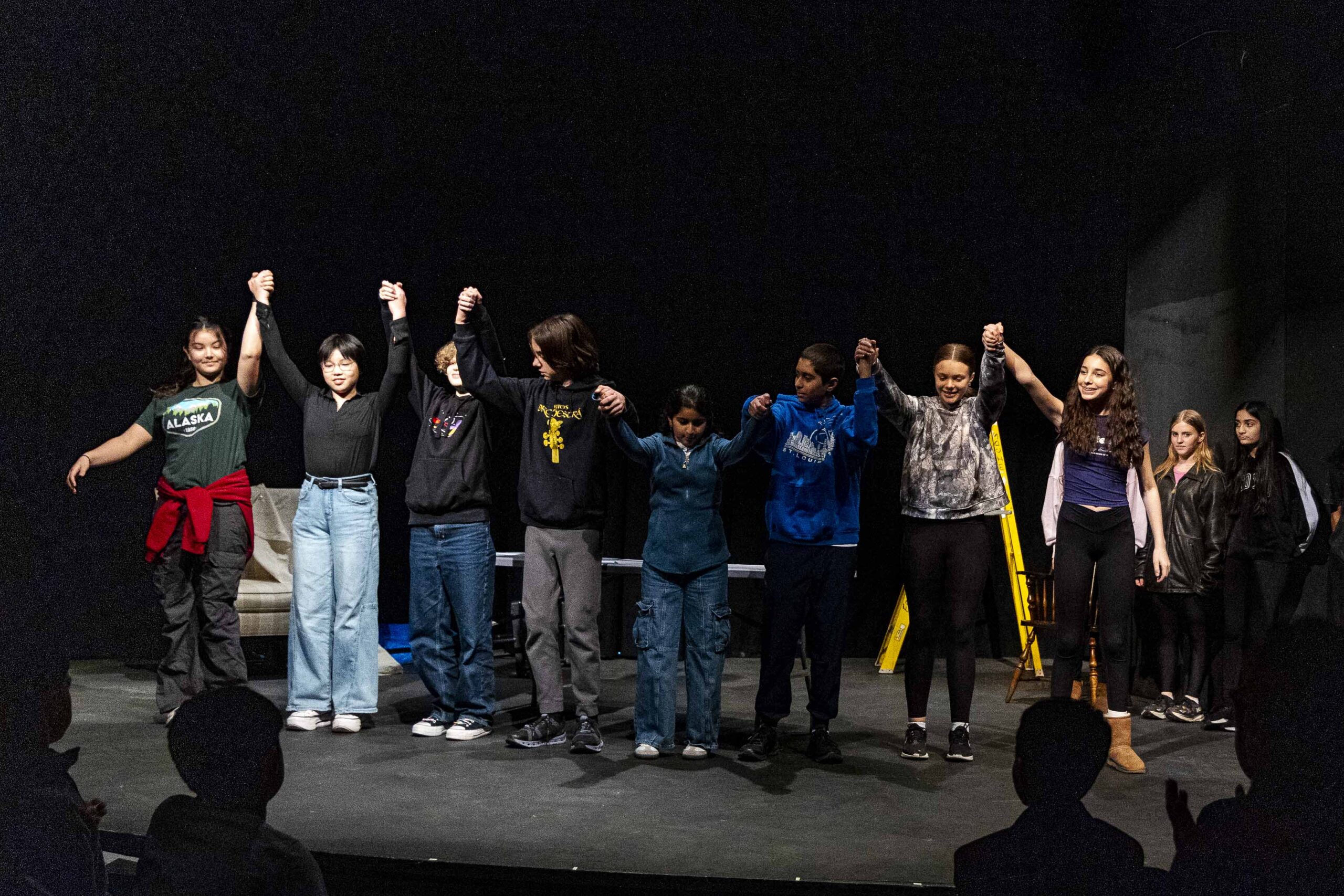
- When Friar Lawrence demands a grand archway, the ladder makes a controversial second appearance. Juliet refuses on the grounds of bad luck, leading to the ultimate low-budget solution: two cast members holding their hands in the air to form a human arch. For an exceedingly long time.
- With the clock ticking, the tragedy hits the speed round. Juliet contemplates her end via a plastic fork before taking the Friar’s potion. Romeo enters for his “everlasting rest” speech (and a kiss) but is rebuffed by the seemingly deceased Juliet due to his “sick-breathed” state. He chugs the liquid, Juliet stabs herself with the fork, and the Stage Manager delivers the final blow: “Ms. Mein is here with the truck.”
- The End. (Sort of… Almost.)
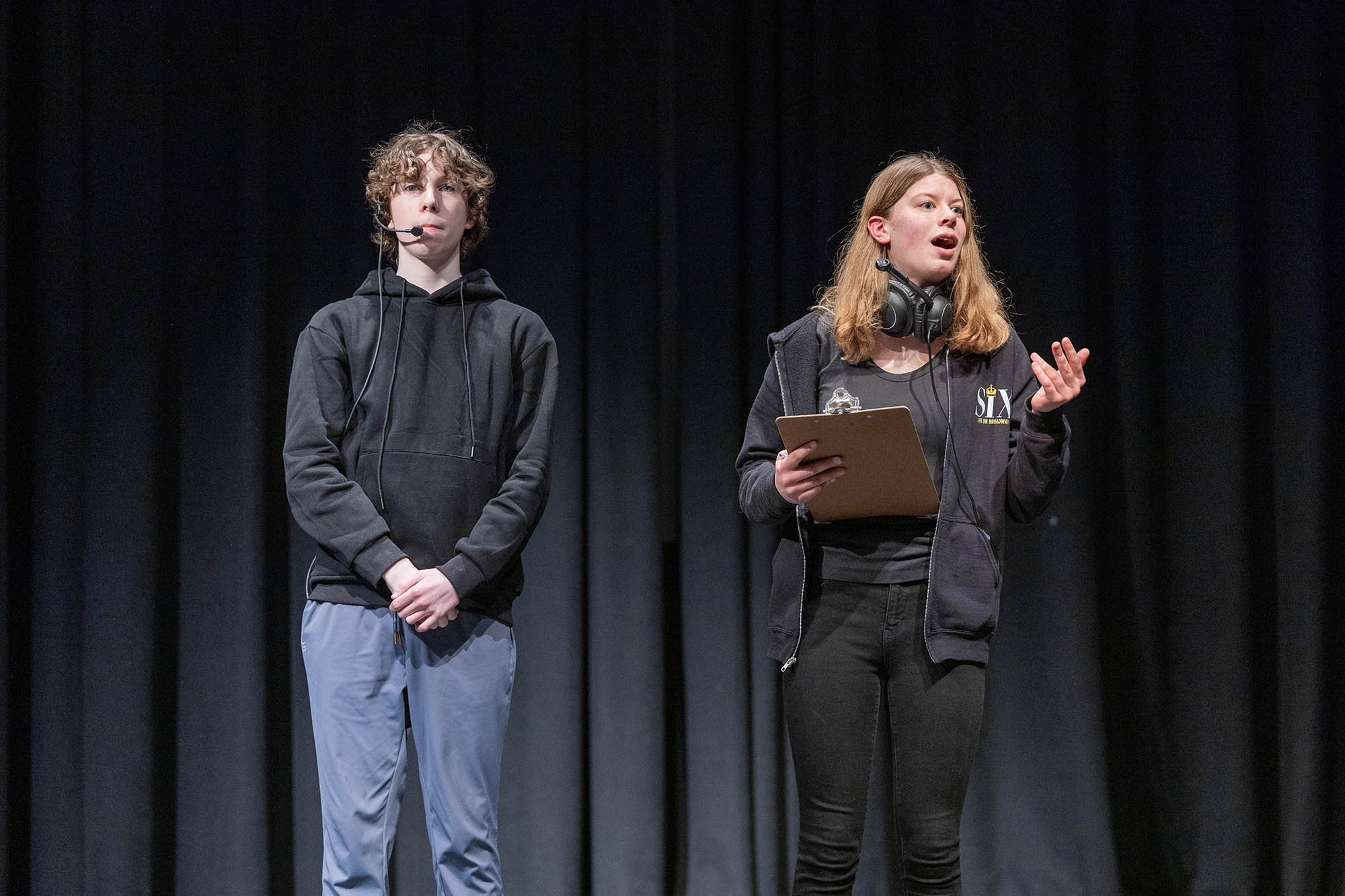
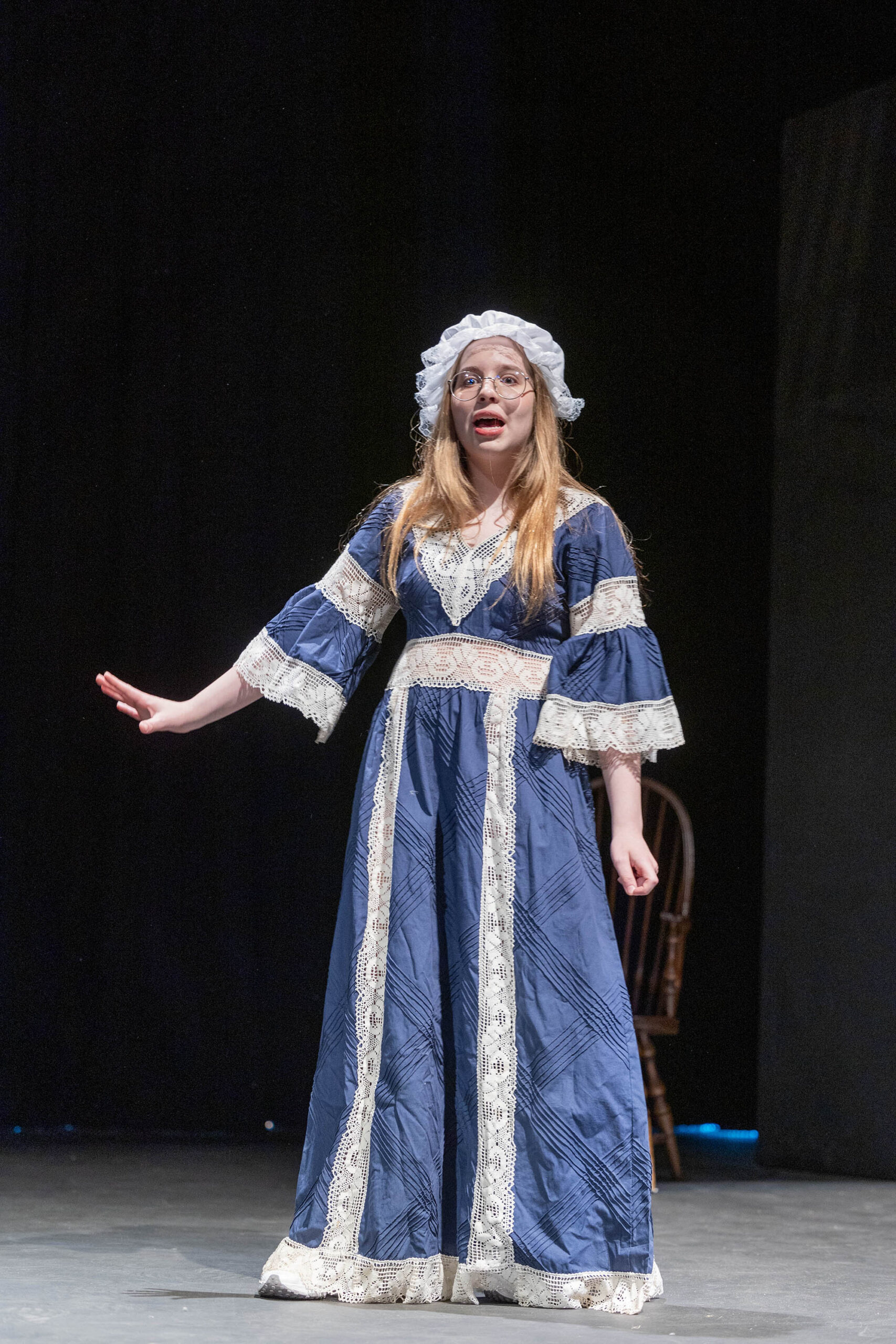
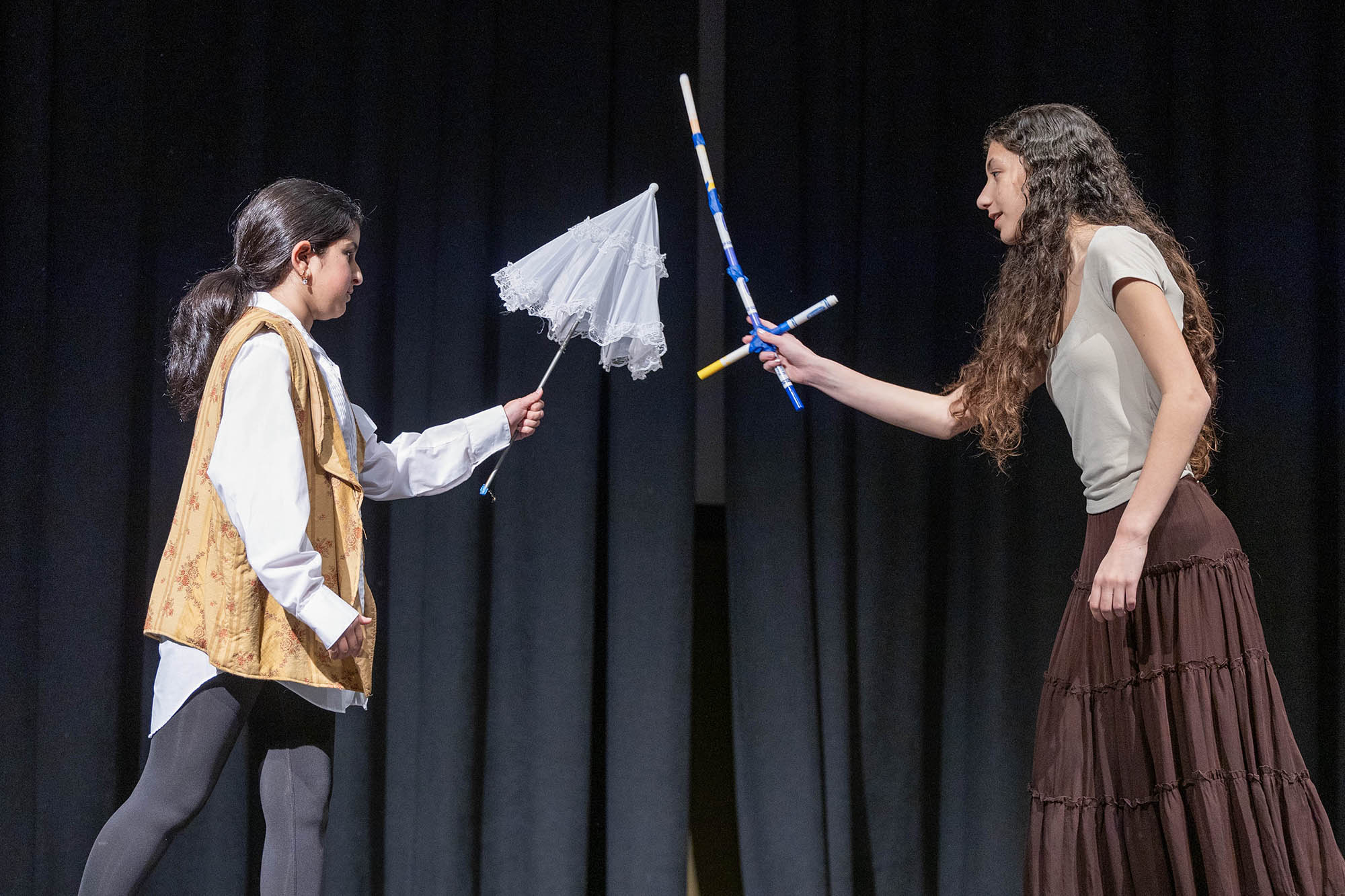
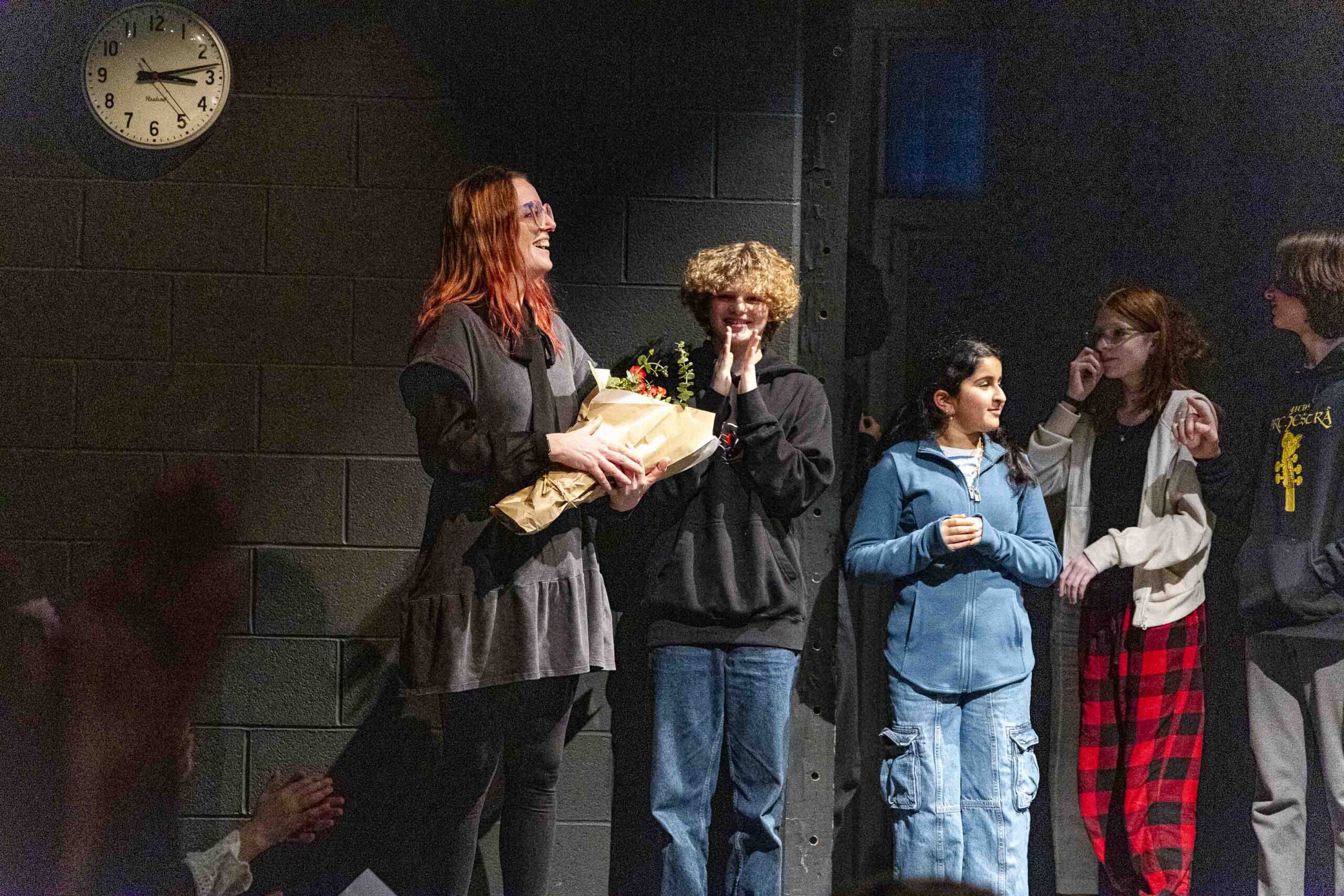
Epilogue
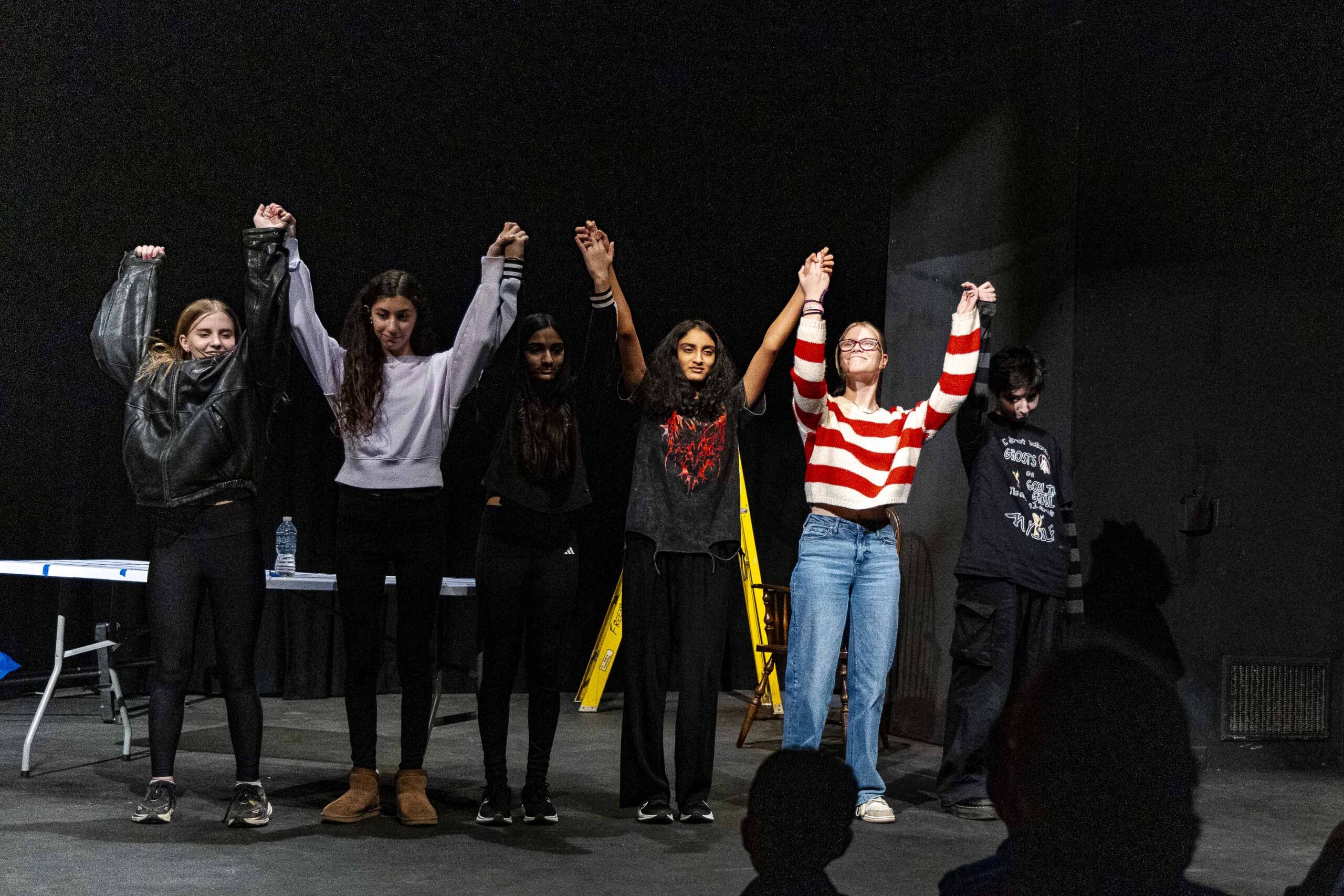
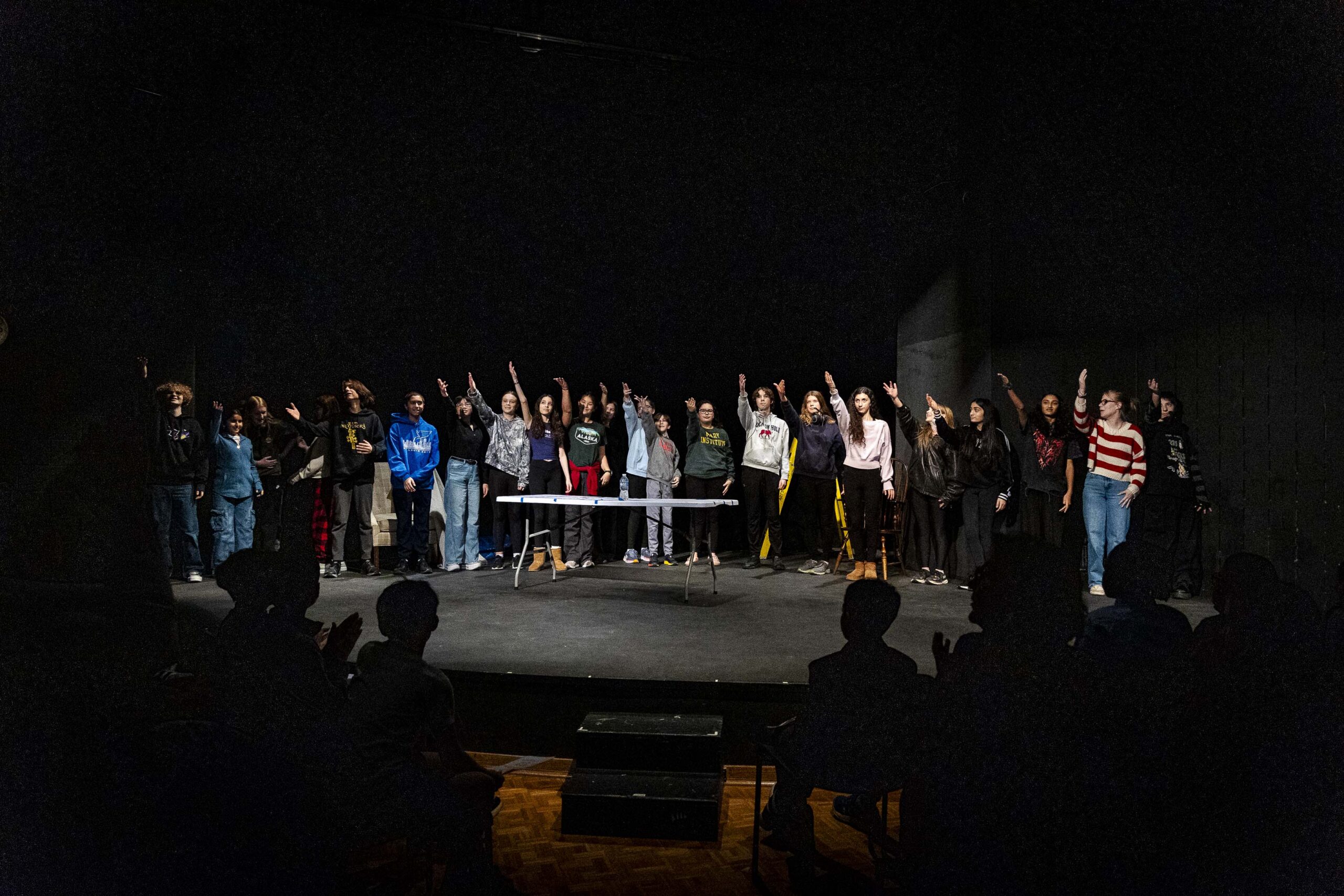
Mein notes a new tradition that further weaves the already-present interconnectedness of a theatrical production: a Wish Circle. Before every performance, the cast forms a circle to share a “wish.” These range from practical things like remembering difficult blocking to the heartfelt moments when they hope families recognize the hours of invisible labor that rest behind the laughs.
Mein said, “I chose this show for a couple of reasons. One, as a way to show the ingenuity of our students interested in technical theatre. Students really had to collaborate and problem-solve to find the exact right prop or lighting cue for the particular moment or comedic bit. Their fun ideas truly made the show. The other reason is that I wanted to familiarize young actors with performing Shakespeare, giving them additional acting skills to have in their back pocket. This show was challenging both on stage and off, and they did not disappoint! I couldn’t be more thrilled with their work.”
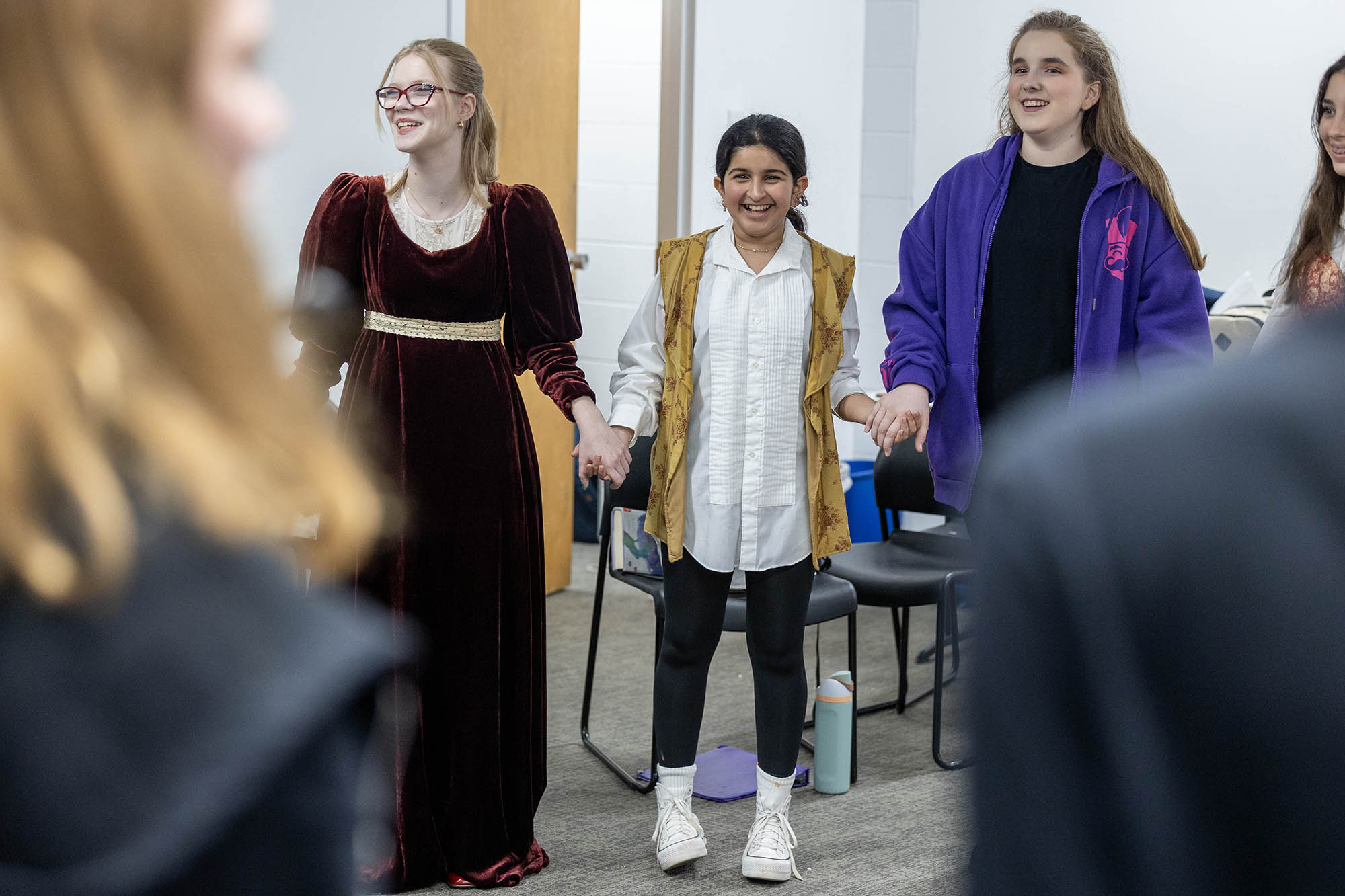
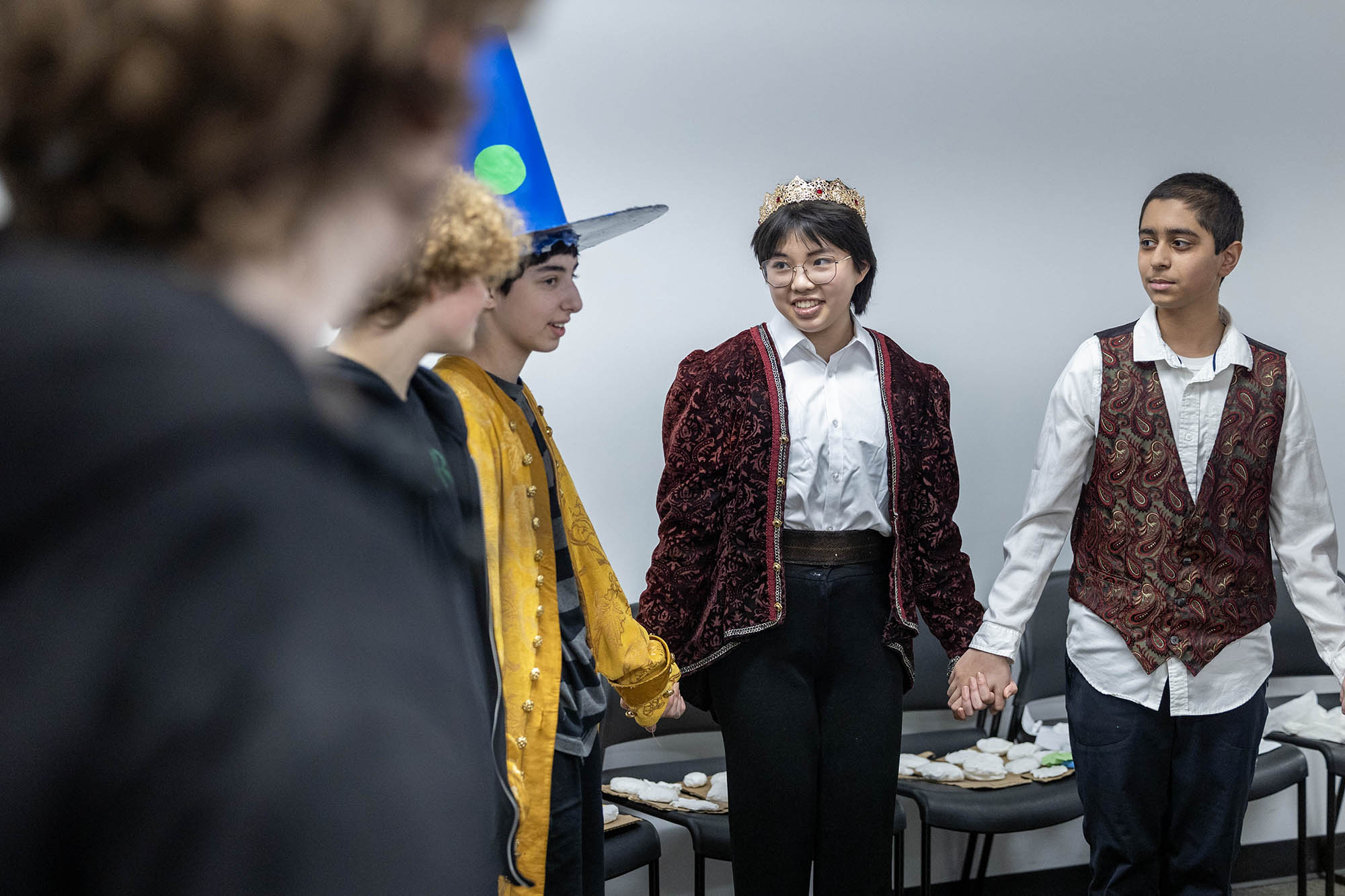
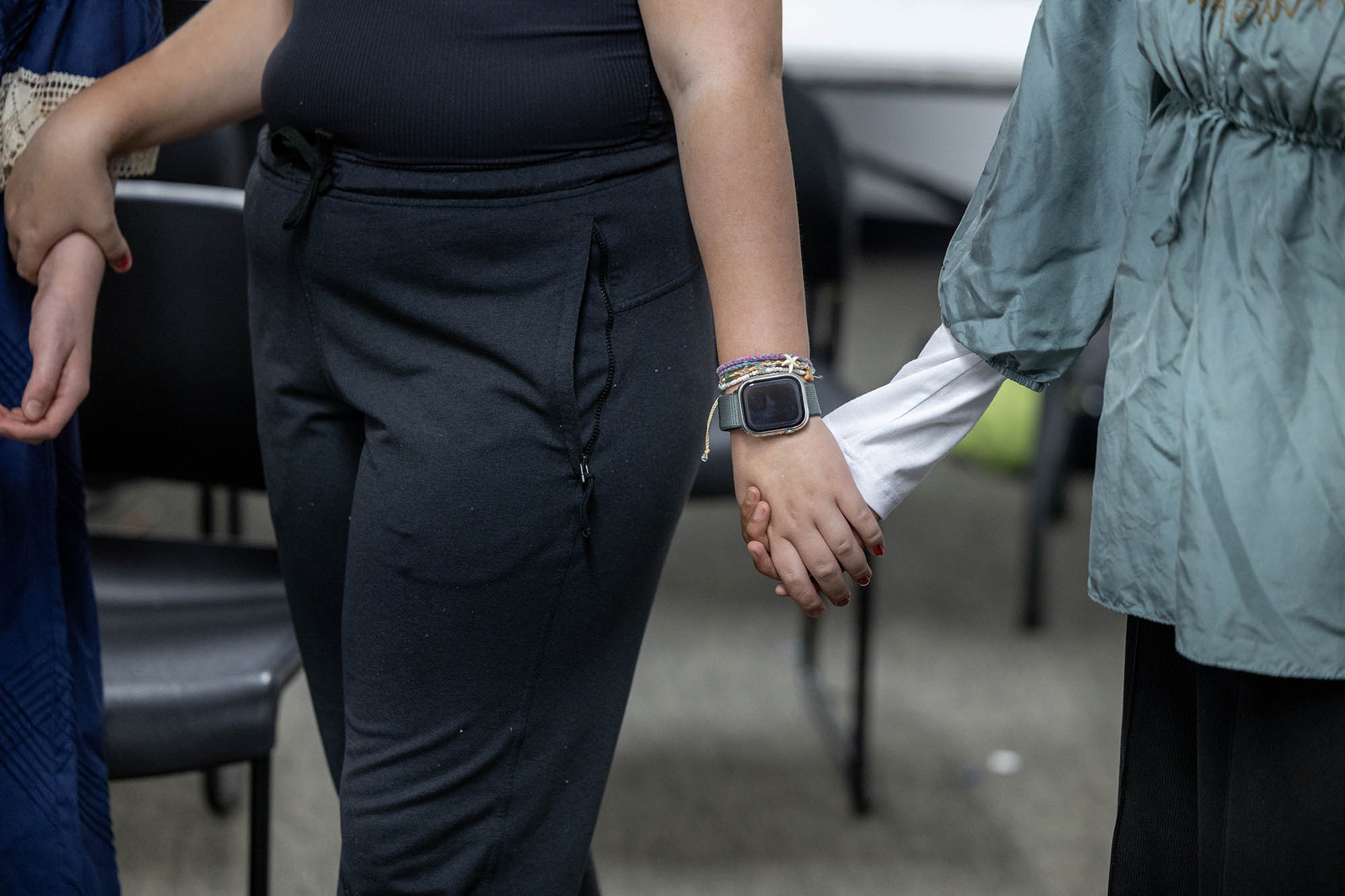

While the characters on stage scramble to save a failing production, these real-life students have built a web of trust and camaraderie. When asked who would save the show if things truly went sideways, the answers ranged from the stage managers to Ms. Mein herself, but the sentiment was the same: They’d figure it out together.
Click here to see the full program.