Before spring break, sixth-graders ventured into the realm of a cross-curricular creative journey that combined mathematical calculations, visual arts, and storytelling. The project, One Sculpture – Three Stories, led students to examine multiple perspectives, solve problems, and tap into their imaginations.
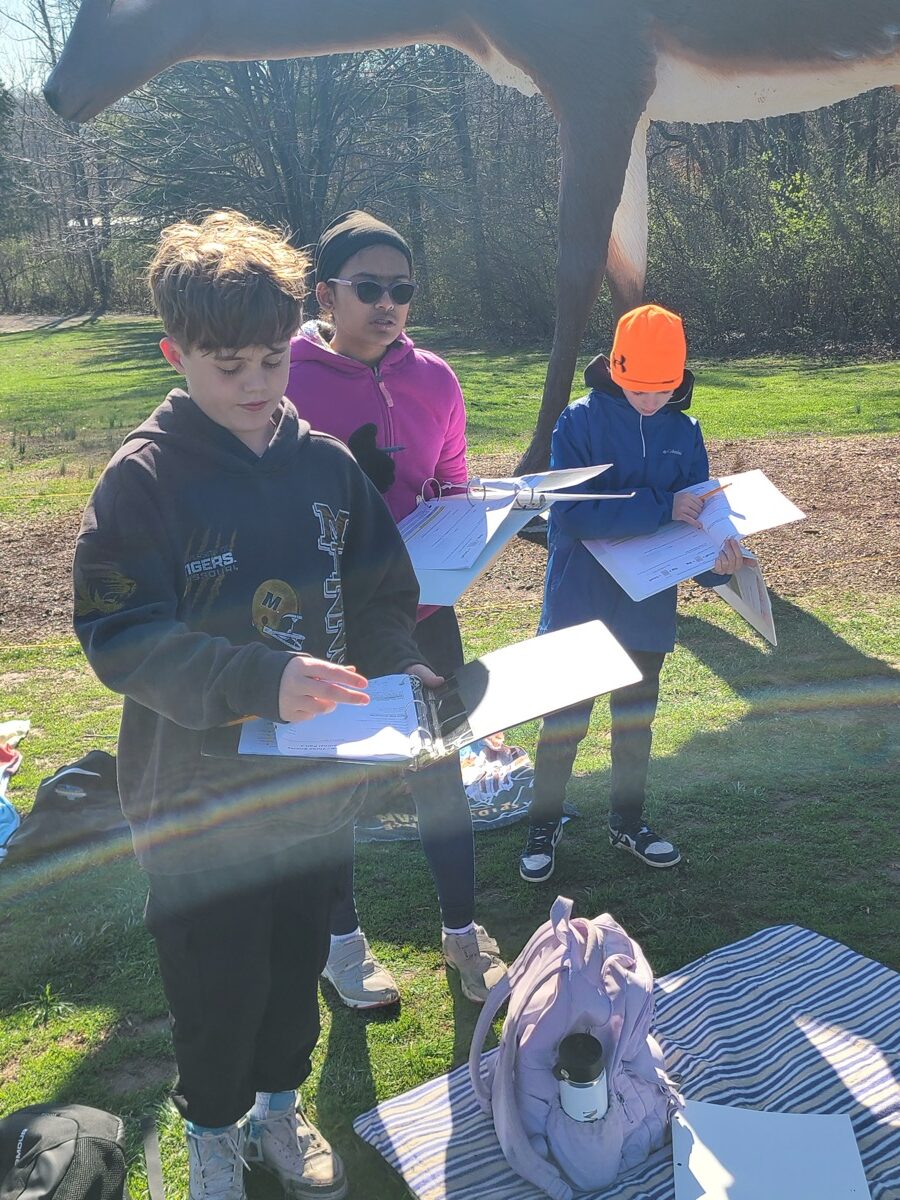
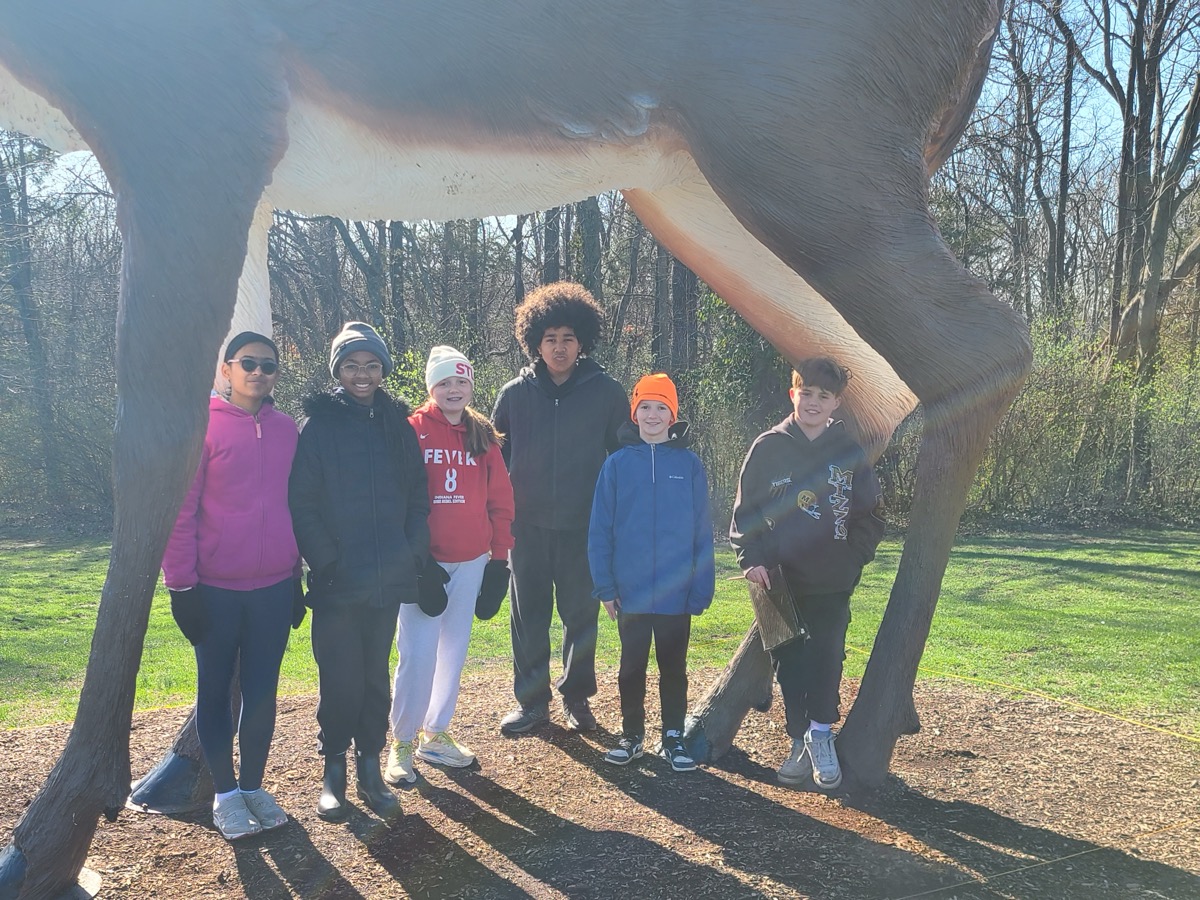
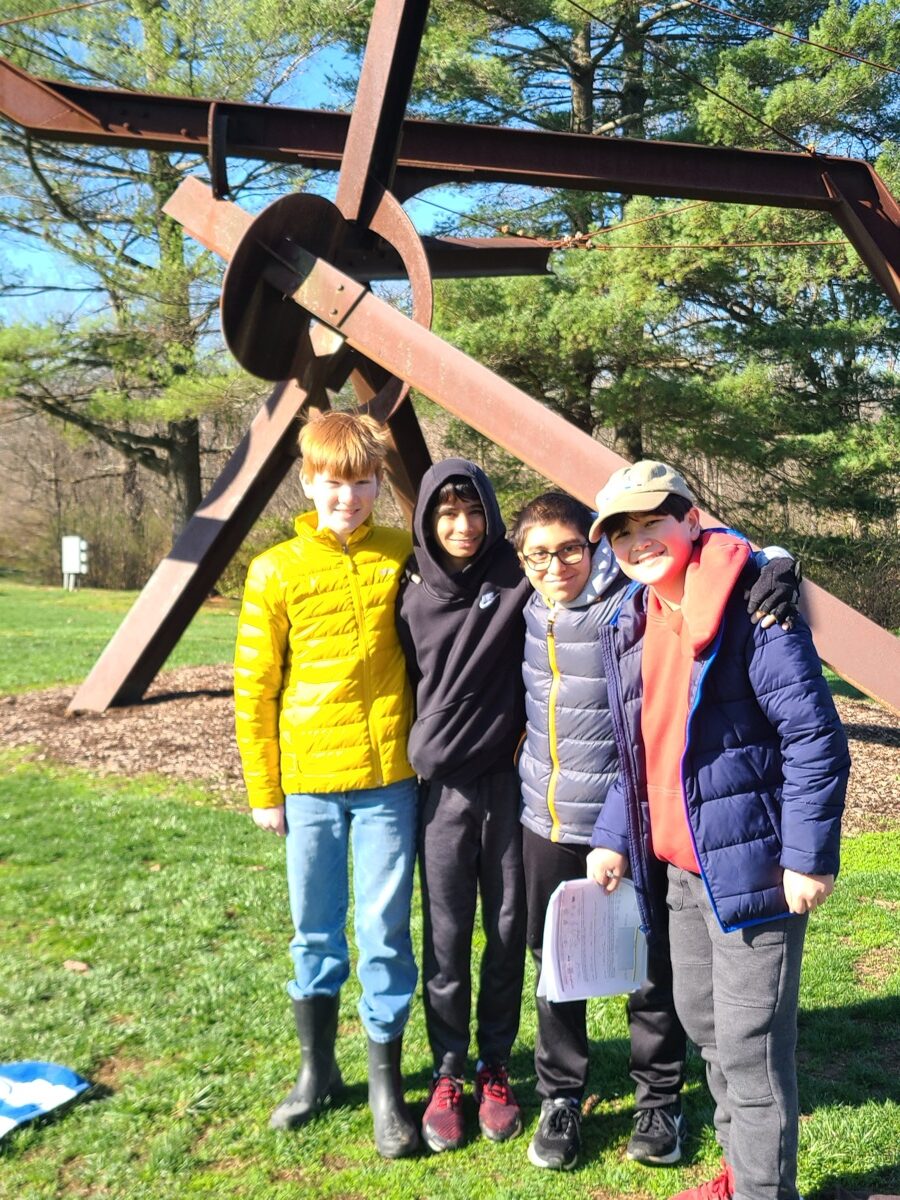
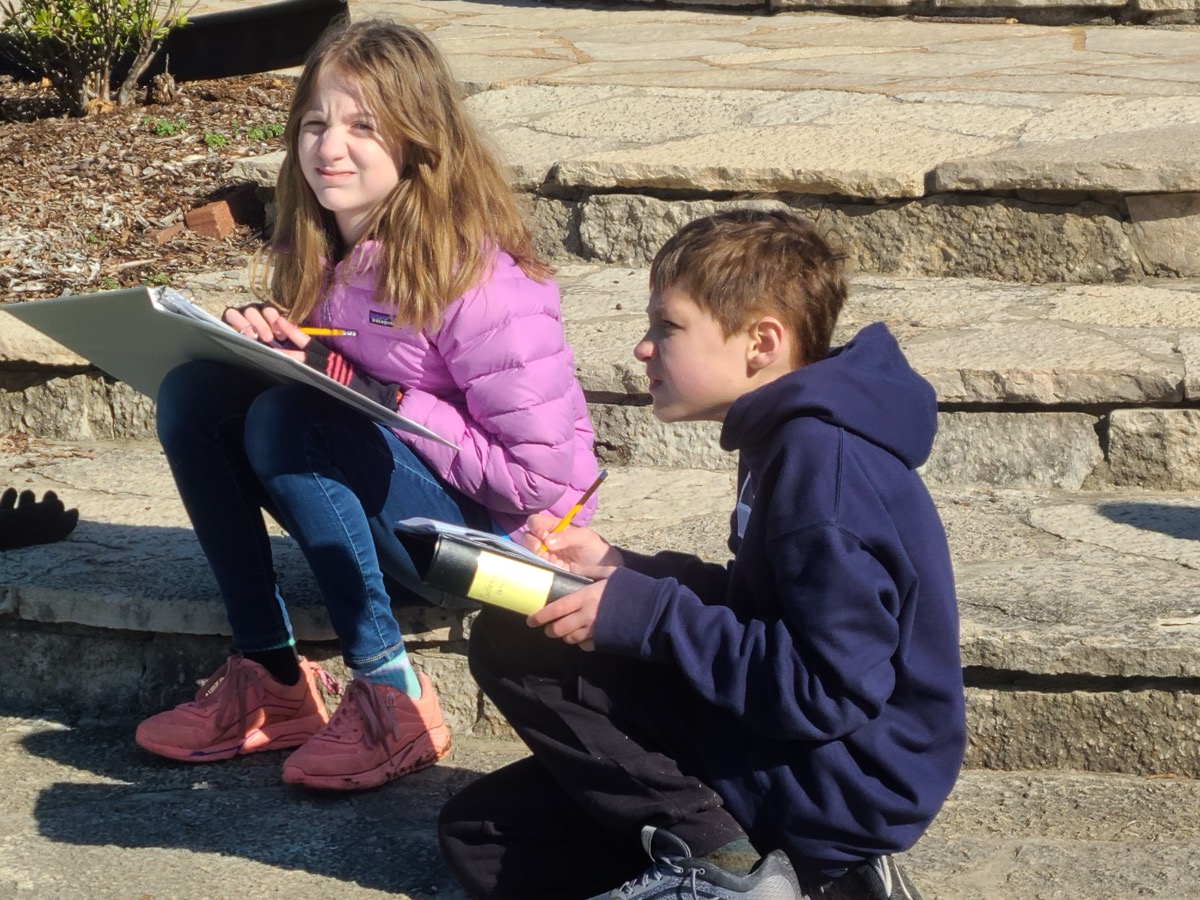
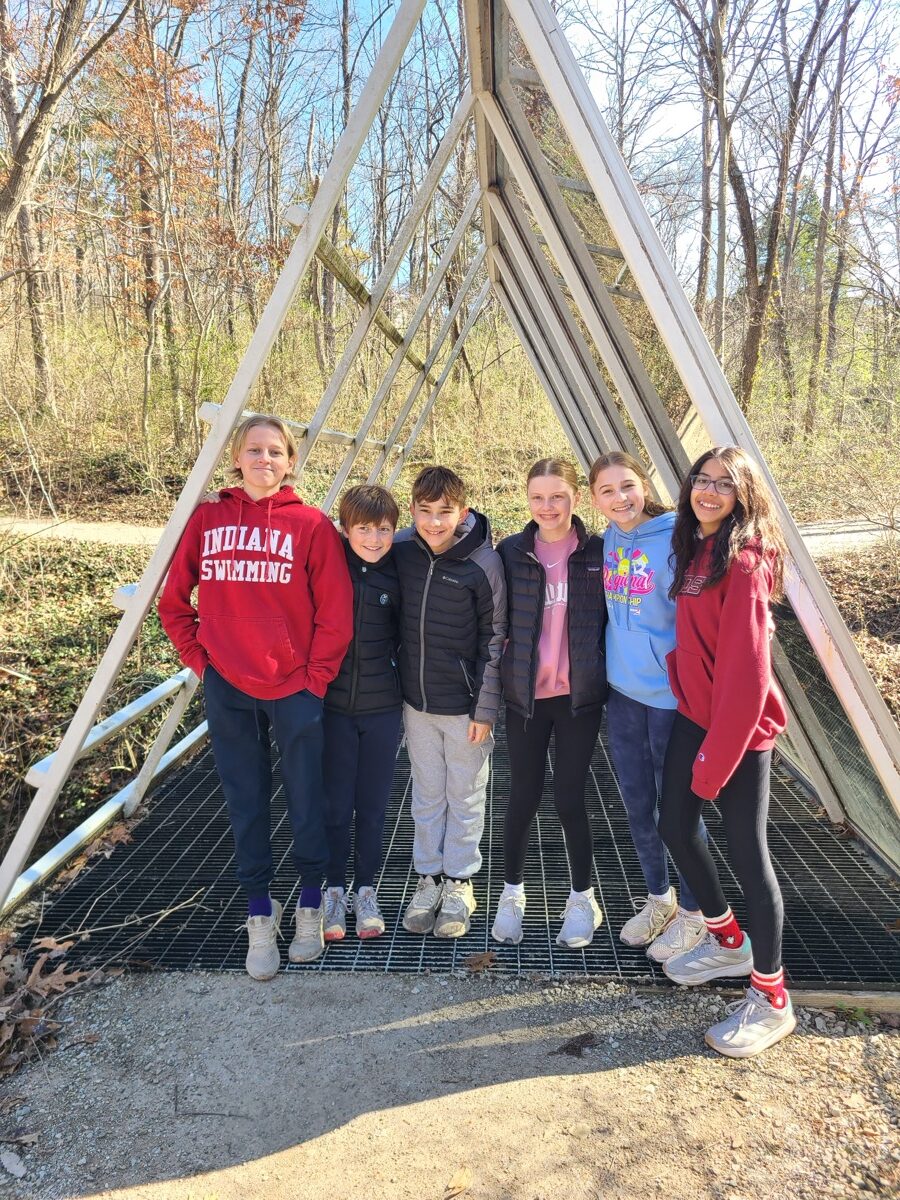
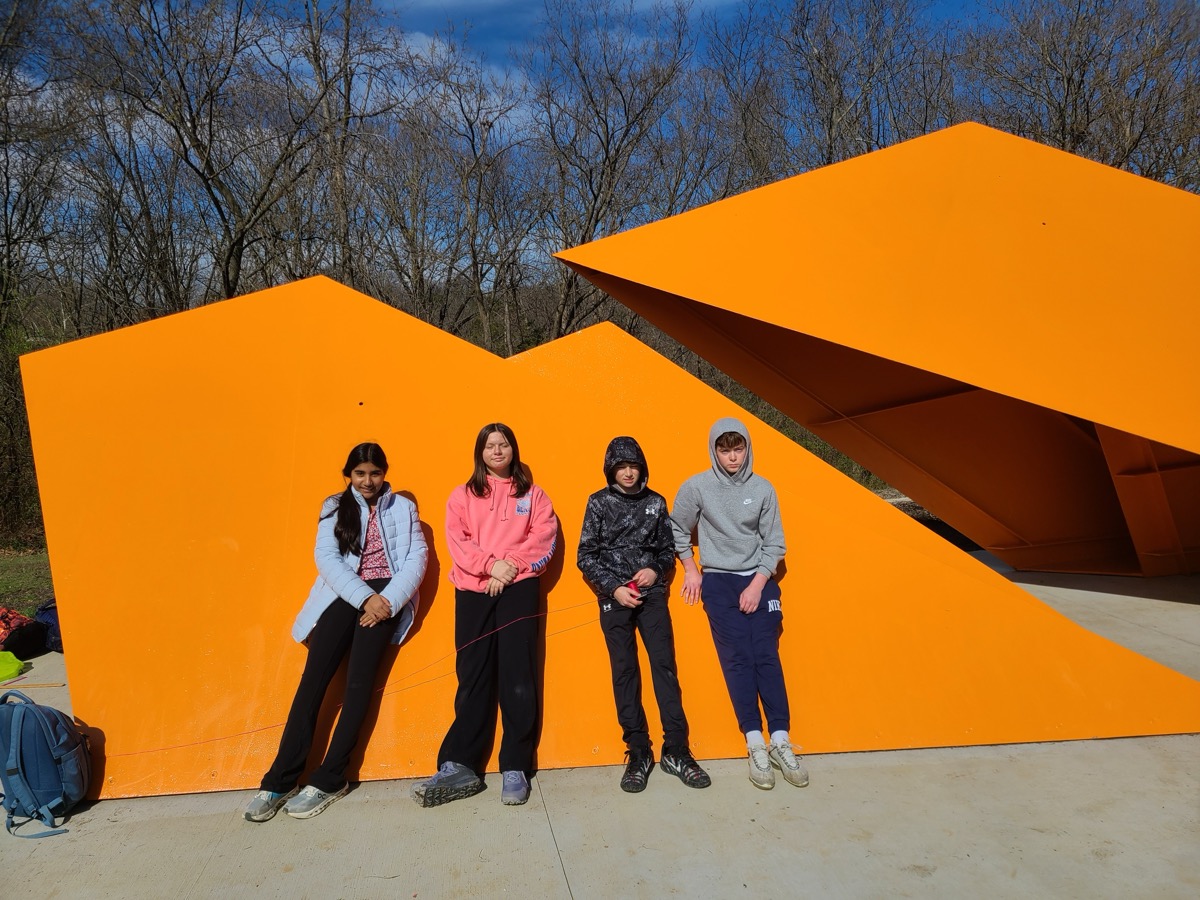
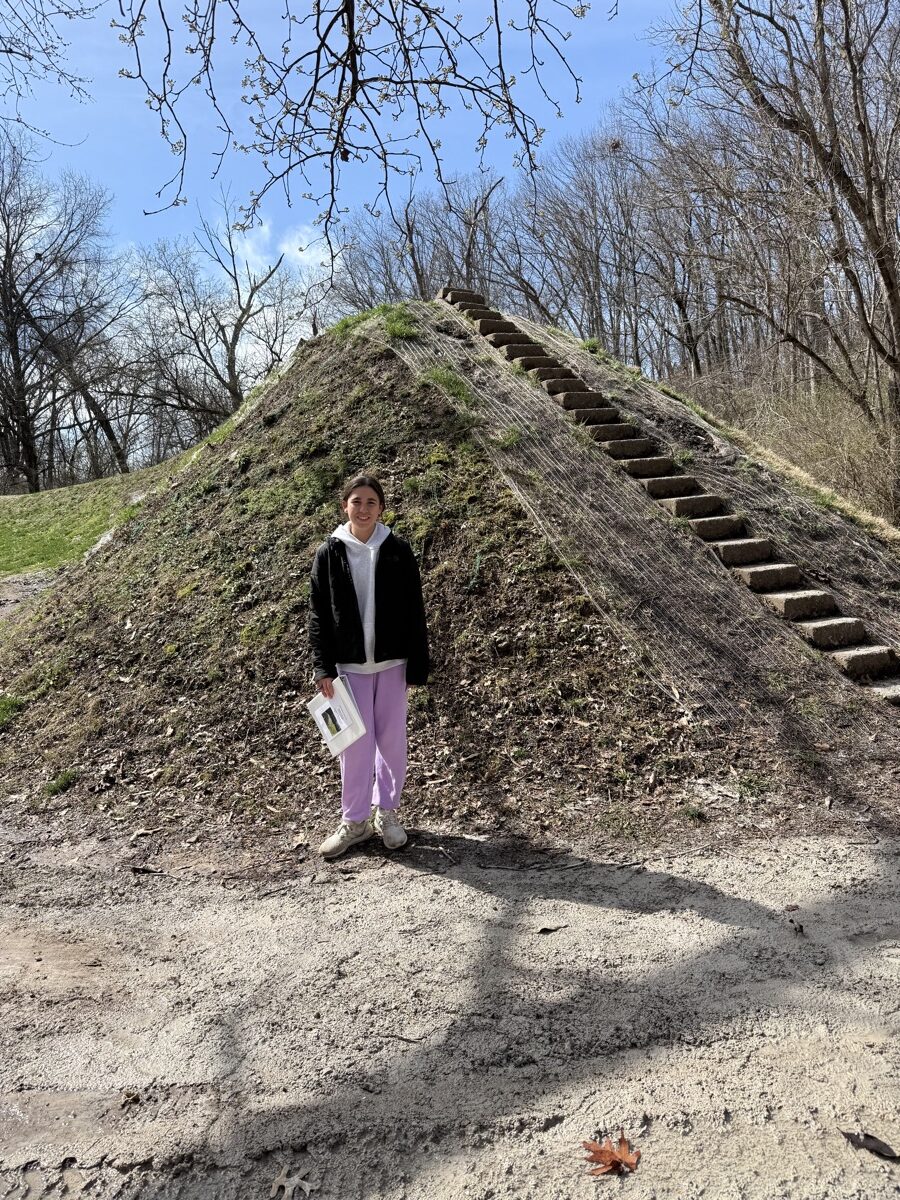
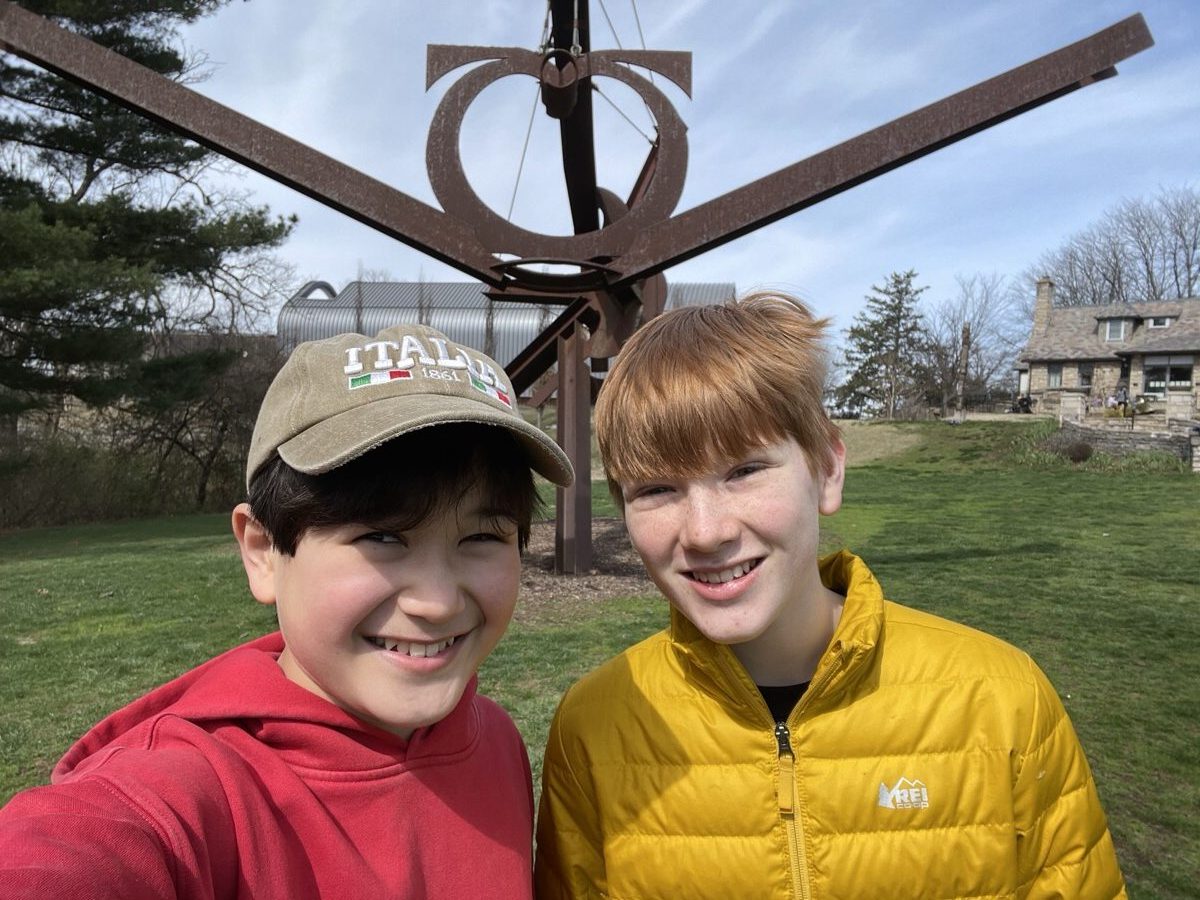
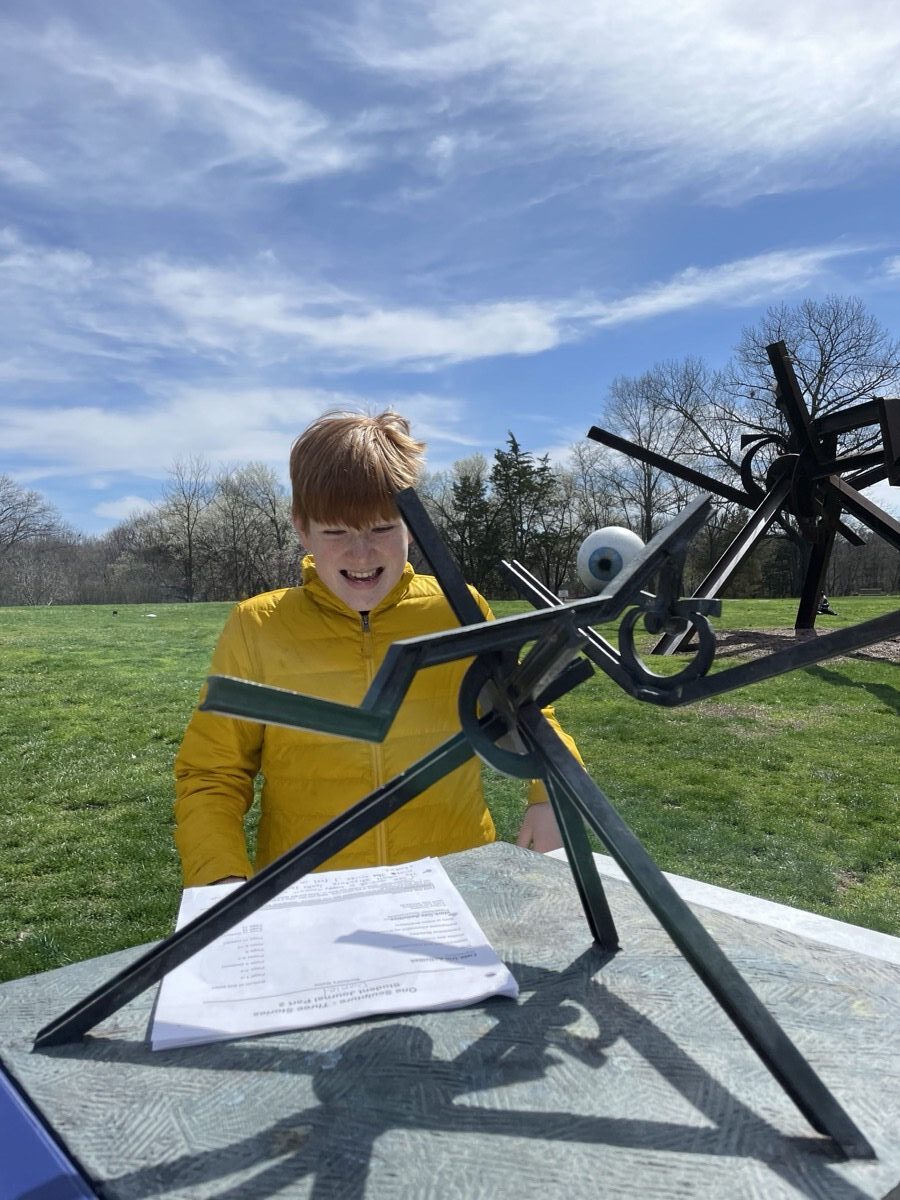
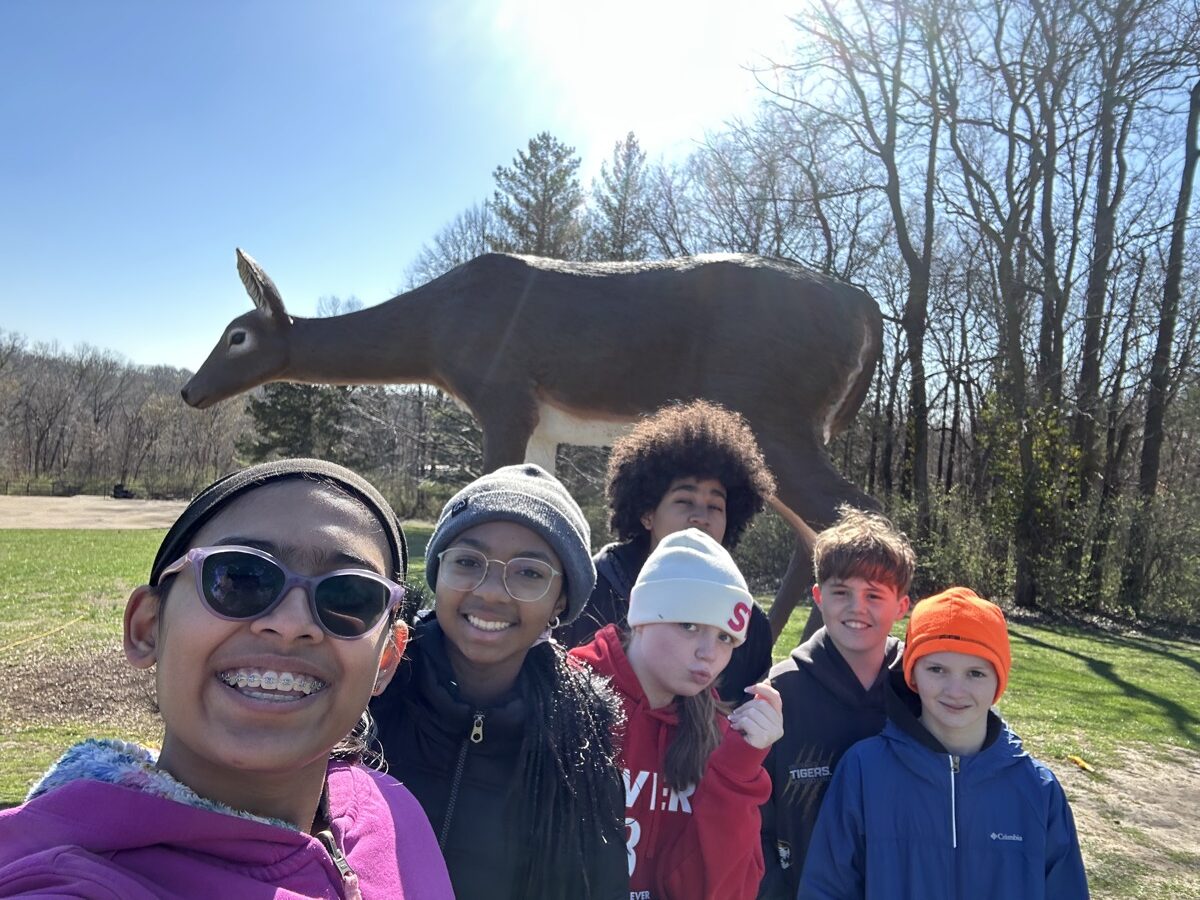
Their first stop was Laumeier Sculpture Park, nestled in the Sunset Hills area of St. Louis. The park contains large outdoor sculptures and other unique artist installations. Our sixth graders arrived to explore and gather data to help create a scaled model of a sculpture from the park and to dream up ideas for a creative story about that sculpture.
Throughout the year in math class, sixth-grade students use the concept of scale factor to solve a variety of problems. These included solving for missing values in proportions, finding a percent of a number, and completing ratio tables. The Laumeier project allowed students to apply this skill and helped them complete it successfully.
Students were asked to estimate the height of their sculpture using either the mirror method or the shadow method. Due to weather constraints, students used the mirror method, where they placed a mirror on the ground in front of the sculpture and walked backward until they could see the top of the sculpture in the mirror. From there, students grabbed their meter sticks and measured the distance from their feet to the mirror, from the mirror to the base of the sculpture, and from the ground to their eye level.
Using these measurements, students created two similar triangles that are proportionally related (see diagram below). They then used the scale factor to determine the sculpture’s height.
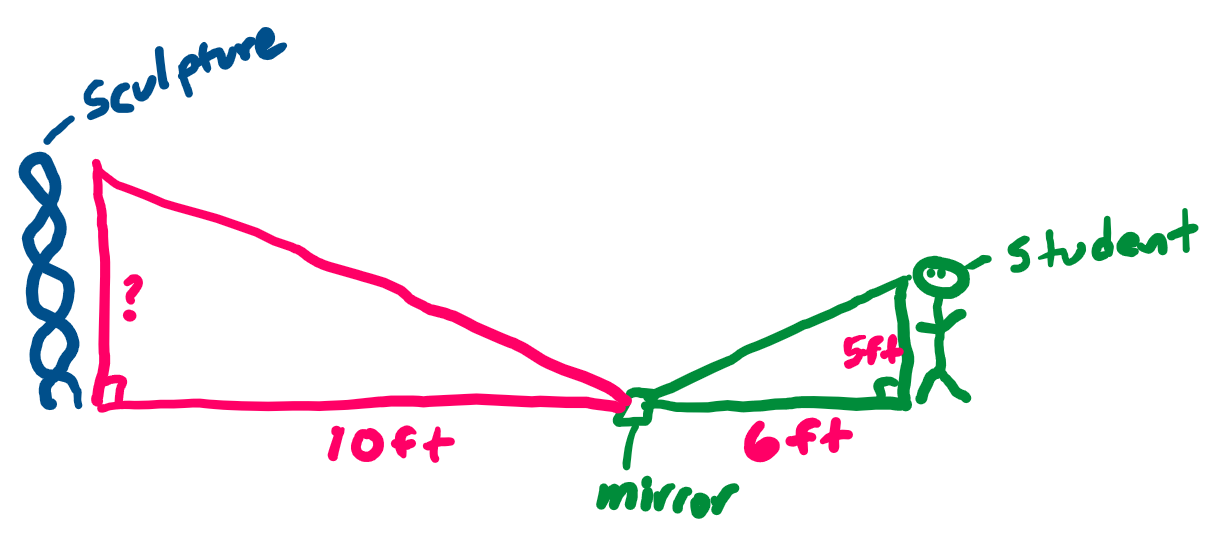
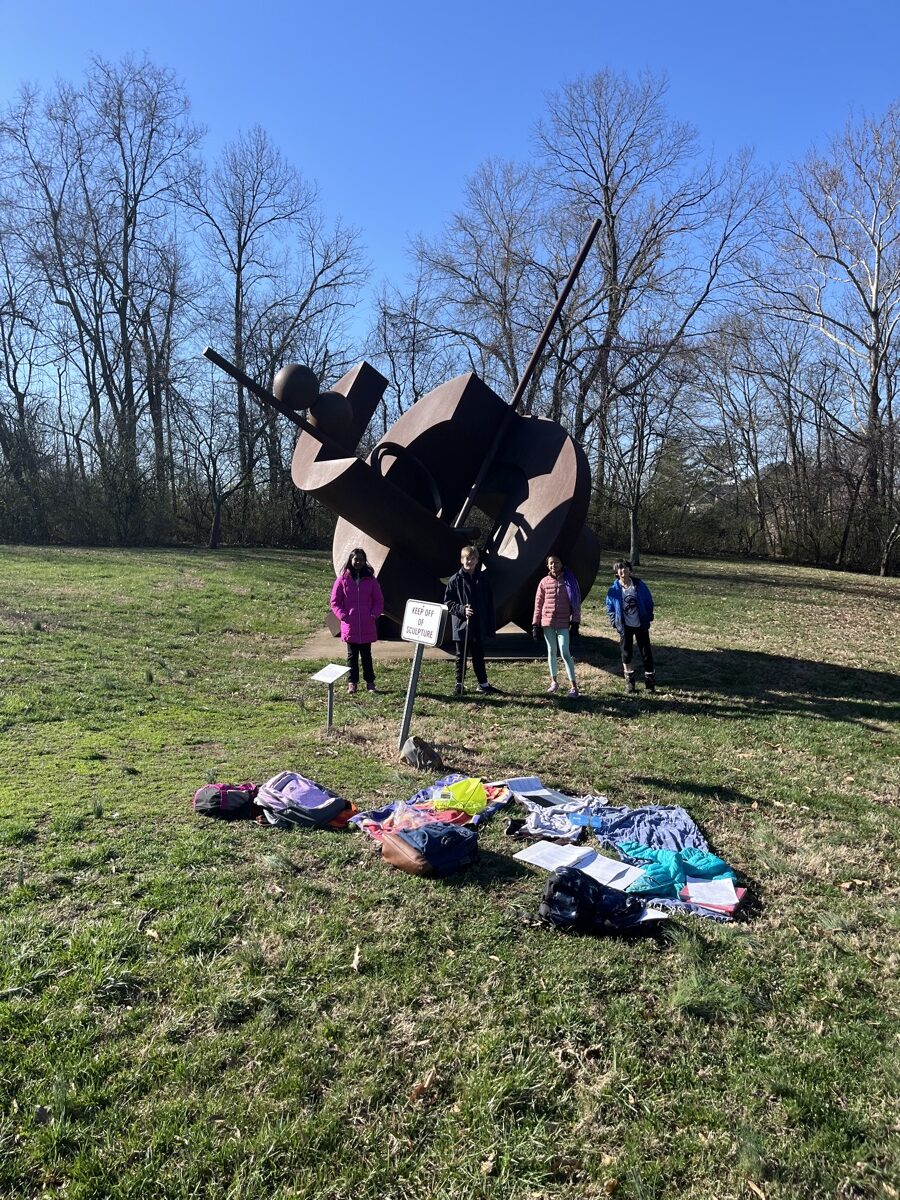
Middle School Math Teacher Dustin Delfin said, “After estimating the height of their sculptures, students built a rectangle around it using string and metal stakes. This rectangle represented their building surface. Once students measured the length and width of the rectangle, they used those dimensions to scale down (using a scale factor) both the building surface and the height of the sculpture. This process yielded smaller dimensions for the sculpture’s length, width, and height, which they would use to construct a model back at school.”
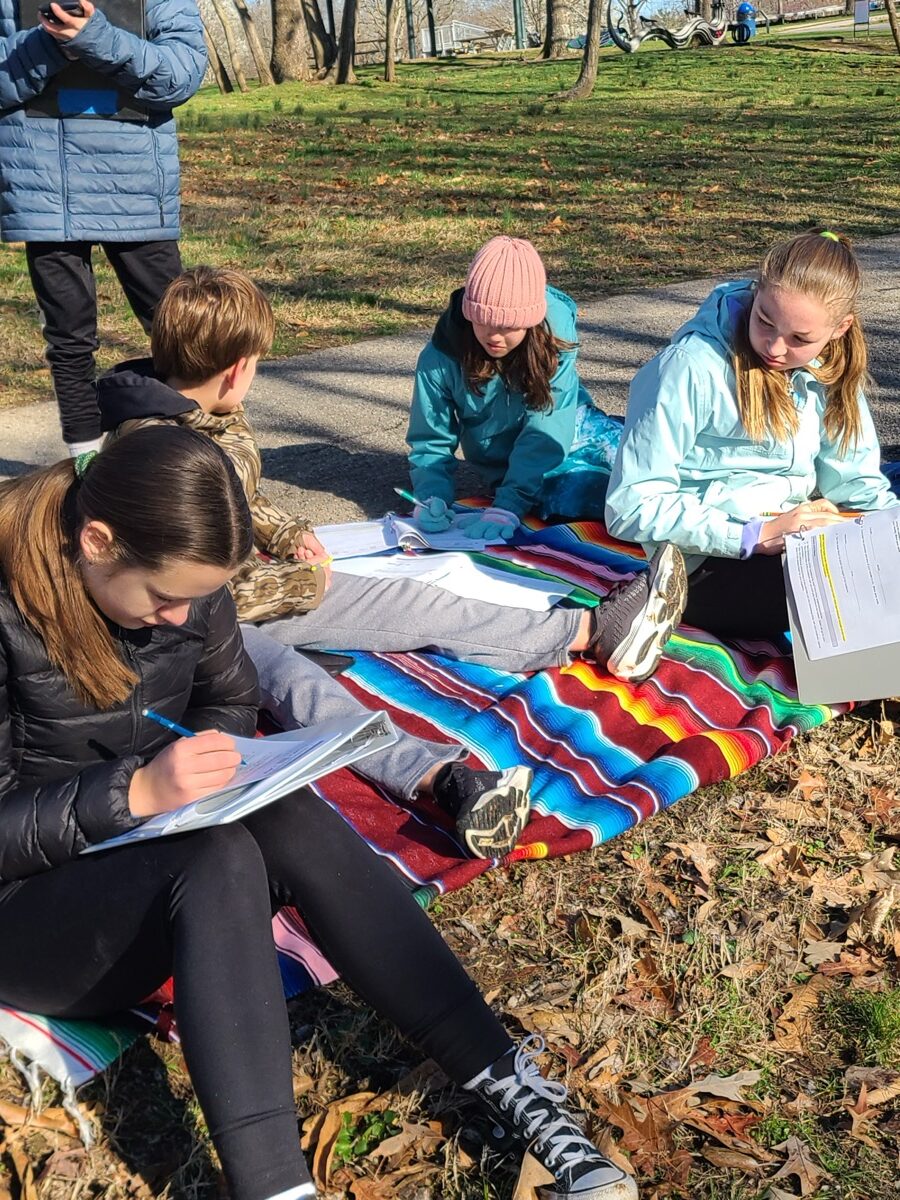
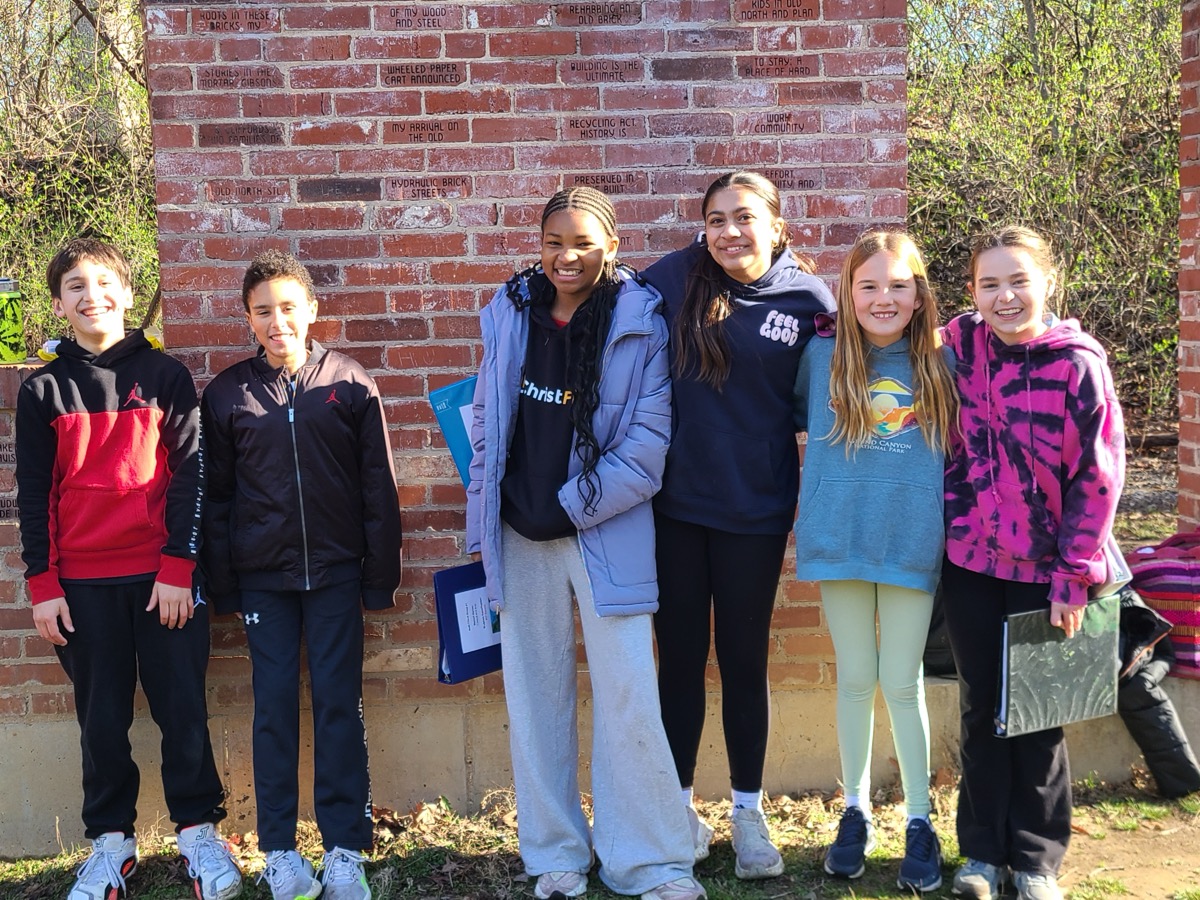
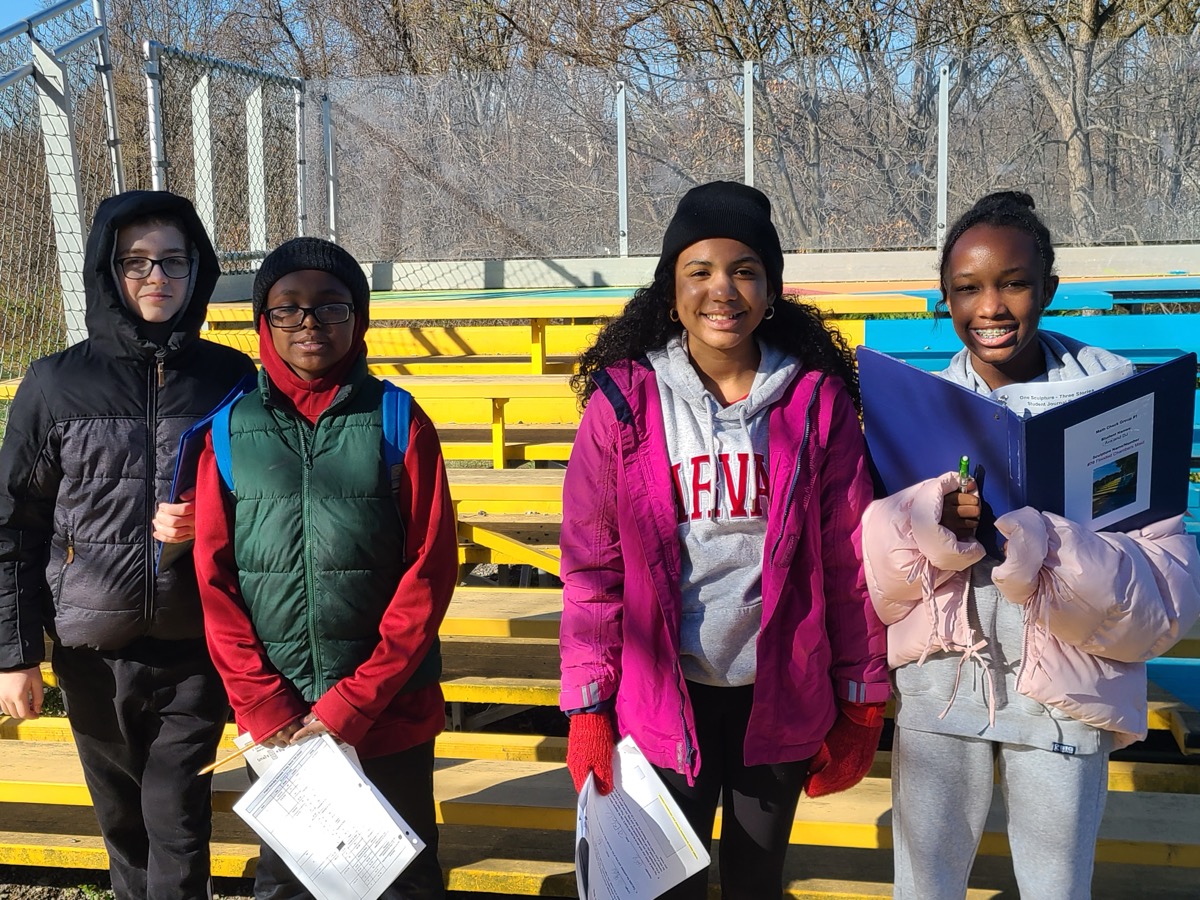
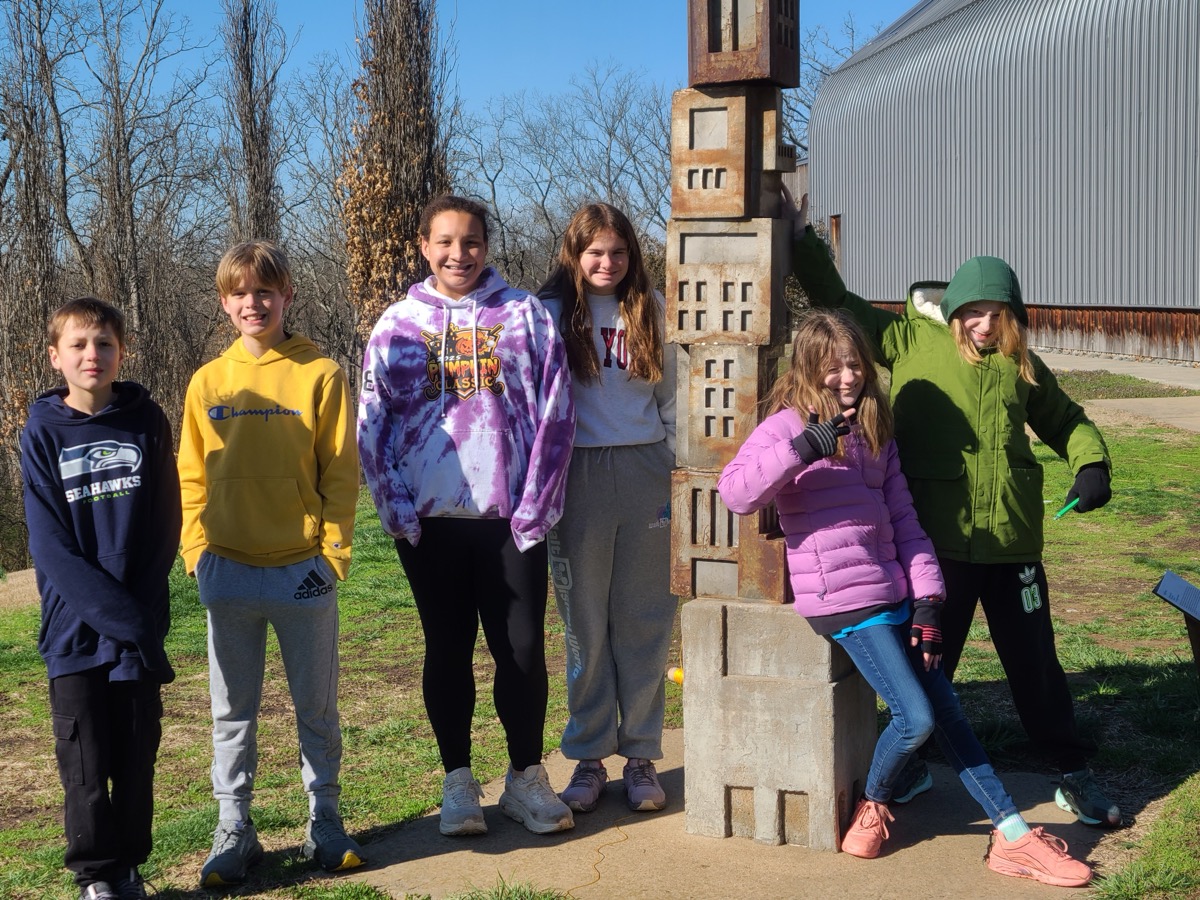
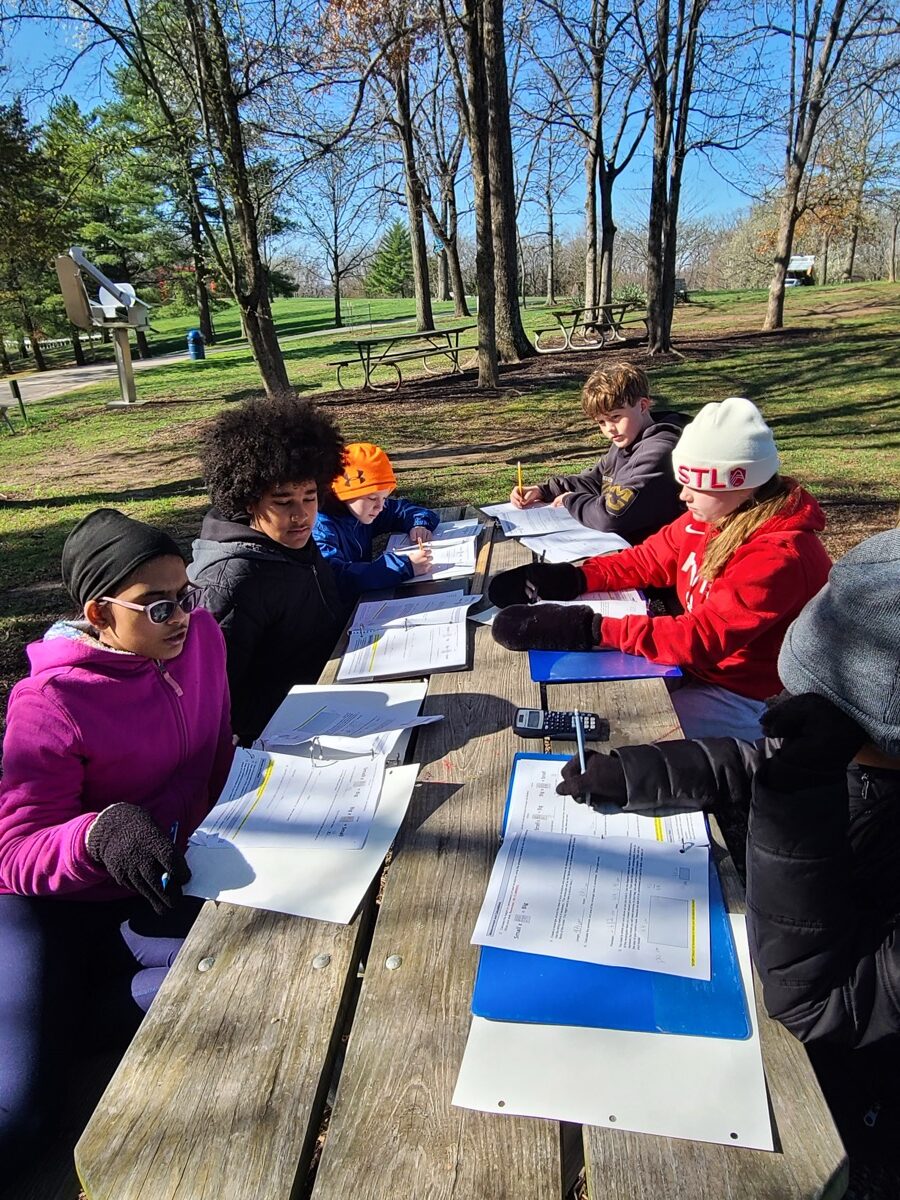
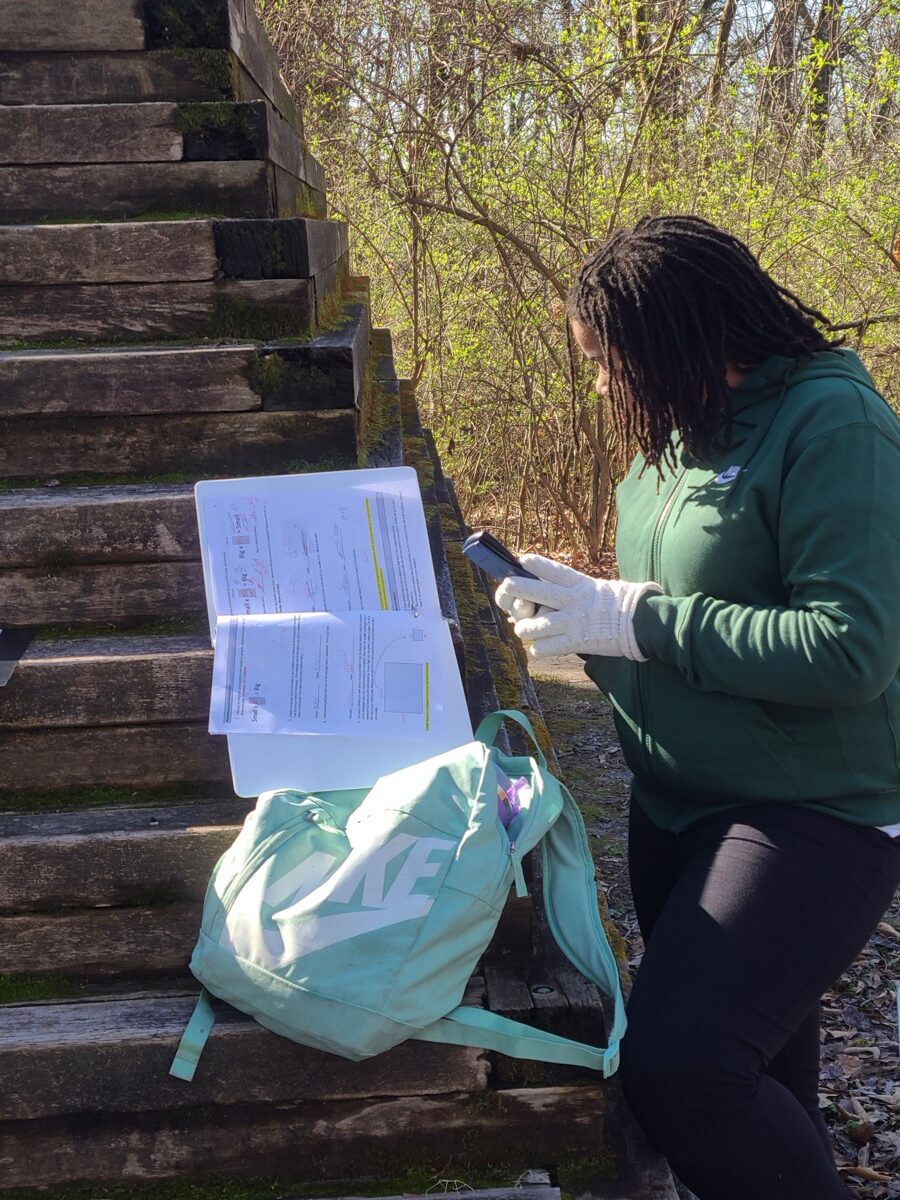
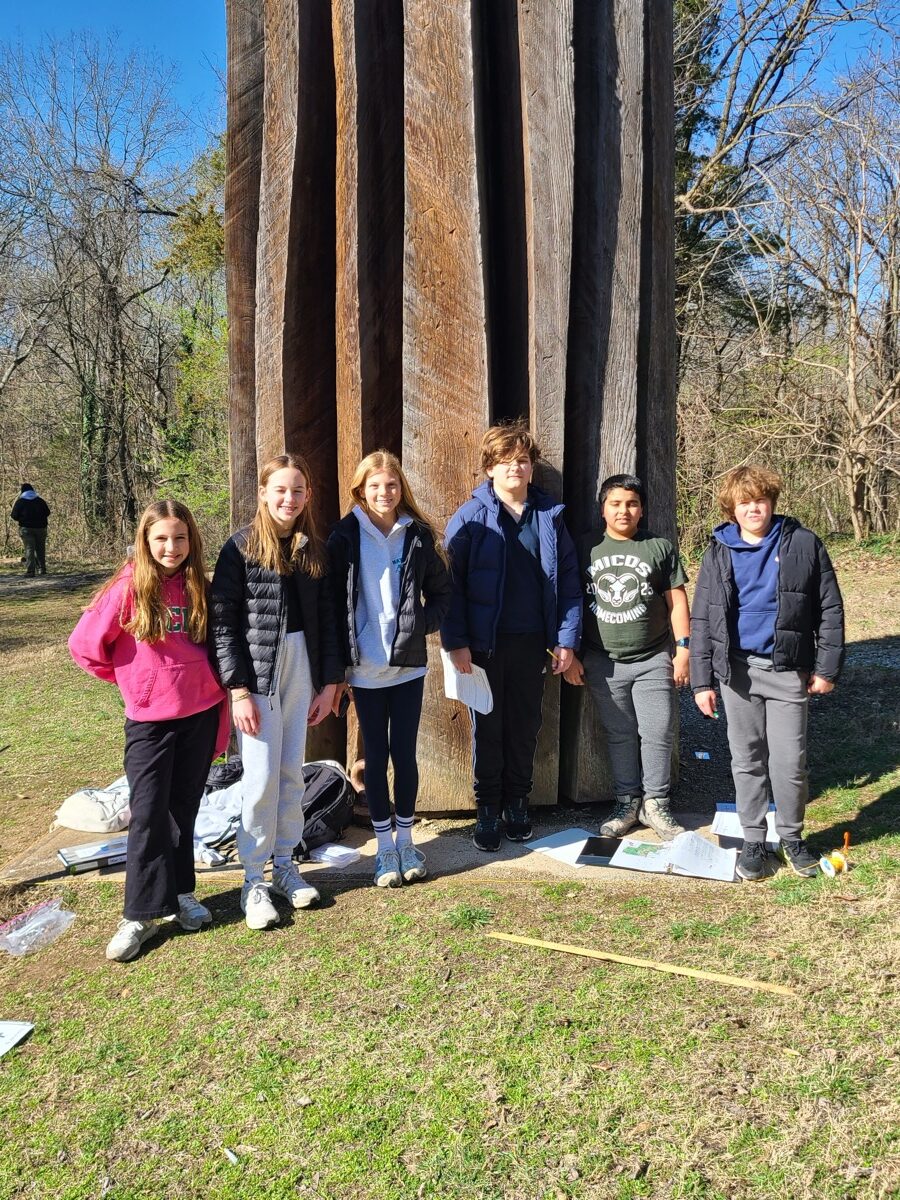

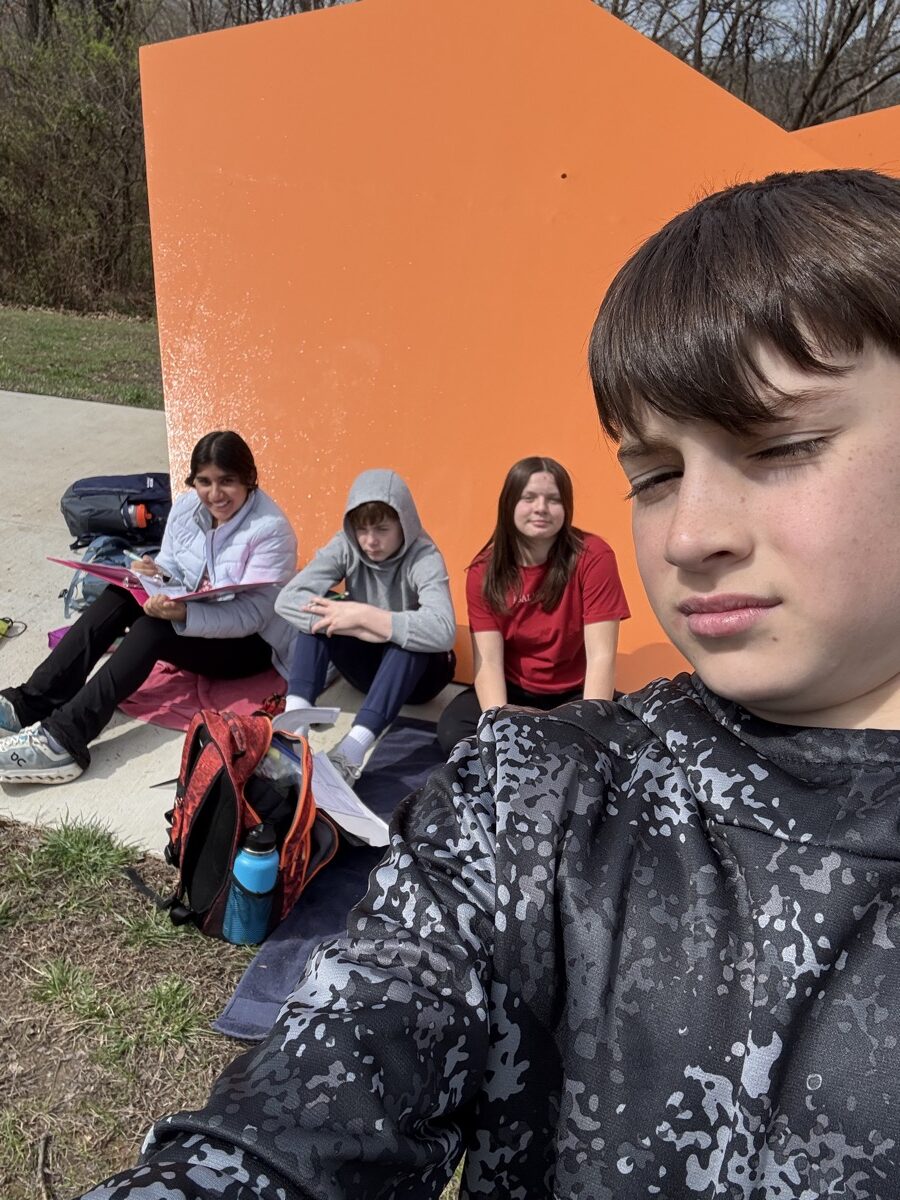
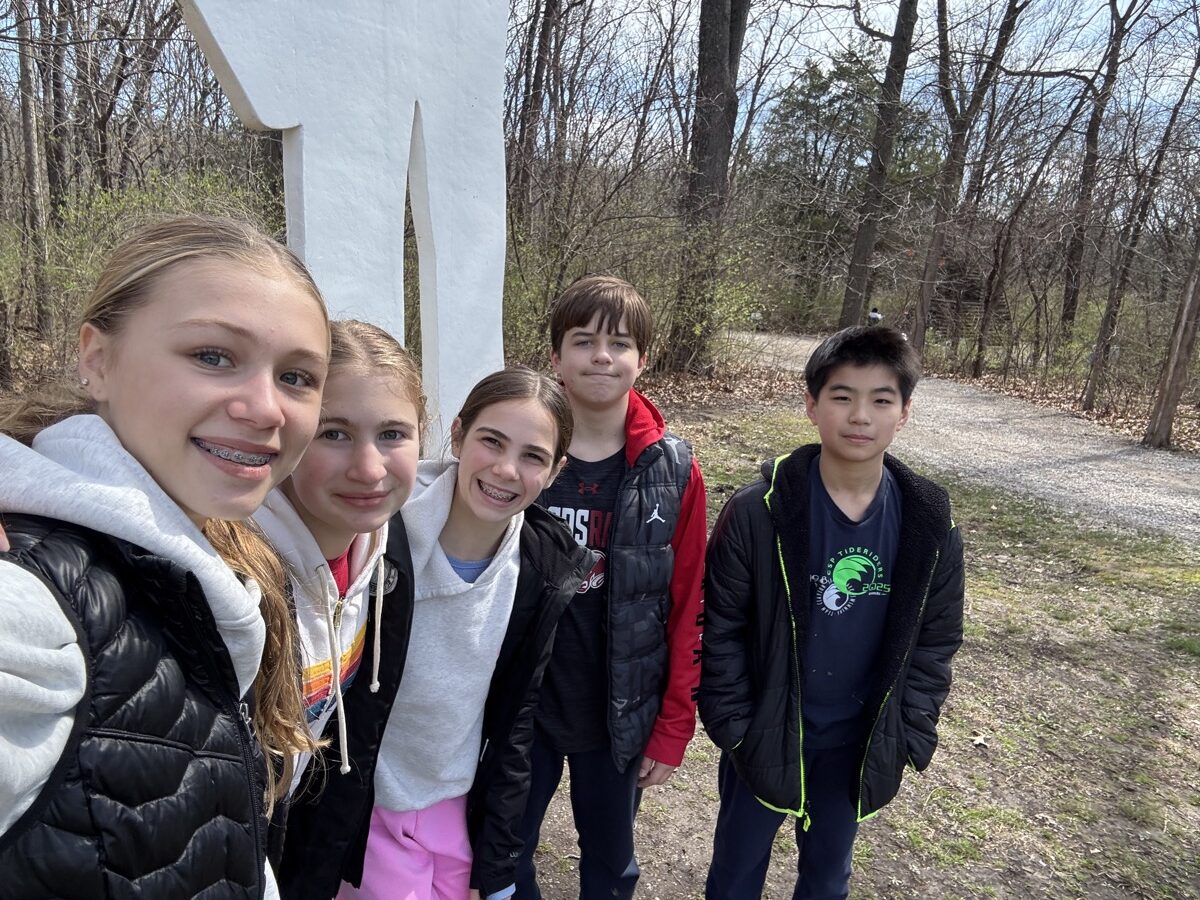
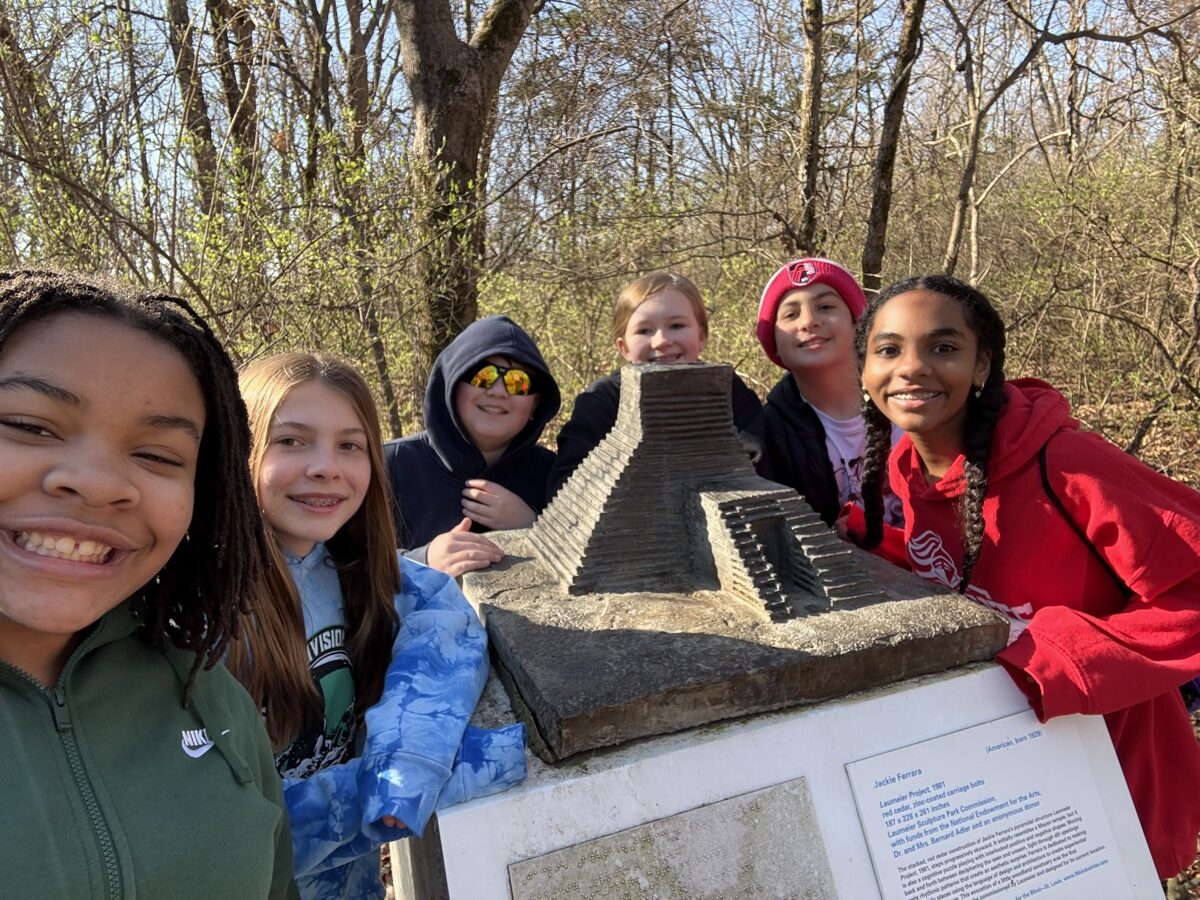
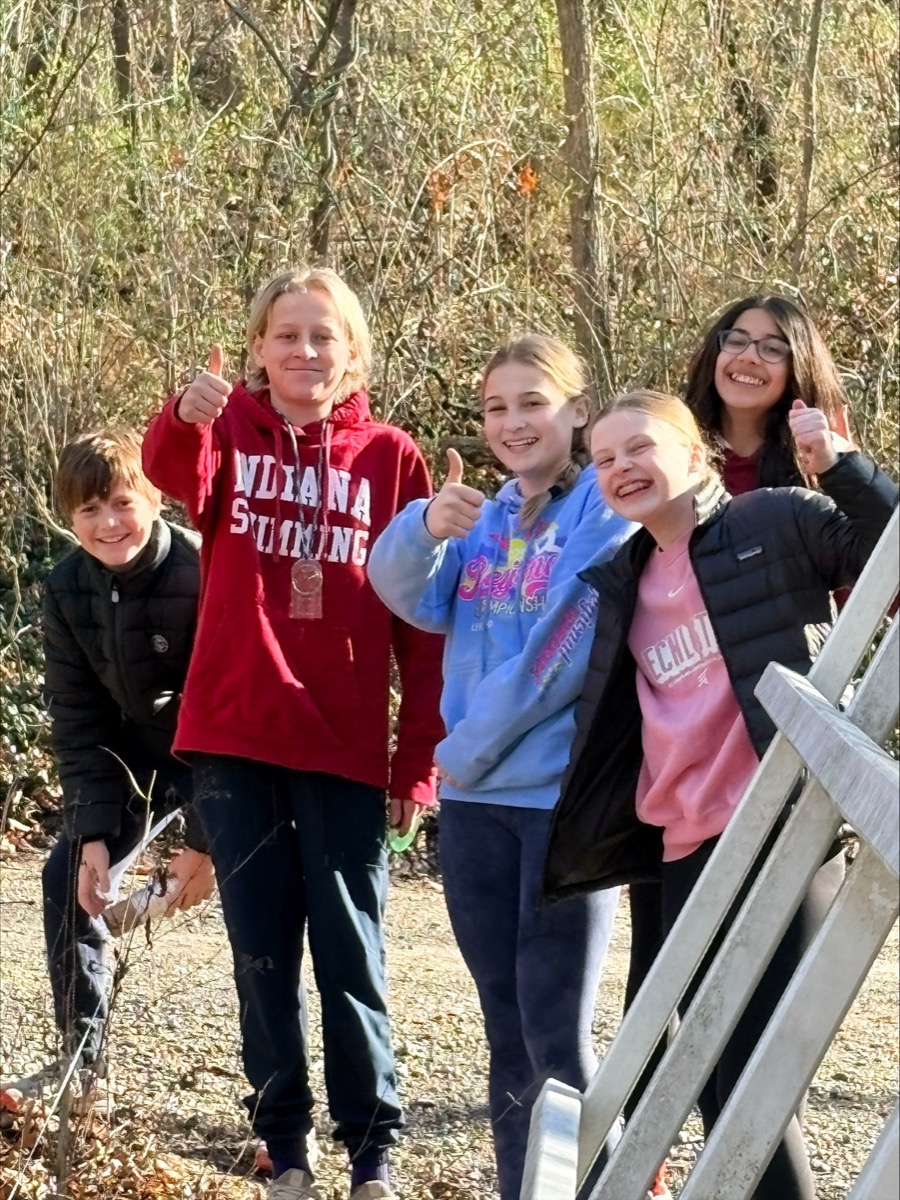
After their work in the field, students returned to campus for a full day of working in teams to construct their models, develop their story, and create a video presentation. For the storytelling, students were invited to suspend what they know about the sculpture and ask their imaginations:
- Where did it come from?
- What is its purpose?
- Why was it made?
- How was it made?
- What is it supposed to do?
- How are people supposed to interact with it?
- Did it come from the past, the future?
- Does your story happen in the past, the present, or the future?
Their stories included rising events or significant action, a turning point, and a resolution, noting where the ah-ha moments and growth points occurred. Once stories were complete, students recorded themselves on video, sharing their stories and models of their chosen sculpture.


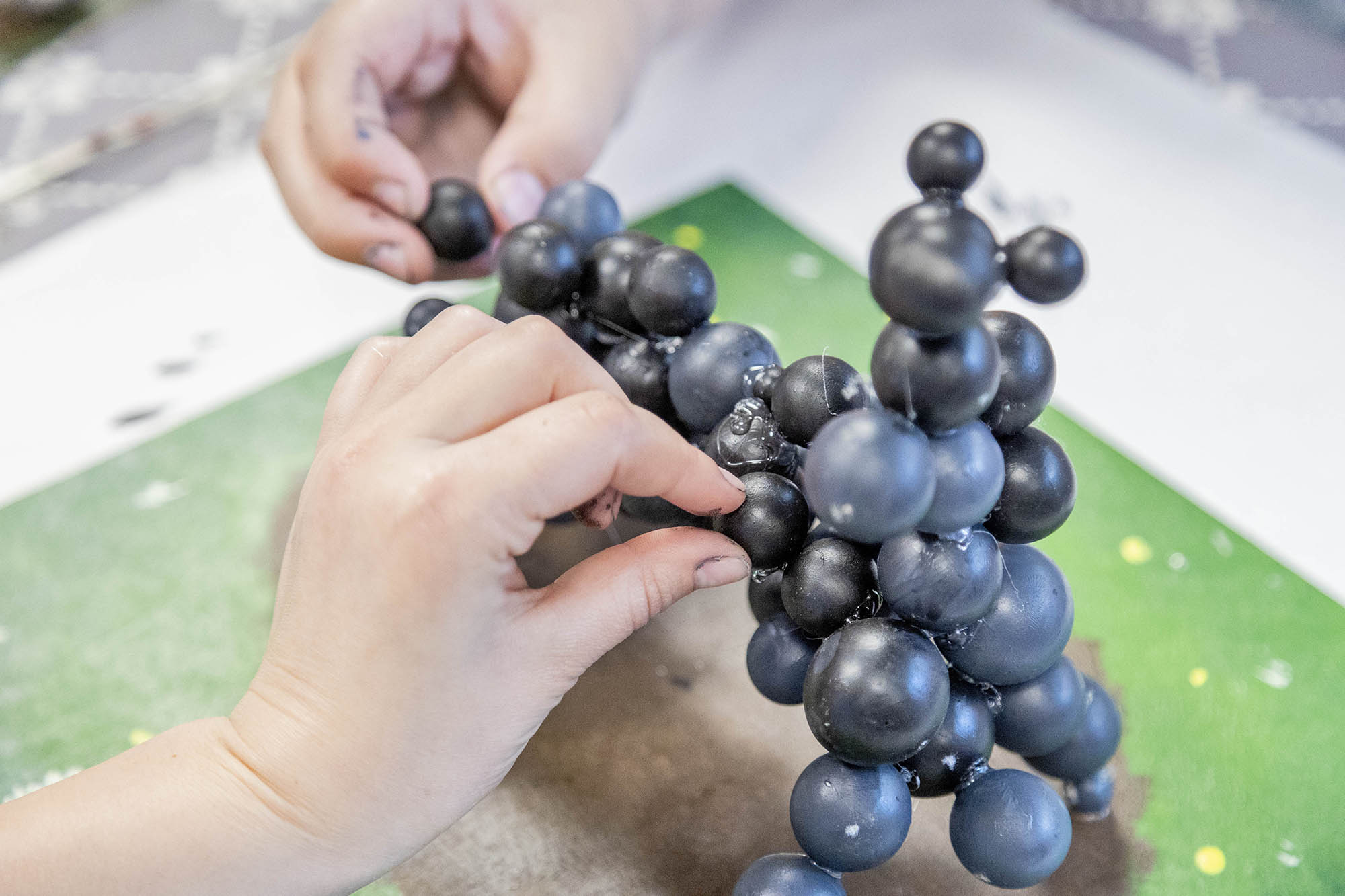
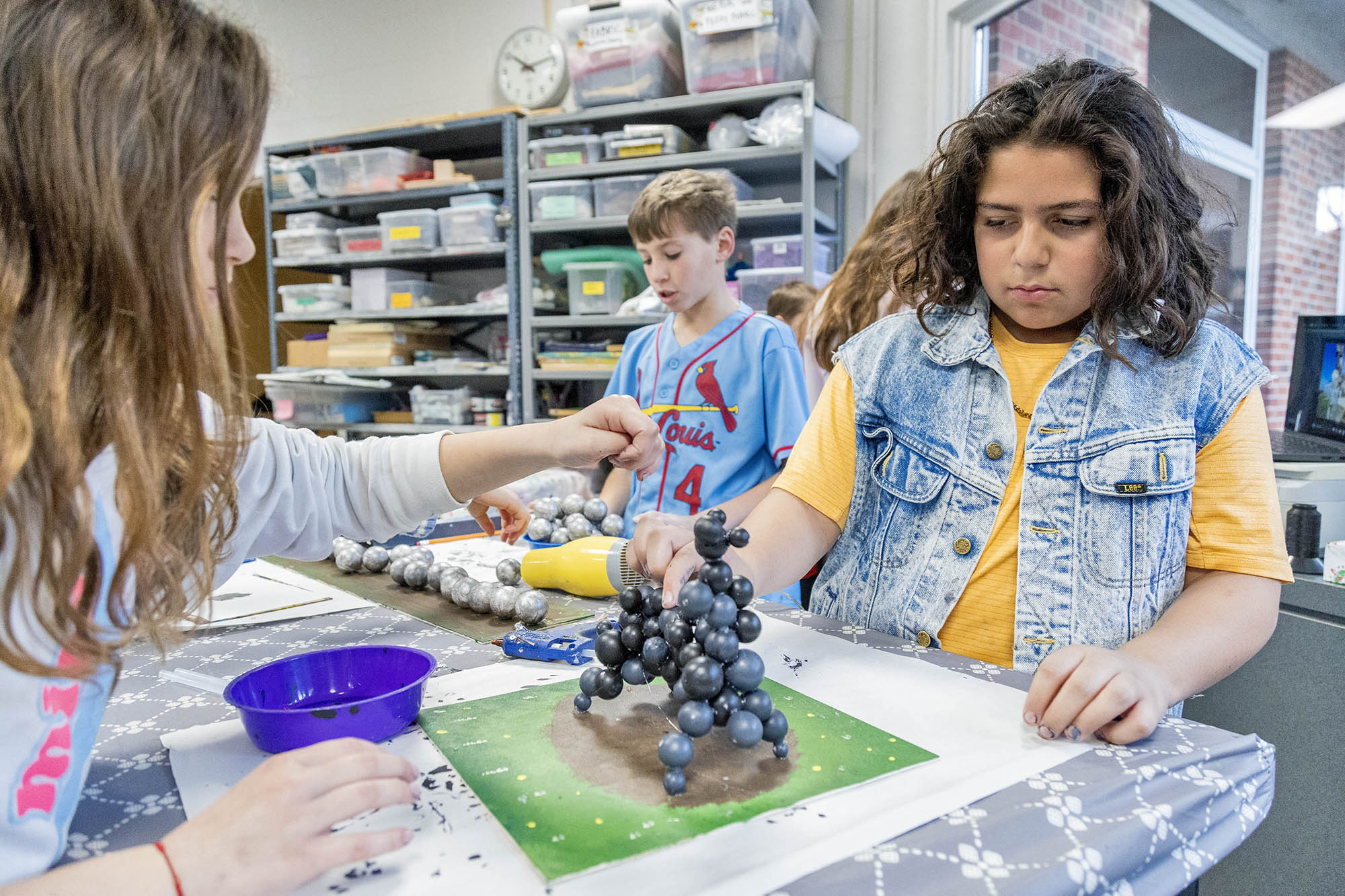
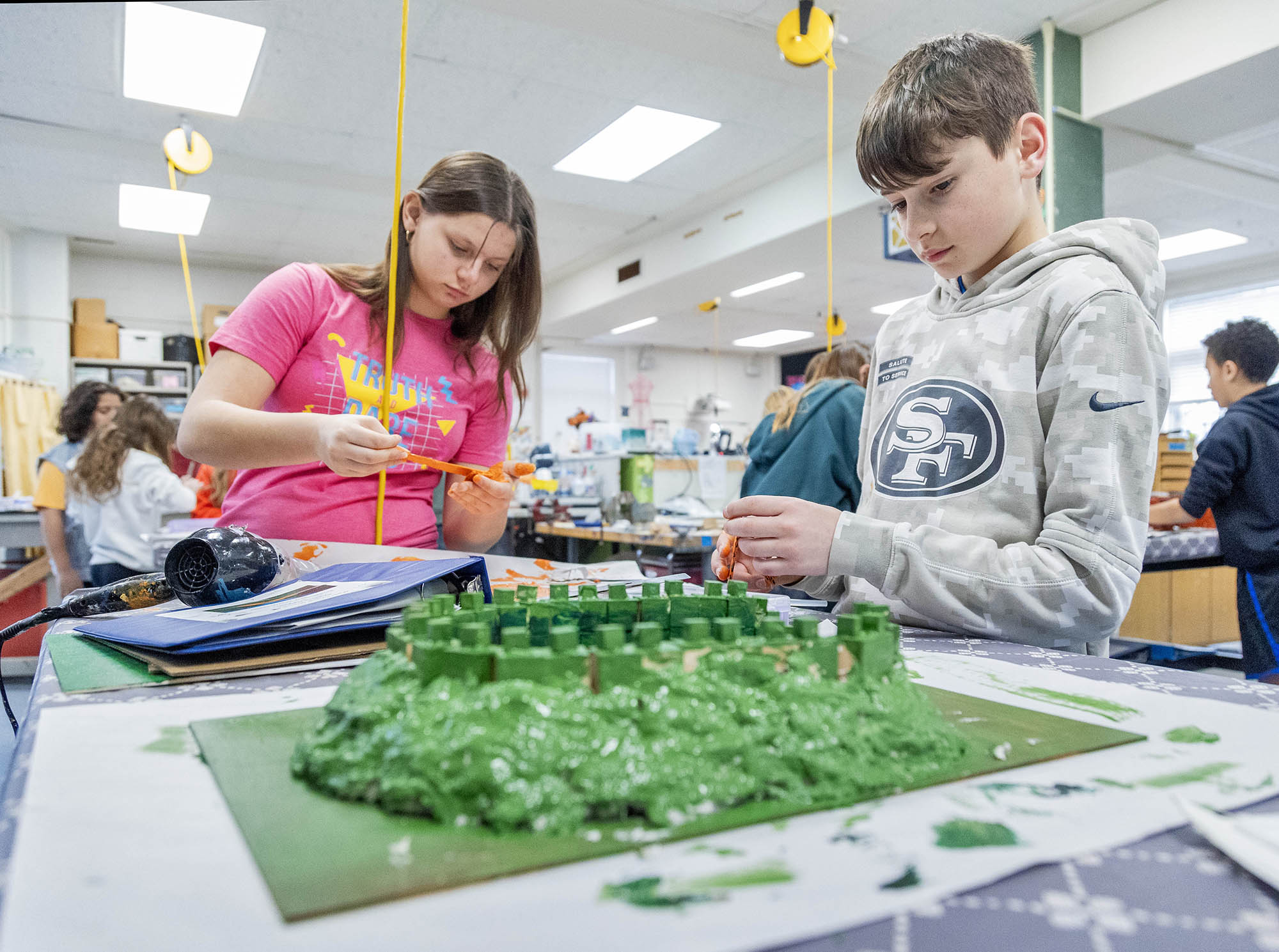
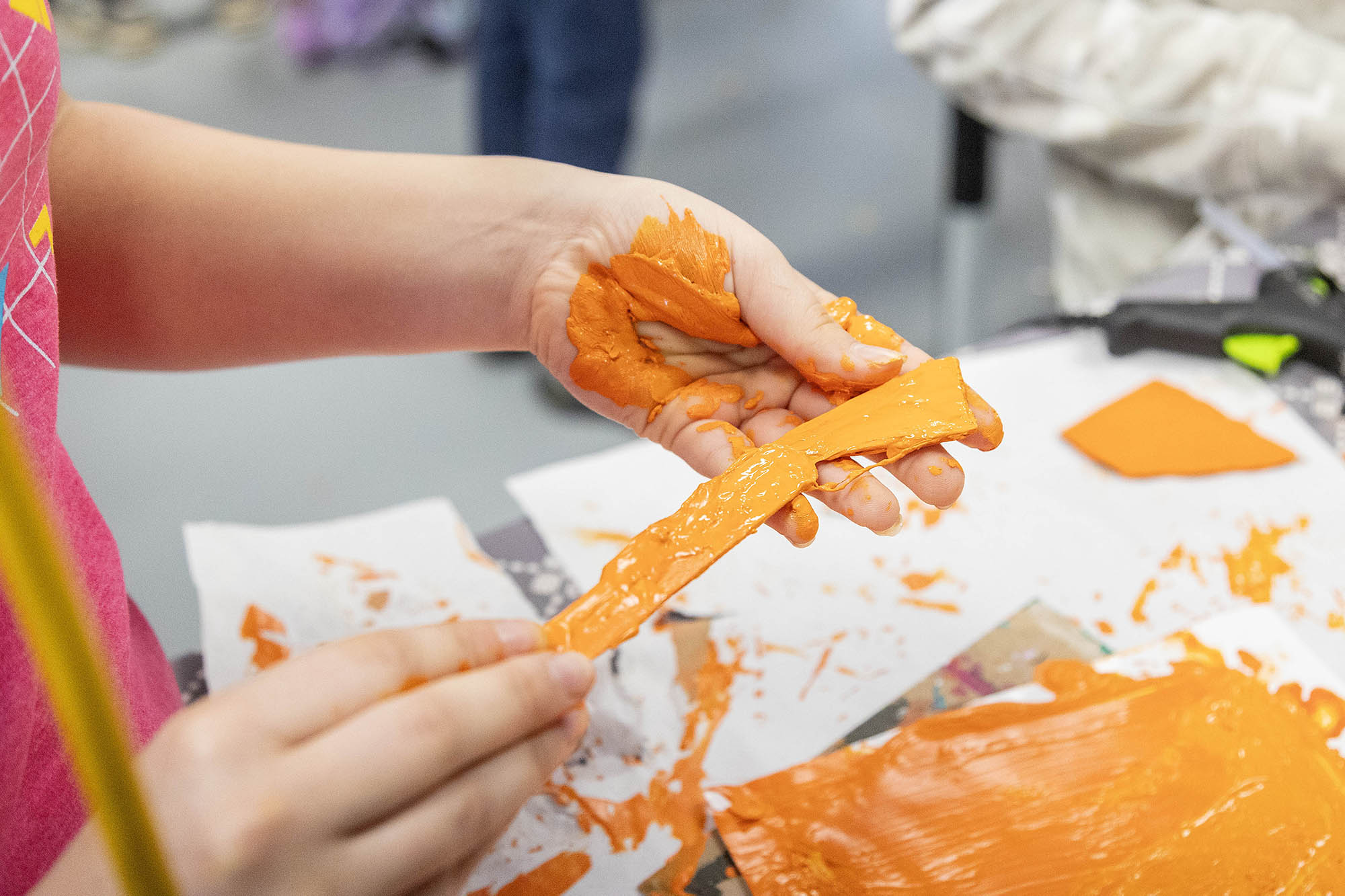
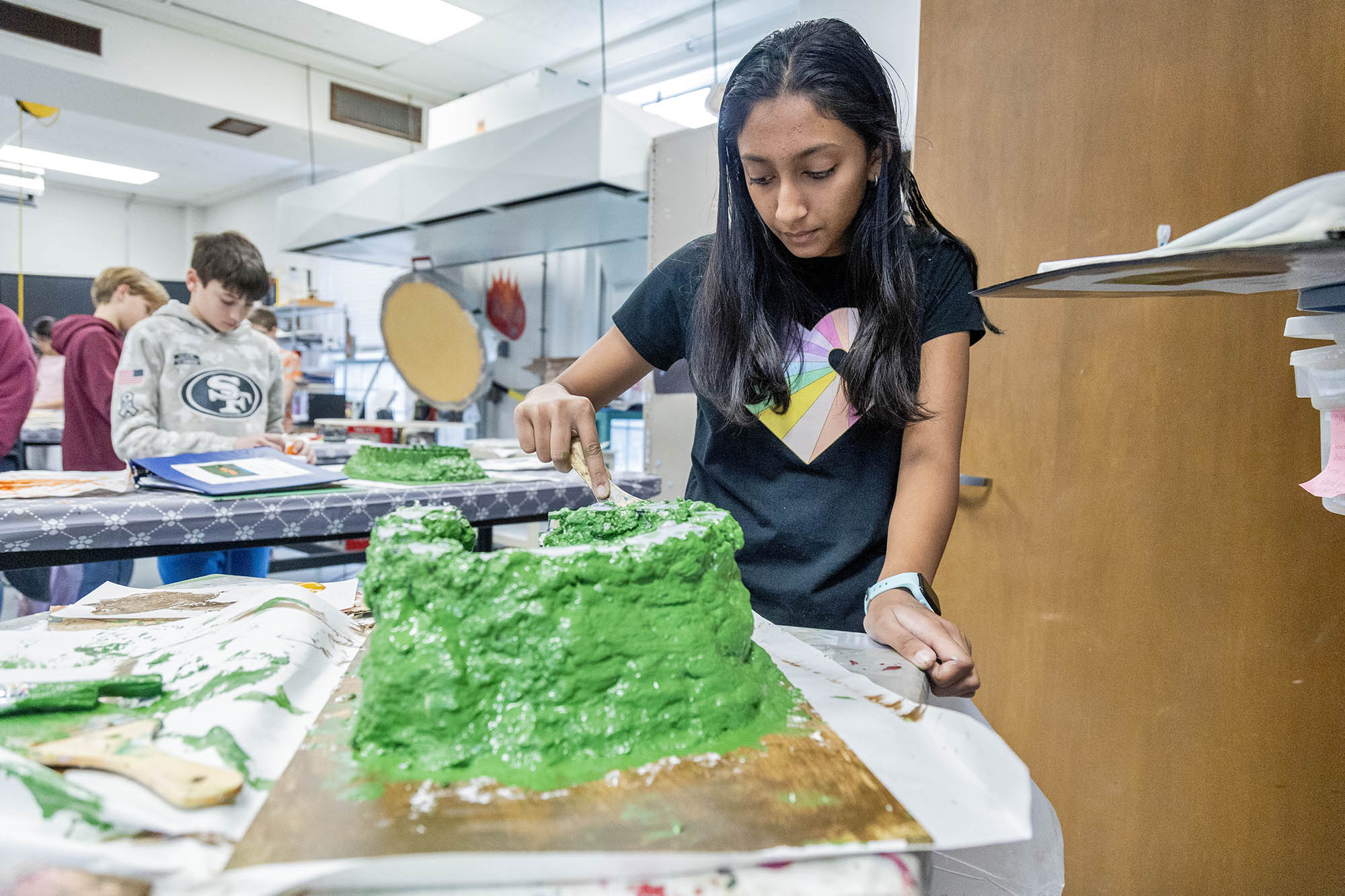
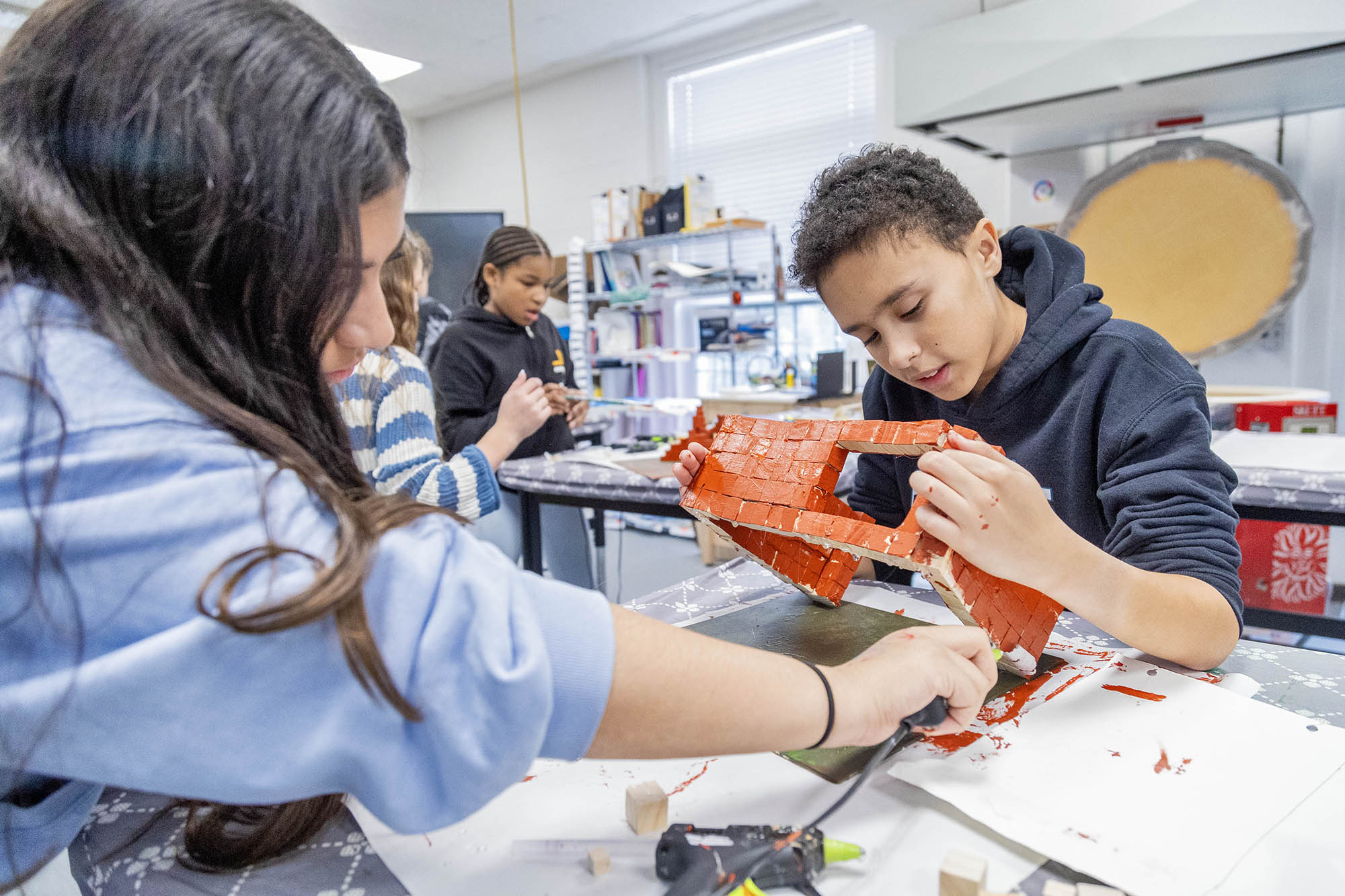
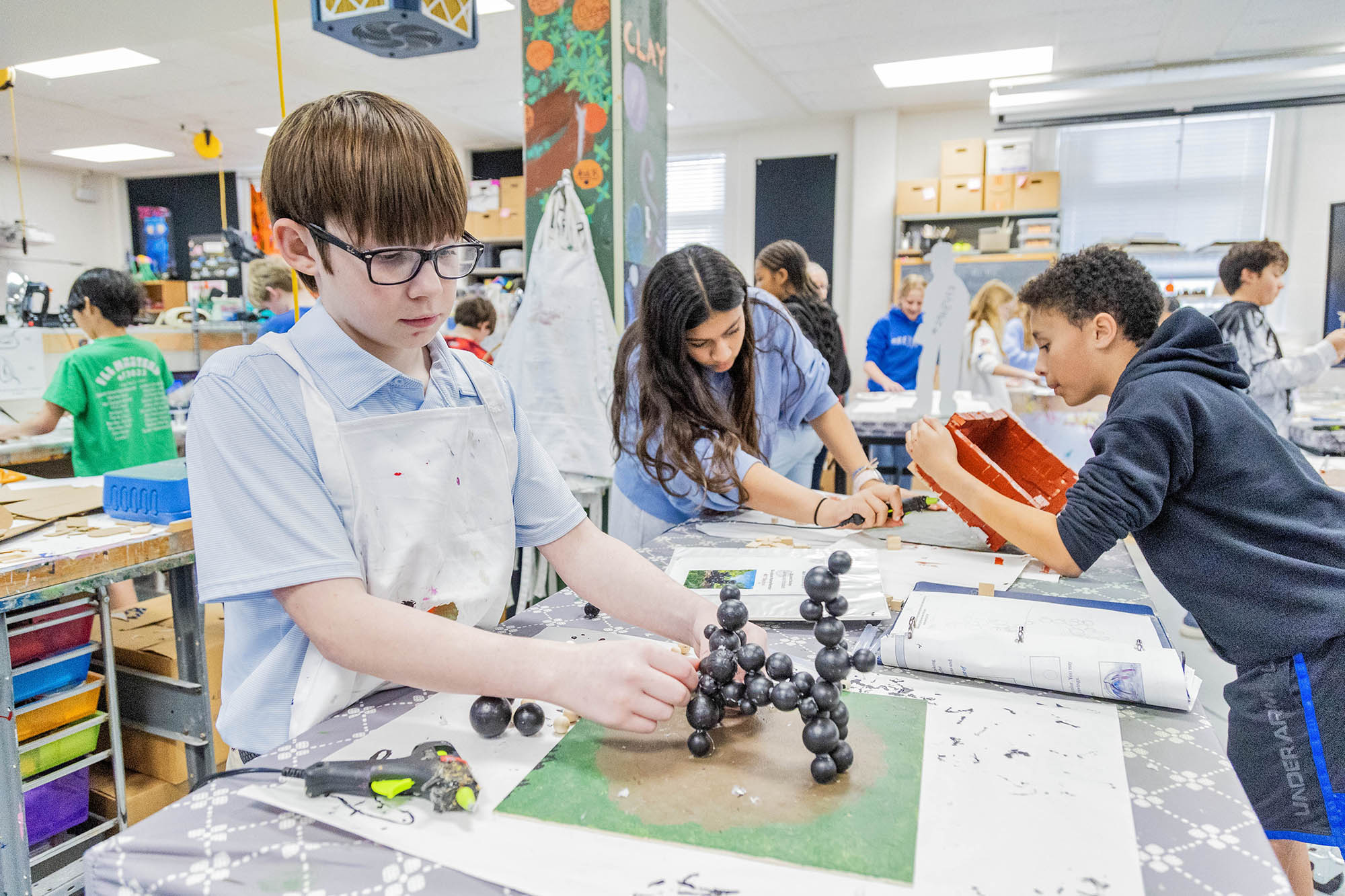
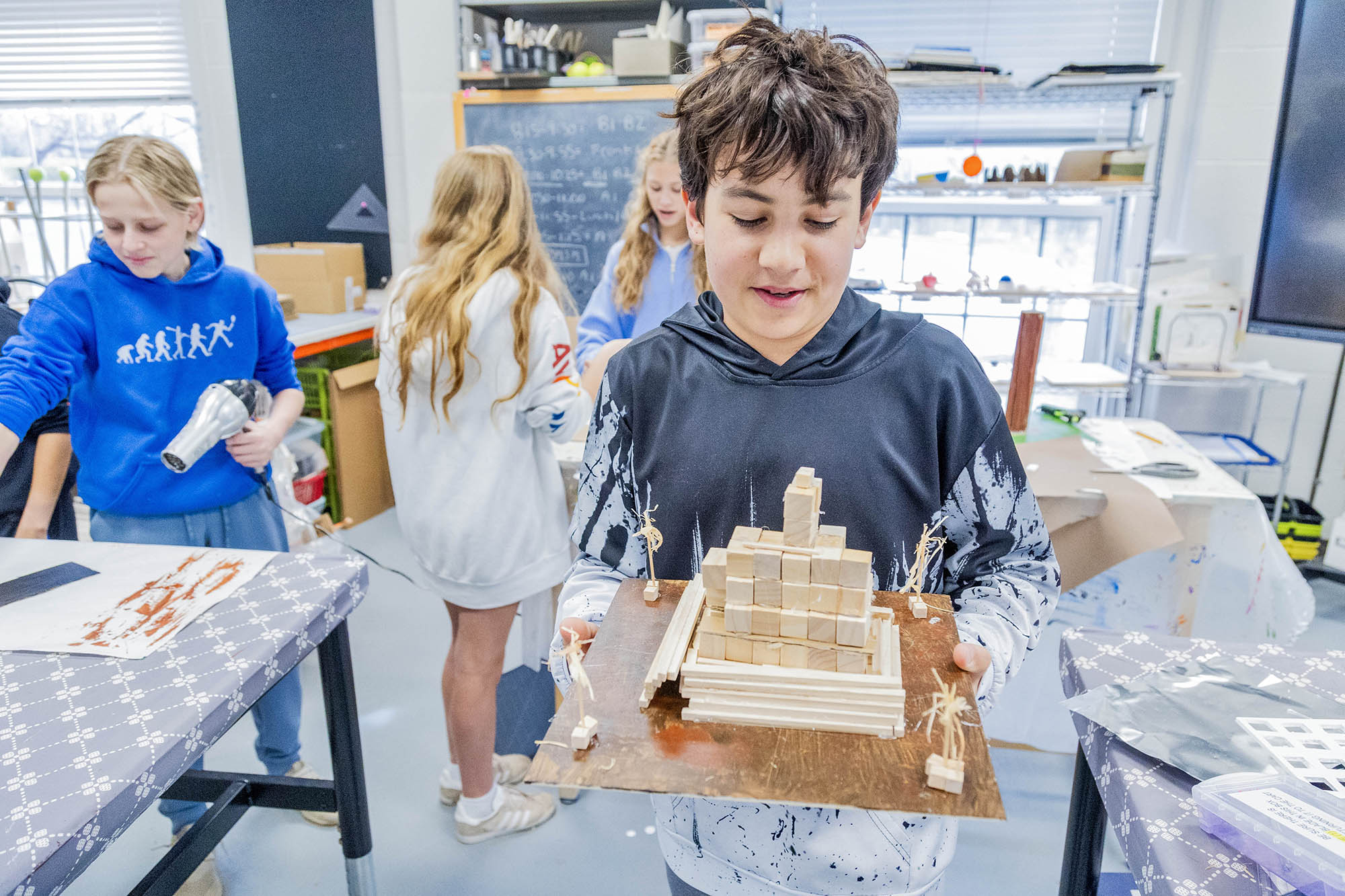
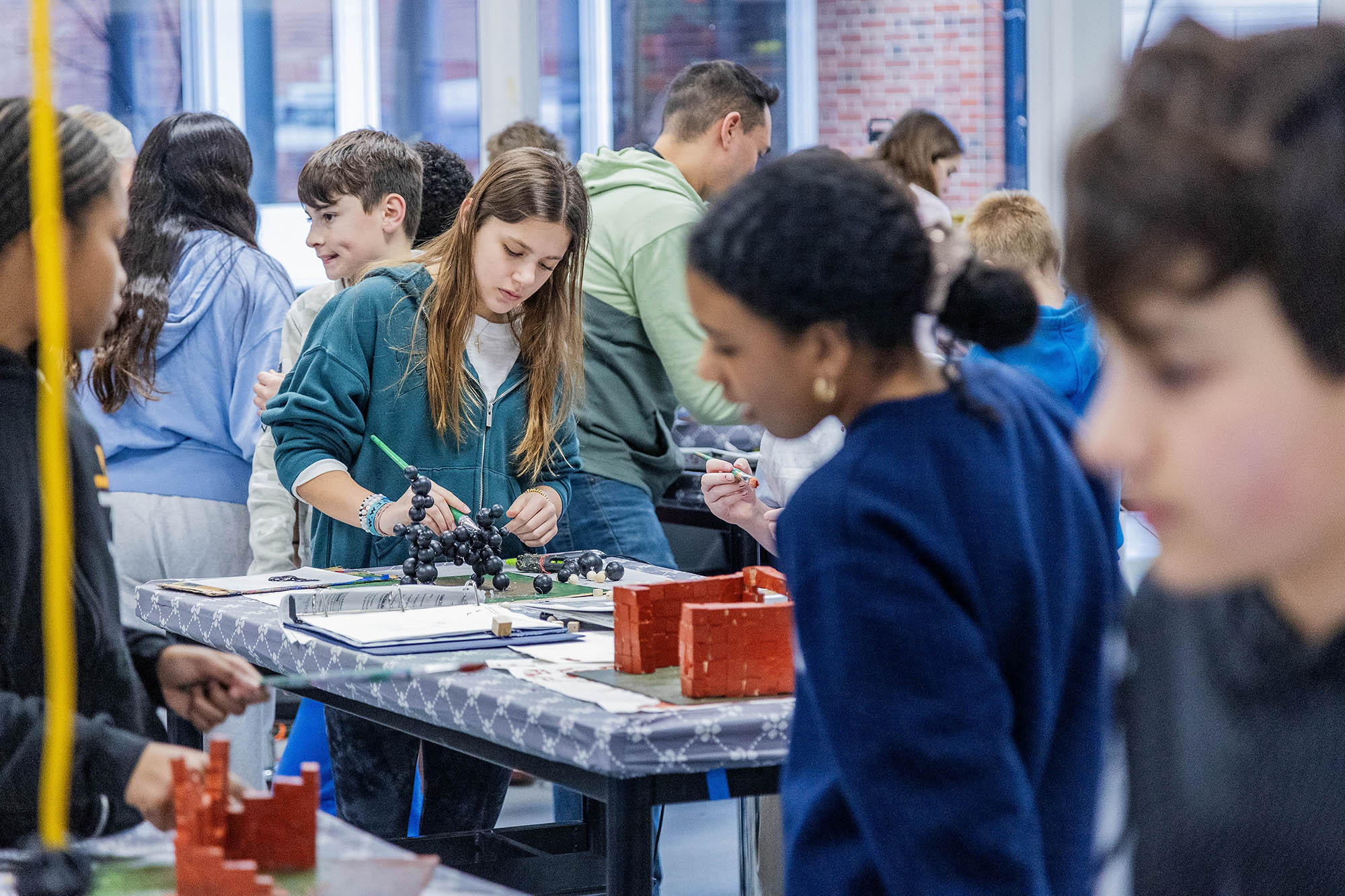
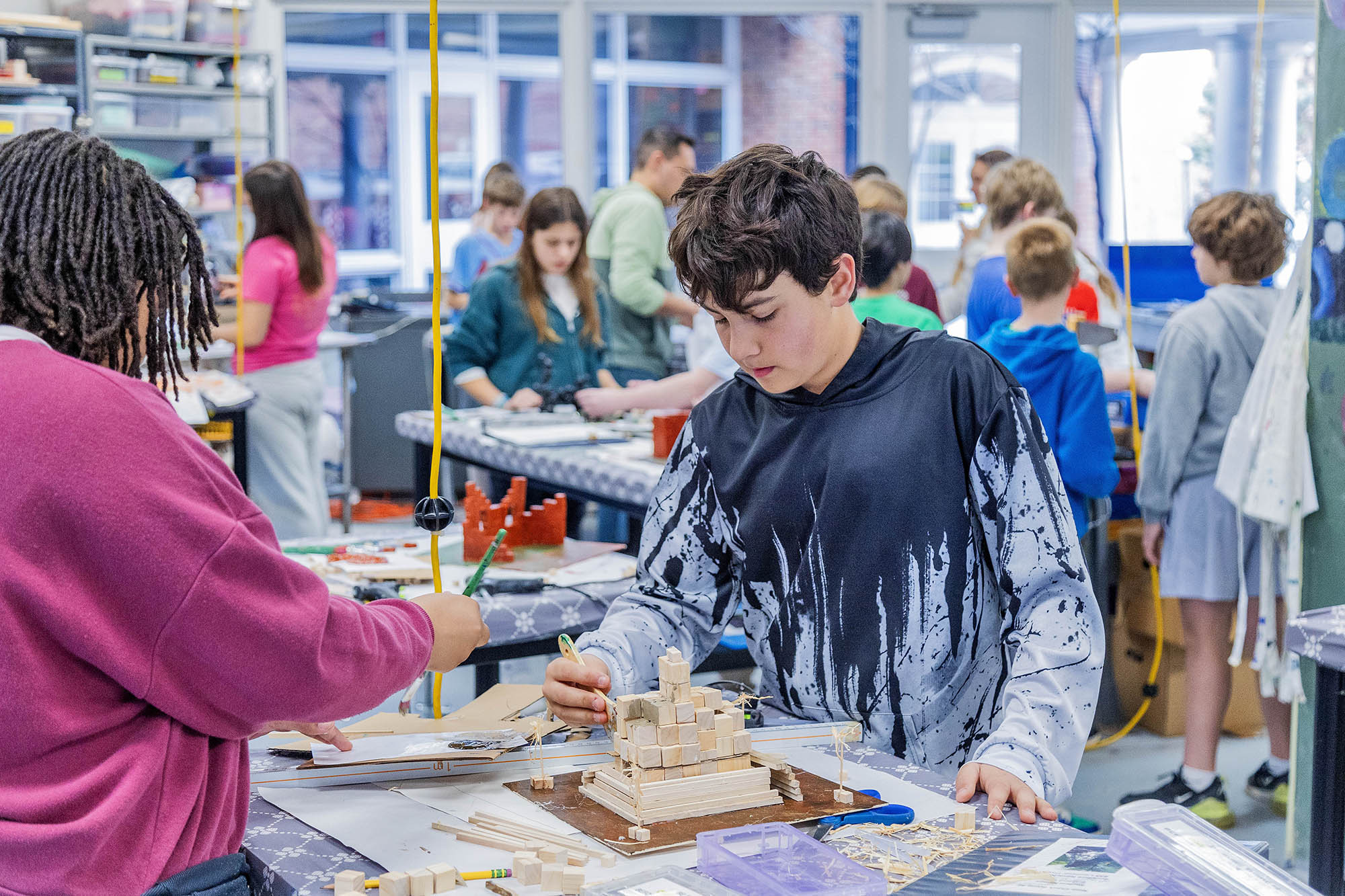
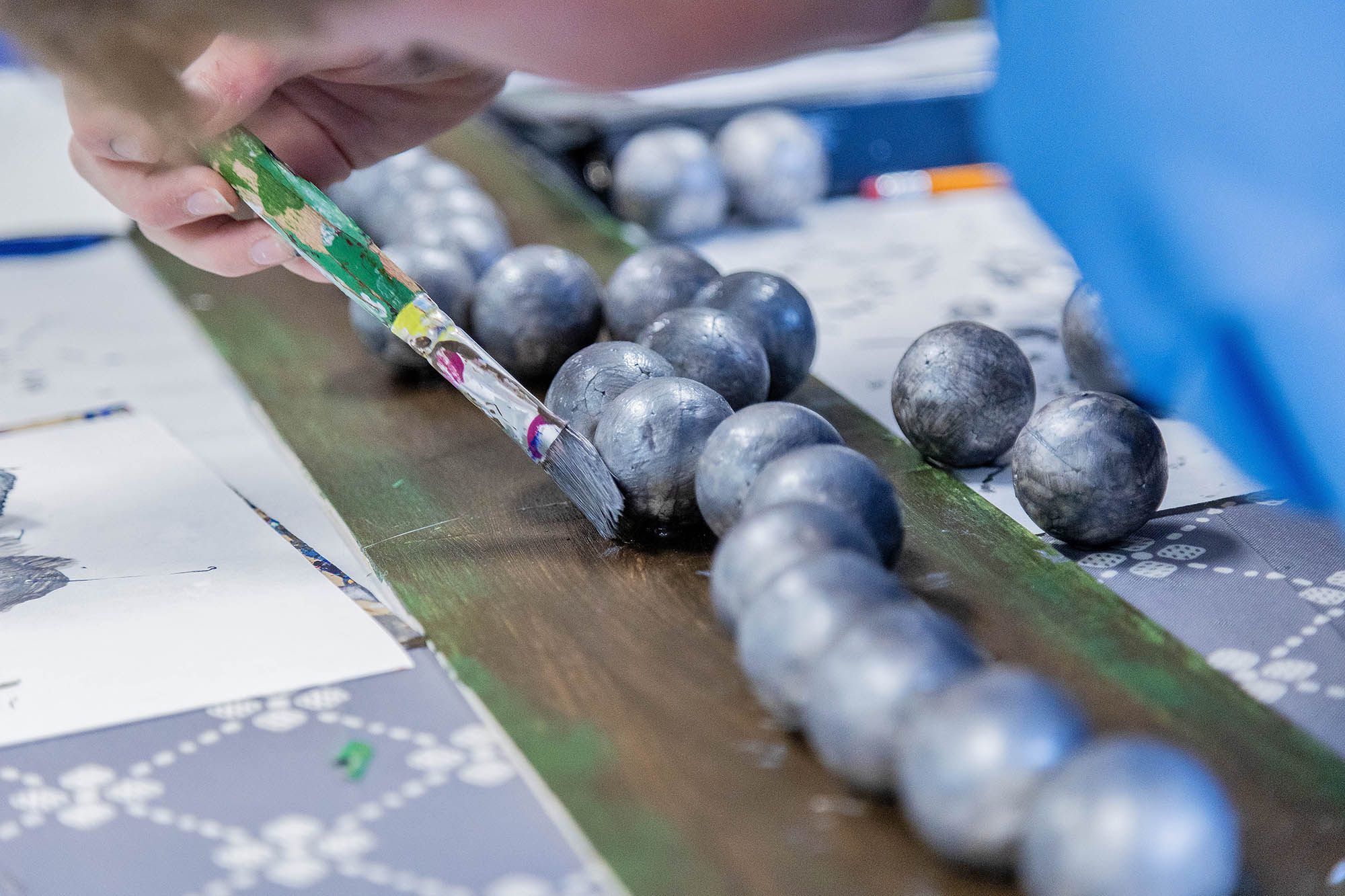
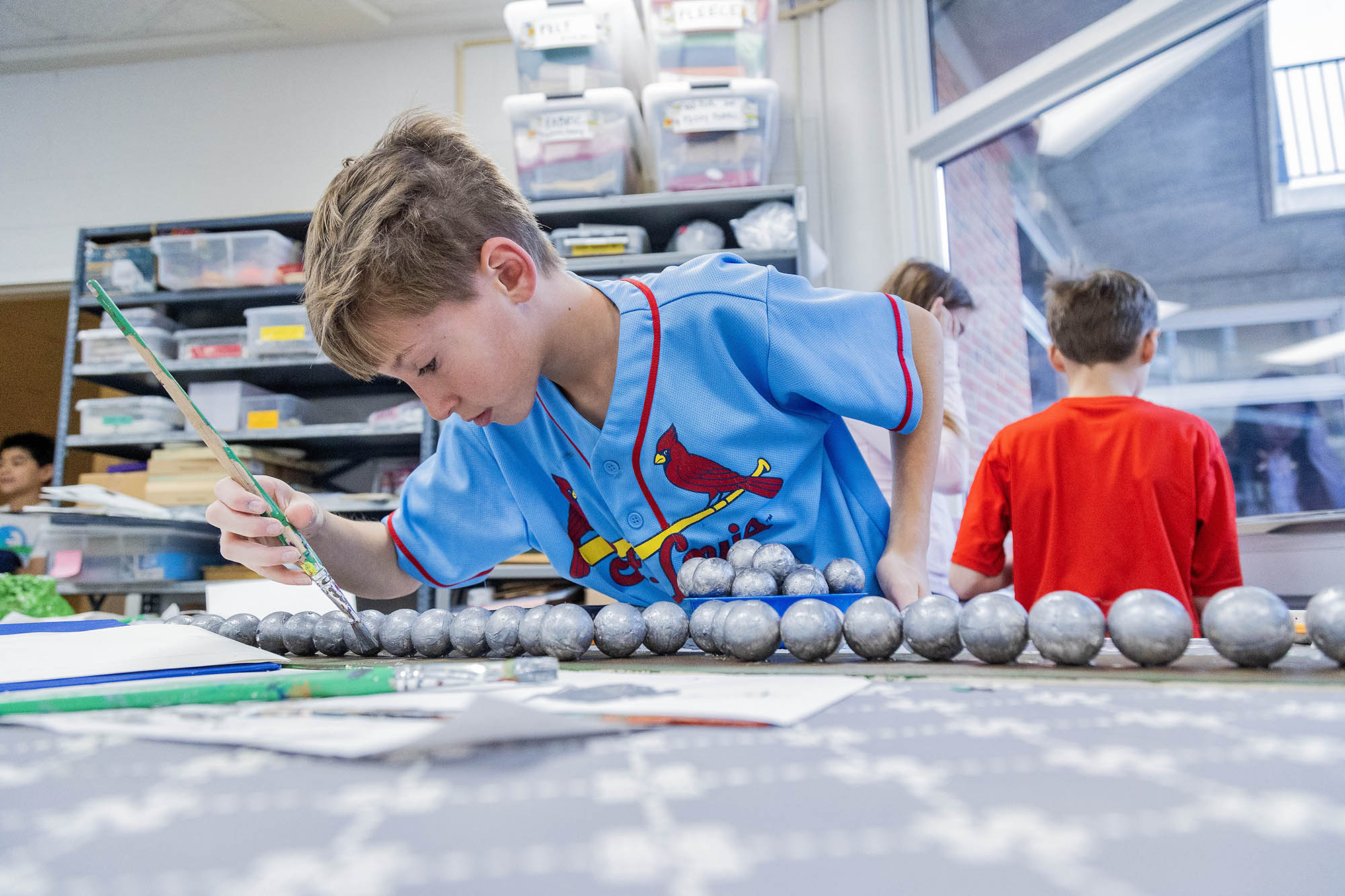
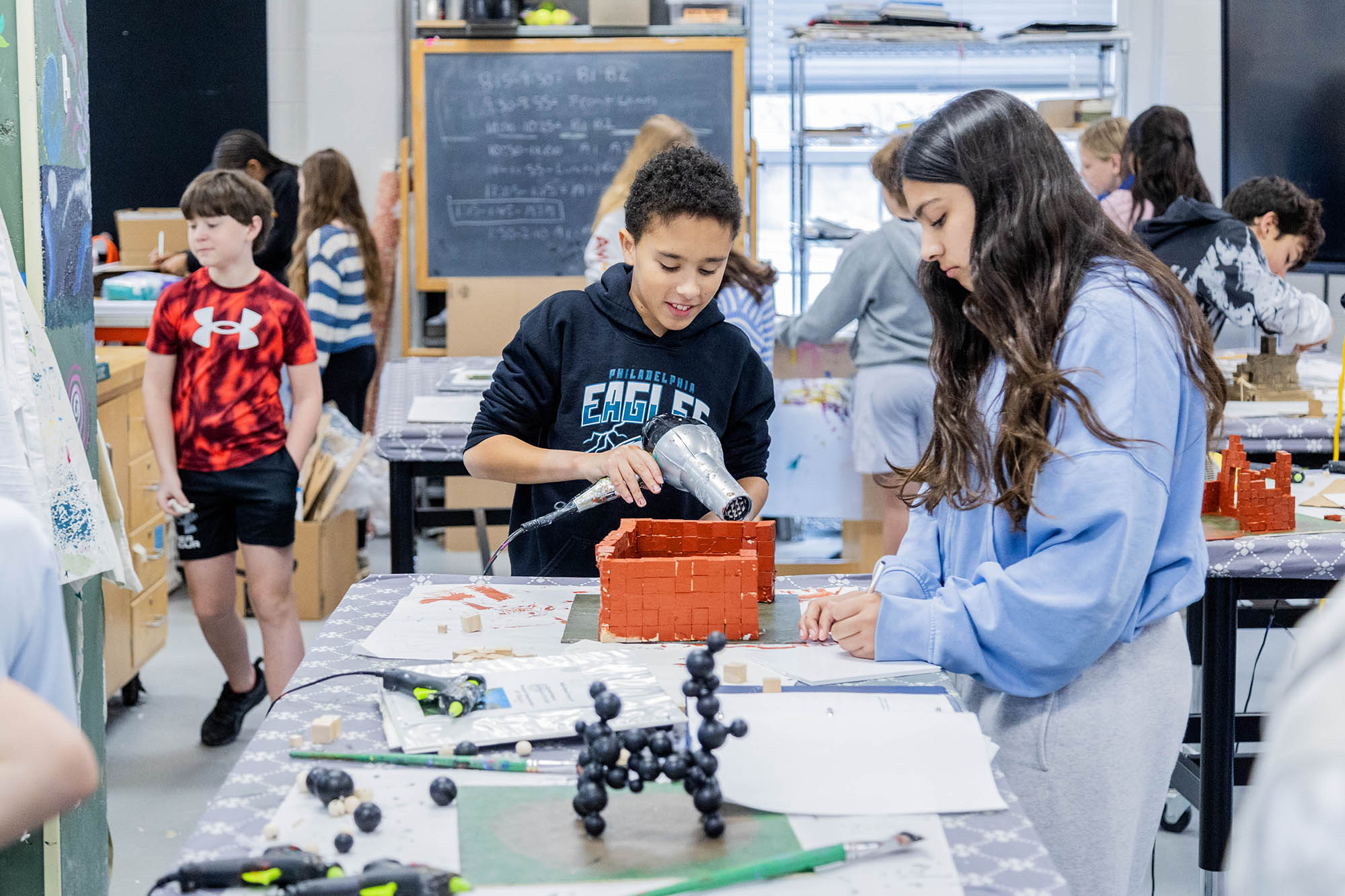
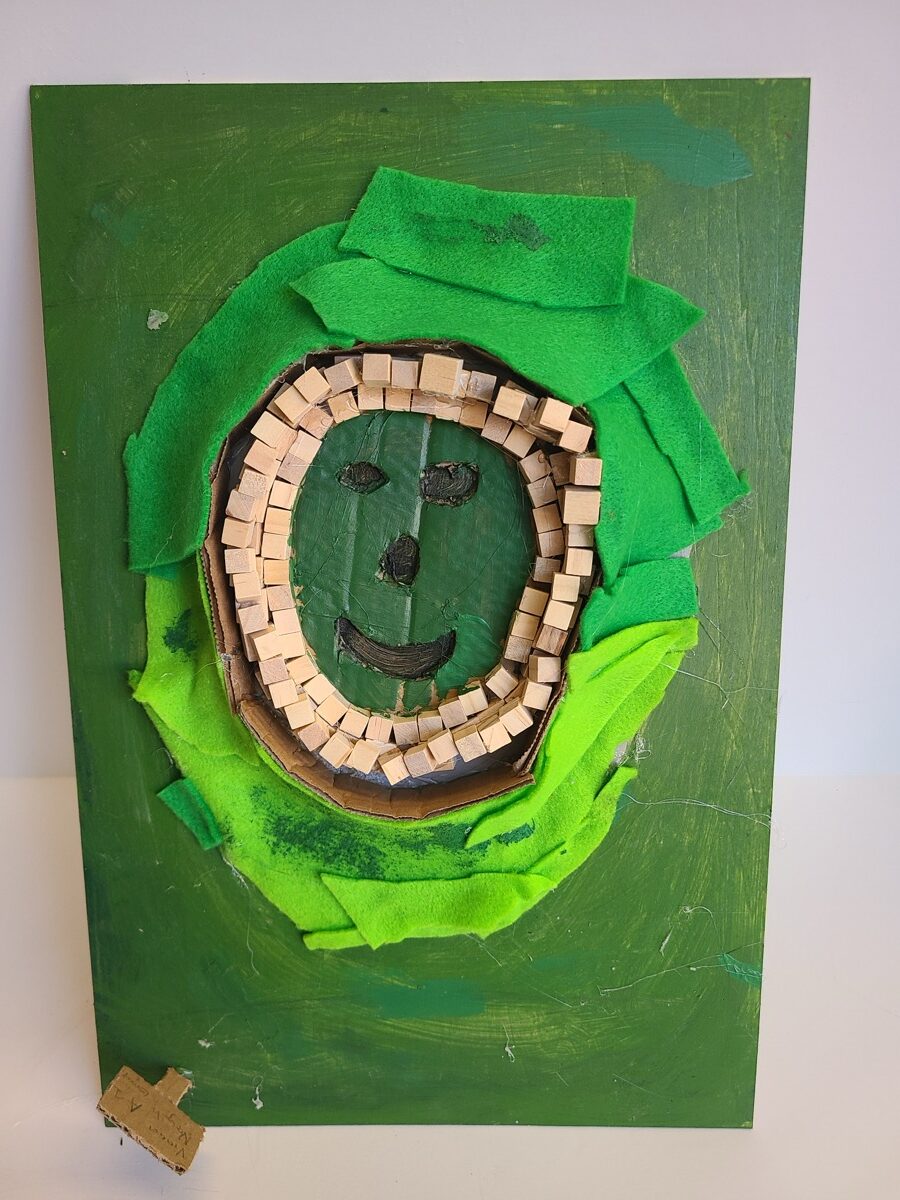
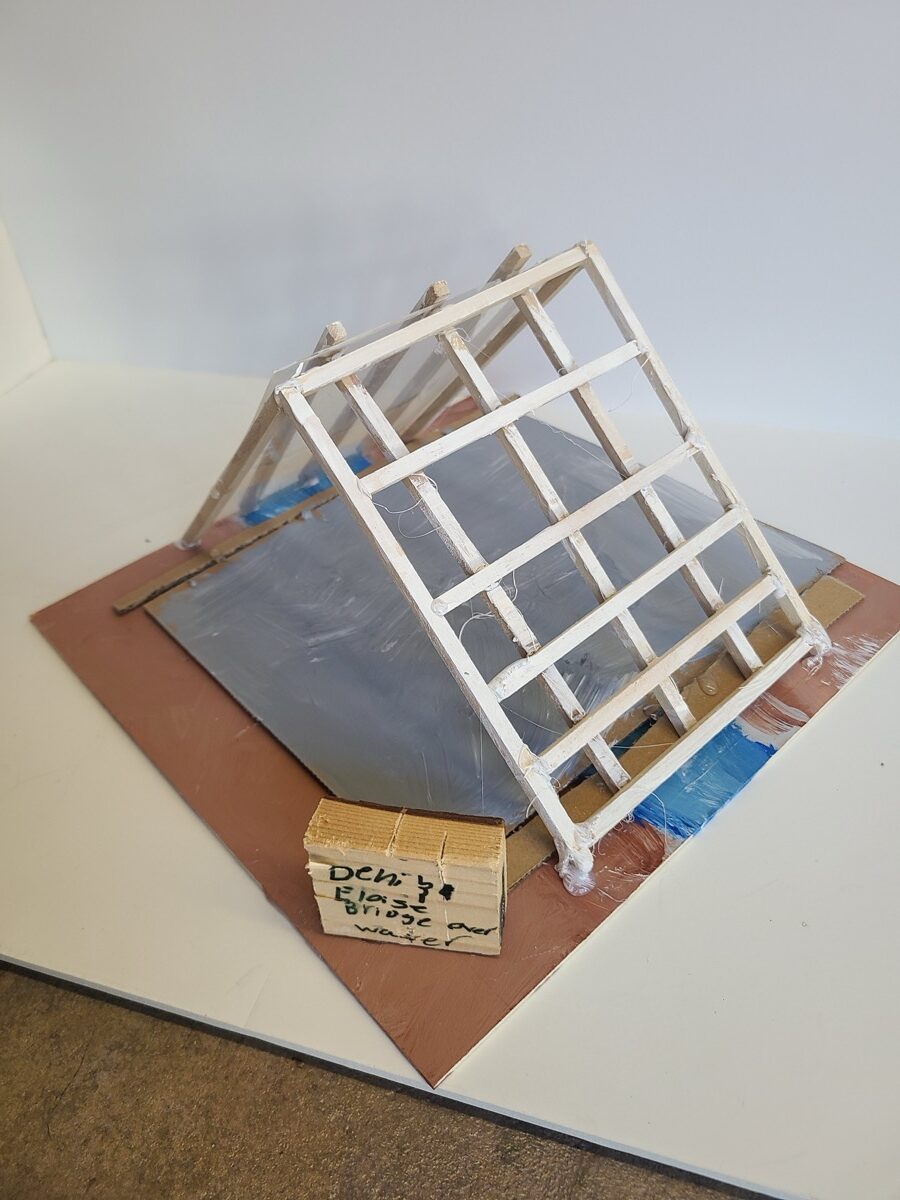
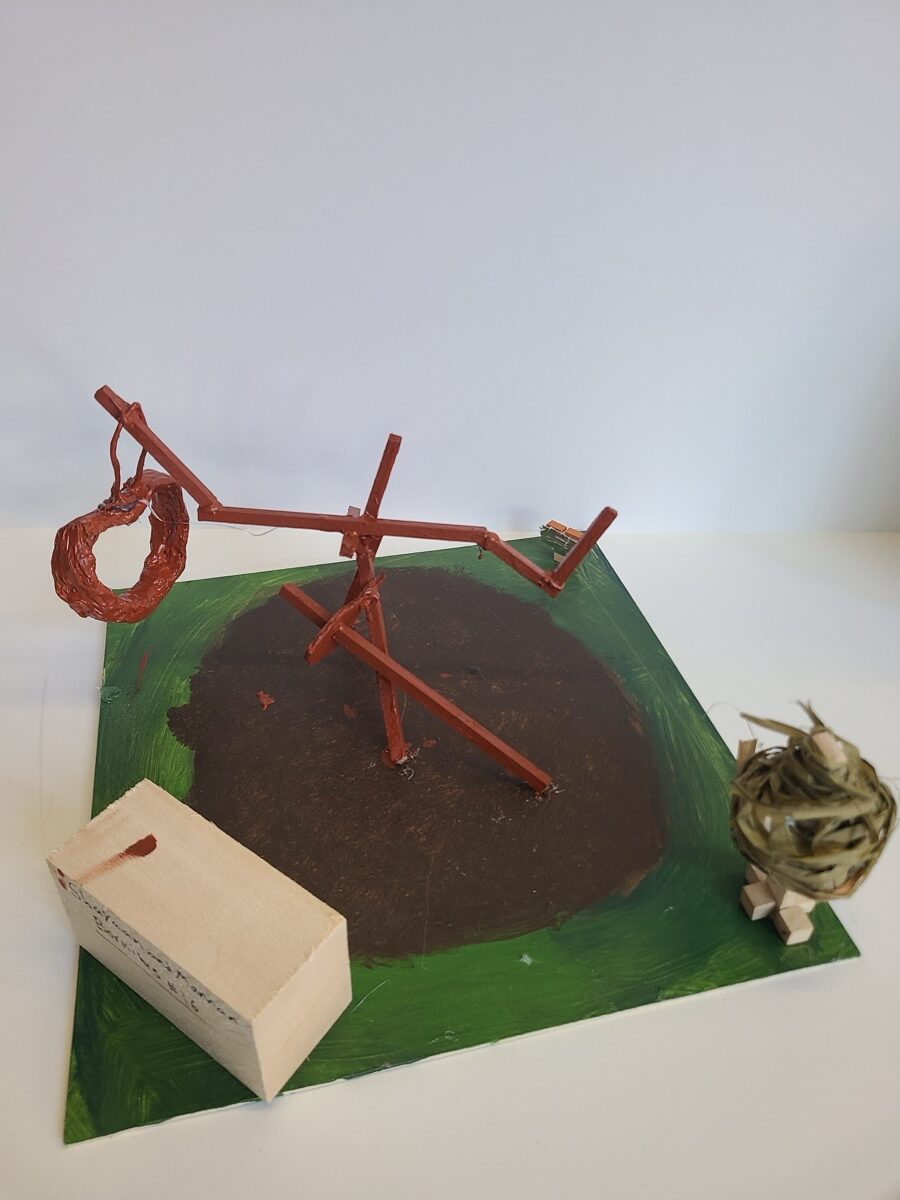
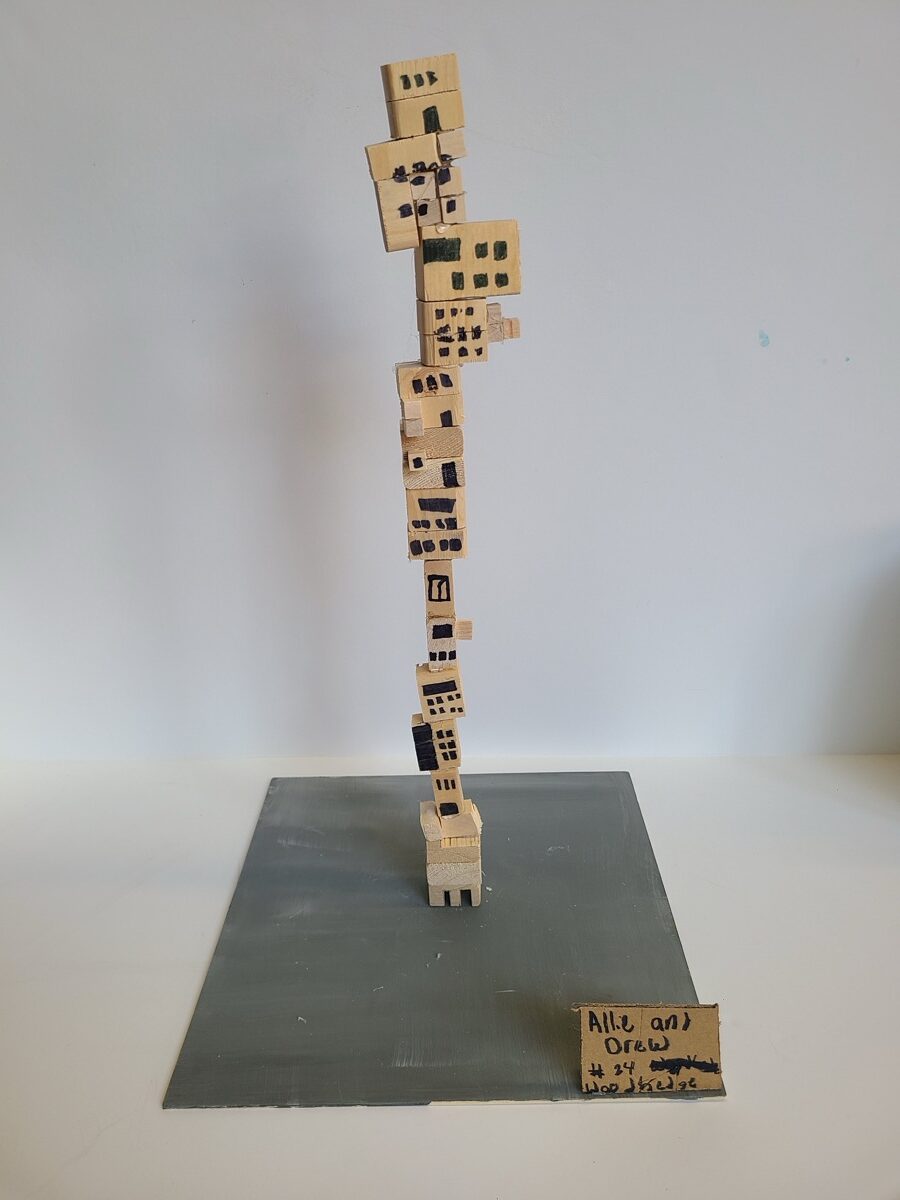
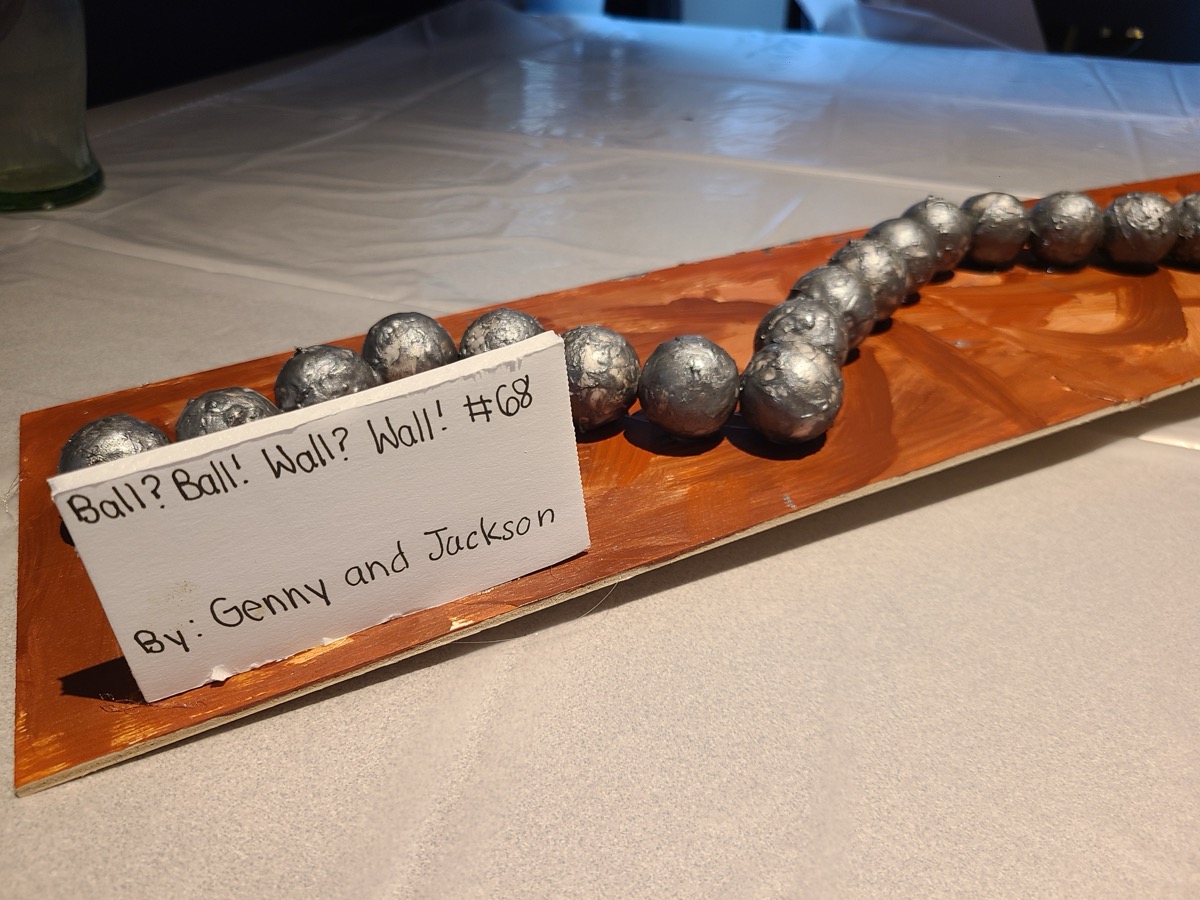
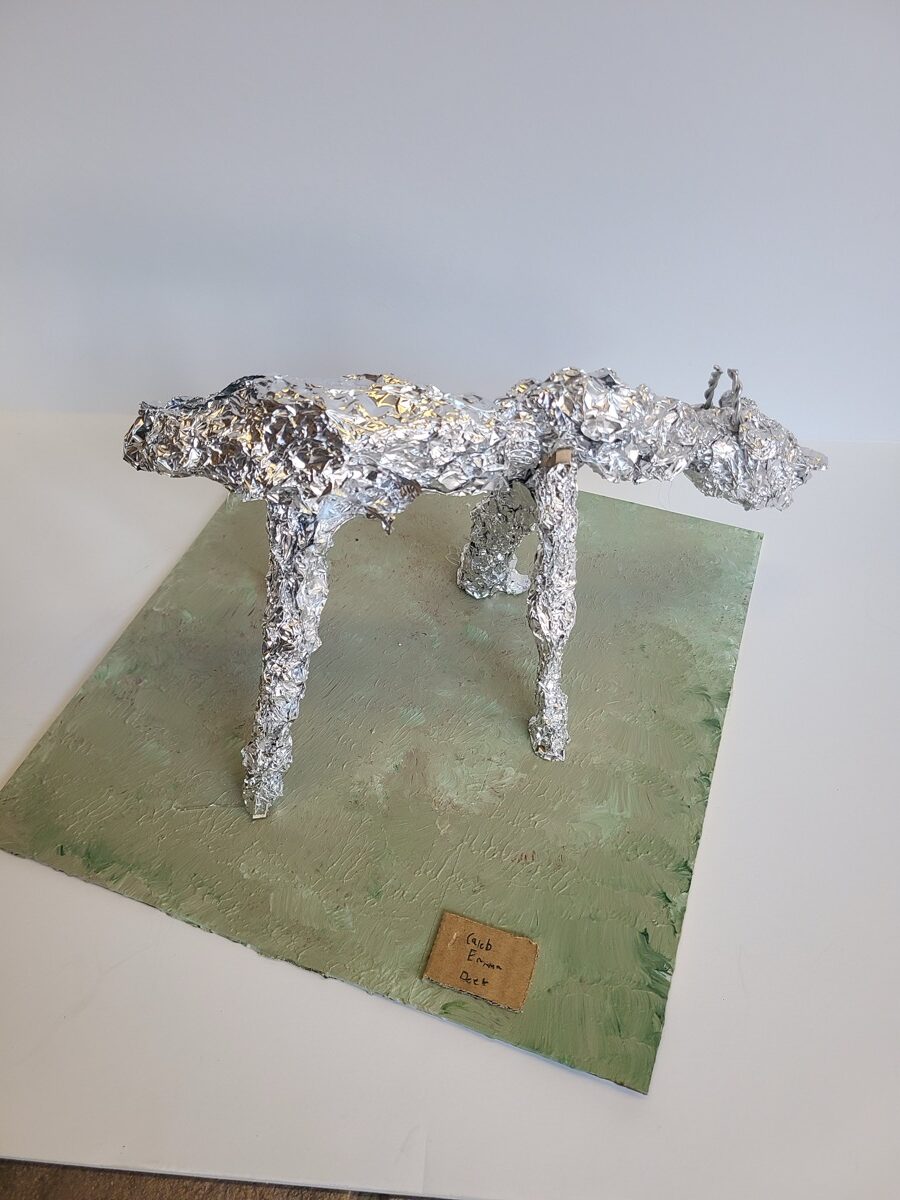
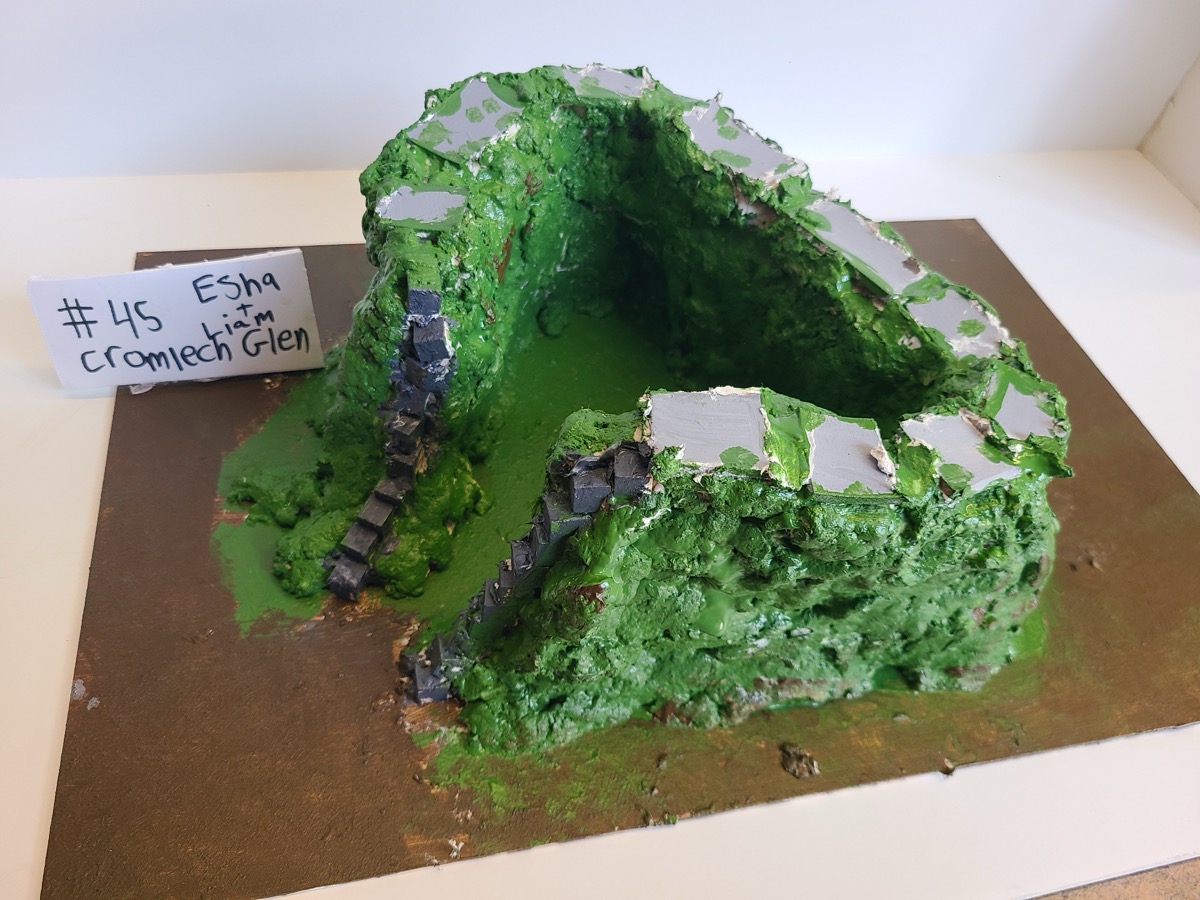
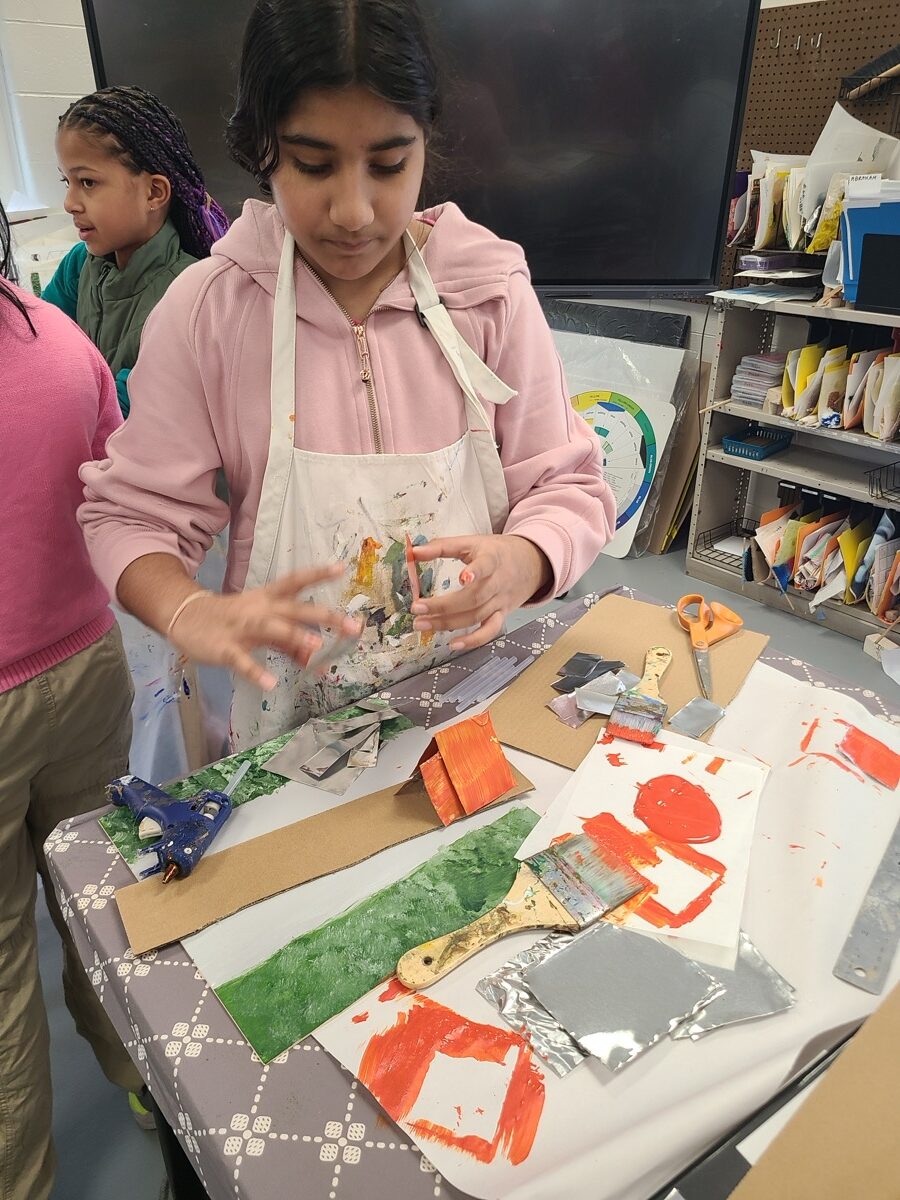
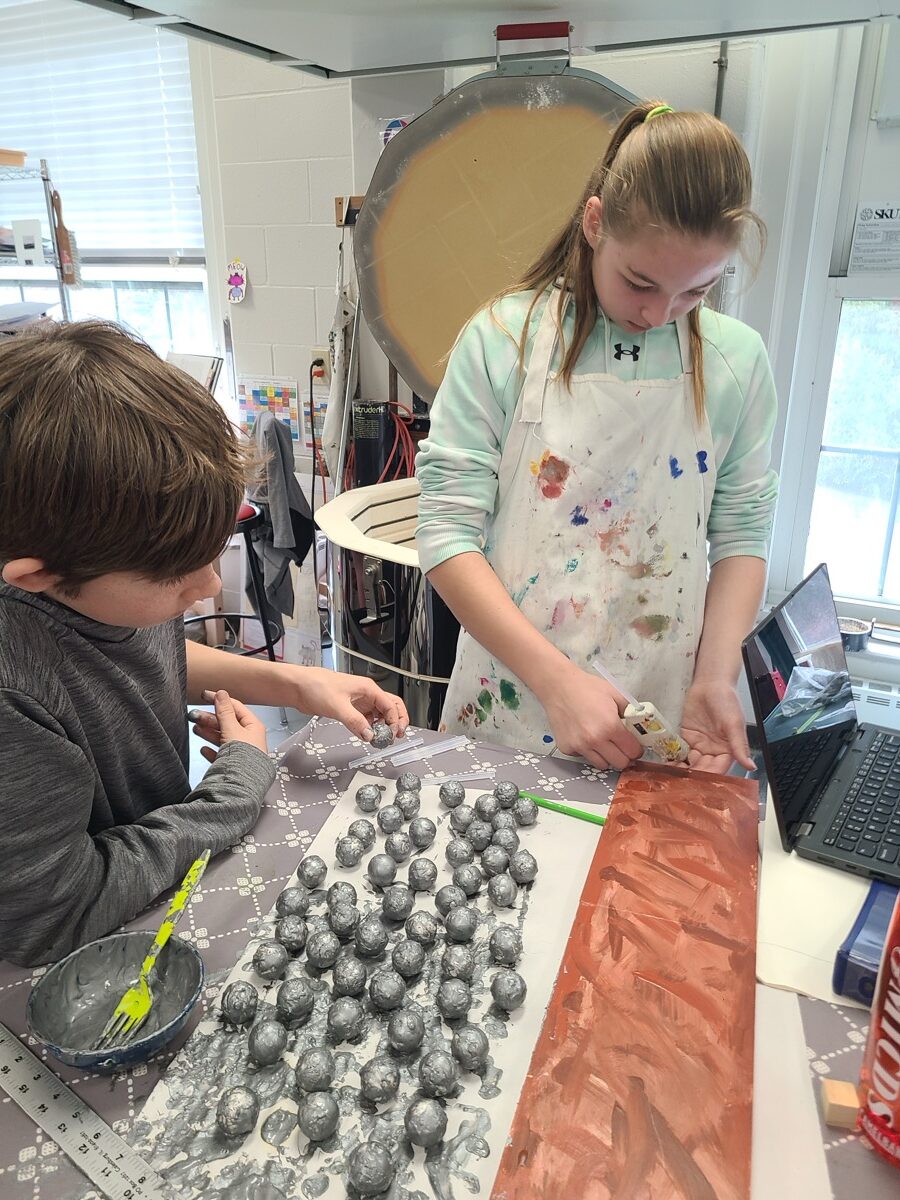
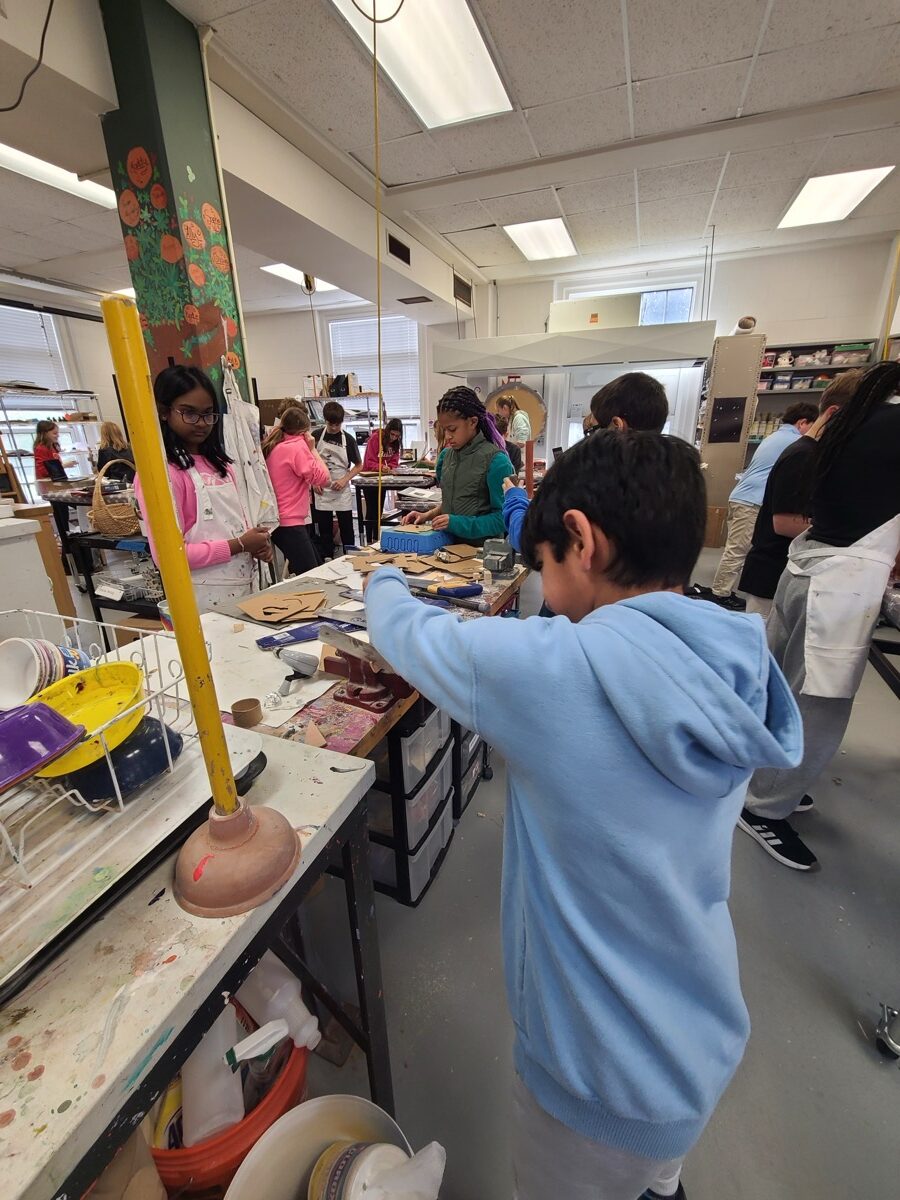
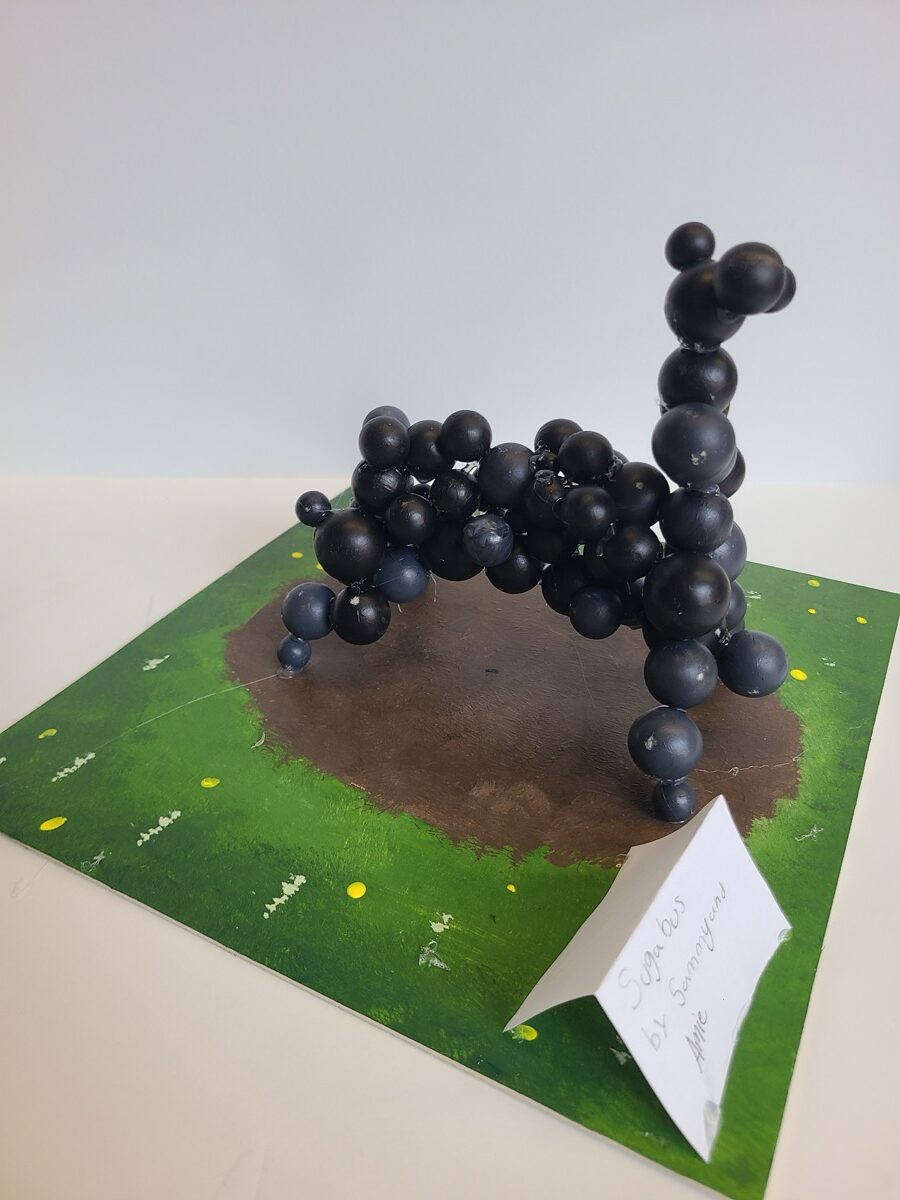
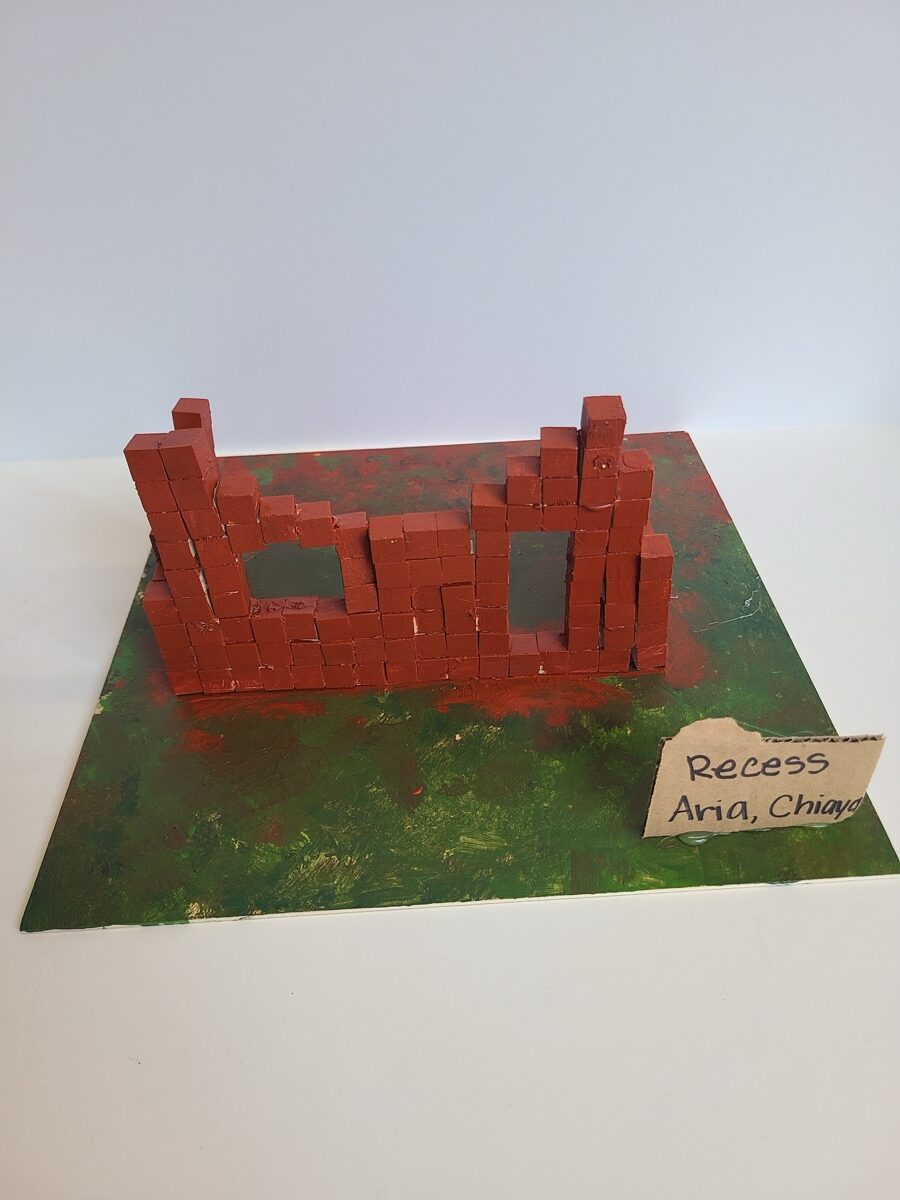
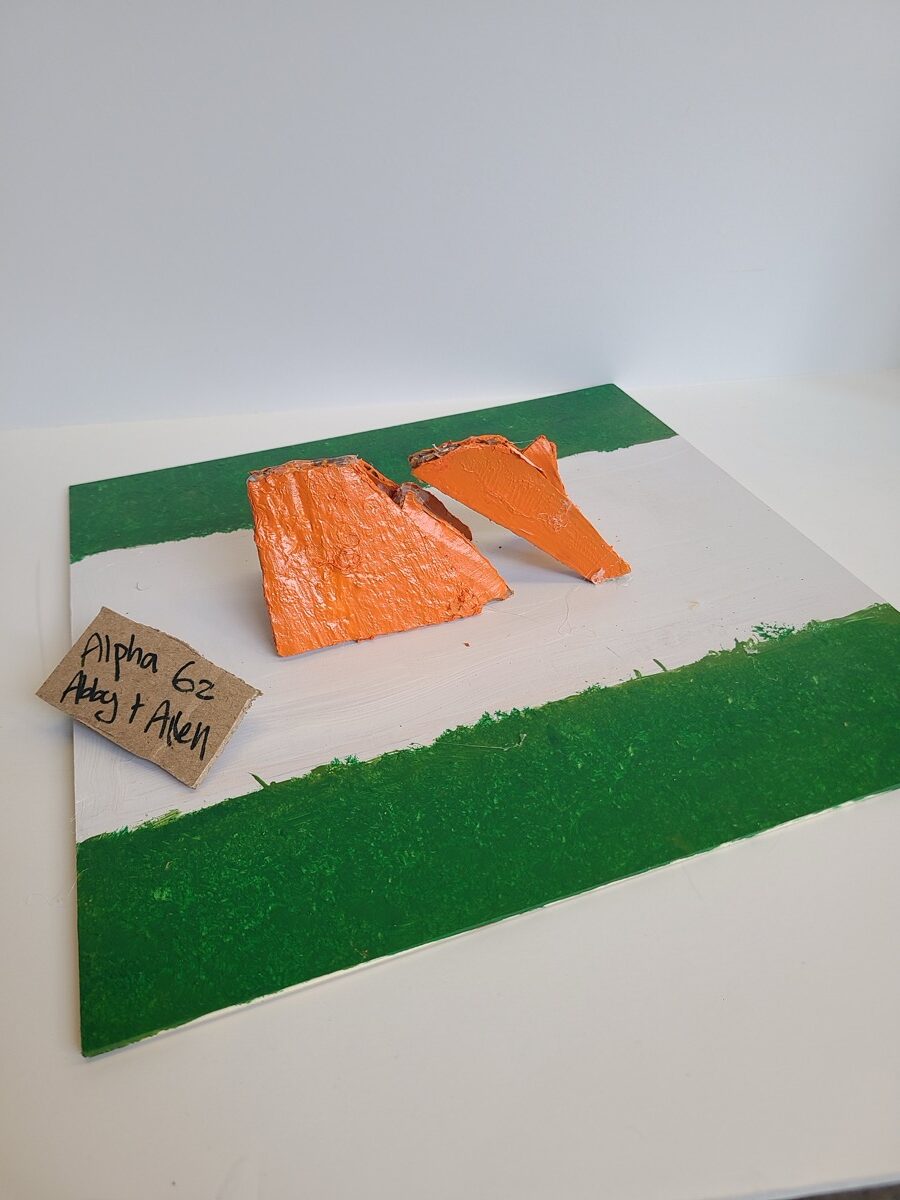
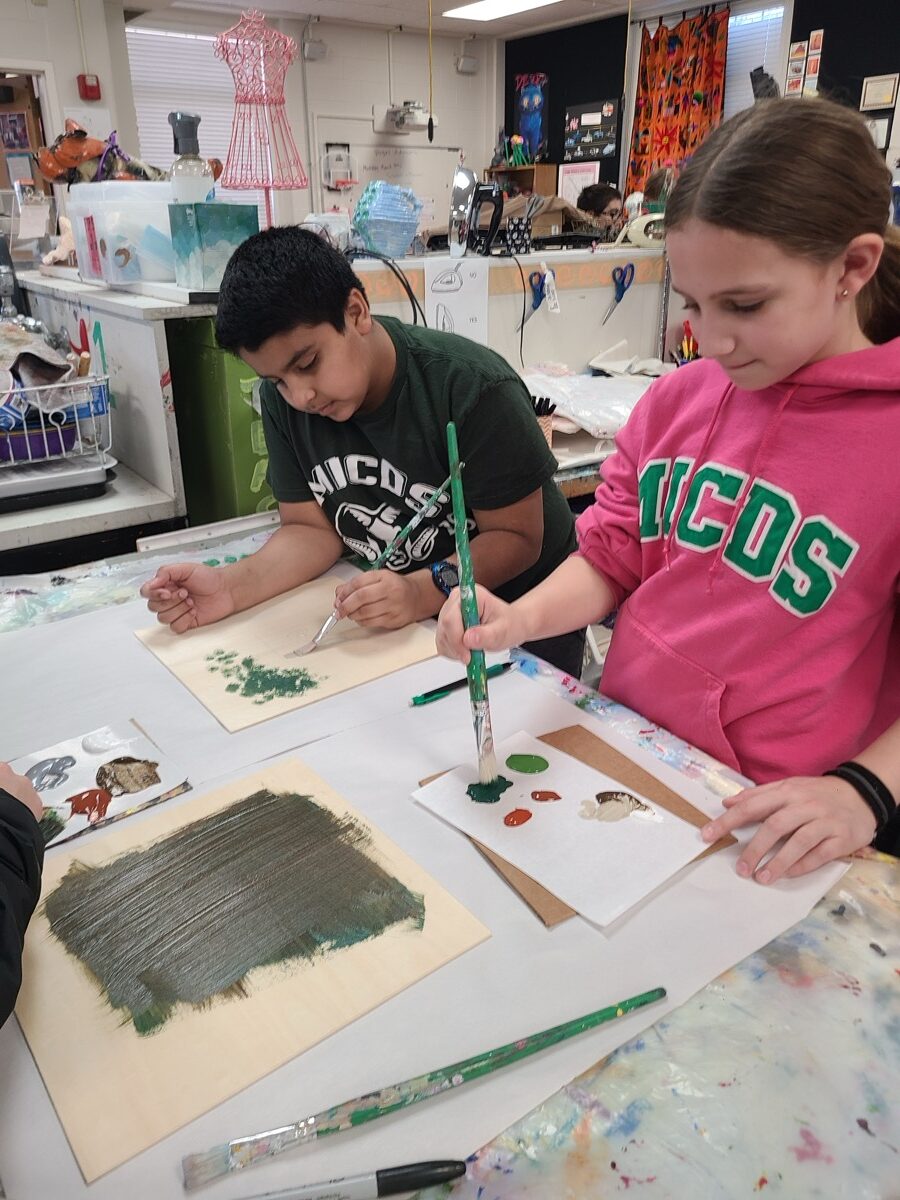
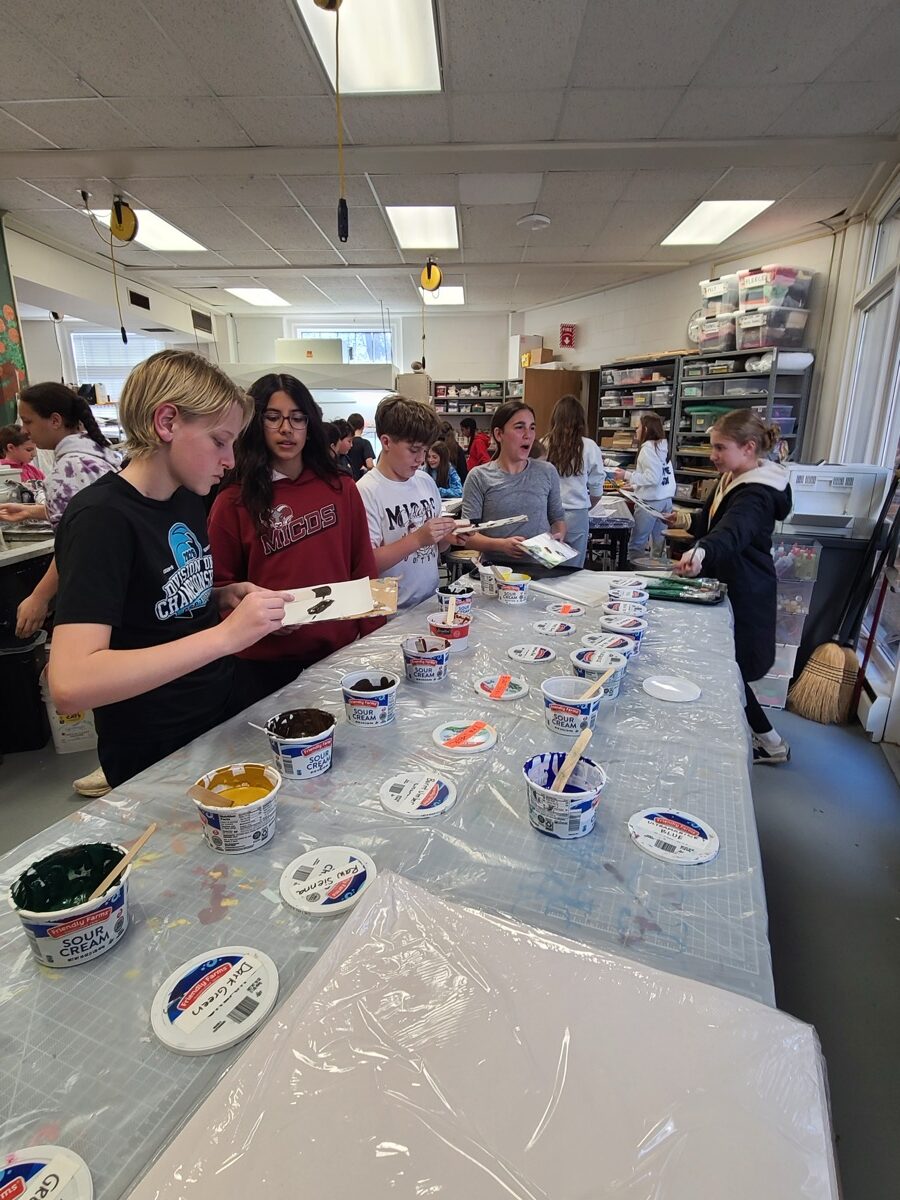
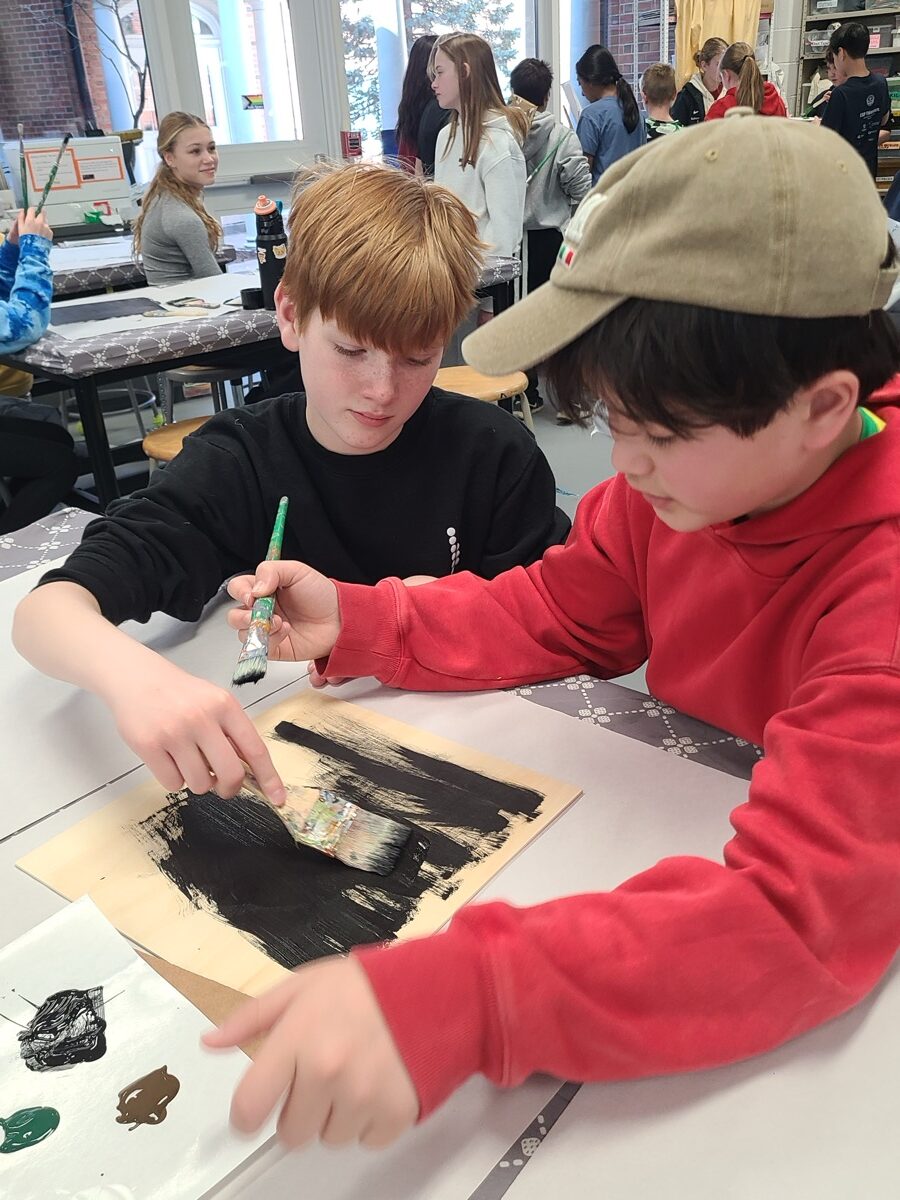
At the end of the project workday, students presented their finished sculptures and stories to classmates, providing new perspectives and interpretations of math and visual arts. The sculptures looked similar, but not always, depending on the construction materials and scale factors used. And students noted that the stories were dramatically different, and they liked hearing how other students saw and interpreted the same sculpture.
When asked what the hardest part of the project was, Silas Ward ’32, who chose Bornibus by Mark de Suvero, said, “The measurements were a little tricky because our mirror had a protective layer over it, and once a team member figured it out, we were fine, but we wasted some time getting there. The hardest part was trying to make my sculpture. It kept falling over.”
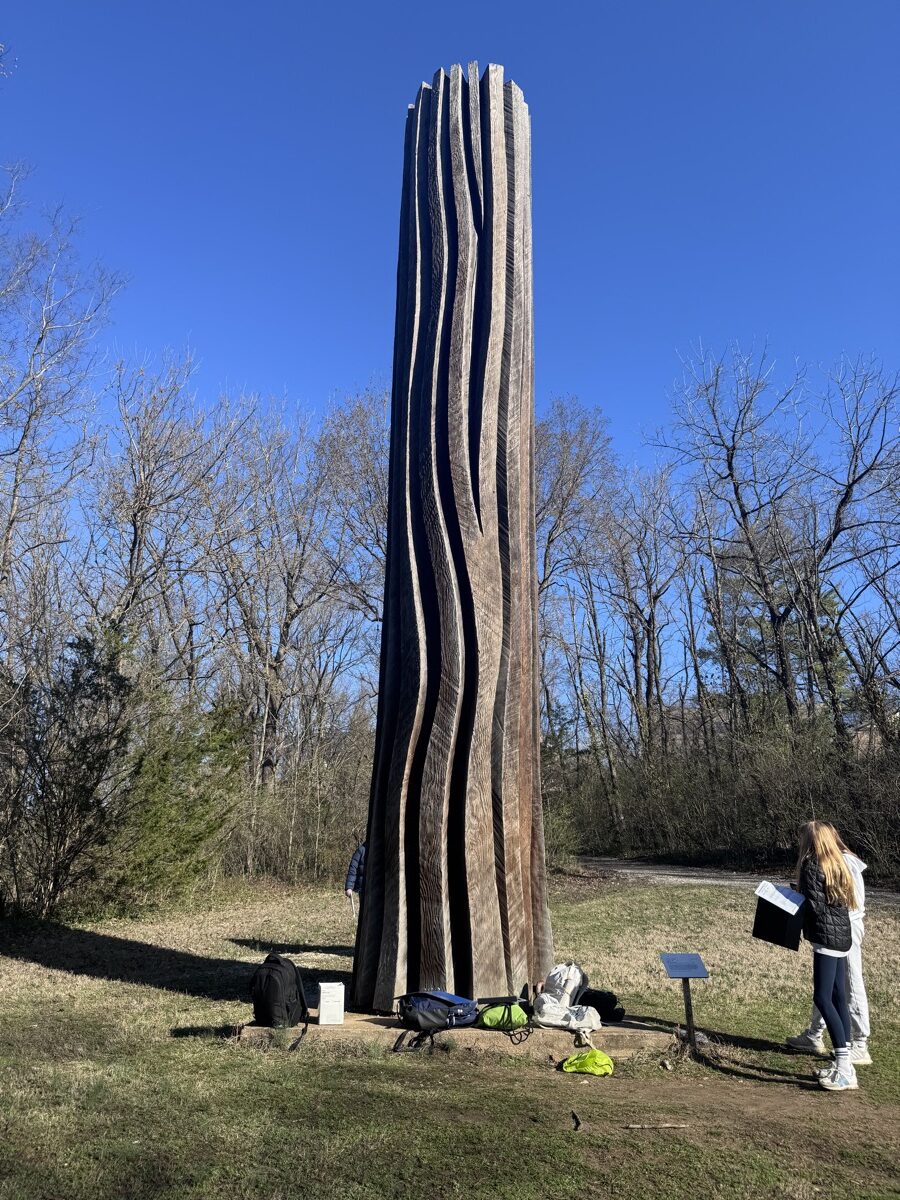
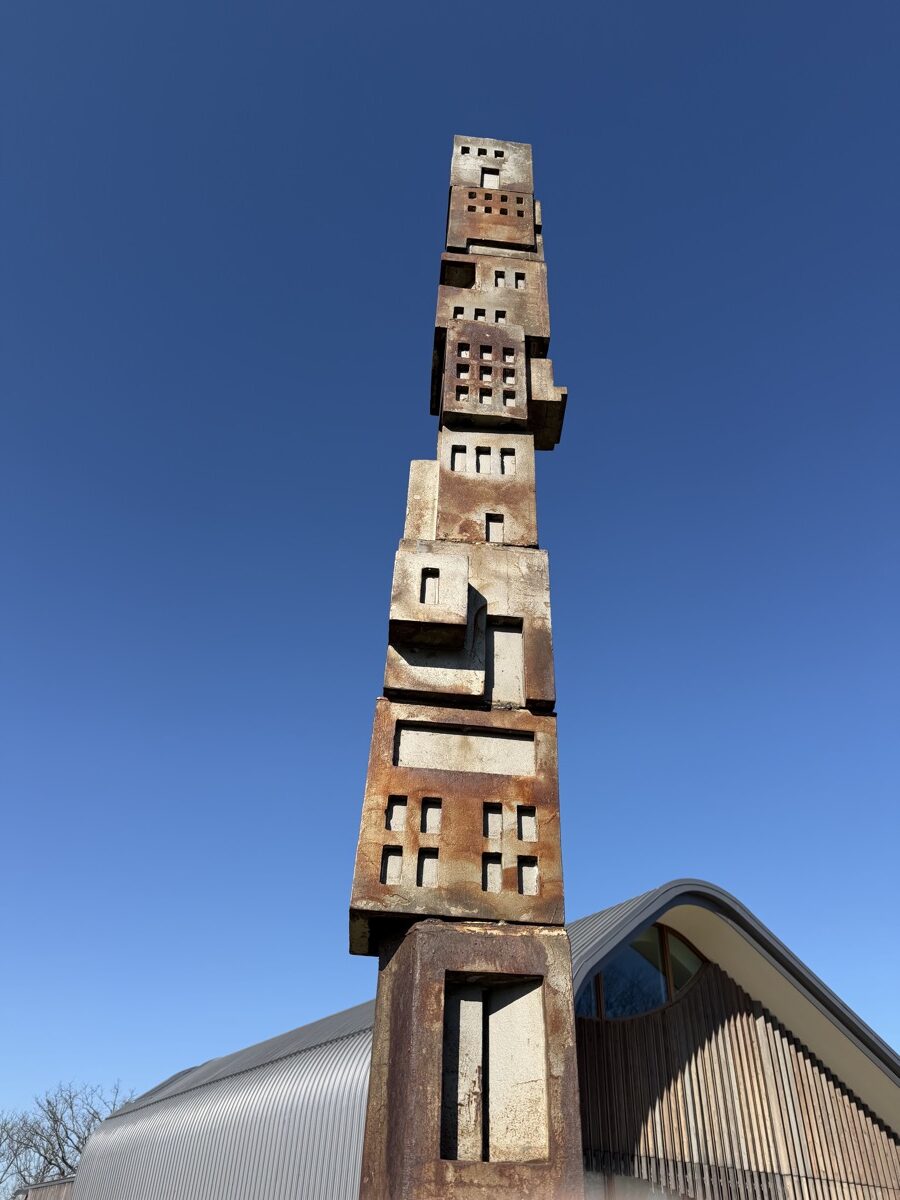
Henry Flynn ’32 worked with Woodhenge by Gigi Scaria and said, “The hardest part was the sculpture; we had to add supports. Writing was challenging at first, too, because we didn’t really have any ideas. The story map helped. Drawing was also challenging. I had to draw individual houses stacked on top of each other and color them all in. I thought it was going to be a long project, but it was a fast one.”
Nora Lurk ’32 chose Cromlech Glen by Beverly Pepper. Using a compass, she observed it from both the north and south directions while making her mathematical computations. The art student presented a different challenge. She said, “The sculpture making was challenging because we used papier mache and that’s kind of challenging to work with.”
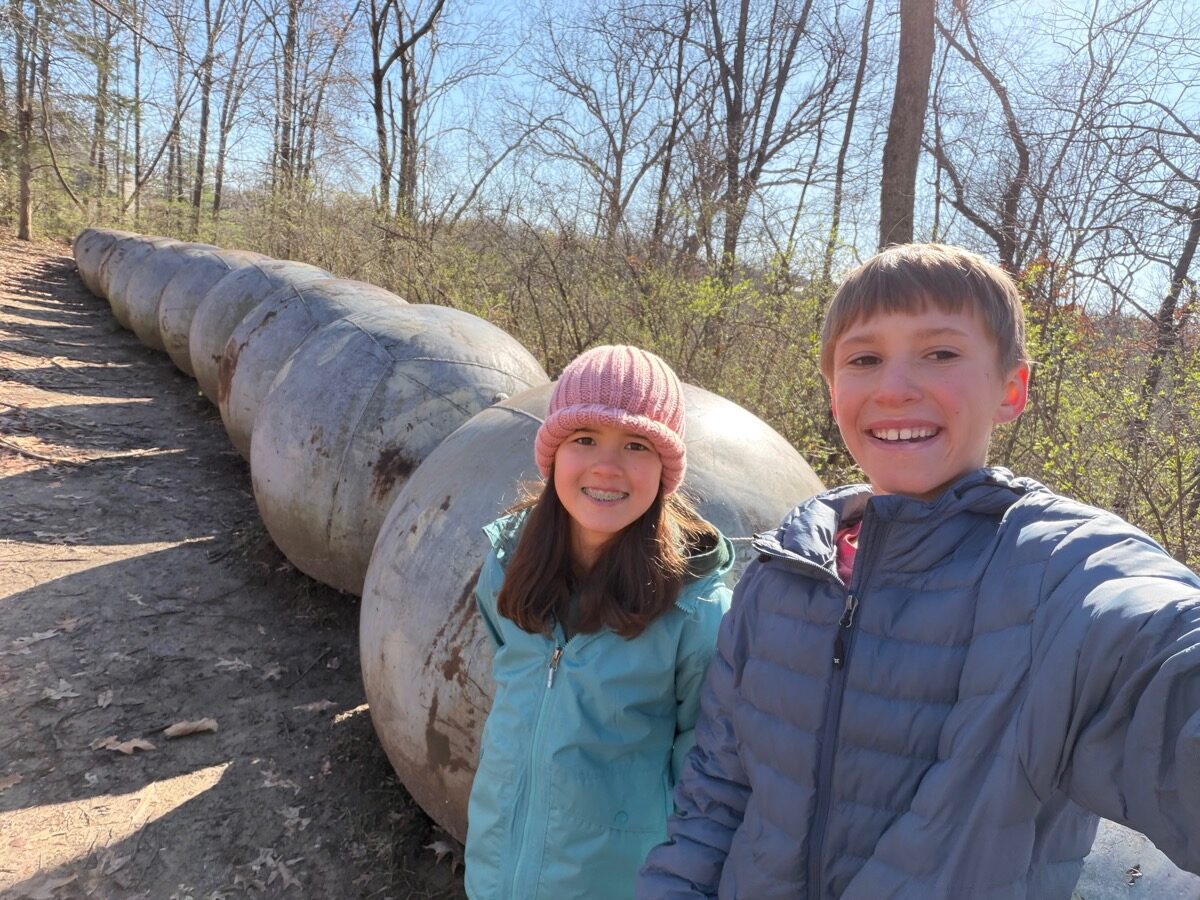
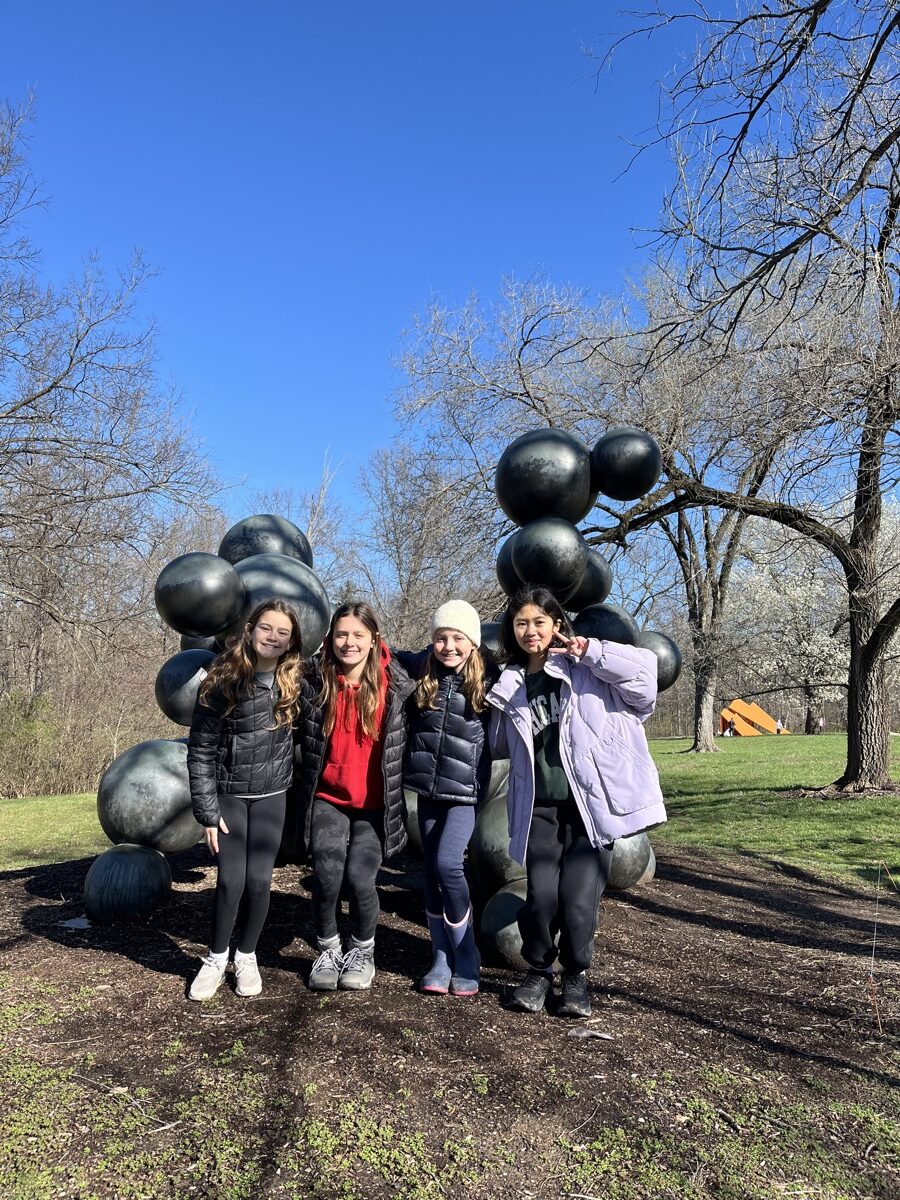
Ball? Ball! Wall? by Donald Lipski was chosen by Caroline Hill ’32. She said, “Painting the steel balls was hard because it’s hard to paint styrofoam, and we didn’t think to use aluminum foil. I liked the story, and it was kind of fun to come up with ideas on what to write about.”
Middle School Visual Arts Teacher JoAnne Vogel said, “This is one of my favorite field trips because it brings together art, math, and language arts. The students rely on the strengths of their partners and team members, as each brings something to the group. The students are really working out in the field; this is not a passive field trip. It is what field trips should be: bringing the classroom outside.”