
Story and photos by Lucas Sindler ’26
Watchmaking is one of those skills that looks simple from a distance, but becomes much more interesting once you see what is happening inside the case. At MICDS, this Winter Term watchmaking class, taught by Upper School Math Teacher Oggy Smiljanic, gives students the chance to learn how mechanical watches actually function and what it takes to work on them responsibly. The course is hands-on, detail-oriented, and built around the idea that good watchmaking is less about rushing to a result and more about building strong habits and understanding how the system works.
A mechanical watch is powered by a chain of parts that all depend on each other. The mainspring stores energy, the gears transfer that energy through the movement, and the escapement controls how it releases so the watch keeps a steady rhythm. Finally, that controlled motion becomes the movement of the hands on the dial. In class, it becomes clear that even a small issue, such as dust, old oil, a loose screw, or a part that is slightly out of place, can cause a watch to run poorly or stop completely. That is why the course starts with the basics and emphasizes careful technique.
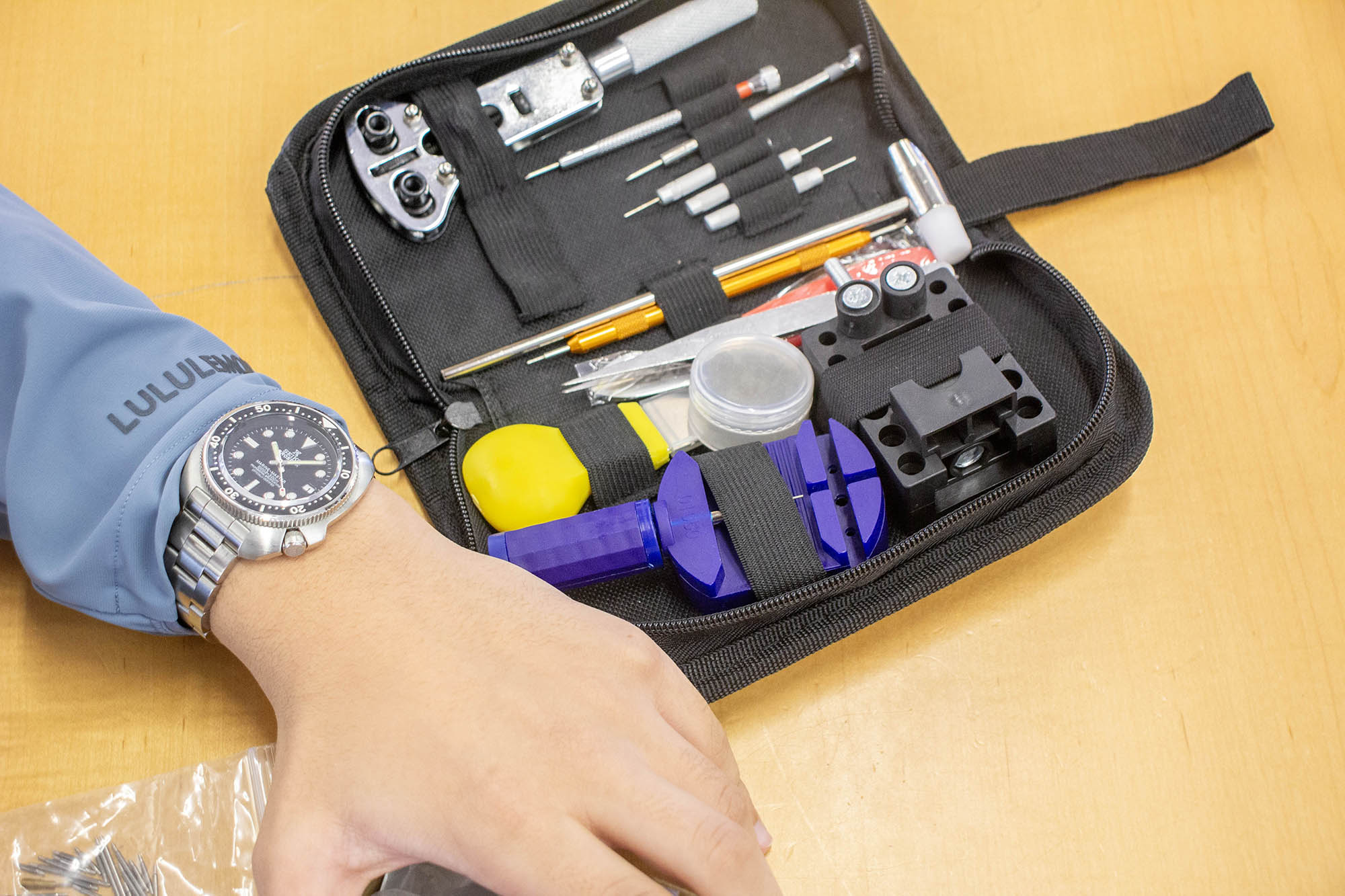
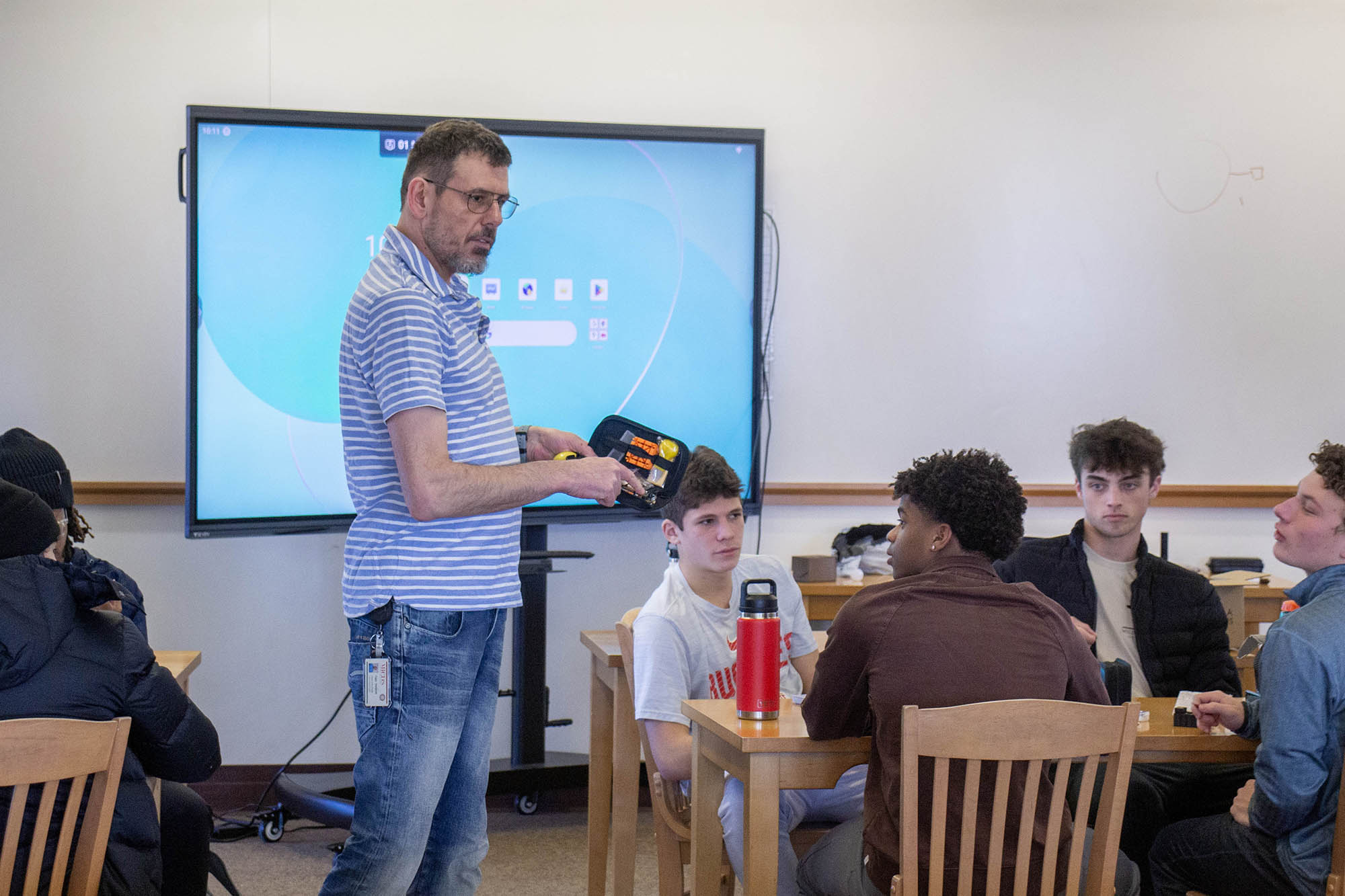
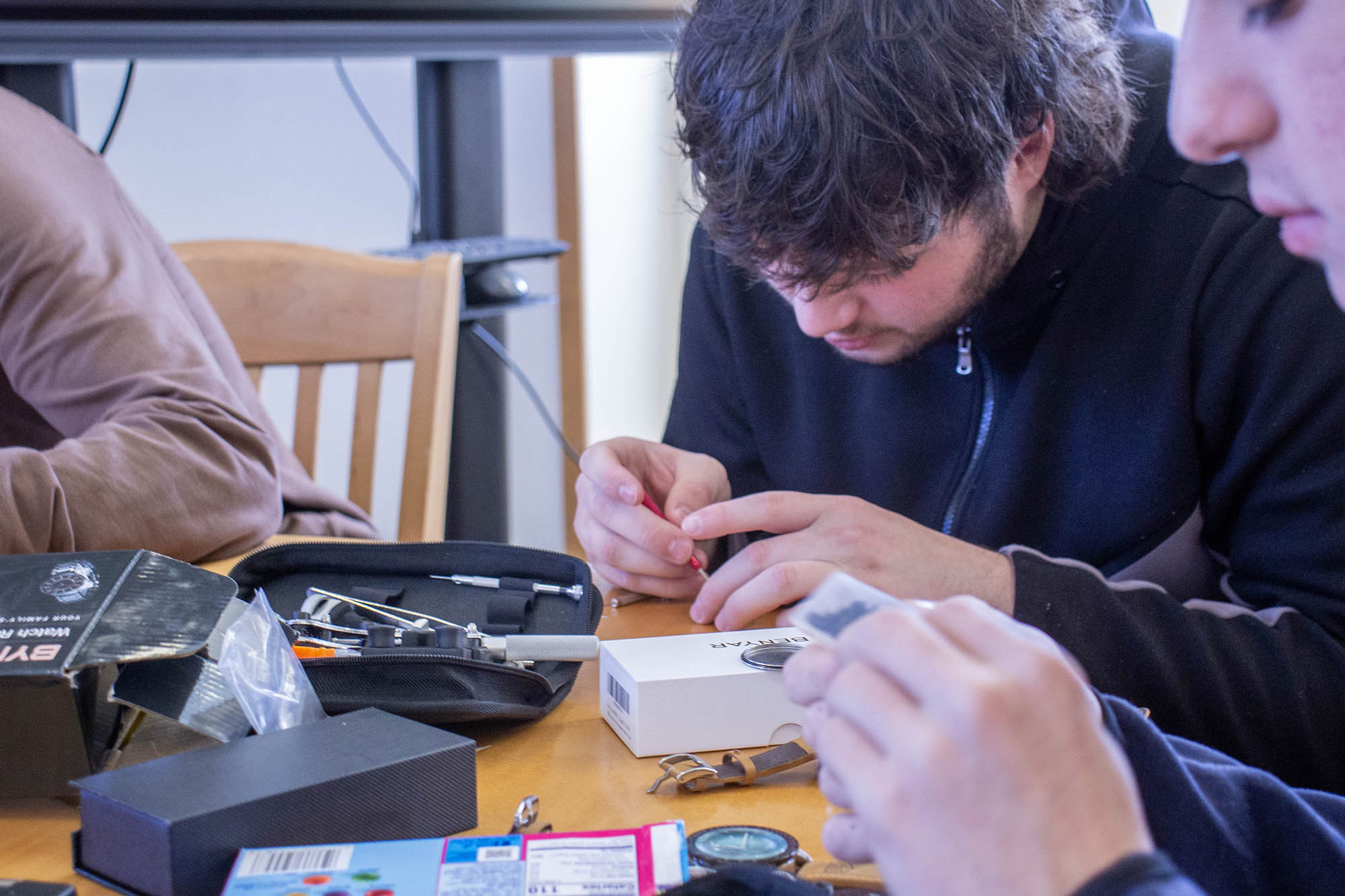
One of the first lessons is organization. Watches are full of tiny screws and delicate components, and it is easy to lose track of what goes where if you do not work methodically. Students learn to keep parts in order as they disassemble a movement, use trays to separate components, and take quick reference photos so they can accurately rebuild what they took apart. This approach makes reassembly less of a guessing game and more of a step-by-step process.
The class also focuses on proper tool use, which matters more than most people expect. A screwdriver that does not fit correctly can strip a screw head. Tweezers used with too much force can bend a part. Even basic handling can leave marks or cause damage if it is done carelessly. Learning to use the right tools in the right way is a major part of working safely and consistently, especially when tolerances are so small.
Cleaning and lubrication is another key topic. Old lubrication can dry out and create friction, which slows the movement down and increases wear. At the same time, using too much oil, or placing it in the wrong spot, can create its own problems. The course introduces how to think about lubrication in a mechanical watch, using small amounts, placed carefully, with a clear purpose.
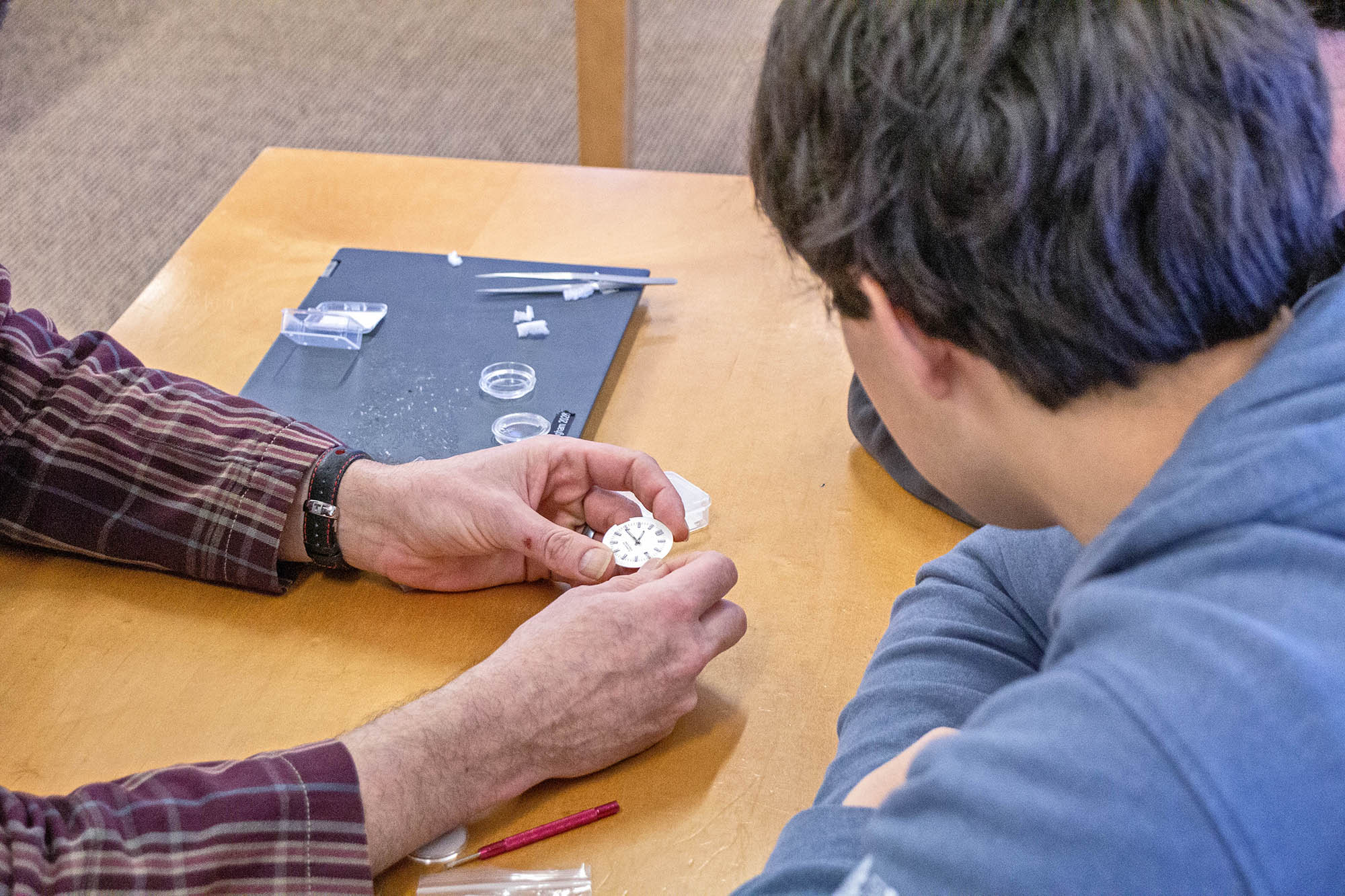
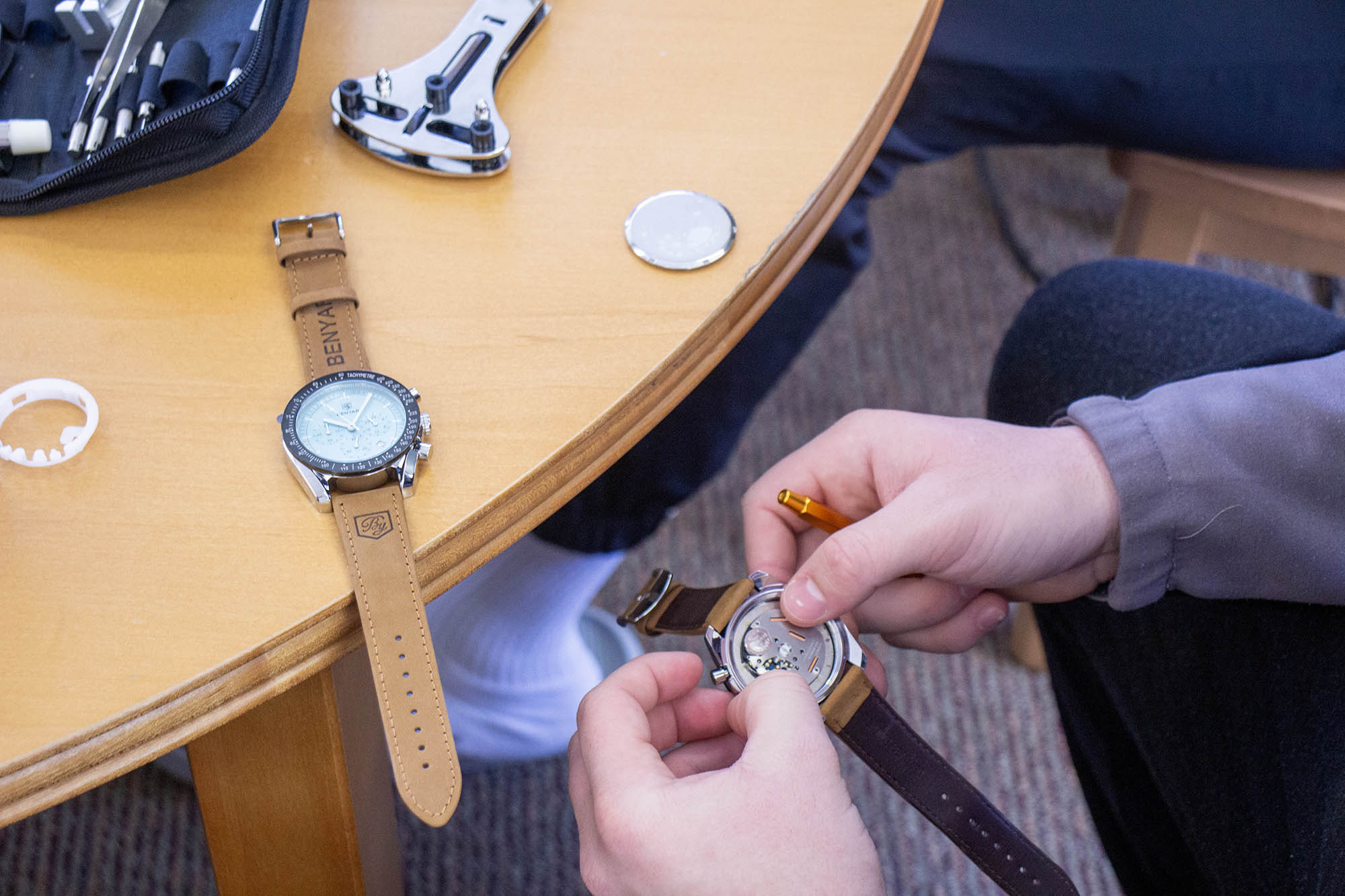

Students also pick up something less technical but just as important: discipline. Because the parts are so small and the steps build on each other, the class rewards students who stay calm, take their time, and learn from mistakes instead of trying to force a fix. That mindset shows up in how students talk about the course. In an interview, student Cyrus Ziaee ’28 said he believes “watchmaking is a great skill to have because it teaches patience and technique.”
Overall, the MICDS Winter Term watchmaking course with Oggy is a practical introduction to precision work. It teaches patience, steady hands, and attention to detail, but it also builds a real understanding of how a mechanical movement operates. By the end of the early projects, success is not just getting a watch to run. It is being able to explain what each major part does, take a movement apart cleanly, and put it back together with confidence.