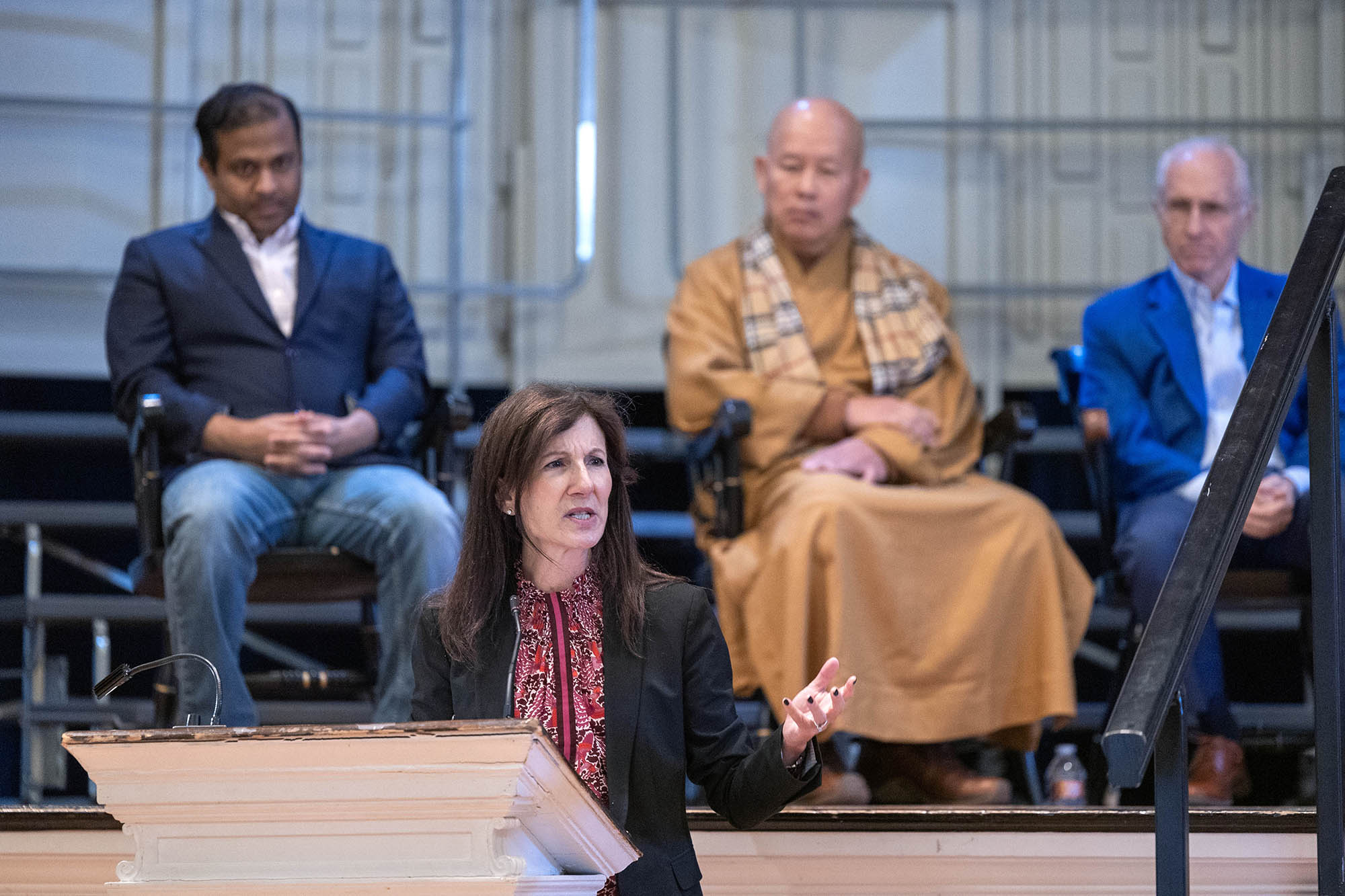
In their Global Perspectives course, seventh graders recently learned about the five major world religions: Hinduism, Buddhism, Islam, Christianity, and Judaism. To wrap up their Beliefs & Ideologies unit, Middle School History Teachers Alonna Robertson, Berta Simic, and Blake Whitney hosted a World Religions Panel on Monday, December 8, featuring speakers from each of the five faiths. “Our hope was that hearing directly from people who actively practice these religions would help students see the humanity, diversity, and lived experiences behind the religions they’ve studied,” explains Robertson. “We also wanted them to notice the shared values and common threads that connect these traditions, even in their differences.” Simic adds, “We knew that religious speakers visited MICDS in the past, and we wanted to create this panel to give students a richer experience beyond the classroom. Visiting each place of worship can be challenging, so this format allowed students to hear directly from people who practice these religions, helping them connect their academic learning to real-world perspectives.”
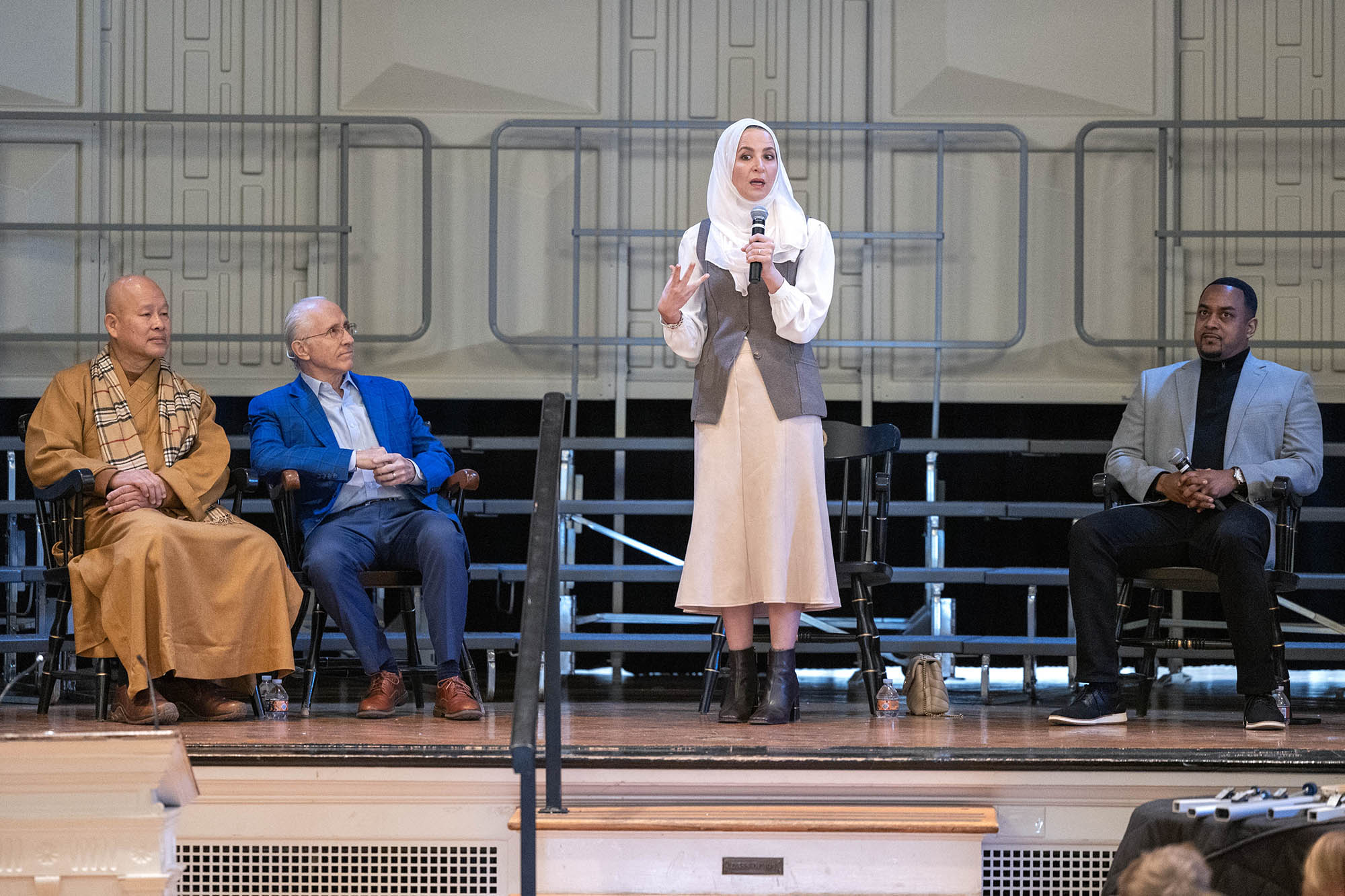
The five speakers included:
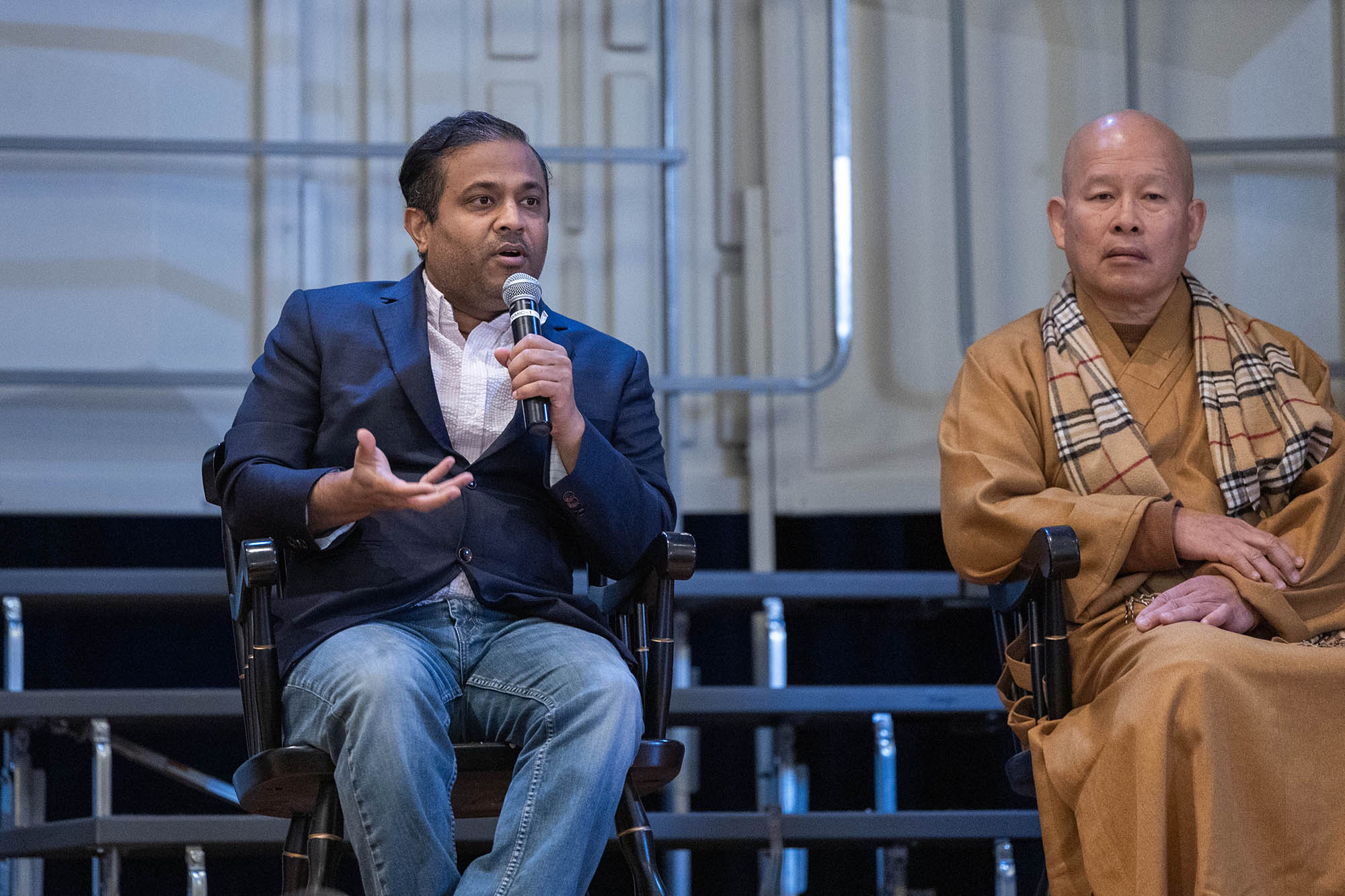
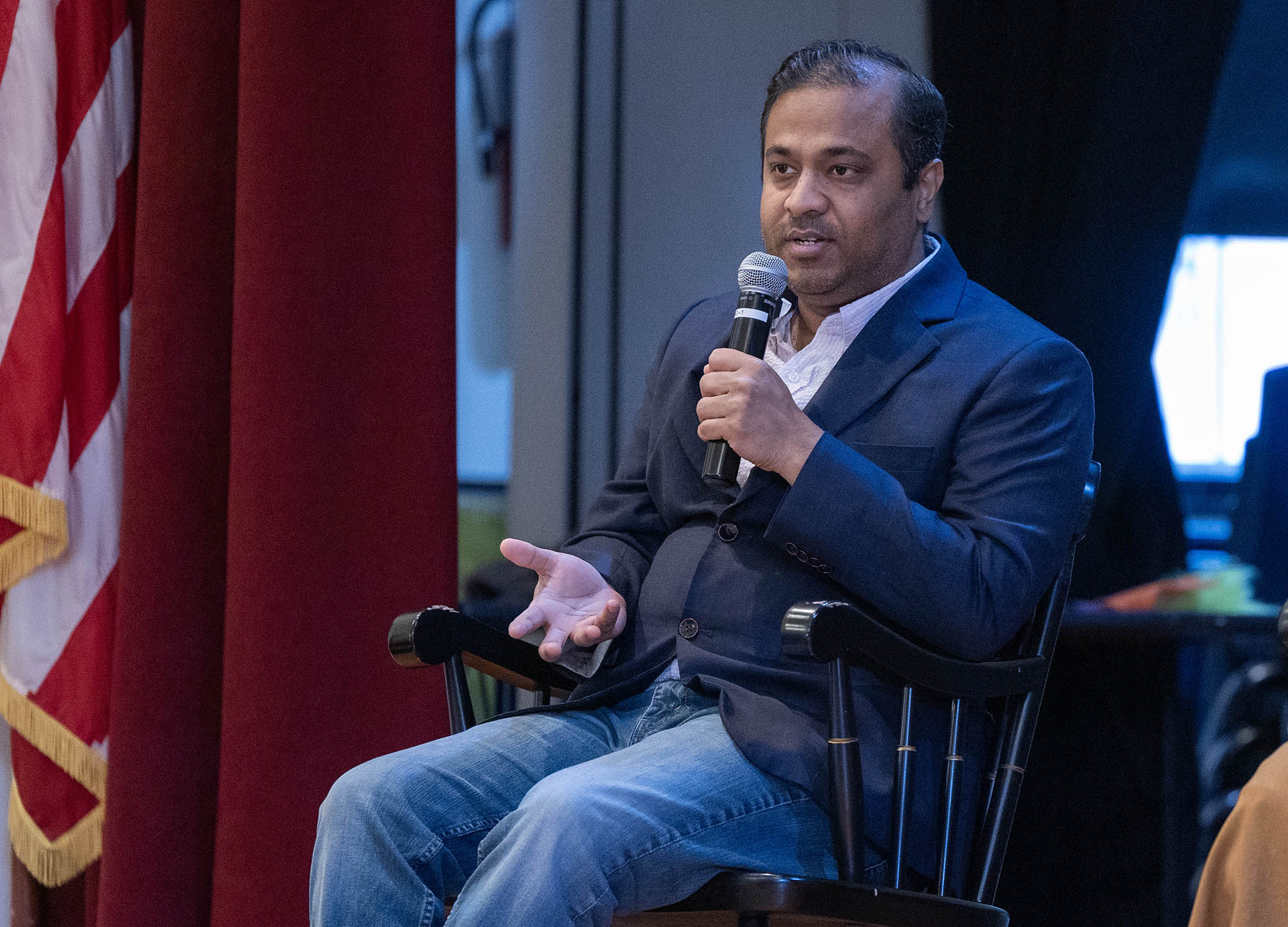
- Mr. Hari Kavuri, representing Hinduism
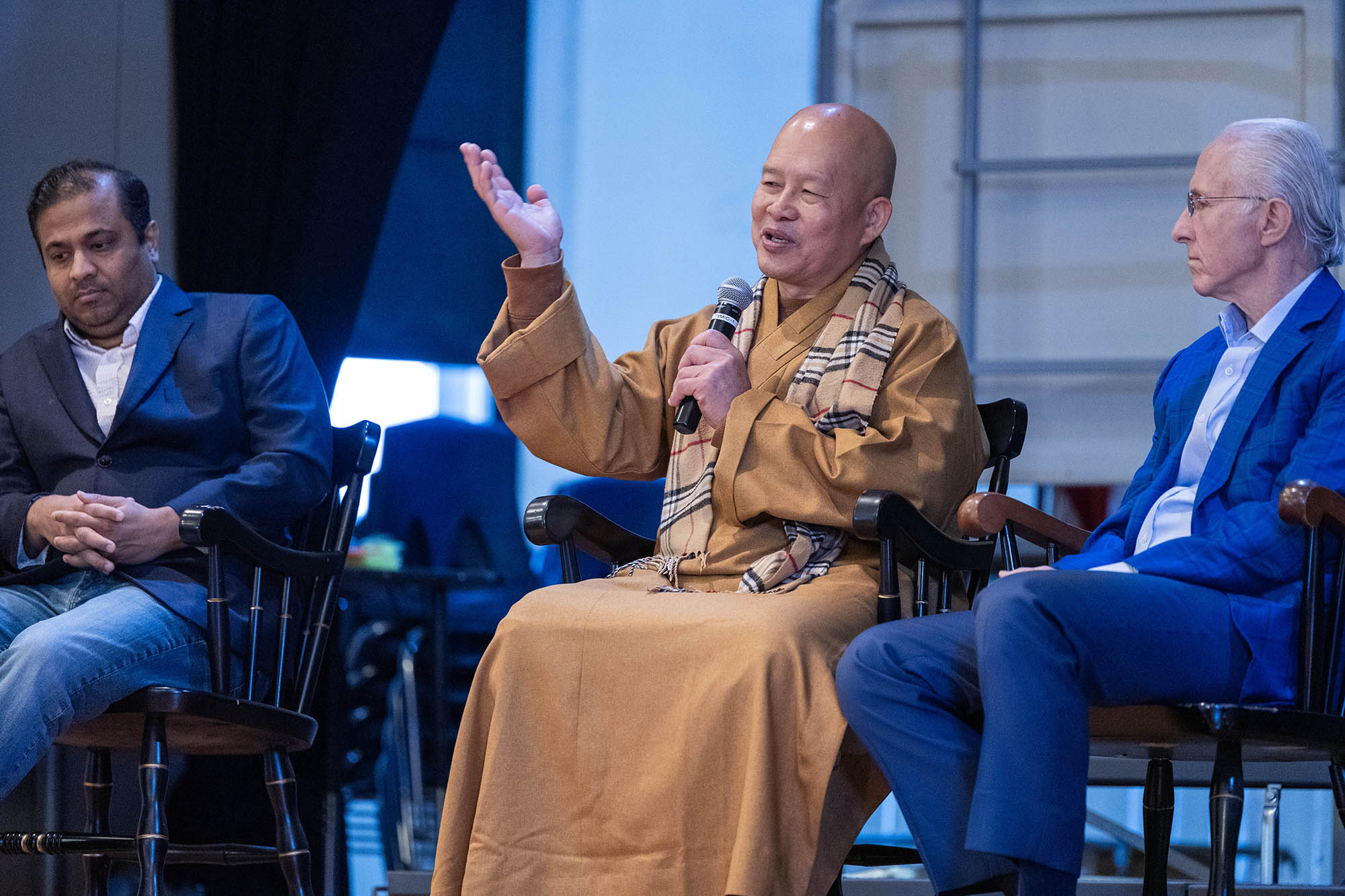
Kavuri has volunteered at the Hindu Temple of St. Louis for more than 15 years. He is an engineer, and he also teaches young people about Hindu beliefs and traditions. Kavuri is passionate about helping others understand Hinduism and about encouraging students to ask questions and explore. - Abbot Master Jiru, representing Buddhism
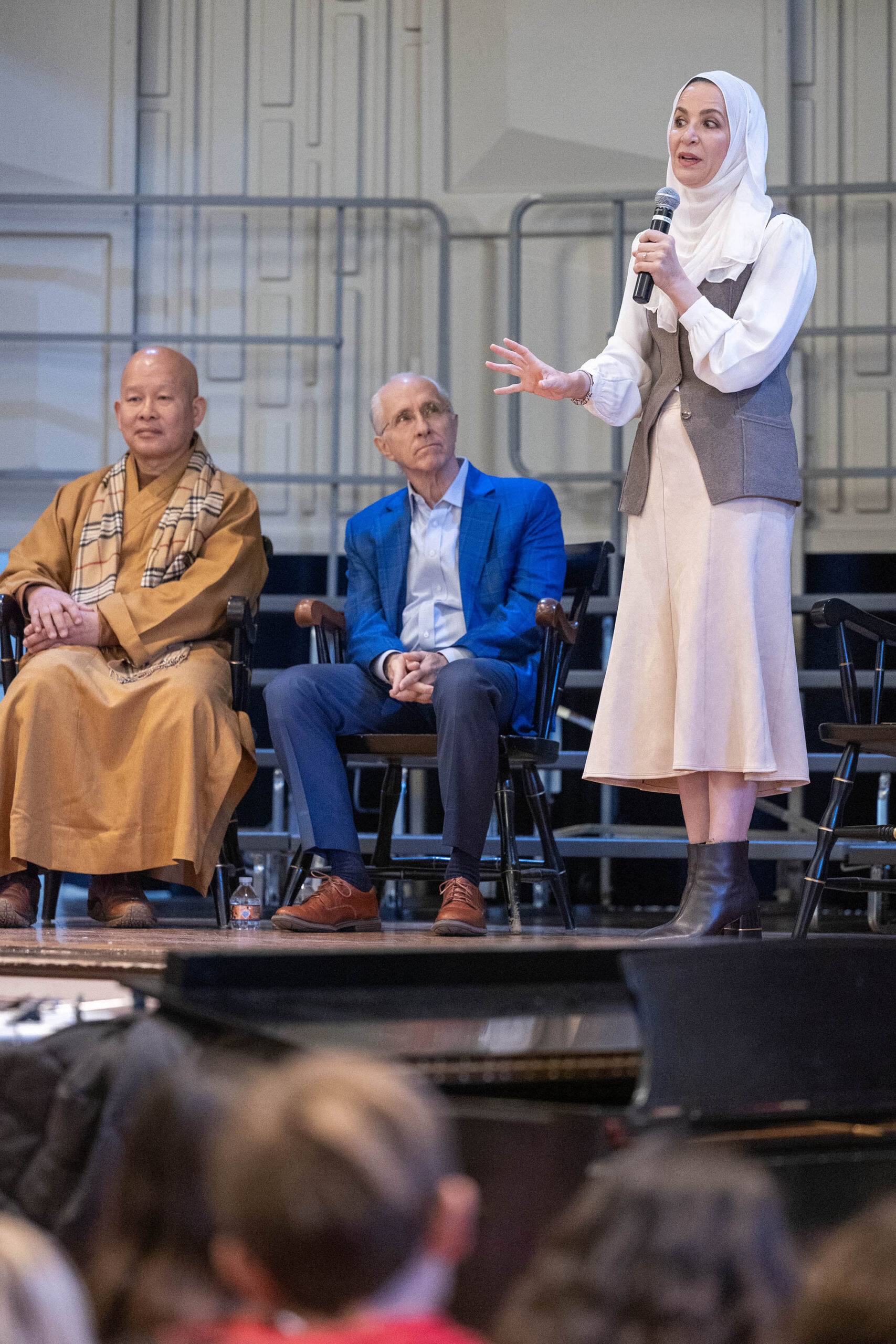
Master Jiru was born in Malaysia and has studied and taught Buddhism for many years around the world. He became a Buddhist monk more than 40 years ago. Today, he is the Abbot—meaning the leader—of the Mid-America Buddhist Association here in Missouri. He teaches meditation, gives talks, and works to support Buddhist communities internationally. - Mr. Lee Patton, also representing Buddhism
Patton has practiced Buddhism for more than 10 years and has studied Buddhist teachings in depth, including completing a college program in Buddhist Studies. He believes that mindfulness and meditation have made a positive difference in his life, and he enjoys helping others understand Buddhist practices. - Mrs. Maysa Albarcha, representing Islam
Albarcha is a lifelong member of the St. Louis community and the vice chair of the Islamic Foundation of Greater St. Louis. She regularly speaks to schools and organizations—including groups like the Department of Justice—about Islam and Muslim culture. She works to help people understand her faith and to build connections across different communities. - Pastor Robert Hines, representing Christianity
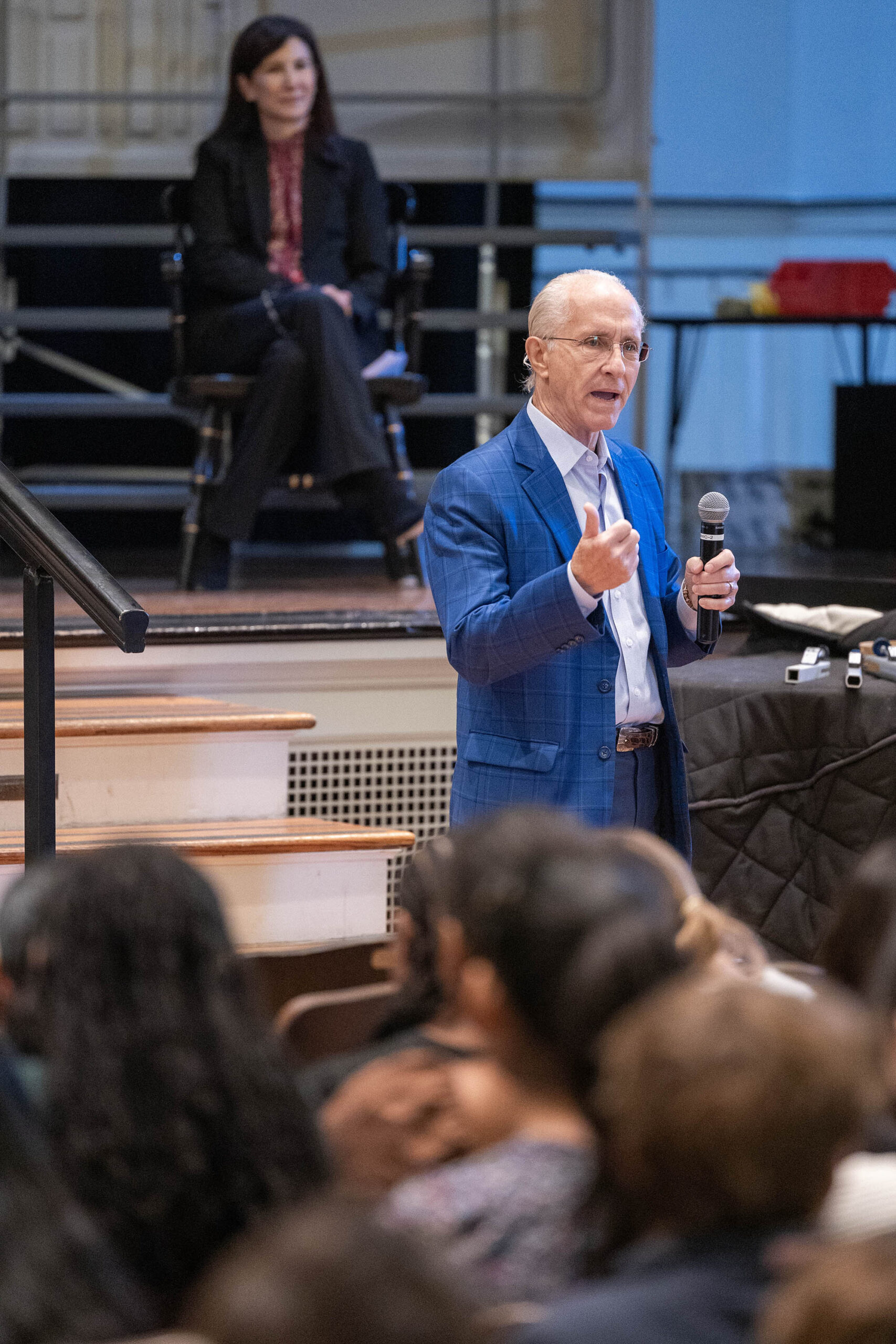
Hines is the Lead Pastor at Excel Church in St. Louis. He grew up in St. Louis and has worked for more than 30 years in both technology and Christian ministry. He holds an honorary doctorate in theology and has traveled across the United States and internationally to teach, speak, and support communities. He has been involved in youth ministry, college ministry, and community outreach, and he is passionate about helping people grow in their faith. - Rabbi Elizabeth Hersh P’22, representing Judaism
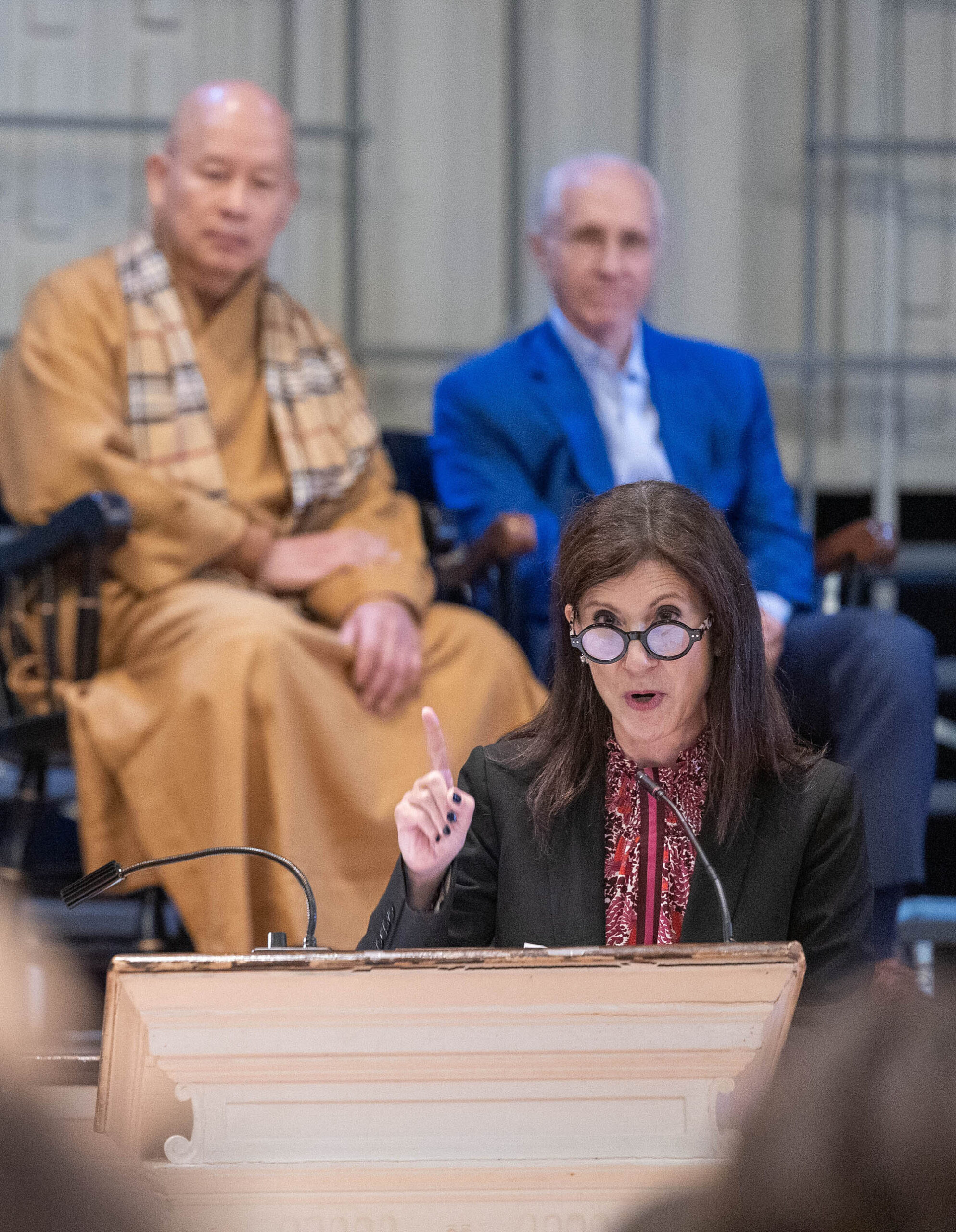
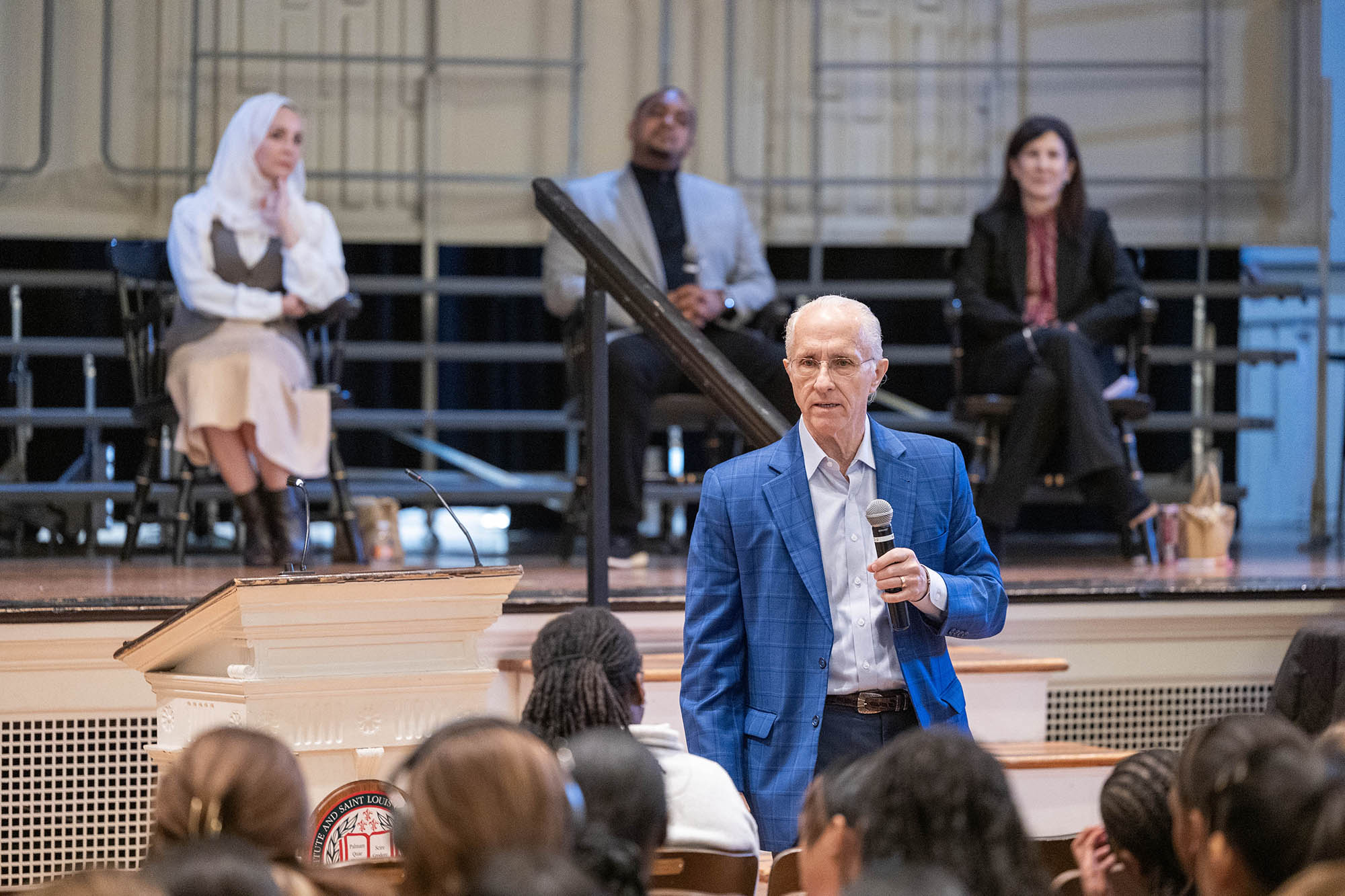
Hersh is the Senior Rabbi at Temple Emanuel here in St. Louis. She has close ties to MICDS, as her son, Noah Kleinlehrer ’22, is an MICDS graduate. She has served Jewish communities not only in St. Louis but also in Australia, and she teaches many classes about Jewish history, beliefs, and traditions. She works with people in her congregation during important life moments—celebrations, holidays, and times of need. She cares deeply about helping people understand Judaism and about building strong interfaith relationships in St. Louis.
Each panelist took time to share their own perspective and experience about their faith with the seventh graders. They dove into their religion’s core beliefs and doctrines, practices and rituals, history, myths, and sacred texts, places, and narratives. Then, an audience member asked, “How did you become part of your religion?” Each person shared their own unique journey into their faith—some were born into it, their faith found them, or life events led them to it.
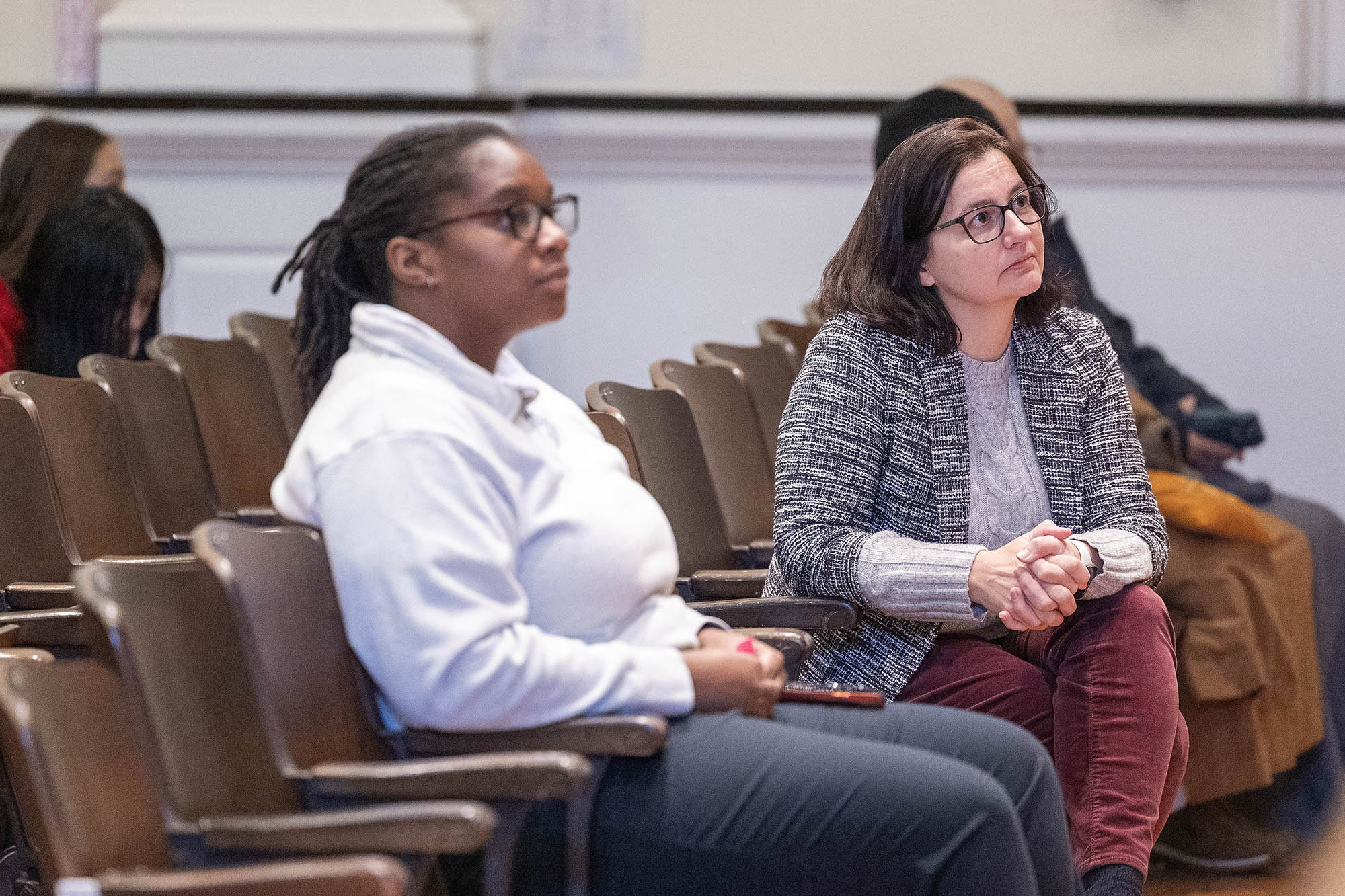
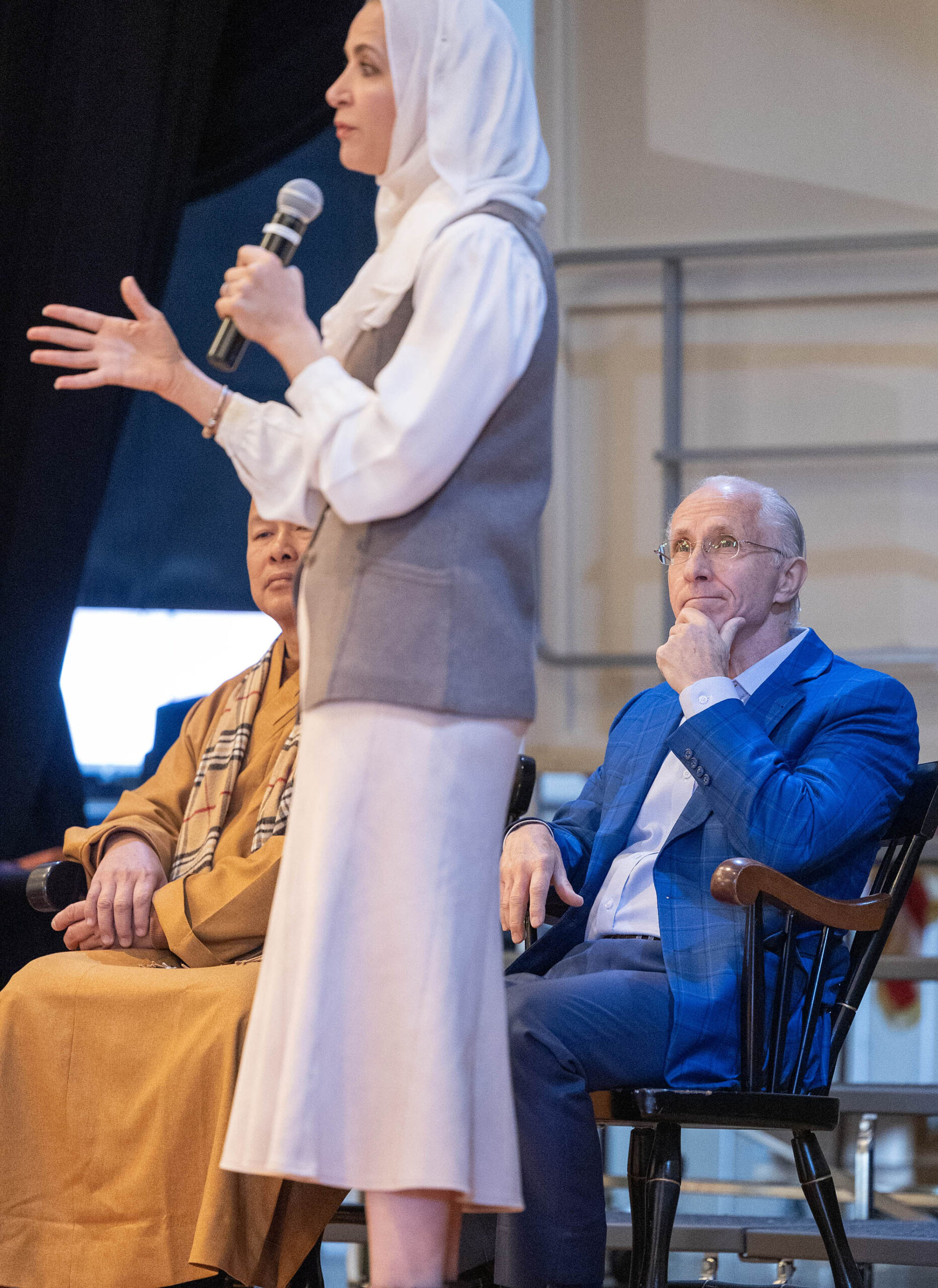
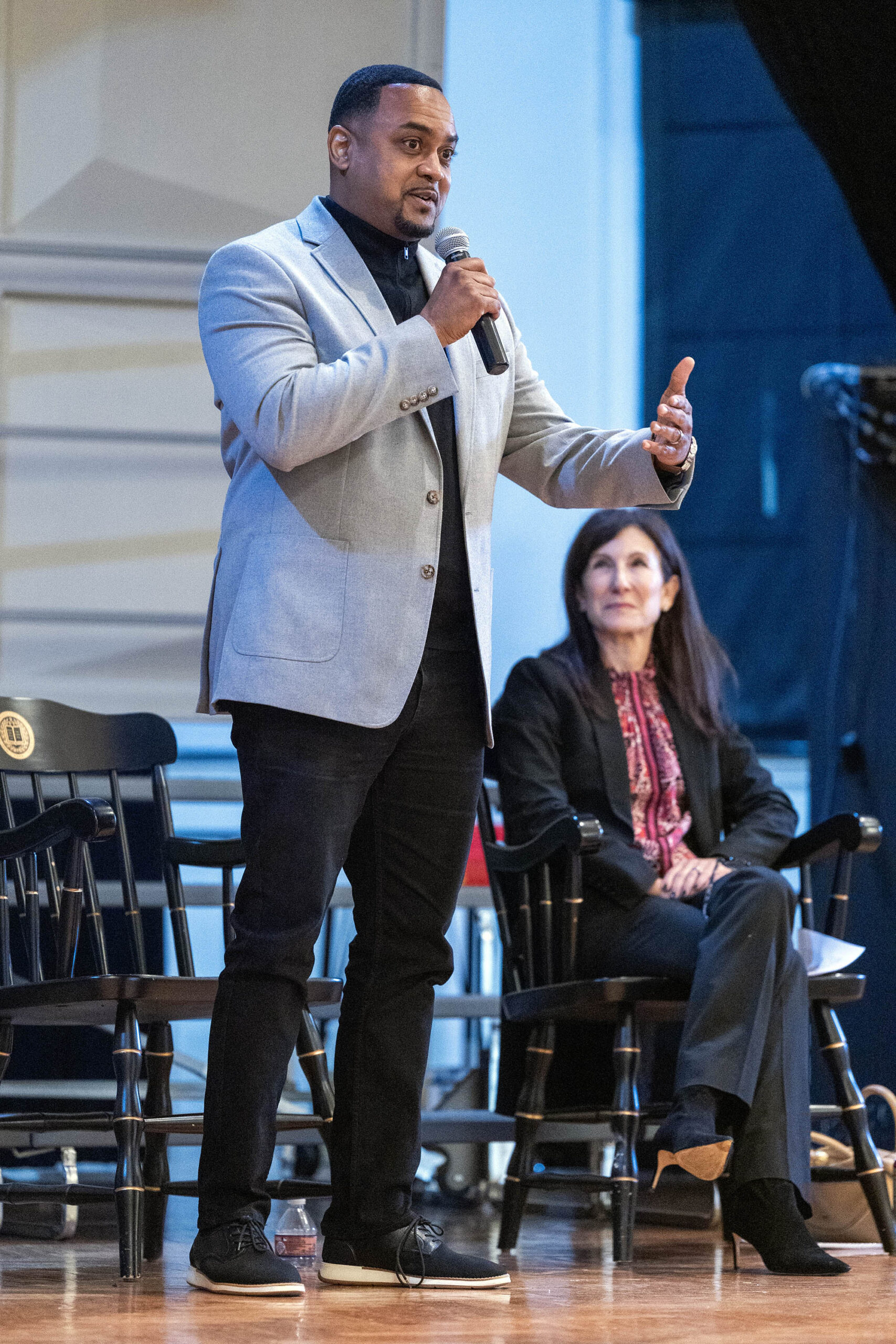
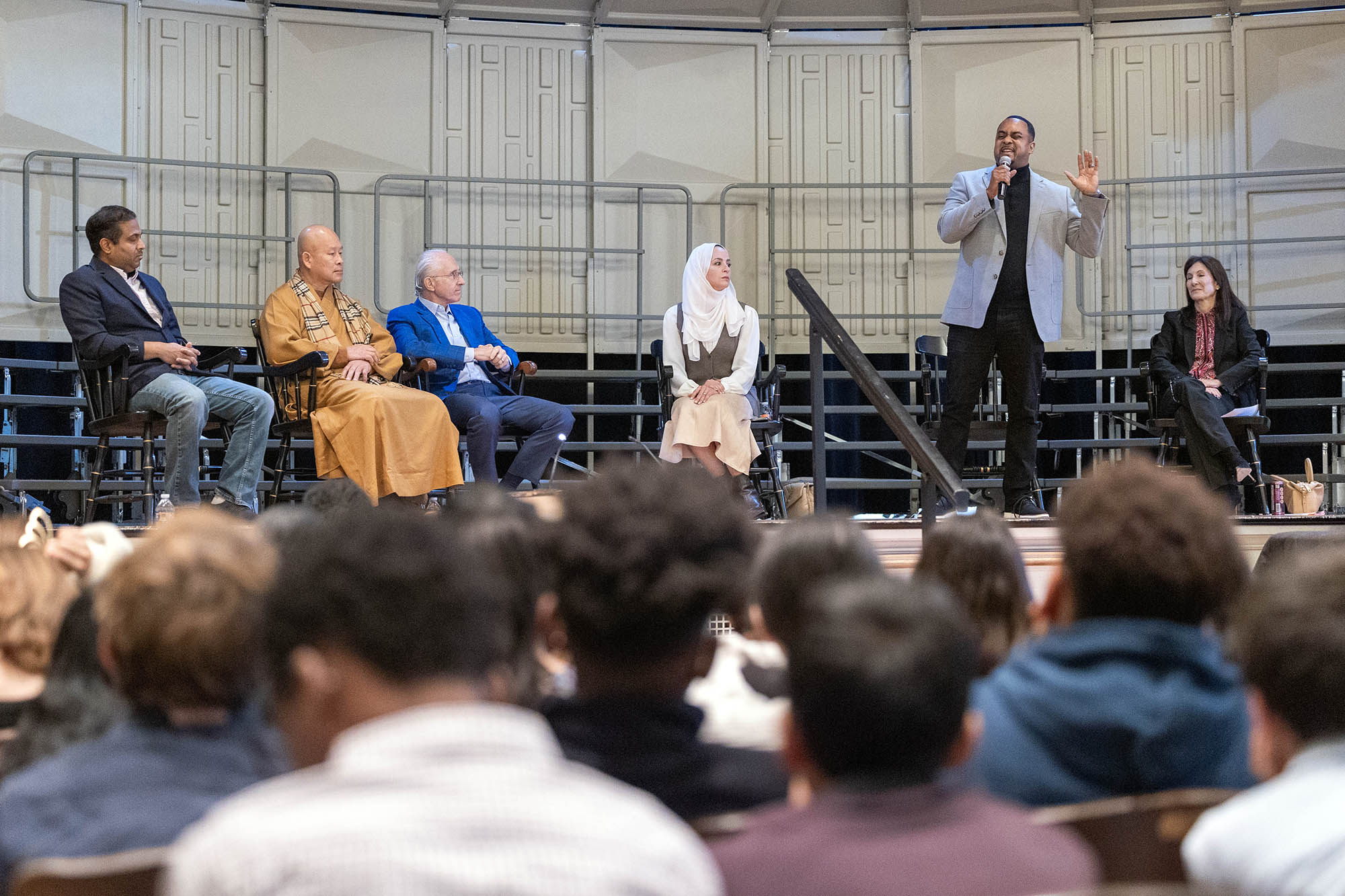
All too soon, it was time to head off to the next classes, but students left the World Religions Panel with many lasting connections and a deeper understanding of each religion.
“I learned many different things from the different religious speakers, and it was a nice contrast to hear from people of that religion because I got to understand some experiences that they as a person had to go through,” said Angela Yang ’31. “I learned a bunch of new things different from what I had learned in class, and every speaker there had their own story. I especially enjoyed when the monk started talking because his experiences of being a monk and having to actually go through the process were really cool.”
“Some things that I took away from the panel were how every religion had different beliefs and different core values. It was very inspiring to hear all of their personal stories and how people who grew up in completely different situations are all so devoted to their faith and what they do,” Addie Rowland ’31 said. “Something that surprised me was hearing how all of the speakers were born into or converted to their religions. It was also very interesting to see how some had seen their higher power in their religion appear in their life and how some had witnessed miracles happen because of their faith.
“It was interesting hearing from these leaders and learning more about their religions and practices. The leaders covered many things we talked about in class, but also expanded and deepened my learning about these religions by providing new insights. We learned more about daily devotions that these leaders do to stay connected to their religion, like prayer, meditation, mindfulness, and studying/reading holy books. These religions had very similar daily activities, like prayer, but in different forms. Another similarity that I noticed is that they all have moral laws or codes to follow, including worshipping a single god, treating everyone equally, being truthful and honest, being non-violent, and overall making the right decisions and right actions as well.”
“I liked hearing about the different religions from someone who practices them because it helped me understand what the religions meant to the people following them and the main principles of those religions,” said Ian Linden ’31. He noticed similarities and differences among the faiths. “The religions all seemed to have key differences with one another, and they all seemed to have different beliefs about how to worship, rules, and a lot of other things. I noticed that all the religions seemed to have some regulations about how you should act and about how to be a good person.”
A heartfelt thank you goes to each of our guest panelists! “We are so appreciative to the speakers for generously sharing their time, stories, and perspectives with our students!” Robertson said. “How special it was to give students a chance to see beliefs in action, ask questions respectfully, and make real-world connections to what we learned in class.”
As our Global Perspectives students continue their studies, they have gained a more thorough understanding of these faiths and the people who practice them, thanks to this panel. After all, our Mission reminds us to embrace all the world’s people with compassion and stand for what is good and right—a mission that the tenets of each faith uphold. Thank you again to our panelists and our history teachers for helping the seventh-grade class understand these faiths more deeply!