It’s not every week that you get to see a real brain, but some of our MICDS Upper Schoolers have had the opportunity to see and hold both a sheep brain and human brain over the past couple of weeks.
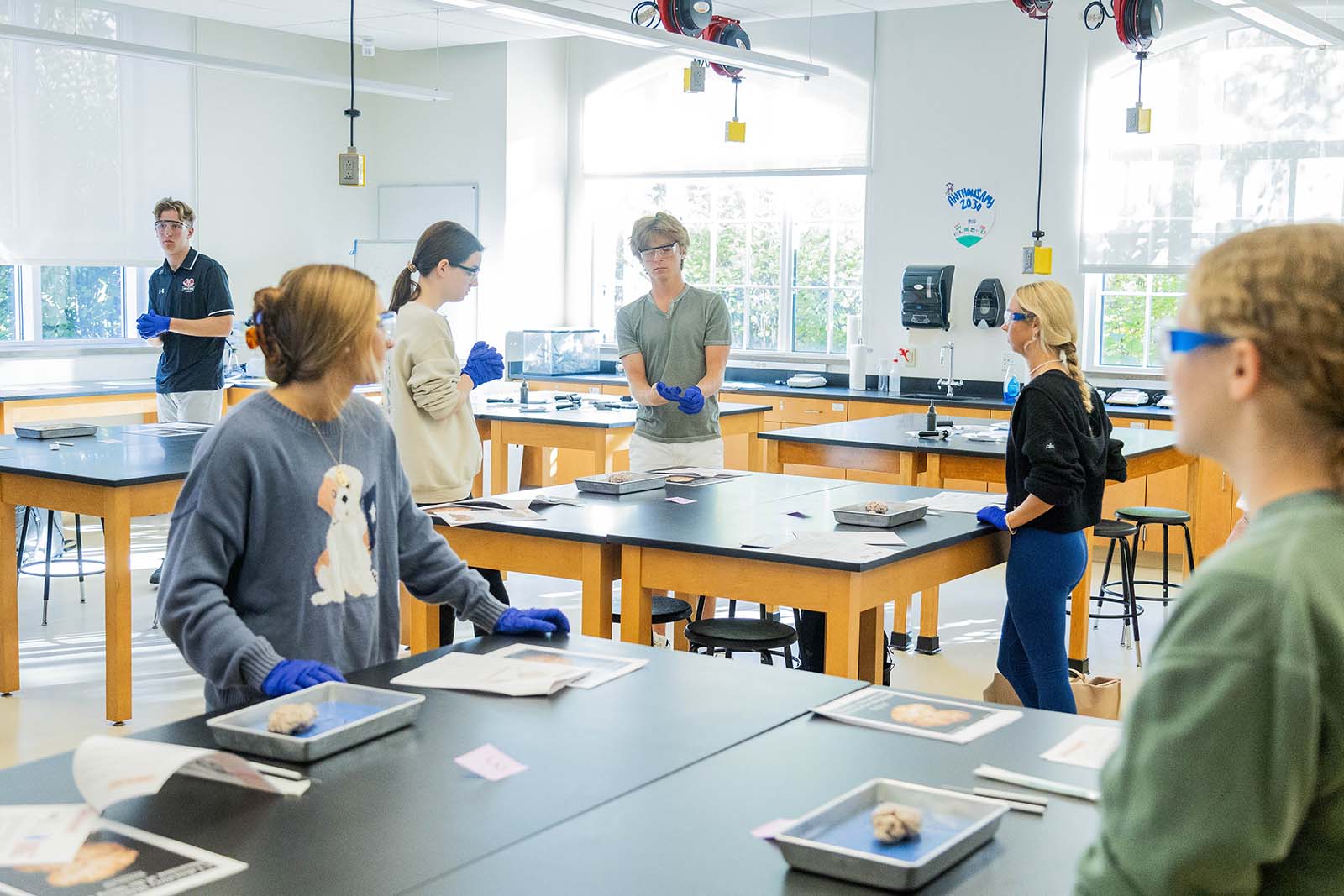
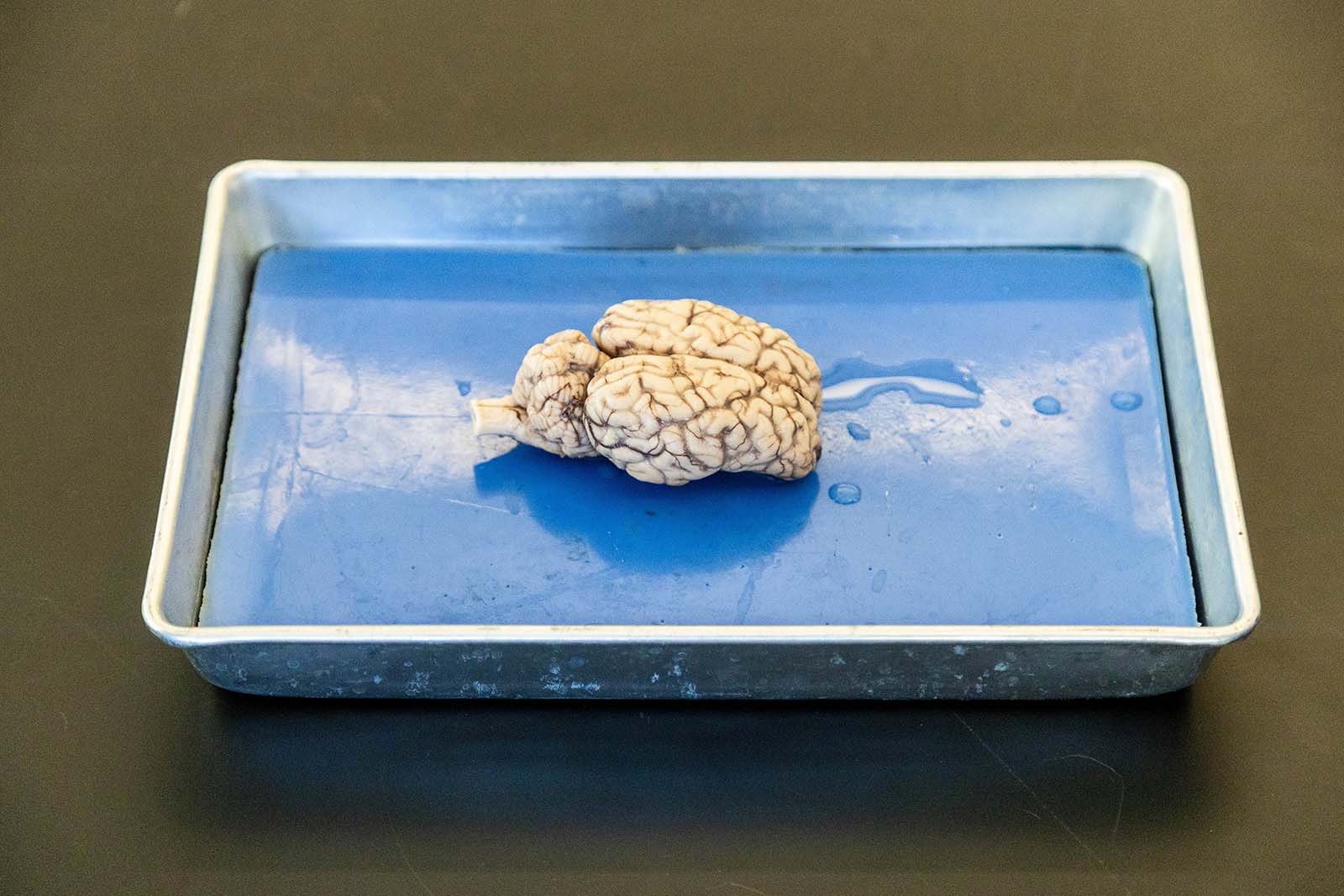
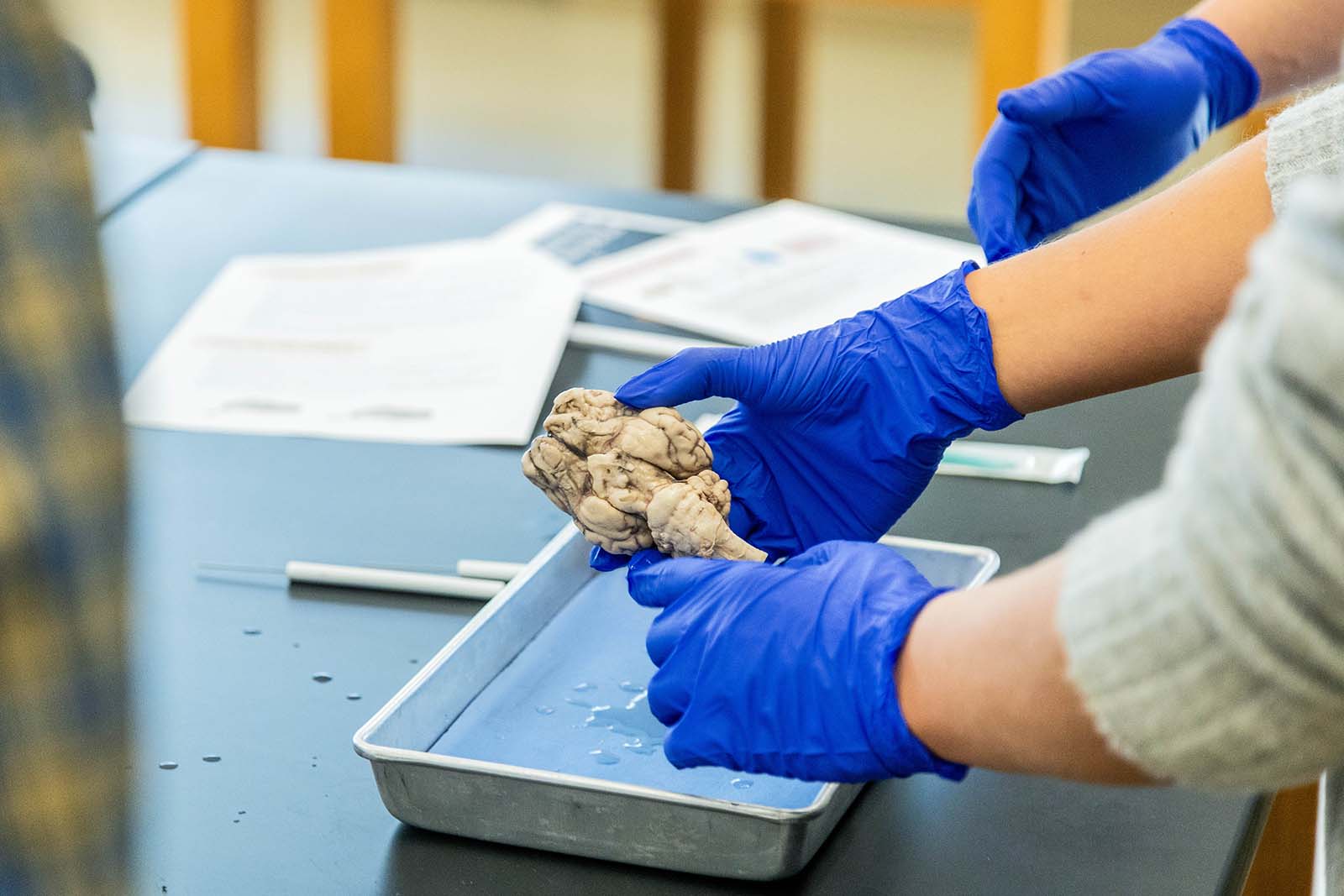
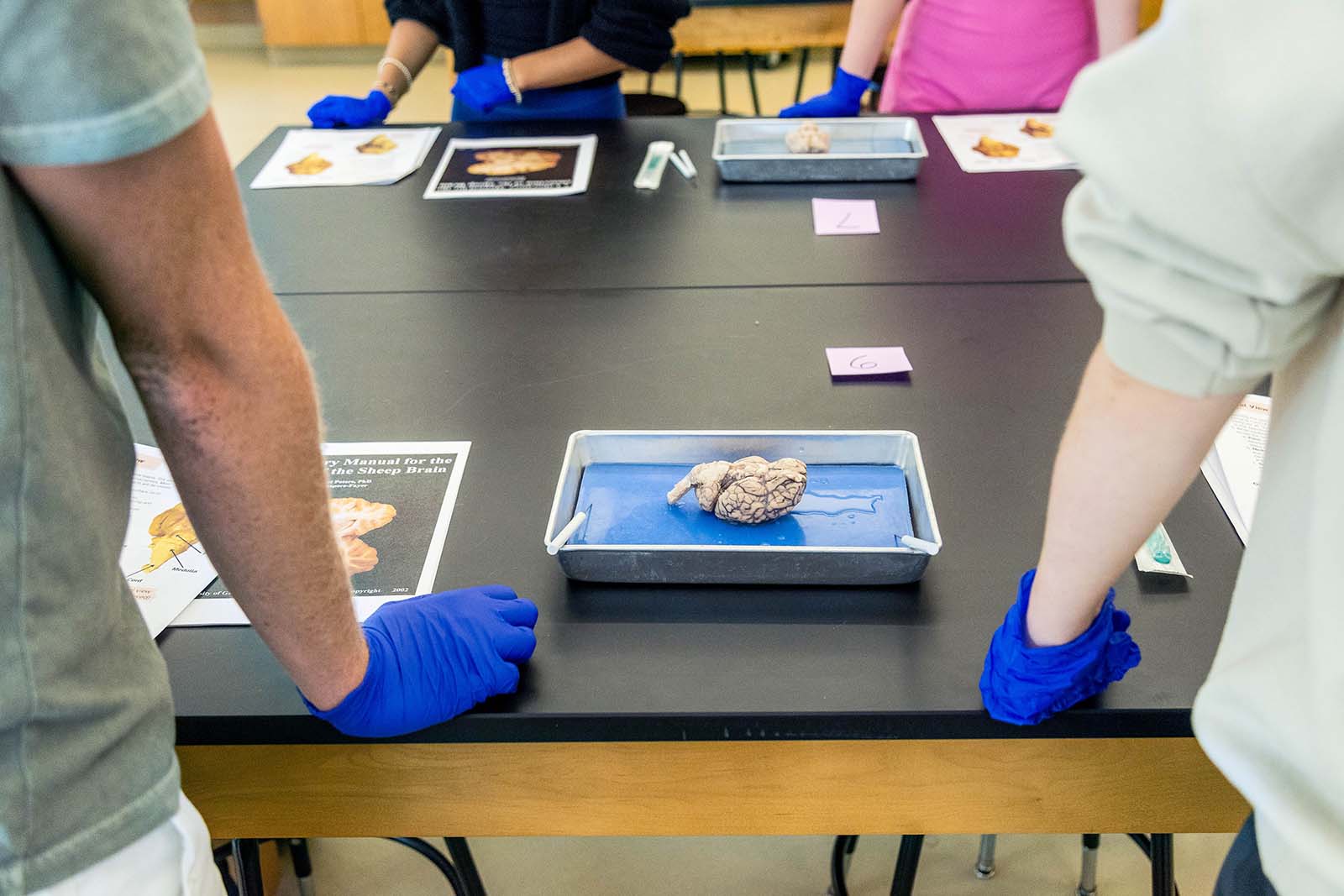
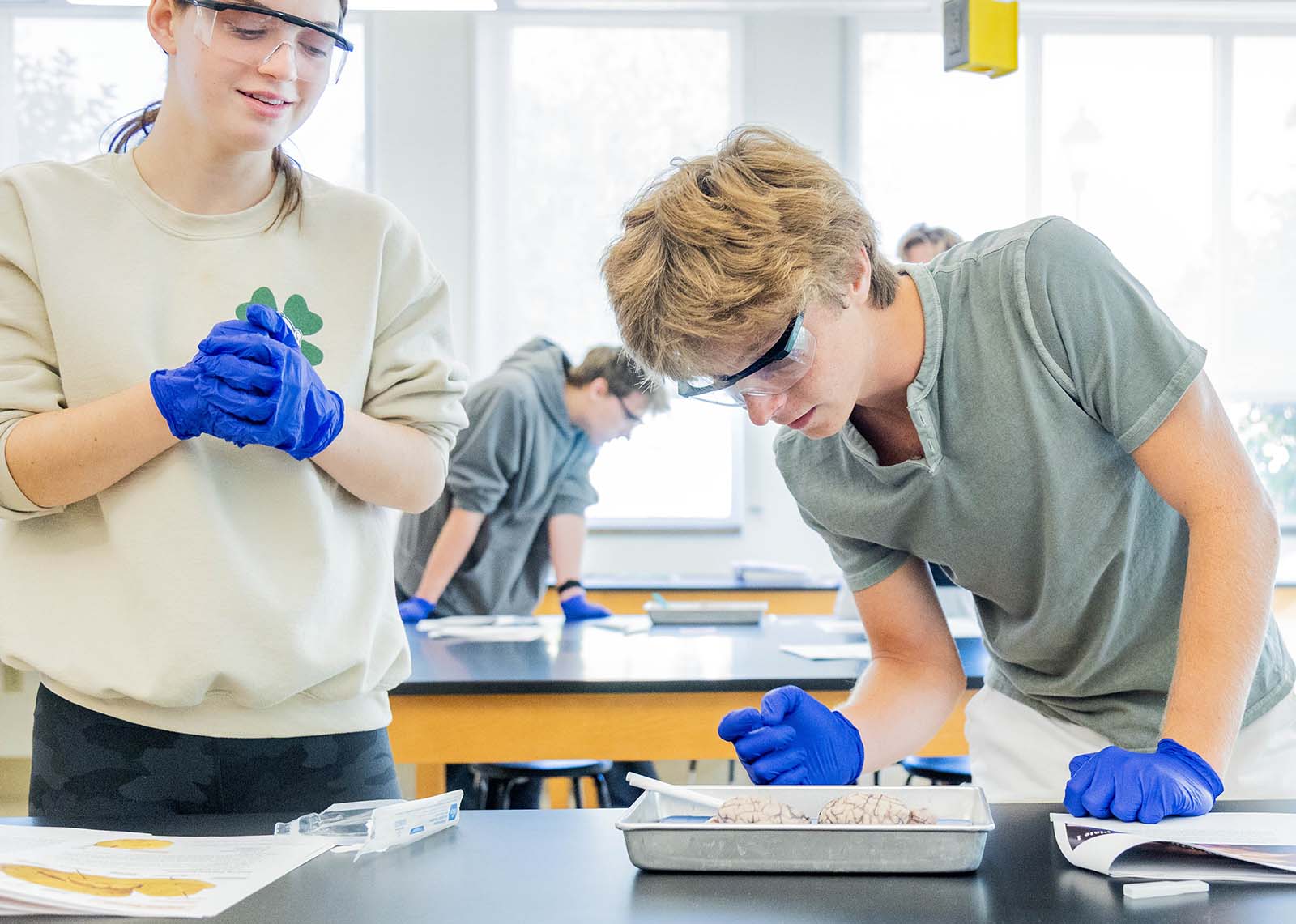
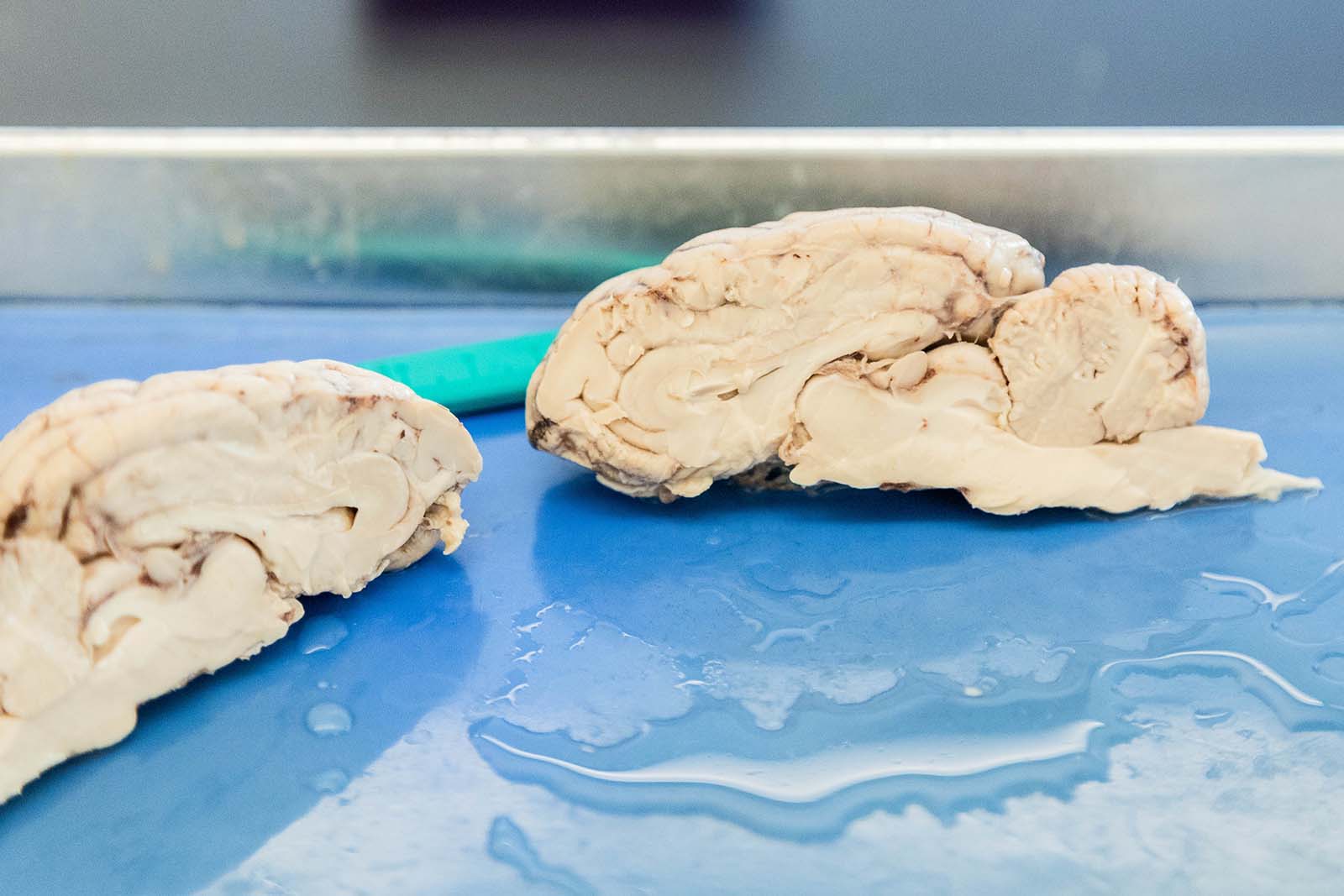
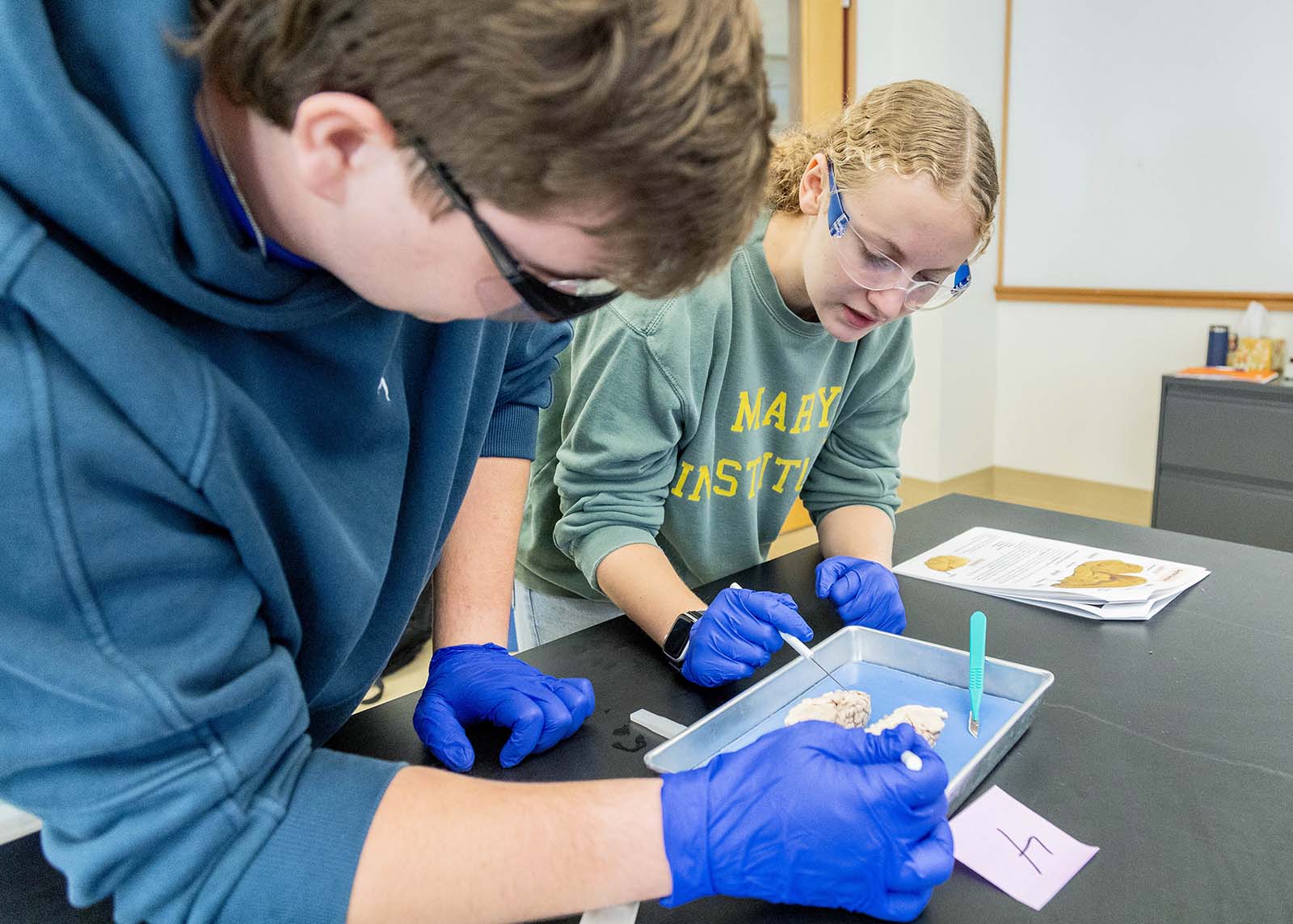
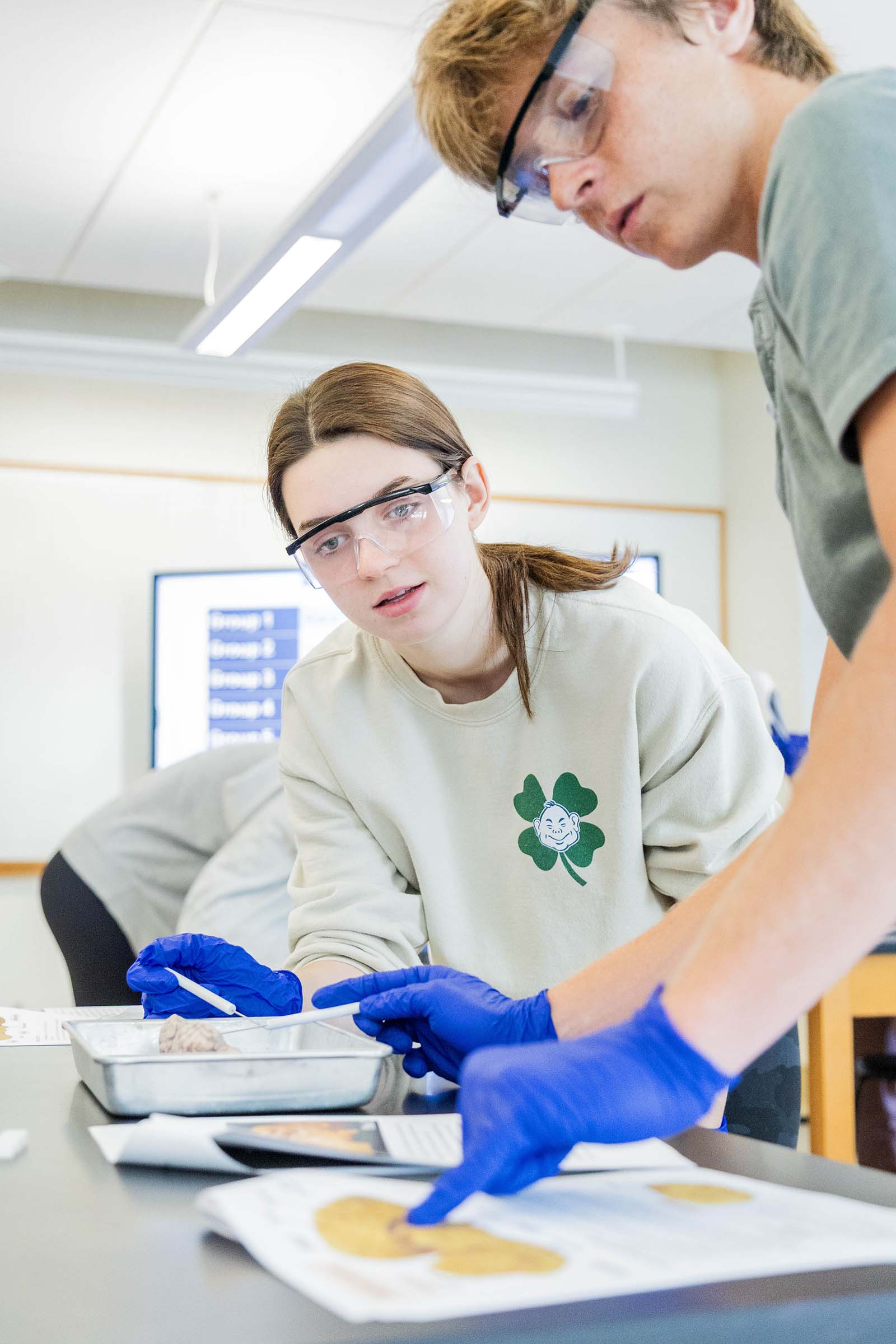
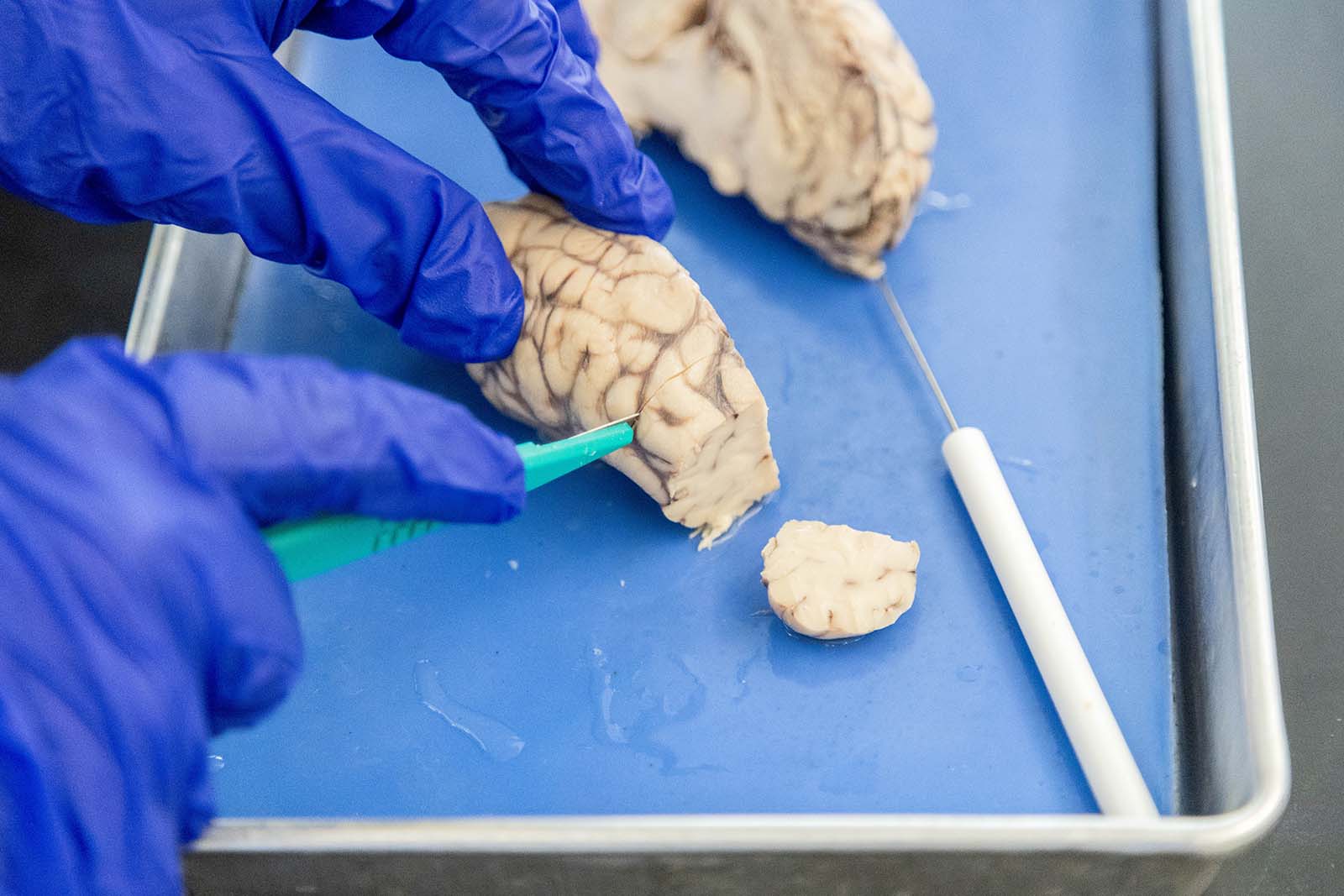
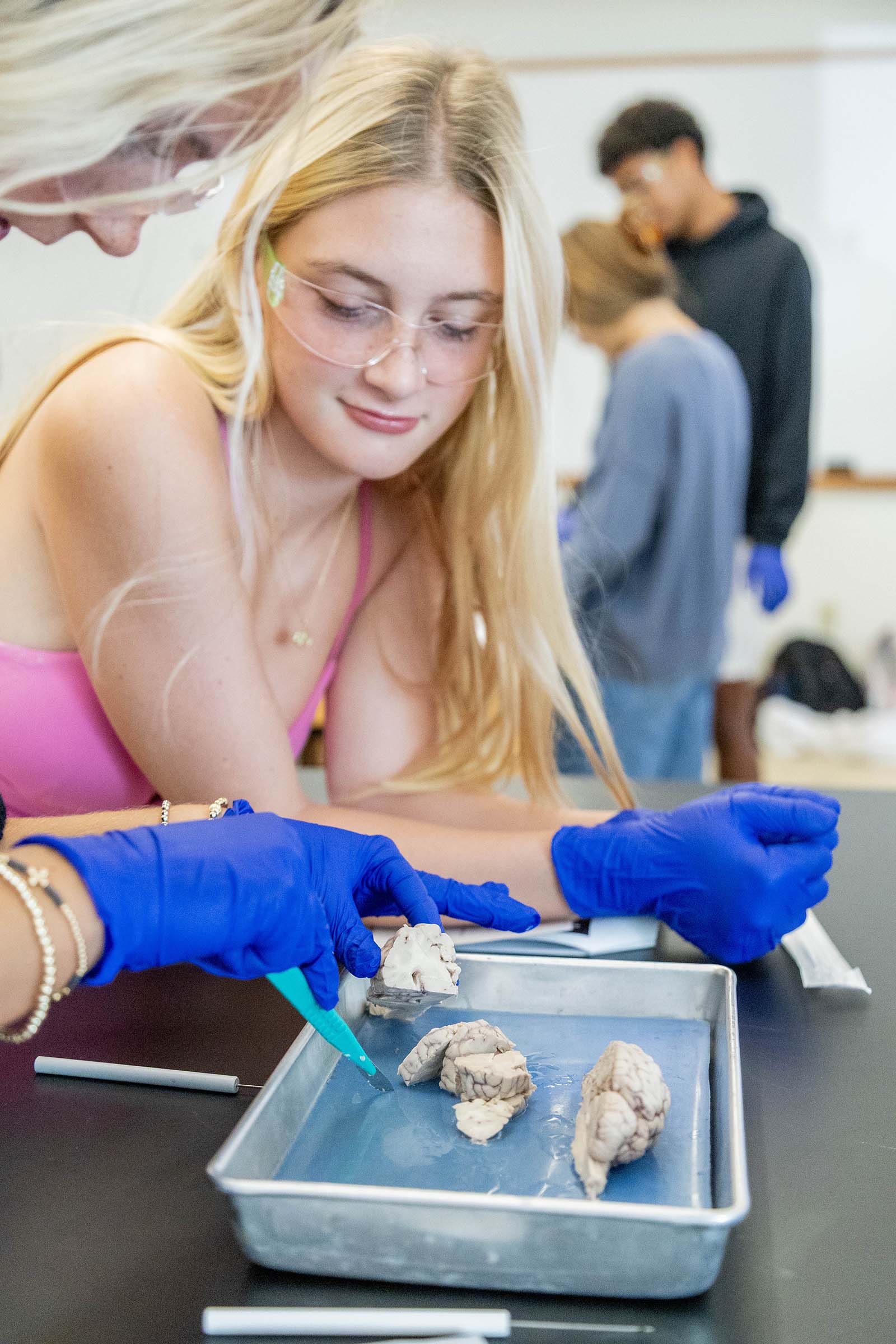
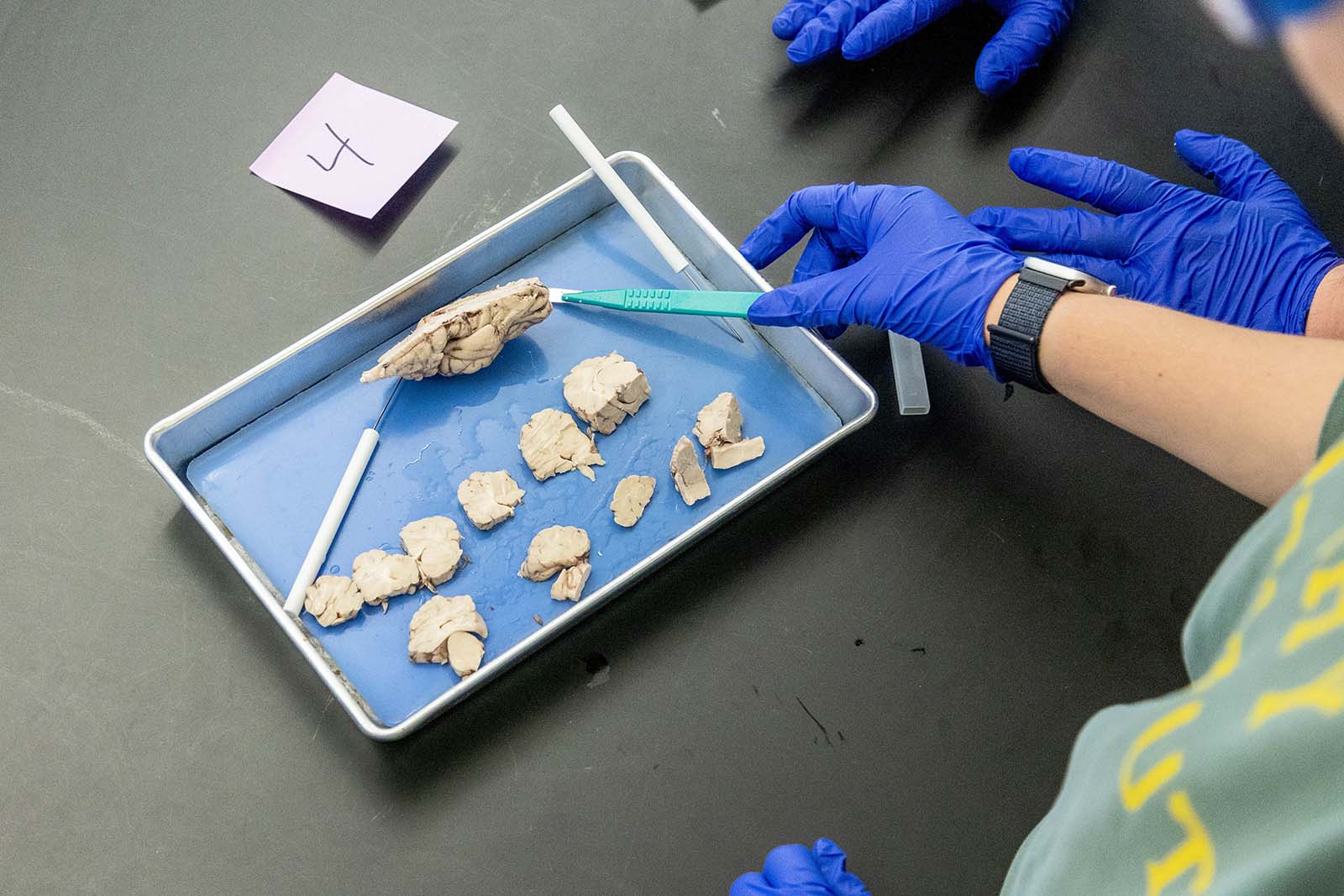
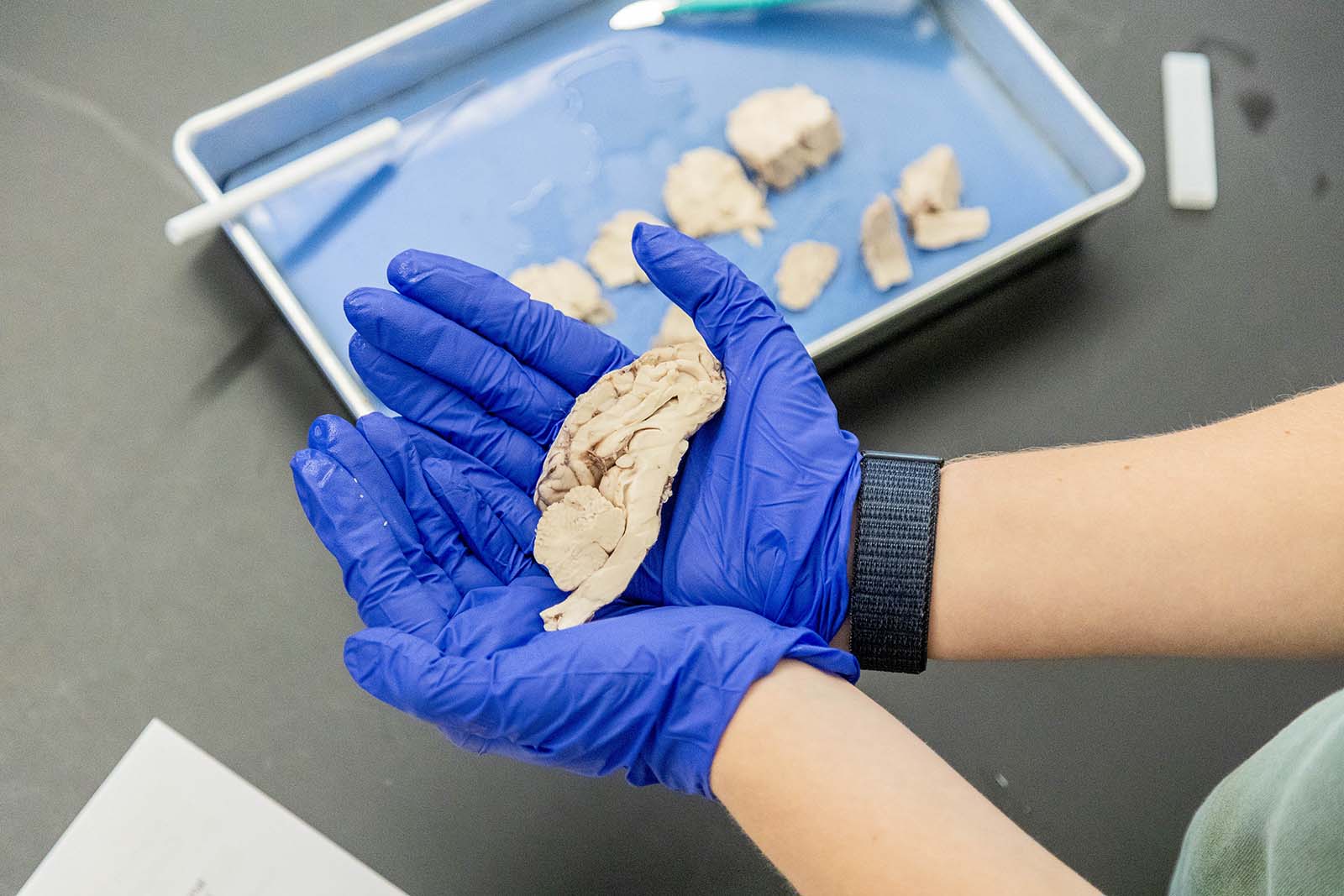
Sheep Brain Dissections
In neuroscience, students have spent the semester studying functions of the frontal lobe of the cerebral cortex, such as personality, attitude, mood, emotion, memory, and problem-solving. They’ve learned about the structure and function of neurons that form complex brain circuitry and support brain function. They’ve also studied how signals travel within neurons and across synapses between neurons.
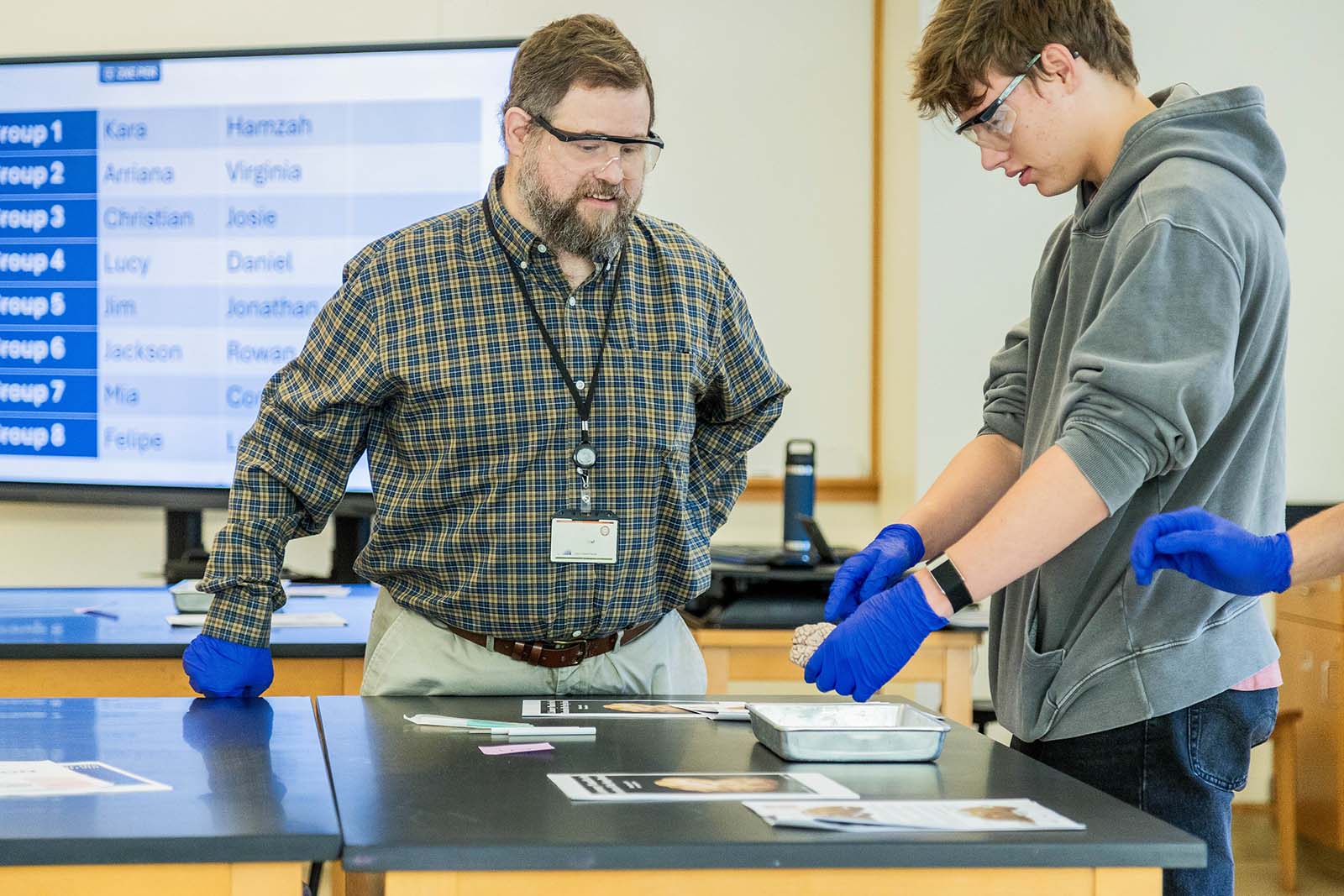
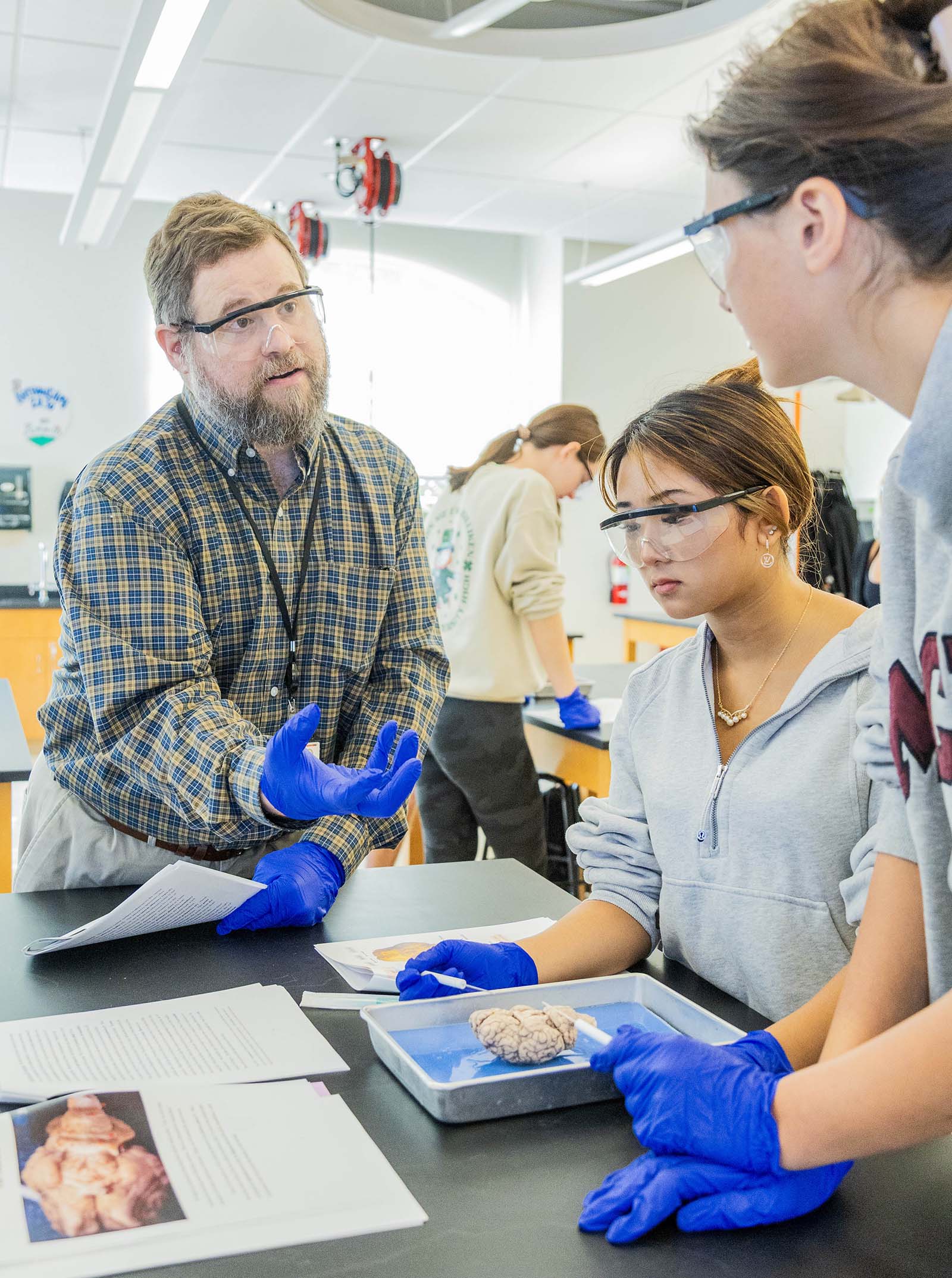
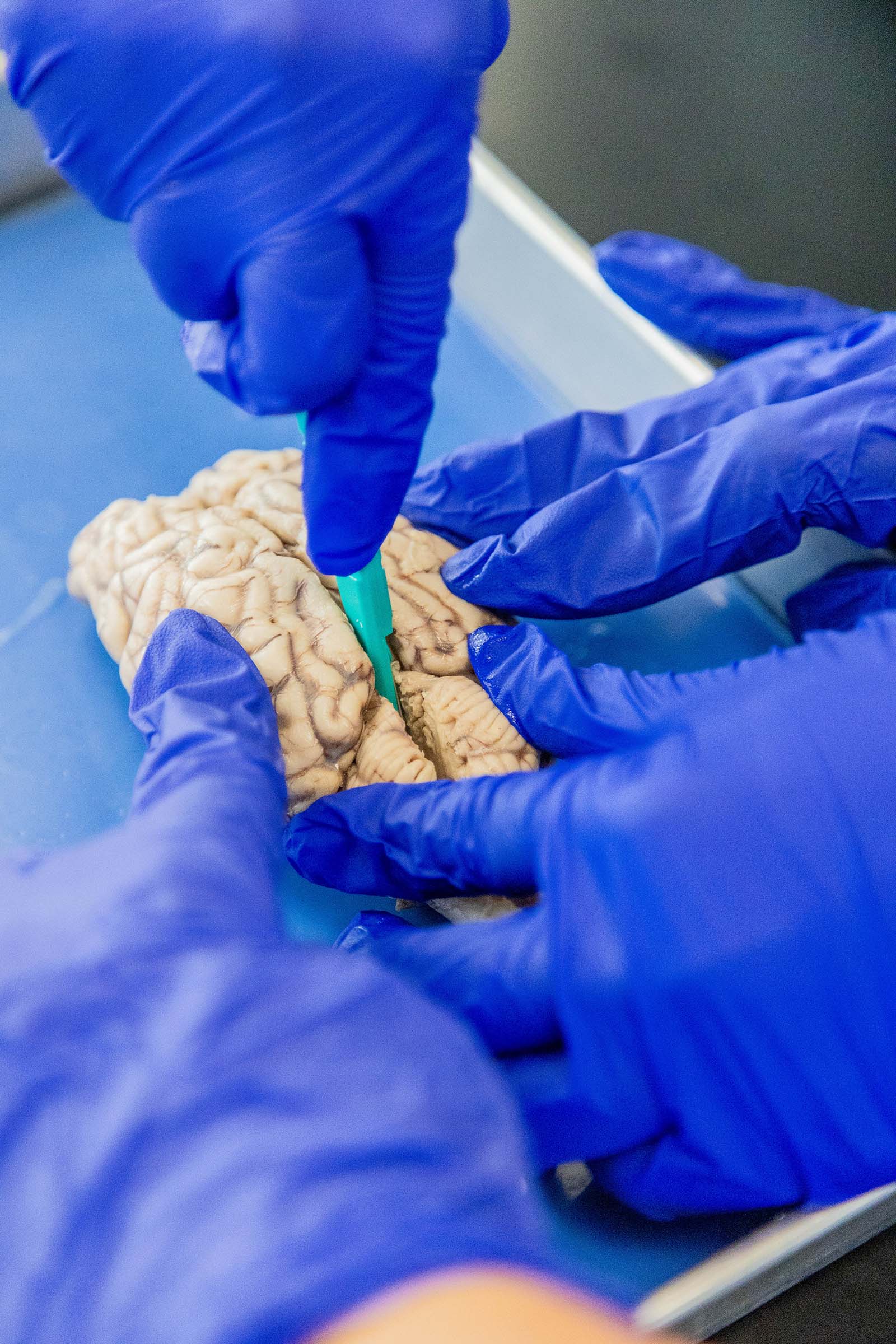
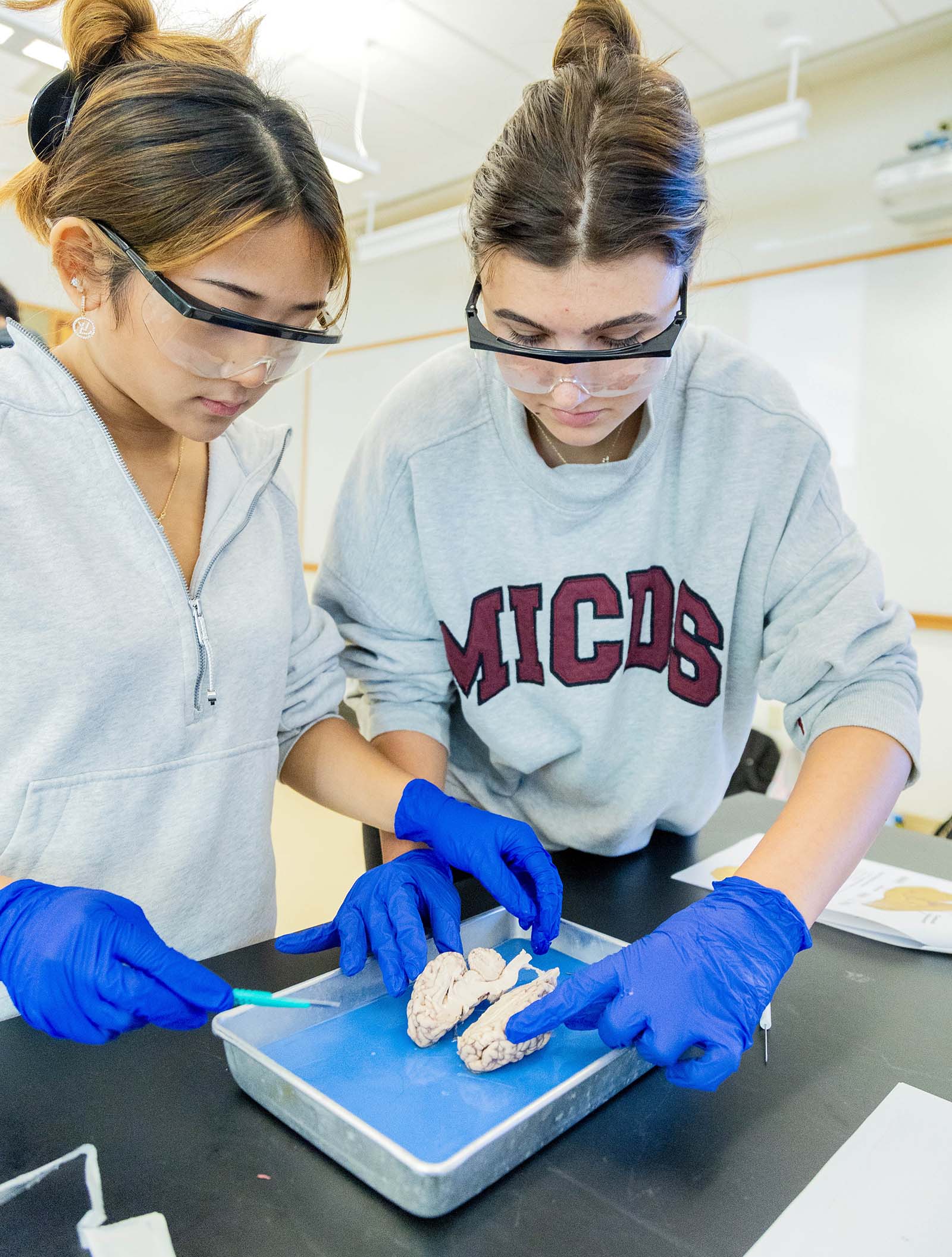
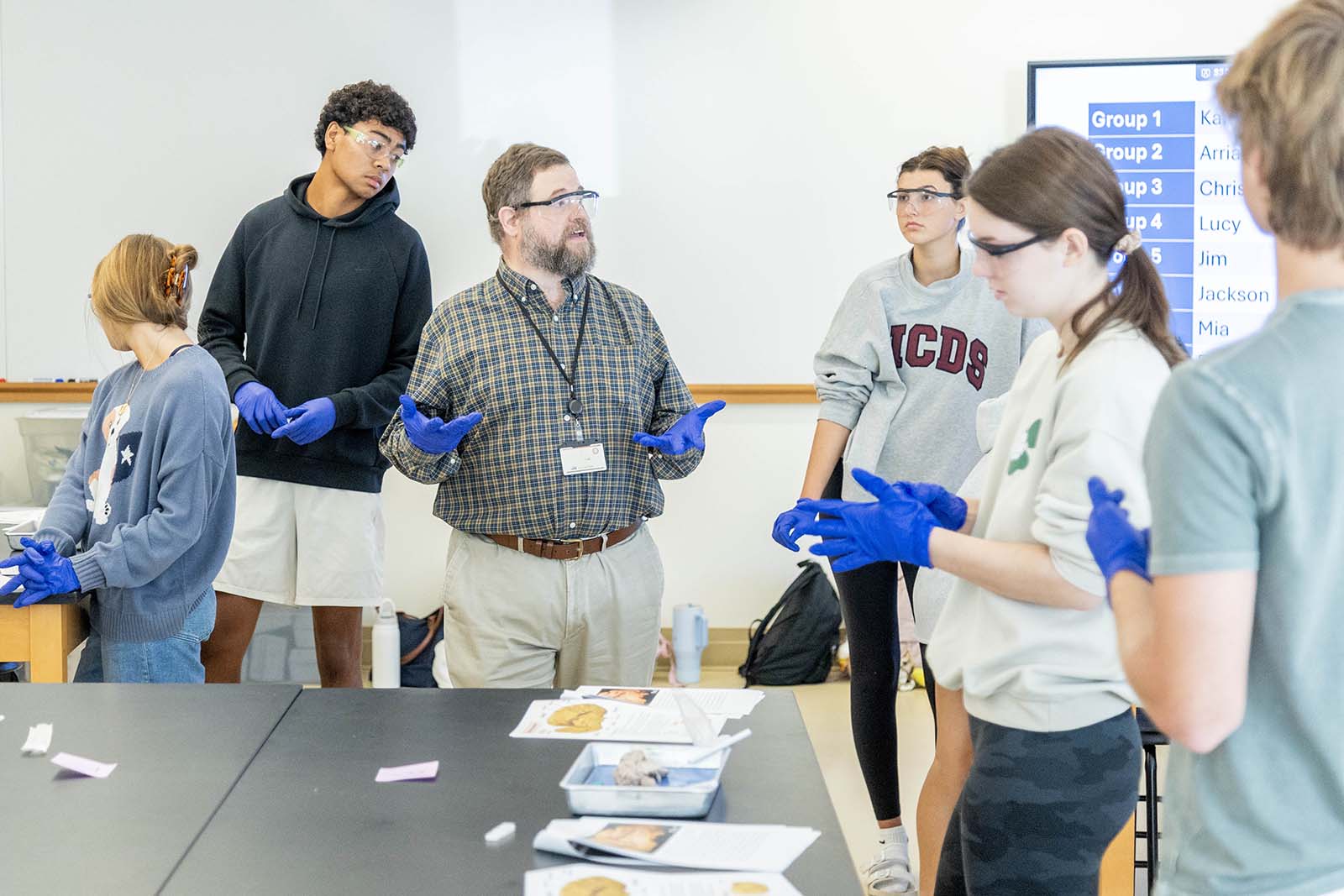
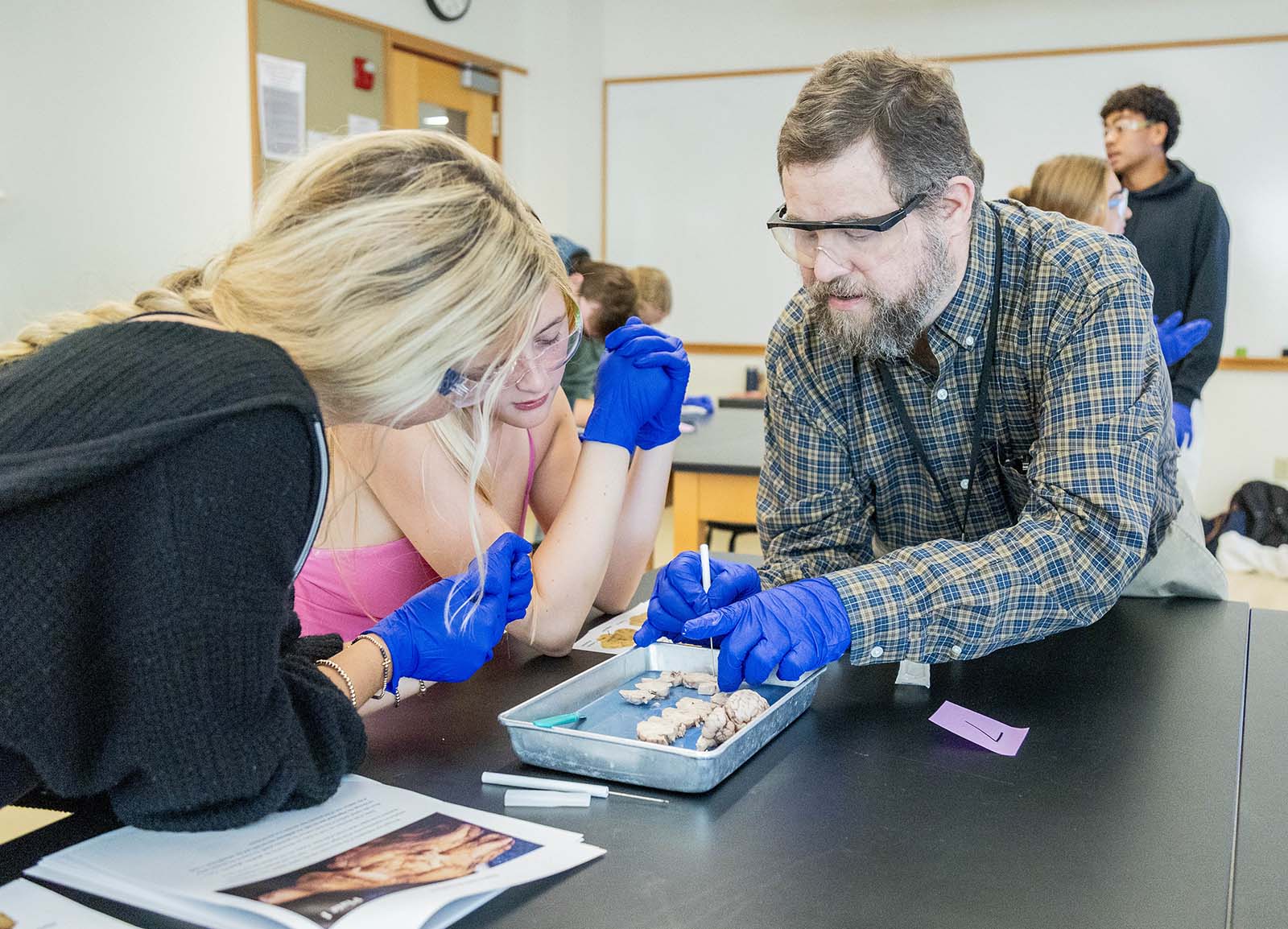
“To prepare for an upcoming presentation with a neurosurgeon, knowing that he would be talking about human brain anatomy and bringing human brain specimens, we dissected sheep brains, which have similar structures to human brains, to learn about brain anatomy in a more experiential setting,” shared Dr. Ethan Graf, Upper School Science Teacher. “This helped students to connect concepts of brain function and neuronal circuit function to where it is all taking place, in the brain itself.”
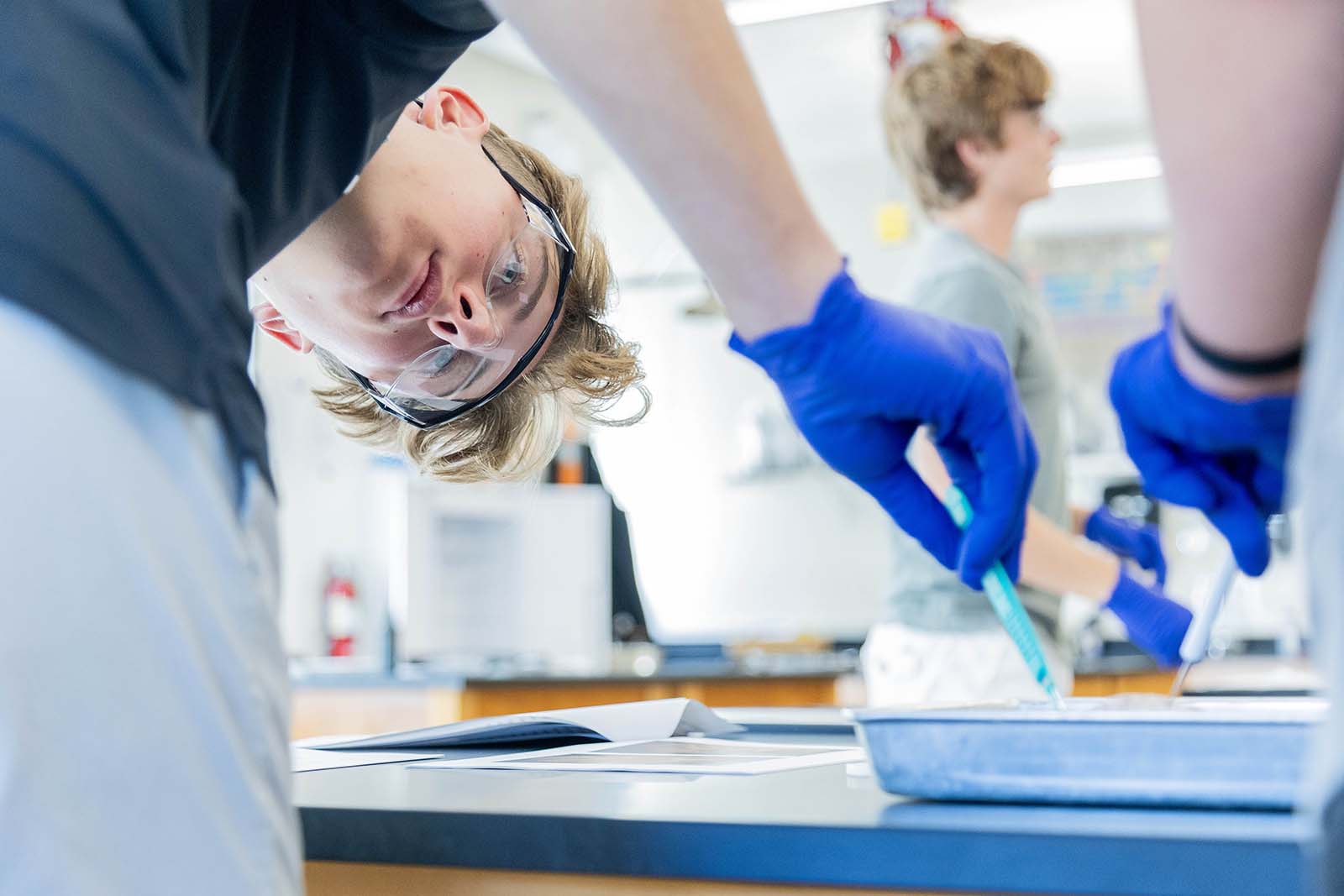
On the day of the sheep brain dissections, pairs of students were given a sheep brain as Dr. Graf described the different areas of the brain, what functions happen where, and what the different anatomical parts are called. As students performed the dissections, they were tasked with locating certain parts of the brain and showing Dr. Graf the different structures.
Next week, our AP Psychology students will get to study the sheep brains as well.
Special Guest Visit & Human Brain Lab with Medical Director Dr. Neill Wright
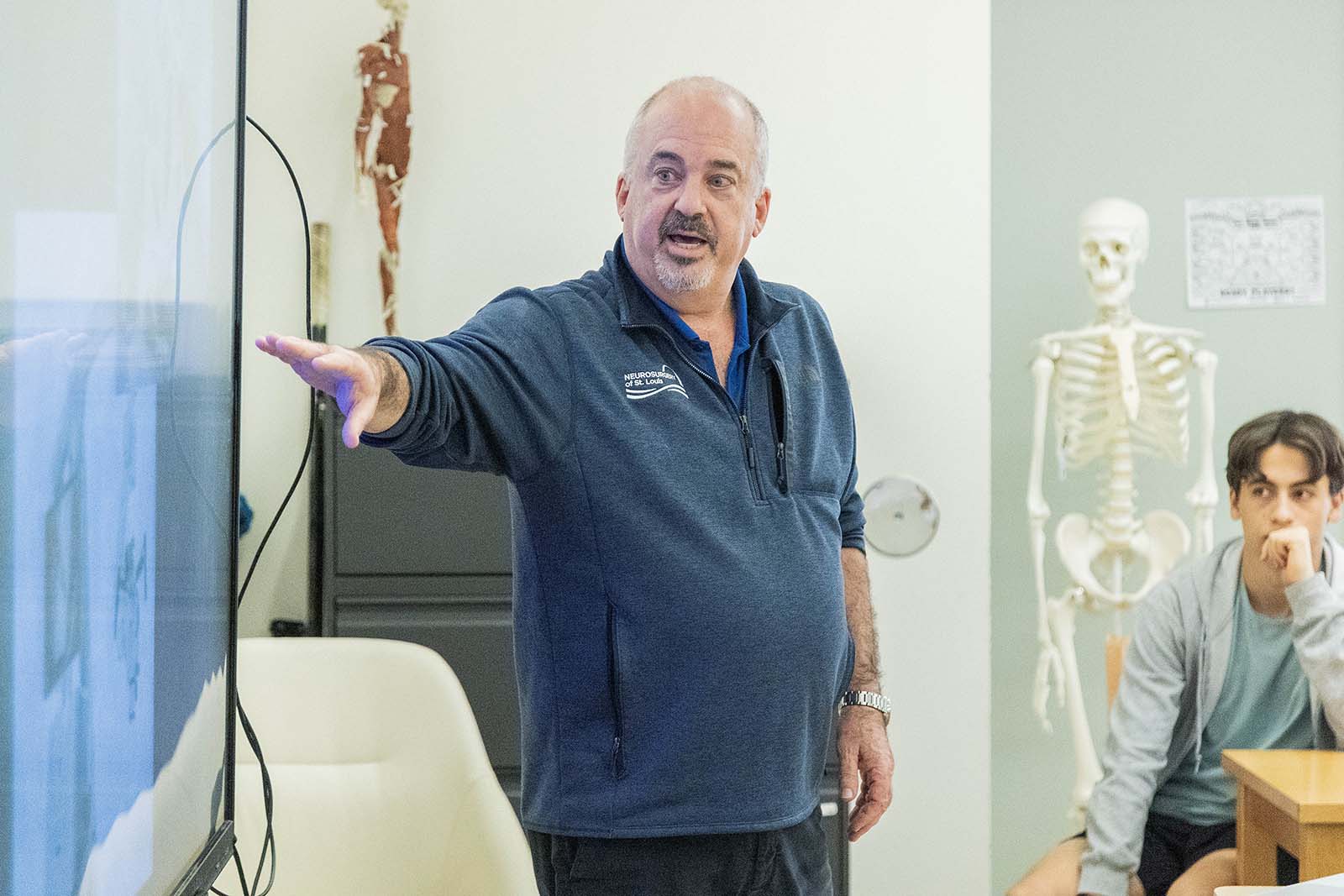
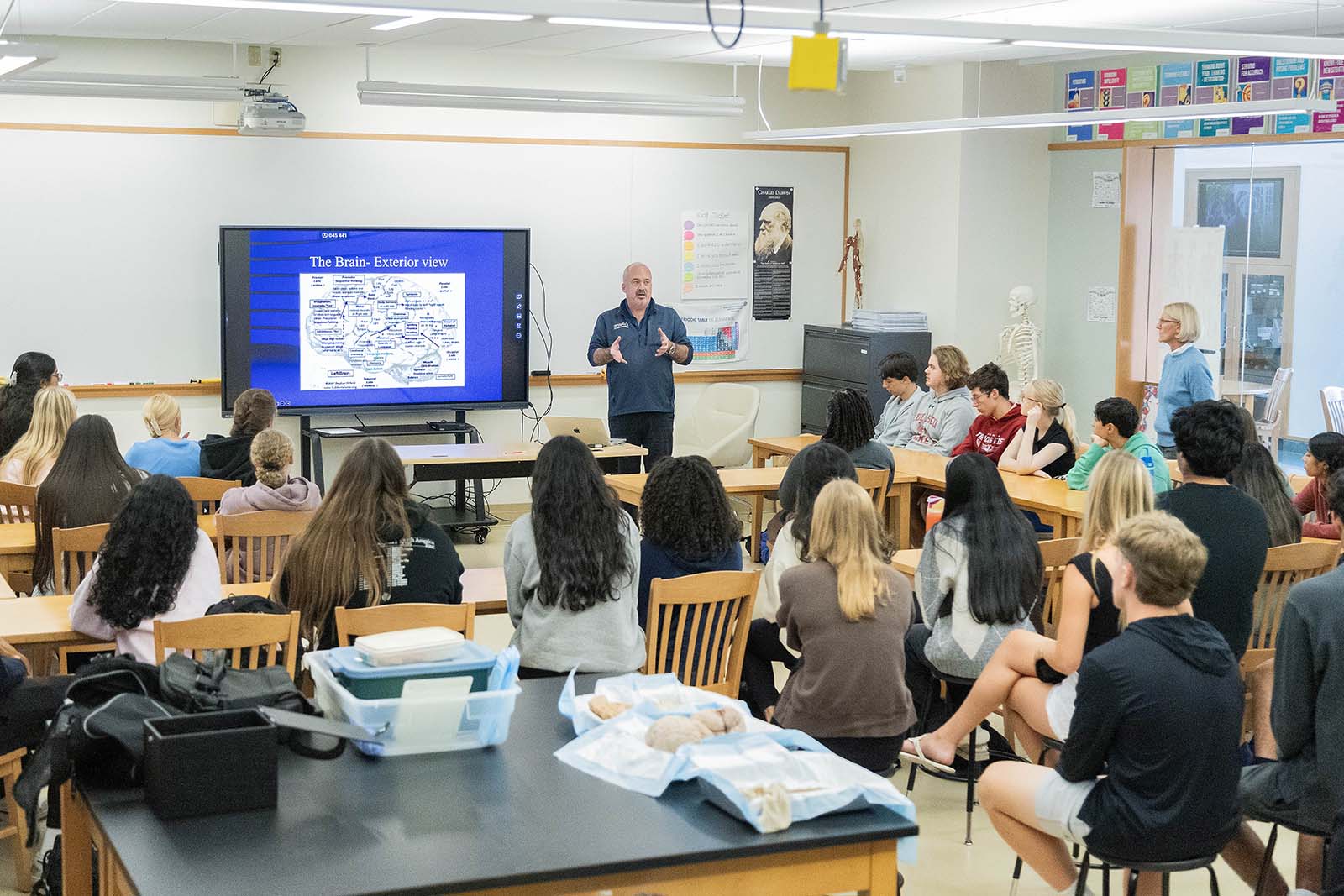
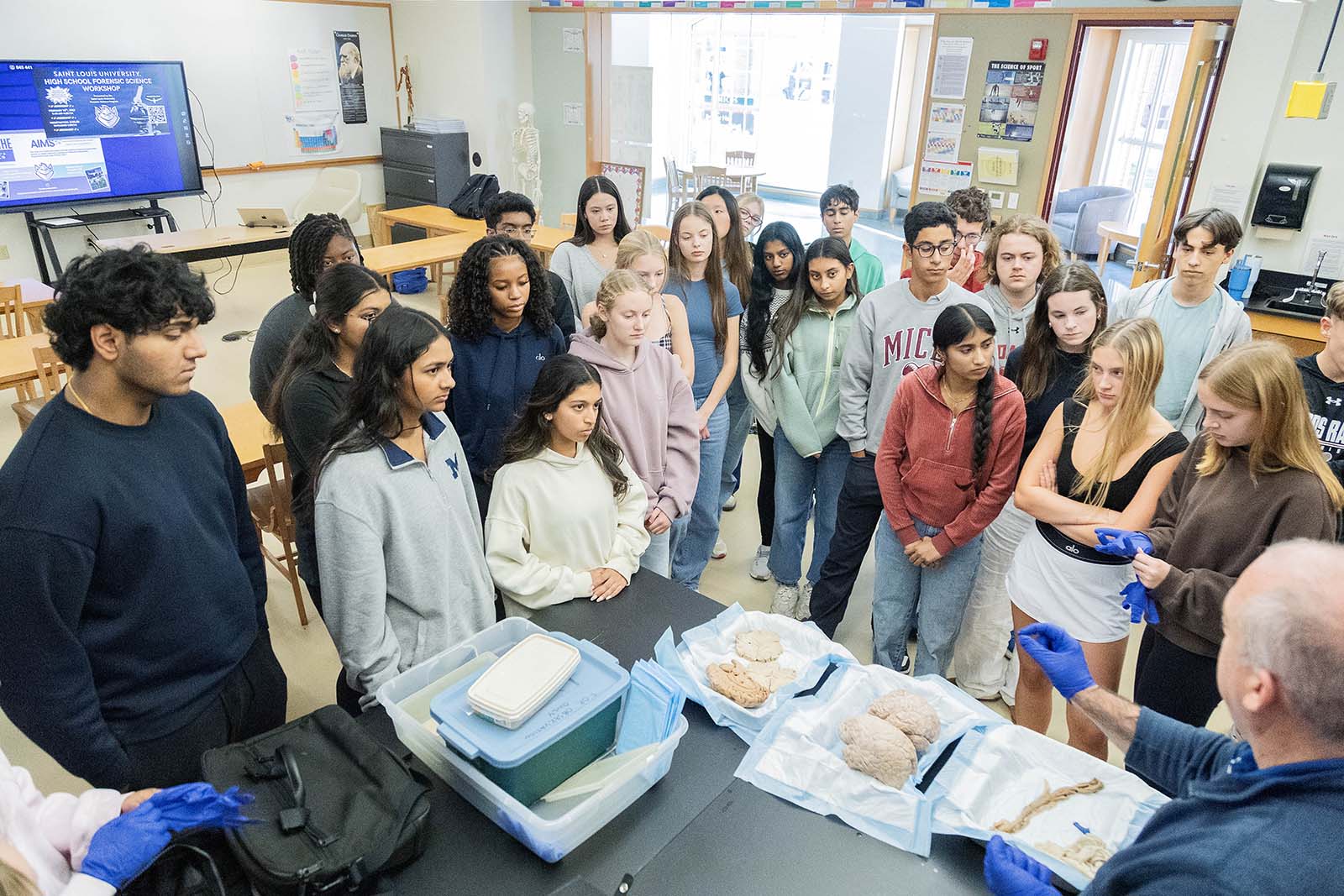
On Monday, October 26, MICDS neuroscience, psychology, and anatomy & physiology students filled STEM 108 to get to learn from expert neurosurgeon and MICDS parent Dr. Neill M. Wright P ‘25, ‘27, and ‘29. Dr. Wright is the Medical Director at Neurosurgery of St. Louis. He has performed over 2,500 cervical spine surgeries, and his practice also treats craniocervical/craniovertebral junction disorders, atlantoaxial instability, cervical spondylosis, cervical disc herniations, cervical myelopathy, cervical radiculopathy, cervical spondylolithesis, cervical stenosis, cervical deformity, and tumors of the spinal cord and spine. With over two and a half decades of experience in addition to many years of schooling, he shared some of his extensive wisdom with our captivated Upper Schoolers.
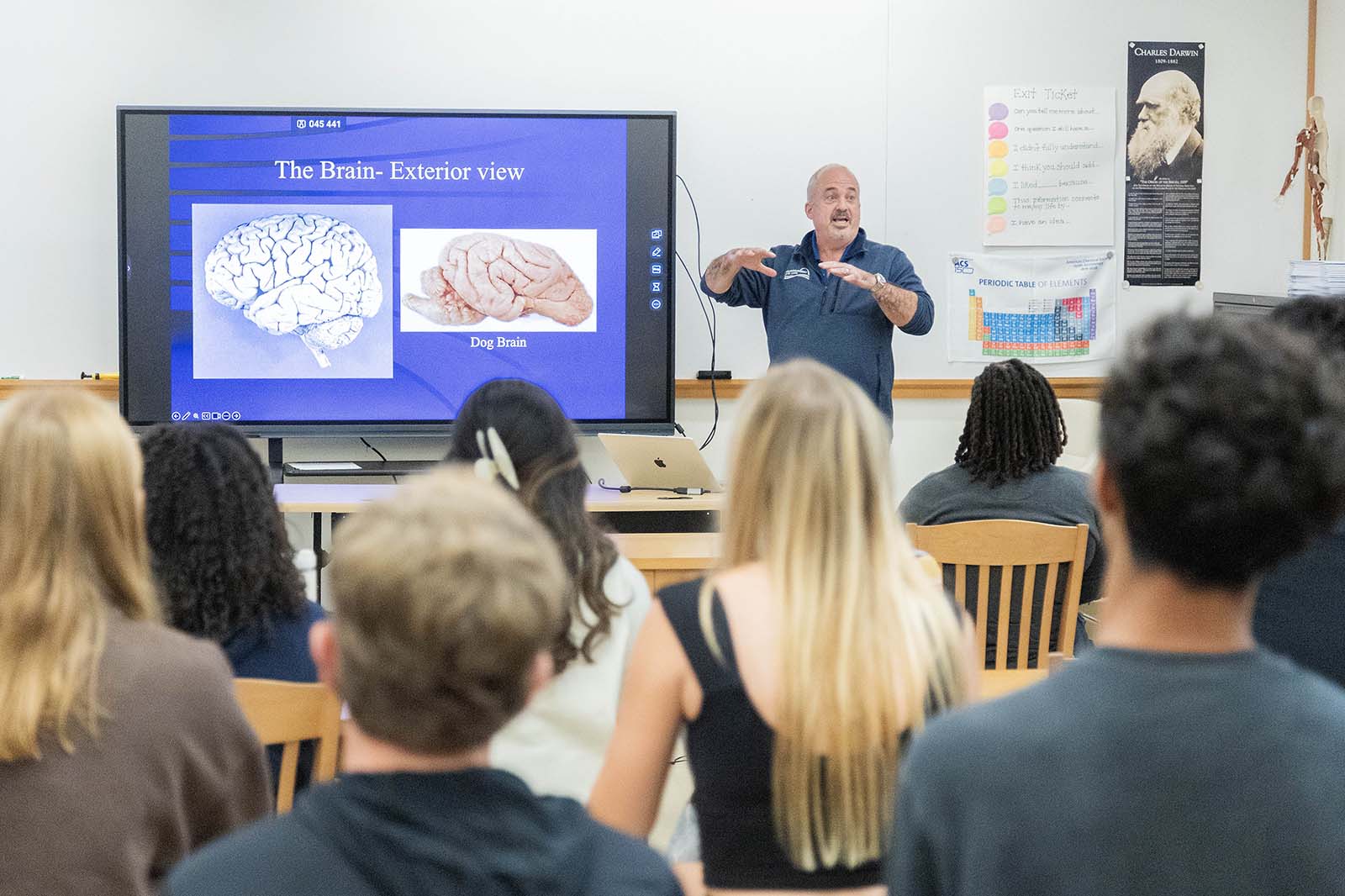
First, Dr. Wright talked about what a neurosurgeon is—a surgeon who specializes in the diagnosis and surgical treatment of disorders of the brain, spinal cord and nerve roots, spine, and peripheral nerves. He walked through his specific journey into neurosurgery, sharing about his lengthy educational path that led him to become a neurosurgeon. Then, knowing that students had recently completed their sheep brain dissections, he compared the human brain to the brains of sheep, dogs, and dolphins. Students learned that the thinking part of the brain happens on the outer surface. The more folds a brain has, the more surface area there is, so there’s more brain power. It was clear to see how the human brain has a lot more folds than a sheep or dog brain, but it has a lot less surface area than the brain of a dolphin.
In his presentation slides, students got to see different views of the brain: axial (horizontal) views and sagittal (sideways) views. Dr. Wright spoke about how important it is to know the function of each area of the brain. Unlike operating on most other parts of the body (like on one’s arm) where there is a safe path to get to the part of the body that needs attention, there’s no safe path to get into the brain without potentially damaging another part. Neurosurgeons are constantly trying to minimize the side effects of a surgery by strategically accessing the surgical site through the area with the least potential to have long-term damage. They perform constant risk assessments.
After talking about how the brain normally works, Dr. Wright dove into what neurosurgeons do to help when the brain functions abnormally. He listed off the variety of causes that could impact one’s brain: trauma, blood clots, brain bleeds, skull fractures, and more. He also talked about how neurosurgeons help with spinal cord disorders. Dr. Wright explained how some of these issues are treated, what tools they use during surgery, the counseling that goes into discussing the procedure with the patient, he talked about a few client cases, and, after giving a warning that the content ahead would be graphic, he showed videos to walk through actual surgeries. Students were fascinated to get a glimpse of the actual surgeries and all that goes into a patient’s often life-changing and life-dependent surgery.
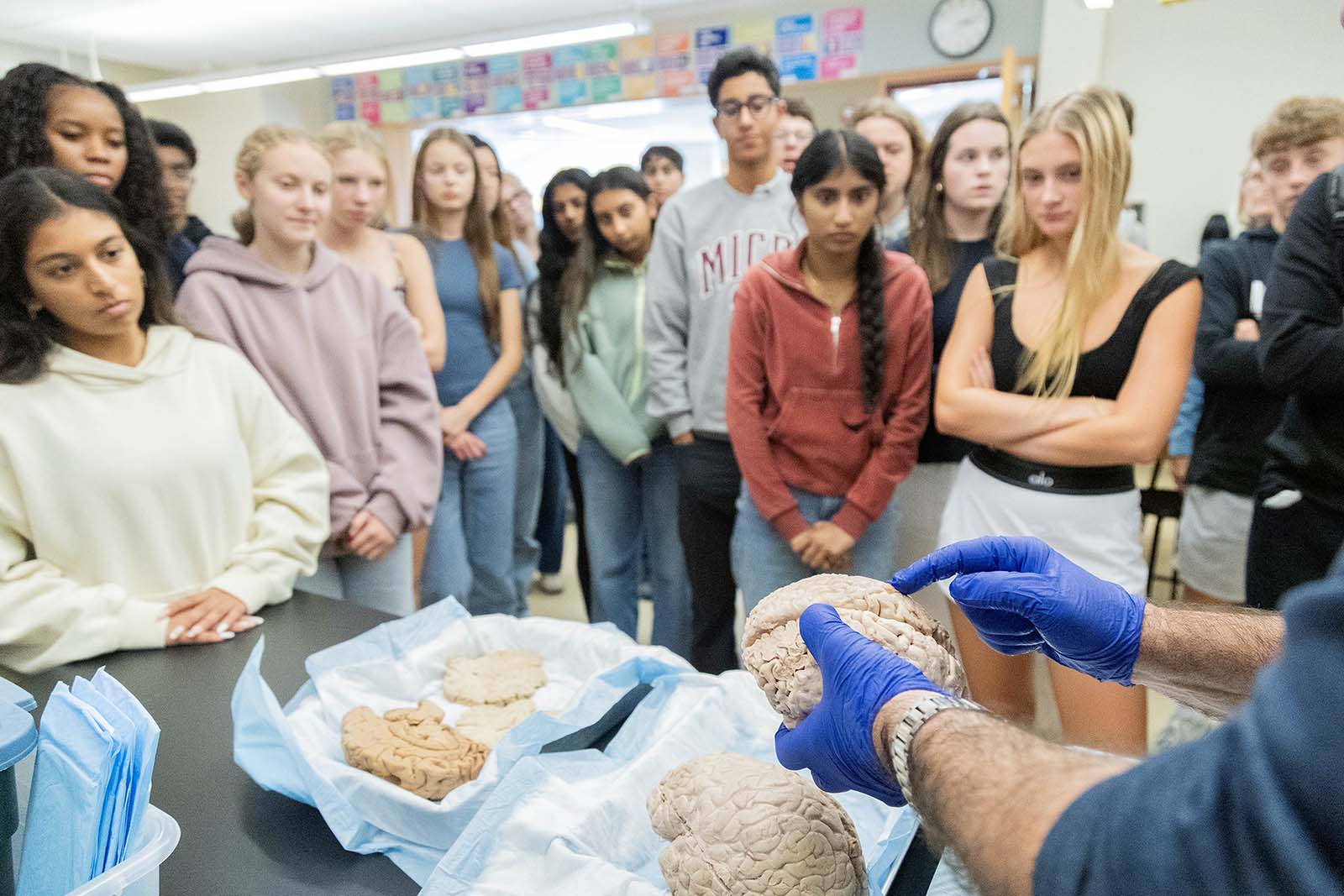
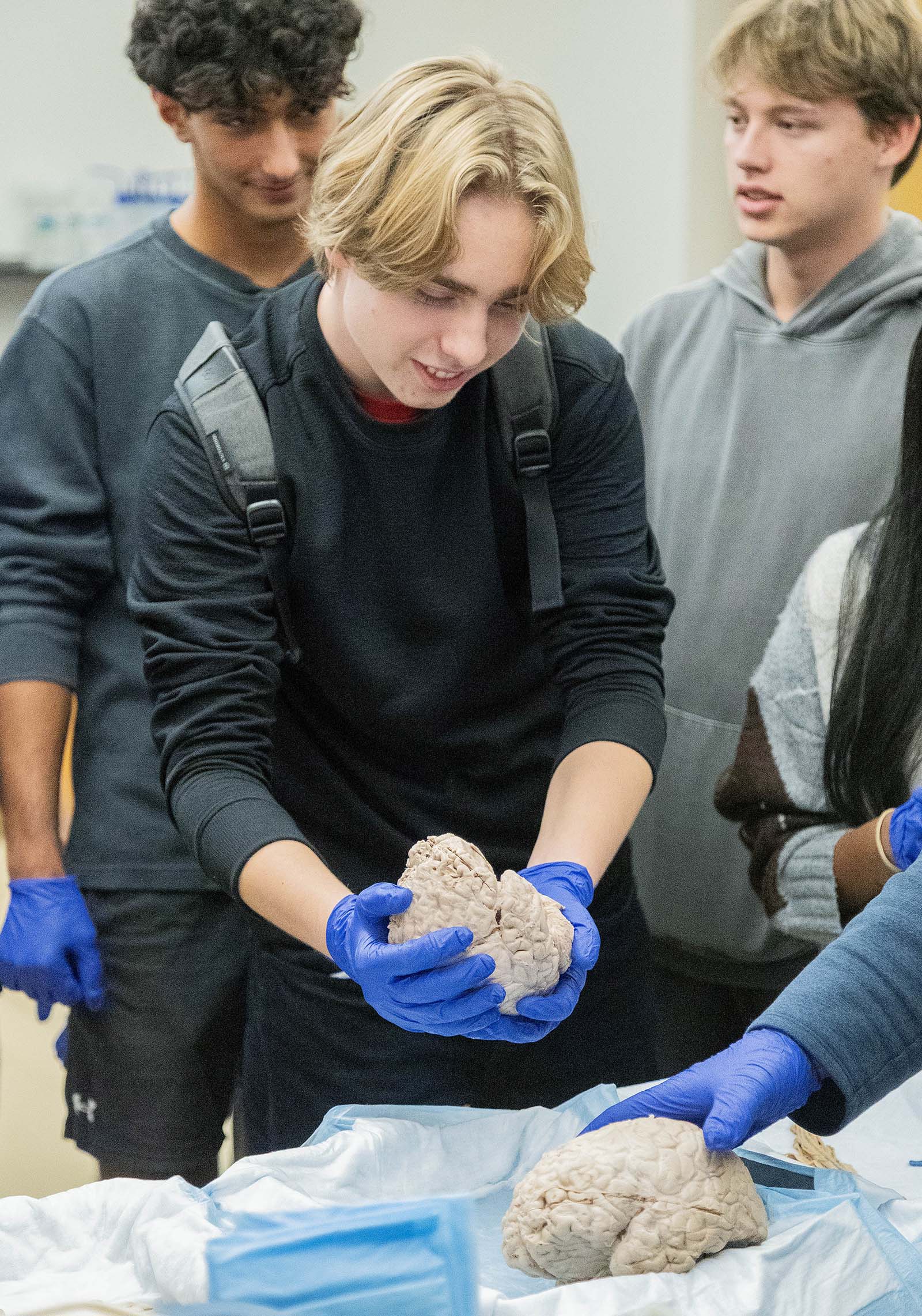
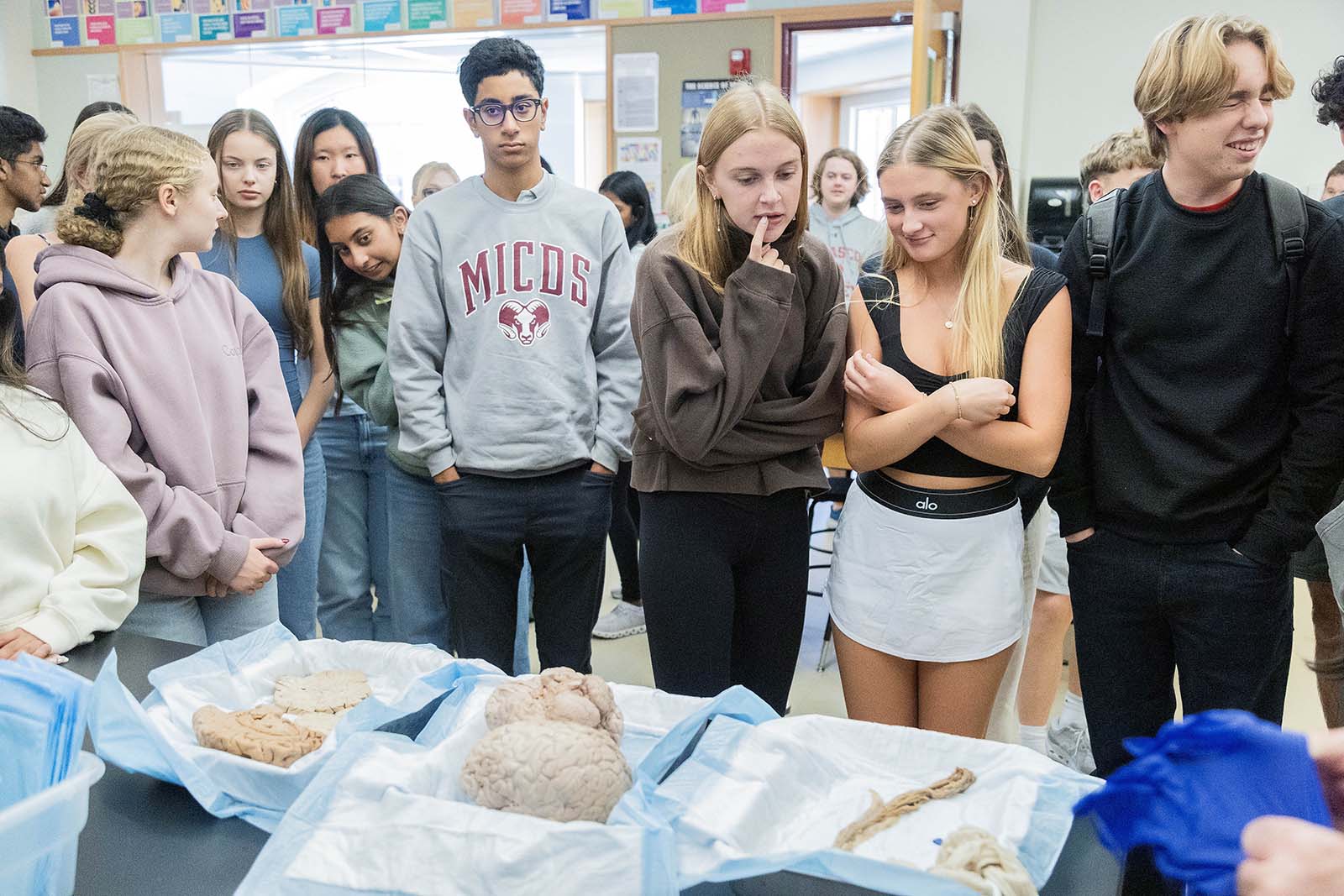
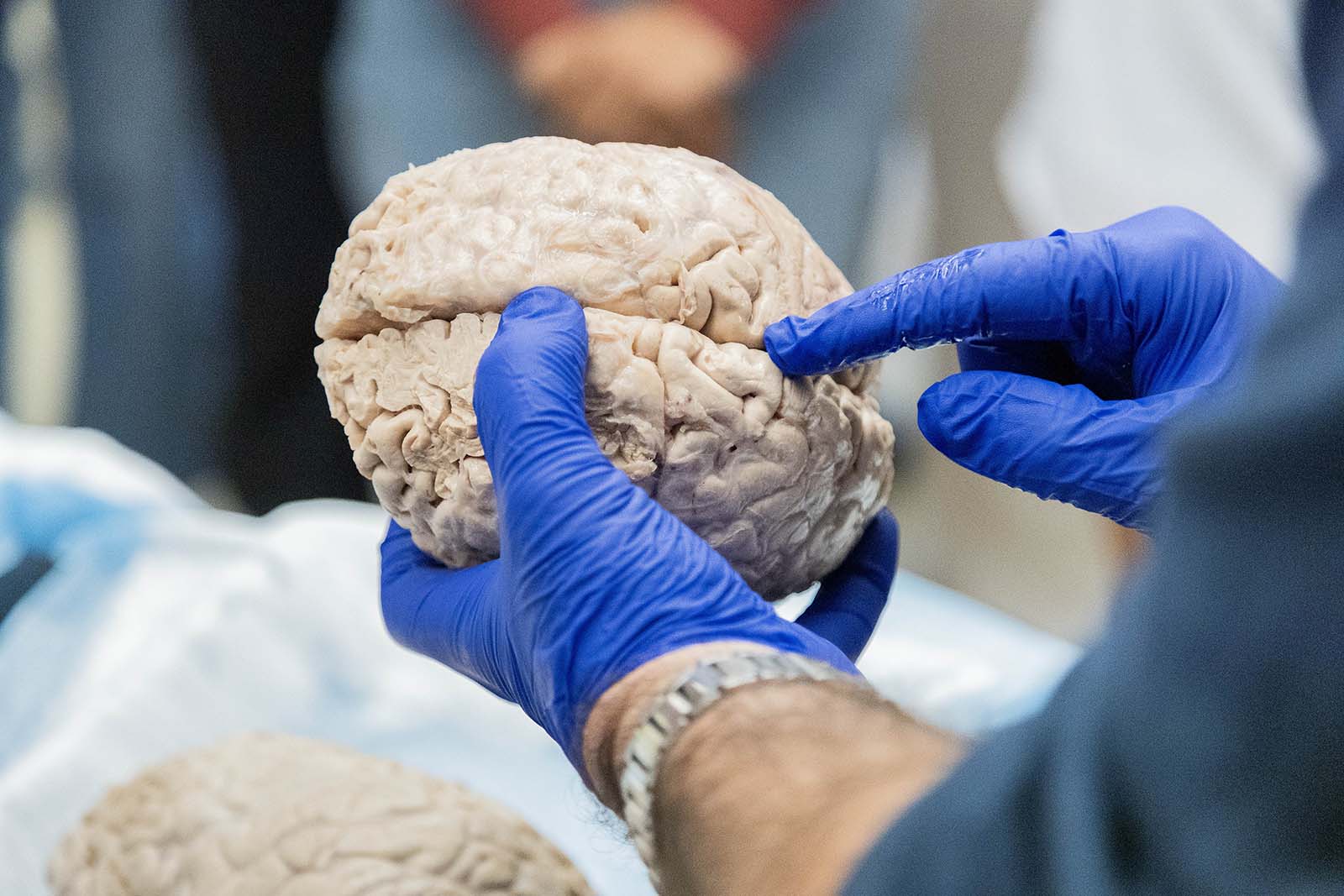
Next, students got to see (and even touch) a real human brain, a dissected spinal cord, skull, and cervical models, which Dr. Wright carefully brought in from the St. Louis University Practical Anatomy Workshop (PASE Lab). The human specimens allowed students to have a hands-on, interactive learning experience that really brought neurology to life. Dr. Wright showed students the various parts of the brain and which parts are avoided by surgeons. With gloved hands, students could hold the brain to feel how heavy it was or touch the specimens. During the presentation and the brain lab, students asked many questions to understand Dr. Wright’s work even more.
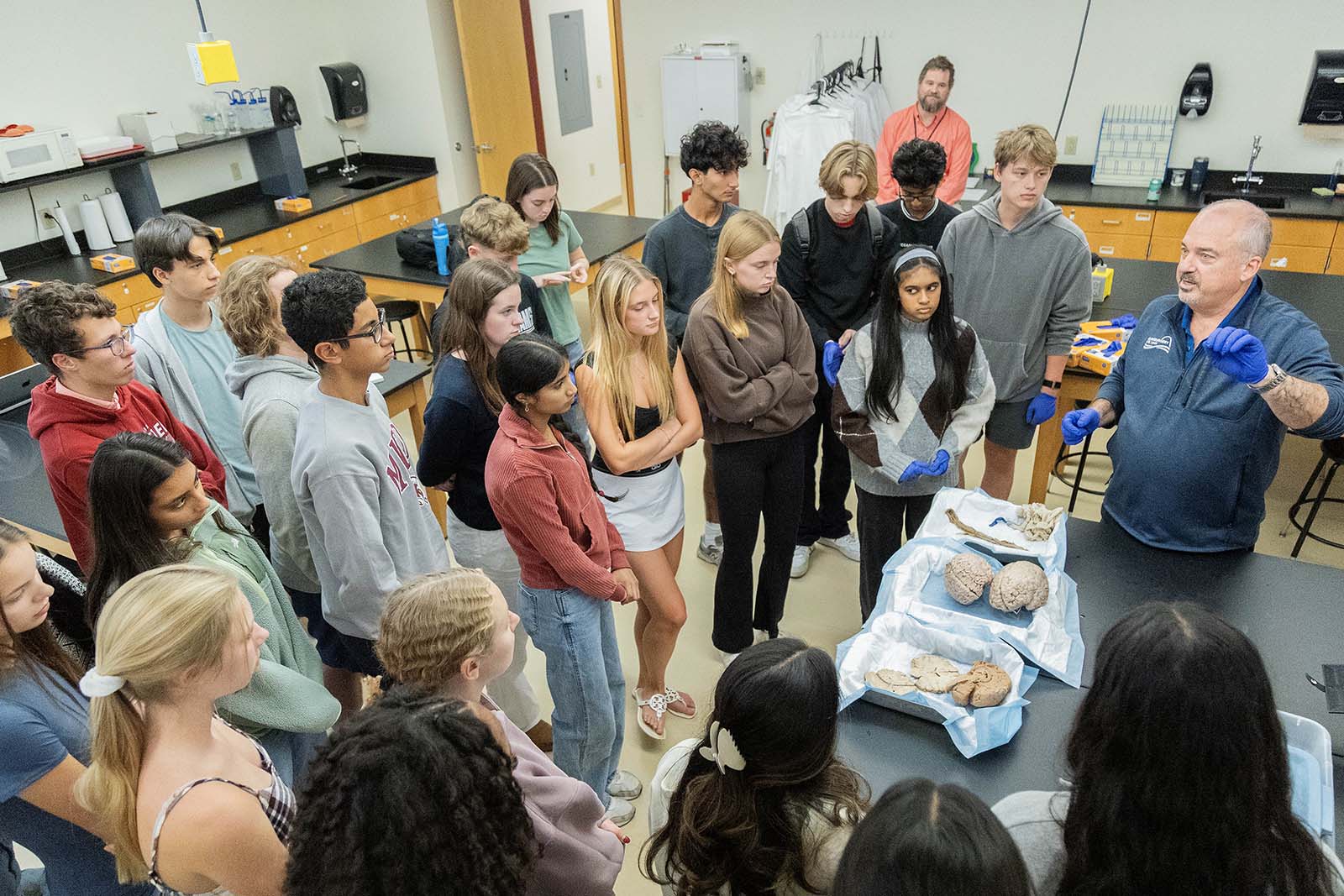
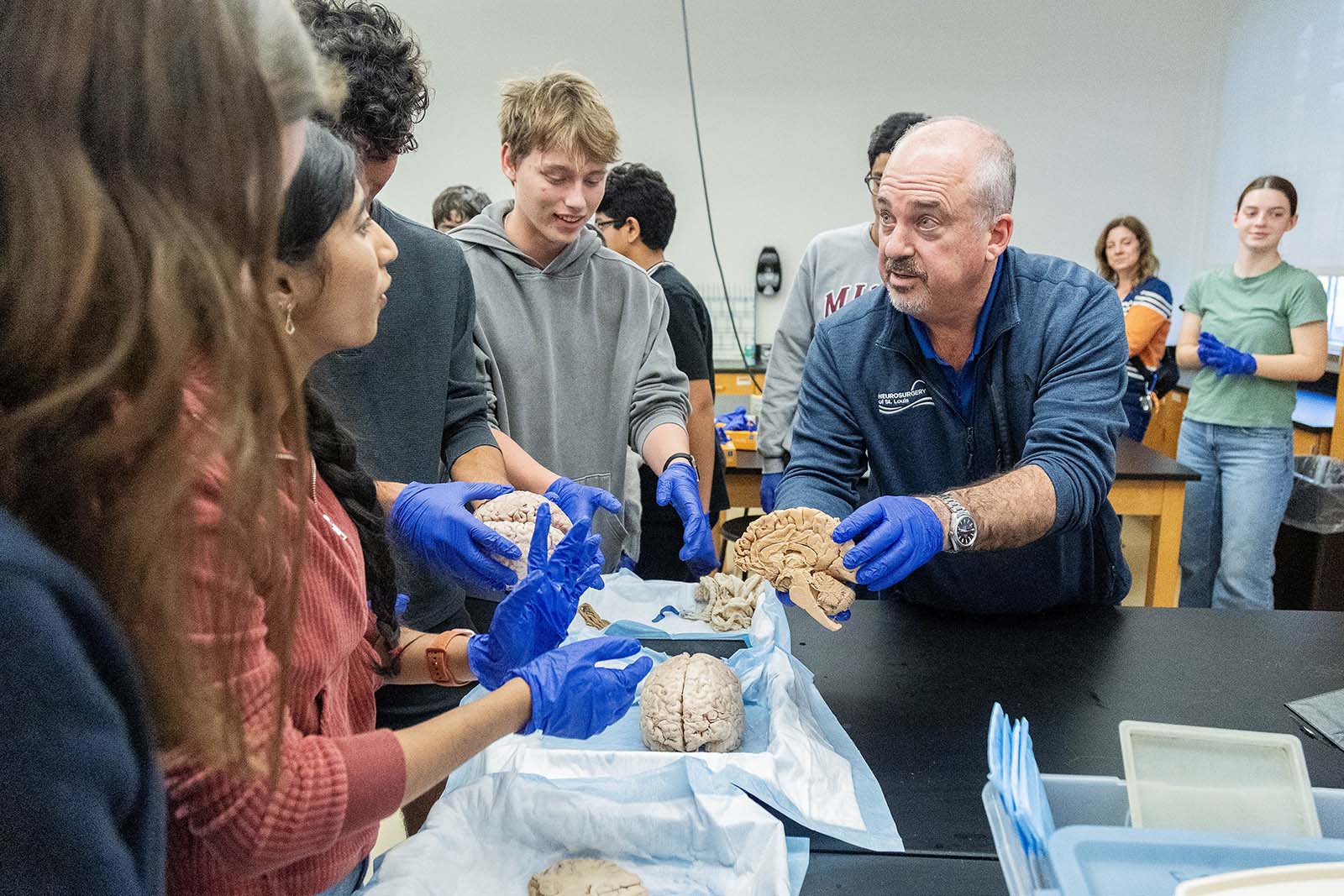
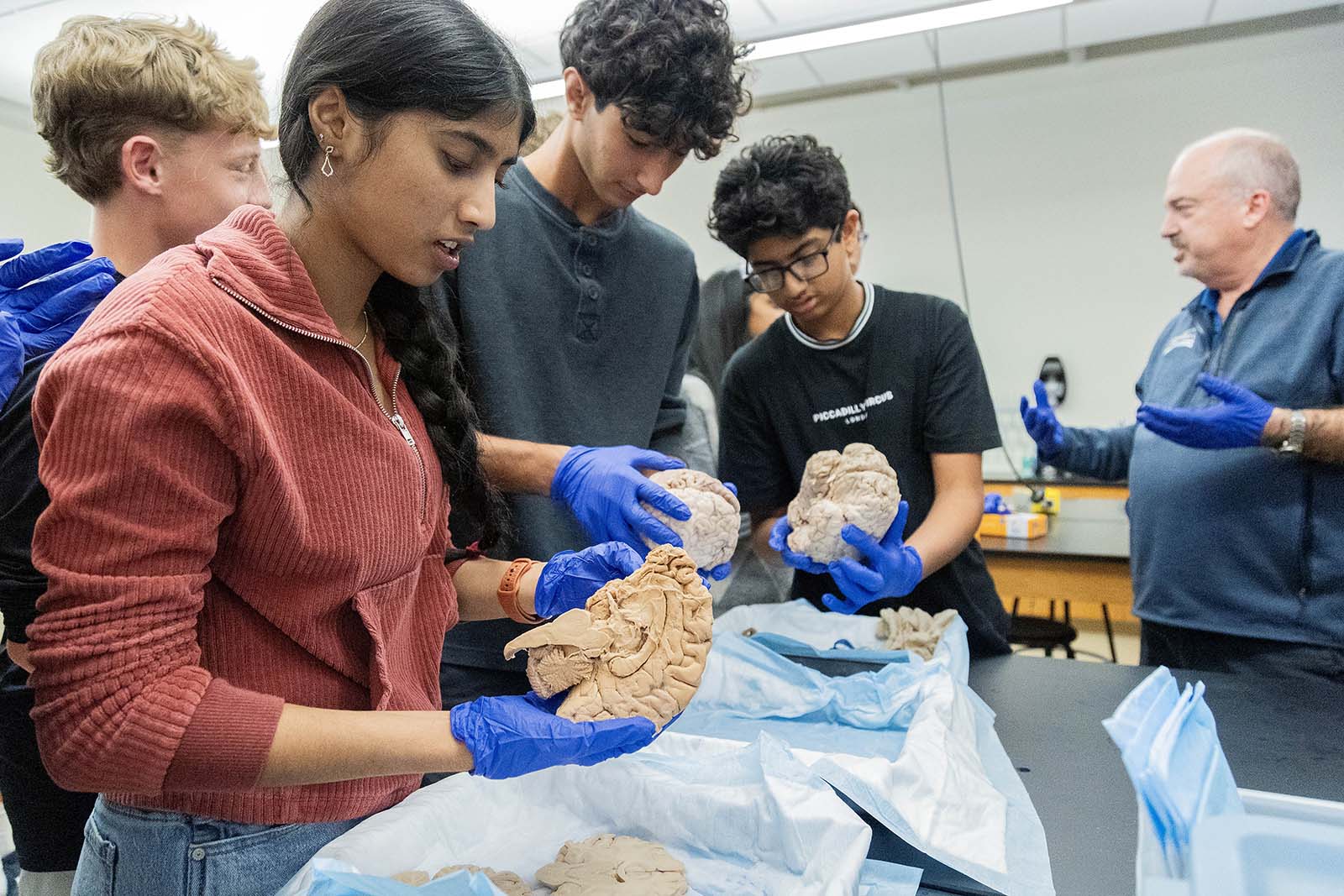
“Dr. Wright’s visit was fantastic,” reflects Paul Zahller, JK-12 Science Department Chair & Upper School Science Teacher. “He provided a unique educational experience for students, including captivating stories and videos from his experience as a neurosurgeon. The specimens provided a once-in-a-lifetime experience for many students to see and touch brain material. We were very fortunate to have Dr. Wright share with us.
It was a wonderful opportunity to give Upper Schoolers the chance to see what being a neurosurgeon is really like. Thank you very much, Dr. Wright, for sharing your profound experience with our students! Perhaps one day, some of them will become neurosurgeons, psychologists, or physicists who work closely with the brain, just like you!