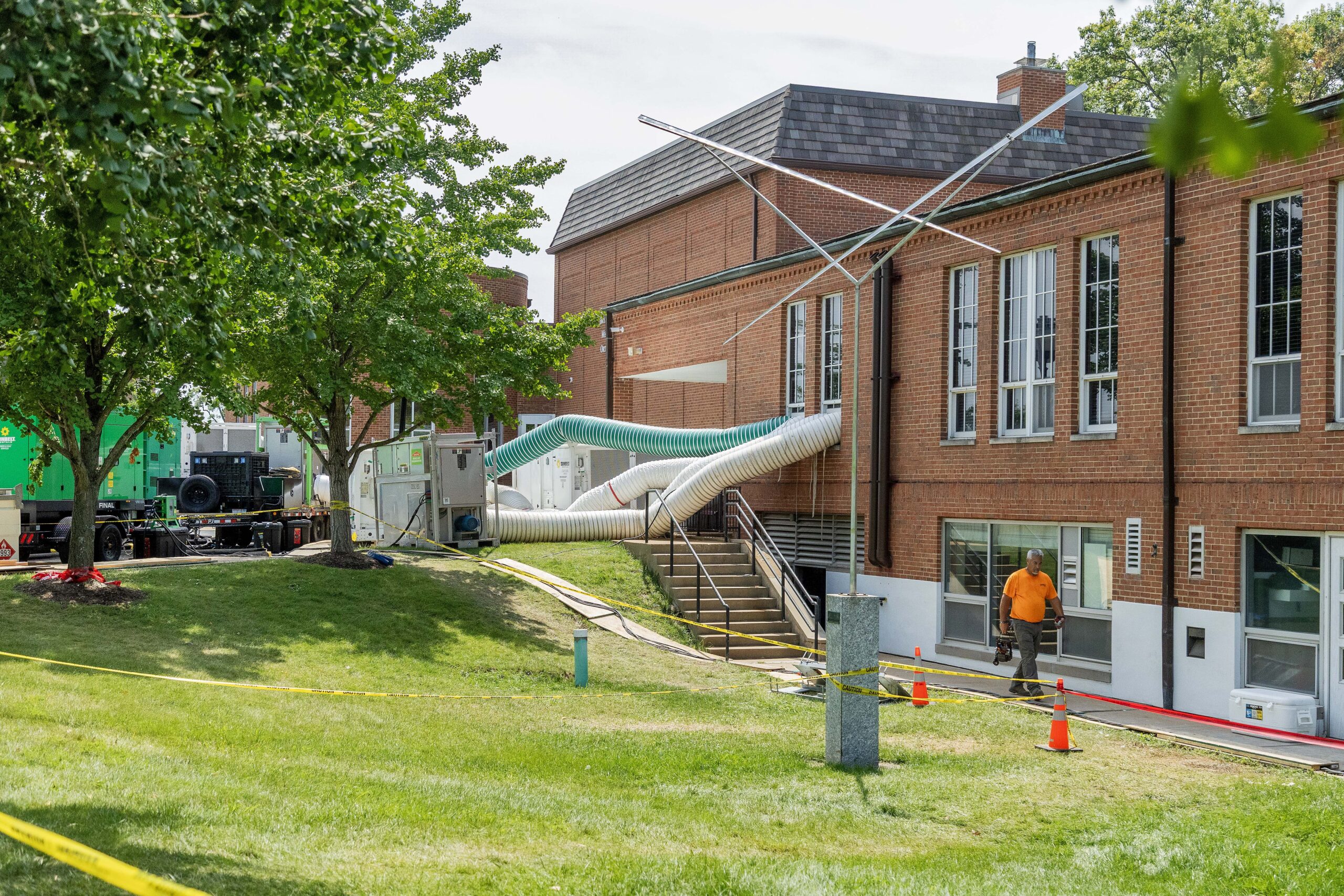
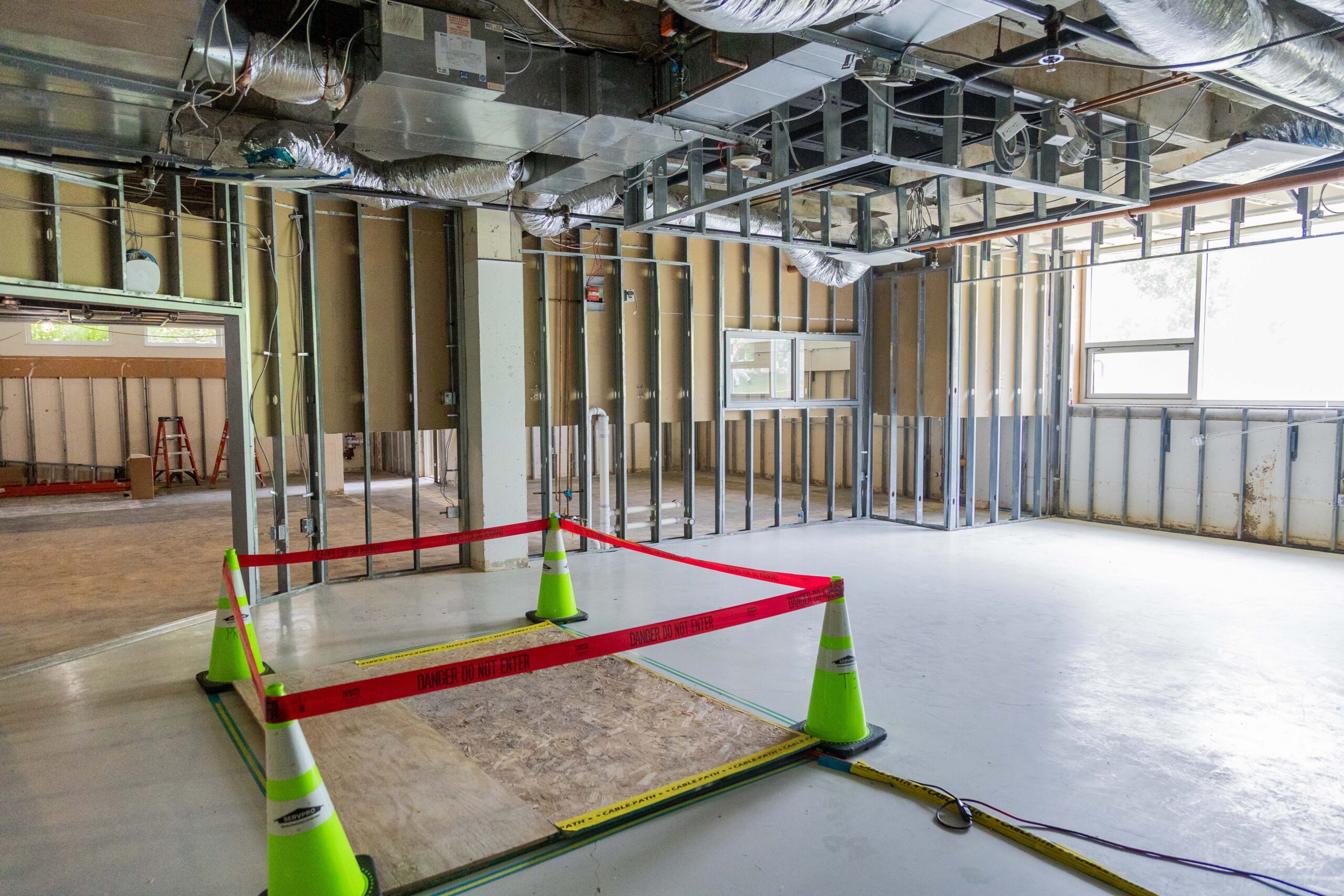
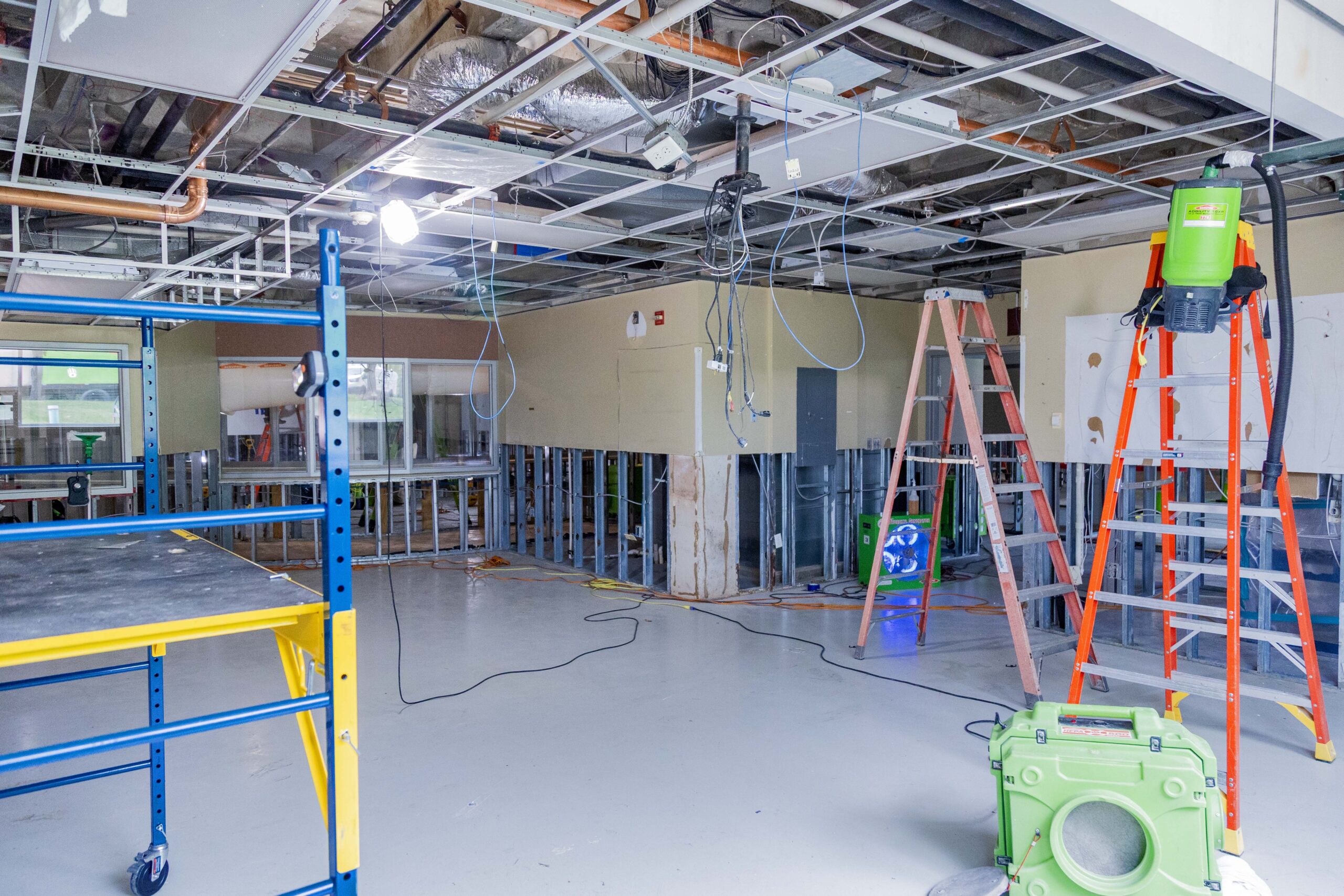
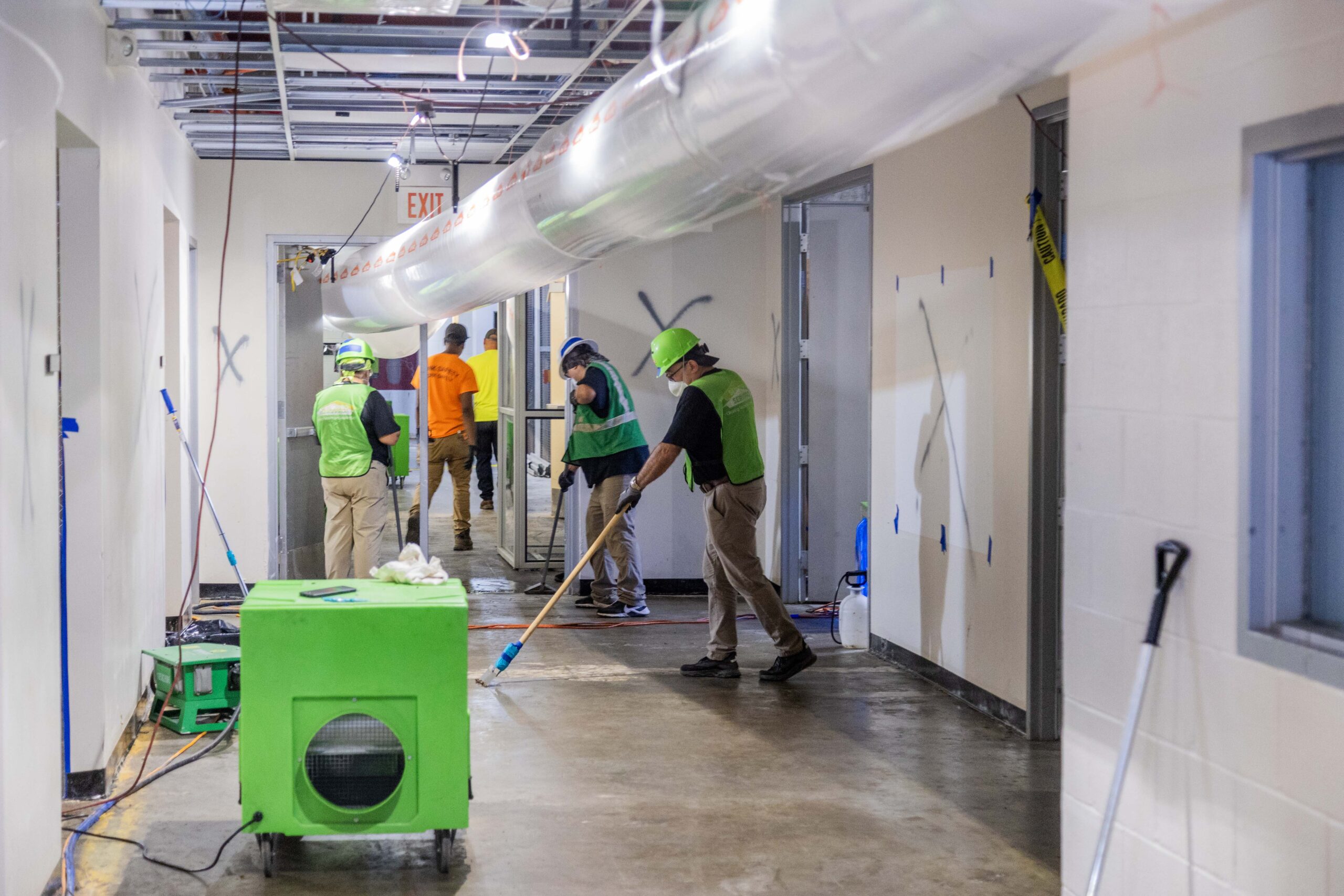
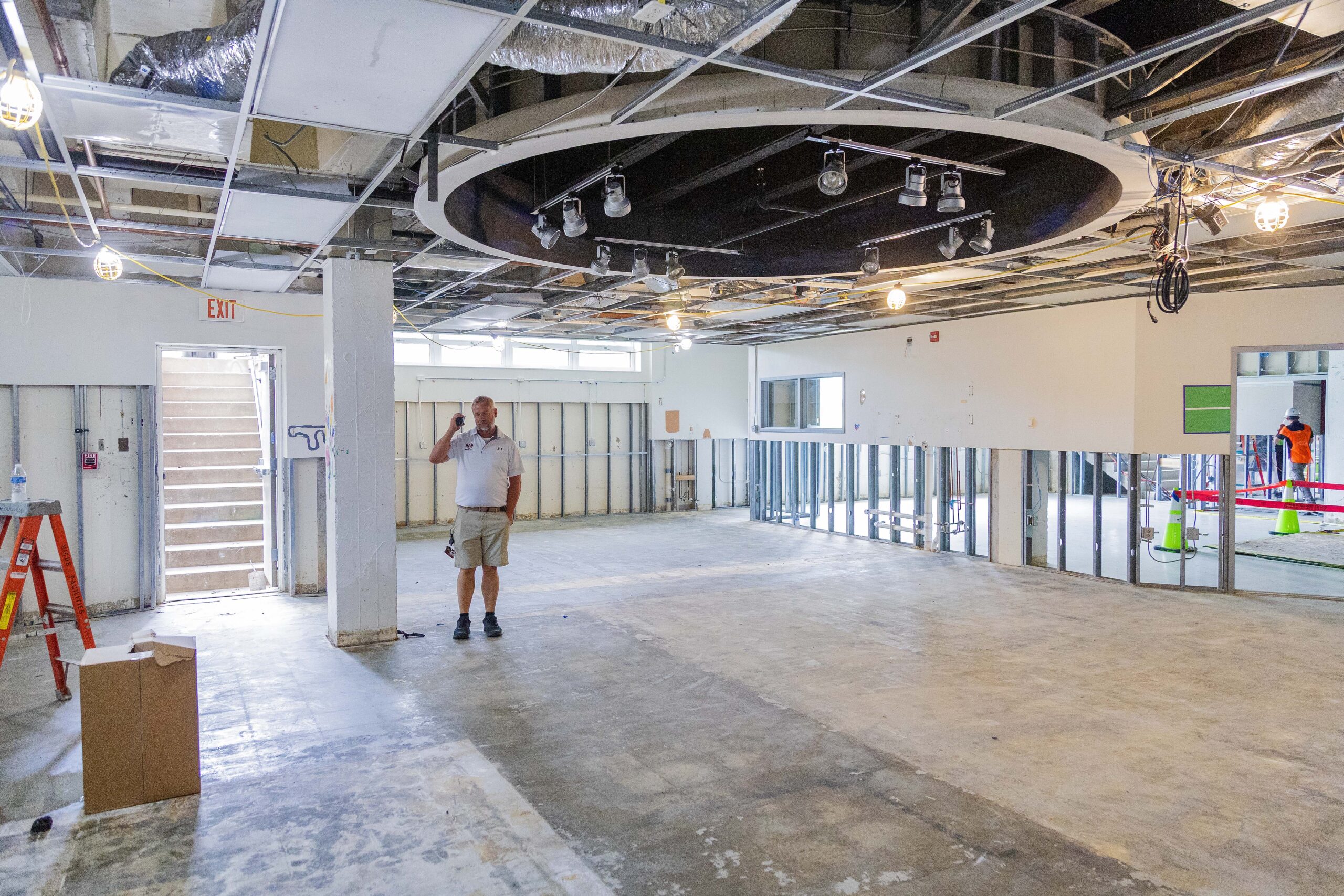
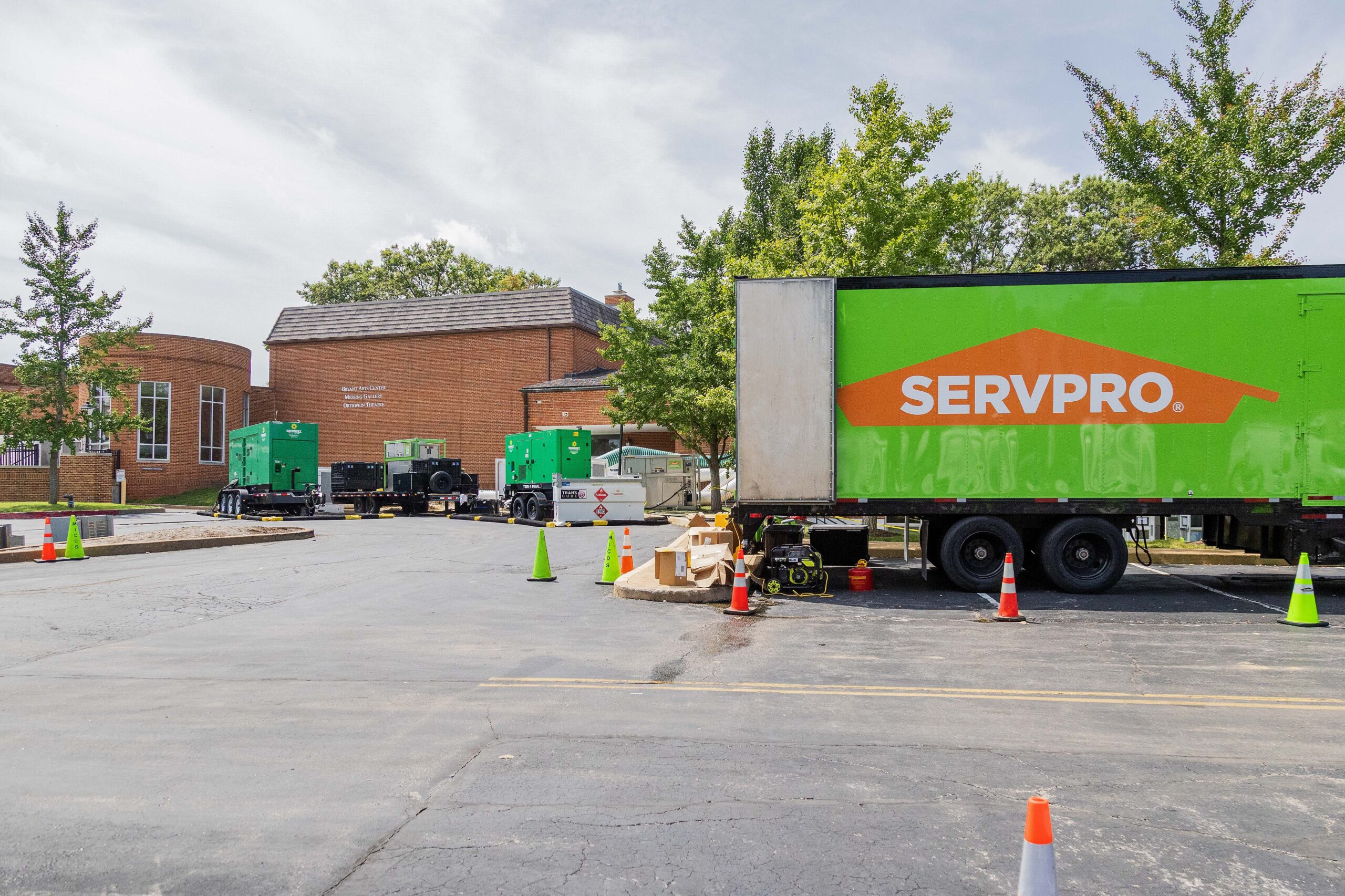
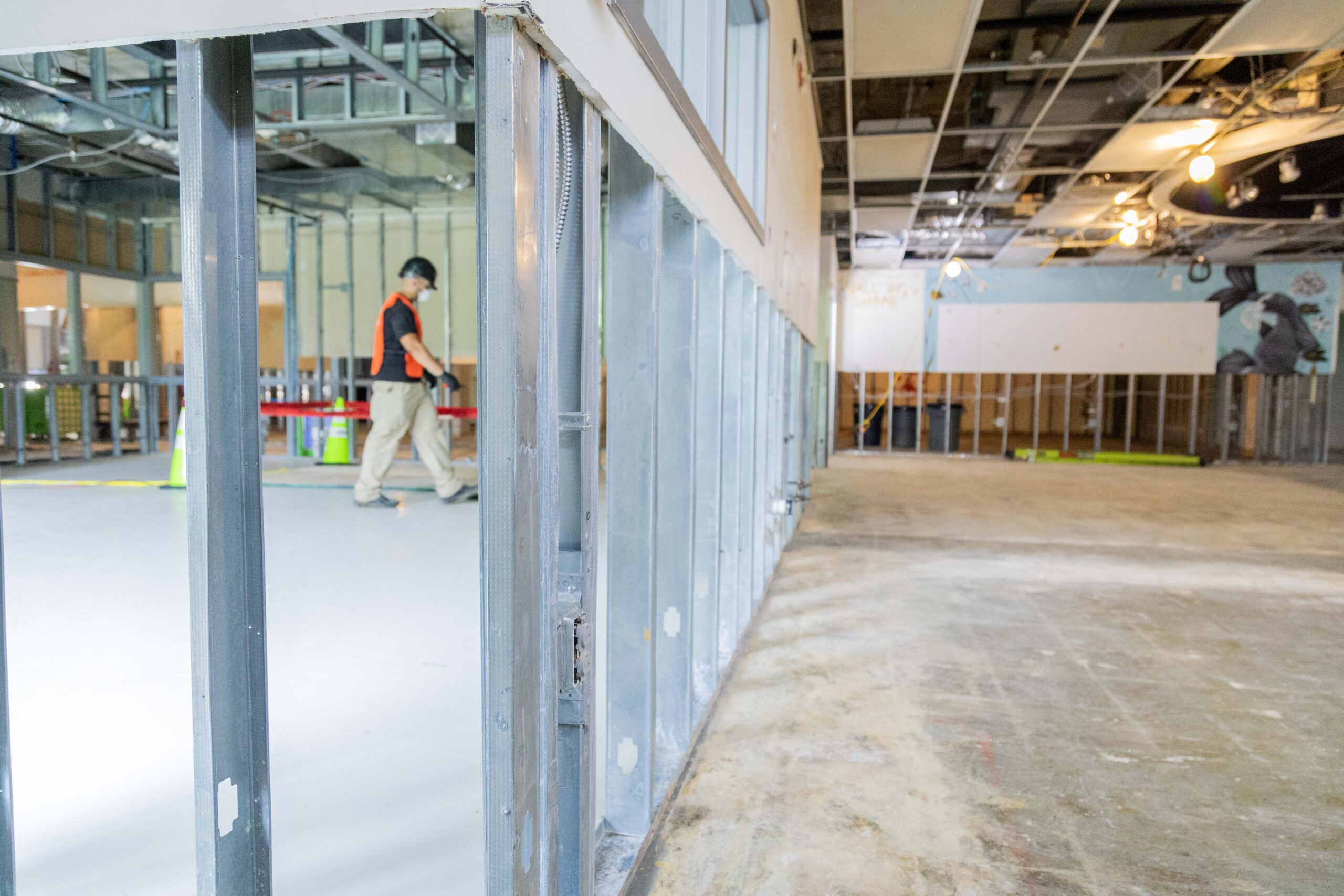
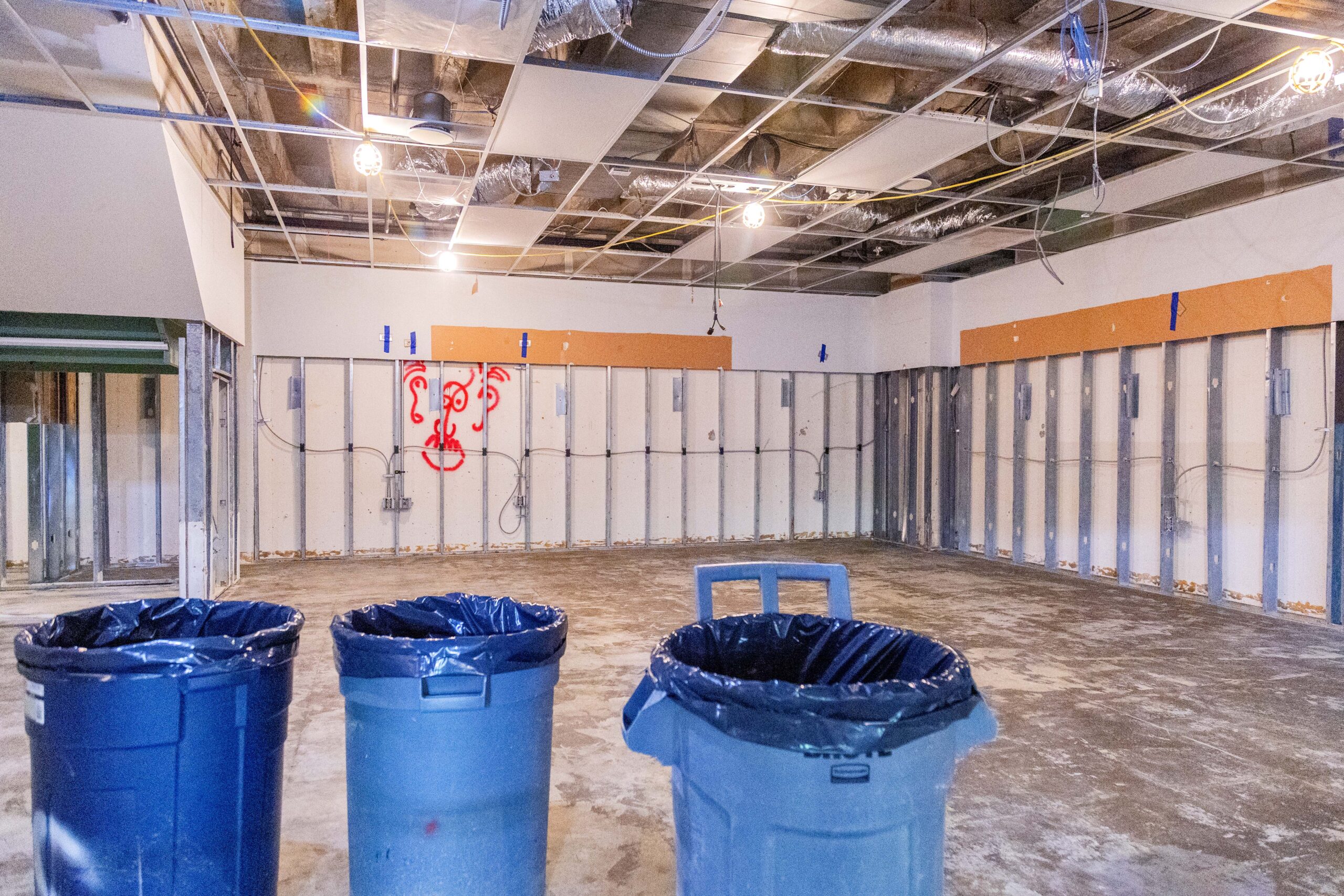
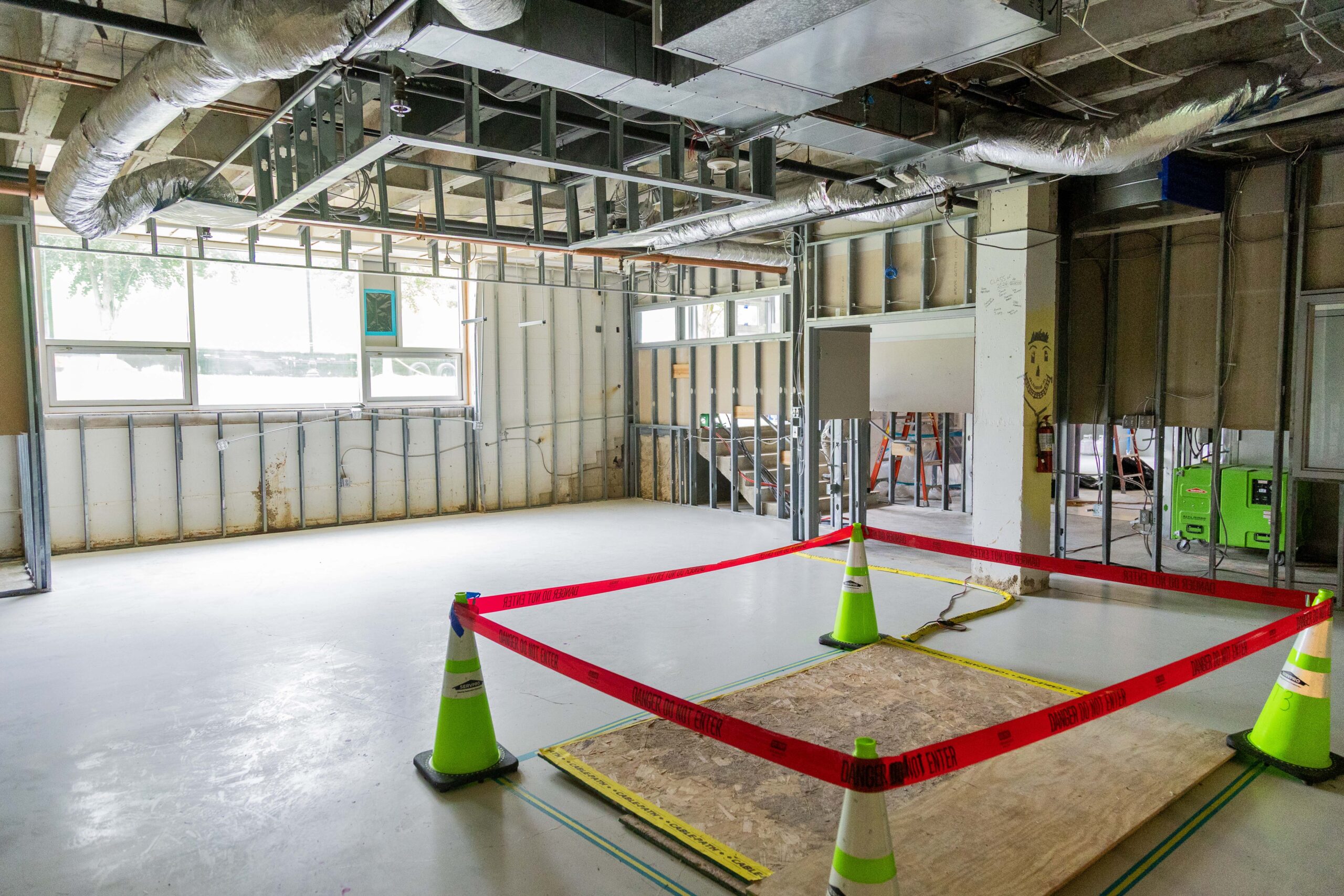
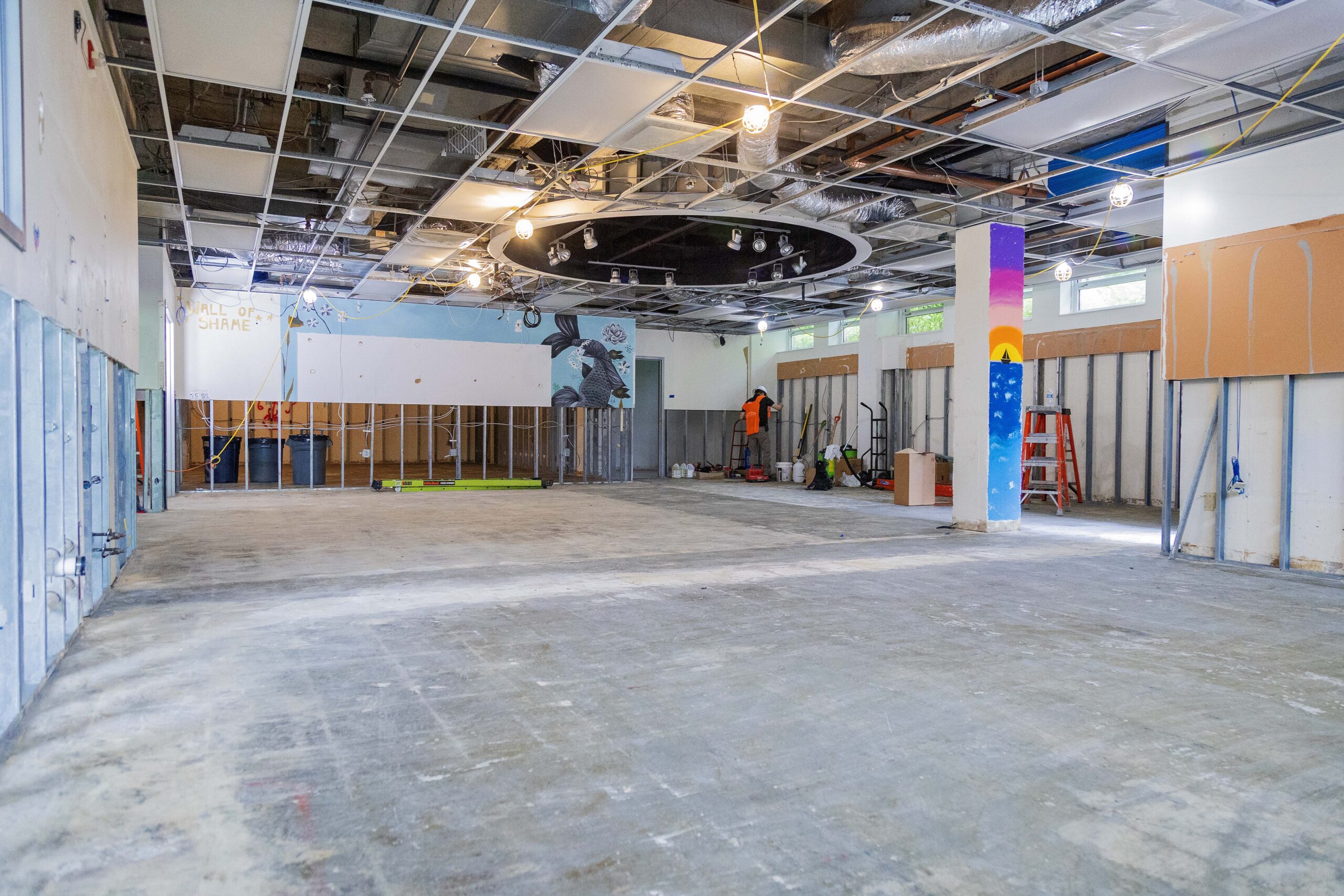
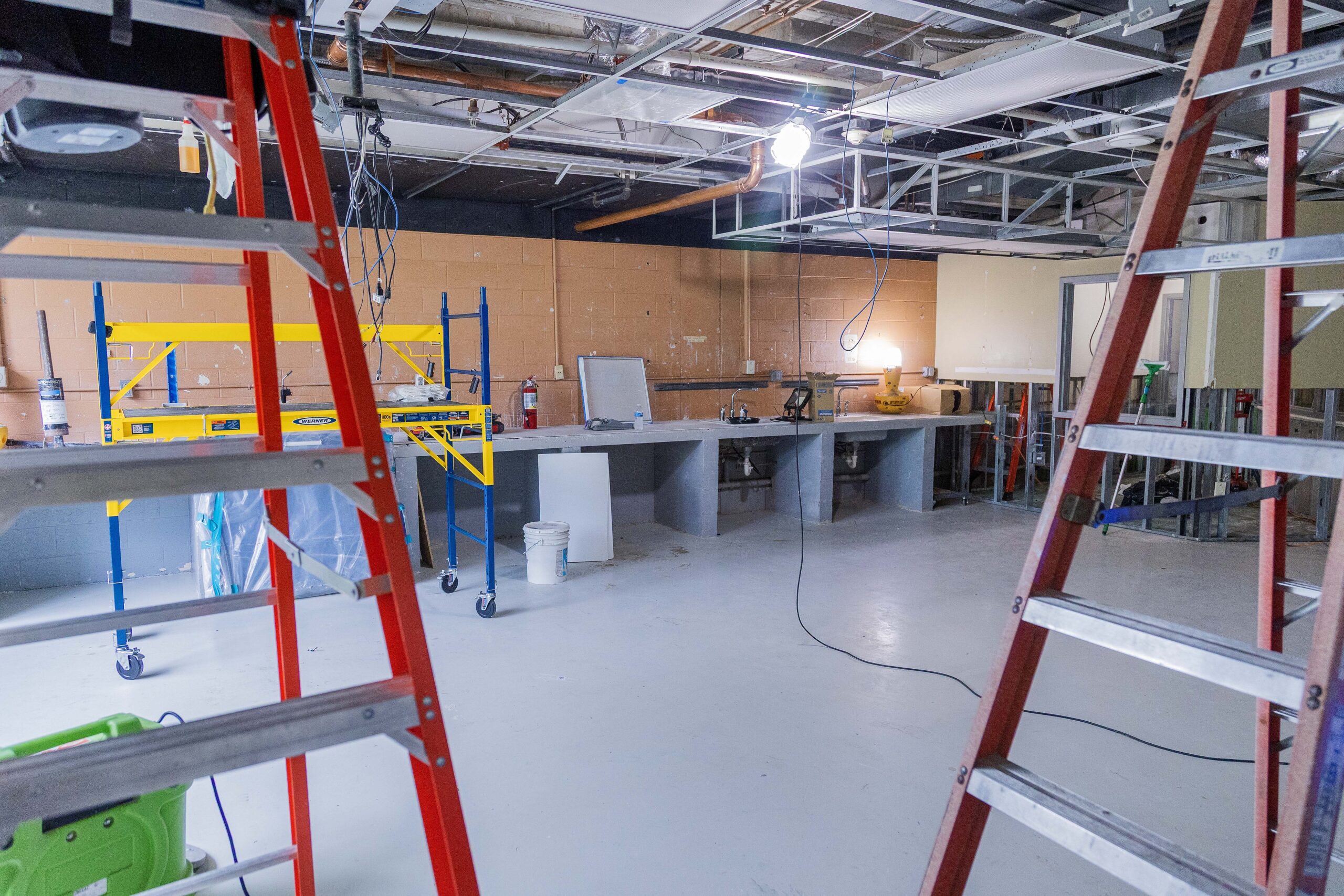
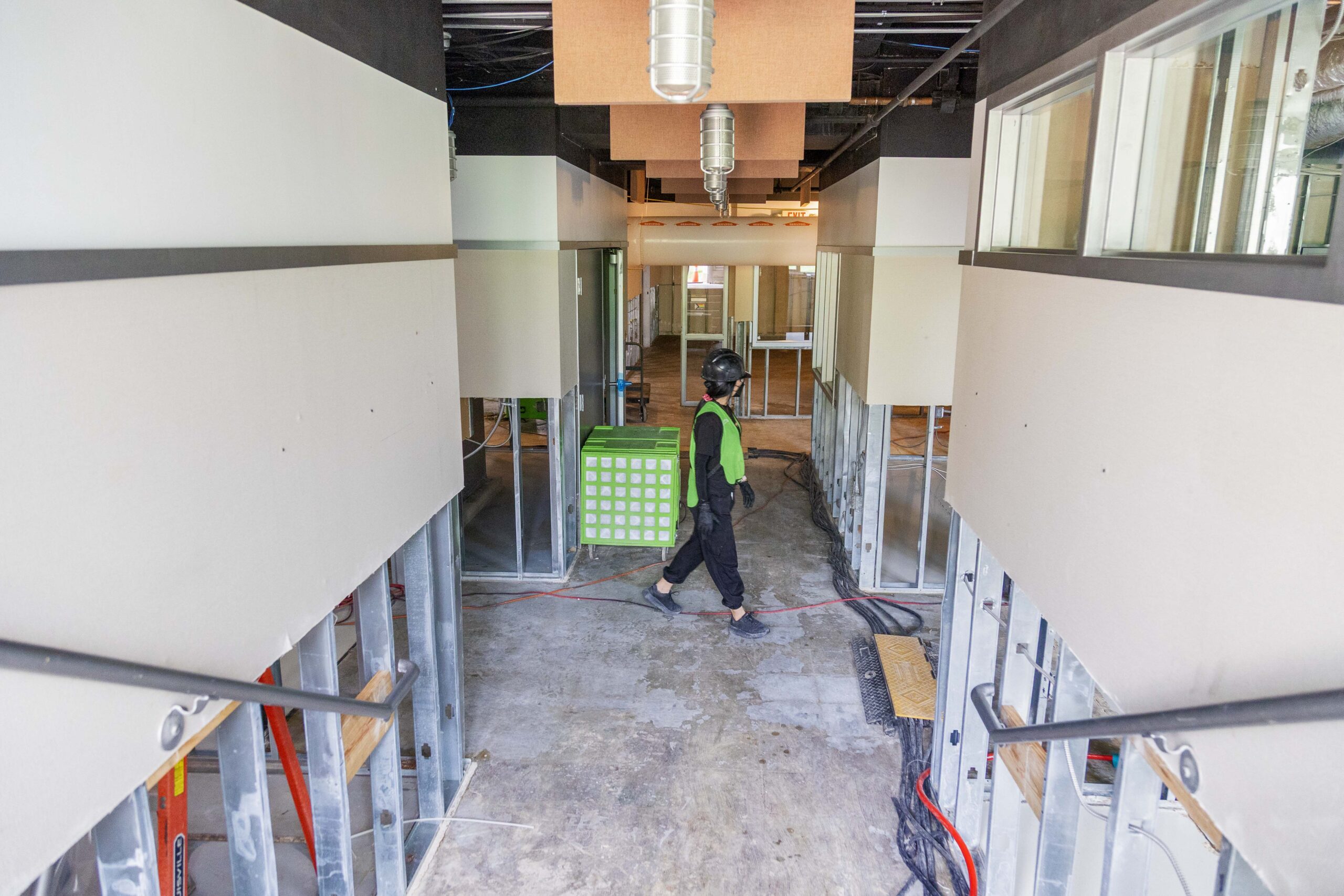
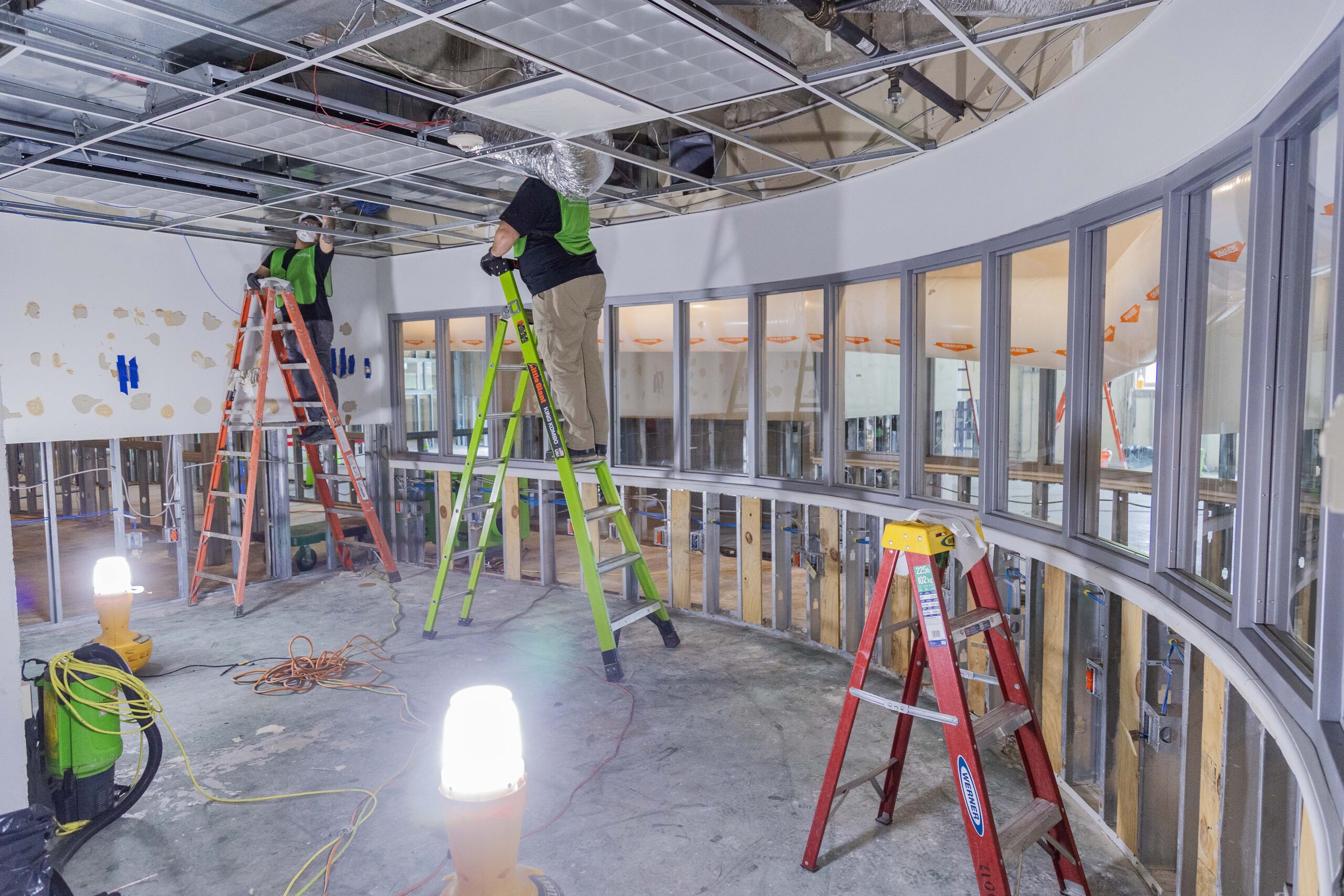
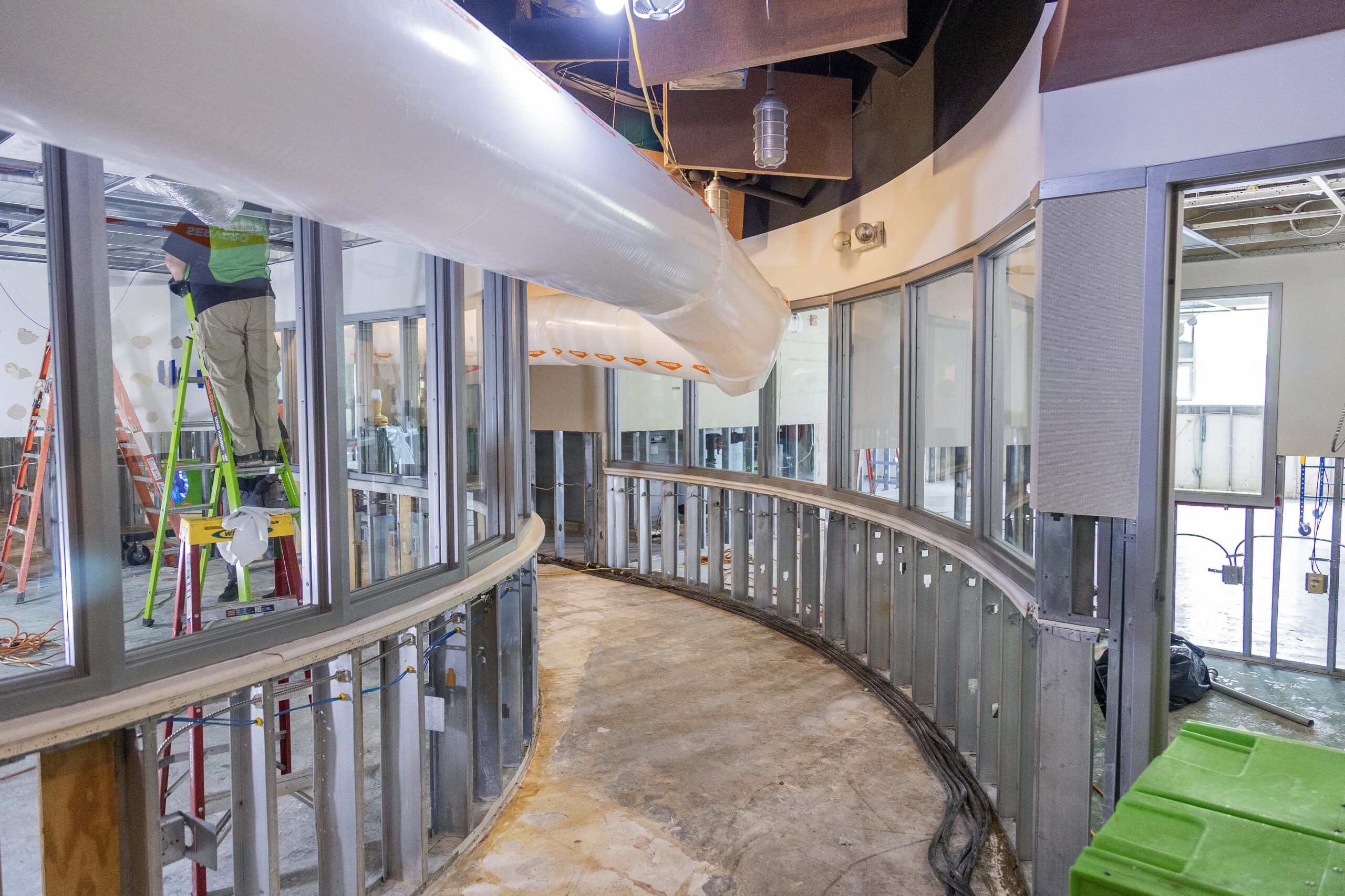
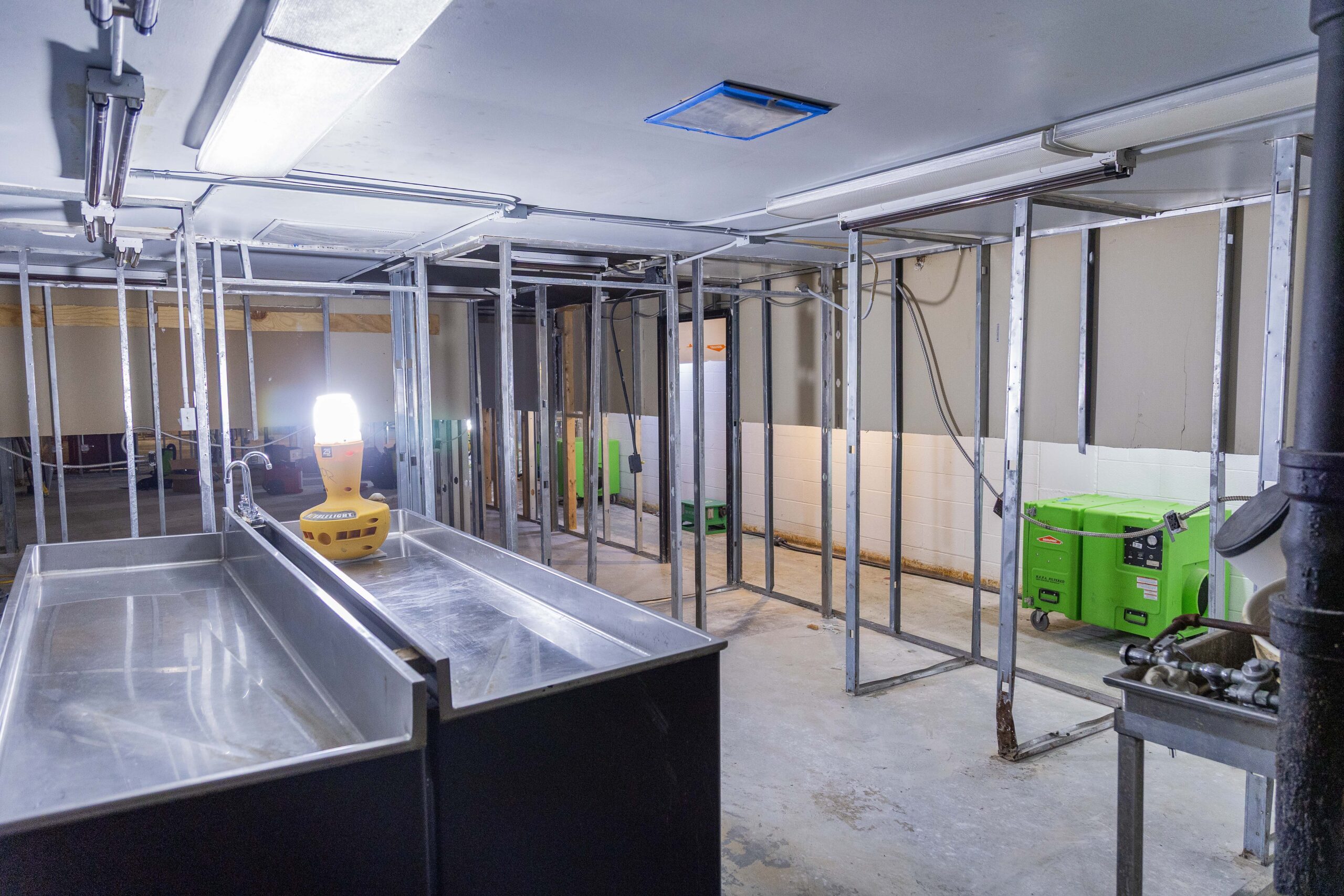
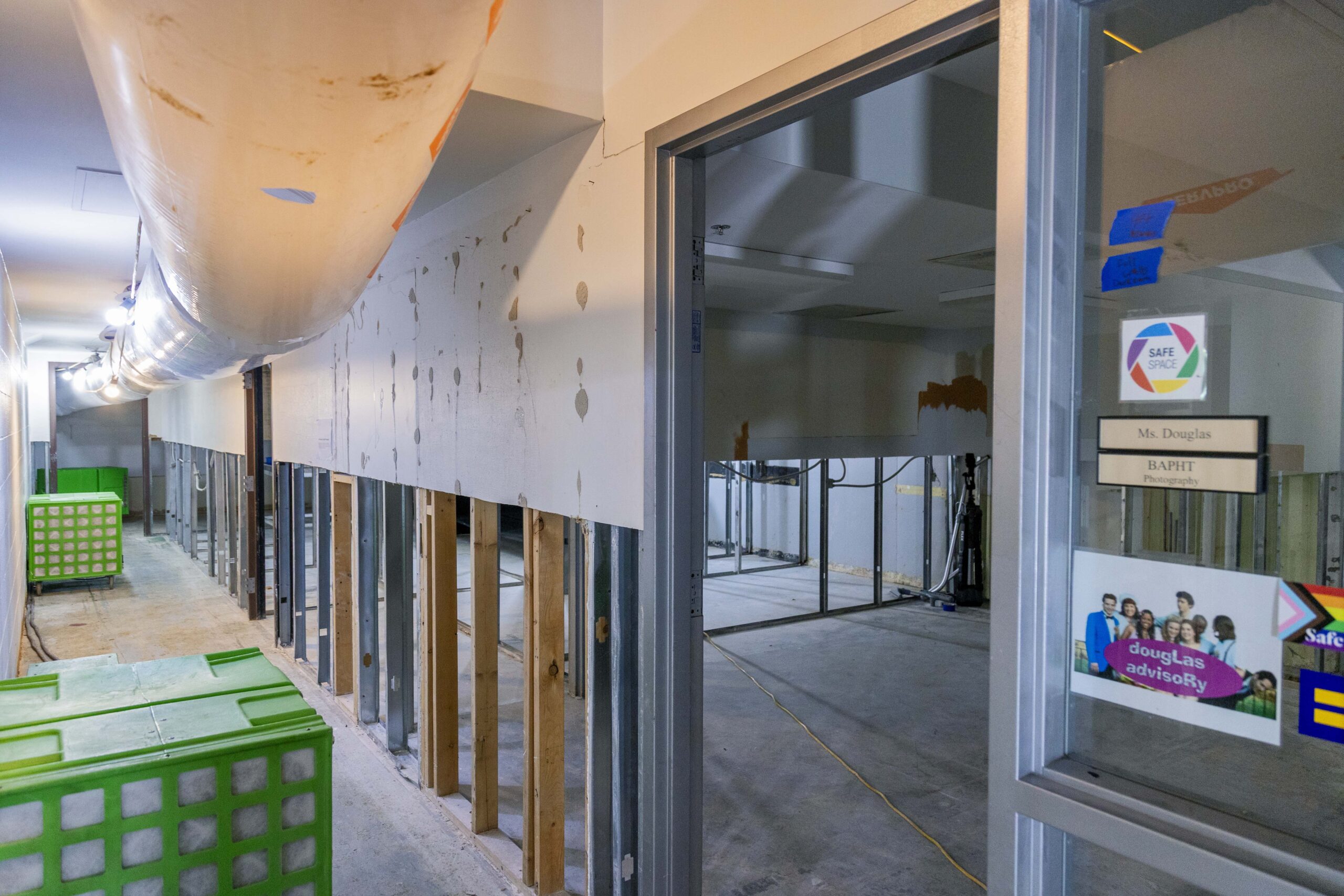
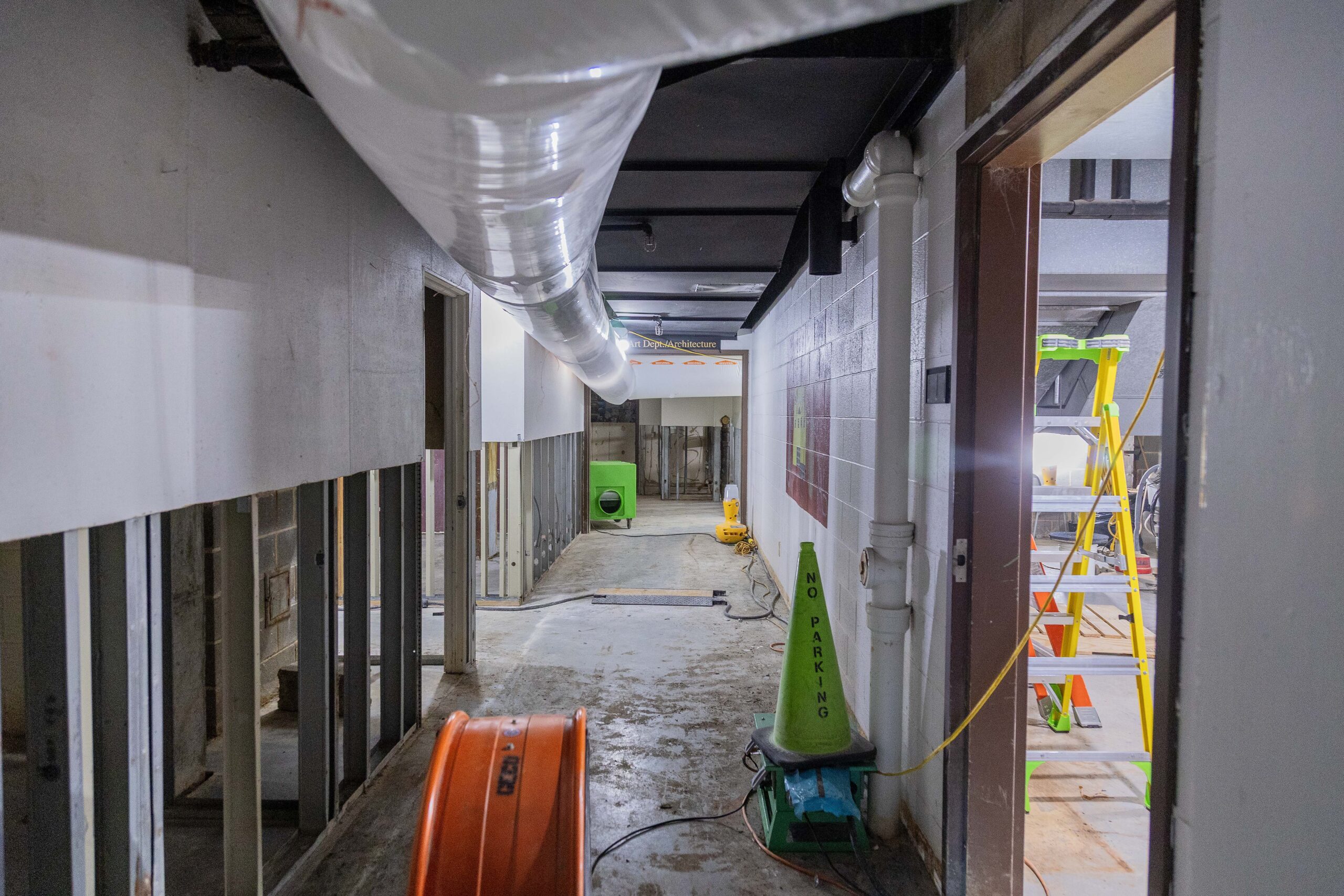
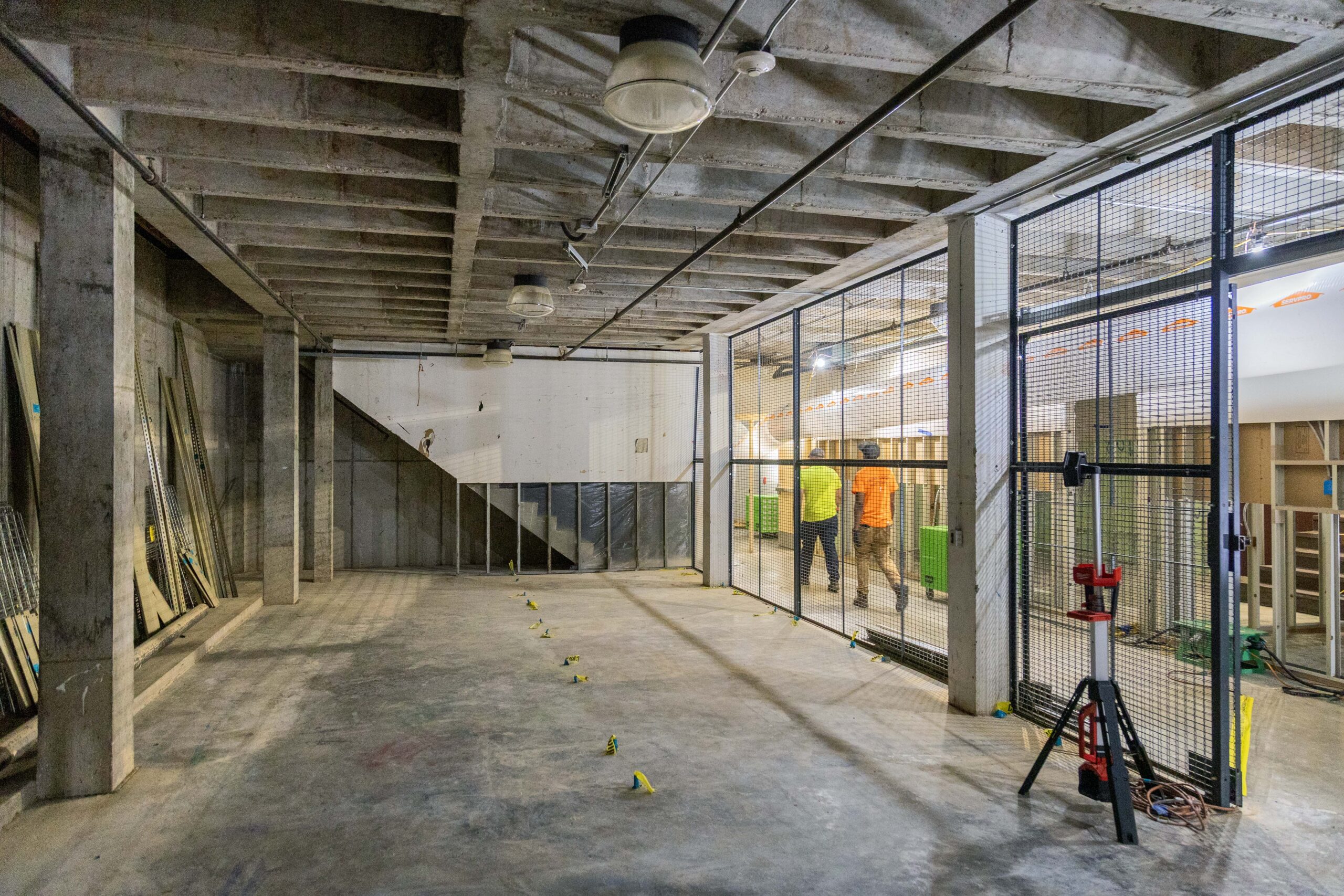
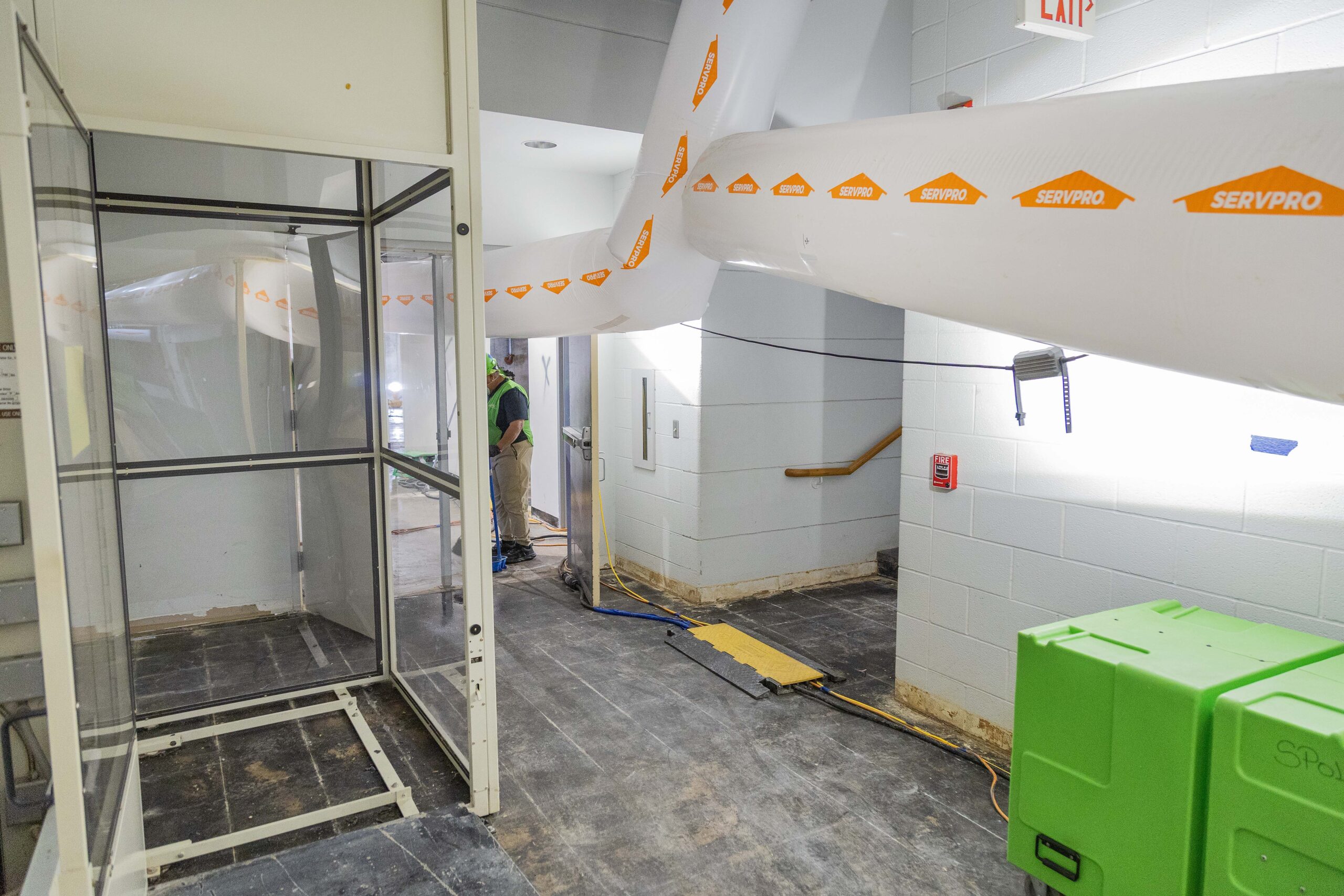
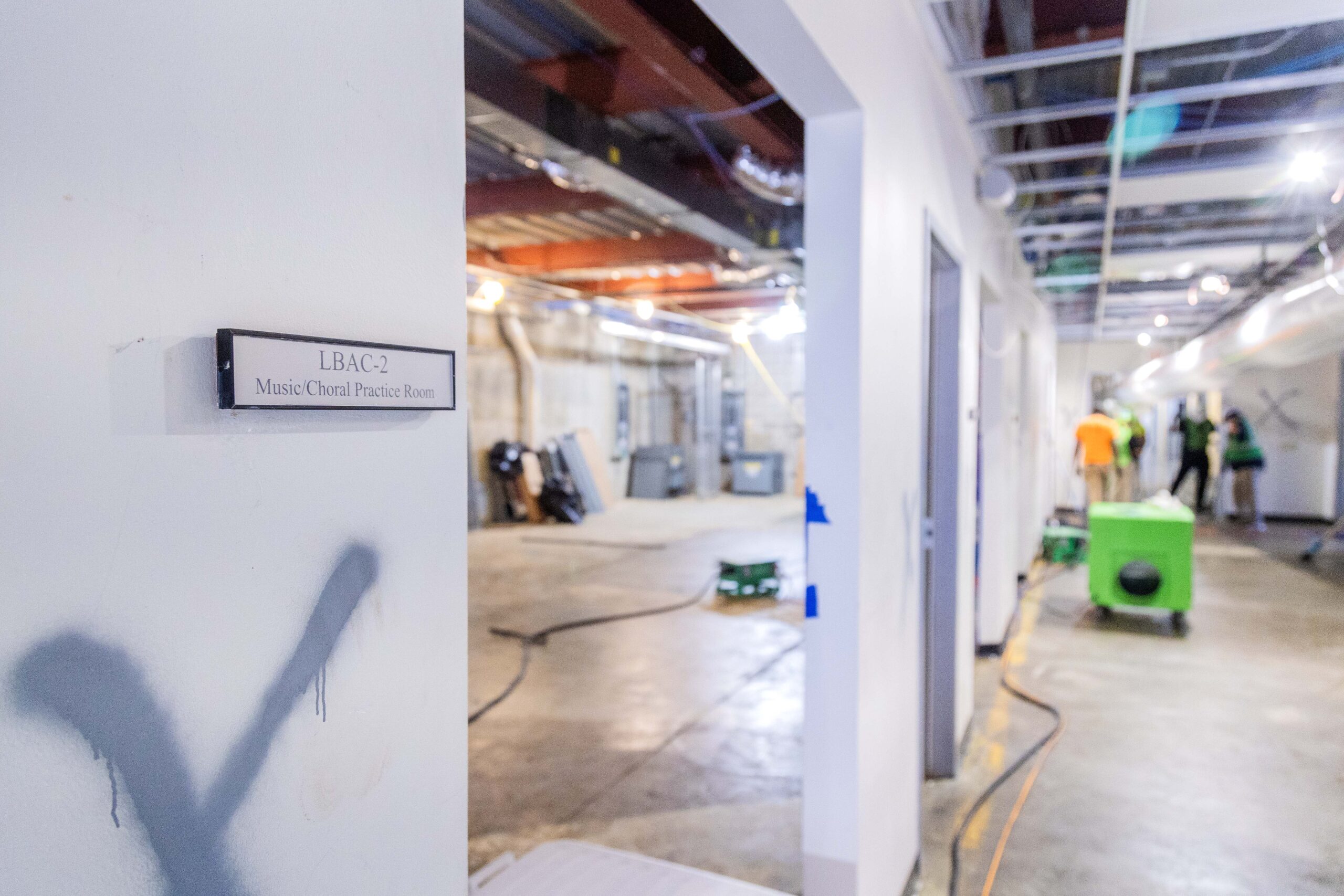
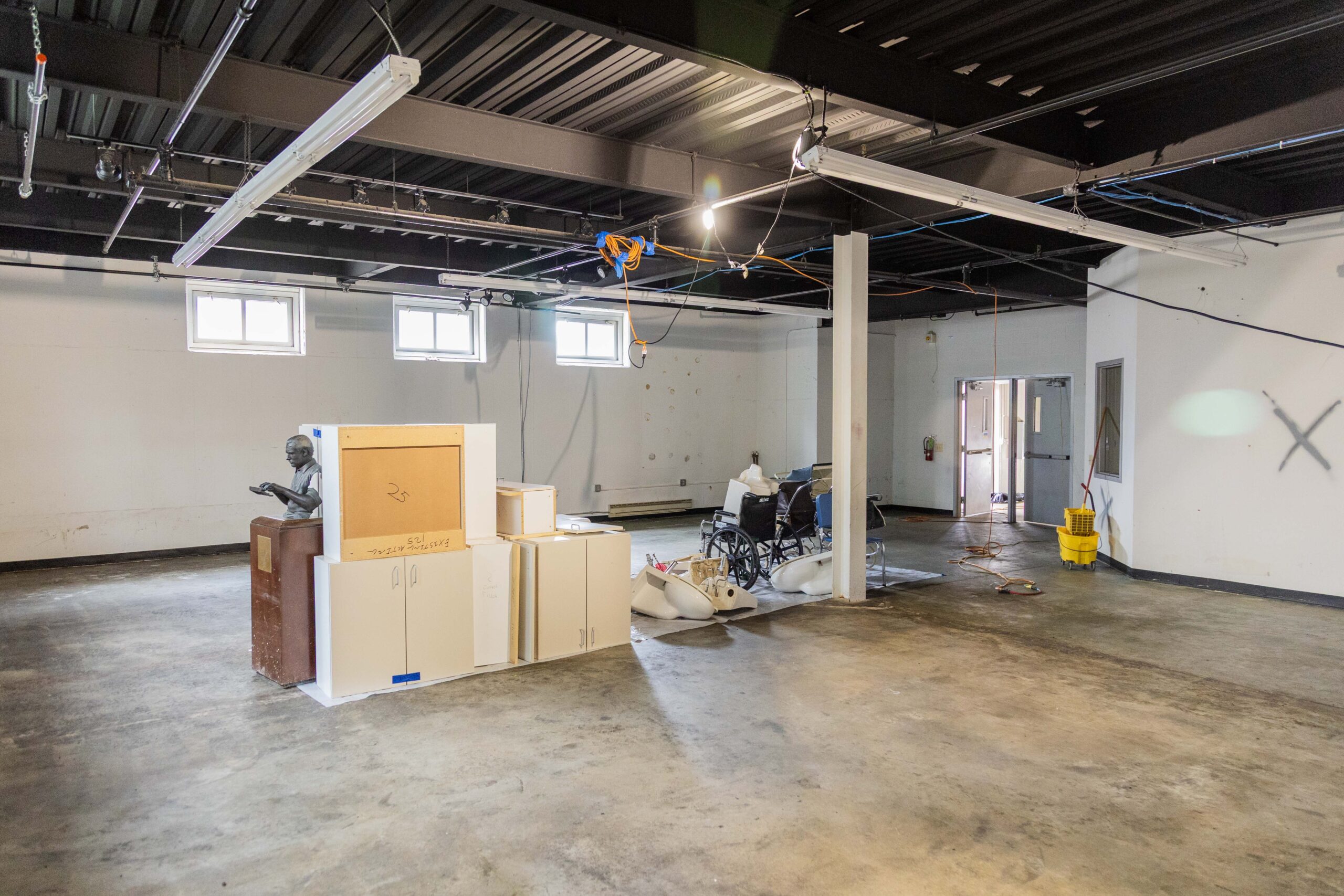
The water poured in for hours. As it rose inch by inch, more and more was lost. Classrooms and equipment were ruined and history destroyed. The July 25 flood in the Bryant Arts Center basement was devastating. The costumes and props, curated for decades of MICDS theater productions, were gone. So too were the darkroom with its enlargers, the ceramics studio with its kiln, the pianos in their soundproof rooms, and all the learning spaces where students spent years cultivating their artistry. The flood, however, revealed more than it took.
Discovering the Flood
Upper School Visual Art Teacher Patrick Huber happened to be on campus that weekend: “I arrived around 2 p.m. on the day of the flood to finish setting up sound for a rental that was supposed to take place in Orthwein. It wasn’t until we got that show underway at around 5 p.m. that I realized my classroom of over 30 years had been under four feet of water and most of the contents were lost.” Phone calls were made, and word of the damage started to reach the MICDS community. Upper School Visual Art Teacher Asia Johnson-Brimmage ’19 got the news from Mr. Huber. “He told me what happened, and in typical Huber fashion, he focused on relaying the scene he witnessed of a mannequin arm floating on top of the water in the sculpture studio,” she remembers. “I wasn’t sure how to feel. I was pretty devastated and stressed thinking about all of the projects that I had planned for the year with the supplies that I knew we had in the room.” Thoughts about displaced teachers and students were also going through the mind of Dr. Bonnie Carpenter, JK-12 Arts Department Chair, but there was no time to dwell on what had happened. “To be honest, I didn’t take much time to mourn the loss. I knew we had faculty and kids to take care of, so I readied myself to get to work supporting our faculty and preparing for students. Many of our arts folks have been longtime, valued members of our community, and I knew they would need as much support as possible, both emotionally and logistically, to move the school year forward,” she said.
New Class Spaces
As cleanup of the basement space got underway, plans were made to relocate the displaced classes during the few weeks before students returned for the new school year. “Head of Upper School Scott Small and I had a great partnership, alongside Director of Facilities Jeff Chapin and Assistant Director of Facilities Torie Haltenhof,” recalls Dr. Carpenter. “Immediately, we started brainstorming options, in collaborative and consistent discussion with the facilities team to provide feasible alternative spaces. We tried to be mindful of the impact of our alternative spaces on other programming but also understood that an event of this magnitude would require support and compromises from other departments on campus.”
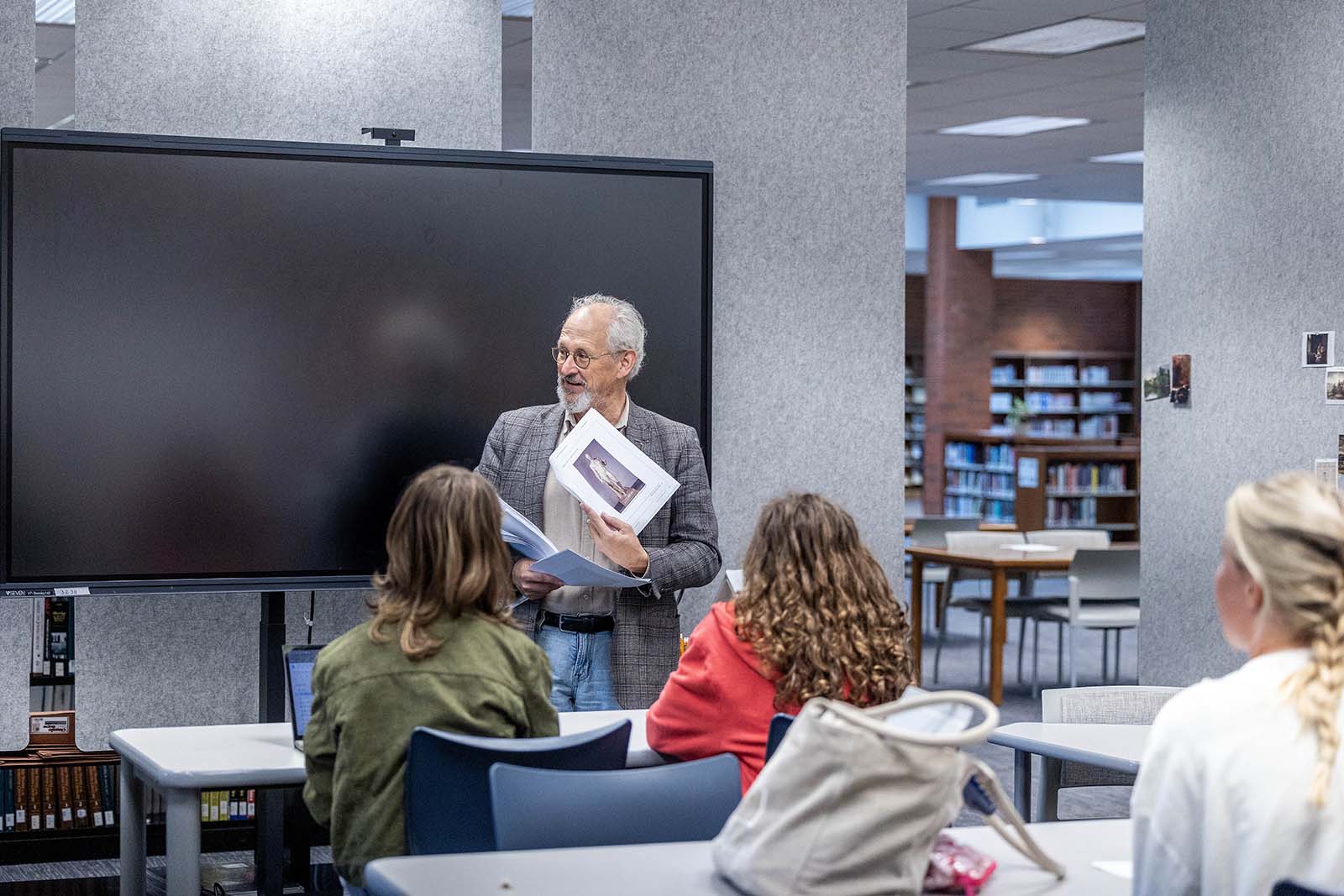
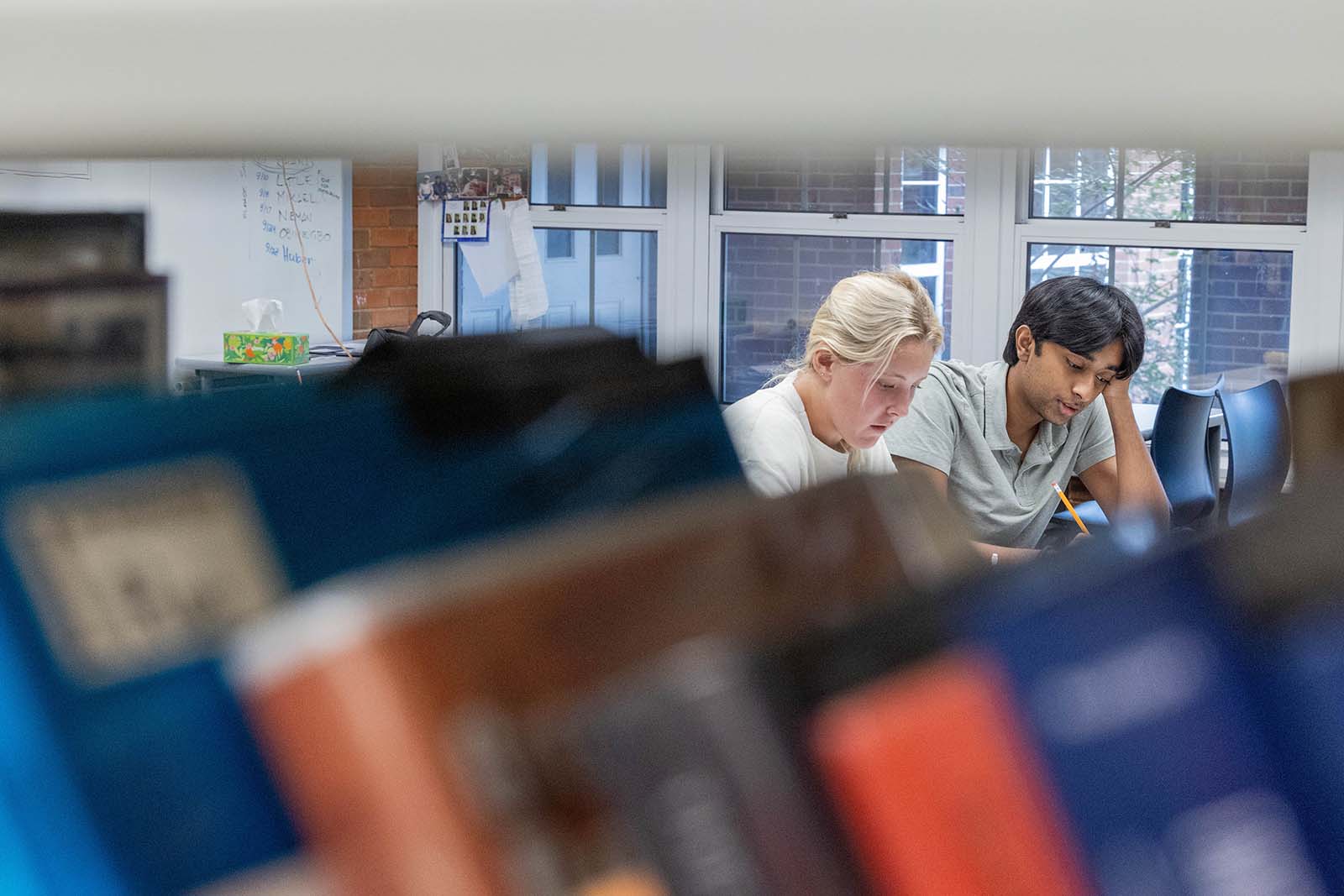
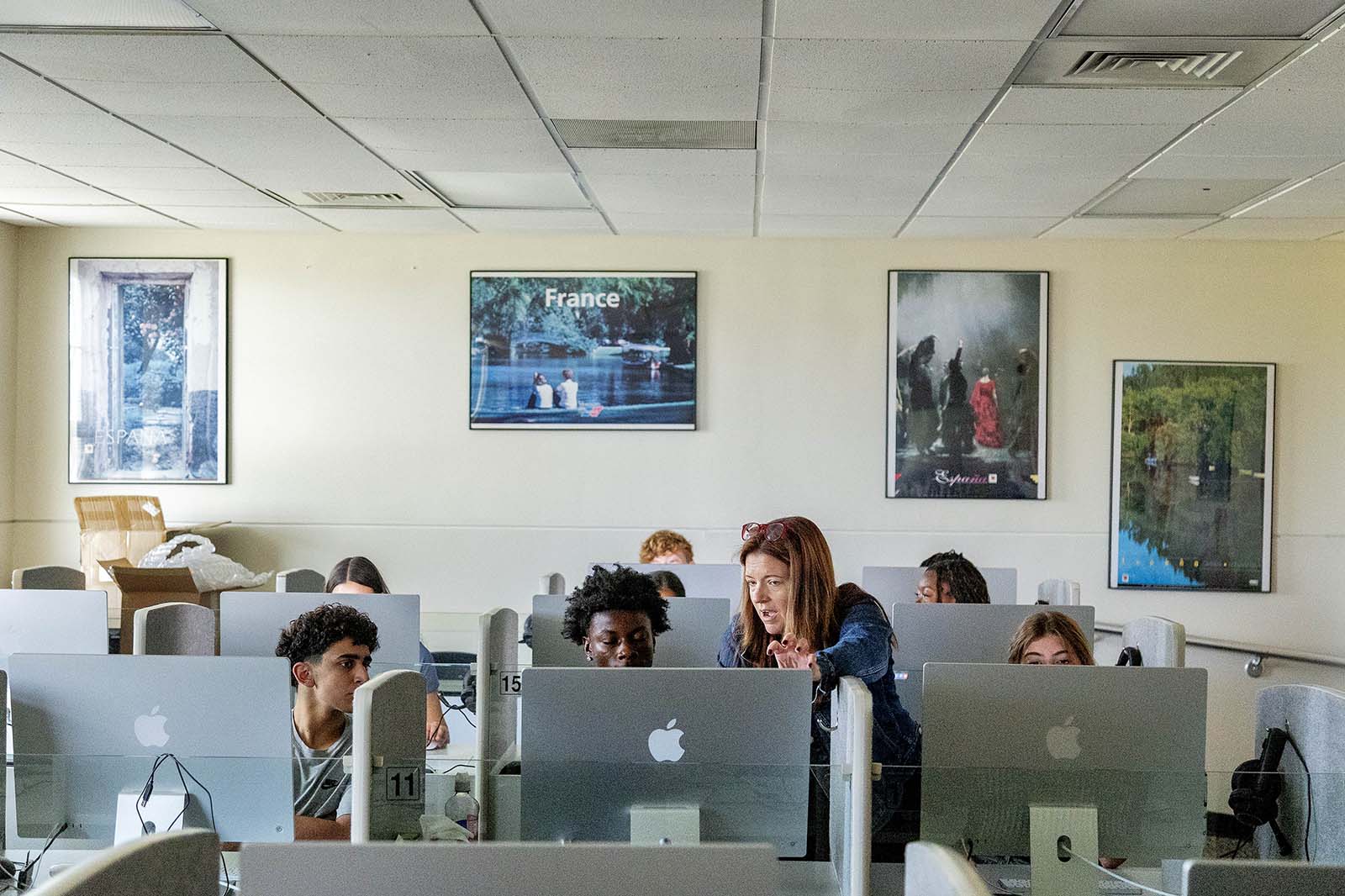
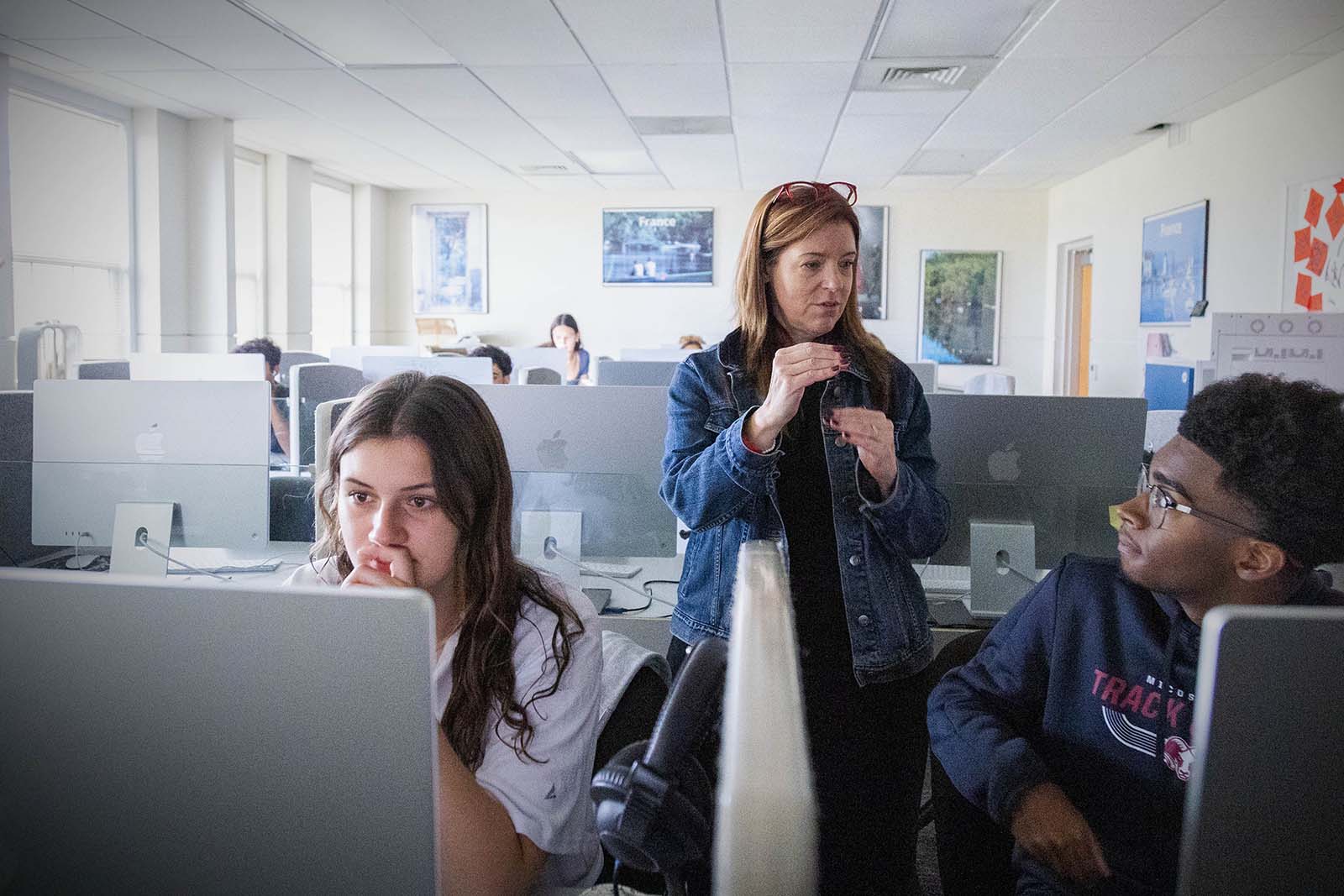
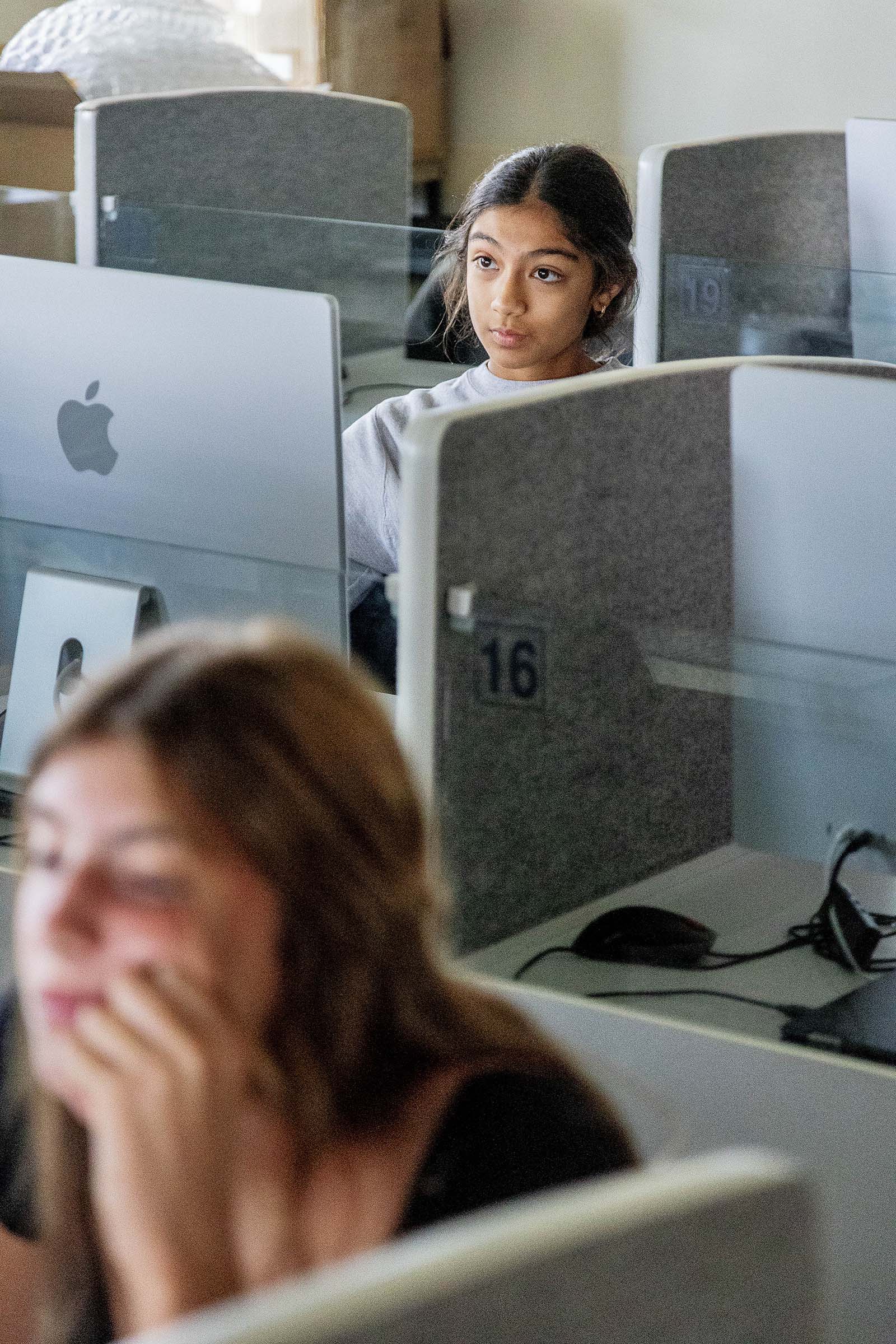
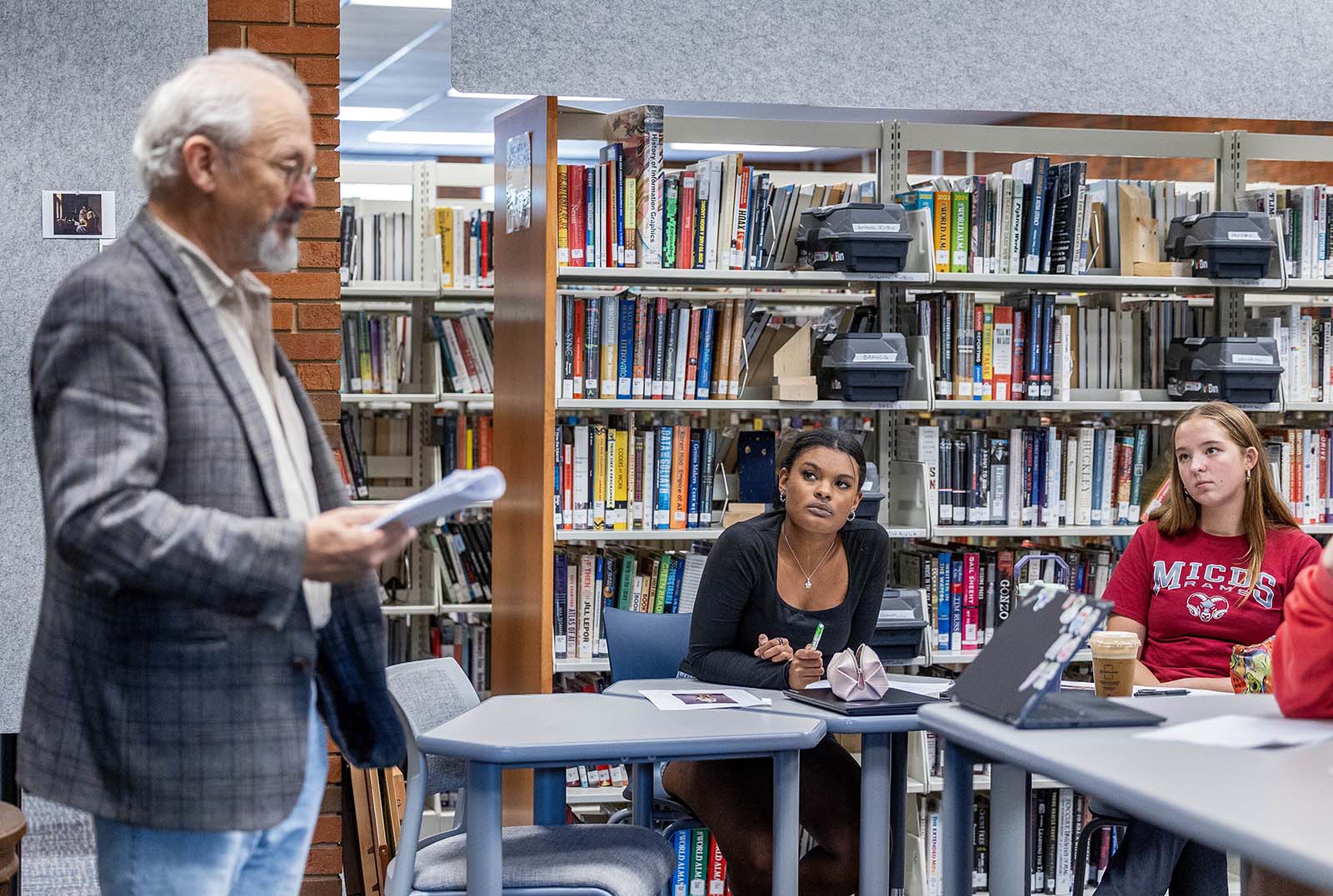
That support arrived as the MICDS community leaped into action. Ms. Johnson-Brimmage felt it immediately. “Over the summer, the arts faculty received a ton of communication on every step of the process from the Upper School leadership team,” she says. “Head of School Chelle Wabrek, Scott, and Bonnie were wonderful supporters and made sure to prioritize our well-being over something that none of us had any control over.” The leadership team worked with teachers to secure enough temporary spaces for all classes, determining which classes could be combined and which could operate without a dedicated space. “My new neighbors in the McCulloch Library have been wonderfully gracious in giving up one of their classroom spaces for Architecture and Art History,” says Mr. Huber. “The World Language teachers have been equally welcoming as we moved into their language lab for our Digital Design class.” Upper School Digital Art Teacher Denise Douglas feels the same way. “I’m grateful to the World Language Department for their support in the use of the language lab,” she says. “Personally, I’ve felt very welcome in the French classroom thanks to Upper School World Languages & Cultures Teachers Daniel George and Carolyn Dalton.”
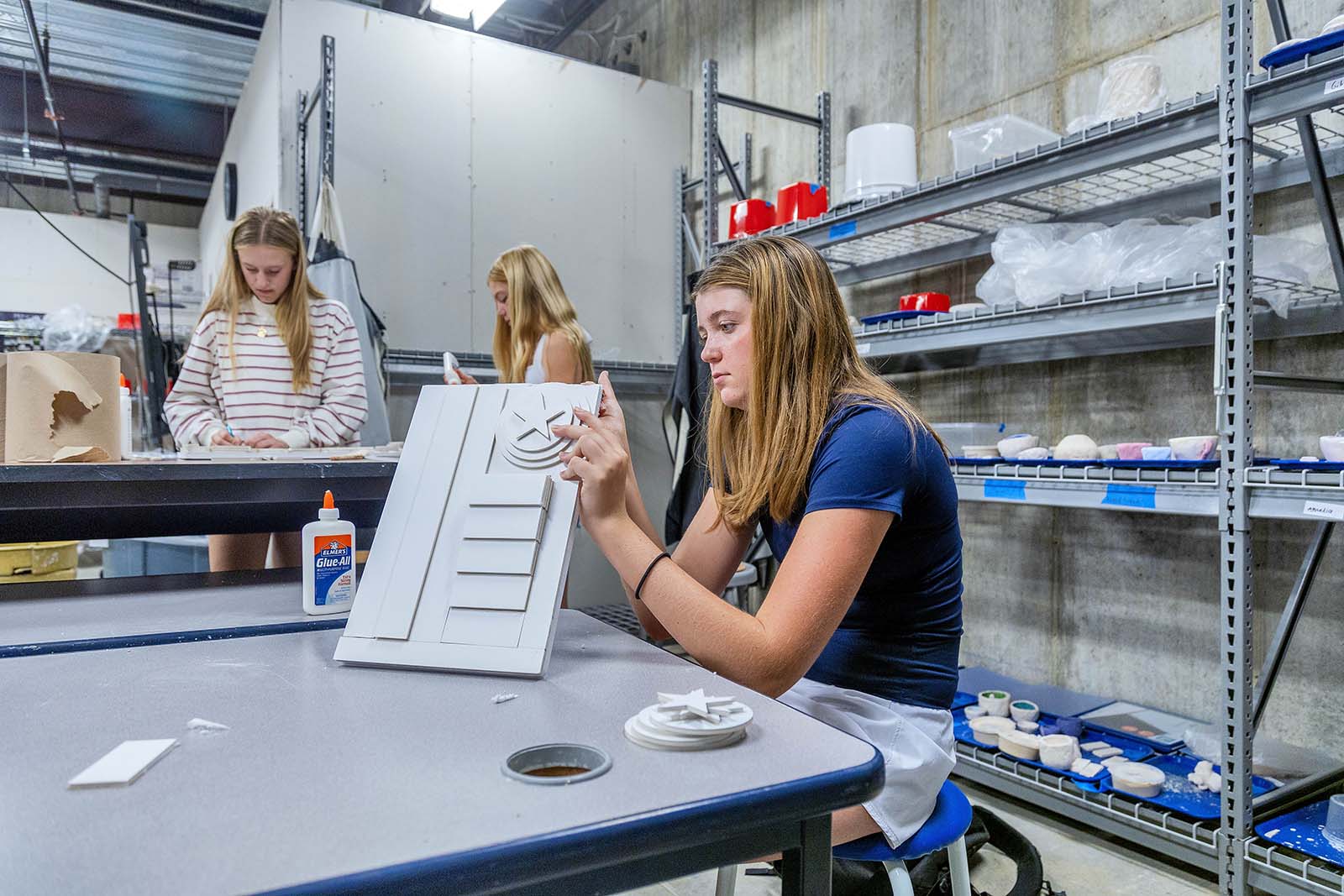
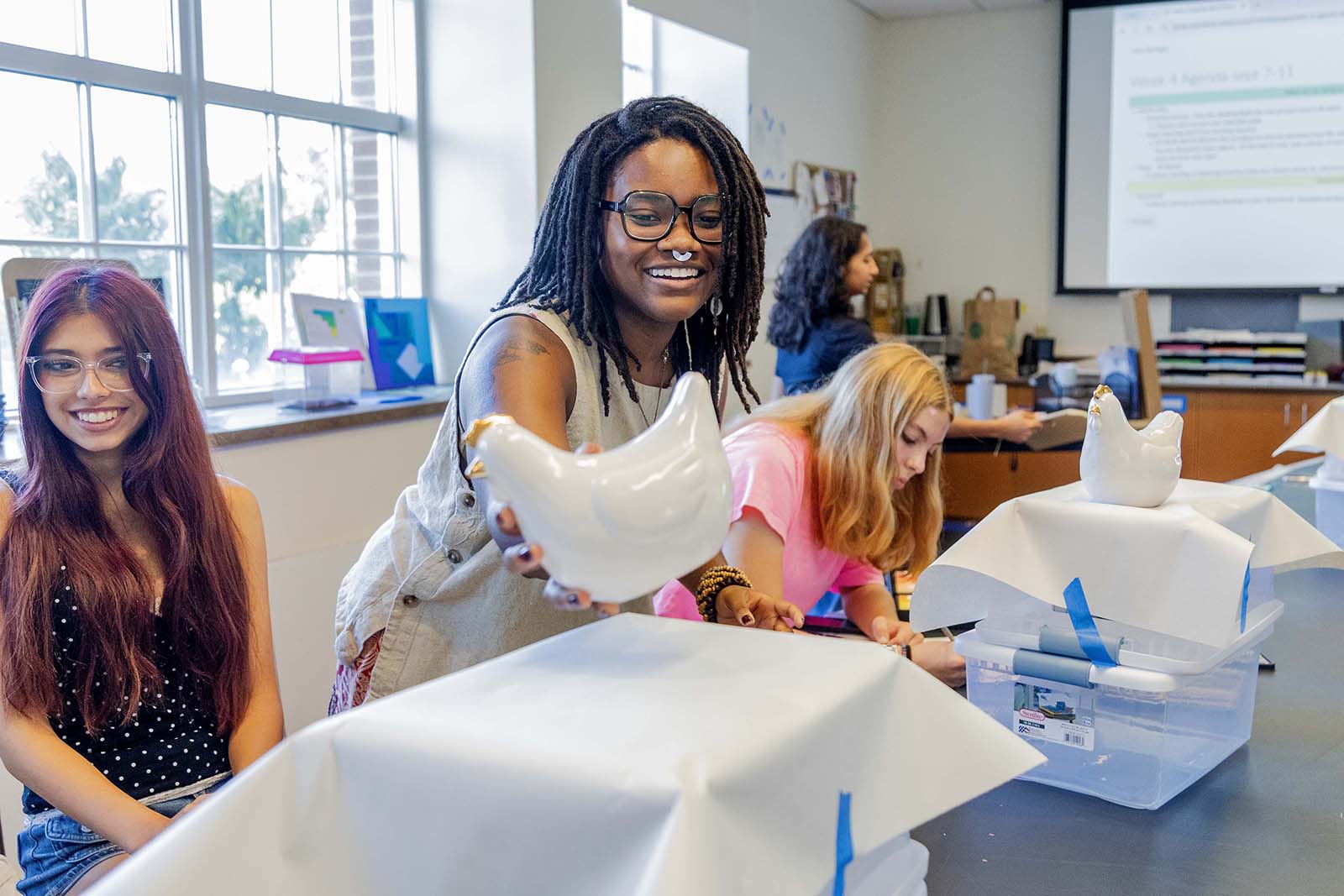
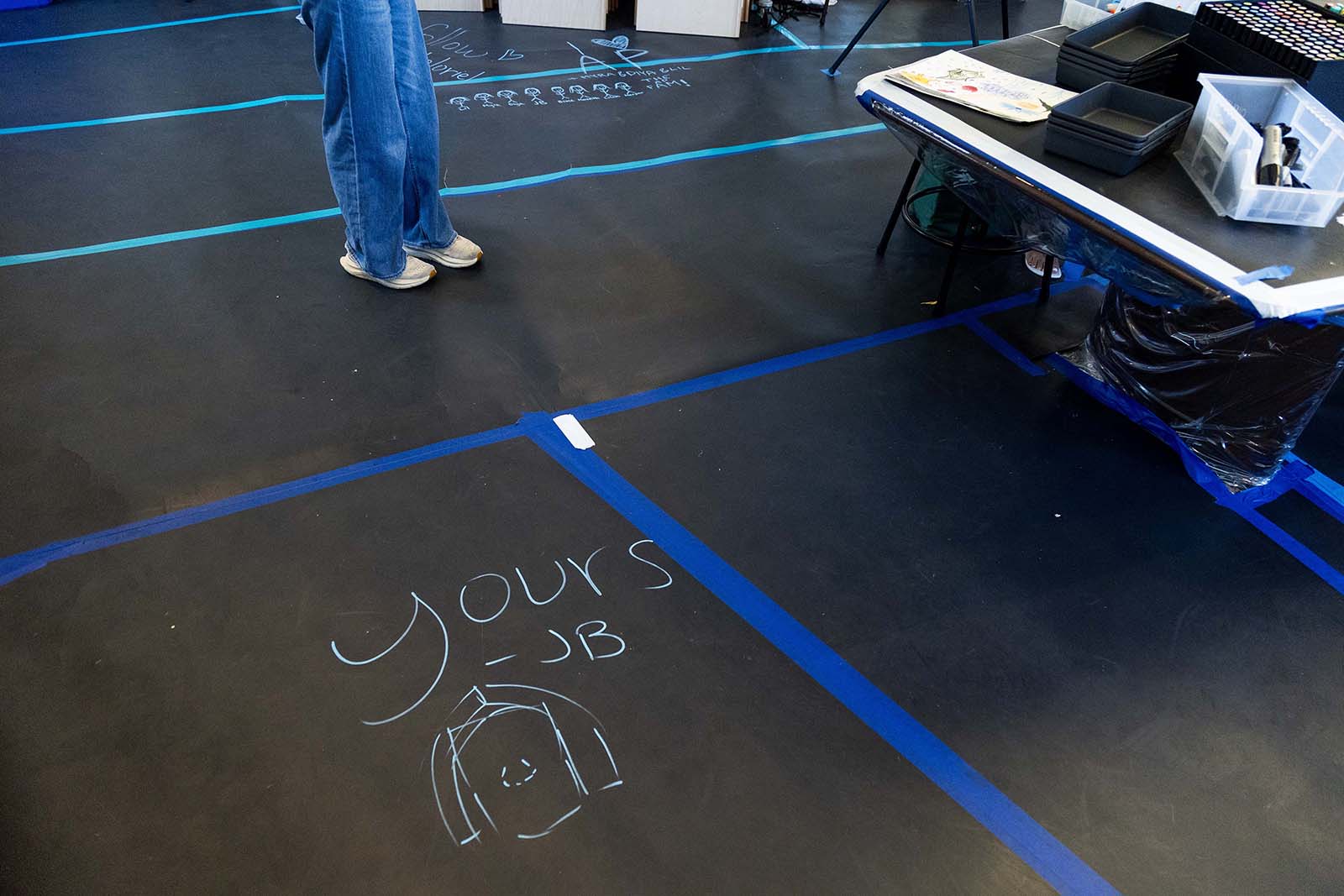
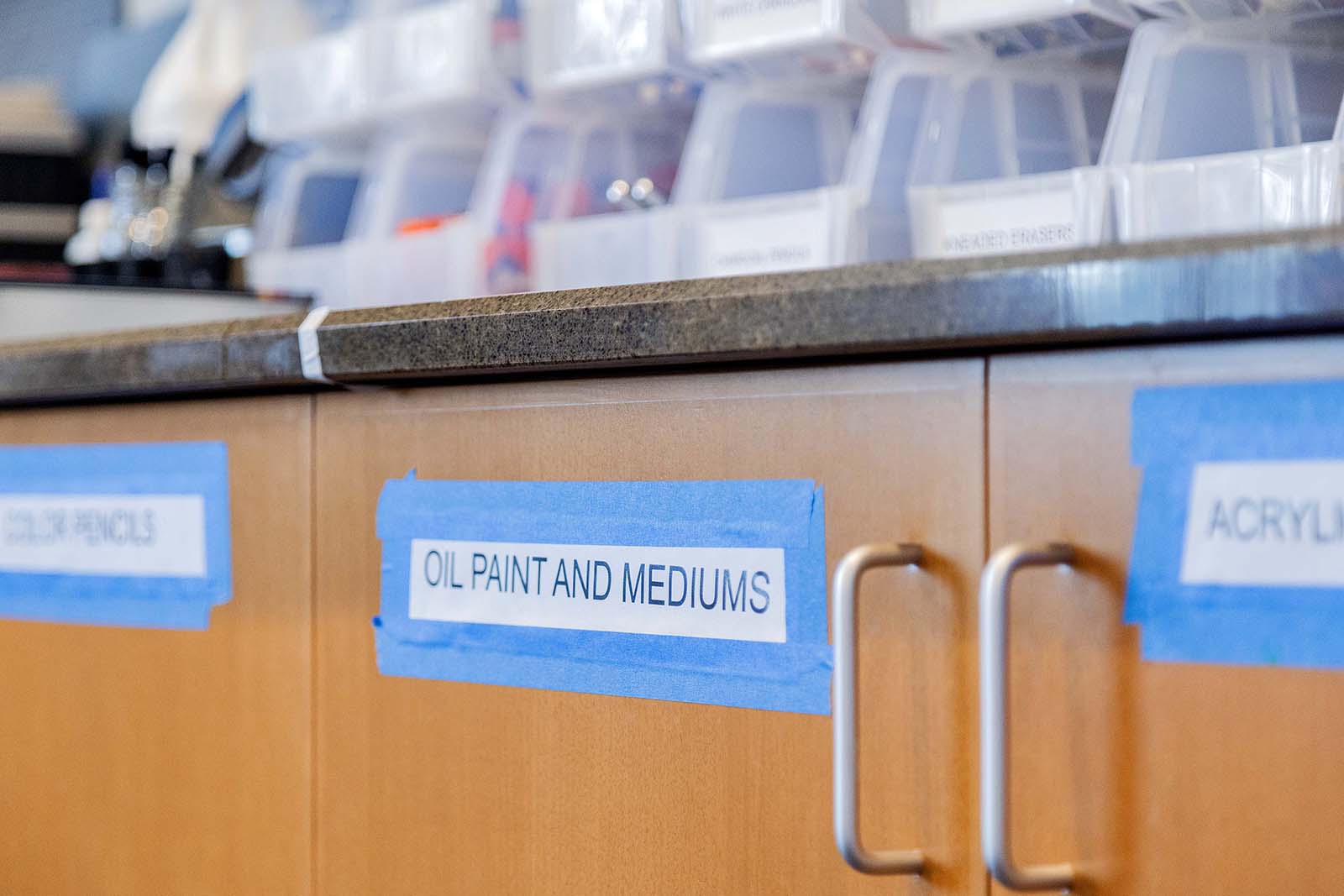
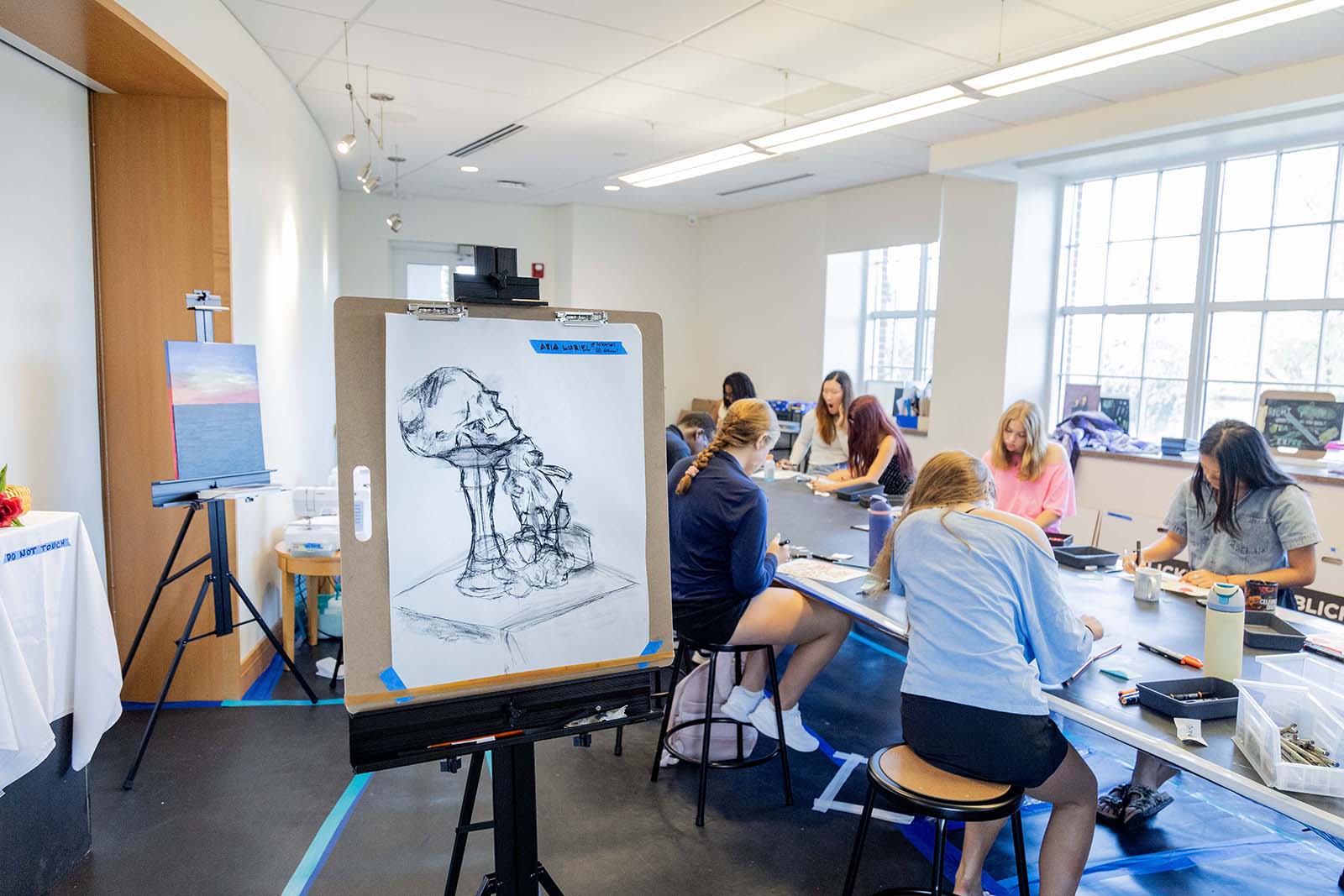
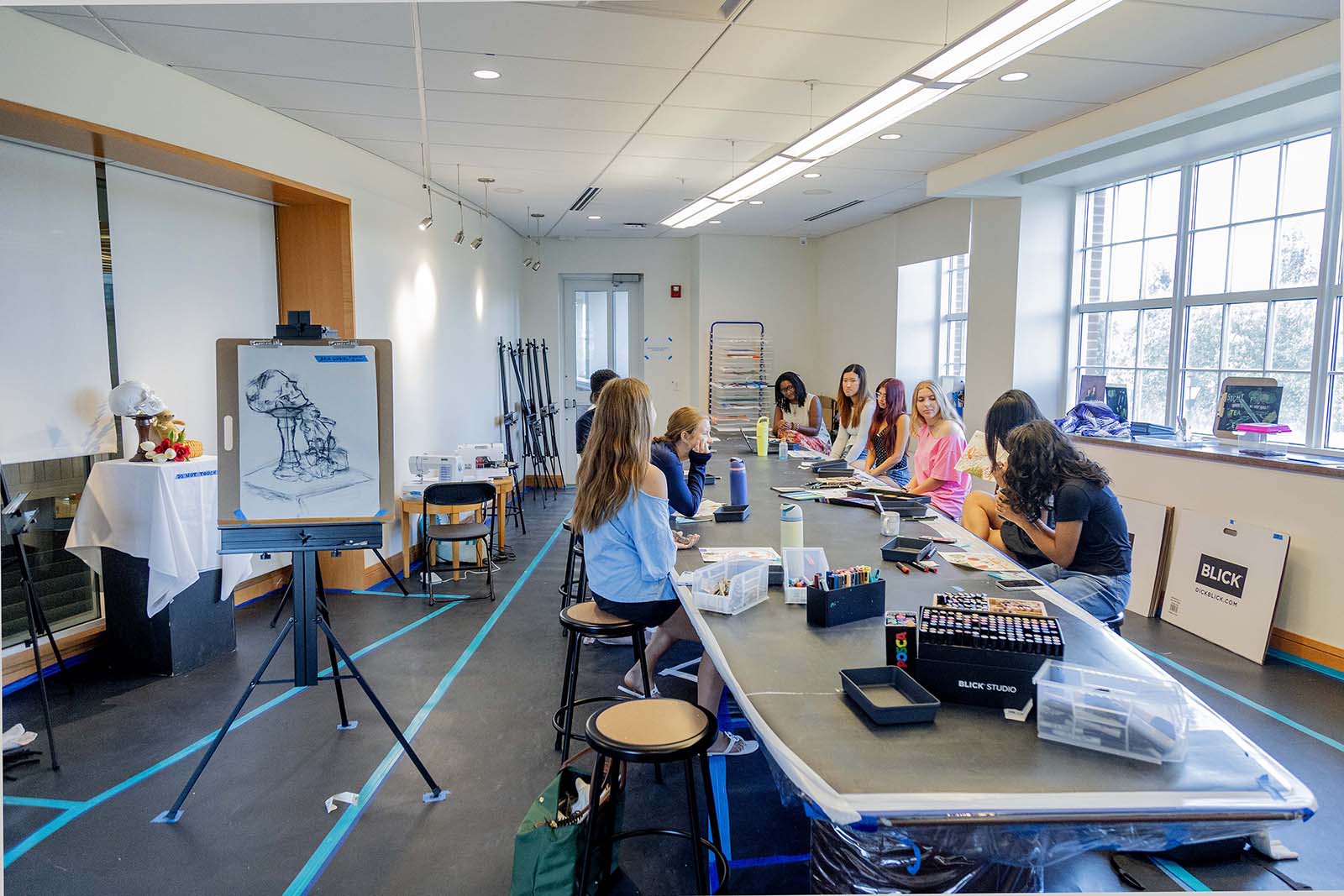
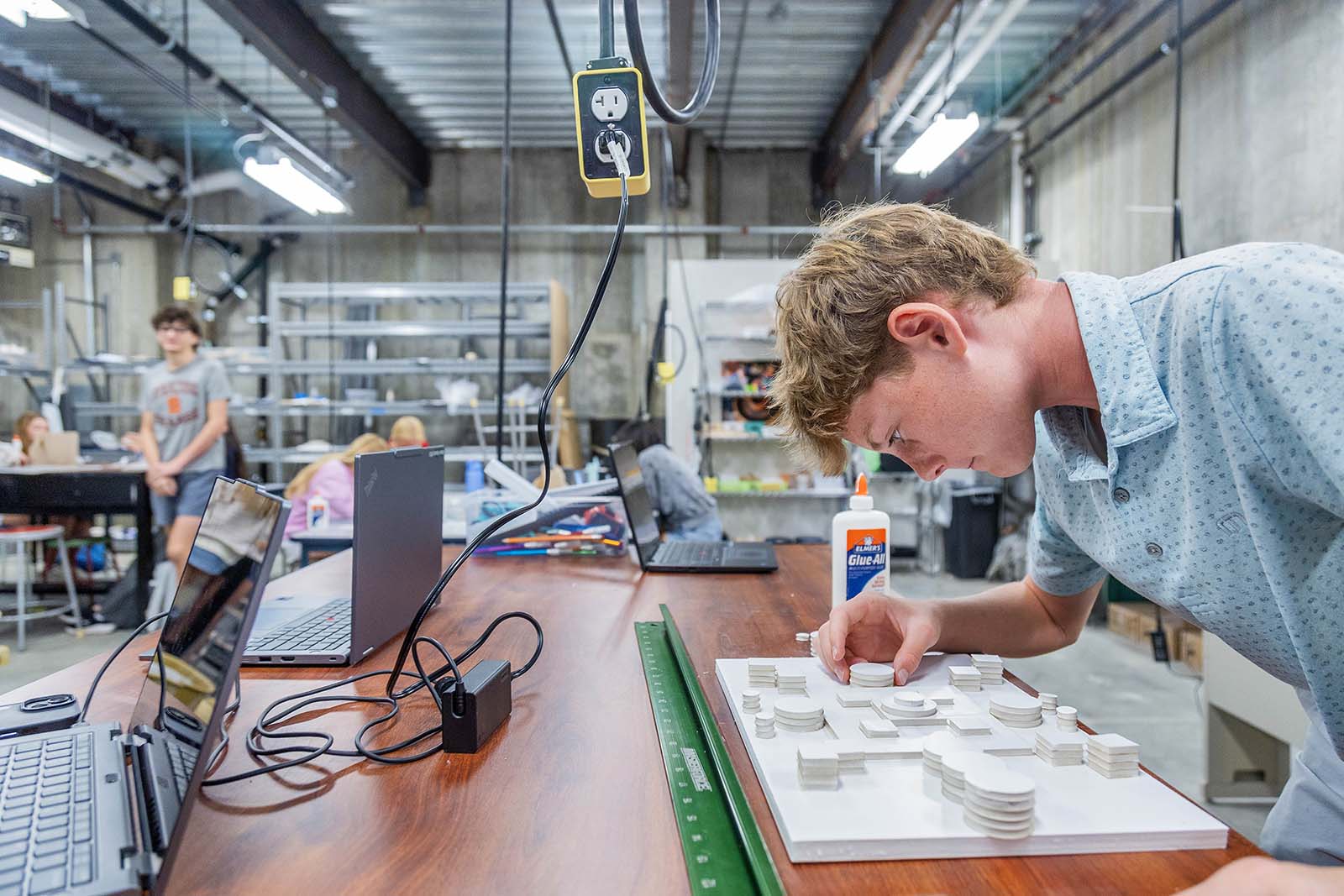
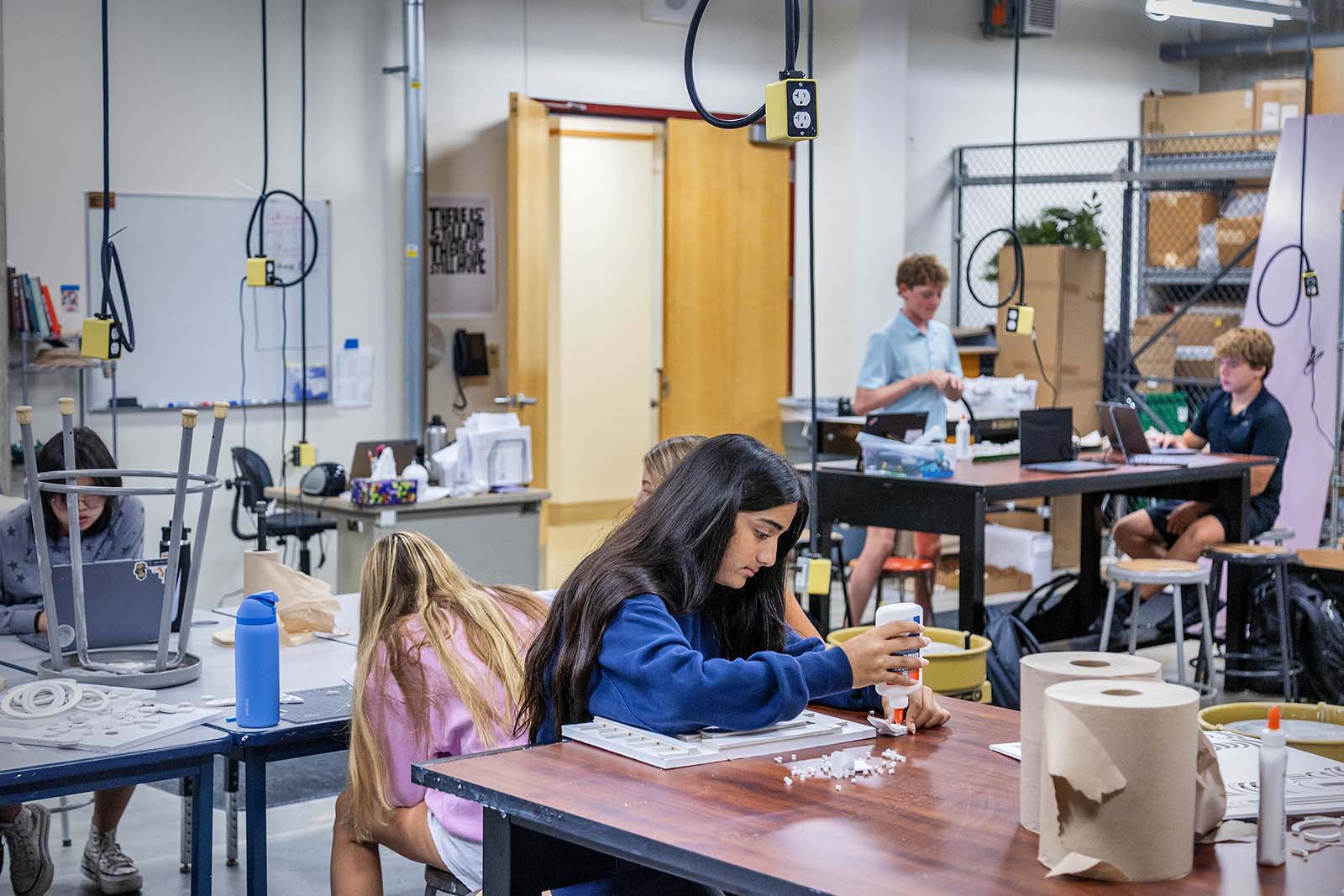
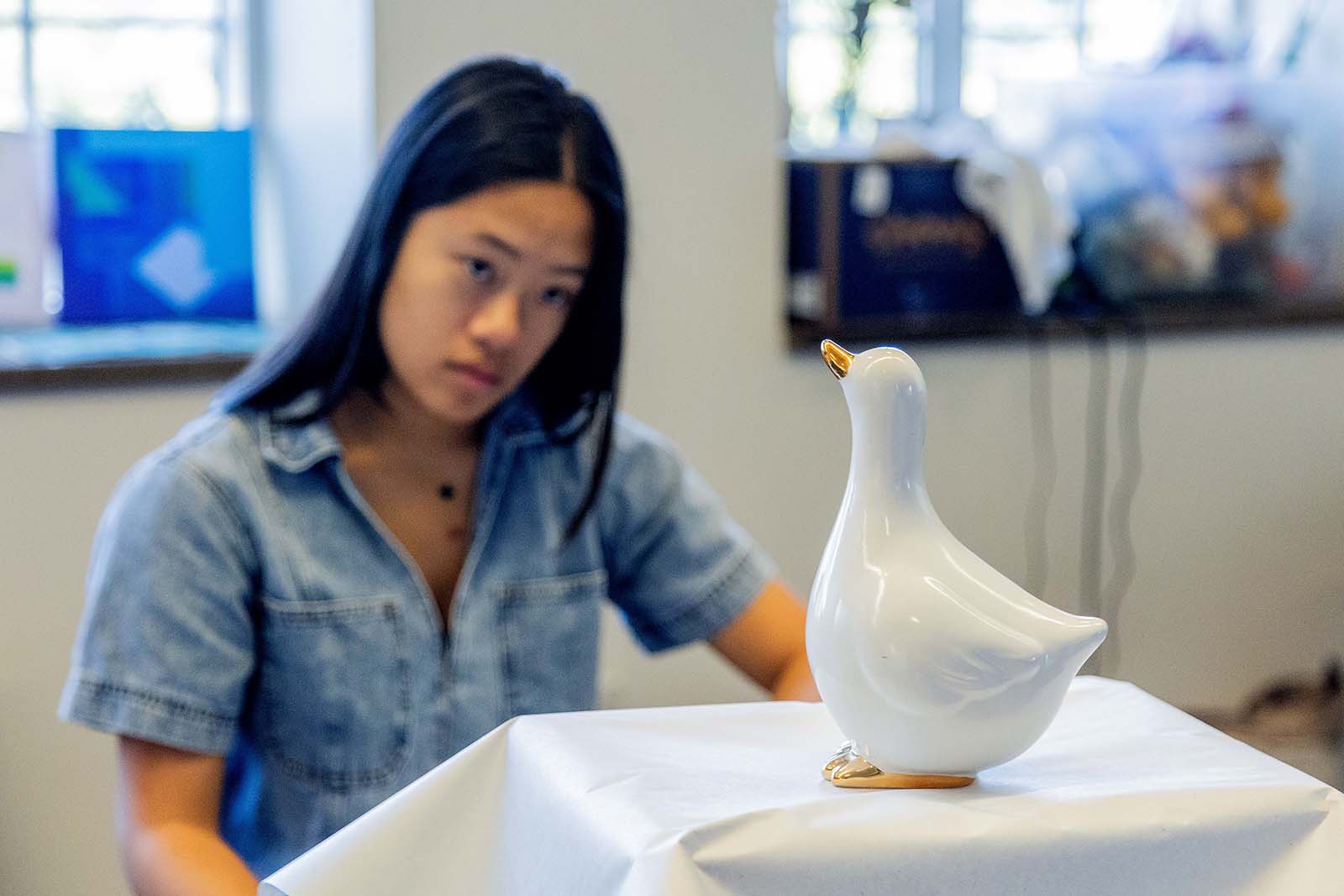
While some arts classes would share classroom space with different departments, creative solutions were needed to find locations for the sculpture and pottery classes led by Upper School Visual Art Teachers Brad Heineman and Brooke Williams, as well as for Ms. Johnson-Brimmage’s classes. “Once we decided on the Leadership Conference Room for my drawing and painting classes, we all immediately began mapping out what was needed in terms of storage and supplies,” says Ms. Johnson-Brimmage. “It’s all still a work-in-progress, but everyone has been extremely helpful in making sure I’m comfortable.” Like the Leadership Conference room, a large space in the basement of the STEM building that was being used for storage is now home for the sculpture and pottery classes. (In true Ram spirit and as a show of support, our varsity football players showed up in force to clean out the storage room during their summer live-in week.)
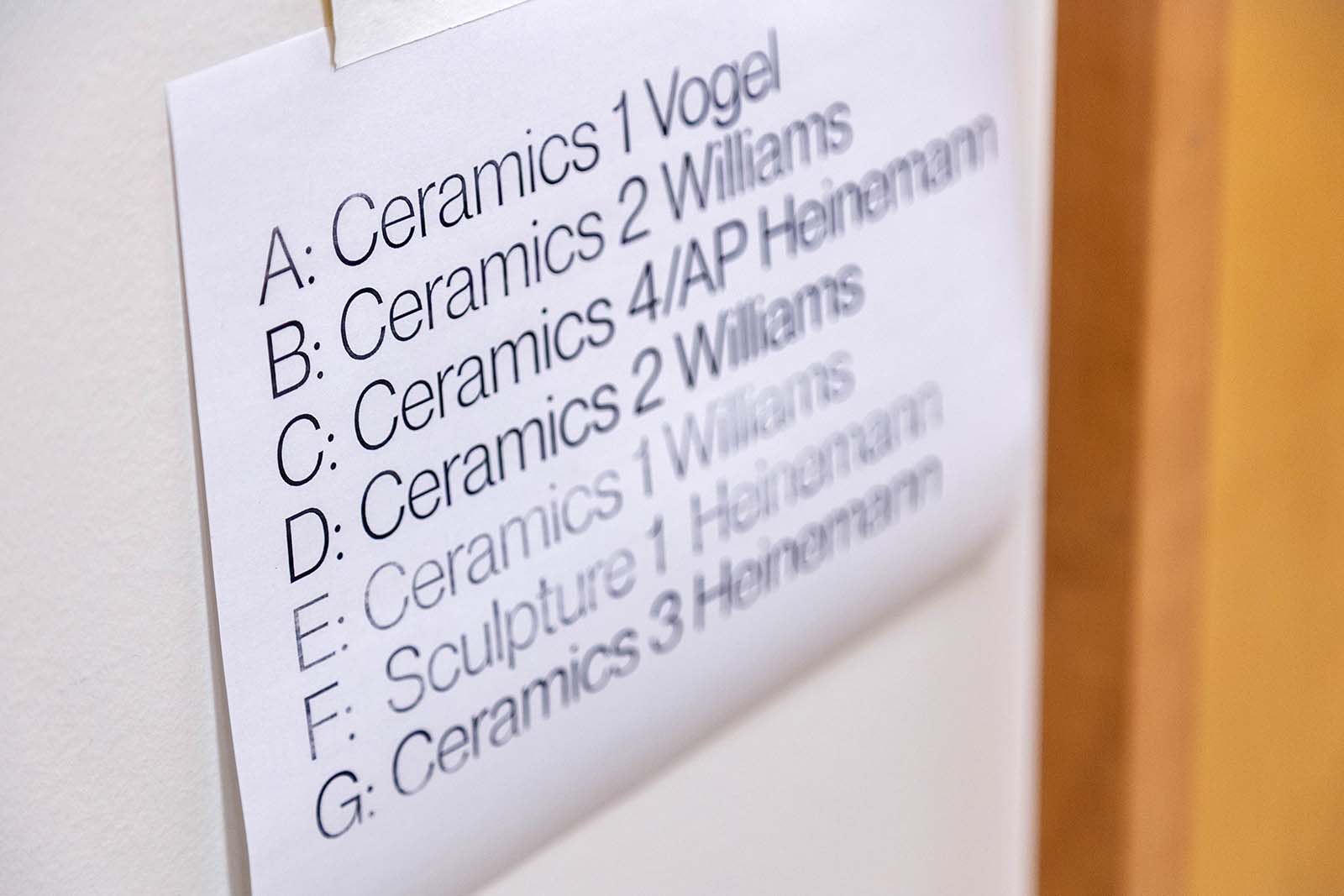
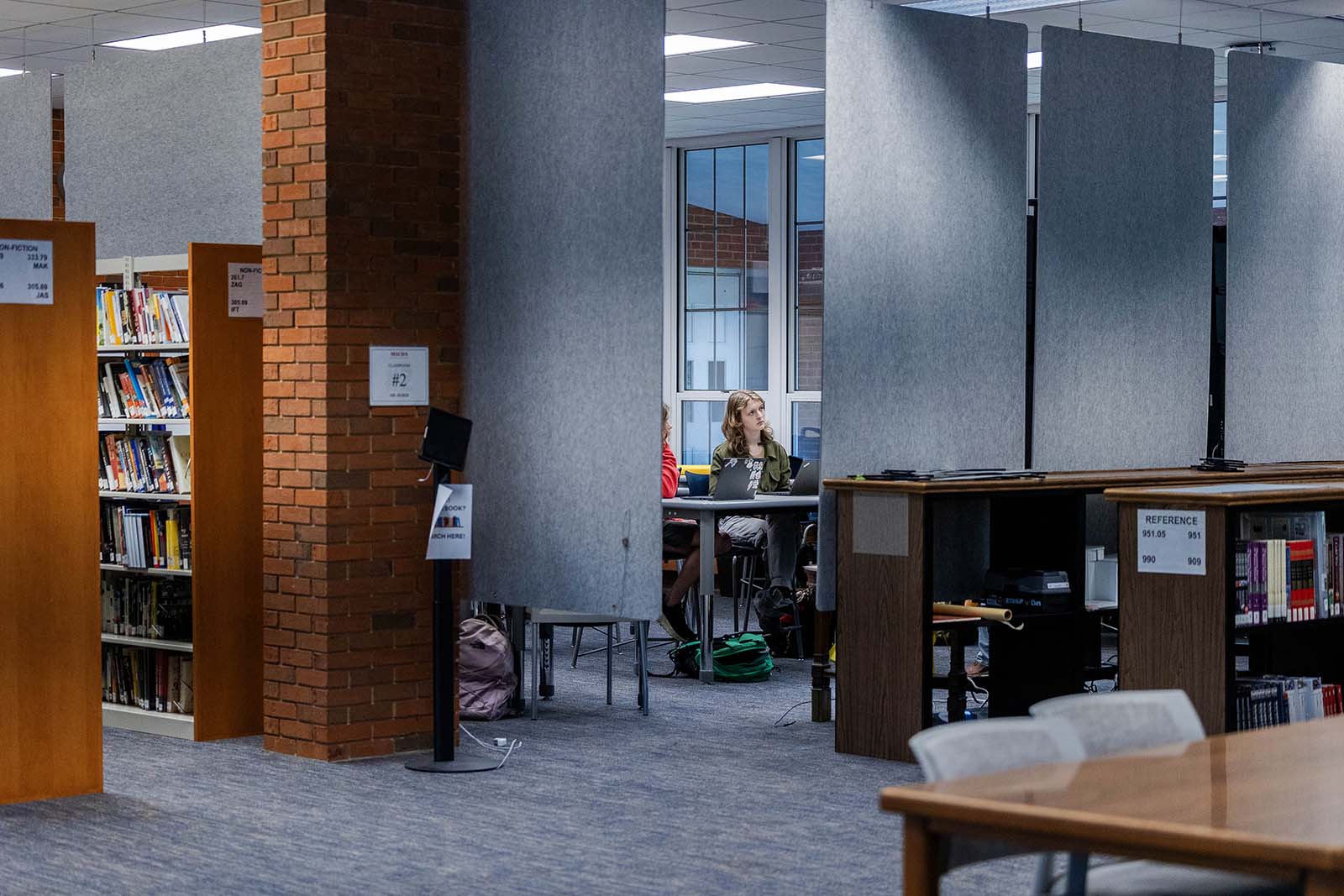
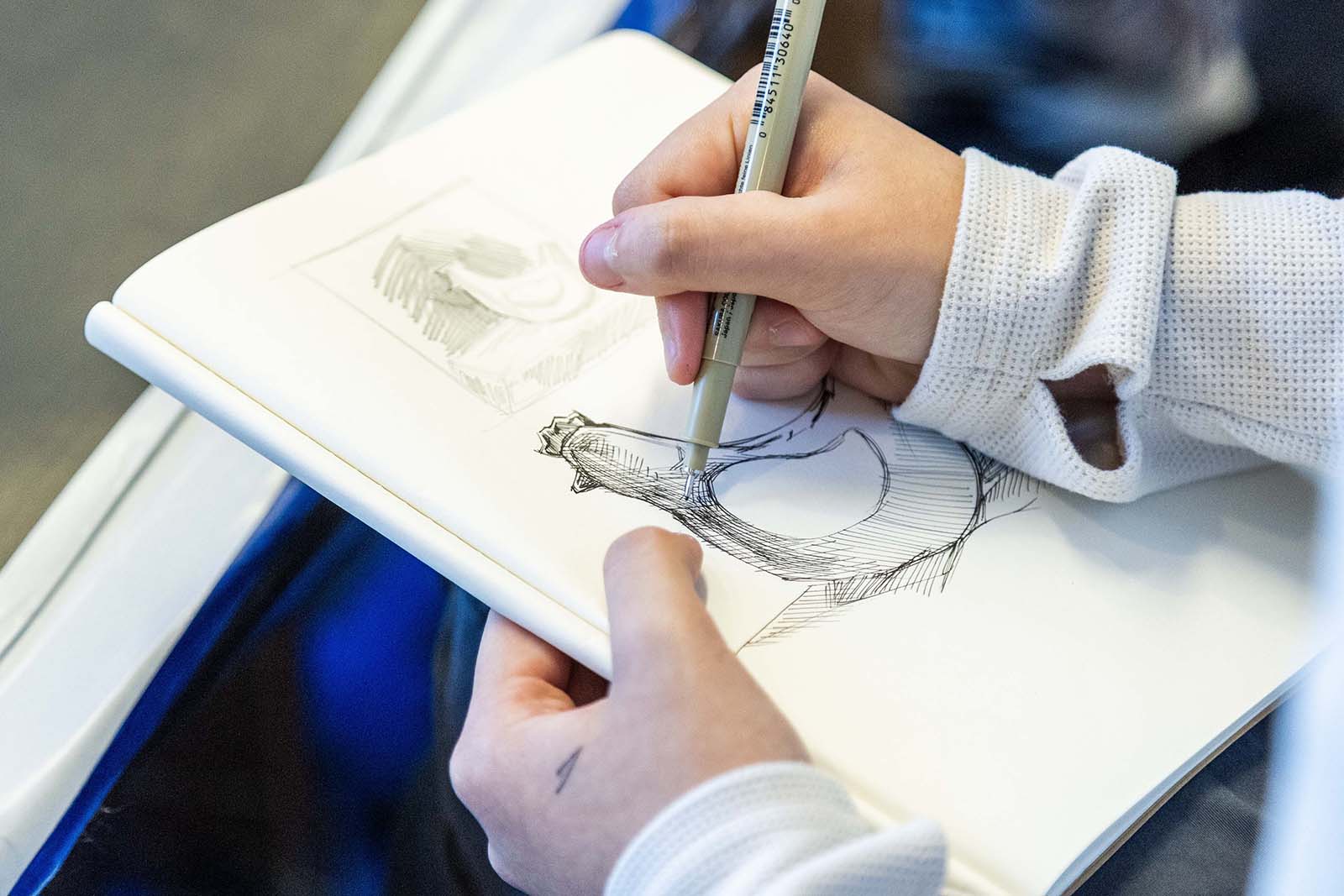
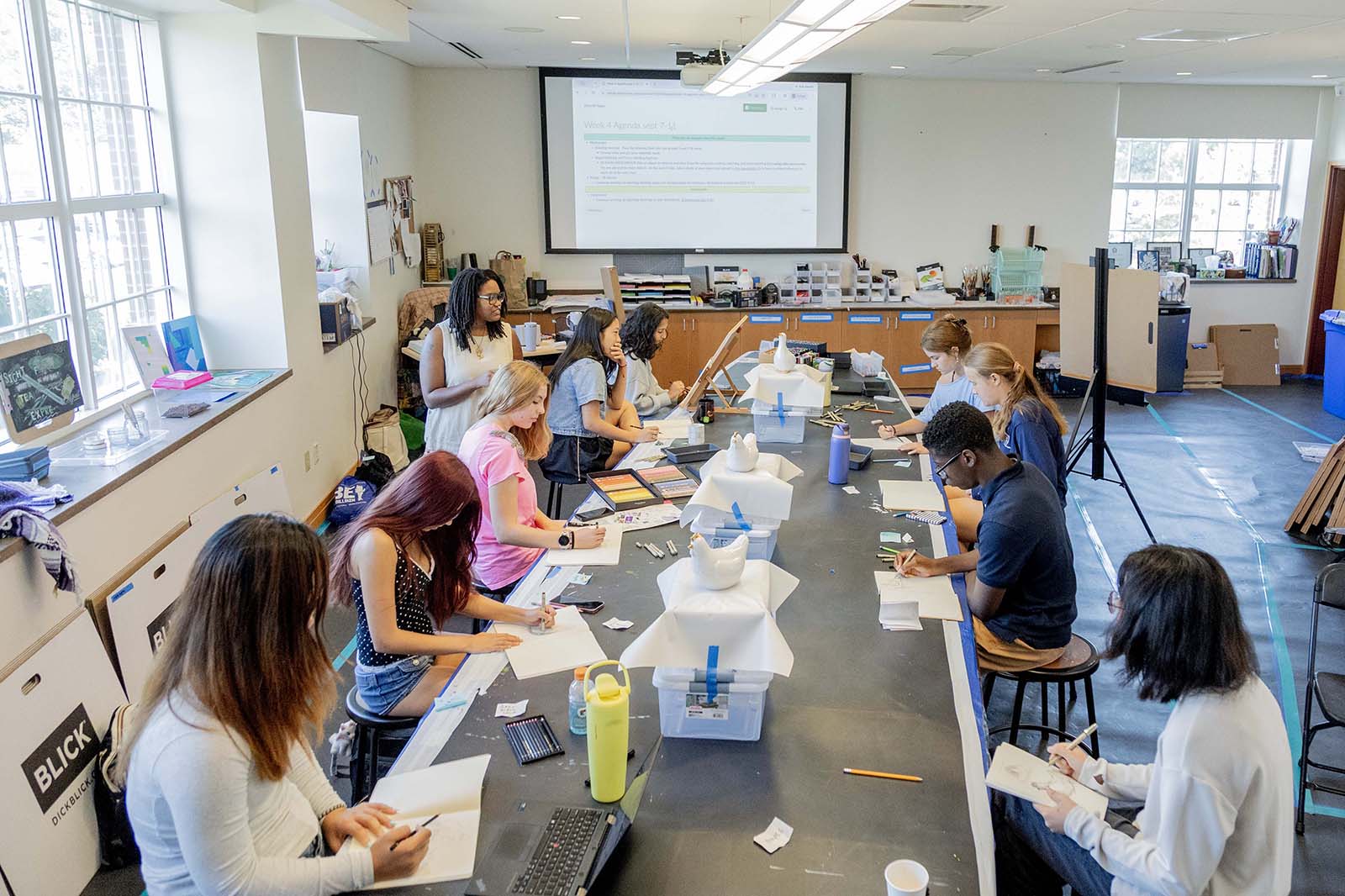
Settling In
The upheaval of being forced out of a familiar space can be disorienting. “There are many things that we take for granted as classroom teachers. When supplies, office spaces, or personal belongings are absent, it increases the cognitive load in new ways,” says Dr. Carpenter. “I am keenly aware of the additional effort it takes for these teachers who cannot resort to habit or rituals in their classrooms.” When Ms. Johnson-Brimmage was allowed back into her classroom to collect her belongings, she focused on personal items and her small but growing collection of drawings, notes, and photos from her students and advisees. “Fortunately, I only had one small crate of things to grab since I had only been in there for one year,” she says, “but I immediately felt for the rest of my colleagues who had decades of things to try and prioritize saving.”
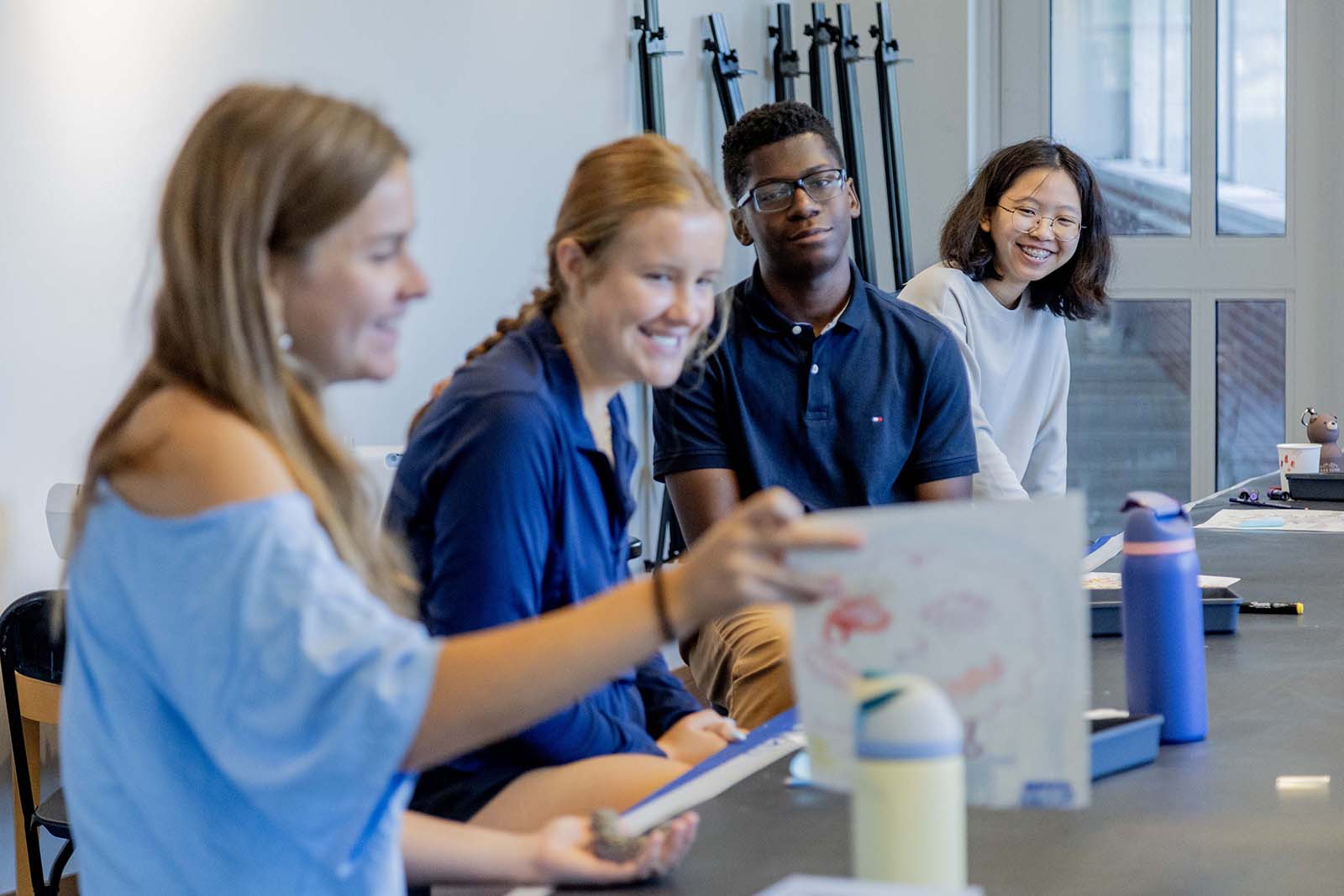
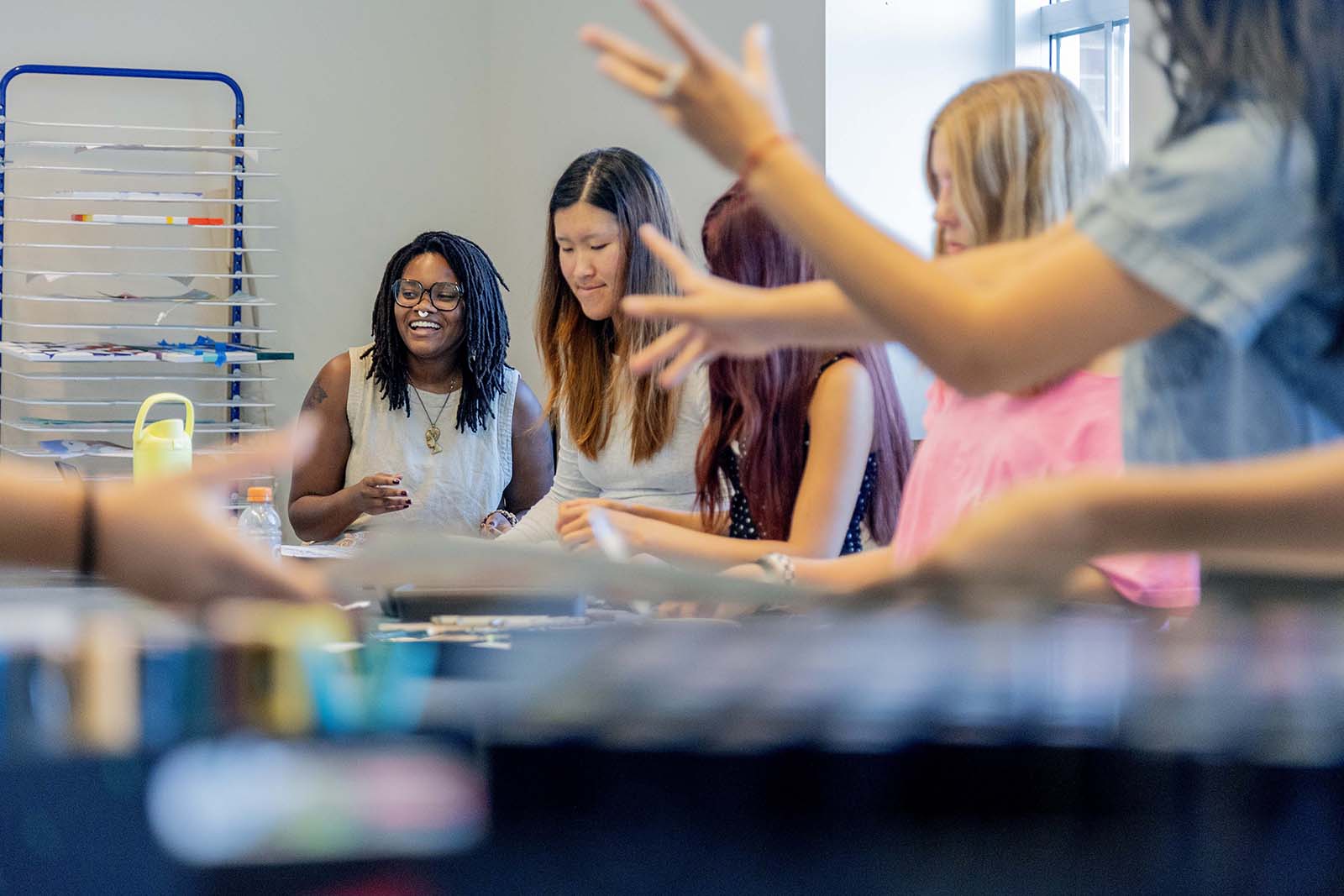
As the basement of the Bryant Arts Center was cleared out and faculty found their footing, the new, impromptu spaces began to show their personalities. “While I do miss our space and all of the random bits and bobs we had on hand, it IS nice to have natural light for a change,” says Ms. Johnson-Brimmage. What does Mr. Huber like about his space in the library? Without hesitation, “Windows and natural light!” Ms. Douglas’ digital photography students are benefiting from their larger room in May Hall. The computer lab in Bryant Arts Center was small for the number of students and computers it housed. “What works is the new Mac lab,” Ms. Douglas admits. “It’s a much better learning environment.” The benefits of these reimagined spaces continue to develop. Ms. Johnson-Brimmage is enjoying the Leadership Conference Room’s unique location. A highlight of the space is the patio area. “I like to sit out there when it’s nice to do my own work, and I’ve held class and advisory out there a few times,” she says. The room’s proximity to colleagues from different departments offers her the chance to collaborate in new ways. “The STEM teachers have been incredibly accommodating. We talk about potential ‘STEAM’ collaborations, and sometimes they share their own projects that they’ve been working on or are thinking about.”
While teachers and students are enjoying many of the benefits of these new spaces, challenges still exist. “The situation is becoming normalized to the community, but those teachers are still feeling unsettled,” says Dr. Carpenter. “There’s not as much room to spread out,” says Ms. Johnson-Brimmage about her new space. In the Bryant Arts Center, there was storage space for art supplies and in-progress projects, but now everything has to be put away before the next class arrives. “We’ve started utilizing the windows to stack projects,” she added. Reflecting on the intangible losses, Mr. Huber is sorry that the natural camaraderie that is fostered by working closely with his fellow teachers is now missing. “The Arts diaspora has broken up a tight group of art teachers. I didn’t realize the value of casual conversations as we visited each other’s rooms during our free periods.”
Moving Forward
The flood, while unexpected, has given the School the opportunity to consider different scenarios for Upper School art spaces. “There are several options being considered,” says Dr. Carpenter. “I am grateful that Mrs. Wabrek’s leadership and vision for the future of MICDS is a key element of the conversation.” Despite this setback, the future of the arts at MICDS is strong, thanks to our leadership and, in large part, our dedicated community. “I am grateful for the outpouring of our community members in support of the art department,” Dr. Carpenter says. The Parents Association, Arts Boosters, and various student groups have offered support and been invaluable in ensuring this year’s arts courses are a success. “While the situation definitely isn’t ideal, I am extremely fortunate to be working with such a sweet group of kids,” Ms. Johnson-Brimmage says. “I spent a lot of time over the summer mourning the old space, but the students have really helped me see things from a different perspective. They’ve been incredibly resilient during this entire process.”