As the year winds down, students in Upper School Science Teacher Stephanie Matteson’s Institutional Research class are sharing the results of their semester of learning. Independent Lab Research: Institutional Research is an independent study course in which students are mentored by an MICDS faculty member or a visiting scientist as they develop and test their own hypotheses under the umbrella of the School’s research projects: biological corridors, soil fertility and plant production, yeast metabolism, and fruit fly genetics. Students use techniques learned in the Science Seminar course to conduct experiments agreed upon with their mentors. They are required to keep a detailed lab notebook to document their data, write a formal article to report their findings, and present their project in a public forum.
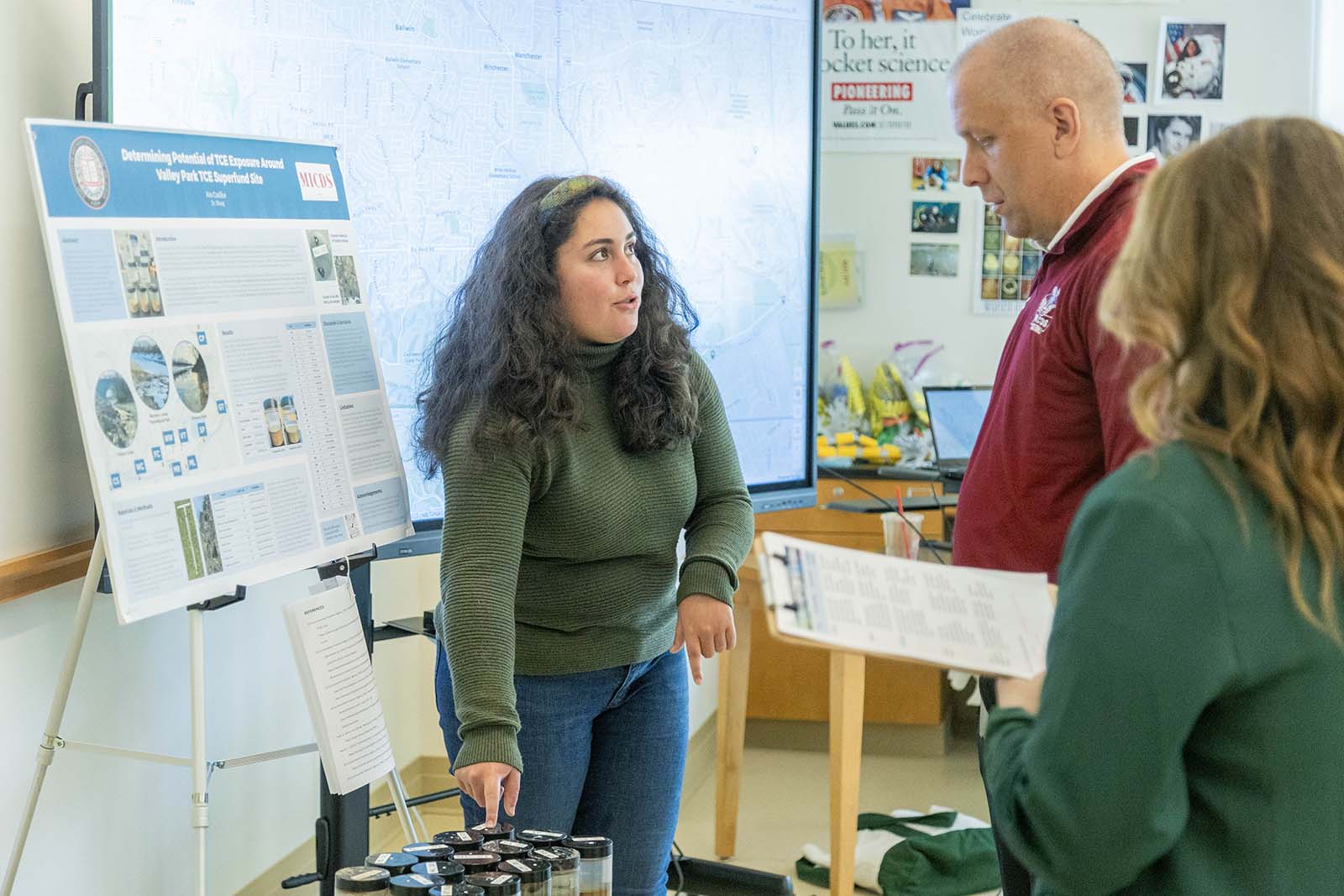
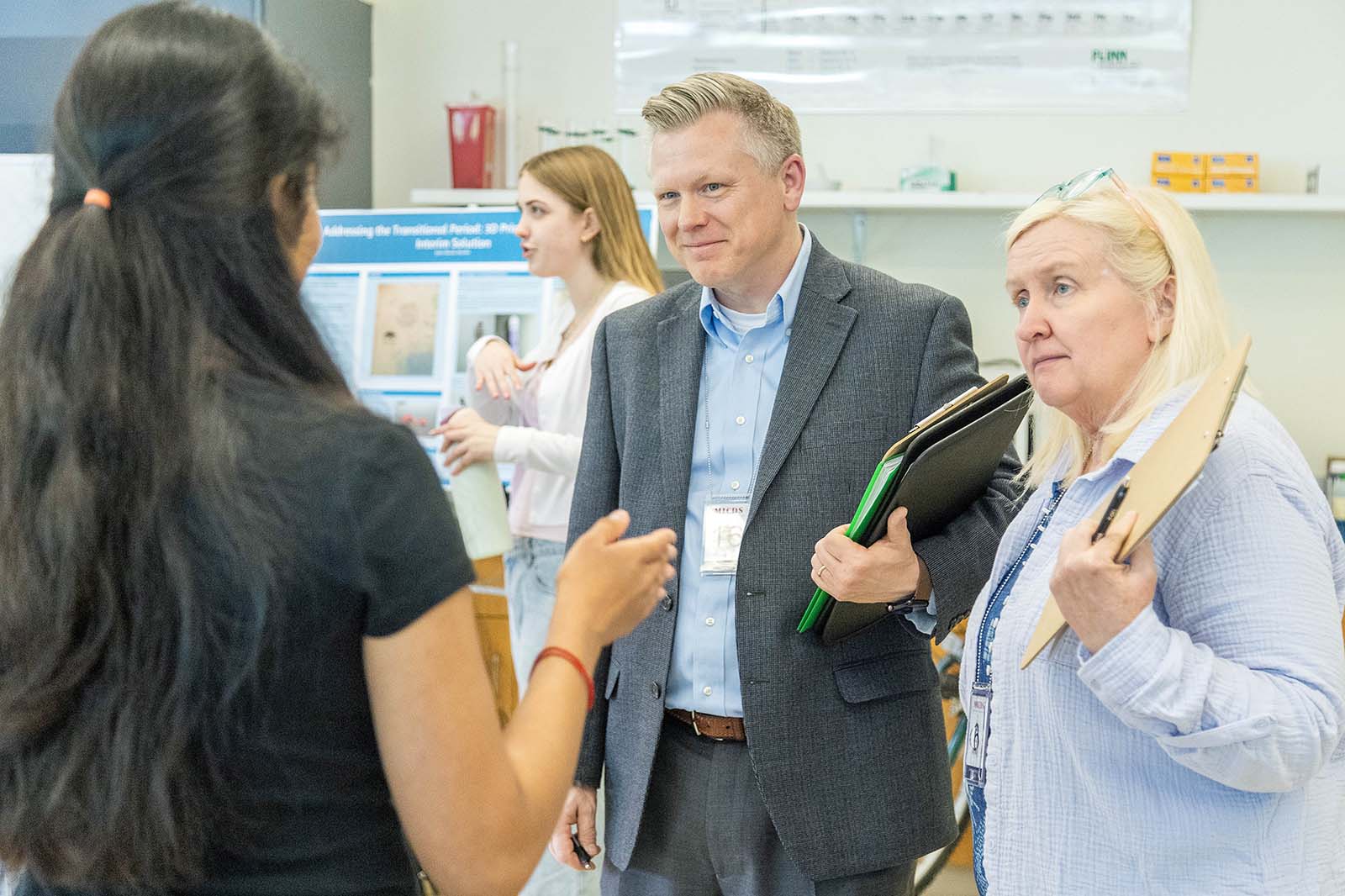
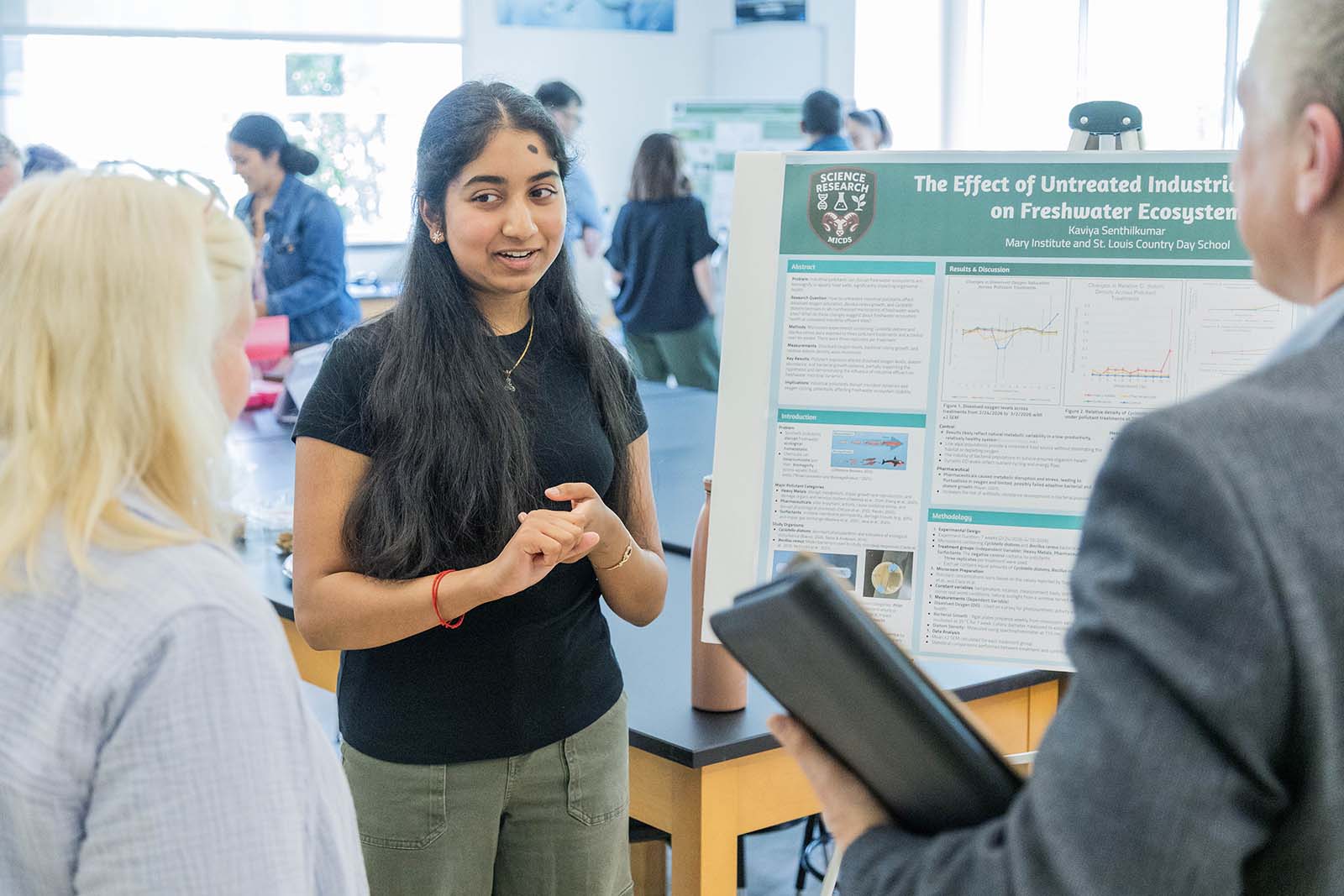
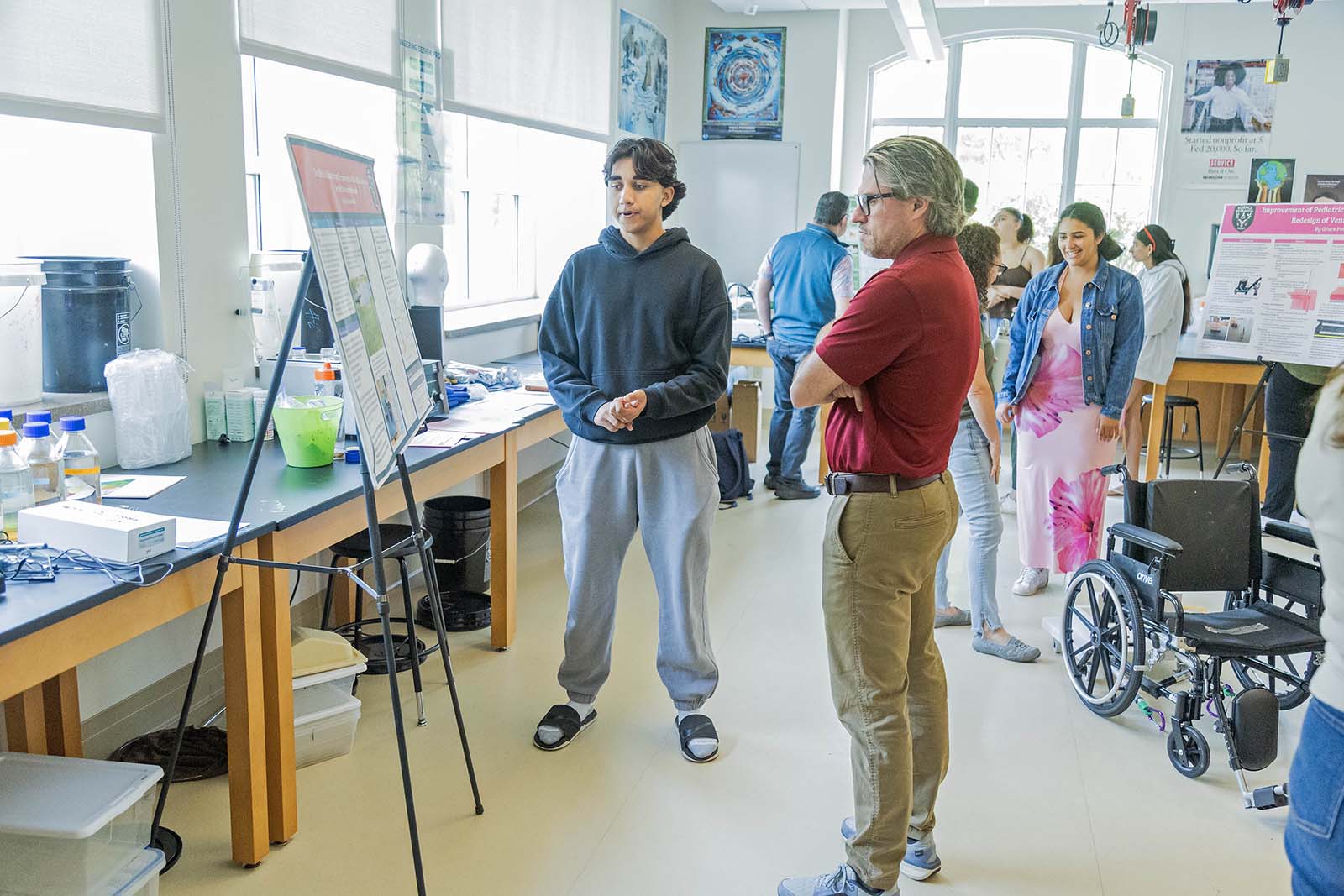
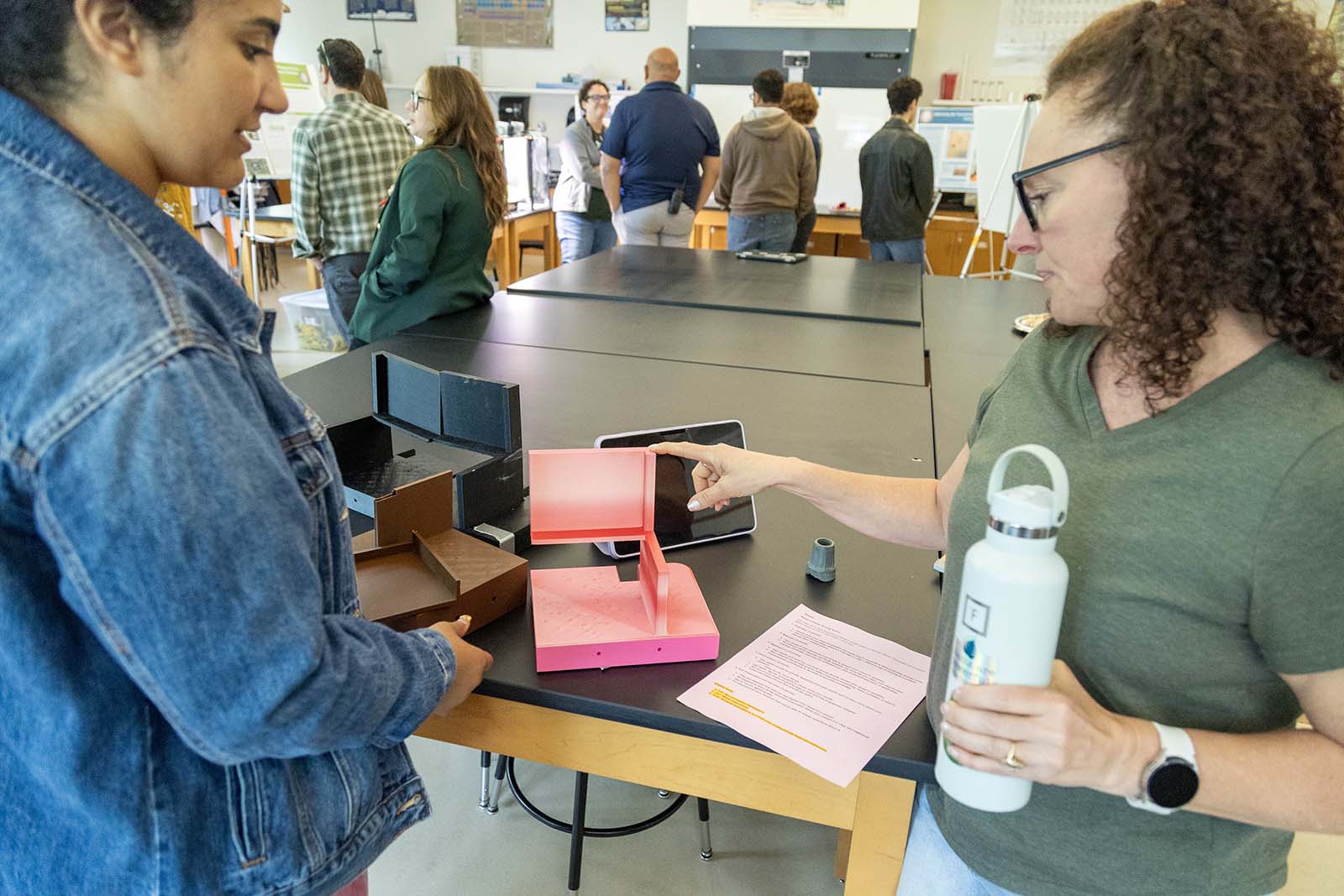
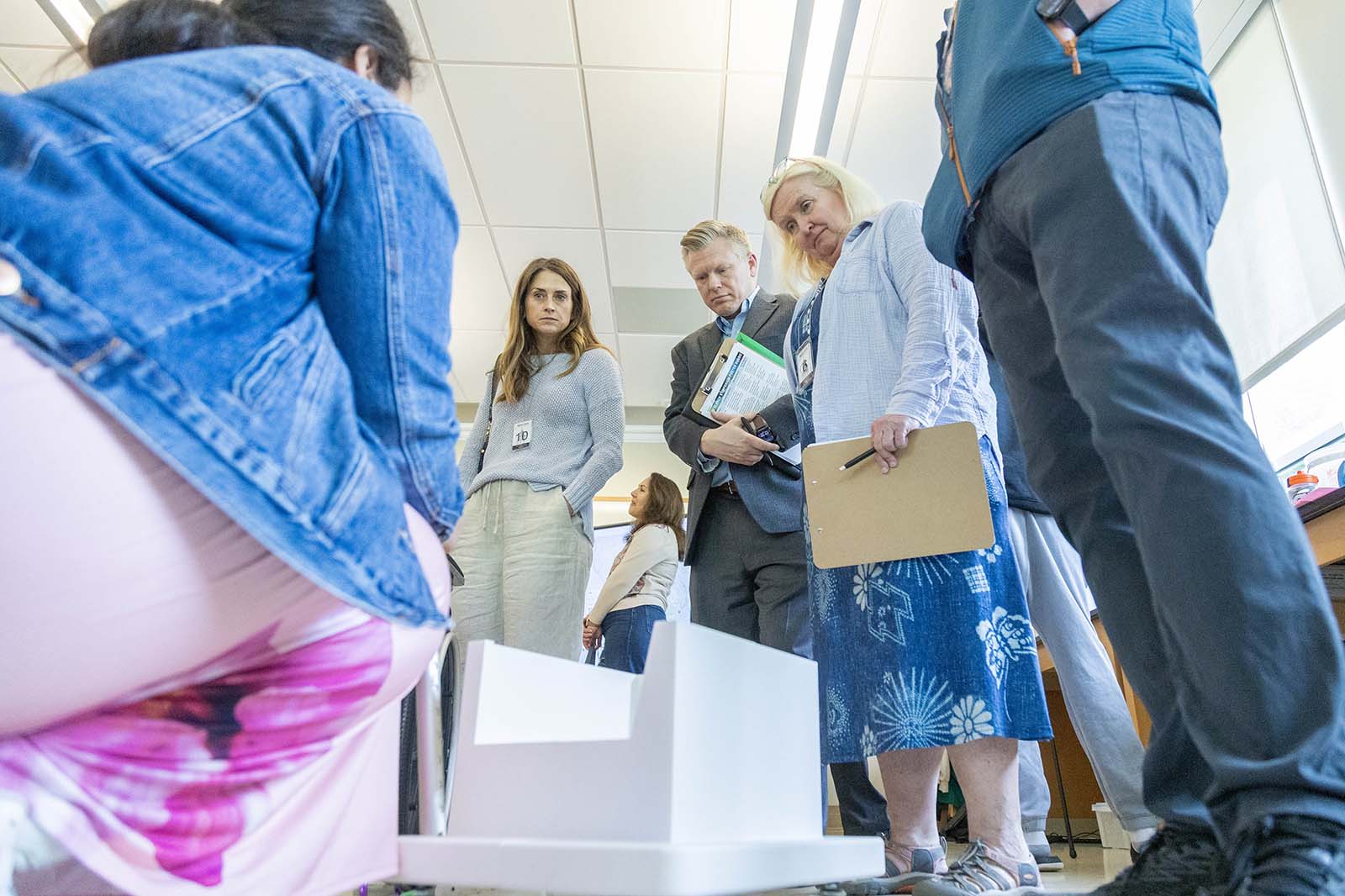
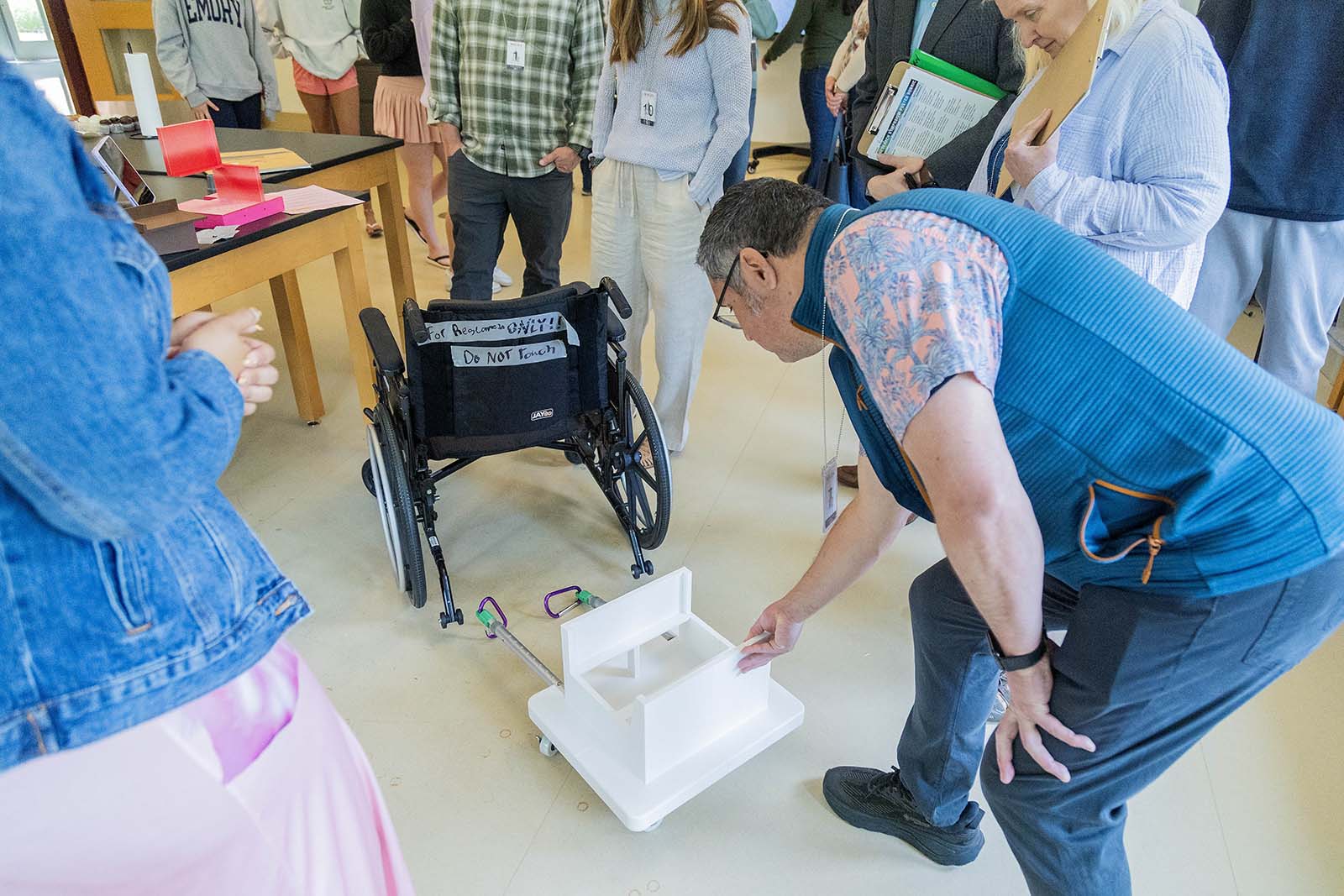
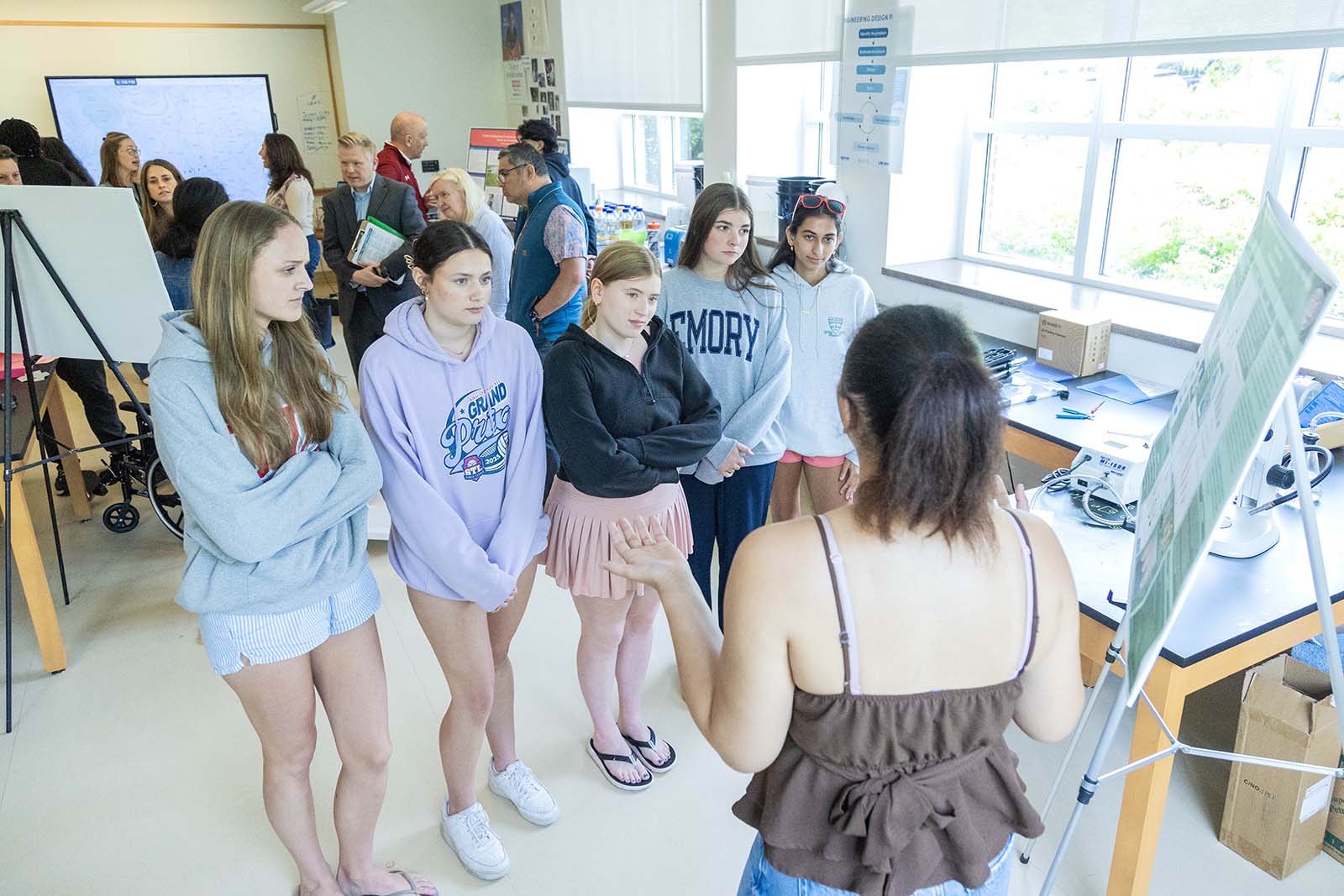
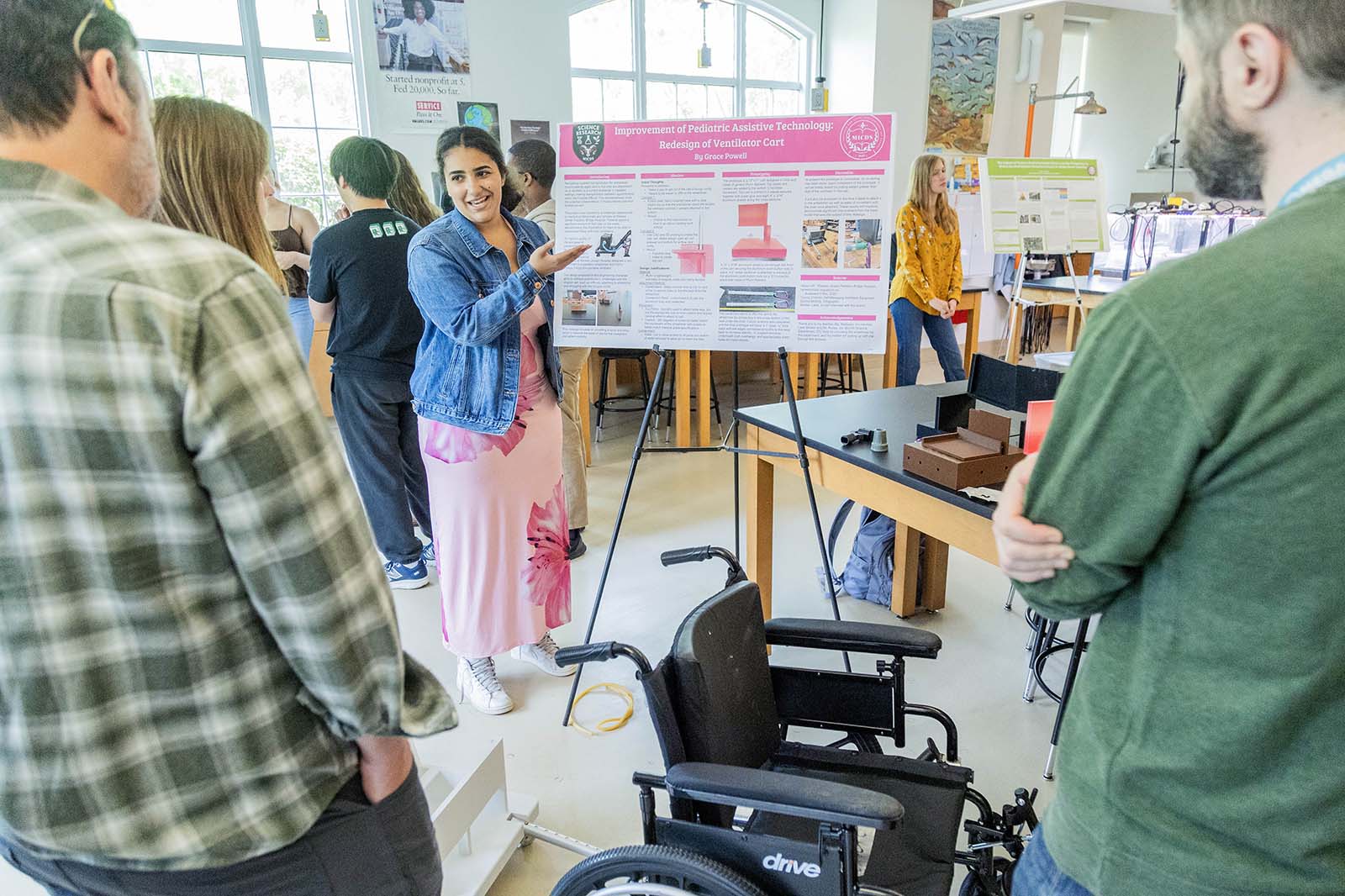
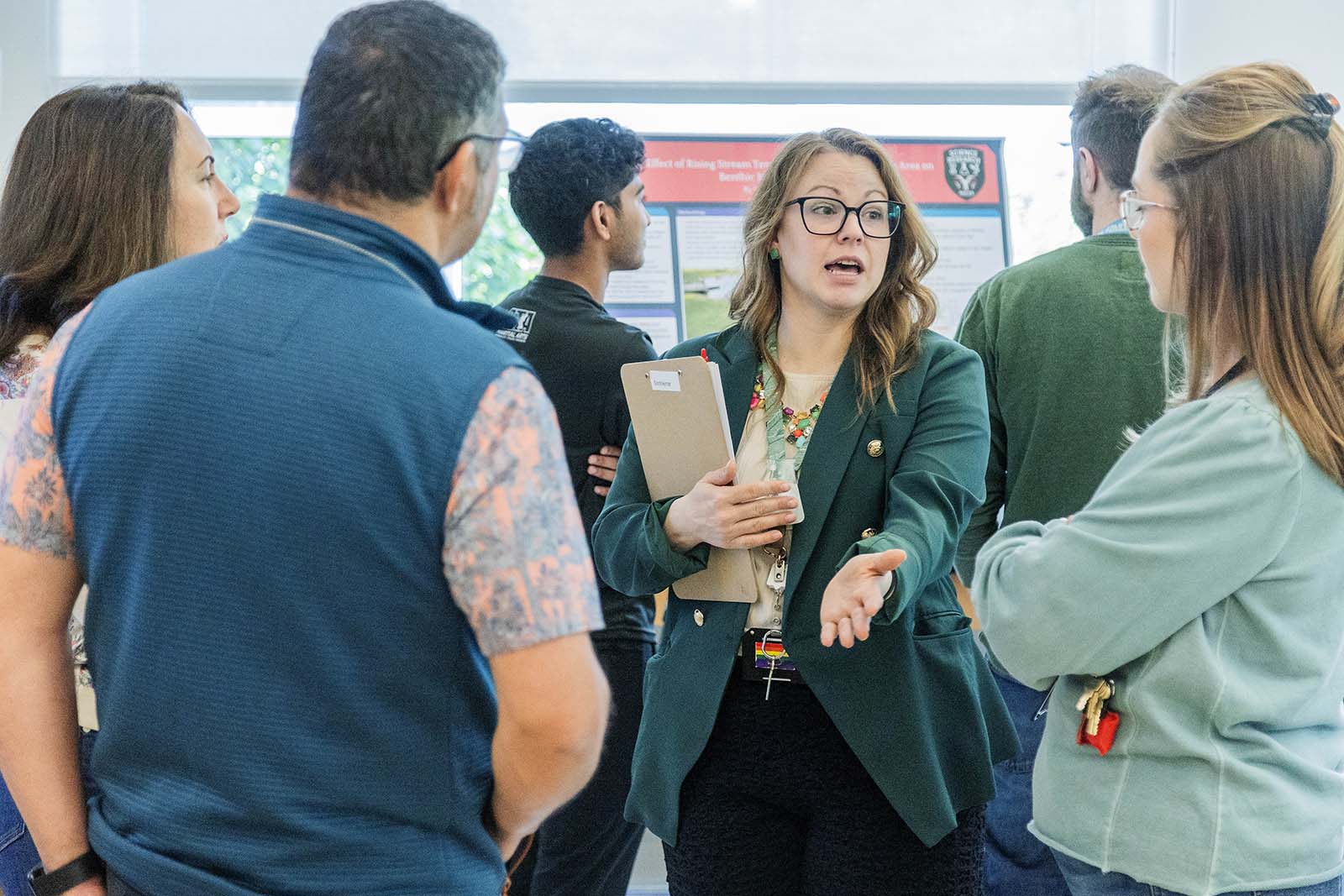
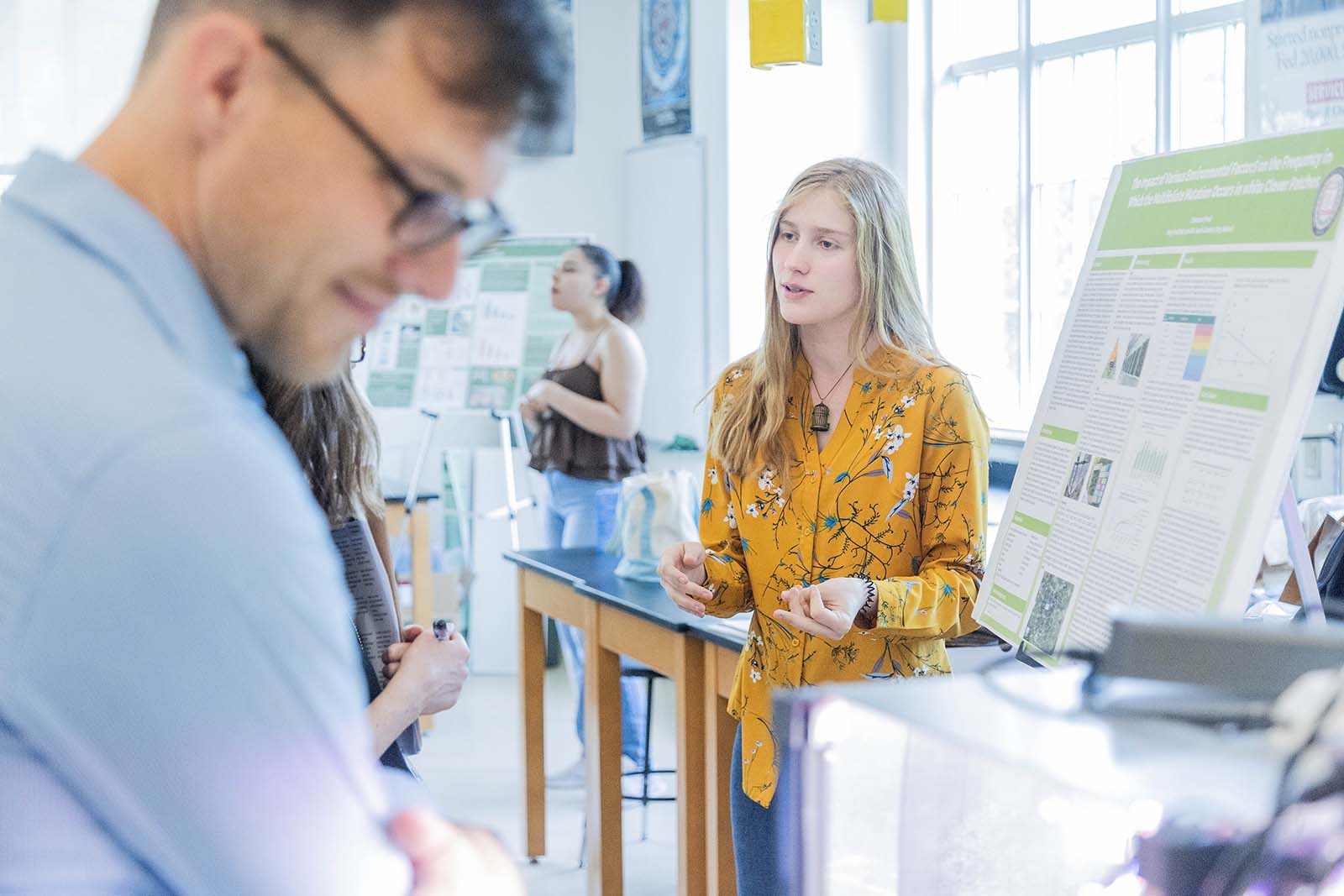
Last week, they proudly hosted a Seminar and Research Symposium, inviting their teachers, peers, parents, and outside scientists to view poster presentations, hear first-hand about the experience, and even ask questions. Matteson’s science lab was abuzz with excitement, and it was clear to see that her students were passionate about their work and their findings.
“Science Seminar and Research is designed to immerse students in authentic science,” explained Matteson. “This course introduces necessary skills to read, conduct, and communicate science. By the end of this academic year, each student will have made contributions to the body of science and the efforts to propel the body of science forward.” Under her guidance, students develop skills in data literacy, literature review with critical analysis, and research methodology. They engage in experimental practices and communication as they experience the experimental design process.
Students learned how to read and sort primary scientific literature, conduct research, and collect, organize, analyze, compare, and communicate data. They worked closely with a mentor as they completed an independent research project of their choice, consisting of developing and testing their hypotheses.
Our students presented their projects at both the St. Louis Science Fair and the MICDS Seminar and Research Symposium.
Exhibits included:
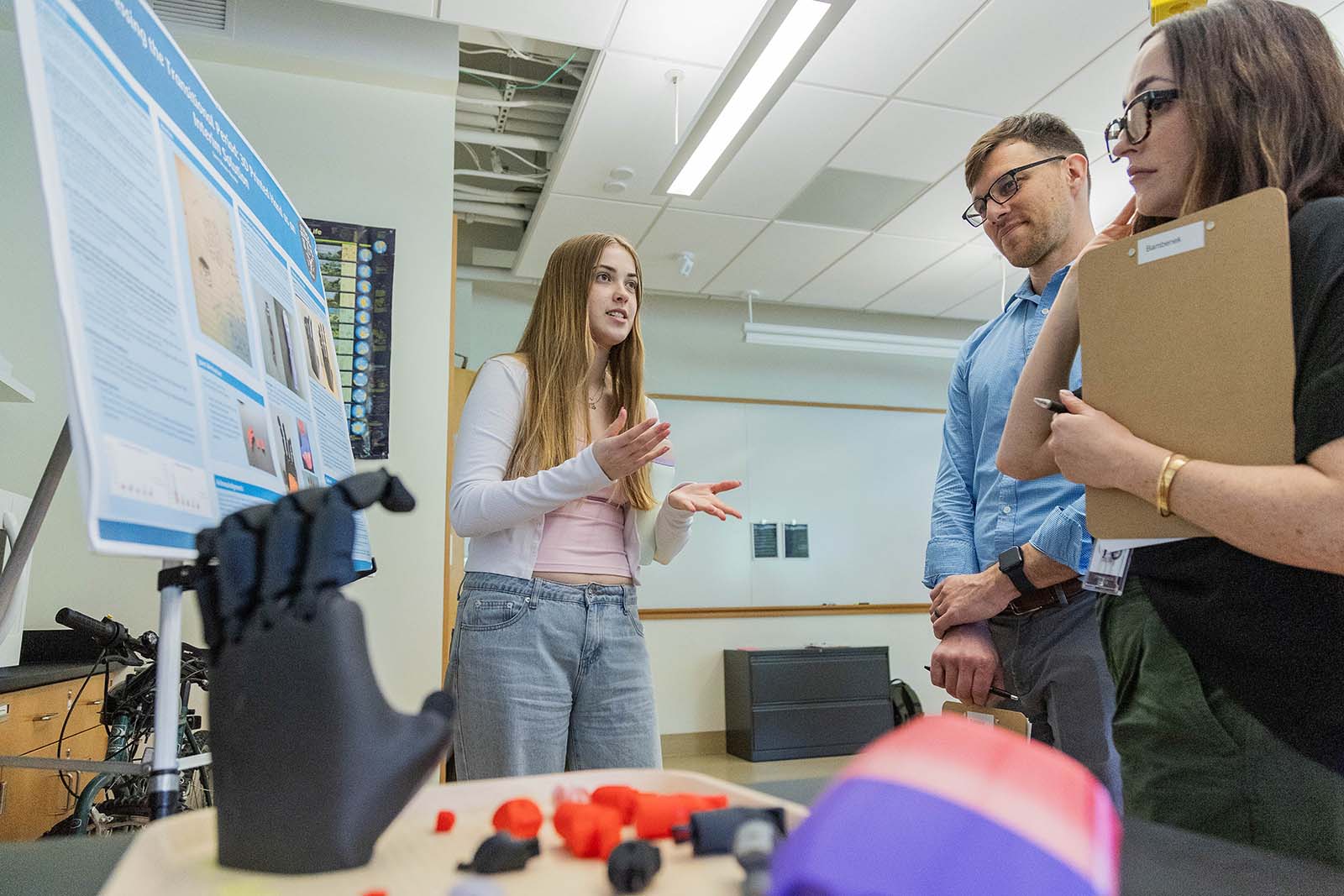
- Gwen Benson-Reschke ’27 – Addressing the Transitional Period: 3D Printed Hand as an Interim Solution
- Ava Casillas ’26 – Determining Potential of TCE Exposure Around Valley Park TCE Superfund Site
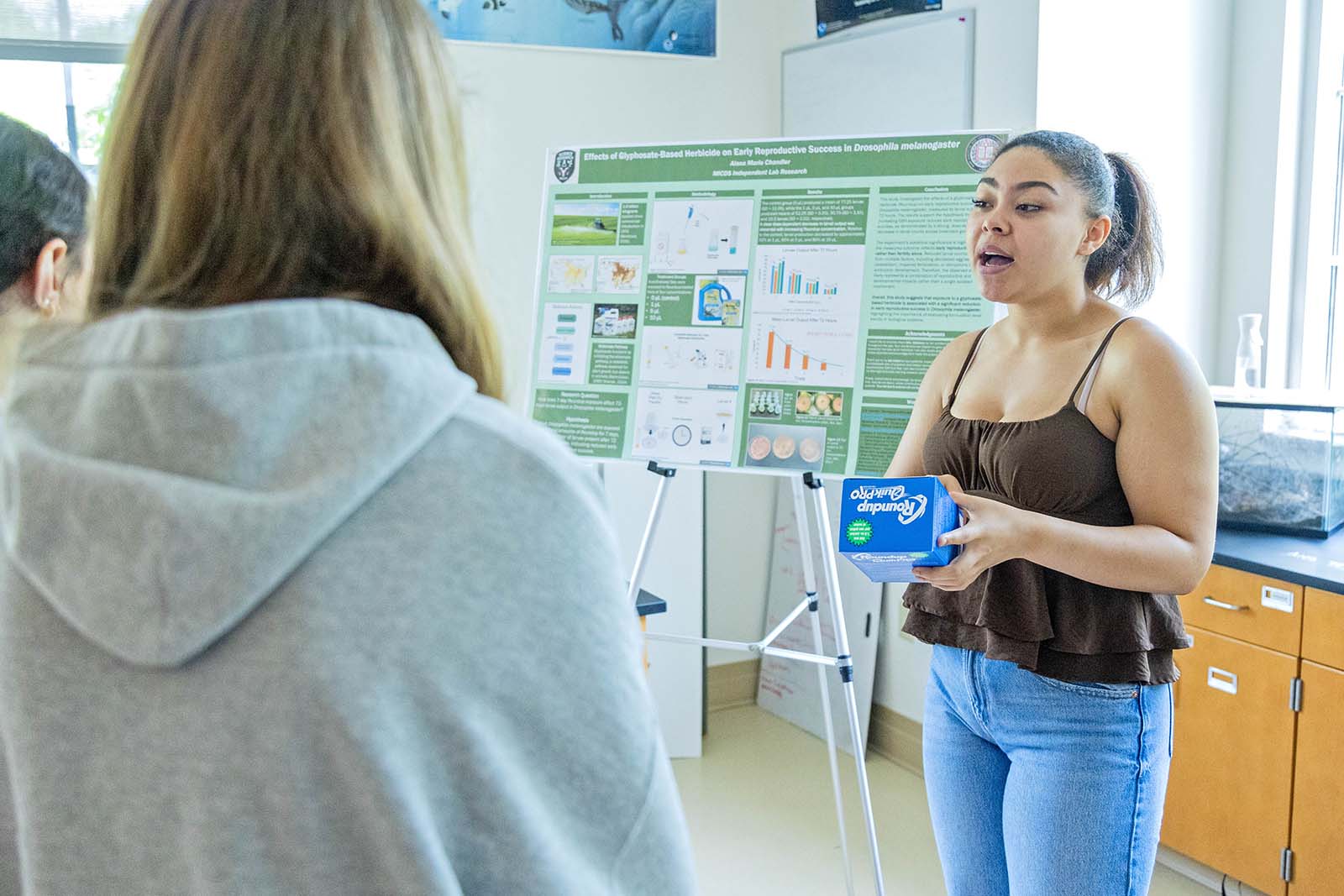
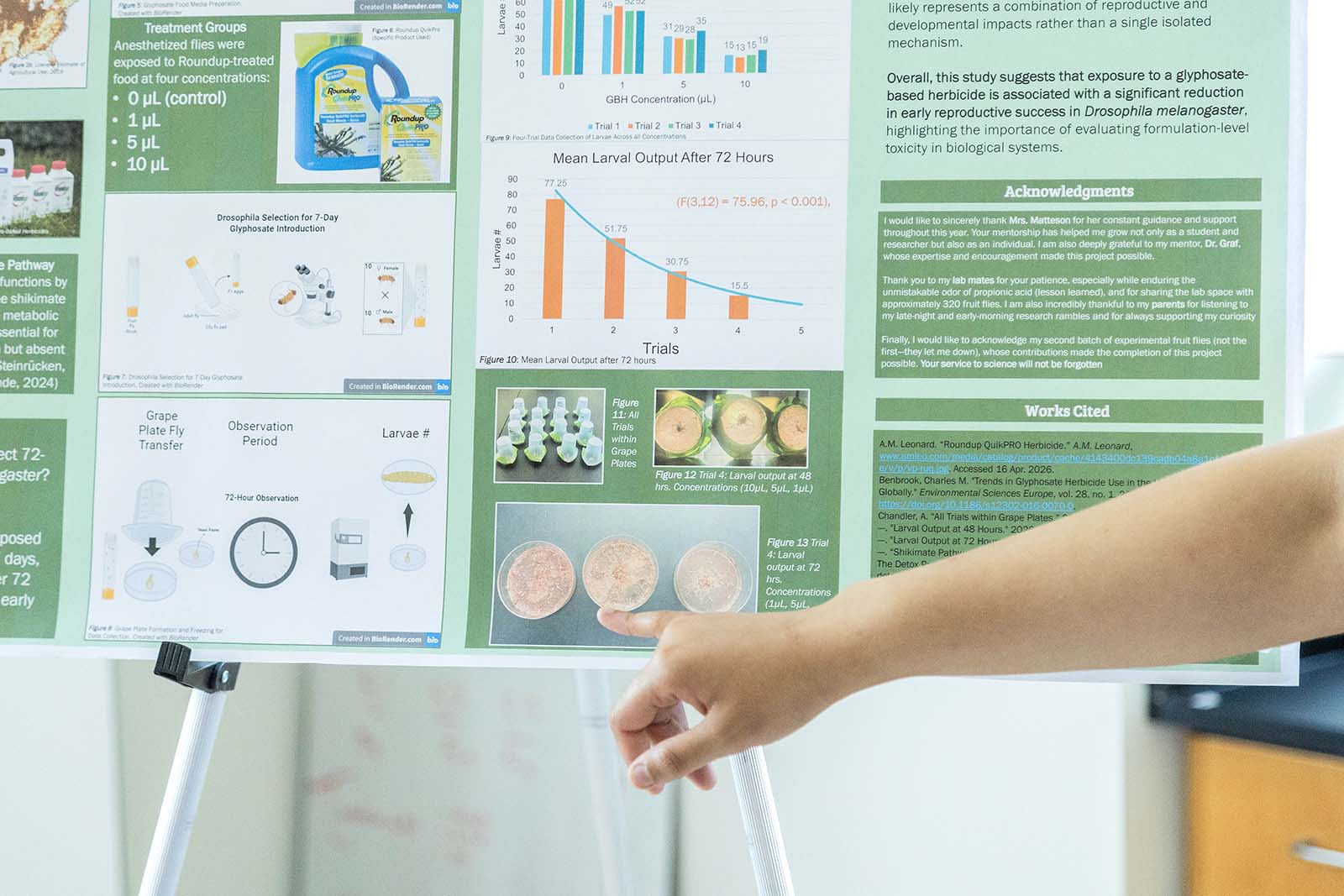
- Alana Chandler ’26 – Effects of Glyphosate-Based Herbicide on Early Reproductive Success in Drosophila Melanogaster
- Hayden Ludwig ’26 – Increasing Comfortability, Flexibility, and Adaptability of CPAP Mask Straps for 2 and 4 Anchor Points
- Nikhil Maniar ’27 – The Effect of Rising Stream Temperatures in the Saint Louis area on Benthic Macroinvertabrates
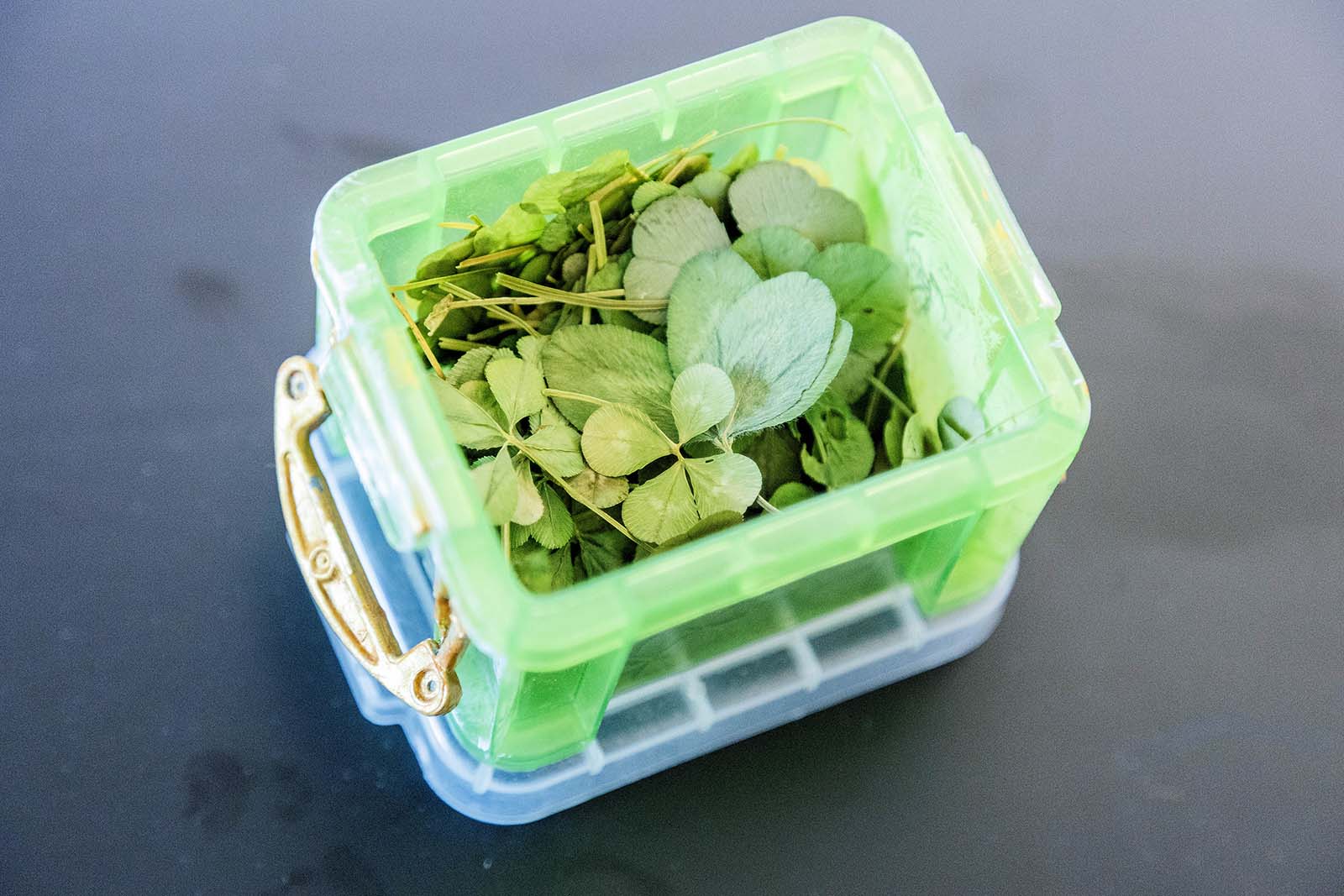
- Emerson Pook ’26 – The Impact of Various Environmental Factora on the Frequency in Which the Multifoliate Mutation Occurs in White Clover Patches
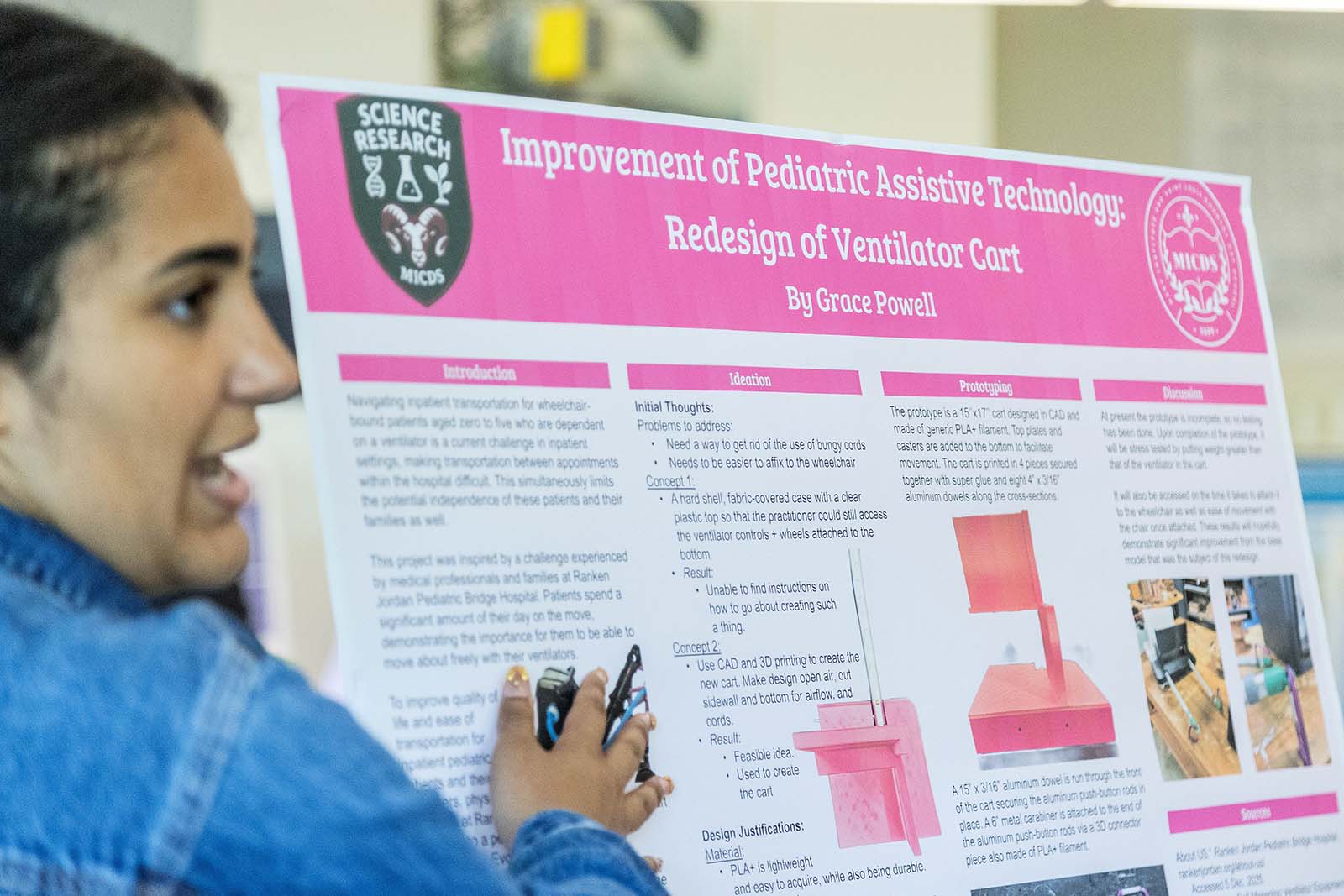
- Grace Powell ’26 – Improvement of Inpatient Pediatric Assistive Technology: Redesign of Ventilator Cart
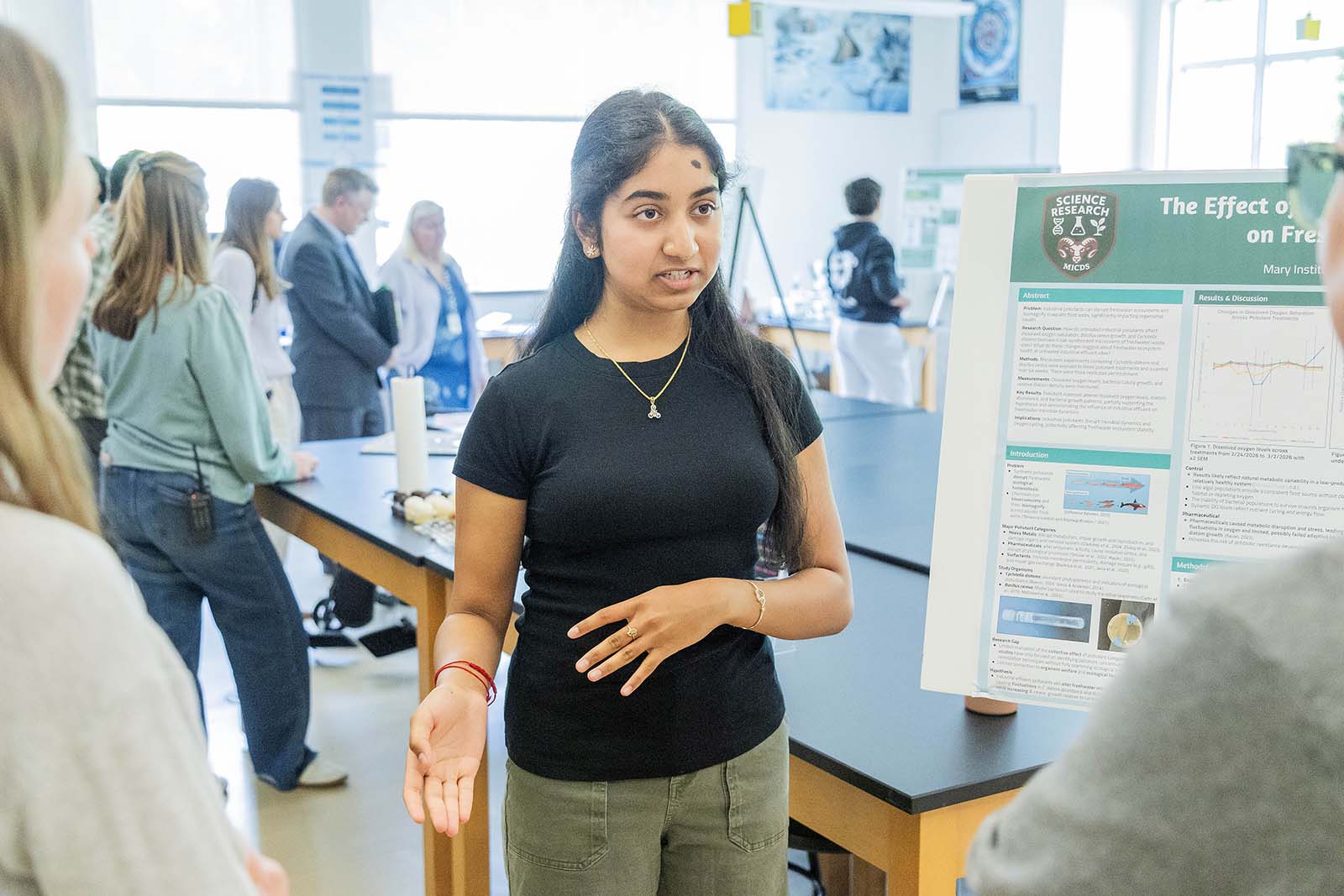
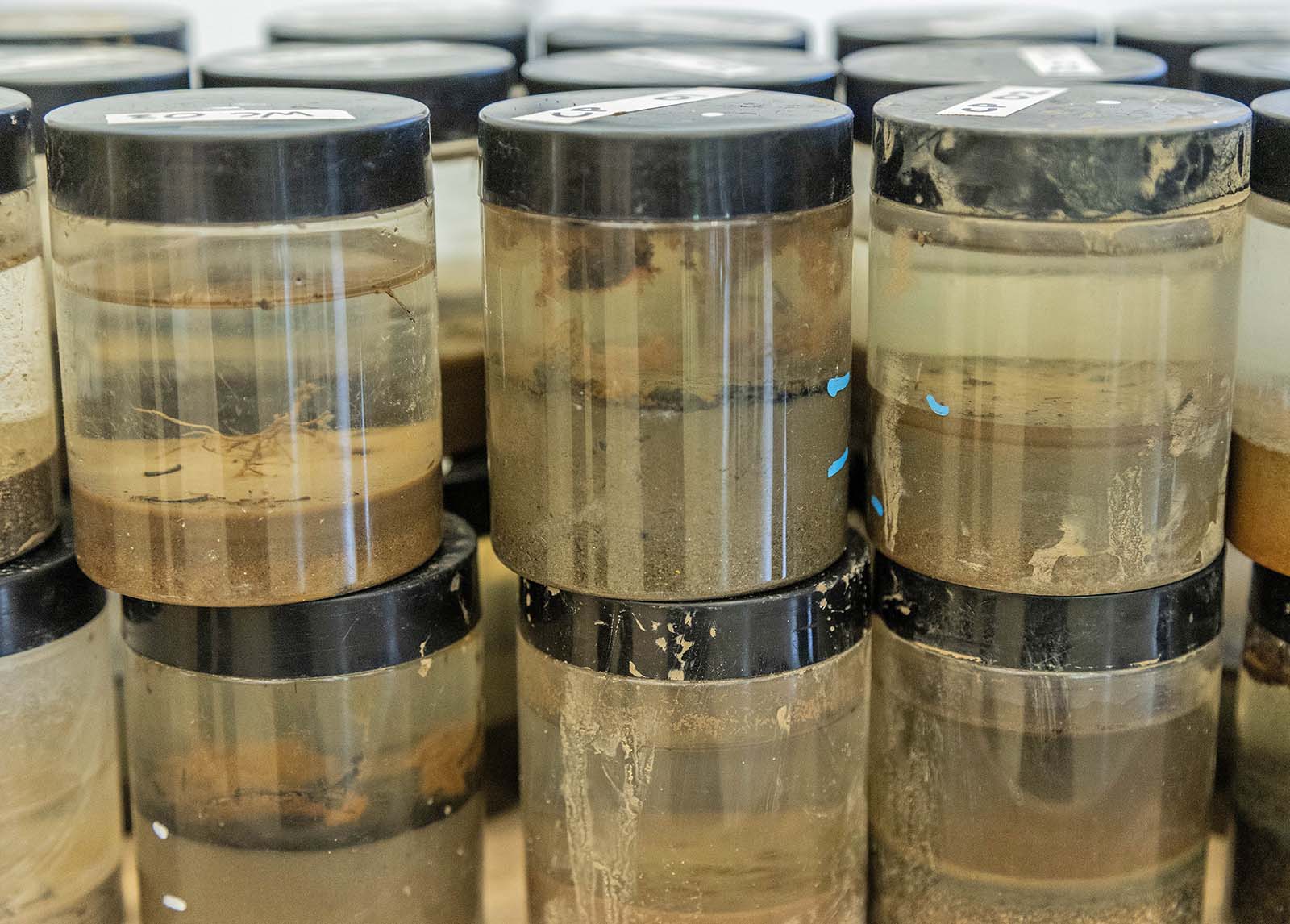
- Kaviya Senthilkumar ’27 – The Effect of Untreated Industrial Effluent on Freshwater Ecosystems
Matteson said that the off-campus judges—Laurie Free, Dr. Benjamin Harris, Dr. Angela Sutton, and Dr. Brian Esselman—offered positive comments about our student scientists, saying that they noticed excitement, that the talks were professional, and that the projects reflected genuine curiosity. All the judges were impressed with the students’ ability to field questions. Dr. Esselman said of Pook’s study, “Fascinating study that develops in personal interest…excited for future study!”
Benson-Reschke’s project earned the MADE Makerspace “Make it at MADE” Award at the St. Louis Science Fair, and Casillas’ project earned the American Association of University Women Award.
“I did a project examining the potential of human exposure to trichloroethylene (TCE), a carcinogenic chemical, around the Valley Park TCE Superfund Site,” reports Casillas. “I’ve always been interested in environmental hazards, especially those in the St. Louis area, and being able to research into a Superfund Site only a few miles from my home was really eye-opening. Although my research was preliminary, I believe it’s a step toward ensuring agencies like the EPA continue to keep the public informed and updated about environmental issues that may impact human health.”
Senthilkumar said, “My project investigated the effects of untreated industrial effluent composed of heavy metals, pharmaceuticals, or surfactants on freshwater ecosystems through a microcosm experiment, and highlighted the need for stronger environmental protection regulations. When I first moved into my neighborhood, there was this beautiful stream with lush plant growth and small fish. However, years of construction heavily polluted the stream, destroying local plant and animal life. Consequently, I became interested in the impact specific industrial effluent categories have on freshwater ecosystems, particularly when that waste is untreated.
“I enjoyed the research after experimentation the most since this was when I could use the data and sources I gathered to conclude what effect each industrial effluent category had on the bacteria and algae and support the need for stronger environmental protection regulations.”
We can only hope that the work of our talented student researchers will indeed effect positive change.