Have you ever wondered why summers are hotter than they used to be? Or, how is it that we have had record-breaking high temperature days even in March? Did you notice that the Cardinals’ Opening Day this year on March 26 was St. Louis’ warmest March day in recorded history, with the temperature reaching 93 degrees Fahrenheit?
In their Weather & Climate Global Change Unit, sophomores in our Integrated Chemistry course studied the chemistry of climate change through a poster-making project. They explored how chemistry can help explain long-term climate trends, studied what evidence supports changes in global and regional temperatures, and discovered how data can be used to support scientific claims about climate change. Lastly, they investigated how effective science communication changes depending on the audience.
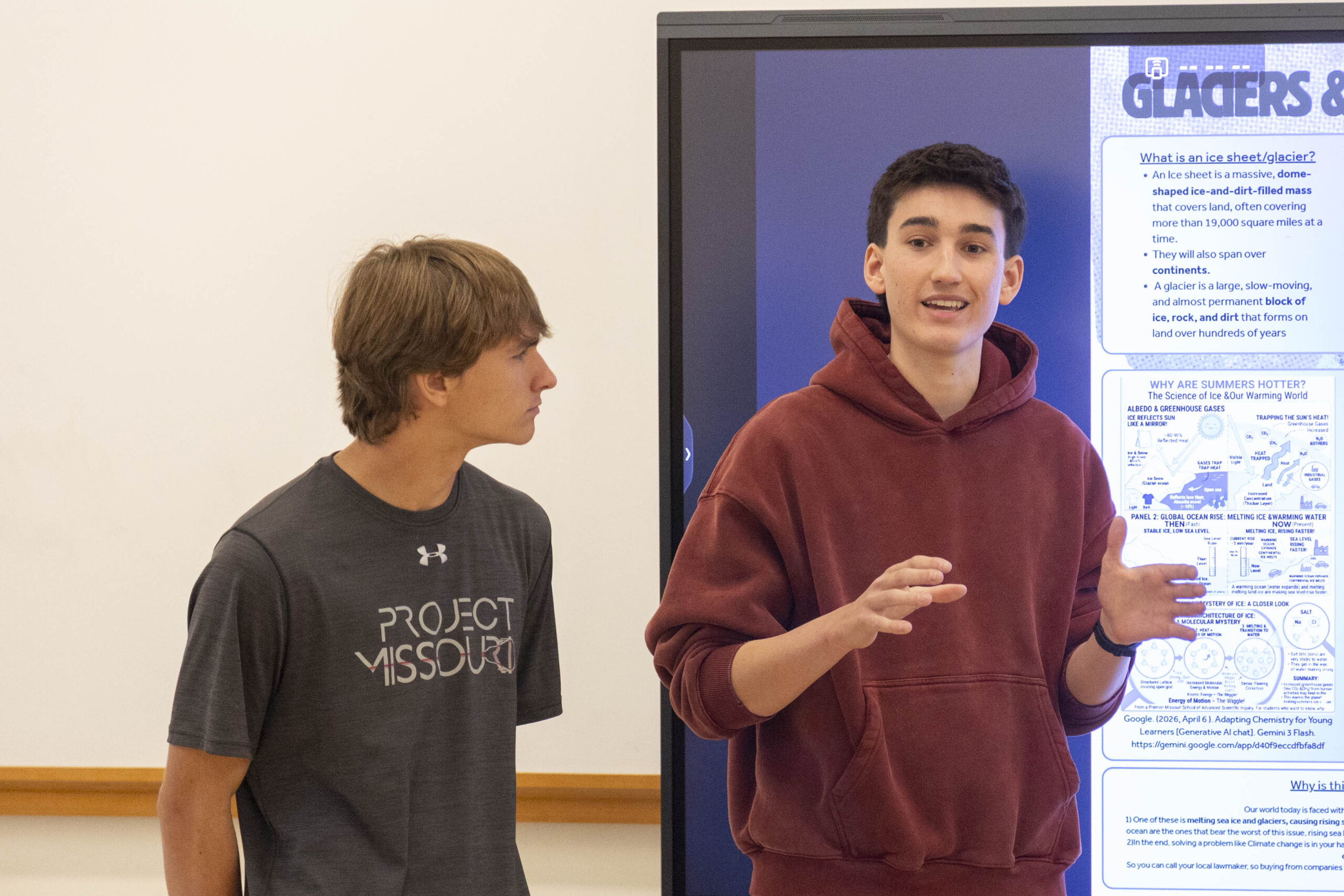
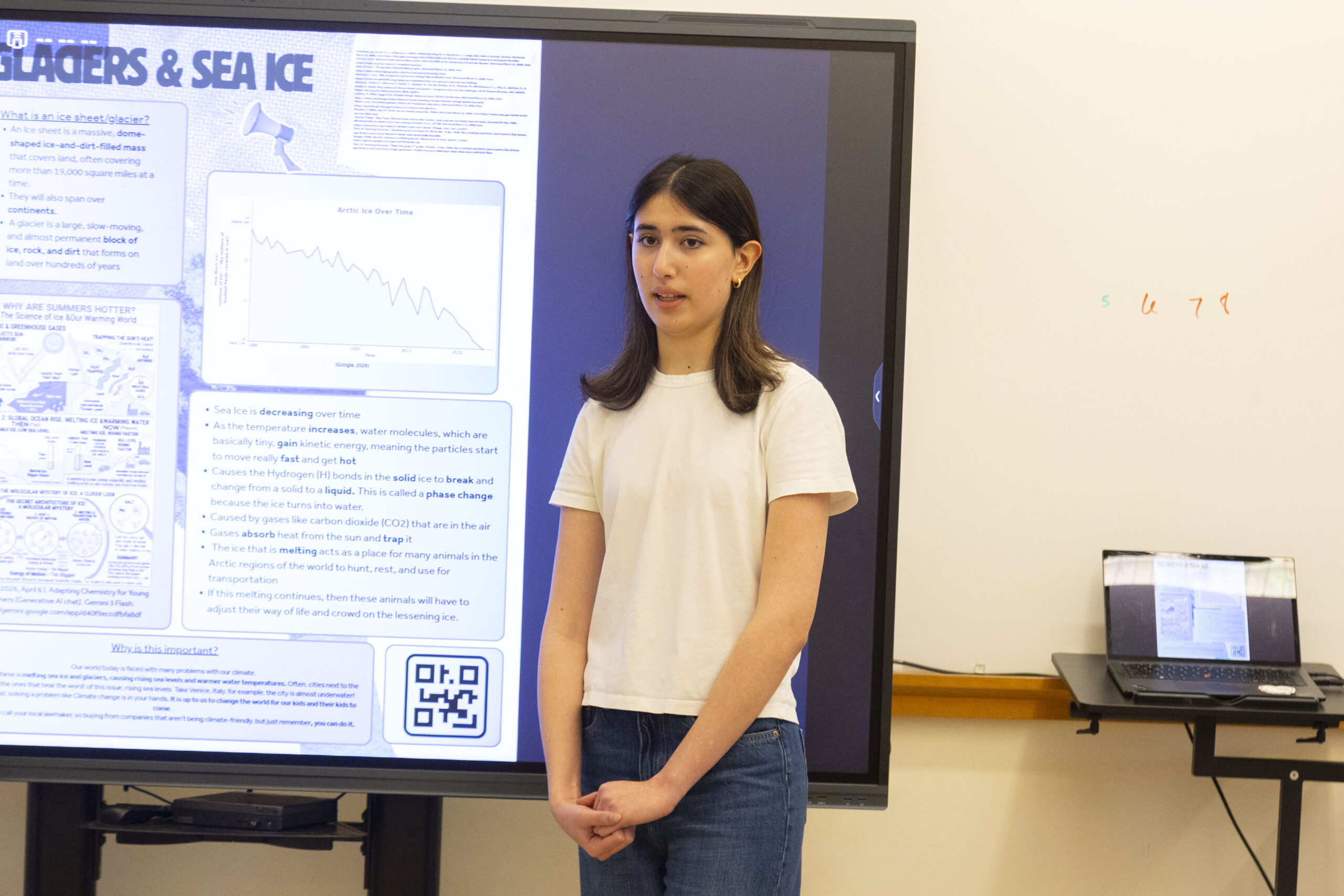
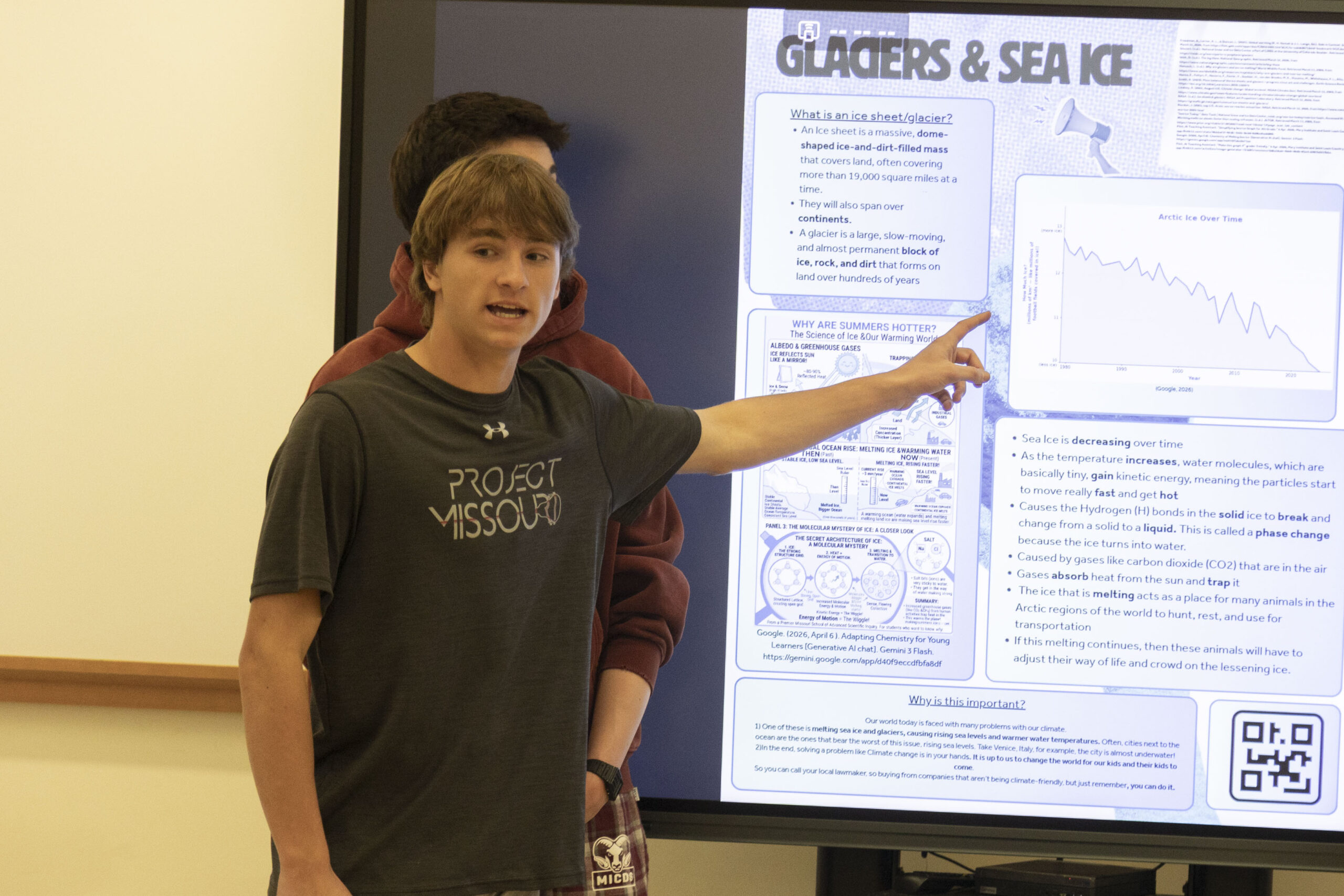
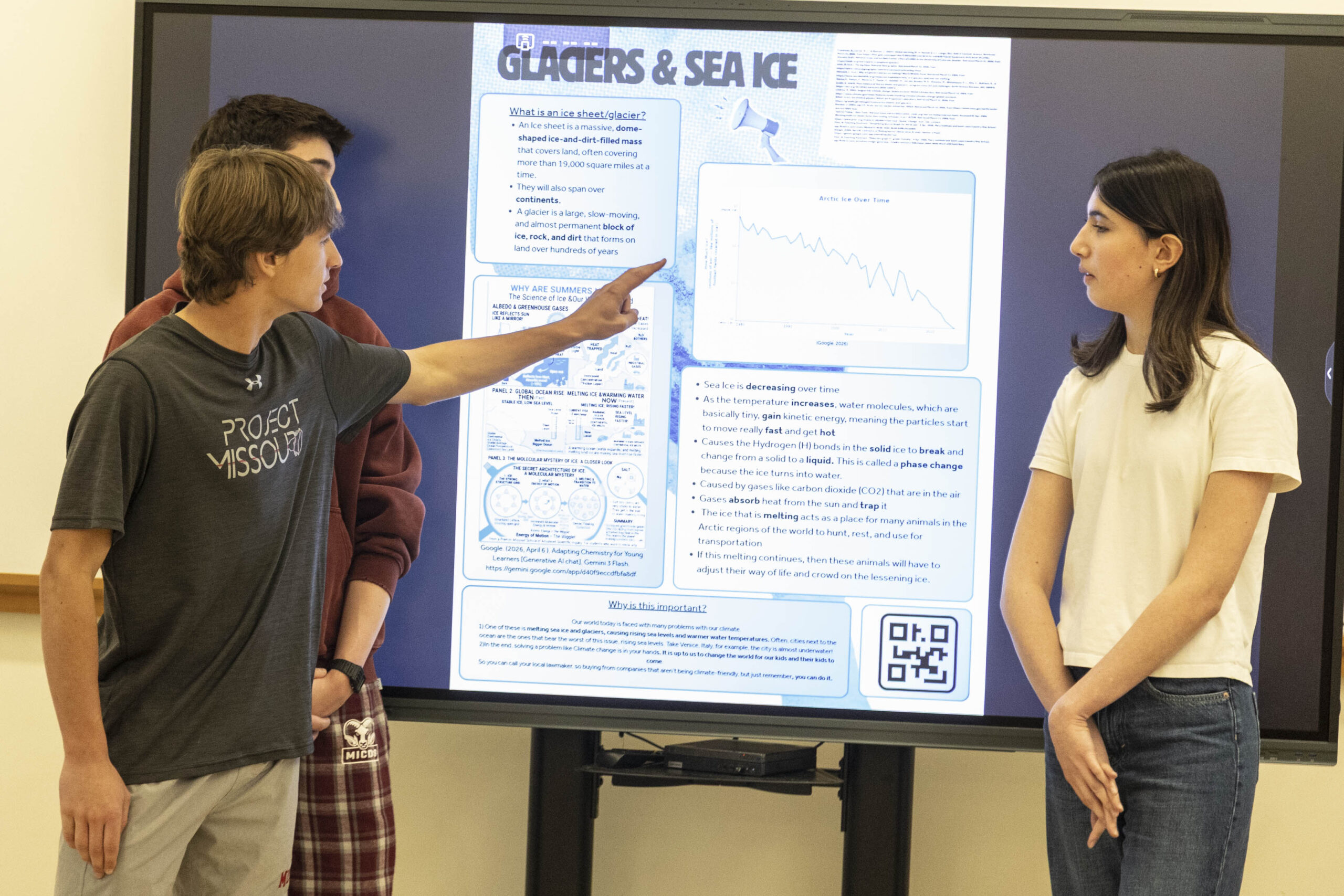
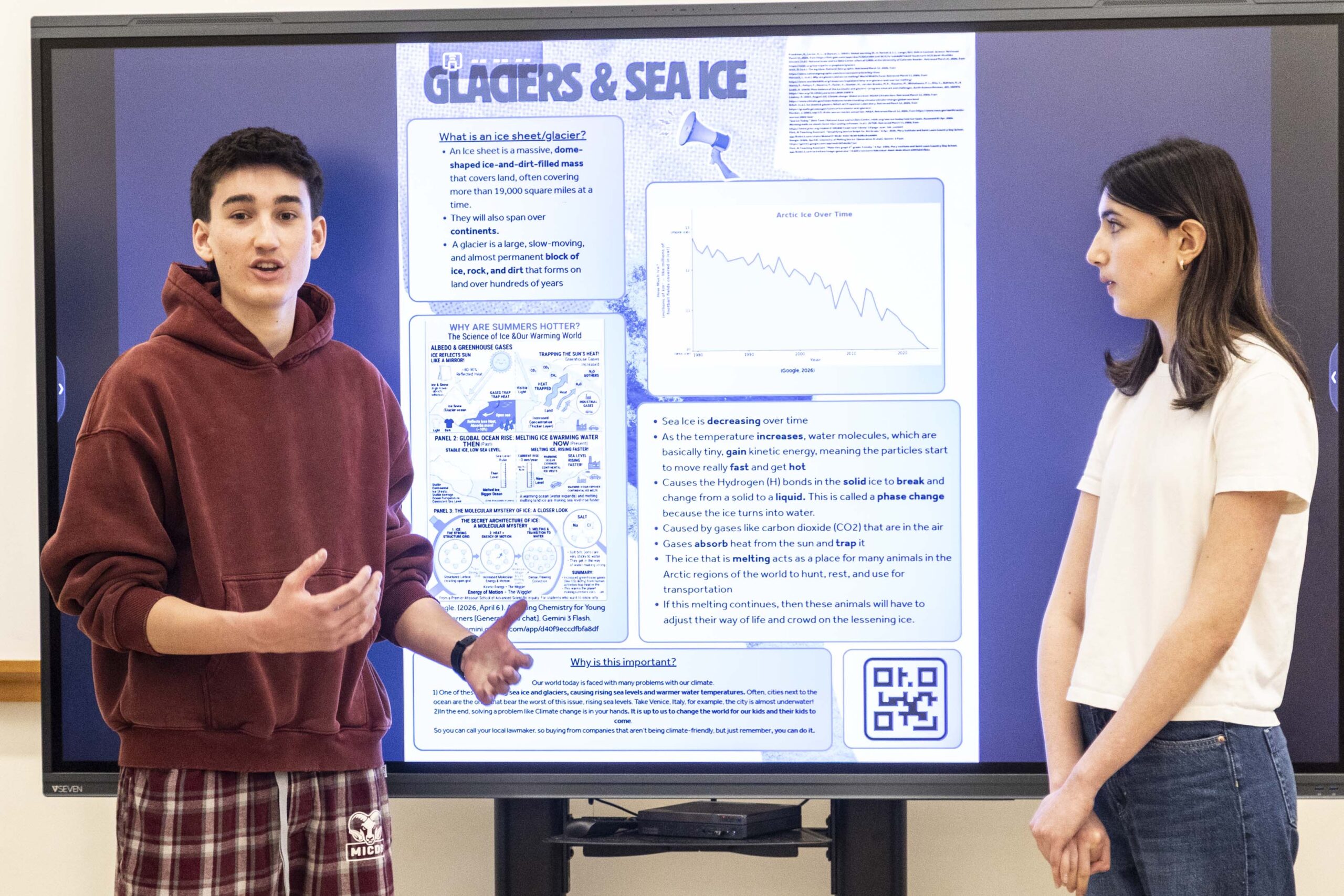
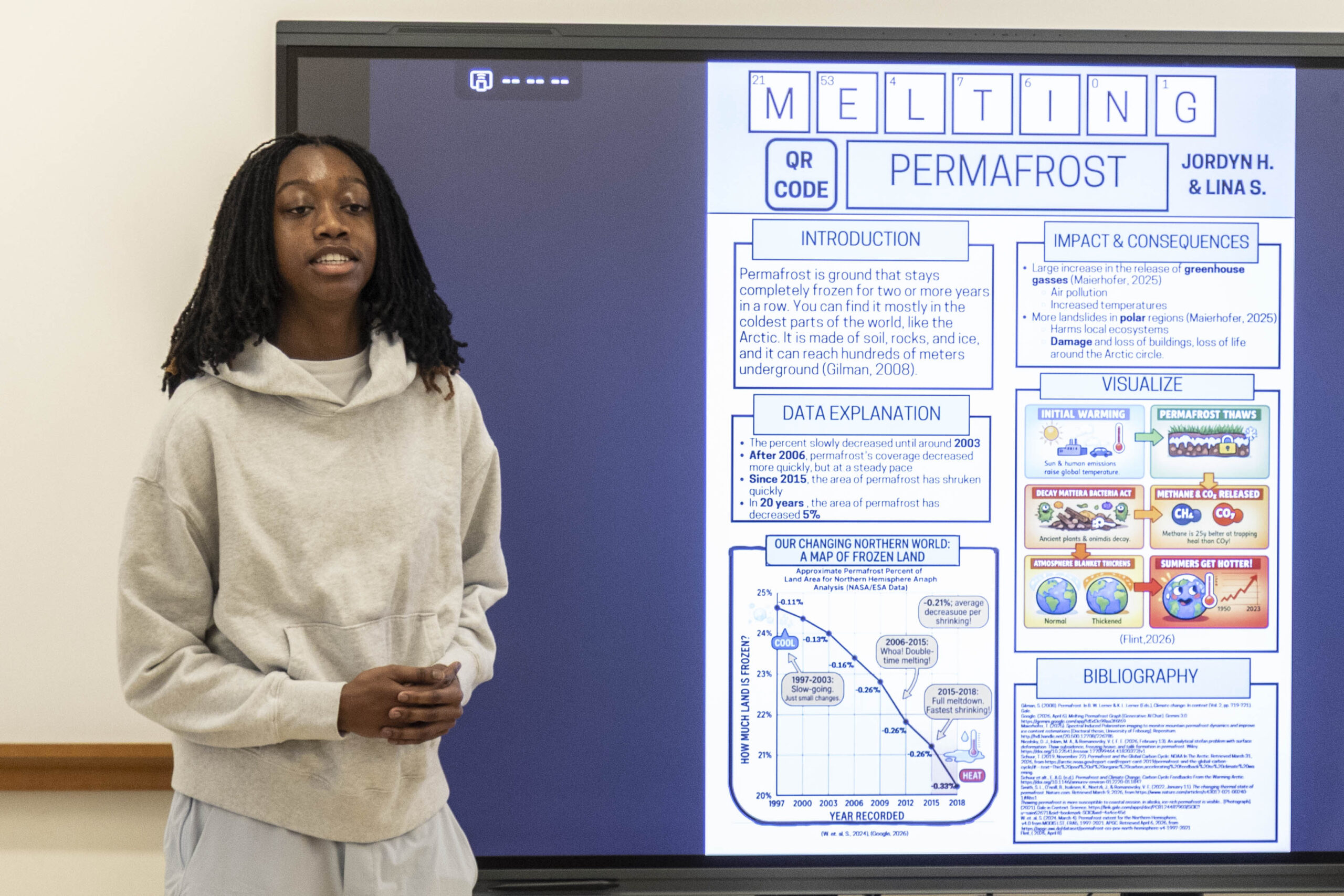
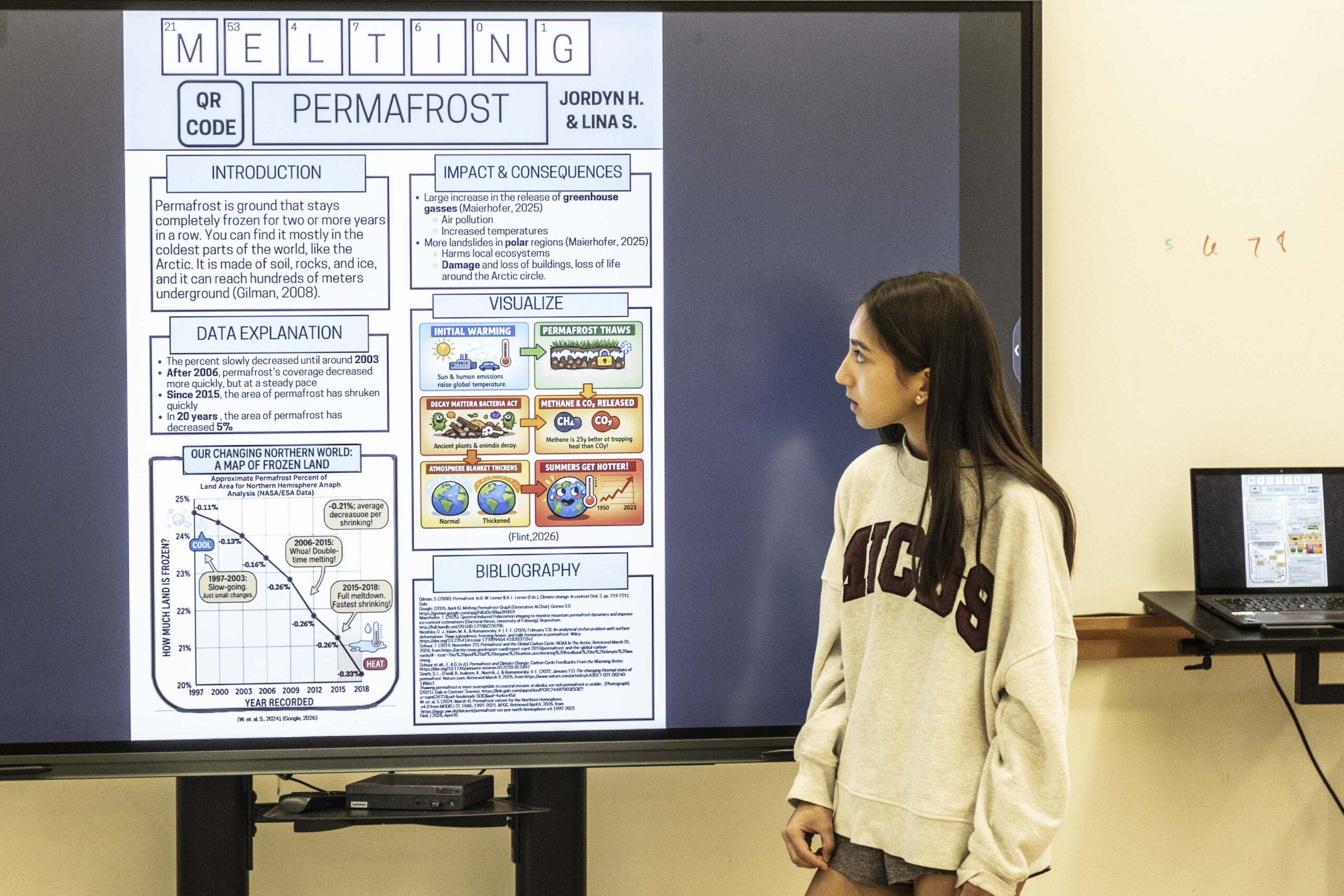
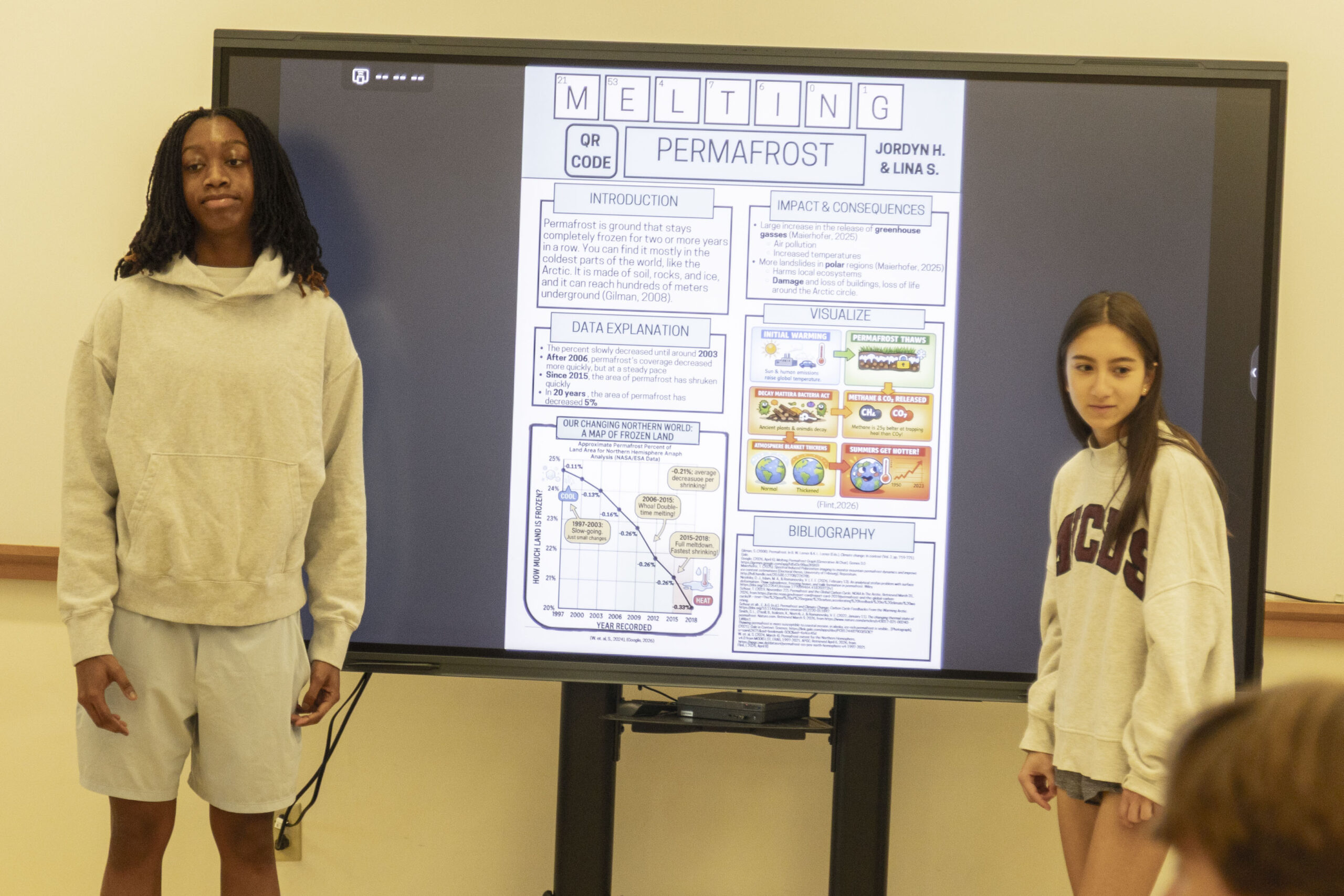
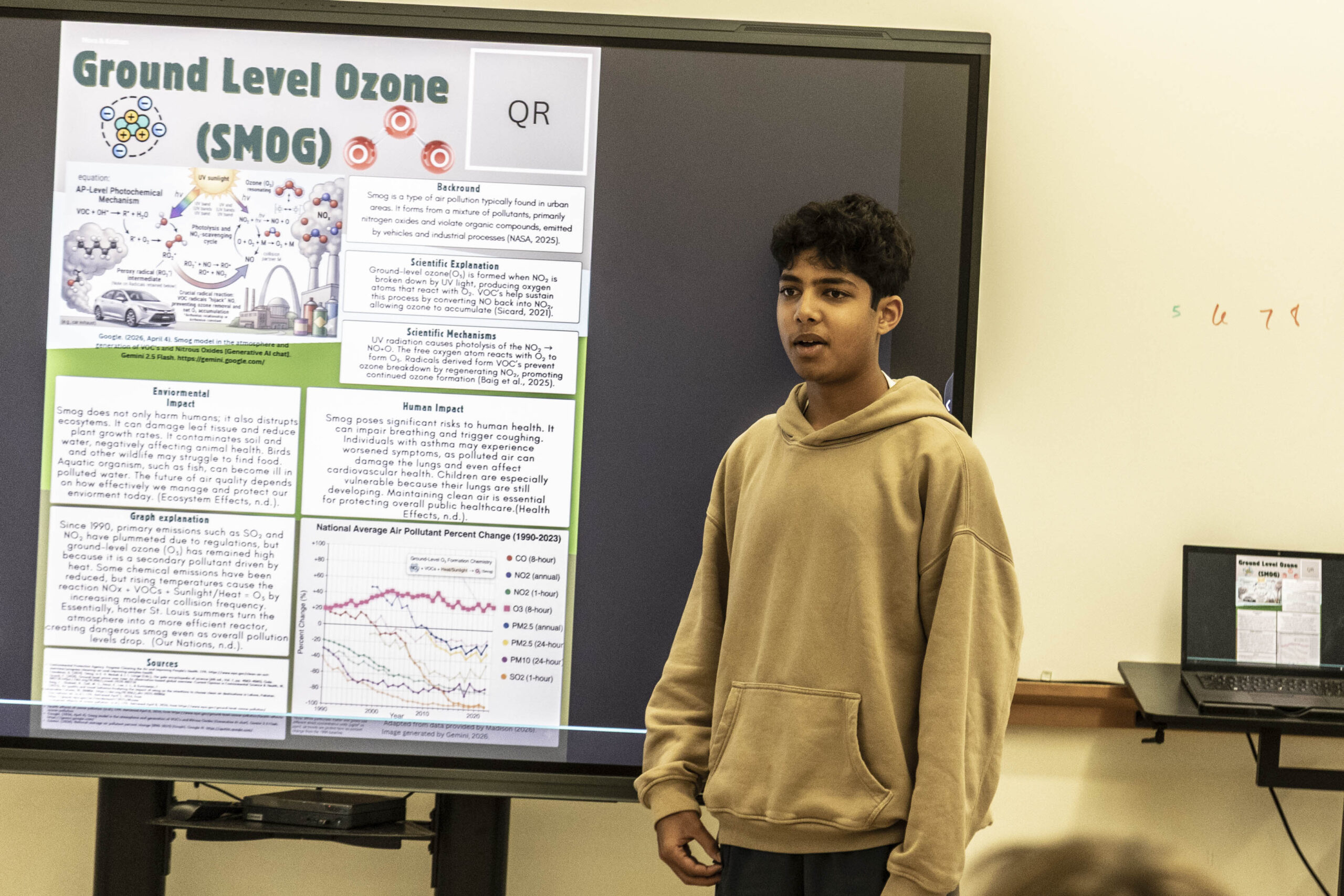
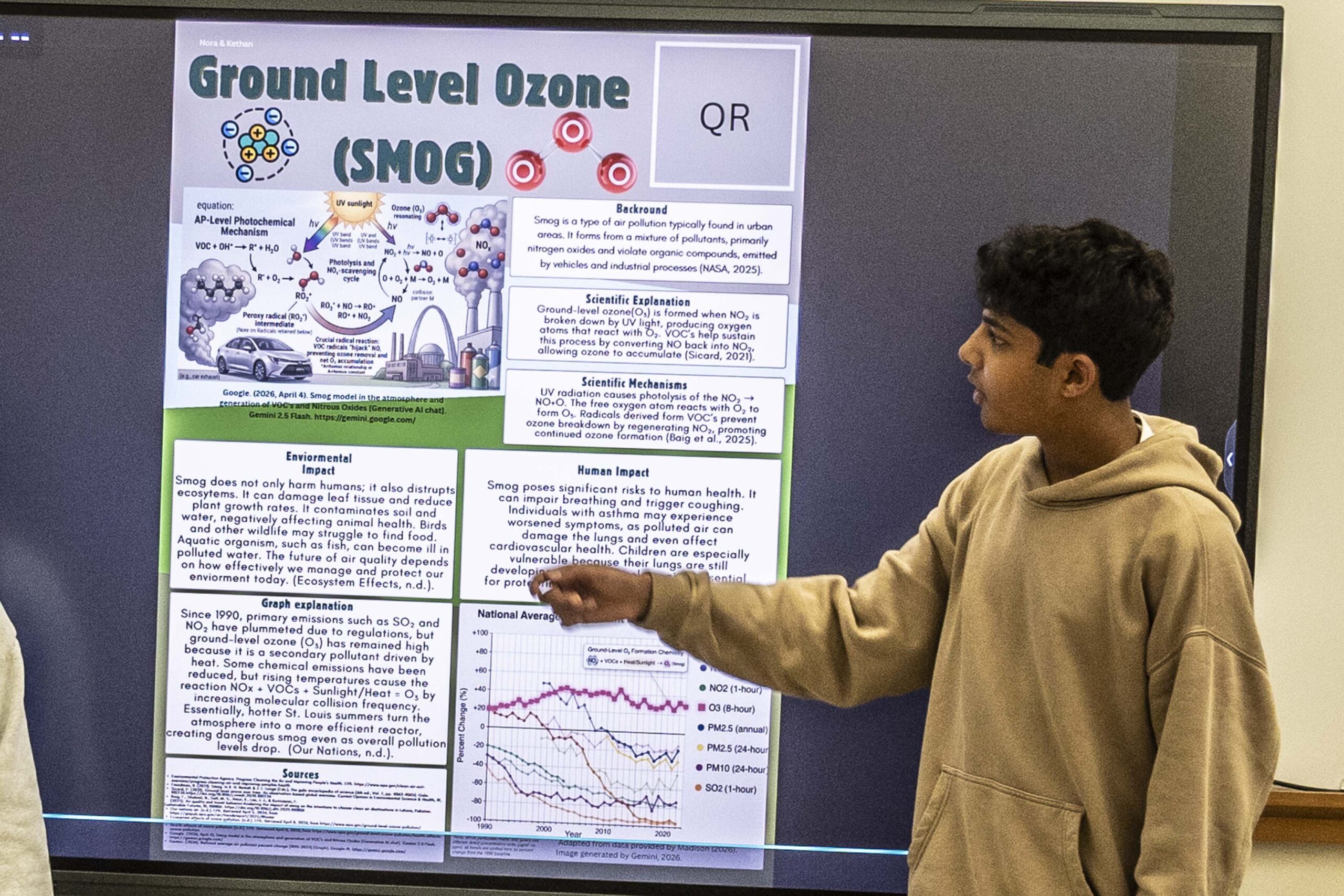
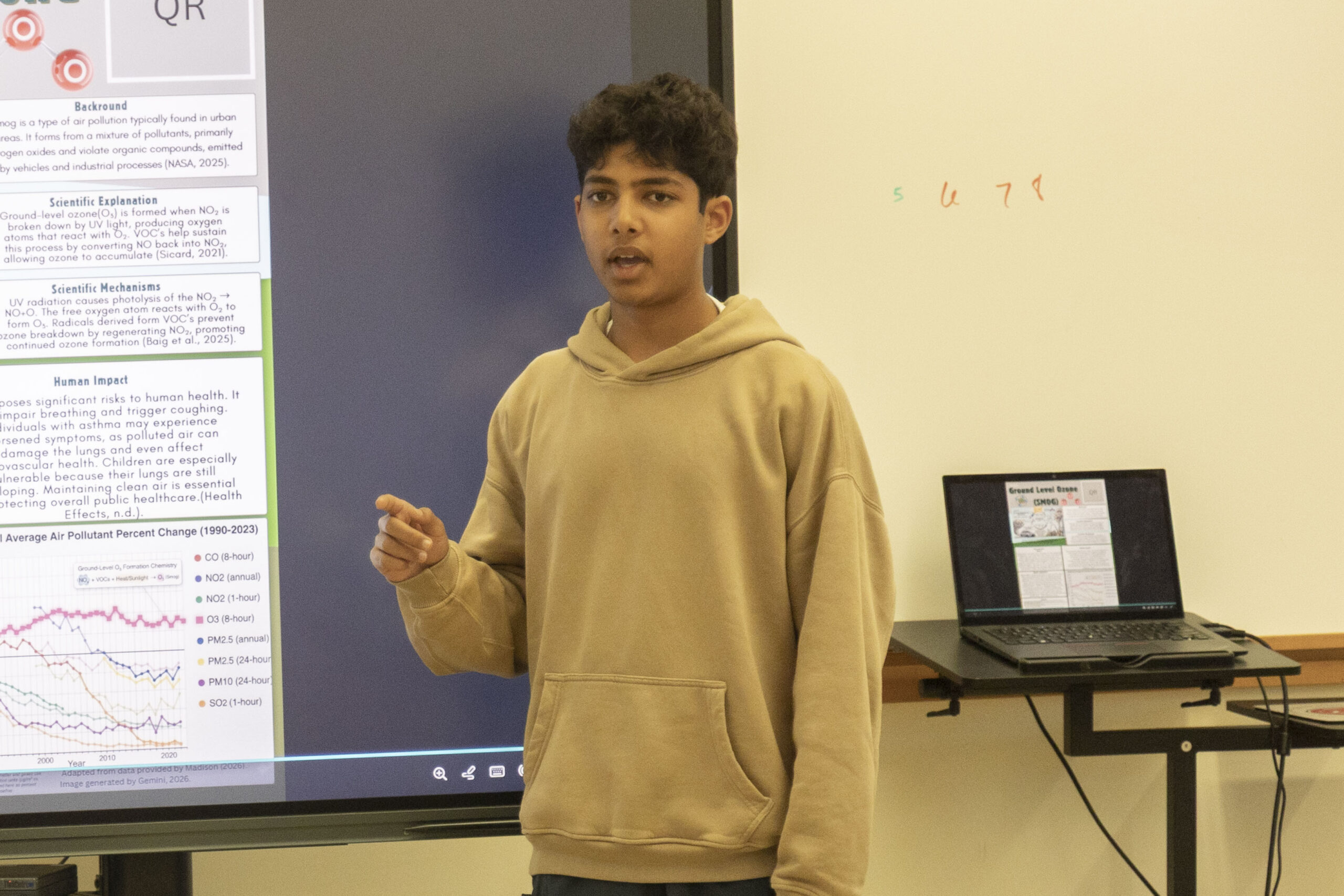
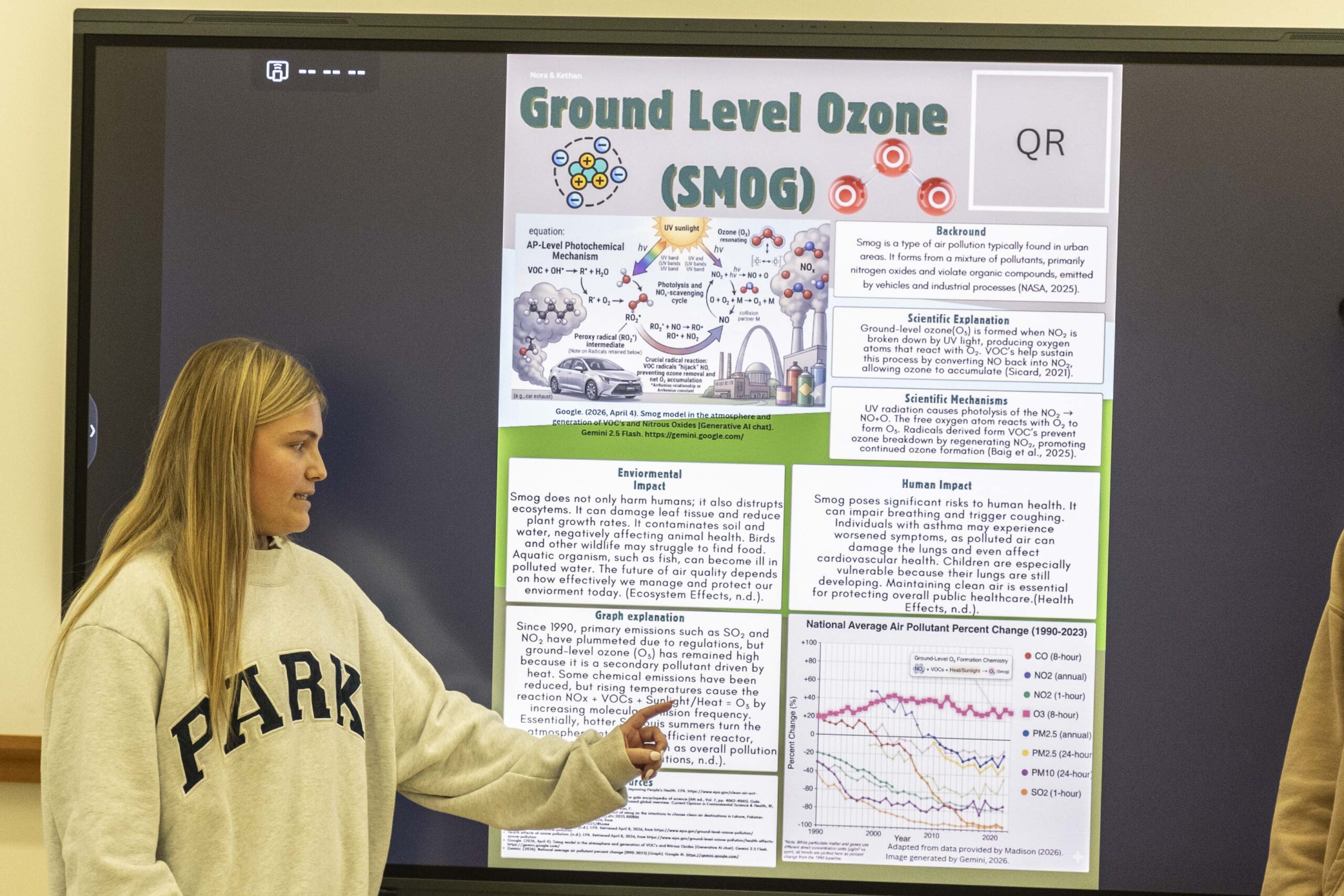
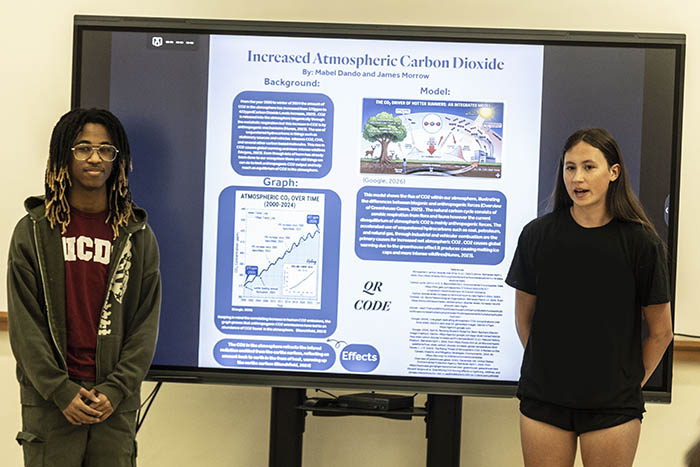
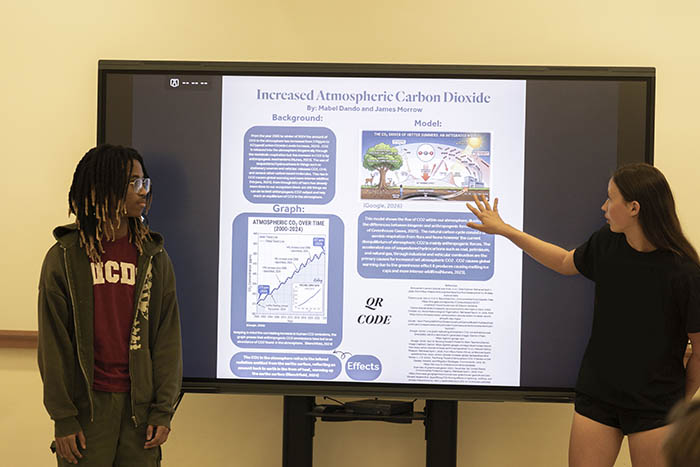
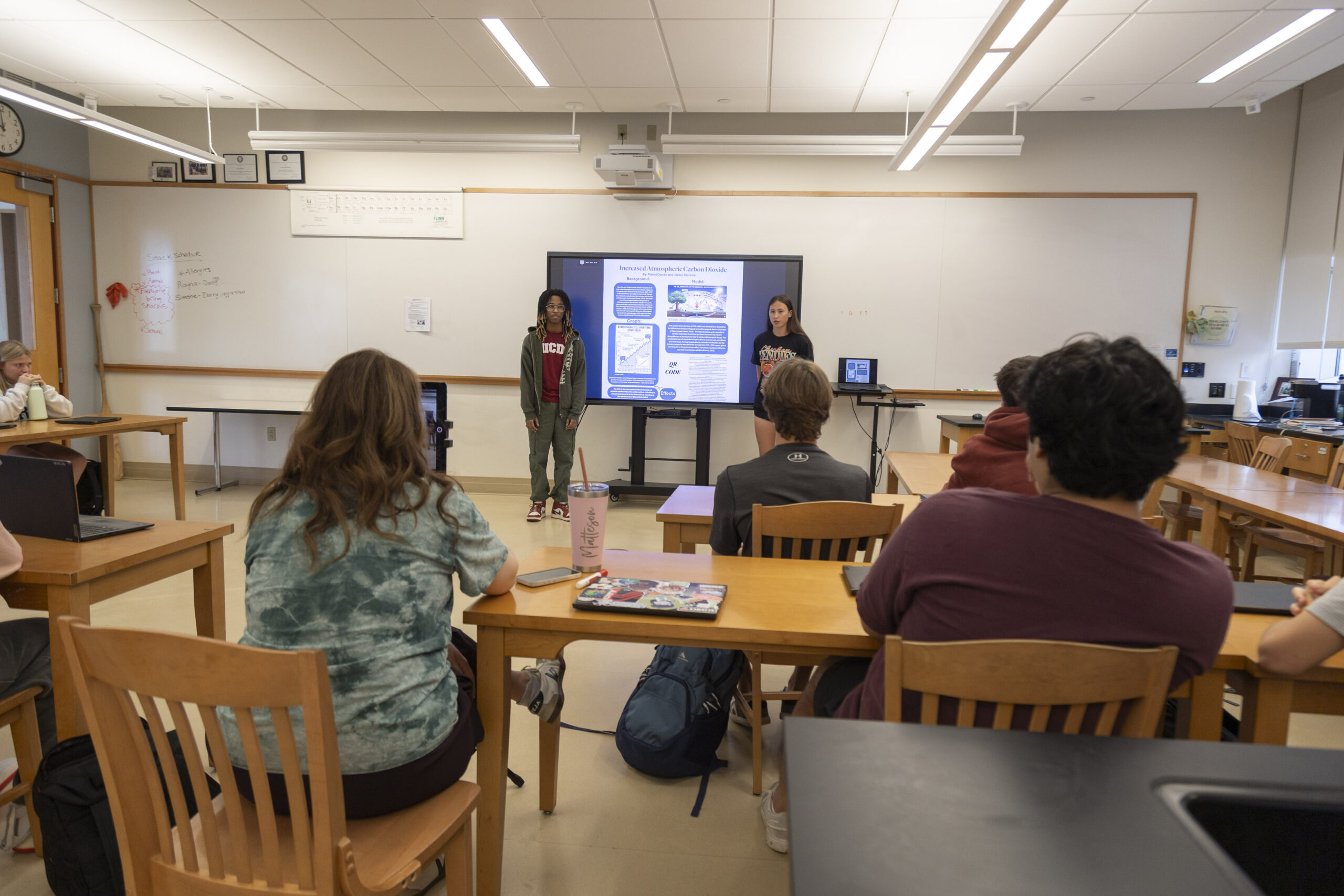
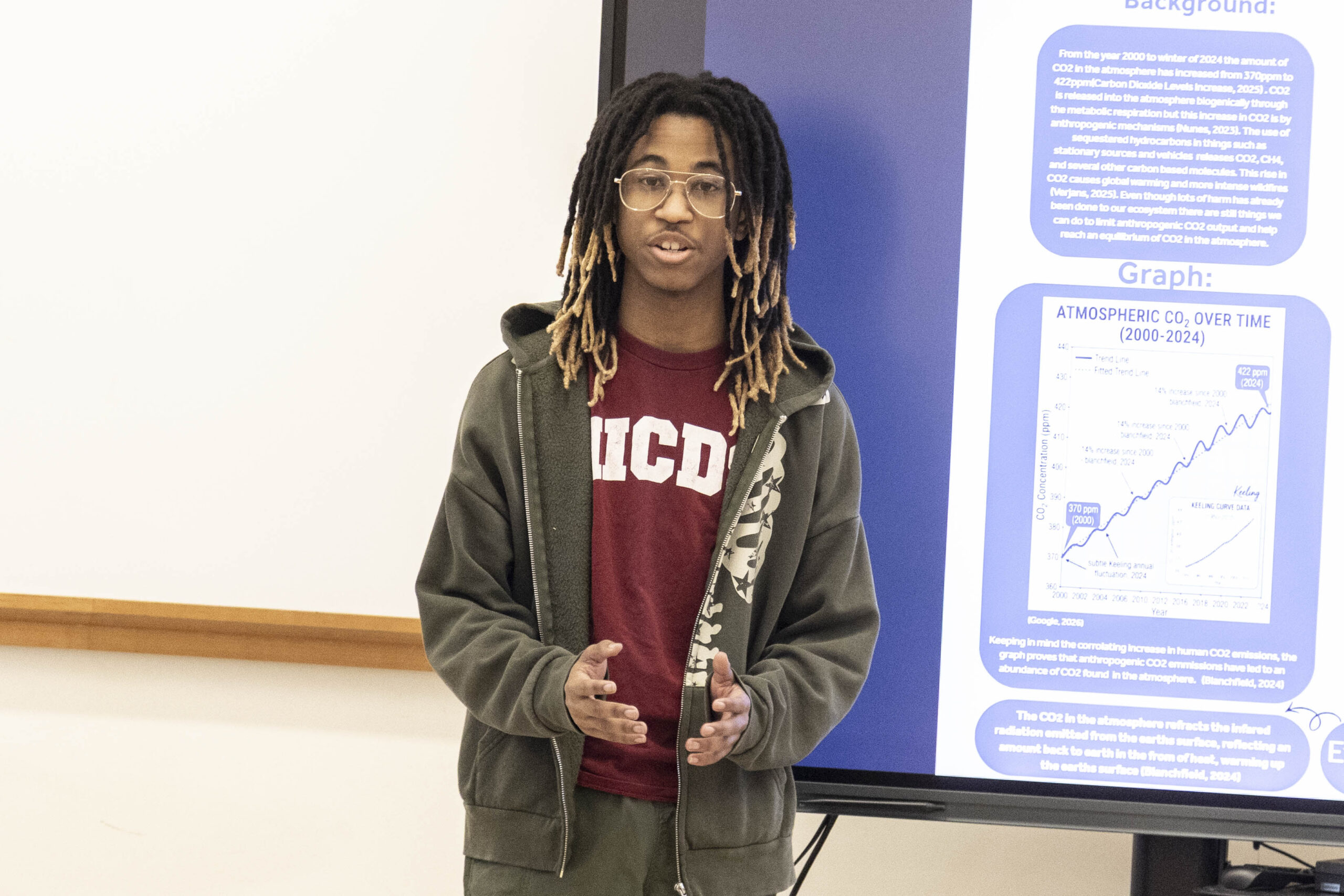
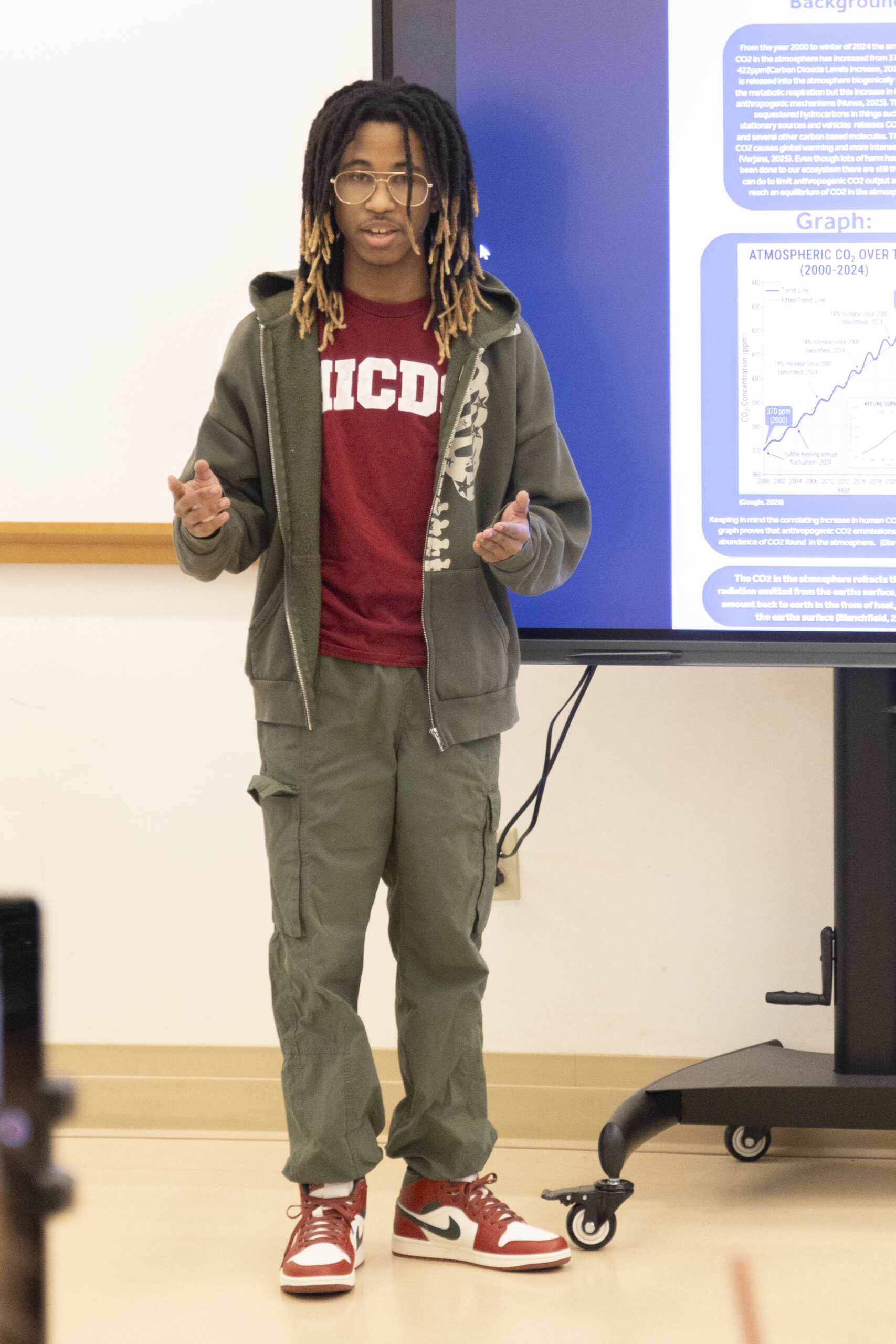
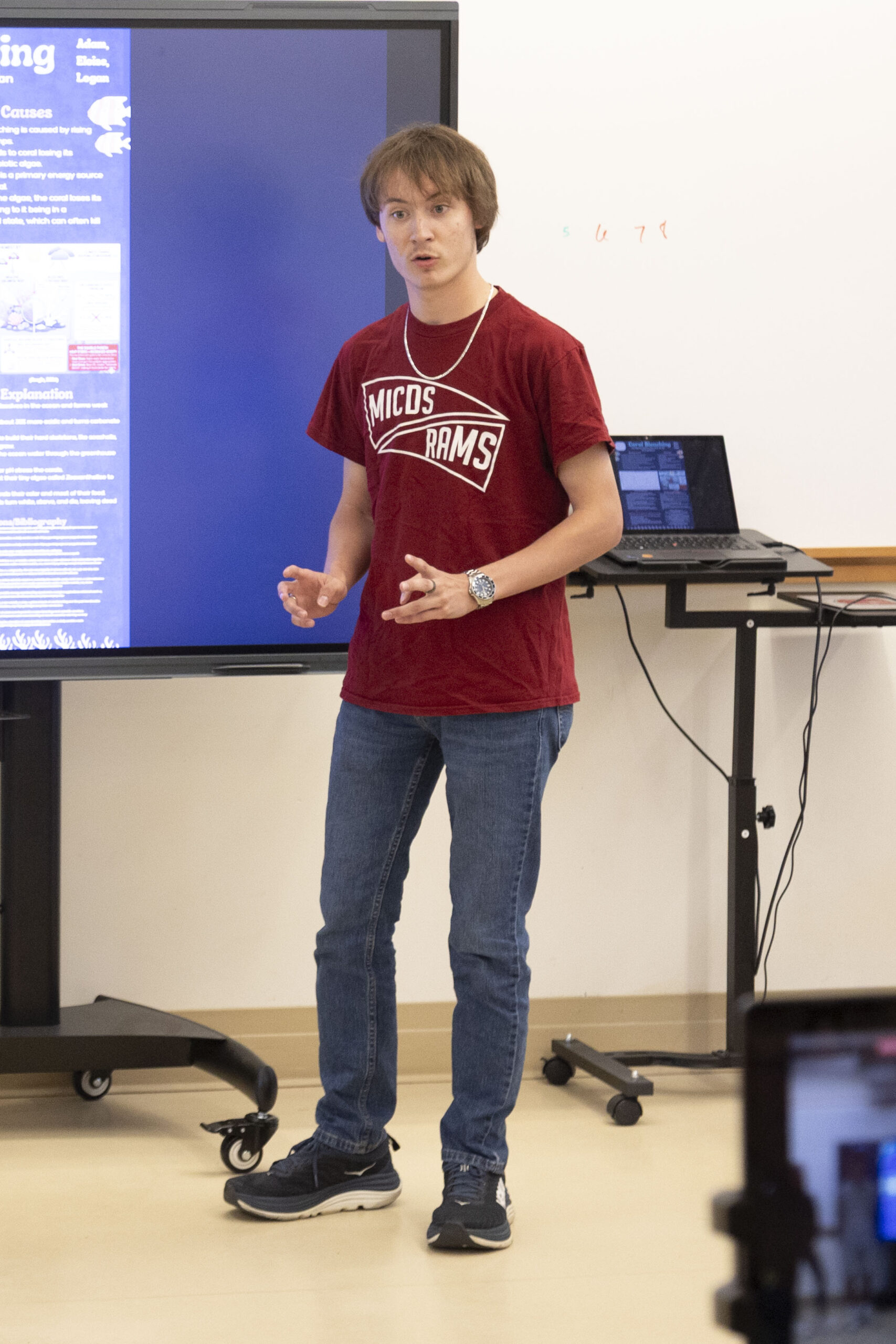
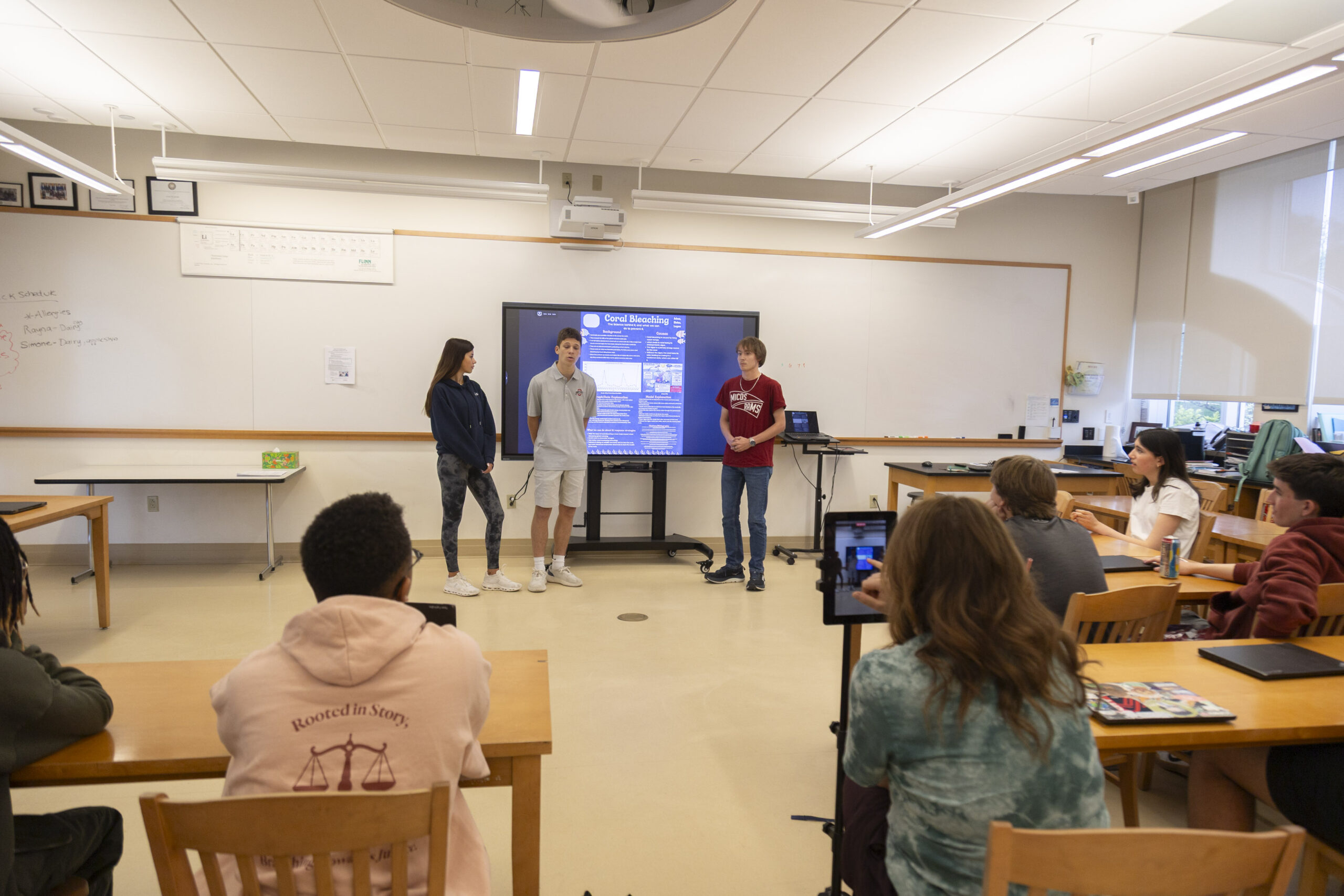
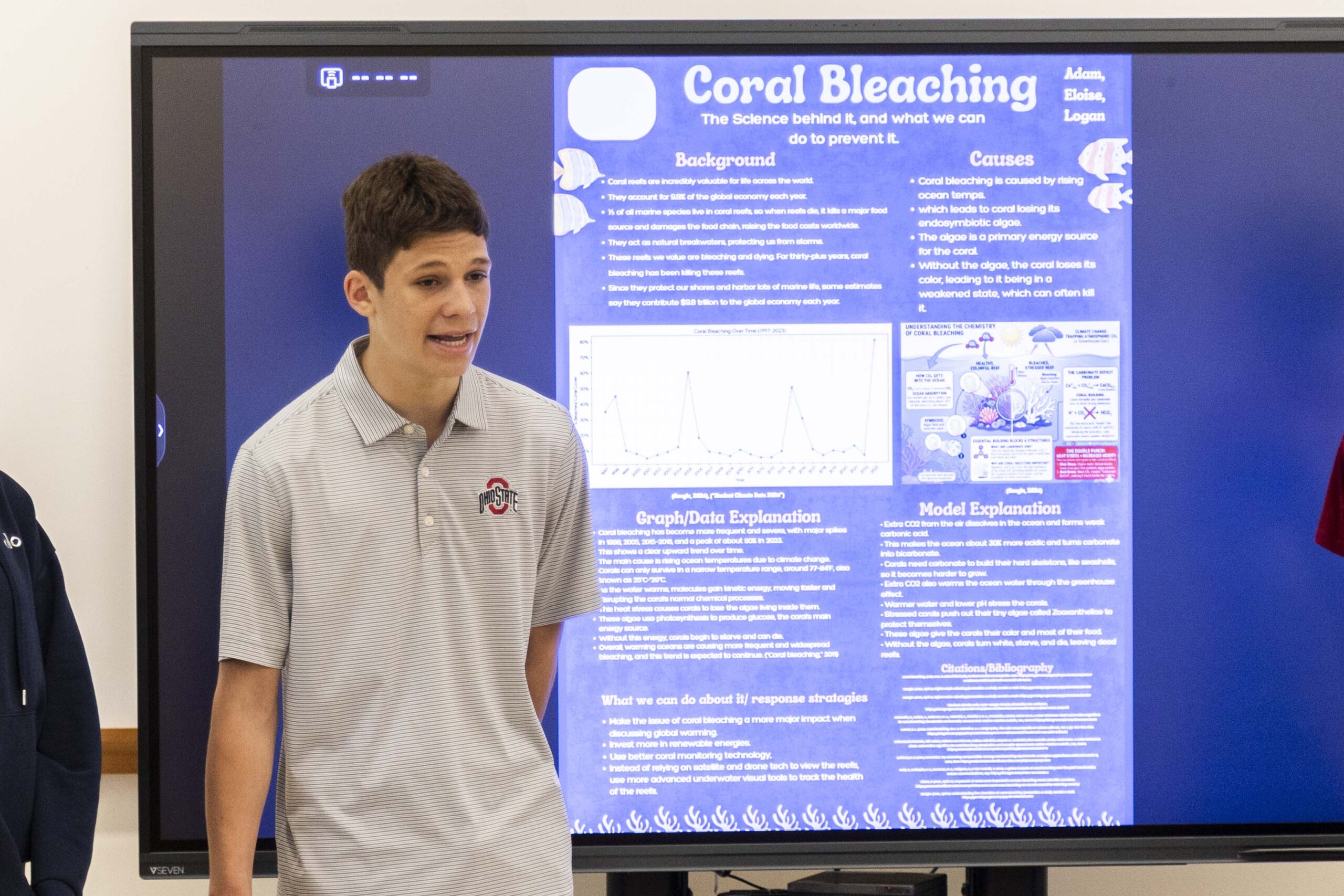
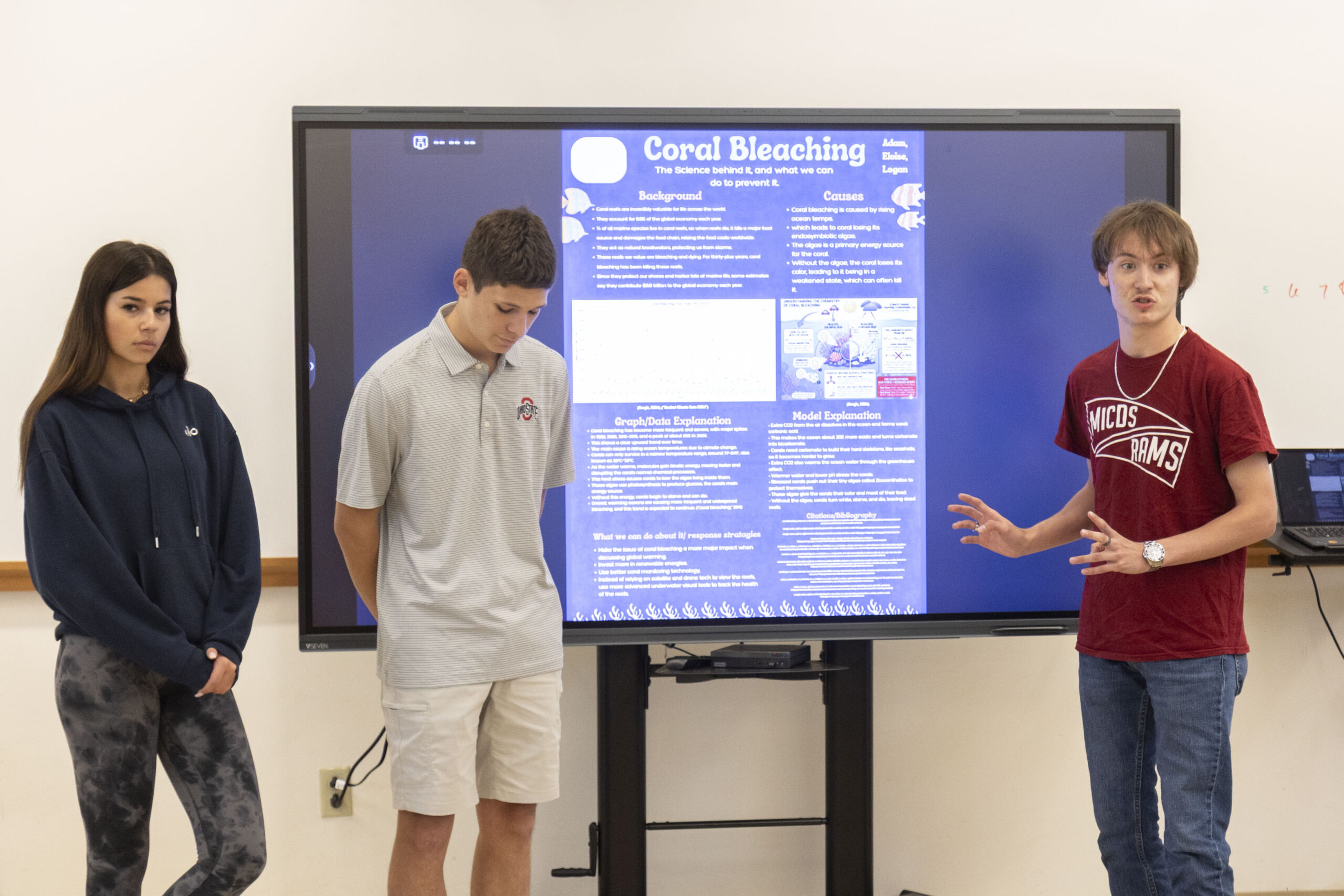
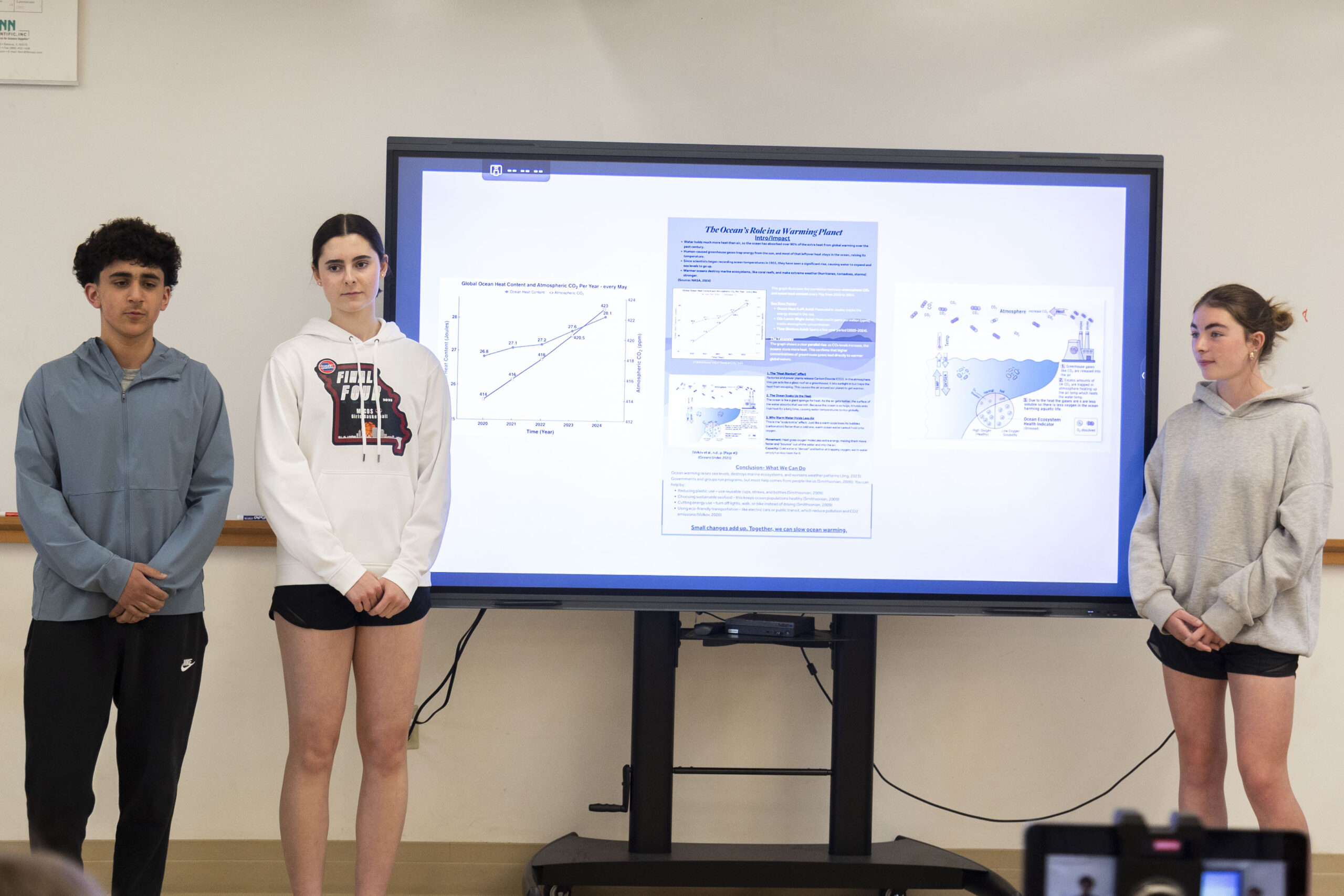
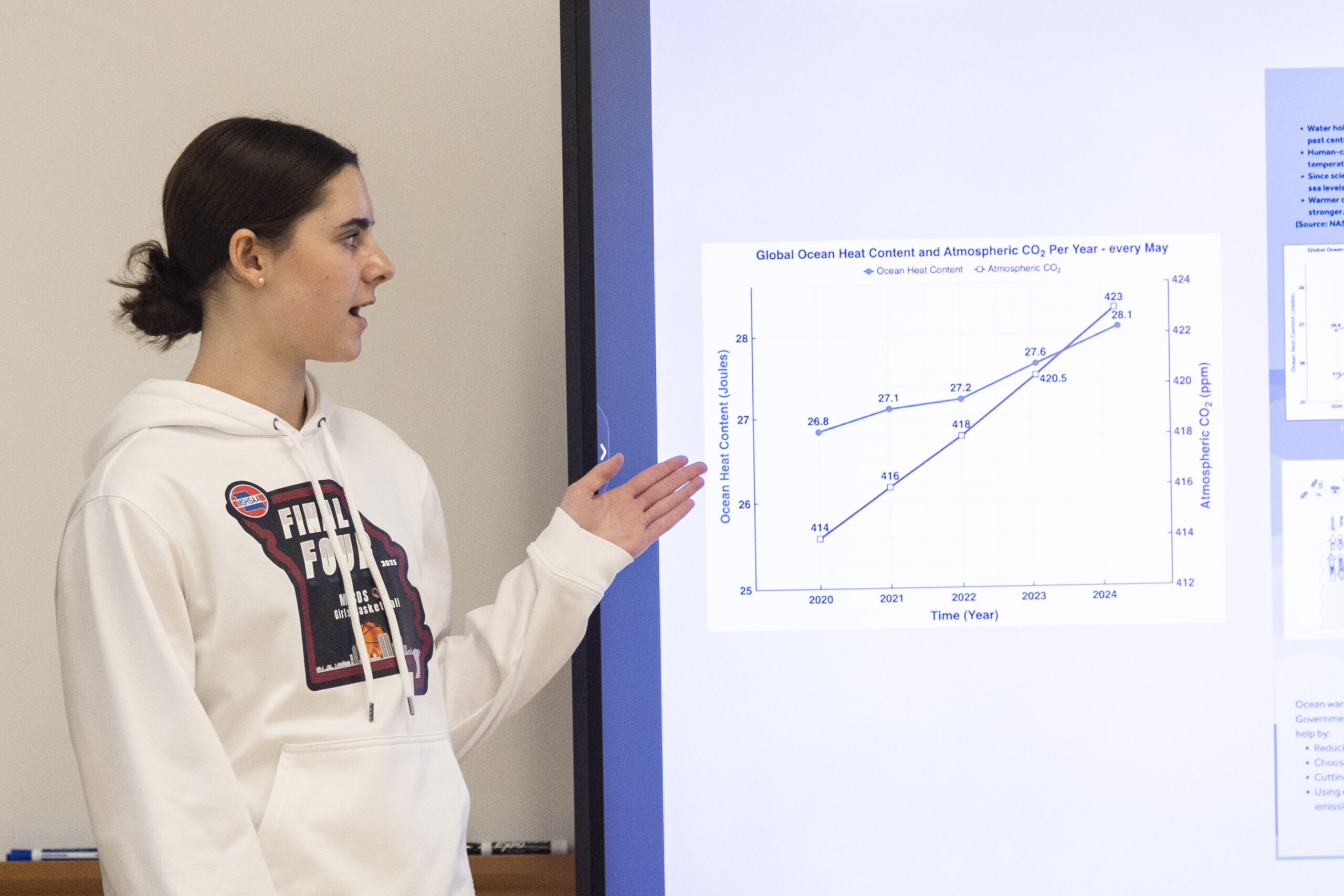
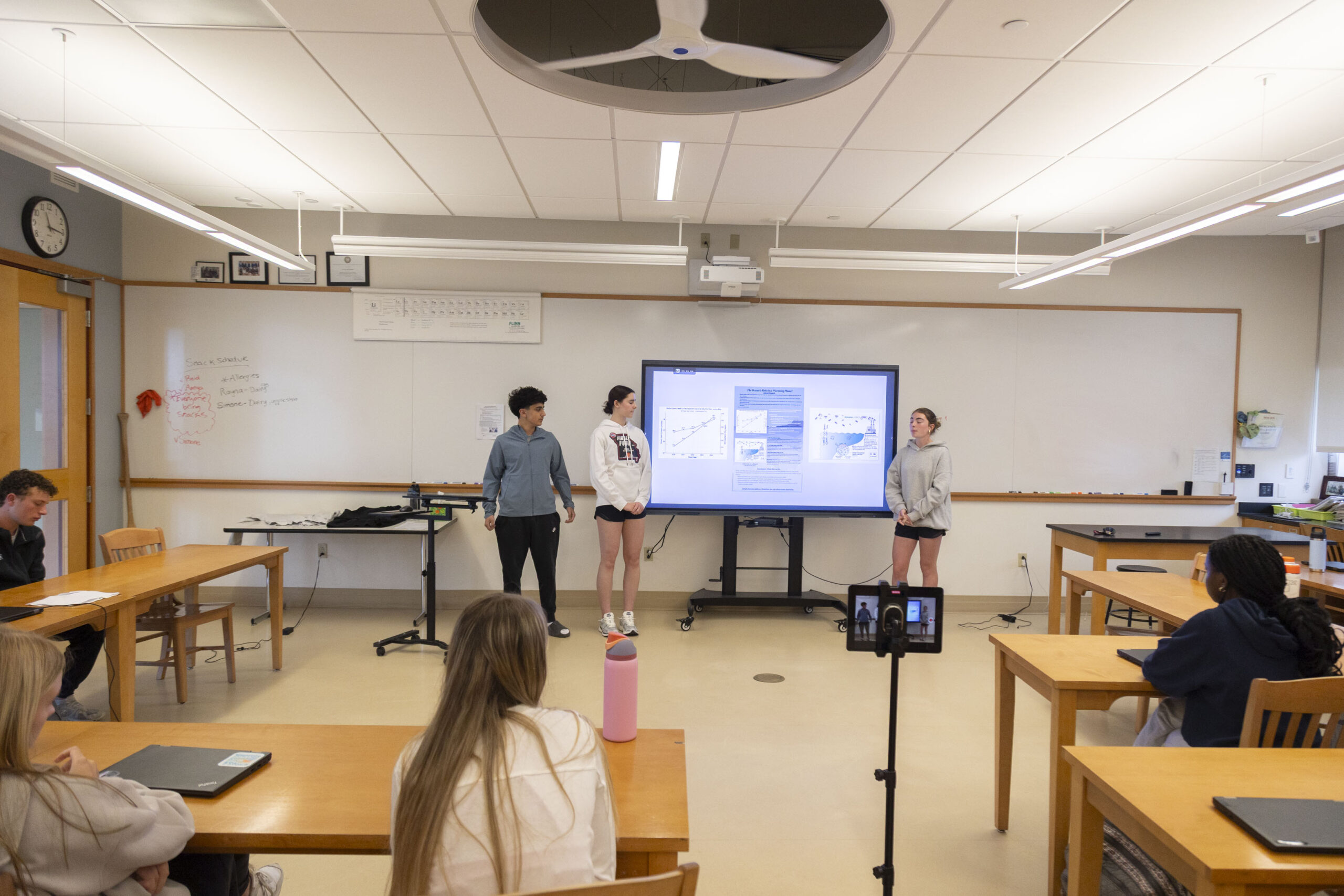
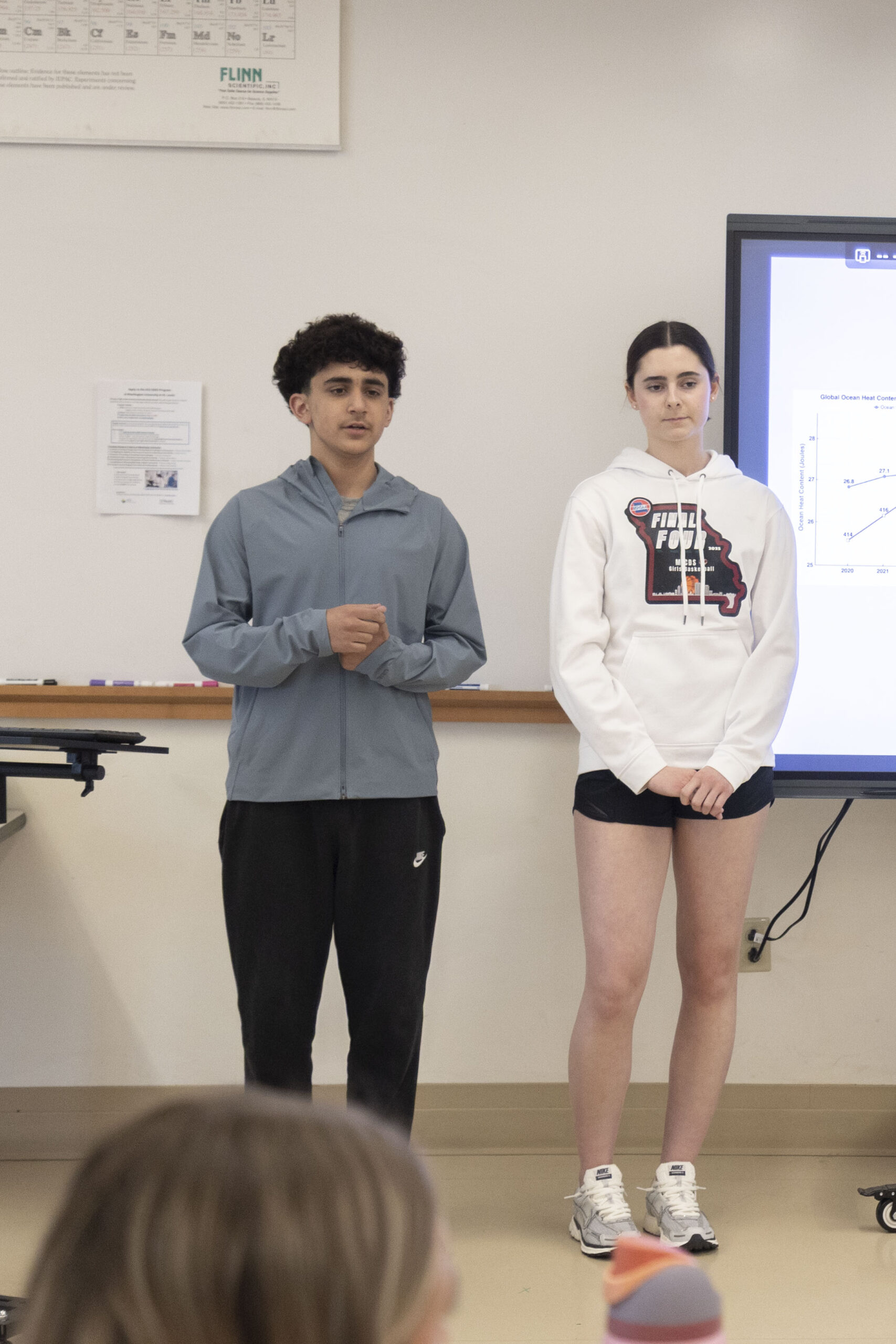
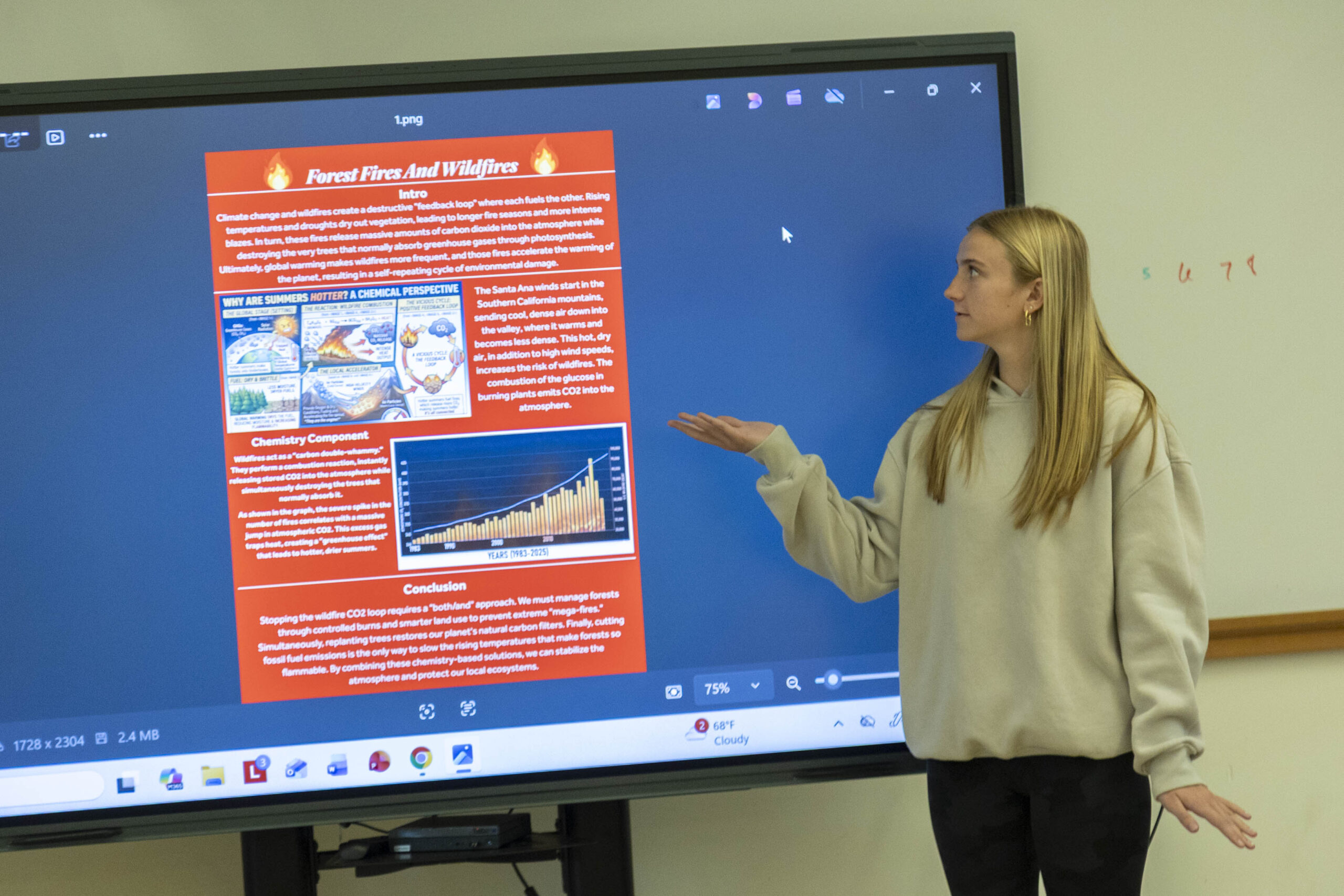
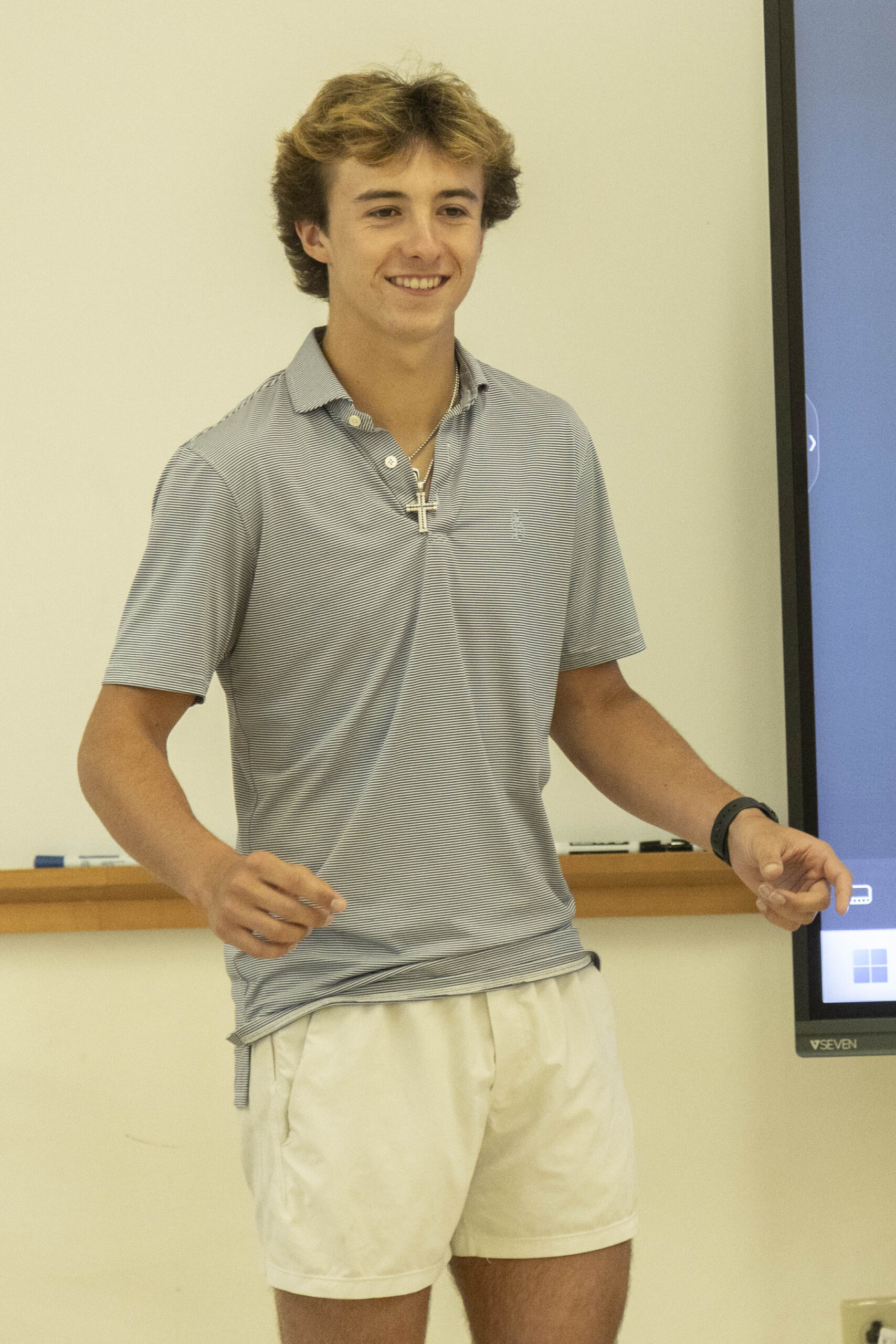
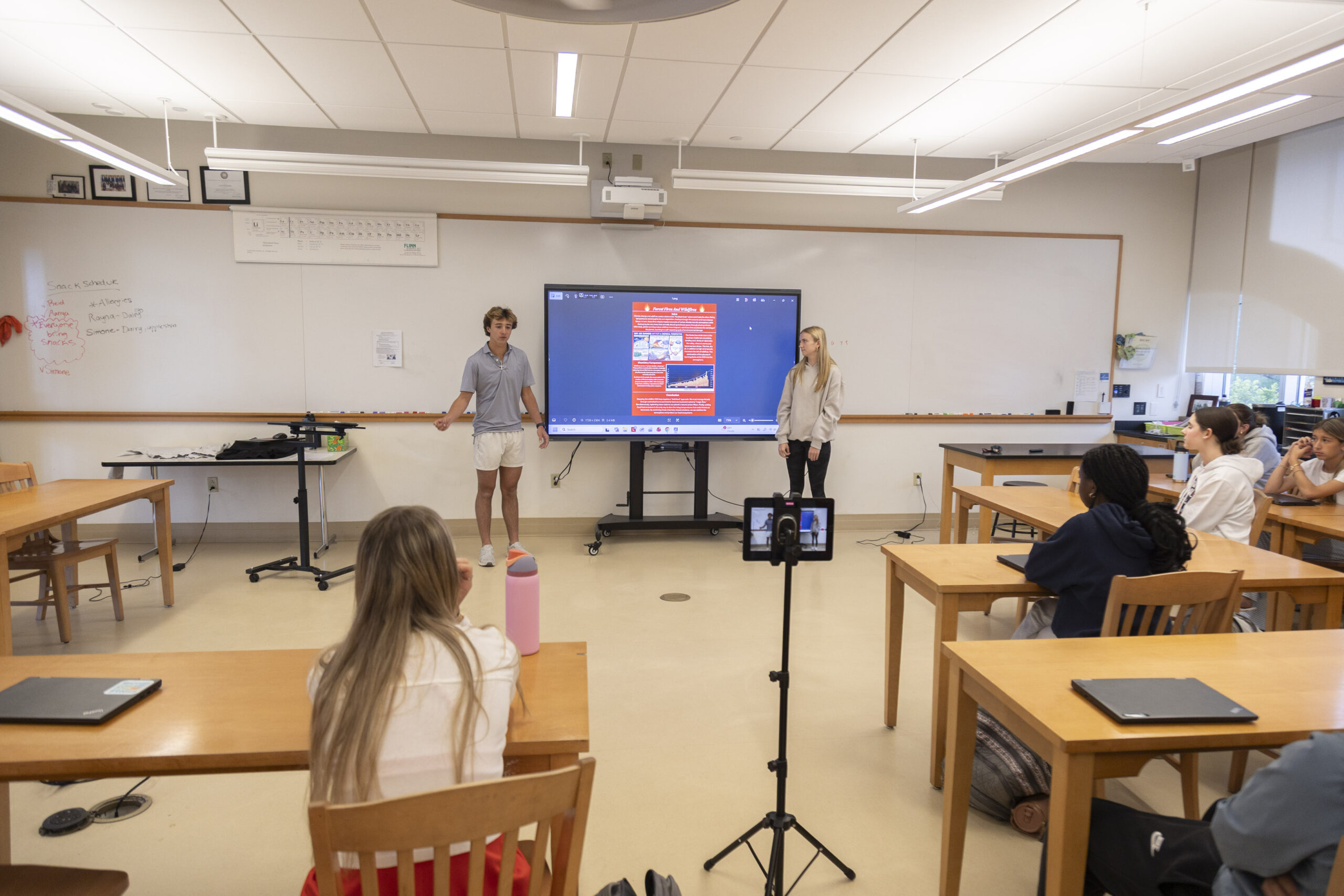
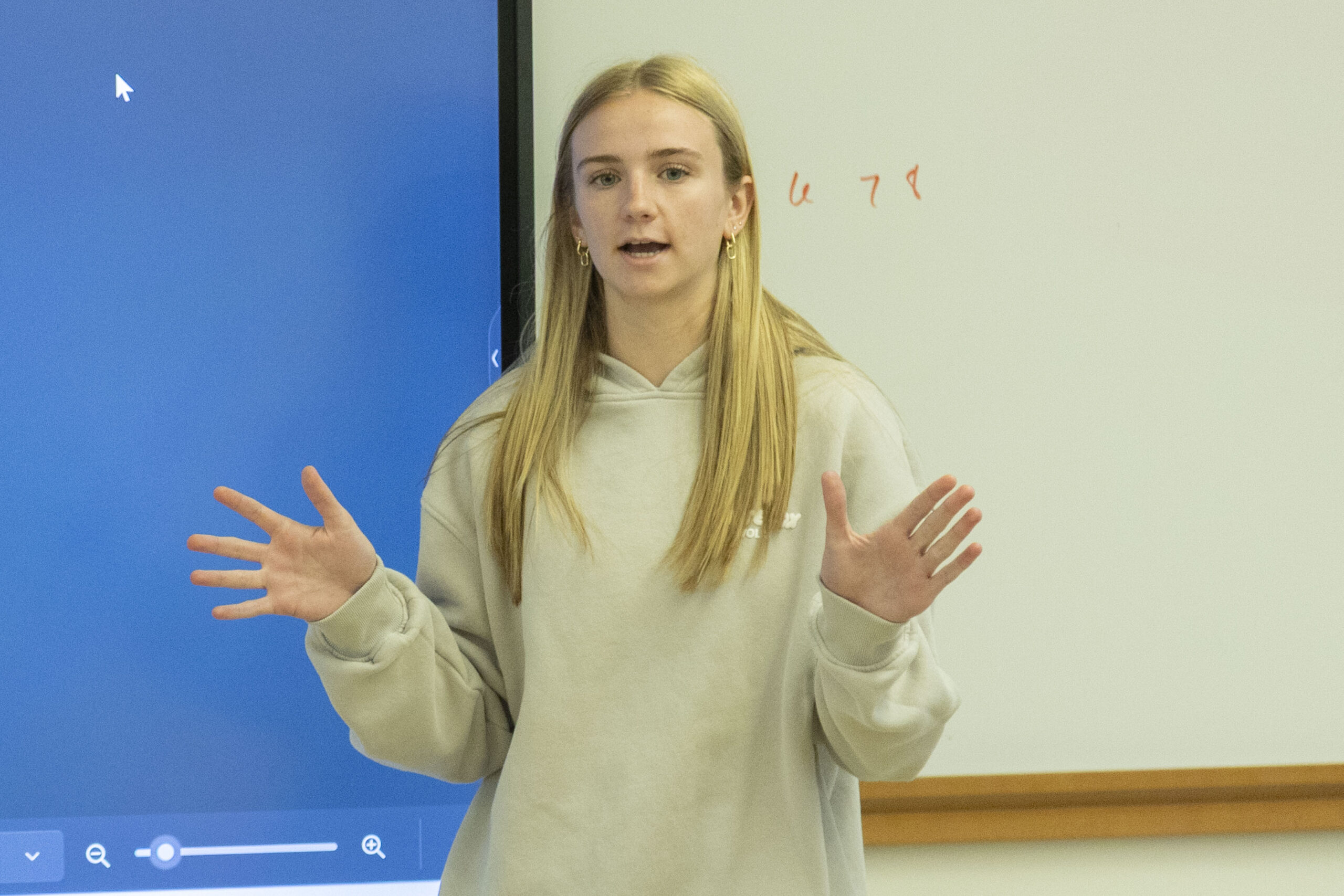
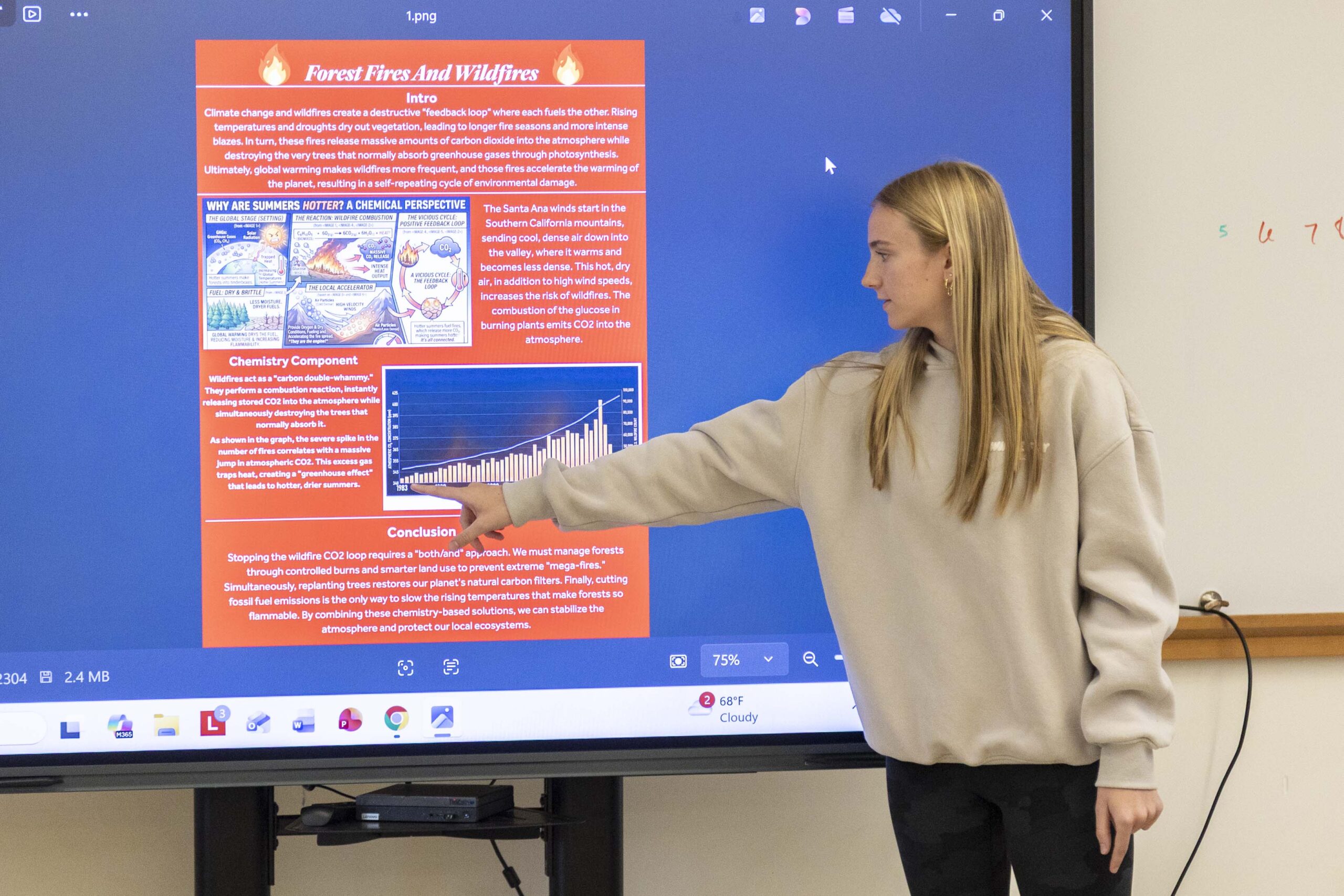
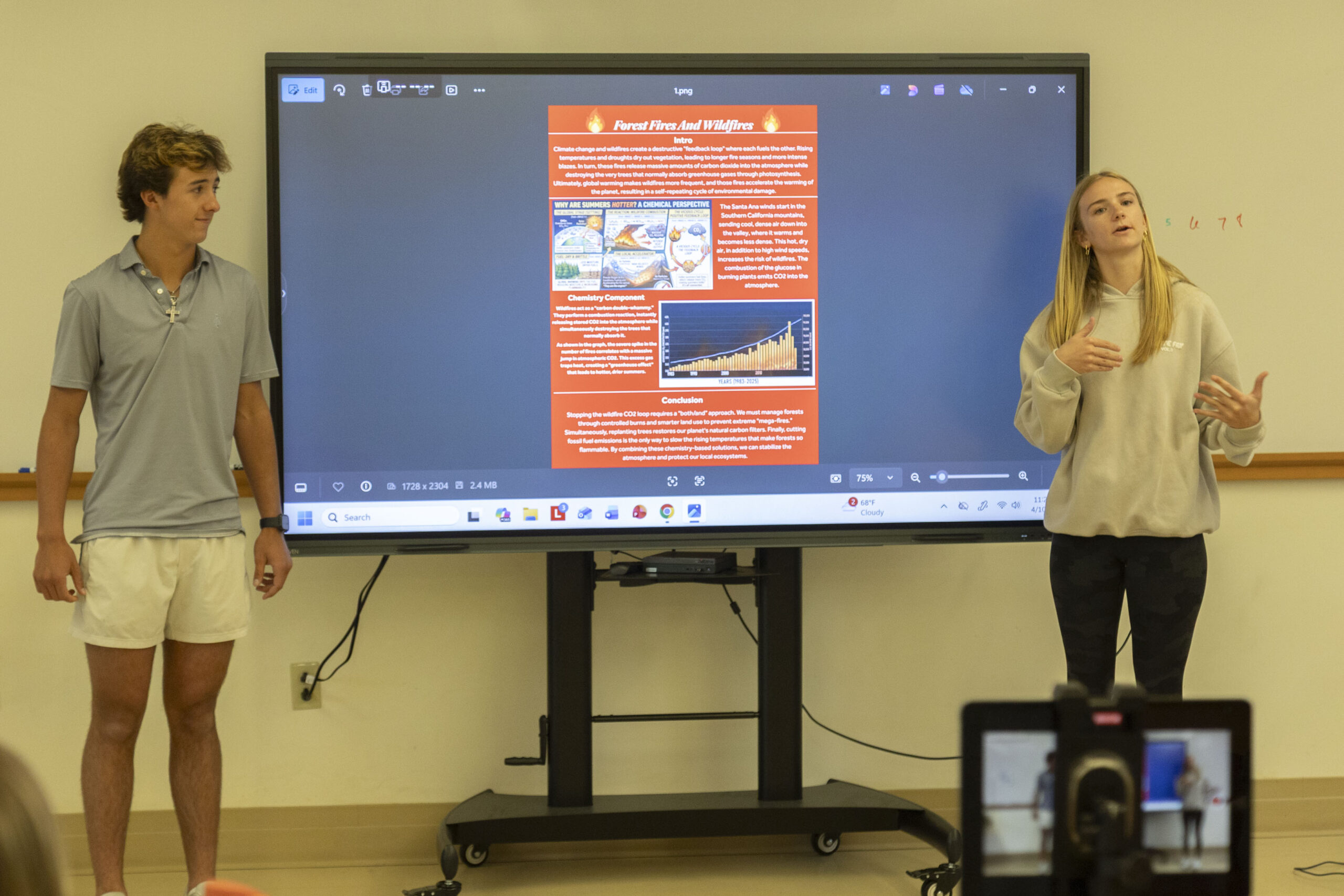
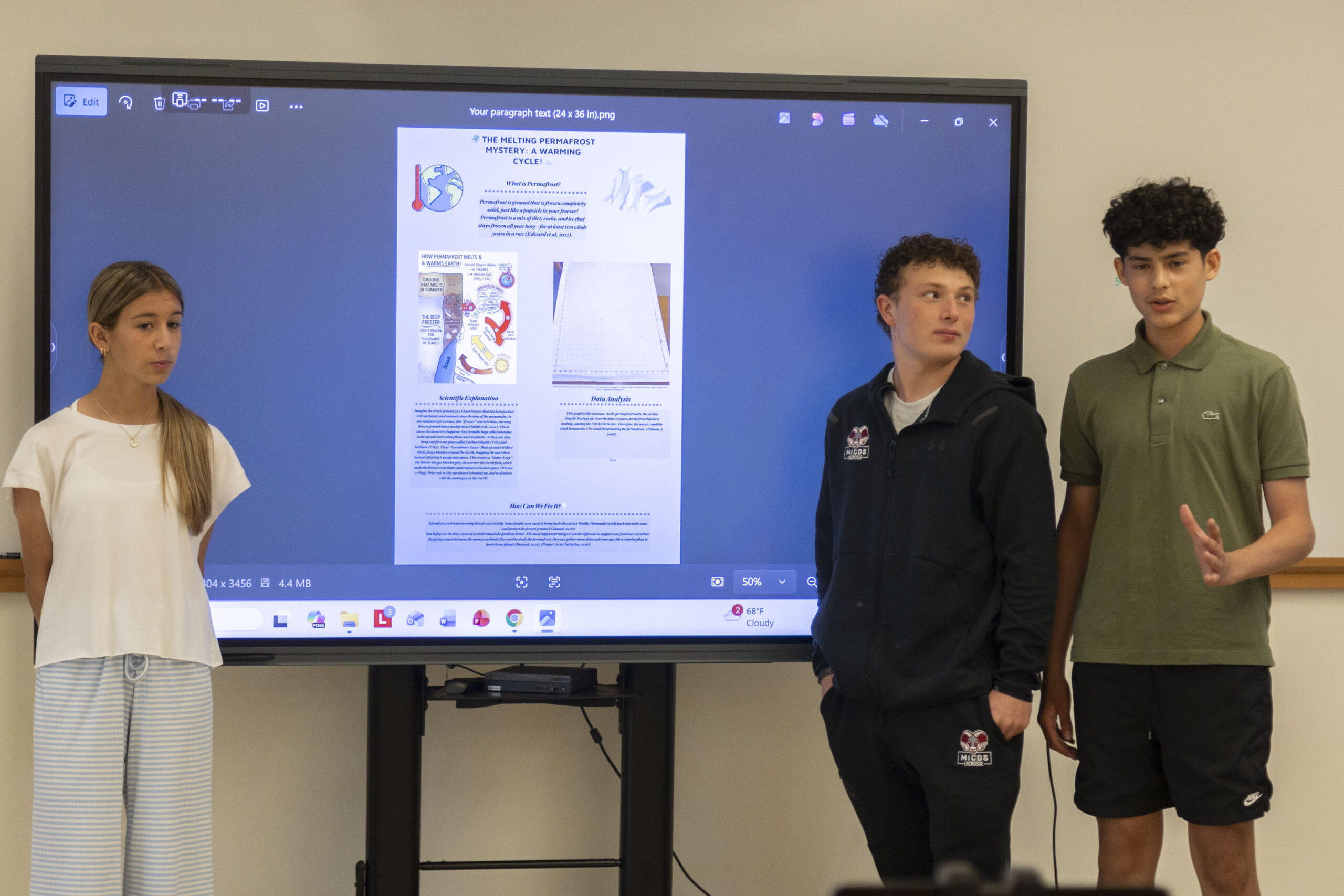
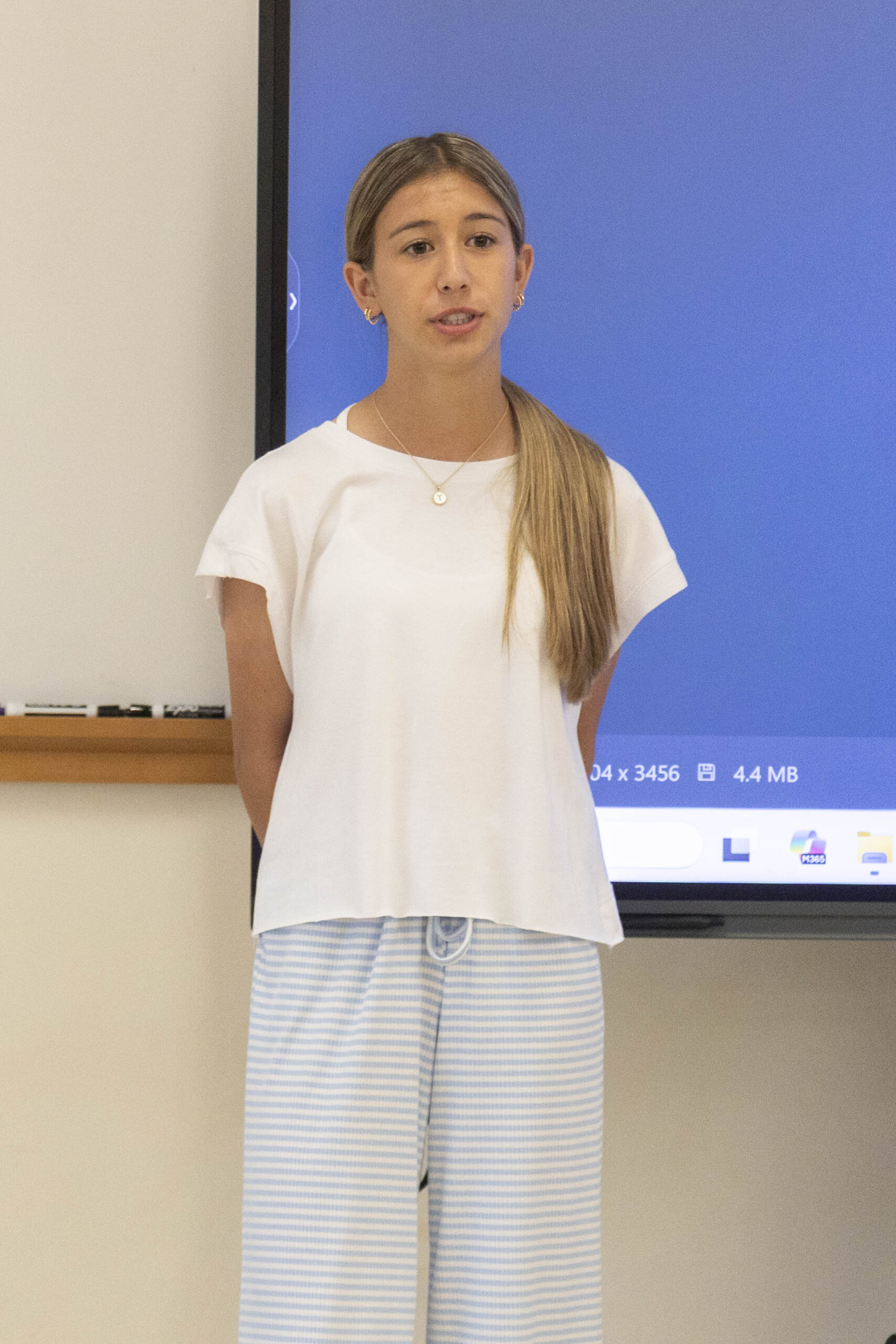
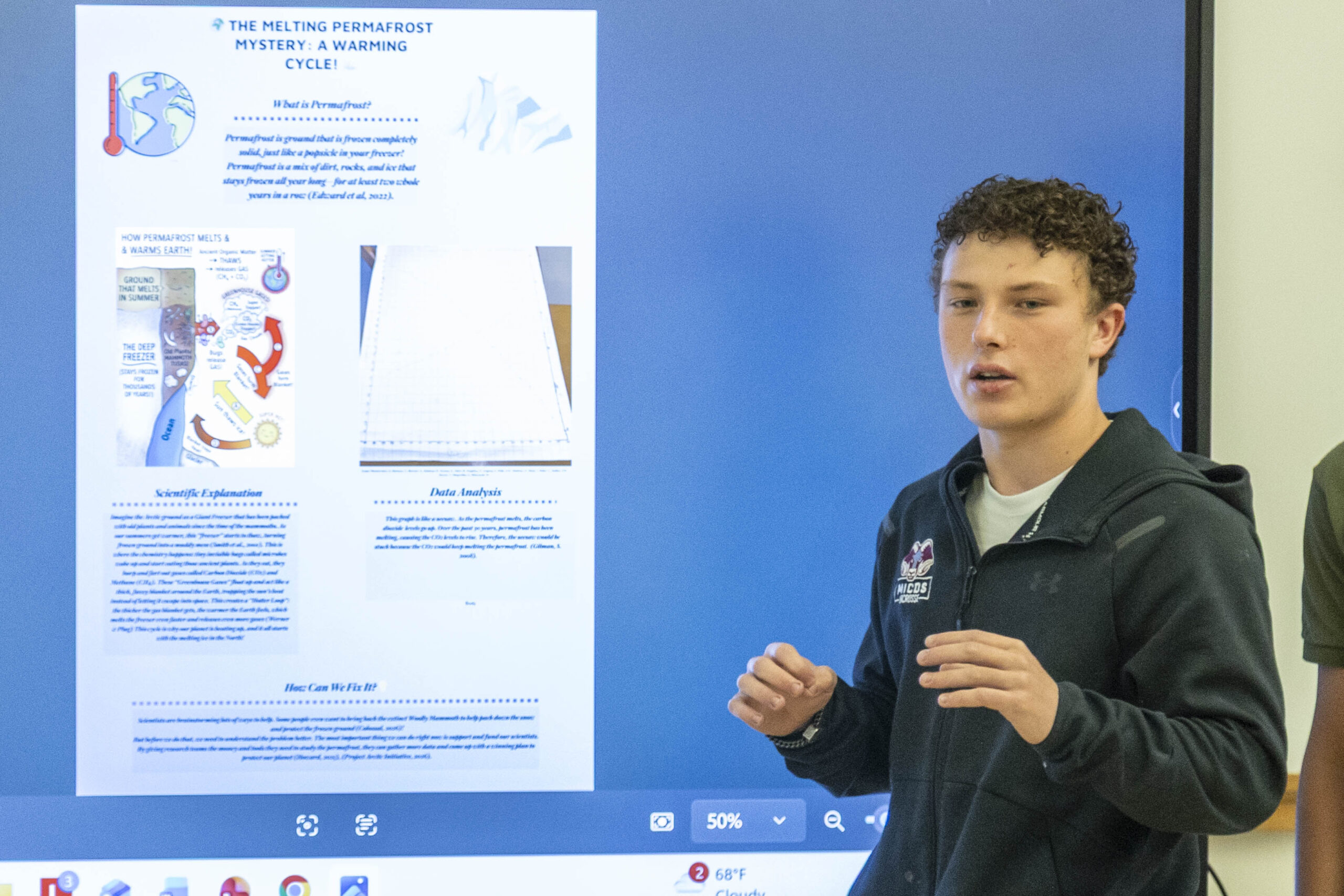
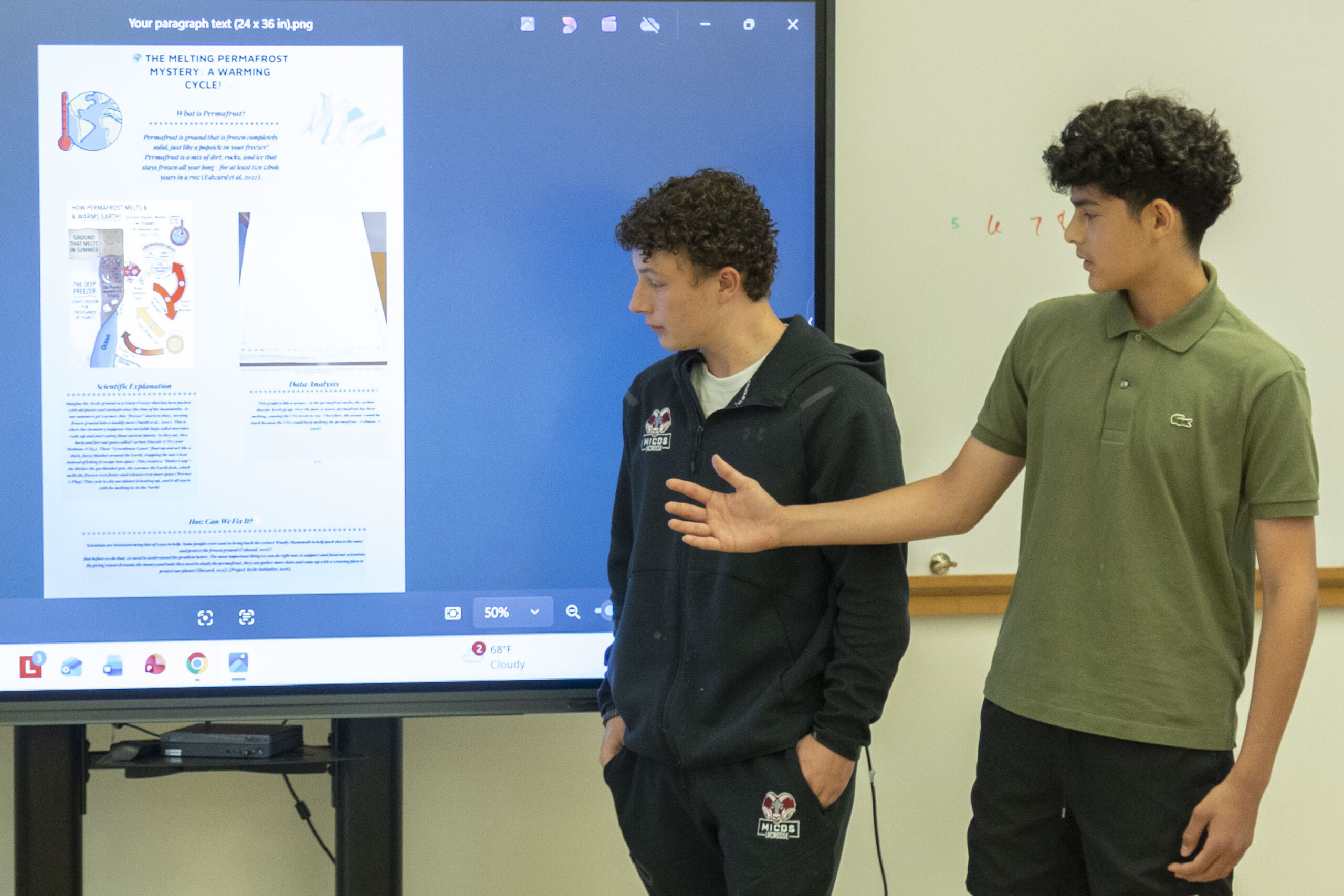
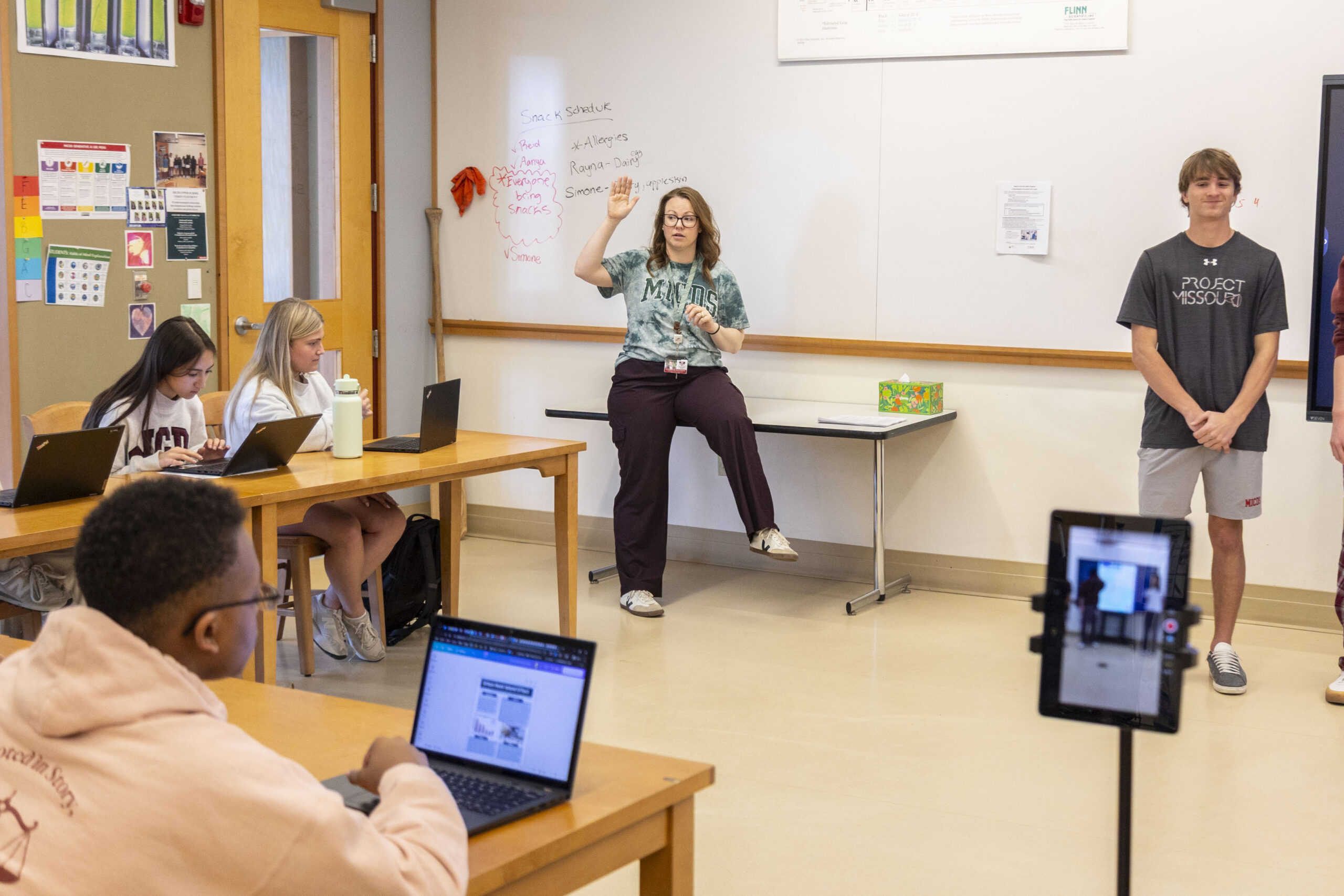
In small groups, students researched a climate-related topic related to the class unit. Then, the students created a digital poster that answered the anchoring question about hotter summers using authentic scientific data and chemistry concepts. Their poster included one hand-drawn graph and was tailored to a specific target audience as assigned once their research was complete. For example, some students prepared their poster and presentation as if their audience were fourth-graders. Others acted as if they were presenting to eighth-grade students. Additional groups spoke to AP students, teachers, or parents.
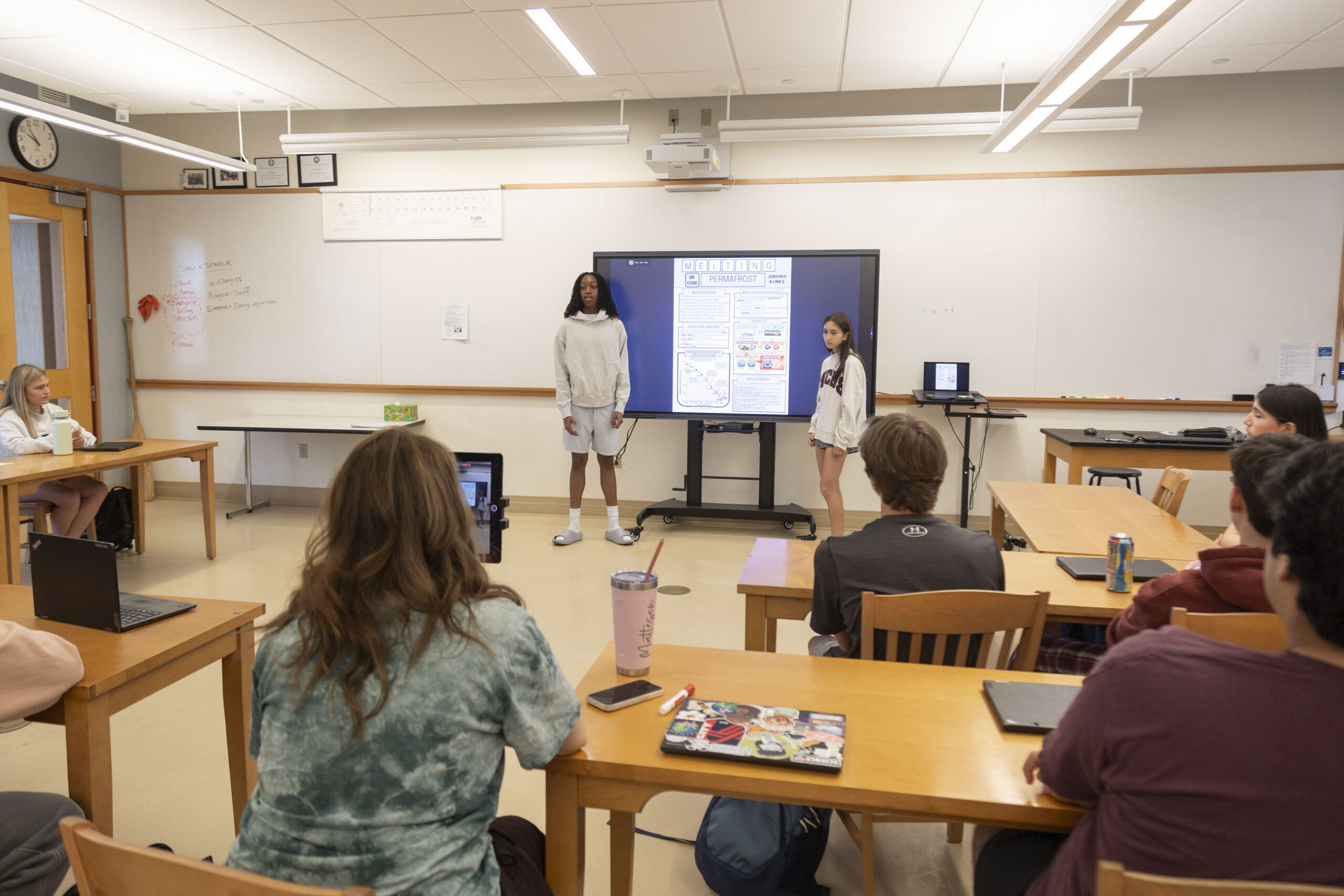
On Friday, April 10, students in the classes of Upper School Science Teachers Laura Bradford, Stephanie Matteson, and Megumi Yoshioka-Tarver presented their posters in Integrated Chemistry while pretending their target audience was in the room. The presentations were recorded, saved online, and linked to their posters through a QR code. Check out some of their final posters below, and be sure to scan the QR code to learn more from their brief presentations!
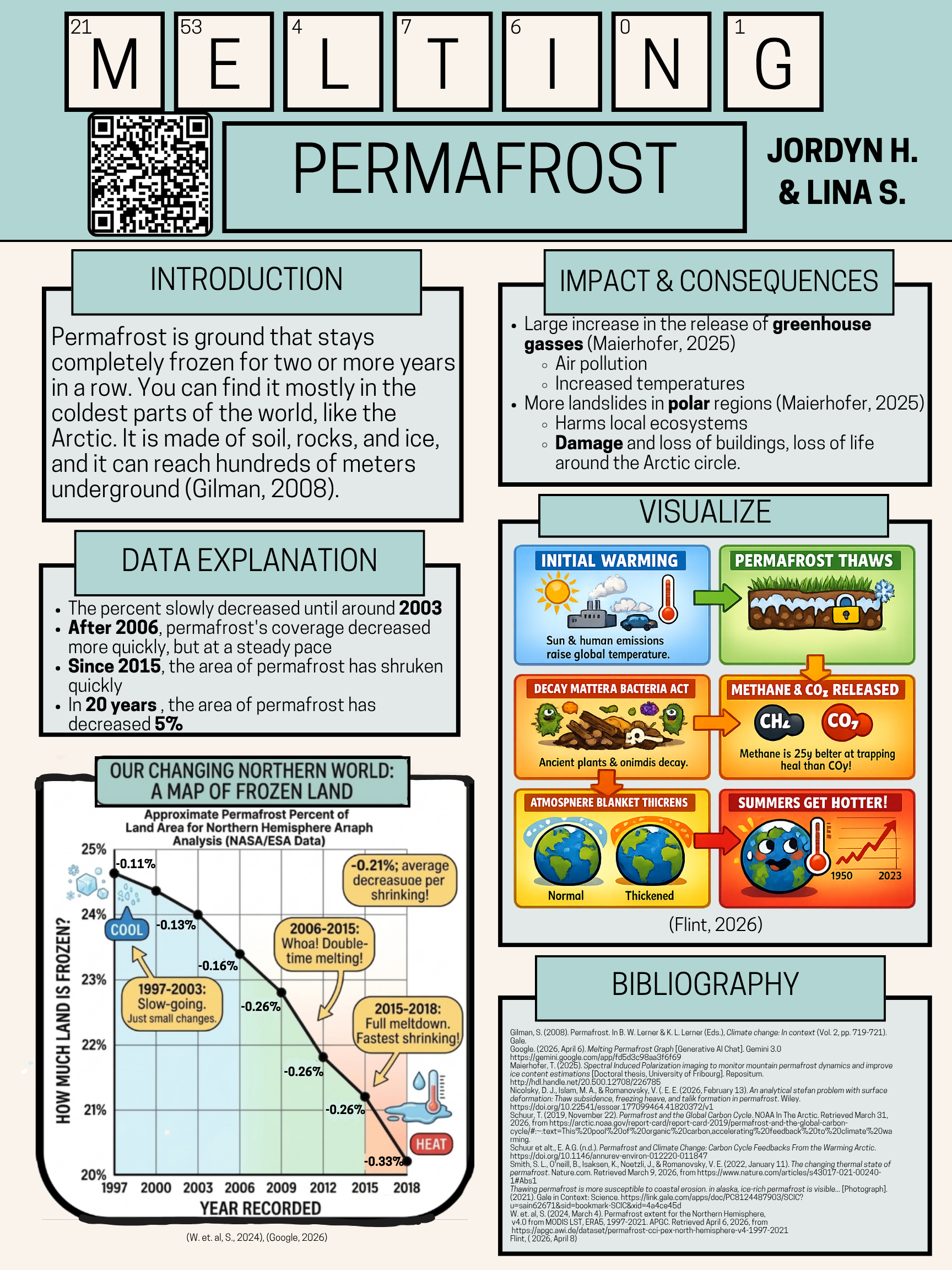
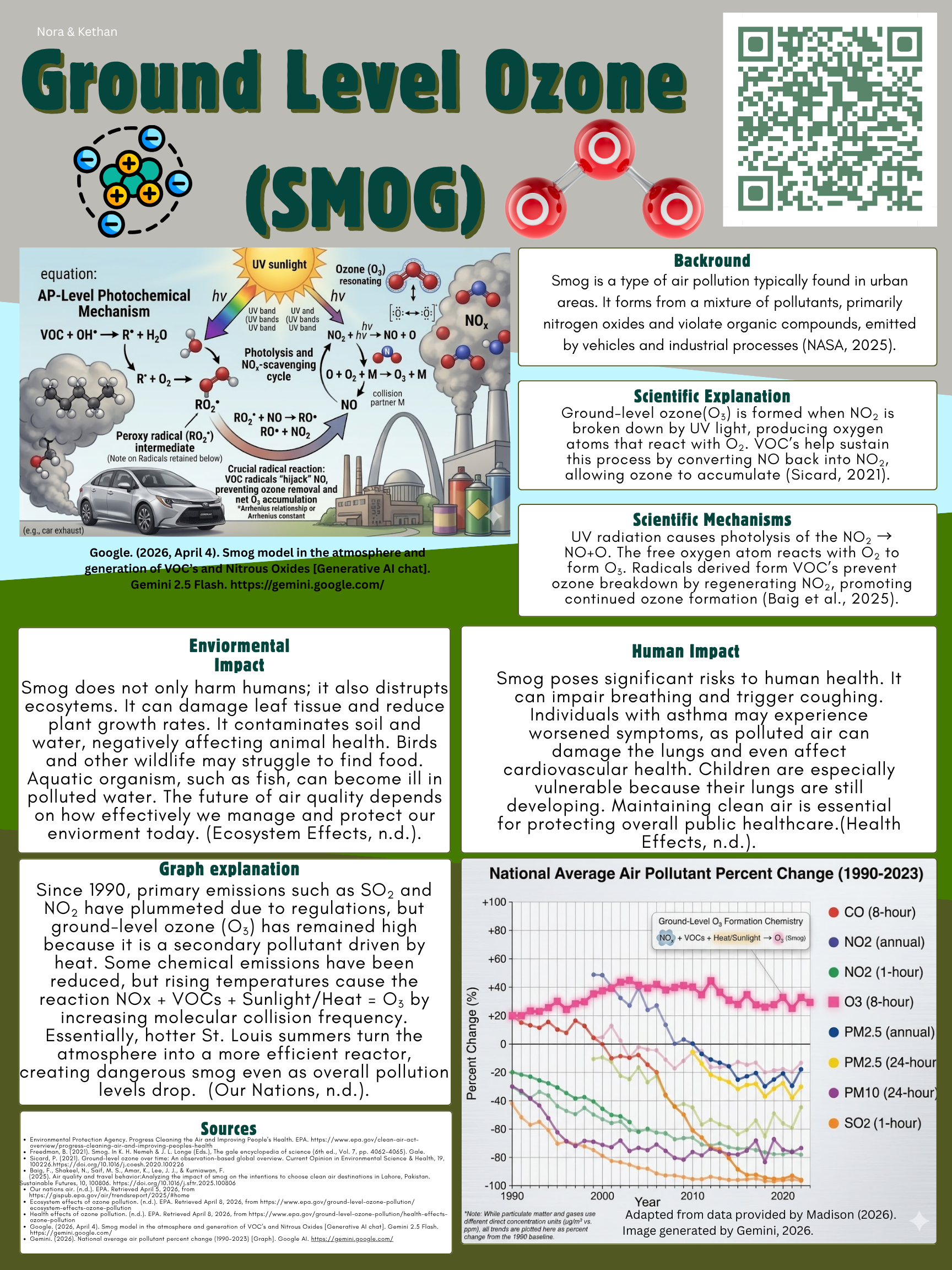
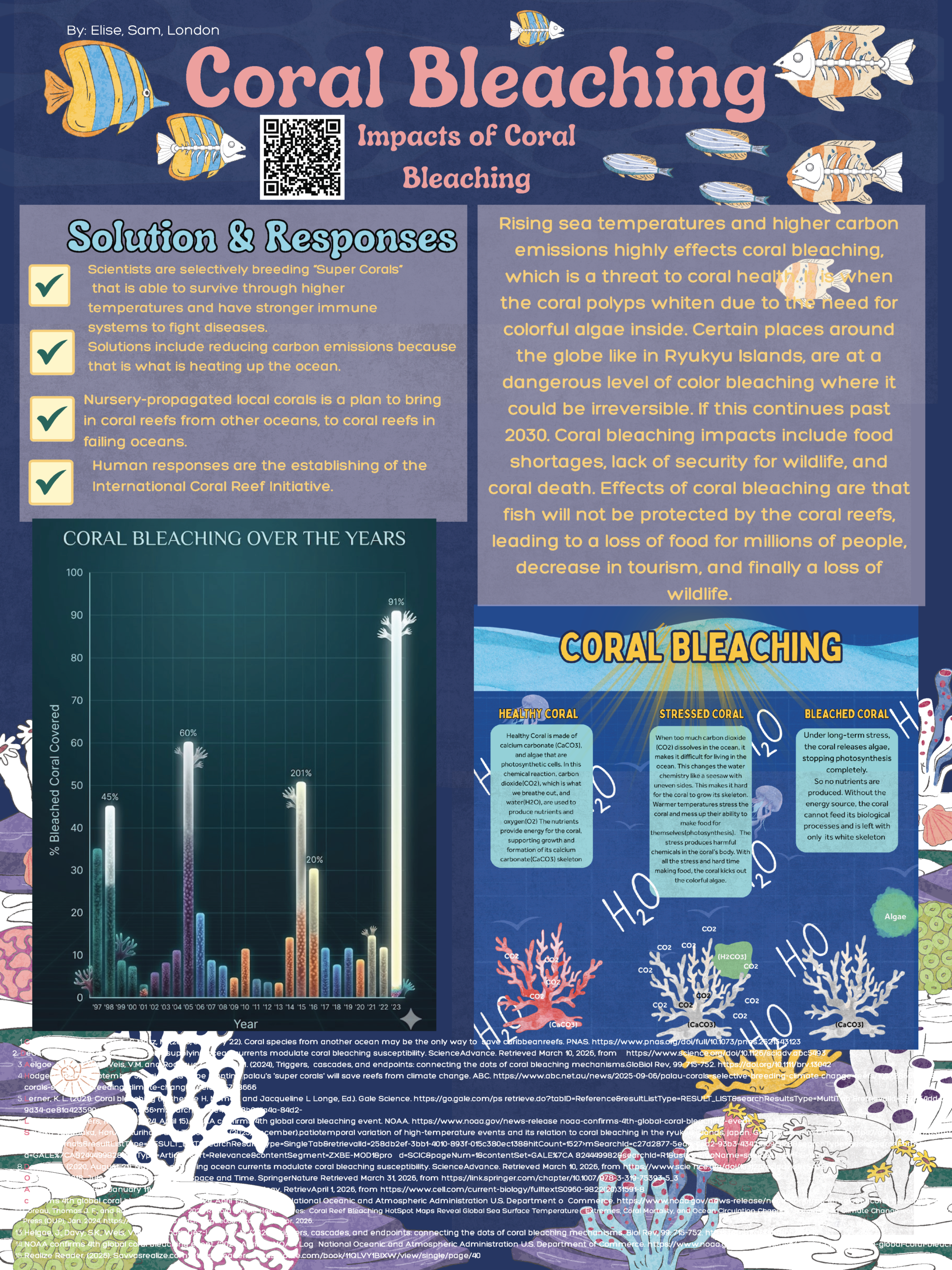
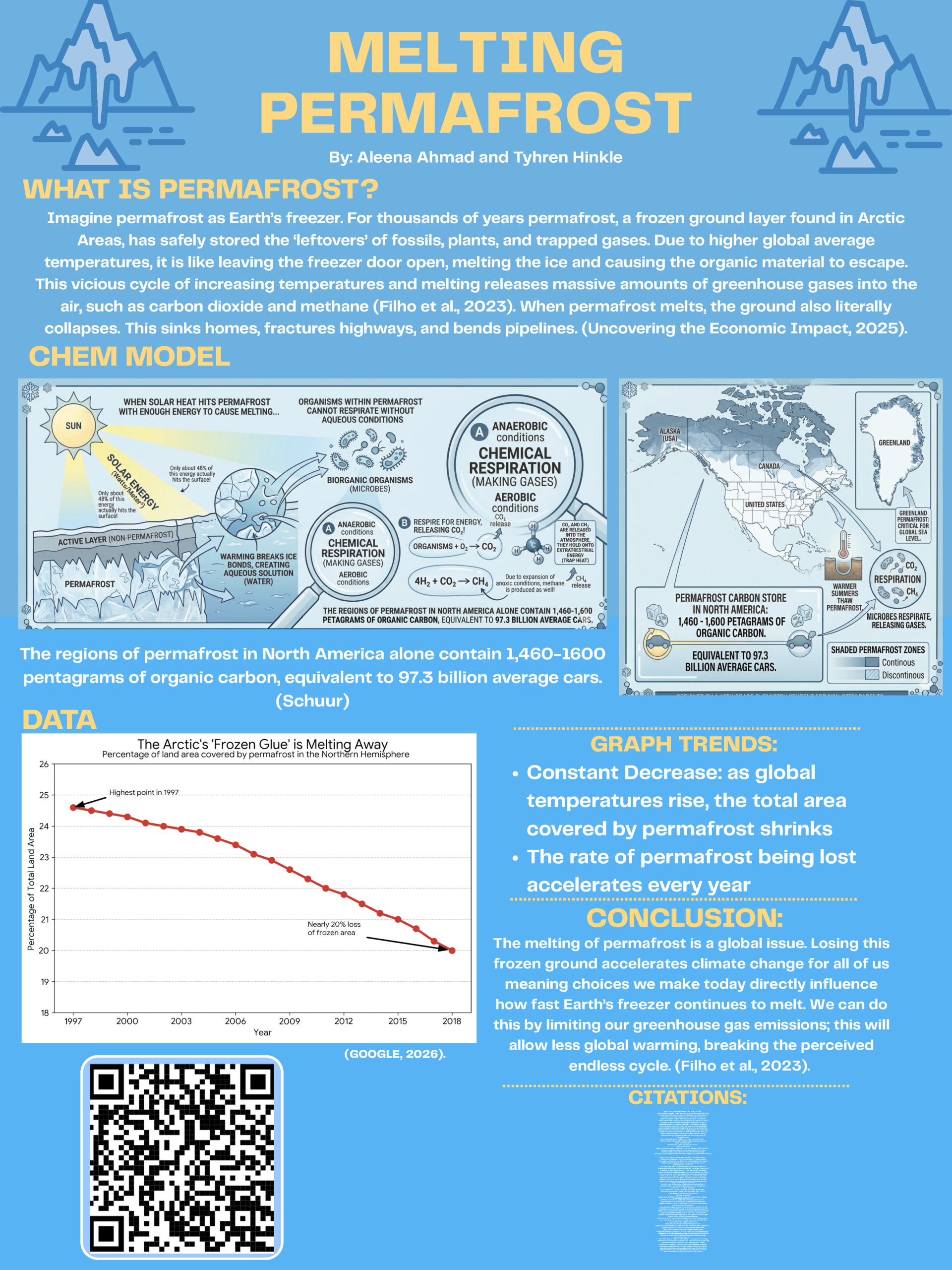
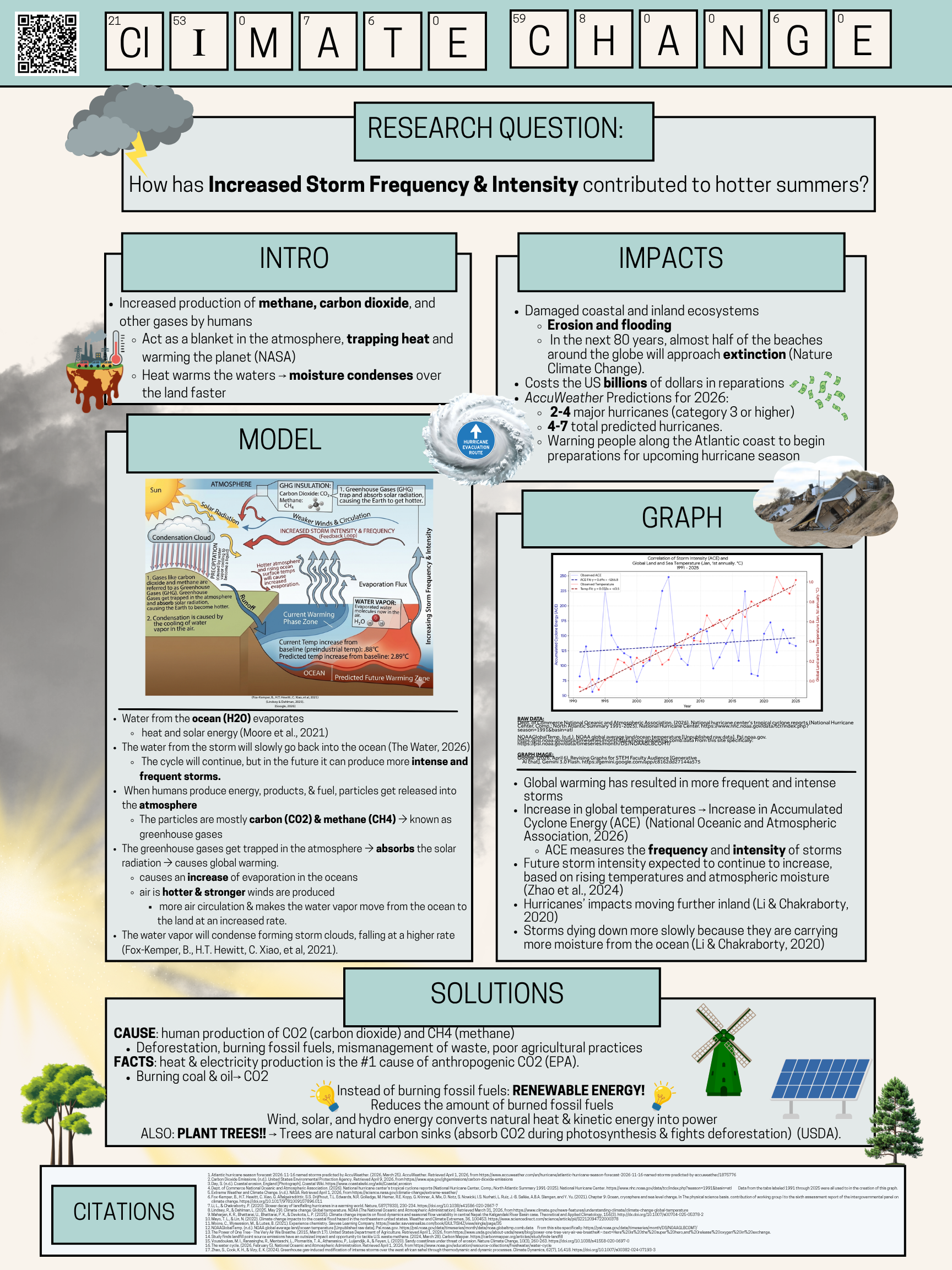
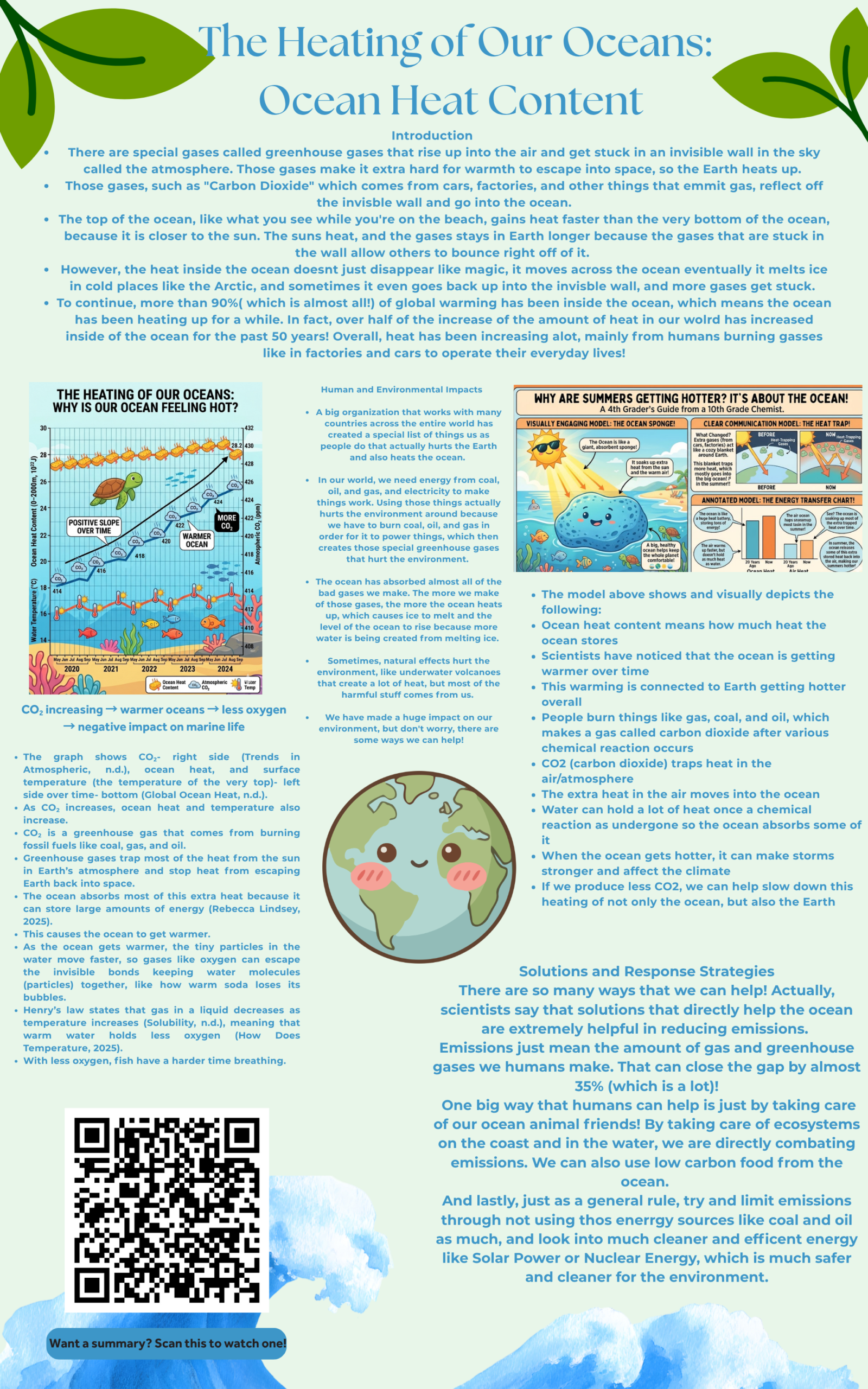
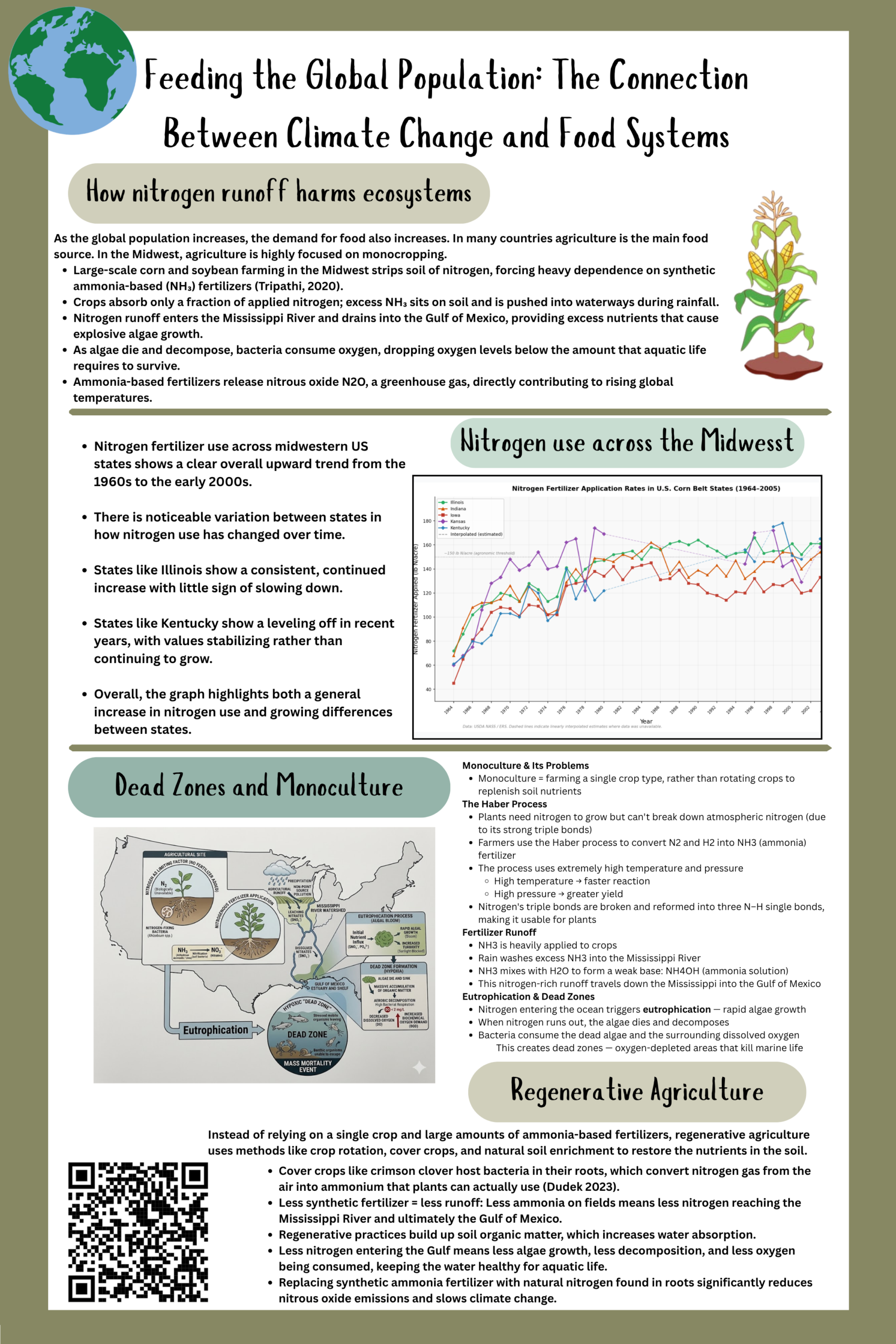
This was a new project for our 10th-grade students, and the teachers were pleased with how it unfolded. “We have some impressively creative students, and the students did a wonderful job of adapting their climate chemistry topic for a specific audience,” noted Matteson. “I really enjoyed the first iteration of this project.”
Students really embraced this new project, too! “My group and I worked very well together and conducted lots of research. It was extremely rewarding to see that work come together in our final poster,” said Audrey Walker ’28. “It was challenging to create a model that incorporated all of the chemistry aspects, but in the end, it was awesome to see the model come to life! I am proud of my model and how it came together because I worked hard to understand the concept. I took a lot of time creating a draft and working through the processes, so seeing it come together was awesome.”
Some students learned that by teaching someone else, you can master a topic yourself and make it easier for others to understand. “I’m most proud of the way my group was able to create a poster that shows how the connection between CO2 and ocean chemistry affects coral bleaching. It makes a complicated topic easy for our target audience, which was parents, to follow without feeling overwhelmed,” said Eloise Lurk ’28. “Adam, Logan, and I worked really well together as a team. We listened to each other’s ideas, made changes together, and supported one another. Because of our strong teamwork, we were able to stay on track and get things done during class and ended up with a poster that we were all excited to share!
The sophomores also expanded their understanding of why warmer summers have been occurring, as well as of themselves as learners. Walker added, “Before this project, I knew about climate change and that it heavily affected increasing temperatures during the summer, but this project taught me more in-depth reasoning behind warming summers. Also, I learned that I learn very well from visual models like the one I created.”
If you’re on campus these next couple of weeks, be sure to check out the chemistry of climate change posters!