Did you know that ancient Greece had more than 300 city-states? MICDS fifth graders tackled learning about the most famous rivalry among the 300: Athens and Sparta. Students formed their respective teams and battled each other in a heated yet bloodless debate on whether Athens or Sparta was superior.
Before getting started, students had to research Athens and Sparta and decide which team they wanted to represent. Once assigned to a group, students formed mini-groups covering who would handle the opening and closing arguments and who would address topics such as government, military, education, social structure, economy, geography, trade, and arts/culture/daily life. After organizing their notes and practicing, they were ready to enter the debate arena.


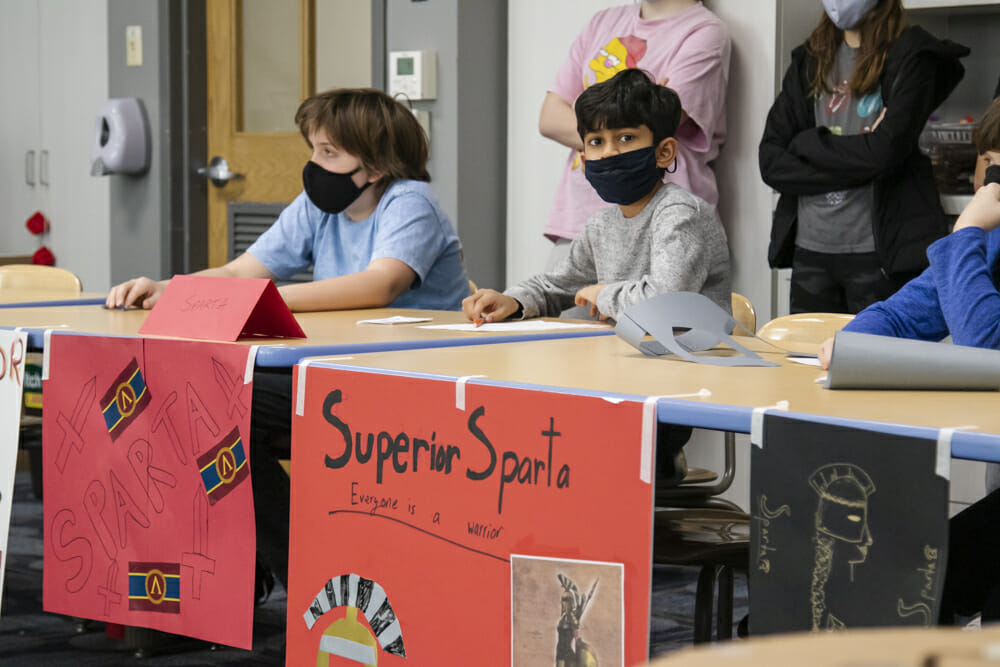


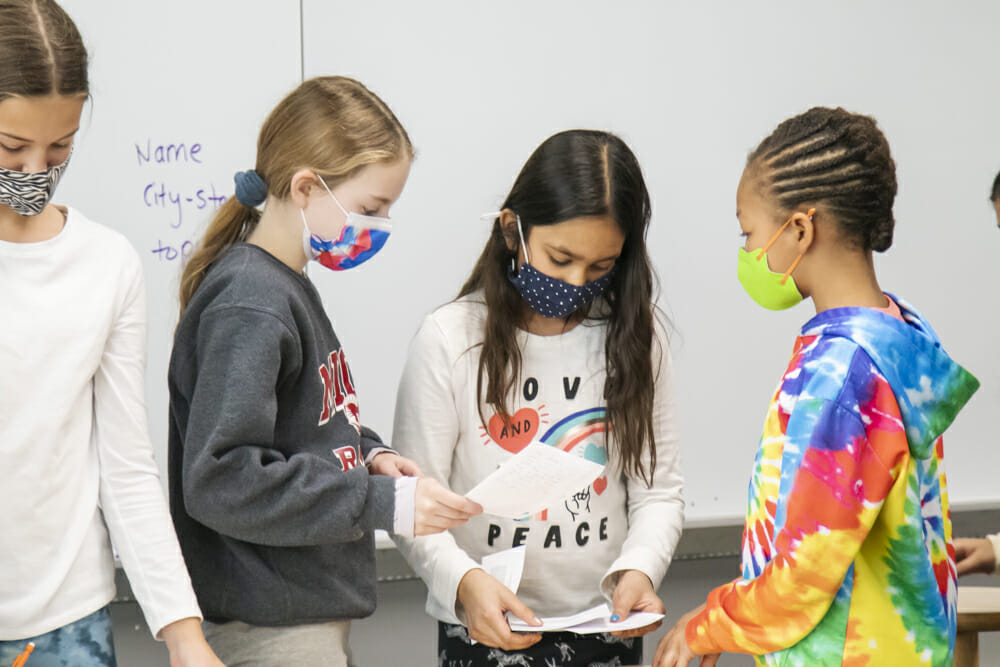


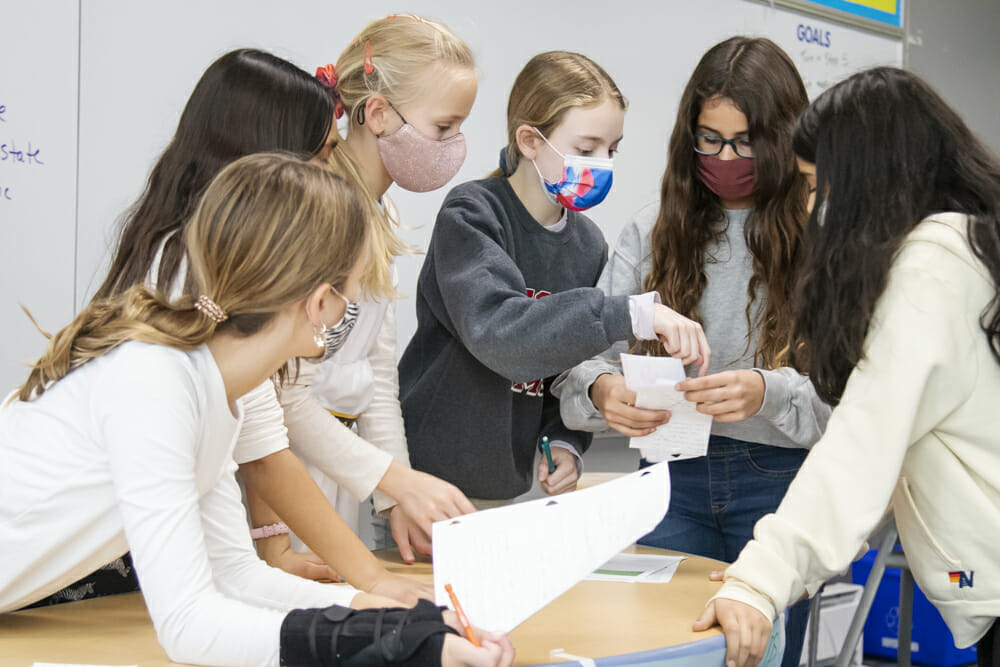


Many students dressed in togas (Athens) or battle gear (Sparta) and displayed spirited posters for their team on Debate Day. During the debate, students shared two arguments for their position, and the opposing side had the opportunity to challenge or offer a rebuttal. Middle School History Teacher Robyn Williams shared, “What I love most about the Greek Debate is the collaboration between students. They work together in teams, Athens or Sparta, to create the strongest arguments to defeat the other team. They help each other find sources, strengthen arguments, cheer each other on, and confer with each other to come up with a strong counterargument in the heat of battle. It’s fun to watch students use the knowledge they’ve gained from their research and argue endlessly about who the best city-state is before the Debate even starts.”
Students shared their enthusiasm for the process as well:
“I really enjoyed the debate because it was fun to be able to plan everything that you wanted to say and plot how to make efficient arguments. Our team worked together by giving each other feedback on our arguments which was very helpful. Something that surprised me was that even though I was super nervous about the debate I actually wasn’t nervous when I did the debate. This debate was a great way to be creative and I hope we can do something like this again.” – Amya Singla ’29
“I really enjoyed the project because of the friendly competition it inspired, and the work involved. The most challenging thing for me was being able to address everything on my part without taking too long. However, I managed to do it in the end. Our team worked together to produce perfect counter-arguments and figure out how to address them fluently in our respective parts. One of the things that surprised me was that despite many sources talking about Sparta’s good military, if you take all the facts into account, Athens was actually better there too.” – Shayaan Merchant ’29
“This project was great because we got to learn about ancient Greece, and Sparta and Athens’s differences while still having a competition and having fun. What I enjoyed most about this project was probably the counter-arguments because we got lots of great advice from our team and it was also fun to give your teammates advice when it was their turn.” – Heidi Haberstroh ’29
After a lengthy process of tabulating points for the teams, Williams will announce the winner of the city-state debate in an upcoming class period.
What an engaging way to synthesize historical data and polish debate skills at the same time!