MICDS Upper School Presented The Revolutionists, October 9-11, 2026
A talented team of committed thespians produced an extraordinary play over three nights for delighted audiences last weekend. The Revolutionists is a comedy about four very real women who lived during the French Revolution’s Reign of Terror: a playwright, an assassin, the former queen, and a rebel from Haiti. The play is about violence and legacy, art and activism, feminism and terrorism, compatriots and chosen sisters, and ultimately, how we go about changing the world.
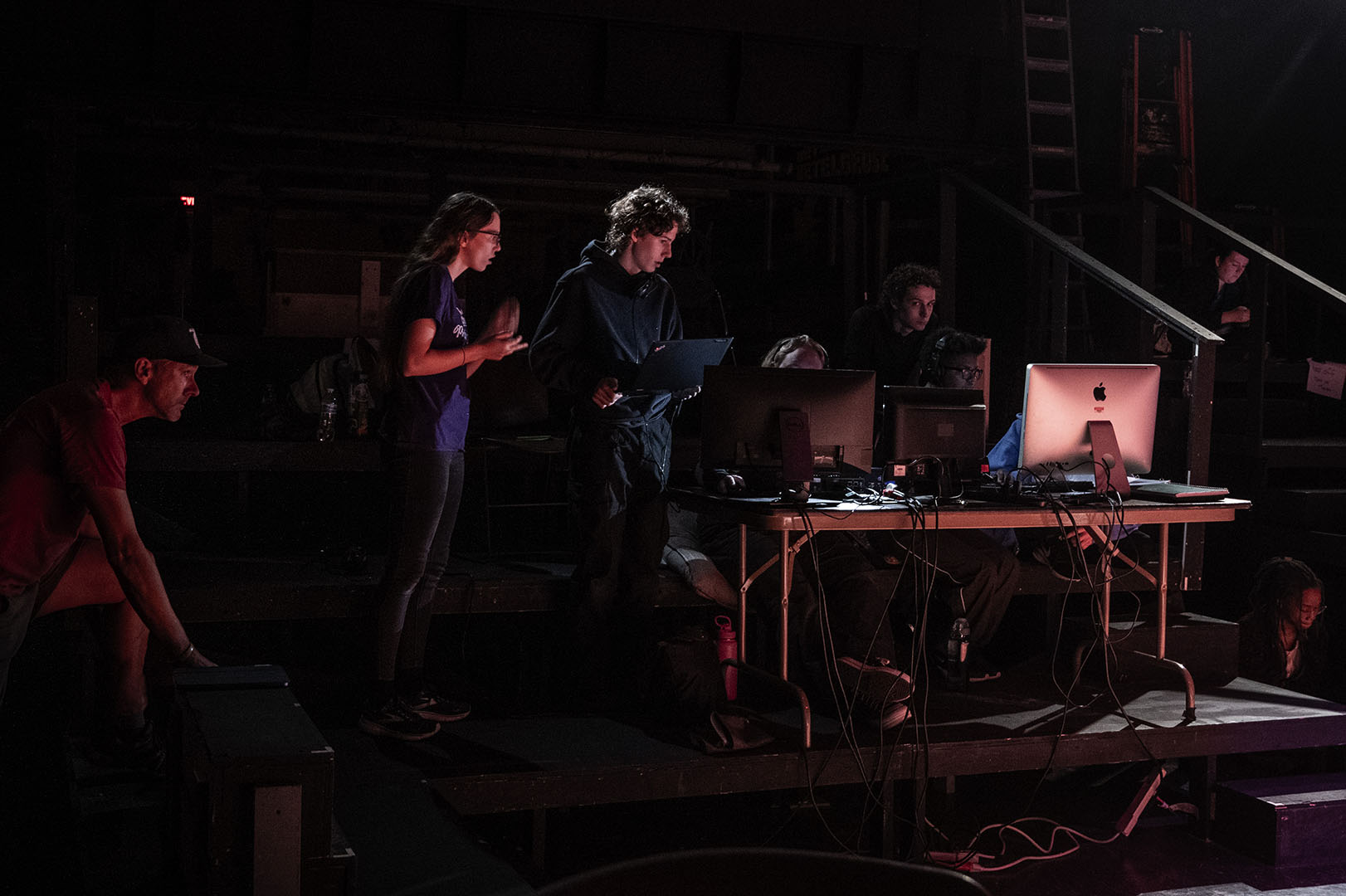
The play was performed in the Vincent Price Theatre, an intimate black-box setting that invites audiences to feel close to the action. The simplicity of the setting shapes both the audience’s experience and the work of the cast and crew. Guests are seated close to the action, just a few feet away from the performers. Small moments such as a sigh, a glance, or a shift in tone register more deeply than if the audience were seated far away. The result is a more immediate, emotionally direct experience. A simple set forces focus on the actors, the content, and the intentional choices behind lighting and sound decisions, which sharpens storytelling. Finally, the limits of a small theatre promote creative problem-solving for students, pushing designers and directors toward inventive solutions.
Director and Upper School Dean Nicole Trueman-Shaw is proud of the work of these students. “This is student-produced, top to bottom,” she said, noting that they took the lead on everything from set to scene to music to lighting, with gentle guidance on her part.
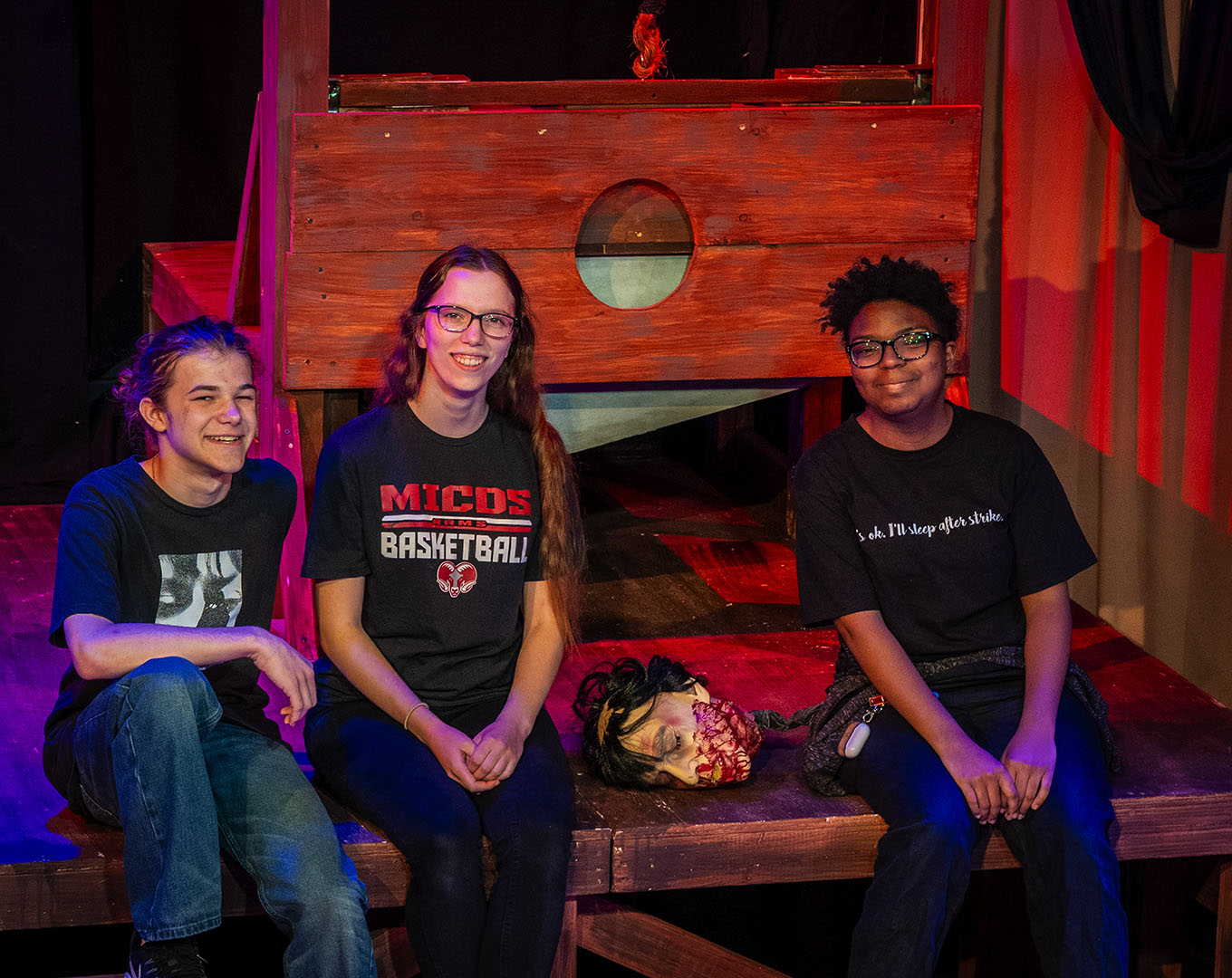
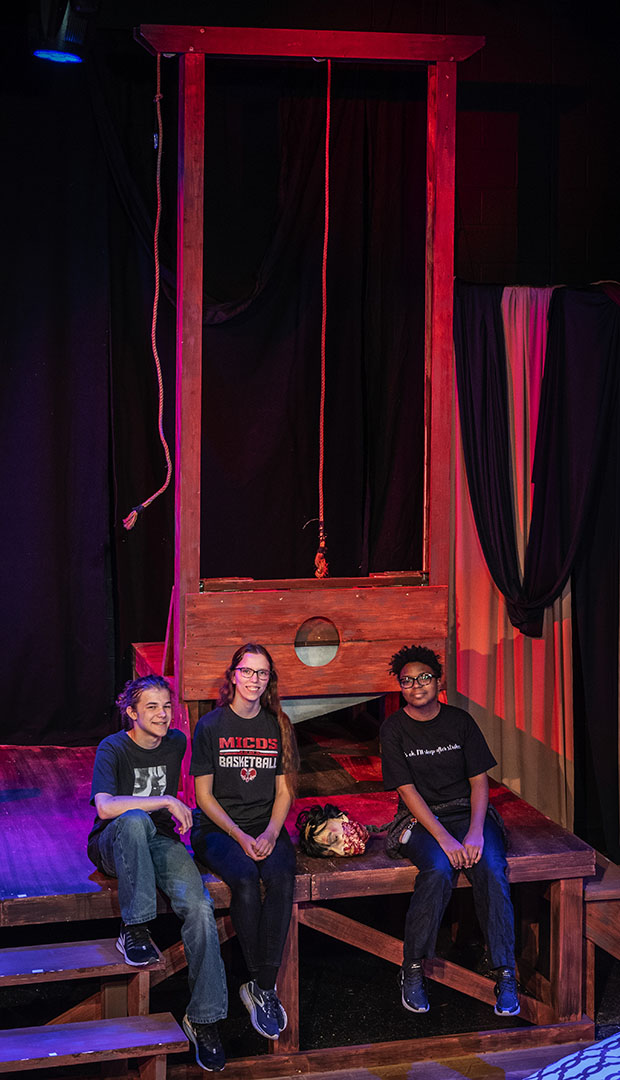
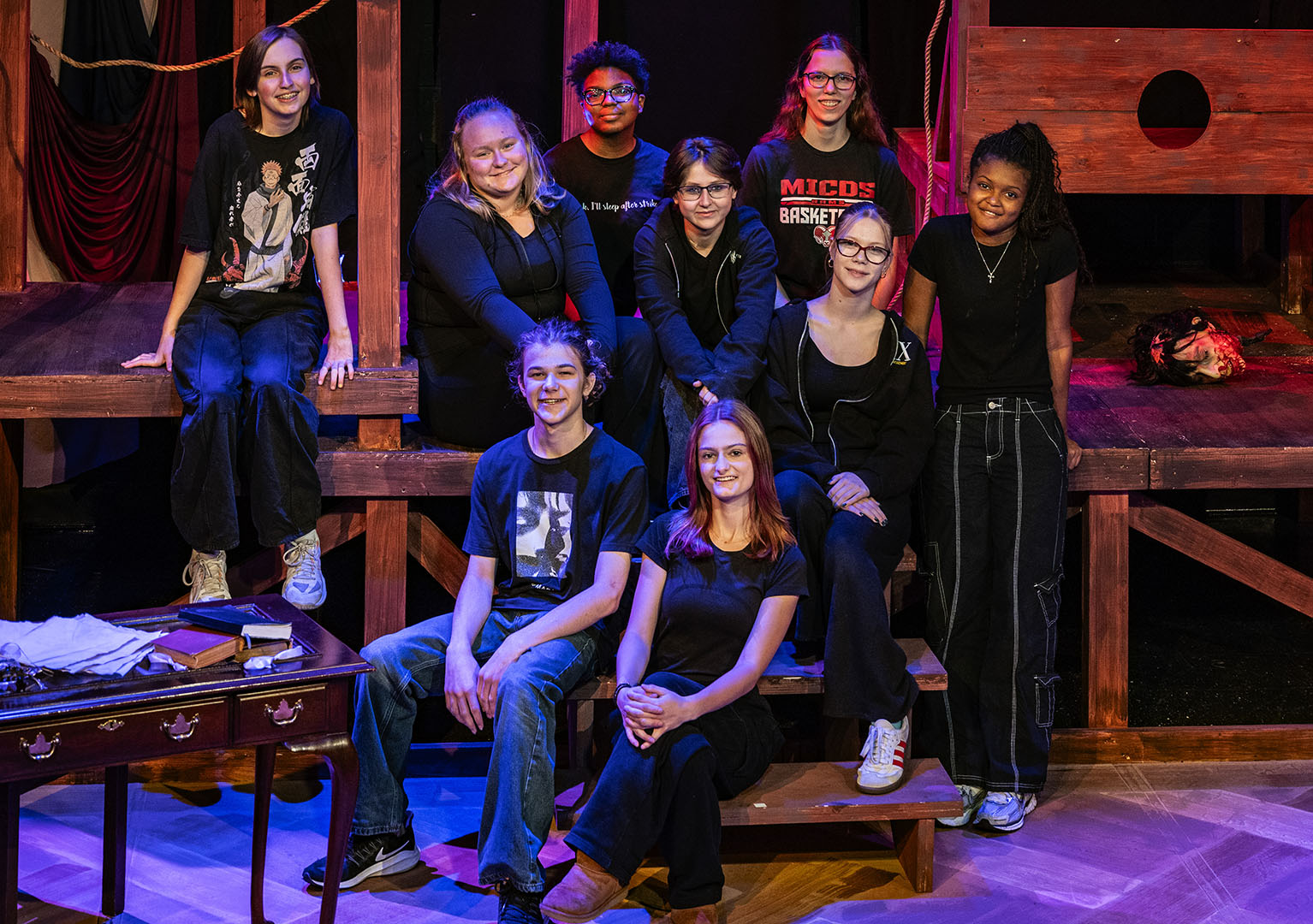
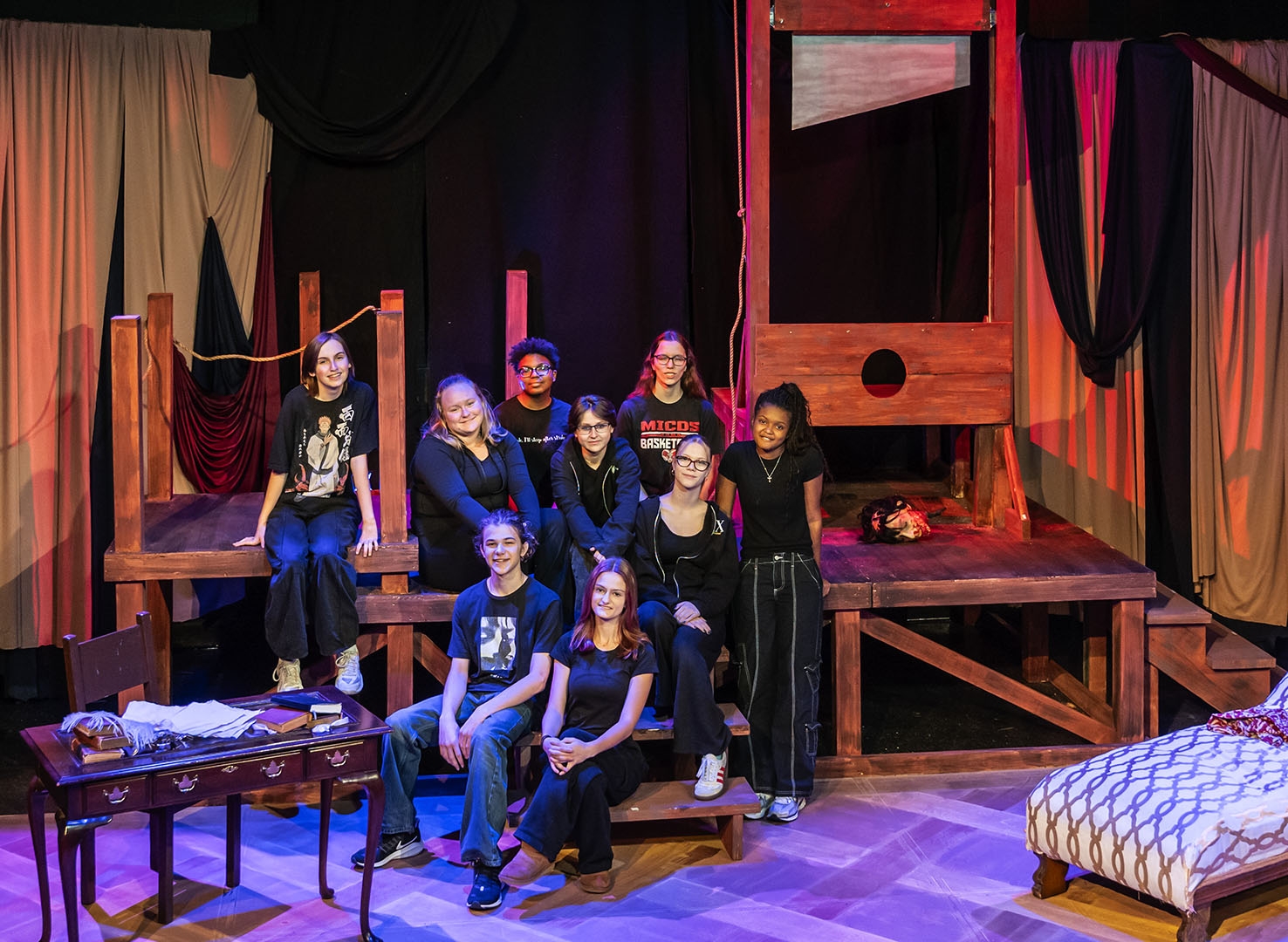
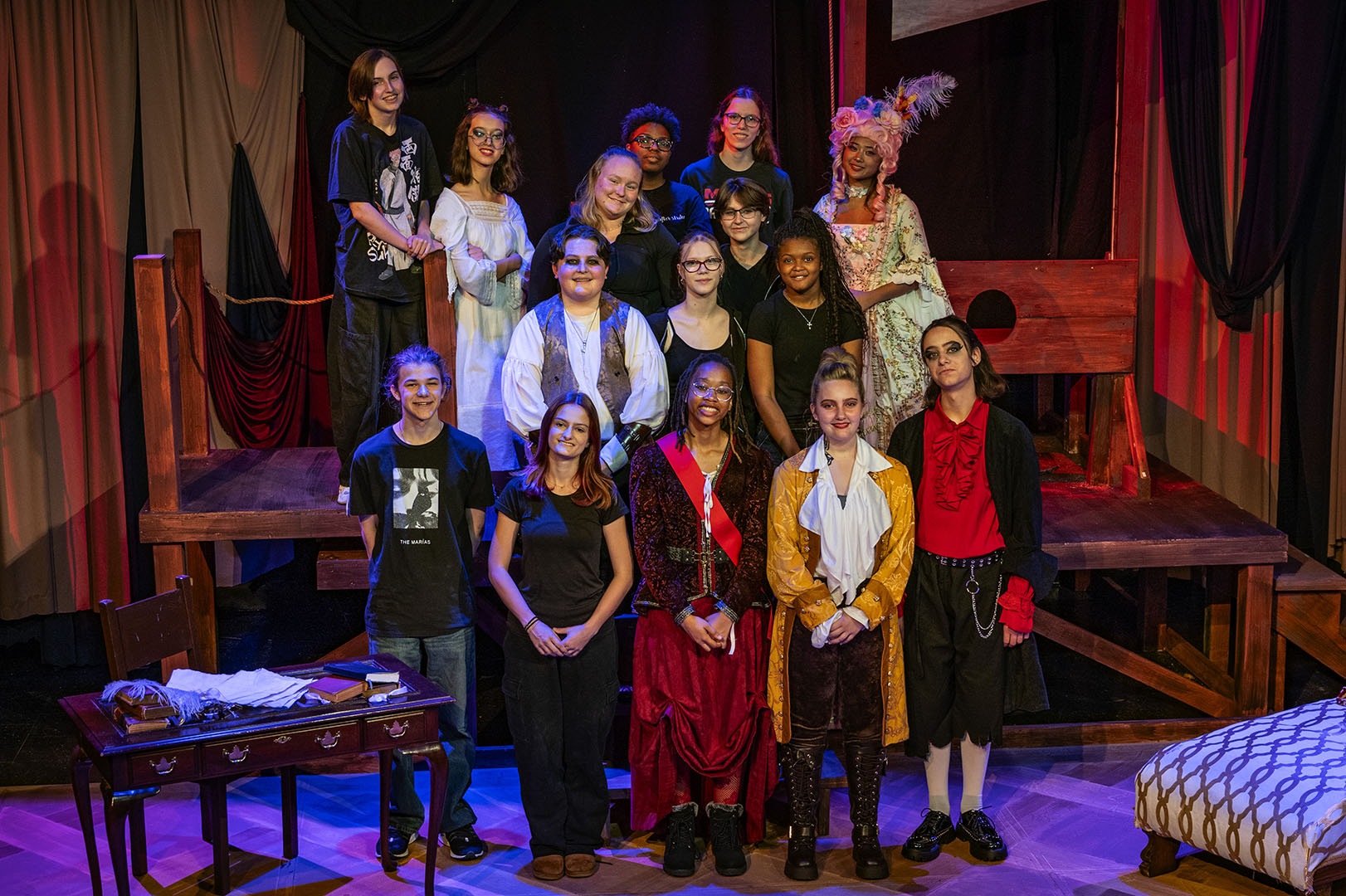
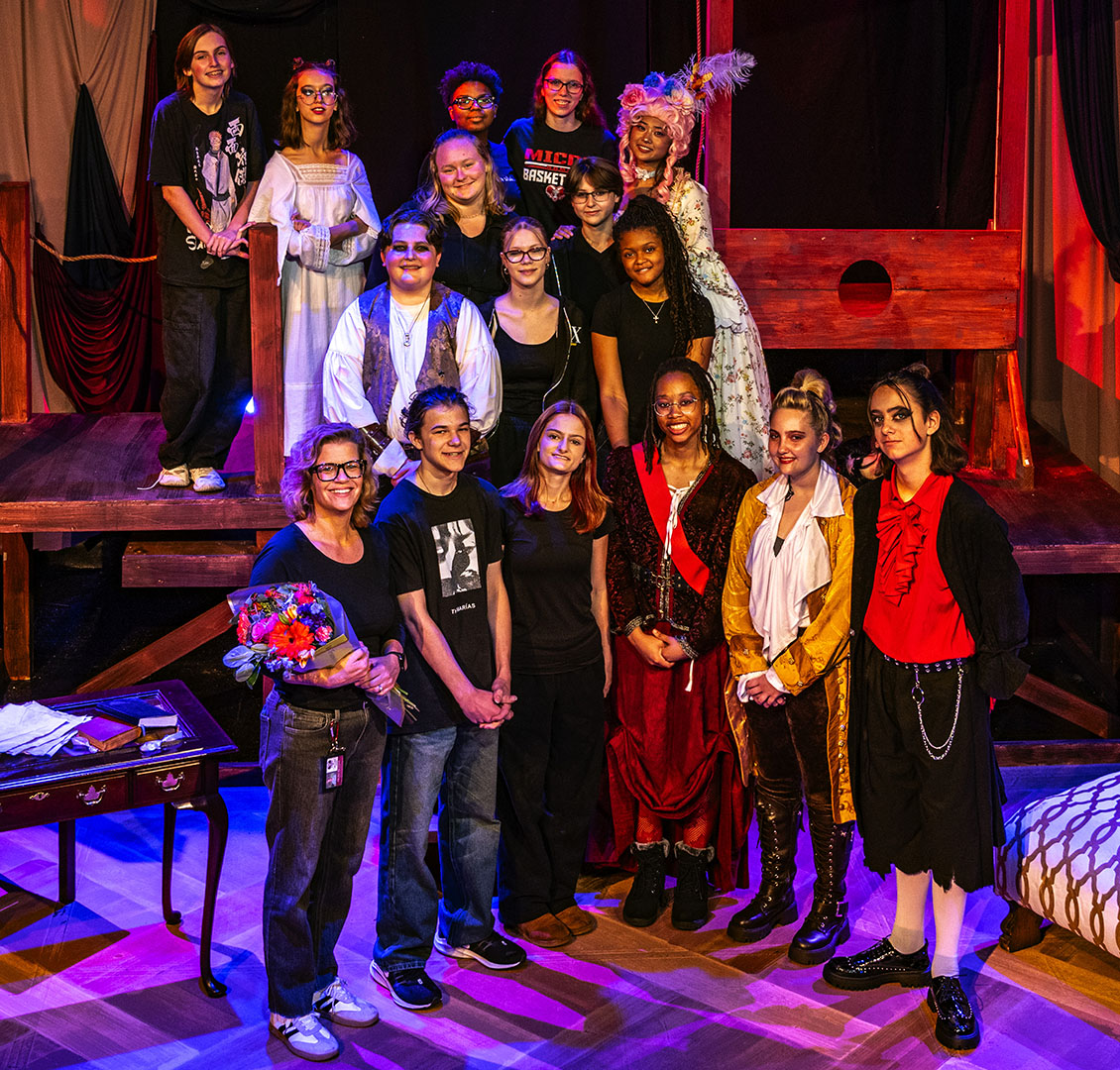
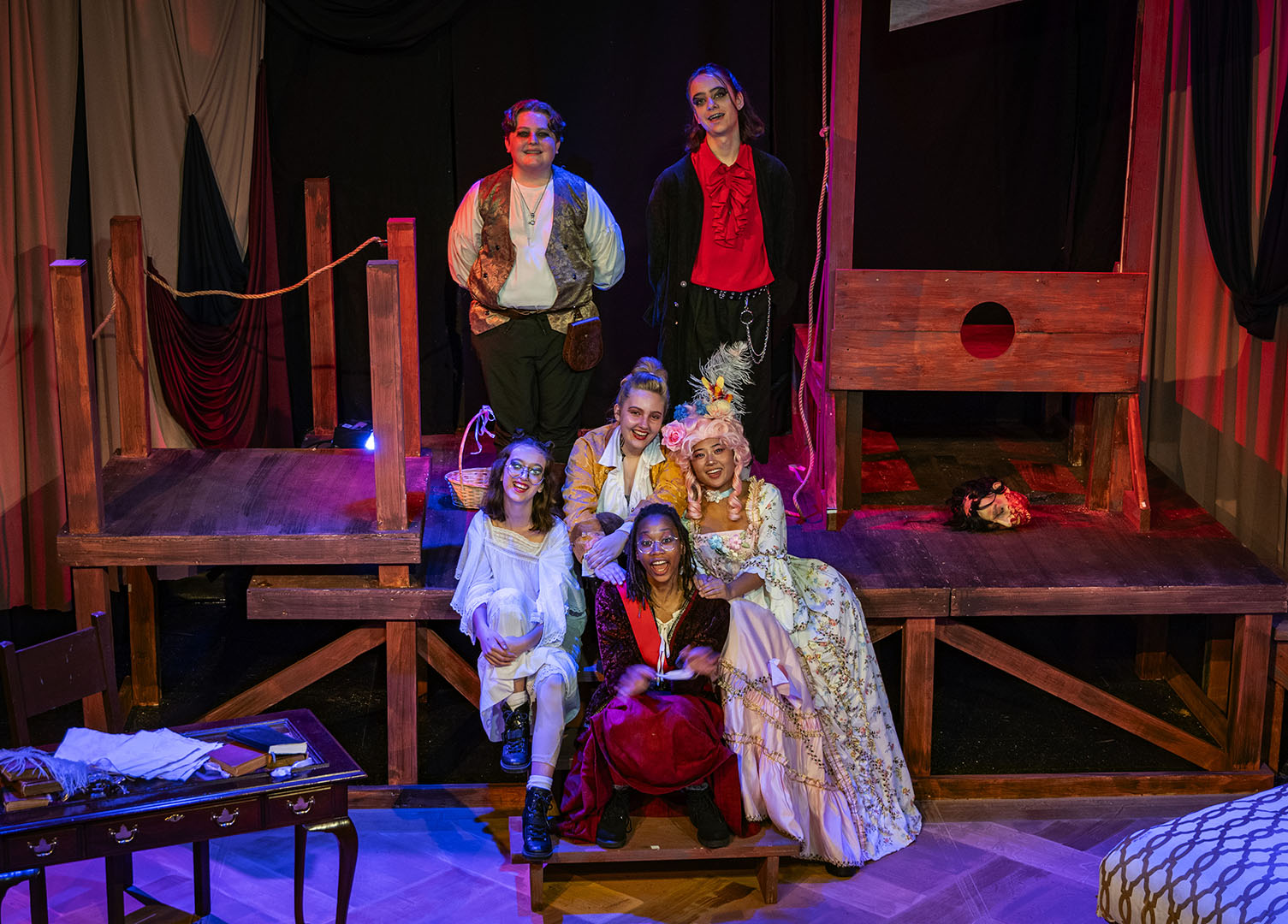
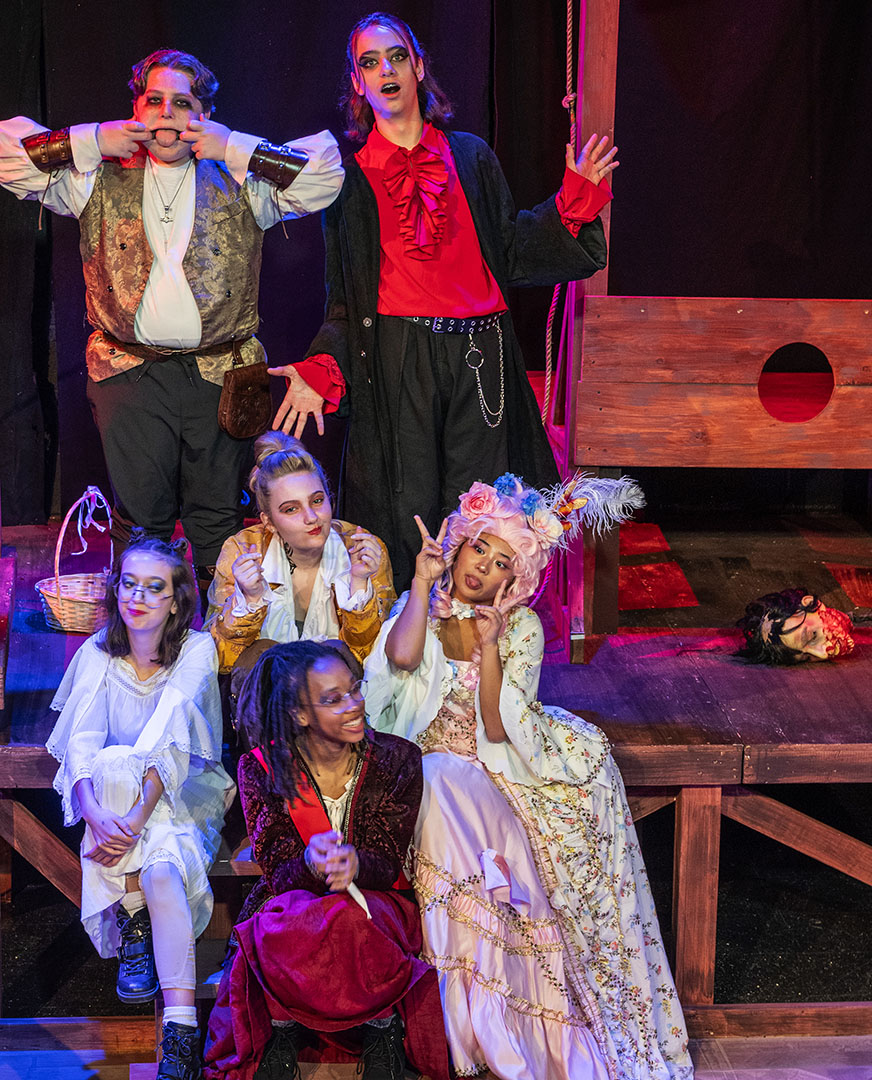
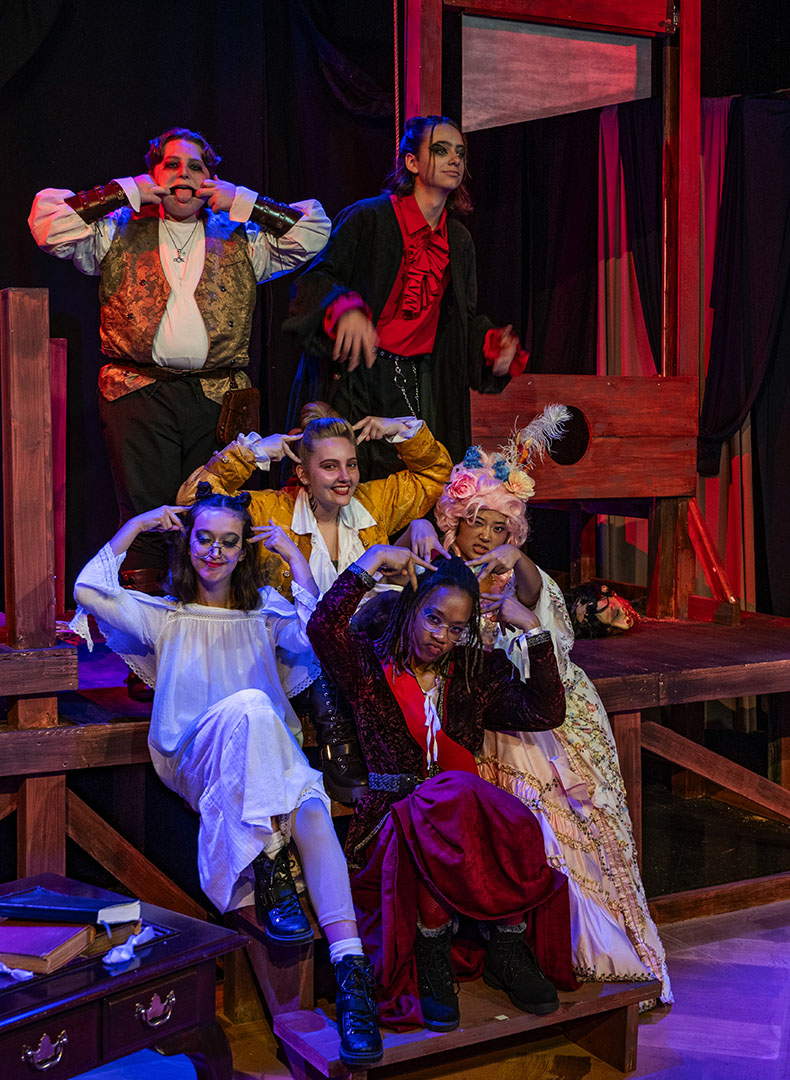
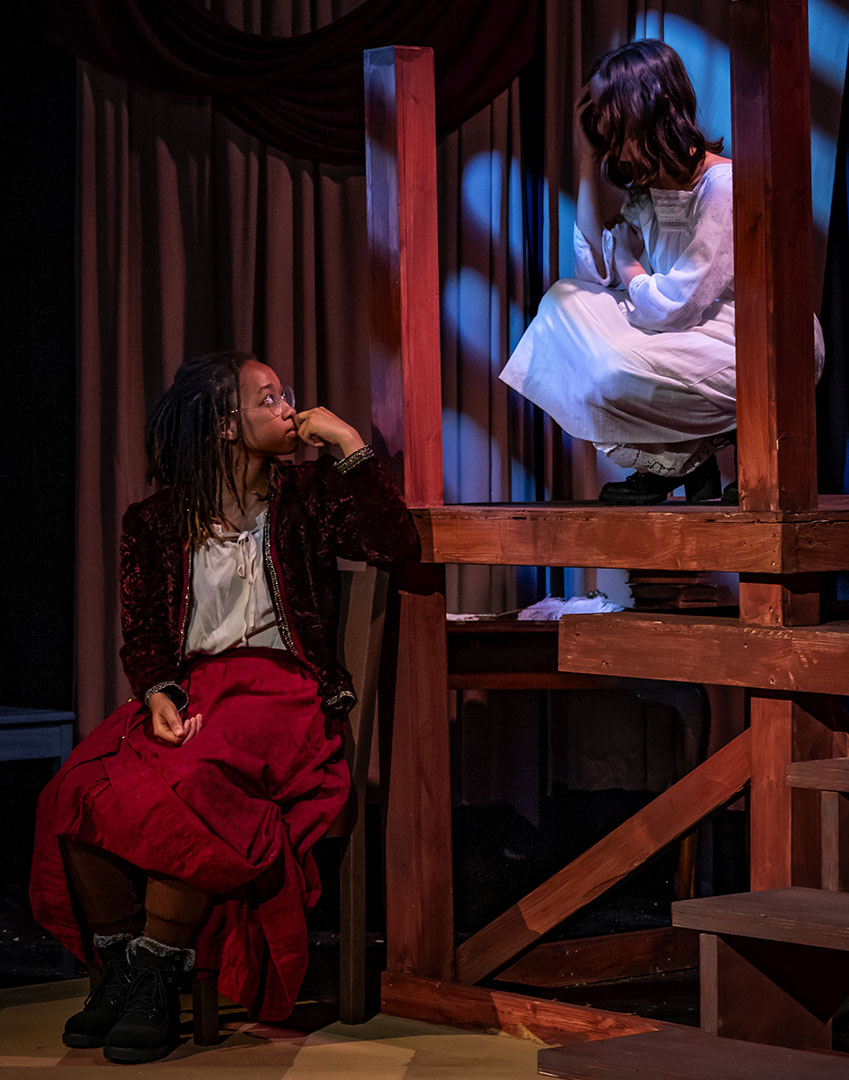
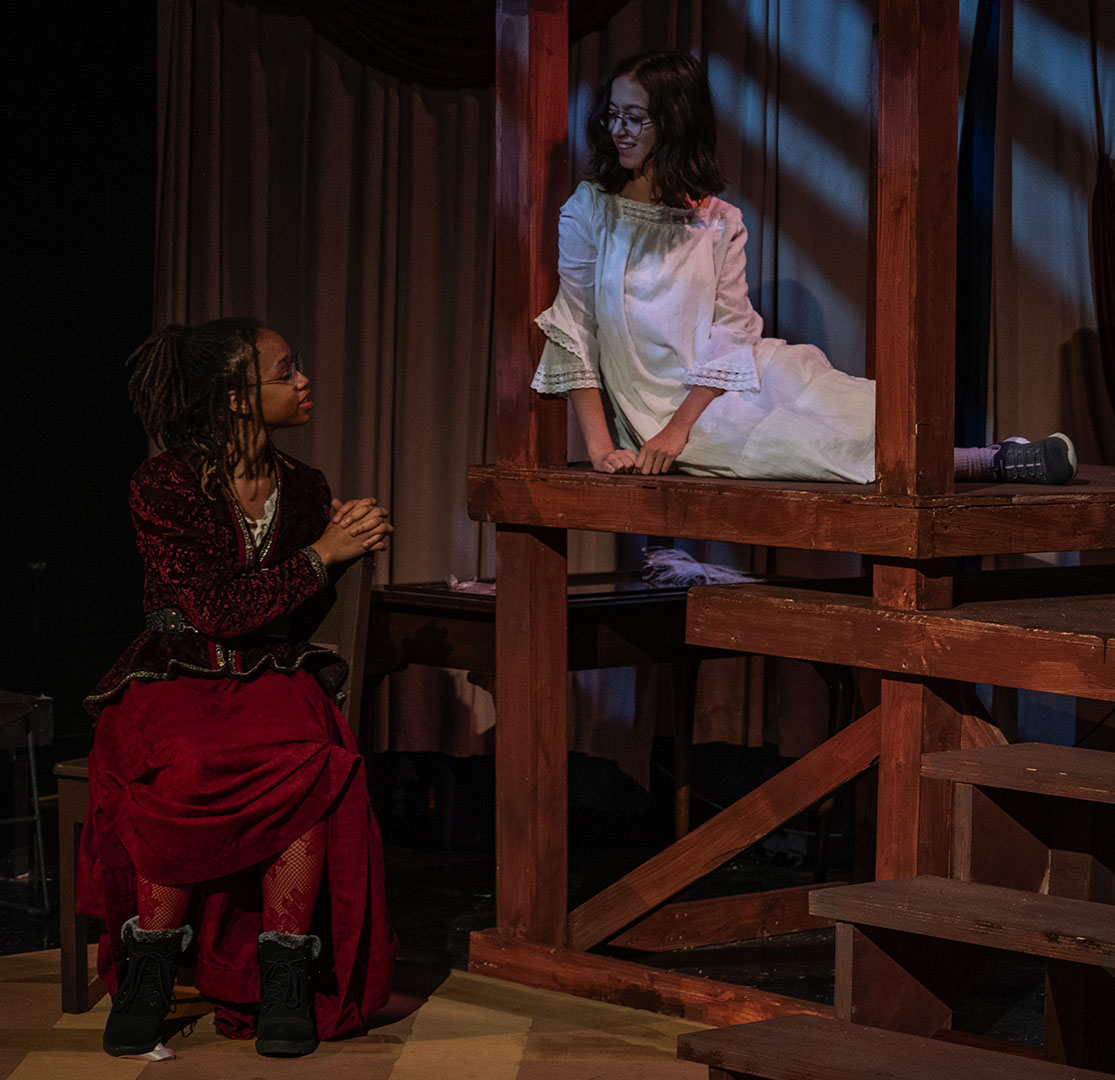
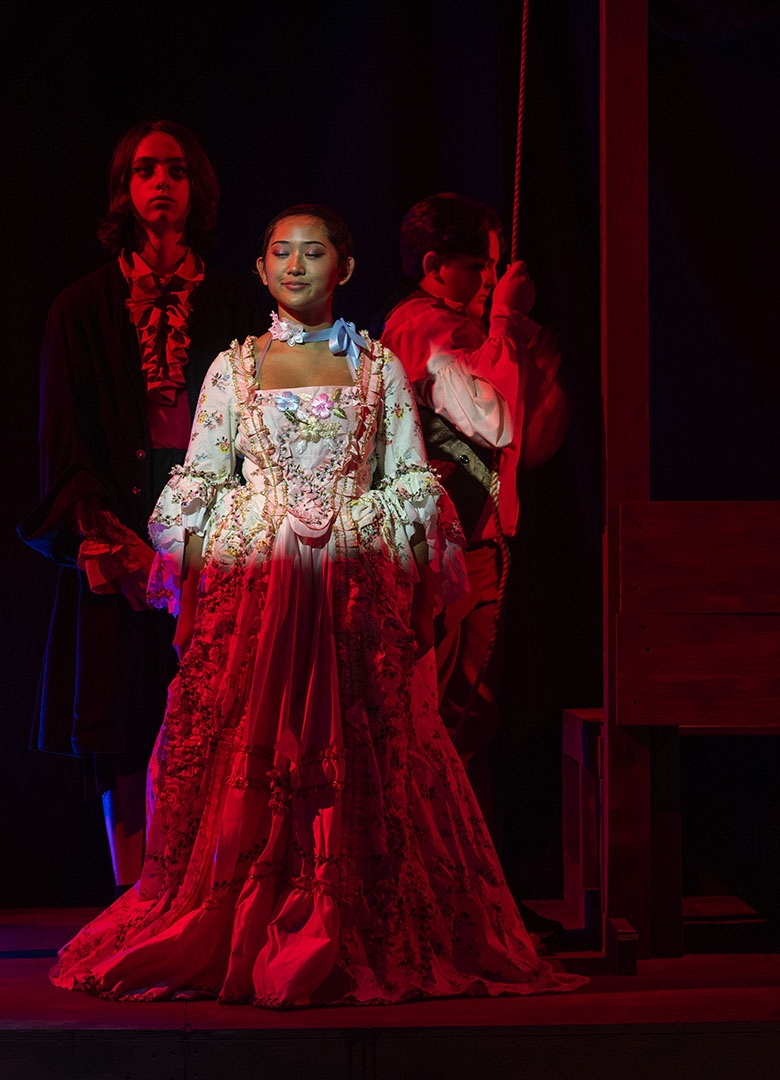
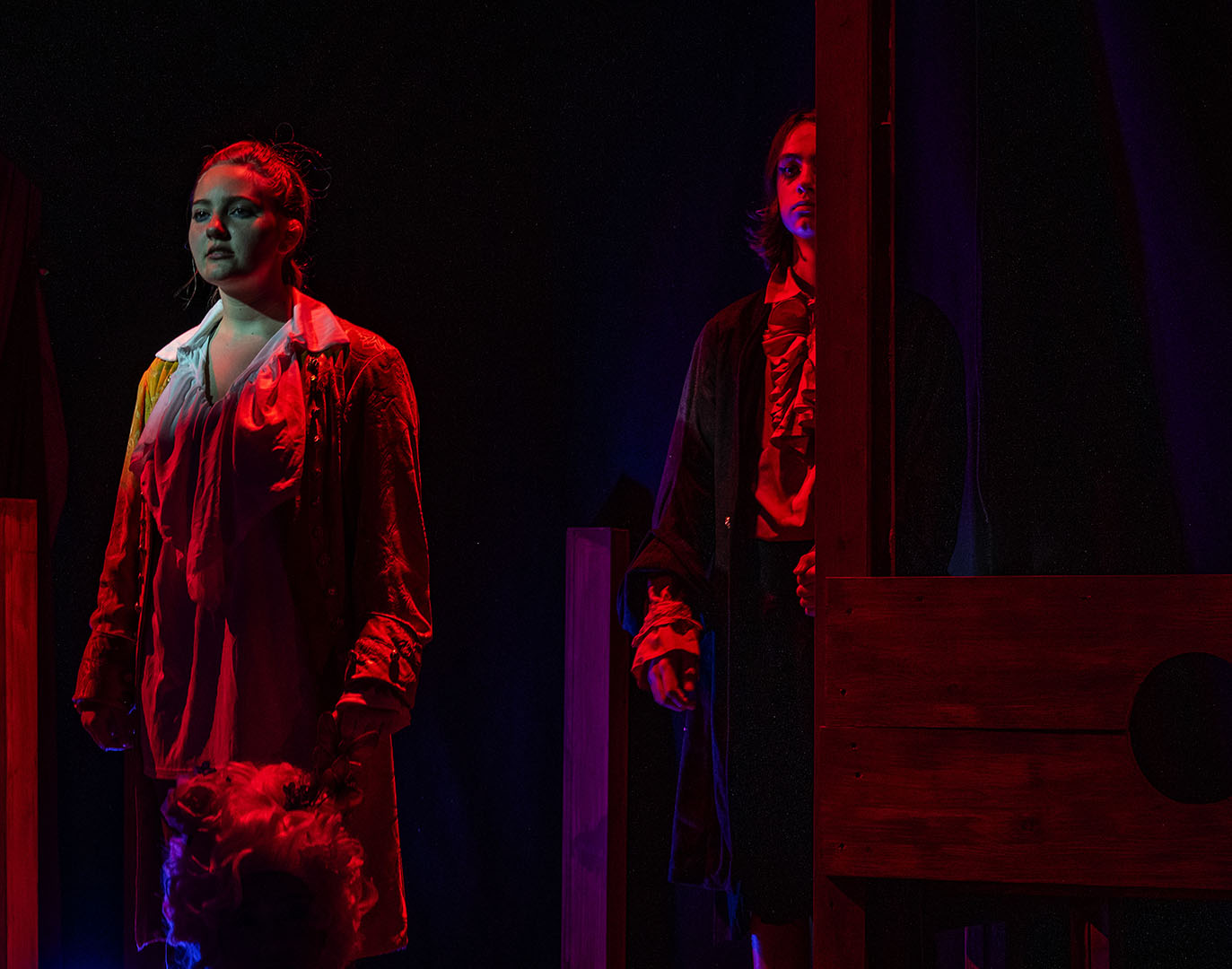
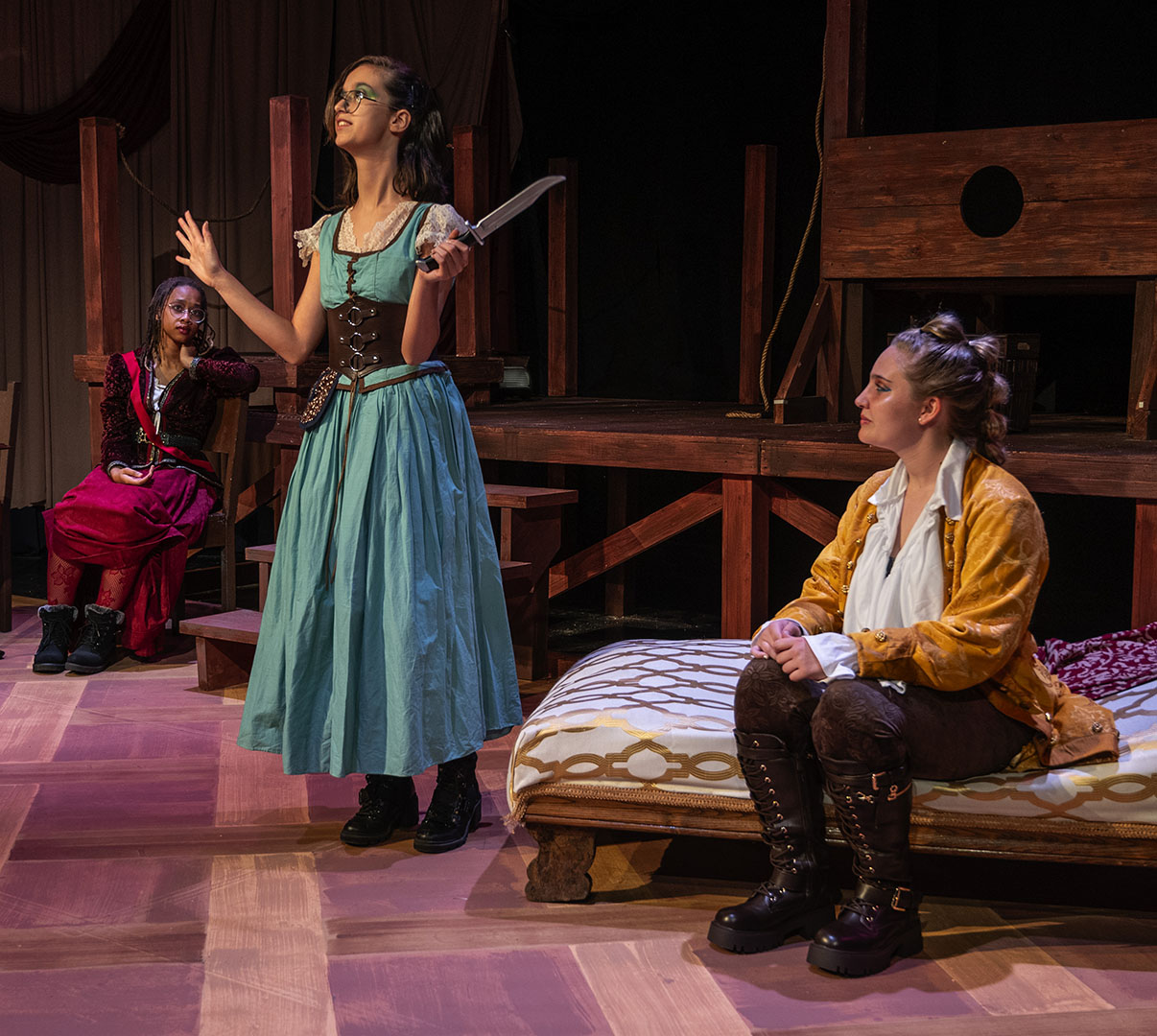
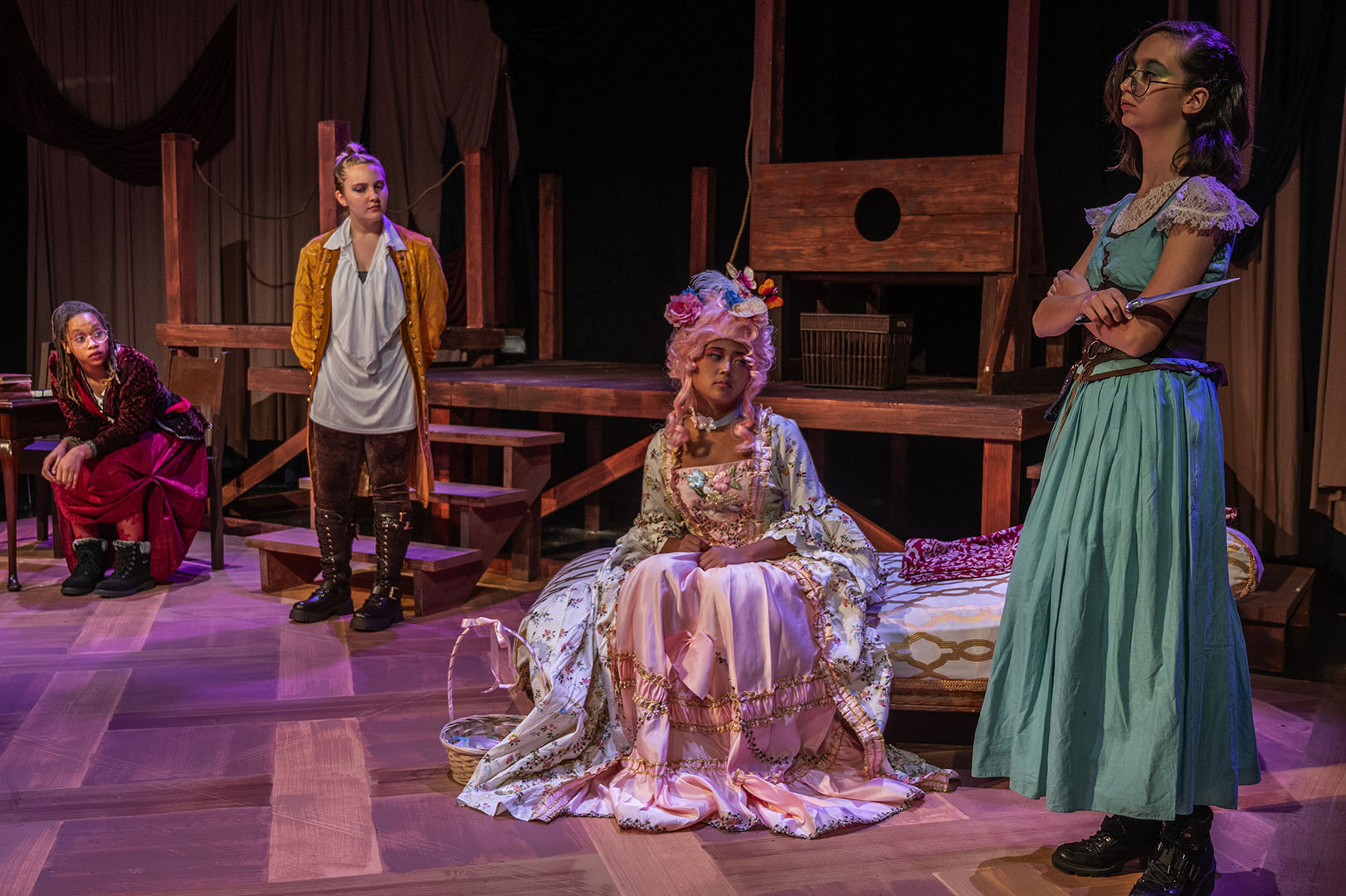
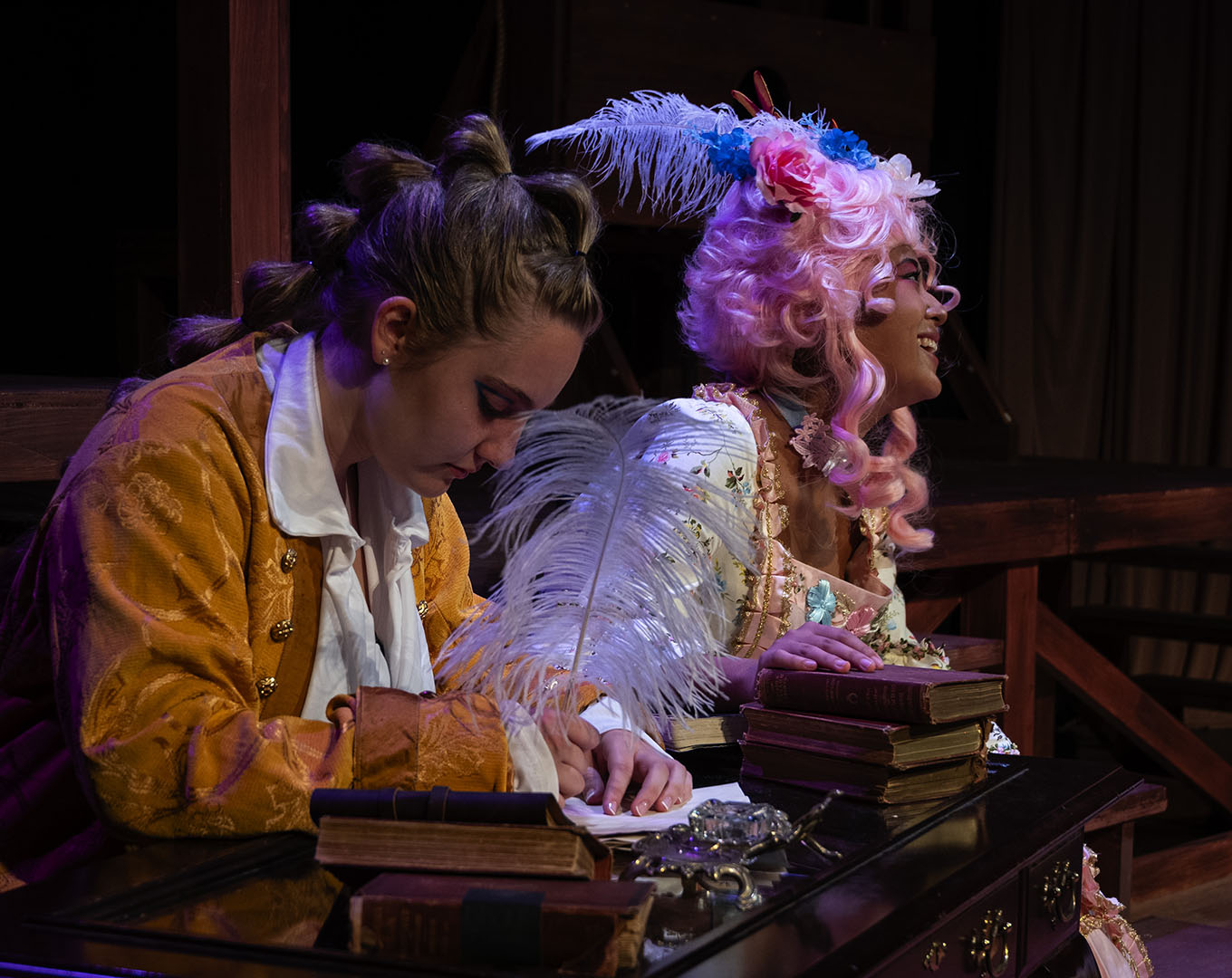
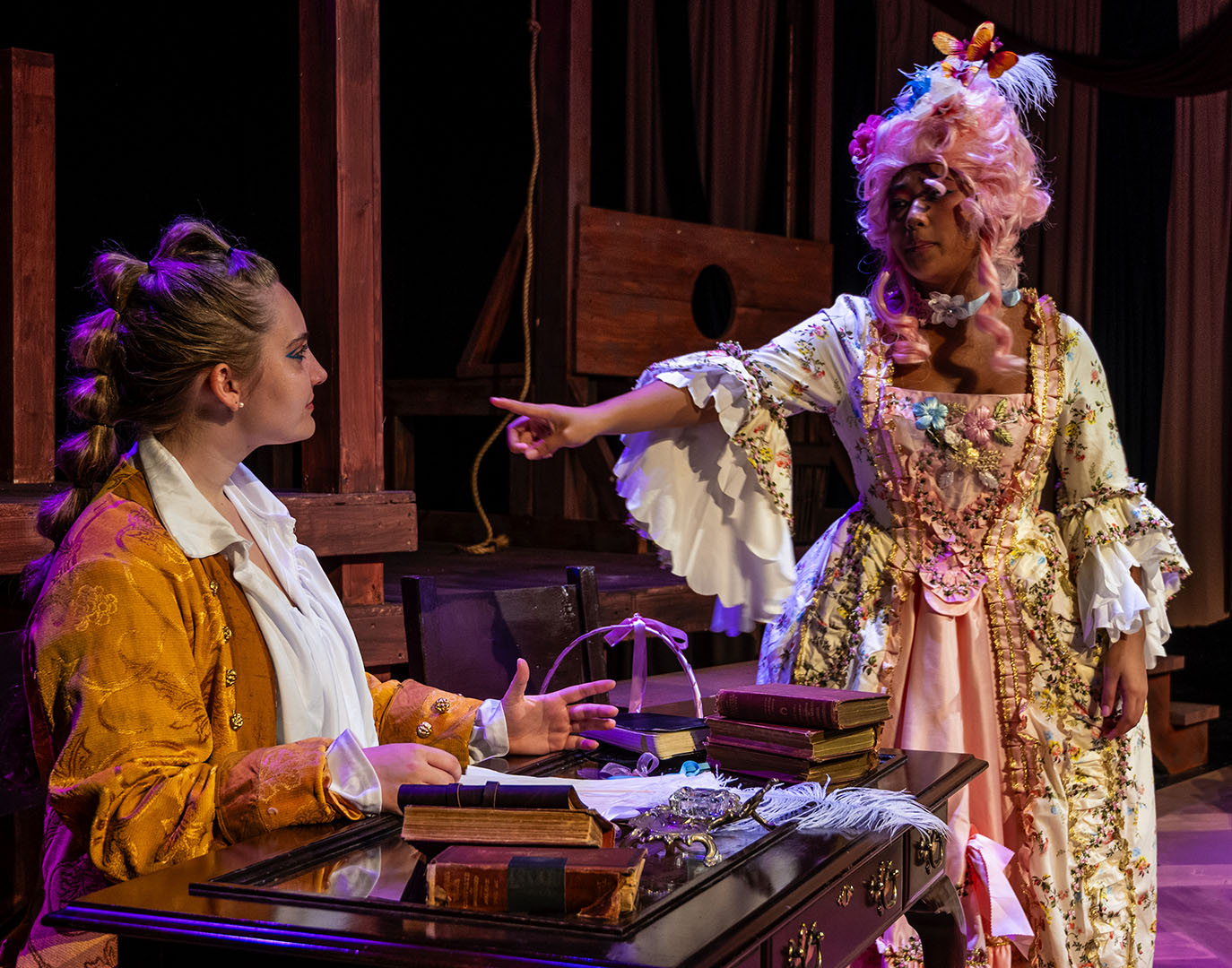
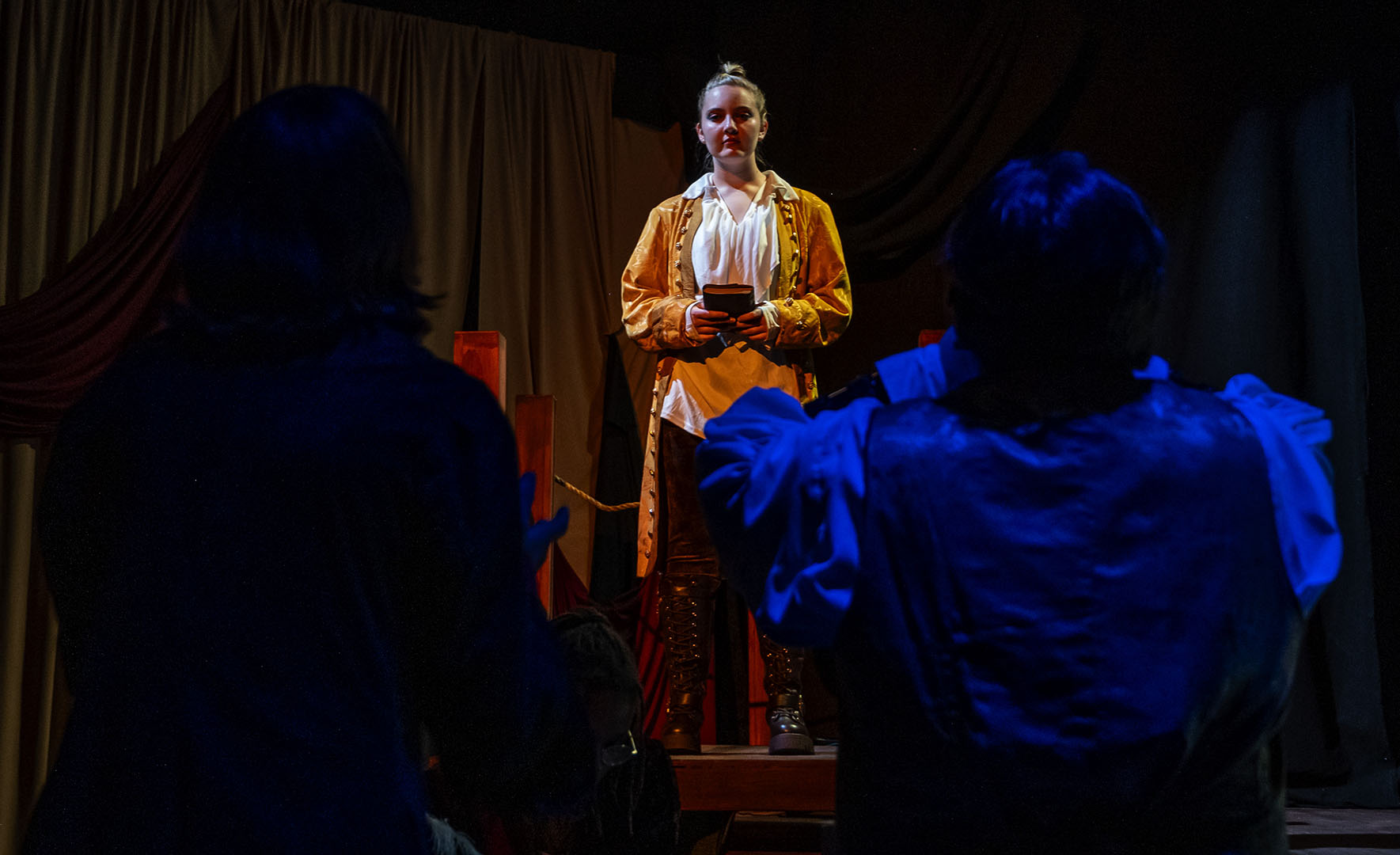
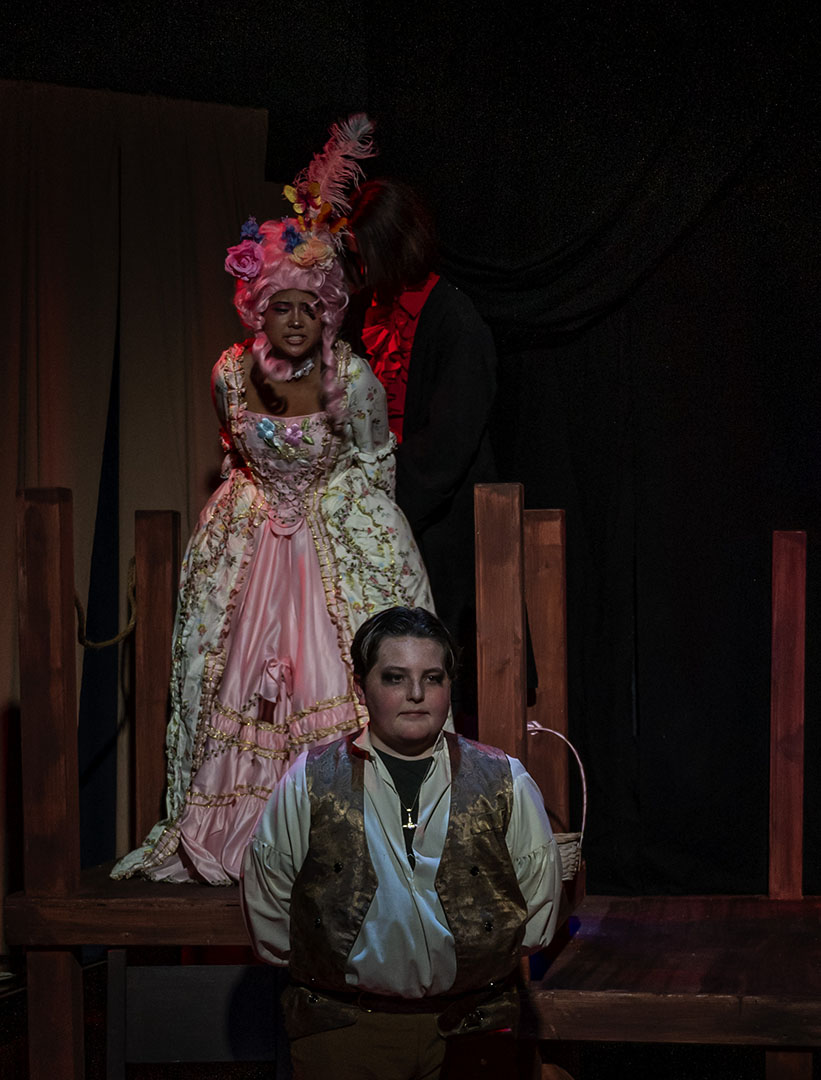
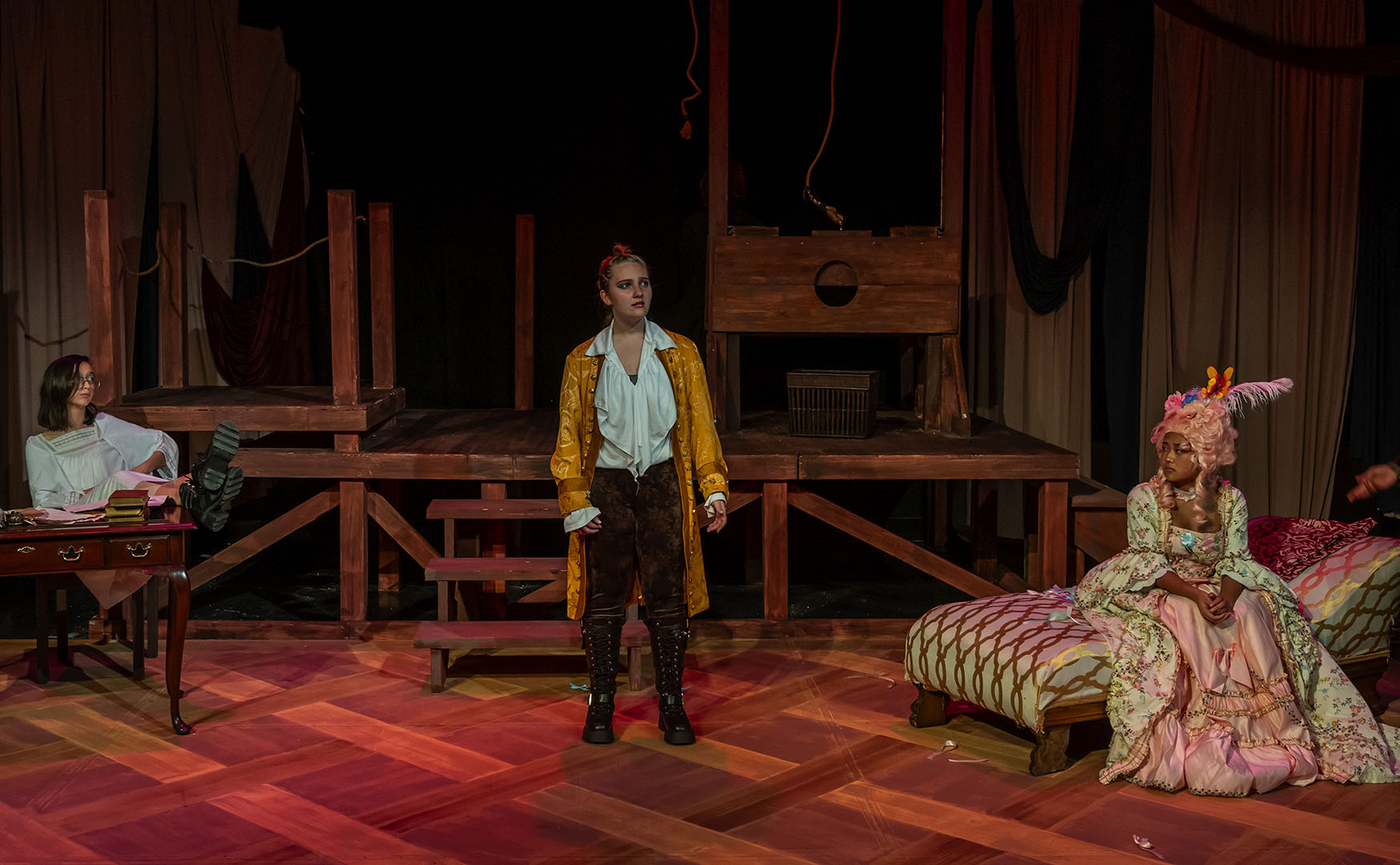
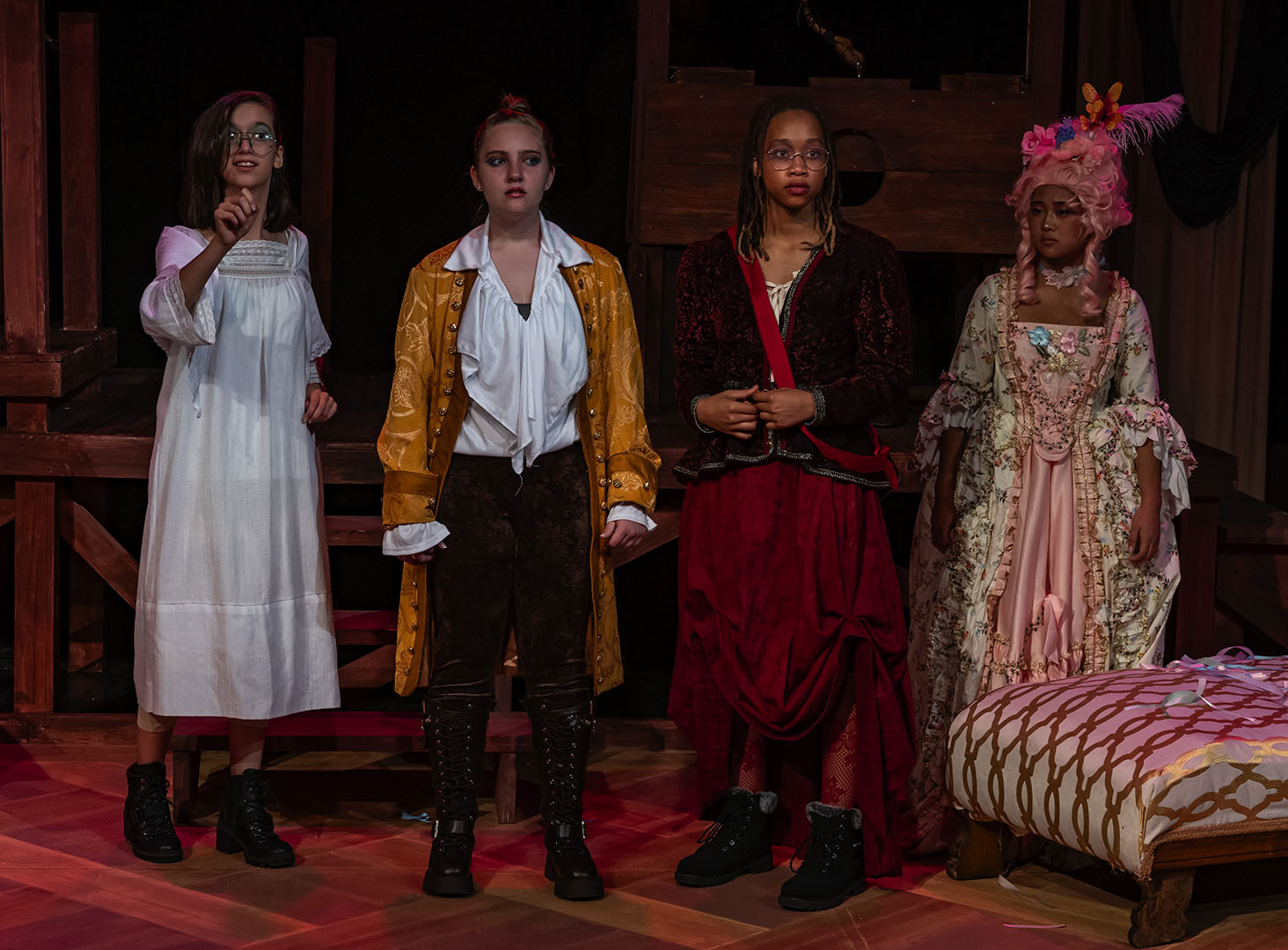
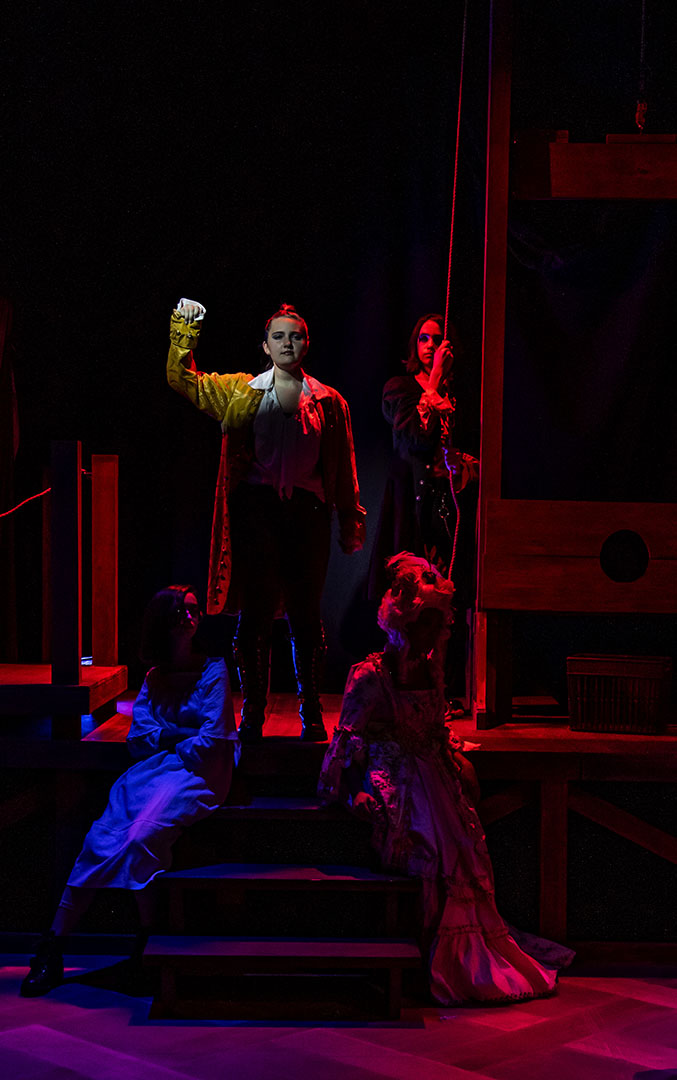
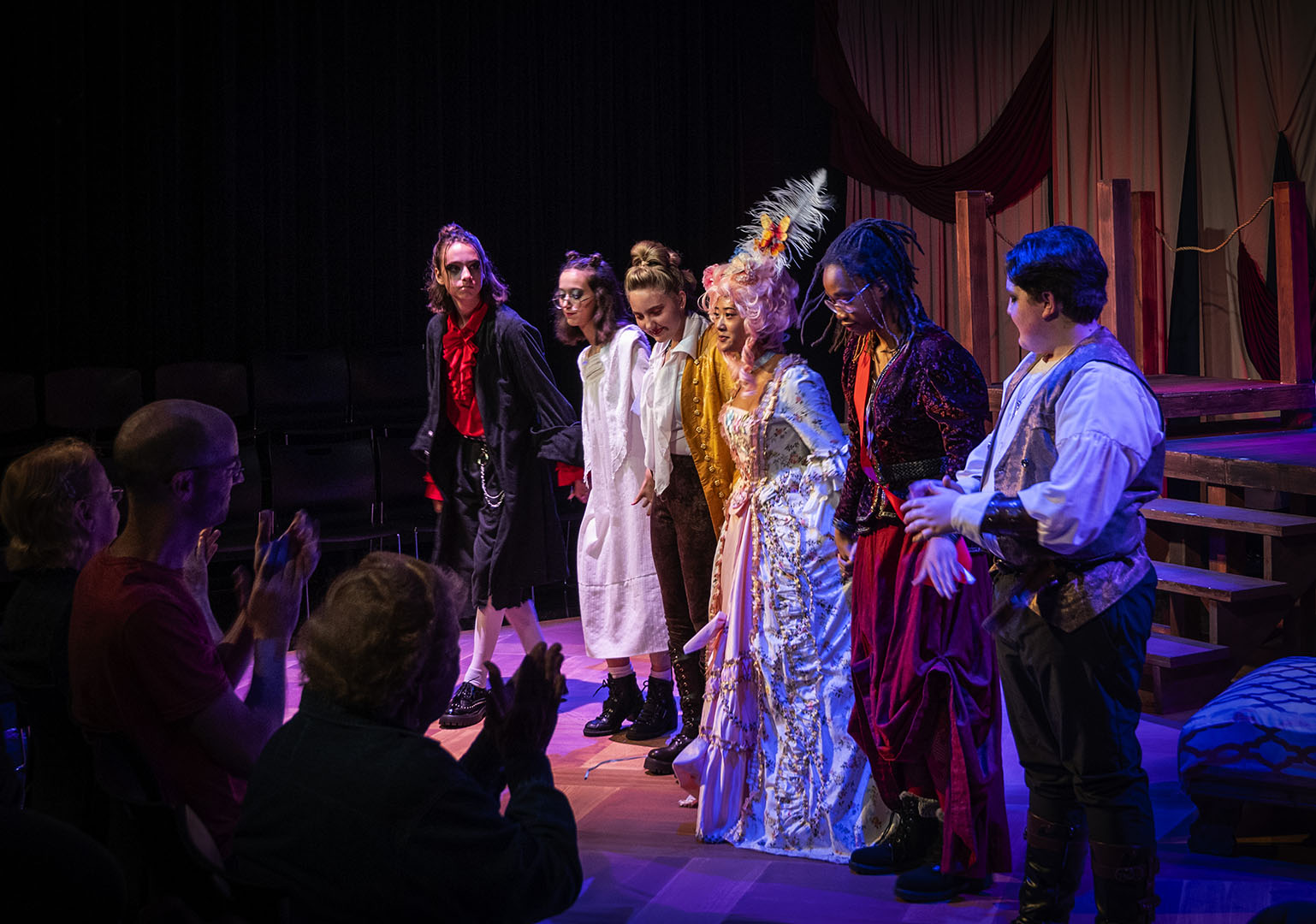
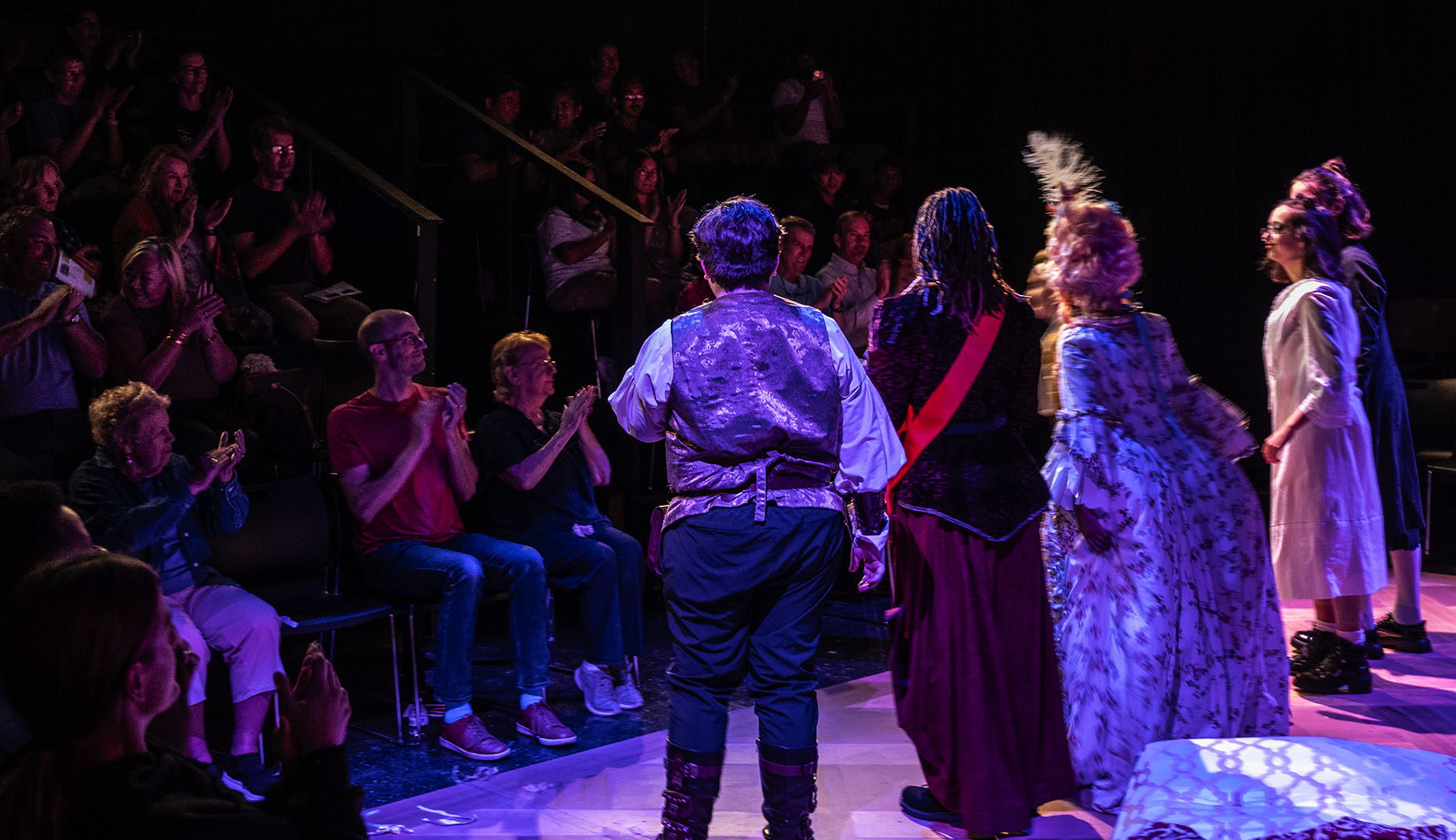
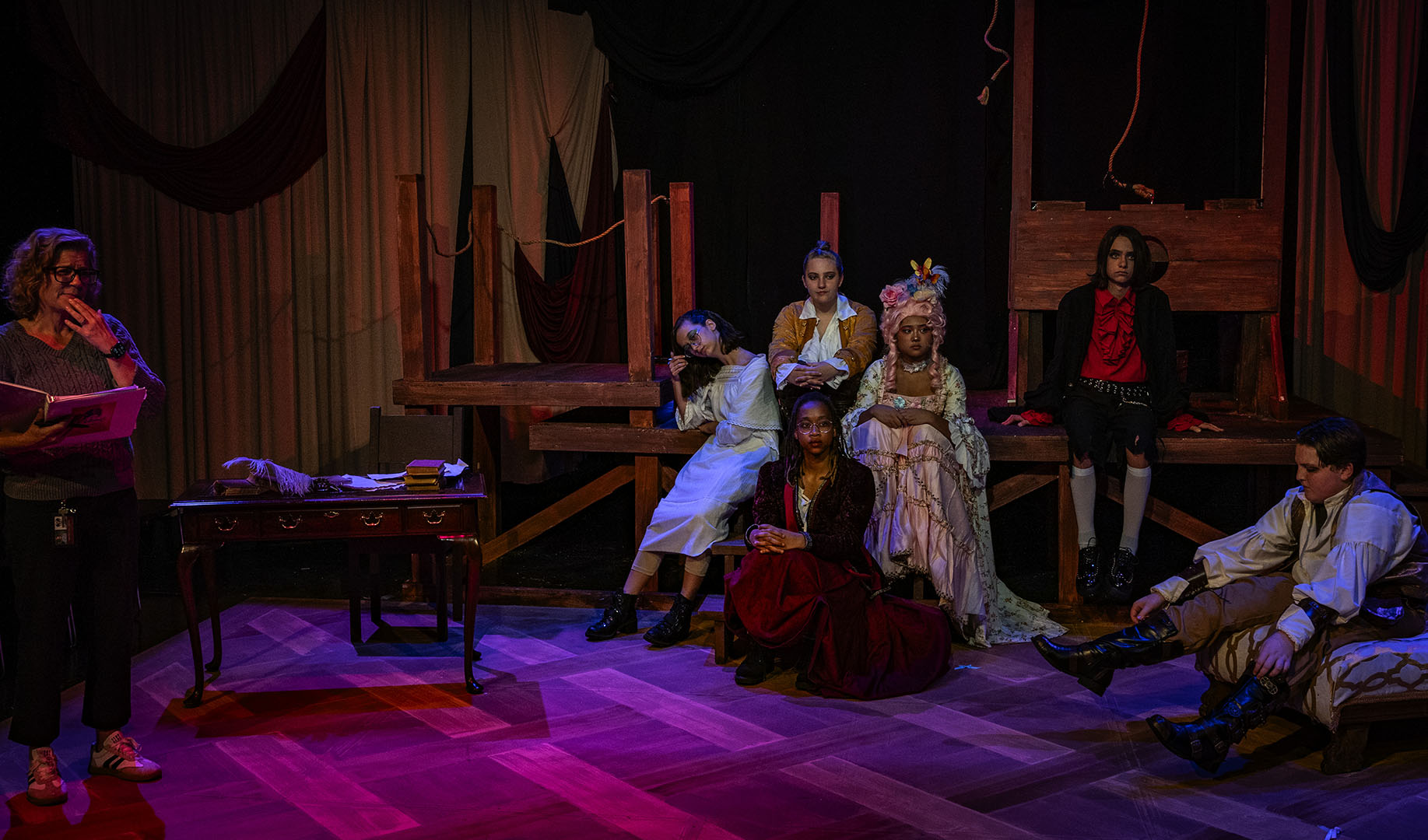
The set was simple but dramatic, capped by a giant mock guillotine that, combined with dramatic lighting, literally shook the audience every time it dropped. The playwright’s desk, effusively littered with the crumpled pages of a writer at work, a large white quill, and journals, anchored one side, while a fainting couch on the other side offered balance and a place for characters to emote dramatically and connive and connect with each other. Effective use of spotlights carved out sections of the small stage to firmly ground distinctive scenes.
The cast and crew of The Revisionists seized every opportunity in the black box and made the most of their work together. One of the benefits of a smaller cast and crew is that participants enjoy direct collaboration, communicating quickly and seeing how their choices affect the whole production. With fewer layers of decision-making, crew members can propose ideas and see them realized.
Brooke Dunaway ’28 served as Costume Lead, constructing elaborate late-1700s gowns and beautiful makeup designed to bring the characters to life. “My favorite part about working on this play was doing the makeup before the show. Since I was costume lead, I got to design and create almost everything when it came to hair, makeup, and costumes, but I really enjoyed doing the actors’ makeup and connecting with the cast.”
Meg Coverdell ’28 collaborated with Dunaway to create the right look for her character, Olympe de Gouges. She said, “My favorite part was figuring out the makeup and how it plays into the character. For my character specifically, she was a playwright and extremely selfish, so having very over-the-top looks played into the character.” Coverdell did a wonderful job portraying de Gouges’ emotions, creating a layered character who is relatable despite her faults.
Avery Brooks ’27 ran the sound board and led the props team. She said, “My favorite part of working on this production is seeing the MICDS community come together to help bring this production to life.” Brooks’ job was complicated by the summer flooding of the Bryant Arts Center, which resulted in the loss of years of accumulated props and costumes. “We went from having little to none of them because of the flood to the beginnings of a new collection generously donated from MICDS parents, the Arts Boosters, MICDS staff, and more,” she reported. “It was amazing to see so many people help on this show and it went great.”
Laila Holmes ’28 played rebel activist Marianne Angelle, and dove into learning her character’s motivations. She said, “My favorite part about working on this play has got to be character building. Reading my lines for the first time was so exciting; it was so much fun getting to know Marianne, her backstory, and what she was fighting for. The fact that she is rebelling against slavery and is an activist for the rights of Caribbean slaves is so moving. Getting in character, getting to play a wife and a mother fighting for a better world was so much fun, and I’m still hoping that I did her justice.” Holmes’ portrayal of Angelle was full of emotional passion; she effectively related the competing forces propelling the character’s motivations. “A challenge I’m proud of overcoming is portraying emotions that are bigger than their base emotion,” Holmes related. “In one of the scenes, my character, Marianne, has a fight with the main character, Olympe. A struggle for me was portraying emotions bigger than anger, because she wasn’t angry; she was furious. She was hurt; she felt betrayed. And learning to accurately portray those emotions was hard, but once I learned how to do it, it was so much fun.” Later in the production, Angelle learns of the death of her husband, and Holmes moved many in the audience with her performance. “It was so much fun being devastated instead of just sad. It was heavy, and so many people came up to me after the show saying they were crying with me and they could feel my devastation.”
For many in the cast, this production was their first opportunity to embrace a main character. This meant learning more lines and becoming comfortable with being the center of attention. Coverdell admitted, “Learning my lines was a fairly big challenge, due to the fact that I had never been in a play with this major of a role. Once I got past the fear of messing up, it became a lot easier.” She also took away another valuable lesson, sharing, “I learned that perfection isn’t always the best, and that each show is different for a reason. Change in each night was good, and even when we messed up, it was something creative and individual.”
Arriana Torrento ’28 played a delightfully quirky Marie Antoinette. She agreed with Coverdell, saying, “Memorizing lines was definitely a struggle for me and other castmates.” Torrento not only learned those lines, she developed a Marie Antoinette that was entertaining, once sighing, “I just need better press!” She also embraced the evolution of her character. “I loved playing out Marie Antoinette! She has such interesting character development from the start to the end of the play.”
Holmes noted that the black box experience offers unique learning opportunities. “This production has taught me how it is to function with a smaller cast, a bigger line load, and more time on stage overall,” she said. “There is such a big difference between being a side character and a main character. Having to memorize so many lines was a bit of a challenge at first, but I eventually got it down. This play has helped me grow so much as an actor, and I’m so thankful that I was in the production!”
The upperclassmen of The Revolutionists eagerly adopted their role as leaders in the production. Torrento said, “This is the first production I’ve done where I’m considered an upperclassman. It was really fun to help guide underclassmen, as well as get to know them better. I hope I made theater a positive experience for some of the underclassmen so they could continue being within the theater community throughout high school.” Dunaway, as a junior, also enjoyed serving as a guide. “I grew through this production by becoming a mentor for the freshmen,” she said. “At least three times a day I was asked what to do or how to do things, and I did my best to be there for them.” These relationships promise a bright future for the MICDS theater program, as younger cast and crew learn from and are inspired by their older schoolmates.
This production, our first since the devastating Bryant Arts Center flood, showcased not only a rousing, elegant performance, but a stunning display of community. Brooks is proud of how MICDS students, faculty, staff, and parents rose to the challenge. “I grew a lot because of this experience,” she said. “It further shows how we have such a great community here, and everyone is willing to help and support one another.”
Click here to see the program for the MICDS production of The Revolutionists.